Question bank

Q&A: practice questions with answers

Search questions on any topic. Filter by exam category, exam, subject and topic, try the question, then open the answer and explanation.

Courses – airGurukul

7,077 questions found.

Q4361.
Below are given two sets of numbers. In each set of numbers, a certain mathematical operation on the first number results in the second number. Similarly, a certain mathematical operation on the second number results in the third number and so on. Which of the given options follows the same set of operations as in the question? (NOTE – A two/three-digit number cannot be broken into individual digits for operations, e.g. if 37 is followed by 10, the operation cannot be 3+7 as a two-digit number cannot be broken into individual digits.)
11 - 12 - 13 - 26 ; 19 - 20 - 21 - 42
नीचे संख्याओं के दो समुच्चय दिए गए हैं। संख्याओं के प्रत्येक समुच्चय में, पहली संख्या पर एक निश्चित गणितीय संक्रिया करने से दूसरी संख्या प्राप्त होती है। इसी प्रकार, दूसरी संख्या पर एक निश्चित गणितीय संक्रिया करने से तीसरी संख्या प्राप्त होती है और इसी तरह आगे भी। दिए गए विकल्पों में से कौन-सा विकल्प संक्रियाओं के उसी समुच्चय का अनुसरण करता है जैसा कि प्रश्न में है? (ध्यान दें – संक्रियाओं के लिए किसी दो/तीन अंकों वाली संख्या को अलग-अलग अंकों में विभाजित नहीं किया जा सकता, उदाहरण के लिए, यदि 37 के बाद 10 आता है, तो संक्रिया 3+7 नहीं हो सकती क्योंकि दो अंकों वाली संख्या को अलग-अलग अंकों में विभाजित नहीं किया जा सकता।)
11 - 12 - 13 - 26 ; 19 - 20 - 21 - 42
  1. A9 - 10 - 11 - 24
  2. B3 - 4 - 5 - 12
  3. C7 - 8 - 9 - 18
  4. D4 - 5 - 6 - 10
Show answer

Concept: Find the operations between consecutive numbers.

  1. 11 → 12 → 13 → 26: +1, +1, ×2
  2. 19 → 20 → 21 → 42: +1, +1, ×2
  3. 7 → 8 → 9 → 18: +1, +1, ×2 ✔
  4. 9-10-11-24, 3-4-5-12, 4-5-6-10 fail at the last step.

Trick: Check the last step first: it must be exactly double.

Answer: (C) 7 - 8 - 9 - 18

अवधारणा: क्रमागत संख्याओं के बीच संक्रिया खोजें।

  1. 11 → 12 → 13 → 26: +1, +1, ×2
  2. 19 → 20 → 21 → 42: +1, +1, ×2
  3. 7 → 8 → 9 → 18: +1, +1, ×2 ✔
  4. अन्य विकल्प अंतिम चरण पर विफल।

ट्रिक: पहले अंतिम चरण जाँचें: ठीक दुगुना होना चाहिए।

उत्तर: (C) 7 - 8 - 9 - 18
RRB NTPC Graduate CBT 1General Intelligence and ReasoningNumber set patternRRB NTPC Graduate CBT 1 2024 · 6 Jun Shift 1 →
Q4362.
Refer to the following number and symbol series and answer the question that follows. Counting to be done from left to right only. All numbers are single-digit numbers. (Left) 6 @ 8 £ 5 @ $ 7 & 3 6 & # 9 # 1 * £ 5 (Right)
How many such numbers are there each of which is immediately preceded by a symbol and also immediately followed by another number?
निम्नलिखित संख्या और प्रतीक शृंखला को देखिए और उसके बाद पूछे गए प्रश्न का उत्तर दीजिए। गिनती केवल बाएँ से दाएँ की जानी है। सभी संख्याएँ एक-अंकीय संख्याएँ हैं। (बाएँ) 6 @ 8 £ 5 @ $ 7 & 3 6 & # 9 # 1 * £ 5 (दाएँ)
ऐसी कितनी संख्याएँ हैं जिनमें से प्रत्येक के ठीक पहले एक प्रतीक है और ठीक बाद में भी एक अन्य संख्या है?
  1. ATwoदो
  2. BFourचार
  3. CThreeतीन
  4. DOneएक
Show answer

Concept: Pattern needed: symbol – number – number.

  1. Series: 6 @ 8 £ 5 @ $ 7 & 3 6 & # 9 # 1 * £ 5
  2. Check numbers after a symbol: 8 (next £ ✘), 5 (next @ ✘), 7 (next & ✘), 3 (& 3 6 ✔), 9 (next # ✘), 1 (next * ✘), last 5 ✘.
  3. Only one such number.

Trick: Scan only numbers that follow a symbol; then check the next item.

Answer: (D) One

अवधारणा: आवश्यक पैटर्न: चिह्न – संख्या – संख्या।

  1. श्रृंखला: 6 @ 8 £ 5 @ $ 7 & 3 6 & # 9 # 1 * £ 5
  2. चिह्न के बाद की संख्याएँ: 8 (आगे £ ✘), 5 (आगे @ ✘), 7 (आगे & ✘), 3 (& 3 6 ✔), 9 (आगे # ✘), 1 (आगे * ✘), अंतिम 5 ✘।
  3. केवल एक संख्या।

ट्रिक: केवल चिह्न के बाद वाली संख्याएँ देखें, फिर अगला पद जाँचें।

उत्तर: (D) One

RRB NTPC Graduate CBT 1General Intelligence and ReasoningNumber-symbol seriesRRB NTPC Graduate CBT 1 2024 · 6 Jun Shift 1 →
Q4363.
A, B, C, D, G, H, and I are sitting around a circular table facing the centre.
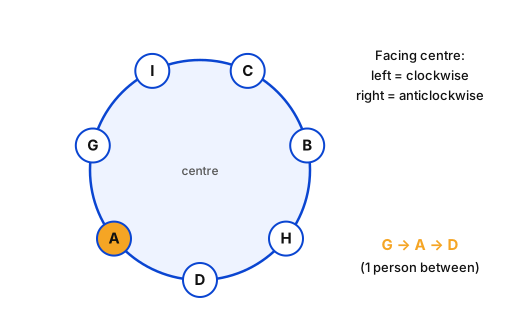
H sits to the immediate right of D. Only three people sit between H and I when counted from the left of H. Only three people sit between D and C. A sits to the immediate right of G. How many people sit between D and G when counted from the right of G?
A, B, C, D, G, H और I एक वृत्ताकार मेज़ के चारों ओर केंद्र की ओर मुख करके बैठे हैं।
H, D के ठीक दाएँ बैठा है। H के बाएँ से गिनने पर H और I के बीच केवल तीन व्यक्ति बैठे हैं। D और C के बीच केवल तीन व्यक्ति बैठे हैं। A, G के ठीक दाएँ बैठा है। G के दाएँ से गिनने पर D और G के बीच कितने व्यक्ति बैठे हैं?
  1. AOneएक
  2. BThreeतीन
  3. CTwoदो
  4. DFourचार
Show answer

Concept: Facing the centre: left = clockwise, right = anticlockwise.

  1. H is immediate right of D. Counting left of H: D, two more, then I (three between).
  2. C is three away from D on the other side; A is immediate right of G → G and A fill the seats next to D on the left, B takes the last seat.
  3. Order clockwise from D: D, A, G, I, C, B, H.
  4. From G going right (anticlockwise): A, then D → one person between.

Trick: Draw the circle and fix D first; all other clues hang on it.

Answer: (A) One

अवधारणा: केंद्र की ओर मुख: बायाँ = दक्षिणावर्त, दायाँ = वामावर्त।

  1. H, D के ठीक दाएँ है। H के बाएँ गिनने पर: D, दो और, फिर I (बीच में तीन)।
  2. C, D से दूसरी ओर तीन व्यक्ति दूर; A, G के ठीक दाएँ → G और A, D के बाएँ वाले स्थानों पर, B अंतिम स्थान पर।
  3. D से दक्षिणावर्त क्रम: D, A, G, I, C, B, H।
  4. G से दाएँ (वामावर्त) चलें: A, फिर D → बीच में एक व्यक्ति।

ट्रिक: वृत्त बनाकर पहले D तय करें; बाकी संकेत उसी पर टिके हैं।

उत्तर: (A) One

RRB NTPC Graduate CBT 1General Intelligence and ReasoningCircular seating arrangementRRB NTPC Graduate CBT 1 2024 · 6 Jun Shift 1 →
Q4364.
Refer to the following number and symbol series and answer the question that follows. Counting to be done from left to right only. All numbers are single-digit numbers. (Left) 4 6 & 8 $ 7 & 3 9 # % 4 6 @ £ 5 Ω 9 # 1 * 7 (Right)
How many such symbols are there each of which is immediately preceded by a number and also immediately followed by another number?
निम्नलिखित संख्या और प्रतीक शृंखला को देखिए और उसके बाद पूछे गए प्रश्न का उत्तर दीजिए। गिनती केवल बाएँ से दाएँ की जानी है। सभी संख्याएँ एक-अंकीय संख्याएँ हैं। (बाएँ) 4 6 & 8 $ 7 & 3 9 # % 4 6 @ £ 5 Ω 9 # 1 * 7 (दाएँ)
ऐसे कितने प्रतीक हैं जिनमें से प्रत्येक के ठीक पहले एक संख्या है और ठीक बाद में भी एक अन्य संख्या है?
  1. AThreeतीन
  2. BFiveपाँच
  3. CSixछह
  4. DFourचार
Show answer

Concept: Pattern needed: number – symbol – number.

  1. Series: 4 6 & 8 $ 7 & 3 9 # % 4 6 @ £ 5 Ω 9 # 1 * 7
  2. ✔: 6 & 8, 8 $ 7, 7 & 3, 5 Ω 9, 9 # 1, 1 * 7
  3. ✘: # % (9 # %), % (# % 4), @ (6 @ £), £ (@ £ 5)
  4. Total = 6

Trick: Mark every symbol and check both neighbours.

Answer: (C) Six

अवधारणा: आवश्यक पैटर्न: संख्या – चिह्न – संख्या।

  1. श्रृंखला: 4 6 & 8 $ 7 & 3 9 # % 4 6 @ £ 5 Ω 9 # 1 * 7
  2. ✔: 6 & 8, 8 $ 7, 7 & 3, 5 Ω 9, 9 # 1, 1 * 7
  3. ✘: पहला #, %, @, £
  4. कुल = 6

ट्रिक: हर चिह्न पर निशान लगाकर दोनों पड़ोसी जाँचें।

उत्तर: (C) Six

RRB NTPC Graduate CBT 1General Intelligence and ReasoningNumber-symbol seriesRRB NTPC Graduate CBT 1 2024 · 6 Jun Shift 1 →
Q4365.
A group of numbers/symbols is coded using letter codes as per the codes given below and the conditions that follow. If none of the conditions apply, then codes for the respective number/symbol to be followed directly as given in the table.
Number/Symbol397&2@5%18∆46
CodeLCZMDWAPRTFBK
Conditions:
(i) If the first element is a symbol and the last a number, the codes for these two (the first and the last elements) are to be interchanged.
(ii) If the first element is an odd number and the last an even number, the first and last elements are to be coded as ©.
(iii) If both the second and third elements are perfect squares, the third element is to be coded as the code for the second element.
What will be the code for the following group?
@ 9 7 8 3
नीचे दिए गए कोडों और उसके बाद दी गई शर्तों के अनुसार संख्याओं/प्रतीकों के एक समूह को अक्षर कोडों का उपयोग करके कूटबद्ध किया जाता है। यदि कोई भी शर्त लागू नहीं होती है, तो संबंधित संख्या/प्रतीक के लिए तालिका में दिए गए कोडों का सीधे अनुसरण किया जाना है।
संख्या/प्रतीक397&2@5%18∆46
कोडLCZMDWAPRTFBK
शर्तें:
(i) यदि पहला अवयव एक प्रतीक है और अंतिम अवयव एक संख्या है, तो इन दोनों (पहले और अंतिम अवयवों) के कोड आपस में बदल दिए जाने हैं।
(ii) यदि पहला अवयव एक विषम संख्या है और अंतिम अवयव एक सम संख्या है, तो पहले और अंतिम अवयवों को © के रूप में कूटबद्ध किया जाना है।
(iii) यदि दूसरा और तीसरा दोनों अवयव पूर्ण वर्ग हैं, तो तीसरे अवयव को दूसरे अवयव के कोड के रूप में कूटबद्ध किया जाना है।
निम्नलिखित समूह का कोड क्या होगा?
@ 9 7 8 3
  1. AL C Z T W
  2. BT C B L W
  3. CW T C B L
  4. DL C T B W
Show answer

Concept: Read the table, then test each condition on @ 9 7 8 3.

  1. Direct codes: @ = W, 9 = C, 7 = Z, 8 = T, 3 = L.
  2. (i) First is a symbol (@), last a number (3) → swap their codes: first = L, last = W.
  3. (ii) does not apply (first is not an odd number). (iii) 9 is a square but 7 is not → no change.
  4. Code: L C Z T W

Trick: Test conditions in order; only one usually applies.

Answer: (A) L C Z T W

अवधारणा: तालिका पढ़ें, फिर @ 9 7 8 3 पर हर शर्त जाँचें।

  1. सीधे कोड: @ = W, 9 = C, 7 = Z, 8 = T, 3 = L।
  2. (i) पहला चिह्न (@), अंतिम संख्या (3) → कोड आपस में बदलें: पहला = L, अंतिम = W।
  3. (ii) लागू नहीं (पहला विषम संख्या नहीं)। (iii) 9 वर्ग है पर 7 नहीं → कोई बदलाव नहीं।
  4. कोड: L C Z T W

ट्रिक: शर्तें क्रम से जाँचें; अक्सर केवल एक लागू होती है।

उत्तर: (A) L C Z T W

RRB NTPC Graduate CBT 1General Intelligence and ReasoningCoding with conditionsRRB NTPC Graduate CBT 1 2024 · 6 Jun Shift 1 →
Q4366.
In a certain code language, ‘MUTE’ is coded as ‘3517’ and ‘EARS’ is coded as ‘2458’. What is the code for ‘E’ in the given code language?
एक निश्चित कूट भाषा में, ‘MUTE’ को ‘3517’ के रूप में कूटबद्ध किया जाता है और ‘EARS’ को ‘2458’ के रूप में कूटबद्ध किया जाता है। दी गई कूट भाषा में ‘E’ का कोड क्या है?
  1. A7
  2. B5
  3. C2
  4. D8
Show answer

Concept: When two words share a letter, the digit common to both codes is the code of that common letter.

  1. MUTE → 3517 and EARS → 2458.
  2. The only letter common to both words is E.
  3. The only digit common to both codes is 5. So E = 5.

Trick: Common letter ↔ common digit – no need to decode the other letters.

Answer: (B) 5

अवधारणा: जब दो शब्दों में एक अक्षर समान हो, तो दोनों कोड में समान अंक ही उस अक्षर का कोड होता है।

  1. MUTE → 3517 और EARS → 2458।
  2. दोनों शब्दों में समान अक्षर केवल E है।
  3. दोनों कोड में समान अंक केवल 5 है। अतः E = 5।

ट्रिक: समान अक्षर ↔ समान अंक – बाकी अक्षरों को डिकोड करने की ज़रूरत नहीं।

उत्तर: (B) 5

RRB NTPC Graduate CBT 1General Intelligence and ReasoningCoding-DecodingRRB NTPC Graduate CBT 1 2024 · 6 Jun Shift 1 →
Q4367.
Which of the following letter-clusters should replace # and % so that the pattern and relationship followed between the letter-cluster pair on the left side of :: is the same as that on the right side of ::?
# : MLD :: VAM : %
निम्नलिखित में से कौन-से अक्षर-समूह # और % को प्रतिस्थापित करने चाहिए ताकि :: के बाईं ओर के अक्षर-समूह युग्म के बीच अनुसरण किया गया पैटर्न और संबंध वही हो जो :: के दाईं ओर के अक्षर-समूह युग्म के बीच है?
# : MLD :: VAM : %
  1. A# = YFP, % = BKS
  2. B# = SVJ, % = YFP
  3. C# = PQG, % = SVJ
  4. D# = BKS, % = PQG
Show answer

Concept: Find the letter shifts in one pair and apply the same shifts to the other pair.

  1. Try # = PQG: P − 3 = M, Q − 5 = L, G − 3 = D → MLD ✓ (pattern −3, −5, −3).
  2. Apply to VAM: V − 3 = S, A − 5 = V (wrap: A → Z, Y, X, W, V), M − 3 = J → SVJ.
  3. So # = PQG and % = SVJ.

Trick: Only option (C) gives MLD from # with a consistent pattern; check it on the right side.

Answer: (C) # = PQG, % = SVJ

अवधारणा: एक जोड़ी में अक्षरों का खिसकाव (shift) निकालें और वही दूसरी जोड़ी पर लगाएँ।

  1. # = PQG लें: P − 3 = M, Q − 5 = L, G − 3 = D → MLD ✓ (पैटर्न −3, −5, −3)।
  2. VAM पर लगाएँ: V − 3 = S, A − 5 = V (Z, Y, X, W, V), M − 3 = J → SVJ।
  3. अतः # = PQG और % = SVJ।

ट्रिक: केवल विकल्प (C) में # से नियमित पैटर्न द्वारा MLD बनता है; दाईं ओर जाँच लें।

उत्तर: (C) # = PQG, % = SVJ

RRB NTPC Graduate CBT 1General Intelligence and ReasoningLetter AnalogyRRB NTPC Graduate CBT 1 2024 · 6 Jun Shift 1 →
Q4368.
Read the given statements and conclusions carefully. Assuming that the information given in the statements is true, even if it appears to be at variance with commonly known facts, decide which of the given conclusion(s) logically follow(s) from the statements.
Statements:
Some deers are lions.
Some frogs are deers.
Some horses are lions.
Conclusions:
(I) Atleast some lions are frogs.
(II) Some deers are horses.
दिए गए कथनों और निष्कर्षों को ध्यानपूर्वक पढ़िए। यह मानते हुए कि कथनों में दी गई जानकारी सत्य है, भले ही वह सामान्यतः ज्ञात तथ्यों से भिन्न प्रतीत होती हो, निर्णय लीजिए कि दिए गए निष्कर्षों में से कौन-सा/से निष्कर्ष तार्किक रूप से कथनों का अनुसरण करता है/करते हैं।
कथन:
कुछ हिरण, शेर हैं।
कुछ मेंढक, हिरण हैं।
कुछ घोड़े, शेर हैं।
निष्कर्ष:
(I) कम से कम कुछ शेर, मेंढक हैं।
(II) कुछ हिरण, घोड़े हैं।
  1. AOnly conclusion (I) follows.केवल निष्कर्ष (I) अनुसरण करता है।
  2. BNeither conclusion (I) nor (II) follows.न तो निष्कर्ष (I) और न ही (II) अनुसरण करता है।
  3. COnly conclusion (II) follows.केवल निष्कर्ष (II) अनुसरण करता है।
  4. DBoth conclusions (I) and (II) follow.निष्कर्ष (I) और (II) दोनों अनुसरण करते हैं।
Show answer

Concept: Two 'Some' statements linked through a middle term never give a definite conclusion between the end terms.

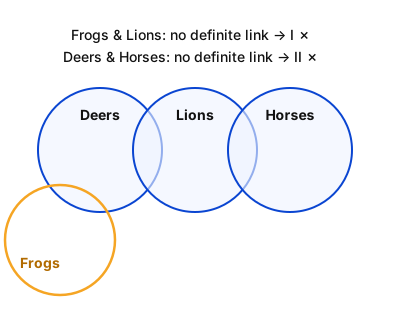
  1. Some deers are lions, some frogs are deers: frogs touch deers, but nothing fixes frogs with lions → (I) does not follow.
  2. Some deers are lions, some horses are lions: deers and horses are linked only through lions (some + some) → (II) does not follow.
  3. The diagram shows a valid case where neither overlap exists.

Trick: Some + Some = No conclusion.

Answer: (B) Neither conclusion (I) nor (II) follows.

अवधारणा: मध्य पद से जुड़े दो 'कुछ' (Some) कथनों से अंतिम पदों के बीच कोई निश्चित निष्कर्ष नहीं निकलता।

  1. कुछ हिरण शेर हैं, कुछ मेंढक हिरण हैं: मेंढक हिरण से जुड़े हैं, पर शेर से संबंध निश्चित नहीं → (I) अनुसरण नहीं करता।
  2. कुछ हिरण शेर हैं, कुछ घोड़े शेर हैं: हिरण और घोड़े केवल शेर के माध्यम से जुड़े (Some + Some) → (II) अनुसरण नहीं करता।
  3. चित्र में एक वैध स्थिति दिखाई गई है जहाँ दोनों में कोई ओवरलैप नहीं है।

ट्रिक: Some + Some = कोई निष्कर्ष नहीं।

उत्तर: (B) न तो निष्कर्ष (I) और न ही (II) अनुसरण करता है।

RRB NTPC Graduate CBT 1General Intelligence and ReasoningSyllogismRRB NTPC Graduate CBT 1 2024 · 6 Jun Shift 1 →
Q4369.
In a certain code language,
A + B means ‘A is the mother of B’
A – B means ‘A is the brother of B’
A × B means ‘A is the wife of B’ and
A ÷ B means ‘A is the father of B’.
How is M related to Q if ‘M + N ÷ O × P – Q’?
एक निश्चित कूट भाषा में,
A + B का अर्थ है ‘A, B की माँ है’
A – B का अर्थ है ‘A, B का भाई है’
A × B का अर्थ है ‘A, B की पत्नी है’ और
A ÷ B का अर्थ है ‘A, B का पिता है’।
यदि ‘M + N ÷ O × P – Q’ है, तो M, Q से किस प्रकार संबंधित है?
  1. ABrother's wife's father's motherभाई की पत्नी के पिता की माँ
  2. BBrother's wife's mother's sisterभाई की पत्नी की माँ की बहन
  3. CBrother's wife's father's sisterभाई की पत्नी के पिता की बहन
  4. D​Brother's wife's mother's motherभाई की पत्नी की माँ की माँ
Show answer

Concept: Decode each symbol step by step and build the family tree from M to Q.

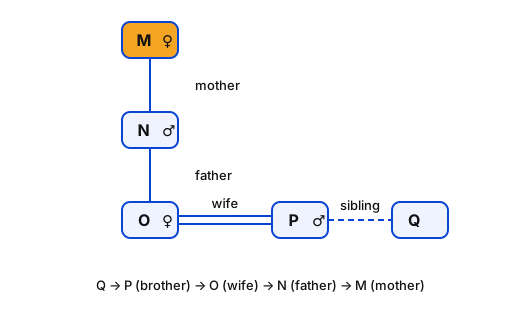
  1. M + N: M is the mother of N.
  2. N ÷ O: N is the father of O.
  3. O × P: O is the wife of P; P – Q: P is the brother of Q.
  4. Going from Q: Q's brother P → P's wife O → O's father N → N's mother M.

Trick: Read the chain backwards from Q to M and name each link in order.

Answer: (A) Brother's wife's father's mother

अवधारणा: हर चिह्न को क्रम से डिकोड करें और M से Q तक परिवार वृक्ष बनाएँ।

  1. M + N: M, N की माँ है।
  2. N ÷ O: N, O का पिता है।
  3. O × P: O, P की पत्नी है; P – Q: P, Q का भाई है।
  4. Q से चलें: Q का भाई P → P की पत्नी O → O के पिता N → N की माँ M।

ट्रिक: श्रृंखला को Q से M की ओर उल्टा पढ़ें और हर कड़ी का नाम क्रम से लिखें।

उत्तर: (A) भाई की पत्नी के पिता की माँ (Brother's wife's father's mother)

RRB NTPC Graduate CBT 1General Intelligence and ReasoningBlood Relations – CodedRRB NTPC Graduate CBT 1 2024 · 6 Jun Shift 1 →
Q4370.
What should come in place of the question mark (?) in the given series based on the English alphabetical order?
NKR PMT ROV TQX ?
अंग्रेज़ी वर्णमाला क्रम के आधार पर दी गई शृंखला में प्रश्नवाचक चिह्न (?) के स्थान पर क्या आना चाहिए?
NKR PMT ROV TQX ?
  1. AVRZ
  2. BVSY
  3. CVSZ
  4. DVRY
Show answer

Concept: Track each position of the three-letter groups separately.

  1. 1st letters: N, P, R, T → +2 each → next V.
  2. 2nd letters: K, M, O, Q → +2 each → next S.
  3. 3rd letters: R, T, V, X → +2 each → next Z.
  4. Next term = VSZ.

Trick: Every letter moves +2 – just add 2 to each letter of TQX.

Answer: (C) VSZ

अवधारणा: तीन अक्षरों के समूह में हर स्थान को अलग-अलग देखें।

  1. पहले अक्षर: N, P, R, T → हर बार +2 → अगला V।
  2. दूसरे अक्षर: K, M, O, Q → +2 → अगला S।
  3. तीसरे अक्षर: R, T, V, X → +2 → अगला Z।
  4. अगला पद = VSZ।

ट्रिक: हर अक्षर +2 खिसकता है – TQX के हर अक्षर में 2 जोड़ दें।

उत्तर: (C) VSZ

RRB NTPC Graduate CBT 1General Intelligence and ReasoningLetter SeriesRRB NTPC Graduate CBT 1 2024 · 6 Jun Shift 1 →
Q4371.
Refer to the following number and symbol series and answer the question that follows. Counting to be done from left to right only. All numbers are single-digit numbers. (Left) 3 * 9 & % 4 6 @ 9 # 1 * £ 5 8 $ 7 & 3 Ω (Right)
How many such symbols are there each of which is immediately preceded by a symbol and also immediately followed by a number?
निम्नलिखित संख्या और प्रतीक शृंखला को देखिए और उसके बाद पूछे गए प्रश्न का उत्तर दीजिए। गिनती केवल बाएँ से दाएँ की जानी है। सभी संख्याएँ एक-अंकीय संख्याएँ हैं। (बाएँ) 3 * 9 & % 4 6 @ 9 # 1 * £ 5 8 $ 7 & 3 Ω (दाएँ)
ऐसे कितने प्रतीक हैं जिनमें से प्रत्येक के ठीक पहले एक प्रतीक है और ठीक बाद में एक संख्या है?
  1. ATwoदो
  2. BOneएक
  3. CThreeतीन
  4. DFourचार
Show answer

Concept: Look for the pattern symbol – symbol – number, scanning left to right.

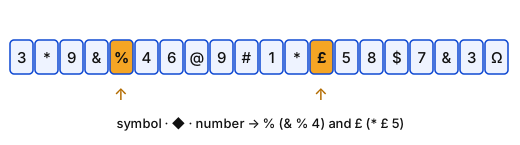
  1. & % 4 → % is preceded by a symbol and followed by a number ✓.
  2. * £ 5 → £ is preceded by a symbol and followed by a number ✓.
  3. Others fail: e.g. 9 & % (preceded by number), 8 $ 7 (preceded by number), 3 Ω (followed by nothing).
  4. Count = 2.

Trick: First mark every symbol followed by a number, then keep only those with a symbol before them.

Answer: (A) Two

अवधारणा: बाएँ से दाएँ पैटर्न खोजें: प्रतीक – प्रतीक – संख्या।

  1. & % 4 → % के पहले प्रतीक और बाद में संख्या ✓।
  2. * £ 5 → £ के पहले प्रतीक और बाद में संख्या ✓।
  3. बाकी असफल: जैसे 9 & % (पहले संख्या), 8 $ 7 (पहले संख्या), 3 Ω (बाद में कुछ नहीं)।
  4. गिनती = 2।

ट्रिक: पहले हर उस प्रतीक को चिह्नित करें जिसके बाद संख्या है, फिर केवल वे रखें जिनके पहले प्रतीक है।

उत्तर: (A) दो

RRB NTPC Graduate CBT 1General Intelligence and ReasoningSymbol-Number SeriesRRB NTPC Graduate CBT 1 2024 · 6 Jun Shift 1 →
Q4372.
Select the number from among the given options that can replace the question mark (?) in the following series.
215 187 161 137 115 95 ?
दिए गए विकल्पों में से उस संख्या का चयन कीजिए जो निम्नलिखित शृंखला में प्रश्नवाचक चिह्न (?) का स्थान ले सकती है।
215 187 161 137 115 95 ?
  1. A87
  2. B81
  3. C77
  4. D75
Show answer

Concept: Check the differences between consecutive terms.

  1. 215 − 187 = 28, 187 − 161 = 26, 161 − 137 = 24, 137 − 115 = 22, 115 − 95 = 20.
  2. Differences fall by 2 each time, so the next difference is 18.
  3. 95−18=77.

Trick: Differences 28, 26, 24, 22, 20, 18.

Answer: (C) 77

अवधारणा: क्रमागत पदों का अंतर देखें।

  1. 215 − 187 = 28, 187 − 161 = 26, 161 − 137 = 24, 137 − 115 = 22, 115 − 95 = 20।
  2. अंतर हर बार 2 घटता है, अतः अगला अंतर 18।
  3. 95−18=77।

ट्रिक: अंतर 28, 26, 24, 22, 20, 18।

उत्तर: (C) 77

RRB NTPC Graduate CBT 1General Intelligence and ReasoningNumber SeriesRRB NTPC Graduate CBT 1 2024 · 6 Jun Shift 1 →
Q4373.
A, B, C, D, E and F live on six different floors of the same building. The lowermost floor in the building is numbered 1, the floor above it, number 2 and so on till the topmost floor is numbered 6.
F lives on an even numbered floor but not 6. The sum of floors on which D and F live is 7. B lives immediately above A. The sum of floors on which F and C live is 3.
How many people live between B and F?
A, B, C, D, E और F एक ही इमारत की छह अलग-अलग मंज़िलों पर रहते हैं। इमारत की सबसे निचली मंज़िल की संख्या 1 है, उसके ऊपर की मंज़िल की संख्या 2 है और इसी प्रकार सबसे ऊपरी मंज़िल की संख्या 6 है।
F एक सम संख्या वाली मंज़िल पर रहता है परंतु 6 पर नहीं। D और F जिन मंज़िलों पर रहते हैं, उनका योग 7 है। B, A के ठीक ऊपर रहता है। F और C जिन मंज़िलों पर रहते हैं, उनका योग 3 है।
B और F के बीच कितने व्यक्ति रहते हैं?
  1. ATwoदो
  2. BFourचार
  3. CThreeतीन
  4. DOneएक
Show answer

Concept: Fix people with sure positions first, then fill the remaining floors.

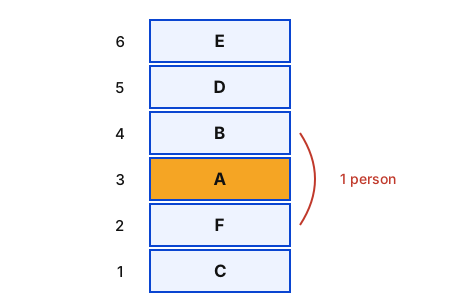
  1. F is even, not 6 → 2 or 4. F + C = 3 → F = 2, C = 1.
  2. D + F = 7 → D = 5.
  3. Left: floors 3, 4, 6. B immediately above A → A = 3, B = 4; E = 6.
  4. Between B (4) and F (2): only A → one person.

Trick: Start with the 'sum = 3' clue – only 1 + 2 works.

Answer: (D) One

अवधारणा: पहले निश्चित स्थान वाले व्यक्तियों को रखें, फिर बचे हुए फ़्लोर भरें।

  1. F सम संख्या, 6 नहीं → 2 या 4। F + C = 3 → F = 2, C = 1।
  2. D + F = 7 → D = 5।
  3. बचे: 3, 4, 6। B, A के ठीक ऊपर → A = 3, B = 4; E = 6।
  4. B (4) और F (2) के बीच केवल A → एक व्यक्ति।

ट्रिक: 'योग = 3' वाले संकेत से शुरू करें – केवल 1 + 2 संभव।

उत्तर: (D) एक

RRB NTPC Graduate CBT 1General Intelligence and ReasoningFloor PuzzleRRB NTPC Graduate CBT 1 2024 · 6 Jun Shift 1 →
Q4374.
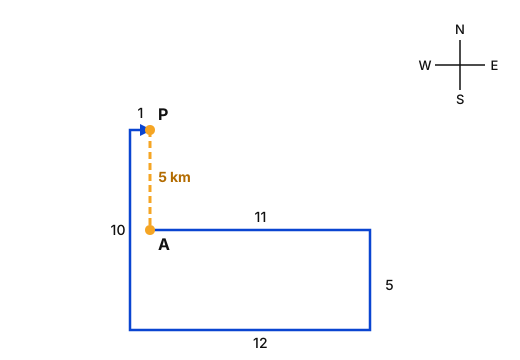
Shyam starts from point A and drives 11 km towards the east. He then takes a right turn, drives 5 km, turns right and drives 12 km. He then takes a right turn and drives 10 km. He takes a final right turn, drives 1 km and stops at point P. How far (shortest distance) and towards which direction should he drive in order to reach point A again? (All turns are 90 degree turns only unless specified.)
श्याम बिंदु A से चलना शुरू करता है और पूर्व की ओर 11 km गाड़ी चलाता है। फिर वह दाएँ मुड़ता है, 5 km गाड़ी चलाता है, दाएँ मुड़ता है और 12 km गाड़ी चलाता है। फिर वह दाएँ मुड़ता है और 10 km गाड़ी चलाता है। वह अंतिम बार दाएँ मुड़ता है, 1 km गाड़ी चलाता है और बिंदु P पर रुक जाता है। पुनः बिंदु A तक पहुँचने के लिए उसे कितनी दूरी (न्यूनतम दूरी) तक और किस दिशा में गाड़ी चलानी चाहिए? (जब तक निर्दिष्ट न हो, सभी मोड़ केवल 90 डिग्री के हैं।)
  1. A5 km to the north5 km उत्तर की ओर
  2. B5 km to the south5 km दक्षिण की ओर
  3. C4 km to the south4 km दक्षिण की ओर
  4. D4 km to the north4 km उत्तर की ओर
Show answer

Concept: Track net east–west and north–south movement from A.

  1. East 11; right → south 5; right → west 12; right → north 10; right → east 1.
  2. East–west: 11−12+1=0 → P is directly in line with A.
  3. North–south: −5+10=+5 → P is 5 km north of A.
  4. So from P he must drive 5 km towards the south.

Trick: Four right turns in a row bring you back to the original direction (east) – just add the signed distances.

Answer: (B) 5 km to the south

अवधारणा: A से कुल पूर्व–पश्चिम और उत्तर–दक्षिण विस्थापन निकालें।

  1. पूर्व 11; दाएँ → दक्षिण 5; दाएँ → पश्चिम 12; दाएँ → उत्तर 10; दाएँ → पूर्व 1।
  2. पूर्व–पश्चिम: 11−12+1=0 → P, A की सीध में है।
  3. उत्तर–दक्षिण: −5+10=+5 → P, A से 5 km उत्तर में है।
  4. अतः P से 5 km दक्षिण की ओर जाना होगा।

ट्रिक: लगातार चार दाएँ मोड़ फिर से मूल दिशा (पूर्व) में ले आते हैं – केवल चिह्न सहित दूरियाँ जोड़ें।

उत्तर: (B) 5 km दक्षिण की ओर

RRB NTPC Graduate CBT 1General Intelligence and ReasoningDirection and DistanceRRB NTPC Graduate CBT 1 2024 · 6 Jun Shift 1 →
Q4375.
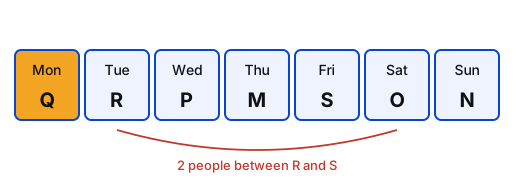
Each of M, N, O, P, Q, R and S has an exam on a different day of the week, starting from Monday and ending on Sunday of the same week. S has an exam on Friday. Only two people have exams between S and R. O has an exam immediately before N. M has an exam immediately after P. S has an exam on one of the days after M. On which day does Q have an exam?
M, N, O, P, Q, R और S में से प्रत्येक की परीक्षा सप्ताह के एक अलग दिन है, जो सोमवार से शुरू होकर उसी सप्ताह के रविवार को समाप्त होता है। S की परीक्षा शुक्रवार को है। S और R के बीच केवल दो व्यक्तियों की परीक्षाएँ हैं। O की परीक्षा N से ठीक पहले है। M की परीक्षा P के ठीक बाद है। S की परीक्षा M के बाद वाले दिनों में से किसी एक दिन है। Q की परीक्षा किस दिन है?
  1. AWednesdayबुधवार
  2. BSundayरविवार
  3. CMondayसोमवार
  4. DFridayशुक्रवार
Show answer

Concept: Place the fixed person first, then fit the pairs into the remaining days.

  1. S = Friday. Two people between S and R → R = Tuesday (Friday + 3 goes beyond Sunday).
  2. P and M are consecutive (P, then M) and before Friday, Tuesday taken → P = Wednesday, M = Thursday.
  3. O immediately before N: free days Monday, Saturday, Sunday → O = Saturday, N = Sunday.
  4. Remaining day for Q: Monday.

Trick: Fit the consecutive pairs first; the leftover single day belongs to Q.

Answer: (C) Monday

अवधारणा: पहले निश्चित व्यक्ति रखें, फिर जोड़ियों को बचे दिनों में बैठाएँ।

  1. S = शुक्रवार। S और R के बीच दो लोग → R = मंगलवार (शुक्रवार + 3 रविवार से आगे चला जाता है)।
  2. P और M क्रमागत (पहले P, फिर M) और शुक्रवार से पहले, मंगलवार भरा → P = बुधवार, M = गुरुवार।
  3. O, N से ठीक पहले: खाली दिन सोमवार, शनिवार, रविवार → O = शनिवार, N = रविवार।
  4. Q के लिए बचा दिन: सोमवार।

ट्रिक: पहले क्रमागत जोड़ियाँ बैठाएँ; बचा हुआ अकेला दिन Q का।

उत्तर: (C) सोमवार

RRB NTPC Graduate CBT 1General Intelligence and ReasoningScheduling PuzzleRRB NTPC Graduate CBT 1 2024 · 6 Jun Shift 1 →
Q4376.
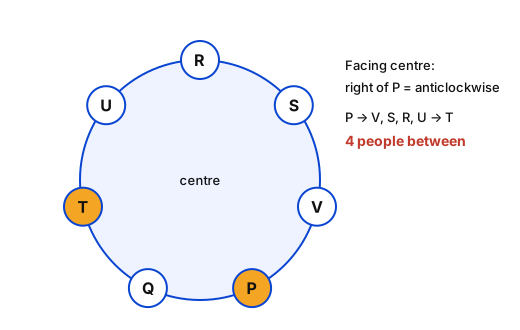
P, Q, R, S, T, U and V are sitting around a circular table facing the centre. Only three people sit between R and Q when counted from the left of R. Only three people sit between V and U when counted from the right of U. S sits to the immediate right of V. T is an immediate neighbour of U as well as Q. How many people sit between T and P when counted from the right of P?
P, Q, R, S, T, U और V एक वृत्ताकार मेज़ के चारों ओर केंद्र की ओर मुख करके बैठे हैं। R के बाएँ से गिनने पर R और Q के बीच केवल तीन व्यक्ति बैठे हैं। U के दाएँ से गिनने पर V और U के बीच केवल तीन व्यक्ति बैठे हैं। S, V के ठीक दाएँ बैठा है। T, U और Q दोनों का निकटतम पड़ोसी है। P के दाएँ से गिनने पर T और P के बीच कितने व्यक्ति बैठे हैं?
  1. A4
  2. B2
  3. C3
  4. D1
Show answer

Concept: When facing the centre, a person's left is clockwise and right is anticlockwise.

  1. Fix R. Three between R and Q from R's left → Q is 4th clockwise from R.
  2. T is a neighbour of Q and of U. If T, U lie between R and Q, then V (3 seats to the right of U, i.e. 4th clockwise) and S (right of V) clash with Q. So T and U come after Q: R, _, _, _, Q, T, U clockwise.
  3. V is 4th from U to its right → V is 2nd clockwise from R; S (immediate right of V) is 1st; P takes the last seat.
  4. Clockwise: R, S, V, P, Q, T, U. From P to the right (anticlockwise): V, S, R, U, then T → 4 people between.

Trick: With 7 seats, '3 between one way' = '2 between the other way' – use it to cross-check.

Answer: (A) 4

अवधारणा: केंद्र की ओर मुख होने पर व्यक्ति का बायाँ = दक्षिणावर्त (clockwise) और दायाँ = वामावर्त (anticlockwise)।

  1. R को रखें। R के बाएँ से गिनने पर R और Q के बीच तीन → Q, R से दक्षिणावर्त चौथे स्थान पर।
  2. T, Q और U दोनों का पड़ोसी है। यदि T, U को R और Q के बीच रखें तो V (U के दाएँ से चौथा) और S (V के ठीक दाएँ) Q से टकराते हैं। अतः दक्षिणावर्त: R, _, _, _, Q, T, U।
  3. V, U के दाएँ से चौथा → R से दक्षिणावर्त दूसरा; S (V के ठीक दाएँ) पहला; P अंतिम खाली स्थान पर।
  4. दक्षिणावर्त: R, S, V, P, Q, T, U। P के दाएँ से (वामावर्त): V, S, R, U, फिर T → बीच में 4 व्यक्ति।

ट्रिक: 7 सीटों में 'एक ओर 3 बीच में' = 'दूसरी ओर 2 बीच में' – इससे जाँच करें।

उत्तर: (A) 4

RRB NTPC Graduate CBT 1General Intelligence and ReasoningCircular Seating ArrangementRRB NTPC Graduate CBT 1 2024 · 6 Jun Shift 1 →
Q4377.
RD 14 is related to UF 10 in a certain way. In the same way, CR 10 is related to FT 6. To which of the given options is ON 1 related, following the same logic?
RD 14 एक निश्चित प्रकार से UF 10 से संबंधित है। उसी प्रकार, CR 10, FT 6 से संबंधित है। समान तर्क का अनुसरण करते हुए, ON 1 दिए गए विकल्पों में से किससे संबंधित है?
  1. ARS −1
  2. BPR −9
  3. CRP −3
  4. DQF −7
Show answer

Concept: Find the change in each letter and in the number.

  1. RD 14 → UF 10: R + 3 = U, D + 2 = F, 14 − 4 = 10.
  2. CR 10 → FT 6: C + 3 = F, R + 2 = T, 10 − 4 = 6 ✓.
  3. ON 1 → O + 3 = R, N + 2 = P, 1 − 4 = −3 → RP −3.

Trick: Rule = (+3, +2, −4); only option (C) has first letter R and second letter P.

Answer: (C) RP −3

अवधारणा: हर अक्षर और संख्या में बदलाव निकालें।

  1. RD 14 → UF 10: R + 3 = U, D + 2 = F, 14 − 4 = 10।
  2. CR 10 → FT 6: C + 3 = F, R + 2 = T, 10 − 4 = 6 ✓।
  3. ON 1 → O + 3 = R, N + 2 = P, 1 − 4 = −3 → RP −3।

ट्रिक: नियम = (+3, +2, −4); केवल विकल्प (C) में पहला अक्षर R और दूसरा P है।

उत्तर: (C) RP −3

RRB NTPC Graduate CBT 1General Intelligence and ReasoningAlpha-Numeric AnalogyRRB NTPC Graduate CBT 1 2024 · 6 Jun Shift 1 →
Q4378.
What will come in place of the question mark (?) in the following equation, if ‘+’ and ‘−‘ are interchanged and ‘×’ and ‘÷’ are interchanged?
66 ÷ 8 − 231 × 11 + 14 = ?
यदि ‘+’ और ‘−‘ को आपस में बदल दिया जाए तथा ‘×’ और ‘÷’ को आपस में बदल दिया जाए, तो निम्नलिखित समीकरण में प्रश्नवाचक चिह्न (?) के स्थान पर क्या आएगा?
66 ÷ 8 − 231 × 11 + 14 = ?
  1. A545
  2. B525
  3. C515
  4. D535
Show answer

Concept: Swap the signs first, then apply BODMAS.

  1. After interchange: 66×8+231÷11−14.
  2. 66×8=528, 231÷11=21.
  3. 528+21−14=535.

Trick: Rewrite the whole expression with new signs before calculating – avoids mixing up.

Answer: (D) 535

अवधारणा: पहले चिह्न बदलें, फिर BODMAS लगाएँ।

  1. बदलने के बाद: 66×8+231÷11−14।
  2. 66×8=528, 231÷11=21।
  3. 528+21−14=535।

ट्रिक: गणना से पहले पूरा व्यंजक नए चिह्नों के साथ दोबारा लिखें – गलती नहीं होगी।

उत्तर: (D) 535

RRB NTPC Graduate CBT 1General Intelligence and ReasoningMathematical OperationsRRB NTPC Graduate CBT 1 2024 · 6 Jun Shift 1 →
Q4379.
Who among the following received the Padma shri award in 2025 in the category of ‘Others–Spiritualism’ Posthumously?
निम्नलिखित में से किसे 2025 में ‘अन्य–अध्यात्म’ श्रेणी में मरणोपरांत पद्म श्री पुरस्कार प्राप्त हुआ?
  1. ALibia Lobo Sardesai
  2. BMD Srinivas
  3. CLama Lobzang
  4. DMadugula Nagaphani Sarma
Show answer

Concept: Padma Shri 2025 list – Others (Spiritualism), posthumous award.

  1. Lama Lobzang, a Buddhist monk from Ladakh, was awarded the Padma Shri 2025 posthumously in Others–Spiritualism.
  2. Libia Lobo Sardesai (Goa freedom fighter) – Social Work; Madugula Nagaphani Sarma – Art (Avadhanam); MD Srinivas – Literature & Education.

Yaad rakhein: Posthumous + Spiritualism + Ladakh → Lama Lobzang.

Answer: (C) Lama Lobzang

अवधारणा: पद्म श्री 2025 सूची – अन्य (आध्यात्मिकता), मरणोपरांत सम्मान।

  1. लद्दाख के बौद्ध भिक्षु लामा लोबज़ांग को 2025 में अन्य–आध्यात्मिकता श्रेणी में मरणोपरांत पद्म श्री मिला।
  2. लिबिया लोबो सरदेसाई – समाज सेवा; मदुगुला नागफणि शर्मा – कला; एम.डी. श्रीनिवास – साहित्य व शिक्षा।

याद रखें: मरणोपरांत + आध्यात्मिकता + लद्दाख → लामा लोबज़ांग।

उत्तर: (C) लामा लोबज़ांग

RRB NTPC Graduate CBT 1General AwarenessPadma Awards 2025RRB NTPC Graduate CBT 1 2024 · 5 Jun Shift 3 →
Q4380.
On 26 March 2025, where was the 8th State Level Coordination Committee (SLCC) meeting conducted by the Reserve Bank of India (RBI)?
26 मार्च 2025 को भारतीय रिज़र्व बैंक (RBI) द्वारा 8वीं राज्य स्तरीय समन्वय समिति (SLCC) की बैठक कहाँ आयोजित की गई थी?
  1. AImphalइंफाल
  2. BGangtokगंगटोक
  3. CGuwahatiगुवाहाटी
  4. DKolkataकोलकाता
Show answer

Concept: State Level Coordination Committee (SLCC) meetings are held by RBI regional offices with state governments.

  1. The 8th SLCC meeting was convened by RBI on 26 March 2025 in Gangtok, Sikkim, chaired by the Chief Secretary of Sikkim.
  2. It reviewed unauthorised deposit schemes and financial frauds in the state.

Yaad rakhein: SLCC = state-level forum against illegal deposit schemes (BUDS Act).

Answer: (B) Gangtok

अवधारणा: राज्य स्तरीय समन्वय समिति (SLCC) की बैठक RBI राज्य सरकार के साथ करता है।

  1. 8वीं SLCC बैठक 26 मार्च 2025 को गंगटोक (सिक्किम) में हुई, अध्यक्षता सिक्किम के मुख्य सचिव ने की।
  2. इसमें अवैध जमा योजनाओं और वित्तीय धोखाधड़ी की समीक्षा हुई।

याद रखें: SLCC = अवैध जमा योजनाओं के विरुद्ध राज्य स्तरीय मंच (BUDS अधिनियम)।

उत्तर: (B) गंगटोक

RRB NTPC Graduate CBT 1General AwarenessBanking – RBIRRB NTPC Graduate CBT 1 2024 · 5 Jun Shift 3 →