Question bank

Q&A: practice questions with answers

Search questions on any topic. Filter by exam category, exam, subject and topic, try the question, then open the answer and explanation.

Courses – airGurukul

7,077 questions found.

Q5241.
If 2 is subtracted from each of the numerator and the denominator of a fraction ab, it becomes 14. If 17 is added to the numerator and 8 is added to the denominator of the original fraction, then the fraction becomes 77. What is the value of (4a−b)?
यदि किसी भिन्न ab के अंश और हर में से प्रत्येक से 2 घटाया जाए, तो वह 14 हो जाती है। यदि मूल भिन्न के अंश में 17 और हर में 8 जोड़ा जाए, तो भिन्न 77 हो जाती है। (4a−b) का मान क्या है?
  1. A3
  2. B4
  3. C6
  4. D7
Show answer

Concept: Convert each condition on the fraction into a linear equation in a and b, then solve.

  1. a−2b−2=14⇒4a−8=b−2⇒b=4a−6.
  2. a+17b+8=77=1⇒a+17=b+8⇒b=a+9.
  3. 4a−6=a+9⇒a=5, b=14; so 4a−b=20−14=6.

Trick: 77 simply means numerator = denominator – that gives b=a+9 instantly.

Answer: (C) 6

अवधारणा: भिन्न पर दी गई हर शर्त को a और b में रैखिक समीकरण बनाएँ, फिर हल करें।

  1. a−2b−2=14⇒4a−8=b−2⇒b=4a−6।
  2. a+17b+8=77=1⇒a+17=b+8⇒b=a+9।
  3. 4a−6=a+9⇒a=5, b=14; अतः 4a−b=20−14=6।

ट्रिक: 77 का मतलब अंश = हर – इससे तुरंत b=a+9 मिलता है।

उत्तर: (C) 6

RRB NTPC Graduate CBT 1MathematicsFractions – Linear EquationsRRB NTPC Graduate CBT 1 2025 · 25 Mar Shift 1 →
Q5242.
Find the mean proportional between 7.2 and 20.
7.2 और 20 के बीच मध्यानुपाती (mean proportional) ज्ञात कीजिए।
  1. A10
  2. B11
  3. C8
  4. D12
Show answer

Concept: Mean proportional between a and b is ab (since a:x=x:b).

  1. x=7.2×20=144.
  2. x=12.

Trick: 7.2×20=72×2=144 – spot the perfect square.

Answer: (D) 12

अवधारणा: a और b के बीच मध्यानुपाती =ab (क्योंकि a:x=x:b)।

  1. x=7.2×20=144।
  2. x=12।

ट्रिक: 7.2×20=72×2=144 – पूर्ण वर्ग पहचानें।

उत्तर: (D) 12

RRB NTPC Graduate CBT 1MathematicsRatio and ProportionRRB NTPC Graduate CBT 1 2025 · 25 Mar Shift 1 →
Q5243.
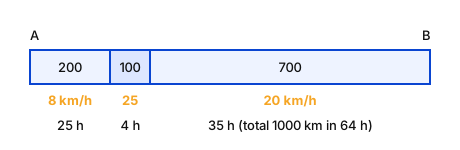
A car covers one-fifth of the distance from A to B at the speed of 8 km/h, one-tenth of the distance at 25 km/h and the remaining at the speed of 20 km/h. Find the average speed of the whole journey.
एक कार A से B तक की दूरी का एक-पाँचवाँ भाग 8 km/h की चाल से, दूरी का एक-दसवाँ भाग 25 km/h की चाल से और शेष दूरी 20 km/h की चाल से तय करती है। पूरी यात्रा की औसत चाल ज्ञात कीजिए।
  1. A14.225 km/h
  2. B12.625 km/h
  3. C15.625 km/h
  4. D17.225 km/h
Show answer

Concept: Average speed =total distancetotal time; assume a convenient total distance.

  1. Let the distance be 1000 km (LCM-friendly): parts 200 km, 100 km, 700 km.
  2. Times: 2008=25 h, 10025=4 h, 70020=35 h; total =64 h.
  3. Average speed =100064=15.625km/h.

Trick: Never average the speeds; pick a distance divisible by 5, 10, 8, 25, 20 (1000 works) and add times.

Answer: (C) 15.625 km/h

अवधारणा: औसत चाल =कुल दूरीकुल समय; सुविधाजनक कुल दूरी मान लें।

  1. दूरी 1000 km मानें: भाग 200 km, 100 km, 700 km।
  2. समय: 2008=25 h, 10025=4 h, 70020=35 h; कुल =64 h।
  3. औसत चाल =100064=15.625km/h।

ट्रिक: चालों का औसत कभी न लें; 5, 10, 8, 25, 20 से विभाज्य दूरी (1000) लेकर समय जोड़ें।

उत्तर: (C) 15.625 km/h

RRB NTPC Graduate CBT 1MathematicsAverage SpeedRRB NTPC Graduate CBT 1 2025 · 25 Mar Shift 1 →
Q5244.
In what duration (in years) will ₹8,400 fetch a simple interest of ₹840 at 5% per annum rate of interest?
5% वार्षिक ब्याज दर पर ₹8,400 कितनी अवधि (वर्षों में) में ₹840 का साधारण ब्याज अर्जित करेगा?
  1. A2
  2. B1
  3. C3
  4. D4
Show answer

Concept: SI=P×R×T100.

  1. 840=8400×5×T100=420T.
  2. T=840420=2 years.

Trick: SI is 10% of the principal and the rate is 5% per year → 10÷5=2 years.

Answer: (A) 2

अवधारणा: SI=P×R×T100।

  1. 840=8400×5×T100=420T।
  2. T=840420=2 वर्ष।

ट्रिक: ब्याज मूलधन का 10% है और दर 5% वार्षिक → 10÷5=2 वर्ष।

उत्तर: (A) 2

RRB NTPC Graduate CBT 1MathematicsSimple InterestRRB NTPC Graduate CBT 1 2025 · 25 Mar Shift 1 →
Q5245.
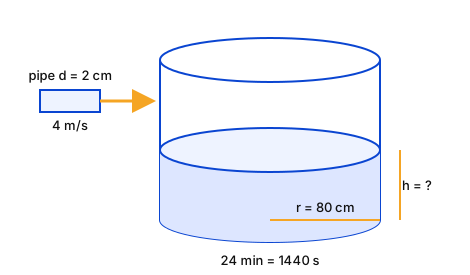
Water flows out through a circular pipe, whose internal diameter is 2 cm, at the rate of 4 metres per second into a cylindrical tank, the radius of whose base is 80 cm. By how much will the level of water rise in 24 minutes?
एक वृत्ताकार पाइप, जिसका आंतरिक व्यास 2 cm है, से 4 मीटर प्रति सेकंड की दर से पानी एक बेलनाकार टंकी में बहता है, जिसके आधार की त्रिज्या 80 cm है। 24 मिनट में पानी का स्तर कितना बढ़ जाएगा?
  1. A100 cm
  2. B90 cm
  3. C96 cm
  4. D91 cm
Show answer

Concept: Volume of water delivered by a pipe = (cross-section area) × (speed) × (time); equate it to the volume of the cylindrical layer formed in the tank.

  1. Pipe radius =1 cm, speed =4 m/s =400 cm/s, time =24×60=1440 s.
  2. Water delivered =π×12×400×1440 cm³.
  3. Rise h: π×802×h=π×400×1440⇒h=5760006400=90 cm.

Trick: h=rpipe2×speed×timeRtank2 – π cancels, just keep all units in cm and s.

Answer: (B) 90 cm

अवधारणा: पाइप से आया पानी = (अनुप्रस्थ काट क्षेत्रफल) × (चाल) × (समय); इसे टंकी में बनी बेलनाकार परत के आयतन के बराबर रखें।

  1. पाइप की त्रिज्या =1 cm, चाल =4 m/s =400 cm/s, समय =24×60=1440 s।
  2. आया पानी =π×12×400×1440 cm³।
  3. वृद्धि h: π×802×h=π×400×1440⇒h=5760006400=90 cm।

ट्रिक: h=rpipe2×चाल×समयRtank2 – π कट जाता है, सभी इकाइयाँ cm और s में रखें।

उत्तर: (B) 90 cm

RRB NTPC Graduate CBT 1MathematicsMensuration – CylinderRRB NTPC Graduate CBT 1 2025 · 25 Mar Shift 1 →
Q5246.
A and B complete a work in 22 days. If A alone can do it in 44 days, then B alone can do three-fourth of the same work in ______________days.
A और B एक काम को 22 दिनों में पूरा करते हैं। यदि A अकेला इसे 44 दिनों में कर सकता है, तो B अकेला उसी काम का तीन-चौथाई भाग ______________ दिनों में कर सकता है।
  1. A66
  2. B132
  3. C99
  4. D33
Show answer

Concept: One-day work of B = one-day work of (A+B) − one-day work of A.

  1. Total work =44 units (LCM of 22, 44). A+B do 2 units/day, A does 1 unit/day.
  2. B does 2−1=1 unit/day → whole work in 44 days.
  3. Three-fourth of the work: 34×44=33 days.

Trick: A alone takes exactly double the pair's time, so B is as fast as A → B also needs 44 days; then take ¾.

Answer: (D) 33

अवधारणा: B का एक दिन का कार्य = (A+B) का एक दिन का कार्य − A का एक दिन का कार्य।

  1. कुल कार्य =44 इकाई (22, 44 का LCM)। A+B प्रतिदिन 2 इकाई, A प्रतिदिन 1 इकाई।
  2. B प्रतिदिन 2−1=1 इकाई → पूरा कार्य 44 दिन में।
  3. तीन-चौथाई कार्य: 34×44=33 दिन।

ट्रिक: A अकेला जोड़ी से ठीक दोगुना समय लेता है, यानी B भी A जितना तेज़ → B को भी 44 दिन; फिर ¾ लें।

उत्तर: (D) 33

RRB NTPC Graduate CBT 1MathematicsTime and WorkRRB NTPC Graduate CBT 1 2025 · 25 Mar Shift 1 →
Q5247.
Find the solution of the following system of linear equations:
2x + y + z = 25
x − 3y + 2z = 0
y − z = 6
रैखिक समीकरणों के निम्नलिखित निकाय का हल ज्ञात कीजिए:
2x + y + z = 25
x − 3y + 2z = 0
y − z = 6
  1. Ax=554, y=−174, z=74
  2. Bx=−174, y=554, z=74
  3. Cx=74, y=554, z=−174
  4. Dx=554, y=74, z=−174
Show answer

Concept: Use the simplest equation to express one variable, substitute into the others and reduce to one unknown.

  1. From y−z=6: y=z+6.
  2. Second equation: x−3(z+6)+2z=0⇒x=z+18.
  3. First equation: 2(z+18)+(z+6)+z=25⇒4z+42=25⇒z=−174.
  4. x=−174+18=554,y=−174+6=74.

Trick: All options share the same three fractions – just check y−z=74+174=6 to pick the option where y=74, z=−174.

Answer: (D) x=554, y=74, z=−174

अवधारणा: सबसे सरल समीकरण से एक चर निकालें, बाकी में रखें और एक अज्ञात तक लाएँ।

  1. y−z=6 से: y=z+6।
  2. दूसरा समीकरण: x−3(z+6)+2z=0⇒x=z+18।
  3. पहला समीकरण: 2(z+18)+(z+6)+z=25⇒4z+42=25⇒z=−174।
  4. x=−174+18=554,y=−174+6=74।

ट्रिक: सभी विकल्पों में वही तीन भिन्न हैं – बस y−z=74+174=6 जाँचकर वह विकल्प चुनें जहाँ y=74, z=−174।

उत्तर: (D) x=554, y=74, z=−174

RRB NTPC Graduate CBT 1MathematicsLinear Equations in Three VariablesRRB NTPC Graduate CBT 1 2025 · 25 Mar Shift 1 →
Q5248.
What number will be in the place of x?
2.8 : 3.8 : : x : 5.7
x के स्थान पर कौन-सी संख्या आएगी?
2.8 : 3.8 : : x : 5.7
  1. A4.8
  2. B3.6
  3. C5.1
  4. D4.2
Show answer

Concept: In a:b::c:d, product of extremes = product of means, i.e. ab=cd.

  1. 2.83.8=x5.7.
  2. 5.7=3.8×1.5, so x=2.8×1.5=4.2.

Trick: Spot the multiplier between the two denominators (3.8 → 5.7 is ×1.5) and apply it to the numerator.

Answer: (D) 4.2

अवधारणा: a:b::c:d में बाह्य पदों का गुणनफल = मध्य पदों का गुणनफल, यानी ab=cd।

  1. 2.83.8=x5.7।
  2. 5.7=3.8×1.5, अतः x=2.8×1.5=4.2।

ट्रिक: दोनों हरों के बीच गुणक पहचानें (3.8 → 5.7 है ×1.5) और उसे अंश पर लगाएँ।

उत्तर: (D) 4.2

RRB NTPC Graduate CBT 1MathematicsProportionRRB NTPC Graduate CBT 1 2025 · 25 Mar Shift 1 →
Q5249.
A typist takes 40 minutes to type 10 pages. How many pages will he type in 88 minutes?
एक टाइपिस्ट 10 पृष्ठ टाइप करने में 40 मिनट लेता है। वह 88 मिनट में कितने पृष्ठ टाइप करेगा?
  1. A23
  2. B22
  3. C21
  4. D24
Show answer

Concept: Pages typed are directly proportional to time.

  1. Pages per minute =1040=14.
  2. In 88 minutes: 88×14=22 pages.

Trick: 4 minutes per page → 88÷4=22.

Answer: (B) 22

अवधारणा: टाइप किए पृष्ठ समय के समानुपाती होते हैं।

  1. प्रति मिनट पृष्ठ =1040=14।
  2. 88 मिनट में: 88×14=22 पृष्ठ।

ट्रिक: प्रति पृष्ठ 4 मिनट → 88÷4=22।

उत्तर: (B) 22

RRB NTPC Graduate CBT 1MathematicsUnitary MethodRRB NTPC Graduate CBT 1 2025 · 25 Mar Shift 1 →
Q5250.
Below are given two sets of numbers. In each set of numbers, a certain mathematical operation on the first number results in the second number. Similarly, a certain mathematical operation on the second number results in the third number, and so on. Which of the given options follows the same set of operations as in the question? (NOTE: A two-/three-digit number cannot be broken into individual digits for operations, e.g. if 37 is followed by 10, the operation cannot be 3 + 7, as a two-digit number cannot be broken into individual digits.)
50 – 10 – 5 – 15 ; 200 – 40 – 20 – 30
नीचे संख्याओं के दो समुच्चय दिए गए हैं। संख्याओं के प्रत्येक समुच्चय में, पहली संख्या पर एक निश्चित गणितीय संक्रिया करने से दूसरी संख्या प्राप्त होती है। इसी प्रकार, दूसरी संख्या पर एक निश्चित गणितीय संक्रिया करने से तीसरी संख्या प्राप्त होती है, और इसी तरह आगे। दिए गए विकल्पों में से कौन-सा प्रश्न में दी गई संक्रियाओं के समान समुच्चय का अनुसरण करता है? (नोट: संक्रियाओं के लिए किसी दो-/तीन-अंकीय संख्या को उसके अलग-अलग अंकों में विभाजित नहीं किया जा सकता, उदाहरण के लिए यदि 37 के बाद 10 आता है, तो संक्रिया 3 + 7 नहीं हो सकती, क्योंकि किसी दो-अंकीय संख्या को अलग-अलग अंकों में विभाजित नहीं किया जा सकता।)
50 – 10 – 5 – 15 ; 200 – 40 – 20 – 30
  1. A160 – 40 – 20 – 30
  2. B120 – 60 – 30 – 40
  3. C100 – 20 – 40 – 60
  4. D400 – 80 – 40 – 50
Show answer

Concept: Find one fixed chain of operations that takes the 1st number to the 2nd, the 2nd to the 3rd and the 3rd to the 4th in both given sets.

  1. 50÷5=10, 10÷2=5, 5+10=15.
  2. Check: 200÷5=40, 40÷2=20, 20+10=30 ✓. So the chain is ÷5, ÷2, +10.
  3. Option (D): 400÷5=80, 80÷2=40, 40+10=50 ✓. Others fail at the first step (160÷5=32, 120÷5=24, 100÷5=20 but 20÷2≠40).

Trick: The last step is +10, not ×3 – test it on the second set (20→30) before trusting the first set.

Answer: (D) 400 – 80 – 40 – 50

अवधारणा: संक्रियाओं की एक ऐसी स्थिर शृंखला खोजें जो दोनों सेटों में पहली संख्या से दूसरी, दूसरी से तीसरी और तीसरी से चौथी तक ले जाए।

  1. 50÷5=10, 10÷2=5, 5+10=15।
  2. जाँच: 200÷5=40, 40÷2=20, 20+10=30 ✓। अतः शृंखला है ÷5, ÷2, +10।
  3. विकल्प (D): 400÷5=80, 80÷2=40, 40+10=50 ✓। बाकी पहले ही चरण में असफल (160÷5=32, 120÷5=24, 100÷5=20 पर 20÷2≠40)।

ट्रिक: अंतिम चरण +10 है, ×3 नहीं – पहले सेट पर भरोसा करने से पहले दूसरे सेट (20→30) पर परखें।

उत्तर: (D) 400 – 80 – 40 – 50

RRB NTPC Graduate CBT 1General Intelligence and ReasoningNumber series (operations)RRB NTPC Graduate CBT 1 2025 · 25 Mar Shift 1 →
Q5251.
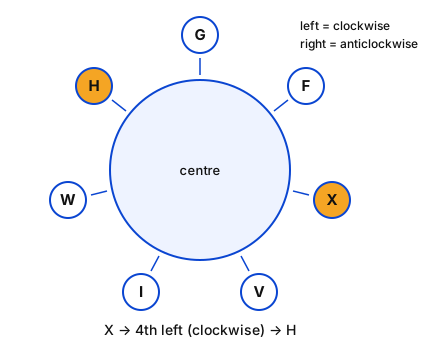
Seven people F, G, H, I, V, W, and X are sitting around a circular table facing the centre of the table. I sits third to the right of G. Only two people sit between I and F. Only three people sit between G and V. H sits to the immediate left of W. Who sits fourth to the left of X?
सात व्यक्ति F, G, H, I, V, W और X एक वृत्ताकार मेज़ के चारों ओर मेज़ के केंद्र की ओर मुख करके बैठे हैं। I, G के दाएँ तीसरे स्थान पर बैठा है। I और F के बीच केवल दो व्यक्ति बैठे हैं। G और V के बीच केवल तीन व्यक्ति बैठे हैं। H, W के ठीक बाएँ बैठा है। X के बाएँ चौथे स्थान पर कौन बैठा है?
  1. AH
  2. BI
  3. CW
  4. DF
Show answer

Concept: When everyone faces the centre, "right" means anticlockwise and "left" means clockwise.

  1. Fix G. I is 3rd to the right of G (3 places anticlockwise).
  2. Two people between I and F: one candidate seat is G itself, so F takes the other – the seat immediately clockwise of G.
  3. Three between G and V: V sits opposite-ish, the slot not occupied by I. H is immediately left of W, so H–W take the two adjacent free seats; X gets the last seat (between F and V).
  4. Final clockwise order: G, F, X, V, I, W, H. Fourth to the left of X (4 clockwise) = H.

Trick: Draw 7 dots, place the fixed person first, and count "right" as anticlockwise – most errors come from mixing the direction.

Answer: (A) H

अवधारणा: जब सब केंद्र की ओर मुख किए हों, तो "दाएँ" = वामावर्त (anticlockwise) और "बाएँ" = दक्षिणावर्त (clockwise)।

  1. G को स्थिर करें। I, G के दाएँ तीसरा (3 स्थान वामावर्त)।
  2. I और F के बीच दो लोग: दूसरी तरफ़ का स्थान स्वयं G है, अतः F, G के बगल में (दक्षिणावर्त ओर) बैठता है।
  3. G और V के बीच तीन लोग: V वह स्थान लेता है जो I ने नहीं लिया। H, W के तुरंत बाएँ है, अतः H–W दो सटी हुई खाली सीटें लेते हैं; X को अंतिम सीट (F और V के बीच) मिलती है।
  4. अंतिम दक्षिणावर्त क्रम: G, F, X, V, I, W, H। X के बाएँ चौथा (4 स्थान दक्षिणावर्त) = H।

ट्रिक: 7 बिंदु बनाएँ, पहले स्थिर व्यक्ति रखें और "दाएँ" को वामावर्त गिनें – अधिकतर गलतियाँ दिशा उलझाने से होती हैं।

उत्तर: (A) H

RRB NTPC Graduate CBT 1General Intelligence and ReasoningCircular seating arrangementRRB NTPC Graduate CBT 1 2025 · 25 Mar Shift 1 →
Q5252.
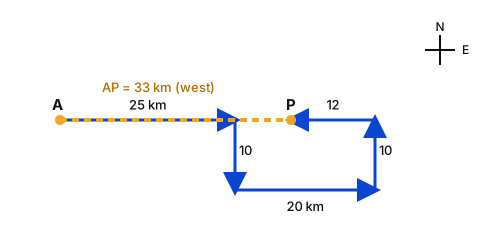
Arvind starts from Point A and drives 25 km towards east. He then takes a right turn, drives 10 km, turns left and drives 20 km. He then takes a left turn and drives 10 km. He takes a final left turn, drives 12 km and stops at Point P. How far (shortest distance) and towards which direction should he drive in order to reach Point A again? (All turns are 90-degree turns only, unless specified.)
अरविंद बिंदु A से शुरू करता है और पूर्व की ओर 25 km गाड़ी चलाता है। फिर वह दाएँ मुड़ता है, 10 km गाड़ी चलाता है, बाएँ मुड़ता है और 20 km गाड़ी चलाता है। फिर वह बाएँ मुड़ता है और 10 km गाड़ी चलाता है। वह अंतिम बार बाएँ मुड़ता है, 12 km गाड़ी चलाता है और बिंदु P पर रुक जाता है। बिंदु A पर पुनः पहुँचने के लिए उसे कितनी दूर (न्यूनतम दूरी) और किस दिशा में गाड़ी चलानी चाहिए? (जब तक अन्यथा निर्दिष्ट न हो, सभी मोड़ केवल 90 डिग्री के मोड़ हैं।)
  1. A20 km towards northउत्तर की ओर 20 km
  2. B33 km towards westपश्चिम की ओर 33 km
  3. C25 km towards eastपूर्व की ओर 25 km
  4. D10 km towards southदक्षिण की ओर 10 km
Show answer

Concept: Plot each leg on an East–North grid; the final position relative to the start gives the shortest distance and direction.

  1. A → 25 km east: (25,0). Right turn (south) 10 km: (25,−10). Left (east) 20 km: (45,−10).
  2. Left (north) 10 km: (45,0). Left (west) 12 km: P =(33,0).
  3. P is on the same east–west line as A, 33 km east of it, so he must drive 33 km west.

Trick: The two 10 km legs (south, then north) cancel – only the east–west moves matter: 25+20−12=33.

Answer: (B) 33 km towards west

अवधारणा: हर चरण को पूर्व–उत्तर ग्रिड पर आँकें; प्रारंभ के सापेक्ष अंतिम स्थिति से न्यूनतम दूरी और दिशा मिलती है।

  1. A → 25 km पूर्व: (25,0)। दाएँ (दक्षिण) 10 km: (25,−10)। बाएँ (पूर्व) 20 km: (45,−10)।
  2. बाएँ (उत्तर) 10 km: (45,0)। बाएँ (पश्चिम) 12 km: P =(33,0)।
  3. P, A की ही पूर्व–पश्चिम रेखा पर उससे 33 km पूर्व में है, अतः उसे 33 km पश्चिम चलना होगा।

ट्रिक: 10 km के दोनों चरण (दक्षिण, फिर उत्तर) कट जाते हैं – केवल पूर्व–पश्चिम चालें गिनें: 25+20−12=33।

उत्तर: (B) 33 km पश्चिम की ओर

RRB NTPC Graduate CBT 1General Intelligence and ReasoningDirection and distanceRRB NTPC Graduate CBT 1 2025 · 25 Mar Shift 1 →
Q5253.
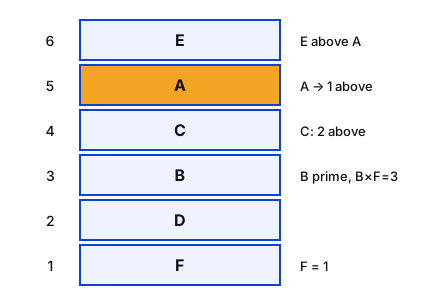
A, B, C, D, E and F live on six different floors of the same building. The lowermost floor in the building is numbered 1, the floor above it, number 2 and so on till the topmost floor is numbered 6. B lives on a floor which is a prime number. The product of the floors on which B and F live is 3. Only 2 people live above C. A lives immediately below E. How many people live above A?
A, B, C, D, E और F एक ही भवन की छह अलग-अलग मंज़िलों पर रहते हैं। भवन की सबसे निचली मंज़िल की संख्या 1 है, उसके ऊपर की मंज़िल की संख्या 2 है और इसी प्रकार सबसे ऊपरी मंज़िल की संख्या 6 है। B एक ऐसी मंज़िल पर रहता है जिसकी संख्या एक अभाज्य संख्या है। B और F जिन मंज़िलों पर रहते हैं, उनकी संख्याओं का गुणनफल 3 है। C के ऊपर केवल 2 व्यक्ति रहते हैं। A, E के ठीक नीचे रहता है। A के ऊपर कितने व्यक्ति रहते हैं?
  1. AThreeतीन
  2. BTwoदो
  3. COneएक
  4. DFourचार
Show answer

Concept: Use the strongest numerical clue first, then fill the rest.

  1. Product of B's and F's floors =3 ⇒ floors 3 and 1. B is on a prime floor ⇒ B = 3, F = 1.
  2. Only 2 people above C ⇒ C = 4.
  3. Remaining floors 2, 5, 6 for A, D, E. A immediately below E ⇒ A = 5, E = 6; D = 2.
  4. Above A (floor 5) lives only E ⇒ one person.

Trick: A product of 3 can only be 1×3 – such clues fix two people at once.

Answer: (C) One

अवधारणा: पहले सबसे मज़बूत संख्यात्मक सुराग़ लगाएँ, फिर बाकी भरें।

  1. B और F की मंज़िलों का गुणनफल =3 ⇒ मंज़िलें 3 और 1। B अभाज्य मंज़िल पर ⇒ B = 3, F = 1।
  2. C के ऊपर केवल 2 लोग ⇒ C = 4।
  3. A, D, E के लिए शेष मंज़िलें 2, 5, 6। A, E के ठीक नीचे ⇒ A = 5, E = 6; D = 2।
  4. A (मंज़िल 5) के ऊपर केवल E ⇒ एक व्यक्ति।

ट्रिक: गुणनफल 3 केवल 1×3 हो सकता है – ऐसे सुराग़ एक साथ दो लोगों को तय कर देते हैं।

उत्तर: (C) एक

RRB NTPC Graduate CBT 1General Intelligence and ReasoningFloor puzzleRRB NTPC Graduate CBT 1 2025 · 25 Mar Shift 1 →
Q5254.
Read the given statements and conclusions carefully. Assuming that the information given in the statements is true, even if it appears to be at variance with commonly known facts, decide which of the given conclusion(s) logically follow(s) from the statements.
Statements:
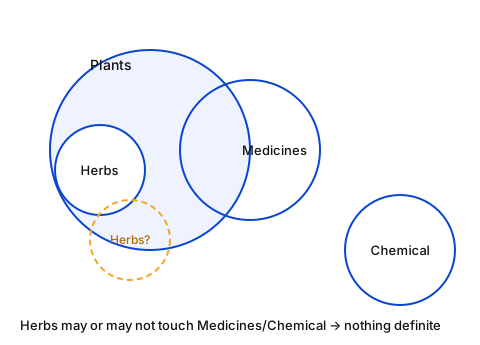
All herbs are plant. Some plants are medicines. No medicine is a chemical.
Conclusions:
(I) No herb is a chemical.
(II) Some medicines are herbs.
दिए गए कथनों और निष्कर्षों को ध्यानपूर्वक पढ़िए। यह मानते हुए कि कथनों में दी गई जानकारी सत्य है, चाहे वह सामान्यतः ज्ञात तथ्यों से भिन्न प्रतीत होती हो, निर्णय कीजिए कि दिए गए निष्कर्षों में से कौन-सा/कौन-से कथनों का तार्किक रूप से अनुसरण करता है/करते हैं।
कथन:
सभी जड़ी-बूटियाँ पौधे हैं। कुछ पौधे औषधियाँ हैं। कोई औषधि रसायन नहीं है।
निष्कर्ष:
(I) कोई जड़ी-बूटी रसायन नहीं है।
(II) कुछ औषधियाँ जड़ी-बूटियाँ हैं।
  1. ANeither conclusion (I) nor (II) follows.न तो निष्कर्ष (I) और न ही (II) अनुसरण करता है।
  2. BBoth conclusions (I) and (II) follow.निष्कर्ष (I) और (II) दोनों अनुसरण करते हैं।
  3. COnly conclusion (II) follows.केवल निष्कर्ष (II) अनुसरण करता है।
  4. DOnly conclusion (I) follows.केवल निष्कर्ष (I) अनुसरण करता है।
Show answer

Concept: A conclusion follows only if it is true in every possible Venn diagram of the statements.

  1. Herbs lie inside Plants; Medicines overlap Plants; Chemical is completely outside Medicines.
  2. (I) "No herb is a chemical": herbs are not linked to chemicals at all – a herb could be a chemical. Not definite.
  3. (II) "Some medicines are herbs": the medicine–plant overlap need not include herbs. Not definite.

Trick: Two "some"/unrelated links in a chain give no definite conclusion; also check whether (I)+(II) form an either–or pair – here they do not.

Answer: (A) Neither conclusion (I) nor (II) follows.

अवधारणा: निष्कर्ष तभी निकलता है जब वह कथनों के हर संभव वेन आरेख में सत्य हो।

  1. Herbs, Plants के अंदर हैं; Medicines, Plants से आंशिक रूप से मिलते हैं; Chemical, Medicines से पूरी तरह बाहर है।
  2. (I) "कोई herb chemical नहीं": herbs का chemical से कोई संबंध नहीं दिया – कोई herb chemical हो भी सकता है। निश्चित नहीं।
  3. (II) "कुछ medicines herbs हैं": medicine–plant का उभयनिष्ठ भाग herbs को शामिल करे, ज़रूरी नहीं। निश्चित नहीं।

ट्रिक: शृंखला में दो "कुछ"/असंबद्ध कड़ियाँ कोई निश्चित निष्कर्ष नहीं देतीं; यह भी देखें कि (I)+(II) either–or युग्म हैं या नहीं – यहाँ नहीं हैं।

उत्तर: (A) न तो निष्कर्ष (I) और न ही (II) अनुसरण करता है।

RRB NTPC Graduate CBT 1General Intelligence and ReasoningSyllogismRRB NTPC Graduate CBT 1 2025 · 25 Mar Shift 1 →
Q5255.
Refer to the following letter, symbol series and answer the question. Counting to be done from left to right only.
(Left) A # G % C = + F * / D H : B - ? $ E ! I J (Right)
How many such symbols are there, each of which is immediately preceded by a symbol and also immediately followed by another letter?
निम्नलिखित अक्षर, प्रतीक श्रेणी को देखिए और प्रश्न का उत्तर दीजिए। गिनती केवल बाएँ से दाएँ की जानी है।
(बाएँ) A # G % C = + F * / D H : B - ? $ E ! I J (दाएँ)
ऐसे कितने प्रतीक हैं, जिनमें से प्रत्येक के ठीक पहले एक प्रतीक है और ठीक बाद एक अक्षर भी है?
  1. AFOURचार
  2. BTHREEतीन
  3. CTWOदो
  4. DONEएक
Show answer

Concept: Mark each symbol and check its left neighbour (must be a symbol) and right neighbour (must be a letter).

  1. Series: A # G % C = + F * / D H : B – ? $ E ! I J.
  2. Qualifying triplets: = + F, * / D, ? $ E.
  3. Others fail: #, %, = , *, :, –, ! have a letter on the left; ? has a symbol ($) on the right.

Trick: Underline the symbols first; only a symbol sitting right after another symbol can qualify, then check its right side.

Answer: (B) THREE

अवधारणा: हर प्रतीक को चिह्नित करें और उसका बायाँ पड़ोसी (प्रतीक होना चाहिए) व दायाँ पड़ोसी (अक्षर होना चाहिए) जाँचें।

  1. शृंखला: A # G % C = + F * / D H : B – ? $ E ! I J।
  2. योग्य त्रिक: = + F, * / D, ? $ E।
  3. बाकी असफल: #, %, =, *, :, –, ! के बाएँ अक्षर है; ? के दाएँ प्रतीक ($) है।

ट्रिक: पहले प्रतीकों को रेखांकित करें; केवल वही प्रतीक योग्य हो सकता है जो किसी प्रतीक के ठीक बाद हो, फिर उसका दायाँ भाग जाँचें।

उत्तर: (B) तीन (THREE)

RRB NTPC Graduate CBT 1General Intelligence and ReasoningLetter–symbol seriesRRB NTPC Graduate CBT 1 2025 · 25 Mar Shift 1 →
Q5256.
In a certain code language, ‘HOUR’ is coded as ‘3867’ and ‘HURT’ is coded as ‘5836’. What is the code for ‘T’ in the given code language?
एक निश्चित कूट भाषा में, ‘HOUR’ को ‘3867’ के रूप में कूटबद्ध किया जाता है और ‘HURT’ को ‘5836’ के रूप में कूटबद्ध किया जाता है। दी गई कूट भाषा में ‘T’ का कूट क्या है?
  1. A6
  2. B8
  3. C3
  4. D5
Show answer

Concept: Compare two coded words: common letters share common digits; the leftover letter gets the leftover digit.

  1. HOUR → 3867 and HURT → 5836 share H, U, R; common digits are 3, 8, 6.
  2. The extra letter in HOUR is O → extra digit 7; the extra letter in HURT is T → extra digit 5.

Trick: You never need the order – just subtract the common digits.

Answer: (D) 5

अवधारणा: दो कूट शब्दों की तुलना करें: उभयनिष्ठ अक्षरों के अंक उभयनिष्ठ होते हैं; बचा अक्षर बचा अंक पाता है।

  1. HOUR → 3867 और HURT → 5836 में H, U, R उभयनिष्ठ; उभयनिष्ठ अंक 3, 8, 6।
  2. HOUR का अतिरिक्त अक्षर O → अतिरिक्त अंक 7; HURT का अतिरिक्त अक्षर T → अतिरिक्त अंक 5।

ट्रिक: क्रम की ज़रूरत नहीं – बस उभयनिष्ठ अंक हटा दें।

उत्तर: (D) 5

RRB NTPC Graduate CBT 1General Intelligence and ReasoningCoding–decoding (common letters)RRB NTPC Graduate CBT 1 2025 · 25 Mar Shift 1 →
Q5257.
In a certain code language, ‘RUST’ is coded as ‘3519’ and ‘TEAM’ is coded as ‘8645’. What is the code for ‘T’ in that language?
एक निश्चित कूट भाषा में, ‘RUST’ को ‘3519’ के रूप में कूटबद्ध किया जाता है और ‘TEAM’ को ‘8645’ के रूप में कूटबद्ध किया जाता है। उस भाषा में ‘T’ का कूट क्या है?
  1. A8
  2. B4
  3. C5
  4. D9
Show answer

Concept: A letter common to two coded words gets the digit common to both codes.

  1. RUST → 3519 and TEAM → 8645 share exactly one letter, T.
  2. The only digit common to 3519 and 8645 is 5, so T = 5.

Trick: One common letter ⇒ one common digit – no need to decode anything else.

Answer: (C) 5

अवधारणा: दो कूट शब्दों में उभयनिष्ठ अक्षर को दोनों कूटों में उभयनिष्ठ अंक मिलता है।

  1. RUST → 3519 और TEAM → 8645 में केवल एक अक्षर T उभयनिष्ठ है।
  2. 3519 और 8645 में उभयनिष्ठ अंक केवल 5 है, अतः T = 5।

ट्रिक: एक उभयनिष्ठ अक्षर ⇒ एक उभयनिष्ठ अंक – और कुछ डिकोड करने की ज़रूरत नहीं।

उत्तर: (C) 5

RRB NTPC Graduate CBT 1General Intelligence and ReasoningCoding–decoding (common letters)RRB NTPC Graduate CBT 1 2025 · 25 Mar Shift 1 →
Q5258.
Which of the following letter-clusters should replace # and % so that the pattern and relationship followed between the letter-cluster pair on the left side of :: is the same as that on the right side of :: ?
# : OYG :: TDL : %
निम्नलिखित में से किन अक्षर-समूहों को # और % के स्थान पर रखा जाना चाहिए ताकि :: के बाईं ओर के अक्षर-समूह युग्म के बीच अनुसरण किया गया पैटर्न और संबंध वही हो जो :: के दाईं ओर है?
# : OYG :: TDL : %
  1. A# = GQY % = BLI
  2. B# = GQY % = BLT
  3. C# = GOY % = BLT
  4. D# = GQY % = OLT
Show answer

Concept: Find the letter shift that turns # into OYG, then apply the same shift to TDL.

  1. Options suggest # = GQY. G(7)+8 = O(15), Q(17)+8 = Y(25), Y(25)+8 = 33 → 33−26 = 7 = G. So each letter moves +8.
  2. TDL: T(20)+8 = 28 → B, D(4)+8 = L(12), L(12)+8 = T(20) ⇒ % = BLT.

Trick: When a shift crosses Z, subtract 26 (25+8 = 33 → 7 = G).

Answer: (B) # = GQY, % = BLT

अवधारणा: वह अक्षर-शिफ्ट खोजें जो # को OYG बनाए, फिर वही TDL पर लगाएँ।

  1. विकल्पों से # = GQY। G(7)+8 = O(15), Q(17)+8 = Y(25), Y(25)+8 = 33 → 33−26 = 7 = G। अतः हर अक्षर +8 बढ़ता है।
  2. TDL: T(20)+8 = 28 → B, D(4)+8 = L(12), L(12)+8 = T(20) ⇒ % = BLT।

ट्रिक: शिफ्ट Z पार करे तो 26 घटाएँ (25+8 = 33 → 7 = G)।

उत्तर: (B) # = GQY, % = BLT

RRB NTPC Graduate CBT 1General Intelligence and ReasoningLetter-cluster analogyRRB NTPC Graduate CBT 1 2025 · 25 Mar Shift 1 →
Q5259.
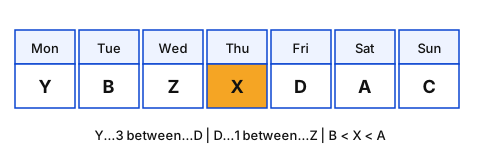
Each of X, Y, Z, A, B, C and D has an interview on a different day of the week starting on Monday and ending on Sunday of the same week. C has an interview on the last day of the week. Y has an interview on the first day of the week. Only three people have an interview between Y and D. Only one person has an interview between D and Z. X has an interview on one of the days after B but on one of the days before A. Who has an interview on Thursday?
X, Y, Z, A, B, C और D में से प्रत्येक का साक्षात्कार एक ही सप्ताह के सोमवार से आरंभ होकर रविवार को समाप्त होने वाले अलग-अलग दिन है। C का साक्षात्कार सप्ताह के अंतिम दिन है। Y का साक्षात्कार सप्ताह के पहले दिन है। Y और D के बीच केवल तीन व्यक्तियों का साक्षात्कार है। D और Z के बीच केवल एक व्यक्ति का साक्षात्कार है। X का साक्षात्कार B के बाद के किसी दिन परंतु A से पहले के किसी दिन है। गुरुवार को किसका साक्षात्कार है?
  1. AA
  2. BD
  3. CX
  4. DB
Show answer

Concept: Place the fixed ends first, then use "between" clues to lock the rest.

  1. Y = Monday, C = Sunday.
  2. Three people between Y and D ⇒ D = Friday. One person between D and Z ⇒ Z = Wednesday (Sunday is taken).
  3. Remaining days Tue, Thu, Sat for B, X, A with B before X before A ⇒ B = Tue, X = Thu, A = Sat.

Trick: "Only three between Mon and ?" → Friday; always count the gap, not the day number.

Answer: (C) X

अवधारणा: पहले स्थिर सिरे रखें, फिर "बीच में" वाले सुराग़ों से बाकी तय करें।

  1. Y = सोमवार, C = रविवार।
  2. Y और D के बीच तीन लोग ⇒ D = शुक्रवार। D और Z के बीच एक व्यक्ति ⇒ Z = बुधवार (रविवार भरा है)।
  3. शेष दिन मंगल, गुरु, शनि – B, X, A के लिए, क्रम B से पहले X से पहले A ⇒ B = मंगल, X = गुरु, A = शनि।

ट्रिक: "सोमवार और ? के बीच केवल तीन" → शुक्रवार; हमेशा अंतराल गिनें, दिन की संख्या नहीं।

उत्तर: (C) X

RRB NTPC Graduate CBT 1General Intelligence and ReasoningDays-of-week scheduling puzzleRRB NTPC Graduate CBT 1 2025 · 25 Mar Shift 1 →
Q5260.
Each of the digits in the number 54672139 is arranged in ascending order from left to right. What will be the sum of the digits which are third from the left and second from the right in the number thus formed?
संख्या 54672139 के प्रत्येक अंक को बाएँ से दाएँ आरोही क्रम में व्यवस्थित किया जाता है। इस प्रकार बनी संख्या में बाएँ से तीसरे और दाएँ से दूसरे अंकों का योग क्या होगा?
  1. A9
  2. B10
  3. C11
  4. D12
Show answer

Concept: Rewrite the digits in ascending order, then pick the required positions.

  1. 54672139 → digits 5,4,6,7,2,1,3,9 → ascending: 1 2 3 4 5 6 7 9.
  2. Third from left = 3; second from right = 7.
  3. Sum =3+7=10.

Trick: Write the sorted string once and count with your finger – avoid doing it mentally.

Answer: (B) 10

अवधारणा: अंकों को आरोही क्रम में लिखें, फिर आवश्यक स्थान चुनें।

  1. 54672139 → अंक 5,4,6,7,2,1,3,9 → आरोही: 1 2 3 4 5 6 7 9।
  2. बाएँ से तीसरा = 3; दाएँ से दूसरा = 7।
  3. योग =3+7=10।

ट्रिक: क्रमबद्ध शृंखला एक बार लिखकर उँगली से गिनें – मन में न करें।

उत्तर: (B) 10

RRB NTPC Graduate CBT 1General Intelligence and ReasoningDigit arrangementRRB NTPC Graduate CBT 1 2025 · 25 Mar Shift 1 →