Question bank

Q&A: practice questions with answers

Search questions on any topic. Filter by exam category, exam, subject and topic, try the question, then open the answer and explanation.

Courses – airGurukul

7,077 questions found.

Q5741.
Evaluate: (-9) - (-56) ÷ (-14) + (-2) × 6
मान ज्ञात कीजिए: (-9) - (-56) ÷ (-14) + (-2) × 6
  1. A-24
  2. B-27
  3. C-25
  4. D-28
Show answer

Concept: Apply BODMAS: division and multiplication first (left to right), then addition and subtraction. Keep the sign rules for negatives.

  1. (−56)÷(−14)=4 and (−2)×6=−12.
  2. Expression =(−9)−4+(−12)=−9−4−12=−25.

Trick: Negative ÷ negative = positive; negative × positive = negative. Write the simplified terms before adding to avoid sign slips.

Answer: (C) -25

अवधारणा: BODMAS लगाएँ: पहले भाग व गुणा (बाएँ से दाएँ), फिर जोड़ व घटाव। ऋणात्मक संख्याओं के चिह्न नियम याद रखें।

  1. (−56)÷(−14)=4 और (−2)×6=−12।
  2. व्यंजक =(−9)−4+(−12)=−9−4−12=−25।

ट्रिक: ऋण ÷ ऋण = धन; ऋण × धन = ऋण। चिह्न की गलती से बचने के लिए सरल पद पहले लिख लें।

उत्तर: (C) -25
RRB NTPC Graduate CBT 1MathematicsSimplification – BODMASRRB NTPC Graduate CBT 1 2025 · 22 Mar Shift 2 →
Q5742.
If the mode of a data exceeds its mean by 33.6, then the mode exceeds the median by _____. (Use empirical formula to find the answer.)
यदि किसी आँकड़े का बहुलक उसके माध्य से 33.6 अधिक है, तो बहुलक माध्यिका से _____ अधिक है। (उत्तर ज्ञात करने के लिए आनुभविक सूत्र का प्रयोग कीजिए।)
  1. A22.4
  2. B23.8
  3. C20.6
  4. D19.5
Show answer

Concept: Empirical relation: Mode=3Median−2Mean, which rearranges to Mode−Median=23(Mode−Mean).

  1. Given Mode−Mean=33.6.
  2. Mode−Median=23×33.6=22.4.
  3. Check: then Mean−Median would be −11.2, i.e. Median exceeds Mean by 11.2, and 33.6=3×11.2 ✓

Trick: Mean – Median – Mode are in the ratio of gaps 1:2: Mode−Median is twice Median−Mean, so Mode−Mean splits as 23 and 13.

Answer: (A) 22.4

अवधारणा: आनुभविक संबंध: Mode=3Median−2Mean, जिससे Mode−Median=23(Mode−Mean)।

  1. दिया है Mode−Mean=33.6।
  2. Mode−Median=23×33.6=22.4।
  3. जाँच: तब माध्यिका माध्य से 11.2 अधिक होगी और 33.6=3×11.2 ✓

ट्रिक: माध्य – माध्यिका – बहुलक के अंतराल 1:2 के अनुपात में हैं: Mode−Median, Median−Mean का दोगुना है, अतः Mode−Mean का 23 और 13 में बँटता है।

उत्तर: (A) 22.4

RRB NTPC Graduate CBT 1MathematicsStatistics – Empirical RelationRRB NTPC Graduate CBT 1 2025 · 22 Mar Shift 2 →
Q5743.
Find the value of y, satisfying 18×7×560÷3136=y+703
y का वह मान ज्ञात कीजिए, जो 18×7×560÷3136=y+703 को संतुष्ट करता है
  1. A557
  2. B556
  3. C559
  4. D567
Show answer

Concept: Evaluate the root first, then follow BODMAS: division before multiplication/addition in left-to-right order.

  1. 3136=56 (since 562=3136).
  2. 560÷56=10, so LHS =18×7×10=1260.
  3. 1260=y+703⇒y=557.

Trick: Recognise squares ending in 6: 562=3136 (and 442=1936, 542=2916). Note 560=10×56 for an instant division.

Answer: (A) 557

अवधारणा: पहले मूल निकालें, फिर BODMAS: बाएँ से दाएँ क्रम में गुणा/जोड़ से पहले भाग।

  1. 3136=56 (क्योंकि 562=3136)।
  2. 560÷56=10, अतः LHS =18×7×10=1260।
  3. 1260=y+703⇒y=557।

ट्रिक: 6 पर खत्म होने वाले वर्ग पहचानें: 562=3136 (और 442=1936, 542=2916)। 560=10×56 से भाग तुरंत हो जाता है।

उत्तर: (A) 557

RRB NTPC Graduate CBT 1MathematicsSimplification – Square RootsRRB NTPC Graduate CBT 1 2025 · 22 Mar Shift 2 →
Q5744.
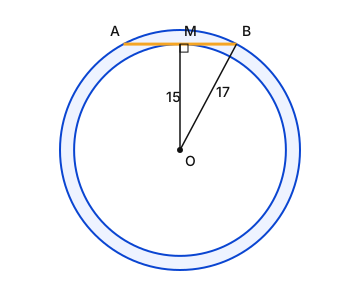
Two concentric circles have radii of 15 cm and 17 cm. Find out the length of the chord of the larger circle that is tangent to the smaller circle.
दो संकेंद्रीय वृत्तों की त्रिज्याएँ 15 cm और 17 cm हैं। बड़े वृत्त की उस जीवा की लंबाई ज्ञात कीजिए जो छोटे वृत्त की स्पर्श रेखा है।
  1. A24 cm
  2. B8 cm
  3. C30 cm
  4. D16 cm
Show answer

Concept: A chord of the outer circle that touches the inner circle is perpendicular to the radius of the inner circle at the point of contact, and that radius bisects the chord.

  1. Let O be the common centre, AB the chord touching the smaller circle at M. Then OM=15, OB=17, OM⟂AB.
  2. In right △OMB: MB=172−152=289−225=64=8cm.
  3. Chord AB=2×MB=16cm.

Trick: Chord length =2R2−r2. Spot the Pythagorean triple 8-15-17 and double the 8.

Answer: (D) 16 cm

अवधारणा: बाहरी वृत्त की वह जीवा जो आंतरिक वृत्त को स्पर्श करे, स्पर्श बिंदु पर आंतरिक त्रिज्या के लंबवत होती है और वह त्रिज्या जीवा को समद्विभाजित करती है।

  1. O उभयनिष्ठ केंद्र, AB जीवा जो छोटे वृत्त को M पर छूती है। तब OM=15, OB=17, OM⟂AB।
  2. समकोण △OMB में: MB=172−152=289−225=64=8cm।
  3. जीवा AB=2×MB=16cm।

ट्रिक: जीवा की लंबाई =2R2−r2। पाइथागोरस त्रिक 8-15-17 पहचानें और 8 को दोगुना करें।

उत्तर: (D) 16 cm

RRB NTPC Graduate CBT 1MathematicsCircles – Chord Tangent to Inner CircleRRB NTPC Graduate CBT 1 2025 · 22 Mar Shift 2 →
Q5745.
The average of three numbers is 20. If two numbers are 13 and 22, the third number is:
तीन संख्याओं का औसत 20 है। यदि दो संख्याएँ 13 और 22 हैं, तो तीसरी संख्या है:
  1. A26
  2. B27
  3. C25
  4. D24
Show answer

Concept: Sum of observations =average×count.

  1. Sum of the three numbers =20×3=60.
  2. Third number =60−(13+22)=60−35=25.

Trick: Deviation method: 13 is 7 below 20, 22 is 2 above → net −5, so the third must be 5 above: 25.

Answer: (C) 25

अवधारणा: प्रेक्षणों का योग =औसत×संख्या।

  1. तीनों संख्याओं का योग =20×3=60।
  2. तीसरी संख्या =60−(13+22)=60−35=25।

ट्रिक: विचलन विधि: 13, 20 से 7 कम; 22, 2 अधिक → शुद्ध −5, अतः तीसरी 5 अधिक होनी चाहिए: 25।

उत्तर: (C) 25

RRB NTPC Graduate CBT 1MathematicsAverageRRB NTPC Graduate CBT 1 2025 · 22 Mar Shift 2 →
Q5746.
The number 22.121212… in the form pq where p and q are integers and q≠0 is:
संख्या 22.121212… को pq के रूप में, जहाँ p और q पूर्णांक हैं और q≠0 है, लिखने पर प्राप्त होता है:
  1. A71033
  2. B74033
  3. C73033
  4. D72033
Show answer

Concept: A pure recurring part of n digits equals that block divided by n nines: 0.12―=1299.

  1. 22.121212…=22+0.12―=22+1299=22+433.
  2. =22×33+433=726+433=73033.
  3. Check: 73033=22.1212… ✓

Trick: Direct formula: 2212−2299=219099=73033 (whole number with repeating block minus whole number, over 99).

Answer: (C) 73033

अवधारणा: n अंकों का शुद्ध आवर्ती भाग उस खंड को n नौ से भाग देने के बराबर है: 0.12―=1299।

  1. 22.121212…=22+0.12―=22+1299=22+433।
  2. =22×33+433=726+433=73033।
  3. जाँच: 73033=22.1212… ✓

ट्रिक: सीधा सूत्र: 2212−2299=219099=73033 (आवर्ती खंड सहित संख्या में से पूर्णांक घटाकर 99 से भाग)।

उत्तर: (C) 73033

RRB NTPC Graduate CBT 1MathematicsRecurring Decimals to FractionsRRB NTPC Graduate CBT 1 2025 · 22 Mar Shift 2 →
Q5747.
If 8, x and 18 are in continued proportion, find the value of x.
यदि 8, x और 18 वितत अनुपात (continued proportion) में हैं, तो x का मान ज्ञात कीजिए।
  1. A18
  2. B14
  3. C12
  4. D8
Show answer

Concept: If a, b, c are in continued proportion then ab=bc, i.e. b2=ac (b is the mean proportional).

  1. x2=8×18=144.
  2. x=144=12 (taking the positive value).
  3. Check: 8:12=12:18=2:3 ✓

Trick: Mean proportional =ac. Here 8×18=144, a perfect square – answer is 12 at sight.

Answer: (C) 12

अवधारणा: यदि a, b, c वितत अनुपात में हों तो ab=bc, अर्थात b2=ac (b मध्यानुपाती है)।

  1. x2=8×18=144।
  2. x=144=12 (धनात्मक मान)।
  3. जाँच: 8:12=12:18=2:3 ✓

ट्रिक: मध्यानुपाती =ac। यहाँ 8×18=144, पूर्ण वर्ग – उत्तर 12 तुरंत।

उत्तर: (C) 12

RRB NTPC Graduate CBT 1MathematicsContinued ProportionRRB NTPC Graduate CBT 1 2025 · 22 Mar Shift 2 →
Q5748.
If 1 is added to each odd digit and 2 is added to each even digit in the number 6134527, what will be the sum of the last and first digits of the new number thus formed?
यदि संख्या 6134527 के प्रत्येक विषम अंक में 1 जोड़ा जाए और प्रत्येक सम अंक में 2 जोड़ा जाए, तो इस प्रकार बनी नई संख्या के अंतिम और पहले अंकों का योग क्या होगा?
  1. A14
  2. B18
  3. C12
  4. D16
Show answer

Concept: Change every digit by the rule, then read the new number.

  1. Number 6134527: odd digits +1, even digits +2.
  2. 6→8, 1→2, 3→4, 4→6, 5→6, 2→4, 7→8 → new number 8246648.
  3. First digit 8, last digit 8 → sum =8+8=16.

Trick: Only the first and last digits are asked – just convert those two: 6→8 and 7→8.

Answer: (D) 16

अवधारणा: नियम से हर अंक बदलें, फिर नई संख्या पढ़ें।

  1. संख्या 6134527: विषम अंक +1, सम अंक +2।
  2. 6→8, 1→2, 3→4, 4→6, 5→6, 2→4, 7→8 → नई संख्या 8246648।
  3. पहला अंक 8, अंतिम अंक 8 → योग =8+8=16।

ट्रिक: केवल पहला और अंतिम अंक पूछा है – बस वही दो बदलें: 6→8, 7→8।

उत्तर: (D) 16

RRB NTPC Graduate CBT 1General Intelligence and ReasoningNumber OperationsRRB NTPC Graduate CBT 1 2025 · 22 Mar Shift 2 →
Q5749.
Based on the English alphabetical order, three of the following four are alike in a certain way and thus form a group. Which is the one that does not belong to that group? (Note: The odd man out is not based on the number of consonants/vowels or their position in the letter cluster)
अंग्रेज़ी वर्णमाला क्रम के आधार पर, निम्नलिखित चार में से तीन एक निश्चित प्रकार से समान हैं और इस प्रकार एक समूह बनाते हैं। वह कौन-सा है जो उस समूह से संबंधित नहीं है? (नोट: असंगत का निर्धारण व्यंजनों/स्वरों की संख्या या अक्षर-समूह में उनकी स्थिति के आधार पर नहीं किया गया है)
  1. ATYS
  2. BYCX
  3. CGKF
  4. DNRM
Show answer

Concept: Write the alphabet positions and compare the gaps.

  1. YCX: 25→3 is +4 (wrapping past Z), 3→24 is −5.
  2. GKF: 7→11 (+4), 11→6 (−5); NRM: 14→18 (+4), 18→13 (−5).
  3. TYS: 20→25 (+5), 25→19 (−6) – different pattern, so TYS is the odd one.

Trick: Three clusters follow +4,−5; the third letter is one place before the first letter (F before G, M before N, X before Y) – but S is not just before T.

Answer: (A) TYS

अवधारणा: अक्षरों के स्थान लिखकर अंतर मिलाएँ।

  1. YCX: 25→3 यानी +4 (Z के बाद घूमकर), 3→24 यानी −5।
  2. GKF: 7→11 (+4), 11→6 (−5); NRM: 14→18 (+4), 18→13 (−5)।
  3. TYS: 20→25 (+5), 25→19 (−6) – अलग पैटर्न, अतः TYS विषम है।

ट्रिक: तीन समूहों में +4,−5; तीसरा अक्षर पहले अक्षर से ठीक एक पहले है (F–G, M–N, X–Y) – पर S, T से ठीक पहले नहीं।

उत्तर: (A) TYS

RRB NTPC Graduate CBT 1General Intelligence and ReasoningLetter Cluster Odd One OutRRB NTPC Graduate CBT 1 2025 · 22 Mar Shift 2 →
Q5750.
In a certain code language, ‘ROAD’ is coded as ‘8657’ and ‘DEAR’ is coded as ‘4567’. What is the code for ‘E’ in the given code language?
एक निश्चित कूट भाषा में, ‘ROAD’ को ‘8657’ के रूप में कूटबद्ध किया जाता है और ‘DEAR’ को ‘4567’ के रूप में कूटबद्ध किया जाता है। दी गई कूट भाषा में ‘E’ का कूट क्या है?
  1. A5
  2. B6
  3. C7
  4. D4
Show answer

Concept: Common letters in two words get common codes; the leftover letter takes the leftover code.

  1. ROAD → 8657, DEAR → 4567. Common letters R, A, D ↔ common codes 5, 6, 7.
  2. In ROAD the extra letter O gets the extra code 8.
  3. In DEAR the extra letter E gets the extra code 4.

Trick: Don't match letter positions – just cancel the common letters and common digits.

Answer: (D) 4

अवधारणा: दो शब्दों के समान अक्षरों के कोड समान होते हैं; बचा अक्षर बचा कोड लेता है।

  1. ROAD → 8657, DEAR → 4567. समान अक्षर R, A, D ↔ समान कोड 5, 6, 7।
  2. ROAD में अतिरिक्त अक्षर O का कोड 8।
  3. DEAR में अतिरिक्त अक्षर E का कोड 4।

ट्रिक: अक्षरों की स्थिति न मिलाएँ – समान अक्षर और समान अंक काट दें।

उत्तर: (D) 4

RRB NTPC Graduate CBT 1General Intelligence and ReasoningCoding-DecodingRRB NTPC Graduate CBT 1 2025 · 22 Mar Shift 2 →
Q5751.
In a certain code language, ‘REST’ is coded as ‘5729’ and ‘SEAT’ is coded as ‘7625’. What is the code for ‘A’ in that language?
एक निश्चित कूट भाषा में, ‘REST’ को ‘5729’ के रूप में कूटबद्ध किया जाता है और ‘SEAT’ को ‘7625’ के रूप में कूटबद्ध किया जाता है। उस भाषा में ‘A’ का कूट क्या है?
  1. A2
  2. B5
  3. C7
  4. D6
Show answer

Concept: Cancel the common letters and common digits of the two words.

  1. REST → 5729, SEAT → 7625. Common letters S, E, T ↔ common codes 5, 7, 2.
  2. REST's extra letter R → extra code 9.
  3. SEAT's extra letter A → extra code 6.

Trick: Whatever digit appears in only one word belongs to the letter that appears in only that word.

Answer: (D) 6

अवधारणा: दोनों शब्दों के समान अक्षर और समान अंक काट दें।

  1. REST → 5729, SEAT → 7625. समान अक्षर S, E, T ↔ समान कोड 5, 7, 2।
  2. REST का अतिरिक्त अक्षर R → अतिरिक्त कोड 9।
  3. SEAT का अतिरिक्त अक्षर A → अतिरिक्त कोड 6।

ट्रिक: जो अंक केवल एक शब्द में है, वह उसी शब्द के अकेले अक्षर का कोड है।

उत्तर: (D) 6

RRB NTPC Graduate CBT 1General Intelligence and ReasoningCoding-DecodingRRB NTPC Graduate CBT 1 2025 · 22 Mar Shift 2 →
Q5752.
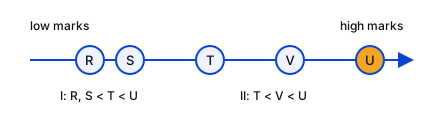
In this question, a question is followed by two statements numbered (I) and (II). You have to decide whether the data provided in the statements are sufficient to answer the question. Read both the statements and decide the appropriate answer.
Q. Ritu, Seema, Tanya, Usha, and Varsha scored different marks. Who scored the highest marks?
(I) Tanya scored more than Ritu and Seema but less than Usha.
(II) Varsha scored more than Tanya but less than Usha.
इस प्रश्न में, एक प्रश्न के बाद (I) और (II) क्रमांकित दो कथन दिए गए हैं। आपको यह निर्णय लेना है कि कथनों में दिए गए आँकड़े प्रश्न का उत्तर देने के लिए पर्याप्त हैं या नहीं। दोनों कथनों को पढ़िए और उपयुक्त उत्तर का चयन कीजिए।
प्रश्न. रितु, सीमा, तान्या, उषा और वर्षा ने अलग-अलग अंक प्राप्त किए। सबसे अधिक अंक किसने प्राप्त किए?
(I) तान्या ने रितु और सीमा से अधिक लेकिन उषा से कम अंक प्राप्त किए।
(II) वर्षा ने तान्या से अधिक लेकिन उषा से कम अंक प्राप्त किए।
  1. ABoth statements I and II together (and not statement I alone or statement II alone) are sufficient to answer the questionकथन I और II दोनों मिलकर (और न कि केवल कथन I या केवल कथन II) प्रश्न का उत्तर देने के लिए पर्याप्त हैं
  2. BBoth statements I and II together are NOT sufficient to answer the questionकथन I और II दोनों मिलकर भी प्रश्न का उत्तर देने के लिए पर्याप्त नहीं हैं
  3. CData in Statement II alone is sufficient to answer the question while data in Statement I is notकेवल कथन II के आँकड़े प्रश्न का उत्तर देने के लिए पर्याप्त हैं, जबकि कथन I के आँकड़े पर्याप्त नहीं हैं
  4. DData in Statement I alone is sufficient to answer the question while data in Statement II is notकेवल कथन I के आँकड़े प्रश्न का उत्तर देने के लिए पर्याप्त हैं, जबकि कथन II के आँकड़े पर्याप्त नहीं हैं
Show answer

Concept: Check each statement alone, then together.

  1. Statement I: Ritu, Seema < Tanya < Usha. Varsha is unknown – she could be above Usha. Not sufficient.
  2. Statement II: Tanya < Varsha < Usha. Ritu and Seema unknown. Not sufficient.
  3. Together: Usha is above Tanya, Varsha, Ritu and Seema → Usha scored the highest. Both needed.

Trick: For "who is highest", every person must be placed below someone – any unplaced name kills sufficiency.

Answer: (A) Both statements together are sufficient

अवधारणा: पहले हर कथन अकेले जाँचें, फिर दोनों साथ।

  1. कथन I: रितु, सीमा < तान्या < उषा। वर्षा अज्ञात – वह उषा से ऊपर हो सकती है। अपर्याप्त।
  2. कथन II: तान्या < वर्षा < उषा। रितु, सीमा अज्ञात। अपर्याप्त।
  3. दोनों साथ: उषा, तान्या-वर्षा-रितु-सीमा सबसे ऊपर → उषा सर्वाधिक। दोनों आवश्यक।

ट्रिक: "सबसे ऊपर कौन" के लिए हर व्यक्ति किसी से नीचे रखा होना चाहिए – एक भी अज्ञात नाम पर्याप्तता खत्म कर देता है।

उत्तर: (A) दोनों कथन मिलकर पर्याप्त

RRB NTPC Graduate CBT 1General Intelligence and ReasoningData Sufficiency – RankingRRB NTPC Graduate CBT 1 2025 · 22 Mar Shift 2 →
Q5753.
Based on the English alphabetical order, three of the following four letter-cluster pairs are alike in a certain way and thus form a group. Which is the one that does not belong to that group? (Note: The odd one out is not based on the number of
consonants/vowels or their position in the letter-cluster.)
अंग्रेज़ी वर्णमाला क्रम के आधार पर, निम्नलिखित चार अक्षर-समूह युग्मों में से तीन एक निश्चित प्रकार से समान हैं और इस प्रकार एक समूह बनाते हैं। वह कौन-सा है जो उस समूह से संबंधित नहीं है? (नोट: असंगत का निर्धारण व्यंजनों/स्वरों की संख्या या
अक्षर-समूह में उनकी स्थिति के आधार पर नहीं किया गया है।)
  1. ASU - VX
  2. BBD - EG
  3. CIK - LN
  4. DLM - NP
Show answer

Concept: Convert to positions; check the gaps inside and between the pairs.

  1. SU–VX: 19,21|22,24 → gaps +2,+1,+2.
  2. BD–EG: 2,4|5,7 and IK–LN: 9,11|12,14 → same +2,+1,+2.
  3. LM–NP: 12,13|14,16 → +1,+1,+2 – breaks the pattern.

Trick: In each valid pair the two letters skip one letter (S_U, B_D, I_K); LM are consecutive – spot it instantly.

Answer: (D) LM – NP

अवधारणा: स्थान लिखकर युग्म के भीतर और बीच के अंतर देखें।

  1. SU–VX: 19,21|22,24 → अंतर +2,+1,+2।
  2. BD–EG: 2,4|5,7 और IK–LN: 9,11|12,14 → वही +2,+1,+2।
  3. LM–NP: 12,13|14,16 → +1,+1,+2 – पैटर्न टूटता है।

ट्रिक: हर सही युग्म में दो अक्षरों के बीच एक अक्षर छूटता है (S_U, B_D, I_K); LM लगातार हैं – तुरंत पकड़ें।

उत्तर: (D) LM – NP

RRB NTPC Graduate CBT 1General Intelligence and ReasoningLetter Pair Analogy – Odd OneRRB NTPC Graduate CBT 1 2025 · 22 Mar Shift 2 →
Q5754.
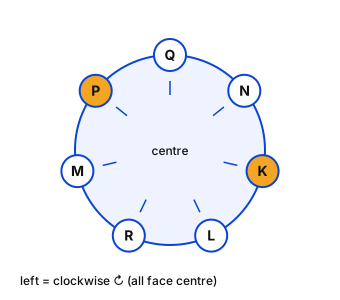
Seven people, K, L, M, N, P, Q and R, are sitting around a circular table facing the centre of the table but not necessarily in the same order. Only two people sit between R and N when counted from the left of N. L sits third to the left of Q. P sits to the immediate right of Q. P sits second to the left of R. M is not an immediate neighbour of L. Who sits third to the right of K?
सात व्यक्ति, K, L, M, N, P, Q और R, एक वृत्ताकार मेज़ के चारों ओर मेज़ के केंद्र की ओर मुख करके बैठे हैं, लेकिन आवश्यक नहीं कि इसी क्रम में हों। N के बाएँ से गिनने पर R और N के बीच केवल दो व्यक्ति बैठे हैं। L, Q के बाएँ तीसरे स्थान पर बैठा है। P, Q के ठीक दाएँ बैठा है। P, R के बाएँ दूसरे स्थान पर बैठा है। M, L का निकटतम पड़ोसी नहीं है। K के दाएँ तीसरे स्थान पर कौन बैठा है?
  1. AR
  2. BQ
  3. CM
  4. DP
Show answer

Concept: Facing the centre, a person's left is clockwise and right is anticlockwise. Start from the clue that fixes two people.

  1. P is immediate right of Q; L is third to the left of Q.
  2. P is second to the left of R → R sits two places anticlockwise from P. N: two people between R and N from N's left → N is between Q and K's side (see figure).
  3. Remaining seats: K and M; M is not next to L, so M goes beside P and K beside N. Order (clockwise): Q, N, K, L, R, M, P.
  4. Third to the right of K (anticlockwise 3): N → Q → P.

Trick: Place the "immediate" clue first (Q–P), then count only clockwise for "left" to avoid confusion.

Answer: (D) P

अवधारणा: केंद्र की ओर मुख होने पर बायाँ = दक्षिणावर्त (clockwise), दायाँ = वामावर्त। दो लोगों को तय करने वाले सूत्र से शुरू करें।

  1. P, Q के तुरंत दाएँ; L, Q के बाएँ तीसरा।
  2. P, R के बाएँ दूसरा → R, P से दो स्थान वामावर्त। N: N के बाएँ से गिनने पर R और N के बीच दो लोग → N, Q के पास (चित्र देखें)।
  3. बची सीटें K और M; M, L का पड़ोसी नहीं, इसलिए M, P के पास और K, N के पास। क्रम (दक्षिणावर्त): Q, N, K, L, R, M, P।
  4. K के दाएँ तीसरा (वामावर्त 3): N → Q → P।

ट्रिक: पहले "तुरंत" वाला सूत्र (Q–P) रखें, फिर "बाएँ" के लिए केवल दक्षिणावर्त गिनें।

उत्तर: (D) P

RRB NTPC Graduate CBT 1General Intelligence and ReasoningCircular Seating ArrangementRRB NTPC Graduate CBT 1 2025 · 22 Mar Shift 2 →
Q5755.
Each of the digits in the number 749216358 is arranged in descending order from left to right. What will be the product of the digits which are second from the left and third from the right in the number thus formed?
संख्या 749216358 के प्रत्येक अंक को बाएँ से दाएँ घटते क्रम में व्यवस्थित किया जाता है। इस प्रकार बनी संख्या में बाएँ से दूसरे और दाएँ से तीसरे अंकों का गुणनफल क्या होगा?
  1. A21
  2. B24
  3. C18
  4. D16
Show answer

Concept: Arrange the digits, then pick the positions asked.

  1. Digits of 749216358 in descending order: 9 8 7 6 5 4 3 2 1.
  2. Second from left =8; third from right =3.
  3. Product =8×3=24.

Trick: All nine digits 1–9 appear once, so the arrangement is simply 987654321 – no sorting needed.

Answer: (B) 24

अवधारणा: अंकों को क्रम में रखें, फिर पूछे गए स्थान चुनें।

  1. 749216358 के अंक अवरोही क्रम में: 9 8 7 6 5 4 3 2 1।
  2. बाएँ से दूसरा =8; दाएँ से तीसरा =3।
  3. गुणनफल =8×3=24।

ट्रिक: 1–9 सभी अंक एक-एक बार हैं, अतः क्रम सीधे 987654321 – छाँटने की ज़रूरत नहीं।

उत्तर: (B) 24

RRB NTPC Graduate CBT 1General Intelligence and ReasoningDigit ArrangementRRB NTPC Graduate CBT 1 2025 · 22 Mar Shift 2 →
Q5756.
Below are given two sets of numbers. In each set of numbers, a certain mathematical operation on the first number results in the second number. Similarly, a certain mathematical operation on the second number results in the third number, and so on. Which of the given options follows the same set of operations as in the question? (NOTE: A two-/three-digit number cannot be broken into individual digits for operations, e.g. if 37 is followed by 10, the operation cannot be 3 + 7, as a two-digit number cannot be broken into individual digits.)
100 – 50 – 60 – 30 ; 300 – 150 – 160 – 80
नीचे संख्याओं के दो समुच्चय दिए गए हैं। संख्याओं के प्रत्येक समुच्चय में, पहली संख्या पर एक निश्चित गणितीय संक्रिया करने से दूसरी संख्या प्राप्त होती है। इसी प्रकार, दूसरी संख्या पर एक निश्चित गणितीय संक्रिया करने से तीसरी संख्या प्राप्त होती है, और इसी तरह आगे भी। दिए गए विकल्पों में से कौन-सा प्रश्न में दी गई संक्रियाओं के समान समुच्चय का अनुसरण करता है? (नोट: संक्रियाओं के लिए दो-/तीन-अंकीय संख्या को अलग-अलग अंकों में विभाजित नहीं किया जा सकता, उदाहरण के लिए यदि 37 के बाद 10 आता है, तो संक्रिया 3 + 7 नहीं हो सकती, क्योंकि दो-अंकीय संख्या को अलग-अलग अंकों में विभाजित नहीं किया जा सकता।)
100 – 50 – 60 – 30 ; 300 – 150 – 160 – 80
  1. A160 – 80 – 90 – 180
  2. B220 – 110 – 120 – 30
  3. C100 – 50 – 40 – 20
  4. D80 – 40 – 50 – 25
Show answer

Concept: Find the operation between consecutive numbers and test the options.

  1. 100→50 (÷2), 50→60 (+10), 60→30 (÷2); also 300→150→160→80 – same.
  2. Option D: 80÷2=40, 40+10=50, 50÷2=25 ✓.
  3. A fails at 90→180, B at 120→30, C at 50→40.

Trick: Pattern "÷2, +10, ÷2" – check the last step first; only D halves at the end.

Answer: (D) 80 – 40 – 50 – 25

अवधारणा: क्रमागत संख्याओं के बीच की संक्रिया पहचानें और विकल्प जाँचें।

  1. 100→50 (÷2), 50→60 (+10), 60→30 (÷2); 300→150→160→80 भी वही।
  2. विकल्प D: 80÷2=40, 40+10=50, 50÷2=25 ✓।
  3. A में 90→180, B में 120→30, C में 50→40 गलत।

ट्रिक: पैटर्न "÷2, +10, ÷2" – पहले अंतिम चरण जाँचें; केवल D में अंत में आधा होता है।

उत्तर: (D) 80 – 40 – 50 – 25

RRB NTPC Graduate CBT 1General Intelligence and ReasoningNumber Series OperationsRRB NTPC Graduate CBT 1 2025 · 22 Mar Shift 2 →
Q5757.
Refer to the following letter, symbol series and answer the question. Counting to be done from left to right only.
(Left) = N * R ^ S V L ^ W O P Y $ @ H A F ? E R (Right)
How many such letters are there, each of which is immediately preceded by a symbol and also immediately followed by a symbol?
निम्नलिखित अक्षर, प्रतीक श्रृंखला को देखिए और प्रश्न का उत्तर दीजिए। गिनती केवल बाएँ से दाएँ की जानी है।
(बाएँ) = N * R ^ S V L ^ W O P Y $ @ H A F ? E R (दाएँ)
ऐसे कितने अक्षर हैं, जिनमें से प्रत्येक के ठीक पहले एक प्रतीक है और ठीक बाद भी एक प्रतीक है?
  1. ATwoदो
  2. BFourचार
  3. COneएक
  4. DThreeतीन
Show answer

Concept: Check each letter: is a symbol on both sides?

  1. Series: = N * R ^ S V L ^ W O P Y $ @ H A F ? E R
  2. N: between = and * ✓. R: between * and ^ ✓.
  3. S (^ S V), W (^ W O), H (@ H A), F (A F ?), E (? E R) – each has a letter on one side ✗.

Trick: Scan only around symbols; a valid letter must be sandwiched symbol–letter–symbol.

Answer: (A) Two

अवधारणा: हर अक्षर देखें: क्या उसके दोनों ओर प्रतीक है?

  1. शृंखला: = N * R ^ S V L ^ W O P Y $ @ H A F ? E R
  2. N: = और * के बीच ✓। R: * और ^ के बीच ✓।
  3. S (^ S V), W (^ W O), H (@ H A), F (A F ?), E (? E R) – एक ओर अक्षर है ✗।

ट्रिक: केवल प्रतीकों के आसपास देखें; सही अक्षर प्रतीक–अक्षर–प्रतीक के बीच दबा होना चाहिए।

उत्तर: (A) दो

RRB NTPC Graduate CBT 1General Intelligence and ReasoningLetter-Symbol SeriesRRB NTPC Graduate CBT 1 2025 · 22 Mar Shift 2 →
Q5758.
What should come in place of ‘?’ in the given series?
34 38 46 58 74 ?
दी गई श्रृंखला में ‘?’ के स्थान पर क्या आना चाहिए?
34 38 46 58 74 ?
  1. A94
  2. B98
  3. C96
  4. D92
Show answer

Concept: Look at the differences.

  1. 38−34=4, 46−38=8, 58−46=12, 74−58=16.
  2. Differences grow by 4 → next difference 20 → 74+20=94.

Trick: Differences are multiples of 4: 4,8,12,16,20.

Answer: (A) 94

अवधारणा: अंतर देखें।

  1. 38−34=4, 46−38=8, 58−46=12, 74−58=16।
  2. अंतर 4-4 बढ़ रहे हैं → अगला अंतर 20 → 74+20=94।

ट्रिक: अंतर 4 के गुणज हैं: 4,8,12,16,20।

उत्तर: (A) 94

RRB NTPC Graduate CBT 1General Intelligence and ReasoningNumber SeriesRRB NTPC Graduate CBT 1 2025 · 22 Mar Shift 2 →
Q5759.
Read the given statements and conclusions carefully. Assuming that the information given in the statements is true, even if it appears to be at variance with commonly known facts, decide which of the given conclusions logically follow(s) from the statements.
Statements:
All chairs are tables. Some tables are boards. No chair is a desk.
Conclusions:
(I) Some boards are tables.
(II) No table is a desk.
दिए गए कथनों और निष्कर्षों को ध्यानपूर्वक पढ़िए। कथनों में दी गई जानकारी को सत्य मानते हुए, भले ही वह सामान्यतः ज्ञात तथ्यों से भिन्न प्रतीत होती हो, निर्णय लीजिए कि दिए गए निष्कर्षों में से कौन-सा/से कथनों का तार्किक रूप से अनुसरण करता है/करते हैं।
कथन:
सभी कुर्सियाँ मेज़ हैं। कुछ मेज़ बोर्ड हैं। कोई कुर्सी डेस्क नहीं है।
निष्कर्ष:
(I) कुछ बोर्ड मेज़ हैं।
(II) कोई मेज़ डेस्क नहीं है।
  1. AOnly conclusion (I) followsकेवल निष्कर्ष (I) अनुसरण करता है
  2. BOnly conclusion (II) followsकेवल निष्कर्ष (II) अनुसरण करता है
  3. CBoth conclusions (I) and (II) followनिष्कर्ष (I) और (II) दोनों अनुसरण करते हैं
  4. DNeither conclusion (I) nor (II) followsन तो निष्कर्ष (I) और न ही (II) अनुसरण करता है
Show answer

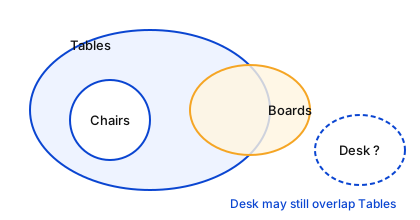
Concept: Draw the basic Venn diagram and test each conclusion against it.

  1. "Some tables are boards" converts to "Some boards are tables" → conclusion I follows.
  2. "No chair is a desk" says nothing about the rest of the tables – a desk can be a table outside the chairs circle. So "No table is a desk" is not certain → II does not follow.

Trick: Some A are B ⇔ Some B are A (always). A negative about a subset (chairs) never transfers to the superset (tables).

Answer: (A) Only conclusion (I) follows

अवधारणा: मूल वेन आरेख बनाकर हर निष्कर्ष जाँचें।

  1. "कुछ tables, boards हैं" का विलोम "कुछ boards, tables हैं" → निष्कर्ष I सही।
  2. "कोई chair, desk नहीं" बाकी tables के बारे में कुछ नहीं कहता – desk, chairs के बाहर table हो सकता है। अतः "कोई table, desk नहीं" निश्चित नहीं → II नहीं।

ट्रिक: कुछ A, B हैं ⇔ कुछ B, A हैं (हमेशा)। उपसमुच्चय (chairs) का नकारात्मक कथन समुच्चय (tables) पर लागू नहीं होता।

उत्तर: (A) केवल निष्कर्ष (I) सही

RRB NTPC Graduate CBT 1General Intelligence and ReasoningSyllogismRRB NTPC Graduate CBT 1 2025 · 22 Mar Shift 2 →
Q5760.
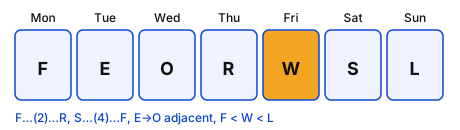
Each of F, L, O, W, E, R and S has an exam on a different day of a week, starting from Monday and ending on Sunday of the same week.
R has exam on Thursday. Only two people have exams between F and R. Only four people have exams between S and F. W has exam on one of the days after F. E has exam on the day immediately before O. L has exam on one of the days after W. Who has exam on Friday?
F, L, O, W, E, R और S में से प्रत्येक की परीक्षा एक ही सप्ताह के अलग-अलग दिन है, जो सोमवार से शुरू होकर रविवार को समाप्त होता है।
R की परीक्षा गुरुवार को है। F और R के बीच केवल दो व्यक्तियों की परीक्षा है। S और F के बीच केवल चार व्यक्तियों की परीक्षा है। W की परीक्षा F के बाद के किसी दिन है। E की परीक्षा O के ठीक एक दिन पहले है। L की परीक्षा W के बाद के किसी दिन है। शुक्रवार को किसकी परीक्षा है?
  1. AL
  2. BO
  3. CW
  4. DF
Show answer

Concept: Fix the definite clue first, then place the others.

  1. R = Thursday. Two people between F and R → F = Monday or Sunday. Four between S and F → (F Mon, S Sat) or (F Sun, S Tue).
  2. W is after F, so F cannot be Sunday → F = Mon, S = Sat.
  3. Left: Tue, Wed, Fri, Sun for W, E, O, L. E is immediately before O → Tue–Wed. W before L → W = Fri, L = Sun.

Trick: "X is after Y" eliminates the end-of-week position for Y – use it to kill one of the two cases.

Answer: (C) W

अवधारणा: पहले निश्चित सूत्र रखें, फिर बाकी।

  1. R = गुरुवार। F और R के बीच दो → F = सोमवार या रविवार। S और F के बीच चार → (F सोम, S शनि) या (F रवि, S मंगल)।
  2. W, F के बाद है, अतः F रविवार नहीं → F = सोम, S = शनि।
  3. बचे: मंगल, बुध, शुक्र, रवि – W, E, O, L के लिए। E, O से ठीक पहले → मंगल–बुध। W, L से पहले → W = शुक्र, L = रवि।

ट्रिक: "X, Y के बाद है" Y को सप्ताह के अंतिम स्थान से हटा देता है – इससे दो में से एक केस कटता है।

उत्तर: (C) W

RRB NTPC Graduate CBT 1General Intelligence and ReasoningScheduling – Days of WeekRRB NTPC Graduate CBT 1 2025 · 22 Mar Shift 2 →