Question bank

Q&A: practice questions with answers

Search questions on any topic. Filter by exam category, exam, subject and topic, try the question, then open the answer and explanation.

Courses – airGurukul

7,077 questions found.

Q561.
The median of the observations 85, 62, 20, 72, 20, 43, 35, 90, 68, 56 and 79 is:
प्रेक्षणों 85, 62, 20, 72, 20, 43, 35, 90, 68, 56 और 79 की माध्यिका है:
  1. A62
  2. B72
  3. C56
  4. D68
Show answer

Concept: Arrange in order; for n odd, median is the (n+12)th value.

  1. Ascending: 20, 20, 35, 43, 56, 62, 68, 72, 79, 85, 90.
  2. n=11 → 11+12=6th value.
  3. Median =62.

Trick: Count 5 from each end – the middle one left is 62.

Answer: (A) 62

अवधारणा: आँकड़ों को क्रम में लगाएँ; n विषम हो तो माध्यिका (n+12)वाँ मान है।

  1. आरोही क्रम: 20, 20, 35, 43, 56, 62, 68, 72, 79, 85, 90।
  2. n=11 → 11+12=6वाँ मान।
  3. माध्यिका =62।

ट्रिक: दोनों सिरों से 5-5 हटाएँ – बीच में 62 बचता है।

उत्तर: (A) 62
RRB NTPC Graduate CBT 1MathematicsStatistics – MedianRRB NTPC Graduate CBT 1 2024 · 23 Jun Shift 1 →
Q562.
Find the roots of the equation 5x2 − 11x + 2 = 0 by factorisation method.
गुणनखंड विधि द्वारा समीकरण 5x2 − 11x + 2 = 0 के मूल ज्ञात कीजिए।
  1. A1,25
  2. B15,2
  3. C2,25
  4. D5,2
Show answer

Concept: Split the middle term so that the two parts multiply to a×c.

  1. a×c=5×2=10; parts −10 and −1 (sum −11).
  2. 5x2−10x−x+2=5x(x−2)−1(x−2).
  3. (5x−1)(x−2)=0⇒x=15,2.

Trick: Sum of roots =115 and product =25 – only 15 and 2 satisfy both.

Answer: (B) 15,2

अवधारणा: मध्य पद को ऐसे तोड़ें कि दोनों भागों का गुणनफल a×c हो।

  1. a×c=5×2=10; भाग −10 और −1 (योग −11)।
  2. 5x2−10x−x+2=5x(x−2)−1(x−2)।
  3. (5x−1)(x−2)=0⇒x=15,2।

ट्रिक: मूलों का योग =115, गुणनफल =25 – केवल 15 और 2 दोनों शर्तें पूरी करते हैं।

उत्तर: (B) 15,2

RRB NTPC Graduate CBT 1MathematicsQuadratic equationsRRB NTPC Graduate CBT 1 2024 · 23 Jun Shift 1 →
Q563.
The simplified value of 74 - 3 × (21 + 15) + 36 is:
74 - 3 × (21 + 15) + 36 का सरलीकृत मान है:
  1. A2
  2. B11
  3. C-5
  4. D6
Show answer

Concept: Solve brackets, then multiplication, then addition/subtraction.

  1. 21+15=36.
  2. 3×36=108.
  3. 74−108+36=110−108=2.

Trick: Group the positives first: 74+36=110, then subtract 108.

Answer: (A) 2

अवधारणा: पहले कोष्ठक, फिर गुणा, फिर जोड़-घटाव।

  1. 21+15=36।
  2. 3×36=108।
  3. 74−108+36=110−108=2।

ट्रिक: पहले धनात्मक जोड़ें: 74+36=110, फिर 108 घटाएँ।

उत्तर: (A) 2

RRB NTPC Graduate CBT 1MathematicsSimplification (BODMAS)RRB NTPC Graduate CBT 1 2024 · 23 Jun Shift 1 →
Q564.
The selling price of 35 books is equal to the cost price of 28 books. Find the loss or gain percentage.
35 पुस्तकों का विक्रय मूल्य 28 पुस्तकों के क्रय मूल्य के बराबर है। हानि या लाभ प्रतिशत ज्ञात कीजिए।
  1. A20% loss20% हानि
  2. B1007% gain1007% लाभ
  3. C20% gain20% लाभ
  4. D1007% loss1007% हानि
Show answer

Concept: If SP of x articles = CP of y articles, then gain/loss%=y−xx×100.

  1. x=35, y=28; y<x → loss.
  2. Loss%=35−2835×100=735×100=20%.

Trick: Fewer CP-units than SP-units means loss; divide the difference by the SP count (35), not by 28.

Answer: (A) 20% loss

अवधारणा: यदि x वस्तुओं का विक्रय मूल्य = y वस्तुओं का क्रय मूल्य, तो लाभ/हानि%=y−xx×100।

  1. x=35, y=28; y<x → हानि।
  2. हानि%=35−2835×100=735×100=20%।

ट्रिक: अंतर को विक्रय वाली संख्या (35) से भाग दें, 28 से नहीं।

उत्तर: (A) 20% हानि

RRB NTPC Graduate CBT 1MathematicsProfit and lossRRB NTPC Graduate CBT 1 2024 · 23 Jun Shift 1 →
Q565.
In what time (in years) will ₹2,800 fetch an interest of ₹700 at 5% per year simple interest?
₹2,800 पर 5% वार्षिक साधारण ब्याज की दर से कितने समय (वर्षों में) में ₹700 का ब्याज प्राप्त होगा?
  1. A5
  2. B6
  3. C7
  4. D8
Show answer

Concept: SI=P×R×T100.

  1. 700=2800×5×T100=140T.
  2. T=700140=5 years.

Trick: Interest is 7002800=25% of principal; at 5% a year that takes 5 years.

Answer: (A) 5

अवधारणा: साधारण ब्याज=P×R×T100।

  1. 700=2800×5×T100=140T।
  2. T=700140=5 वर्ष।

ट्रिक: ब्याज मूलधन का 7002800=25% है; 5% वार्षिक से 5 वर्ष।

उत्तर: (A) 5

RRB NTPC Graduate CBT 1MathematicsSimple interestRRB NTPC Graduate CBT 1 2024 · 23 Jun Shift 1 →
Q566.
A car covers a distance of 1032 km in 8 hours. The speed of a train is double the speed of the car. One-third the speed of the train is equal to the speed of a bike. How much distance will the bike cover in 17 hours?
एक कार 8 घंटे में 1032 km की दूरी तय करती है। एक ट्रेन की चाल कार की चाल की दोगुनी है। ट्रेन की चाल का एक-तिहाई, एक बाइक की चाल के बराबर है। बाइक 17 घंटे में कितनी दूरी तय करेगी?
  1. A1460 km
  2. B1452 km
  3. C1462 km
  4. D1458 km
Show answer

Concept: Distance = speed × time.

  1. Car speed =10328=129km/h.
  2. Train =2×129=258km/h; bike =2583=86km/h.
  3. Distance in 17 h =86×17=1462 km.

Trick: Bike =23 of car speed: 129×23=86.

Answer: (C) 1462 km

अवधारणा: दूरी = चाल × समय।

  1. कार की चाल =10328=129km/h।
  2. ट्रेन =2×129=258km/h; बाइक =2583=86km/h।
  3. 17 घंटे में दूरी =86×17=1462 km।

ट्रिक: बाइक = कार की चाल का 23: 129×23=86।

उत्तर: (C) 1462 km

RRB NTPC Graduate CBT 1MathematicsSpeed and distanceRRB NTPC Graduate CBT 1 2024 · 23 Jun Shift 1 →
Q567.
A grocer marked his goods at 60% above their cost price and sold them at a discount of X%. If he gained 52% profit, then find the value of X.
एक पंसारी ने अपने सामान पर क्रय मूल्य से 60% अधिक मूल्य अंकित किया और उन्हें X% की छूट पर बेचा। यदि उसे 52% लाभ हुआ, तो X का मान ज्ञात कीजिए।
  1. A7
  2. B5
  3. C2
  4. D3
Show answer

Concept: SP=CP×(1+m100)(1−d100).

  1. Let CP = 100 → MP = 160.
  2. SP with 52% profit = 152.
  3. Discount =160−152=8; X=8160×100=5.

Trick: Discount % is always on MP: 8160=5%.

Answer: (B) 5

अवधारणा: विक्रय मूल्य=क्रय मूल्य×(1+m100)(1−d100)।

  1. क्रय मूल्य = 100 मानें → अंकित मूल्य = 160।
  2. 52% लाभ पर विक्रय मूल्य = 152।
  3. छूट =160−152=8; X=8160×100=5।

ट्रिक: छूट % हमेशा अंकित मूल्य पर: 8160=5%।

उत्तर: (B) 5

RRB NTPC Graduate CBT 1MathematicsMarked price and discountRRB NTPC Graduate CBT 1 2024 · 23 Jun Shift 1 →
Q568.
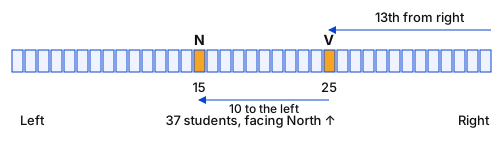
In a row of 37 students facing north, Vishesh is 13th from the right end. If Namrata is 10th to the left of Vishesh, what is Namrata's position from the left end of the line?
उत्तर की ओर मुख करके खड़े 37 विद्यार्थियों की एक पंक्ति में, विशेष दाएँ छोर से 13वें स्थान पर है। यदि नम्रता, विशेष के बाईं ओर 10वें स्थान पर है, तो पंक्ति के बाएँ छोर से नम्रता का स्थान क्या है?
  1. A11th11वाँ
  2. B12th12वाँ
  3. C15th15वाँ
  4. D14th14वाँ
Show answer

Concept: Position from left =Total−Position from right+1.

  1. Vishesh from left =37−13+1=25th.
  2. Namrata is 10 places to his left: 25−10=15th from the left.

Trick: Facing north, 'left' means towards the left end, so just subtract.

Answer: (C) 15th

अवधारणा: बाएँ से स्थान =कुल−दाएँ से स्थान+1।

  1. विशेष बाएँ से =37−13+1=25वाँ।
  2. नम्रता उसके 10 स्थान बाएँ है: 25−10=15वाँ (बाएँ से)।

ट्रिक: उत्तर की ओर मुँह होने पर 'बाएँ' = बायाँ छोर, सीधे घटाएँ।

उत्तर: (C) 15th

RRB NTPC Graduate CBT 1General Intelligence and ReasoningRanking and OrderRRB NTPC Graduate CBT 1 2024 · 23 Jun Shift 1 →
Q569.
Which of the following letter-clusters should replace # and % so that the pattern and relationship followed between the letter-cluster pair on the left side of :: is the same as that on the right side of :: ?
# : VTP :: KIE : %
निम्नलिखित में से कौन-से अक्षर-समूह # और % को प्रतिस्थापित करेंगे ताकि :: के बाईं ओर के अक्षर-समूह युग्म के बीच का पैटर्न और संबंध वही हो जो :: के दाईं ओर है?
# : VTP :: KIE : %
  1. A# = QOK, % = PNJ
  2. B# = QNK, % = PUY
  3. C# = RTK, % = PKJ
  4. D# = LOY, % = PKJ
Show answer

Concept: Find the letter shift from the first cluster to the second and apply it to the right pair.

  1. Try (A): Q → V, O → T, K → P: each letter +5.
  2. Apply +5 to KIE: K → P, I → N, E → J = PNJ, which matches % in (A).
  3. Other options fail this check (e.g. BGJ type shifts do not give VTP).

Trick: Q(17)+5 = V(22): check the first letter of each option quickly.

Answer: (A) # = QOK, % = PNJ

अवधारणा: पहले समूह से दूसरे समूह तक अक्षरों का खिसकाव ज्ञात करें और दाएँ जोड़े पर लगाएँ।

  1. (A) जाँचें: Q → V, O → T, K → P: हर अक्षर +5।
  2. KIE पर +5: K → P, I → N, E → J = PNJ, जो (A) के % से मेल खाता है।
  3. अन्य विकल्पों से VTP नहीं बनता।

ट्रिक: Q(17)+5 = V(22): हर विकल्प का पहला अक्षर जल्दी जाँचें।

उत्तर: (A) # = QOK, % = PNJ

RRB NTPC Graduate CBT 1General Intelligence and ReasoningLetter AnalogyRRB NTPC Graduate CBT 1 2024 · 23 Jun Shift 1 →
Q570.
What should come in place of the question mark (?) in the given series?
1512 1520 1530 1542 1556 ?
दी गई श्रृंखला में प्रश्न चिह्न (?) के स्थान पर क्या आना चाहिए?
1512 1520 1530 1542 1556 ?
  1. A1572
  2. B1576
  3. C1574
  4. D1570
Show answer

Concept: Check the differences between consecutive terms.

  1. Differences: 8,10,12,14 – increasing by 2.
  2. Next difference =16, so 1556+16=1572.

Trick: Second difference constant (+2) ⇒ add the next even number.

Answer: (A) 1572

अवधारणा: क्रमागत पदों का अंतर देखें।

  1. अंतर: 8,10,12,14 – हर बार 2 बढ़ता है।
  2. अगला अंतर =16, अतः 1556+16=1572।

ट्रिक: दूसरा अंतर स्थिर (+2) ⇒ अगली सम संख्या जोड़ें।

उत्तर: (A) 1572

RRB NTPC Graduate CBT 1General Intelligence and ReasoningNumber SeriesRRB NTPC Graduate CBT 1 2024 · 23 Jun Shift 1 →
Q571.
Based on the English alphabetical order, three of the following four letter-clusters are alike in a certain way and thus form a group. Which letter-cluster DOES NOT belong to that group?
(Note: The odd one out is not based on the number of consonants/vowels or their position in the letter-cluster.)
अंग्रेज़ी वर्णमाला क्रम के आधार पर, निम्नलिखित चार अक्षर-समूहों में से तीन किसी निश्चित प्रकार से एक समान हैं और इस प्रकार एक समूह बनाते हैं। कौन-सा अक्षर-समूह उस समूह से संबंधित नहीं है?
(नोट: असंगत अक्षर-समूह, उस अक्षर-समूह में व्यंजनों/स्वरों की संख्या या उनके स्थान पर आधारित नहीं है।)
  1. AYGIP
  2. BHPSY
  3. CAILR
  4. DNVYE
Show answer

Concept: Find the gaps between consecutive letters (positions A = 1 … Z = 26, cyclic).

  1. HPSY: +8,+3,+6. AILR: +8,+3,+6. NVYE: +8,+3,+6 (Y → E wraps round).
  2. YGIP: Y → G +8, G → I +2, I → P +7 – pattern differs.

Trick: Write the three gaps for each cluster; the one with a different set is odd.

Answer: (A) YGIP

अवधारणा: क्रमागत अक्षरों का अंतर ज्ञात करें (A = 1 … Z = 26, चक्रीय)।

  1. HPSY: +8,+3,+6। AILR: +8,+3,+6। NVYE: +8,+3,+6 (Y → E घूमकर)।
  2. YGIP: Y → G +8, G → I +2, I → P +7 – पैटर्न अलग।

ट्रिक: हर समूह के तीन अंतर लिखें; जिसका अलग हो वही विषम।

उत्तर: (A) YGIP

RRB NTPC Graduate CBT 1General Intelligence and ReasoningOdd One Out – LettersRRB NTPC Graduate CBT 1 2024 · 23 Jun Shift 1 →
Q572.
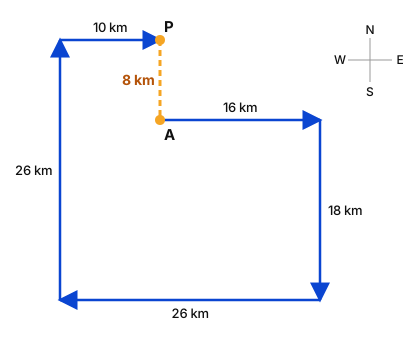
Mr. GHI starts from Point A and drives 16 km towards the east. He then takes a right turn, drives 18 km, turns right and drives 26 km. He then takes a right turn and drives 26 km. He takes a final right turn, drives 10 km and stops at Point P. How far (shortest distance) and in which direction should he drive in order to reach Point A again? (All turns are 90-degree turns only unless specified)
श्री GHI बिंदु A से प्रारंभ करते हैं और पूर्व की ओर 16 km गाड़ी चलाते हैं। फिर वे दाएँ मुड़ते हैं, 18 km गाड़ी चलाते हैं, दाएँ मुड़ते हैं और 26 km गाड़ी चलाते हैं। फिर वे दाएँ मुड़ते हैं और 26 km गाड़ी चलाते हैं। वे अंतिम बार दाएँ मुड़ते हैं, 10 km गाड़ी चलाते हैं और बिंदु P पर रुक जाते हैं। पुनः बिंदु A पर पहुँचने के लिए उन्हें कितनी दूर (न्यूनतम दूरी) और किस दिशा में गाड़ी चलानी चाहिए? (जब तक निर्दिष्ट न हो, सभी मोड़ केवल 90 डिग्री के हैं)
  1. A8 km to the southदक्षिण की ओर 8 km
  2. B4 km to the westपश्चिम की ओर 4 km
  3. C6 km to the westपश्चिम की ओर 6 km
  4. D5 km to the southदक्षिण की ओर 5 km
Show answer

Concept: Take A as origin, east as +x and north as +y; a right turn turns E → S → W → N.

  1. East 16: (16,0). Right (south) 18: (16,−18).
  2. Right (west) 26: (−10,−18). Right (north) 26: (−10,8).
  3. Right (east) 10: P =(0,8). A (0,0) is 8km directly south of P.

Trick: Net E–W: 16−26+10=0; net N–S: −18+26=8 north ⇒ go 8 south.

Answer: (A) 8km to the south

अवधारणा: A को मूल बिंदु लें, पूर्व +x, उत्तर +y; दाएँ मुड़ने पर क्रम E → S → W → N।

  1. पूर्व 16: (16,0)। दाएँ (दक्षिण) 18: (16,−18)।
  2. दाएँ (पश्चिम) 26: (−10,−18)। दाएँ (उत्तर) 26: (−10,8)।
  3. दाएँ (पूर्व) 10: P =(0,8)। A (0,0), P से 8km ठीक दक्षिण में है।

ट्रिक: कुल पूर्व–पश्चिम: 16−26+10=0; उत्तर–दक्षिण: −18+26=8 उत्तर ⇒ 8 दक्षिण जाएँ।

उत्तर: (A) 8km to the south

RRB NTPC Graduate CBT 1General Intelligence and ReasoningDirection and DistanceRRB NTPC Graduate CBT 1 2024 · 23 Jun Shift 1 →
Q573.
Which of the given letter-clusters should replace # and % so that the pattern and relationship followed between the letter-cluster pair on the left side of :: is the same as that on the right side of ::?
# : GLO :: INQ : %
दिए गए अक्षर-समूहों में से कौन-से # और % को प्रतिस्थापित करेंगे ताकि :: के बाईं ओर के अक्षर-समूह युग्म के बीच का पैटर्न और संबंध वही हो जो :: के दाईं ओर है?
# : GLO :: INQ : %
  1. A# = DFR, % = NPY
  2. B# = BGJ, % = NSV
  3. C# = BPU, % = MTG
  4. D# = EDG, % = MGV
Show answer

Concept: Find the shift from # to GLO and apply the same to INQ.

  1. Try (B): B → G, G → L, J → O: each letter +5.
  2. Apply +5 to INQ: I → N, N → S, Q → V = NSV, which matches % in (B).

Trick: B(2)+5 = G(7): check first letters of options against G.

Answer: (B) # = BGJ, % = NSV

अवधारणा: # से GLO तक का खिसकाव ज्ञात करें और INQ पर वही लगाएँ।

  1. (B) जाँचें: B → G, G → L, J → O: हर अक्षर +5।
  2. INQ पर +5: I → N, N → S, Q → V = NSV, जो (B) के % से मेल खाता है।

ट्रिक: B(2)+5 = G(7): विकल्पों के पहले अक्षर G से मिलाएँ।

उत्तर: (B) # = BGJ, % = NSV

RRB NTPC Graduate CBT 1General Intelligence and ReasoningLetter AnalogyRRB NTPC Graduate CBT 1 2024 · 23 Jun Shift 1 →
Q574.
In the following triads, each group of letters is related to the subsequent one following a certain logic. Select from the given options, the one that follows the same logic. BACK - ABCK - BCKA
MINO - IMNO - MNOI
निम्नलिखित त्रिकों में, अक्षरों का प्रत्येक समूह एक निश्चित तर्क के अनुसार अगले समूह से संबंधित है। दिए गए विकल्पों में से उसका चयन कीजिए जो समान तर्क का अनुसरण करता है। BACK - ABCK - BCKA
MINO - IMNO - MNOI
  1. ARANK - ARNK - ANKR
  2. BCLIP - LCIP - PLIC
  3. CCAGE - CGAE - EGAC
  4. DTEAR - ETAR - TARE
Show answer

Concept: Step 1: swap the first two letters. Step 2: move the first letter of the result to the end.

  1. BACK → ABCK → BCKA; MINO → IMNO → MNOI.
  2. TEAR → ETAR (swap T, E) → TARE (E moved to end). ✔
  3. RANK → ARNK → RNKA (not ANKR); CLIP → LCIP → CIPL (not PLIC).

Trick: Apply both steps to each option; only one survives.

Answer: (D) TEAR - ETAR - TARE

अवधारणा: चरण 1: पहले दो अक्षर आपस में बदलें। चरण 2: नए शब्द का पहला अक्षर अंत में ले जाएँ।

  1. BACK → ABCK → BCKA; MINO → IMNO → MNOI।
  2. TEAR → ETAR (T, E बदले) → TARE (E अंत में)। ✔
  3. RANK → ARNK → RNKA (ANKR नहीं); CLIP → LCIP → CIPL (PLIC नहीं)।

ट्रिक: हर विकल्प पर दोनों चरण लगाएँ; केवल एक सही बैठता है।

उत्तर: (D) TEAR - ETAR - TARE

RRB NTPC Graduate CBT 1General Intelligence and ReasoningLetter TriadsRRB NTPC Graduate CBT 1 2024 · 23 Jun Shift 1 →
Q575.
A group of numbers and symbols is coded using letter codes as per the codes given below and the conditions that follow. Study the given codes and conditions and answer the question that follows.
Note: If none of the conditions apply, then codes for the respective number/symbol are to be followed directly as given in the table.
Number/symbol@42+8-÷67%5$#&
CodePVARZIEHLOJCBQ
Conditions:
(i) If the first and the last elements are symbols, then the codes for these two (the first and the last element) are to be interchanged.
(ii) If the third element is a prime number, then the third element is to be coded as γ.
(iii) If the fifth element is a multiple of 4, then the fifth element is to be coded as β.
What will be the code for the following group?
4 6 ÷ % 8
नीचे दिए गए कूटों और उसके बाद दी गई शर्तों के अनुसार संख्याओं और प्रतीकों के एक समूह को अक्षर कूटों का उपयोग करके कूटबद्ध किया गया है। दिए गए कूटों और शर्तों का अध्ययन कीजिए और नीचे दिए गए प्रश्न का उत्तर दीजिए।
नोट: यदि कोई भी शर्त लागू नहीं होती है, तो संबंधित संख्या/प्रतीक के लिए तालिका में दिए गए कूटों का सीधे अनुसरण किया जाना है।
संख्या/प्रतीक@42+8-÷67%5$#&
कूटPVARZIEHLOJCBQ
शर्तें:
(i) यदि पहला और अंतिम अवयव प्रतीक हैं, तो इन दोनों (पहले और अंतिम अवयव) के कूट आपस में बदल दिए जाने हैं।
(ii) यदि तीसरा अवयव एक अभाज्य संख्या है, तो तीसरे अवयव को γ के रूप में कूटबद्ध किया जाना है।
(iii) यदि पाँचवाँ अवयव 4 का गुणज है, तो पाँचवें अवयव को β के रूप में कूटबद्ध किया जाना है।
निम्नलिखित समूह के लिए कूट क्या होगा?
4 6 ÷ % 8
  1. ABHEOZ
  2. BVHEOZ
  3. CVHEOβ
  4. DγHYOβ
Show answer

Concept: Read codes from the table, then test each condition on the group 4 6 ÷ % 8.

  1. Direct codes: 4 = V, 6 = H, ÷ = E, % = O, 8 = Z.
  2. (i) First element 4 is a number – not applied. (ii) Third element ÷ is not a prime – not applied.
  3. (iii) Fifth element 8 is a multiple of 4 ⇒ 8 coded as β. Code = V H E O β.

Trick: Check conditions only on the positions they name (1st, 3rd, 5th).

Answer: (C) VHEOβ

अवधारणा: तालिका से कूट पढ़ें, फिर समूह 4 6 ÷ % 8 पर हर शर्त जाँचें।

  1. सीधे कूट: 4 = V, 6 = H, ÷ = E, % = O, 8 = Z।
  2. (i) पहला तत्व 4 संख्या है – लागू नहीं। (ii) तीसरा तत्व ÷ अभाज्य संख्या नहीं – लागू नहीं।
  3. (iii) पाँचवाँ तत्व 8, 4 का गुणज है ⇒ 8 का कूट β। कूट = V H E O β।

ट्रिक: शर्तें केवल बताए गए स्थानों (1, 3, 5) पर ही जाँचें।

उत्तर: (C) VHEOβ

RRB NTPC Graduate CBT 1General Intelligence and ReasoningCoding–Decoding with ConditionsRRB NTPC Graduate CBT 1 2024 · 23 Jun Shift 1 →
Q576.
Based on the English alphabetical order, three of the following four letter-clusters are alike in a certain way and thus form a group. Which letter-cluster DOES NOT belong to that group?
(Note: The odd one out is not based on the number of consonants/vowels or their position in the letter-cluster.)
अंग्रेज़ी वर्णमाला क्रम के आधार पर, निम्नलिखित चार अक्षर-समूहों में से तीन किसी निश्चित प्रकार से एक समान हैं और इस प्रकार एक समूह बनाते हैं। कौन-सा अक्षर-समूह उस समूह से संबंधित नहीं है?
(नोट: असंगत अक्षर-समूह, उस अक्षर-समूह में व्यंजनों/स्वरों की संख्या या उनके स्थान पर आधारित नहीं है।)
  1. AOSM
  2. BRVQ
  3. CUYT
  4. DJNI
Show answer

Concept: Find the gaps between consecutive letters.

  1. RVQ: R → V +4, V → Q −5. UYT: +4,−5. JNI: +4,−5.
  2. OSM: O → S +4, S → M −6 – different.

Trick: In the group, the third letter is just before the first (Q–R, T–U, I–J); in OSM it is not (M vs O).

Answer: (A) OSM

अवधारणा: क्रमागत अक्षरों का अंतर देखें।

  1. RVQ: R → V +4, V → Q −5। UYT: +4,−5। JNI: +4,−5।
  2. OSM: O → S +4, S → M −6 – अलग।

ट्रिक: समूह में तीसरा अक्षर पहले से ठीक पहले वाला है (Q–R, T–U, I–J); OSM में नहीं (M और O)।

उत्तर: (A) OSM

RRB NTPC Graduate CBT 1General Intelligence and ReasoningOdd One Out – LettersRRB NTPC Graduate CBT 1 2024 · 23 Jun Shift 1 →
Q577.
Read the given statement(s) and conclusions carefully. Assuming that the information given in the statement(s) is true, even if it appears to be at variance with commonly known facts, decide which of the given conclusions logically follow(s) from the statement(s).
Statement:
All grapes are apples.
All apples are kiwis.
Some kiwis are bananas.
Conclusion:
(I) All apples are bananas.
(II) Some kiwis are grapes.
दिए गए कथन/कथनों और निष्कर्षों को ध्यानपूर्वक पढ़िए। यह मानते हुए कि कथन/कथनों में दी गई जानकारी सत्य है, भले ही वह सामान्यतः ज्ञात तथ्यों से भिन्न प्रतीत होती हो, निर्णय कीजिए कि दिए गए निष्कर्षों में से कौन-सा/से निष्कर्ष तार्किक रूप से कथन/कथनों का अनुसरण करता है/करते हैं।
कथन:
सभी अंगूर, सेब हैं।
सभी सेब, कीवी हैं।
कुछ कीवी, केले हैं।
निष्कर्ष:
(I) सभी सेब, केले हैं।
(II) कुछ कीवी, अंगूर हैं।
  1. ANeither conclusion (I) nor (II) follows.न तो निष्कर्ष (I) और न ही (II) अनुसरण करता है।
  2. BOnly conclusion (II) follows.केवल निष्कर्ष (II) अनुसरण करता है।
  3. COnly conclusion (I) follows.केवल निष्कर्ष (I) अनुसरण करता है।
  4. DBoth conclusions I and II follow.निष्कर्ष I और II दोनों अनुसरण करते हैं।
Show answer

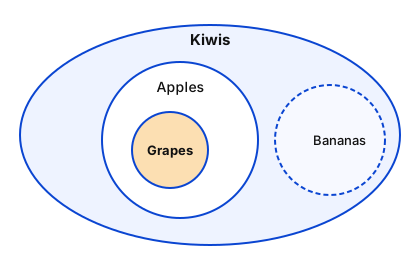
Concept: Draw the minimal Venn diagram that satisfies all statements and test each conclusion.

  1. Grapes ⊂ Apples ⊂ Kiwis; Bananas only overlap some Kiwis (may stay outside Apples).
  2. (I) All apples are bananas – not certain, as the diagram shows Bananas need not cover Apples. ✘
  3. (II) All grapes are kiwis, so some kiwis are grapes. ✔

Trick: 'All A are B' always gives 'Some B are A'.

Answer: (B) Only conclusion (II) follows.

अवधारणा: सभी कथनों को पूरा करने वाला न्यूनतम वेन आरेख बनाएँ और निष्कर्ष जाँचें।

  1. अंगूर ⊂ सेब ⊂ कीवी; केले केवल कुछ कीवी से मिलते हैं (सेब से बाहर रह सकते हैं)।
  2. (I) सभी सेब केले हैं – निश्चित नहीं, आरेख में केले सेब को ढकते नहीं। ✘
  3. (II) सभी अंगूर कीवी हैं, अतः कुछ कीवी अंगूर हैं। ✔

ट्रिक: 'सभी A, B हैं' से हमेशा 'कुछ B, A हैं' निकलता है।

उत्तर: (B) Only conclusion (II) follows.

RRB NTPC Graduate CBT 1General Intelligence and ReasoningSyllogismRRB NTPC Graduate CBT 1 2024 · 23 Jun Shift 1 →
Q578.
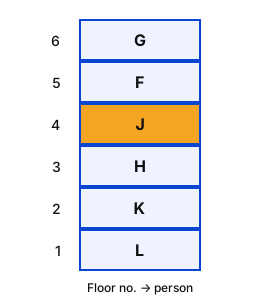
F, G, H, J, K and L live on six different floors of the same building. The lowermost floor in the building is numbered 1, the floor above it, number 2 and so on till the topmost floor is numbered 6. Only three people live between K and G, where K lives below G. H lives on an odd numbered floor and immediately above K. J lives on one of the floors below F and on one of the floors above L. Who lives on floor numbered 4?
F, G, H, J, K और L एक ही इमारत की छह अलग-अलग मंज़िलों पर रहते हैं। इमारत की सबसे निचली मंज़िल की संख्या 1 है, उसके ऊपर वाली मंज़िल की संख्या 2 है और इसी प्रकार सबसे ऊपरी मंज़िल की संख्या 6 है। K और G के बीच केवल तीन व्यक्ति रहते हैं, जहाँ K, G से नीचे रहता है। H एक विषम संख्या वाली मंज़िल पर और K के ठीक ऊपर रहता है। J, F से नीचे की किसी एक मंज़िल पर और L से ऊपर की किसी एक मंज़िल पर रहता है। मंज़िल संख्या 4 पर कौन रहता है?
  1. AF
  2. BH
  3. CL
  4. DJ
Show answer

Concept: Fix K and G first (three floors between them), then use H's condition.

  1. Possible: K = 1, G = 5 or K = 2, G = 6.
  2. H is odd and just above K: K = 1 gives H = 2 (even) ✘; so K = 2, H = 3, G = 6.
  3. Remaining floors 1, 4, 5 for L < J < F ⇒ L = 1, J = 4, F = 5.

Trick: Start with the clue that has the fewest possibilities.

Answer: (D) J

अवधारणा: पहले K और G (बीच में तीन मंज़िल) तय करें, फिर H की शर्त लगाएँ।

  1. संभव: K = 1, G = 5 या K = 2, G = 6।
  2. H विषम और K के ठीक ऊपर: K = 1 से H = 2 (सम) ✘; अतः K = 2, H = 3, G = 6।
  3. बची मंज़िलें 1, 4, 5 पर L < J < F ⇒ L = 1, J = 4, F = 5।

ट्रिक: सबसे कम संभावनाओं वाली शर्त से शुरू करें।

उत्तर: (D) J

RRB NTPC Graduate CBT 1General Intelligence and ReasoningFloor PuzzleRRB NTPC Graduate CBT 1 2024 · 23 Jun Shift 1 →
Q579.
This question is based on the five, three-digit numbers given below.
(Left) 941 915 741 807 776 (Right)
(Example- 697 – First digit = 6, second digit = 9 and third digit = 7)
(NOTE: All operations to be done from left to right.)
What will be the resultant if the third digit of the highest number is added to the first digit of the lowest number?
यह प्रश्न नीचे दी गई तीन अंकों वाली पाँच संख्याओं पर आधारित है।
(बाएँ) 941 915 741 807 776 (दाएँ)
(उदाहरण- 697 – पहला अंक = 6, दूसरा अंक = 9 और तीसरा अंक = 7)
(नोट: सभी संक्रियाएँ बाएँ से दाएँ की जानी हैं।)
यदि सबसे बड़ी संख्या के तीसरे अंक को सबसे छोटी संख्या के पहले अंक में जोड़ा जाए, तो परिणाम क्या होगा?
  1. A8
  2. B9
  3. C11
  4. D7
Show answer

Concept: Identify the highest and lowest numbers, then pick the required digits.

  1. Highest =941 → third digit =1.
  2. Lowest =741 → first digit =7.
  3. 1+7=8.

Trick: Compare first digits first: 9 vs 7 decides quickly.

Answer: (A) 8

अवधारणा: सबसे बड़ी और सबसे छोटी संख्या पहचानें, फिर अंक चुनें।

  1. सबसे बड़ी =941 → तीसरा अंक =1।
  2. सबसे छोटी =741 → पहला अंक =7।
  3. 1+7=8।

ट्रिक: पहले अंकों की तुलना करें: 9 और 7 से तुरंत निर्णय।

उत्तर: (A) 8

RRB NTPC Graduate CBT 1General Intelligence and ReasoningNumber OperationsRRB NTPC Graduate CBT 1 2024 · 23 Jun Shift 1 →
Q580.
Each of the digits in the number 73412968 is arranged in the descending order from left to right. Which of the following digits will be fifth from the right in the new number thus formed?
संख्या 73412968 के प्रत्येक अंक को बाएँ से दाएँ अवरोही क्रम में व्यवस्थित किया जाता है। इस प्रकार बनी नई संख्या में दाएँ से पाँचवाँ अंक निम्नलिखित में से कौन-सा होगा?
  1. A6
  2. B4
  3. C7
  4. D3
Show answer

Concept: Arrange the digits of 73412968 from largest to smallest.

  1. Descending: 98764321.
  2. From the right: 1 (1st), 2 (2nd), 3 (3rd), 4 (4th), 6 (5th).

Trick: In 8 digits, 5th from right = 4th from left: 9, 8, 7, 6.

Answer: (A) 6

अवधारणा: 73412968 के अंकों को बड़े से छोटे क्रम में लगाएँ।

  1. घटते क्रम में: 98764321।
  2. दाएँ से: 1 (पहला), 2, 3, 4, 6 (पाँचवाँ)।

ट्रिक: 8 अंकों में दाएँ से 5वाँ = बाएँ से 4था: 9, 8, 7, 6।

उत्तर: (A) 6

RRB NTPC Graduate CBT 1General Intelligence and ReasoningDigit ArrangementRRB NTPC Graduate CBT 1 2024 · 23 Jun Shift 1 →