Question bank

Q&A: practice questions with answers

Search questions on any topic. Filter by exam category, exam, subject and topic, try the question, then open the answer and explanation.

Courses – airGurukul

7,077 questions found.

Q6061.
This question is based on the five, three-digit numbers given below.
(Left) 419 975 573 389 937 (Right)
(Example- 697 – First digit = 6, second digit = 9 and third digit = 7)
NOTE - All operations to be done from left to right.
What will be the resultant if the second digit of the highest number is added to the third digit of the lowest number?
यह प्रश्न नीचे दी गई पाँच तीन-अंकीय संख्याओं पर आधारित है।
(बाएँ) 419 975 573 389 937 (दाएँ)
(उदाहरण- 697 – पहला अंक = 6, दूसरा अंक = 9 और तीसरा अंक = 7)
नोट - सभी संक्रियाएँ बाएँ से दाएँ की जानी हैं।
यदि सबसे बड़ी संख्या के दूसरे अंक को सबसे छोटी संख्या के तीसरे अंक में जोड़ा जाए, तो परिणाम क्या होगा?
  1. A16
  2. B19
  3. C18
  4. D17
Show answer

Concept: Identify the required numbers, pick the asked digits, then operate.

  1. Numbers: 419, 975, 573, 389, 937. Highest =975, lowest =389.
  2. Second digit of 975 =7; third digit of 389 =9.
  3. 7+9=16.

Trick: Highest/lowest are decided by the first digit (9 vs 3); 975 > 937 by the second digit.

Answer: (A) 16

अवधारणा: माँगी गई संख्याएँ पहचानें, फिर अंक चुनकर संक्रिया करें।

  1. संख्याएँ: 419, 975, 573, 389, 937। सबसे बड़ी =975, सबसे छोटी =389।
  2. 975 का दूसरा अंक =7; 389 का तीसरा अंक =9।
  3. 7+9=16।

ट्रिक: सबसे बड़ी/छोटी पहले अंक से तय (9 बनाम 3); 975 > 937 दूसरे अंक से।

उत्तर: (A) 16

RRB NTPC Graduate CBT 1General Intelligence and ReasoningNumber ArrangementRRB NTPC Graduate CBT 1 2025 · 19 Mar Shift 2 →
Q6062.
Read the given statements and conclusions carefully. Assuming that the information given in the statement(s) is true, even if it appears to be at variance with commonly known facts, decide which of the given conclusions logically follow(s) from the statement(s).
Statements:
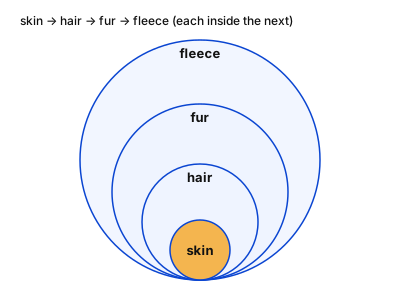
All skin is hair. All hair is fur. All fur is fleece.
Conclusions:
(I) All skin is fleece.
(II) Some fleeces are hair.
दिए गए कथनों और निष्कर्षों को ध्यानपूर्वक पढ़िए। यह मानते हुए कि कथन(नों) में दी गई जानकारी सत्य है, भले ही वह सामान्यतः ज्ञात तथ्यों से भिन्न प्रतीत होती हो, तय कीजिए कि दिए गए निष्कर्षों में से कौन-सा/से निष्कर्ष कथन(नों) का तार्किक रूप से अनुसरण करता/करते है/हैं।
कथन:
सभी त्वचा, बाल हैं। सभी बाल, फर हैं। सभी फर, ऊन हैं।
निष्कर्ष:
(I) सभी त्वचा, ऊन हैं।
(II) कुछ ऊन, बाल हैं।
  1. AOnly conclusion (I) follows.केवल निष्कर्ष (I) अनुसरण करता है।
  2. BBoth conclusions (I) and (II) follow.निष्कर्ष (I) और (II) दोनों अनुसरण करते हैं।
  3. CNeither conclusion (I) nor (II) follows.न तो निष्कर्ष (I) और न ही (II) अनुसरण करता है।
  4. DOnly conclusion (II) follows.केवल निष्कर्ष (II) अनुसरण करता है।
Show answer

Concept: "All A is B" statements chain together; draw nested circles.

  1. skin ⊆ hair ⊆ fur ⊆ fleece, so every skin is fleece – conclusion (I) follows.
  2. "All hair is fur, all fur is fleece" gives all hair is fleece; its converse "some fleeces are hair" is always true – conclusion (II) follows.

Trick: All A is B ⇒ Some B is A (valid conversion). Chains of "All" never break.

Answer: (B) Both conclusions (I) and (II) follow.

अवधारणा: "सभी A, B हैं" कथन श्रृंखला बनाते हैं; एक-दूसरे के अंदर वृत्त बनाएँ।

  1. skin ⊆ hair ⊆ fur ⊆ fleece, अतः हर skin, fleece है – निष्कर्ष (I) सही।
  2. "सभी hair, fur; सभी fur, fleece" से सभी hair, fleece; इसका विलोम "कुछ fleece, hair हैं" सदैव सत्य – निष्कर्ष (II) सही।

ट्रिक: सभी A, B ⇒ कुछ B, A (मान्य परिवर्तन)। "सभी" की श्रृंखला कभी नहीं टूटती।

उत्तर: (B) दोनों निष्कर्ष (I) और (II) सही हैं।

RRB NTPC Graduate CBT 1General Intelligence and ReasoningSyllogismRRB NTPC Graduate CBT 1 2025 · 19 Mar Shift 2 →
Q6063.
Refer to the following letter, symbol series and answer the question. Counting to be done from left to right only.
(Left) C P # A G = % B H * + D F ? E ! L M $ I O (Right)
How many such letters are there, each of which is immediately preceded by a symbol and also immediately followed by another letter?
निम्नलिखित अक्षर, प्रतीक श्रृंखला को देखिए और प्रश्न का उत्तर दीजिए। गिनती केवल बाएँ से दाएँ की जानी है।
(बाएँ) C P # A G = % B H * + D F ? E ! L M $ I O (दाएँ)
ऐसे कितने अक्षर हैं, जिनमें से प्रत्येक के ठीक पहले एक प्रतीक है और ठीक बाद में एक अन्य अक्षर है?
  1. AONEएक
  2. BFIVEपाँच
  3. CTWOदो
  4. DFOURचार
Show answer

Concept: Scan for the pattern [symbol][letter][letter] – the middle letter is counted.

  1. Series: C P # A G = % B H * + D F ? E ! L M $ I O.
  2. Letters with a symbol just before them: A (#), B (%), D (+), E (?), L (!), I ($).
  3. Followed by a letter? A→G ✓, B→H ✓, D→F ✓, E→! ✗, L→M ✓, I→O ✓.
  4. Count =5.

Trick: First list every symbol, then check only the letter right after it – fewer places to inspect.

Answer: (B) FIVE

अवधारणा: [प्रतीक][अक्षर][अक्षर] का पैटर्न खोजें – बीच वाला अक्षर गिना जाता है।

  1. श्रृंखला: C P # A G = % B H * + D F ? E ! L M $ I O।
  2. जिनके ठीक पहले प्रतीक है: A (#), B (%), D (+), E (?), L (!), I ($)।
  3. बाद में अक्षर? A→G ✓, B→H ✓, D→F ✓, E→! ✗, L→M ✓, I→O ✓।
  4. गिनती =5।

ट्रिक: पहले सभी प्रतीक चिह्नित करें, फिर केवल उनके बाद का अक्षर जाँचें – कम जगह देखनी पड़ती है।

उत्तर: (B) FIVE (पाँच)

RRB NTPC Graduate CBT 1General Intelligence and ReasoningLetter–Symbol SeriesRRB NTPC Graduate CBT 1 2025 · 19 Mar Shift 2 →
Q6064.
Which of the following letter-number clusters will replace the question mark “?” in the given series to make it logically complete?
KUO 5, PZT 12, UEY 19, ZJD 26, ?
दी गई श्रृंखला को तार्किक रूप से पूर्ण करने के लिए निम्नलिखित में से कौन-सा अक्षर-संख्या समूह प्रश्नचिह्न “?” के स्थान पर आएगा?
KUO 5, PZT 12, UEY 19, ZJD 26, ?
  1. AENG 33
  2. BEPK 35
  3. CEOI 33
  4. DDNH 32
Show answer

Concept: Check the letter shift and the number difference separately.

  1. Letters: K→P→U→Z (+5 each), U→Z→E→J (+5), O→T→Y→D (+5).
  2. Next: Z+5= E, J+5= O, D+5= I ⇒ EOI.
  3. Numbers: 5, 12, 19, 26 (+7) ⇒33.

Trick: Wrap around after Z (Z+5: A B C D E). Letters +5, numbers +7 – both constant.

Answer: (C) EOI 33

अवधारणा: अक्षर-परिवर्तन और संख्या-अंतर अलग-अलग जाँचें।

  1. अक्षर: K→P→U→Z (हर बार +5), U→Z→E→J (+5), O→T→Y→D (+5)।
  2. अगला: Z+5= E, J+5= O, D+5= I ⇒ EOI।
  3. संख्याएँ: 5, 12, 19, 26 (+7) ⇒33।

ट्रिक: Z के बाद A से फिर गिनें (Z+5: A B C D E)। अक्षर +5, संख्या +7 – दोनों स्थिर।

उत्तर: (C) EOI 33

RRB NTPC Graduate CBT 1General Intelligence and ReasoningLetter–Number SeriesRRB NTPC Graduate CBT 1 2025 · 19 Mar Shift 2 →
Q6065.
What should come in place of ‘?’ in the given series?
52 50 47 42 35 ?
दी गई श्रृंखला में ‘?’ के स्थान पर क्या आना चाहिए?
52 50 47 42 35 ?
  1. A24
  2. B23
  3. C25
  4. D26
Show answer

Concept: Look at the successive differences.

  1. 52→50→47→42→35: differences 2,3,5,7 – consecutive prime numbers.
  2. Next prime =11, so 35−11=24.

Trick: Differences 2, 3, 5, 7, 11, 13 … are a favourite exam pattern – check primes whenever differences look irregular.

Answer: (A) 24

अवधारणा: क्रमागत अंतर देखें।

  1. 52→50→47→42→35: अंतर 2,3,5,7 – क्रमागत अभाज्य संख्याएँ।
  2. अगली अभाज्य =11, अतः 35−11=24।

ट्रिक: अंतर 2, 3, 5, 7, 11, 13 … परीक्षा का प्रिय पैटर्न है – अंतर अनियमित लगें तो अभाज्य जाँचें।

उत्तर: (A) 24

RRB NTPC Graduate CBT 1General Intelligence and ReasoningNumber SeriesRRB NTPC Graduate CBT 1 2025 · 19 Mar Shift 2 →
Q6066.
What should come in place of ‘?’ in the given series?
77 78 82 91 107 ?
दी गई श्रृंखला में ‘?’ के स्थान पर क्या आना चाहिए?
77 78 82 91 107 ?
  1. A134
  2. B133
  3. C132
  4. D131
Show answer

Concept: Look at the differences between consecutive terms – here they are perfect squares.

  1. 78−77=1, 82−78=4, 91−82=9, 107−91=16.
  2. Differences 12,22,32,42 → next difference 52=25.
  3. 107+25=132.

Trick: When differences grow quickly but not by a fixed amount, test squares 1,4,9,16,25.

Answer: (C) 132

अवधारणा: लगातार पदों के अंतर देखें – यहाँ वे पूर्ण वर्ग हैं।

  1. 78−77=1, 82−78=4, 91−82=9, 107−91=16।
  2. अंतर 12,22,32,42 → अगला अंतर 52=25।
  3. 107+25=132।

ट्रिक: अंतर तेज़ी से बढ़ें पर समान न हों, तो वर्ग 1,4,9,16,25 जाँचें।

उत्तर: (C) 132

RRB NTPC Graduate CBT 1General Intelligence and ReasoningNumber SeriesRRB NTPC Graduate CBT 1 2025 · 19 Mar Shift 2 →
Q6067.
Read the given statements and conclusions carefully. Assuming that the information given in the statements is true, even if it appears to be at variance with commonly known facts, decide which of the given conclusion(s) logically follow(s) from the statements.
Statements:
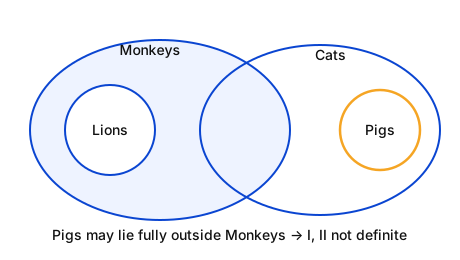
All lions are monkeys. Some monkeys are cats. All pigs are cats.
Conclusions:
(I) Some pigs are lions.
(II) Some pigs are monkeys.
दिए गए कथनों और निष्कर्षों को ध्यानपूर्वक पढ़िए। यह मानते हुए कि कथनों में दी गई जानकारी सत्य है, भले ही वह सामान्यतः ज्ञात तथ्यों से भिन्न प्रतीत होती हो, तय कीजिए कि दिए गए निष्कर्षों में से कौन-सा/से निष्कर्ष कथनों का तार्किक रूप से अनुसरण करता/करते है/हैं।
कथन:
सभी शेर, बंदर हैं। कुछ बंदर, बिल्लियाँ हैं। सभी सूअर, बिल्लियाँ हैं।
निष्कर्ष:
(I) कुछ सूअर, शेर हैं।
(II) कुछ सूअर, बंदर हैं।
  1. AOnly conclusion (I) follows.केवल निष्कर्ष (I) अनुसरण करता है।
  2. BNeither conclusion (I) nor (II) follows.न तो निष्कर्ष (I) और न ही (II) अनुसरण करता है।
  3. CBoth conclusions (I) and (II) follow.निष्कर्ष (I) और (II) दोनों अनुसरण करते हैं।
  4. DOnly conclusion (II) follows.केवल निष्कर्ष (II) अनुसरण करता है।
Show answer

Concept: Draw the least-committed Venn diagram; a conclusion follows only if it is true in every possible diagram.

  1. Lions lie inside Monkeys; Cats only partly overlap Monkeys; Pigs lie inside Cats.
  2. Pigs can sit in the part of Cats that is outside Monkeys – then no pig is a monkey and no pig is a lion.
  3. So neither "some pigs are lions" nor "some pigs are monkeys" is definite.

Trick: Two "some" links (Monkeys–Cats) in the chain never give a definite conclusion between the end terms.

Answer: (B) Neither conclusion (I) nor (II) follows.

अवधारणा: सबसे कम मान्यता वाला वेन आरेख बनाएँ; निष्कर्ष तभी निकलता है जब वह हर संभव आरेख में सही हो।

  1. Lions, Monkeys के अंदर; Cats का Monkeys से केवल आंशिक ओवरलैप; Pigs, Cats के अंदर।
  2. Pigs, Cats के उस हिस्से में हो सकते हैं जो Monkeys के बाहर है – तब कोई pig न monkey है न lion।
  3. अतः "कुछ pigs lions हैं" और "कुछ pigs monkeys हैं" दोनों निश्चित नहीं।

ट्रिक: शृंखला में बीच की कड़ी "some" (Monkeys–Cats) हो, तो सिरों के बीच कोई निश्चित निष्कर्ष नहीं बनता।

उत्तर: (B) Neither conclusion (I) nor (II) follows.

RRB NTPC Graduate CBT 1General Intelligence and ReasoningSyllogismRRB NTPC Graduate CBT 1 2025 · 19 Mar Shift 2 →
Q6068.
What will come in the place of ‘?’ in the following equation, if ‘+’ and ‘-‘ are interchanged and ‘×’ and ‘÷’ are interchanged?
216 ÷ 3 + 1313 × 13 - 112 = ?
यदि ‘+’ और ‘-’ को आपस में बदल दिया जाए तथा ‘×’ और ‘÷’ को आपस में बदल दिया जाए, तो निम्नलिखित समीकरण में ‘?’ के स्थान पर क्या आएगा?
216 ÷ 3 + 1313 × 13 - 112 = ?
  1. A586
  2. B722
  3. C523
  4. D659
Show answer

Concept: Swap the signs as told, then apply BODMAS.

  1. Interchanging: 216÷3+1313×13−112 becomes 216×3−1313÷13+112.
  2. 216×3=648, 1313÷13=101.
  3. 648−101+112=659.

Trick: 1313=13×101 – spotting this saves the division.

Answer: (D) 659

अवधारणा: बताए अनुसार चिह्न बदलें, फिर BODMAS लगाएँ।

  1. बदलने पर: 216÷3+1313×13−112 → 216×3−1313÷13+112।
  2. 216×3=648, 1313÷13=101।
  3. 648−101+112=659।

ट्रिक: 1313=13×101 – यह देख लेने से भाग करना नहीं पड़ता।

उत्तर: (D) 659

RRB NTPC Graduate CBT 1General Intelligence and ReasoningMathematical OperationsRRB NTPC Graduate CBT 1 2025 · 19 Mar Shift 2 →
Q6069.
Refer to the following number and symbol series and answer the question that follows. Counting to be done from left to right only. All numbers are single-digit numbers only. (Left) \ ? % 4 ? 3 / 3 / 9 4 6 4 1 ? * + ^ > 2 * (Right)
How many such symbols are there, each of which is immediately preceded by another symbol and also immediately followed by a number?
निम्नलिखित संख्या और प्रतीक श्रृंखला को देखिए और उसके बाद दिए गए प्रश्न का उत्तर दीजिए। गिनती केवल बाएँ से दाएँ की जानी है। सभी संख्याएँ केवल एक-अंकीय संख्याएँ हैं। (बाएँ) \ ? % 4 ? 3 / 3 / 9 4 6 4 1 ? * + ^ > 2 * (दाएँ)
ऐसे कितने प्रतीक हैं, जिनमें से प्रत्येक के ठीक पहले एक अन्य प्रतीक है और ठीक बाद में एक संख्या है?
  1. AThreeतीन
  2. BFourचार
  3. COneएक
  4. DTwoदो
Show answer

Concept: Check every symbol: is its left neighbour a symbol AND its right neighbour a number?

  1. Series: \ · ? · % · 4 · ? · 3 · / · 3 · / · 9 · 4 · 6 · 4 · 1 · ? · * · + · ^ · > · 2 · *
  2. % : left ? (symbol), right 4 (number) ✓. > : left ^ (symbol), right 2 (number) ✓.
  3. Other symbols fail – e.g. * (16th) is followed by +, and the ? at 15th is preceded by 1.

Trick: Only look at "symbol-symbol-number" triplets; scan once from left to right.

Answer: (D) Two

अवधारणा: हर प्रतीक जाँचें: क्या बाईं ओर प्रतीक है और दाईं ओर संख्या?

  1. श्रृंखला: \ · ? · % · 4 · ? · 3 · / · 3 · / · 9 · 4 · 6 · 4 · 1 · ? · * · + · ^ · > · 2 · *
  2. % : बाएँ ? (प्रतीक), दाएँ 4 (संख्या) ✓। > : बाएँ ^ (प्रतीक), दाएँ 2 (संख्या) ✓।
  3. बाकी प्रतीक शर्त पूरी नहीं करते – जैसे 16वाँ * के बाद + है, 15वें ? से पहले 1 है।

ट्रिक: केवल "प्रतीक-प्रतीक-संख्या" के त्रिक देखें; बाएँ से दाएँ एक बार स्कैन करें।

उत्तर: (D) Two

RRB NTPC Graduate CBT 1General Intelligence and ReasoningSymbol SeriesRRB NTPC Graduate CBT 1 2025 · 19 Mar Shift 2 →
Q6070.
​In a certain code language,
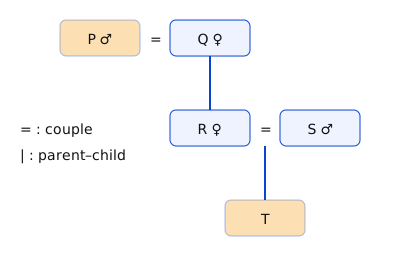
X + Y means ‘X is the husband of Y’,
X – Y means ‘X is the mother of Y’,
X × Y means ‘X is the wife of Y’ and
X ÷ Y means ‘X is the father of Y’.
Based on the above, how is P related to T if ‘P + Q – R × S ÷ T’?
​एक निश्चित कूट भाषा में,
X + Y का अर्थ है ‘X, Y का पति है’,
X – Y का अर्थ है ‘X, Y की माता है’,
X × Y का अर्थ है ‘X, Y की पत्नी है’ और
X ÷ Y का अर्थ है ‘X, Y का पिता है’।
उपर्युक्त के आधार पर, यदि ‘P + Q – R × S ÷ T’ है, तो P का T से क्या संबंध है?
  1. AFather's fatherपिता का पिता
  2. BFather's brotherपिता का भाई
  3. CMother's fatherमाता का पिता
  4. DMother's brotherमाता का भाई
Show answer

Concept: Decode each symbol step by step and build the family tree.

  1. P + Q: P is husband of Q. Q – R: Q is mother of R. R × S: R is wife of S. S ÷ T: S is father of T.
  2. So R is T's mother, Q (R's mother) is T's maternal grandmother.
  3. P, Q's husband, is T's maternal grandfather = mother's father.

Trick: Start from the person asked about (T) and climb upward – father S → mother R → her parents Q, P.

Answer: (C) Mother's father

अवधारणा: हर प्रतीक को क्रम से डिकोड करें और वंश-वृक्ष बनाएँ।

  1. P + Q: P, Q का पति। Q – R: Q, R की माँ। R × S: R, S की पत्नी। S ÷ T: S, T का पिता।
  2. अतः R, T की माँ है; Q (R की माँ) T की नानी है।
  3. P, Q का पति, T का नाना = माँ का पिता (Mother's father)।

ट्रिक: जिसके बारे में पूछा है (T) उससे ऊपर चढ़ें – पिता S → माँ R → उसके माता-पिता Q, P।

उत्तर: (C) Mother's father

RRB NTPC Graduate CBT 1General Intelligence and ReasoningBlood Relations – CodedRRB NTPC Graduate CBT 1 2025 · 19 Mar Shift 2 →
Q6071.
Select the set in which the numbers are related in the same way as are the numbers of the following sets.
5-7-9
11-13-15
(NOTE: Operations should be performed on the whole numbers, without breaking down the numbers into its constituent digits. E.g. 13 – Operations on 13 such as adding / subtracting /multiplying etc. to 13 can be performed. Breaking down 13 into 1 and 3 and then performing mathematical operations on 1 and 3 is not allowed)
उस समुच्चय का चयन कीजिए जिसमें संख्याएँ उसी प्रकार संबंधित हैं जिस प्रकार निम्नलिखित समुच्चयों की संख्याएँ संबंधित हैं।
5-7-9
11-13-15
(नोट: संक्रियाएँ पूर्ण संख्याओं पर की जानी चाहिए, संख्याओं को उनके घटक अंकों में तोड़े बिना। उदाहरण के लिए 13 – 13 पर संक्रियाएँ जैसे 13 में जोड़ना / घटाना / गुणा करना आदि की जा सकती हैं। 13 को 1 और 3 में तोड़कर फिर 1 और 3 पर गणितीय संक्रियाएँ करने की अनुमति नहीं है)
  1. A4-39-61
  2. B21-23-25
  3. C18-15-12
  4. D4-30-84
Show answer

Concept: Find the rule linking the three numbers of each given set.

  1. 5-7-9 and 11-13-15: each number is the previous one +2 (three consecutive odd numbers).
  2. 21-23-25: 21+2=23, 23+2=25 ✓.
  3. 4-39-61, 18-15-12 (decreasing by 3), 4-30-84 do not follow +2,+2.

Trick: Check the gaps first – equal gaps of 2 settle it immediately.

Answer: (B) 21-23-25

अवधारणा: हर समूह की तीनों संख्याओं को जोड़ने वाला नियम खोजें।

  1. 5-7-9 और 11-13-15: हर संख्या पिछली से +2 (तीन क्रमागत विषम संख्याएँ)।
  2. 21-23-25: 21+2=23, 23+2=25 ✓।
  3. 4-39-61, 18-15-12 (3 घटते हुए), 4-30-84 में +2,+2 नहीं है।

ट्रिक: पहले अंतर देखें – 2 के बराबर अंतर से तुरंत उत्तर मिल जाता है।

उत्तर: (B) 21-23-25

RRB NTPC Graduate CBT 1General Intelligence and ReasoningNumber AnalogyRRB NTPC Graduate CBT 1 2025 · 19 Mar Shift 2 →
Q6072.
Select the set in which the numbers are related in the same way as are the numbers of the following sets.
(NOTE : Operations should be performed on the whole numbers, without breaking down the numbers into their constituent digits. E.g. 13 – Operations on 13 such as adding / subtracting / multiplying etc. to 13 can be performed. Breaking down 13 into 1 and 3 and then performing mathematical operations on 1 and 3 is not allowed.)
(24, 578, 3)
(23, 536, 8)
उस समुच्चय का चयन कीजिए जिसमें संख्याएँ उसी प्रकार संबंधित हैं जिस प्रकार निम्नलिखित समुच्चयों की संख्याएँ संबंधित हैं।
(नोट : संक्रियाएँ पूर्ण संख्याओं पर की जानी चाहिए, संख्याओं को उनके घटक अंकों में तोड़े बिना। उदाहरण के लिए 13 – 13 पर संक्रियाएँ जैसे 13 में जोड़ना / घटाना / गुणा करना आदि की जा सकती हैं। 13 को 1 और 3 में तोड़कर फिर 1 और 3 पर गणितीय संक्रियाएँ करने की अनुमति नहीं है।)
(24, 578, 3)
(23, 536, 8)
  1. A(10, 106, 7)
  2. B(47, 2230, 17)
  3. C(16, 285, 25)
  4. D(9, 109, 24)
Show answer

Concept: Relate the middle number to the first and third numbers of each triplet.

  1. (24, 578, 3): 242+3−1=576+2=578 ✓.
  2. (23, 536, 8): 232+8−1=529+7=536 ✓. Rule: middle=a2+c−1.
  3. (10, 106, 7): 102+7−1=106 ✓. Others fail: 472+17−1=2225≠2230, 162+25−1=280≠285, 92+24−1=104≠109.

Trick: When the middle number is close to the square of the first, test a2± (something with c).

Answer: (A) (10, 106, 7)

अवधारणा: बीच की संख्या को पहली और तीसरी संख्या से जोड़ें।

  1. (24, 578, 3): 242+3−1=576+2=578 ✓।
  2. (23, 536, 8): 232+8−1=529+7=536 ✓। नियम: मध्य=a2+c−1।
  3. (10, 106, 7): 102+7−1=106 ✓। बाकी असफल: 472+17−1=2225≠2230, 162+25−1=280≠285, 92+24−1=104≠109।

ट्रिक: बीच की संख्या पहली के वर्ग के पास हो, तो a2± (c से जुड़ा कुछ) जाँचें।

उत्तर: (A) (10, 106, 7)

RRB NTPC Graduate CBT 1General Intelligence and ReasoningNumber AnalogyRRB NTPC Graduate CBT 1 2025 · 19 Mar Shift 2 →
Q6073.
GKOS is related to INQV in a certain way based on the English alphabetical order. In the same way, HLPT is related to JORW. To which of the following is AEIM related, following the same logic?
अंग्रेज़ी वर्णमाला क्रम के आधार पर GKOS एक निश्चित प्रकार से INQV से संबंधित है। उसी प्रकार HLPT, JORW से संबंधित है। उसी तर्क के अनुसार AEIM निम्नलिखित में से किससे संबंधित है?
  1. ACGLQ
  2. BCHKP
  3. CDHLQ
  4. DDGKP
Show answer

Concept: Find the shift applied to each letter position.

  1. GKOS → INQV: G+2=I, K+3=N, O+2=Q, S+3=V. Pattern +2,+3,+2,+3.
  2. Check HLPT → JORW: H+2=J, L+3=O, P+2=R, T+3=W ✓.
  3. AEIM: A+2=C, E+3=H, I+2=K, M+3=P → CHKP.

Trick: Write letter numbers (A=1 … Z=26) and subtract column-wise; verify on the second pair before applying.

Answer: (B) CHKP

अवधारणा: हर अक्षर-स्थान पर लगाया गया शिफ्ट निकालें।

  1. GKOS → INQV: G+2=I, K+3=N, O+2=Q, S+3=V। पैटर्न +2,+3,+2,+3।
  2. जाँच HLPT → JORW: H+2=J, L+3=O, P+2=R, T+3=W ✓।
  3. AEIM: A+2=C, E+3=H, I+2=K, M+3=P → CHKP।

ट्रिक: अक्षर-संख्या (A=1 … Z=26) लिखकर स्तंभवार घटाएँ; लागू करने से पहले दूसरे जोड़े पर जाँचें।

उत्तर: (B) CHKP

RRB NTPC Graduate CBT 1General Intelligence and ReasoningLetter AnalogyRRB NTPC Graduate CBT 1 2025 · 19 Mar Shift 2 →
Q6074.
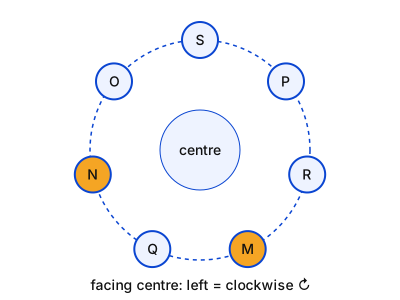
M, N, O, P, Q, R and S are sitting around a circular table facing the centre of the table. M sits fourth to the right of S. Only two people sit between P and Q when counted from the left of P. R sits third to the left of O. N is an immediate neighbour of O and Q. How many people between M and N when counted from the left of N?
M, N, O, P, Q, R और S एक वृत्ताकार मेज़ के चारों ओर मेज़ के केंद्र की ओर मुख करके बैठे हैं। M, S के दाईं ओर चौथे स्थान पर बैठा है। P के बाईं ओर से गिनने पर P और Q के बीच केवल दो व्यक्ति बैठे हैं। R, O के बाईं ओर तीसरे स्थान पर बैठा है। N, O और Q का निकटतम पड़ोसी है। N के बाईं ओर से गिनने पर M और N के बीच कितने व्यक्ति बैठे हैं?
  1. AThreeतीन
  2. BFourचार
  3. CTwoदो
  4. DOneएक
Show answer

Concept: Facing the centre, "left" is clockwise and "right" is anticlockwise. Fix S and place the rest.

  1. M is 4th to the right of S. R is 3rd to the left of O; N sits between O and Q (neighbour of both).
  2. Q is 3rd to the left of P (two between them). The only arrangement fitting all: clockwise S, P, R, M, Q, N, O.
  3. From N going left (clockwise): O, S, P, R, then M → four people between N and M.

Trick: Place the "N between O and Q" block first – it fixes three seats at once.

Answer: (B) Four

अवधारणा: केंद्र की ओर मुख होने पर "बायाँ" = दक्षिणावर्त (clockwise), "दायाँ" = वामावर्त। S को स्थिर कर बाकी बैठाएँ।

  1. M, S के दाएँ चौथा। R, O के बाएँ तीसरा; N, O और Q के बीच (दोनों का पड़ोसी)।
  2. Q, P के बाएँ तीसरा (दो लोग बीच में)। सबको संतुष्ट करने वाला एकमात्र क्रम: दक्षिणावर्त S, P, R, M, Q, N, O।
  3. N से बाएँ (दक्षिणावर्त) चलें: O, S, P, R, फिर M → N और M के बीच चार लोग।

ट्रिक: पहले "O–N–Q" वाला ब्लॉक रखें – इससे तीन सीटें एक साथ तय हो जाती हैं।

उत्तर: (B) Four

RRB NTPC Graduate CBT 1General Intelligence and ReasoningCircular SeatingRRB NTPC Graduate CBT 1 2025 · 19 Mar Shift 2 →
Q6075.
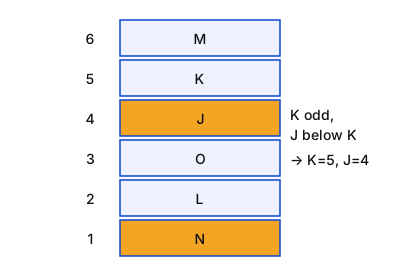
J, K, L, M, N and O live on six different floors of the same building. The bottommost floor of the building is numbered as 1; the floor above it is numbered as 2 and so on. The topmost floor is numbered as 6.
K lives on an odd-numbered floor but not on floor number 3. Only two people live between K and L. J lives immediately below K. M lives on an even-numbered floor. O does not live on the bottommost floor.
How many people live between N and J?
J, K, L, M, N और O एक ही इमारत की छह अलग-अलग मंज़िलों पर रहते हैं। इमारत की सबसे निचली मंज़िल की संख्या 1 है; उसके ऊपर की मंज़िल की संख्या 2 है और इसी प्रकार आगे। सबसे ऊपरी मंज़िल की संख्या 6 है।
K एक विषम संख्या वाली मंज़िल पर रहता है, परंतु मंज़िल संख्या 3 पर नहीं। K और L के बीच केवल दो व्यक्ति रहते हैं। J, K के ठीक नीचे रहता है। M एक सम संख्या वाली मंज़िल पर रहता है। O सबसे निचली मंज़िल पर नहीं रहता है।
N और J के बीच कितने व्यक्ति रहते हैं?
  1. AFiveपाँच
  2. BThreeतीन
  3. CFourचार
  4. DTwoदो
Show answer

Concept: Use the most restrictive clue first, then fill the rest.

  1. K on an odd floor but not 3 ⇒ K = 1 or 5. J lives immediately below K, so K ≠ 1 ⇒ K = 5, J = 4.
  2. Two people between K and L ⇒ L = 2. M on an even floor ⇒ M = 6.
  3. O is not on floor 1 ⇒ O = 3, N = 1. Between N (1) and J (4): floors 2 and 3 → two people.

Trick: "Immediately below" rules out the bottom floor for the person above – that alone fixes K.

Answer: (D) Two

अवधारणा: सबसे सख्त सुराग पहले लगाएँ, फिर बाकी भरें।

  1. K विषम मंज़िल पर पर 3 पर नहीं ⇒ K = 1 या 5। J ठीक K के नीचे है, अतः K ≠ 1 ⇒ K = 5, J = 4।
  2. K और L के बीच दो लोग ⇒ L = 2। M सम मंज़िल पर ⇒ M = 6।
  3. O सबसे नीचे नहीं ⇒ O = 3, N = 1। N (1) और J (4) के बीच: मंज़िल 2 और 3 → दो लोग।

ट्रिक: "ठीक नीचे" वाला सुराग ऊपर वाले व्यक्ति के लिए पहली मंज़िल हटा देता है – इसी से K तय हो जाता है।

उत्तर: (D) Two

RRB NTPC Graduate CBT 1General Intelligence and ReasoningFloor PuzzleRRB NTPC Graduate CBT 1 2025 · 19 Mar Shift 2 →
Q6076.
Based on the English alphabetical order, three of the following four are alike in a certain way and thus form a group. Which is the one that does not belong to that group? (Note: The odd one out is not based on the number of consonants/vowels or their position in the letter cluster.)
अंग्रेज़ी वर्णमाला क्रम के आधार पर, निम्नलिखित चार में से तीन एक निश्चित प्रकार से समान हैं और इस प्रकार एक समूह बनाते हैं। वह कौन-सा है जो उस समूह से संबंधित नहीं है? (नोट: असंगत का चयन व्यंजनों/स्वरों की संख्या या अक्षर समूह में उनकी स्थिति के आधार पर नहीं किया गया है।)
  1. AQUZ
  2. BFJN
  3. CTXC
  4. DXBG
Show answer

Concept: Compare the gaps between consecutive letters in each cluster (wrap around after Z).

  1. QUZ: Q→U +4, U→Z +5. TXC: T→X +4, X→C +5. XBG: X→B +4, B→G +5.
  2. FJN: F→J +4, J→N +4 – the second gap is different.

Trick: Pattern +4,+5 in three clusters; the one with +4,+4 is the odd one.

Answer: (B) FJN

अवधारणा: हर समूह में क्रमागत अक्षरों के बीच का अंतर देखें (Z के बाद A से गिनें)।

  1. QUZ: Q→U +4, U→Z +5। TXC: T→X +4, X→C +5। XBG: X→B +4, B→G +5।
  2. FJN: F→J +4, J→N +4 – दूसरा अंतर अलग है।

ट्रिक: तीन समूहों में +4,+5 पैटर्न; +4,+4 वाला अलग है।

उत्तर: (B) FJN

RRB NTPC Graduate CBT 1General Intelligence and ReasoningLetter ClassificationRRB NTPC Graduate CBT 1 2025 · 19 Mar Shift 2 →
Q6077.
Which of the following letter-clusters should replace # and % so that the pattern and relationship followed between the letter-cluster pair on the left side of :: is the same as that on the right side of :: ?
# : LOU :: WZF : %
निम्नलिखित में से कौन-से अक्षर-समूह # और % के स्थान पर आने चाहिए ताकि :: के बाईं ओर के अक्षर-समूह युग्म के बीच पालन किया गया पैटर्न और संबंध, :: के दाईं ओर के युग्म के समान हो?
# : LOU :: WZF : %
  1. A# = EHN, % = DGM
  2. B# = EHN, % = DGO
  3. C# = FHN, % = DGM
  4. D# = EHN, % = DGI
Show answer

Concept: Find the letter shift from # to LOU, then apply the same shift from WZF to %.

  1. Every # option except (C) is EHN; E→L, H→O, N→U is a uniform +7 shift, so # = EHN.
  2. Apply +7 to WZF: W+7 = D (wrap after Z), Z+7 = G, F+7 = M.
  3. % = DGM.

Trick: Both LOU and WZF have internal gaps +3,+6, confirming the clusters are built the same way.

Answer: (A) # = EHN, % = DGM

अवधारणा: # से LOU तक का अक्षर-शिफ्ट निकालें, फिर वही शिफ्ट WZF से % पर लगाएँ।

  1. (C) को छोड़ हर विकल्प में # = EHN है; E→L, H→O, N→U समान +7 शिफ्ट है, अतः # = EHN।
  2. WZF पर +7: W+7 = D (Z के बाद A से), Z+7 = G, F+7 = M।
  3. % = DGM।

ट्रिक: LOU और WZF दोनों में आंतरिक अंतर +3,+6 हैं – पुष्टि कि समूह एक ही तरह बने हैं।

उत्तर: (A) # = EHN, % = DGM

RRB NTPC Graduate CBT 1General Intelligence and ReasoningLetter AnalogyRRB NTPC Graduate CBT 1 2025 · 19 Mar Shift 2 →
Q6078.
Which of the following Articles of the Constitution of India relates to the tenure of the Governor, including serving at the discretion of the President and the method of stepping down from office?
भारत के संविधान के निम्नलिखित में से कौन-सा अनुच्छेद राज्यपाल की पदावधि से संबंधित है, जिसमें राष्ट्रपति के प्रसादपर्यंत पद धारण करना और पद छोड़ने की विधि शामिल है?
  1. AArticle 157अनुच्छेद 157
  2. BArticle 155अनुच्छेद 155
  3. CArticle 158अनुच्छेद 158
  4. DArticle 156अनुच्छेद 156
Show answer

Concept: Articles 153–162 deal with the Governor of a State.

  1. Article 156 – Term of office: the Governor holds office during the pleasure of the President, may resign by writing to the President, and normally serves five years.
  2. Article 155 – appointment; Article 157 – qualifications; Article 158 – conditions of office (not an MP/MLA, salary, etc.).

Yaad rakhein: 155 appointment → 156 term → 157 qualification → 158 conditions.

Answer: (D) Article 156

अवधारणा: अनुच्छेद 153–162 राज्य के राज्यपाल से संबंधित हैं।

  1. अनुच्छेद 156 – कार्यकाल: राज्यपाल राष्ट्रपति के प्रसादपर्यंत (pleasure) पद धारण करता है, राष्ट्रपति को लिखकर त्यागपत्र दे सकता है, सामान्य कार्यकाल पाँच वर्ष।
  2. अनुच्छेद 155 – नियुक्ति; 157 – योग्यताएँ; 158 – पद की शर्तें।

याद रखें: 155 नियुक्ति → 156 कार्यकाल → 157 योग्यता → 158 शर्तें।

उत्तर: (D) Article 156

RRB NTPC Graduate CBT 1General AwarenessIndian Polity – GovernorRRB NTPC Graduate CBT 1 2025 · 19 Mar Shift 1 →
Q6079.
__________ is primarily used to focus parallel rays of light.
__________ का उपयोग मुख्य रूप से प्रकाश की समांतर किरणों को केंद्रित (focus) करने के लिए किया जाता है।
  1. AConvex lensउत्तल लेंस (Convex lens)
  2. BCylindrical lensबेलनाकार लेंस (Cylindrical lens)
  3. CBifocal lensद्विफोकसी लेंस (Bifocal lens)
  4. DConcave lensअवतल लेंस (Concave lens)
Show answer

Concept: A convex (converging) lens is thicker in the middle and bends parallel rays towards a point – the principal focus.

  1. Parallel rays passing through a convex lens meet at the focus; hence it is used in magnifying glasses, cameras and to concentrate sunlight.
  2. A concave lens diverges parallel rays; a cylindrical lens focuses only along one line (used for astigmatism).

Yaad rakhein: Convex = Converging; Concave = Diverging.

Answer: (A) Convex lens

अवधारणा: उत्तल (convex/अभिसारी) लेंस बीच में मोटा होता है और समानांतर किरणों को एक बिंदु – मुख्य फोकस – पर मिलाता है।

  1. उत्तल लेंस से गुज़रने वाली समानांतर किरणें फोकस पर मिलती हैं; इसलिए यह आवर्धक लेंस, कैमरे और सूर्य-किरणें केंद्रित करने में प्रयुक्त होता है।
  2. अवतल (concave) लेंस किरणों को फैलाता है; बेलनाकार (cylindrical) लेंस केवल एक रेखा में फोकस करता है।

याद रखें: Convex = Converging (अभिसारी); Concave = Diverging (अपसारी)।

उत्तर: (A) Convex lens

RRB NTPC Graduate CBT 1General AwarenessPhysics – LensesRRB NTPC Graduate CBT 1 2025 · 19 Mar Shift 1 →
Q6080.
On 10 November 2025, the Pan American Health Organization (PAHO) stated that the Region of the Americas no longer retained its status of being free from endemic transmission of which of the following diseases?
10 नवंबर 2025 को पैन अमेरिकन हेल्थ ऑर्गनाइज़ेशन (PAHO) ने कहा कि अमेरिका क्षेत्र (Region of the Americas) ने निम्नलिखित में से किस रोग के स्थानिक संचरण (endemic transmission) से मुक्त होने की अपनी स्थिति खो दी है?
  1. AYellow feverपीत ज्वर (Yellow fever)
  2. BPolioपोलियो
  3. CMeaslesखसरा (Measles)
  4. DCholeraहैजा (Cholera)
Show answer

Concept: The Americas had been declared free of endemic measles in 2016 (re-verified 2024).

  1. On 10 November 2025 PAHO announced that the Region of the Americas lost its measles-elimination status after Canada recorded over 12 months of continuous transmission.
  2. Polio was eradicated from the Americas in 1994 and that status is unchanged; yellow fever and cholera were never 'eliminated' diseases of the region.

Yaad rakhein: 2025 measles surge – Canada, USA, Mexico; Americas lost the measles-free tag.

Answer: (C) Measles

अवधारणा: अमेरिका क्षेत्र (Region of the Americas) को 2016 में खसरा (measles) की स्थानिक संचरण से मुक्त घोषित किया गया था।

  1. 10 नवंबर 2025 को PAHO ने घोषणा की कि कनाडा में 12 महीने से अधिक लगातार संचरण के कारण इस क्षेत्र ने खसरा-उन्मूलन का दर्जा खो दिया।
  2. पोलियो 1994 से अमेरिका क्षेत्र से उन्मूलित है और यह स्थिति बनी हुई है; पीत ज्वर और हैजा कभी 'उन्मूलित' रोग नहीं थे।

याद रखें: 2025 खसरा प्रकोप – कनाडा, USA, मैक्सिको; अमेरिका क्षेत्र ने measles-free दर्जा खोया।

उत्तर: (C) Measles

RRB NTPC Graduate CBT 1General AwarenessCurrent Affairs – HealthRRB NTPC Graduate CBT 1 2025 · 19 Mar Shift 1 →