Question bank

Q&A: practice questions with answers

Search questions on any topic. Filter by exam category, exam, subject and topic, try the question, then open the answer and explanation.

Courses – airGurukul

7,077 questions found.

Q6161.
In a certain code language, ‘NICE’ is coded as ‘8246’ and ‘COST’ is coded as ‘3851’. What is the code for 'C’ in the given code language?
एक निश्चित कूट भाषा में, ‘NICE’ को ‘8246’ के रूप में कूटबद्ध किया जाता है और ‘COST’ को ‘3851’ के रूप में कूटबद्ध किया जाता है। दी गई कूट भाषा में 'C’ का कूट क्या है?
  1. A4
  2. B8
  3. C5
  4. D3
Show answer

Concept: The letter common to both words takes the digit common to both codes.

  1. NICE → 8 2 4 6 and COST → 3 8 5 1.
  2. Only letter common to both words is C; only digit common to both codes is 8.
  3. So C = 8.

Trick: One common letter ↔ one common digit – no need to decode the rest.

Answer: (B) 8

अवधारणा: दोनों शब्दों का उभयनिष्ठ अक्षर दोनों कोड के उभयनिष्ठ अंक को दर्शाता है।

  1. NICE → 8 2 4 6 और COST → 3 8 5 1।
  2. दोनों शब्दों में केवल C उभयनिष्ठ है; दोनों कोड में केवल 8 उभयनिष्ठ है।
  3. अतः C = 8।

ट्रिक: एक उभयनिष्ठ अक्षर ↔ एक उभयनिष्ठ अंक – बाकी डिकोड करने की ज़रूरत नहीं।

उत्तर: (B) 8
RRB NTPC Graduate CBT 1General Intelligence and ReasoningCoding–DecodingRRB NTPC Graduate CBT 1 2025 · 19 Mar Shift 1 →
Q6162.
Select the triad which follows the same pattern as that followed by the two pairs given below. Both pairs follow the same pattern.
CLUB-CUBL-ULCB
HANG-HNGA-NAHG
उस त्रिक (triad) का चयन करें जो नीचे दिए गए दो युग्मों द्वारा अनुसरण किए गए पैटर्न का ही अनुसरण करता है। दोनों युग्म एक ही पैटर्न का अनुसरण करते हैं।
CLUB-CUBL-ULCB
HANG-HNGA-NAHG
  1. AMASK-MSKA-SAMK
  2. BEARN-ARNE-ENRA
  3. CNEST-ETNS-TNSE
  4. DBALD-DLAB-LADB
Show answer

Concept: Track the position of each letter. In CLUB → CUBL the letters move as 1-2-3-4 → 1-3-4-2; in CUBL → ULCB they move as 1-2-3-4 → 2-4-1-3. HANG → HNGA → NAHG follows exactly the same two shuffles.

  1. Apply 1-3-4-2 to MASK: M, S, K, A → MSKA.
  2. Apply 2-4-1-3 to MSKA: S, A, M, K → SAMK.
  3. So MASK-MSKA-SAMK matches. In option B, EARN → ARNE is 2-3-4-1, a different shuffle; C and D also break the pattern at the first step.

Trick: Write the position numbers under the first pair, then just test the first step of each option — most options fail there.

Answer: (A) MASK-MSKA-SAMK

अवधारणा: हर अक्षर की स्थिति (position) देखें। CLUB → CUBL में अक्षर 1-2-3-4 → 1-3-4-2 के क्रम में जाते हैं; CUBL → ULCB में 1-2-3-4 → 2-4-1-3। HANG → HNGA → NAHG में भी यही दो बदलाव हैं।

  1. MASK पर 1-3-4-2 लगाएँ: M, S, K, A → MSKA।
  2. MSKA पर 2-4-1-3 लगाएँ: S, A, M, K → SAMK।
  3. अतः MASK-MSKA-SAMK सही है। विकल्प B में EARN → ARNE 2-3-4-1 है, जो अलग है; C और D पहले ही चरण में टूट जाते हैं।

ट्रिक: पहले जोड़े के नीचे स्थिति-संख्या लिखें, फिर हर विकल्प का केवल पहला चरण जाँचें — ज़्यादातर विकल्प वहीं गलत हो जाते हैं।

उत्तर: (A) MASK-MSKA-SAMK

RRB NTPC Graduate CBT 1General Intelligence and ReasoningLetter-cluster analogyRRB NTPC Graduate CBT 1 2025 · 19 Mar Shift 1 →
Q6163.
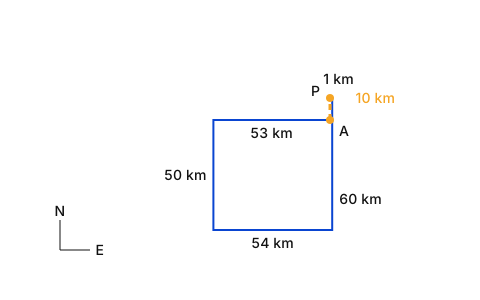
Golu starts from Point A and drives 53 km towards West. He then takes a left turn, drives 50 km, turns left and drives 54 km. He then takes a left turn and drives 60 km. He takes a final left turn, drives 1 km and stops at Point P. How far (shortest distance) and towards which direction should he drive in order to reach Point A again? (All turns are 90-degree turns only, unless specified.)
गोलू बिंदु A से चलना प्रारंभ करता है और पश्चिम की ओर 53 km गाड़ी चलाता है। फिर वह बाएँ मुड़ता है, 50 km गाड़ी चलाता है, बाएँ मुड़ता है और 54 km गाड़ी चलाता है। फिर वह बाएँ मुड़ता है और 60 km गाड़ी चलाता है। वह अंतिम बार बाएँ मुड़ता है, 1 km गाड़ी चलाता है और बिंदु P पर रुकता है। बिंदु A पर पुनः पहुँचने के लिए उसे कितनी दूर (न्यूनतम दूरी) और किस दिशा में गाड़ी चलानी चाहिए? (जब तक अन्यथा निर्दिष्ट न हो, सभी मोड़ केवल 90 डिग्री के मोड़ हैं।)
  1. A8 km to the South8 km दक्षिण की ओर
  2. B12 km to the North12 km उत्तर की ओर
  3. C11 km to the North11 km उत्तर की ओर
  4. D10 km to the South10 km दक्षिण की ओर
Show answer

Concept: Take A as origin, East = +x, North = +y, and track the position after each leg (every left turn rotates the heading anticlockwise).

  1. West 53: (−53,0). Left → South 50: (−53,−50).
  2. Left → East 54: (1,−50). Left → North 60: (1,10).
  3. Left → West 1: (0,10) = P. So P is exactly 10 km north of A.
  4. To return to A he must drive 10 km towards the South.

Trick: Net East–West: −53+54−1=0; net North–South: −50+60=+10. No Pythagoras needed when one of them is zero.

Answer: (D) 10 km to the South

अवधारणा: A को मूल बिंदु (origin) मानें, पूर्व = +x, उत्तर = +y, और हर चरण के बाद स्थिति लिखें (हर बायाँ मोड़ दिशा को वामावर्त घुमाता है)।

  1. पश्चिम 53: (−53,0)। बाएँ → दक्षिण 50: (−53,−50)।
  2. बाएँ → पूर्व 54: (1,−50)। बाएँ → उत्तर 60: (1,10)।
  3. बाएँ → पश्चिम 1: (0,10) = P। अतः P, A से ठीक 10 km उत्तर में है।
  4. A पर लौटने के लिए उसे 10 km दक्षिण की ओर चलना होगा।

ट्रिक: पूर्व–पश्चिम का नेट: −53+54−1=0; उत्तर–दक्षिण का नेट: −50+60=+10। एक शून्य हो तो पाइथागोरस की ज़रूरत ही नहीं।

उत्तर: (D) 10 km दक्षिण की ओर

RRB NTPC Graduate CBT 1General Intelligence and ReasoningDirection & distanceRRB NTPC Graduate CBT 1 2025 · 19 Mar Shift 1 →
Q6164.
What will come in place of ‘?’ in the following equation, if ‘+’ and ‘-‘ are interchanged and ‘×’ and ‘÷’ are interchanged?
95 ÷ 5 + 378 × 3 - 161 = ?
यदि ‘+’ और ‘-‘ को परस्पर बदल दिया जाए तथा ‘×’ और ‘÷’ को परस्पर बदल दिया जाए, तो निम्नलिखित समीकरण में ‘?’ के स्थान पर क्या आएगा?
95 ÷ 5 + 378 × 3 - 161 = ?
  1. A680
  2. B590
  3. C510
  4. D620
Show answer

Concept: Replace the signs as told, then apply BODMAS: division and multiplication before addition and subtraction.

  1. Swap: 95÷5+378×3−161 becomes 95×5−378÷3+161.
  2. 95×5=475 and 378÷3=126.
  3. 475−126+161=510.

Trick: Rewrite the whole expression with new signs first, then solve — never swap and solve in the same breath.

Answer: (C) 510

अवधारणा: बताए अनुसार चिह्न बदलें, फिर BODMAS लगाएँ: भाग और गुणा पहले, जोड़-घटाव बाद में।

  1. बदलने पर: 95÷5+378×3−161 बन जाता है 95×5−378÷3+161।
  2. 95×5=475 और 378÷3=126।
  3. 475−126+161=510।

ट्रिक: पहले पूरा व्यंजक नए चिह्नों के साथ लिख लें, फिर हल करें — बदलना और हल करना एक साथ न करें।

उत्तर: (C) 510

RRB NTPC Graduate CBT 1General Intelligence and ReasoningMathematical operationsRRB NTPC Graduate CBT 1 2025 · 19 Mar Shift 1 →
Q6165.
Select the pair which follows the same pattern as that followed by the two set of pairs given below. Both pairs follow the same pattern.
DRU : BWS
ZBQ : XGO
उस युग्म का चयन करें जो नीचे दिए गए युग्मों के दो समुच्चयों द्वारा अनुसरण किए गए पैटर्न का ही अनुसरण करता है। दोनों युग्म एक ही पैटर्न का अनुसरण करते हैं।
DRU : BWS
ZBQ : XGO
  1. AVLM : TQK
  2. BBCG : WGB
  3. CCLU : AOS
  4. DHKD : DNZ
Show answer

Concept: Compare letter positions place by place: DRU → BWS is −2, +5, −2 (D→B, R→W, U→S). ZBQ → XGO is also −2, +5, −2.

  1. Apply to VLM: V−2 = T, L+5 = Q, M−2 = K → TQK.
  2. Check others: BCG → WGB is −5,+4,−5; CLU → AOS is −2,+3,−2; HKD → DNZ is −4,+3,−4. None match.

Trick: Write the pattern as a signed triple like (−2,+5,−2) and test only the middle letter of each option first — it eliminates fastest.

Answer: (A) VLM : TQK

अवधारणा: अक्षरों की स्थिति स्थान-दर-स्थान तुलना करें: DRU → BWS में −2, +5, −2 (D→B, R→W, U→S)। ZBQ → XGO में भी −2, +5, −2।

  1. VLM पर लगाएँ: V−2 = T, L+5 = Q, M−2 = K → TQK।
  2. बाकी जाँचें: BCG → WGB है −5,+4,−5; CLU → AOS है −2,+3,−2; HKD → DNZ है −4,+3,−4। कोई मेल नहीं।

ट्रिक: पैटर्न को (−2,+5,−2) जैसे चिह्न-सहित त्रिक में लिखें और हर विकल्प का सिर्फ़ बीच वाला अक्षर पहले जाँचें — सबसे जल्दी छँटाई होती है।

उत्तर: (A) VLM : TQK

RRB NTPC Graduate CBT 1General Intelligence and ReasoningLetter-cluster analogyRRB NTPC Graduate CBT 1 2025 · 19 Mar Shift 1 →
Q6166.
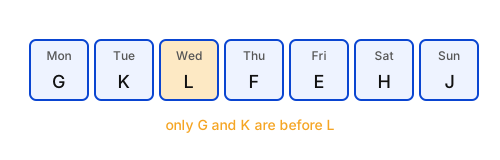
Each of P, Q, R, S, T, U and V has an exam on a different day of a week starting from Monday and ending on Sunday of the same week. V has an exam on Thursday. T has an exam on one of the days after P and on one of the days before U. Q has an exam on one of the days after R but on one of the days before S. R has an exam on one of the days after V. Who has an exam on Sunday?
P, Q, R, S, T, U और V में से प्रत्येक की परीक्षा एक ही सप्ताह के सोमवार से प्रारंभ होकर रविवार को समाप्त होने वाले सप्ताह के अलग-अलग दिन है। V की परीक्षा गुरुवार को है। T की परीक्षा P के बाद के किसी एक दिन और U से पहले के किसी एक दिन है। Q की परीक्षा R के बाद के किसी एक दिन परंतु S से पहले के किसी एक दिन है। R की परीक्षा V के बाद के किसी एक दिन है। रविवार को किसकी परीक्षा है?
  1. AP
  2. BR
  3. CS
  4. DV
Show answer

Concept: Fix the definite clue first (V = Thursday), then chain the 'after/before' clues from it.

  1. R is after V, Q after R, S after Q: that needs three days after Thursday → R = Fri, Q = Sat, S = Sun.
  2. Remaining Mon–Wed go to P, T, U with P before T before U: P = Mon, T = Tue, U = Wed.
  3. Sunday → S.

Trick: Count how many people must come after the fixed person; if it equals the days left, the order is forced.

Answer: (C) S

अवधारणा: पहले निश्चित सूचना रखें (V = गुरुवार), फिर 'बाद/पहले' वाली शर्तें उससे जोड़ें।

  1. R, V के बाद; Q, R के बाद; S, Q के बाद — गुरुवार के बाद तीन दिन चाहिए → R = शुक्र, Q = शनि, S = रवि।
  2. बचे सोम–बुध P, T, U के लिए, जहाँ P, T से पहले और T, U से पहले: P = सोम, T = मंगल, U = बुध।
  3. रविवार → S।

ट्रिक: गिनें कि निश्चित व्यक्ति के बाद कितने लोग आने ज़रूरी हैं; यदि यह बचे दिनों के बराबर है तो क्रम तय हो जाता है।

उत्तर: (C) S

RRB NTPC Graduate CBT 1General Intelligence and ReasoningScheduling puzzle (days)RRB NTPC Graduate CBT 1 2025 · 19 Mar Shift 1 →
Q6167.
Below are given two sets of numbers. In each set of numbers, a certain mathematical operation on the first number results in the second number. Similarly, certain
mathematical operations on the second number result in the third number and so on. Which of the given options follows the same set of operations as in question? (NOTE – A two/three-digit number cannot be broken into individual digits for operations, e.g., if 37 is followed by 10, the operation cannot be 3+7 as a two-digit number cannot be broken into individual digits.)
12 – 26 – 46 – 70; 20 – 34 – 54 – 78
नीचे संख्याओं के दो समुच्चय दिए गए हैं। संख्याओं के प्रत्येक समुच्चय में, पहली संख्या पर एक निश्चित गणितीय संक्रिया करने से दूसरी संख्या प्राप्त होती है। इसी प्रकार, दूसरी संख्या पर कुछ
गणितीय संक्रियाएँ करने से तीसरी संख्या प्राप्त होती है और इसी प्रकार आगे भी। दिए गए विकल्पों में से कौन-सा प्रश्न में दी गई संक्रियाओं के समुच्चय का ही अनुसरण करता है? (नोट – संक्रियाओं के लिए दो/तीन अंकों की संख्या को अलग-अलग अंकों में नहीं तोड़ा जा सकता, उदाहरण के लिए, यदि 37 के बाद 10 आता है, तो संक्रिया 3+7 नहीं हो सकती क्योंकि दो अंकों की संख्या को अलग-अलग अंकों में नहीं तोड़ा जा सकता।)
12 – 26 – 46 – 70; 20 – 34 – 54 – 78
  1. A25 – 39 – 59 – 83
  2. B28 – 42 – 52 – 76
  3. C34 – 48 – 78 – 102
  4. D15 – 30 – 50 – 74
Show answer

Concept: Find the differences between consecutive terms; both given sets must share them.

  1. 12 → 26 → 46 → 70: +14,+20,+24. 20 → 34 → 54 → 78: +14,+20,+24.
  2. Option A: 25 → 39 (+14) → 59 (+20) → 83 (+24). Matches.
  3. B: +14,+10,+24; C: +14,+30,+24; D: +15,+20,+24 – all fail.

Trick: When the first differences are the same in both sets, just check the same differences in options – no need to hunt for a formula.

Answer: (A) 25 – 39 – 59 – 83

अवधारणा: क्रमागत पदों के अंतर निकालें; दोनों दिए गए सेटों में वही अंतर होने चाहिए।

  1. 12 → 26 → 46 → 70: +14,+20,+24। 20 → 34 → 54 → 78: +14,+20,+24।
  2. विकल्प A: 25 → 39 (+14) → 59 (+20) → 83 (+24)। मेल खाता है।
  3. B: +14,+10,+24; C: +14,+30,+24; D: +15,+20,+24 – सब गलत।

ट्रिक: जब दोनों सेटों में पहले अंतर समान हों, तो विकल्पों में बस वही अंतर जाँचें – सूत्र खोजने की ज़रूरत नहीं।

उत्तर: (A) 25 – 39 – 59 – 83

RRB NTPC Graduate CBT 1General Intelligence and ReasoningNumber series analogyRRB NTPC Graduate CBT 1 2025 · 19 Mar Shift 1 →
Q6168.
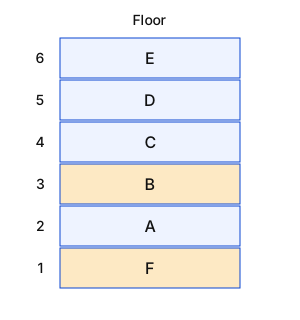
A, B, C, D, E and F live on six different floors of the same building. The lowermost floor in the building is numbered 1, the floor above it is numbered 2 and so on, till the topmost floor, which is numbered 6. The product of the floors on which D and B live is 15. A lives immediately above F. The sum of the floors on which C and B live is 7. What is the sum of the floors on which B and F live?
A, B, C, D, E और F एक ही भवन की छह अलग-अलग मंजिलों पर रहते हैं। भवन की सबसे निचली मंजिल की संख्या 1 है, उसके ऊपर की मंजिल की संख्या 2 है और इसी प्रकार सबसे ऊपरी मंजिल तक, जिसकी संख्या 6 है। D और B जिन मंजिलों पर रहते हैं उनकी संख्याओं का गुणनफल 15 है। A, F के ठीक ऊपर रहता है। C और B जिन मंजिलों पर रहते हैं उनकी संख्याओं का योग 7 है। B और F जिन मंजिलों पर रहते हैं उनकी संख्याओं का योग क्या है?
  1. A6
  2. B4
  3. C3
  4. D5
Show answer

Concept: Use the product and sum clues to limit the choices, then test each case against the 'immediately above' clue.

  1. D × B = 15 → {D, B} = {3, 5}. C + B = 7 → if B = 3, C = 4; if B = 5, C = 2.
  2. Case B = 5, D = 3, C = 2: floors left 1, 4, 6 – A cannot be immediately above F. Rejected.
  3. Case B = 3, D = 5, C = 4: floors left 1, 2, 6 → F = 1, A = 2, E = 6. Works.
  4. B + F = 3 + 1 = 4.

Trick: With 6 floors, a product of 15 can only be 3×5 – start from the most restrictive clue.

Answer: (B) 4

अवधारणा: गुणनफल और योग वाली शर्तों से विकल्प सीमित करें, फिर हर स्थिति को 'ठीक ऊपर' वाली शर्त से जाँचें।

  1. D × B = 15 → {D, B} = {3, 5}। C + B = 7 → B = 3 तो C = 4; B = 5 तो C = 2।
  2. स्थिति B = 5, D = 3, C = 2: बची मंज़िलें 1, 4, 6 – A, F के ठीक ऊपर नहीं हो सकता। अस्वीकृत।
  3. स्थिति B = 3, D = 5, C = 4: बची मंज़िलें 1, 2, 6 → F = 1, A = 2, E = 6। सही।
  4. B + F = 3 + 1 = 4।

ट्रिक: 6 मंज़िलों में 15 का गुणनफल केवल 3×5 से बनता है – सबसे कसी हुई शर्त से शुरू करें।

उत्तर: (B) 4

RRB NTPC Graduate CBT 1General Intelligence and ReasoningFloor puzzleRRB NTPC Graduate CBT 1 2025 · 19 Mar Shift 1 →
Q6169.
Below are given two sets of numbers. In each set of numbers, a certain mathematical operation on the first number results in the second number. Similarly, a certain mathematical operation on the second number results in the third number and so on. Which of the given options follows the same set of operations as in the question? (NOTE – A two/three-digit number cannot be broken into individual digits for operations. E.g. if 37 is followed by 10, the operation cannot be 3+7 as a two-digit number cannot be broken into individual digits.)
5 – 20 – 60 – 120
8 – 32 – 96 – 192
नीचे संख्याओं के दो समुच्चय दिए गए हैं। संख्याओं के प्रत्येक समुच्चय में, पहली संख्या पर एक निश्चित गणितीय संक्रिया करने से दूसरी संख्या प्राप्त होती है। इसी प्रकार, दूसरी संख्या पर एक निश्चित गणितीय संक्रिया करने से तीसरी संख्या प्राप्त होती है और इसी प्रकार आगे भी। दिए गए विकल्पों में से कौन-सा प्रश्न में दी गई संक्रियाओं के समुच्चय का ही अनुसरण करता है? (नोट – संक्रियाओं के लिए दो/तीन अंकों की संख्या को अलग-अलग अंकों में नहीं तोड़ा जा सकता। उदाहरण के लिए, यदि 37 के बाद 10 आता है, तो संक्रिया 3+7 नहीं हो सकती क्योंकि दो अंकों की संख्या को अलग-अलग अंकों में नहीं तोड़ा जा सकता।)
5 – 20 – 60 – 120
8 – 32 – 96 – 192
  1. A24 – 48 – 96 – 120
  2. B10 – 40 – 120 – 240
  3. C60 – 240 – 80 – 160
  4. D12 – 48 – 144 – 248
Show answer

Concept: Look for a multiplying pattern when the numbers grow fast.

  1. 5 → 20 → 60 → 120: ×4,×3,×2. 8 → 32 → 96 → 192: ×4,×3,×2.
  2. Option B: 10×4=40, 40×3=120, 120×2=240. Matches.
  3. A: 24×2=48 (not ×4); C: 60 → 240 → 80 breaks; D: 144×2=288≠248.

Trick: Ratios 4,3,2 falling by one each step – once seen in the first set, verify only the last step of each option.

Answer: (B) 10 – 40 – 120 – 240

अवधारणा: जब संख्याएँ तेज़ी से बढ़ें तो गुणा का पैटर्न देखें।

  1. 5 → 20 → 60 → 120: ×4,×3,×2। 8 → 32 → 96 → 192: ×4,×3,×2।
  2. विकल्प B: 10×4=40, 40×3=120, 120×2=240। मेल खाता है।
  3. A: 24×2=48 (×4 नहीं); C: 60 → 240 → 80 टूटता है; D: 144×2=288≠248।

ट्रिक: अनुपात 4,3,2 हर चरण में एक घटता है – पहले सेट में दिखते ही हर विकल्प का केवल अंतिम चरण जाँचें।

उत्तर: (B) 10 – 40 – 120 – 240

RRB NTPC Graduate CBT 1General Intelligence and ReasoningNumber series analogyRRB NTPC Graduate CBT 1 2025 · 19 Mar Shift 1 →
Q6170.
Refer to the following letter, number, symbol series and answer the question.
(Left) 5 C £ T R 6 B $ D © 9 6 * 9 # Z 7 2 R $ O K (Right)
If all the symbols are dropped from the series, which of the following will be fourth from the left?
निम्नलिखित अक्षर, संख्या, प्रतीक श्रेणी को देखें और प्रश्न का उत्तर दें।
(बाएँ) 5 C £ T R 6 B $ D © 9 6 * 9 # Z 7 2 R $ O K (दाएँ)
यदि श्रेणी से सभी प्रतीकों को हटा दिया जाए, तो निम्नलिखित में से कौन-सा बाएँ से चौथा होगा?
  1. A6
  2. BB
  3. CD
  4. DR
Show answer

Concept: Drop every symbol (non-letter, non-digit), then count from the left in the new series.

  1. Symbols in the series: £, ,©,*,#,.
  2. New series: 5 C T R 6 B D 9 6 9 Z 7 2 R O K.
  3. Fourth from the left: 5, C, T, R.

Trick: Strike the symbols with a pencil stroke and count the survivors – don't rewrite the whole series.

Answer: (D) R

अवधारणा: सभी प्रतीक (जो न अक्षर हैं न अंक) हटाएँ, फिर नई श्रृंखला में बाएँ से गिनें।

  1. श्रृंखला के प्रतीक: £, ,©,*,#,।
  2. नई श्रृंखला: 5 C T R 6 B D 9 6 9 Z 7 2 R O K।
  3. बाएँ से चौथा: 5, C, T, R।

ट्रिक: प्रतीकों को पेंसिल से काटें और बचे हुओं को गिनें – पूरी श्रृंखला दोबारा लिखने की ज़रूरत नहीं।

उत्तर: (D) R

RRB NTPC Graduate CBT 1General Intelligence and ReasoningAlphanumeric seriesRRB NTPC Graduate CBT 1 2025 · 19 Mar Shift 1 →
Q6171.
Based on the English alphabetical order, three of the following four letter-cluster pairs are alike in a certain way and thus form a group. Which letter-cluster pair DOES NOT belong to that group?
(Note: The odd one out is not based on the number of consonants/vowels or their position in the letter-cluster.)
अंग्रेज़ी वर्णमाला क्रम के आधार पर, निम्नलिखित चार अक्षर-समूह युग्मों में से तीन एक निश्चित प्रकार से समान हैं और इस प्रकार एक समूह बनाते हैं। कौन-सा अक्षर-समूह युग्म उस समूह से संबंधित नहीं है?
(नोट: विषम का चयन व्यंजनों/स्वरों की संख्या या अक्षर-समूह में उनकी स्थिति के आधार पर नहीं किया गया है।)
  1. AGI–JL
  2. BMO–PR
  3. CJL–MO
  4. DBD–FH
Show answer

Concept: Check the gap between corresponding letters of the two clusters in each pair.

  1. GI–JL: G→J +3, I→L +3. MO–PR: +3,+3. JL–MO: +3,+3.
  2. BD–FH: B→F +4, D→H +4 – the odd one.

Trick: Only the first letters need checking: G→J, M→P, J→M are all +3; B→F is +4.

Answer: (D) BD–FH

अवधारणा: हर जोड़े में दोनों समूहों के संगत अक्षरों का अंतर देखें।

  1. GI–JL: G→J +3, I→L +3। MO–PR: +3,+3। JL–MO: +3,+3।
  2. BD–FH: B→F +4, D→H +4 – यही अलग है।

ट्रिक: केवल पहले अक्षर जाँचें: G→J, M→P, J→M सब +3; B→F है +4।

उत्तर: (D) BD–FH

RRB NTPC Graduate CBT 1General Intelligence and ReasoningLetter-cluster classificationRRB NTPC Graduate CBT 1 2025 · 19 Mar Shift 1 →
Q6172.
Refer to the following number and symbol series and answer the question that follows. Counting to be done from left to right only. All numbers are single-digit numbers only. (Left) % 1 7 3 < $ 3 7 4 ^ < & # 5 < 3 ^ % > \ & (Right)
How many such symbols are there, each of which is immediately preceded by a number and also immediately followed by a number?
निम्नलिखित संख्या और प्रतीक श्रेणी को देखें और उसके बाद दिए गए प्रश्न का उत्तर दें। गिनती केवल बाएँ से दाएँ की जानी है। सभी संख्याएँ केवल एक अंक की संख्याएँ हैं। (बाएँ) % 1 7 3 < $ 3 7 4 ^ < & # 5 < 3 ^ % > \ & (दाएँ)
ऐसे कितने प्रतीक हैं, जिनमें से प्रत्येक के ठीक पहले एक संख्या है और ठीक बाद भी एक संख्या है?
  1. ATwoदो
  2. BNoneकोई नहीं
  3. CThreeतीन
  4. DOneएक
Show answer

Concept: Scan each symbol and look at its immediate left and right neighbours; we need number–symbol–number.

  1. Symbols with their neighbours: % (start), 3 < ,&lt; 3, 4 ^ <, ^ < &, < & #, & # 5, 5 < 3, 3 ^ %, ^ % >, % > \, > \ &, \ & (end).
  2. Only '5 < 3' has a number on both sides.
  3. Count = one.

Trick: Underline every number first; a qualifying symbol must sit squeezed between two underlined items.

Answer: (D) One

अवधारणा: हर प्रतीक के ठीक बाएँ और दाएँ पड़ोसी देखें; हमें अंक–प्रतीक–अंक चाहिए।

  1. प्रतीक व पड़ोसी: % (शुरू), 3 < ,&lt; 3, 4 ^ <, ^ < &, < & #, & # 5, 5 < 3, 3 ^ %, ^ % >, % > \, > \ &, \ & (अंत)।
  2. केवल '5 < 3' में दोनों ओर अंक हैं।
  3. गिनती = एक।

ट्रिक: पहले हर अंक को रेखांकित करें; योग्य प्रतीक दो रेखांकित चीज़ों के बीच दबा होना चाहिए।

उत्तर: (D) एक

RRB NTPC Graduate CBT 1General Intelligence and ReasoningNumber–symbol seriesRRB NTPC Graduate CBT 1 2025 · 19 Mar Shift 1 →
Q6173.
Read the given statements and conclusions carefully. You have to take the given statements to be true even if they seem to be at variance from commonly known facts. You have to decide which conclusion/s logically follow/s from the given statements. Statements:
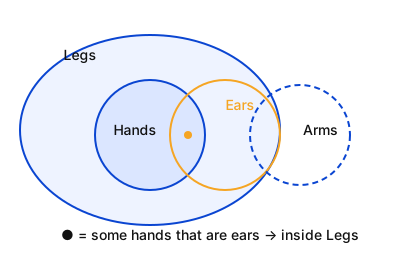
All hands are legs. Some hands are ears. Some ears are arms.
Conclusions:
(I) Some legs are ears.
(II) Some hands are arms.
दिए गए कथनों और निष्कर्षों को ध्यानपूर्वक पढ़ें। आपको दिए गए कथनों को सत्य मानना है, भले ही वे सामान्य रूप से ज्ञात तथ्यों से भिन्न प्रतीत होते हों। आपको निर्णय करना है कि दिए गए कथनों से कौन-सा/से निष्कर्ष तार्किक रूप से अनुसरण करता है/करते हैं। कथन:
सभी हाथ टाँगें हैं। कुछ हाथ कान हैं। कुछ कान बाँहें हैं।
निष्कर्ष:
(I) कुछ टाँगें कान हैं।
(II) कुछ हाथ बाँहें हैं।
  1. AOnly conclusion II follows.केवल निष्कर्ष II अनुसरण करता है।
  2. BOnly conclusion I follows.केवल निष्कर्ष I अनुसरण करता है।
  3. CBoth conclusions I and II follow.निष्कर्ष I और II दोनों अनुसरण करते हैं।
  4. DNeither conclusion I nor II follows.न तो निष्कर्ष I और न ही II अनुसरण करता है।
Show answer

Concept: Draw the Venn diagram from the statements and test each conclusion against every possible drawing.

  1. All hands are legs + some hands are ears → the hands that are ears lie inside legs, so some legs are ears. Conclusion I follows.
  2. Some ears are arms: these arms may be ears that are not hands at all, so 'some hands are arms' is not certain. Conclusion II does not follow.

Trick: Two 'some' statements in a chain (hands–ears, ears–arms) never give a definite 'some' conclusion.

Answer: (B) Only conclusion I follows.

अवधारणा: कथनों से वेन आरेख बनाएँ और हर निष्कर्ष को सभी संभव आकृतियों पर जाँचें।

  1. सभी हाथ पैर हैं + कुछ हाथ कान हैं → जो हाथ कान हैं वे पैर के अंदर हैं, अतः कुछ पैर कान हैं। निष्कर्ष I सही।
  2. कुछ कान बाँह हैं: ये बाँहें ऐसे कान हो सकते हैं जो हाथ नहीं हैं, इसलिए 'कुछ हाथ बाँह हैं' निश्चित नहीं। निष्कर्ष II नहीं निकलता।

ट्रिक: श्रृंखला में दो 'कुछ' कथन (हाथ–कान, कान–बाँह) कभी निश्चित 'कुछ' निष्कर्ष नहीं देते।

उत्तर: (B) केवल निष्कर्ष I अनुसरण करता है।

RRB NTPC Graduate CBT 1General Intelligence and ReasoningSyllogismRRB NTPC Graduate CBT 1 2025 · 19 Mar Shift 1 →
Q6174.
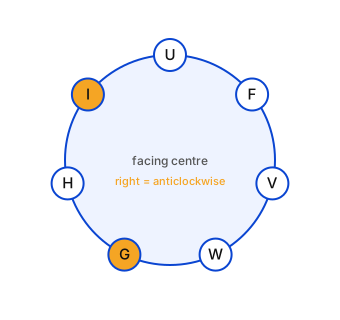
Seven people F, G, H, I, U, V, and W are sitting around a circular table facing the centre of the table. G sits third to the right of U. Only three people sit between F and H when counted from the right of H. G sits to the immediate right of H. V sits to the immediate right of W. Who sits second to the right of I?
सात व्यक्ति F, G, H, I, U, V और W एक वृत्ताकार मेज के चारों ओर मेज के केंद्र की ओर मुख करके बैठे हैं। G, U के दाएँ तीसरे स्थान पर बैठा है। H के दाएँ से गिनने पर F और H के बीच केवल तीन व्यक्ति बैठे हैं। G, H के ठीक दाएँ बैठा है। V, W के ठीक दाएँ बैठा है। I के दाएँ दूसरे स्थान पर कौन बैठा है?
  1. AW
  2. BG
  3. CU
  4. DF
Show answer

Concept: Facing the centre, 'right' means anticlockwise. Fix one person and place the rest from the definite clues.

  1. Put U at the top. G is third to the right of U; H is to the immediate left of G (since G is to H's immediate right).
  2. Counting from H's right, three people sit between F and H → F is the fifth seat to H's right, which lands F just to the left of U.
  3. Remaining seats: W with V to his immediate right fills two of them, I takes the last one (between U and H).
  4. Second to the right of I is G.

Trick: Draw 7 dots, mark arrows for 'right', and place the pair with a fixed gap (U–G) first.

Answer: (B) G

अवधारणा: केंद्र की ओर मुख होने पर 'दाएँ' = वामावर्त (anticlockwise)। एक व्यक्ति को स्थिर रखें और निश्चित शर्तों से बाकी बैठाएँ।

  1. U को ऊपर रखें। G, U के दाएँ तीसरा; H, G के ठीक बाएँ (क्योंकि G, H के ठीक दाएँ है)।
  2. H के दाएँ से गिनने पर F और H के बीच तीन लोग → F, H के दाएँ पाँचवीं सीट पर, यानी U के ठीक बाएँ।
  3. बची सीटें: W और उसके ठीक दाएँ V दो सीटें लेते हैं, I अंतिम सीट (U और H के बीच) पर।
  4. I के दाएँ दूसरा G है।

ट्रिक: 7 बिंदु बनाएँ, 'दाएँ' का तीर लगाएँ, और निश्चित अंतर वाले जोड़े (U–G) को पहले रखें।

उत्तर: (B) G

RRB NTPC Graduate CBT 1General Intelligence and ReasoningCircular seatingRRB NTPC Graduate CBT 1 2025 · 19 Mar Shift 1 →
Q6175.
In a certain code language,
A@ B means ‘A is the son of B’
A % B means ‘A is the brother of B’
A + B means ‘A is the wife of B’
A & B means ‘ A is the father of B’
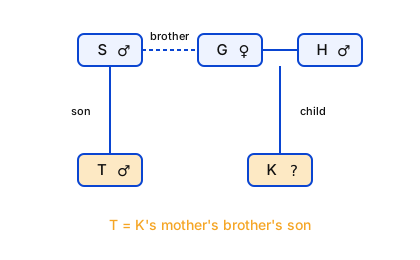
Based on the above, how is T related to K if ‘T@S%G+H&K’?
एक निश्चित कूट भाषा में,
A@ B का अर्थ है ‘A, B का पुत्र है’
A % B का अर्थ है ‘A, B का भाई है’
A + B का अर्थ है ‘A, B की पत्नी है’
A & B का अर्थ है ‘A, B का पिता है’
उपर्युक्त के आधार पर, यदि ‘T@S%G+H&K’ है, तो T, K से किस प्रकार संबंधित है?
  1. AMother's brotherमाता का भाई
  2. BMother's fatherमाता का पिता
  3. CSonपुत्र
  4. DMother's brother's sonमाता के भाई का पुत्र
Show answer

Concept: Decode the chain from left to right and build the family tree.

  1. T @ S: T is the son of S. S % G: S is the brother of G.
  2. G + H: G is the wife of H. H & K: H is the father of K → G is K's mother.
  3. S is K's mother's brother (maternal uncle); T, the son of S, is K's mother's brother's son.

Trick: Decode the symbols nearest the target (K) first, then walk back along the chain.

Answer: (D) Mother's brother's son

अवधारणा: श्रृंखला को बाएँ से दाएँ डिकोड करें और वंश-वृक्ष बनाएँ।

  1. T @ S: T, S का पुत्र। S % G: S, G का भाई।
  2. G + H: G, H की पत्नी। H & K: H, K का पिता → G, K की माँ।
  3. S, K की माँ का भाई (मामा); T, S का पुत्र = K की माँ के भाई का पुत्र।

ट्रिक: लक्ष्य (K) के सबसे पास के प्रतीक पहले डिकोड करें, फिर श्रृंखला में पीछे चलें।

उत्तर: (D) माँ के भाई का पुत्र

RRB NTPC Graduate CBT 1General Intelligence and ReasoningBlood relations (coded)RRB NTPC Graduate CBT 1 2025 · 19 Mar Shift 1 →
Q6176.
In this question, a question is followed by two statements numbered (I) and (II). You have to decide whether the data provided in the statements are sufficient to answer the question. Read both the statements and decide the appropriate answer.
Q. Harsh, Ketan, Mayank, Rohit, and Sidharth, each have different height. Who is the shortest?
(I) Mayank is taller than Harsh but shorter than Ketan.
(II) Rohit is taller than Harsh but shorter than Mayank.
इस प्रश्न में, एक प्रश्न के बाद (I) और (II) संख्या वाले दो कथन दिए गए हैं। आपको यह निर्णय करना है कि कथनों में दिए गए डेटा प्रश्न का उत्तर देने के लिए पर्याप्त हैं या नहीं। दोनों कथनों को पढ़ें और उचित उत्तर का निर्णय करें।
प्रश्न. हर्ष, केतन, मयंक, रोहित और सिद्धार्थ में से प्रत्येक की ऊँचाई अलग-अलग है। सबसे छोटा (कम ऊँचाई वाला) कौन है?
(I) मयंक, हर्ष से लंबा है परंतु केतन से छोटा है।
(II) रोहित, हर्ष से लंबा है परंतु मयंक से छोटा है।
  1. AData in Statement II alone is sufficient to answer the question while data in Statement I is notकथन II में दिया गया डेटा अकेले प्रश्न का उत्तर देने के लिए पर्याप्त है, जबकि कथन I में दिया गया डेटा पर्याप्त नहीं है
  2. BBoth statements I and II together are NOT sufficient to answer the questionकथन I और II दोनों मिलकर भी प्रश्न का उत्तर देने के लिए पर्याप्त नहीं हैं
  3. CData in Statement I alone is sufficient to answer the question while data in Statement II is notकथन I में दिया गया डेटा अकेले प्रश्न का उत्तर देने के लिए पर्याप्त है, जबकि कथन II में दिया गया डेटा पर्याप्त नहीं है
  4. DBoth statements I and II together (and not statement I alone or statement II alone) are sufficient to answer the questionकथन I और II दोनों मिलकर (न कि केवल कथन I अथवा केवल कथन II) प्रश्न का उत्तर देने के लिए पर्याप्त हैं
Show answer

Concept: The question asks for the shortest of five people; all five must be placed, or at least the bottom position must be certain.

  1. Statement I: Ketan > Mayank > Harsh. Rohit and Sidharth unknown – not sufficient.
  2. Statement II: Mayank > Rohit > Harsh. Ketan and Sidharth unknown – not sufficient.
  3. Together: Ketan > Mayank > Rohit > Harsh, but Sidharth is never mentioned – he could be shortest. Still not sufficient.

Trick: Count the names in the statements; if one person is missing from both, the shortest/tallest can't be fixed.

Answer: (B) Both statements I and II together are NOT sufficient to answer the question

अवधारणा: प्रश्न पाँच लोगों में सबसे छोटा पूछता है; पाँचों की स्थिति या कम से कम सबसे नीचे की स्थिति निश्चित होनी चाहिए।

  1. कथन I: केतन > मयंक > हर्ष। रोहित और सिद्धार्थ अज्ञात – पर्याप्त नहीं।
  2. कथन II: मयंक > रोहित > हर्ष। केतन और सिद्धार्थ अज्ञात – पर्याप्त नहीं।
  3. दोनों मिलाकर: केतन > मयंक > रोहित > हर्ष, पर सिद्धार्थ का कहीं ज़िक्र नहीं – वह सबसे छोटा हो सकता है। फिर भी पर्याप्त नहीं।

ट्रिक: कथनों में नाम गिनें; यदि कोई व्यक्ति दोनों से गायब है तो सबसे छोटा/लंबा तय नहीं हो सकता।

उत्तर: (B) दोनों कथन I और II मिलकर भी प्रश्न का उत्तर देने के लिए पर्याप्त नहीं हैं

RRB NTPC Graduate CBT 1General Intelligence and ReasoningData sufficiencyRRB NTPC Graduate CBT 1 2025 · 19 Mar Shift 1 →
Q6177.
Each of seven people, E, F, G, H, J, K and L, has an exam on a different day of a week, starting from Monday and ending on Sunday of the same week. Only three people have exams between L and J. Only three people have exams between H and K. E has exam on some day before J and on some day after F. Only G has exam before K. How many people have exams before L?
सात व्यक्तियों, E, F, G, H, J, K और L में से प्रत्येक की परीक्षा एक ही सप्ताह के सोमवार से प्रारंभ होकर रविवार को समाप्त होने वाले सप्ताह के अलग-अलग दिन है। L और J के बीच केवल तीन व्यक्तियों की परीक्षाएँ हैं। H और K के बीच केवल तीन व्यक्तियों की परीक्षाएँ हैं। E की परीक्षा J से पहले किसी दिन और F के बाद किसी दिन है। K से पहले केवल G की परीक्षा है। L से पहले कितने व्यक्तियों की परीक्षाएँ हैं?
  1. AThreeतीन
  2. BOneएक
  3. CFourचार
  4. DTwoदो
Show answer

Concept: Number Monday–Sunday as 1–7 and start with the clue that pins positions.

  1. 'Only G has exam before K' → G = Mon (1), K = Tue (2).
  2. Three people between H and K → H = Sat (6).
  3. Three between L and J → the free pair with gap 4 is (Wed, Sun). F < E < J forces J = Sun (7), L = Wed (3); F = Thu, E = Fri.
  4. Before L (Wed): G and K → two people.

Trick: 'Only X before Y' fixes two slots at once – always the first clue to use.

Answer: (D) Two

अवधारणा: सोम–रवि को 1–7 मानें और उस शर्त से शुरू करें जो स्थान तय कर दे।

  1. 'K से पहले केवल G' → G = सोम (1), K = मंगल (2)।
  2. H और K के बीच तीन लोग → H = शनि (6)।
  3. L और J के बीच तीन → 4 के अंतर वाला खाली जोड़ा (बुध, रवि)। F < E < J से J = रवि (7), L = बुध (3); F = गुरु, E = शुक्र।
  4. L (बुध) से पहले: G और K → दो लोग।

ट्रिक: 'Y से पहले केवल X' एक साथ दो स्थान तय करता है – इसे हमेशा पहले इस्तेमाल करें।

उत्तर: (D) दो

RRB NTPC Graduate CBT 1General Intelligence and ReasoningScheduling puzzle (days)RRB NTPC Graduate CBT 1 2025 · 19 Mar Shift 1 →
Q6178.
Which of the following rulers built Tughlaqabad Fort in 1321?
1321 में तुगलकाबाद किले का निर्माण निम्नलिखित में से किस शासक ने करवाया था?
  1. AMuhammad bin Tughlaqमुहम्मद बिन तुगलक
  2. BFiroz Shah Tughlaqफिरोज शाह तुगलक
  3. CGhiyasuddin Tughlaqगयासुद्दीन तुगलक
  4. DAlauddin Khaljiअलाउद्दीन खिलजी
Show answer

Concept: Tughlaqabad Fort in Delhi was built by the founder of the Tughlaq dynasty.

  1. Ghiyasuddin Tughlaq (Ghazi Malik) founded the Tughlaq dynasty in 1320 and built the massive Tughlaqabad Fort in 1321 as his new capital city.
  2. Muhammad bin Tughlaq is known for shifting the capital to Daulatabad; Firoz Shah built Firozabad (Firoz Shah Kotla); Alauddin Khalji built Siri Fort.

Yaad rakhein: Delhi's forts by ruler: Siri – Alauddin Khalji; Tughlaqabad – Ghiyasuddin; Firoz Shah Kotla – Firoz Shah.

Answer: (C) Ghiyasuddin Tughlaq

अवधारणा: दिल्ली का तुगलकाबाद किला तुगलक वंश के संस्थापक ने बनवाया था।

  1. गयासुद्दीन तुगलक (गाज़ी मलिक) ने 1320 में तुगलक वंश की स्थापना की और 1321 में अपनी नई राजधानी के रूप में विशाल तुगलकाबाद किला बनवाया।
  2. मुहम्मद बिन तुगलक राजधानी दौलताबाद ले जाने के लिए, फिरोज शाह फिरोजाबाद (फिरोज शाह कोटला) के लिए और अलाउद्दीन खिलजी सीरी किले के लिए जाने जाते हैं।

याद रखें: दिल्ली के किले: सीरी – अलाउद्दीन खिलजी; तुगलकाबाद – गयासुद्दीन; फिरोज शाह कोटला – फिरोज शाह।

उत्तर: (C) गयासुद्दीन तुगलक (Ghiyasuddin Tughlaq)

RRB NTPC Graduate CBT 1General AwarenessMedieval History – Tughlaq DynastyRRB NTPC Graduate CBT 1 2025 · 18 Mar Shift 3 →
Q6179.
Which of the following is a similarity between Hindustani and Carnatic music systems?
निम्नलिखित में से कौन-सी हिंदुस्तानी और कर्नाटक संगीत पद्धतियों के बीच एक समानता है?
  1. AUse of identical compositionsएक समान रचनाओं का प्रयोग
  2. BRejection of Shruti conceptश्रुति की अवधारणा की अस्वीकृति
  3. CExclusive focus on instrumental musicकेवल वाद्य संगीत पर ध्यान
  4. DFoundation on Raga and Talaराग और ताल पर आधारित होना
Show answer

Concept: Both Indian classical systems rest on the same two pillars – Raga (melodic framework) and Tala (rhythmic cycle).

  1. Hindustani (North) and Carnatic (South) music differ in style, instruments and compositions, but both are built on Raga and Tala and both accept the concept of Shruti (microtones).
  2. Compositions are not identical, and both systems are primarily vocal, not exclusively instrumental – so the other options are wrong.

Yaad rakhein: Hindustani vs Carnatic: different flavours, same grammar – Raga + Tala.

Answer: (D) Foundation on Raga and Tala

अवधारणा: भारत की दोनों शास्त्रीय संगीत पद्धतियाँ एक ही दो स्तंभों पर टिकी हैं – राग (स्वर-ढाँचा) और ताल (लय-चक्र)।

  1. हिंदुस्तानी (उत्तर) और कर्नाटक (दक्षिण) संगीत शैली, वाद्य और रचनाओं में अलग हैं, पर दोनों का आधार राग और ताल है और दोनों श्रुति (microtones) की अवधारणा मानते हैं।
  2. रचनाएँ एक जैसी नहीं होतीं और दोनों पद्धतियाँ मुख्यतः गायन-प्रधान हैं, केवल वाद्य नहीं – इसलिए बाकी विकल्प गलत हैं।

याद रखें: हिंदुस्तानी बनाम कर्नाटक: स्वाद अलग, व्याकरण एक – राग + ताल।

उत्तर: (D) राग और ताल पर आधारित (Foundation on Raga and Tala)

RRB NTPC Graduate CBT 1General AwarenessIndian Classical MusicRRB NTPC Graduate CBT 1 2025 · 18 Mar Shift 3 →
Q6180.
Which of the following scientists proposed the nuclear model of the atom based on the results of the gold foil experiment?
निम्नलिखित में से किस वैज्ञानिक ने स्वर्ण-पत्र प्रयोग (gold foil experiment) के परिणामों के आधार पर परमाणु का नाभिकीय मॉडल प्रस्तावित किया था?
  1. AJohn Daltonजॉन डाल्टन
  2. BErnest Rutherfordअर्नेस्ट रदरफोर्ड
  3. CNiels Bohrनील्स बोर
  4. DJ.J. Thomsonजे.जे. थॉमसन
Show answer

Concept: The gold foil (alpha-particle scattering) experiment of 1909–11 revealed the tiny, dense, positively charged nucleus.

  1. Ernest Rutherford interpreted the experiment: most alpha particles passed straight through, a few bounced back → atom is mostly empty space with a central nucleus – the nuclear model (1911).
  2. Dalton gave the indivisible-atom theory, Thomson the 'plum pudding' model (electron discovery), and Bohr the quantised-orbit model (1913) that refined Rutherford's.

Yaad rakhein: Dalton → Thomson (plum pudding) → Rutherford (nucleus) → Bohr (orbits).

Answer: (B) Ernest Rutherford

अवधारणा: सोने की पन्नी (alpha-particle scattering) प्रयोग (1909–11) से छोटे, घने, धनावेशित नाभिक का पता चला।

  1. अर्नेस्ट रदरफोर्ड ने प्रयोग की व्याख्या की: अधिकांश alpha कण सीधे निकल गए, कुछ वापस लौटे → परमाणु अधिकतर खाली है, बीच में नाभिक – नाभिकीय मॉडल (1911)।
  2. डाल्टन ने अविभाज्य परमाणु सिद्धांत, थॉमसन ने 'plum pudding' मॉडल और बोर ने (1913) क्वांटित कक्षाओं वाला मॉडल दिया, जो रदरफोर्ड मॉडल का सुधार था।

याद रखें: डाल्टन → थॉमसन (plum pudding) → रदरफोर्ड (नाभिक) → बोर (कक्षाएँ)।

उत्तर: (B) अर्नेस्ट रदरफोर्ड (Ernest Rutherford)

RRB NTPC Graduate CBT 1General AwarenessAtomic StructureRRB NTPC Graduate CBT 1 2025 · 18 Mar Shift 3 →