Question bank

Q&A: practice questions with answers

Search questions on any topic. Filter by exam category, exam, subject and topic, try the question, then open the answer and explanation.

Courses – airGurukul

7,077 questions found.

Q6201.
In December 2025, at which international event did India deliver its National Statement highlighting clean energy progress and Mission LiFE?
दिसंबर 2025 में, भारत ने किस अंतर्राष्ट्रीय आयोजन में स्वच्छ ऊर्जा की प्रगति और मिशन LiFE को रेखांकित करते हुए अपना राष्ट्रीय वक्तव्य (National Statement) प्रस्तुत किया?
  1. AG20 SummitG20 शिखर सम्मेलन
  2. BWorld Environment Day 2024विश्व पर्यावरण दिवस 2024
  3. CCOP26 Climate SummitCOP26 जलवायु शिखर सम्मेलन
  4. D7th Session of the United Nations Environment Assembly (UNEA)संयुक्त राष्ट्र पर्यावरण सभा (UNEA) का 7वाँ सत्र
Show answer

Concept: The 7th session of the UN Environment Assembly (UNEA-7) was held at Nairobi, Kenya, on 8–12 December 2025.

  1. India delivered its National Statement at UNEA-7, highlighting its clean-energy progress (non-fossil capacity, solar, green hydrogen) and Mission LiFE (Lifestyle for Environment).
  2. G20 Summit 2025 was in November (Johannesburg); World Environment Day is 5 June; COP26 was in 2021 – none matches December 2025.

Yaad rakhein: UNEA = world's highest environmental decision-making body, meets at UNEP HQ Nairobi; UNEA-7 → December 2025.

Answer: (D) 7th Session of the United Nations Environment Assembly (UNEA)

अवधारणा: संयुक्त राष्ट्र पर्यावरण सभा का 7वाँ सत्र (UNEA-7) 8–12 दिसंबर 2025 को नैरोबी, केन्या में हुआ।

  1. भारत ने UNEA-7 में अपना राष्ट्रीय वक्तव्य (National Statement) दिया, जिसमें स्वच्छ ऊर्जा प्रगति (गैर-जीवाश्म क्षमता, सौर, ग्रीन हाइड्रोजन) और मिशन LiFE पर ज़ोर था।
  2. G20 शिखर सम्मेलन 2025 नवंबर में (जोहान्सबर्ग), विश्व पर्यावरण दिवस 5 जून, COP26 वर्ष 2021 में – कोई दिसंबर 2025 से मेल नहीं खाता।

याद रखें: UNEA = विश्व की सर्वोच्च पर्यावरण निर्णय संस्था, UNEP मुख्यालय नैरोबी में बैठक; UNEA-7 → दिसंबर 2025।

उत्तर: (D) संयुक्त राष्ट्र पर्यावरण सभा (UNEA) का 7वाँ सत्र
RRB NTPC Graduate CBT 1General AwarenessCurrent Affairs – EnvironmentRRB NTPC Graduate CBT 1 2025 · 18 Mar Shift 3 →
Q6202.
Which painting form is known for its monochromatic style using white pigment on mud walls?
कौन-सी चित्रकला शैली मिट्टी की दीवारों पर सफेद रंगद्रव्य (pigment) के प्रयोग वाली अपनी एकवर्णी (monochromatic) शैली के लिए जानी जाती है?
  1. AMadhubaniमधुबनी
  2. BWarliवर्ली
  3. CGondगोंड
  4. DPahariपहाड़ी
Show answer

Concept: Warli painting of Maharashtra is a tribal art done in white on earthen walls.

  1. Warli artists use white rice paste on a red-ochre or cow-dung mud wall, drawing circles, triangles and lines showing daily life and the Tarpa dance – a monochromatic style.
  2. Madhubani (Bihar) and Gond (MP) are bright, multi-coloured; Pahari is a miniature school of the Himalayan hills.

Yaad rakhein: White on mud wall, geometric figures → Warli (Maharashtra).

Answer: (B) Warli

अवधारणा: महाराष्ट्र की वारली चित्रकला मिट्टी की दीवारों पर सफेद रंग से बनी आदिवासी कला है।

  1. वारली कलाकार लाल गेरू या गोबर-लिपी दीवार पर चावल के सफेद लेप से वृत्त, त्रिभुज और रेखाओं द्वारा दैनिक जीवन और तारपा नृत्य दर्शाते हैं – एकवर्णी (monochromatic) शैली।
  2. मधुबनी (बिहार) और गोंड (MP) चटख बहुरंगी हैं; पहाड़ी हिमालयी क्षेत्र की लघुचित्र शैली है।

याद रखें: मिट्टी की दीवार पर सफेद, ज्यामितीय आकृतियाँ → वारली (महाराष्ट्र)।

उत्तर: (B) वारली (Warli)

RRB NTPC Graduate CBT 1General AwarenessFolk Paintings of IndiaRRB NTPC Graduate CBT 1 2025 · 18 Mar Shift 3 →
Q6203.
Which constitutional amendment reduced the Parliament’s approval period for National Emergency from two months to one month?
किस संविधान संशोधन ने राष्ट्रीय आपातकाल के लिए संसद की स्वीकृति की अवधि को दो महीने से घटाकर एक महीना कर दिया?
  1. A38th Amendment Act, 197538वाँ संशोधन अधिनियम, 1975
  2. B42nd Amendment Act, 197642वाँ संशोधन अधिनियम, 1976
  3. C52nd Amendment Act, 198552वाँ संशोधन अधिनियम, 1985
  4. D44th Amendment Act, 197844वाँ संशोधन अधिनियम, 1978
Show answer

Concept: The 44th Amendment Act, 1978 added safeguards against misuse of Emergency after the 1975–77 experience.

  1. It reduced the period within which Parliament must approve a National Emergency proclamation from two months to one month, required a special majority, and replaced "internal disturbance" with "armed rebellion" in Article 352.
  2. The 42nd Amendment (1976) had strengthened the Emergency provisions; 38th (1975) made the proclamation non-justiciable; 52nd (1985) is the Anti-Defection law.

Yaad rakhein: 42nd = power to Centre (1976); 44th = correction/safeguards (1978, Janata govt).

Answer: (D) 44th Amendment Act, 1978

अवधारणा: 44वें संविधान संशोधन अधिनियम, 1978 ने 1975–77 के अनुभव के बाद आपातकाल के दुरुपयोग के विरुद्ध सुरक्षा उपाय जोड़े।

  1. इसने राष्ट्रीय आपातकाल की घोषणा को संसद से अनुमोदित कराने की अवधि दो माह से घटाकर एक माह की, विशेष बहुमत अनिवार्य किया और अनुच्छेद 352 में "आंतरिक अशांति" की जगह "सशस्त्र विद्रोह" रखा।
  2. 42वें संशोधन (1976) ने आपातकालीन प्रावधान मज़बूत किए थे; 38वाँ (1975) घोषणा को न्यायिक समीक्षा से बाहर करता था; 52वाँ (1985) दल-बदल विरोधी कानून है।

याद रखें: 42वाँ = केंद्र को शक्ति (1976); 44वाँ = सुधार/सुरक्षा (1978, जनता सरकार)।

उत्तर: (D) 44वाँ संशोधन अधिनियम, 1978

RRB NTPC Graduate CBT 1General AwarenessConstitutional Amendments – EmergencyRRB NTPC Graduate CBT 1 2025 · 18 Mar Shift 3 →
Q6204.
When a law passed by a State Legislature clashes with a Parliamentary law on a Concurrent List subject, what is the legal outcome?
जब किसी राज्य विधानमंडल द्वारा पारित कोई कानून समवर्ती सूची के किसी विषय पर संसदीय कानून से टकराता है, तो इसका कानूनी परिणाम क्या होता है?
  1. AThe matter is settled through a ruling by the Supreme Courtमामला सर्वोच्च न्यायालय के निर्णय द्वारा सुलझाया जाता है
  2. BThe state legislation automatically overrides the central lawराज्य का कानून स्वतः केंद्रीय कानून को निष्प्रभावी कर देता है
  3. CThe central law overrides the state law unless the state law has Presidential assentकेंद्रीय कानून राज्य के कानून पर प्रभावी होता है, जब तक कि राज्य के कानून को राष्ट्रपति की स्वीकृति प्राप्त न हो
  4. DThe Parliament is obligated to annul the state lawसंसद राज्य के कानून को रद्द करने के लिए बाध्य होती है
Show answer

Concept: Article 254 deals with inconsistency between Central and State laws on Concurrent List subjects.

  1. Art. 254(1): if a state law is repugnant to a Parliamentary law on a Concurrent subject, the Central law prevails and the state law is void to the extent of repugnancy.
  2. Art. 254(2): if the state law was reserved for and received the President's assent, it prevails in that state (though Parliament may later override it).

Yaad rakhein: Concurrent clash → Centre wins, except state law with Presidential assent.

Answer: (C) The central law overrides the state law unless the state law has Presidential assent

अवधारणा: अनुच्छेद 254 समवर्ती सूची के विषयों पर केंद्रीय और राज्य कानूनों की असंगति से संबंधित है।

  1. अनु. 254(1): यदि राज्य का कानून समवर्ती विषय पर संसद के कानून के विरुद्ध हो, तो केंद्रीय कानून प्रभावी होता है और राज्य कानून विरोध की सीमा तक शून्य हो जाता है।
  2. अनु. 254(2): यदि राज्य कानून को राष्ट्रपति की स्वीकृति मिली हो, तो वह उस राज्य में प्रभावी रहता है (हालाँकि संसद बाद में उसे निष्प्रभावी कर सकती है)।

याद रखें: समवर्ती टकराव → केंद्र जीतता है, सिवाय राष्ट्रपति की स्वीकृति वाले राज्य कानून के।

उत्तर: (C) केंद्रीय कानून राज्य कानून पर प्रभावी, जब तक राज्य कानून को राष्ट्रपति की स्वीकृति न हो

RRB NTPC Graduate CBT 1General AwarenessConcurrent List – RepugnancyRRB NTPC Graduate CBT 1 2025 · 18 Mar Shift 3 →
Q6205.
On November 20, 2025, India signed the Terms of Reference (ToR) to initiate
negotiations for a comprehensive Free Trade Agreement with which country?
20 नवंबर, 2025 को भारत ने किस देश के साथ व्यापक मुक्त व्यापार समझौते (Free Trade Agreement) के लिए
वार्ता आरंभ करने हेतु विचारार्थ विषयों (Terms of Reference - ToR) पर हस्ताक्षर किए?
  1. AIsraelइज़राइल
  2. BUnited Arab Emiratesसंयुक्त अरब अमीरात
  3. CCanadaकनाडा
  4. DAustraliaऑस्ट्रेलिया
Show answer

Concept: India and Israel signed the Terms of Reference for a comprehensive Free Trade Agreement on 20 November 2025.

  1. The ToR was signed in New Delhi by Union Commerce Minister Piyush Goyal and Israel's Economy Minister Nir Barkat, formally launching FTA negotiations.
  2. The UAE pact (CEPA) was already signed in 2022; with Canada talks resumed in 2025 but the ToR event on this date was with Israel.

Yaad rakhein: Nov 2025: India–Israel FTA ToR; also Nov 2025: India–EFTA TEPA in force (1 Oct 2025).

Answer: (A) Israel

अवधारणा: भारत और इज़राइल ने 20 नवंबर 2025 को व्यापक मुक्त व्यापार समझौते (FTA) के लिए विचारार्थ विषय (ToR) पर हस्ताक्षर किए।

  1. ToR पर नई दिल्ली में केंद्रीय वाणिज्य मंत्री पीयूष गोयल और इज़राइल के अर्थव्यवस्था मंत्री नीर बरकत ने हस्ताक्षर किए, जिससे FTA वार्ता औपचारिक रूप से शुरू हुई।
  2. UAE के साथ CEPA 2022 में ही हो चुका था; कनाडा से वार्ता 2025 में फिर शुरू हुई, पर इस तिथि का ToR इज़राइल के साथ था।

याद रखें: नवंबर 2025: भारत–इज़राइल FTA ToR; अक्टूबर 2025: भारत–EFTA TEPA लागू।

उत्तर: (A) इज़राइल (Israel)

RRB NTPC Graduate CBT 1General AwarenessCurrent Affairs – TradeRRB NTPC Graduate CBT 1 2025 · 18 Mar Shift 3 →
Q6206.
Who was popularly known as the 'Payyoli Express' in Indian sports history?
भारतीय खेल इतिहास में 'पय्योली एक्सप्रेस' के नाम से कौन लोकप्रिय था/थी?
  1. AShoaib Akhtarशोएब अख्तर
  2. BLeander Paesलिएंडर पेस
  3. CSania Mirzaसानिया मिर्ज़ा
  4. DPT Ushaपी.टी. उषा
Show answer

Concept: Nicknames of Indian sportspersons.

  1. P. T. Usha, the sprinter from Payyoli village in Kozhikode (Kerala), is called the "Payyoli Express" and "Queen of Indian track and field"; she narrowly missed a bronze at the 1984 Los Angeles Olympics 400 m hurdles.
  2. Shoaib Akhtar is the "Rawalpindi Express" (Pakistani pacer) – the tempting distractor.

Yaad rakhein: Payyoli Express – P. T. Usha; Flying Sikh – Milkha Singh; Dhing Express – Hima Das.

Answer: (D) PT Usha

अवधारणा: भारतीय खिलाड़ियों के उपनाम।

  1. केरल के कोझीकोड के पय्योली गाँव की धाविका पी. टी. उषा को "पय्योली एक्सप्रेस" और "भारतीय ट्रैक एंड फील्ड की रानी" कहा जाता है; 1984 लॉस एंजिल्स ओलंपिक 400 मी बाधा दौड़ में वे कांस्य से बाल-बाल चूकीं।
  2. शोएब अख्तर "रावलपिंडी एक्सप्रेस" (पाकिस्तानी तेज़ गेंदबाज़) हैं – भ्रामक विकल्प।

याद रखें: पय्योली एक्सप्रेस – पी. टी. उषा; फ्लाइंग सिख – मिल्खा सिंह; ढिंग एक्सप्रेस – हिमा दास।

उत्तर: (D) पी. टी. उषा

RRB NTPC Graduate CBT 1General AwarenessSports PersonalitiesRRB NTPC Graduate CBT 1 2025 · 18 Mar Shift 3 →
Q6207.
Which of the following is NOT a feature of alluvial soils in India?
निम्नलिखित में से कौन-सी भारत की जलोढ़ मिट्टी की विशेषता नहीं है?
  1. ARich in potashपोटाश से भरपूर
  2. BVery fertileअत्यधिक उपजाऊ
  3. CMainly consists of sand, silt and clayमुख्यतः रेत, गाद और चिकनी मिट्टी से बनी
  4. DPrimarily found in the Deccan Plateauमुख्यतः दक्कन के पठार में पाई जाती है
Show answer

Concept: Alluvial soil is deposited by rivers in the Northern Plains and coastal deltas.

  1. It covers about 40% of India – the Indo-Gangetic–Brahmaputra plains and eastern coastal deltas – and is very fertile, made of sand, silt and clay, rich in potash and lime but poor in nitrogen and phosphorus.
  2. The Deccan Plateau has black (regur) soil formed from basalt lava, not alluvial soil; so option (D) is the incorrect feature.

Yaad rakhein: Alluvial → plains and deltas; Black → Deccan (cotton); Red → peninsular granite; Laterite → heavy-rain hills.

Answer: (D) Primarily found in the Deccan Plateau

अवधारणा: जलोढ़ मिट्टी नदियों द्वारा उत्तरी मैदानों और तटीय डेल्टाओं में जमा की जाती है।

  1. यह भारत के लगभग 40% भाग – सिंधु-गंगा-ब्रह्मपुत्र मैदान और पूर्वी तटीय डेल्टा – में फैली है; अत्यंत उपजाऊ, बालू-गाद-मृत्तिका से बनी, पोटाश व चूना में समृद्ध पर नाइट्रोजन व फॉस्फोरस में कम।
  2. दक्कन पठार में बेसाल्ट लावा से बनी काली (रेगुर) मिट्टी है, जलोढ़ नहीं; अतः विकल्प (D) गलत विशेषता है।

याद रखें: जलोढ़ → मैदान व डेल्टा; काली → दक्कन (कपास); लाल → प्रायद्वीपीय ग्रेनाइट; लैटेराइट → अधिक वर्षा वाले पहाड़।

उत्तर: (D) मुख्यतः दक्कन पठार में पाई जाती है

RRB NTPC Graduate CBT 1General AwarenessSoils of IndiaRRB NTPC Graduate CBT 1 2025 · 18 Mar Shift 3 →
Q6208.
Which of the following is the outcome of Globalization in India's economy?
निम्नलिखित में से कौन-सा भारत की अर्थव्यवस्था में वैश्वीकरण का परिणाम है?
  1. AOutsourcingआउटसोर्सिंग
  2. BLiberalisationउदारीकरण
  3. CPrivatisationनिजीकरण
  4. DNationalisationराष्ट्रीयकरण
Show answer

Concept: Globalisation integrates the Indian economy with the world through trade, investment and services.

  1. Outsourcing – foreign companies getting services like BPO, IT support, call centres done in India – is a direct outcome of globalisation and cheaper communication.
  2. Liberalisation and privatisation are the other two components of the 1991 LPG reforms (policies, not outcomes); nationalisation is the opposite trend (1969 bank nationalisation).

Yaad rakhein: LPG = Liberalisation (rules eased) + Privatisation (ownership) + Globalisation (world link) → outsourcing, MNCs, FDI.

Answer: (A) Outsourcing

अवधारणा: वैश्वीकरण व्यापार, निवेश और सेवाओं के माध्यम से भारतीय अर्थव्यवस्था को विश्व से जोड़ता है।

  1. आउटसोर्सिंग – विदेशी कंपनियों द्वारा BPO, IT सहायता, कॉल सेंटर जैसी सेवाएँ भारत से कराना – वैश्वीकरण और सस्ते संचार का प्रत्यक्ष परिणाम है।
  2. उदारीकरण और निजीकरण 1991 के LPG सुधारों के अन्य दो घटक हैं (नीतियाँ, परिणाम नहीं); राष्ट्रीयकरण विपरीत प्रवृत्ति है (1969 बैंक राष्ट्रीयकरण)।

याद रखें: LPG = उदारीकरण (नियम ढीले) + निजीकरण (स्वामित्व) + वैश्वीकरण (विश्व से जुड़ाव) → आउटसोर्सिंग, MNC, FDI।

उत्तर: (A) आउटसोर्सिंग (Outsourcing)

RRB NTPC Graduate CBT 1General AwarenessGlobalisationRRB NTPC Graduate CBT 1 2025 · 18 Mar Shift 3 →
Q6209.
Why is the Paika Rebellion of Odisha regarded as distinct among early anti-colonial uprisings in terms of the social background and traditional functions of its
participants?
ओडिशा के पाइका विद्रोह को उसके प्रतिभागियों की सामाजिक पृष्ठभूमि और पारंपरिक कार्यों की दृष्टि से प्रारंभिक उपनिवेश-विरोधी विद्रोहों में
विशिष्ट क्यों माना जाता है?
  1. AIt depended on support from foreign mercenary forcesयह विदेशी भाड़े की सेनाओं के समर्थन पर निर्भर था
  2. BIt was driven mainly by urban craft guilds and tradersयह मुख्यतः शहरी शिल्प संघों और व्यापारियों द्वारा संचालित था
  3. CIt was organised by large zamindars seeking revenue concessionsइसे राजस्व रियायतें चाहने वाले बड़े ज़मींदारों ने संगठित किया था
  4. DIt was led by hereditary militia with local administrative rolesइसका नेतृत्व स्थानीय प्रशासनिक भूमिकाओं वाली वंशानुगत सेना (militia) ने किया था
Show answer

Concept: The Paika Rebellion (1817, Khurda, Odisha) was led by Bakshi Jagabandhu against the East India Company.

  1. The Paiks were the hereditary militia of the Gajapati kings of Odisha; they held rent-free land in return for military service and performed local policing and administrative duties in peacetime.
  2. Loss of these lands, new revenue settlements and salt taxes under the Company provoked the revolt – hence its distinct social base compared with peasant or tribal uprisings.

Yaad rakhein: Paika = "foot soldier" (Odia); 1817; leader Bakshi Jagabandhu Bidyadhar; Khurda.

Answer: (D) It was led by hereditary militia with local administrative roles

अवधारणा: पाइक विद्रोह (1817, खुर्दा, ओडिशा) का नेतृत्व बख्शी जगबंधु ने ईस्ट इंडिया कंपनी के विरुद्ध किया।

  1. पाइक ओडिशा के गजपति राजाओं की वंशानुगत सेना (militia) थे; सैन्य सेवा के बदले उन्हें लगान-मुक्त भूमि मिलती थी और शांतिकाल में वे स्थानीय पुलिस व प्रशासनिक कार्य करते थे।
  2. कंपनी द्वारा इन भूमियों का छिनना, नई राजस्व व्यवस्था और नमक कर ने विद्रोह भड़काया – इसलिए किसान या आदिवासी विद्रोहों से इसका सामाजिक आधार अलग था।

याद रखें: पाइक = "पैदल सैनिक" (ओड़िया); 1817; नेता बख्शी जगबंधु विद्याधर; खुर्दा।

उत्तर: (D) इसका नेतृत्व स्थानीय प्रशासनिक भूमिका वाली वंशानुगत सेना ने किया

RRB NTPC Graduate CBT 1General AwarenessPaika RebellionRRB NTPC Graduate CBT 1 2025 · 18 Mar Shift 3 →
Q6210.
In which present-day state did the Jungle Mahal Uprising, also known as the Bhumij Revolt, take place?
जंगल महल विद्रोह, जिसे भूमिज विद्रोह के नाम से भी जाना जाता है, वर्तमान के किस राज्य में हुआ था?
  1. AWest Bengalपश्चिम बंगाल
  2. BOdishaओडिशा
  3. CBiharबिहार
  4. DJharkhandझारखंड
Show answer

Concept: The Bhumij Revolt (1832–33), also called the Jungle Mahal uprising or Ganga Narain's Hangama, took place in the Jungle Mahal area.

  1. It was led by Ganga Narain Singh of Barabhum in Manbhum district – the region around present-day Purulia, West Bengal – against the Company's revenue system and new courts.
  2. Though the Jungle Mahals later spread into the Chota Nagpur fringe, the uprising's centre (Barabhum/Manbhum) lies in today's West Bengal.

Yaad rakhein: Bhumij 1832 – Ganga Narain – Jungle Mahal (Purulia, WB); Kol 1831 – Chota Nagpur (Jharkhand); Santhal 1855 – Rajmahal hills.

Answer: (A) West Bengal

अवधारणा: भूमिज विद्रोह (1832–33), जिसे जंगल महल विद्रोह या गंगा नारायण का हंगामा भी कहते हैं, जंगल महल क्षेत्र में हुआ।

  1. इसका नेतृत्व मानभूम ज़िले के बड़ाभूम के गंगा नारायण सिंह ने किया – यह क्षेत्र आज के पुरुलिया, पश्चिम बंगाल के आसपास है – कंपनी की राजस्व व्यवस्था और नई अदालतों के विरुद्ध।
  2. यद्यपि जंगल महल छोटा नागपुर की सीमा तक फैला था, विद्रोह का केंद्र (बड़ाभूम/मानभूम) आज के पश्चिम बंगाल में है।

याद रखें: भूमिज 1832 – गंगा नारायण – जंगल महल (पुरुलिया, WB); कोल 1831 – छोटा नागपुर (झारखंड); संथाल 1855 – राजमहल पहाड़ियाँ।

उत्तर: (A) पश्चिम बंगाल

RRB NTPC Graduate CBT 1General AwarenessTribal RevoltsRRB NTPC Graduate CBT 1 2025 · 18 Mar Shift 3 →
Q6211.
Which of the following options is closest to the speed of sound in air?
निम्नलिखित में से कौन-सा विकल्प वायु में ध्वनि की चाल के सबसे निकट है?
  1. A12000 m/s
  2. B3400 km/s
  3. C340 m/s
  4. D3 x 108 m/s
Show answer

Concept: Speed of sound in air at room temperature is about 343m/s (about 1235km/h).

  1. Closest option is 340m/s; it increases with temperature (about 0.6m/s per ∘C) and humidity.
  2. 3×10⁸m/s is the speed of light; sound travels faster in liquids (water ≈ 1480 m/s) and solids (steel ≈ 5000 m/s), not 3400 km/s.

Yaad rakhein: Sound in air ≈ 340 m/s → lightning seen first, thunder heard about 3 s later per km.

Answer: (C) 340 m/s

अवधारणा: कमरे के तापमान पर वायु में ध्वनि की चाल लगभग 343m/s (लगभग 1235km/h) होती है।

  1. निकटतम विकल्प 340m/s है; यह तापमान (लगभग 0.6m/s प्रति ∘C) और आर्द्रता बढ़ने पर बढ़ती है।
  2. 3×10⁸m/s प्रकाश की चाल है; ध्वनि द्रव (जल ≈ 1480 m/s) और ठोस (स्टील ≈ 5000 m/s) में तेज़ चलती है, 3400 km/s नहीं।

याद रखें: वायु में ध्वनि ≈ 340 m/s → बिजली पहले दिखती है, गड़गड़ाहट प्रति km लगभग 3 s बाद सुनाई देती है।

उत्तर: (C) 340 m/s

RRB NTPC Graduate CBT 1General AwarenessSound – SpeedRRB NTPC Graduate CBT 1 2025 · 18 Mar Shift 3 →
Q6212.
Which plateau belt in India is notably rich in both iron ore and coal resources?
भारत का कौन-सा पठारी क्षेत्र लौह अयस्क और कोयला, दोनों संसाधनों में उल्लेखनीय रूप से समृद्ध है?
  1. AWest-Eastern Plateau Regionपश्चिम-पूर्वी पठारी क्षेत्र
  2. BSouth-Western Plateau Regionदक्षिण-पश्चिमी पठारी क्षेत्र
  3. CNorth-Eastern Plateau Regionउत्तर-पूर्वी पठारी क्षेत्र
  4. DNorth-Western Plateau Regionउत्तर-पश्चिमी पठारी क्षेत्र
Show answer

Concept: India's minerals are concentrated in three belts; the richest is the North-Eastern Plateau region.

  1. The North-Eastern Plateau (Chhota Nagpur, Odisha plateau, West Bengal, parts of Chhattisgarh) has iron ore (Singhbhum, Keonjhar, Mayurbhanj), coal (Jharia, Raniganj, Bokaro), manganese, bauxite and mica.
  2. The South-Western belt (Karnataka–Goa) has iron ore but little coal; the North-Western belt (Rajasthan–Gujarat) has non-ferrous metals and petroleum.

Yaad rakhein: NE plateau = "Ruhr of India" (Chhota Nagpur) – both iron and coal → steel plants Jamshedpur, Bokaro, Rourkela, Durgapur.

Answer: (C) North-Eastern Plateau Region

अवधारणा: भारत के खनिज तीन पेटियों में केंद्रित हैं; सबसे समृद्ध उत्तर-पूर्वी पठारी क्षेत्र है।

  1. उत्तर-पूर्वी पठार (छोटा नागपुर, ओडिशा पठार, पश्चिम बंगाल, छत्तीसगढ़ के भाग) में लौह अयस्क (सिंहभूम, क्योंझर, मयूरभंज), कोयला (झरिया, रानीगंज, बोकारो), मैंगनीज़, बॉक्साइट और अभ्रक हैं।
  2. दक्षिण-पश्चिमी पेटी (कर्नाटक–गोवा) में लौह अयस्क है पर कोयला कम; उत्तर-पश्चिमी पेटी (राजस्थान–गुजरात) में अलौह धातुएँ और पेट्रोलियम।

याद रखें: NE पठार = "भारत का रूर" (छोटा नागपुर) – लोहा और कोयला दोनों → जमशेदपुर, बोकारो, राउरकेला, दुर्गापुर इस्पात संयंत्र।

उत्तर: (C) उत्तर-पूर्वी पठारी क्षेत्र

RRB NTPC Graduate CBT 1General AwarenessMineral Belts of IndiaRRB NTPC Graduate CBT 1 2025 · 18 Mar Shift 3 →
Q6213.
Which of the following demonstrates the use of computers in scientific research?
निम्नलिखित में से कौन-सा वैज्ञानिक अनुसंधान में कंप्यूटर के उपयोग को दर्शाता है?
  1. AOnline shoppingऑनलाइन शॉपिंग
  2. BTicket reservationटिकट आरक्षण
  3. CSimulation of experimentsप्रयोगों का सिमुलेशन (simulation)
  4. DWord processingवर्ड प्रोसेसिंग
Show answer

Concept: In scientific research, computers are used for modelling, simulation and analysis of large data.

  1. Simulation of experiments – e.g. weather models, molecular dynamics, nuclear or crash simulations – lets scientists test hypotheses that are costly or impossible to perform physically.
  2. Online shopping (e-commerce), ticket reservation (transport) and word processing (office) are general/business applications, not research-specific.

Yaad rakhein: Research → simulation, CAD, data analysis; Business → e-commerce, reservation, banking; Office → word processing.

Answer: (C) Simulation of experiments

अवधारणा: वैज्ञानिक अनुसंधान में कंप्यूटर का उपयोग मॉडलिंग, सिमुलेशन और बड़े डेटा के विश्लेषण में होता है।

  1. प्रयोगों का सिमुलेशन – जैसे मौसम मॉडल, आणविक गतिकी, परमाणु या क्रैश सिमुलेशन – वैज्ञानिकों को ऐसी परिकल्पनाएँ जाँचने देता है जो भौतिक रूप से महँगी या असंभव हों।
  2. ऑनलाइन शॉपिंग (ई-कॉमर्स), टिकट आरक्षण (परिवहन) और वर्ड प्रोसेसिंग (कार्यालय) सामान्य/व्यावसायिक अनुप्रयोग हैं, अनुसंधान-विशिष्ट नहीं।

याद रखें: अनुसंधान → सिमुलेशन, CAD, डेटा विश्लेषण; व्यवसाय → ई-कॉमर्स, आरक्षण, बैंकिंग; कार्यालय → वर्ड प्रोसेसिंग।

उत्तर: (C) प्रयोगों का सिमुलेशन

RRB NTPC Graduate CBT 1General AwarenessComputer ApplicationsRRB NTPC Graduate CBT 1 2025 · 18 Mar Shift 3 →
Q6214.
In 2025, with the theme “My Great Story: Cultures and Development”, International Migrants Day was observed on which of the following dates?
2025 में, “My Great Story: Cultures and Development” विषय के साथ अंतर्राष्ट्रीय प्रवासी दिवस निम्नलिखित में से किस तिथि को मनाया गया?
  1. ADecember 1818 दिसंबर
  2. BDecember 1919 दिसंबर
  3. CDecember 2121 दिसंबर
  4. DDecember 2020 दिसंबर
Show answer

Concept: International Migrants Day is observed every year on 18 December, proclaimed by the UN General Assembly in 2000.

  1. The date marks the adoption (18 Dec 1990) of the International Convention on the Protection of the Rights of All Migrant Workers and Members of Their Families; the 2025 theme was "My Great Story: Cultures and Development".
  2. 20 December is International Human Solidarity Day – a common confusion.

Yaad rakhein: December: 18 Migrants Day, 20 Human Solidarity Day, 10 Human Rights Day, 11 Mountain Day.

Answer: (A) December 18

अवधारणा: अंतरराष्ट्रीय प्रवासी दिवस प्रतिवर्ष 18 दिसंबर को मनाया जाता है, जिसे संयुक्त राष्ट्र महासभा ने 2000 में घोषित किया।

  1. यह तिथि सभी प्रवासी कामगारों और उनके परिवारों के अधिकारों की सुरक्षा पर अंतरराष्ट्रीय अभिसमय के अंगीकरण (18 दिसंबर 1990) की याद में है; 2025 की थीम "My Great Story: Cultures and Development" थी।
  2. 20 दिसंबर अंतरराष्ट्रीय मानव एकजुटता दिवस है – सामान्य भ्रम।

याद रखें: दिसंबर: 18 प्रवासी दिवस, 20 मानव एकजुटता दिवस, 10 मानवाधिकार दिवस, 11 पर्वत दिवस।

उत्तर: (A) 18 दिसंबर

RRB NTPC Graduate CBT 1General AwarenessImportant DaysRRB NTPC Graduate CBT 1 2025 · 18 Mar Shift 3 →
Q6215.
In climatology, what most accurately explains how seasonal conditions are experienced at a particular location?
जलवायु विज्ञान में, किसी विशेष स्थान पर मौसमी परिस्थितियों का अनुभव किस प्रकार होता है, इसकी सबसे सटीक व्याख्या क्या है?
  1. AShort-term fluctuations in atmospheric elementsवायुमंडलीय तत्वों में अल्पकालिक उतार-चढ़ाव
  2. BPermanent climatic classification of the areaक्षेत्र का स्थायी जलवायु वर्गीकरण
  3. CLong-term average atmospheric patterns of the regionक्षेत्र के दीर्घकालिक औसत वायुमंडलीय प्रतिरूप
  4. DLatitudinal position of the placeस्थान की अक्षांशीय स्थिति
Show answer

Concept: Seasons are recurring periods of the year defined by the long-term average atmospheric conditions of a region.

  1. Weather is the short-term (daily) state; climate is the long-term average (usually 30 years). Seasonal conditions – e.g. India's hot, monsoon, winter seasons – are described by these averaged patterns of temperature, rainfall and wind.
  2. Latitude is only one controlling factor (altitude, distance from sea, winds also matter), and a "permanent classification" (Köppen type) labels the climate, it does not describe how seasons are experienced.

Yaad rakhein: Weather = today; Season = recurring part of the year; Climate = long-term average that defines the seasons.

Answer: (C) Long-term average atmospheric patterns of the region

अवधारणा: ऋतुएँ वर्ष की आवर्ती अवधियाँ हैं जो किसी क्षेत्र की दीर्घकालिक औसत वायुमंडलीय दशाओं से परिभाषित होती हैं।

  1. मौसम (weather) अल्पकालिक (दैनिक) स्थिति है; जलवायु दीर्घकालिक औसत (प्रायः 30 वर्ष) है। ऋतु-दशाएँ – जैसे भारत की ग्रीष्म, वर्षा, शीत ऋतु – तापमान, वर्षा व पवन के इन्हीं औसत पैटर्नों से बताई जाती हैं।
  2. अक्षांश केवल एक नियंत्रक कारक है (ऊँचाई, समुद्र से दूरी, पवनें भी प्रभावी), और "स्थायी वर्गीकरण" (कोपेन प्रकार) केवल जलवायु का नाम देता है, ऋतुओं के अनुभव को नहीं बताता।

याद रखें: मौसम = आज; ऋतु = वर्ष का आवर्ती भाग; जलवायु = दीर्घकालिक औसत जो ऋतुओं को परिभाषित करता है।

उत्तर: (C) क्षेत्र के दीर्घकालिक औसत वायुमंडलीय पैटर्न

RRB NTPC Graduate CBT 1General AwarenessWeather, Season and ClimateRRB NTPC Graduate CBT 1 2025 · 18 Mar Shift 3 →
Q6216.
______________ is the sophisticated technology used by high-speed scanners (like those in commercial settings or advanced libraries) to capture a very accurate and detailed digital image from a physical document, often used for archival purposes.
______________ वह परिष्कृत तकनीक है जिसका उपयोग उच्च गति वाले स्कैनर (जैसे व्यावसायिक परिवेशों या उन्नत पुस्तकालयों में प्रयुक्त) किसी भौतिक दस्तावेज़ से अत्यंत सटीक और विस्तृत डिजिटल छवि प्राप्त करने के लिए करते हैं, जिसका प्रयोग प्रायः अभिलेखीय (archival) उद्देश्यों के लिए किया जाता है।
  1. AOptical Character Recognition (OCR)ऑप्टिकल कैरेक्टर रिकग्निशन (OCR)
  2. BMagnetic Ink Character Recognition (MICR)मैग्नेटिक इंक कैरेक्टर रिकग्निशन (MICR)
  3. CElectrostatic Plottingइलेक्ट्रोस्टैटिक प्लॉटिंग
  4. DThermal Printingथर्मल प्रिंटिंग
Show answer

Concept: High-speed document scanners capture a digital image of the page and typically run OCR to make the text searchable.

  1. Optical Character Recognition (OCR) converts scanned images of printed or typed text into machine-readable, editable text – the technology used in libraries and archives for digitisation.
  2. MICR reads magnetic ink on cheques; electrostatic plotting and thermal printing are output (printing) technologies, not capture.

Yaad rakhein: OCR – documents/books; OMR – answer sheets (bubbles); MICR – bank cheques; BCR – barcodes.

Answer: (A) Optical Character Recognition (OCR)

अवधारणा: हाई-स्पीड डॉक्यूमेंट स्कैनर पृष्ठ की डिजिटल छवि लेते हैं और प्रायः OCR चलाकर टेक्स्ट को खोजने योग्य बनाते हैं।

  1. ऑप्टिकल कैरेक्टर रिकग्निशन (OCR) मुद्रित या टाइप किए टेक्स्ट की स्कैन छवि को मशीन-पठनीय, संपादन योग्य टेक्स्ट में बदलता है – पुस्तकालयों और अभिलेखागारों के डिजिटलीकरण में प्रयुक्त तकनीक।
  2. MICR चेक पर चुंबकीय स्याही पढ़ता है; इलेक्ट्रोस्टैटिक प्लॉटिंग और थर्मल प्रिंटिंग आउटपुट (मुद्रण) तकनीकें हैं, कैप्चर नहीं।

याद रखें: OCR – दस्तावेज़/पुस्तकें; OMR – उत्तर पत्रक (बबल); MICR – बैंक चेक; BCR – बारकोड।

उत्तर: (A) ऑप्टिकल कैरेक्टर रिकग्निशन (OCR)

RRB NTPC Graduate CBT 1General AwarenessComputer – Input DevicesRRB NTPC Graduate CBT 1 2025 · 18 Mar Shift 3 →
Q6217.
What is one direct way in which economic infrastructure contributes to development?
आर्थिक अवसंरचना विकास में किस एक प्रत्यक्ष तरीके से योगदान देती है?
  1. AIt limits the expansion and growth of physical capital in various sectorsयह विभिन्न क्षेत्रों में भौतिक पूँजी के विस्तार और वृद्धि को सीमित करती है
  2. BIt restricts the improvements in human capital affecting labor qualityयह श्रम की गुणवत्ता को प्रभावित करने वाले मानव पूँजी के सुधारों को प्रतिबंधित करती है
  3. CIt decreases the overall productivity of all inputs across different sectorsयह विभिन्न क्षेत्रों में सभी निवेशों (inputs) की समग्र उत्पादकता को घटाती है
  4. DThe output or the final products of different segments of infrastructureअवसंरचना के विभिन्न खंडों का उत्पादन या अंतिम उत्पाद
Show answer

Concept: Economic infrastructure (power, transport, communication, banking, irrigation) supports production directly and indirectly.

  1. Its direct contribution is the output of the infrastructure sectors themselves – electricity generated, freight carried, calls connected – which counts in GDP and is used as input by other sectors.
  2. Indirectly it raises productivity of all inputs and builds physical and human capital; options (A), (B), (C) state the opposite (limits, restricts, decreases) and are wrong.

Yaad rakhein: Economic infrastructure → direct output + higher productivity; Social infrastructure (health, education) → human capital.

Answer: (D) The output or the final products of different segments of infrastructure

अवधारणा: आर्थिक अवसंरचना (बिजली, परिवहन, संचार, बैंकिंग, सिंचाई) उत्पादन को प्रत्यक्ष और अप्रत्यक्ष रूप से सहारा देती है।

  1. इसका प्रत्यक्ष योगदान है अवसंरचना क्षेत्रों का अपना उत्पादन – उत्पन्न बिजली, ढोया गया माल, जुड़ी कॉलें – जो GDP में गिना जाता है और अन्य क्षेत्रों में इनपुट बनता है।
  2. अप्रत्यक्ष रूप से यह सभी इनपुट की उत्पादकता बढ़ाती है और भौतिक व मानव पूँजी बनाती है; विकल्प (A), (B), (C) इसके विपरीत (सीमित, प्रतिबंधित, घटाना) कहते हैं, अतः गलत हैं।

याद रखें: आर्थिक अवसंरचना → प्रत्यक्ष उत्पादन + उच्च उत्पादकता; सामाजिक अवसंरचना (स्वास्थ्य, शिक्षा) → मानव पूँजी।

उत्तर: (D) अवसंरचना के विभिन्न खंडों का उत्पादन या अंतिम उत्पाद

RRB NTPC Graduate CBT 1General AwarenessInfrastructure and DevelopmentRRB NTPC Graduate CBT 1 2025 · 18 Mar Shift 3 →
Q6218.
By selling an article at 310 of its actual selling price, Aman incurs a loss of 25%. If he sells it at 77% of its actual selling price, then the profit percentage is:
किसी वस्तु को उसके वास्तविक विक्रय मूल्य के 310 पर बेचने से अमन को 25% की हानि होती है। यदि वह इसे इसके वास्तविक विक्रय मूल्य के 77% पर बेचता है, तो लाभ प्रतिशत है:
  1. A90.6%
  2. B91.4%
  3. C92.5%
  4. D92.6%
Show answer

Concept: Express the cost price in terms of the actual selling price, then compare.

  1. Let the actual selling price be S. Selling at 310S gives 25% loss: 310S=34CP⇒CP=310S×43=25S=0.4S.
  2. New selling price =0.77S. Profit =0.77S−0.40S=0.37S.
  3. Profit%=0.37S0.40S×100=92.5%.

Trick: Take S=100: CP =30÷0.75=40; selling at 77 → profit 37 on 40 =92.5%.

Answer: (C) 92.5%

अवधारणा: लागत मूल्य को वास्तविक विक्रय मूल्य के रूप में लिखें, फिर तुलना करें।

  1. वास्तविक विक्रय मूल्य S मानें। 310S पर बेचने से 25% हानि: 310S=34CP⇒CP=25S=0.4S।
  2. नया विक्रय मूल्य =0.77S। लाभ =0.77S−0.40S=0.37S।
  3. लाभ%=0.37S0.40S×100=92.5%।

ट्रिक: S=100 लें: CP =30÷0.75=40; 77 पर बेचा → 40 पर 37 लाभ =92.5%।

उत्तर: (C) 92.5%

RRB NTPC Graduate CBT 1MathematicsProfit and LossRRB NTPC Graduate CBT 1 2025 · 18 Mar Shift 3 →
Q6219.
What is the average of five consecutive even integers if the smallest integer is 28?
पाँच क्रमागत सम पूर्णांकों का औसत क्या है, यदि सबसे छोटा पूर्णांक 28 है?
  1. A33
  2. B32
  3. C31
  4. D30
Show answer

Concept: The average of consecutive (evenly spaced) numbers is the middle term.

  1. Five consecutive even integers from 28: 28, 30, 32, 34, 36.
  2. Average =28+30+32+34+365=1605=32 – the middle (third) term.

Trick: For an odd count of equally spaced numbers, average = middle number; here the 3rd of 5 = 28+2×2=32.

Answer: (B) 32

अवधारणा: क्रमागत (समान अंतर वाली) संख्याओं का औसत बीच वाला पद होता है।

  1. 28 से पाँच क्रमागत सम पूर्णांक: 28, 30, 32, 34, 36।
  2. औसत =28+30+32+34+365=1605=32 – बीच का (तीसरा) पद।

ट्रिक: विषम संख्या में समान अंतर वाले पदों का औसत = बीच वाला पद; यहाँ 5 में से तीसरा =28+2×2=32।

उत्तर: (B) 32

RRB NTPC Graduate CBT 1MathematicsAverage of Consecutive NumbersRRB NTPC Graduate CBT 1 2025 · 18 Mar Shift 3 →
Q6220.
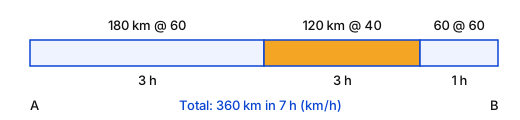
A car travels from City A to City B, a distance of 360 km. For the first half of the distance, it travels at a speed of 60 km/h. Due to traffic, it travels the next 120 km at 40 km/h. For the remaining distance, it travels at the same speed as it did for the first half. What is the average speed (in km/h) of the car for the entire trip, correct to two places after decimal?
एक कार शहर A से शहर B तक 360 km की दूरी तय करती है। दूरी के पहले आधे भाग में यह 60 km/h की चाल से चलती है। यातायात के कारण, अगले 120 km यह 40 km/h की चाल से चलती है। शेष दूरी में यह उसी चाल से चलती है जिस चाल से पहले आधे भाग में चली थी। पूरी यात्रा के लिए कार की औसत चाल (km/h में), दशमलव के दो स्थानों तक सही, क्या है?
  1. A52.43 km/h
  2. B49.43 km/h
  3. C51.43 km/h
  4. D50.43 km/h
Show answer

Concept: Average speed =total distancetotal time – never the average of the speeds.

  1. First half: 180km at 60km/h → 3h.
  2. Next 120km at 40km/h → 3h. Remaining 360−180−120=60km at 60km/h → 1h.
  3. Total time =3+3+1=7h. Average speed =3607=51.43km/h.

Trick: Find the time of each leg separately; 360 km in 7 h – 3607 is the only option near 51.4.

Answer: (C) 51.43 km/h

अवधारणा: औसत चाल =कुल दूरीकुल समय – चालों का औसत कभी नहीं।

  1. पहला आधा: 180km, 60km/h पर → 3h।
  2. अगले 120km, 40km/h पर → 3h। शेष 360−180−120=60km, 60km/h पर → 1h।
  3. कुल समय =3+3+1=7h। औसत चाल =3607=51.43km/h।

ट्रिक: हर भाग का समय अलग निकालें; 360 km, 7 h में – 3607 ही 51.4 के पास वाला विकल्प है।

उत्तर: (C) 51.43 km/h

RRB NTPC Graduate CBT 1MathematicsAverage SpeedRRB NTPC Graduate CBT 1 2025 · 18 Mar Shift 3 →