Question bank

Q&A: practice questions with answers

Search questions on any topic. Filter by exam category, exam, subject and topic, try the question, then open the answer and explanation.

Courses – airGurukul

7,077 questions found.

Q6261.
Read the given statements and conclusions carefully. You have to take the given statements to be true even if they seem to be at variance from commonly known facts. You have to decide which conclusion/s logically follow/s from the given statements. Statements:
All spoons are forks. All forks are cups. Some spoons are plates.
Conclusions:
(I) Some forks are plates.
(II) Some cups are plates.
दिए गए कथनों और निष्कर्षों को ध्यानपूर्वक पढ़िए। आपको दिए गए कथनों को सत्य मानना है, भले ही वे सामान्यतः ज्ञात तथ्यों से भिन्न प्रतीत होते हों। आपको यह निर्णय लेना है कि दिए गए कथनों से कौन-सा/कौन-से निष्कर्ष तार्किक रूप से अनुसरण करता है/करते हैं। कथन:
सभी चम्मच काँटे हैं। सभी काँटे कप हैं। कुछ चम्मच प्लेटें हैं।
निष्कर्ष:
(I) कुछ काँटे प्लेटें हैं।
(II) कुछ कप प्लेटें हैं।
  1. ABoth conclusions I and II follow.निष्कर्ष I और II दोनों अनुसरण करते हैं।
  2. BNeither conclusion I nor II follows.न तो निष्कर्ष I और न ही II अनुसरण करता है।
  3. COnly conclusion I follows.केवल निष्कर्ष I अनुसरण करता है।
  4. DOnly conclusion II follows.केवल निष्कर्ष II अनुसरण करता है।
Show answer

Concept: Draw the sets: Spoons inside Forks inside Cups; Plates overlapping Spoons.
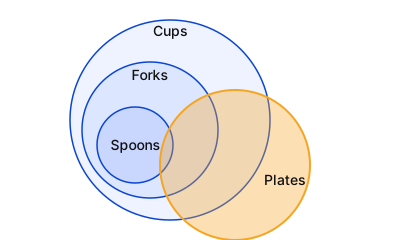
  1. Some spoons are plates, and every spoon is a fork → those spoon-plates are forks → 'Some forks are plates' follows.
  2. Every fork is a cup, so those same elements are cups too → 'Some cups are plates' follows.
  3. Both conclusions follow.

Trick: 'All A are B' + 'Some A are C' always gives 'Some B are C'; chain it up through 'All B are D' to get 'Some D are C'.

Answer: (A) Both conclusions I and II follow.

अवधारणा: समुच्चय बनाएँ: Spoons, Forks के अंदर, Forks, Cups के अंदर; Plates, Spoons से ओवरलैप।

  1. कुछ spoons, plates हैं और हर spoon, fork है → वे spoon-plates, forks भी हैं → 'कुछ forks, plates हैं' निकलता है।
  2. हर fork, cup है, अतः वही तत्व cups भी हैं → 'कुछ cups, plates हैं' निकलता है।
  3. दोनों निष्कर्ष सही।

ट्रिक: 'सभी A, B हैं' + 'कुछ A, C हैं' से हमेशा 'कुछ B, C हैं' निकलता है; 'सभी B, D हैं' से आगे बढ़ाकर 'कुछ D, C हैं'।

उत्तर: (A) दोनों निष्कर्ष I और II अनुसरण करते हैं।
RRB NTPC Graduate CBT 1General Intelligence and ReasoningSyllogismRRB NTPC Graduate CBT 1 2025 · 18 Mar Shift 3 →
Q6262.
Read the given statements and conclusions carefully. Assuming that the information given in the statements is true, even if it appears to be at variance with commonly known facts, decide which of the given conclusion(s) logically follow(s) from the statements.
Statements:
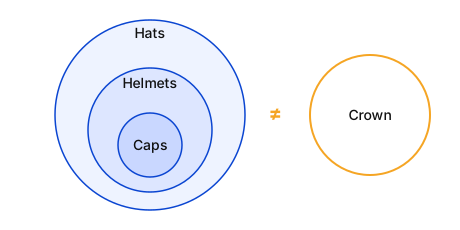
All caps are helmets. All helmets are hats. No hat is a crown.
Conclusions:
(I) No cap is a crown.
(II) Some hats are caps.
दिए गए कथनों और निष्कर्षों को ध्यानपूर्वक पढ़िए। यह मानते हुए कि कथनों में दी गई जानकारी सत्य है, भले ही वह सामान्यतः ज्ञात तथ्यों से भिन्न प्रतीत होती हो, निर्णय लीजिए कि दिए गए निष्कर्षों में से कौन-सा/कौन-से कथनों से तार्किक रूप से अनुसरण करता है/करते हैं।
कथन:
सभी टोपियाँ हेलमेट हैं। सभी हेलमेट हैट हैं। कोई हैट मुकुट नहीं है।
निष्कर्ष:
(I) कोई टोपी मुकुट नहीं है।
(II) कुछ हैट टोपियाँ हैं।
  1. ABoth conclusions (I) and (II) follow.निष्कर्ष (I) और (II) दोनों अनुसरण करते हैं।
  2. BNeither conclusion (I) nor (II) follows.न तो निष्कर्ष (I) और न ही (II) अनुसरण करता है।
  3. COnly conclusion (II) follows.केवल निष्कर्ष (II) अनुसरण करता है।
  4. DOnly conclusion (I) follows.केवल निष्कर्ष (I) अनुसरण करता है।
Show answer

Concept: Caps inside Helmets inside Hats; Crowns completely outside Hats.

  1. Every cap is a helmet and every helmet is a hat → every cap is a hat. No hat is a crown → no cap is a crown. Conclusion I follows.
  2. All caps are hats; hence at least those caps are hats that are caps → 'Some hats are caps' follows (conversion of 'All caps are hats').
  3. Both conclusions follow.

Trick: 'All A are B' can always be converted to 'Some B are A'; and 'All A are B' + 'No B is C' gives 'No A is C'.

Answer: (A) Both conclusions (I) and (II) follow.

अवधारणा: Caps, Helmets के अंदर, Helmets, Hats के अंदर; Crowns, Hats से पूरी तरह बाहर।

  1. हर cap, helmet और हर helmet, hat → हर cap, hat। कोई hat, crown नहीं → कोई cap, crown नहीं। निष्कर्ष I सही।
  2. सभी caps, hats हैं; अतः 'कुछ hats, caps हैं' निकलता है ('सभी caps, hats हैं' का परिवर्तन)।
  3. दोनों निष्कर्ष सही।

ट्रिक: 'सभी A, B हैं' से हमेशा 'कुछ B, A हैं' निकलता है; और 'सभी A, B हैं' + 'कोई B, C नहीं' से 'कोई A, C नहीं'।

उत्तर: (A) दोनों निष्कर्ष (I) और (II) अनुसरण करते हैं।

RRB NTPC Graduate CBT 1General Intelligence and ReasoningSyllogismRRB NTPC Graduate CBT 1 2025 · 18 Mar Shift 3 →
Q6263.
Refer to the following letter, number and symbol series and answer the question that follows. Counting should be done from left to right only.
(Left) S # % 2 S 4 P # Z 4 B 8 5 R € * 8 © J & € N (Right)
If all the symbols are dropped from the series, which of the following will be fourth from the left?
निम्नलिखित अक्षर, संख्या और प्रतीक श्रृंखला को देखिए और उसके बाद दिए गए प्रश्न का उत्तर दीजिए। गणना केवल बाएँ से दाएँ की जानी चाहिए।
(बायाँ) S # % 2 S 4 P # Z 4 B 8 5 R € * 8 © J & € N (दायाँ)
यदि श्रृंखला से सभी प्रतीकों को हटा दिया जाए, तो निम्नलिखित में से कौन-सा बाएँ से चौथा होगा?
  1. AP
  2. BZ
  3. C4
  4. D2
Show answer

Concept: Remove the symbols and count positions from the left in the new series.

  1. Symbols in the series: #, %, #, €, *, ©, &, €. Dropping them leaves: S 2 S 4 P Z 4 B 8 5 R 8 J N.
  2. Counting from the left: 1st S, 2nd 2, 3rd S, 4th = 4.

Trick: In "drop" questions, write only the remaining elements in one line before counting – avoids skipping errors.

Answer: (C) 4

अवधारणा: प्रतीक हटाकर नई श्रृंखला में बाएँ से स्थान गिनें।

  1. श्रृंखला के प्रतीक: #, %, #, €, *, ©, &, €। इन्हें हटाने पर: S 2 S 4 P Z 4 B 8 5 R 8 J N।
  2. बाएँ से गिनने पर: पहला S, दूसरा 2, तीसरा S, चौथा = 4।

ट्रिक: "हटाने" वाले प्रश्नों में बचे हुए तत्वों को एक पंक्ति में लिखकर ही गिनें – छूटने की गलती नहीं होगी।

उत्तर: (C) 4

RRB NTPC Graduate CBT 1General Intelligence and ReasoningAlphanumeric SeriesRRB NTPC Graduate CBT 1 2025 · 18 Mar Shift 3 →
Q6264.
Refer to the following letter, symbol series and answer the question. Counting to be done from left to right only.
(Left) H F G J D J V D K P = % S O C B = % B + # (Right)
How many such letters are there, each of which is immediately preceded by a symbol and also immediately followed by a symbol?
निम्नलिखित अक्षर, प्रतीक श्रृंखला को देखिए और प्रश्न का उत्तर दीजिए। गणना केवल बाएँ से दाएँ की जानी है।
(बायाँ) H F G J D J V D K P = % S O C B = % B + # (दायाँ)
ऐसे कितने अक्षर हैं, जिनमें से प्रत्येक के ठीक पहले एक प्रतीक है और ठीक बाद भी एक प्रतीक है?
  1. ATwoदो
  2. BNoneकोई नहीं
  3. CThreeतीन
  4. DOneएक
Show answer

Concept: Check each letter whose immediate left neighbour and immediate right neighbour are both symbols.

  1. Series: H F G J D J V D K P = % S O C B = % B + #.
  2. Letters next to symbols: S (between % and O – O is a letter, fails), B (between C and =, fails), B (between % and +) – passes.
  3. So only one such letter.

Trick: Look only around the symbols; a letter needs a symbol on BOTH sides, so scan each symbol-letter-symbol triplet.

Answer: (D) One

अवधारणा: ऐसे अक्षर देखें जिनके ठीक बाएँ और ठीक दाएँ दोनों ओर प्रतीक हों।

  1. श्रृंखला: H F G J D J V D K P = % S O C B = % B + #।
  2. प्रतीकों के पास के अक्षर: S (% और O के बीच – O अक्षर है, असफल), B (C और = के बीच, असफल), B (% और + के बीच) – सफल।
  3. अतः ऐसा केवल एक अक्षर है।

ट्रिक: केवल प्रतीकों के आसपास देखें; अक्षर के दोनों ओर प्रतीक चाहिए, इसलिए प्रतीक-अक्षर-प्रतीक तिकड़ी खोजें।

उत्तर: (D) एक (One)

RRB NTPC Graduate CBT 1General Intelligence and ReasoningAlphanumeric SeriesRRB NTPC Graduate CBT 1 2025 · 18 Mar Shift 3 →
Q6265.
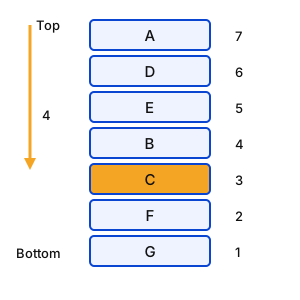
Seven boxes, A, B, C, D, E, F and G, are kept one over the other but not necessarily in the same order. F is kept second from the bottom. Only three boxes are kept between F and D. G is kept at one of the positions below F. Only E is kept between D and B. A is kept at one of the positions above D. How many boxes are kept above C?
सात बक्से, A, B, C, D, E, F और G, एक के ऊपर एक रखे गए हैं, लेकिन आवश्यक नहीं कि इसी क्रम में हों। F नीचे से दूसरे स्थान पर रखा गया है। F और D के बीच केवल तीन बक्से रखे गए हैं। G, F के नीचे के किसी एक स्थान पर रखा गया है। D और B के बीच केवल E रखा गया है। A, D के ऊपर के किसी एक स्थान पर रखा गया है। C के ऊपर कितने बक्से रखे गए हैं?
  1. A4
  2. B2
  3. C3
  4. D1
Show answer

Concept: Number positions 1 (bottom) to 7 (top) and place the boxes using the fixed clue first.

  1. F is 2nd from bottom → F = 2. Three boxes between F and D → D = 6. G is below F → G = 1.
  2. Only E between D and B → E = 5, B = 4 (position 8 does not exist).
  3. A above D → A = 7. The remaining box C = 3.
  4. Boxes above C: B, E, D, A = 4.

Trick: Always start with the clue that gives an exact position (F = 2) and the clue with a fixed gap (3 between F and D).

Answer: (A) 4

अवधारणा: स्थानों को 1 (नीचे) से 7 (ऊपर) तक क्रमांकित करें और पहले निश्चित संकेत वाले बॉक्स रखें।

  1. F नीचे से दूसरा → F = 2। F और D के बीच तीन बॉक्स → D = 6। G, F के नीचे → G = 1।
  2. D और B के बीच केवल E → E = 5, B = 4 (स्थान 8 नहीं है)।
  3. A, D के ऊपर → A = 7। बचा हुआ बॉक्स C = 3।
  4. C के ऊपर बॉक्स: B, E, D, A = 4।

ट्रिक: हमेशा उस संकेत से शुरू करें जो सटीक स्थान देता है (F = 2) और जिसमें निश्चित अंतर हो (F–D के बीच 3)।

उत्तर: (A) 4

RRB NTPC Graduate CBT 1General Intelligence and ReasoningBox Arrangement (Stacking)RRB NTPC Graduate CBT 1 2025 · 18 Mar Shift 3 →
Q6266.
In this question, a question is followed by two statements numbered (I) and (II). You have to decide whether the data provided in the statements are sufficient to answer the question. Read both the statements and decide the appropriate answer.
Question:
Among 5 trees, L, M, N, T and V each having a different height, which tree is the tallest? Statements:
(I) M is taller than V but shorter than N.M is shorter than only one tree.
(II) V is taller than T.
इस प्रश्न में, एक प्रश्न के बाद (I) और (II) क्रमांकित दो कथन दिए गए हैं। आपको यह निर्णय लेना है कि कथनों में दिए गए आँकड़े प्रश्न का उत्तर देने के लिए पर्याप्त हैं या नहीं। दोनों कथनों को पढ़िए और उपयुक्त उत्तर का निर्णय लीजिए।
प्रश्न:
5 पेड़ों L, M, N, T और V में, जिनमें से प्रत्येक की ऊँचाई अलग-अलग है, कौन-सा पेड़ सबसे ऊँचा है? कथन:
(I) M, V से ऊँचा है लेकिन N से छोटा है। M केवल एक पेड़ से छोटा है।
(II) V, T से ऊँचा है।
  1. ABoth statements I and II together are NOT sufficient to answer the questionकथन I और II दोनों मिलकर भी प्रश्न का उत्तर देने के लिए पर्याप्त नहीं हैं
  2. BBoth statements I and II together (and not statement 1 alone or statement II alone) are sufficient to answer the questionकथन I और II दोनों मिलकर (और न कि अकेले कथन I या अकेले कथन II) प्रश्न का उत्तर देने के लिए पर्याप्त हैं
  3. CData in Statement II alone is sufficient to answer the question while data in statement I is notअकेले कथन II के आँकड़े प्रश्न का उत्तर देने के लिए पर्याप्त हैं, जबकि कथन I के आँकड़े पर्याप्त नहीं हैं
  4. DData in Statement I alone is sufficient to answer the question while data in statement II is notअकेले कथन I के आँकड़े प्रश्न का उत्तर देने के लिए पर्याप्त हैं, जबकि कथन II के आँकड़े पर्याप्त नहीं हैं
Show answer

Concept: Test each statement alone; the question needs only the tallest tree.

  1. Statement I: N > M > V, and M is shorter than only one tree → M is 2nd tallest, so the only tree above M, N, is the tallest. Sufficient.
  2. Statement II: V > T gives no information about the tallest. Not sufficient.

Trick: "Shorter than only one" = second position; whoever is already known to be above that person is the top.

Answer: (D) Data in Statement I alone is sufficient to answer the question while data in statement II is not

अवधारणा: प्रत्येक कथन को अकेले जाँचें; प्रश्न में केवल सबसे ऊँचा पेड़ चाहिए।

  1. कथन I: N > M > V, और M केवल एक पेड़ से छोटा → M दूसरा सबसे ऊँचा, अतः M से ऊपर का एकमात्र पेड़ N सबसे ऊँचा है। पर्याप्त।
  2. कथन II: V > T से सबसे ऊँचे के बारे में कुछ पता नहीं चलता। अपर्याप्त।

ट्रिक: "केवल एक से छोटा" = दूसरा स्थान; जो पहले से उसके ऊपर ज्ञात है, वही शीर्ष पर है।

उत्तर: (D) कथन I अकेले पर्याप्त है, कथन II नहीं

RRB NTPC Graduate CBT 1General Intelligence and ReasoningData Sufficiency – OrderingRRB NTPC Graduate CBT 1 2025 · 18 Mar Shift 3 →
Q6267.
Which of the following letter-number clusters will replace the question mark “?” in the given series to make it logically complete?
GCW 10, FAT 16, EYQ 22, DWN 28, ?
दी गई श्रृंखला को तार्किक रूप से पूर्ण करने के लिए निम्नलिखित में से कौन-सा अक्षर-संख्या समूह प्रश्नवाचक चिह्न “?” को प्रतिस्थापित करेगा?
GCW 10, FAT 16, EYQ 22, DWN 28, ?
  1. ACUK 34
  2. BCUJ 33
  3. CBUL 32
  4. DCVM 34
Show answer

Concept: Treat the letters and the number as separate patterns.

  1. First letters: G, F, E, D → each −1 → next C.
  2. Second letters: C, A, Y, W → each −2 → next U. Third letters: W, T, Q, N → each −3 → next K.
  3. Numbers: 10, 16, 22, 28 → +6 → 34. So CUK 34.

Trick: In cluster series, write the alphabet positions (A=1…Z=26) column-wise; constant differences appear instantly.

Answer: (A) CUK 34

अवधारणा: अक्षरों और संख्या के पैटर्न को अलग-अलग देखें।

  1. पहले अक्षर: G, F, E, D → प्रत्येक −1 → अगला C।
  2. दूसरे अक्षर: C, A, Y, W → प्रत्येक −2 → अगला U। तीसरे अक्षर: W, T, Q, N → प्रत्येक −3 → अगला K।
  3. संख्याएँ: 10, 16, 22, 28 → +6 → 34। अतः CUK 34।

ट्रिक: क्लस्टर श्रृंखला में अक्षरों के स्थान (A=1…Z=26) स्तंभ में लिखें; नियत अंतर तुरंत दिखेगा।

उत्तर: (A) CUK 34

RRB NTPC Graduate CBT 1General Intelligence and ReasoningLetter–Number SeriesRRB NTPC Graduate CBT 1 2025 · 18 Mar Shift 3 →
Q6268.
GLOW is related to KQRY in a certain way based on the English alphabetical order. In the same way, OVUA is related to SAXC. To which of the following is WFAE related, following the same logic?
GLOW, अंग्रेज़ी वर्णमाला क्रम के आधार पर एक निश्चित प्रकार से KQRY से संबंधित है। उसी प्रकार, OVUA, SAXC से संबंधित है। उसी तर्क के अनुसार WFAE निम्नलिखित में से किससे संबंधित है?
  1. ACKEG
  2. BBLCH
  3. CAKDG
  4. DZLEF
Show answer

Concept: Find the position shift applied to each letter and apply the same to the new word.

  1. GLOW → KQRY: G+4=K, L+5=Q, O+3=R, W+2=Y. Pattern +4, +5, +3, +2.
  2. Check: OVUA → O+4=S, V+5=A, U+3=X, A+2=C = SAXC ✓.
  3. WFAE: W+4=A, F+5=K, A+3=D, E+2=G → AKDG.

Trick: Verify the rule on the second given pair before applying – here W+4 wraps past Z to A.

Answer: (C) AKDG

अवधारणा: प्रत्येक अक्षर पर लगाया गया स्थान-परिवर्तन निकालें और नए शब्द पर वही लगाएँ।

  1. GLOW → KQRY: G+4=K, L+5=Q, O+3=R, W+2=Y। पैटर्न +4, +5, +3, +2।
  2. जाँच: OVUA → O+4=S, V+5=A, U+3=X, A+2=C = SAXC ✓।
  3. WFAE: W+4=A, F+5=K, A+3=D, E+2=G → AKDG।

ट्रिक: नियम को दूसरे दिए गए जोड़े पर जाँचकर ही लगाएँ – यहाँ W+4 Z के बाद A पर पहुँचता है।

उत्तर: (C) AKDG

RRB NTPC Graduate CBT 1General Intelligence and ReasoningLetter AnalogyRRB NTPC Graduate CBT 1 2025 · 18 Mar Shift 3 →
Q6269.
Based on the alphabetical order, three of the following four are alike in a certain way and thus form a group. Which is the one that does not belong to that group?
(Note: The odd one out is not based on the number of consonants/vowels or their position in the letter cluster)
वर्णमाला क्रम के आधार पर, निम्नलिखित चार में से तीन एक निश्चित प्रकार से समान हैं और इस प्रकार एक समूह बनाते हैं। वह कौन-सा है जो उस समूह से संबंधित नहीं है?
(नोट: विषम वर्ग व्यंजनों/स्वरों की संख्या या अक्षर-समूह में उनकी स्थिति पर आधारित नहीं है)
  1. ALIF
  2. BXUR
  3. CEVY
  4. DOLI
Show answer

Concept: Convert letters to positions and compare the gaps.

  1. LIF: 12, 9, 6 → −3, −3. XUR: 24, 21, 18 → −3, −3. OLI: 15, 12, 9 → −3, −3.
  2. EVY: 5, 22, 25 → +17, +3 – different pattern.

Trick: Three clusters are "reverse skip-2" sequences (L_ _ I _ _ F); the one that is not reading backwards with equal gaps is the odd one.

Answer: (C) EVY

अवधारणा: अक्षरों को स्थान-संख्या में बदलकर अंतर की तुलना करें।

  1. LIF: 12, 9, 6 → −3, −3। XUR: 24, 21, 18 → −3, −3। OLI: 15, 12, 9 → −3, −3।
  2. EVY: 5, 22, 25 → +17, +3 – अलग पैटर्न।

ट्रिक: तीन समूह "उल्टे क्रम में 2 छोड़कर" (L _ _ I _ _ F) हैं; जो समान अंतर से उल्टा नहीं चलता, वही विषम है।

उत्तर: (C) EVY

RRB NTPC Graduate CBT 1General Intelligence and ReasoningOdd One Out – Letter ClustersRRB NTPC Graduate CBT 1 2025 · 18 Mar Shift 3 →
Q6270.
Based on the English alphabetical order, three of the following four letter cluster pairs are alike in a certain way and thus form a group. Which is the one that does not belong to that group? (Note: The odd man out is not based on the number of
consonants/vowels or their position in the letter cluster)
अंग्रेज़ी वर्णमाला क्रम के आधार पर, निम्नलिखित चार अक्षर-समूह युग्मों में से तीन एक निश्चित प्रकार से समान हैं और इस प्रकार एक समूह बनाते हैं। वह कौन-सा है जो उस समूह से संबंधित नहीं है? (नोट: विषम वर्ग व्यंजनों/स्वरों की संख्या या अक्षर-समूह में
उनकी स्थिति पर आधारित नहीं है)
  1. AMP-OR
  2. BAD-CF
  3. CIL-KN
  4. DHK-JN
Show answer

Concept: Find the shift from the first cluster to the second in each pair.

  1. MP → OR: M+2=O, P+2=R. AD → CF: +2, +2. IL → KN: +2, +2.
  2. HK → JN: H+2=J but K+3=N – the shift is not uniform, so HK-JN is the odd pair.

Trick: Also note each first cluster has letters 3 apart (M–P, A–D, I–L, H–K); the second cluster should keep that gap – O–R, C–F, K–N do, but J–N (gap 4) does not.

Answer: (D) HK-JN

अवधारणा: प्रत्येक युग्म में पहले समूह से दूसरे समूह तक का स्थान-परिवर्तन निकालें।

  1. MP → OR: M+2=O, P+2=R। AD → CF: +2, +2। IL → KN: +2, +2।
  2. HK → JN: H+2=J पर K+3=N – परिवर्तन समान नहीं, अतः HK-JN विषम है।

ट्रिक: पहले समूह के अक्षरों में 3 का अंतर है (M–P, A–D, I–L, H–K); दूसरे समूह में भी यही अंतर रहना चाहिए – O–R, C–F, K–N में है, पर J–N (अंतर 4) में नहीं।

उत्तर: (D) HK-JN

RRB NTPC Graduate CBT 1General Intelligence and ReasoningOdd One Out – Letter PairsRRB NTPC Graduate CBT 1 2025 · 18 Mar Shift 3 →
Q6271.
If 2 is subtracted from each of the digits in the number 3975684 and the resultant digits are then re-arranged in ascending order from left to right, which digit will be fifth from the left end in the new number thus formed?
यदि संख्या 3975684 के प्रत्येक अंक में से 2 घटाया जाए और फिर प्राप्त अंकों को बाएँ से दाएँ आरोही क्रम में पुनर्व्यवस्थित किया जाए, तो इस प्रकार बनी नई संख्या में बाएँ छोर से पाँचवाँ अंक कौन-सा होगा?
  1. A4
  2. B2
  3. C3
  4. D5
Show answer

Concept: Perform the operation on every digit, then sort.

  1. 3975684 → subtract 2 from each digit: 1, 7, 5, 3, 4, 6, 2.
  2. Ascending order: 1 2 3 4 5 6 7.
  3. Fifth from the left = 5.

Trick: After subtracting, the seven digits are exactly 1–7, so the n-th from left is simply n.

Answer: (D) 5

अवधारणा: प्रत्येक अंक पर संक्रिया करें, फिर क्रम में लगाएँ।

  1. 3975684 → प्रत्येक अंक से 2 घटाने पर: 1, 7, 5, 3, 4, 6, 2।
  2. आरोही क्रम: 1 2 3 4 5 6 7।
  3. बाएँ से पाँचवाँ = 5।

ट्रिक: घटाने के बाद सातों अंक ठीक 1–7 हैं, अतः बाएँ से n-वाँ अंक n ही है।

उत्तर: (D) 5

RRB NTPC Graduate CBT 1General Intelligence and ReasoningNumber OperationsRRB NTPC Graduate CBT 1 2025 · 18 Mar Shift 3 →
Q6272.
Select the set in which the numbers are related in the same way as are the numbers of the following sets.
(NOTE : Operations should be performed on the whole numbers, without breaking down the numbers into its constituent digits. E.g. 13 – Operations on 13 such as adding / subtracting /multiplying etc. to 13 can be performed. Breaking down 13 into 1 and 3 and then performing mathematical operations on 1 and 3 is not allowed)
(21, 52, 5)
(45, 138, 24)
उस समुच्चय का चयन कीजिए जिसमें संख्याएँ उसी प्रकार संबंधित हैं जिस प्रकार निम्नलिखित समुच्चयों की संख्याएँ संबंधित हैं।
(नोट : संक्रियाएँ पूर्ण संख्याओं पर की जानी चाहिए, संख्याओं को उनके घटक अंकों में तोड़े बिना। उदाहरण के लिए 13 – 13 पर संक्रियाएँ जैसे 13 में जोड़ना/घटाना/गुणा करना आदि की जा सकती हैं। 13 को 1 और 3 में तोड़कर फिर 1 और 3 पर गणितीय संक्रियाएँ करने की अनुमति नहीं है)
(21, 52, 5)
(45, 138, 24)
  1. A(17, 55, 11)
  2. B(11, 39, 9)
  3. C(36, 74, 1)
  4. D(41, 117, 18)
Show answer

Concept: Find a rule linking the three numbers of each given set and test it on the options.

  1. (21, 52, 5): 2×(21+5)=52 ✓. (45, 138, 24): 2×(45+24)=138 ✓. Rule: middle =2×(first+third).
  2. (36, 74, 1): 2×(36+1)=74 ✓.
  3. Others: 2×28=56≠55; 2×20=40≠39; 2×59=118≠117.

Trick: When the middle number is the largest, first try (first + third) × k or first × third ± k.

Answer: (C) (36, 74, 1)

अवधारणा: दिए गए समूहों की तीनों संख्याओं को जोड़ने वाला नियम खोजें और विकल्पों पर जाँचें।

  1. (21, 52, 5): 2×(21+5)=52 ✓। (45, 138, 24): 2×(45+24)=138 ✓। नियम: बीच की संख्या =2×(पहली+तीसरी)।
  2. (36, 74, 1): 2×(36+1)=74 ✓।
  3. अन्य: 2×28=56≠55; 2×20=40≠39; 2×59=118≠117।

ट्रिक: जब बीच की संख्या सबसे बड़ी हो, तो पहले (पहली + तीसरी) × k या पहली × तीसरी ± k आज़माएँ।

उत्तर: (C) (36, 74, 1)

RRB NTPC Graduate CBT 1General Intelligence and ReasoningNumber Set AnalogyRRB NTPC Graduate CBT 1 2025 · 18 Mar Shift 3 →
Q6273.
Below are given two sets of numbers. In each set of numbers, a certain mathematical operation on the first number results in the second number. Similarly, a certain mathematical operation on the second number results in the third number, and so on. Which of the given options follows the same set of operations as in the question? (NOTE: A two-/three-digit number cannot be broken into individual digits for operations, e.g. if 37 is followed by 10, the operation cannot be 3 + 7, as a two-digit number cannot be broken into individual digits.)
3 – 6 – 7 – 14 ; 12 – 24 – 25 – 50
नीचे संख्याओं के दो समुच्चय दिए गए हैं। संख्याओं के प्रत्येक समुच्चय में, पहली संख्या पर एक निश्चित गणितीय संक्रिया करने से दूसरी संख्या प्राप्त होती है। इसी प्रकार, दूसरी संख्या पर एक निश्चित गणितीय संक्रिया करने से तीसरी संख्या प्राप्त होती है, और इसी प्रकार आगे भी। दिए गए विकल्पों में से कौन-सा प्रश्न में दी गई संक्रियाओं के समान समुच्चय का अनुसरण करता है? (नोट: संक्रियाओं के लिए दो-/तीन-अंकीय संख्या को अलग-अलग अंकों में नहीं तोड़ा जा सकता, उदाहरण के लिए यदि 37 के बाद 10 आता है, तो संक्रिया 3 + 7 नहीं हो सकती, क्योंकि दो-अंकीय संख्या को अलग-अलग अंकों में नहीं तोड़ा जा सकता।)
3 – 6 – 7 – 14 ; 12 – 24 – 25 – 50
  1. A25 – 50 – 25 – 35
  2. B20 – 40 – 41 – 82
  3. C15 – 30 – 60 – 62
  4. D11 – 22 – 21 – 42
Show answer

Concept: Identify the chain of operations and check which option repeats it exactly.

  1. 3 → 6 (×2), 6 → 7 (+1), 7 → 14 (×2). Likewise 12 → 24 → 25 → 50. Pattern: ×2, +1, ×2.
  2. 20 → 40 (×2) → 41 (+1) → 82 (×2) ✓.
  3. Others break: 50 → 25 (÷2), 30 → 60 (×2 instead of +1), 22 → 21 (−1).

Trick: Check the second step first – it is "+1" and immediately eliminates (A), (C), (D).

Answer: (B) 20 – 40 – 41 – 82

अवधारणा: संक्रियाओं की शृंखला पहचानें और देखें कौन-सा विकल्प उसे ठीक वैसे ही दोहराता है।

  1. 3 → 6 (×2), 6 → 7 (+1), 7 → 14 (×2)। इसी तरह 12 → 24 → 25 → 50। पैटर्न: ×2, +1, ×2।
  2. 20 → 40 (×2) → 41 (+1) → 82 (×2) ✓।
  3. अन्य टूटते हैं: 50 → 25 (÷2), 30 → 60 (+1 की जगह ×2), 22 → 21 (−1)।

ट्रिक: पहले दूसरा चरण जाँचें – वह "+1" है और तुरंत (A), (C), (D) हट जाते हैं।

उत्तर: (B) 20 – 40 – 41 – 82

RRB NTPC Graduate CBT 1General Intelligence and ReasoningNumber Series OperationsRRB NTPC Graduate CBT 1 2025 · 18 Mar Shift 3 →
Q6274.
What should come in place of ‘?’ in the given series?
21 23 26 31 38 ?
दी गई श्रृंखला में ‘?’ के स्थान पर क्या आना चाहिए?
21 23 26 31 38 ?
  1. A53
  2. B49
  3. C47
  4. D51
Show answer

Concept: Look at the differences between consecutive terms.

  1. Differences: 23−21 = 2, 26−23 = 3, 31−26 = 5, 38−31 = 7 → prime numbers 2, 3, 5, 7.
  2. Next prime is 11, so ? =38+11=49.

Trick: Differences 2, 3, 5, 7 are the primes in order – a very common RRB pattern; the next is always 11.

Answer: (B) 49

अवधारणा: क्रमागत पदों के अंतर देखें।

  1. अंतर: 23−21 = 2, 26−23 = 3, 31−26 = 5, 38−31 = 7 → अभाज्य संख्याएँ 2, 3, 5, 7।
  2. अगली अभाज्य 11, अतः ? =38+11=49।

ट्रिक: अंतर 2, 3, 5, 7 क्रम में अभाज्य हैं – RRB का बहुत सामान्य पैटर्न; अगला हमेशा 11।

उत्तर: (B) 49

RRB NTPC Graduate CBT 1General Intelligence and ReasoningNumber SeriesRRB NTPC Graduate CBT 1 2025 · 18 Mar Shift 3 →
Q6275.
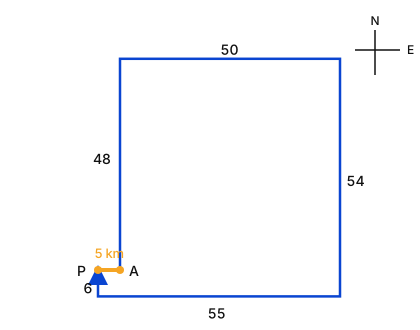
Yeti starts from Point A and drives 48 km towards North. He then takes a right turn, drives 50 km, turns right and drives 54 km. He then takes a right turn and drives 55 km. He takes a final right turn, drives 6 km and stops at Point P. How far (shortest distance) and towards which direction should he drive in order to reach Point A again? (All turns are 90-degree turns only, unless specified.)
येति बिंदु A से चलना शुरू करता है और उत्तर की ओर 48 km गाड़ी चलाता है। फिर वह दाएँ मुड़ता है, 50 km गाड़ी चलाता है, दाएँ मुड़ता है और 54 km गाड़ी चलाता है। फिर वह दाएँ मुड़ता है और 55 km गाड़ी चलाता है। वह अंतिम बार दाएँ मुड़ता है, 6 km गाड़ी चलाता है और बिंदु P पर रुकता है। बिंदु A पर पुनः पहुँचने के लिए उसे कितनी दूर (न्यूनतम दूरी) और किस दिशा में गाड़ी चलानी चाहिए? (जब तक अन्यथा निर्दिष्ट न हो, सभी मोड़ केवल 90 डिग्री के मोड़ हैं।)
  1. A6 km to the west6 km पश्चिम की ओर
  2. B5 km to the east5 km पूर्व की ओर
  3. C7 km to the west7 km पश्चिम की ओर
  4. D4 km to the east4 km पूर्व की ओर
Show answer

Concept: Take A as origin, plot each leg (right turn = clockwise change of direction) and compare the final point with A.

  1. A(0, 0) → 48 km North → (0, 48) → right (East) 50 km → (50, 48) → right (South) 54 km → (50, −6).
  2. Right (West) 55 km → (−5, −6) → right (North) 6 km → P(−5, 0).
  3. P is 5 km west of A on the same horizontal line, so Yeti must drive 5 km East.

Trick: Net North–South: 48 − 54 + 6 = 0; net East–West: 50 − 55 = −5 → 5 km west of start.

Answer: (B) 5 km to the east

अवधारणा: A को मूल बिंदु मानें, प्रत्येक भाग आरेखित करें (दायाँ मोड़ = दक्षिणावर्त दिशा-परिवर्तन) और अंतिम बिंदु की A से तुलना करें।

  1. A(0, 0) → 48 km उत्तर → (0, 48) → दाएँ (पूर्व) 50 km → (50, 48) → दाएँ (दक्षिण) 54 km → (50, −6)।
  2. दाएँ (पश्चिम) 55 km → (−5, −6) → दाएँ (उत्तर) 6 km → P(−5, 0)।
  3. P, A से उसी क्षैतिज रेखा पर 5 km पश्चिम में है, अतः येती को 5 km पूर्व चलना होगा।

ट्रिक: शुद्ध उत्तर–दक्षिण: 48 − 54 + 6 = 0; शुद्ध पूर्व–पश्चिम: 50 − 55 = −5 → प्रारंभ से 5 km पश्चिम।

उत्तर: (B) 5 km पूर्व की ओर

RRB NTPC Graduate CBT 1General Intelligence and ReasoningDirection and DistanceRRB NTPC Graduate CBT 1 2025 · 18 Mar Shift 3 →
Q6276.
What will come in the place of ‘?’ in the following equation, if ‘+’ and ‘-‘ are interchanged and ‘×’ and ‘÷’ are interchanged?
47 ÷ 12 + 164 × 2 - 135 = ?
यदि ‘+’ और ‘-’ को आपस में बदल दिया जाए तथा ‘×’ और ‘÷’ को आपस में बदल दिया जाए, तो निम्नलिखित समीकरण में ‘?’ के स्थान पर क्या आएगा?
47 ÷ 12 + 164 × 2 - 135 = ?
  1. A693
  2. B601
  3. C617
  4. D666
Show answer

Concept: Swap the signs as instructed, then apply BODMAS.

  1. After interchange: 47×12−164÷2+135.
  2. 47×12=564; 164÷2=82.
  3. 564−82+135=617.

Trick: Rewrite the whole expression with swapped signs first, then solve ÷ and × before − and +.

Answer: (C) 617

अवधारणा: निर्देशानुसार चिह्न बदलें, फिर BODMAS लगाएँ।

  1. अदला-बदली के बाद: 47×12−164÷2+135।
  2. 47×12=564; 164÷2=82।
  3. 564−82+135=617।

ट्रिक: पहले पूरा व्यंजक बदले हुए चिह्नों से लिखें, फिर − और + से पहले ÷ और × हल करें।

उत्तर: (C) 617

RRB NTPC Graduate CBT 1General Intelligence and ReasoningMathematical Operations – InterchangeRRB NTPC Graduate CBT 1 2025 · 18 Mar Shift 3 →
Q6277.
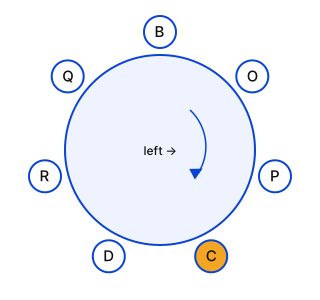
Seven people B, C, D, O, P, Q and R are sitting around a circular table facing the center of the table. Only one person sits between P and B when counted from the left of B. Only one person sits between B and R. Only one person sits between P and D. Only two people sit between O and R. Only one person sits between Q and D. Who sits to the immediate right and immediate left of C, respectively?
सात व्यक्ति B, C, D, O, P, Q और R एक वृत्ताकार मेज़ के चारों ओर मेज़ के केंद्र की ओर मुख करके बैठे हैं। B के बाईं ओर से गिनने पर P और B के बीच केवल एक व्यक्ति बैठा है। B और R के बीच केवल एक व्यक्ति बैठा है। P और D के बीच केवल एक व्यक्ति बैठा है। O और R के बीच केवल दो व्यक्ति बैठे हैं। Q और D के बीच केवल एक व्यक्ति बैठा है। C के ठीक दाएँ और ठीक बाएँ क्रमशः कौन बैठे हैं?
  1. AB and RB और R
  2. BQ and DQ और D
  3. CP and BP और B
  4. DP and DP और D
Show answer

Concept: All face the centre, so a person's left is clockwise and right is anticlockwise. Fix B and place others.

  1. One person between P and B counted from B's left → P is 2nd clockwise from B. One between B and R → R is 2nd anticlockwise from B (the clockwise seat is P's).
  2. One between P and D → D is 2nd clockwise from P (the other seat would be B). Two between O and R → O sits between B and P.
  3. One between Q and D → Q is between R and D on the far side. The remaining seat, between P and D, is C.
  4. C's immediate right (anticlockwise) = P; immediate left (clockwise) = D.

Trick: Facing centre: Left = clockwise, Right = anticlockwise. Start from the clue that gives a direction ("from the left of B").

Answer: (D) P and D

अवधारणा: सभी केंद्र की ओर मुख किए हैं, अतः बायाँ = दक्षिणावर्त और दायाँ = वामावर्त। B को स्थिर कर बाकी रखें।

  1. B के बाएँ से गिनने पर P और B के बीच एक व्यक्ति → P, B से दक्षिणावर्त दूसरे स्थान पर। B और R के बीच एक → R, B से वामावर्त दूसरे स्थान पर (दक्षिणावर्त सीट P की है)।
  2. P और D के बीच एक → D, P से दक्षिणावर्त दूसरे स्थान पर (दूसरी सीट B होती)। O और R के बीच दो → O, B और P के बीच।
  3. Q और D के बीच एक → Q, दूसरी ओर R और D के बीच। बची सीट P और D के बीच C की।
  4. C के ठीक दाएँ (वामावर्त) = P; ठीक बाएँ (दक्षिणावर्त) = D।

ट्रिक: केंद्र की ओर मुख: बायाँ = दक्षिणावर्त, दायाँ = वामावर्त। उस संकेत से शुरू करें जो दिशा देता है ("B के बाएँ से")।

उत्तर: (D) P और D

RRB NTPC Graduate CBT 1General Intelligence and ReasoningCircular Seating ArrangementRRB NTPC Graduate CBT 1 2025 · 18 Mar Shift 3 →
Q6278.
Which AI-powered diagnostic model, unveiled by Indian scientists in 2025, analyses cancer at the molecular level to improve classification and treatment outcomes?
2025 में भारतीय वैज्ञानिकों द्वारा प्रस्तुत किया गया कौन-सा AI-आधारित निदान मॉडल (diagnostic model) वर्गीकरण और उपचार परिणामों को बेहतर बनाने के लिए कैंसर का आणविक स्तर पर विश्लेषण करता है?
  1. AOncoMark AI-powered cancer diagnostic modelOncoMark AI-आधारित कैंसर निदान मॉडल
  2. BGeneMap advanced molecular oncology platformGeneMap उन्नत आणविक ऑन्कोलॉजी प्लेटफ़ॉर्म
  3. CBioScan AI-based tumour classification modelBioScan AI-आधारित ट्यूमर वर्गीकरण मॉडल
  4. DTumourTrack intelligent cancer analysis systemTumourTrack इंटेलिजेंट कैंसर विश्लेषण प्रणाली
Show answer

Concept: Current affairs 2025 – Indian AI tools in cancer research.

  1. OncoMark is an AI framework developed by Indian scientists (S. N. Bose National Centre for Basic Sciences, Kolkata, with collaborators) in 2025.
  2. It reads molecular (gene-expression) data of a tumour to score the "hallmarks of cancer", helping classify tumours and plan personalised therapy.
  3. GeneMap, BioScan and TumourTrack are distractor names, not Indian cancer models of 2025.

Yaad rakhein: Onco = cancer, Mark = hallmark → OncoMark = AI that marks cancer hallmarks.

Answer: (A) OncoMark AI-powered cancer diagnostic model

अवधारणा: करेंट अफेयर्स 2025 – कैंसर अनुसंधान में भारतीय AI उपकरण।

  1. OncoMark भारतीय वैज्ञानिकों (S. N. Bose National Centre for Basic Sciences, कोलकाता व सहयोगी) द्वारा 2025 में विकसित AI फ्रेमवर्क है।
  2. यह ट्यूमर के आणविक (gene-expression) डेटा से "कैंसर के hallmarks" का आकलन कर वर्गीकरण और व्यक्तिगत उपचार में मदद करता है।
  3. GeneMap, BioScan और TumourTrack केवल भ्रामक नाम हैं।

याद रखें: Onco = कैंसर, Mark = hallmark → OncoMark = कैंसर के लक्षण चिह्नित करने वाला AI।

उत्तर: (A) OncoMark AI-powered cancer diagnostic model

RRB NTPC Graduate CBT 1General AwarenessScience & Tech – AI in HealthcareRRB NTPC Graduate CBT 1 2025 · 18 Mar Shift 2 →
Q6279.
Which power mode uses the least electricity while maintaining an open session?
कौन-सा पावर मोड (power mode) एक खुले सत्र (open session) को बनाए रखते हुए सबसे कम बिजली का उपयोग करता है?
  1. ASleepस्लीप (Sleep)
  2. BStandbyस्टैंडबाय (Standby)
  3. CHibernateहाइबरनेट (Hibernate)
  4. DActive modeएक्टिव मोड (Active mode)
Show answer

Concept: Power states of a computer: Active, Sleep/Standby, Hibernate, Shut down.

  1. Sleep keeps the open session alive in RAM and switches off almost everything else, so it draws only a trickle of power.
  2. Active mode uses full power; Hibernate saves the session to disk and powers off completely, so the session is no longer "open" (it is restored on start-up).
  3. Among the options, Sleep is the low-power state in which the session stays open.

Yaad rakhein: Sleep = RAM (fast wake, little power); Hibernate = hard disk (zero power, slower wake).

Answer: (A) Sleep

अवधारणा: कंप्यूटर की पावर अवस्थाएँ: Active, Sleep/Standby, Hibernate, Shut down।

  1. Sleep में खुला सत्र (session) RAM में बना रहता है और बाकी लगभग सब बंद हो जाता है, इसलिए बहुत कम बिजली लगती है।
  2. Active मोड पूरी बिजली लेता है; Hibernate सत्र को डिस्क पर सहेजकर पूरी तरह बंद कर देता है, यानी सत्र "खुला" नहीं रहता।
  3. विकल्पों में Sleep ही वह कम-पावर अवस्था है जिसमें सत्र खुला रहता है।

याद रखें: Sleep = RAM (जल्दी चालू, कम बिजली); Hibernate = हार्ड डिस्क (शून्य बिजली, धीमा चालू)।

उत्तर: (A) Sleep

RRB NTPC Graduate CBT 1General AwarenessComputer – Power ModesRRB NTPC Graduate CBT 1 2025 · 18 Mar Shift 2 →
Q6280.
What is the main difference between a Cabinet Minister and a Minister of State with independent charge?
कैबिनेट मंत्री और स्वतंत्र प्रभार वाले राज्य मंत्री के बीच मुख्य अंतर क्या है?
  1. AA Minister of State with independent charge does not exercise any significant powers.स्वतंत्र प्रभार वाला राज्य मंत्री कोई महत्वपूर्ण शक्ति का प्रयोग नहीं करता है।
  2. BA Minister of State with independent charge may head a ministry without being under a Cabinet Minister.स्वतंत्र प्रभार वाला राज्य मंत्री किसी कैबिनेट मंत्री के अधीन हुए बिना किसी मंत्रालय का प्रमुख हो सकता है।
  3. CA Ministry of State is included in Cabinet meetings but does not exercise any significant powers.राज्य मंत्री को कैबिनेट की बैठकों में शामिल किया जाता है, परंतु वह कोई महत्वपूर्ण शक्ति का प्रयोग नहीं करता है।
  4. DA Minister of State with independent charge does not hold any specific responsibilities.स्वतंत्र प्रभार वाला राज्य मंत्री कोई विशिष्ट उत्तरदायित्व नहीं रखता है।
Show answer

Concept: The Union Council of Ministers has three ranks: Cabinet Ministers, Ministers of State (independent charge) and Ministers of State.

  1. A Minister of State with independent charge heads a ministry on his own and reports directly to the Prime Minister, without working under a Cabinet Minister.
  2. A Cabinet Minister heads a major ministry and attends Cabinet meetings as of right; an MoS attends only when invited.
  3. Options A, C and D wrongly claim such ministers have no powers or responsibilities.

Yaad rakhein: "Independent charge" = own ministry, no Cabinet Minister above, but not a Cabinet member.

Answer: (B) A Minister of State with independent charge may head a ministry without being under a Cabinet Minister.

अवधारणा: केंद्रीय मंत्रिपरिषद में तीन श्रेणियाँ हैं: कैबिनेट मंत्री, राज्य मंत्री (स्वतंत्र प्रभार) और राज्य मंत्री।

  1. स्वतंत्र प्रभार वाला राज्य मंत्री स्वयं मंत्रालय का प्रमुख होता है और सीधे प्रधानमंत्री को रिपोर्ट करता है, किसी कैबिनेट मंत्री के अधीन नहीं।
  2. कैबिनेट मंत्री बड़े मंत्रालय का प्रमुख होता है और अधिकारपूर्वक कैबिनेट बैठक में बैठता है; राज्य मंत्री केवल बुलाए जाने पर।
  3. विकल्प A, C, D गलत कहते हैं कि ऐसे मंत्रियों के पास शक्तियाँ/जिम्मेदारियाँ नहीं होतीं।

याद रखें: "स्वतंत्र प्रभार" = अपना मंत्रालय, ऊपर कोई कैबिनेट मंत्री नहीं, पर कैबिनेट सदस्य भी नहीं।

उत्तर: (B) स्वतंत्र प्रभार वाला राज्य मंत्री बिना कैबिनेट मंत्री के अधीन हुए मंत्रालय का प्रमुख हो सकता है।

RRB NTPC Graduate CBT 1General AwarenessPolity – Council of MinistersRRB NTPC Graduate CBT 1 2025 · 18 Mar Shift 2 →