Question bank

Q&A: practice questions with answers

Search questions on any topic. Filter by exam category, exam, subject and topic, try the question, then open the answer and explanation.

Courses – airGurukul

7,077 questions found.

Q6341.
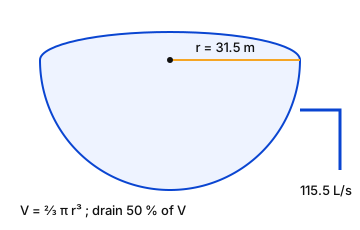
A hemispherical tank filled with water is being emptied through a pipe at a rate of 115.5 litres per second. If the tank has an internal radius of 31.5 m, determine the time required to drain 50% of the tank's water. (Use π=227)
पानी से भरी एक अर्धगोलाकार टंकी को एक पाइप द्वारा 115.5 लीटर प्रति सेकंड की दर से खाली किया जा रहा है। यदि टंकी की आंतरिक त्रिज्या 31.5 m है, तो टंकी के 50% पानी को निकालने में लगने वाला समय ज्ञात कीजिए। (π=227 का प्रयोग कीजिए)
  1. A75 hours 48 minutes75 घंटे 48 मिनट
  2. B78 hours 75 minutes78 घंटे 75 मिनट
  3. C78 hours 45 minutes78 घंटे 45 मिनट
  4. D78 hours 15 minutes78 घंटे 15 मिनट
Show answer

Concept: Volume of a hemisphere =23πr3; 1m3=1000 litres. Time =volume to drainrate.

  1. V=23×227×(31.5)3=23×227×31255.875=65488.5m3.
  2. Half the water =32744.25m3=32,744,250 litres.
  3. Time =32744250115.5=283500 seconds =2835003600=78.75 hours =78 hours 45 minutes.

Trick: 31.5=632, and 63 is divisible by 7 and 3 – cancel before multiplying: 23×227×6338=11×63×63×32.

Answer: (C) 78 hours 45 minutes

अवधारणा: अर्धगोले का आयतन =23πr3; 1m3=1000 लीटर। समय =निकाला गया आयतनदर।

  1. V=23×227×(31.5)3=23×227×31255.875=65488.5m3।
  2. आधा पानी =32744.25m3=32,744,250 लीटर।
  3. समय =32744250115.5=283500 सेकंड =2835003600=78.75 घंटे =78 घंटे 45 मिनट।

ट्रिक: 31.5=632, और 63, 7 व 3 से विभाज्य है – गुणा से पहले काटें: 23×227×6338=11×63×63×32।

उत्तर: (C) 78 घंटे 45 मिनट

RRB NTPC Graduate CBT 1MathematicsMensuration – HemisphereRRB NTPC Graduate CBT 1 2025 · 18 Mar Shift 2 →
Q6342.
Two trains are moving in opposite directions at speeds of 140 km/hr and 70 km/hr. The length of one train is 350 m. The time taken by them to cross each other is 11 seconds. The length (in m, rounded off to 2 decimal places) of the other train is:
दो रेलगाड़ियाँ 140 km/hr और 70 km/hr की चाल से विपरीत दिशाओं में चल रही हैं। एक रेलगाड़ी की लंबाई 350 m है। उन्हें एक-दूसरे को पार करने में 11 सेकंड लगते हैं। दूसरी रेलगाड़ी की लंबाई (m में, दो दशमलव स्थानों तक पूर्णांकित) है:
  1. A293.51
  2. B291.67
  3. C288.08
  4. D289.34
Show answer

Concept: Trains moving in opposite directions cross each other at their relative speed (sum of speeds), covering the sum of their lengths.

  1. Relative speed =140+70=210km/h=210×518=1753m/s.
  2. Total length covered in 11 s =1753×11=19253=641.67 m.
  3. Other train =641.67−350=291.67 m.

Trick: 210km/h×11s: 210×11=2310, then ×518 gives 641.67 – do the km/h→m/s conversion last.

Answer: (B) 291.67

अवधारणा: विपरीत दिशा में चलती रेलगाड़ियाँ सापेक्ष चाल (चालों का योग) से एक-दूसरे को पार करती हैं और लंबाइयों का योग तय करती हैं।

  1. सापेक्ष चाल =140+70=210km/h=210×518=1753m/s।
  2. 11 s में तय कुल लंबाई =1753×11=19253=641.67 m।
  3. दूसरी रेलगाड़ी =641.67−350=291.67 m।

ट्रिक: 210km/h×11s: 210×11=2310, फिर ×518 से 641.67 – km/h→m/s रूपांतरण अंत में करें।

उत्तर: (B) 291.67

RRB NTPC Graduate CBT 1MathematicsTrainsRRB NTPC Graduate CBT 1 2025 · 18 Mar Shift 2 →
Q6343.
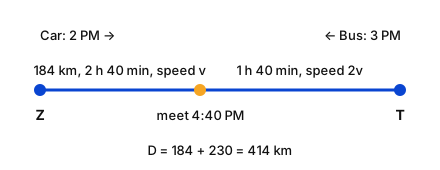
A car leaves place Z at 2 PM and moves towards place T which is at a distance of D km at a uniform speed. A bus leaves place T at 3 PM and moves towards place Z at a uniform speed. The speed of car is half of bus. If they meet 04:40 PM at a point which is 184 km away from Z. The value of D is:
एक कार स्थान Z से दोपहर 2 बजे निकलती है और एकसमान चाल से स्थान T की ओर चलती है, जो D km की दूरी पर है। एक बस स्थान T से दोपहर 3 बजे निकलती है और एकसमान चाल से स्थान Z की ओर चलती है। कार की चाल बस की चाल की आधी है। यदि वे Z से 184 km दूर एक बिंदु पर 04:40 PM पर मिलती हैं, तो D का मान है:
  1. A414
  2. B423
  3. C420
  4. D405
Show answer

Concept: Distance = speed × time. Each vehicle travels for a different time before they meet; the two distances add up to D.

  1. Car travels from 2 PM to 4:40 PM =223=83 h and covers 184 km, so its speed =184×38=69km/h.
  2. Bus speed =2×69=138km/h; it travels from 3 PM to 4:40 PM =53 h → 138×53=230 km.
  3. D=184+230=414 km.

Trick: Bus is twice as fast but travels 58 of the car's time, so bus distance =184×2×58=230 – no need to find speeds.

Answer: (A) 414

अवधारणा: दूरी = चाल × समय। मिलने से पहले दोनों वाहन अलग-अलग समय चलते हैं; दोनों दूरियों का योग D है।

  1. कार 2 PM से 4:40 PM =223=83 h चलकर 184 km तय करती है, अतः चाल =184×38=69km/h।
  2. बस की चाल =2×69=138km/h; वह 3 PM से 4:40 PM =53 h चलती है → 138×53=230 km।
  3. D=184+230=414 km।

ट्रिक: बस दोगुनी तेज़ है पर कार के समय का 58 चलती है, अतः बस की दूरी =184×2×58=230 – चाल निकालने की ज़रूरत नहीं।

उत्तर: (A) 414

RRB NTPC Graduate CBT 1MathematicsTime, Speed and DistanceRRB NTPC Graduate CBT 1 2025 · 18 Mar Shift 2 →
Q6344.
A vendor bought oranges at the rate of 40 oranges for ₹220, and sold them at ₹98 per dozen. Find his profit or loss percent. (Round off to two decimal places.)
एक विक्रेता ने ₹220 में 40 संतरे की दर से संतरे खरीदे और उन्हें ₹98 प्रति दर्जन की दर से बेच दिया। उसका लाभ या हानि प्रतिशत ज्ञात कीजिए। (दो दशमलव स्थानों तक पूर्णांकित कीजिए।)
  1. AProfit 48.48%लाभ 48.48%
  2. BLoss 28.56%हानि 28.56%
  3. CLoss 48.48%हानि 48.48%
  4. DProfit 28.56%लाभ 28.56%
Show answer

Concept: Compare cost and selling price of the same number of oranges, then Profit%=SP−CPCP×100.

  1. CP of 1 orange =22040=₹5.50; SP of 1 orange =9812=₹8.16―.
  2. SP > CP, so there is a profit of 9812−112=98−6612=3212=83 per orange.
  3. Profit%=8/311/2×100=1633×100=48.48%.

Trick: Take LCM of 40 and 12 =120 oranges: CP =₹660, SP =₹980; profit =320660=1633.

Answer: (A) Profit 48.48%

अवधारणा: समान संख्या में संतरों का क्रय और विक्रय मूल्य तुलना करें, फिर लाभ%=SP−CPCP×100।

  1. 1 संतरे का CP =22040=₹5.50; 1 संतरे का SP =9812=₹8.16―।
  2. SP > CP, अतः प्रति संतरा लाभ =9812−112=3212=83।
  3. लाभ%=8/311/2×100=1633×100=48.48%।

ट्रिक: 40 और 12 का LCM =120 संतरे लें: CP =₹660, SP =₹980; लाभ =320660=1633।

उत्तर: (A) लाभ 48.48%

RRB NTPC Graduate CBT 1MathematicsProfit and LossRRB NTPC Graduate CBT 1 2025 · 18 Mar Shift 2 →
Q6345.
In what duration (in years) will ₹6,000 fetch a simple interest of ₹1,080 at 6% per annum rate of interest?
कितनी अवधि (वर्षों में) में ₹6,000 पर 6% वार्षिक ब्याज दर से ₹1,080 का साधारण ब्याज प्राप्त होगा?
  1. A6
  2. B4
  3. C3
  4. D2
Show answer

Concept: SI=P×R×T100, so T=SI×100P×R.

  1. T=1080×1006000×6=10800036000=3 years.
  2. Check: 6000×6%=360 per year; 360×3=1080 ✓.

Trick: Interest per year =6% of 6000=360; just see how many 360s make 1080.

Answer: (C) 3

अवधारणा: SI=P×R×T100, अतः T=SI×100P×R।

  1. T=1080×1006000×6=10800036000=3 वर्ष।
  2. जाँच: 6000 का 6%=360 प्रति वर्ष; 360×3=1080 ✓।

ट्रिक: प्रति वर्ष ब्याज =6000 का 6%=360; बस देखें 1080 में कितने 360 हैं।

उत्तर: (C) 3

RRB NTPC Graduate CBT 1MathematicsSimple InterestRRB NTPC Graduate CBT 1 2025 · 18 Mar Shift 2 →
Q6346.
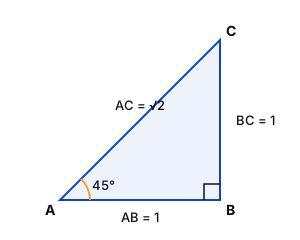
Let ABC be a right-angled triangle such that ∠B = 90°. If tan A = 1, then find the value of cosec A sec A.
मान लीजिए ABC एक समकोण त्रिभुज है जिसमें ∠B = 90° है। यदि tan A = 1 है, तो cosec A sec A का मान ज्ञात कीजिए।
  1. A4
  2. B2
  3. C1
  4. D3
Show answer

Concept: tanA=1 means A=45∘; also cosecAsecA=1sinAcosA.

  1. tanA=BCAB=1, so AB=BC and AC=2AB – an isosceles right triangle with A=45∘.
  2. cosec45∘=2 and sec45∘=2.
  3. cosecAsecA=2×2=2.

Trick: cosecAsecA=1+tan2AtanA=1+11=2 – works for any angle.

Answer: (B) 2

अवधारणा: tanA=1 का अर्थ A=45∘; साथ ही cosecAsecA=1sinAcosA।

  1. tanA=BCAB=1, अतः AB=BC और AC=2AB – समद्विबाहु समकोण त्रिभुज जिसमें A=45∘।
  2. cosec45∘=2 और sec45∘=2।
  3. cosecAsecA=2×2=2।

ट्रिक: cosecAsecA=1+tan2AtanA=1+11=2 – किसी भी कोण के लिए काम करता है।

उत्तर: (B) 2

RRB NTPC Graduate CBT 1MathematicsTrigonometryRRB NTPC Graduate CBT 1 2025 · 18 Mar Shift 2 →
Q6347.
The price of each article of type P, Q, and R is ₹280, ₹180 and ₹115, respectively. Rohit buys articles of each type in the ratio 4 : 2 : 7 for ₹6,855. How many articles of type Q did he purchase?
P, Q और R प्रकार की प्रत्येक वस्तु का मूल्य क्रमशः ₹280, ₹180 और ₹115 है। रोहित प्रत्येक प्रकार की वस्तुएँ 4 : 2 : 7 के अनुपात में ₹6,855 में खरीदता है। उसने Q प्रकार की कितनी वस्तुएँ खरीदीं?
  1. A12
  2. B6
  3. C14
  4. D3
Show answer

Concept: Write the quantities as 4x,2x,7x and equate the total cost to the amount paid.

  1. Total cost =280(4x)+180(2x)+115(7x)=1120x+360x+805x=2285x.
  2. 2285x=6855⇒x=3.
  3. Articles of type Q =2x=6.

Trick: 6855÷2285: 2285×3=6855 exactly – spot that 2285×3 ends in 5 and is just under 7000.

Answer: (B) 6

अवधारणा: मात्राओं को 4x,2x,7x लिखें और कुल लागत को चुकाई गई राशि के बराबर रखें।

  1. कुल लागत =280(4x)+180(2x)+115(7x)=1120x+360x+805x=2285x।
  2. 2285x=6855⇒x=3।
  3. Q प्रकार की वस्तुएँ =2x=6।

ट्रिक: 6855÷2285: 2285×3=6855 ठीक-ठीक – देखें कि 2285×3 का अंत 5 पर है और 7000 से ज़रा कम।

उत्तर: (B) 6

RRB NTPC Graduate CBT 1MathematicsRatio and Linear EquationsRRB NTPC Graduate CBT 1 2025 · 18 Mar Shift 2 →
Q6348.
Evaluate: 16 + 20 ÷ 5 - 3 × 3
मान ज्ञात कीजिए: 16 + 20 ÷ 5 - 3 × 3
  1. A13
  2. B10
  3. C14
  4. D11
Show answer

Concept: Division and multiplication come before addition and subtraction.

  1. 20÷5=4 and 3×3=9.
  2. 16+4−9=11.

Trick: Circle every ÷ and × group first, replace it by its value, then add/subtract in one line.

Answer: (D) 11

अवधारणा: भाग और गुणा, जोड़ और घटाव से पहले होते हैं।

  1. 20÷5=4 और 3×3=9।
  2. 16+4−9=11।

ट्रिक: पहले हर ÷ और × समूह को घेरें, उसका मान रखें, फिर एक पंक्ति में जोड़/घटाव करें।

उत्तर: (D) 11

RRB NTPC Graduate CBT 1MathematicsBODMASRRB NTPC Graduate CBT 1 2025 · 18 Mar Shift 2 →
Q6349.
Each of P, Q, R, S, T, U and V has an exam on a different day of a week starting from Monday and ending on Sunday of the same week.
P has the exam on Wednesday. Only three people have exams after R. S has the exam after Q but before P. U has the exam before V but not on Friday.
How many people have exams between T and Q?
P, Q, R, S, T, U और V में से प्रत्येक की परीक्षा एक ही सप्ताह के सोमवार से रविवार तक के अलग-अलग दिनों में है।
P की परीक्षा बुधवार को है। R के बाद केवल तीन व्यक्तियों की परीक्षा है। S की परीक्षा Q के बाद परंतु P से पहले है। U की परीक्षा V से पहले है परंतु शुक्रवार को नहीं है।
T और Q के बीच कितने व्यक्तियों की परीक्षा है?
  1. ATwoदो
  2. BThreeतीन
  3. COneएक
  4. DFourचार
Show answer

Concept: Fix the definite clues first (P = Wednesday, R has exactly three after him), then place the rest.

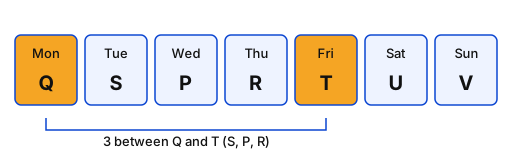
  1. Only three people after R → R = Thursday. P = Wednesday.
  2. Q < S < P → Q = Monday, S = Tuesday.
  3. Remaining Fri, Sat, Sun for T, U, V. U is before V and not on Friday → U = Saturday, V = Sunday, T = Friday.
  4. Between Q (Mon) and T (Fri): S, P, R = three people.

Trick: "Only three after X" in a 7-day week pins X to the 4th day (Thursday) instantly.

Answer: (B) Three

अवधारणा: पहले निश्चित सुराग लगाएँ (P = बुधवार, R के बाद ठीक तीन लोग), फिर बाकी को रखें।

  1. R के बाद केवल तीन लोग → R = गुरुवार। P = बुधवार।
  2. Q < S < P → Q = सोमवार, S = मंगलवार।
  3. शुक्र, शनि, रवि बचे T, U, V के लिए। U, V से पहले है और शुक्रवार को नहीं → U = शनिवार, V = रविवार, T = शुक्रवार।
  4. Q (सोम) और T (शुक्र) के बीच: S, P, R = तीन लोग।

ट्रिक: 7 दिन के सप्ताह में "X के बाद केवल तीन" का मतलब X चौथे दिन (गुरुवार) पर है।

उत्तर: (B) Three (तीन)

RRB NTPC Graduate CBT 1General Intelligence and ReasoningScheduling PuzzleRRB NTPC Graduate CBT 1 2025 · 18 Mar Shift 2 →
Q6350.
Each of the digits in the number 4568923 is arranged in ascending order from left to right. The position of how many digits will remain unchanged as compared to that in the original number?
संख्या 4568923 के प्रत्येक अंक को बाएँ से दाएँ आरोही क्रम में व्यवस्थित किया जाता है। मूल संख्या की तुलना में कितने अंकों का स्थान अपरिवर्तित रहेगा?
  1. ATwoदो
  2. BOneएक
  3. CThreeतीन
  4. DNoneकोई नहीं
Show answer

Concept: Write the ascending order below the original and compare position by position.

  1. Original: 4 5 6 8 9 2 3
  2. Ascending: 2 3 4 5 6 8 9
  3. Position-wise: 4→2, 5→3, 6→4, 8→5, 9→6, 2→8, 3→9 — no position has the same digit.

Trick: Each digit from 4 to 9 shifts right by two places and 2, 3 jump to the front, so nothing can stay put.

Answer: (D) None

अवधारणा: मूल संख्या के नीचे आरोही क्रम लिखकर स्थान-दर-स्थान मिलाएँ।

  1. मूल: 4 5 6 8 9 2 3
  2. आरोही: 2 3 4 5 6 8 9
  3. स्थान अनुसार: 4→2, 5→3, 6→4, 8→5, 9→6, 2→8, 3→9 — किसी भी स्थान पर अंक समान नहीं।

ट्रिक: 4 से 9 तक हर अंक दो स्थान दाएँ खिसकता है और 2, 3 आगे आ जाते हैं, इसलिए कोई अंक अपनी जगह नहीं रहता।

उत्तर: (D) None (कोई नहीं)

RRB NTPC Graduate CBT 1General Intelligence and ReasoningDigit RearrangementRRB NTPC Graduate CBT 1 2025 · 18 Mar Shift 2 →
Q6351.
Refer to the following letter, number and symbol series and answer the question that follows. Counting to be done from left to right only.
(Left) @ B & G V 7 N % K U I 3 # € * $ 7 © U @ Z 5 (Right)
If all the symbols are dropped from the series, which of the following will be sixth from the left?
निम्नलिखित अक्षर, संख्या और प्रतीक श्रेणी को देखिए और उसके बाद दिए गए प्रश्न का उत्तर दीजिए। गिनती केवल बाएँ से दाएँ की जानी है।
(बाएँ) @ B & G V 7 N % K U I 3 # € * $ 7 © U @ Z 5 (दाएँ)
यदि श्रेणी से सभी प्रतीकों को हटा दिया जाए, तो निम्नलिखित में से कौन-सा बाएँ से छठा होगा?
  1. A3
  2. BN
  3. CU
  4. DK
Show answer

Concept: Remove every symbol, then count from the left.

  1. Symbols dropped: @ & % # € * $ © @.
  2. Remaining series: B G V 7 N K U I 3 7 U Z 5.
  3. Sixth from the left: B(1) G(2) V(3) 7(4) N(5) K(6).

Trick: Strike the symbols on the question paper itself and then count — do not rewrite in a hurry.

Answer: (D) K

अवधारणा: सभी प्रतीक हटाएँ, फिर बाएँ से गिनें।

  1. हटाए गए प्रतीक: @ & % # € * $ © @।
  2. शेष श्रृंखला: B G V 7 N K U I 3 7 U Z 5।
  3. बाएँ से छठा: B(1) G(2) V(3) 7(4) N(5) K(6)।

ट्रिक: प्रश्न में ही प्रतीकों पर कटान लगाकर गिनें — जल्दबाज़ी में दोबारा न लिखें।

उत्तर: (D) K

RRB NTPC Graduate CBT 1General Intelligence and ReasoningAlphanumeric SeriesRRB NTPC Graduate CBT 1 2025 · 18 Mar Shift 2 →
Q6352.
Select the pair which follows the same pattern as that followed by the two set of pairs given below. Both pairs follow the same pattern.
OCI : SGM
QEK : UIO
उस युग्म का चयन कीजिए जो नीचे दिए गए दो युग्मों के समान पैटर्न का अनुसरण करता है। दोनों युग्म समान पैटर्न का अनुसरण करते हैं।
OCI : SGM
QEK : UIO
  1. ATHN : XLR
  2. BLBR : PQL
  3. CHIR : NDH
  4. DKGT : NJK
Show answer

Concept: Find the shift applied to each letter in the given pairs and apply the same shift.

  1. OCI → SGM: O+4=S, C+4=G, I+4=M.
  2. QEK → UIO: Q+4=U, E+4=I, K+4=O. Rule: each letter +4.
  3. THN → T+4=X, H+4=L, N+4=R = XLR.

Trick: Check only the first letter of each option first: T+4 = X eliminates B, C, D at once.

Answer: (A) THN : XLR

अवधारणा: दिए गए युग्मों में हर अक्षर पर लगा शिफ्ट पहचानें और वही लागू करें।

  1. OCI → SGM: O+4=S, C+4=G, I+4=M।
  2. QEK → UIO: Q+4=U, E+4=I, K+4=O। नियम: हर अक्षर +4।
  3. THN → T+4=X, H+4=L, N+4=R = XLR।

ट्रिक: पहले केवल पहला अक्षर जाँचें: T+4 = X से B, C, D तुरंत कट जाते हैं।

उत्तर: (A) THN : XLR

RRB NTPC Graduate CBT 1General Intelligence and ReasoningLetter AnalogyRRB NTPC Graduate CBT 1 2025 · 18 Mar Shift 2 →
Q6353.
If ‘A’ stands for ‘÷’, ‘B’ stands for ‘×’, ‘C’ stands for ‘+’ and ‘D’ stands for ‘−’, then what will come in place of the question mark (?) in the following equation?
37 C 32 A 2 D 9 B 2 = ?
यदि ‘A’ का अर्थ ‘÷’, ‘B’ का अर्थ ‘×’, ‘C’ का अर्थ ‘+’ और ‘D’ का अर्थ ‘−’ है, तो निम्नलिखित समीकरण में प्रश्नचिह्न (?) के स्थान पर क्या आएगा?
37 C 32 A 2 D 9 B 2 = ?
  1. A36
  2. B33
  3. C34
  4. D35
Show answer

Concept: Substitute the symbols and apply BODMAS.

  1. 37 C 32 A 2 D 9 B 2⇒37+32÷2−9×2.
  2. Division and multiplication first: 32÷2=16, 9×2=18.
  3. 37+16−18=35.

Trick: Write the real symbols above the letters before computing — it prevents order slips.

Answer: (D) 35

अवधारणा: प्रतीक बदलें और BODMAS लागू करें।

  1. 37 C 32 A 2 D 9 B 2⇒37+32÷2−9×2।
  2. पहले भाग और गुणा: 32÷2=16, 9×2=18।
  3. 37+16−18=35।

ट्रिक: गणना से पहले अक्षरों के ऊपर असली चिह्न लिख लें — क्रम की गलती नहीं होगी।

उत्तर: (D) 35

RRB NTPC Graduate CBT 1General Intelligence and ReasoningMathematical OperationsRRB NTPC Graduate CBT 1 2025 · 18 Mar Shift 2 →
Q6354.
FEAR is related to DBWM in a certain way based on the English alphabetical order. In the same way, BYSH is related to ZVOC. To which of the following is XSKX related, following the same logic?
अंग्रेज़ी वर्णमाला क्रम के आधार पर FEAR एक निश्चित प्रकार से DBWM से संबंधित है। उसी प्रकार, BYSH, ZVOC से संबंधित है। समान तर्क का अनुसरण करते हुए XSKX निम्नलिखित में से किससे संबंधित है?
  1. AUPGR
  2. BUQHT
  3. CWOFS
  4. DVPGS
Show answer

Concept: Find the shift applied to each position.

  1. FEAR → DBWM: F−2=D, E−3=B, A−4=W, R−5=M.
  2. BYSH → ZVOC: B−2=Z, Y−3=V, S−4=O, H−5=C. Pattern: −2,−3,−4,−5.
  3. XSKX: X−2=V, S−3=P, K−4=G, X−5=S → VPGS.

Trick: Positions 1 and 4 are both X; their codes must differ by 3 (V and S) — only option D fits.

Answer: (D) VPGS

अवधारणा: हर स्थान पर लगा शिफ्ट पहचानें।

  1. FEAR → DBWM: F−2=D, E−3=B, A−4=W, R−5=M।
  2. BYSH → ZVOC: B−2=Z, Y−3=V, S−4=O, H−5=C। पैटर्न: −2,−3,−4,−5।
  3. XSKX: X−2=V, S−3=P, K−4=G, X−5=S → VPGS।

ट्रिक: स्थान 1 और 4 दोनों X हैं; उनके कोड में 3 का अंतर होना चाहिए (V और S) — केवल विकल्प D में।

उत्तर: (D) VPGS

RRB NTPC Graduate CBT 1General Intelligence and ReasoningLetter CodingRRB NTPC Graduate CBT 1 2025 · 18 Mar Shift 2 →
Q6355.
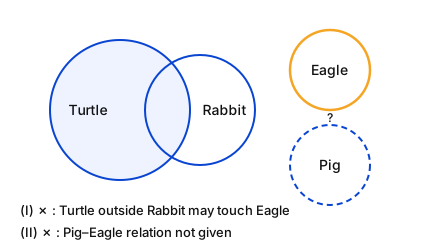
Read the given statements and conclusions carefully. Assuming that the information given in the statements is true, even if it appears to be at variance with commonly known facts, decide which of the given conclusions logically follow(s) from the statements.
Statements:
Some turtles are rabbits. No rabbit is an eagle. No rabbit is a pig.
Conclusions:
(I): No turtle is an eagle.
(II): Some pigs are eagles.
दिए गए कथनों और निष्कर्षों को ध्यानपूर्वक पढ़िए। यह मानते हुए कि कथनों में दी गई जानकारी सत्य है, चाहे वह सामान्यतः ज्ञात तथ्यों से भिन्न प्रतीत होती हो, निर्णय कीजिए कि दिए गए निष्कर्षों में से कौन-सा/कौन-से कथनों का तार्किक रूप से अनुसरण करता है/करते हैं।
कथन:
कुछ कछुए खरगोश हैं। कोई खरगोश चील नहीं है। कोई खरगोश सुअर नहीं है।
निष्कर्ष:
(I): कोई कछुआ चील नहीं है।
(II): कुछ सुअर चील हैं।
  1. AOnly conclusion (I) followsकेवल निष्कर्ष (I) अनुसरण करता है
  2. BOnly conclusion (II) followsकेवल निष्कर्ष (II) अनुसरण करता है
  3. CBoth conclusions (I) and (II) followनिष्कर्ष (I) और (II) दोनों अनुसरण करते हैं
  4. DNeither conclusion (I) nor (II) followsन तो निष्कर्ष (I) और न ही (II) अनुसरण करता है
Show answer

Concept: Draw the least-committed Venn diagram and test each conclusion.

  1. Some turtles are rabbits; rabbits are completely outside Eagle and Pig.
  2. (I) "No turtle is an eagle": the turtles that are not rabbits may overlap eagles — not definite. Does not follow.
  3. (II) "Some pigs are eagles": nothing links pigs to eagles — does not follow.

Trick: From "Some A are B" + "No B is C" you can only conclude "Some A are not C", never "No A is C".

Answer: (D) Neither conclusion (I) nor (II) follows

अवधारणा: न्यूनतम मान्यता वाला वेन आरेख बनाकर हर निष्कर्ष जाँचें।

  1. कुछ turtle, rabbit हैं; rabbit पूरी तरह Eagle और Pig से बाहर हैं।
  2. (I) "कोई turtle, eagle नहीं": जो turtle, rabbit नहीं हैं वे eagle से मिल सकते हैं — निश्चित नहीं। अनुसरण नहीं करता।
  3. (II) "कुछ pig, eagle हैं": pig और eagle में कोई संबंध नहीं दिया — अनुसरण नहीं करता।

ट्रिक: "कुछ A, B हैं" + "कोई B, C नहीं" से केवल "कुछ A, C नहीं हैं" निकलता है, कभी "कोई A, C नहीं" नहीं।

उत्तर: (D) न तो निष्कर्ष (I) न (II) अनुसरण करता है

RRB NTPC Graduate CBT 1General Intelligence and ReasoningSyllogismRRB NTPC Graduate CBT 1 2025 · 18 Mar Shift 2 →
Q6356.
In a certain code language, ‘HOUR’ is coded as ‘8359’ and ‘HORN’ is coded as ‘9856’. What is the code for ‘N’ in the given code language?
एक निश्चित कूट भाषा में, ‘HOUR’ को ‘8359’ और ‘HORN’ को ‘9856’ के रूप में कूटबद्ध किया जाता है। दी गई कूट भाषा में ‘N’ का कूट क्या है?
  1. A5
  2. B6
  3. C8
  4. D9
Show answer

Concept: Common letters get common digits; eliminate to find the odd one.

  1. HOUR = 8 3 5 9 and HORN = 9 8 5 6 share H, O, R → shared digits 8, 5, 9.
  2. So U (only in HOUR) = 3, and N (only in HORN) = 6.

Trick: Compare the two codes: the digit present in HORN but absent in HOUR is N's code.

Answer: (B) 6

अवधारणा: समान अक्षरों के समान अंक; बाकी को हटाकर अलग अक्षर खोजें।

  1. HOUR = 8 3 5 9 और HORN = 9 8 5 6 में H, O, R समान → समान अंक 8, 5, 9।
  2. अतः U (केवल HOUR में) = 3, और N (केवल HORN में) = 6।

ट्रिक: दोनों कोड मिलाएँ: जो अंक HORN में है पर HOUR में नहीं, वही N का कोड है।

उत्तर: (B) 6

RRB NTPC Graduate CBT 1General Intelligence and ReasoningNumber CodingRRB NTPC Graduate CBT 1 2025 · 18 Mar Shift 2 →
Q6357.
In a certain code language, ‘please drink water’ is coded as ‘gf sx zr’ and ‘water is flowing’ is coded as ‘po vb sx’. How is ‘water’ coded in the given language?
एक निश्चित कूट भाषा में, ‘please drink water’ को ‘gf sx zr’ और ‘water is flowing’ को ‘po vb sx’ के रूप में कूटबद्ध किया जाता है। दी गई भाषा में ‘water’ को किस प्रकार कूटबद्ध किया जाता है?
  1. Azr
  2. Bpo
  3. Csx
  4. Dgf
Show answer

Concept: A word common to both sentences has the code common to both.

  1. 'please drink water' → gf sx zr; 'water is flowing' → po vb sx.
  2. Only 'water' appears in both sentences and only 'sx' appears in both codes.
  3. Hence water = sx.

Trick: Underline the repeated word and the repeated code — they pair up.

Answer: (C) sx

अवधारणा: दोनों वाक्यों में समान शब्द का कोड दोनों कोडों में समान होता है।

  1. 'please drink water' → gf sx zr; 'water is flowing' → po vb sx।
  2. केवल 'water' दोनों वाक्यों में और केवल 'sx' दोनों कोडों में है।
  3. अतः water = sx।

ट्रिक: दोहराए शब्द और दोहराए कोड को रेखांकित करें — वे जोड़ी बनाते हैं।

उत्तर: (C) sx

RRB NTPC Graduate CBT 1General Intelligence and ReasoningWord CodingRRB NTPC Graduate CBT 1 2025 · 18 Mar Shift 2 →
Q6358.
Based on the alphabetical order, three of the following four are alike in a certain way and thus form a group. Which is the one that does not belong to that group?
(Note: The odd man out is not based on the number of consonants/vowels or their position in the letter cluster.)
वर्णमाला क्रम के आधार पर, निम्नलिखित चार में से तीन एक निश्चित प्रकार से समान हैं और इस प्रकार एक समूह बनाते हैं। वह कौन-सा है जो उस समूह से संबंधित नहीं है?
(नोट: असंगत विकल्प व्यंजनों/स्वरों की संख्या या अक्षर-समूह में उनकी स्थिति पर आधारित नहीं है।)
  1. ADJF
  2. BHNJ
  3. CJPL
  4. DFLG
Show answer

Concept: Compare the gaps between the letters of each cluster.

  1. DJF: D+6=J, D+2=F. HNJ: H+6=N, H+2=J. JPL: J+6=P, J+2=L.
  2. FLG: F+6=L, but F+1=G (should have been H).
  3. Pattern (first+6, first+2) breaks only in FLG.

Trick: Check the 1st→3rd letter gap: 2, 2, 2 and 1 — the odd one shows up at once.

Answer: (D) FLG

अवधारणा: हर समूह के अक्षरों के बीच अंतर की तुलना करें।

  1. DJF: D+6=J, D+2=F। HNJ: H+6=N, H+2=J। JPL: J+6=P, J+2=L।
  2. FLG: F+6=L, पर F+1=G (H होना चाहिए था)।
  3. पैटर्न (पहला+6, पहला+2) केवल FLG में टूटता है।

ट्रिक: पहले→तीसरे अक्षर का अंतर देखें: 2, 2, 2 और 1 — विषम तुरंत दिखता है।

उत्तर: (D) FLG

RRB NTPC Graduate CBT 1General Intelligence and ReasoningLetter Cluster – Odd One OutRRB NTPC Graduate CBT 1 2025 · 18 Mar Shift 2 →
Q6359.
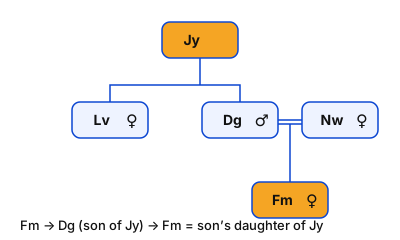
Lv is the daughter of Jy. Fm is the daughter of Nw. Dg is the brother of Lv. Nw is married to Dg. How is Fm related to Jy?
Lv, Jy की पुत्री है। Fm, Nw की पुत्री है। Dg, Lv का भाई है। Nw का विवाह Dg से हुआ है। Fm, Jy से किस प्रकार संबंधित है?
  1. ASon’s daughterपुत्र की पुत्री
  2. BFather’s fatherपिता का पिता
  3. CBrother’s daughterभाई की पुत्री
  4. DSon’s wifeपुत्र की पत्नी
Show answer

Concept: Build the family tree generation by generation.

  1. Lv is Jy's daughter; Dg is Lv's brother → Dg is Jy's son.
  2. Nw is married to Dg → Nw is Jy's daughter-in-law.
  3. Fm is Nw's daughter → Fm is Dg's daughter → Fm is Jy's son's daughter (granddaughter).

Trick: Go through the male link: Fm → father Dg → Dg's parent Jy.

Answer: (A) Son’s daughter

अवधारणा: पीढ़ी-दर-पीढ़ी वंश-वृक्ष बनाएँ।

  1. Lv, Jy की पुत्री है; Dg, Lv का भाई → Dg, Jy का पुत्र।
  2. Nw का विवाह Dg से → Nw, Jy की पुत्रवधू।
  3. Fm, Nw की पुत्री → Fm, Dg की पुत्री → Fm, Jy के पुत्र की पुत्री (पोती)।

ट्रिक: पुरुष कड़ी से चलें: Fm → पिता Dg → Dg के माता/पिता Jy।

उत्तर: (A) Son’s daughter (पुत्र की पुत्री)

RRB NTPC Graduate CBT 1General Intelligence and ReasoningBlood RelationsRRB NTPC Graduate CBT 1 2025 · 18 Mar Shift 2 →
Q6360.
What should come in place of ‘?’ in the given series?
56 58 61 66 73 ?
दी गई श्रेणी में ‘?’ के स्थान पर क्या आना चाहिए?
56 58 61 66 73 ?
  1. A84
  2. B86
  3. C85
  4. D83
Show answer

Concept: Look at the differences between consecutive terms – they often form a familiar pattern such as prime numbers.

  1. 58−56=2, 61−58=3, 66−61=5, 73−66=7.
  2. The differences 2,3,5,7 are consecutive prime numbers, so the next difference is 11.
  3. 73+11=84.

Trick: When differences are not constant, check whether they are primes, squares or themselves an AP before trying anything fancy.

Answer: (A) 84

अवधारणा: क्रमागत पदों के अंतर देखें – वे अक्सर अभाज्य संख्याओं जैसा जाना-पहचाना पैटर्न बनाते हैं।

  1. 58−56=2, 61−58=3, 66−61=5, 73−66=7।
  2. अंतर 2,3,5,7 क्रमागत अभाज्य संख्याएँ हैं, अतः अगला अंतर 11 होगा।
  3. 73+11=84।

ट्रिक: जब अंतर स्थिर न हों, तो पहले देखें कि अंतर अभाज्य, वर्ग या स्वयं एक AP तो नहीं बना रहे।

उत्तर: (A) 84

RRB NTPC Graduate CBT 1General Intelligence and ReasoningNumber SeriesRRB NTPC Graduate CBT 1 2025 · 18 Mar Shift 2 →