Question bank

Q&A: practice questions with answers

Search questions on any topic. Filter by exam category, exam, subject and topic, try the question, then open the answer and explanation.

Courses – airGurukul

7,077 questions found.

Q6361.
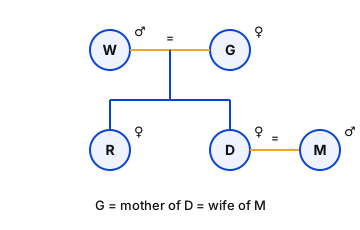
Seven boys — A, B, C, D, E, F, and G — are sitting around a circular table facing the centre, but not necessarily in the same order. Only three people sit between D and C when counted from the left of D. Only three people sit between G and B when counted from the right of B. E sits to the immediate right of G. F is an immediate neighbour of both B and C.
Match each boy in Column I to his neighbour to the immediate left in Column II and select the correct answer from the given options.
Column I (Boy)Column II (Neighbour to his immediate left)
i. B(W) B
ii. E(X) C
iii. A(Y) G
iv. F(Z) D
सात लड़के — A, B, C, D, E, F और G — एक वृत्ताकार मेज़ के चारों ओर केंद्र की ओर मुख करके बैठे हैं, परंतु आवश्यक नहीं कि इसी क्रम में हों। D के बाएँ से गिनने पर D और C के बीच केवल तीन व्यक्ति बैठे हैं। B के दाएँ से गिनने पर G और B के बीच केवल तीन व्यक्ति बैठे हैं। E, G के ठीक दाएँ बैठा है। F, B और C दोनों का निकटतम पड़ोसी है।
स्तंभ I के प्रत्येक लड़के का स्तंभ II में उसके ठीक बाएँ बैठे पड़ोसी से मिलान कीजिए और दिए गए विकल्पों में से सही उत्तर का चयन कीजिए।
स्तंभ I (लड़का)स्तंभ II (उसके ठीक बाएँ का पड़ोसी)
i. B(W) B
ii. E(X) C
iii. A(Y) G
iv. F(Z) D
  1. Ai-Z, ii-Y, iii-X, iv-W
  2. Bi-Y, ii-W, iii-Z, iv-X
  3. Ci-X, ii-W, iii-Z, iv-Y
  4. Di-W, ii-Y, iii-Z, iv-X
Show answer

Concept: When everyone faces the centre, "left" means clockwise and "right" means anticlockwise. Fix one person and place the others step by step.
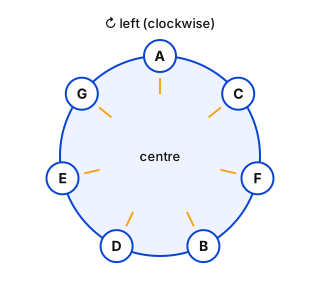
  1. Fix D. Three people between D and C from D's left: C is 4th to the left (clockwise) of D.
  2. F is a neighbour of both B and C, so B, F, C are consecutive. With three people between G and B from B's right and E immediately right of G, the only arrangement that works (clockwise) is: A, C, F, B, D, E, G.
  3. Immediate left (clockwise next): B → D (Z); E → G (Y); A → C (X); F → B (W).

Trick: Start with the "neighbour of both" clue – it locks three seats at once and halves the cases.

Answer: (A) i-Z, ii-Y, iii-X, iv-W

अवधारणा: जब सब केंद्र की ओर मुख किए हों, तो "बाएँ" का अर्थ दक्षिणावर्त (clockwise) और "दाएँ" का अर्थ वामावर्त होता है। एक व्यक्ति को स्थिर कर बाकी को क्रम से बैठाएँ।

  1. D को स्थिर करें। D के बाएँ से D और C के बीच तीन लोग: C, D के बाएँ (clockwise) चौथे स्थान पर।
  2. F, B और C दोनों का पड़ोसी है, अतः B, F, C लगातार हैं। B के दाएँ से G और B के बीच तीन लोग तथा E, G के तुरंत दाएँ – इन सबसे एकमात्र व्यवस्था (clockwise): A, C, F, B, D, E, G।
  3. तुरंत बाएँ (clockwise अगला): B → D (Z); E → G (Y); A → C (X); F → B (W)।

ट्रिक: "दोनों का पड़ोसी" वाले संकेत से शुरू करें – यह एक साथ तीन सीटें तय कर देता है और केस आधे हो जाते हैं।

उत्तर: (A) i-Z, ii-Y, iii-X, iv-W
RRB NTPC Graduate CBT 1General Intelligence and ReasoningCircular Seating ArrangementRRB NTPC Graduate CBT 1 2025 · 18 Mar Shift 2 →
Q6362.
Refer to the following number and symbol series and answer the question that follows. Counting to be done from left to right only. All numbers are single-digit numbers only. (Left) @ / 3 & 5 3 9 1 ? % 7 $ \ % 7 $ 6 9 4 ? + (Right)
How many such symbols are there, each of which is immediately preceded by another symbol and also immediately followed by a number?
निम्नलिखित संख्या और प्रतीक श्रेणी को देखिए और उसके बाद दिए गए प्रश्न का उत्तर दीजिए। गिनती केवल बाएँ से दाएँ की जानी है। सभी संख्याएँ केवल एक-अंकीय संख्याएँ हैं। (बाएँ) @ / 3 & 5 3 9 1 ? % 7 $ \ % 7 $ 6 9 4 ? + (दाएँ)
ऐसे कितने प्रतीक हैं, जिनमें से प्रत्येक के ठीक पहले एक अन्य प्रतीक है और ठीक बाद एक संख्या है?
  1. AOneएक
  2. BThreeतीन
  3. CTwoदो
  4. DNoneकोई नहीं
Show answer

Concept: We need a pattern symbol – symbol – number; count the middle symbol of every such triple, scanning left to right.

  1. Series: @ / 3 & 5 3 9 1 ? % 7 $ \ % 7 $ 6 9 4 ? +
  2. Triples found: @ / 3, ? % 7, \ % 7.
  3. No other symbol has a symbol on its left and a number on its right. Count =3.

Trick: Underline every number first; then only look at the symbol just before each number and check what lies before it.

Answer: (B) Three

अवधारणा: हमें प्रतीक – प्रतीक – संख्या पैटर्न चाहिए; बाएँ से दाएँ देखते हुए ऐसे हर तिकड़ी का बीच वाला प्रतीक गिनें।

  1. श्रृंखला: @ / 3 & 5 3 9 1 ? % 7 $ \ % 7 $ 6 9 4 ? +
  2. मिली तिकड़ियाँ: @ / 3, ? % 7, \ % 7।
  3. किसी अन्य प्रतीक के बाएँ प्रतीक और दाएँ संख्या नहीं है। गिनती =3।

ट्रिक: पहले हर संख्या को रेखांकित करें; फिर केवल संख्या से ठीक पहले वाले प्रतीक को देखें और जाँचें कि उससे पहले क्या है।

उत्तर: (B) Three

RRB NTPC Graduate CBT 1General Intelligence and ReasoningSymbol Series CountingRRB NTPC Graduate CBT 1 2025 · 18 Mar Shift 2 →
Q6363.
Read the given statements and conclusions carefully. Assuming that the information given in the statements is true, even if it appears to be at variance with commonly known facts, decide which of the given conclusions logically follow(s) from the statements.
Statements:
No biscuit is a wafer. No wafer is a candy. No candy is a juice.
Conclusions:
(I) No biscuit is a candy.
(II) No wafer is a juice.
दिए गए कथनों और निष्कर्षों को ध्यानपूर्वक पढ़िए। यह मानते हुए कि कथनों में दी गई जानकारी सत्य है, चाहे वह सामान्यतः ज्ञात तथ्यों से भिन्न प्रतीत होती हो, निर्णय कीजिए कि दिए गए निष्कर्षों में से कौन-सा/कौन-से कथनों का तार्किक रूप से अनुसरण करता है/करते हैं।
कथन:
कोई बिस्कुट वेफ़र नहीं है। कोई वेफ़र कैंडी नहीं है। कोई कैंडी जूस नहीं है।
निष्कर्ष:
(I) कोई बिस्कुट कैंडी नहीं है।
(II) कोई वेफ़र जूस नहीं है।
  1. ABoth conclusions (I) and (II) followनिष्कर्ष (I) और (II) दोनों अनुसरण करते हैं
  2. BOnly conclusion (II) followsकेवल निष्कर्ष (II) अनुसरण करता है
  3. COnly conclusion (I) followsकेवल निष्कर्ष (I) अनुसरण करता है
  4. DNeither conclusion (I) nor (II) followsन तो निष्कर्ष (I) और न ही (II) अनुसरण करता है
Show answer

Concept: Two negative (No…) statements never give a definite conclusion – from "No A is B" and "No B is C" nothing can be said about A and C.

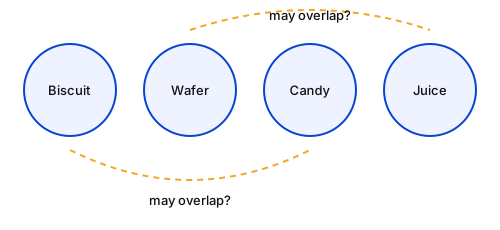
  1. Statements 1 and 2: No biscuit is a wafer, no wafer is a candy. Biscuit and candy may or may not overlap, so (I) "No biscuit is a candy" does not follow.
  2. Statements 2 and 3: No wafer is a candy, no candy is a juice. Wafer and juice may still overlap, so (II) does not follow.

Trick: Negative + Negative = No conclusion. Draw the circles apart from the linking set; the two outer circles are free to overlap.

Answer: (D) Neither conclusion (I) nor (II) follows

अवधारणा: दो नकारात्मक (कोई…नहीं) कथनों से कभी निश्चित निष्कर्ष नहीं निकलता – "कोई A, B नहीं" और "कोई B, C नहीं" से A और C के बारे में कुछ नहीं कहा जा सकता।

  1. कथन 1 व 2: कोई बिस्कुट वेफ़र नहीं, कोई वेफ़र कैंडी नहीं। बिस्कुट और कैंडी ओवरलैप कर भी सकते हैं, नहीं भी – अतः (I) नहीं निकलता।
  2. कथन 2 व 3: कोई वेफ़र कैंडी नहीं, कोई कैंडी जूस नहीं। वेफ़र और जूस ओवरलैप कर सकते हैं, अतः (II) भी नहीं निकलता।

ट्रिक: नकारात्मक + नकारात्मक = कोई निष्कर्ष नहीं। जोड़ने वाले सेट से वृत्त अलग बनाएँ; दोनों बाहरी वृत्त ओवरलैप करने को स्वतंत्र हैं।

उत्तर: (D) न तो निष्कर्ष (I) और न ही (II) अनुसरण करता है

RRB NTPC Graduate CBT 1General Intelligence and ReasoningSyllogismRRB NTPC Graduate CBT 1 2025 · 18 Mar Shift 2 →
Q6364.
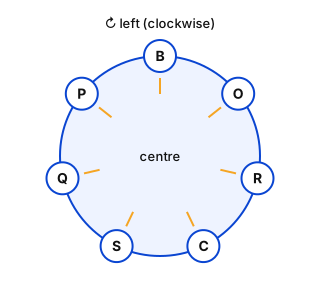
Seven people B, C, O, P, Q, R and S are sitting around a circular table facing the center of the table. Only three people sit between B and S, when counted from the left of B. Only two people sit between Q and O when counted from the left of Q. P sits third to the left of C. R is an immediate neighbor of C and O. How many people between B and R when counted from the left of R?
सात व्यक्ति B, C, O, P, Q, R और S एक वृत्ताकार मेज़ के चारों ओर मेज़ के केंद्र की ओर मुख करके बैठे हैं। B के बाएँ से गिनने पर B और S के बीच केवल तीन व्यक्ति बैठे हैं। Q के बाएँ से गिनने पर Q और O के बीच केवल दो व्यक्ति बैठे हैं। P, C के बाएँ तीसरे स्थान पर बैठा है। R, C और O का निकटतम पड़ोसी है। R के बाएँ से गिनने पर B और R के बीच कितने व्यक्ति बैठे हैं?
  1. AThreeतीन
  2. BTwoदो
  3. COneएक
  4. DFourचार
Show answer

Concept: Facing the centre, "left of X" is clockwise from X. Fix one person and use the "three people between" clues first.

  1. Fix B. Three between B and S from B's left → S is 4th clockwise from B.
  2. Two between Q and O from Q's left → O is 3rd clockwise from Q; P is 3rd clockwise from C; R is adjacent to both C and O, so O, R, C are consecutive.
  3. Only one arrangement satisfies all this (clockwise): B, O, R, C, S, Q, P.
  4. Counting from R's left (clockwise): C, S, Q, P, then B – four people between R and B.

Trick: "Immediate neighbour of both" fixes a block of three; place that block first and the rest falls into place.

Answer: (D) Four

अवधारणा: केंद्र की ओर मुख होने पर "X के बाएँ" का अर्थ X से clockwise है। एक व्यक्ति स्थिर करें और "तीन लोग बीच में" वाले संकेत पहले लगाएँ।

  1. B स्थिर करें। B के बाएँ से B और S के बीच तीन → S, B से clockwise चौथा।
  2. Q के बाएँ से Q और O के बीच दो → O, Q से clockwise तीसरा; P, C से clockwise तीसरा; R, C और O दोनों का पड़ोसी है, अतः O, R, C लगातार।
  3. इन सबको संतुष्ट करने वाली एकमात्र व्यवस्था (clockwise): B, O, R, C, S, Q, P।
  4. R के बाएँ (clockwise) से गिनें: C, S, Q, P, फिर B – R और B के बीच चार लोग।

ट्रिक: "दोनों का तुरंत पड़ोसी" तीन का ब्लॉक तय कर देता है; उसे पहले रखें, बाकी अपने आप बैठ जाते हैं।

उत्तर: (D) Four

RRB NTPC Graduate CBT 1General Intelligence and ReasoningCircular Seating ArrangementRRB NTPC Graduate CBT 1 2025 · 18 Mar Shift 2 →
Q6365.
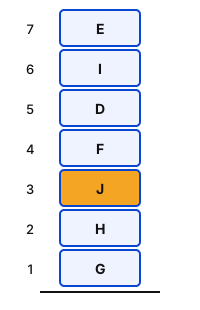
Seven boxes, D, E, F, G, H, I and J are kept one over the other but not necessarily in the same order. D is kept fifth from the bottom. Only two boxes are kept between D and H. I is kept somewhere above D but below E. Only two boxes are placed between G and F. F is not placed at the bottom. Which box is kept third from the bottom?
सात बक्से, D, E, F, G, H, I और J एक के ऊपर एक रखे गए हैं, परंतु आवश्यक नहीं कि इसी क्रम में हों। D नीचे से पाँचवें स्थान पर रखा है। D और H के बीच केवल दो बक्से रखे हैं। I, D के ऊपर कहीं परंतु E के नीचे रखा है। G और F के बीच केवल दो बक्से रखे हैं। F सबसे नीचे नहीं रखा है। कौन-सा बक्सा नीचे से तीसरे स्थान पर रखा है?
  1. AJ
  2. BH
  3. CI
  4. DG
Show answer

Concept: Number the positions 1 (bottom) to 7 (top), place the fixed box first, then apply the "boxes between" clues.

  1. D is 5th from the bottom → D =5. Two boxes between D and H → H =2 (H =8 is impossible).
  2. I is above D but below E → I =6, E =7.
  3. Remaining positions 1, 3, 4 for G, F, J. Two boxes between G and F and F not at the bottom → G =1, F =4. So J =3.
  4. Bottom to top: G, H, J, F, D, I, E – third from bottom is J.

Trick: With 7 boxes, "two between" means a gap of 3 – write positions as numbers and the choices become obvious.

Answer: (A) J

अवधारणा: स्थानों को 1 (नीचे) से 7 (ऊपर) तक नंबर दें, पहले निश्चित बॉक्स रखें, फिर "बीच में बॉक्स" वाले संकेत लगाएँ।

  1. D नीचे से 5वाँ → D =5। D और H के बीच दो बॉक्स → H =2 (H =8 असंभव)।
  2. I, D से ऊपर पर E से नीचे → I =6, E =7।
  3. बचे स्थान 1, 3, 4 G, F, J के लिए। G और F के बीच दो बॉक्स और F सबसे नीचे नहीं → G =1, F =4। अतः J =3।
  4. नीचे से ऊपर: G, H, J, F, D, I, E – नीचे से तीसरा J है।

ट्रिक: 7 बॉक्स में "दो बीच में" का मतलब 3 का अंतर – स्थानों को संख्या में लिखें, विकल्प साफ़ दिखने लगते हैं।

उत्तर: (A) J

RRB NTPC Graduate CBT 1General Intelligence and ReasoningBox ArrangementRRB NTPC Graduate CBT 1 2025 · 18 Mar Shift 2 →
Q6366.
12 is related to 66 following a certain logic. Following the same logic, 24 is related to 276. To which of the following is 10 related, following the same logic?
(NOTE: Operations should be performed on the whole numbers, without breaking down the numbers into their constituent digits. E.g. 13 – Operations on 13 such as
adding/subtracting/multiplying etc. to 13, can be performed. Breaking down 13 into 1 and 3 and then performing mathematical operations on 1 and 3 is not allowed.)
12 एक निश्चित तर्क के अनुसार 66 से संबंधित है। समान तर्क का अनुसरण करते हुए, 24, 276 से संबंधित है। समान तर्क का अनुसरण करते हुए 10 निम्नलिखित में से किससे संबंधित है?
(नोट: संक्रियाएँ पूर्ण संख्याओं पर की जानी चाहिए, संख्याओं को उनके घटक अंकों में तोड़े बिना। उदाहरण के लिए 13 – 13 पर संक्रियाएँ जैसे
13 में जोड़ना/घटाना/गुणा करना आदि की जा सकती हैं। 13 को 1 और 3 में तोड़कर फिर 1 और 3 पर गणितीय संक्रियाएँ करने की अनुमति नहीं है।)
  1. A45
  2. B90
  3. C110
  4. D55
Show answer

Concept: Find one rule that turns 12 into 66 and 24 into 276 using whole-number operations, then apply it to 10.

  1. 12×112=66 and 24×232=276, i.e. n→n(n−1)2.
  2. Check: 12×112=66 ✓, 24×232=276 ✓.
  3. For 10: 10×92=45.

Trick: When the result is about half of n2, test n(n±1)2 – the triangular-number pattern.

Answer: (A) 45

अवधारणा: ऐसा एक नियम खोजें जो पूर्ण संख्या संक्रियाओं से 12 को 66 और 24 को 276 बनाए, फिर उसे 10 पर लगाएँ।

  1. 12×112=66 और 24×232=276, अर्थात् n→n(n−1)2।
  2. जाँच: 12×112=66 ✓, 24×232=276 ✓।
  3. 10 के लिए: 10×92=45।

ट्रिक: जब परिणाम n2 के लगभग आधे के बराबर हो, तो n(n±1)2 आज़माएँ – त्रिभुजीय संख्या पैटर्न।

उत्तर: (A) 45

RRB NTPC Graduate CBT 1General Intelligence and ReasoningNumber AnalogyRRB NTPC Graduate CBT 1 2025 · 18 Mar Shift 2 →
Q6367.
Which of the following letter-clusters should replace # and % so that the pattern and relationship followed between the letter-cluster pair on the left side of :: is the same as that on the right side of :: ?
# : IOJ :: NTO : %
निम्नलिखित में से किन अक्षर-समूहों को # और % के स्थान पर रखा जाना चाहिए ताकि :: के बाईं ओर के अक्षर-समूह युग्म के बीच का पैटर्न और संबंध :: के दाईं ओर के युग्म के समान हो जाए?
# : IOJ :: NTO : %
  1. A# = KQJ , % = LRM
  2. B# = KQL , % = LSM
  3. C# = KQL , % = LRM
  4. D# = KQL , % = LRN
Show answer

Concept: Find the letter-shift rule from the complete pair, then apply the same rule to fill both blanks.

  1. Try option C: KQL → IOJ: K−2=I, Q−2=O, L−2=J. So each letter moves back by 2.
  2. Apply to NTO: N−2=L, T−2=R, O−2=M → LRM.
  3. Option C gives # = KQL and % = LRM, matching both sides.

Trick: When both blanks are unknown, test the options – the rule must be identical for every letter of both pairs.

Answer: (C) # = KQL, % = LRM

अवधारणा: पूरे जोड़े से अक्षर-खिसकाव का नियम पहचानें, फिर वही नियम दोनों रिक्त स्थानों पर लगाएँ।

  1. विकल्प C लें: KQL → IOJ: K−2=I, Q−2=O, L−2=J। अर्थात् हर अक्षर 2 पीछे।
  2. NTO पर लगाएँ: N−2=L, T−2=R, O−2=M → LRM।
  3. विकल्प C में # = KQL और % = LRM – दोनों पक्ष मेल खाते हैं।

ट्रिक: जब दोनों रिक्त स्थान अज्ञात हों, तो विकल्पों को जाँचें – नियम दोनों जोड़ों के हर अक्षर पर एक जैसा लगना चाहिए।

उत्तर: (C) # = KQL, % = LRM

RRB NTPC Graduate CBT 1General Intelligence and ReasoningLetter AnalogyRRB NTPC Graduate CBT 1 2025 · 18 Mar Shift 2 →
Q6368.
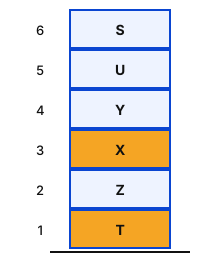
X, Y, Z, S, T and U live on six different floors of the same building. The lowermost floor in the building is numbered 1, the floor above it is number 2 and so on till the topmost floor is numbered 6. Only two people live between T and Y. Only S lives above U. Z lives on an even numbered floor. T lives on the lowermost floor. How many people live between X and T?
X, Y, Z, S, T और U एक ही भवन की छह अलग-अलग मंज़िलों पर रहते हैं। भवन की सबसे निचली मंज़िल की संख्या 1 है, उसके ऊपर की मंज़िल की संख्या 2 है और इसी प्रकार सबसे ऊपरी मंज़िल की संख्या 6 है। T और Y के बीच केवल दो व्यक्ति रहते हैं। U के ऊपर केवल S रहता है। Z एक सम संख्या वाली मंज़िल पर रहता है। T सबसे निचली मंज़िल पर रहता है। X और T के बीच कितने व्यक्ति रहते हैं?
  1. ATwoदो
  2. BFourचार
  3. CThreeतीन
  4. DOneएक
Show answer

Concept: Place the directly given facts first, then use the "between" and parity clues.

  1. T is on floor 1. Only S lives above U → U =5, S =6.
  2. Two people between T and Y → Y =4.
  3. Z is on an even floor; only floor 2 is left among even floors → Z =2, so X =3.
  4. Between X (3) and T (1) there is only one person (Z on floor 2).

Trick: "Only S lives above U" pins U to the second-highest floor immediately – such clues are the best starting points.

Answer: (D) One

अवधारणा: पहले सीधे दिए तथ्य रखें, फिर "बीच में" और सम/विषम वाले संकेत लगाएँ।

  1. T मंज़िल 1 पर। U के ऊपर केवल S → U =5, S =6।
  2. T और Y के बीच दो लोग → Y =4।
  3. Z सम मंज़िल पर; सम मंज़िलों में केवल 2 बची → Z =2, अतः X =3।
  4. X (3) और T (1) के बीच केवल एक व्यक्ति (मंज़िल 2 पर Z)।

ट्रिक: "U के ऊपर केवल S" तुरंत U को दूसरी सबसे ऊँची मंज़िल पर टिका देता है – ऐसे संकेत सबसे अच्छे शुरुआती बिंदु हैं।

उत्तर: (D) One

RRB NTPC Graduate CBT 1General Intelligence and ReasoningFloor PuzzleRRB NTPC Graduate CBT 1 2025 · 18 Mar Shift 2 →
Q6369.
Which of the following letter-number clusters will replace the question mark (?) in the given series to make it logically complete?
ADF 16 DGI 27 GJL 38 JMO 49 ?
निम्नलिखित में से कौन-सा अक्षर-संख्या समूह दी गई श्रेणी में प्रश्नचिह्न (?) के स्थान पर आकर उसे तार्किक रूप से पूर्ण करेगा?
ADF 16 DGI 27 GJL 38 JMO 49 ?
  1. AMPR 60
  2. BMNP 59
  3. CMOQ 59
  4. DMQQ 60
Show answer

Concept: Treat the letters and the numbers as two separate series.

  1. Letters: ADF → DGI → GJL → JMO: each letter moves forward by 3 (A→D→G→J→M, D→G→J→M→P, F→I→L→O→R). Next: MPR.
  2. Numbers: 16,27,38,49 increase by 11 each → next =60.

Trick: Check only the first letter of each cluster first (A, D, G, J → M); it eliminates three options instantly.

Answer: (A) MPR 60

अवधारणा: अक्षरों और संख्याओं को दो अलग श्रृंखलाओं की तरह देखें।

  1. अक्षर: ADF → DGI → GJL → JMO: हर अक्षर 3 आगे (A→D→G→J→M, D→G→J→M→P, F→I→L→O→R)। अगला: MPR।
  2. संख्याएँ: 16,27,38,49 में हर बार 11 की वृद्धि → अगली =60।

ट्रिक: पहले हर समूह का केवल पहला अक्षर जाँचें (A, D, G, J → M); तीन विकल्प तुरंत कट जाते हैं।

उत्तर: (A) MPR 60

RRB NTPC Graduate CBT 1General Intelligence and ReasoningAlphanumeric SeriesRRB NTPC Graduate CBT 1 2025 · 18 Mar Shift 2 →
Q6370.
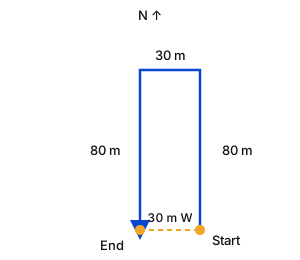
Sushma walked 80 m towards North, took a left turn and walked 30 m. He again took a left turn and walked 80 m. How far and in which direction is he from the starting point? (All turns are 90-degree turns only, unless specified.)
सुषमा उत्तर की ओर 80 m चली, बाएँ मुड़ी और 30 m चली। वह फिर बाएँ मुड़ी और 80 m चली। वह प्रारंभिक बिंदु से कितनी दूर और किस दिशा में है? (जब तक अन्यथा निर्दिष्ट न हो, सभी मोड़ केवल 90-डिग्री के मोड़ हैं।)
  1. A70 m, East70 m, पूर्व
  2. B30 m, West30 m, पश्चिम
  3. C70 m, West70 m, पश्चिम
  4. D60 m, East60 m, पूर्व
Show answer

Concept: Facing North, a left turn faces West; facing West, a left turn faces South. Opposite legs of equal length cancel out.

  1. 80 m North, then left → 30 m West, then left → 80 m South.
  2. The 80 m North and 80 m South cancel; net displacement is only the 30 m West.
  3. So Sushma is 30 m West of the starting point.

Trick: Pair up opposite directions first (N with S, E with W) – whatever is left over is the answer.

Answer: (B) 30 m, West

अवधारणा: उत्तर की ओर मुख हो तो बायाँ मोड़ पश्चिम; पश्चिम की ओर मुख हो तो बायाँ मोड़ दक्षिण। बराबर लंबाई के विपरीत चरण एक-दूसरे को काट देते हैं।

  1. 80 m उत्तर, फिर बाएँ → 30 m पश्चिम, फिर बाएँ → 80 m दक्षिण।
  2. 80 m उत्तर और 80 m दक्षिण कट गए; शुद्ध विस्थापन केवल 30 m पश्चिम।
  3. अतः सुषमा प्रारंभिक बिंदु से 30 m पश्चिम में है।

ट्रिक: पहले विपरीत दिशाओं को जोड़ा बनाकर काटें (N–S, E–W) – जो बचे वही उत्तर है।

उत्तर: (B) 30 m, पश्चिम

RRB NTPC Graduate CBT 1General Intelligence and ReasoningDirection and DistanceRRB NTPC Graduate CBT 1 2025 · 18 Mar Shift 2 →
Q6371.
Which of the following letter-number clusters will replace the question mark (?) in the given series to make it logically complete?
DAZ 75 XUT 87 RON 99 LIH 111 ?
निम्नलिखित में से कौन-सा अक्षर-संख्या समूह दी गई श्रेणी में प्रश्नचिह्न (?) के स्थान पर आकर उसे तार्किक रूप से पूर्ण करेगा?
DAZ 75 XUT 87 RON 99 LIH 111 ?
  1. AFDA 123
  2. BFOY 122
  3. CFBA 122
  4. DFCB 123
Show answer

Concept: Handle letters and numbers separately; here the letters move backwards.

  1. First letters: D → X → R → L: each is 6 back (D=4, X=24, R=18, L=12) → next F (6).
  2. Second letters: A → U → O → I, also −6 → C. Third letters: Z → T → N → H, −6 → B. Cluster: FCB.
  3. Numbers: 75,87,99,111 rise by 12 → 123.

Trick: Use letter positions (A=1 … Z=26) and subtract; wrap around 26 when you go below 1.

Answer: (D) FCB 123

अवधारणा: अक्षर और संख्याएँ अलग-अलग देखें; यहाँ अक्षर पीछे की ओर चलते हैं।

  1. पहले अक्षर: D → X → R → L: हर बार 6 पीछे (D=4, X=24, R=18, L=12) → अगला F (6)।
  2. दूसरे अक्षर: A → U → O → I, भी −6 → C। तीसरे अक्षर: Z → T → N → H, −6 → B। समूह: FCB।
  3. संख्याएँ: 75,87,99,111 में 12 की वृद्धि → 123।

ट्रिक: अक्षर स्थान (A=1 … Z=26) लेकर घटाएँ; 1 से नीचे जाने पर 26 से घुमाएँ।

उत्तर: (D) FCB 123

RRB NTPC Graduate CBT 1General Intelligence and ReasoningAlphanumeric SeriesRRB NTPC Graduate CBT 1 2025 · 18 Mar Shift 2 →
Q6372.
Refer to the following number and symbol series and answer the question. Counting to be done from left to right only. (All numbers are single-digit numbers only.)
(Left) 8 * 7 ? 5 £ + Ω 1 2 6 $ = @ & 3 ~ 4 # 9 % (Right)
How many such symbols are there, each of which is immediately preceded by an even number but not immediately followed by an odd number?
निम्नलिखित संख्या और प्रतीक श्रेणी को देखिए और प्रश्न का उत्तर दीजिए। गिनती केवल बाएँ से दाएँ की जानी है। (सभी संख्याएँ केवल एक-अंकीय संख्याएँ हैं।)
(बाएँ) 8 * 7 ? 5 £ + Ω 1 2 6 $ = @ & 3 ~ 4 # 9 % (दाएँ)
ऐसे कितने प्रतीक हैं, जिनमें से प्रत्येक के ठीक पहले एक सम संख्या है परंतु ठीक बाद कोई विषम संख्या नहीं है?
  1. AThreeतीन
  2. BOneएक
  3. CFourचार
  4. DTwoदो
Show answer

Concept: We need a symbol whose left neighbour is an even number and whose right neighbour is not an odd number (it may be a symbol or an even number).

  1. Series: 8 * 7 ? 5 £ + Ω 1 2 6 $ = @ & 3 ~ 4 # 9 %
  2. Symbols with an even number on the left: * (after 8), $ (after 6), # (after 4).
  3. * is followed by 7 (odd) ✗; # is followed by 9 (odd) ✗; $ is followed by = (a symbol) ✓.
  4. Only one such symbol.

Trick: Filter in two passes – first "even number before", then strike out those with an odd number after.

Answer: (B) One

अवधारणा: हमें ऐसा प्रतीक चाहिए जिसके बाएँ सम संख्या हो और दाएँ विषम संख्या न हो (दाएँ प्रतीक या सम संख्या हो सकती है)।

  1. श्रृंखला: 8 * 7 ? 5 £ + Ω 1 2 6 $ = @ & 3 ~ 4 # 9 %
  2. जिनके बाएँ सम संख्या है: * (8 के बाद), $ (6 के बाद), # (4 के बाद)।
  3. * के बाद 7 (विषम) ✗; # के बाद 9 (विषम) ✗; $ के बाद = (प्रतीक) ✓।
  4. ऐसा केवल एक प्रतीक है।

ट्रिक: दो चरणों में छाँटें – पहले "पहले सम संख्या", फिर जिनके बाद विषम संख्या है उन्हें काट दें।

उत्तर: (B) One

RRB NTPC Graduate CBT 1General Intelligence and ReasoningSymbol Series CountingRRB NTPC Graduate CBT 1 2025 · 18 Mar Shift 2 →
Q6373.
Based on the English alphabetical order, three of the following four are alike in a certain way and thus form a group. Which is the one that does not belong to that group? (Note: The odd one out is not based on the number of consonants/vowels or their position in the letter cluster.)
अंग्रेज़ी वर्णमाला क्रम के आधार पर, निम्नलिखित चार में से तीन एक निश्चित प्रकार से समान हैं और इस प्रकार एक समूह बनाते हैं। वह कौन-सा है जो उस समूह से संबंधित नहीं है? (नोट: असंगत विकल्प व्यंजनों/स्वरों की संख्या या अक्षर-समूह में उनकी स्थिति पर आधारित नहीं है।)
  1. ABFJ
  2. BSWB
  3. CKOT
  4. DGKP
Show answer

Concept: Write the gap between consecutive letters of each cluster and compare the patterns.

  1. SWB: S+4=W, W+5=B (wrapping past Z). KOT: K+4=O, O+5=T. GKP: G+4=K, K+5=P. All follow +4,+5.
  2. BFJ: B+4=F, F+4=J – pattern +4,+4, which is different.

Trick: When one cluster wraps around (W→B), count W, X, Y, Z, A, B on your fingers – it is +5, not +4.

Answer: (A) BFJ

अवधारणा: हर समूह के क्रमागत अक्षरों का अंतर लिखें और पैटर्न की तुलना करें।

  1. SWB: S+4=W, W+5=B (Z के पार घूमकर)। KOT: K+4=O, O+5=T। GKP: G+4=K, K+5=P। सभी +4,+5।
  2. BFJ: B+4=F, F+4=J – पैटर्न +4,+4, जो अलग है।

ट्रिक: जब कोई समूह घूमता है (W→B), तो W, X, Y, Z, A, B उँगलियों पर गिनें – यह +5 है, +4 नहीं।

उत्तर: (A) BFJ

RRB NTPC Graduate CBT 1General Intelligence and ReasoningOdd One Out – Letter ClustersRRB NTPC Graduate CBT 1 2025 · 18 Mar Shift 2 →
Q6374.
48 is related to 192 following a certain logic. Following the same logic, 52 is related to 208. To which of the following is 61 related, following the same logic?
(NOTE: Operations should be performed on the whole numbers, without breaking down the numbers into its constituent digits. E.g., 13 – Operations on 13 such as
adding/subtracting/multiplying etc. to 13 can be performed. Breaking down 13 into 1 and 3 and then performing mathematical operations on 1 and 3 is not allowed.)
48 एक निश्चित तर्क के अनुसार 192 से संबंधित है। समान तर्क का अनुसरण करते हुए, 52, 208 से संबंधित है। समान तर्क का अनुसरण करते हुए 61 निम्नलिखित में से किससे संबंधित है?
(नोट: संक्रियाएँ पूर्ण संख्याओं पर की जानी चाहिए, संख्याओं को उनके घटक अंकों में तोड़े बिना। उदाहरण के लिए, 13 – 13 पर संक्रियाएँ जैसे
13 में जोड़ना/घटाना/गुणा करना आदि की जा सकती हैं। 13 को 1 और 3 में तोड़कर फिर 1 और 3 पर गणितीय संक्रियाएँ करने की अनुमति नहीं है।)
  1. A234
  2. B264
  3. C254
  4. D244
Show answer

Concept: Find the single whole-number operation linking each pair.

  1. 48×4=192 and 52×4=208 – the second number is 4 times the first.
  2. 61×4=244.

Trick: Divide the second number by the first in both pairs; if the quotient is the same, the rule is multiplication.

Answer: (D) 244

अवधारणा: हर जोड़े को जोड़ने वाली एक पूर्ण-संख्या संक्रिया खोजें।

  1. 48×4=192 और 52×4=208 – दूसरी संख्या पहली की 4 गुनी है।
  2. 61×4=244।

ट्रिक: दोनों जोड़ों में दूसरी संख्या को पहली से भाग दें; भागफल समान हो तो नियम गुणा है।

उत्तर: (D) 244

RRB NTPC Graduate CBT 1General Intelligence and ReasoningNumber AnalogyRRB NTPC Graduate CBT 1 2025 · 18 Mar Shift 2 →
Q6375.
210 is related to 148 following a certain logic. Following the same logic, 185 is related to 123. To which of the following is 125 related, following the same logic?
(NOTE: Operations should be performed on the whole numbers, without breaking down the numbers into their constituent digits. E.g. 13 – Operations on 13 such as adding /subtracting /multiplying, etc. to 13 can be performed. Breaking down 13 into 1 and 3 and then performing mathematical operations on 1 and 3 is not allowed.)
210 एक निश्चित तर्क के अनुसार 148 से संबंधित है। समान तर्क का अनुसरण करते हुए, 185, 123 से संबंधित है। समान तर्क का अनुसरण करते हुए 125 निम्नलिखित में से किससे संबंधित है?
(नोट: संक्रियाएँ पूर्ण संख्याओं पर की जानी चाहिए, संख्याओं को उनके घटक अंकों में तोड़े बिना। उदाहरण के लिए 13 – 13 पर संक्रियाएँ जैसे 13 में जोड़ना/घटाना/गुणा करना आदि की जा सकती हैं। 13 को 1 और 3 में तोड़कर फिर 1 और 3 पर गणितीय संक्रियाएँ करने की अनुमति नहीं है।)
  1. A66
  2. B71
  3. C61
  4. D63
Show answer

Concept: Check the difference between the two numbers of each pair before trying multiplication.

  1. 210−148=62 and 185−123=62 – the second number is 62 less than the first.
  2. 125−62=63.

Trick: If both pairs have the same difference, it is a subtraction rule; the same ratio means multiplication.

Answer: (D) 63

अवधारणा: गुणा आज़माने से पहले हर जोड़े की दोनों संख्याओं का अंतर देखें।

  1. 210−148=62 और 185−123=62 – दूसरी संख्या पहली से 62 कम है।
  2. 125−62=63।

ट्रिक: दोनों जोड़ों का अंतर समान हो तो घटाव का नियम; अनुपात समान हो तो गुणा।

उत्तर: (D) 63

RRB NTPC Graduate CBT 1General Intelligence and ReasoningNumber AnalogyRRB NTPC Graduate CBT 1 2025 · 18 Mar Shift 2 →
Q6376.
In this question, a question is followed by two statements numbered (I) and (II). You have to decide whether the data provided in the statements are sufficient to answer the question. Read both the statements and decide the appropriate answer.
Question:
Among 5 trees, L, M, N, T and V each having a different height, which tree is the shortest?
Statements:
(I) L is taller than only two trees. M is shorter than L and T is shorter than M.
(II) V is taller than N.
इस प्रश्न में, एक प्रश्न के बाद (I) और (II) क्रमांकित दो कथन दिए गए हैं। आपको यह निर्णय करना है कि कथनों में दिए गए डेटा प्रश्न का उत्तर देने के लिए पर्याप्त हैं या नहीं। दोनों कथनों को पढ़िए और उचित उत्तर का निर्णय कीजिए।
प्रश्न:
5 पेड़ों L, M, N, T और V में, जिनमें से प्रत्येक की ऊँचाई भिन्न है, कौन-सा पेड़ सबसे छोटा है?
कथन:
(I) L केवल दो पेड़ों से ऊँचा है। M, L से छोटा है और T, M से छोटा है।
(II) V, N से ऊँचा है।
  1. AData in Statement II alone is sufficient to answer the question while data in statement I is notकथन II के डेटा अकेले प्रश्न का उत्तर देने के लिए पर्याप्त हैं, जबकि कथन I के डेटा पर्याप्त नहीं हैं
  2. BBoth statements I and II together (and not statement 1 alone or statement II alone) are sufficient to answer the questionकथन I और II दोनों मिलकर (और न कि केवल कथन 1 अथवा केवल कथन II) प्रश्न का उत्तर देने के लिए पर्याप्त हैं
  3. CData in Statement I alone is sufficient to answer the question while data in statement II is notकथन I के डेटा अकेले प्रश्न का उत्तर देने के लिए पर्याप्त हैं, जबकि कथन II के डेटा पर्याप्त नहीं हैं
  4. DBoth statements I and II together are NOT sufficient to answer the questionकथन I और II दोनों मिलकर भी प्रश्न का उत्तर देने के लिए पर्याप्त नहीं हैं
Show answer

Concept: Test each statement alone: can it fix the shortest tree without any extra assumption?

  1. Statement I: "L is taller than only two trees" → exactly two trees are shorter than L. M is shorter than L and T is shorter than M, so those two are M and T, with T < M < L. Hence T is the shortest – sufficient.
  2. Statement II: V > N tells nothing about L, M, T – not sufficient.

Trick: "Taller than only two" is a strong clue: it fixes the position (3rd from bottom) and caps how many can be below.

Answer: (C) Data in Statement I alone is sufficient to answer the question while data in statement II is not

अवधारणा: हर कथन को अकेले जाँचें: क्या वह बिना अतिरिक्त धारणा के सबसे छोटा पेड़ तय कर सकता है?

  1. कथन I: "L केवल दो पेड़ों से लंबा है" → ठीक दो पेड़ L से छोटे हैं। M, L से छोटा और T, M से छोटा, अतः वे दो M और T हैं, और T < M < L। इसलिए T सबसे छोटा – पर्याप्त।
  2. कथन II: V > N से L, M, T के बारे में कुछ पता नहीं चलता – अपर्याप्त।

ट्रिक: "केवल दो से लंबा" एक मज़बूत संकेत है: यह स्थान (नीचे से तीसरा) तय करता है और नीचे वालों की संख्या सीमित कर देता है।

उत्तर: (C) कथन I का डेटा अकेले पर्याप्त है, कथन II का नहीं

RRB NTPC Graduate CBT 1General Intelligence and ReasoningData Sufficiency – OrderingRRB NTPC Graduate CBT 1 2025 · 18 Mar Shift 2 →
Q6377.
In a certain code language,
A + B means ‘A is the daughter of B’
A - B means ‘A is the mother of B’
A x B means ‘A is the wife of B’
A ÷ B means ‘A is the father of B’
Based on the above, how is G related to M if 'G - R + W ÷ D x M’?
एक निश्चित कूट भाषा में,
A + B का अर्थ है ‘A, B की पुत्री है’
A - B का अर्थ है ‘A, B की माता है’
A x B का अर्थ है ‘A, B की पत्नी है’
A ÷ B का अर्थ है ‘A, B का पिता है’
उपर्युक्त के आधार पर, यदि 'G - R + W ÷ D x M’ है, तो G, M से किस प्रकार संबंधित है?
  1. AWife's sisterपत्नी की बहन
  2. BWife's motherपत्नी की माता
  3. CSisterबहन
  4. DWifeपत्नी
Show answer

Concept: Decode the chain one symbol at a time and build the family tree.

  1. G − R: G is the mother of R. R + W: R is the daughter of W. So G and W are the parents of R; G is W's wife.
  2. W ÷ D: W is the father of D, so D is also G's daughter.
  3. D × M: D is the wife of M.
  4. G is the mother of M's wife D → G is M's wife's mother (mother-in-law).

Trick: Work from the person asked about (M) backwards: M's wife is D, D's mother is G.

Answer: (B) Wife's mother

अवधारणा: श्रृंखला को एक-एक प्रतीक करके डिकोड करें और वंश-वृक्ष बनाएँ।

  1. G − R: G, R की माँ। R + W: R, W की बेटी। अतः G और W, R के माता-पिता हैं; G, W की पत्नी है।
  2. W ÷ D: W, D का पिता, अतः D भी G की बेटी है।
  3. D × M: D, M की पत्नी।
  4. G, M की पत्नी D की माँ है → G, M की पत्नी की माँ (सास) है।

ट्रिक: जिसके बारे में पूछा है (M) उससे पीछे चलें: M की पत्नी D, D की माँ G।

उत्तर: (B) Wife's mother (पत्नी की माँ)

RRB NTPC Graduate CBT 1General Intelligence and ReasoningBlood RelationsRRB NTPC Graduate CBT 1 2025 · 18 Mar Shift 2 →
Q6378.
Which report, released at the COP30 summit in 2025, highlights the rapid increase in global methane emissions and the need for urgent action to address climate change?
2025 में COP30 शिखर सम्मेलन में जारी की गई कौन-सी रिपोर्ट वैश्विक मीथेन उत्सर्जन में तीव्र वृद्धि और जलवायु परिवर्तन से निपटने के लिए तत्काल कार्रवाई की आवश्यकता को रेखांकित करती है?
  1. AGlobal Climate Mitigation Outlook Report 2025
  2. BGlobal Methane Status Report 2025
  3. CInternational Greenhouse Gas Assessment Report 2025
  4. DWorldwide Atmospheric Pollution Trends Report 2025
Show answer

Concept: COP30 (Belém, Brazil, November 2025) saw the launch of a UNEP-backed report on methane.

  1. The Global Methane Status Report 2025, prepared by the Climate and Clean Air Coalition (CCAC) with UNEP, was released at COP30.
  2. It warned that methane concentrations are rising faster than ever and that cutting methane is the quickest way to slow near-term warming.
  3. The other names are not real reports.

Yaad rakhein: Methane report → Global Methane Pledge, CCAC + UNEP, COP30 Belém 2025.

Answer: (B) Global Methane Status Report 2025

अवधारणा: COP30 (बेलेम, ब्राज़ील, नवंबर 2025) में UNEP समर्थित मीथेन रिपोर्ट जारी हुई।

  1. Global Methane Status Report 2025, जिसे Climate and Clean Air Coalition (CCAC) ने UNEP के साथ तैयार किया, COP30 में जारी की गई।
  2. इसमें चेतावनी दी गई कि मीथेन की सांद्रता तेज़ी से बढ़ रही है और मीथेन घटाना निकट-अवधि तापन रोकने का सबसे तेज़ उपाय है।
  3. बाकी नाम वास्तविक रिपोर्ट नहीं हैं।

याद रखें: मीथेन रिपोर्ट → Global Methane Pledge, CCAC + UNEP, COP30 बेलेम 2025।

उत्तर: (B) Global Methane Status Report 2025

RRB NTPC Graduate CBT 1General AwarenessCurrent Affairs – EnvironmentRRB NTPC Graduate CBT 1 2025 · 18 Mar Shift 1 →
Q6379.
Which option correctly completes the general word equation for a neutralisation reaction?
Base + Acid → ________ + ________
उदासीनीकरण (neutralisation) अभिक्रिया के सामान्य शब्द-समीकरण को कौन-सा विकल्प सही ढंग से पूरा करता है?
क्षार + अम्ल → ________ + ________
  1. ASalt + Waterलवण + जल
  2. BMetal + Carbon Dioxideधातु + कार्बन डाइऑक्साइड
  3. CMetal + Waterधातु + जल
  4. DSalt + Carbon Dioxideलवण + कार्बन डाइऑक्साइड
Show answer

Concept: In a neutralisation reaction an acid and a base react to form a salt and water.

  1. Base + Acid → Salt + Water, e.g. NaOH+HCl→NaCl+H2O.
  2. Carbon dioxide is formed when an acid reacts with a carbonate, not with a base in general; a metal is never a product here.

Yaad rakhein: Acid + Base = Salt + Water (heat released: exothermic).

Answer: (A) Salt + Water

अवधारणा: उदासीनीकरण (neutralisation) में अम्ल और क्षार मिलकर लवण और जल बनाते हैं।

  1. क्षार + अम्ल → लवण + जल, जैसे NaOH+HCl→NaCl+H2O।
  2. CO2 तब बनती है जब अम्ल कार्बोनेट से क्रिया करे, सामान्य क्षार से नहीं; धातु कभी उत्पाद नहीं होती।

याद रखें: अम्ल + क्षार = लवण + जल (ऊष्मा निकलती है: ऊष्माक्षेपी)।

उत्तर: (A) Salt + Water

RRB NTPC Graduate CBT 1General AwarenessChemistry – NeutralisationRRB NTPC Graduate CBT 1 2025 · 18 Mar Shift 1 →
Q6380.
What action did the Supreme Court take regarding mining near national parks and wildlife sanctuaries on November 13, 2025?
13 नवंबर, 2025 को राष्ट्रीय उद्यानों और वन्यजीव अभयारण्यों के निकट खनन के संबंध में सर्वोच्च न्यायालय ने क्या कार्रवाई की?
  1. AReduced protection area to 0.5 kmसंरक्षण क्षेत्र घटाकर 0.5 km कर दिया
  2. BBanned mining activities within one kmएक km के भीतर खनन गतिविधियों पर प्रतिबंध लगाया
  3. CPermitted mining with restrictionsप्रतिबंधों के साथ खनन की अनुमति दी
  4. DAllowed mining activities anywhereकहीं भी खनन गतिविधियों की अनुमति दी
Show answer

Concept: The Supreme Court has repeatedly protected the Eco-Sensitive Zones around protected areas.

  1. On 13 November 2025 the Supreme Court directed that no mining be allowed within one kilometre of the boundary of national parks and wildlife sanctuaries, and that no new mining leases be granted there.
  2. This continued the line of its 2022–23 Eco-Sensitive Zone orders (T.N. Godavarman case).

Yaad rakhein: Protected area + mining → 1 km no-go zone (Supreme Court).

Answer: (B) Banned mining activities within one km

अवधारणा: सर्वोच्च न्यायालय संरक्षित क्षेत्रों के आसपास के पारिस्थितिकी-संवेदी क्षेत्र (Eco-Sensitive Zone) की बार-बार रक्षा करता रहा है।

  1. 13 नवंबर 2025 को सर्वोच्च न्यायालय ने निर्देश दिया कि राष्ट्रीय उद्यानों व वन्यजीव अभयारण्यों की सीमा से एक किलोमीटर के भीतर कोई खनन नहीं होगा और वहाँ नए खनन पट्टे नहीं दिए जाएँगे।
  2. यह 2022–23 के ESZ आदेशों (टी.एन. गोदावर्मन मामला) की ही कड़ी है।

याद रखें: संरक्षित क्षेत्र + खनन → 1 km प्रतिबंधित क्षेत्र (सुप्रीम कोर्ट)।

उत्तर: (B) Banned mining activities within one km

RRB NTPC Graduate CBT 1General AwarenessCurrent Affairs – Environment / JudiciaryRRB NTPC Graduate CBT 1 2025 · 18 Mar Shift 1 →