Question bank

Q&A: practice questions with answers

Search questions on any topic. Filter by exam category, exam, subject and topic, try the question, then open the answer and explanation.

Courses – airGurukul

7,077 questions found.

Q6461.
Each of the digits in the number 1847536 is arranged in the ascending order from left to right. The position of how many digits will remain unchanged as compared to that in the original number?
संख्या 1847536 के प्रत्येक अंक को बाएँ से दाएँ आरोही क्रम में व्यवस्थित किया जाता है। मूल संख्या की तुलना में कितने अंकों की स्थिति अपरिवर्तित रहेगी?
  1. AThreeतीन
  2. BTwoदो
  3. CNoneकोई नहीं
  4. DOneएक
Show answer

Concept: Write the digits in ascending order under the original and compare position by position.

  1. Original: 1 8 4 7 5 3 6.
  2. Ascending: 1 3 4 5 6 7 8.
  3. Position 1 (1 = 1) and position 3 (4 = 4) match; all others change → two digits.

Trick: Compare column-wise, do not count digits that merely stay in the number.

Answer: (B) Two

अवधारणा: अंकों को आरोही क्रम में मूल संख्या के नीचे लिखकर स्थान-दर-स्थान मिलाएँ।

  1. मूल: 1 8 4 7 5 3 6।
  2. आरोही: 1 3 4 5 6 7 8।
  3. स्थान 1 (1 = 1) और स्थान 3 (4 = 4) मेल खाते हैं; बाकी बदलते हैं → दो अंक।

ट्रिक: स्तंभवार तुलना करें, केवल संख्या में बने रहने वाले अंक न गिनें।

उत्तर: (B) Two
RRB NTPC Graduate CBT 1General Intelligence and ReasoningDigit ArrangementRRB NTPC Graduate CBT 1 2025 · 18 Mar Shift 1 →
Q6462.
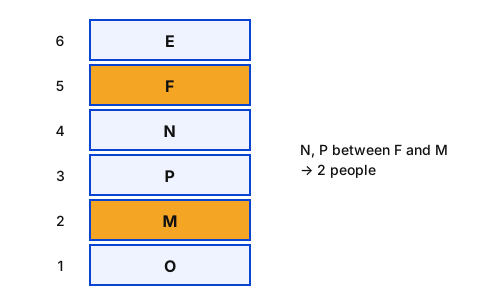
M, N, O, P, E and F live on six different floors of the same building. The lowermost floor in the building is numbered 1, the floor above it is numbered 2 and so on till the topmost floor is numbered 6. E lives on the topmost floor. Only three people live between E and M. O lives on a floor below M. N lives on an even-numbered floor. P lives on an odd-numbered floor but not on floor number 5. How many people live between F and M?
M, N, O, P, E और F एक ही इमारत की छह अलग-अलग मंज़िलों पर रहते हैं। इमारत की सबसे निचली मंज़िल की संख्या 1 है, उसके ऊपर वाली मंज़िल की संख्या 2 है और इसी प्रकार सबसे ऊपरी मंज़िल की संख्या 6 है। E सबसे ऊपरी मंज़िल पर रहता है। E और M के बीच केवल तीन व्यक्ति रहते हैं। O, M से नीचे की किसी मंज़िल पर रहता है। N एक सम-संख्या वाली मंज़िल पर रहता है। P एक विषम-संख्या वाली मंज़िल पर रहता है लेकिन मंज़िल संख्या 5 पर नहीं। F और M के बीच कितने व्यक्ति रहते हैं?
  1. ATwoदो
  2. BThreeतीन
  3. CFourचार
  4. DOneएक
Show answer

Concept: Fix the definite positions first (topmost floor, exact gaps), then use even/odd clues.

  1. E is on floor 6. Only three people between E and M → M is on floor 2.
  2. O lives below M → O is on floor 1.
  3. N is on an even floor → only floor 4 is left among even floors, so N = 4.
  4. P is on an odd floor but not 5 → P = 3. The remaining person F is on floor 5.
  5. Between F (5) and M (2) live N and P → two people.

Trick: In floor puzzles, "only three between" the top floor and X pins X to floor 2 at once – start from such exact-gap clues.

Answer: (A) Two

अवधारणा: पहले निश्चित स्थितियाँ (सबसे ऊपरी मंज़िल, सटीक अंतर) तय करें, फिर सम/विषम संकेत लगाएँ।

  1. E छठी मंज़िल पर है। E और M के बीच केवल तीन लोग → M दूसरी मंज़िल पर।
  2. O, M से नीचे रहता है → O पहली मंज़िल पर।
  3. N सम मंज़िल पर → सम मंज़िलों में केवल 4 बची, अतः N = 4।
  4. P विषम मंज़िल पर पर 5 पर नहीं → P = 3। बचा हुआ F पाँचवीं मंज़िल पर।
  5. F (5) और M (2) के बीच N और P रहते हैं → दो लोग।

ट्रिक: फ्लोर पज़ल में सबसे ऊपरी मंज़िल और X के बीच "केवल तीन लोग" X को तुरंत मंज़िल 2 पर रख देता है – ऐसे सटीक-अंतर वाले संकेतों से शुरू करें।

उत्तर: (A) दो (Two)

RRB NTPC Graduate CBT 1General Intelligence and ReasoningFloor puzzleRRB NTPC Graduate CBT 1 2025 · 18 Mar Shift 1 →
Q6463.
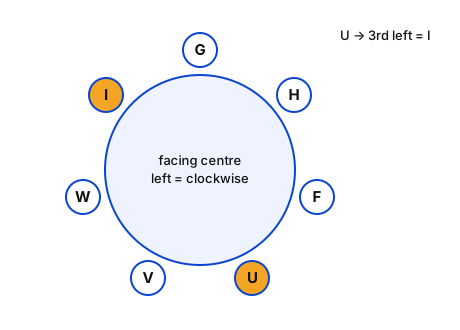
Seven people F, G, H, I, U, V, and W are sitting around a circular table facing the centre of the table. V sits fourth to the left of G. Only three people sit between F and I when counted from the right of I. H sits to the immediate right of F. W is an immediate neighbour of I as well as V. Who sits third to the left of U?
सात व्यक्ति F, G, H, I, U, V और W एक गोल मेज़ के चारों ओर मेज़ के केंद्र की ओर मुख करके बैठे हैं। V, G के बाईं ओर चौथे स्थान पर बैठा है। I के दाईं ओर से गिनने पर F और I के बीच केवल तीन व्यक्ति बैठे हैं। H, F के ठीक दाईं ओर बैठा है। W, I और V दोनों का निकटतम पड़ोसी है। U के बाईं ओर तीसरे स्थान पर कौन बैठा है?
  1. AW
  2. BI
  3. CV
  4. DG
Show answer

Concept: Facing the centre, "left" means clockwise and "right" means anticlockwise.

  1. Place G; V is 4th to the left (clockwise) of G.
  2. "Three between F and I counted from the right of I" → F is 4th to the right (anticlockwise) of I. W is next to both I and V, so W sits between V and I; this gives I next to W, and F four places anticlockwise from I.
  3. H is to the immediate right of F; the last vacant seat, between F and V, goes to U.
  4. Final clockwise order: G, H, F, U, V, W, I. Third to the left (clockwise) of U → V, W, I → I.

Trick: Fix the "immediate neighbour of two people" clue (W between V and I) early – it kills the alternative arrangement.

Answer: (B) I

अवधारणा: केंद्र की ओर मुख होने पर "बायाँ" = दक्षिणावर्त (clockwise) और "दायाँ" = वामावर्त।

  1. G रखें; V, G के बाएँ (clockwise) चौथे स्थान पर।
  2. "I के दाएँ से गिनने पर F और I के बीच तीन लोग" → F, I के दाएँ (anticlockwise) चौथे स्थान पर। W, I और V दोनों का पड़ोसी है, अतः W, V और I के बीच बैठा है।
  3. H, F के तुरंत दाएँ है; अंतिम खाली सीट (F और V के बीच) U की है।
  4. अंतिम दक्षिणावर्त क्रम: G, H, F, U, V, W, I। U के बाएँ तीसरा → V, W, I → I।

ट्रिक: "दो लोगों का तुरंत पड़ोसी" वाला संकेत (W, V और I के बीच) पहले लगाएँ – यह वैकल्पिक व्यवस्था को खत्म कर देता है।

उत्तर: (B) I

RRB NTPC Graduate CBT 1General Intelligence and ReasoningCircular seatingRRB NTPC Graduate CBT 1 2025 · 18 Mar Shift 1 →
Q6464.
Based on the English alphabetical order, three of the following four letter cluster pairs are alike in a certain way and thus form a group. Which is the one that does not belong to that group?
(Note: The odd man out is not based on the number of consonants/vowels or their position in the letter cluster)
अंग्रेज़ी वर्णमाला क्रम के आधार पर, निम्नलिखित चार अक्षर-समूह युग्मों में से तीन एक निश्चित प्रकार से समान हैं और इस प्रकार एक समूह बनाते हैं। वह कौन-सा है जो उस समूह से संबंधित नहीं है?
(नोट: असंगत का चयन व्यंजनों/स्वरों की संख्या या अक्षर-समूह में उनकी स्थिति के आधार पर नहीं किया गया है)
  1. AFI-JM
  2. BLO-NQ
  3. CRU-TW
  4. DDG-FI
Show answer

Concept: Check the gap inside each cluster and the gap between the two clusters.

  1. LO–NQ: L+3=O, L+2=N, N+3=Q → pattern (+3, +2, +3).
  2. RU–TW: R+3=U, R+2=T, T+3=W → (+3, +2, +3).
  3. DG–FI: D+3=G, D+2=F, F+3=I → (+3, +2, +3).
  4. FI–JM: F+3=I but F+4=J (J+3=M) → the second cluster starts 4 ahead, not 2 → odd one out.

Trick: Write positions (F6 I9 J10 M13 vs L12 O15 N14 Q17) – the jump between first letters (6→10 vs 12→14) exposes the odd pair.

Answer: (A) FI-JM

अवधारणा: हर समूह के भीतर का अंतर और दोनों समूहों के बीच का अंतर जाँचें।

  1. LO–NQ: L+3=O, L+2=N, N+3=Q → पैटर्न (+3, +2, +3)।
  2. RU–TW: R+3=U, R+2=T, T+3=W → (+3, +2, +3)।
  3. DG–FI: D+3=G, D+2=F, F+3=I → (+3, +2, +3)।
  4. FI–JM: F+3=I पर F+4=J (J+3=M) → दूसरा समूह 2 नहीं बल्कि 4 आगे से शुरू होता है → विषम।

ट्रिक: स्थान लिखें (F6 I9 J10 M13 बनाम L12 O15 N14 Q17) – पहले अक्षरों के बीच की छलाँग (6→10 बनाम 12→14) विषम जोड़ी दिखा देती है।

उत्तर: (A) FI-JM

RRB NTPC Graduate CBT 1General Intelligence and ReasoningLetter cluster odd one outRRB NTPC Graduate CBT 1 2025 · 18 Mar Shift 1 →
Q6465.
In a certain code language,
A + B means ‘A is the father of B’
A – B means ‘A is the wife of B’
A × B means ‘A is the sister of B’
A ÷ B means ‘A is the mother of B’.
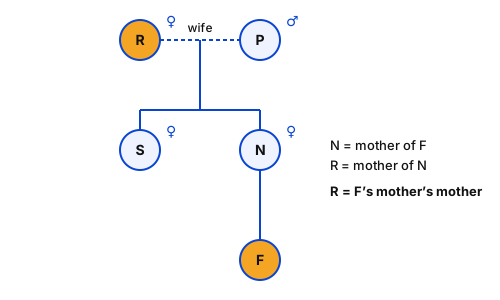
Based on the above, how is R related to F if ‘R – P + S × N ÷ F'?
एक निश्चित कूट भाषा में,
A + B का अर्थ है ‘A, B का पिता है’
A – B का अर्थ है ‘A, B की पत्नी है’
A × B का अर्थ है ‘A, B की बहन है’
A ÷ B का अर्थ है ‘A, B की माँ है’।
उपर्युक्त के आधार पर, यदि ‘R – P + S × N ÷ F' है, तो R का F से क्या संबंध है?
  1. ASisterबहन
  2. BMother’s motherमाँ की माँ
  3. CFather’s motherपिता की माँ
  4. DFather’s sisterपिता की बहन
Show answer

Concept: Decode each symbol step by step and build the family tree.

  1. R – P: R is the wife of P. P + S: P is the father of S → R is the mother of S.
  2. S × N: S is the sister of N → N is also a child of P and R.
  3. N ÷ F: N is the mother of F.
  4. R is the mother of N, and N is the mother of F → R is F's mother's mother (maternal grandmother).

Trick: Only the chain R → N → F matters: mother of mother = mother's mother. Gender of F is not needed.

Answer: (B) Mother's mother

अवधारणा: हर प्रतीक को क्रम से डिकोड कर परिवार वृक्ष बनाएँ।

  1. R – P: R, P की पत्नी। P + S: P, S का पिता → R, S की माता।
  2. S × N: S, N की बहन → N भी P और R की संतान।
  3. N ÷ F: N, F की माता।
  4. R, N की माता और N, F की माता → R, F की माँ की माँ (नानी)।

ट्रिक: केवल R → N → F की कड़ी मायने रखती है: माँ की माँ = नानी। F का लिंग ज़रूरी नहीं।

उत्तर: (B) Mother's mother (माँ की माँ)

RRB NTPC Graduate CBT 1General Intelligence and ReasoningBlood relations – codedRRB NTPC Graduate CBT 1 2025 · 18 Mar Shift 1 →
Q6466.
What should come in place of ‘?’ in the given series?
91 93 96 101 108 ?
दी गई शृंखला में ‘?’ के स्थान पर क्या आना चाहिए?
91 93 96 101 108 ?
  1. A121
  2. B119
  3. C117
  4. D123
Show answer

Concept: Look at the differences between consecutive terms.

  1. 93−91=2, 96−93=3, 101−96=5, 108−101=7.
  2. Differences 2, 3, 5, 7 are consecutive prime numbers; the next prime is 11.
  3. ?=108+11=119.

Trick: Differences 2, 3, 5, 7 → think primes immediately; the next is always 11.

Answer: (B) 119

अवधारणा: क्रमागत पदों के अंतर देखें।

  1. 93−91=2, 96−93=3, 101−96=5, 108−101=7।
  2. अंतर 2, 3, 5, 7 क्रमागत अभाज्य संख्याएँ हैं; अगली अभाज्य 11।
  3. ?=108+11=119।

ट्रिक: अंतर 2, 3, 5, 7 दिखे → तुरंत अभाज्य संख्याएँ सोचें; अगली हमेशा 11।

उत्तर: (B) 119

RRB NTPC Graduate CBT 1General Intelligence and ReasoningNumber seriesRRB NTPC Graduate CBT 1 2025 · 18 Mar Shift 1 →
Q6467.
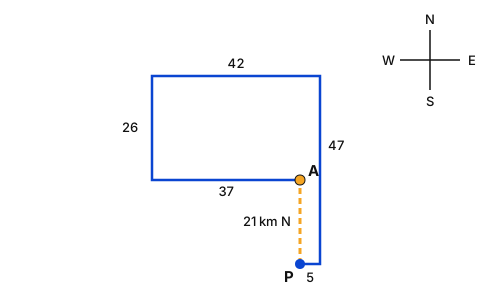
Kartikeyan starts from Point A and drives 37 km towards West. He then takes a right turn, drives 26 km, turns right and drives 42 km. He then takes a right turn and drives 47 km. He takes a final right turn, drives 5 km and stops at Point P. How far (shortest distance) and towards which direction should he drive in order to reach Point A again? (All turns are 90 degrees turns only unless specified)
कार्तिकेयन बिंदु A से चलना शुरू करता है और पश्चिम की ओर 37 km गाड़ी चलाता है। फिर वह दाएँ मुड़ता है, 26 km चलता है, दाएँ मुड़ता है और 42 km चलता है। फिर वह दाएँ मुड़ता है और 47 km चलता है। वह अंतिम बार दाएँ मुड़ता है, 5 km चलता है और बिंदु P पर रुकता है। बिंदु A पर पुनः पहुँचने के लिए उसे कितनी दूर (न्यूनतम दूरी) और किस दिशा में गाड़ी चलानी चाहिए? (जब तक अन्यथा निर्दिष्ट न हो, सभी मोड़ केवल 90 डिग्री के मोड़ हैं)
  1. A21 km to the North21 km उत्तर की ओर
  2. B20 km to the South20 km दक्षिण की ओर
  3. C21 km to the South21 km दक्षिण की ओर
  4. D20 km to the North20 km उत्तर की ओर
Show answer

Concept: Track the position with coordinates; every right turn rotates the heading clockwise (W → N → E → S → W).

  1. Start A = (0, 0). West 37 → (−37, 0).
  2. Right → North 26 → (−37, 26). Right → East 42 → (5, 26).
  3. Right → South 47 → (5, −21). Right → West 5 → P = (0, −21).
  4. P is exactly 21 km south of A, so he must drive 21 km to the North.

Trick: Net East–West: −37+42−5=0; net North–South: 26−47=−21. Zero in one direction means a straight-line answer.

Answer: (A) 21 km to the North

अवधारणा: निर्देशांकों से स्थिति ट्रैक करें; हर दायाँ मोड़ दिशा को दक्षिणावर्त घुमाता है (W → N → E → S → W)।

  1. प्रारंभ A = (0, 0)। पश्चिम 37 → (−37, 0)।
  2. दाएँ → उत्तर 26 → (−37, 26)। दाएँ → पूर्व 42 → (5, 26)।
  3. दाएँ → दक्षिण 47 → (5, −21)। दाएँ → पश्चिम 5 → P = (0, −21)।
  4. P, A से ठीक 21 km दक्षिण में है, अतः उसे 21 km उत्तर की ओर चलना होगा।

ट्रिक: कुल पूर्व–पश्चिम: −37+42−5=0; कुल उत्तर–दक्षिण: 26−47=−21। एक दिशा में शून्य = सीधी रेखा वाला उत्तर।

उत्तर: (A) 21 km उत्तर की ओर

RRB NTPC Graduate CBT 1General Intelligence and ReasoningDirection and distanceRRB NTPC Graduate CBT 1 2025 · 18 Mar Shift 1 →
Q6468.
Read the given statements and conclusions carefully. You have to take the given statements to be true even if they seem to be at variance from commonly known facts. You have to decide which conclusion/s logically follow/s from the given statements. Statements:
All vultures are sparrows. Some sparrows are crows. No crow is a pigeon.
Conclusions:
(I) Some vultures are crows.
(II) No sparrow is a pigeon.
दिए गए कथनों और निष्कर्षों को ध्यानपूर्वक पढ़िए। आपको दिए गए कथनों को सत्य मानना है, भले ही वे सामान्यतः ज्ञात तथ्यों से भिन्न प्रतीत होते हों। आपको निर्णय करना है कि कौन-सा/कौन-से निष्कर्ष दिए गए कथनों का तार्किक रूप से अनुसरण करता है/करते हैं। कथन:
सभी गिद्ध गौरैया हैं। कुछ गौरैया कौए हैं। कोई कौआ कबूतर नहीं है।
निष्कर्ष:
(I) कुछ गिद्ध कौए हैं।
(II) कोई गौरैया कबूतर नहीं है।
  1. AOnly conclusion II follows.केवल निष्कर्ष II अनुसरण करता है।
  2. BOnly conclusion I follows.केवल निष्कर्ष I अनुसरण करता है।
  3. CNeither conclusion I nor II follows.न तो निष्कर्ष I और न ही II अनुसरण करता है।
  4. DBoth conclusions I and II follow.निष्कर्ष I और II दोनों अनुसरण करते हैं।
Show answer

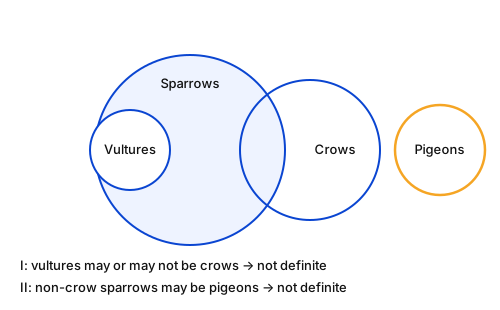
Concept: A conclusion follows only if it is true in every possible Venn diagram of the statements.

  1. All vultures are sparrows; some sparrows are crows – the crow-part of sparrows may lie entirely outside vultures, so "Some vultures are crows" is not definite.
  2. No crow is a pigeon tells us nothing about non-crow sparrows – they may be pigeons, so "No sparrow is a pigeon" is not definite.
  3. Neither conclusion follows.

Trick: "Some B are C" plus "No C is D" never gives a definite statement about all of B – only "Some B are not D".

Answer: (C) Neither conclusion I nor II follows.

अवधारणा: निष्कर्ष तभी अनुसरण करता है जब वह कथनों के हर संभव Venn आरेख में सत्य हो।

  1. सभी गिद्ध गौरैया हैं; कुछ गौरैया कौवे हैं – गौरैया का कौवा-भाग गिद्धों से पूरी तरह बाहर हो सकता है, अतः "कुछ गिद्ध कौवे हैं" निश्चित नहीं।
  2. "कोई कौवा कबूतर नहीं" गैर-कौवा गौरैयों के बारे में कुछ नहीं कहता – वे कबूतर हो सकती हैं, अतः "कोई गौरैया कबूतर नहीं" निश्चित नहीं।
  3. कोई निष्कर्ष अनुसरण नहीं करता।

ट्रिक: "कुछ B, C हैं" + "कोई C, D नहीं" से पूरे B के बारे में निश्चित कथन कभी नहीं मिलता – केवल "कुछ B, D नहीं हैं"।

उत्तर: (C) न तो निष्कर्ष I न II अनुसरण करता है।

RRB NTPC Graduate CBT 1General Intelligence and ReasoningSyllogismRRB NTPC Graduate CBT 1 2025 · 18 Mar Shift 1 →
Q6469.
What should come in place of the question mark (?) in the given series?
23 24 28 37 53 ?
दी गई शृंखला में प्रश्नचिह्न (?) के स्थान पर क्या आना चाहिए?
23 24 28 37 53 ?
  1. A82
  2. B76
  3. C78
  4. D80
Show answer

Concept: Differences between consecutive terms often form squares.

  1. 24−23=1, 28−24=4, 37−28=9, 53−37=16.
  2. Differences are 12,22,32,42; next difference =52=25.
  3. ?=53+25=78.

Trick: Differences 1, 4, 9, 16 → perfect squares; add 25 next.

Answer: (C) 78

अवधारणा: क्रमागत पदों के अंतर प्रायः वर्ग संख्याएँ बनाते हैं।

  1. 24−23=1, 28−24=4, 37−28=9, 53−37=16।
  2. अंतर 12,22,32,42 हैं; अगला अंतर =52=25।
  3. ?=53+25=78।

ट्रिक: अंतर 1, 4, 9, 16 → पूर्ण वर्ग; आगे 25 जोड़ें।

उत्तर: (C) 78

RRB NTPC Graduate CBT 1General Intelligence and ReasoningNumber seriesRRB NTPC Graduate CBT 1 2025 · 18 Mar Shift 1 →
Q6470.
Below are given two sets of numbers. In each set of numbers, a certain mathematical operation on the first number results in the second number. Similarly, certain
mathematical operations on the second number results in the third number and so on. Which of the given options follows the same set of operations as in question? (NOTE – A two/three-digit number cannot be broken into individual digits for operations, e.g., if 37 is followed by 10, the operation cannot be 3+7 as a two-digit number cannot be broken into individual digits.)
12 – 36 – 51 – 63; 20 – 60 – 75 – 87
नीचे संख्याओं के दो समुच्चय दिए गए हैं। संख्याओं के प्रत्येक समुच्चय में, पहली संख्या पर एक निश्चित गणितीय संक्रिया करने से दूसरी संख्या प्राप्त होती है। इसी प्रकार, दूसरी संख्या पर कुछ
गणितीय संक्रियाएँ करने से तीसरी संख्या प्राप्त होती है, और इसी प्रकार आगे। दिए गए विकल्पों में से कौन-सा प्रश्न के समान संक्रियाओं के समुच्चय का अनुसरण करता है? (नोट – संक्रियाओं के लिए दो/तीन-अंकीय संख्या को अलग-अलग अंकों में नहीं तोड़ा जा सकता, उदाहरण के लिए, यदि 37 के बाद 10 आता है, तो संक्रिया 3+7 नहीं हो सकती क्योंकि दो-अंकीय संख्या को अलग-अलग अंकों में नहीं तोड़ा जा सकता।)
12 – 36 – 51 – 63; 20 – 60 – 75 – 87
  1. A14 – 42 – 57 – 79
  2. B25 – 75 – 90 – 102
  3. C16 – 48 – 63 – 85
  4. D10 – 30 – 55 – 67
Show answer

Concept: Find the operation between each pair of consecutive numbers and apply the same chain to the options.

  1. 12 → 36: ×3; 36 → 51: +15; 51 → 63: +12.
  2. 20 → 60: ×3; 60 → 75: +15; 75 → 87: +12. Chain: ×3, +15, +12.
  3. Option B: 25×3=75, 75+15=90, 90+12=102 ✓.
  4. A: 57+12=69≠79; C: 63+12=75≠85; D: 30+15=45≠55.

Trick: Check the last step first – only option B ends with "+12".

Answer: (B) 25 – 75 – 90 – 102

अवधारणा: हर क्रमागत जोड़ी के बीच की संक्रिया निकालें और वही श्रृंखला विकल्पों पर लगाएँ।

  1. 12 → 36: ×3; 36 → 51: +15; 51 → 63: +12।
  2. 20 → 60: ×3; 60 → 75: +15; 75 → 87: +12। श्रृंखला: ×3, +15, +12।
  3. विकल्प B: 25×3=75, 75+15=90, 90+12=102 ✓।
  4. A: 57+12=69≠79; C: 63+12=75≠85; D: 30+15=45≠55।

ट्रिक: पहले अंतिम चरण जाँचें – केवल विकल्प B "+12" पर समाप्त होता है।

उत्तर: (B) 25 – 75 – 90 – 102

RRB NTPC Graduate CBT 1General Intelligence and ReasoningNumber operations analogyRRB NTPC Graduate CBT 1 2025 · 18 Mar Shift 1 →
Q6471.
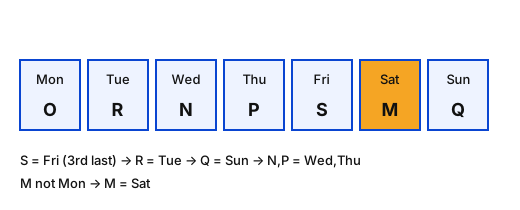
Each of M, N, O, P, Q, R and S has an flight on a different day of a week starting from Monday and ending on Sunday of the same week. S has flight on third last day of the week. Only two people have flight between R and S. Only four people have flight between R and Q. P has flight immediately after N. M doesn’t have flight on Monday. On which day does M have a flight?
M, N, O, P, Q, R और S में से प्रत्येक की एक ही सप्ताह में सोमवार से शुरू होकर रविवार को समाप्त होने वाले सप्ताह के अलग-अलग दिन उड़ान (flight) है। S की उड़ान सप्ताह के अंत से तीसरे दिन है। R और S के बीच केवल दो व्यक्तियों की उड़ान है। R और Q के बीच केवल चार व्यक्तियों की उड़ान है। P की उड़ान N के ठीक बाद है। M की उड़ान सोमवार को नहीं है। M की उड़ान किस दिन है?
  1. AWednesdayबुधवार
  2. BSundayरविवार
  3. CSaturdayशनिवार
  4. DFridayशुक्रवार
Show answer

Concept: Number the days Mon = 1 … Sun = 7 and place the fixed person first.

  1. S is on the third last day → Friday (5).
  2. Two people between R and S → R is on Tuesday (2) (Monday-side of 8 does not exist).
  3. Four between R and Q → Q on Sunday (7).
  4. P is immediately after N: the free consecutive pair is Wed–Thu → N = Wed, P = Thu. Left: Mon and Sat; M is not on Monday → M = Saturday, O = Monday.

Trick: "Third last day" of Mon–Sun is Friday; check the two-sided possibilities but one side always falls outside the week.

Answer: (C) Saturday

अवधारणा: दिनों को Mon = 1 … Sun = 7 क्रमांक दें और पहले निश्चित व्यक्ति को रखें।

  1. S अंतिम से तीसरे दिन → शुक्रवार (5)।
  2. R और S के बीच दो लोग → R मंगलवार (2) को (दूसरी ओर दिन 8 नहीं होता)।
  3. R और Q के बीच चार → Q रविवार (7) को।
  4. P, N के तुरंत बाद: खाली लगातार जोड़ी Wed–Thu → N = Wed, P = Thu। बचे Mon और Sat; M सोमवार को नहीं → M = शनिवार, O = सोमवार।

ट्रिक: Mon–Sun में "अंतिम से तीसरा दिन" शुक्रवार; दोनों ओर की संभावनाएँ जाँचें, एक ओर हमेशा सप्ताह से बाहर पड़ती है।

उत्तर: (C) Saturday (शनिवार)

RRB NTPC Graduate CBT 1General Intelligence and ReasoningDay-wise schedulingRRB NTPC Graduate CBT 1 2025 · 18 Mar Shift 1 →
Q6472.
Select the set in which the numbers are related in the same way as are the numbers of the following sets.
(NOTE : Operations should be performed on the whole numbers, without breaking down the numbers into their constituent digits. E.g. 13 – Operations on 13 such as adding / subtracting / multiplying etc. to 13 can be performed. Breaking down 13 into 1 and 3 and then performing mathematical operations on 1 and 3 is not allowed.)
(7,18,39)
(3,19,28)
उस समुच्चय का चयन कीजिए जिसमें संख्याएँ उसी प्रकार संबंधित हैं जिस प्रकार निम्नलिखित समुच्चयों की संख्याएँ संबंधित हैं।
(नोट : संक्रियाएँ पूर्ण संख्याओं पर की जानी चाहिए, संख्याओं को उनके घटक अंकों में तोड़े बिना। उदाहरण के लिए 13 – 13 पर संक्रियाएँ जैसे 13 में जोड़ना / घटाना / गुणा करना आदि की जा सकती हैं। 13 को 1 और 3 में तोड़कर फिर 1 और 3 पर गणितीय संक्रियाएँ करने की अनुमति नहीं है।)
(7,18,39)
(3,19,28)
  1. A(16,3,61)
  2. B(23,4,73)
  3. C(4,28,20)
  4. D(10,5,55)
Show answer

Concept: Find one rule linking the three numbers of each given set, then test the options.

  1. (7, 18, 39): 7×3+18=21+18=39 ✓
  2. (3, 19, 28): 3×3+19=9+19=28 ✓ Rule: 3×first+second=third.
  3. (23, 4, 73): 23×3+4=69+4=73 ✓
  4. A: 48+3=51≠61; C: 12+28=40≠20; D: 30+5=35≠55.

Trick: Third − second gives 21 and 9 → both are 3× the first number.

Answer: (B) (23,4,73)

अवधारणा: दिए गए समुच्चयों की तीनों संख्याओं को जोड़ने वाला नियम निकालें, फिर विकल्प जाँचें।

  1. (7, 18, 39): 7×3+18=21+18=39 ✓
  2. (3, 19, 28): 3×3+19=9+19=28 ✓ नियम: 3×पहली+दूसरी=तीसरी।
  3. (23, 4, 73): 23×3+4=69+4=73 ✓
  4. A: 48+3=51≠61; C: 12+28=40≠20; D: 30+5=35≠55।

ट्रिक: तीसरी − दूसरी = 21 और 9 → दोनों पहली संख्या के 3 गुना हैं।

उत्तर: (B) (23,4,73)

RRB NTPC Graduate CBT 1General Intelligence and ReasoningNumber set analogyRRB NTPC Graduate CBT 1 2025 · 18 Mar Shift 1 →
Q6473.
This question is based on the five, three-digit numbers given below.
(Left) 564 487 769 478 546 (Right)
(Example- 697 – First digit = 6, second digit = 9 and third digit = 7)
NOTE - All operations to be done from left to right.
What will be the resultant if the second digit of the second highest number is added to the third digit of the lowest number?
यह प्रश्न नीचे दी गई पाँच तीन-अंकीय संख्याओं पर आधारित है।
(बाएँ) 564 487 769 478 546 (दाएँ)
(उदाहरण- 697 – पहला अंक = 6, दूसरा अंक = 9 और तीसरा अंक = 7)
नोट - सभी संक्रियाएँ बाएँ से दाएँ की जानी हैं।
यदि दूसरी सबसे बड़ी संख्या के दूसरे अंक को सबसे छोटी संख्या के तीसरे अंक में जोड़ा जाए, तो परिणाम क्या होगा?
  1. A10
  2. B11
  3. C12
  4. D14
Show answer

Concept: Rank the numbers first, then pick the required digits.

  1. Numbers: 564, 487, 769, 478, 546. Descending: 769 > 564 > 546 > 487 > 478.
  2. Second highest = 564 → second digit = 6.
  3. Lowest = 478 → third digit = 8.
  4. 6+8=14.

Trick: 487 vs 478 – compare the tens digit; 478 is the lowest, a deliberate near-miss pair.

Answer: (D) 14

अवधारणा: पहले संख्याओं को क्रम दें, फिर आवश्यक अंक चुनें।

  1. संख्याएँ: 564, 487, 769, 478, 546। अवरोही: 769 > 564 > 546 > 487 > 478।
  2. दूसरी सबसे बड़ी = 564 → दूसरा अंक = 6।
  3. सबसे छोटी = 478 → तीसरा अंक = 8।
  4. 6+8=14।

ट्रिक: 487 बनाम 478 – दहाई का अंक देखें; 478 सबसे छोटी है, जानबूझकर रखी गई मिलती-जुलती जोड़ी।

उत्तर: (D) 14

RRB NTPC Graduate CBT 1General Intelligence and ReasoningNumber arrangementRRB NTPC Graduate CBT 1 2025 · 18 Mar Shift 1 →
Q6474.
Based on the English alphabetical order, three of the following four are alike in a certain way and thus form a group. Which is the one that does not belong to that group? (Note: The odd one out is not based on the number of consonants/vowels or their position in the letter cluster)
अंग्रेज़ी वर्णमाला क्रम के आधार पर, निम्नलिखित चार में से तीन एक निश्चित प्रकार से समान हैं और इस प्रकार एक समूह बनाते हैं। वह कौन-सा है जो उस समूह से संबंधित नहीं है? (नोट: असंगत का चयन व्यंजनों/स्वरों की संख्या या अक्षर-समूह में उनकी स्थिति के आधार पर नहीं किया गया है)
  1. APMJ
  2. BLIF
  3. CURQ
  4. DZWT
Show answer

Concept: Check the gaps between consecutive letters in each cluster.

  1. PMJ: P(16) → M(13) → J(10): −3, −3.
  2. LIF: L(12) → I(9) → F(6): −3, −3.
  3. ZWT: Z(26) → W(23) → T(20): −3, −3.
  4. URQ: U(21) → R(18) → Q(17): −3, −1 → does not follow.

Trick: R to Q is just one step back – a "−3, −3" pattern needs U → R → O, not Q.

Answer: (C) URQ

अवधारणा: हर समूह में क्रमागत अक्षरों के बीच का अंतर जाँचें।

  1. PMJ: P(16) → M(13) → J(10): −3, −3।
  2. LIF: L(12) → I(9) → F(6): −3, −3।
  3. ZWT: Z(26) → W(23) → T(20): −3, −3।
  4. URQ: U(21) → R(18) → Q(17): −3, −1 → पैटर्न नहीं।

ट्रिक: R से Q सिर्फ़ एक कदम पीछे है – "−3, −3" पैटर्न में U → R → O होना चाहिए, Q नहीं।

उत्तर: (C) URQ

RRB NTPC Graduate CBT 1General Intelligence and ReasoningLetter cluster odd one outRRB NTPC Graduate CBT 1 2025 · 18 Mar Shift 1 →
Q6475.
This question is based on the five, three-digit numbers given below. (Left) 412 368 457 283 396 (Right)
(Example- 697 – First digit = 6, second digit = 9 and third digit = 7) NOTE - All operations to be done from left to right.
What will be the resultant if third digit of the highest number is added to the second digit of lowest number ?
यह प्रश्न नीचे दी गई पाँच तीन-अंकीय संख्याओं पर आधारित है। (बाएँ) 412 368 457 283 396 (दाएँ)
(उदाहरण- 697 – पहला अंक = 6, दूसरा अंक = 9 और तीसरा अंक = 7) नोट - सभी संक्रियाएँ बाएँ से दाएँ की जानी हैं।
यदि सबसे बड़ी संख्या के तीसरे अंक को सबसे छोटी संख्या के दूसरे अंक में जोड़ा जाए, तो परिणाम क्या होगा?
  1. A11
  2. B15
  3. C13
  4. D9
Show answer

Concept: Identify the highest and lowest numbers, then pick the asked digits.

  1. Numbers: 412, 368, 457, 283, 396. Highest = 457, lowest = 283.
  2. Third digit of 457 = 7; second digit of 283 = 8.
  3. 7+8=15.

Trick: Compare hundreds digits first – only 4xx numbers can be highest (457 > 412) and only 283 starts with 2.

Answer: (B) 15

अवधारणा: सबसे बड़ी और सबसे छोटी संख्या पहचानें, फिर पूछे गए अंक चुनें।

  1. संख्याएँ: 412, 368, 457, 283, 396। सबसे बड़ी = 457, सबसे छोटी = 283।
  2. 457 का तीसरा अंक = 7; 283 का दूसरा अंक = 8।
  3. 7+8=15।

ट्रिक: पहले सैकड़े का अंक देखें – केवल 4xx संख्याएँ सबसे बड़ी हो सकती हैं (457 > 412) और केवल 283, 2 से शुरू होती है।

उत्तर: (B) 15

RRB NTPC Graduate CBT 1General Intelligence and ReasoningNumber arrangementRRB NTPC Graduate CBT 1 2025 · 18 Mar Shift 1 →
Q6476.
In this question, a question is followed by two statements numbered (I) and (II). You have to decide whether the data provided in the statements are sufficient to answer the question. Read both the statements and decide the appropriate answer.
Q. Anita, Bhavna, Charu, Deepa, and Esha, each scored different marks. Who scored the lowest marks?
(I) Bhavna scored more than Anita but less than Charu.
(II) Deepa scored more than Anita but less than Bhavna.
इस प्रश्न में, एक प्रश्न के बाद (I) और (II) क्रमांकित दो कथन दिए गए हैं। आपको यह निर्णय करना है कि कथनों में दिए गए आँकड़े प्रश्न का उत्तर देने के लिए पर्याप्त हैं या नहीं। दोनों कथनों को पढ़िए और उचित उत्तर का चयन कीजिए।
प्रश्न. अनीता, भावना, चारु, दीपा और ईशा, प्रत्येक ने अलग-अलग अंक प्राप्त किए। सबसे कम अंक किसने प्राप्त किए?
(I) भावना ने अनीता से अधिक लेकिन चारु से कम अंक प्राप्त किए।
(II) दीपा ने अनीता से अधिक लेकिन भावना से कम अंक प्राप्त किए।
  1. ABoth statements I and II together (and not statement I alone or statement II alone) are sufficient to answer the questionकथन I और II दोनों मिलकर (और न अकेला कथन I या अकेला कथन II) प्रश्न का उत्तर देने के लिए पर्याप्त हैं
  2. BBoth statements I and II together are NOT sufficient to answer the questionकथन I और II दोनों मिलकर भी प्रश्न का उत्तर देने के लिए पर्याप्त नहीं हैं
  3. CData in Statement II alone is sufficient to answer the question while data in Statement I is notअकेले कथन II के आँकड़े प्रश्न का उत्तर देने के लिए पर्याप्त हैं जबकि कथन I के आँकड़े पर्याप्त नहीं हैं
  4. DData in Statement I alone is sufficient to answer the question while data in Statement II is notअकेले कथन I के आँकड़े प्रश्न का उत्तर देने के लिए पर्याप्त हैं जबकि कथन II के आँकड़े पर्याप्त नहीं हैं
Show answer

Concept: A statement set is sufficient only if it pins down a unique answer.

  1. Statement I: Charu > Bhavna > Anita – nothing about Deepa or Esha; not sufficient.
  2. Statement II: Bhavna > Deepa > Anita – nothing about Charu or Esha; not sufficient.
  3. Together: Charu > Bhavna > Deepa > Anita, but Esha's position is still unknown – she could be below Anita. So even both together are not sufficient.

Trick: Count the names – five people, but Esha appears in neither statement, so the lowest can never be fixed.

Answer: (B) Both statements I and II together are NOT sufficient to answer the question

अवधारणा: कथन तभी पर्याप्त हैं जब वे एक अद्वितीय उत्तर तय करें।

  1. कथन I: चारु > भावना > अनीता – दीपा या ईशा के बारे में कुछ नहीं; अपर्याप्त।
  2. कथन II: भावना > दीपा > अनीता – चारु या ईशा के बारे में कुछ नहीं; अपर्याप्त।
  3. दोनों मिलाकर: चारु > भावना > दीपा > अनीता, पर ईशा की स्थिति अब भी अज्ञात – वह अनीता से नीचे हो सकती है। अतः दोनों मिलकर भी अपर्याप्त।

ट्रिक: नाम गिनें – पाँच लोग, पर ईशा किसी कथन में नहीं है, इसलिए सबसे कम अंक वाला कभी तय नहीं हो सकता।

उत्तर: (B) कथन I और II दोनों मिलकर भी प्रश्न का उत्तर देने के लिए पर्याप्त नहीं हैं

RRB NTPC Graduate CBT 1General Intelligence and ReasoningData sufficiencyRRB NTPC Graduate CBT 1 2025 · 18 Mar Shift 1 →
Q6477.
Which of the given letter-number clusters will replace the question mark (?) in the following series to make it logically complete?
LEF 11 ATU 22 PIJ 33 EXY 44 ?
दिए गए अक्षर-संख्या समूहों में से कौन-सा निम्नलिखित शृंखला में प्रश्नचिह्न (?) के स्थान पर आकर उसे तार्किक रूप से पूर्ण करेगा?
LEF 11 ATU 22 PIJ 33 EXY 44 ?
  1. ATMN 55
  2. BJDY 56
  3. CLIE 55
  4. DKGO 66
Show answer

Concept: Treat letters and numbers separately; use alphabet positions with wrap-around after Z.

  1. Numbers: 11, 22, 33, 44 → next 55. This leaves options A and C.
  2. First letters L(12) → A(1) → P(16) → E(5): each is +15 (wrapping past 26: 12+15=27→1, 16+15=31→5). Next: 5+15=20 → T.
  3. Second letters E(5) → T(20) → I(9) → X(24): also +15; next 24+15=39→13 → M. Third letter is always second +1 → N.
  4. Required cluster: TMN 55.

Trick: +15 forward = −11 backward; and in every term the last two letters are consecutive (EF, TU, IJ, XY) – only "TMN" and "LIE" are left, and LIE breaks that.

Answer: (A) TMN 55

अवधारणा: अक्षर और संख्या अलग-अलग देखें; Z के बाद वापस A से गिनते हुए वर्णमाला स्थान लें।

  1. संख्याएँ: 11, 22, 33, 44 → अगली 55। विकल्प A और C बचे।
  2. पहले अक्षर L(12) → A(1) → P(16) → E(5): हर बार +15 (26 के बाद घूमकर: 12+15=27→1, 16+15=31→5)। अगला: 5+15=20 → T।
  3. दूसरे अक्षर E(5) → T(20) → I(9) → X(24): भी +15; अगला 24+15=39→13 → M। तीसरा अक्षर हमेशा दूसरा +1 → N।
  4. अपेक्षित समूह: TMN 55।

ट्रिक: +15 आगे = −11 पीछे; और हर पद में अंतिम दो अक्षर क्रमागत हैं (EF, TU, IJ, XY) – केवल "TMN" और "LIE" बचते हैं, और LIE यह नियम तोड़ता है।

उत्तर: (A) TMN 55

RRB NTPC Graduate CBT 1General Intelligence and ReasoningLetter-number seriesRRB NTPC Graduate CBT 1 2025 · 18 Mar Shift 1 →
Q6478.
In 2025, who was named FIFA Men’s Player of the Year at the FIFA Best Football Awards held in Doha, Qatar?
2025 में दोहा, क़तर में आयोजित FIFA Best Football Awards में किसे FIFA पुरुष वर्ष का सर्वश्रेष्ठ खिलाड़ी (FIFA Men’s Player of the Year) चुना गया?
  1. AKylian Mbappéकाइलियन एम्बाप्पे
  2. BOusmane Dembéléउस्मान डेम्बेले
  3. CLionel Messiलियोनेल मेसी
  4. DErling Haalandअर्लिंग हालैंड
Show answer

Concept: The Best FIFA Football Awards 2025 were held in Doha (Qatar) in December 2025.

  1. Ousmane Dembélé (PSG and France) was named The Best FIFA Men’s Player 2025 after PSG’s treble, including its first UEFA Champions League title.
  2. He had already won the 2025 Ballon d’Or in September 2025, so he completed the double of top individual awards.
  3. Messi (winner in 2019, 2022, 2023) and Haaland (2024 runner-up) were not the 2025 winners.

Yaad rakhein: 2025 = the year of Dembélé – Ballon d’Or + FIFA Best, both for the PSG forward.

Answer: (B) Ousmane Dembélé

अवधारणा: The Best FIFA Football Awards 2025 दिसंबर 2025 में दोहा (क़तर) में हुए।

  1. Ousmane Dembélé (PSG, फ्रांस) को PSG की ट्रेबल (पहला UEFA Champions League खिताब सहित) के बाद The Best FIFA Men’s Player 2025 चुना गया।
  2. वे सितंबर 2025 में Ballon d’Or 2025 भी जीत चुके थे – यानी दोनों बड़े व्यक्तिगत पुरस्कार।
  3. Messi (2019, 2022, 2023 विजेता) और Haaland 2025 के विजेता नहीं थे।

याद रखें: 2025 = Dembélé का साल – Ballon d’Or + FIFA Best, दोनों PSG फॉरवर्ड के नाम।

उत्तर: (B) Ousmane Dembélé

RRB NTPC Graduate CBT 1General AwarenessCurrent Affairs – Sports AwardsRRB NTPC Graduate CBT 1 2025 · 17 Mar Shift 3 →
Q6479.
In which year was the Padhe Bharat BadheBharat (PBBB) scheme launched?
पढ़े भारत बढ़े भारत (PBBB) योजना किस वर्ष शुरू की गई थी?
  1. A2014
  2. B2007
  3. C2010
  4. D2018
Show answer

Concept: Padhe Bharat Badhe Bharat (PBBB) is a sub-programme of Sarva Shiksha Abhiyan for early reading, writing and maths in Classes I–II.

  1. It was launched by the Ministry of HRD (now Education) in August 2014.
  2. Its two tracks: Early Reading & Writing with Comprehension, and Early Mathematics.
  3. 2018 is the year of Samagra Shiksha, into which such programmes were merged – a tempting wrong option.

Yaad rakhein: PBBB – 2014; Samagra Shiksha – 2018; SSA – 2001.

Answer: (A) 2014

अवधारणा: Padhe Bharat Badhe Bharat (PBBB) सर्व शिक्षा अभियान का उप-कार्यक्रम है – कक्षा I–II में पढ़ना, लिखना और गणित मज़बूत करने के लिए।

  1. इसे मानव संसाधन विकास मंत्रालय (अब शिक्षा मंत्रालय) ने अगस्त 2014 में शुरू किया।
  2. दो भाग: समझ के साथ प्रारंभिक पठन-लेखन और प्रारंभिक गणित।
  3. 2018 समग्र शिक्षा का वर्ष है, जिसमें ऐसे कार्यक्रम मिलाए गए – यह भ्रामक विकल्प है।

याद रखें: PBBB – 2014; समग्र शिक्षा – 2018; SSA – 2001।

उत्तर: (A) 2014

RRB NTPC Graduate CBT 1General AwarenessGovernment Schemes – EducationRRB NTPC Graduate CBT 1 2025 · 17 Mar Shift 3 →
Q6480.
According to Article 243Q, the level of municipality for a transitional area will be designated as a _________.
अनुच्छेद 243Q के अनुसार, संक्रमणशील क्षेत्र (transitional area) के लिए नगरपालिका का स्तर _________ के रूप में अभिहित किया जाएगा।
  1. AMunicipal Corporationनगर निगम
  2. BTownshipटाउनशिप
  3. CMunicipal Councilनगर परिषद
  4. DNagar Panchayatनगर पंचायत
Show answer

Concept: Article 243Q (74th Amendment, 1992) provides three types of municipalities according to the size of the area.

  1. Nagar Panchayat – for a transitional area (rural changing into urban).
  2. Municipal Council – for a smaller urban area; Municipal Corporation – for a larger urban area.
  3. “Township” is not a constitutional category.

Yaad rakhein: Transitional → Nagar Panchayat; Smaller urban → Council; Larger urban → Corporation.

Answer: (D) Nagar Panchayat

अवधारणा: अनुच्छेद 243Q (74वाँ संशोधन, 1992) क्षेत्र के आकार के अनुसार तीन प्रकार की नगरपालिकाएँ देता है।

  1. नगर पंचायत – संक्रमणशील क्षेत्र (ग्रामीण से शहरी बनता क्षेत्र) के लिए।
  2. नगर परिषद – छोटे शहरी क्षेत्र; नगर निगम – बड़े शहरी क्षेत्र के लिए।
  3. “Township” कोई संवैधानिक श्रेणी नहीं है।

याद रखें: संक्रमणशील → नगर पंचायत; छोटा शहरी → परिषद; बड़ा शहरी → निगम।

उत्तर: (D) Nagar Panchayat

RRB NTPC Graduate CBT 1General AwarenessPolity – Municipalities (Part IX-A)RRB NTPC Graduate CBT 1 2025 · 17 Mar Shift 3 →