Question bank

Q&A: practice questions with answers

Search questions on any topic. Filter by exam category, exam, subject and topic, try the question, then open the answer and explanation.

Courses – airGurukul

7,077 questions found.

Q6641.
If 15 men working 6 hours a day can complete a work in 20 days, how many days will 18 men working 5 hours a day take to complete the same work?
यदि 15 पुरुष प्रतिदिन 6 घंटे कार्य करके एक कार्य को 20 दिनों में पूरा कर सकते हैं, तो 18 पुरुष प्रतिदिन 5 घंटे कार्य करके उसी कार्य को पूरा करने में कितने दिन लेंगे?
  1. A15
  2. B24
  3. C18
  4. D20
Show answer

Concept: M1H1D1=M2H2D2 (same work).

  1. 15×6×20=18×5×D.
  2. 1800=90D⇒D=20 days.

Trick: 15×6=90 and 18×5=90 – man-hours per day are equal, so days stay 20.

Answer: (D) 20

अवधारणा: M1H1D1=M2H2D2 (समान कार्य)।

  1. 15×6×20=18×5×D।
  2. 1800=90D⇒D=20 दिन।

ट्रिक: 15×6=90 और 18×5=90 – प्रतिदिन मानव-घंटे बराबर हैं, अतः दिन 20 ही रहेंगे।

उत्तर: (D) 20
RRB NTPC Graduate CBT 1MathematicsTime and Work – men, hours, daysRRB NTPC Graduate CBT 1 2025 · 17 Mar Shift 2 →
Q6642.
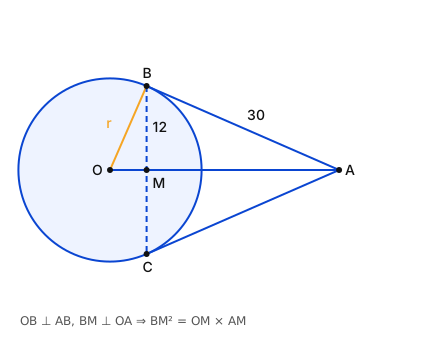
Two tangents AB and AC are drawn from an external point A to a circle with centre O. If AB = 30 cm and BC = 24 cm, then find the radius of the circle (in cm, rounded off to the nearest integer).
केंद्र O वाले एक वृत्त पर बाह्य बिंदु A से दो स्पर्श रेखाएँ AB और AC खींची गई हैं। यदि AB = 30 cm और BC = 24 cm है, तो वृत्त की त्रिज्या (cm में, निकटतम पूर्णांक तक पूर्णांकित) ज्ञात कीजिए।
  1. A11
  2. B10
  3. C13
  4. D12
Show answer

Concept: Tangents from an external point are equal; OA bisects BC perpendicularly at M; ∠OBA=90∘.

  1. AB=AC=30, BM=MC=12 ⇒AM=302−122=756≈27.5.
  2. In right △OBA with altitude BM: BM2=OM×AM⇒OM=14427.5≈5.24.
  3. r=OB=BM2+OM2=144+27.4=171.4≈13.1≈13 cm.

Trick: Direct formula: r=AB·BMAM=30×12756=36027.5≈13.

Answer: (C) 13

अवधारणा: बाह्य बिंदु से स्पर्श रेखाएँ बराबर होती हैं; OA, BC को M पर लंब समद्विभाजित करती है; ∠OBA=90∘।

  1. AB=AC=30, BM=MC=12 ⇒AM=302−122=756≈27.5।
  2. समकोण △OBA में शीर्षलंब BM: BM2=OM×AM⇒OM=14427.5≈5.24।
  3. r=OB=BM2+OM2=144+27.4=171.4≈13.1≈13 cm।

ट्रिक: सीधा सूत्र: r=AB·BMAM=30×12756=36027.5≈13।

उत्तर: (C) 13

RRB NTPC Graduate CBT 1MathematicsCircle – tangents from external pointRRB NTPC Graduate CBT 1 2025 · 17 Mar Shift 2 →
Q6643.
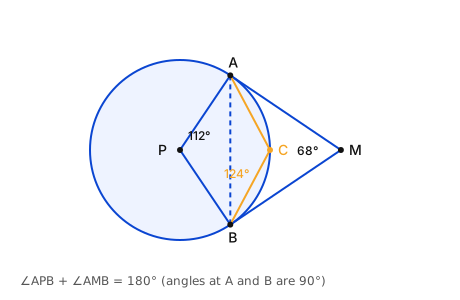
AB is a chord of a circle with its center at P. C is a point between A and B on the minor arc AB. The tangents to the circle at points A and B intersect at an external point M. If ∠ACB=124∘, then find the measure of ∠AMB.
AB एक वृत्त की जीवा है जिसका केंद्र P है। C लघु चाप AB पर A और B के बीच एक बिंदु है। बिंदुओं A और B पर वृत्त की स्पर्श रेखाएँ एक बाह्य बिंदु M पर प्रतिच्छेद करती हैं। यदि ∠ACB=124∘, तो ∠AMB का माप ज्ञात कीजिए।
  1. A72∘
  2. B58∘
  3. C63∘
  4. D68∘
Show answer

Concept: Angle in the minor arc subtends the major arc; central angle =2× inscribed angle; ∠APB+∠AMB=180∘ (tangent–radius angles are 90∘).

  1. C lies on the minor arc, so ∠ACB=124∘ stands on the major arc AB: reflex ∠APB=248∘.
  2. Minor ∠APB=360∘−248∘=112∘.
  3. In quadrilateral PAMB, ∠PAM=∠PBM=90∘ ⇒∠AMB=180∘−112∘=68∘.

Trick: For a point C on the minor arc: ∠AMB=2∠ACB−180∘=248∘−180∘=68∘.

Answer: (D) 68∘

अवधारणा: लघु चाप पर बना कोण दीर्घ चाप को अंतरित करता है; केंद्रीय कोण =2× अंतर्लिखित कोण; ∠APB+∠AMB=180∘ (स्पर्श रेखा–त्रिज्या कोण 90∘)।

  1. C लघु चाप पर है, अतः ∠ACB=124∘ दीर्घ चाप AB पर खड़ा है: प्रतिवर्ती ∠APB=248∘।
  2. लघु ∠APB=360∘−248∘=112∘।
  3. चतुर्भुज PAMB में ∠PAM=∠PBM=90∘ ⇒∠AMB=180∘−112∘=68∘।

ट्रिक: लघु चाप पर बिंदु C के लिए: ∠AMB=2∠ACB−180∘=248∘−180∘=68∘।

उत्तर: (D) 68∘

RRB NTPC Graduate CBT 1MathematicsCircle – angles with tangentsRRB NTPC Graduate CBT 1 2025 · 17 Mar Shift 2 →
Q6644.
A recipe calls for 3 parts of sugar for every 4 parts of flour. If a baker uses 12 cups of sugar, how many cups of flour does he need to use to maintain the same ratio?
एक व्यंजन-विधि में प्रत्येक 4 भाग आटे के लिए 3 भाग चीनी की आवश्यकता होती है। यदि एक बेकर 12 कप चीनी का उपयोग करता है, तो समान अनुपात बनाए रखने के लिए उसे कितने कप आटे का उपयोग करना होगा?
  1. A16
  2. B15
  3. C18
  4. D14
Show answer

Concept: Keep the ratio sugar : flour =3:4.

  1. 34=12x⇒3x=48.
  2. x=16 cups of flour.

Trick: 12 is 4×3, so flour =4×4=16.

Answer: (A) 16

अवधारणा: चीनी : आटा =3:4 बनाए रखें।

  1. 34=12x⇒3x=48।
  2. x=16 कप आटा।

ट्रिक: 12, 3 का 4 गुना है, अतः आटा =4×4=16।

उत्तर: (A) 16

RRB NTPC Graduate CBT 1MathematicsRatio and ProportionRRB NTPC Graduate CBT 1 2025 · 17 Mar Shift 2 →
Q6645.
The average of six consecutive even numbers is 175. What is the smallest of these numbers?
छह क्रमागत सम संख्याओं का औसत 175 है। इन संख्याओं में सबसे छोटी संख्या क्या है?
  1. A170
  2. B172
  3. C166
  4. D168
Show answer

Concept: For consecutive even numbers the average is the middle value.

  1. Let numbers be x,x+2,…,x+10; average =x+5=175⇒x=170.
  2. Numbers: 170, 172, 174, 176, 178, 180 – smallest 170.

Trick: Six even numbers centred on 175: three below (174, 172, 170) and three above.

Answer: (A) 170

अवधारणा: क्रमागत सम संख्याओं का औसत बीच का मान होता है।

  1. संख्याएँ x,x+2,…,x+10; औसत =x+5=175⇒x=170।
  2. संख्याएँ: 170, 172, 174, 176, 178, 180 – सबसे छोटी 170।

ट्रिक: 175 के इर्द-गिर्द छह सम संख्याएँ: तीन नीचे (174, 172, 170) और तीन ऊपर।

उत्तर: (A) 170

RRB NTPC Graduate CBT 1MathematicsAverage of consecutive numbersRRB NTPC Graduate CBT 1 2025 · 17 Mar Shift 2 →
Q6646.
What is the volume (in cm3) of a hemispherical cauldron with diameter 14 cm? (correct up to two decimal places) (Use π=227)
14 cm व्यास वाले एक अर्धगोलाकार कड़ाहे का आयतन (cm3 में) क्या है? (दो दशमलव स्थानों तक सही) (π=227 का प्रयोग कीजिए)
  1. A618.67
  2. B781.33
  3. C718.67
  4. D681.33
Show answer

Concept: Volume of hemisphere =23πr3.

  1. Diameter 14 cm ⇒r=7 cm.
  2. V=23×227×73=23×22×49=21563.
  3. V=718.666…≈718.67 cm3.

Trick: With r=7, πr3=22×49=1078; hemisphere =23×1078.

Answer: (C) 718.67

अवधारणा: अर्धगोले का आयतन =23πr3।

  1. व्यास 14 cm ⇒r=7 cm।
  2. V=23×227×73=23×22×49=21563।
  3. V=718.666…≈718.67 cm3।

ट्रिक: r=7 पर πr3=22×49=1078; अर्धगोला =23×1078।

उत्तर: (C) 718.67

RRB NTPC Graduate CBT 1MathematicsMensuration – hemisphereRRB NTPC Graduate CBT 1 2025 · 17 Mar Shift 2 →
Q6647.
Two taps can fill a cistern in 4 hours and 37 hours respectively. A third tap can empty it in 37 hours. How long (in hours) will it take to fill one-fourth of the empty cistern, if all of them are opened together?
दो नल एक टंकी को क्रमशः 4 घंटे और 37 घंटे में भर सकते हैं। एक तीसरा नल उसे 37 घंटे में खाली कर सकता है। यदि सभी नलों को एक साथ खोल दिया जाए, तो खाली टंकी का एक-चौथाई भाग भरने में कितना समय (घंटों में) लगेगा?
  1. A1
  2. B2
  3. C4
  4. D3
Show answer

Concept: Add filling rates, subtract emptying rates (per hour).

  1. Net rate =14+137−137=14 per hour.
  2. Full tank in 4 hours ⇒ one-fourth in 44=1 hour.

Trick: The 37-hour inlet and 37-hour outlet cancel exactly – only the 4-hour tap matters.

Answer: (A) 1

अवधारणा: भरने की दरें जोड़ें, खाली करने की दर घटाएँ (प्रति घंटा)।

  1. शुद्ध दर =14+137−137=14 प्रति घंटा।
  2. पूरी टंकी 4 घंटे में ⇒ एक-चौथाई 44=1 घंटे में।

ट्रिक: 37-घंटे वाला इनलेट और 37-घंटे वाला आउटलेट एक-दूसरे को काट देते हैं – केवल 4-घंटे वाला नल मायने रखता है।

उत्तर: (A) 1

RRB NTPC Graduate CBT 1MathematicsPipes and CisternsRRB NTPC Graduate CBT 1 2025 · 17 Mar Shift 2 →
Q6648.
What should come in place of ‘?’ in the given series?
55 53 50 45 38 ?
दी गई श्रेणी में ‘?’ के स्थान पर क्या आना चाहिए?
55 53 50 45 38 ?
  1. A31
  2. B29
  3. C27
  4. D33
Show answer

Concept: Check the differences between consecutive terms.

  1. 55−53=2,53−50=3,50−45=5,45−38=7.
  2. The differences 2, 3, 5, 7 are consecutive prime numbers; the next prime is 11.
  3. 38−11=27.

Yaad rakhein: If differences are not constant, test whether they are primes, squares or Fibonacci numbers.

Answer: (C) 27

अवधारणा: क्रमागत पदों के अंतर देखें।

  1. 55−53=2,53−50=3,50−45=5,45−38=7।
  2. अंतर 2, 3, 5, 7 क्रमागत अभाज्य (prime) संख्याएँ हैं; अगली अभाज्य 11 है।
  3. 38−11=27।

याद रखें: अंतर स्थिर न हों तो जाँचें कि वे अभाज्य, वर्ग या Fibonacci संख्याएँ तो नहीं।

उत्तर: (C) 27

RRB NTPC Graduate CBT 1General Intelligence and ReasoningNumber SeriesRRB NTPC Graduate CBT 1 2025 · 17 Mar Shift 2 →
Q6649.
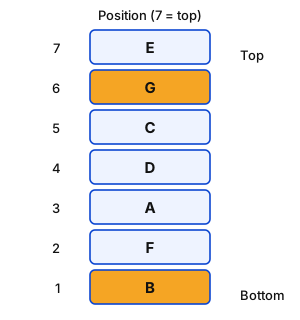
Seven boxes, A, B, C, D, E, F and G, are kept one over the other but not necessarily in the same order. Only two boxes are kept between D and B. Only E is kept above G. No box is kept below B. A is kept at some place below C but at some place above F. How many boxes are kept between B and G?
सात बक्से A, B, C, D, E, F और G एक के ऊपर एक रखे गए हैं, परंतु आवश्यक नहीं कि इसी क्रम में हों। D और B के बीच केवल दो बक्से रखे गए हैं। G के ऊपर केवल E रखा गया है। B के नीचे कोई बक्सा नहीं रखा गया है। A, C के नीचे किसी स्थान पर परंतु F के ऊपर किसी स्थान पर रखा गया है। B और G के बीच कितने बक्से रखे गए हैं?
  1. A2
  2. B1
  3. C3
  4. D4
Show answer

Concept: Number the places 1 (bottom) to 7 (top) and fix the definite clues first.

  1. No box below B → B = 1. Two boxes between D and B → D = 4.
  2. Only E above G → G = 6, E = 7.
  3. Order C > A > F fills 5, 3, 2: C = 5, A = 3, F = 2.
  4. Between B (1) and G (6): F, A, D, C = 4 boxes.

Trick: Clues like "no box below" or "only one above" fix ends of the stack — start there.

Answer: (D) 4

अवधारणा: स्थानों को 1 (नीचे) से 7 (ऊपर) तक नंबर दें और पहले निश्चित सुराग लगाएँ।

  1. B के नीचे कोई बॉक्स नहीं → B = 1। D और B के बीच दो बॉक्स → D = 4।
  2. G के ऊपर केवल E → G = 6, E = 7।
  3. क्रम C > A > F शेष 5, 3, 2 में: C = 5, A = 3, F = 2।
  4. B (1) और G (6) के बीच: F, A, D, C = 4 बॉक्स।

ट्रिक: "नीचे कोई नहीं" या "ऊपर केवल एक" जैसे सुराग ढेर के सिरे तय करते हैं — वहीं से शुरू करें।

उत्तर: (D) 4

RRB NTPC Graduate CBT 1General Intelligence and ReasoningBox ArrangementRRB NTPC Graduate CBT 1 2025 · 17 Mar Shift 2 →
Q6650.
In the following number-pairs, the second number is obtained by applying certain mathematical operations to the first number. Select the set in which the numbers are related in the same way as are the numbers of the following sets.
(NOTE : Operations should be performed on the whole numbers, without breaking down the numbers into its constituent digits. E.g. 13 – Operations on 13 such as adding / subtracting /multiplying etc. to 13 can be performed. Breaking down 13 into 1 and 3 and then performing mathematical operations on 1 and 3 is not allowed)
18, 73
23, 93
निम्नलिखित संख्या-युग्मों में, दूसरी संख्या पहली संख्या पर कुछ निश्चित गणितीय संक्रियाएँ करके प्राप्त की गई है। उस समुच्चय का चयन कीजिए जिसमें संख्याएँ उसी प्रकार संबंधित हैं जैसे निम्नलिखित समुच्चयों की संख्याएँ संबंधित हैं।
(नोट: संक्रियाएँ पूर्ण संख्याओं पर की जानी चाहिए, संख्याओं को उनके घटक अंकों में तोड़े बिना। उदाहरण के लिए 13 – 13 पर संक्रियाएँ जैसे 13 में जोड़ना/घटाना/गुणा करना आदि की जा सकती हैं। 13 को 1 और 3 में तोड़कर फिर 1 और 3 पर गणितीय संक्रियाएँ करने की अनुमति नहीं है)
18, 73
23, 93
  1. A25, 104
  2. B26, 104
  3. C26, 105
  4. D25, 105
Show answer

Concept: Find one operation that works for both given pairs.

  1. 18×4+1=73 and 23×4+1=93 – rule: second =4×first+1.
  2. 26×4+1=105 ✓; 25×4+1=101 ✗.

Trick: When the second number is roughly 4 times the first, test 4n±1 or 4n±2 first.

Answer: (C) 26, 105

अवधारणा: ऐसी एक संक्रिया खोजें जो दोनों दिए गए युग्मों पर लागू हो।

  1. 18×4+1=73 और 23×4+1=93 – नियम: दूसरी =4×पहली+1।
  2. 26×4+1=105 ✓; 25×4+1=101 ✗।

ट्रिक: दूसरी संख्या पहली की लगभग 4 गुनी हो तो पहले 4n±1 या 4n±2 जाँचें।

उत्तर: (C) 26, 105

RRB NTPC Graduate CBT 1General Intelligence and ReasoningNumber AnalogyRRB NTPC Graduate CBT 1 2025 · 17 Mar Shift 2 →
Q6651.
If ‘+’ means ‘−’, ‘−’ means ‘×’, ‘×’ means ‘÷’, ‘÷’ means ‘+’, then what will come in place of the question mark (?) in the following equation?
316 − 2 ÷ 37 + 436 × 4 = ?
यदि ‘+’ का अर्थ ‘−’ है, ‘−’ का अर्थ ‘×’ है, ‘×’ का अर्थ ‘÷’ है, ‘÷’ का अर्थ ‘+’ है, तो निम्नलिखित समीकरण में प्रश्नचिह्न (?) के स्थान पर क्या आएगा?
316 − 2 ÷ 37 + 436 × 4 = ?
  1. A590
  2. B540
  3. C520
  4. D560
Show answer

Concept: Replace the symbols by their real meaning, then apply BODMAS.

  1. 316−2÷37+436×4 becomes 316×2+37−436÷4.
  2. 436÷4=109; 316×2=632.
  3. 632+37−109=560.

Trick: Write the converted equation on paper first; most mistakes happen while converting in the head.

Answer: (D) 560

अवधारणा: चिह्नों को उनके वास्तविक अर्थ से बदलें, फिर BODMAS लगाएँ।

  1. 316−2÷37+436×4 बनता है 316×2+37−436÷4।
  2. 436÷4=109; 316×2=632।
  3. 632+37−109=560।

ट्रिक: बदला हुआ समीकरण पहले कागज़ पर लिखें; अधिकतर गलतियाँ मन में बदलते समय होती हैं।

उत्तर: (D) 560

RRB NTPC Graduate CBT 1General Intelligence and ReasoningMathematical Operations (Symbol Substitution)RRB NTPC Graduate CBT 1 2025 · 17 Mar Shift 2 →
Q6652.
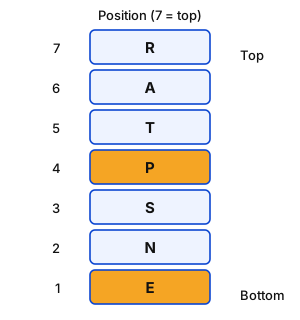
Seven boxes P, A, R, E, N, T and S are kept one over the other but not necessarily in the same order. Only two boxes are kept between A and S. Only E is kept below N. Only R is kept above A. T is not kept immediately above S. How many boxes are kept between P and E?
सात बक्से P, A, R, E, N, T और S एक के ऊपर एक रखे गए हैं, परंतु आवश्यक नहीं कि इसी क्रम में हों। A और S के बीच केवल दो बक्से रखे गए हैं। N के नीचे केवल E रखा गया है। A के ऊपर केवल R रखा गया है। T, S के ठीक ऊपर नहीं रखा गया है। P और E के बीच कितने बक्से रखे गए हैं?
  1. AThreeतीन
  2. BZeroशून्य
  3. CTwoदो
  4. DOneएक
Show answer

Concept: Number places 1 (bottom) to 7 (top); use "only" clues to fix the ends.

  1. Only R above A → R = 7, A = 6. Two boxes between A and S → S = 3.
  2. Only E below N → N = 2, E = 1.
  3. Places 4 and 5 remain for P and T; T is not immediately above S (place 4) → T = 5, P = 4.
  4. Between P (4) and E (1): S and N = two boxes.

Trick: "Only X is above/below Y" fixes two positions at once — always use it first.

Answer: (C) Two

अवधारणा: स्थानों को 1 (नीचे) से 7 (ऊपर) नंबर दें; "केवल" वाले सुराग सिरे तय करते हैं।

  1. A के ऊपर केवल R → R = 7, A = 6। A और S के बीच दो बॉक्स → S = 3।
  2. N के नीचे केवल E → N = 2, E = 1।
  3. स्थान 4 और 5 बचे P, T के लिए; T, S (स्थान 3) के ठीक ऊपर नहीं → T = 5, P = 4।
  4. P (4) और E (1) के बीच: S और N = दो बॉक्स।

ट्रिक: "Y के ऊपर/नीचे केवल X" एक साथ दो स्थान तय करता है — इसे सबसे पहले लगाएँ।

उत्तर: (C) दो

RRB NTPC Graduate CBT 1General Intelligence and ReasoningBox ArrangementRRB NTPC Graduate CBT 1 2025 · 17 Mar Shift 2 →
Q6653.
In a certain code language, ‘repair the mobile’ is coded as ‘gf ed ls’ and ‘mobile is lost’ is coded as ‘sq gf tf’. How is ‘mobile’ coded in that language?
एक निश्चित कूट भाषा में, ‘repair the mobile’ को ‘gf ed ls’ के रूप में कूटबद्ध किया जाता है और ‘mobile is lost’ को ‘sq gf tf’ के रूप में कूटबद्ध किया जाता है। उस भाषा में ‘mobile’ को कैसे कूटबद्ध किया जाएगा?
  1. Aed
  2. Bsq
  3. Cls
  4. Dgf
Show answer

Concept: A word common to two sentences has the code common to both.

  1. 'repair the mobile' → gf ed ls; 'mobile is lost' → sq gf tf.
  2. Only 'mobile' is common to both sentences and only 'gf' is common to both codes.
  3. So mobile = gf.

Trick: Match common words with common codes – no need to decode the rest.

Answer: (D) gf

अवधारणा: दो वाक्यों में उभयनिष्ठ शब्द का कूट भी दोनों में उभयनिष्ठ होता है।

  1. 'repair the mobile' → gf ed ls; 'mobile is lost' → sq gf tf।
  2. दोनों वाक्यों में केवल 'mobile' और दोनों कूटों में केवल 'gf' समान है।
  3. अतः mobile = gf।

ट्रिक: समान शब्द को समान कूट से मिलाएँ – बाकी को डिकोड करने की ज़रूरत नहीं।

उत्तर: (D) gf

RRB NTPC Graduate CBT 1General Intelligence and ReasoningCoding-Decoding (Sentence Codes)RRB NTPC Graduate CBT 1 2025 · 17 Mar Shift 2 →
Q6654.
In a certain code language, ‘MILE’ is coded as ‘9574’ and ‘TIME’ is coded as ‘5429’. What is the code for ‘T’ in the given code language?
एक निश्चित कूट भाषा में, ‘MILE’ को ‘9574’ के रूप में कूटबद्ध किया जाता है और ‘TIME’ को ‘5429’ के रूप में कूटबद्ध किया जाता है। दी गई कूट भाषा में ‘T’ का कूट क्या है?
  1. A4
  2. B5
  3. C2
  4. D9
Show answer

Concept: Letters common to both words get the digits common to both codes.

  1. MILE → 9, 5, 7, 4 and TIME → 5, 4, 2, 9.
  2. Common letters I, M, E ↔ common digits 9, 5, 4.
  3. The extra letter in TIME is T and the extra digit is 2 → T = 2.

Trick: Cancel the common part; what is left on each side matches.

Answer: (C) 2

अवधारणा: दोनों शब्दों के समान अक्षरों को दोनों कूटों के समान अंक मिलते हैं।

  1. MILE → 9, 5, 7, 4 और TIME → 5, 4, 2, 9।
  2. समान अक्षर I, M, E ↔ समान अंक 9, 5, 4।
  3. TIME में अतिरिक्त अक्षर T और अतिरिक्त अंक 2 → T = 2।

ट्रिक: समान भाग काट दें; दोनों ओर जो बचे वही आपस में मिलते हैं।

उत्तर: (C) 2

RRB NTPC Graduate CBT 1General Intelligence and ReasoningCoding-Decoding (Letter Codes)RRB NTPC Graduate CBT 1 2025 · 17 Mar Shift 2 →
Q6655.
Refer to the following letter, symbol series and answer the question. Counting to be done from left to right only.
(Left) K C © C V € @ € # U © & Y £ © I $ N W # & Q (Right)
How many such symbols are there each of which is immediately preceded by a letter and also immediately followed by a symbol?
निम्नलिखित अक्षर, प्रतीक श्रेणी को देखिए और प्रश्न का उत्तर दीजिए। गिनती केवल बाएँ से दाएँ की जानी है।
(बाएँ) K C © C V € @ € # U © & Y £ © I $ N W # & Q (दाएँ)
ऐसे कितने प्रतीक हैं, जिनमें से प्रत्येक के ठीक पहले एक अक्षर है और ठीक बाद एक प्रतीक भी है?
  1. A5
  2. B6
  3. C4
  4. D3
Show answer

Concept: Look for the pattern Letter – Symbol – Symbol and count the middle symbol.

  1. Series: K C © C V € @ € # U © & Y £ © I $ N W # & Q.
  2. V € @ ✓, U © & ✓, Y £ © ✓, W # & ✓.
  3. C © C and I $ N fail (followed by a letter). Total = 4.

Trick: Scan every symbol once and check only its left and right neighbours – mark ticks under the series.

Answer: (C) 4

अवधारणा: पैटर्न अक्षर – प्रतीक – प्रतीक खोजें और बीच वाला प्रतीक गिनें।

  1. श्रृंखला: K C © C V € @ € # U © & Y £ © I $ N W # & Q।
  2. V € @ ✓, U © & ✓, Y £ © ✓, W # & ✓।
  3. C © C और I $ N नहीं चलते (बाद में अक्षर है)। कुल = 4।

ट्रिक: हर प्रतीक को एक बार देखें और केवल उसके बाएँ-दाएँ पड़ोसी जाँचें – श्रृंखला के नीचे टिक लगाते चलें।

उत्तर: (C) 4

RRB NTPC Graduate CBT 1General Intelligence and ReasoningLetter-Symbol SeriesRRB NTPC Graduate CBT 1 2025 · 17 Mar Shift 2 →
Q6656.
In this question, a question is followed by two statements numbered (I) and (II). You have to decide whether the data provided in the statements are sufficient to answer the question. Read both the statements and decide the appropriate answer.
Q. Five parcels – Alpha, Bravo, Cargo, Delta, and Echo – have different weights. Which parcel is the lightest?
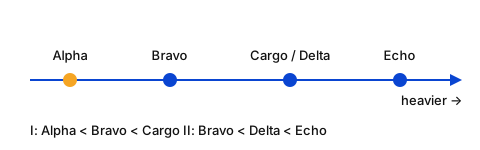
(I) Bravo is heavier than Alpha but lighter than Cargo.
(II) Delta is heavier than Bravo but lighter than Echo.
इस प्रश्न में, एक प्रश्न के बाद (I) और (II) क्रमांकित दो कथन दिए गए हैं। आपको यह निर्णय लेना है कि कथनों में दिए गए आँकड़े प्रश्न का उत्तर देने के लिए पर्याप्त हैं या नहीं। दोनों कथनों को पढ़िए और उपयुक्त उत्तर का निर्णय कीजिए।
प्रश्न. पाँच पार्सलों – Alpha, Bravo, Cargo, Delta और Echo – के भार अलग-अलग हैं। कौन-सा पार्सल सबसे हल्का है?
(I) Bravo, Alpha से भारी है परंतु Cargo से हल्का है।
(II) Delta, Bravo से भारी है परंतु Echo से हल्का है।
  1. AData in Statement II alone is sufficient to answer the question while data in Statement I is notकथन II के आँकड़े अकेले प्रश्न का उत्तर देने के लिए पर्याप्त हैं, जबकि कथन I के आँकड़े पर्याप्त नहीं हैं
  2. BBoth statements I and II together (and not statement I alone or statement II alone) are sufficient to answer the questionकथन I और II दोनों मिलकर (और न तो अकेला कथन I और न ही अकेला कथन II) प्रश्न का उत्तर देने के लिए पर्याप्त हैं
  3. CData in Statement I alone is sufficient to answer the question while data in Statement II is notकथन I के आँकड़े अकेले प्रश्न का उत्तर देने के लिए पर्याप्त हैं, जबकि कथन II के आँकड़े पर्याप्त नहीं हैं
  4. DBoth statements I and II together are NOT sufficient to answer the questionकथन I और II दोनों मिलकर भी प्रश्न का उत्तर देने के लिए पर्याप्त नहीं हैं
Show answer

Concept: Test each statement alone, then together.

  1. (I) alone: Alpha < Bravo < Cargo – Delta and Echo unknown, so the lightest is not fixed.
  2. (II) alone: Bravo < Delta < Echo – Alpha and Cargo unknown.
  3. Together: Alpha < Bravo and Bravo is lighter than Cargo, Delta, Echo → Alpha is the lightest.

Trick: In ordering questions, a statement is sufficient only if every parcel is placed relative to the extreme asked.

Answer: (B) Both statements I and II together are sufficient

अवधारणा: हर कथन को पहले अकेले, फिर साथ में जाँचें।

  1. (I) अकेले: Alpha < Bravo < Cargo – Delta और Echo अज्ञात, अतः सबसे हल्का तय नहीं।
  2. (II) अकेले: Bravo < Delta < Echo – Alpha और Cargo अज्ञात।
  3. दोनों साथ: Alpha < Bravo और Bravo, Cargo, Delta, Echo से हल्का → Alpha सबसे हल्का।

ट्रिक: क्रम वाले प्रश्नों में कथन तभी पर्याप्त है जब पूछे गए सिरे के सापेक्ष हर वस्तु की स्थिति तय हो।

उत्तर: (B) कथन I और II दोनों मिलकर पर्याप्त हैं

RRB NTPC Graduate CBT 1General Intelligence and ReasoningData Sufficiency (Ordering)RRB NTPC Graduate CBT 1 2025 · 17 Mar Shift 2 →
Q6657.
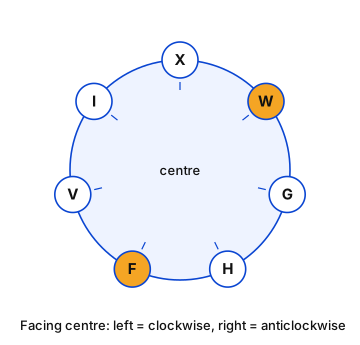
Seven people F, G, H, I, V, W, and X are sitting around a circular table facing the centre of the table. G sits second to the left of X. V sits third to the left of G. Only two people sit between H and I when counted from the right of I. F is an immediate neighbour of H. Who sits fourth to the right of W?
सात व्यक्ति F, G, H, I, V, W और X एक वृत्ताकार मेज़ के चारों ओर केंद्र की ओर मुख करके बैठे हैं। G, X के बाएँ दूसरे स्थान पर बैठा है। V, G के बाएँ तीसरे स्थान पर बैठा है। I के दाएँ से गिनने पर H और I के बीच केवल दो व्यक्ति बैठे हैं। F, H का निकटतम पड़ोसी है। W के दाएँ चौथे स्थान पर कौन बैठा है?
  1. AV
  2. BX
  3. CH
  4. DF
Show answer

Concept: Facing the centre, 'left' is clockwise and 'right' is anticlockwise. Number the seats 1–7 clockwise.

  1. X = 1 → G second to the left = 3 → V third to the left of G = 6.
  2. Two people between H and I counted from the right of I: I = 7, H = 4 works (I = 5, H = 2 leaves no vacant seat beside H for F).
  3. F next to H → F = 5; W takes the last seat 2.
  4. Fourth to the right (anticlockwise) of W: 1, 7, 6, 5 → F.

Trick: Draw the circle, mark 'left = clockwise' once, and test both cases of a two-way clue quickly.

Answer: (D) F

अवधारणा: केंद्र की ओर मुख होने पर 'बायाँ' दक्षिणावर्त (clockwise) और 'दायाँ' वामावर्त है। सीटों को 1–7 दक्षिणावर्त नंबर दें।

  1. X = 1 → G, X के बाएँ दूसरा = 3 → V, G के बाएँ तीसरा = 6।
  2. I के दाएँ से गिनने पर H और I के बीच दो: I = 7, H = 4 सही (I = 5, H = 2 में F के लिए H के पास खाली सीट नहीं बचती)।
  3. F, H का पड़ोसी → F = 5; W अंतिम सीट 2 पर।
  4. W के दाएँ (वामावर्त) चौथा: 1, 7, 6, 5 → F।

ट्रिक: वृत्त बनाएँ, 'बायाँ = clockwise' एक बार लिख लें, और दो-तरफ़ा सुराग के दोनों केस जल्दी जाँचें।

उत्तर: (D) F

RRB NTPC Graduate CBT 1General Intelligence and ReasoningCircular Seating ArrangementRRB NTPC Graduate CBT 1 2025 · 17 Mar Shift 2 →
Q6658.
Refer to the following letter, symbol series and answer the question. Counting to be done from left to right only
(Left) B T # A M @ * * # € © * C H # N £ H Q £ T O (Right)
How many such letters are there each of which is immediately preceded by a letter and also immediately followed by a symbol?
निम्नलिखित अक्षर, प्रतीक श्रेणी को देखिए और प्रश्न का उत्तर दीजिए। गिनती केवल बाएँ से दाएँ की जानी है
(बाएँ) B T # A M @ * * # € © * C H # N £ H Q £ T O (दाएँ)
ऐसे कितने अक्षर हैं, जिनमें से प्रत्येक के ठीक पहले एक अक्षर है और ठीक बाद एक प्रतीक भी है?
  1. A4
  2. B6
  3. C3
  4. D5
Show answer

Concept: Look for the pattern Letter – Letter – Symbol and count the middle letter.

  1. Series: B T # A M @ * * # € © * C H # N £ H Q £ T O.
  2. B T # ✓, A M @ ✓, C H # ✓, H Q £ ✓.
  3. £ T O and N £ H do not fit. Total = 4.

Trick: Only letters that have a letter on the left can qualify – check just those.

Answer: (A) 4

अवधारणा: पैटर्न अक्षर – अक्षर – प्रतीक खोजें और बीच वाला अक्षर गिनें।

  1. श्रृंखला: B T # A M @ * * # € © * C H # N £ H Q £ T O।
  2. B T # ✓, A M @ ✓, C H # ✓, H Q £ ✓।
  3. £ T O और N £ H नहीं चलते। कुल = 4।

ट्रिक: केवल वे अक्षर योग्य हो सकते हैं जिनके बाएँ अक्षर हो – बस उन्हीं को जाँचें।

उत्तर: (A) 4

RRB NTPC Graduate CBT 1General Intelligence and ReasoningLetter-Symbol SeriesRRB NTPC Graduate CBT 1 2025 · 17 Mar Shift 2 →
Q6659.
Select the triad which follows the same pattern as that followed by the two pairs given below. Both pairs follow the same pattern.
DASH-ASHD-SHDA
GAME-AMEG-MEGA
उस त्रिक (triad) का चयन कीजिए जो नीचे दिए गए दो युग्मों द्वारा अनुसरण किए गए पैटर्न का ही अनुसरण करता है। दोनों युग्म समान पैटर्न का अनुसरण करते हैं।
DASH-ASHD-SHDA
GAME-AMEG-MEGA
  1. AIRON-RONI-ONRI
  2. BBALD-ALDB-LDBA
  3. CFADE-EDAF-DAEF
  4. DJAIL-LJAI-ILJA
Show answer

Concept: Each step moves the first letter to the end (left rotation by one).

  1. DASH → ASHD → SHDA; GAME → AMEG → MEGA.
  2. BALD → ALDB → LDBA follows the same rotation.
  3. IRON → RONI → ONIR (not ONRI); FADE and JAIL do not rotate at all.

Trick: Check the third word with the second, not only the second with the first.

Answer: (B) BALD-ALDB-LDBA

अवधारणा: हर चरण में पहला अक्षर अंत में चला जाता है (एक स्थान बायाँ घुमाव)।

  1. DASH → ASHD → SHDA; GAME → AMEG → MEGA।
  2. BALD → ALDB → LDBA उसी घुमाव का पालन करता है।
  3. IRON → RONI → ONIR (ONRI नहीं); FADE और JAIL में घुमाव है ही नहीं।

ट्रिक: तीसरे शब्द को दूसरे से भी जाँचें, केवल दूसरे को पहले से नहीं।

उत्तर: (B) BALD-ALDB-LDBA

RRB NTPC Graduate CBT 1General Intelligence and ReasoningLetter Cluster AnalogyRRB NTPC Graduate CBT 1 2025 · 17 Mar Shift 2 →
Q6660.
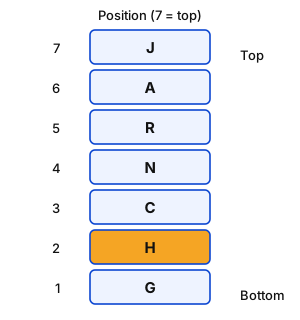
Seven boxes A, C, G, H, J, N and R are kept one over the other but not necessarily in the same order.
Only three boxes are kept above N. Only one box is kept between H and N. Only three boxes are kept between H and A. A is kept at some place above N. R is kept immediately below A. C is kept at one of the places above G. J is not kept immediately above or below H.
How many boxes are kept above H?
सात बक्से A, C, G, H, J, N और R एक के ऊपर एक रखे गए हैं, परंतु आवश्यक नहीं कि इसी क्रम में हों।
N के ऊपर केवल तीन बक्से रखे गए हैं। H और N के बीच केवल एक बक्सा रखा गया है। H और A के बीच केवल तीन बक्से रखे गए हैं। A, N के ऊपर किसी स्थान पर रखा गया है। R, A के ठीक नीचे रखा गया है। C, G के ऊपर किसी एक स्थान पर रखा गया है। J, H के ठीक ऊपर या ठीक नीचे नहीं रखा गया है।
H के ऊपर कितने बक्से रखे गए हैं?
  1. A4
  2. B2
  3. C3
  4. D5
Show answer

Concept: Number places 1 (bottom) to 7 (top); start from the clue that fixes an exact place.

  1. Three boxes above N → N = 4. One box between H and N, and A above N with three boxes between H and A → H = 2, A = 6.
  2. R immediately below A → R = 5.
  3. Places 1, 3, 7 remain for C, G, J. J is not adjacent to H (2) → J = 7; C above G → C = 3, G = 1.
  4. Boxes above H: C, N, R, A, J = 5.

Trick: 'Exactly three above' pins the middle box of seven – build outward from it.

Answer: (D) 5

अवधारणा: स्थान 1 (नीचे) से 7 (ऊपर) नंबर दें; उस सुराग से शुरू करें जो सटीक स्थान तय करे।

  1. N के ऊपर तीन बॉक्स → N = 4। H और N के बीच एक बॉक्स, तथा A, N के ऊपर और H-A के बीच तीन बॉक्स → H = 2, A = 6।
  2. R, A के ठीक नीचे → R = 5।
  3. स्थान 1, 3, 7 बचे C, G, J के लिए। J, H (2) से सटा नहीं → J = 7; C, G के ऊपर → C = 3, G = 1।
  4. H के ऊपर बॉक्स: C, N, R, A, J = 5।

ट्रिक: 'ठीक तीन ऊपर' सात में बीच वाला बॉक्स तय कर देता है – वहाँ से बाहर की ओर बनाएँ।

उत्तर: (D) 5

RRB NTPC Graduate CBT 1General Intelligence and ReasoningBox ArrangementRRB NTPC Graduate CBT 1 2025 · 17 Mar Shift 2 →