Question bank

Q&A: practice questions with answers

Search questions on any topic. Filter by exam category, exam, subject and topic, try the question, then open the answer and explanation.

Courses – airGurukul

7,077 questions found.

Q6721.
If the mean of the following data is 35, find the value of X.
Class10-2020-3030-4040-5050-60
Frequency42264546X
यदि निम्नलिखित आँकड़ों का माध्य 35 है, तो X का मान ज्ञात कीजिए।
वर्ग: 10-20, 20-30, 30-40, 40-50, 50-60
बारंबारता: 42, 26, 45, 46, X
  1. A28
  2. B34
  3. C26
  4. D32
Show answer

Concept: x¯=∑fixi∑fi with class marks xi.

  1. Class marks: 15, 25, 35, 45, 55; frequencies: 42, 26, 45, 46, X.
  2. ∑fixi=630+650+1575+2070+55X=4925+55X; ∑fi=159+X.
  3. 35(159+X)=4925+55X⇒5565+35X=4925+55X⇒20X=640⇒X=32.

Trick: Use assumed mean 35: deviations −20,−10,0,10,20 give −840−260+0+460+20X=0⇒X=32.

Answer: (D) 32

अवधारणा: x¯=∑fixi∑fi, जहाँ xi वर्ग-चिह्न हैं।

  1. वर्ग-चिह्न: 15, 25, 35, 45, 55; बारंबारताएँ: 42, 26, 45, 46, X।
  2. ∑fixi=4925+55X; ∑fi=159+X।
  3. 35(159+X)=4925+55X⇒20X=640⇒X=32।

ट्रिक: कल्पित माध्य 35 लें: विचलन −20,−10,0,10,20 से −840−260+460+20X=0⇒X=32।

उत्तर: (D) 32

RRB NTPC Graduate CBT 1MathematicsMean of Grouped DataRRB NTPC Graduate CBT 1 2025 · 17 Mar Shift 1 →
Q6722.
Evaluate: (-9) - (-60) ÷ (-6) + (-2) × 8
मान ज्ञात कीजिए: (-9) - (-60) ÷ (-6) + (-2) × 8
  1. A-37
  2. B-38
  3. C-35
  4. D-34
Show answer

Concept: Follow BODMAS: division and multiplication before subtraction and addition.

  1. (−60)÷(−6)=10 and (−2)×8=−16.
  2. Expression =−9−10+(−16)=−35.

Trick: Negative ÷ negative is positive; the minus before it then makes it −10.

Answer: (C) −35

अवधारणा: BODMAS: भाग और गुणा पहले, फिर घटाना-जोड़ना।

  1. (−60)÷(−6)=10 तथा (−2)×8=−16।
  2. व्यंजक =−9−10+(−16)=−35।

ट्रिक: ऋण ÷ ऋण = धन; आगे का ऋण चिह्न इसे −10 बना देता है।

उत्तर: (C) −35

RRB NTPC Graduate CBT 1MathematicsBODMASRRB NTPC Graduate CBT 1 2025 · 17 Mar Shift 1 →
Q6723.
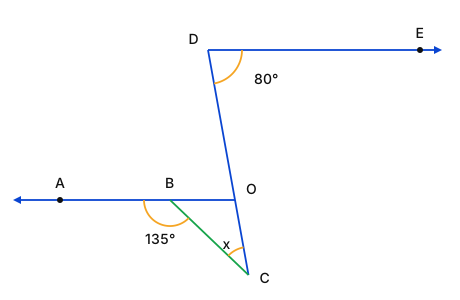
In the given figure, lines AO and DE are parallel. What is the value of x?
दी गई आकृति में, रेखाएँ AO और DE समांतर हैं। x का मान क्या है?
  1. A145∘
  2. B45∘
  3. C100∘
  4. D35∘
Show answer

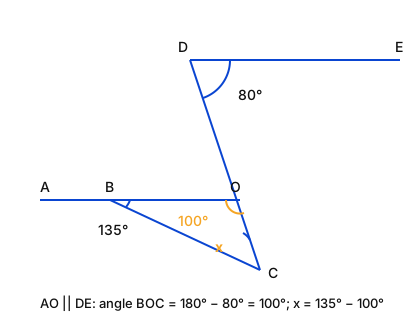
Concept: With parallel lines, the angles made by a transversal are related (sum 180∘); the exterior angle of a triangle equals the sum of the two opposite interior angles.

  1. AO ∥ DE and DC is the transversal, so the angle at O, ∠BOC=180∘−80∘=100∘.
  2. In △OBC, ∠ABC=135∘ is the exterior angle at B: 135∘=∠BOC+x.
  3. x=135∘−100∘=35∘.

Trick: Exterior angle = sum of the two far interior angles – no need to find ∠OBC separately.

Answer: (D) 35∘

अवधारणा: समांतर रेखाओं पर तिर्यक रेखा से बने कोणों का संबंध (योग 180∘); त्रिभुज का बाह्य कोण = दो सम्मुख अंतः कोणों का योग।

  1. AO ∥ DE और DC तिर्यक रेखा है, अतः O पर कोण ∠BOC=180∘−80∘=100∘।
  2. △OBC में B पर बाह्य कोण ∠ABC=135∘=∠BOC+x।
  3. x=135∘−100∘=35∘।

ट्रिक: बाह्य कोण = दूर वाले दो अंतः कोणों का योग – ∠OBC अलग से निकालने की ज़रूरत नहीं।

उत्तर: (D) 35∘

RRB NTPC Graduate CBT 1MathematicsParallel Lines and AnglesRRB NTPC Graduate CBT 1 2025 · 17 Mar Shift 1 →
Q6724.
P sells an item to Q at 70% profit. Q sells the same item to R at 67% loss. If R paid ₹ 3927 for the item, then at what price (in ₹) is the item purchased by P?
P एक वस्तु Q को 70% लाभ पर बेचता है। Q वही वस्तु R को 67% हानि पर बेचता है। यदि R ने वस्तु के लिए ₹ 3927 का भुगतान किया, तो P ने वस्तु किस मूल्य (₹ में) पर खरीदी थी?
  1. A7003
  2. B6998
  3. C6997
  4. D7000
Show answer

Concept: Successive changes multiply: Final=CP×170100×33100.

  1. Q's cost =1.7CP; R's cost =1.7×0.33CP=0.561CP.
  2. 0.561CP=3927⇒CP=39270.561=7000.

Trick: 3927=7×561, so CP=7×1000=7000 – spot the factor 561.

Answer: (D) 7000

अवधारणा: क्रमिक परिवर्तन गुणा होते हैं: अंतिम=CP×170100×33100।

  1. Q का क्रय मूल्य =1.7CP; R का =1.7×0.33CP=0.561CP।
  2. 0.561CP=3927⇒CP=7000।

ट्रिक: 3927=7×561, अतः CP=7×1000=7000।

उत्तर: (D) 7000

RRB NTPC Graduate CBT 1MathematicsSuccessive Profit and LossRRB NTPC Graduate CBT 1 2025 · 17 Mar Shift 1 →
Q6725.
Mahesh has ₹1407 with him. He divides this amount between his two sons, Vijay and Ajay, and asks them to invest their respective shares at a compound interest rate of 10% per annum, compounded annually. It is observed that Vijay’s investment amounts to the same value after 17 years as Ajay’s investment does after 18 years. How much (in ₹) did Mahesh give to Ajay?
महेश के पास ₹1407 हैं। वह यह राशि अपने दो पुत्रों, विजय और अजय, के बीच बाँटता है और उन्हें अपने-अपने हिस्से को 10% वार्षिक चक्रवृद्धि ब्याज की दर पर, वार्षिक रूप से संयोजित, निवेश करने के लिए कहता है। यह देखा गया कि विजय का निवेश 17 वर्षों बाद उतनी ही राशि हो जाता है जितनी अजय का निवेश 18 वर्षों बाद होता है। महेश ने अजय को कितनी राशि (₹ में) दी?
  1. A837
  2. B670
  3. C737
  4. D520
Show answer

Concept: Equal amounts after n and n+1 years at CI mean the shares are in the ratio (1+r):1.

  1. V(1.1)17=A(1.1)18⇒V=1.1A.
  2. V+A=1407⇒2.1A=1407⇒A=670.
  3. Ajay received ₹670 (Vijay ₹737).

Trick: One extra year at 10% → ratio 11:10; 1407÷21=67, so shares 737:670.

Answer: (B) 670

अवधारणा: CI पर n और n+1 वर्ष बाद बराबर मिश्रधन हो तो हिस्से (1+r):1 के अनुपात में होते हैं।

  1. V(1.1)17=A(1.1)18⇒V=1.1A।
  2. V+A=1407⇒2.1A=1407⇒A=670।
  3. अजय को ₹670 मिले (विजय को ₹737)।

ट्रिक: 10% पर एक अतिरिक्त वर्ष → अनुपात 11:10; 1407÷21=67, अतः हिस्से 737:670।

उत्तर: (B) 670

RRB NTPC Graduate CBT 1MathematicsCompound InterestRRB NTPC Graduate CBT 1 2025 · 17 Mar Shift 1 →
Q6726.
A copper sphere of diameter 24 cm is melted and drawn into a wire of diameter 4 mm. What is the length (in metres) of the wire?
24 cm व्यास के एक ताँबे के गोले को पिघलाकर 4 mm व्यास के एक तार में खींचा जाता है। तार की लंबाई (मीटर में) क्या है?
  1. A456
  2. B480
  3. C576
  4. D580
Show answer

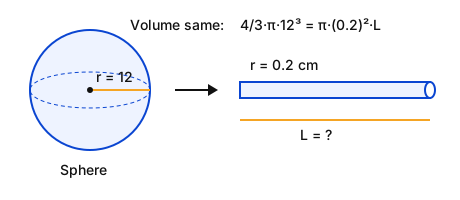
Concept: Melting keeps the volume same: 43πR3=πr2L.

  1. Sphere: R=12 cm; wire: r=2 mm =0.2 cm.
  2. 43×123=0.04×L⇒2304=0.04L.
  3. L=57600 cm =576 m.

Trick: L=4R33r2; convert mm to cm before squaring.

Answer: (C) 576

अवधारणा: पिघलाने पर आयतन समान रहता है: 43πR3=πr2L।

  1. गोला: R=12 cm; तार: r=2 mm =0.2 cm।
  2. 43×123=0.04×L⇒2304=0.04L।
  3. L=57600 cm =576 m।

ट्रिक: L=4R33r2; वर्ग करने से पहले mm को cm में बदलें।

उत्तर: (C) 576

RRB NTPC Graduate CBT 1MathematicsMensuration – Sphere to WireRRB NTPC Graduate CBT 1 2025 · 17 Mar Shift 1 →
Q6727.
A and B, when each is working alone, can complete a piece of work in. respectively, 20 days and 25 days. Each work on alternate days, with A and B starting to work on Day 1 and Day 2, respectively. How long will it take them to complete the work?
A और B, जब प्रत्येक अकेले कार्य करता है, एक कार्य को क्रमशः 20 दिन और 25 दिन में पूरा कर सकते हैं। प्रत्येक एकांतर दिनों (alternate days) पर कार्य करता है, जिसमें A और B क्रमशः दिन 1 और दिन 2 से कार्य प्रारंभ करते हैं। उन्हें कार्य पूरा करने में कितना समय लगेगा?
  1. A2215 days2215 दिन
  2. B23 days23 दिन
  3. C11 days11 दिन
  4. D22 days22 दिन
Show answer

Concept: Take total work = LCM of days; work in 2-day cycles and finish the remainder.

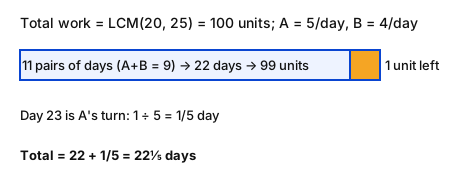
  1. Work =100 units; A =5/day, B =4/day; one cycle (2 days) =9 units.
  2. 11 cycles =22 days →99 units; 1 unit left.
  3. Day 23 is A's: 15 day. Total =2215 days.

Trick: Stop the cycles just before the work exceeds 100, then check whose turn it is.

Answer: (A) 2215 days

अवधारणा: कुल कार्य = दिनों का LCM; 2-दिन के चक्रों में काम कीजिए और शेष पूरा कीजिए।

  1. कार्य =100 इकाई; A =5/दिन, B =4/दिन; एक चक्र (2 दिन) =9 इकाई।
  2. 11 चक्र =22 दिन →99 इकाई; 1 इकाई शेष।
  3. 23वाँ दिन A का: 15 दिन। कुल =2215 दिन।

ट्रिक: चक्र वहीं रोकें जहाँ कार्य 100 से कम रहे, फिर देखें किसकी बारी है।

उत्तर: (A) 2215 दिन

RRB NTPC Graduate CBT 1MathematicsTime and Work – Alternate DaysRRB NTPC Graduate CBT 1 2025 · 17 Mar Shift 1 →
Q6728.
Simplify: (525×525×525)+(321×321×321)(525×525)−(525×321)+(321×321)×1(96−36)
सरल कीजिए: (525×525×525)+(321×321×321)(525×525)−(525×321)+(321×321)×1(96−36)
  1. A12.5
  2. B15.9
  3. C13.1
  4. D14.1
Show answer

Concept: a3+b3=(a+b)(a2−ab+b2), so a3+b3a2−ab+b2=a+b.

  1. With a=525, b=321: the fraction =525+321=846.
  2. 846×196−36=84660=14.1.

Trick: Whenever you see a2−ab+b2 below a3+b3, just write a+b.

Answer: (D) 14.1

अवधारणा: a3+b3=(a+b)(a2−ab+b2), अतः a3+b3a2−ab+b2=a+b।

  1. a=525, b=321: भिन्न =525+321=846।
  2. 846×196−36=84660=14.1।

ट्रिक: a3+b3 के नीचे a2−ab+b2 दिखे तो सीधे a+b लिखिए।

उत्तर: (D) 14.1

RRB NTPC Graduate CBT 1MathematicsAlgebraic IdentitiesRRB NTPC Graduate CBT 1 2025 · 17 Mar Shift 1 →
Q6729.
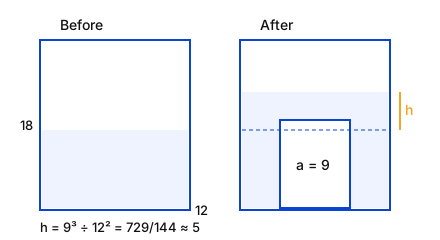
A cube has a lateral surface area of 324 cm². It is fully submerged in a rectangular container of height 18 cm, having a square base and a lateral surface area of 864 cm². If the container was partially filled with water before the cube was submerged, find the rise in the water level after the cube is submerged.
(Round your answer to the nearst integer.)
एक घन का पार्श्व पृष्ठीय क्षेत्रफल 324 cm² है। इसे 18 cm ऊँचाई वाले एक आयताकार पात्र में पूरी तरह डुबोया जाता है, जिसका आधार वर्गाकार है और पार्श्व पृष्ठीय क्षेत्रफल 864 cm² है। यदि घन को डुबोने से पहले पात्र आंशिक रूप से पानी से भरा था, तो घन को डुबोने के बाद जल स्तर में वृद्धि ज्ञात कीजिए।
(अपने उत्तर को निकटतम पूर्णांक तक पूर्णांकित कीजिए।)
  1. A6 cm
  2. B7 cm
  3. C4 cm
  4. D5 cm
Show answer

Concept: Rise in level =volume of submerged solidbase area of container.

  1. Cube: 4a2=324⇒a=9 cm, volume =729 cm3.
  2. Container: 4×s×18=864⇒s=12 cm, base area =144 cm2.
  3. Rise =729144≈5.06≈5 cm.

Trick: LSA of cube =4a2; LSA of square prism =4sh – use them to get a and s fast.

Answer: (D) 5 cm

अवधारणा: जलस्तर में वृद्धि =डूबे ठोस का आयतनपात्र का आधार क्षेत्रफल।

  1. घन: 4a2=324⇒a=9 cm, आयतन =729 cm3।
  2. पात्र: 4×s×18=864⇒s=12 cm, आधार =144 cm2।
  3. वृद्धि =729144≈5.06≈5 cm।

ट्रिक: घन का LSA =4a2; वर्गाकार प्रिज़्म का LSA =4sh – इनसे a और s तुरंत मिलते हैं।

उत्तर: (D) 5 cm

RRB NTPC Graduate CBT 1MathematicsMensuration – Water DisplacementRRB NTPC Graduate CBT 1 2025 · 17 Mar Shift 1 →
Q6730.
The ratio of three numbers is 3 : 5 : 7. If the sum of the largest and smallest numbers is 60, what is the sum of all the three numbers?
तीन संख्याओं का अनुपात 3 : 5 : 7 है। यदि सबसे बड़ी और सबसे छोटी संख्याओं का योग 60 है, तो तीनों संख्याओं का योग क्या है?
  1. A90
  2. B70
  3. C100
  4. D120
Show answer

Concept: Write the numbers as 3x,5x,7x.

  1. Largest + smallest =7x+3x=10x=60⇒x=6.
  2. Sum =3x+5x+7x=15x=90.

Trick: Sum of all =1510×60=90 – scale directly from ratio parts.

Answer: (A) 90

अवधारणा: संख्याएँ 3x,5x,7x लिखिए।

  1. सबसे बड़ी + सबसे छोटी =10x=60⇒x=6।
  2. योग =15x=90।

ट्रिक: कुल योग =1510×60=90 – अनुपात के भागों से सीधे गुणा करें।

उत्तर: (A) 90

RRB NTPC Graduate CBT 1MathematicsRatioRRB NTPC Graduate CBT 1 2025 · 17 Mar Shift 1 →
Q6731.
If cot A = 3/4, and A is an acute angle, then find the value of sin2A - cos3A.
यदि cot A = 3/4 है और A एक न्यून कोण है, तो sin2A - cos3A का मान ज्ञात कीजिए।
  1. A3/125
  2. B141/125
  3. C237/125
  4. D273/125
Show answer

Concept: sin2A=2sinAcosA, cos3A=4cos3A−3cosA.

  1. cotA=34⇒sinA=45,cosA=35 (3-4-5 triangle).
  2. sin2A=2×45×35=2425=120125.
  3. cos3A=4×27125−95=108−225125=−117125.
  4. sin2A−cos3A=120+117125=237125.

Trick: Denominator 125 hints at cos3A with cosA=35.

Answer: (C) 237125

अवधारणा: sin2A=2sinAcosA, cos3A=4cos3A−3cosA।

  1. cotA=34⇒sinA=45,cosA=35 (3-4-5 त्रिभुज)।
  2. sin2A=2425=120125।
  3. cos3A=4×27125−95=−117125।
  4. sin2A−cos3A=120+117125=237125।

ट्रिक: हर 125 संकेत देता है कि cos3A आएगा (cosA=35)।

उत्तर: (C) 237125

RRB NTPC Graduate CBT 1MathematicsTrigonometry – Multiple AnglesRRB NTPC Graduate CBT 1 2025 · 17 Mar Shift 1 →
Q6732.
If a 7-digit number 54468A0 is completely divisible by 4, what is the minimum value of A?
यदि 7 अंकों की एक संख्या 54468A0, 4 से पूर्णतः विभाज्य है, तो A का न्यूनतम मान क्या है?
  1. A3
  2. B2
  3. C0
  4. D5
Show answer

Concept: A number is divisible by 4 if its last two digits form a number divisible by 4.

  1. Last two digits of 54468A0 are "A0".
  2. A0 divisible by 4 → A = 0, 2, 4, 6, 8 (00, 20, 40, 60, 80).
  3. Minimum value of A =0.

Trick: Only the last two digits matter for 4; A = 0 gives 00, which is divisible by 4.

Answer: (C) 0

अवधारणा: संख्या 4 से विभाज्य है यदि अंतिम दो अंकों से बनी संख्या 4 से विभाज्य हो।

  1. 54468A0 के अंतिम दो अंक "A0" हैं।
  2. A0, 4 से विभाज्य → A = 0, 2, 4, 6, 8।
  3. A का न्यूनतम मान =0।

ट्रिक: 4 के लिए केवल अंतिम दो अंक देखें; A = 0 से 00 बनता है जो 4 से विभाज्य है।

उत्तर: (C) 0

RRB NTPC Graduate CBT 1MathematicsDivisibilityRRB NTPC Graduate CBT 1 2025 · 17 Mar Shift 1 →
Q6733.
Evaluate: (-9) - (-56) ÷ (-14) + (-3) × 8
मान ज्ञात कीजिए: (-9) - (-56) ÷ (-14) + (-3) × 8
  1. A-40
  2. B-36
  3. C-39
  4. D-37
Show answer

Concept: Division and multiplication first, then addition/subtraction from left to right.

  1. (−56)÷(−14)=4; (−3)×8=−24.
  2. Expression =−9−4+(−24)=−37.

Trick: Sign rule: (−)÷(−)=+, (−)×(+)=−.

Answer: (D) −37

अवधारणा: पहले भाग और गुणा, फिर बाएँ से दाएँ जोड़/घटाव।

  1. (−56)÷(−14)=4; (−3)×8=−24।
  2. व्यंजक =−9−4+(−24)=−37।

ट्रिक: चिह्न नियम: (−)÷(−)=+, (−)×(+)=−।

उत्तर: (D) −37

RRB NTPC Graduate CBT 1MathematicsBODMASRRB NTPC Graduate CBT 1 2025 · 17 Mar Shift 1 →
Q6734.
There are 12 members in group A, 73 members in group B and 80 members in group C. All the members of these groups went to a restaurant. The average amounts spent on each member of groups A, B and C are ₹184, ₹234 and ₹390, respectively. The overall average amount (in ₹) spent per member is:
समूह A में 12 सदस्य, समूह B में 73 सदस्य और समूह C में 80 सदस्य हैं। इन समूहों के सभी सदस्य एक रेस्तरां में गए। समूह A, B और C के प्रत्येक सदस्य पर खर्च की गई औसत राशि क्रमशः ₹184, ₹234 और ₹390 है। प्रति सदस्य खर्च की गई समग्र औसत राशि (₹ में) है:
  1. A305
  2. B306
  3. C311
  4. D308
Show answer

Concept: Overall average=∑(ni×x¯i)∑ni.

  1. Total spent =12×184+73×234+80×390=2208+17082+31200=50490.
  2. Total members =12+73+80=165.
  3. Average =50490165=306.

Trick: Check the last digit: 50490÷165 must end in 6 since 165×6=990.

Answer: (B) 306

अवधारणा: कुल औसत=∑(ni×x¯i)∑ni।

  1. कुल खर्च =12×184+73×234+80×390=2208+17082+31200=50490।
  2. कुल सदस्य =165।
  3. औसत =50490165=306।

ट्रिक: अंतिम अंक जाँचें: 165×6=990, अतः भागफल 6 पर समाप्त होगा।

उत्तर: (B) 306

RRB NTPC Graduate CBT 1MathematicsWeighted AverageRRB NTPC Graduate CBT 1 2025 · 17 Mar Shift 1 →
Q6735.
If α is a root of the equation 2x(2x+1)=1, then the other root is:
यदि α समीकरण 2x(2x+1)=1 का एक मूल है, तो दूसरा मूल है:
  1. A−α(α+1)
  2. B2α(α−1)
  3. C−14α
  4. D3α(α+1)
Show answer

Concept: For ax2+bx+c=0, product of roots =ca.

  1. 2x(2x+1)=1⇒4x2+2x−1=0.
  2. Product of roots =−14.
  3. If one root is α, the other =−1/4α=−14α.

Trick: When one root is given as α, the other is simply caα.

Answer: (C) −14α

अवधारणा: ax2+bx+c=0 के लिए मूलों का गुणनफल =ca।

  1. 2x(2x+1)=1⇒4x2+2x−1=0।
  2. मूलों का गुणनफल =−14।
  3. एक मूल α हो तो दूसरा =−1/4α=−14α।

ट्रिक: एक मूल α दिया हो तो दूसरा सीधे caα।

उत्तर: (C) −14α

RRB NTPC Graduate CBT 1MathematicsQuadratic Equations – RootsRRB NTPC Graduate CBT 1 2025 · 17 Mar Shift 1 →
Q6736.
In an election between two candidates, 84% of the registered voters cast their votes and 20% of the votes polled were found invalid. Winning candidate got 58% of the valid votes and won the election by a margin of 336 votes. How many voters were
registered?
दो उम्मीदवारों के बीच हुए एक चुनाव में, पंजीकृत मतदाताओं के 84% ने मतदान किया और डाले गए मतों के 20% अवैध पाए गए। विजेता उम्मीदवार को वैध मतों के 58% मत मिले और वह 336 मतों के अंतर से चुनाव जीता। कितने मतदाता
पंजीकृत थे?
  1. A3125
  2. B3123
  3. C3120
  4. D3124
Show answer

Concept: Winning margin = difference of the two candidates' shares of the valid votes.

  1. Let registered voters =N. Votes polled =84% of N=0.84N.
  2. Valid votes =80% of 0.84N=0.672N.
  3. Winner 58%, loser 42% → margin =16% of valid votes =0.16×0.672N=0.10752N.
  4. 0.10752N=336⇒N=3360.10752=3125.

Trick: Margin =(58−42)%=16% of valid votes. Chain the percentages: N×0.84×0.8×0.16=336.

Answer: (A) 3125

अवधारणा: जीत का अंतर = दोनों उम्मीदवारों को मिले वैध मतों का अंतर।

  1. माना पंजीकृत मतदाता =N। डाले गए मत =84% of N=0.84N।
  2. वैध मत =80% of 0.84N=0.672N।
  3. विजेता 58%, हारने वाला 42% → अंतर =16% वैध मतों का =0.16×0.672N=0.10752N।
  4. 0.10752N=336⇒N=3360.10752=3125।

ट्रिक: अंतर =(58−42)%=16% वैध मतों का। प्रतिशत को श्रृंखला में गुणा करें: N×0.84×0.8×0.16=336।

उत्तर: (A) 3125

RRB NTPC Graduate CBT 1MathematicsPercentage – electionsRRB NTPC Graduate CBT 1 2025 · 17 Mar Shift 1 →
Q6737.
The product of two numbers, X and Y, is 6760, and the HCF of X and Y is 13. Find the number of possible pairs (X,Y), given that X>Y.
दो संख्याओं X और Y का गुणनफल 6760 है, और X तथा Y का HCF 13 है। संभव युग्मों (X,Y) की संख्या ज्ञात कीजिए, दिया है कि X>Y।
  1. A1
  2. B2
  3. C4
  4. D3
Show answer

Concept: If HCF of two numbers is h, write them as X=ha, Y=hb with a,b co-prime.

  1. X=13a, Y=13b ⇒ 169ab=6760⇒ab=40.
  2. Co-prime factor pairs of 40: (40,1) and (8,5). Pairs (20,2) and (10,4) are not co-prime.
  3. With X>Y: (520,13) and (104,65) → 2 pairs.

Trick: Number of co-prime pairs of n = 2k−1 where k = number of distinct prime factors. 40=23×5, k=2 → 2 pairs.

Answer: (B) 2

अवधारणा: यदि दो संख्याओं का HCF h है तो उन्हें X=ha, Y=hb लिखें जहाँ a,b सह-अभाज्य (co-prime) हों।

  1. X=13a, Y=13b ⇒ 169ab=6760⇒ab=40।
  2. 40 के सह-अभाज्य गुणनखंड युग्म: (40,1) और (8,5)। (20,2) और (10,4) सह-अभाज्य नहीं हैं।
  3. X>Y के साथ: (520,13) और (104,65) → 2 युग्म।

ट्रिक: n के सह-अभाज्य युग्मों की संख्या =2k−1, जहाँ k = भिन्न अभाज्य गुणनखंडों की संख्या। 40=23×5, k=2 → 2 युग्म।

उत्तर: (B) 2

RRB NTPC Graduate CBT 1MathematicsHCF – number of pairsRRB NTPC Graduate CBT 1 2025 · 17 Mar Shift 1 →
Q6738.
What should come in place of ‘?’ in the given series?
19 20 28 55 119 ?
दी गई श्रेणी में ‘?’ के स्थान पर क्या आना चाहिए?
19 20 28 55 119 ?
  1. A144
  2. B142
  3. C244
  4. D245
Show answer

Concept: Check the differences between consecutive terms; they often form a known pattern (squares, cubes, primes).

  1. 20−19=1=13, 28−20=8=23, 55−28=27=33, 119−55=64=43.
  2. Next difference =53=125.
  3. ?=119+125=244.

Trick: Differences 1, 8, 27, 64 → cubes. Memorise cubes up to 15.

Answer: (C) 244

अवधारणा: क्रमागत पदों के अंतर देखें; वे प्रायः किसी ज्ञात पैटर्न (वर्ग, घन, अभाज्य) में होते हैं।

  1. 20−19=1=13, 28−20=8=23, 55−28=27=33, 119−55=64=43।
  2. अगला अंतर =53=125।
  3. ?=119+125=244।

ट्रिक: अंतर 1, 8, 27, 64 → घन (cubes)। 15 तक के घन याद रखें।

उत्तर: (C) 244

RRB NTPC Graduate CBT 1MathematicsNumber seriesRRB NTPC Graduate CBT 1 2025 · 17 Mar Shift 1 →
Q6739.
₹7770 is divided among A, B, C, and D in such a way that the shares of A and B, B and C, and C and D are in the ratios of 2 : 3, 4 : 5, and 6 : 7, respectively. The share of A (in ₹) is:
₹7770 को A, B, C और D के बीच इस प्रकार बाँटा जाता है कि A और B, B और C, तथा C और D के हिस्से क्रमशः 2 : 3, 4 : 5 और 6 : 7 के अनुपात में हैं। A का हिस्सा (₹ में) है:
  1. A1224
  2. B1184
  3. C1154
  4. D1124
Show answer

Concept: Combine chained ratios by making the common term equal.

  1. A:B=2:3, B:C=4:5, C:D=6:7.
  2. A:B:C:D=(2×4×6):(3×4×6):(3×5×6):(3×5×7)=48:72:90:105.
  3. Sum of parts =315. One part =7770315=2423.
  4. Share of A =48×7770315=7770×16105=74×16=1184.

Trick: For a:b, c:d, e:f → A=ace, B=bce, C=bde, D=bdf.

Answer: (B) ₹1184

अवधारणा: श्रृंखलित अनुपातों को उभयनिष्ठ पद बराबर करके जोड़ें।

  1. A:B=2:3, B:C=4:5, C:D=6:7।
  2. A:B:C:D=(2×4×6):(3×4×6):(3×5×6):(3×5×7)=48:72:90:105।
  3. भागों का योग =315। एक भाग =7770315=2423।
  4. A का हिस्सा =48×7770315=7770×16105=74×16=1184।

ट्रिक: a:b, c:d, e:f के लिए → A=ace, B=bce, C=bde, D=bdf।

उत्तर: (B) ₹1184

RRB NTPC Graduate CBT 1MathematicsRatio – chained ratiosRRB NTPC Graduate CBT 1 2025 · 17 Mar Shift 1 →
Q6740.
A and B start running on a circular track of length 900 m. A runs at 225 m/min and B at 180 m/min. Every time A overtakes B, both reduce their speeds by 5% of their then speeds before continuing. After how many minutes (correct to two decimal places) does A overtake B for the 3rd time?
A और B, 900 m लंबे एक वृत्ताकार ट्रैक पर दौड़ना शुरू करते हैं। A 225 m/min और B 180 m/min की चाल से दौड़ता है। जब भी A, B को पीछे छोड़ता (overtake करता) है, दोनों आगे बढ़ने से पहले अपनी तत्कालीन चाल का 5% कम कर देते हैं। कितने मिनट बाद (दो दशमलव स्थानों तक सही) A, B को 3री बार पीछे छोड़ता है?
  1. A62.11 min62.11 मिनट
  2. B64.41 min64.41 मिनट
  3. C64.21 min64.21 मिनट
  4. D63.21 min63.21 मिनट
Show answer

Concept: On a circular track, A overtakes B each time A gains one full lap: time =track lengthrelative speed.

  1. 1st overtake: relative speed =225−180=45 m/min → t1=90045=20 min.
  2. Speeds drop by 5%, so relative speed also drops by 5%: 45×0.95=42.75 → t2=90042.75≈21.05 min.
  3. Again ×0.95: 40.6125 → t3=90040.6125≈22.16 min.
  4. Total =20+21.05+22.16=63.21 min.

Trick: Each stage's time is the previous one ÷0.95: 20(1+10.95+10.952)≈63.21.

Answer: (D) 63.21 min

अवधारणा: वृत्ताकार ट्रैक पर A, B को तब ओवरटेक करता है जब A एक पूरा चक्कर आगे निकल जाए: समय =ट्रैक की लंबाईसापेक्ष चाल।

  1. पहला ओवरटेक: सापेक्ष चाल =225−180=45 m/min → t1=90045=20 मिनट।
  2. चालें 5% घटती हैं, तो सापेक्ष चाल भी 5% घटती है: 45×0.95=42.75 → t2=90042.75≈21.05 मिनट।
  3. फिर ×0.95: 40.6125 → t3=90040.6125≈22.16 मिनट।
  4. कुल =20+21.05+22.16=63.21 मिनट।

ट्रिक: हर चरण का समय पिछले का ÷0.95: 20(1+10.95+10.952)≈63.21।

उत्तर: (D) 63.21 min

RRB NTPC Graduate CBT 1MathematicsCircular track – overtakingRRB NTPC Graduate CBT 1 2025 · 17 Mar Shift 1 →