Question bank

Q&A: practice questions with answers

Search questions on any topic. Filter by exam category, exam, subject and topic, try the question, then open the answer and explanation.

Courses – airGurukul

7,077 questions found.

Q6861.
Refer to the following letter, number, symbol series and answer the question.
(Left) 5 5 © J W 1 L £ D Z 6 6 C 2 # R 2 C 6 % Y 6 (Right)
If all the numbers are dropped from the series, which of the following will be fifth from the left?
निम्नलिखित अक्षर, संख्या और प्रतीक श्रेणी को देखिए और प्रश्न का उत्तर दीजिए।
(बाएँ) 5 5 © J W 1 L £ D Z 6 6 C 2 # R 2 C 6 % Y 6 (दाएँ)
यदि श्रेणी से सभी संख्याएँ हटा दी जाएँ, तो निम्नलिखित में से कौन-सा बाएँ से पाँचवाँ होगा?
  1. AL
  2. BD
  3. C£
  4. DW
Show answer

Concept: Rewrite the series without the digits, then count from the left.

  1. Original: 5 5 © J W 1 L £ D Z 6 6 C 2 # R 2 C 6 % Y 6.
  2. After dropping numbers: © J W L £ D Z C # R C % Y.
  3. Fifth from the left: ©(1) J(2) W(3) L(4) £(5).

Trick: Strike out the digits on paper and count directly – do not count in your head.

Answer: (C) £

अवधारणा: अंकों को हटाकर शृंखला दोबारा लिखें, फिर बाएँ से गिनें।

  1. मूल: 5 5 © J W 1 L £ D Z 6 6 C 2 # R 2 C 6 % Y 6।
  2. अंक हटाने पर: © J W L £ D Z C # R C % Y।
  3. बाएँ से पाँचवाँ: ©(1) J(2) W(3) L(4) £(5)।

ट्रिक: कागज़ पर अंक काटकर सीधे गिनें – मन में न गिनें।

उत्तर: (C) £
RRB NTPC Graduate CBT 1General Intelligence and ReasoningAlphanumeric seriesRRB NTPC Graduate CBT 1 2025 · 16 Mar Shift 3 →
Q6862.
Below are given two sets of numbers. In each set of numbers, a certain mathematical operation on the first number results in the second number. Similarly, certain
mathematical operations on the second number result in the third number and so on. Which of the given options follows the same set of operations as in question? (NOTE – A two/three-digit number cannot be broken into individual digits for operations, e.g., if 37 is followed by 10, the operation cannot be 3+7 as a two-digit number cannot be broken into individual digits.)
180 – 145 – 125 – 100; 145 – 110 – 90 – 65
नीचे संख्याओं के दो समुच्चय दिए गए हैं। संख्याओं के प्रत्येक समुच्चय में, पहली संख्या पर एक निश्चित गणितीय संक्रिया करने से दूसरी संख्या प्राप्त होती है। उसी प्रकार, दूसरी संख्या पर कुछ
गणितीय संक्रियाएँ करने से तीसरी संख्या प्राप्त होती है, और इसी प्रकार आगे भी। दिए गए विकल्पों में से कौन-सा प्रश्न में दिए गए संक्रियाओं के समुच्चय का अनुसरण करता है? (नोट – दो/तीन अंकों की संख्या को संक्रियाओं के लिए अलग-अलग अंकों में नहीं तोड़ा जा सकता, उदाहरण के लिए, यदि 37 के बाद 10 आता है, तो संक्रिया 3+7 नहीं हो सकती क्योंकि दो अंकों की संख्या को अलग-अलग अंकों में नहीं तोड़ा जा सकता।)
180 – 145 – 125 – 100; 145 – 110 – 90 – 65
  1. A165 – 130 – 110 – 85
  2. B115 – 80 – 60 – 45
  3. C155 – 130 – 110 – 75
  4. D130 – 95 – 70 – 50
Show answer

Concept: Find the chain of operations in the given sets and test each option.

  1. 180→145→125→100: −35,−20,−25.
  2. 145→110→90→65: again −35,−20,−25.
  3. Option A: 165−35=130, 130−20=110, 110−25=85 ✓.
  4. B: 115−35=80, 80−20=60, 60−25=35≠45; C and D also break at the second step.

Trick: Write the differences first (−35,−20,−25) and check options only on these gaps.

Answer: (A) 165 – 130 – 110 – 85

अवधारणा: दिए गए सेटों में संक्रियाओं की शृंखला पहचानें और हर विकल्प जाँचें।

  1. 180→145→125→100: −35,−20,−25।
  2. 145→110→90→65: फिर −35,−20,−25।
  3. विकल्प A: 165−35=130, 130−20=110, 110−25=85 ✓।
  4. B: 115−35=80, 80−20=60, 60−25=35≠45; C और D भी दूसरे चरण पर टूटते हैं।

ट्रिक: पहले अंतर लिखें (−35,−20,−25) और विकल्पों में सिर्फ़ यही अंतर जाँचें।

उत्तर: (A) 165 – 130 – 110 – 85

RRB NTPC Graduate CBT 1General Intelligence and ReasoningNumber OperationsRRB NTPC Graduate CBT 1 2025 · 16 Mar Shift 3 →
Q6863.
In a certain code language,
A + B means ‘A is the mother of B’
A - B means ‘A is the brother of B’
A × B means ‘A is the husband of B’
A ÷ B means ‘A is the daughter of B’
Based on the above, how is H related to R if ‘H - V ÷ K × T + R'?
एक निश्चित कूट भाषा में,
A + B का अर्थ है ‘A, B की माता है’
A - B का अर्थ है ‘A, B का भाई है’
A × B का अर्थ है ‘A, B का पति है’
A ÷ B का अर्थ है ‘A, B की पुत्री है’
उपर्युक्त के आधार पर, यदि ‘H - V ÷ K × T + R’ है, तो H, R से किस प्रकार संबंधित है?
  1. ASister’s sonबहन का पुत्र
  2. BBrotherभाई
  3. CFather’s brotherपिता का भाई
  4. DMother’s brotherमाता का भाई
Show answer

Concept: Decode each symbol step by step and build the family tree.

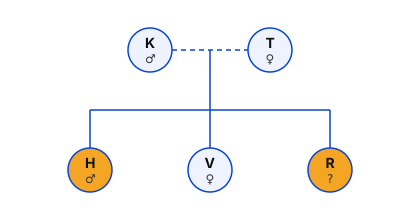
  1. H − V: H is the brother of V. V ÷ K: V is the daughter of K. K × T: K is the husband of T. T + R: T is the mother of R.
  2. K and T are a couple; V and R are their children.
  3. H is V's brother, so H is also a child of K and T – H is R's brother.

Trick: 'Brother of a daughter' and 'child of the same mother' put H and R in the same generation under the same parents.

Answer: (B) Brother

अवधारणा: हर प्रतीक को क्रम से डिकोड कर वंश-वृक्ष बनाएँ।

  1. H − V: H, V का भाई। V ÷ K: V, K की बेटी। K × T: K, T का पति। T + R: T, R की माँ।
  2. K और T दंपति हैं; V और R उनकी संतानें हैं।
  3. H, V का भाई है, अतः H भी K–T की संतान है – H, R का भाई है।

ट्रिक: 'बेटी का भाई' और 'उसी माँ की संतान' – H और R एक ही माता-पिता की एक ही पीढ़ी में आते हैं।

उत्तर: (B) Brother

RRB NTPC Graduate CBT 1General Intelligence and ReasoningBlood RelationsRRB NTPC Graduate CBT 1 2025 · 16 Mar Shift 3 →
Q6864.
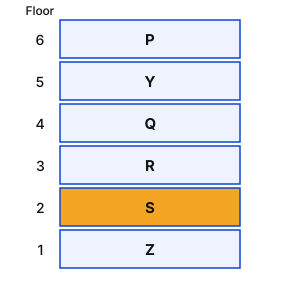
P, Q, R, S, Y, and Z live on six different floors of the same building. The lowermost floor in the building is numbered 1, the floor above it, number 2 and so on till the topmost floor, which is numbered 6.
Only three people live between Y and Z. Only P lives above Y. R lives on an odd- numbered floor. Q lives immediately below Y.
Who lives on floor number 2?
P, Q, R, S, Y और Z एक ही भवन की छह अलग-अलग मंज़िलों पर रहते हैं। भवन की सबसे निचली मंज़िल की संख्या 1 है, उसके ऊपर की मंज़िल की संख्या 2 है, और इसी प्रकार सबसे ऊपरी मंज़िल तक, जिसकी संख्या 6 है।
Y और Z के बीच केवल तीन व्यक्ति रहते हैं। Y के ऊपर केवल P रहता है। R विषम संख्या वाली मंज़िल पर रहता है। Q, Y के ठीक नीचे रहता है।
मंज़िल संख्या 2 पर कौन रहता है?
  1. AS
  2. BY
  3. CP
  4. DQ
Show answer

Concept: Start with the most definite clue and fill floors 6 → 1.

  1. Only P lives above Y → P on 6, Y on 5.
  2. Q immediately below Y → Q on 4.
  3. Three people between Y and Z → Z on 1.
  4. R on an odd floor → R on 3; the remaining floor 2 goes to S.

Trick: 'Only X lives above Y' fixes two floors at once – always begin there.

Answer: (A) S

अवधारणा: सबसे निश्चित सुराग से शुरू कर मंज़िलें 6 → 1 भरें।

  1. Y के ऊपर केवल P → P मंज़िल 6, Y मंज़िल 5।
  2. Q, Y के ठीक नीचे → Q मंज़िल 4।
  3. Y और Z के बीच तीन लोग → Z मंज़िल 1।
  4. R विषम मंज़िल पर → R मंज़िल 3; बची मंज़िल 2 पर S।

ट्रिक: 'Y के ऊपर केवल X' एक साथ दो मंज़िलें तय कर देता है – वहीं से शुरू करें।

उत्तर: (A) S

RRB NTPC Graduate CBT 1General Intelligence and ReasoningFloor PuzzleRRB NTPC Graduate CBT 1 2025 · 16 Mar Shift 3 →
Q6865.
Read the given statements and conclusions carefully. Assuming that the information given in the statements is true, even if it appears to be at variance with commonly known facts, decide which of the given conclusion(s) logically follow(s) from the statements.
Statements:
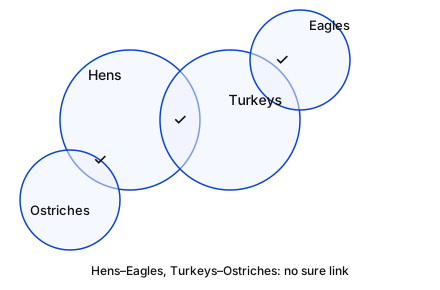
Some hens are turkeys. Some hens are ostriches. Some turkeys are eagles.
Conclusions:
(I) Some hens are eagles.
(II) Some turkeys are ostriches.
दिए गए कथनों और निष्कर्षों को ध्यानपूर्वक पढ़िए। यह मानते हुए कि कथनों में दी गई जानकारी सत्य है, भले ही वह सामान्यतः ज्ञात तथ्यों से भिन्न प्रतीत होती हो, निर्णय कीजिए कि दिए गए निष्कर्षों में से कौन-सा/कौन-से निष्कर्ष कथनों का तार्किक रूप से अनुसरण करता है/करते हैं।
कथन:
कुछ मुर्गियाँ टर्की हैं। कुछ मुर्गियाँ शुतुरमुर्ग हैं। कुछ टर्की चील हैं।
निष्कर्ष:
(I) कुछ मुर्गियाँ चील हैं।
(II) कुछ टर्की शुतुरमुर्ग हैं।
  1. AOnly conclusion (I) follows.केवल निष्कर्ष (I) अनुसरण करता है।
  2. BOnly conclusion (II) follows.केवल निष्कर्ष (II) अनुसरण करता है।
  3. CBoth conclusions (I) and (II) follow.निष्कर्ष (I) और (II) दोनों अनुसरण करते हैं।
  4. DNeither conclusion (I) nor (II) follows.न तो निष्कर्ष (I) और न ही (II) अनुसरण करता है।
Show answer

Concept: Two 'Some' statements joined through a middle term give no definite conclusion.

  1. Hens–turkeys and turkeys–eagles are both 'Some' links, so hens and eagles need not overlap → (I) does not follow.
  2. Turkeys and ostriches are linked only through 'Some hens', so they need not overlap → (II) does not follow.
  3. Neither conclusion is certain.

Trick: Some + Some = no conclusion (I–I rule).

Answer: (D) Neither conclusion (I) nor (II) follows.

अवधारणा: मध्य पद से जुड़े दो 'कुछ' कथनों से कोई निश्चित निष्कर्ष नहीं निकलता।

  1. मुर्गी–टर्की और टर्की–चील दोनों 'कुछ' वाले संबंध हैं, अतः मुर्गी और चील का जुड़ना ज़रूरी नहीं → (I) नहीं निकलता।
  2. टर्की और शुतुरमुर्ग केवल 'कुछ मुर्गी' से जुड़े हैं, उनका मिलना आवश्यक नहीं → (II) नहीं निकलता।
  3. दोनों निष्कर्ष अनिश्चित हैं।

ट्रिक: कुछ + कुछ = कोई निष्कर्ष नहीं (I–I नियम)।

उत्तर: (D) Neither conclusion (I) nor (II) follows.

RRB NTPC Graduate CBT 1General Intelligence and ReasoningSyllogismRRB NTPC Graduate CBT 1 2025 · 16 Mar Shift 3 →
Q6866.
Select the triad which follows the same pattern as that followed by the two pairs given below. Both pairs follow the same pattern.
BALD-BADL-ABLD
EPIC-EPCI-PEIC
उस त्रिक (triad) का चयन कीजिए जो नीचे दिए गए दो युग्मों द्वारा अनुसरण किए गए पैटर्न का ही अनुसरण करता है। दोनों युग्म एक ही पैटर्न का अनुसरण करते हैं।
BALD-BADL-ABLD
EPIC-EPCI-PEIC
  1. APART-RTPA-APTR
  2. BFIRE-IREF-FRIE
  3. CHIKE-HIEK-IHKE
  4. DCOME-COEM-OEMC
Show answer

Concept: Find how letter positions move from word 1 → 2 → 3.

  1. BALD → BADL: last two letters swap (positions 3,4).
  2. BADL → ABLD: first pair swaps and last pair swaps again.
  3. EPIC → EPCI → PEIC follows the same rule.
  4. HIKE → HIEK (swap 3,4) → IHKE (swap both pairs) ✓.

Trick: Mark positions 1234 → 1243 → 2134; test only this on options.

Answer: (C) HIKE-HIEK-IHKE

अवधारणा: शब्द 1 → 2 → 3 में अक्षरों की स्थिति कैसे बदलती है, देखें।

  1. BALD → BADL: अंतिम दो अक्षर आपस में बदलते हैं (स्थान 3,4)।
  2. BADL → ABLD: पहला जोड़ा बदलता है और अंतिम जोड़ा फिर बदलता है।
  3. EPIC → EPCI → PEIC भी यही नियम।
  4. HIKE → HIEK (3,4 बदलें) → IHKE (दोनों जोड़े बदलें) ✓।

ट्रिक: स्थान 1234 → 1243 → 2134 लिखें; विकल्पों में सिर्फ़ यही जाँचें।

उत्तर: (C) HIKE-HIEK-IHKE

RRB NTPC Graduate CBT 1General Intelligence and ReasoningLetter Arrangement AnalogyRRB NTPC Graduate CBT 1 2025 · 16 Mar Shift 3 →
Q6867.
Which of the given letter-number clusters will replace the question mark (?) in the following series to make it logically complete?
JHF 3 RPN 5 ZXV 8 HFD 12 ?
निम्नलिखित श्रेणी को तार्किक रूप से पूर्ण करने के लिए दिए गए अक्षर-संख्या समूहों में से कौन-सा प्रश्नचिह्न (?) के स्थान पर आएगा?
JHF 3 RPN 5 ZXV 8 HFD 12 ?
  1. ABJP 15
  2. BSYV 17
  3. CKDU 19
  4. DPNL 17
Show answer

Concept: Treat the letters and the numbers as two separate series.

  1. Letters: J→R→Z→H→? each is +8 positions; within a cluster letters go −2 (JHF, RPN…). H+8 = P, so PNL.
  2. Numbers: 3,5,8,12 have differences 2,3,4 → next difference 5 → 17.
  3. Required cluster: PNL 17.

Trick: Only the first letter decides here – P 17 appears in a single option.

Answer: (D) PNL 17

अवधारणा: अक्षरों और संख्याओं को दो अलग शृंखलाएँ मानें।

  1. अक्षर: J→R→Z→H→? हर बार +8 स्थान; समूह के भीतर अक्षर −2 (JHF, RPN…)। H+8 = P, अतः PNL।
  2. संख्याएँ: 3,5,8,12 के अंतर 2,3,4 → अगला अंतर 5 → 17।
  3. अभीष्ट समूह: PNL 17।

ट्रिक: यहाँ पहला अक्षर ही तय कर देता है – P 17 केवल एक विकल्प में है।

उत्तर: (D) PNL 17

RRB NTPC Graduate CBT 1General Intelligence and ReasoningLetter–Number SeriesRRB NTPC Graduate CBT 1 2025 · 16 Mar Shift 3 →
Q6868.
Refer to the following number and symbol series and answer the question that follows. All numbers are single-digit numbers only.
(Left) 6 8 @ ! 4 5 ^ 5 * 9 & 4 $ # 3 @ 1 + ? 8 (Right)
If all the symbols are dropped from the series, which of the following will be seventh from the right?
निम्नलिखित संख्या और प्रतीक श्रेणी को देखिए और उसके बाद दिए गए प्रश्न का उत्तर दीजिए। सभी संख्याएँ केवल एक अंक की संख्याएँ हैं।
(बाएँ) 6 8 @ ! 4 5 ^ 5 * 9 & 4 $ # 3 @ 1 + ? 8 (दाएँ)
यदि श्रेणी से सभी प्रतीक हटा दिए जाएँ, तो निम्नलिखित में से कौन-सा दाएँ से सातवाँ होगा?
  1. A5
  2. B9
  3. C1
  4. D6
Show answer

Concept: Rewrite the series after dropping the symbols, then count from the right.

  1. Numbers only (left to right): 6 8 4 5 5 9 4 3 1 8.
  2. From the right: 8 (1st), 1, 3, 4, 9, 5, 5 (7th).
  3. Seventh from the right = 5.

Trick: 7th from right in 10 items = 4th from left → 5.

Answer: (A) 5

अवधारणा: प्रतीक हटाकर शृंखला दोबारा लिखें, फिर दाएँ से गिनें।

  1. केवल संख्याएँ (बाएँ से दाएँ): 6 8 4 5 5 9 4 3 1 8।
  2. दाएँ से: 8 (पहला), 1, 3, 4, 9, 5, 5 (सातवाँ)।
  3. दाएँ से सातवाँ = 5।

ट्रिक: 10 पदों में दाएँ से 7वाँ = बाएँ से 4था → 5।

उत्तर: (A) 5

RRB NTPC Graduate CBT 1General Intelligence and ReasoningSymbol–Number SeriesRRB NTPC Graduate CBT 1 2025 · 16 Mar Shift 3 →
Q6869.
In a certain code language, ‘APES’ is coded as ‘4583’ and ‘PEAT’ is coded as ‘6438’. What is the code for ‘S’ in that language?
एक निश्चित कूट भाषा में, ‘APES’ को ‘4583’ और ‘PEAT’ को ‘6438’ के रूप में कूटबद्ध किया जाता है। उस भाषा में ‘S’ का कूट क्या है?
  1. A4
  2. B5
  3. C8
  4. D6
Show answer

Concept: Compare the two words: letters common to both share the common digits.

  1. APES = 4583, PEAT = 6438. Common letters: P, E, A. Common digits: 4, 8, 3.
  2. The uncommon letter in APES is S, and its uncommon digit is 5.
  3. So S = 5 (and T = 6).

Trick: Strike out common digits – the leftover digit belongs to the leftover letter.

Answer: (B) 5

अवधारणा: दोनों शब्दों की तुलना करें: दोनों में समान अक्षरों के अंक भी समान होते हैं।

  1. APES = 4583, PEAT = 6438। समान अक्षर: P, E, A। समान अंक: 4, 8, 3।
  2. APES में असमान अक्षर S है और असमान अंक 5।
  3. अतः S = 5 (और T = 6)।

ट्रिक: समान अंक काट दें – बचा अंक बचे अक्षर का कोड है।

उत्तर: (B) 5

RRB NTPC Graduate CBT 1General Intelligence and ReasoningCoding–DecodingRRB NTPC Graduate CBT 1 2025 · 16 Mar Shift 3 →
Q6870.
In a certain code language, ‘TIER’ is coded as ‘2735’ and ‘TIME’ is coded as ‘3475’. What is the code for ‘M’ in the given code language?
एक निश्चित कूट भाषा में, ‘TIER’ को ‘2735’ और ‘TIME’ को ‘3475’ के रूप में कूटबद्ध किया जाता है। दी गई कूट भाषा में ‘M’ का कूट क्या है?
  1. A5
  2. B7
  3. C4
  4. D3
Show answer

Concept: Common letters of two words get the common digits.

  1. TIER = 2735, TIME = 3475. Common letters: T, I, E. Common digits: 3, 7, 5.
  2. Uncommon letter in TIME is M; uncommon digit is 4.
  3. So M = 4 (and R = 2).

Trick: Cancel the shared digits; the leftover digit is the leftover letter's code.

Answer: (C) 4

अवधारणा: दो शब्दों के समान अक्षरों को समान अंक मिलते हैं।

  1. TIER = 2735, TIME = 3475। समान अक्षर: T, I, E। समान अंक: 3, 7, 5।
  2. TIME में असमान अक्षर M; असमान अंक 4।
  3. अतः M = 4 (और R = 2)।

ट्रिक: साझा अंक काटें; बचा अंक बचे अक्षर का कोड।

उत्तर: (C) 4

RRB NTPC Graduate CBT 1General Intelligence and ReasoningCoding–DecodingRRB NTPC Graduate CBT 1 2025 · 16 Mar Shift 3 →
Q6871.
Read the given statements and conclusions carefully. Assuming that the information given in the statements is true, even if it appears to be at variance with commonly known facts, decide which of the given conclusions logically follow(s) from the statements.
Statements:
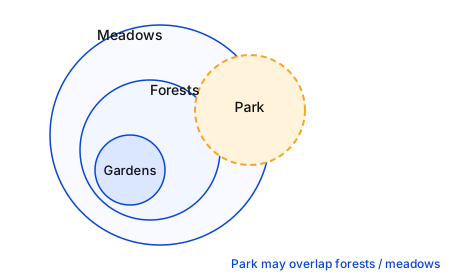
All gardens are forests. All forests are meadows. No garden is a park.
Conclusions:
(I) No forest is a park.
(II) No meadow is a park.
दिए गए कथनों और निष्कर्षों को ध्यानपूर्वक पढ़िए। यह मानते हुए कि कथनों में दी गई जानकारी सत्य है, भले ही वह सामान्यतः ज्ञात तथ्यों से भिन्न प्रतीत होती हो, निर्णय कीजिए कि दिए गए निष्कर्षों में से कौन-सा/कौन-से निष्कर्ष कथनों का तार्किक रूप से अनुसरण करता है/करते हैं।
कथन:
सभी बगीचे वन हैं। सभी वन घास के मैदान हैं। कोई बगीचा पार्क नहीं है।
निष्कर्ष:
(I) कोई वन पार्क नहीं है।
(II) कोई घास का मैदान पार्क नहीं है।
  1. ANeither conclusion (I) nor (II) followsन तो निष्कर्ष (I) और न ही (II) अनुसरण करता है
  2. BOnly conclusion (I) followsकेवल निष्कर्ष (I) अनुसरण करता है
  3. CBoth conclusions (I) and (II) followनिष्कर्ष (I) और (II) दोनों अनुसरण करते हैं
  4. DOnly conclusion (II) followsकेवल निष्कर्ष (II) अनुसरण करता है
Show answer

Concept: 'All A are B' puts A inside B; 'No A is C' only keeps C away from A, not from the bigger set B.

  1. Gardens ⊂ Forests ⊂ Meadows, and Park is outside Gardens.
  2. Park can still overlap the part of Forests outside Gardens → 'No forest is a park' is not certain.
  3. Likewise Park can overlap Meadows → (II) not certain. Neither follows.

Trick: A negative statement about the smallest set never transfers to the bigger sets containing it.

Answer: (A) Neither conclusion (I) nor (II) follows

अवधारणा: 'सभी A, B हैं' A को B के अंदर रखता है; 'कोई A, C नहीं' केवल C को A से दूर रखता है, बड़े समुच्चय B से नहीं।

  1. Gardens ⊂ Forests ⊂ Meadows, और Park, Gardens के बाहर है।
  2. Park फिर भी Forests के Gardens से बाहर वाले भाग से मिल सकता है → 'कोई forest, park नहीं' निश्चित नहीं।
  3. इसी तरह Park, Meadows से मिल सकता है → (II) निश्चित नहीं। कोई नहीं निकलता।

ट्रिक: सबसे छोटे समुच्चय का नकारात्मक कथन उसे समेटने वाले बड़े समुच्चयों पर कभी लागू नहीं होता।

उत्तर: (A) Neither conclusion (I) nor (II) follows

RRB NTPC Graduate CBT 1General Intelligence and ReasoningSyllogismRRB NTPC Graduate CBT 1 2025 · 16 Mar Shift 3 →
Q6872.
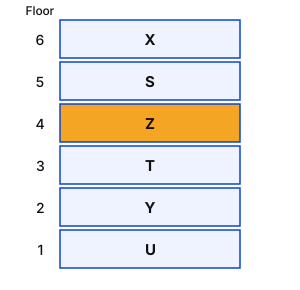
X, Y, Z, S, T and U live on six different floors of the same building. The lowermost floor in the building is numbered 1, the floor above it is numbered 2 and so on till the topmost floor is numbered 6. S lives on floor number 5. X lives on a floor above S. Only U lives below Y. Z lives on an even numbered floor. How many people live below Z?
X, Y, Z, S, T और U एक ही भवन की छह अलग-अलग मंज़िलों पर रहते हैं। भवन की सबसे निचली मंज़िल की संख्या 1 है, उसके ऊपर की मंज़िल की संख्या 2 है, और इसी प्रकार सबसे ऊपरी मंज़िल तक, जिसकी संख्या 6 है। S मंज़िल संख्या 5 पर रहता है। X, S के ऊपर की किसी मंज़िल पर रहता है। Y के नीचे केवल U रहता है। Z सम संख्या वाली मंज़िल पर रहता है। Z के नीचे कितने व्यक्ति रहते हैं?
  1. AThreeतीन
  2. BFourचार
  3. CTwoदो
  4. DOneएक
Show answer

Concept: Fix definite positions first, then use parity (odd/even) clues.

  1. S on 5; X above S → X on 6.
  2. Only U below Y → U on 1, Y on 2.
  3. Z on an even floor: only 4 is left even → Z on 4; T on 3.
  4. Below Z: T, Y, U = three people.

Trick: People below floor n = n−1; Z on 4 → 3 people.

Answer: (A) Three

अवधारणा: पहले निश्चित स्थान तय करें, फिर सम/विषम सुराग लगाएँ।

  1. S मंज़िल 5; X, S के ऊपर → X मंज़िल 6।
  2. Y के नीचे केवल U → U मंज़िल 1, Y मंज़िल 2।
  3. Z सम मंज़िल पर: केवल 4 बची सम मंज़िल → Z मंज़िल 4; T मंज़िल 3।
  4. Z के नीचे: T, Y, U = तीन लोग।

ट्रिक: मंज़िल n के नीचे लोग = n−1; Z मंज़िल 4 → 3 लोग।

उत्तर: (A) Three

RRB NTPC Graduate CBT 1General Intelligence and ReasoningFloor PuzzleRRB NTPC Graduate CBT 1 2025 · 16 Mar Shift 3 →
Q6873.
Refer to the following letter, number, symbol series and answer the question. (All numbers are single digit numbers only.)
(Left) R % C * E 3 K 6 $ 7 D @ 2 T Y # 4 5 G & S (Right)
If all the letters are dropped from the series, which of the following will be fourth from the right?
निम्नलिखित अक्षर, संख्या और प्रतीक श्रेणी को देखिए और प्रश्न का उत्तर दीजिए। (सभी संख्याएँ केवल एक अंक की संख्याएँ हैं।)
(बाएँ) R % C * E 3 K 6 $ 7 D @ 2 T Y # 4 5 G & S (दाएँ)
यदि श्रेणी से सभी अक्षर हटा दिए जाएँ, तो निम्नलिखित में से कौन-सा दाएँ से चौथा होगा?
  1. A@
  2. B4
  3. C#
  4. D2
Show answer

Concept: Remove the letters, rewrite the series and count from the right.

  1. Without letters: % * 3 6 $ 7 @ 2 # 4 5 &.
  2. From the right: & (1st), 5 (2nd), 4 (3rd), # (4th).
  3. Fourth from the right = #.

Trick: Cross out letters on paper in one pass – never try to count mentally in the mixed series.

Answer: (C) #

अवधारणा: अक्षर हटाकर शृंखला दोबारा लिखें और दाएँ से गिनें।

  1. अक्षरों के बिना: % * 3 6 $ 7 @ 2 # 4 5 &।
  2. दाएँ से: & (पहला), 5 (दूसरा), 4 (तीसरा), # (चौथा)।
  3. दाएँ से चौथा = #।

ट्रिक: काग़ज़ पर एक बार में अक्षर काट दें – मिश्रित शृंखला में मन में गिनने की कोशिश न करें।

उत्तर: (C) #

RRB NTPC Graduate CBT 1General Intelligence and ReasoningLetter–Symbol SeriesRRB NTPC Graduate CBT 1 2025 · 16 Mar Shift 3 →
Q6874.
52 is related to 144 following a certain logic. Following the same logic, 81 is related to 173. To which of the following is 63 related, following the same logic?
(NOTE: Operations should be performed on the whole numbers, without breaking down the numbers into their constituent digits. E.g. 13 – Operations on 13 such as adding/ subtracting /multiplying to 13 can be performed. Breaking down 13 into 1 and 3 and then performing mathematical operations on 1 and 3 is not allowed.)
एक निश्चित तर्क के अनुसार 52, 144 से संबंधित है। उसी तर्क के अनुसार 81, 173 से संबंधित है। उसी तर्क का अनुसरण करते हुए, 63 निम्नलिखित में से किससे संबंधित है?
(नोट: संक्रियाएँ पूर्ण संख्याओं पर की जानी चाहिए, संख्याओं को उनके घटक अंकों में तोड़े बिना। उदाहरण के लिए 13 – 13 पर संक्रियाएँ जैसे 13 में जोड़ना/घटाना/गुणा करना किया जा सकता है। 13 को 1 और 3 में तोड़कर फिर 1 और 3 पर गणितीय संक्रियाएँ करने की अनुमति नहीं है।)
  1. A165
  2. B175
  3. C145
  4. D155
Show answer

Concept: Find one operation that converts both given first numbers to their partners.

  1. 144−52=92 and 173−81=92 – the same number is added each time.
  2. So the rule is +92.
  3. 63+92=155.

Trick: Always check the plain difference first; if it is equal in both pairs, the rule is addition.

Answer: (D) 155

अवधारणा: ऐसी एक संक्रिया खोजें जो दोनों दी गई पहली संख्याओं को उनके जोड़ीदार में बदले।

  1. 144−52=92 और 173−81=92 – हर बार वही संख्या जुड़ी है।
  2. अतः नियम +92।
  3. 63+92=155।

ट्रिक: पहले सीधा अंतर देखें; दोनों जोड़ों में बराबर हो तो नियम जोड़ है।

उत्तर: (D) 155

RRB NTPC Graduate CBT 1General Intelligence and ReasoningNumber AnalogyRRB NTPC Graduate CBT 1 2025 · 16 Mar Shift 3 →
Q6875.
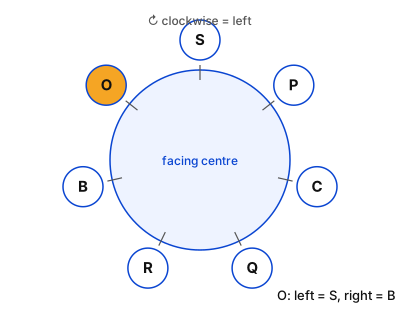
Seven people B, C, O, P, Q, R and S are sitting around a circular table facing the center of the table. B sits second to the right of S. Q sits third to the left of S. Only two people sit between P and R when counted from the right of R. C is an immediate neighbor of P. Who sits to the immediate left and right of O, respectively?
सात व्यक्ति B, C, O, P, Q, R और S एक वृत्ताकार मेज़ के चारों ओर मेज़ के केंद्र की ओर मुख करके बैठे हैं। B, S के दाएँ दूसरे स्थान पर बैठा है। Q, S के बाएँ तीसरे स्थान पर बैठा है। R के दाएँ से गिनने पर P और R के बीच केवल दो व्यक्ति बैठे हैं। C, P का निकटतम पड़ोसी है। O के ठीक बाएँ और ठीक दाएँ क्रमशः कौन बैठे हैं?
  1. AS and BS और B
  2. BC and BC और B
  3. CS and PS और P
  4. DC and SC और S
Show answer

Concept: Facing the centre, left = clockwise, right = anticlockwise. Fix S and place others.

  1. B is 2nd to the right of S; Q is 3rd to the left of S.
  2. Two people between P and R from R's right: of the free seats, only R at 2nd left of S and P immediately left of S satisfy this (the other choice puts P on B's seat).
  3. C is P's neighbour → C between P and Q; the last seat, between B and S, is O.
  4. Immediate left of O is S, immediate right of O is B.

Trick: Number seats clockwise 0–6 with S = 0: right = −, left = +; then B = 5, Q = 3, R = 4, P = 1, C = 2, O = 6.

Answer: (A) S and B

अवधारणा: केंद्र की ओर मुख होने पर बायाँ = दक्षिणावर्त, दायाँ = वामावर्त। S को स्थिर कर बाकी बैठाएँ।

  1. B, S के दाएँ दूसरा; Q, S के बाएँ तीसरा।
  2. R के दाएँ से गिनने पर P और R के बीच दो लोग: खाली सीटों में केवल R = S के बाएँ दूसरा और P = S के ठीक बाएँ यह शर्त पूरी करते हैं (दूसरा विकल्प P को B की सीट पर रखता है)।
  3. C, P का पड़ोसी → C, P और Q के बीच; अंतिम सीट, B और S के बीच, O की।
  4. O के ठीक बाएँ S, ठीक दाएँ B।

ट्रिक: सीटें दक्षिणावर्त 0–6 लिखें, S = 0: दायाँ = −, बायाँ = +; तब B = 5, Q = 3, R = 4, P = 1, C = 2, O = 6।

उत्तर: (A) S and B

RRB NTPC Graduate CBT 1General Intelligence and ReasoningCircular SeatingRRB NTPC Graduate CBT 1 2025 · 16 Mar Shift 3 →
Q6876.
Each of the digits in the number 52697148 is arranged in descending order from left to right. What will be the product of the digits which are third from the left and second from the right in the number thus formed?
संख्या 52697148 के प्रत्येक अंक को बाएँ से दाएँ अवरोही क्रम में व्यवस्थित किया जाता है। इस प्रकार बनी संख्या में बाएँ से तीसरे और दाएँ से दूसरे अंकों का गुणनफल क्या होगा?
  1. A14
  2. B12
  3. C16
  4. D28
Show answer

Concept: Rearrange the digits as asked, then pick the required positions.

  1. Digits of 52697148: 5, 2, 6, 9, 7, 1, 4, 8.
  2. Descending: 9 8 7 6 5 4 2 1.
  3. Third from left = 7; second from right = 2; product =7×2=14.

Trick: Digits 0–9 with only 3 missing (0, 3) – write 9 to 1 and skip 3.

Answer: (A) 14

अवधारणा: अंकों को कहे अनुसार जमाएँ, फिर माँगे गए स्थान चुनें।

  1. 52697148 के अंक: 5, 2, 6, 9, 7, 1, 4, 8।
  2. अवरोही क्रम: 9 8 7 6 5 4 2 1।
  3. बाएँ से तीसरा = 7; दाएँ से दूसरा = 2; गुणनफल =7×2=14।

ट्रिक: 0–9 में केवल 0 और 3 नहीं हैं – 9 से 1 लिखें और 3 छोड़ दें।

उत्तर: (A) 14

RRB NTPC Graduate CBT 1General Intelligence and ReasoningDigit ArrangementRRB NTPC Graduate CBT 1 2025 · 16 Mar Shift 3 →
Q6877.
In a certain code language,
E + F means ‘E is the brother of F’,
E – F means ‘E is the father of F’,
E x F means ‘E is the husband of F’ and
E ÷ F means ‘E is the mother of F’.
How is P related to T if ‘P + Q – R x S ÷ T’?
एक निश्चित कूट भाषा में,
E + F का अर्थ है ‘E, F का भाई है’,
E – F का अर्थ है ‘E, F का पिता है’,
E x F का अर्थ है ‘E, F का पति है’ और
E ÷ F का अर्थ है ‘E, F की माता है’।
यदि ‘P + Q – R x S ÷ T’ है, तो P, T से किस प्रकार संबंधित है?
  1. AFather's Father's Brotherपिता के पिता का भाई
  2. BFather's Brotherपिता का भाई
  3. CFatherपिता
  4. DBrotherभाई
Show answer

Concept: Decode left to right and climb the generations.

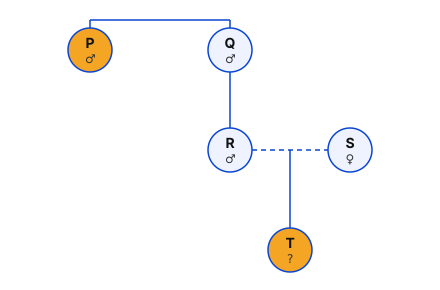
  1. P + Q: P is Q's brother. Q − R: Q is R's father. R × S: R is S's husband. S ÷ T: S is T's mother.
  2. So T's father is R, R's father is Q, and Q's brother is P.
  3. P is the brother of T's father's father.

Trick: Count the '−' and '÷' (parent links): two generations up from T, then 'brother' → father's father's brother.

Answer: (A) Father's Father's Brother

अवधारणा: बाएँ से दाएँ डिकोड करें और पीढ़ियाँ ऊपर चढ़ें।

  1. P + Q: P, Q का भाई। Q − R: Q, R का पिता। R × S: R, S का पति। S ÷ T: S, T की माँ।
  2. अतः T का पिता R, R का पिता Q, और Q का भाई P।
  3. P, T के पिता के पिता (दादा) का भाई है।

ट्रिक: '−' और '÷' (माता-पिता संबंध) गिनें: T से दो पीढ़ी ऊपर, फिर 'भाई' → दादा का भाई।

उत्तर: (A) Father's Father's Brother

RRB NTPC Graduate CBT 1General Intelligence and ReasoningBlood RelationsRRB NTPC Graduate CBT 1 2025 · 16 Mar Shift 3 →
Q6878.
Under the Delhi Women & Child Development (WCD) Department’s Women Safety Policy, 2025, what mandatory arrangement must be made for women staff if they are required to work late hours?
दिल्ली महिला एवं बाल विकास (WCD) विभाग की महिला सुरक्षा नीति, 2025 के अंतर्गत, यदि महिला कर्मचारियों को देर रात तक काम करना पड़े तो उनके लिए कौन-सी अनिवार्य व्यवस्था की जानी चाहिए?
  1. AAccommodationआवास
  2. BDinnerरात्रि भोजन
  3. CBonusबोनस
  4. DTransportपरिवहन
Show answer

Concept: The Delhi WCD Department's Women Safety Policy, 2025 lays down workplace duties towards women employees.

  1. If women staff are required to work late hours, the employer must mandatorily arrange safe transport (pick-up/drop) for them.
  2. Accommodation, dinner or bonus are not prescribed as compulsory arrangements.

Yaad rakhein: Late-night duty for women → safe transport home is the rule (also the spirit of the Shops & Establishments night-shift norms).

Answer: (D) Transport

अवधारणा: दिल्ली WCD विभाग की महिला सुरक्षा नीति, 2025 कार्यस्थल पर महिला कर्मचारियों के प्रति दायित्व तय करती है।

  1. यदि महिला कर्मचारियों से देर रात काम कराना हो तो नियोक्ता को उनके लिए सुरक्षित परिवहन (transport) की अनिवार्य व्यवस्था करनी होगी।
  2. आवास, रात्रिभोज या बोनस अनिवार्य व्यवस्था के रूप में निर्धारित नहीं हैं।

याद रखें: महिलाओं की देर रात की ड्यूटी → घर तक सुरक्षित परिवहन ही नियम है।

उत्तर: (D) Transport

RRB NTPC Graduate CBT 1General AwarenessCurrent Affairs – Delhi Women Safety Policy 2025RRB NTPC Graduate CBT 1 2025 · 16 Mar Shift 2 →
Q6879.
Which shortcut selects all content in a document?
कौन-सा शॉर्टकट किसी दस्तावेज़ की सम्पूर्ण सामग्री को चुनता (select) है?
  1. ACtrl+R
  2. BCtrl+S
  3. CCtrl+E
  4. DCtrl+A
Show answer

Concept: Standard editing shortcuts are common to Windows applications like MS Word.

  1. Ctrl+A = Select All (A for All).
  2. Ctrl+S = Save, Ctrl+R = Right-align, Ctrl+E = Centre-align (in Word).

Yaad rakhein: A–All, S–Save, C–Copy, V–paste, X–cut, Z–undo.

Answer: (D) Ctrl+A

अवधारणा: MS Word जैसे Windows अनुप्रयोगों में संपादन के मानक शॉर्टकट एक जैसे होते हैं।

  1. Ctrl+A = Select All (A = All)।
  2. Ctrl+S = Save, Ctrl+R = Right-align, Ctrl+E = Centre-align (Word में)।

याद रखें: A–All, S–Save, C–Copy, V–paste, X–cut, Z–undo।

उत्तर: (D) Ctrl+A

RRB NTPC Graduate CBT 1General AwarenessComputer Awareness – Keyboard ShortcutsRRB NTPC Graduate CBT 1 2025 · 16 Mar Shift 2 →
Q6880.
During PM Narendra Modi’s State Visit to Bhutan (11–12 Nov 2025), which hydroelectric project was jointly inaugurated?
प्रधानमंत्री नरेन्द्र मोदी की भूटान की राजकीय यात्रा (11–12 नवंबर 2025) के दौरान किस जलविद्युत परियोजना का संयुक्त रूप से उद्घाटन किया गया?
  1. A720 MW Mangdechhu HEP720 MW मांगदेछू HEP
  2. B1020 MW Punatsangchhu-II HEP1020 MW पुनात्सांगछू-II HEP
  3. C1200 MW Punatsangchhu-I HEP1200 MW पुनात्सांगछू-I HEP
  4. D336 MW Chukha HEP336 MW चुखा HEP
Show answer

Concept: PM Modi's State Visit to Bhutan on 11–12 November 2025 coincided with the 70th birth anniversary celebrations of the Fourth King.

  1. PM Modi and Bhutan's PM Tobgay jointly inaugurated the 1020 MW Punatsangchhu-II Hydroelectric Project, built with Indian assistance.
  2. Mangdechhu (720 MW) was inaugurated in 2019; Punatsangchhu-I (1200 MW) is still under construction; Chukha (336 MW) is the oldest (1980s).

Yaad rakhein: Punatsangchhu-II = 1020 MW = inaugurated Nov 2025; Puna-I = 1200 MW = pending.

Answer: (B) 1020 MW Punatsangchhu-II HEP

अवधारणा: 11–12 नवंबर 2025 की भूटान राजकीय यात्रा चौथे राजा की 70वीं जयंती समारोह के साथ हुई।

  1. PM मोदी और भूटान के PM तोबगे ने भारतीय सहायता से बनी 1020 MW पुनात्सांगछू-II जलविद्युत परियोजना का संयुक्त उद्घाटन किया।
  2. मांगदेछू (720 MW) का उद्घाटन 2019 में हुआ; पुनात्सांगछू-I (1200 MW) अभी निर्माणाधीन है; चुखा (336 MW) सबसे पुरानी है।

याद रखें: पुनात्सांगछू-II = 1020 MW = नवंबर 2025 में उद्घाटन; पुना-I = 1200 MW = लंबित।

उत्तर: (B) 1020 MW Punatsangchhu-II HEP

RRB NTPC Graduate CBT 1General AwarenessCurrent Affairs – India-BhutanRRB NTPC Graduate CBT 1 2025 · 16 Mar Shift 2 →