Question bank

Q&A: practice questions with answers

Search questions on any topic. Filter by exam category, exam, subject and topic, try the question, then open the answer and explanation.

Courses – airGurukul

7,077 questions found.

Q681.
If 1 is added to each even digit and each odd digit in the number 76341528, what will be the sum of all the odd digits in the new number thus formed?
यदि संख्या 76341528 में प्रत्येक सम अंक और प्रत्येक विषम अंक में 1 जोड़ा जाए, तो इस प्रकार बनी नई संख्या में सभी विषम अंकों का योग क्या होगा?
  1. A28
  2. B22
  3. C24
  4. D26
Show answer

Concept: Add 1 to every digit, then pick the odd digits of the new number.

  1. Number: 7 6 3 4 1 5 2 8.
  2. After adding 1: 8 7 4 5 2 6 3 9.
  3. Odd digits: 7, 5, 3, 9; sum =7+5+3+9=24.

Trick: Adding 1 flips parity: the odd digits of the new number come from the even digits 6, 4, 2, 8 → 7, 5, 3, 9.

Answer: (C) 24

अवधारणा: हर अंक में 1 जोड़ें, फिर नई संख्या के विषम अंक चुनें।

  1. संख्या: 7 6 3 4 1 5 2 8।
  2. 1 जोड़ने पर: 8 7 4 5 2 6 3 9।
  3. विषम अंक: 7, 5, 3, 9; योग =7+5+3+9=24।

ट्रिक: 1 जोड़ने से सम-विषम बदल जाता है: नए विषम अंक पुराने सम अंकों 6, 4, 2, 8 से बनते हैं → 7, 5, 3, 9।

उत्तर: (C) 24
RRB NTPC Graduate CBT 1General Intelligence and ReasoningNumber OperationsRRB NTPC Graduate CBT 1 2024 · 21 Jun Shift 3 →
Q682.
What should come in place of the question mark (?) in the given series?
1212 1220 1230 1242 1256 ?
दी गई श्रृंखला में प्रश्न चिह्न (?) के स्थान पर क्या आना चाहिए?
1212 1220 1230 1242 1256 ?
  1. A1272
  2. B1274
  3. C1268
  4. D1270
Show answer

Concept: The differences between consecutive terms increase by 2.

  1. Differences: 1220−1212=8, 1230−1220=10, 1242−1230=12, 1256−1242=14.
  2. Next difference =16.
  3. Missing term =1256+16=1272.

Trick: When differences are 8, 10, 12, 14 … the next is simply +16.

Answer: (A) 1272

अवधारणा: क्रमिक पदों का अंतर 2-2 से बढ़ रहा है।

  1. अंतर: 1220−1212=8, 1230−1220=10, 1242−1230=12, 1256−1242=14।
  2. अगला अंतर =16।
  3. लुप्त पद =1256+16=1272।

ट्रिक: अंतर 8, 10, 12, 14 … हों तो अगला +16।

उत्तर: (A) 1272

RRB NTPC Graduate CBT 1General Intelligence and ReasoningNumber SeriesRRB NTPC Graduate CBT 1 2024 · 21 Jun Shift 3 →
Q683.
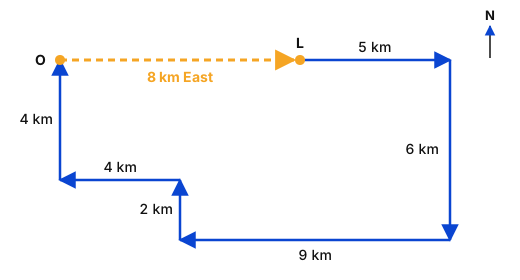
Mr. X starts from Point L and drives 5 km towards the east. He then takes a right turn, drives 6 km, turns right and drives 9 km. He then takes a right turn and drives 2 km, turns left, drives 4 km. He takes a final right turn, drives 4 km and stops at Point O. How far (shortest distance) and towards which direction should he drive in order to reach Point L again? (All turns are 90-degree turns only unless specified.)
श्री X, बिंदु L से चलना शुरू करते हैं और पूर्व की ओर 5 km गाड़ी चलाते हैं। फिर वे दाएँ मुड़ते हैं, 6 km गाड़ी चलाते हैं, दाएँ मुड़ते हैं और 9 km गाड़ी चलाते हैं। फिर वे दाएँ मुड़ते हैं और 2 km गाड़ी चलाते हैं, बाएँ मुड़ते हैं, 4 km गाड़ी चलाते हैं। वे अंतिम बार दाएँ मुड़ते हैं, 4 km गाड़ी चलाते हैं और बिंदु O पर रुक जाते हैं। फिर से बिंदु L पर पहुँचने के लिए उन्हें कितनी दूर (न्यूनतम दूरी) और किस दिशा में गाड़ी चलानी चाहिए? (जब तक निर्दिष्ट न किया जाए, सभी मोड़ केवल 90 डिग्री के मोड़ हैं।)
  1. A8 km towards the eastपूर्व की ओर 8 km
  2. B2 km towards the northउत्तर की ओर 2 km
  3. C7 km towards the westपश्चिम की ओर 7 km
  4. D2 km towards the southदक्षिण की ओर 2 km
Show answer

Concept: Take L as origin; East = +x, North = +y, and track each move.

  1. 5 km East → (5, 0); right turn = South 6 km → (5, −6).
  2. Right = West 9 km → (−4, −6); right = North 2 km → (−4, −4).
  3. Left = West 4 km → (−8, −4); right = North 4 km → O(−8, 0).
  4. O is 8 km due West of L, so he must drive 8 km towards the East.

Trick: Net E–W: 5−9−4=−8; net N–S: −6+2+4=0 → O is 8 km West of L.

Answer: (A) 8 km towards the east

अवधारणा: L को मूल बिंदु मानें; पूर्व = +x, उत्तर = +y।

  1. 5 km पूर्व → (5, 0); दाएँ मुड़कर दक्षिण 6 km → (5, −6)।
  2. दाएँ = पश्चिम 9 km → (−4, −6); दाएँ = उत्तर 2 km → (−4, −4)।
  3. बाएँ = पश्चिम 4 km → (−8, −4); दाएँ = उत्तर 4 km → O(−8, 0)।
  4. O, L से 8 km पश्चिम में है, अतः उसे 8 km पूर्व की ओर जाना होगा।

ट्रिक: पूर्व–पश्चिम: 5−9−4=−8; उत्तर–दक्षिण: −6+2+4=0 → O, L से 8 km पश्चिम।

उत्तर: (A) 8 km पूर्व की ओर

RRB NTPC Graduate CBT 1General Intelligence and ReasoningDirection and DistanceRRB NTPC Graduate CBT 1 2024 · 21 Jun Shift 3 →
Q684.
In a certain code language, ‘GATE’ is coded as ‘3647’ and ‘WING’ is coded as ‘1265’. What is the code for ‘G’ in the given code language?
एक निश्चित कूट भाषा में, ‘GATE’ को ‘3647’ के रूप में कूटबद्ध किया जाता है और ‘WING’ को ‘1265’ के रूप में कूटबद्ध किया जाता है। दी गई कूट भाषा में ‘G’ के लिए कूट क्या है?
  1. A3
  2. B5
  3. C6
  4. D7
Show answer

Concept: A letter common to two words takes the digit common to their codes.

  1. GATE → 3647 and WING → 1265.
  2. Common letter: G only. Common digit: 6 only.
  3. So G = 6.

Trick: Match the only common letter with the only common digit.

Answer: (C) 6

अवधारणा: दो शब्दों में उभयनिष्ठ अक्षर का कोड, उनके कोडों का उभयनिष्ठ अंक होता है।

  1. GATE → 3647 और WING → 1265।
  2. उभयनिष्ठ अक्षर: केवल G। उभयनिष्ठ अंक: केवल 6।
  3. अतः G = 6।

ट्रिक: एकमात्र उभयनिष्ठ अक्षर = एकमात्र उभयनिष्ठ अंक।

उत्तर: (C) 6

RRB NTPC Graduate CBT 1General Intelligence and ReasoningCoding–DecodingRRB NTPC Graduate CBT 1 2024 · 21 Jun Shift 3 →
Q685.
In the following triads, each group of letters is related to the subsequent one following a certain logic. Select from the given options, the one that follows the same logic. ARCE - CARE - ECRA
POLE - LPOE - ELOP
निम्नलिखित त्रिकों में, अक्षरों का प्रत्येक समूह एक निश्चित तर्क का अनुसरण करते हुए अगले समूह से संबंधित है। दिए गए विकल्पों में से उस विकल्प का चयन कीजिए जो उसी तर्क का अनुसरण करता है। ARCE - CARE - ECRA
POLE - LPOE - ELOP
  1. AWORM - RWOM - MROW
  2. BBING - IBNG - GINB
  3. CZEAP - AZEP - EAPZ
  4. DSAFE - SFAE - EFAS
Show answer

Concept: Find how the letters of the first cluster are rearranged.

  1. ARCE → CARE: letters in order 3-1-2-4; ARCE → ECRA: full reverse.
  2. POLE → LPOE (3-1-2-4) and ELOP (reverse) ✓.
  3. WORM → RWOM (3-1-2-4) and MROW (reverse) ✓.
  4. BING → IBNG (2-1-3-4) ✗; ZEAP → AZEP ✓ but EAPZ is not reverse ✗; SAFE → SFAE ✗.

Trick: Check the last cluster first – it must be the exact reverse of the first.

Answer: (A) WORM - RWOM - MROW

अवधारणा: पहले समूह के अक्षरों की पुनर्व्यवस्था पहचानें।

  1. ARCE → CARE: अक्षर क्रम 3-1-2-4; ARCE → ECRA: पूरा उल्टा।
  2. POLE → LPOE (3-1-2-4) और ELOP (उल्टा) ✓।
  3. WORM → RWOM (3-1-2-4) और MROW (उल्टा) ✓।
  4. BING → IBNG (2-1-3-4) ✗; ZEAP → AZEP ✓ पर EAPZ उल्टा नहीं ✗; SAFE → SFAE ✗।

ट्रिक: पहले अंतिम समूह जाँचें – वह पहले समूह का बिल्कुल उल्टा होना चाहिए।

उत्तर: (A) WORM - RWOM - MROW

RRB NTPC Graduate CBT 1General Intelligence and ReasoningLetter TriadsRRB NTPC Graduate CBT 1 2024 · 21 Jun Shift 3 →
Q686.
Based on the English alphabetical order, three of the following four letter-cluster pairs are alike in a certain way and thus form a group. Which letter-cluster pair DOES NOT belong to that group?
(Note: The odd one out is not based on the number of consonants/vowels or their position in the letter-cluster.)
अंग्रेज़ी वर्णमाला क्रम के आधार पर, निम्नलिखित चार अक्षर-समूह युग्मों में से तीन किसी निश्चित प्रकार से एकसमान हैं और इस प्रकार एक समूह बनाते हैं। कौन-सा अक्षर-समूह युग्म उस समूह से संबंधित नहीं है?
(नोट: असंगत अक्षर-समूह, उस अक्षर-समूह में व्यंजनों/स्वरों की संख्या या उनके स्थान पर आधारित नहीं है।)
  1. ANU – PX
  2. BKR – NU
  3. CEL – GO
  4. DAH – CK
Show answer

Concept: Compare the shift from the first cluster to the second, letter by letter.

  1. NU – PX: N→P +2, U→X +3.
  2. EL – GO: E→G +2, L→O +3; AH – CK: A→C +2, H→K +3.
  3. KR – NU: K→N +3, R→U +3 – a different pattern.

Trick: Write position numbers (A=1 … Z=26) and subtract; the odd shift stands out.

Answer: (B) KR – NU

अवधारणा: पहले समूह से दूसरे तक हर अक्षर का खिसकाव देखें।

  1. NU – PX: N→P +2, U→X +3।
  2. EL – GO: E→G +2, L→O +3; AH – CK: A→C +2, H→K +3।
  3. KR – NU: K→N +3, R→U +3 – अलग पैटर्न।

ट्रिक: स्थानीय मान (A=1 … Z=26) लिखकर घटाएँ; अलग खिसकाव तुरंत दिखेगा।

उत्तर: (B) KR – NU

RRB NTPC Graduate CBT 1General Intelligence and ReasoningOdd One Out – Letter PairsRRB NTPC Graduate CBT 1 2024 · 21 Jun Shift 3 →
Q687.
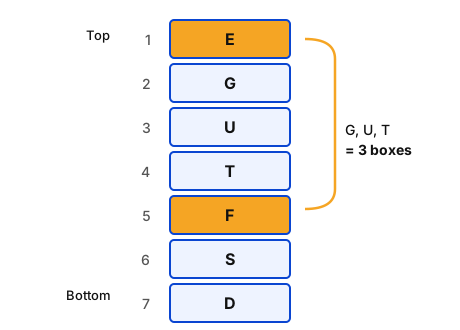
Seven boxes, D, E, F, G, S, T and U, are kept one over the other but not necessarily in the same order. U is kept immediately above T. S is kept immediately above D. Only E is kept above G. Only two boxes are kept above U. S is not kept at third position from the bottom. How many boxes are kept between F and E?
सात बक्से, D, E, F, G, S, T और U, एक के ऊपर एक रखे गए हैं, लेकिन ज़रूरी नहीं कि इसी क्रम में हों। U को T के ठीक ऊपर रखा गया है। S को D के ठीक ऊपर रखा गया है। G के ऊपर केवल E रखा गया है। U के ऊपर केवल दो बक्से रखे गए हैं। S को नीचे से तीसरे स्थान पर नहीं रखा गया है। F और E के बीच कितने बक्से रखे गए हैं?
  1. AThreeतीन
  2. BTwoदो
  3. COneएक
  4. DFourचार
Show answer

Concept: Number positions 1 (top) to 7 (bottom) and place fixed clues first.

  1. Only E above G → E = 1, G = 2.
  2. Only two above U → U = 3; U immediately above T → T = 4.
  3. S immediately above D: S–D at 5–6 or 6–7. S is not 3rd from bottom (position 5) → S = 6, D = 7, F = 5.
  4. Between F (5) and E (1): G, U, T = three boxes.

Trick: 'Only X above Y' instantly fixes X at the top and Y second.

Answer: (A) Three

अवधारणा: स्थान 1 (ऊपर) से 7 (नीचे) तक मानें और निश्चित सूचनाएँ पहले लगाएँ।

  1. केवल E, G के ऊपर → E = 1, G = 2।
  2. U के ऊपर केवल दो → U = 3; U ठीक T के ऊपर → T = 4।
  3. S ठीक D के ऊपर: S–D 5–6 या 6–7 पर। S नीचे से तीसरा (स्थान 5) नहीं → S = 6, D = 7, F = 5।
  4. F (5) और E (1) के बीच: G, U, T = तीन बॉक्स।

ट्रिक: 'केवल X, Y के ऊपर' से X सबसे ऊपर और Y दूसरे स्थान पर तय।

उत्तर: (A) तीन

RRB NTPC Graduate CBT 1General Intelligence and ReasoningBox ArrangementRRB NTPC Graduate CBT 1 2024 · 21 Jun Shift 3 →
Q688.
Refer to the following number and symbol series and answer the question that follows. Counting to be done from left to right only.
(Left) 6 @ $ 1 8 # 9 % ≺ 2 4 ⋟ 3 ^ 5 & 7 (Right)
How many such symbols are there, each of which is immediately preceded by a number and also immediately followed by another number?
निम्नलिखित संख्या और प्रतीक श्रृंखला को देखिए और नीचे दिए गए प्रश्न का उत्तर दीजिए। गिनती केवल बाएँ से दाएँ की जानी है।
(बाएँ) 6 @ $ 1 8 # 9 % ≺ 2 4 ⋟ 3 ^ 5 & 7 (दाएँ)
ऐसे कितने प्रतीक हैं, जिनमें से प्रत्येक के ठीक पहले एक संख्या है और ठीक बाद भी एक अन्य संख्या है?
  1. AThreeतीन
  2. BOneएक
  3. CMore than threeतीन से अधिक
  4. DTwoदो
Show answer

Concept: Look for the pattern Number – Symbol – Number.

  1. Series: 6 @ $ 1 8 # 9 % ≺ 2 4 ⋟ 3 ^ 5 & 7.
  2. Valid: 8 # 9, 4 ⋟ 3, 3 ^ 5, 5 & 7 → 4 symbols.
  3. @, $, % and ≺ each touch another symbol, so they do not count.
  4. 4 is more than three.

Trick: Scan only the symbols and check both neighbours of each.

Answer: (C) More than three

अवधारणा: पैटर्न संख्या – प्रतीक – संख्या खोजें।

  1. श्रृंखला: 6 @ $ 1 8 # 9 % ≺ 2 4 ⋟ 3 ^ 5 & 7।
  2. मान्य: 8 # 9, 4 ⋟ 3, 3 ^ 5, 5 & 7 → 4 प्रतीक।
  3. @, $, % और ≺ किसी प्रतीक से सटे हैं, अतः नहीं गिने जाते।
  4. 4, तीन से अधिक है।

ट्रिक: केवल प्रतीकों को देखें और हर प्रतीक के दोनों पड़ोसी जाँचें।

उत्तर: (C) तीन से अधिक

RRB NTPC Graduate CBT 1General Intelligence and ReasoningSymbol–Number SeriesRRB NTPC Graduate CBT 1 2024 · 21 Jun Shift 3 →
Q689.
What should come in place of the question mark (?) in the given series based on the English alphabetical order?
FRO RDA DPM PBY ?
अंग्रेज़ी वर्णमाला क्रम के आधार पर दी गई श्रृंखला में प्रश्न चिह्न (?) के स्थान पर क्या आना चाहिए?
FRO RDA DPM PBY ?
  1. ABKN
  2. BBNK
  3. CBHY
  4. DHBU
Show answer

Concept: Each letter moves +12 positions (cycling after Z).

  1. First letters: F(6) → R(18) → D(4) → P(16) → B(2) → N(14).
  2. Second letters: R → D → P → B → N.
  3. Third letters: O(15) → A(1) → M(13) → Y(25) → K(11).
  4. Next term = BNK.

Trick: +12 and −14 give the same letter; also each term's 2nd letter becomes the next term's 1st.

Answer: (B) BNK

अवधारणा: हर अक्षर +12 स्थान आगे (Z के बाद फिर A से)।

  1. पहले अक्षर: F(6) → R(18) → D(4) → P(16) → B(2) → N(14)।
  2. दूसरे अक्षर: R → D → P → B → N।
  3. तीसरे अक्षर: O(15) → A(1) → M(13) → Y(25) → K(11)।
  4. अगला पद = BNK।

ट्रिक: +12 और −14 समान अक्षर देते हैं; हर पद का दूसरा अक्षर अगले पद का पहला बनता है।

उत्तर: (B) BNK

RRB NTPC Graduate CBT 1General Intelligence and ReasoningLetter SeriesRRB NTPC Graduate CBT 1 2024 · 21 Jun Shift 3 →
Q690.
In a certain code language,
A + B means ‘A is the son of B’,
A – B means ‘A is the sister of B’,
A x B means ‘A is the wife of B’ and
A ÷ B means ‘A is the father of B’.
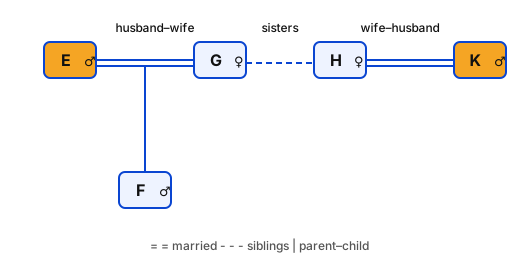
Based on the above, how is E related to K if ‘E ÷ F + G – H x K’?
एक निश्चित कूट भाषा में,
A + B का अर्थ है ‘A, B का पुत्र है’,
A – B का अर्थ है ‘A, B की बहन है’,
A x B का अर्थ है ‘A, B की पत्नी है’ और
A ÷ B का अर्थ है ‘A, B का पिता है’।
उपरोक्त के आधार पर, यदि ‘E ÷ F + G – H x K’ है, तो E का K से क्या संबंध है?
  1. AWife's brother's sonपत्नी के भाई का पुत्र
  2. BWife's sister's husbandपत्नी की बहन का पति
  3. CWife's sister's sonपत्नी की बहन का पुत्र
  4. D​Wife's brother's wifeपत्नी के भाई की पत्नी
Show answer

Concept: Decode each symbol from left to right.

  1. E ÷ F: E is the father of F. F + G: F is the son of G, so G is F's mother, i.e. E's wife.
  2. G – H: G is the sister of H. H × K: H is the wife of K.
  3. So K's wife is H, H's sister is G, and G's husband is E.
  4. E is K's wife's sister's husband.

Trick: Draw the couples with double lines – the relation reads straight off the chart.

Answer: (B) Wife's sister's husband

अवधारणा: हर प्रतीक को बाएँ से दाएँ डिकोड करें।

  1. E ÷ F: E, F का पिता। F + G: F, G का पुत्र; अतः G, F की माँ यानी E की पत्नी।
  2. G – H: G, H की बहन। H × K: H, K की पत्नी।
  3. अतः K की पत्नी H, H की बहन G, और G का पति E।
  4. E, K की पत्नी की बहन का पति है।

ट्रिक: पति-पत्नी को दोहरी रेखा से जोड़ें – संबंध चार्ट से सीधे पढ़ें।

उत्तर: (B) पत्नी की बहन का पति

RRB NTPC Graduate CBT 1General Intelligence and ReasoningBlood Relations – CodedRRB NTPC Graduate CBT 1 2024 · 21 Jun Shift 3 →
Q691.
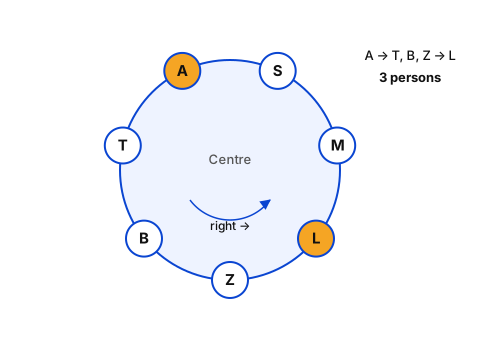
A, B, L, M, S, T and Z are sitting around a circular table facing the centre. Only one person sits between B and L when counted from the left of L. S sits third to the right of Z. M sits third to the left of T. S sits to the immediate right of M. A is not an immediate neighbour of M. How many people sit between A and L when counted from the right of A?
A, B, L, M, S, T और Z एक वृत्ताकार मेज़ के चारों ओर केंद्र की ओर मुख करके बैठे हैं। L के बाएँ से गिनने पर B और L के बीच केवल एक व्यक्ति बैठा है। S, Z के दाएँ से तीसरे स्थान पर बैठा है। M, T के बाएँ से तीसरे स्थान पर बैठा है। S, M के ठीक दाएँ बैठा है। A, M का निकटतम पड़ोसी नहीं है। A के दाएँ से गिनने पर A और L के बीच कितने व्यक्ति बैठे हैं?
  1. A2
  2. B4
  3. C3
  4. D1
Show answer

Concept: For people facing the centre, 'right' is anticlockwise and 'left' is clockwise.

  1. Fix Z. S is third to the right of Z; M is immediately left of S; T is third to the right of M.
  2. Remaining seats for A, B, L: two seats beside Z and the seat between S and T.
  3. B is second to the left of L. If A sat next to Z on M's side, A would neighbour M – not allowed. So A sits between S and T, L between Z and M, B between T and Z.
  4. From A going right: T, B, Z, then L → 3 people.

Trick: Place the chain Z → M → S → T first; only three seats remain to test.

Answer: (C) 3

अवधारणा: केंद्र की ओर मुख वालों के लिए 'दाएँ' = घड़ी की विपरीत दिशा, 'बाएँ' = घड़ी की दिशा।

  1. Z को स्थिर करें। S, Z के दाएँ तीसरा; M, S के ठीक बाएँ; T, M के दाएँ तीसरा।
  2. A, B, L के लिए बचे स्थान: Z के दोनों ओर और S व T के बीच।
  3. B, L के बाएँ दूसरा है। यदि A, M की ओर Z के पास बैठे तो वह M का पड़ोसी बनेगा – मना है। अतः A, S और T के बीच; L, Z और M के बीच; B, T और Z के बीच।
  4. A से दाएँ गिनें: T, B, Z, फिर L → 3 व्यक्ति।

ट्रिक: पहले Z → M → S → T की श्रृंखला बैठाएँ; केवल तीन स्थान जाँचने बचते हैं।

उत्तर: (C) 3

RRB NTPC Graduate CBT 1General Intelligence and ReasoningCircular Seating ArrangementRRB NTPC Graduate CBT 1 2024 · 21 Jun Shift 3 →
Q692.
Which of the given letter-clusters should replace # and % so that the pattern and relationship followed between the letter-cluster pair on the left side of :: is the same as that on the right side of ::?
# : ZTW :: NHK : %
दिए गए अक्षर-समूहों में से कौन-सा # और % को प्रतिस्थापित करे ताकि :: के बाईं ओर के अक्षर-समूह युग्म के बीच का पैटर्न और संबंध वही हो जो :: के दाईं ओर है?
# : ZTW :: NHK : %
  1. A# = UGF, % = SPR
  2. B# = UKH, % = OHY
  3. C# = UOR, % = SMP
  4. D# = UPL, % = TYF
Show answer

Concept: Find the rule from the complete pair and apply it to both sides of ::.

  1. Option C: UOR → ZTW: U+5=Z, O+5=T, R+5=W.
  2. NHK → SMP: N+5=S, H+5=M, K+5=P – same rule +5.
  3. Other options do not give a single consistent rule on both sides.

Trick: Test each option on the left pair first; the moment it fails, drop it.

Answer: (C) # = UOR, % = SMP

अवधारणा: पूरी जोड़ी से नियम खोजें और :: के दोनों ओर लागू करें।

  1. विकल्प C: UOR → ZTW: U+5=Z, O+5=T, R+5=W।
  2. NHK → SMP: N+5=S, H+5=M, K+5=P – वही नियम +5।
  3. अन्य विकल्प दोनों ओर एक समान नियम नहीं देते।

ट्रिक: हर विकल्प पहले बाईं जोड़ी पर जाँचें; विफल होते ही छोड़ दें।

उत्तर: (C) # = UOR, % = SMP

RRB NTPC Graduate CBT 1General Intelligence and ReasoningLetter AnalogyRRB NTPC Graduate CBT 1 2024 · 21 Jun Shift 3 →
Q693.
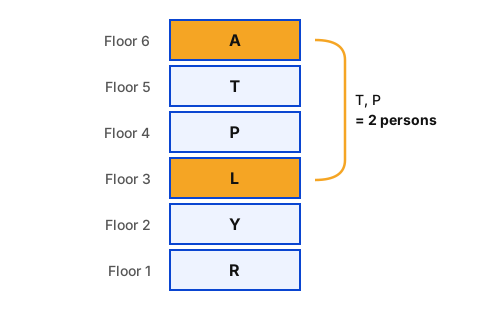
P, A, R, T, L and Y live on six different floors of the same building. The lowermost floor in the building is numbered 1, the floor above it, number 2 and so on till the topmost floor is numbered 6. No one lives below R. Only A lives above T. Only two people live between R and P. Y lives on an even numbered floor. R lives on the lowermost floor. How many people live between L and A?
P, A, R, T, L और Y एक ही इमारत की छह अलग-अलग मंज़िलों पर रहते हैं। इमारत की सबसे निचली मंज़िल की संख्या 1 है, उसके ऊपर वाली मंज़िल की संख्या 2 है और इसी प्रकार सबसे ऊपरी मंज़िल की संख्या 6 है। R के नीचे कोई नहीं रहता है। T के ऊपर केवल A रहता है। R और P के बीच केवल दो व्यक्ति रहते हैं। Y एक सम संख्या वाली मंज़िल पर रहता है। R सबसे निचली मंज़िल पर रहता है। L और A के बीच कितने व्यक्ति रहते हैं?
  1. AZeroशून्य
  2. BThreeतीन
  3. CTwoदो
  4. DOneएक
Show answer

Concept: Fill the definite clues first.

  1. R lives on floor 1.
  2. Only A above T → A = 6, T = 5.
  3. Only two between R (1) and P → P = 4.
  4. Y on an even floor → Y = 2 (4 and 6 are taken), so L = 3.
  5. Between L (3) and A (6): T and P → two people.

Trick: 'Only X above Y' → X on the top floor, Y just below it.

Answer: (C) Two

अवधारणा: पहले निश्चित सूचनाएँ भरें।

  1. R मंज़िल 1 पर।
  2. केवल A, T के ऊपर → A = 6, T = 5।
  3. R (1) और P के बीच केवल दो → P = 4।
  4. Y सम मंज़िल पर → Y = 2 (4 और 6 भरे हैं), अतः L = 3।
  5. L (3) और A (6) के बीच: T और P → दो व्यक्ति।

ट्रिक: 'केवल X, Y के ऊपर' → X सबसे ऊपर, Y ठीक नीचे।

उत्तर: (C) दो

RRB NTPC Graduate CBT 1General Intelligence and ReasoningFloor PuzzleRRB NTPC Graduate CBT 1 2024 · 21 Jun Shift 3 →
Q694.
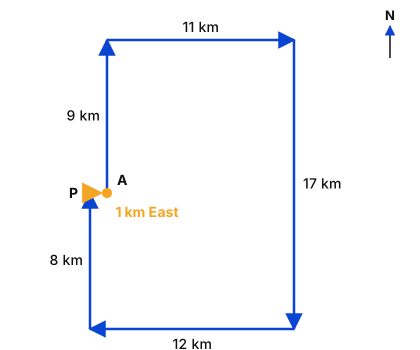
Mr. PQR starts from Point A and drives 9 km towards the north. He then takes a right turn, drives 11 km, turns right and drives 17 km. He then takes a right turn and drives 12 km. He takes a final right turn, drives 8 km and stops at Point P. How far (shortest distance) and in which direction should he drive in order to reach Point A again? (All turns are 90-degree turns only unless specified)
श्री PQR, बिंदु A से चलना शुरू करते हैं और उत्तर की ओर 9 km गाड़ी चलाते हैं। फिर वे दाएँ मुड़ते हैं, 11 km गाड़ी चलाते हैं, दाएँ मुड़ते हैं और 17 km गाड़ी चलाते हैं। फिर वे दाएँ मुड़ते हैं और 12 km गाड़ी चलाते हैं। वे अंतिम बार दाएँ मुड़ते हैं, 8 km गाड़ी चलाते हैं और बिंदु P पर रुक जाते हैं। फिर से बिंदु A पर पहुँचने के लिए उन्हें कितनी दूर (न्यूनतम दूरी) और किस दिशा में गाड़ी चलानी चाहिए? (जब तक निर्दिष्ट न किया जाए, सभी मोड़ केवल 90 डिग्री के मोड़ हैं)
  1. A5 km to the westपश्चिम की ओर 5 km
  2. B7 km to the eastपूर्व की ओर 7 km
  3. C1 km to the eastपूर्व की ओर 1 km
  4. D3 km to the westपश्चिम की ओर 3 km
Show answer

Concept: Take A as origin; East = +x, North = +y.

  1. North 9 → (0, 9); right = East 11 → (11, 9).
  2. Right = South 17 → (11, −8); right = West 12 → (−1, −8).
  3. Right = North 8 → P(−1, 0).
  4. P is 1 km West of A, so he must drive 1 km to the East.

Trick: Net E–W: 11−12=−1; net N–S: 9−17+8=0.

Answer: (C) 1 km to the east

अवधारणा: A को मूल बिंदु मानें; पूर्व = +x, उत्तर = +y।

  1. उत्तर 9 → (0, 9); दाएँ = पूर्व 11 → (11, 9)।
  2. दाएँ = दक्षिण 17 → (11, −8); दाएँ = पश्चिम 12 → (−1, −8)।
  3. दाएँ = उत्तर 8 → P(−1, 0)।
  4. P, A से 1 km पश्चिम है, अतः उसे 1 km पूर्व जाना होगा।

ट्रिक: पूर्व–पश्चिम: 11−12=−1; उत्तर–दक्षिण: 9−17+8=0।

उत्तर: (C) 1 km पूर्व की ओर

RRB NTPC Graduate CBT 1General Intelligence and ReasoningDirection and DistanceRRB NTPC Graduate CBT 1 2024 · 21 Jun Shift 3 →
Q695.
Read the given statements and conclusions carefully. Assuming that the information given in the statements is true, even if it appears to be at variance with commonly known facts, decide which of the given conclusion(s) logically follow(s) from the statements.
Statements:
All letters are message.
Some messages are emails.
No email is a post.
Conclusions:
(I) No letter is a post.
(II) Some emails are letters.
दिए गए कथनों और निष्कर्षों को ध्यानपूर्वक पढ़िए। यह मानते हुए कि कथनों में दी गई जानकारी सत्य है, भले ही वह सामान्यतः ज्ञात तथ्यों से भिन्न प्रतीत होती हो, निर्णय कीजिए कि दिए गए निष्कर्षों में से कौन-सा/से निष्कर्ष तार्किक रूप से कथनों का अनुसरण करता है/करते हैं।
कथन:
सभी पत्र, संदेश हैं।
कुछ संदेश, ईमेल हैं।
कोई ईमेल, डाक नहीं है।
निष्कर्ष:
(I) कोई पत्र, डाक नहीं है।
(II) कुछ ईमेल, पत्र हैं।
  1. ABoth conclusions (I) and (II) followनिष्कर्ष (I) और (II) दोनों अनुसरण करते हैं
  2. BNeither conclusion (I) nor (II) followsन तो निष्कर्ष (I) और न ही (II) अनुसरण करता है
  3. COnly conclusion (II) followsकेवल निष्कर्ष (II) अनुसरण करता है
  4. DOnly conclusion (I) followsकेवल निष्कर्ष (I) अनुसरण करता है
Show answer

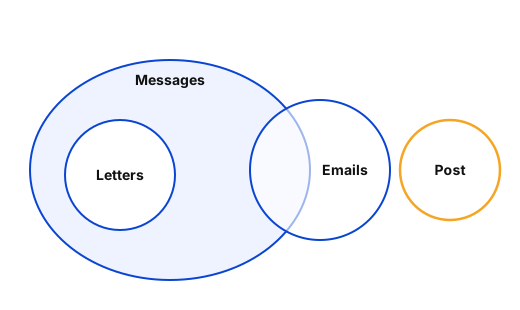
Concept: A conclusion follows only if it is true in every possible diagram.

  1. All letters are messages; some messages are emails; no email is a post.
  2. Letters may lie in the part of 'messages' outside 'emails', so 'Some emails are letters' is not certain – (II) fails.
  3. Post is barred only from emails; letters may still overlap post, so 'No letter is a post' is not certain – (I) fails.

Trick: 'Some' linking through the middle term (messages) never gives a definite link between letters and emails.

Answer: (B) Neither conclusion (I) nor (II) follows

अवधारणा: निष्कर्ष तभी निकलता है जब वह हर संभव आरेख में सत्य हो।

  1. सभी letters, messages हैं; कुछ messages, emails हैं; कोई email, post नहीं।
  2. Letters, messages के उस भाग में हो सकते हैं जो emails से बाहर है, अतः 'कुछ emails, letters हैं' निश्चित नहीं – (II) असत्य।
  3. Post केवल emails से अलग है; letters का post से मेल संभव है, अतः 'कोई letter, post नहीं' निश्चित नहीं – (I) असत्य।

ट्रिक: मध्य पद (messages) से जुड़ा 'कुछ' letters और emails के बीच निश्चित संबंध नहीं देता।

उत्तर: (B) न तो निष्कर्ष (I) और न ही (II) निकलता है

RRB NTPC Graduate CBT 1General Intelligence and ReasoningSyllogismRRB NTPC Graduate CBT 1 2024 · 21 Jun Shift 3 →
Q696.
Which of the following letter-number clusters will replace the question mark (?) in the given series to make it logically complete?
NR25 MQ36 LP47 KO58 ?
निम्नलिखित में से कौन-सा अक्षर-संख्या समूह दी गई श्रृंखला में प्रश्न चिह्न (?) को प्रतिस्थापित करके उसे तार्किक रूप से पूर्ण करेगा?
NR25 MQ36 LP47 KO58 ?
  1. AJM68
  2. BJN69
  3. CJN68
  4. DJM69
Show answer

Concept: Treat the two letters and the number separately.

  1. 1st letter: N, M, L, K → J (−1).
  2. 2nd letter: R, Q, P, O → N (−1).
  3. Number: 25, 36, 47, 58 → 69 (+11).
  4. Next term = JN69.

Trick: Number +11 rules out JM68, JN68; letter −1 rules out JM69.

Answer: (B) JN69

अवधारणा: दोनों अक्षरों और संख्या को अलग-अलग देखें।

  1. पहला अक्षर: N, M, L, K → J (−1)।
  2. दूसरा अक्षर: R, Q, P, O → N (−1)।
  3. संख्या: 25, 36, 47, 58 → 69 (+11)।
  4. अगला पद = JN69।

ट्रिक: संख्या +11 से JM68, JN68 बाहर; अक्षर −1 से JM69 बाहर।

उत्तर: (B) JN69

RRB NTPC Graduate CBT 1General Intelligence and ReasoningAlphanumeric SeriesRRB NTPC Graduate CBT 1 2024 · 21 Jun Shift 3 →
Q697.
If 1 is added to each odd digit and 1 is subtracted from each even digit in the number 2637458, what will be the sum of the greatest and the smallest digits in the new number thus formed?
यदि संख्या 2637458 में प्रत्येक विषम अंक में 1 जोड़ा जाए और प्रत्येक सम अंक में से 1 घटाया जाए, तो इस प्रकार बनी नई संख्या में सबसे बड़े और सबसे छोटे अंक का योग क्या होगा?
  1. A9
  2. B8
  3. C11
  4. D10
Show answer

Concept: Change each digit by its own rule: odd +1, even −1.

  1. Number: 2 6 3 7 4 5 8.
  2. New: 1 5 4 8 3 6 7.
  3. Greatest digit =8, smallest =1; sum =9.

Trick: Odd digits rise and even digits fall, so check 7 → 8 (largest) and 2 → 1 (smallest) directly.

Answer: (A) 9

अवधारणा: हर अंक पर नियम लगाएँ: विषम +1, सम −1।

  1. संख्या: 2 6 3 7 4 5 8।
  2. नई संख्या: 1 5 4 8 3 6 7।
  3. सबसे बड़ा अंक =8, सबसे छोटा =1; योग =9।

ट्रिक: विषम बढ़ते हैं, सम घटते हैं; सीधे 7 → 8 (सबसे बड़ा) और 2 → 1 (सबसे छोटा) देखें।

उत्तर: (A) 9

RRB NTPC Graduate CBT 1General Intelligence and ReasoningNumber OperationsRRB NTPC Graduate CBT 1 2024 · 21 Jun Shift 3 →
Q698.
According to the UNEP Emissions Gap Report 2024, what is the projected global temperature rise by the end of the century if current policies continue?
UNEP उत्सर्जन अंतराल रिपोर्ट (Emissions Gap Report) 2024 के अनुसार, यदि वर्तमान नीतियाँ जारी रहती हैं, तो सदी के अंत तक वैश्विक तापमान में कितनी वृद्धि का अनुमान है?
  1. A3.1%
  2. B4.6%
  3. C3.8%
  4. D4.8%
Show answer

Concept: The UNEP Emissions Gap Report 2024 (titled “No more hot air … please!”) estimates warming under current policies.

  1. If current policies continue, global temperature is projected to rise by about 3.1 °C above pre-industrial levels by 2100.
  2. Even if all current NDC pledges are implemented, warming would still be about 2.6–2.8 °C – far above the Paris goal of 1.5 °C.

Yaad rakhein: Emissions Gap 2024 → “3.1” (current policies); remember the Paris target 1.5 °C.

Answer: (A) 3.1 (°C)

अवधारणा: UNEP की Emissions Gap Report 2024 वर्तमान नीतियों के आधार पर तापमान वृद्धि का अनुमान बताती है।

  1. यदि वर्तमान नीतियाँ जारी रहीं तो सदी के अंत (2100) तक वैश्विक तापमान पूर्व-औद्योगिक स्तर से लगभग 3.1 °C बढ़ सकता है।
  2. सभी NDC वादे पूरे होने पर भी वृद्धि लगभग 2.6–2.8 °C रहेगी – पेरिस लक्ष्य 1.5 °C से बहुत अधिक।

याद रखें: Emissions Gap 2024 → “3.1” (वर्तमान नीतियाँ); पेरिस लक्ष्य 1.5 °C।

उत्तर: (A) 3.1 (°C)

RRB NTPC Graduate CBT 1General AwarenessClimate Change – UNEP ReportRRB NTPC Graduate CBT 1 2024 · 21 Jun Shift 2 →
Q699.
Which of the following MS PowerPoint features allows you to record the timing for each slide and any narration or laser pointer movements to be replayed automatically during a slideshow?
MS PowerPoint की निम्नलिखित में से कौन-सी सुविधा आपको प्रत्येक स्लाइड का समय तथा कोई भी वर्णन (narration) या लेज़र पॉइंटर की गतिविधियाँ रिकॉर्ड करने देती है, ताकि स्लाइड शो के दौरान उन्हें स्वचालित रूप से पुनः चलाया जा सके?
  1. APresenter View
  2. BSet Up Slide Show
  3. CRecord Slide Show
  4. DRehearse Timings
Show answer

Concept: PowerPoint’s Slide Show tab has tools to rehearse and record presentations.

  1. Record Slide Show records slide timings plus narration, ink and laser-pointer movements, which replay automatically.
  2. Rehearse Timings records only the time spent on each slide – no narration or pointer.
  3. Presenter View shows notes to the speaker; Set Up Slide Show sets show options.

Trick: Narration / laser pointer = Record; only time = Rehearse.

Answer: (C) Record Slide Show

अवधारणा: PowerPoint के Slide Show टैब में प्रस्तुति रिहर्स व रिकॉर्ड करने के टूल होते हैं।

  1. Record Slide Show हर स्लाइड का समय और narration (आवाज़), ink व laser pointer की गति रिकॉर्ड करता है, जो स्लाइड शो में अपने आप चलती है।
  2. Rehearse Timings केवल हर स्लाइड का समय रिकॉर्ड करता है – आवाज़/पॉइंटर नहीं।
  3. Presenter View वक्ता को नोट्स दिखाता है; Set Up Slide Show विकल्प सेट करता है।

ट्रिक: आवाज़/लेज़र पॉइंटर = Record; केवल समय = Rehearse।

उत्तर: (C) Record Slide Show

RRB NTPC Graduate CBT 1General AwarenessMS PowerPointRRB NTPC Graduate CBT 1 2024 · 21 Jun Shift 2 →
Q700.
The Badami caves in Karnataka have been built by which of the following rulers?
कर्नाटक की बादामी गुफाओं का निर्माण निम्नलिखित में से किन शासकों द्वारा किया गया था?
  1. AMauryasमौर्य
  2. BPandyasपांड्य
  3. CPallavasपल्लव
  4. DChalukyasचालुक्य
Show answer

Concept: The Badami (Vatapi) rock-cut caves were excavated by the Chalukyas of Badami in the 6th century CE.

  1. Badami was the capital of the early Chalukyas (Pulakeshin I founded it); Cave 3 was made under Mangalesha (578 CE).
  2. The four caves have Hindu and Jain carvings – Vishnu, Shiva (Nataraja) and Jain Tirthankaras.
  3. Pallavas built Mahabalipuram (Tamil Nadu), not Badami.

Yaad rakhein: Badami–Aihole–Pattadakal = Chalukya triangle of Karnataka.

Answer: (D) Chalukyas

अवधारणा: बादामी (वातापी) की शैलकृत गुफाएँ छठी शताब्दी ई. में बादामी के चालुक्यों ने बनवाईं।

  1. बादामी प्रारंभिक चालुक्यों की राजधानी थी (पुलकेशिन I); गुफा 3 मंगलेश (578 ई.) के समय बनी।
  2. चार गुफाओं में हिंदू व जैन मूर्तियाँ हैं – विष्णु, शिव (नटराज), जैन तीर्थंकर।
  3. पल्लवों ने महाबलीपुरम (तमिलनाडु) बनवाया, बादामी नहीं।

याद रखें: बादामी–ऐहोल–पट्टदकल = कर्नाटक का चालुक्य त्रिकोण।

उत्तर: (D) चालुक्य

RRB NTPC Graduate CBT 1General AwarenessAncient Indian ArchitectureRRB NTPC Graduate CBT 1 2024 · 21 Jun Shift 2 →