- A148
- B60
- C174
- D77
Show answer
Concept: Empirical relation: .
- .
- .
Trick: Remember '3 Median minus 2 Mean'.
Answer: (A) 148
अवधारणा: आनुभविक संबंध: ।
- ।
- ।
ट्रिक: याद रखें: '3 माध्यिका − 2 माध्य'।
उत्तर: (A) 148
Question bank
Search questions on any topic. Filter by exam category, exam, subject and topic, try the question, then open the answer and explanation.
Concept: Empirical relation: .
Trick: Remember '3 Median minus 2 Mean'.
Answer: (A) 148
अवधारणा: आनुभविक संबंध: ।
ट्रिक: याद रखें: '3 माध्यिका − 2 माध्य'।
उत्तर: (A) 148
Concept: Form two linear equations from the statements and solve.
Trick: Sum of two ages after n years = present sum + 2n.
Answer: (C) 16
अवधारणा: कथनों से दो रैखिक समीकरण बनाकर हल करें।
ट्रिक: n वर्ष बाद दो व्यक्तियों की आयु का योग = वर्तमान योग + 2n।
उत्तर: (C) 16
Concept: .
Trick: Interest is in 10 years → per year.
Answer: (B)
अवधारणा: ।
ट्रिक: 10 वर्षों में ब्याज → प्रति वर्ष ।
उत्तर: (B)
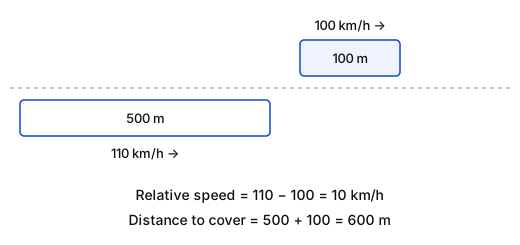
Concept: Overtaking in the same direction: time = (sum of lengths) ÷ (difference of speeds).
Trick: In km and hours: min.
Answer: (C) 3.6
अवधारणा: समान दिशा में आगे निकलना: समय = (लंबाइयों का योग) ÷ (चालों का अंतर)।
ट्रिक: km और घंटे में: मिनट।
उत्तर: (C) 3.6
Concept: Express both conditions in terms of Burhan's time and subtract.
Trick: Doubling speed halves the time: half of Anirudh's time = 3 + 2 = 5 h, so time = 10 h, speed = 9 km/h.
Answer: (C) 9 km/hr
अवधारणा: दोनों शर्तों को बुरहान के समय के रूप में लिखकर घटाएँ।
ट्रिक: चाल दोगुनी → समय आधा: अनिरुद्ध के समय का आधा = 3 + 2 = 5 घंटे, अतः समय 10 घंटे, चाल 9 km/h।
उत्तर: (C) 9 km/hr
Concept: and .
Trick: If , then .
Answer: (D) 756
अवधारणा: तथा ।
ट्रिक: यदि , तो ।
उत्तर: (D) 756
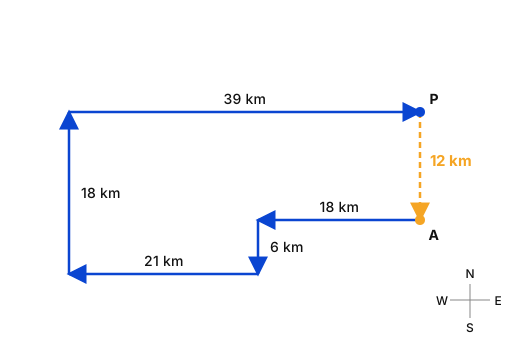
Concept: Track the position with East–West and North–South totals; a left turn while facing West means facing South, a right turn means facing North.
Trick: Net E–W: ; net N–S: North → go back South.
Answer: (A) 12 km to the South
अवधारणा: पूर्व–पश्चिम और उत्तर–दक्षिण की कुल दूरी अलग-अलग जोड़ें; पश्चिम की ओर मुँह हो तो बायाँ मोड़ = दक्षिण, दायाँ मोड़ = उत्तर।
ट्रिक: शुद्ध E–W: ; शुद्ध N–S: उत्तर → वापसी दक्षिण की ओर।
उत्तर: (A) 12 km दक्षिण की ओर
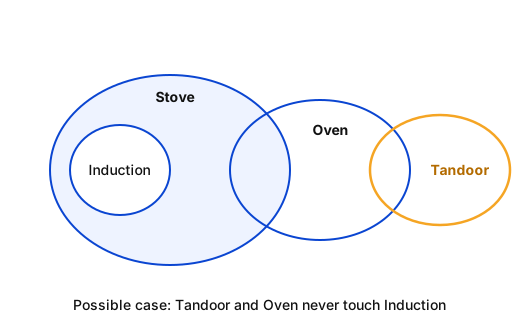
Concept: A conclusion follows only if it is true in every possible Venn diagram of the statements.
Trick: “Some + Some” or “All + Some” never gives a definite “some” link to the first term.
Answer: (A) Neither conclusion (I) nor (II) follows
अवधारणा: निष्कर्ष तभी अनुसरण करता है जब वह कथनों के हर संभव वेन आरेख में सत्य हो।
ट्रिक: “कुछ + कुछ” या “सभी + कुछ” से पहले पद के साथ कोई निश्चित “कुछ” संबंध नहीं बनता।
उत्तर: (A) न तो (I) और न ही (II) अनुसरण करता है
Concept: Check the differences between consecutive terms.
Trick: Second differences constant (5) → keep adding 5 to the last gap.
Answer: (C)
अवधारणा: क्रमागत पदों का अंतर देखें।
ट्रिक: दूसरा अंतर स्थिर (5) → अंतिम अंतर में 5 जोड़ते जाएँ।
उत्तर: (C)
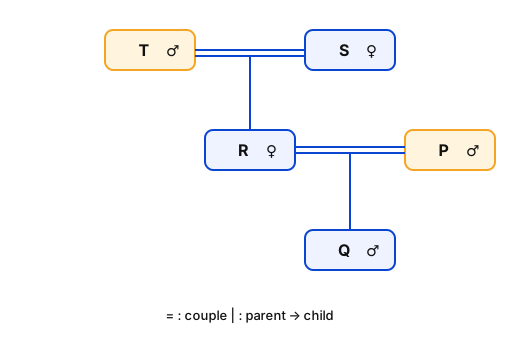
Concept: Decode each symbol step by step and draw the family tree.
Trick: Go from T downwards: T → daughter R → her husband P.
Answer: (A) Daughter's husband
अवधारणा: प्रत्येक चिह्न का अर्थ क्रम से लगाएँ और परिवार वृक्ष बनाएँ।
ट्रिक: T से नीचे चलें: T → पुत्री R → उसका पति P।
उत्तर: (A) पुत्री का पति (Daughter's husband)
Concept: A word common to two sentences has the code common to both coded sentences.
Trick: Match the common word with the common code – order of codes does not matter.
Answer: (D) mu
अवधारणा: दो वाक्यों में उभयनिष्ठ शब्द का कोड दोनों कोडित वाक्यों में उभयनिष्ठ होता है।
ट्रिक: उभयनिष्ठ शब्द ↔ उभयनिष्ठ कोड – कोड का क्रम मायने नहीं रखता।
उत्तर: (D) mu
Concept: Treat the first letter, second letter and number as three separate series.
Trick: Both letters move back 1; number → FJ76.
Answer: (D) FJ76
अवधारणा: पहला अक्षर, दूसरा अक्षर और संख्या – तीनों को अलग श्रृंखला मानें।
ट्रिक: दोनों अक्षर 1 पीछे; संख्या → FJ76।
उत्तर: (D) FJ76
Concept: Swap the signs first, then solve using BODMAS.
Trick: Write the new expression fully before calculating – most errors come from half-swapped signs.
Answer: (B)
अवधारणा: पहले चिह्न बदलें, फिर BODMAS से हल करें।
ट्रिक: गणना से पहले नया व्यंजक पूरा लिख लें – आधे बदले चिह्नों से ही गलती होती है।
उत्तर: (B)
Concept: Find the letter-shift that turns the left term into the right term in each pair.
Trick: Check one option at a time with the same +5 rule on both sides.
Answer: (B) # = LQN, % = LQN
अवधारणा: हर जोड़ी में बाएँ पद को दाएँ पद में बदलने वाला अक्षर-अंतर खोजें।
ट्रिक: दोनों ओर एक ही +5 नियम से विकल्प जाँचें।
उत्तर: (B) # = LQN, % = LQN
Concept: Look for the pattern symbol – number – symbol.
Trick: Scan only the numbers that come right after a symbol, then check the next element.
Answer: (D) 1
अवधारणा: प्रतीक – संख्या – प्रतीक का पैटर्न खोजें।
ट्रिक: केवल प्रतीक के ठीक बाद आने वाली संख्याएँ देखें, फिर अगला तत्व जाँचें।
उत्तर: (D) 1
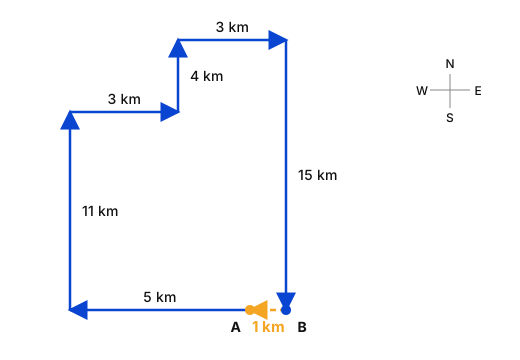
Concept: Add up East–West and North–South movements separately.
Trick: North–South cancels () → only the East–West gap of 1 km remains.
Answer: (A) 1 km towards the West
अवधारणा: पूर्व–पश्चिम और उत्तर–दक्षिण गतियों को अलग-अलग जोड़ें।
ट्रिक: उत्तर–दक्षिण कट जाता है () → केवल 1 km का पूर्व–पश्चिम अंतर बचता है।
उत्तर: (A) 1 km पश्चिम की ओर
Concept: Find the shift applied to every letter of the first pair.
Trick: Same +4 to each letter, keep the order – LHNV, not a jumbled form.
Answer: (C) LHNV
अवधारणा: पहली जोड़ी के हर अक्षर पर लगा अंतर खोजें।
ट्रिक: हर अक्षर में +4, क्रम वही रखें – LHNV।
उत्तर: (C) LHNV
Concept: Add 1 to every digit (both odd and even), then pick the required digits.
Trick: Only the four needed digits matter: .
Answer: (C)
अवधारणा: हर अंक (सम व विषम दोनों) में 1 जोड़ें, फिर आवश्यक अंक चुनें।
ट्रिक: केवल चार आवश्यक अंक:
उत्तर: (C)
| Number/symbol | 7 | % | 2 | 5 | * | $ | 3 | ^ | # | 4 | + | 6 | 9 | 8 |
|---|---|---|---|---|---|---|---|---|---|---|---|---|---|---|
| Code | U | G | L | F | B | M | C | H | N | D | J | P | E | K |
| संख्या/प्रतीक | 7 | % | 2 | 5 | * | $ | 3 | ^ | # | 4 | + | 6 | 9 | 8 |
|---|---|---|---|---|---|---|---|---|---|---|---|---|---|---|
| कूट | U | G | L | F | B | M | C | H | N | D | J | P | E | K |
Concept: Code each element from the table, then apply whichever condition fits.
Trick: Check first and last elements first – they decide conditions I and II.
Answer: (A) @CPJ@
अवधारणा: तालिका से हर तत्व का कोड लिखें, फिर लागू शर्त देखें।
ट्रिक: पहले पहला व अंतिम तत्व देखें – शर्त I और II वही तय करते हैं।
उत्तर: (A) @CPJ@
Concept: The letter common to both words takes the digit common to both codes.
Trick: Common letter ↔ common digit; positions may be jumbled.
Answer: (B) 1
अवधारणा: दोनों शब्दों में उभयनिष्ठ अक्षर का कोड दोनों कोडों में उभयनिष्ठ अंक होता है।
ट्रिक: उभयनिष्ठ अक्षर ↔ उभयनिष्ठ अंक; स्थान बदले हो सकते हैं।
उत्तर: (B) 1