Question bank

Q&A: practice questions with answers

Search questions on any topic. Filter by exam category, exam, subject and topic, try the question, then open the answer and explanation.

Courses – airGurukul

7,077 questions found.

Q781.
Based on the English alphabetical order, three of the following four letter-clusters are alike in a certain way and thus form a group. Which letter-cluster DOES NOT belong to that group?
(Note: The odd one out is not based on the number of consonants/vowels or their position in the letter-cluster.)
अंग्रेज़ी वर्णमाला क्रम के आधार पर, निम्नलिखित चार अक्षर-समूहों में से तीन किसी निश्चित प्रकार से एकसमान हैं और इस प्रकार एक समूह बनाते हैं। कौन-सा अक्षर-समूह उस समूह से संबंधित नहीं है?
(नोट: असंगत अक्षर-समूह, उस अक्षर-समूह में व्यंजनों/स्वरों की संख्या या उनके स्थान पर आधारित नहीं है।)
  1. ANQL
  2. BEHB
  3. CKNI
  4. DHKF
Show answer

Concept: Find the letter gaps in each cluster.

  1. NQL: N+3 = Q, Q−5 = L. KNI: K+3 = N, N−5 = I. HKF: H+3 = K, K−5 = F.
  2. EHB: E+3 = H, but H−6 = B (not −5).
  3. So EHB is the odd one.

Trick: First and third letters: others differ by −2 (N→L, K→I, H→F); E→B is −3.

Answer: (B) EHB

अवधारणा: हर समूह में अक्षरों का अंतर देखें।

  1. NQL: N+3 = Q, Q−5 = L। KNI: K+3 = N, N−5 = I। HKF: H+3 = K, K−5 = F।
  2. EHB: E+3 = H, पर H−6 = B (−5 नहीं)।
  3. अतः EHB विषम है।

ट्रिक: पहला व तीसरा अक्षर: बाकी में −2 (N→L, K→I, H→F); E→B में −3।

उत्तर: (B) EHB
RRB NTPC Graduate CBT 1General Intelligence and ReasoningOdd One Out – LettersRRB NTPC Graduate CBT 1 2024 · 21 Jun Shift 2 →
Q782.
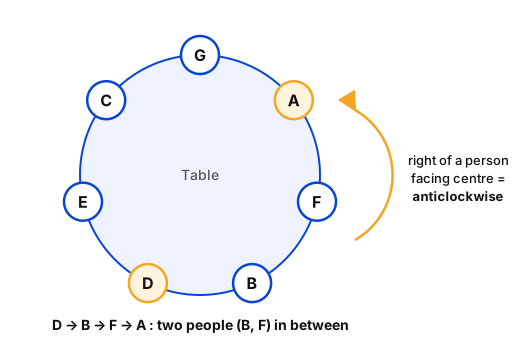
A, B, C, D, E, F, and G are sitting around a circular table facing the centre.
Only one person sits between G and E when counted from the right of G. Only one person sits between E and B. Only one person sits between G and F. Only two people sit between C and B. Only one person sits between D and F.
How many people sit between A and D when counted from the right of D?
A, B, C, D, E, F और G एक वृत्ताकार मेज़ के चारों ओर केंद्र की ओर मुख करके बैठे हैं।
G के दाएँ से गिनने पर G और E के बीच केवल एक व्यक्ति बैठा है। E और B के बीच केवल एक व्यक्ति बैठा है। G और F के बीच केवल एक व्यक्ति बैठा है। C और B के बीच केवल दो व्यक्ति बैठे हैं। D और F के बीच केवल एक व्यक्ति बैठा है।
D के दाएँ से गिनने पर A और D के बीच कितने व्यक्ति बैठे हैं?
  1. AOneएक
  2. BThreeतीन
  3. CFourचार
  4. DTwoदो
Show answer

Concept: Facing the centre, a person’s right is the anticlockwise direction. Fix G and place others.

  1. E is 2nd to the right of G. One person between E and B → B is 2 seats further from E away from G (the other such seat is G’s own).
  2. One between G and F → F is 2nd to the left of G. Two between C and B → C is to the immediate right of G. One between D and F → D sits between B and E.
  3. Remaining seat goes to A (immediate left of G). Order clockwise: G, A, F, B, D, E, C.
  4. Counting from the right of D: B, F, then A → two people between.

Trick: Draw 7 seats first, fix G at the top, and use only definite clues before the “two between” clue.

Answer: (D) Two

अवधारणा: केंद्र की ओर मुख होने पर व्यक्ति का दायाँ = वामावर्त (anticlockwise) दिशा। G को स्थिर कर बाकी को बैठाएँ।

  1. E, G के दाएँ दूसरे स्थान पर। E और B के बीच एक व्यक्ति → B, E से दो स्थान आगे (G से दूर की ओर) बैठेगा (दूसरी ओर का स्थान G का ही है)।
  2. G और F के बीच एक → F, G के बाएँ दूसरे स्थान पर। C और B के बीच दो → C, G के ठीक दाएँ। D और F के बीच एक → D, B और E के बीच।
  3. बचा स्थान A को (G के ठीक बाएँ)। दक्षिणावर्त क्रम: G, A, F, B, D, E, C।
  4. D के दाएँ से गिनने पर: B, F, फिर A → बीच में दो व्यक्ति।

ट्रिक: पहले 7 स्थान बनाएँ, G को ऊपर रखें, और निश्चित संकेत पहले लगाएँ।

उत्तर: (D) दो

RRB NTPC Graduate CBT 1General Intelligence and ReasoningCircular Seating ArrangementRRB NTPC Graduate CBT 1 2024 · 21 Jun Shift 2 →
Q783.
Two sets of numbers are given below. In each set of numbers, certain mathematical operation(s) on the first number results in the second number. Similarly, certain mathematical operation(s) on the second number results in the third number and so on. Which of the given options follows the same set of operations as in the given sets? (NOTE: Operations should be performed on the whole numbers, without breaking down the numbers into their constituent digits. E.g. 13 – Operations on 13 such as adding / subtracting / multiplying to 13 can be performed. Breaking down 13 into 1 and 3 and then performing mathematical operations on 1 and 3 is not allowed.)
12 - 13 - 15 - 30; 14 - 15 - 17 - 34
नीचे संख्याओं के दो समुच्चय दिए गए हैं। संख्याओं के प्रत्येक समुच्चय में, पहली संख्या पर कुछ निश्चित गणितीय संक्रिया/संक्रियाएँ करने पर दूसरी संख्या प्राप्त होती है। इसी प्रकार, दूसरी संख्या पर कुछ निश्चित गणितीय संक्रिया/संक्रियाएँ करने पर तीसरी संख्या प्राप्त होती है, और इसी प्रकार आगे भी। दिए गए विकल्पों में से कौन-सा विकल्प दिए गए समुच्चयों के समान संक्रियाओं के समुच्चय का अनुसरण करता है? (नोट: संख्याओं को उनके घटक अंकों में विभाजित किए बिना, पूर्ण संख्याओं पर संक्रियाएँ की जानी चाहिए। उदाहरण के लिए, 13 – 13 पर संक्रियाएँ जैसे 13 में जोड़ना/घटाना/गुणा करना आदि किया जा सकता है। 13 को 1 और 3 में विभाजित करना और फिर 1 और 3 पर गणितीय संक्रियाएँ करना वर्जित है।)
12 - 13 - 15 - 30; 14 - 15 - 17 - 34
  1. A3 - 4 - 5 - 10
  2. B4 - 5 - 7 - 10
  3. C9 - 10 - 12 - 24
  4. D1 - 2 - 4 - 16
Show answer

Concept: Find the operations step by step in the given sets.

  1. 12 → 13 → 15 → 30: +1, +2, ×2. Check 14 → 15 → 17 → 34: +1, +2, ×2 ✓.
  2. Option (C): 9 → 10 → 12 → 24: +1, +2, ×2 ✓.
  3. (A) ends 5 → 10 but 4 → 5 is +1, not +2; (B) 7 → 10 is not ×2; (D) 4 → 16 is not ×2.

Trick: Check the last step (×2) first – it removes B and D instantly.

Answer: (C) 9 - 10 - 12 - 24

अवधारणा: दिए गए समूहों में क्रमशः संक्रियाएँ पहचानें।

  1. 12 → 13 → 15 → 30: +1, +2, ×2। जाँच 14 → 15 → 17 → 34: +1, +2, ×2 ✓।
  2. विकल्प (C): 9 → 10 → 12 → 24: +1, +2, ×2 ✓।
  3. (A) में 4 → 5 केवल +1 है, +2 नहीं; (B) 7 → 10 ×2 नहीं; (D) 4 → 16 ×2 नहीं।

ट्रिक: पहले अंतिम चरण (×2) जाँचें – B और D तुरंत हट जाते हैं।

उत्तर: (C) 9 - 10 - 12 - 24

RRB NTPC Graduate CBT 1General Intelligence and ReasoningNumber Pattern – OperationsRRB NTPC Graduate CBT 1 2024 · 21 Jun Shift 2 →
Q784.
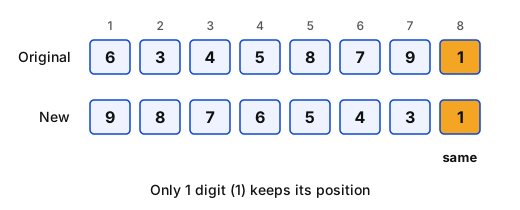
Each of the digits in the number 63458791 is arranged in the descending order from left to right. The position(s) of how many digits will remain unchanged in the new number thus formed as compared to that in the original number?
संख्या 63458791 के प्रत्येक अंक को बाएँ से दाएँ अवरोही क्रम में व्यवस्थित किया जाता है। मूल संख्या की तुलना में, इस प्रकार बनी नई संख्या में कितने अंकों का/के स्थान अपरिवर्तित रहेगा/रहेंगे?
  1. ATwoदो
  2. BNoneकोई नहीं
  3. COneएक
  4. DThreeतीन
Show answer

Concept: Arrange the digits in descending order and compare place by place with the original number.

  1. Original number: 6 3 4 5 8 7 9 1.
  2. Descending order: 9 8 7 6 5 4 3 1.
  3. Compare each position: only the 8th position (digit 1) is the same in both numbers.

Trick: The smallest digit 1 is already at the extreme right, so it stays; check the others quickly.

Answer: (C) One

अवधारणा: अंकों को घटते क्रम (descending order) में लगाकर हर स्थान की तुलना मूल संख्या से करें।

  1. मूल संख्या: 6 3 4 5 8 7 9 1।
  2. घटता क्रम: 9 8 7 6 5 4 3 1।
  3. तुलना करने पर केवल 8वें स्थान का अंक 1 दोनों में समान है।

ट्रिक: सबसे छोटा अंक 1 पहले से सबसे दाईं ओर है, इसलिए वह नहीं हिलता।

उत्तर: (C) एक

RRB NTPC Graduate CBT 1General Intelligence and ReasoningDigit ArrangementRRB NTPC Graduate CBT 1 2024 · 21 Jun Shift 2 →
Q785.
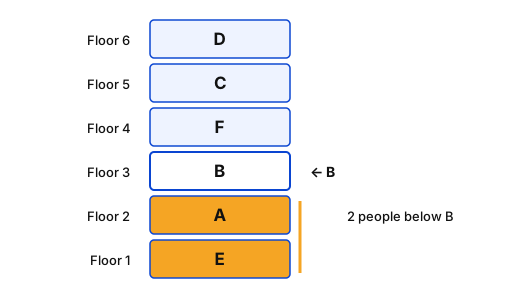
A, B, C, D, E and F live on six different floors of the same building. The lowermost floor in the building is numbered 1, the floor above it, number 2 and so on, till the topmost floor is numbered 6. F lives on an even numbered floor but not 6. The sum of floors on which C and F live is 9. The sum of floors on which F and E live is 5. A lives immediately below B. How many people live below B?
A, B, C, D, E और F एक ही इमारत की छह अलग-अलग मंज़िलों पर रहते हैं। इमारत की सबसे निचली मंज़िल की संख्या 1 है, उसके ऊपर वाली मंज़िल की संख्या 2 है और इसी प्रकार आगे, सबसे ऊपरी मंज़िल की संख्या 6 है। F एक सम संख्या वाली मंज़िल पर रहता है, लेकिन 6 पर नहीं। C और F जिन मंज़िलों पर रहते हैं, उनका योग 9 है। F और E जिन मंज़िलों पर रहते हैं, उनका योग 5 है। A, B के ठीक नीचे रहता है। B के नीचे कितने व्यक्ति रहते हैं?
  1. A3
  2. B1
  3. C2
  4. D4
Show answer

Concept: Fix the floors from the numeric conditions first, then place the pair A–B.

  1. F is on an even floor other than 6, so F = 2 or 4. C + F = 9 needs C = 7 if F = 2 (impossible), so F = 4 and C = 5.
  2. F + E = 5 gives E = 1.
  3. Floors left: 2, 3, 6. A is immediately below B, so A = 2, B = 3, and D = 6.
  4. People below B (floor 3): E and A = 2.

Trick: Use sums first – they fix the floors quickly; consecutive pair goes in the only consecutive gap.

Answer: (C) 2

अवधारणा: पहले संख्यात्मक शर्तों से मंज़िलें तय करें, फिर A–B जोड़ी रखें।

  1. F सम मंज़िल पर है पर 6 नहीं, अतः F = 2 या 4। C + F = 9 में F = 2 हो तो C = 7 (असंभव), अतः F = 4, C = 5।
  2. F + E = 5 से E = 1।
  3. बची मंज़िलें: 2, 3, 6। A, B के ठीक नीचे है, अतः A = 2, B = 3 और D = 6।
  4. B (मंज़िल 3) के नीचे: E और A = 2 लोग।

ट्रिक: पहले योग वाली शर्तें लगाएँ; लगातार जोड़ी केवल लगातार खाली मंज़िलों में जाएगी।

उत्तर: (C) 2

RRB NTPC Graduate CBT 1General Intelligence and ReasoningFloor PuzzleRRB NTPC Graduate CBT 1 2024 · 21 Jun Shift 2 →
Q786.
What should come in place of the question mark (?) in the given series?
1112 1120 1130 1142 1156 ?
दी गई श्रृंखला में प्रश्न चिह्न (?) के स्थान पर क्या आना चाहिए?
1112 1120 1130 1142 1156 ?
  1. A1168
  2. B1172
  3. C1170
  4. D1174
Show answer

Concept: Check the differences between consecutive terms.

  1. 1120−1112=8, 1130−1120=10, 1142−1130=12, 1156−1142=14.
  2. Differences increase by 2, so the next difference is 16.
  3. 1156+16=1172.

Trick: Differences 8, 10, 12, 14, 16 – consecutive even numbers.

Answer: (B) 1172

अवधारणा: लगातार पदों का अंतर देखें।

  1. 1120−1112=8, 1130−1120=10, 1142−1130=12, 1156−1142=14।
  2. अंतर 2-2 बढ़ रहा है, अगला अंतर 16 होगा।
  3. 1156+16=1172।

ट्रिक: अंतर 8, 10, 12, 14, 16 – क्रमागत सम संख्याएँ।

उत्तर: (B) 1172

RRB NTPC Graduate CBT 1General Intelligence and ReasoningNumber SeriesRRB NTPC Graduate CBT 1 2024 · 21 Jun Shift 2 →
Q787.
Based on the English alphabetical order, three of the following four letter-clusters are alike in a certain way and thus form a group. Which letter-cluster DOES NOT belong to that group?
(Note: The odd one out is not based on the number of consonants/vowels or their position in the letter-cluster.)
अंग्रेज़ी वर्णमाला क्रम के आधार पर, निम्नलिखित चार अक्षर-समूहों में से तीन किसी निश्चित प्रकार से एकसमान हैं और इस प्रकार एक समूह बनाते हैं। कौन-सा अक्षर-समूह उस समूह से संबंधित नहीं है?
(नोट: असंगत अक्षर-समूह, उस अक्षर-समूह में व्यंजनों/स्वरों की संख्या या उनके स्थान पर आधारित नहीं है।)
  1. AIPVX
  2. BSZEH
  3. CGNSV
  4. DNUZC
Show answer

Concept: Write the position of each letter and find the gaps between consecutive letters.

  1. SZEH: S(19) +7 Z(26) +5 E(5) +3 H(8).
  2. GNSV: G(7) +7 N(14) +5 S(19) +3 V(22).
  3. NUZC: N(14) +7 U(21) +5 Z(26) +3 C(3).
  4. IPVX: I(9) +7 P(16) +6 V(22) +2 X(24) – pattern breaks.

Trick: Pattern +7, +5, +3 (with wrap-around after Z); only IPVX differs.

Answer: (A) IPVX

अवधारणा: हर अक्षर का स्थान लिखकर क्रमागत अक्षरों का अंतर देखें।

  1. SZEH: S(19) +7 Z(26) +5 E(5) +3 H(8)।
  2. GNSV: G(7) +7 N(14) +5 S(19) +3 V(22)।
  3. NUZC: N(14) +7 U(21) +5 Z(26) +3 C(3)।
  4. IPVX: I(9) +7 P(16) +6 V(22) +2 X(24) – पैटर्न टूटता है।

ट्रिक: पैटर्न +7, +5, +3 (Z के बाद फिर A से); केवल IPVX अलग है।

उत्तर: (A) IPVX

RRB NTPC Graduate CBT 1General Intelligence and ReasoningOdd One Out – Letter ClustersRRB NTPC Graduate CBT 1 2024 · 21 Jun Shift 2 →
Q788.
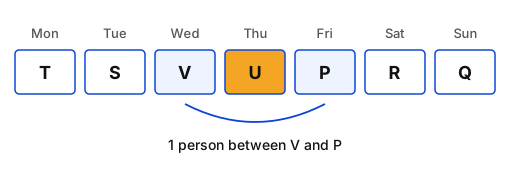
Each of P, Q, R, S, T, U and V has an exam on a different day of a week starting from Monday and ending on Sunday of the same week.
Only five people have exams between Q and T. U has the exam on Thursday. S has the exam immediately before V. R has the exam immediately before Q.
How many people have exams between V and P?
P, Q, R, S, T, U और V में से प्रत्येक की एक ही सप्ताह के सोमवार से प्रारंभ होकर रविवार को समाप्त होने वाले सप्ताह के एक अलग-अलग दिन परीक्षा है।
Q और T के बीच केवल पाँच व्यक्तियों की परीक्षाएँ हैं। U की परीक्षा गुरुवार को है। S की परीक्षा V से ठीक पहले है। R की परीक्षा Q से ठीक पहले है।
V और P के बीच कितने व्यक्तियों की परीक्षाएँ हैं?
  1. AOneएक
  2. BThreeतीन
  3. CFourचार
  4. DTwoदो
Show answer

Concept: Start with the widest gap: five people between Q and T means they are on Monday and Sunday.

  1. R is immediately before Q, so Q cannot be Monday: Q = Sunday, T = Monday, R = Saturday.
  2. U = Thursday. Remaining days Tuesday, Wednesday, Friday for S, V, P.
  3. S immediately before V needs two consecutive days: S = Tuesday, V = Wednesday; so P = Friday.
  4. Between V (Wed) and P (Fri): only U → one person.

Trick: 'Five between' in a 7-day week fixes the two ends at once.

Answer: (A) One

अवधारणा: सबसे बड़े अंतर से शुरू करें: Q और T के बीच पाँच लोग अर्थात दोनों सोमवार और रविवार को हैं।

  1. R, Q से ठीक पहले है, अतः Q सोमवार नहीं हो सकता: Q = रविवार, T = सोमवार, R = शनिवार।
  2. U = गुरुवार। बचे दिन मंगलवार, बुधवार, शुक्रवार – S, V, P के लिए।
  3. S, V से ठीक पहले – लगातार दिन चाहिए: S = मंगलवार, V = बुधवार; अतः P = शुक्रवार।
  4. V (बुध) और P (शुक्र) के बीच केवल U → एक व्यक्ति।

ट्रिक: 7 दिनों में 'बीच में पाँच' का अर्थ – दोनों छोर तय।

उत्तर: (A) एक

RRB NTPC Graduate CBT 1General Intelligence and ReasoningScheduling PuzzleRRB NTPC Graduate CBT 1 2024 · 21 Jun Shift 2 →
Q789.
Select the letter-cluster from among the given options that can replace the question mark (?) in the following series.
QRH MPG INF ELE ?
दिए गए विकल्पों में से उस अक्षर-समूह का चयन कीजिए जो निम्नलिखित श्रृंखला में प्रश्न चिह्न (?) का स्थान ले सकता है।
QRH MPG INF ELE ?
  1. AAHE
  2. BAJD
  3. CBHD
  4. DAJE
Show answer

Concept: Track each position of the clusters separately.

  1. 1st letters: Q, M, I, E, A (−4 each).
  2. 2nd letters: R, P, N, L, J (−2 each).
  3. 3rd letters: H, G, F, E, D (−1 each).
  4. Next cluster = AJD.

Trick: Three separate series: −4, −2, −1.

Answer: (B) AJD

अवधारणा: प्रत्येक स्थान के अक्षरों को अलग-अलग देखें।

  1. पहला अक्षर: Q, M, I, E, A (हर बार −4)।
  2. दूसरा अक्षर: R, P, N, L, J (हर बार −2)।
  3. तीसरा अक्षर: H, G, F, E, D (हर बार −1)।
  4. अगला समूह = AJD।

ट्रिक: तीन अलग श्रृंखलाएँ: −4, −2, −1।

उत्तर: (B) AJD

RRB NTPC Graduate CBT 1General Intelligence and ReasoningLetter SeriesRRB NTPC Graduate CBT 1 2024 · 21 Jun Shift 2 →
Q790.
JROK is related to HPMI in a certain way based on the English alphabetical order. In the same way, GOLH is related to EMJF. To which of the given options is DLIE related, following the same logic?
अंग्रेज़ी वर्णमाला क्रम के आधार पर JROK एक निश्चित प्रकार से HPMI से संबंधित है। उसी प्रकार GOLH, EMJF से संबंधित है। समान तर्क का अनुसरण करते हुए, DLIE दिए गए विकल्पों में से किससे संबंधित है?
  1. ABJCG
  2. BBJGC
  3. CJBCG
  4. DJBGC
Show answer

Concept: Compare letter by letter: find the shift applied to each letter.

  1. J→H, R→P, O→M, K→I: each letter −2.
  2. G→E, O→M, L→J, H→F: again −2 each.
  3. D−2 = B, L−2 = J, I−2 = G, E−2 = C → BJGC.

Trick: Same shift (−2) for every letter – just move each letter two steps back.

Answer: (B) BJGC

अवधारणा: अक्षर-दर-अक्षर तुलना करके हर अक्षर में बदलाव ज्ञात करें।

  1. J→H, R→P, O→M, K→I: हर अक्षर −2।
  2. G→E, O→M, L→J, H→F: फिर हर अक्षर −2।
  3. D−2 = B, L−2 = J, I−2 = G, E−2 = C → BJGC।

ट्रिक: हर अक्षर में समान बदलाव (−2) – हर अक्षर को दो कदम पीछे करें।

उत्तर: (B) BJGC

RRB NTPC Graduate CBT 1General Intelligence and ReasoningLetter AnalogyRRB NTPC Graduate CBT 1 2024 · 21 Jun Shift 2 →
Q791.
If ‘P’ stands for ‘×’, ‘Q’ stands for ‘÷’, ‘R’ stands for ‘−’ and ‘S’ stands for ‘+’, then what will come in place of the question mark (?) in the following equation?
37 S (28 Q 7) P 5 R 4 P 6 S 21 = ?
यदि ‘P’ का अर्थ ‘×’, ‘Q’ का अर्थ ‘÷’, ‘R’ का अर्थ ‘−’ और ‘S’ का अर्थ ‘+’ है, तो निम्नलिखित समीकरण में प्रश्न चिह्न (?) के स्थान पर क्या आएगा?
37 S (28 Q 7) P 5 R 4 P 6 S 21 = ?
  1. A43
  2. B54
  3. C69
  4. D76
Show answer

Concept: Replace the letters by the operators and apply BODMAS.

  1. Expression: 37+(28÷7)×5−4×6+21.
  2. Bracket: 28÷7=4; multiplications: 4×5=20, 4×6=24.
  3. 37+20−24+21=54.

Trick: Solve the bracket first, then all × and ÷, then + and − from left to right.

Answer: (B) 54

अवधारणा: अक्षरों को चिह्नों से बदलकर BODMAS लगाएँ।

  1. व्यंजक: 37+(28÷7)×5−4×6+21।
  2. कोष्ठक: 28÷7=4; गुणा: 4×5=20, 4×6=24।
  3. 37+20−24+21=54।

ट्रिक: पहले कोष्ठक, फिर × और ÷, फिर बाएँ से दाएँ + और −।

उत्तर: (B) 54

RRB NTPC Graduate CBT 1General Intelligence and ReasoningMathematical OperationsRRB NTPC Graduate CBT 1 2024 · 21 Jun Shift 2 →
Q792.
Refer to the following number and symbol series and answer the question that follows. Counting to be done from left to right only.
(Left) 7 & 9 ^ # 1 * 5 ≺ 2 6 ≡ 4 ∆ 3 $ @ 8 (Right)
If all the symbols are dropped from the series, which of the following will be fifth from the right?
निम्नलिखित संख्या और प्रतीक श्रृंखला को देखिए और उसके बाद दिए गए प्रश्न का उत्तर दीजिए। गिनती केवल बाएँ से दाएँ की जानी है।
(बाएँ) 7 & 9 ^ # 1 * 5 ≺ 2 6 ≡ 4 ∆ 3 $ @ 8 (दाएँ)
यदि श्रृंखला से सभी प्रतीकों को हटा दिया जाए, तो निम्नलिखित में से कौन-सा दाएँ से पाँचवाँ होगा?
  1. A5
  2. B2
  3. C6
  4. D1
Show answer

Concept: Drop all symbols and keep only the digits in the same order.

  1. Digits left (left to right): 7 9 1 5 2 6 4 3 8.
  2. From the right: 8 (1st), 3 (2nd), 4 (3rd), 6 (4th), 2 (5th).

Trick: Count only digits from the right end – ignore symbols completely.

Answer: (B) 2

अवधारणा: सभी प्रतीक हटाकर केवल अंक उसी क्रम में रखें।

  1. बचे अंक (बाएँ से दाएँ): 7 9 1 5 2 6 4 3 8।
  2. दाएँ से: 8 (1st), 3 (2nd), 4 (3rd), 6 (4th), 2 (5th)।

ट्रिक: दाएँ छोर से केवल अंक गिनें – प्रतीकों को पूरी तरह छोड़ दें।

उत्तर: (B) 2

RRB NTPC Graduate CBT 1General Intelligence and ReasoningNumber-Symbol SeriesRRB NTPC Graduate CBT 1 2024 · 21 Jun Shift 2 →
Q793.
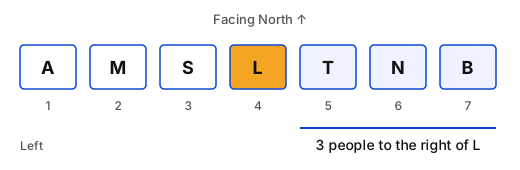
Seven people, A, B, L, M, N, S, and T are sitting in a row, facing north. Only two people sit to the left of S. Only three people sit between S and B. T sits second to the right of S. Only two people sit between T and M. L sits at some place to the right of A but at some place to the left of N.
How many people sit to the right of L?
सात व्यक्ति, A, B, L, M, N, S और T एक पंक्ति में उत्तर की ओर मुख करके बैठे हैं। S के बाईं ओर केवल दो व्यक्ति बैठे हैं। S और B के बीच केवल तीन व्यक्ति बैठे हैं। T, S के दाईं ओर दूसरे स्थान पर बैठा है। T और M के बीच केवल दो व्यक्ति बैठे हैं। L, A के दाईं ओर किसी स्थान पर, लेकिन N के बाईं ओर किसी स्थान पर बैठा है।
L के दाईं ओर कितने व्यक्ति बैठे हैं?
  1. AThreeतीन
  2. BTwoदो
  3. COneएक
  4. DFourचार
Show answer

Concept: Seats 1–7 from left to right (all face north, so their right = our right).

  1. Two people to the left of S → S = 3. Three between S and B → B = 7.
  2. T second to the right of S → T = 5. Two between T and M → M = 2.
  3. Seats 1, 4, 6 remain for A, L, N with A left of L left of N: A = 1, L = 4, N = 6.
  4. Right of L: T, N, B → three.

Trick: Fix the fixed-position person (S) first, then build around them.

Answer: (A) Three

अवधारणा: बाएँ से दाएँ सीट 1–7 मानें (सभी उत्तर की ओर मुख – उनका दायाँ = हमारा दायाँ)।

  1. S के बाएँ केवल दो लोग → S = 3। S और B के बीच तीन → B = 7।
  2. T, S के दाएँ दूसरे स्थान पर → T = 5। T और M के बीच दो → M = 2।
  3. सीट 1, 4, 6 पर A, L, N; A<L<N: A = 1, L = 4, N = 6।
  4. L के दाएँ: T, N, B → तीन।

ट्रिक: पहले निश्चित स्थान वाले व्यक्ति (S) को बैठाएँ, फिर बाकी।

उत्तर: (A) तीन

RRB NTPC Graduate CBT 1General Intelligence and ReasoningLinear Seating ArrangementRRB NTPC Graduate CBT 1 2024 · 21 Jun Shift 2 →
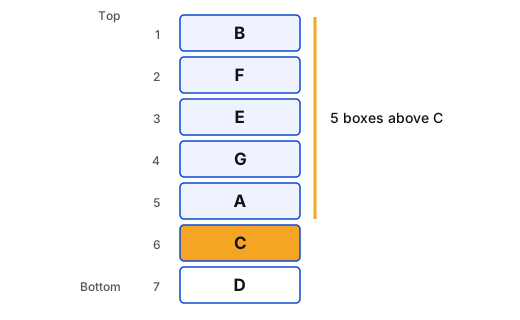
Q794.
Seven boxes, A, B, C, D, E, F and G, are kept one over the other, but not necessarily in the same order. E is kept immediately above G. C is kept immediately above D. Only B is kept above F. Only two boxes are kept above E. C is not kept at the third position from the bottom. How many boxes are kept above C?
सात बक्से, A, B, C, D, E, F और G, एक के ऊपर एक रखे गए हैं, लेकिन आवश्यक नहीं कि इसी क्रम में हों। E को G के ठीक ऊपर रखा गया है। C को D के ठीक ऊपर रखा गया है। F के ऊपर केवल B रखा गया है। E के ऊपर केवल दो बक्से रखे गए हैं। C को नीचे से तीसरे स्थान पर नहीं रखा गया है। C के ऊपर कितने बक्से रखे गए हैं?
  1. A3
  2. B4
  3. C2
  4. D5
Show answer

Concept: Number positions 1 (top) to 7 (bottom) and place the fixed boxes first.

  1. Only B above F → B = 1, F = 2.
  2. Only two boxes above E → E = 3; E immediately above G → G = 4.
  3. C immediately above D in positions 5–7; C is not 3rd from bottom (position 5), so C = 6, D = 7, A = 5.
  4. Boxes above C: B, F, E, G, A = 5.

Trick: '3rd from bottom' of 7 = 5th from top – convert before placing.

Answer: (D) 5

अवधारणा: स्थान 1 (ऊपर) से 7 (नीचे) तक मानें और पहले निश्चित बॉक्स रखें।

  1. केवल B, F के ऊपर → B = 1, F = 2।
  2. E के ऊपर केवल दो बॉक्स → E = 3; E, G के ठीक ऊपर → G = 4।
  3. C, D के ठीक ऊपर (स्थान 5–7 में); C नीचे से तीसरा (स्थान 5) नहीं, अतः C = 6, D = 7, A = 5।
  4. C के ऊपर: B, F, E, G, A = 5।

ट्रिक: 7 में 'नीचे से तीसरा' = ऊपर से 5वाँ – पहले बदल लें।

उत्तर: (D) 5

RRB NTPC Graduate CBT 1General Intelligence and ReasoningBox ArrangementRRB NTPC Graduate CBT 1 2024 · 21 Jun Shift 2 →
Q795.
Refer to the following number and symbol series and answer the question that follows. Counting to be done from left to right only.
(NOTE: All numbers are single digit numbers only.)
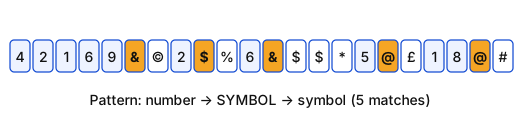
(Left) 4 2 1 6 9 & © 2 $ % 6 & $ $ * 5 @ £ 1 8 @ # (Right)
How many such symbols are there, each of which is immediately preceded by a number and also immediately followed by a symbol?
निम्नलिखित संख्या और प्रतीक श्रृंखला को देखिए और उसके बाद दिए गए प्रश्न का उत्तर दीजिए। गिनती केवल बाएँ से दाएँ की जानी है।
(नोट: सभी संख्याएँ केवल एकल अंक वाली संख्याएँ हैं।)
(बाएँ) 4 2 1 6 9 & © 2 $ % 6 & $ $ * 5 @ £ 1 8 @ # (दाएँ)
ऐसे कितने प्रतीक हैं, जिनमें से प्रत्येक के ठीक पहले एक संख्या है और ठीक बाद एक प्रतीक है?
  1. A5
  2. B4
  3. C6
  4. D7
Show answer

Concept: Look for the pattern: number – SYMBOL – symbol, and count the middle symbols.

  1. 9 & © → & ✓
  2. 2 $ % → $ ✓; 6 & $ → & ✓
  3. 5 @ £ → @ ✓; 8 @ # → @ ✓
  4. Other symbols fail (e.g., the second $ in '& $ $' is preceded by a symbol). Total = 5.

Trick: Scan each number and check only the next two places.

Answer: (A) 5

अवधारणा: पैटर्न देखें: संख्या – प्रतीक – प्रतीक, और बीच वाले प्रतीक गिनें।

  1. 9 & © → & ✓
  2. 2 $ % → $ ✓; 6 & $ → & ✓
  3. 5 @ £ → @ ✓; 8 @ # → @ ✓
  4. बाकी प्रतीक शर्त पूरी नहीं करते (जैसे '& $ $' में दूसरे $ से पहले प्रतीक है)। कुल = 5।

ट्रिक: हर संख्या पर रुककर केवल अगले दो स्थान जाँचें।

उत्तर: (A) 5

RRB NTPC Graduate CBT 1General Intelligence and ReasoningNumber-Symbol SeriesRRB NTPC Graduate CBT 1 2024 · 21 Jun Shift 2 →
Q796.
TLOS is related to NFIM in a certain way based on the English alphabetical order. In the same way, VNQU is related to PHKO. To which of the given options is XPSW related, following the same logic?
अंग्रेज़ी वर्णमाला क्रम के आधार पर TLOS एक निश्चित प्रकार से NFIM से संबंधित है। उसी प्रकार VNQU, PHKO से संबंधित है। समान तर्क का अनुसरण करते हुए, XPSW दिए गए विकल्पों में से किससे संबंधित है?
  1. AJRQM
  2. BRJMQ
  3. CRJQM
  4. DJRMQ
Show answer

Concept: Find the shift applied to each letter of the first word.

  1. T→N, L→F, O→I, S→M: each letter −6.
  2. V→P, N→H, Q→K, U→O: again −6.
  3. X−6 = R, P−6 = J, S−6 = M, W−6 = Q → RJMQ.

Trick: Same −6 shift for every letter; keep the order of letters unchanged.

Answer: (B) RJMQ

अवधारणा: पहले शब्द के हर अक्षर में बदलाव ज्ञात करें।

  1. T→N, L→F, O→I, S→M: हर अक्षर −6।
  2. V→P, N→H, Q→K, U→O: फिर −6।
  3. X−6 = R, P−6 = J, S−6 = M, W−6 = Q → RJMQ।

ट्रिक: हर अक्षर में समान −6; अक्षरों का क्रम न बदलें।

उत्तर: (B) RJMQ

RRB NTPC Graduate CBT 1General Intelligence and ReasoningLetter AnalogyRRB NTPC Graduate CBT 1 2024 · 21 Jun Shift 2 →
Q797.
Which of the following pairs of reform organisations and their founders is correctly matched?
निम्नलिखित में से सुधार संगठनों और उनके संस्थापकों का कौन-सा युग्म सही सुमेलित है?
  1. ABrahmo Samaj – Dayanand Saraswatiब्रह्म समाज – दयानंद सरस्वती
  2. BArya Samaj – Raja Ram Mohan Royआर्य समाज – राजा राम मोहन राय
  3. CSatya Shodhak Samaj – Jyotiba Phuleसत्यशोधक समाज – ज्योतिबा फुले
  4. DBahujan Samaj – BR Ambedkarबहुजन समाज – बी.आर. अंबेडकर
Show answer

Concept: Match each reform body with its real founder.

  1. Satya Shodhak Samaj was founded by Jyotiba Phule in 1873 in Pune to fight caste discrimination: correct pair.
  2. Brahmo Samaj was founded by Raja Ram Mohan Roy (1828) and Arya Samaj by Dayanand Saraswati (1875), so A and B swap the founders.
  3. The Bahujan Samaj Party was founded by Kanshi Ram (1984), not Dr. B.R. Ambedkar.

Yaad rakhein: Phule → Satya Shodhak; Roy → Brahmo; Dayanand → Arya.

Answer: (C) Satya Shodhak Samaj – Jyotiba Phule

अवधारणा: प्रत्येक सुधार संस्था का सही संस्थापक मिलाएँ।

  1. सत्यशोधक समाज की स्थापना ज्योतिबा फुले ने 1873 में पुणे में जाति-भेद के विरुद्ध की: सही जोड़ी।
  2. ब्रह्म समाज राजा राम मोहन राय (1828) ने और आर्य समाज दयानंद सरस्वती (1875) ने बनाया, A और B में संस्थापक उलटे हैं।
  3. बहुजन समाज पार्टी की स्थापना कांशीराम (1984) ने की, डॉ. अंबेडकर ने नहीं।

याद रखें: फुले → सत्यशोधक; राय → ब्रह्म; दयानंद → आर्य।

उत्तर: (C) सत्यशोधक समाज – ज्योतिबा फुले

RRB NTPC Graduate CBT 1General AwarenessSocial reform movementsRRB NTPC Graduate CBT 1 2024 · 21 Jun Shift 1 →
Q798.
In November 2024, who was named Indian Film Personality of the Year at the
International Film Festival of India (IFFI)?
नवंबर 2024 में, भारतीय अंतर्राष्ट्रीय फिल्म महोत्सव (IFFI) में किसे
इंडियन फिल्म पर्सनैलिटी ऑफ द ईयर नामित किया गया?
  1. AVikrant Masseyविक्रांत मैसी
  2. BManoj Bajpayeeमनोज बाजपेयी
  3. CNawazuddin Siddiquiनवाज़ुद्दीन सिद्दीकी
  4. DAyushmann Khurranaआयुष्मान खुराना
Show answer

Concept: Current affairs: 55th International Film Festival of India (IFFI), Goa, November 2024.

  1. Actor Vikrant Massey was honoured as the Indian Film Personality of the Year at the 55th IFFI in Goa (November 2024).
  2. He is known for films such as 12th Fail and The Sabarmati Report.

Yaad rakhein: IFFI 2024 (55th edition) → Vikrant Massey, Indian Film Personality of the Year.

Answer: (A) Vikrant Massey

अवधारणा: समसामयिकी: 55वाँ भारतीय अंतर्राष्ट्रीय फिल्म महोत्सव (IFFI), गोवा, नवंबर 2024।

  1. अभिनेता विक्रांत मैसी को 55वें IFFI (गोवा, नवंबर 2024) में Indian Film Personality of the Year चुना गया।
  2. वे 12th Fail और The Sabarmati Report जैसी फिल्मों के लिए जाने जाते हैं।

याद रखें: IFFI 2024 (55वाँ संस्करण) → विक्रांत मैसी।

उत्तर: (A) विक्रांत मैसी

RRB NTPC Graduate CBT 1General AwarenessAwards – IFFI 2024RRB NTPC Graduate CBT 1 2024 · 21 Jun Shift 1 →
Q799.
When was the designation of the Governor General in India promoted as a Viceroy or Crown’s representative?
भारत में गवर्नर जनरल के पद को कब वायसराय या क्राउन के प्रतिनिधि के रूप में उन्नत किया गया?
  1. AYear 1935वर्ष 1935
  2. BYear 1919वर्ष 1919
  3. CYear 1833वर्ष 1833
  4. DYear 1858वर्ष 1858
Show answer

Concept: The Government of India Act, 1858 transferred power from the East India Company to the British Crown.

  1. Under the 1858 Act, the Governor-General of India was also given the title of Viceroy (the Crown's direct representative).
  2. Lord Canning became the first Viceroy of India.
  3. 1833 (Charter Act) only made the Governor-General of Bengal the Governor-General of India.

Yaad rakhein: 1833 → Governor-General of India; 1858 → Viceroy (Lord Canning).

Answer: (D) Year 1858

अवधारणा: भारत शासन अधिनियम, 1858 द्वारा सत्ता ईस्ट इंडिया कंपनी से ब्रिटिश क्राउन को हस्तांतरित हुई।

  1. 1858 के अधिनियम से गवर्नर-जनरल को वायसराय (क्राउन का प्रत्यक्ष प्रतिनिधि) की उपाधि भी मिली।
  2. लॉर्ड कैनिंग भारत के पहले वायसराय बने।
  3. 1833 के चार्टर अधिनियम ने केवल बंगाल के गवर्नर-जनरल को भारत का गवर्नर-जनरल बनाया था।

याद रखें: 1833 → भारत का गवर्नर-जनरल; 1858 → वायसराय (लॉर्ड कैनिंग)।

उत्तर: (D) वर्ष 1858

RRB NTPC Graduate CBT 1General AwarenessModern Indian history – ViceroyRRB NTPC Graduate CBT 1 2024 · 21 Jun Shift 1 →
Q800.
What does the horizontal row in the periodic table represent?
आवर्त सारणी (periodic table) में क्षैतिज पंक्ति क्या दर्शाती है?
  1. AGroupsसमूह (Groups)
  2. BColumnsस्तंभ (Columns)
  3. CPeriodsआवर्त (Periods)
  4. DBlocksब्लॉक (Blocks)
Show answer

Concept: The modern periodic table has 7 horizontal rows and 18 vertical columns.

  1. Horizontal rows are called periods; elements in a period have the same number of electron shells.
  2. Vertical columns are called groups; their elements share similar chemical properties.
  3. Blocks (s, p, d, f) are regions based on the subshell being filled.

Yaad rakhein: Period = row (P for "plain, flat"); Group = column. 7 periods, 18 groups.

Answer: (C) Periods

अवधारणा: आधुनिक आवर्त सारणी में 7 क्षैतिज पंक्तियाँ और 18 ऊर्ध्वाधर स्तंभ हैं।

  1. क्षैतिज पंक्तियों को आवर्त (Periods) कहते हैं; इनके तत्वों में कोशों (shells) की संख्या समान होती है।
  2. ऊर्ध्वाधर स्तंभ समूह (Groups) कहलाते हैं; इनके गुण समान होते हैं।
  3. ब्लॉक (s, p, d, f) भरे जा रहे उपकोश पर आधारित क्षेत्र हैं।

याद रखें: आवर्त = पंक्ति, समूह = स्तंभ; 7 आवर्त, 18 समूह।

उत्तर: (C) आवर्त (Periods)

RRB NTPC Graduate CBT 1General AwarenessPeriodic tableRRB NTPC Graduate CBT 1 2024 · 21 Jun Shift 1 →