Question bank

Q&A: practice questions with answers

Search questions on any topic. Filter by exam category, exam, subject and topic, try the question, then open the answer and explanation.

Courses – airGurukul

7,077 questions found.

Q841.
In finding the HCF of two numbers by division method, the quotients are 1, 5, and 8, respectively, and the last divisor is 57. What is the LCM of the two numbers?
विभाजन विधि द्वारा दो संख्याओं का HCF ज्ञात करने में, भागफल क्रमशः 1, 5 और 8 हैं, और अंतिम भाजक 57 है। दोनों संख्याओं का LCM क्या है?
  1. A114509
  2. B114517
  3. C114511
  4. D114513
Show answer

Concept: Work backwards: in each step, Dividend=Divisor×Quotient+Remainder; the last divisor is the HCF.

  1. Last step: divisor 57, quotient 8, remainder 0 → dividend =57×8=456.
  2. Middle step: divisor 456, quotient 5, remainder 57 → 456×5+57=2337.
  3. First step: divisor 2337, quotient 1, remainder 456 → 2337+456=2793.
  4. LCM=2793×233757=49×2337=114513.

Trick: LCM=a×bHCF; the last digit check 9×7=63 already points to 3, i.e. 114513.

Answer: (D) 114513

अवधारणा: पीछे से हल करें: हर चरण में भाज्य=भाजक×भागफल+शेष; अंतिम भाजक ही HCF है।

  1. अंतिम चरण: भाजक 57, भागफल 8 → भाज्य =57×8=456।
  2. बीच का चरण: 456×5+57=2337।
  3. पहला चरण: 2337×1+456=2793।
  4. LCM=2793×233757=49×2337=114513।

ट्रिक: LCM=a×bHCF; इकाई अंक 9×7=63 → 3, अर्थात 114513।

उत्तर: (D) 114513
RRB NTPC Graduate CBT 1MathematicsHCF and LCM – division methodRRB NTPC Graduate CBT 1 2024 · 21 Jun Shift 1 →
Q842.
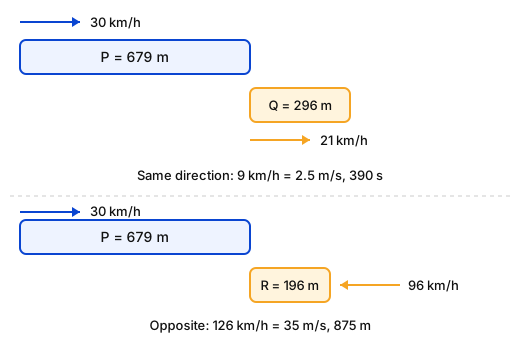
A train P going at the speed of 30 km/hr completely passes train Q of length 296 m, going in the same direction on parallel tracks, at 21 km/hr, in 6.5 minutes. How much time (in seconds) will P take to cross completely train R of length 196 m, going at 96 km/hr in the opposite direction?
30 km/hr की चाल से चल रही एक ट्रेन P, समानांतर पटरियों पर उसी दिशा में 21 km/hr की चाल से चल रही 296 m लंबी ट्रेन Q को 6.5 मिनट में पूरी तरह पार कर लेती है। विपरीत दिशा में 96 km/hr की चाल से चल रही 196 m लंबी ट्रेन R को पूरी तरह पार करने में P को कितना समय (सेकंड में) लगेगा?
  1. A42
  2. B21
  3. C25
  4. D22
Show answer

Concept: Crossing time =sum of lengthsrelative speed; same direction → subtract speeds, opposite → add.

  1. P and Q: relative speed =30−21=9km/h=2.5m/s; time =6.5×60=390s.
  2. P+296=2.5×390=975 → P=679m.
  3. P and R (opposite): 30+96=126km/h=35m/s.
  4. Time =679+19635=87535=25s.

Trick: km/h→m/s: multiply by 518; 126×518=35.

Answer: (C) 25

अवधारणा: पार करने का समय =लंबाइयों का योगसापेक्ष चाल; एक ही दिशा में चाल घटाएँ, विपरीत दिशा में जोड़ें।

  1. P और Q: सापेक्ष चाल =30−21=9km/h=2.5m/s; समय =390s।
  2. P+296=2.5×390=975 → P=679m।
  3. P और R (विपरीत): 126km/h=35m/s।
  4. समय =679+19635=87535=25s।

ट्रिक: km/h→m/s के लिए 518 से गुणा करें; 126×518=35।

उत्तर: (C) 25

RRB NTPC Graduate CBT 1MathematicsTrains – relative speedRRB NTPC Graduate CBT 1 2024 · 21 Jun Shift 1 →
Q843.
18 chairs and 4 tables cost ₹7,100 and 18 chairs and 7 tables cost ₹7,700. What is the cost of 18 chairs and 5 tables?
18 कुर्सियों और 4 मेज़ों का मूल्य ₹7,100 है तथा 18 कुर्सियों और 7 मेज़ों का मूल्य ₹7,700 है। 18 कुर्सियों और 5 मेज़ों का मूल्य कितना है?
  1. A₹7,295
  2. B₹7,298
  3. C₹7,300
  4. D₹7,296
Show answer

Concept: Subtract the two given combinations to isolate the cost of tables.

  1. (18c+7t)−(18c+4t)=7700−7100 → 3t=600, t=200.
  2. 18c=7100−4×200=6300.
  3. 18c+5t=6300+1000=7300.

Trick: 18c + 5t = (18c + 4t) + t = 7100 + 200 = 7300.

Answer: (C) ₹7,300

अवधारणा: दोनों संयोजनों को घटाकर मेज़ का मूल्य निकालें।

  1. (18c+7t)−(18c+4t)=600 → 3t=600, t=200।
  2. 18c=7100−800=6300।
  3. 18c+5t=6300+1000=7300।

ट्रिक: 18c + 5t = (18c + 4t) + t = 7100 + 200 = 7300।

उत्तर: (C) ₹7,300

RRB NTPC Graduate CBT 1MathematicsLinear equationsRRB NTPC Graduate CBT 1 2024 · 21 Jun Shift 1 →
Q844.
Amit’s salary is ₹13,000 per month. He spends ₹4,000 on house rent, ₹2,000 on bills, and the rest of the amount is his monthly savings. Find his savings (in ₹) in a year, if in the month of his birthday he spent his complete monthly savings for a birthday celebration.
अमित का वेतन ₹13,000 प्रति माह है। वह ₹4,000 मकान किराए पर, ₹2,000 बिलों पर खर्च करता है, और शेष राशि उसकी मासिक बचत है। यदि अपने जन्मदिन वाले महीने में उसने अपनी पूरी मासिक बचत जन्मदिन समारोह पर खर्च कर दी, तो एक वर्ष में उसकी बचत (₹ में) ज्ञात कीजिए।
  1. A70,000
  2. B77,000
  3. C84,000
  4. D63,000
Show answer

Concept: Monthly saving = salary − expenses; in the birthday month the saving becomes zero.

  1. Monthly saving =13000−4000−2000=7000.
  2. Savings are made in only 11 months of the year.
  3. Annual savings =7000×11=77000.

Trick: 12 months − 1 birthday month = 11 months of saving.

Answer: (B) 77,000

अवधारणा: मासिक बचत = वेतन − खर्च; जन्मदिन वाले महीने में बचत शून्य।

  1. मासिक बचत =13000−4000−2000=7000।
  2. वर्ष में केवल 11 महीने बचत होती है।
  3. वार्षिक बचत =7000×11=77000।

ट्रिक: 12 महीने − 1 जन्मदिन माह = 11 महीने की बचत।

उत्तर: (B) 77,000

RRB NTPC Graduate CBT 1MathematicsIncome and savingsRRB NTPC Graduate CBT 1 2024 · 21 Jun Shift 1 →
Q845.
A dealer purchased an oven for ₹605. After allowing a discount of 45% on its marked price, he still gains 37%. Find the marked price of the oven.
एक व्यापारी ने एक ओवन ₹605 में खरीदा। इसके अंकित मूल्य पर 45% की छूट देने के बाद भी उसे 37% का लाभ होता है। ओवन का अंकित मूल्य ज्ञात कीजिए।
  1. A₹1,421
  2. B₹1,502
  3. C₹1,537
  4. D₹1,507
Show answer

Concept: SP=CP×100+gain%100=MP×100−discount%100.

  1. SP=605×1.37=828.85.
  2. MP×0.55=828.85.
  3. MP=828.850.55=1507.

Trick: MP=605×13755=11×137=1507 (since 605=55×11).

Answer: (D) ₹1,507

अवधारणा: विक्रय मूल्य=क्रय मूल्य×100+लाभ%100=अंकित मूल्य×100−छूट%100।

  1. SP=605×1.37=828.85।
  2. MP×0.55=828.85।
  3. MP=828.850.55=1507।

ट्रिक: MP=605×13755=11×137=1507 (क्योंकि 605=55×11)।

उत्तर: (D) ₹1,507

RRB NTPC Graduate CBT 1MathematicsProfit, loss and discountRRB NTPC Graduate CBT 1 2024 · 21 Jun Shift 1 →
Q846.
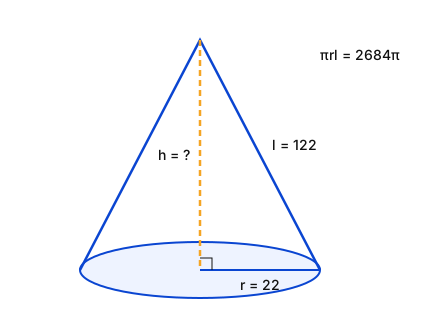
The curved surface area of a right circular cone is 2684π cm2, and the diameter of its base is 44 cm. Find the height (in cm) of the cone.
एक लंब वृत्तीय शंकु का वक्र पृष्ठीय क्षेत्रफल 2684π cm2 है, और इसके आधार का व्यास 44 cm है। शंकु की ऊँचाई (cm में) ज्ञात कीजिए।
  1. A123
  2. B121
  3. C124
  4. D120
Show answer

Concept: Curved surface area of a cone =πrl and h=l2−r2.

  1. Diameter 44 → r=22cm.
  2. π×22×l=2684π → l=268422=122.
  3. h=1222−222=14884−484=14400=120.

Trick: l2−r2=(l−r)(l+r)=100×144=14400, so h=120 without big squares.

Answer: (D) 120

अवधारणा: शंकु का वक्र पृष्ठीय क्षेत्रफल =πrl तथा h=l2−r2।

  1. व्यास 44 → r=22cm।
  2. π×22×l=2684π → l=122।
  3. h=1222−222=14400=120।

ट्रिक: l2−r2=(l−r)(l+r)=100×144=14400, अतः h=120।

उत्तर: (D) 120

RRB NTPC Graduate CBT 1MathematicsMensuration – coneRRB NTPC Graduate CBT 1 2024 · 21 Jun Shift 1 →
Q847.
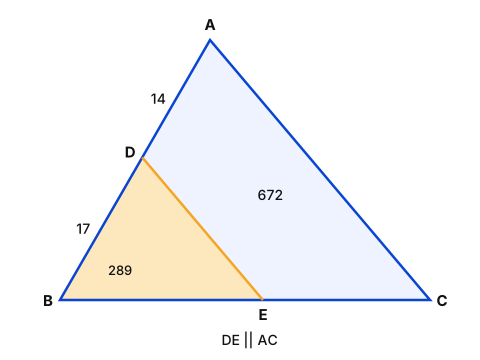
In △ABC, DE∥AC, where D and E are the points on sides AB and BC, respectively.
If BD = 17 cm and AD = 14 cm, then what is the ratio of the area of △BDE to that of the trapezium ADEC?
△ABC में, DE∥AC, जहाँ D और E क्रमशः भुजाओं AB और BC पर स्थित बिंदु हैं।
यदि BD = 17 cm और AD = 14 cm है, तो △BDE के क्षेत्रफल और समलंब चतुर्भुज ADEC के क्षेत्रफल का अनुपात क्या है?
  1. A523 : 367
  2. B289 : 672
  3. C672 : 289
  4. D475 : 326
Show answer

Concept: If DE∥AC, then △BDE~△BAC and the ratio of areas equals the square of the ratio of sides.

  1. BA=BD+DA=17+14=31cm.
  2. ar(△BDE)ar(△BAC)=(1731)2=289961.
  3. Trapezium ADEC=961−289=672 parts.
  4. Required ratio =289:672.

Trick: Small triangle : trapezium =a2:(b2−a2) with a=17, b=31.

Answer: (B) 289 : 672

अवधारणा: यदि DE∥AC, तो △BDE~△BAC और क्षेत्रफलों का अनुपात भुजाओं के अनुपात का वर्ग होता है।

  1. BA=17+14=31cm।
  2. ar(△BDE)ar(△BAC)=(1731)2=289961।
  3. समलंब ADEC=961−289=672 भाग।
  4. अभीष्ट अनुपात =289:672।

ट्रिक: छोटा त्रिभुज : समलंब =a2:(b2−a2), जहाँ a=17, b=31।

उत्तर: (B) 289 : 672

RRB NTPC Graduate CBT 1MathematicsGeometry – similar trianglesRRB NTPC Graduate CBT 1 2024 · 21 Jun Shift 1 →
Q848.
Which of the following numbers is divisible by 7?
निम्नलिखित में से कौन-सी संख्या 7 से विभाज्य है?
  1. A2436
  2. B1454
  3. C3366
  4. D3344
Show answer

Concept: Rule for 7: double the last digit and subtract it from the rest; the result must be divisible by 7.

  1. 2436: 243−2×6=231; 23−2=21 → divisible by 7 (2436=7×348).
  2. 1454: 145−8=137 ✗; 3366: 336−12=324 ✗; 3344: 334−8=326 ✗.

Trick: Repeat the "double and subtract" step until a small number appears.

Answer: (A) 2436

अवधारणा: 7 का नियम: अंतिम अंक का दोगुना शेष संख्या से घटाएँ; परिणाम 7 से विभाज्य होना चाहिए।

  1. 2436: 243−2×6=231; 23−2=21 → 7 से विभाज्य (2436=7×348)।
  2. 1454: 145−8=137 ✗; 3366: 336−12=324 ✗; 3344: 334−8=326 ✗।

ट्रिक: "दोगुना करके घटाओ" तब तक दोहराएँ जब तक छोटी संख्या न मिले।

उत्तर: (A) 2436

RRB NTPC Graduate CBT 1MathematicsDivisibility by 7RRB NTPC Graduate CBT 1 2024 · 21 Jun Shift 1 →
Q849.
If 5x+4y=12 and xy=2, then find the value of 125x3+64y3.
यदि 5x+4y=12 और xy=2 है, तो 125x3+64y3 का मान ज्ञात कीजिए।
  1. A288
  2. B286
  3. C268
  4. D258
Show answer

Concept: a3+b3=(a+b)3−3ab(a+b).

  1. Let a=5x, b=4y: a+b=12, ab=20xy=40.
  2. 125x3+64y3=123−3×40×12.
  3. =1728−1440=288.

Trick: Spot 125x3=(5x)3 and 64y3=(4y)3, then use the sum-of-cubes identity.

Answer: (A) 288

अवधारणा: a3+b3=(a+b)3−3ab(a+b)।

  1. माना a=5x, b=4y: a+b=12, ab=20xy=40।
  2. 125x3+64y3=123−3×40×12।
  3. =1728−1440=288।

ट्रिक: 125x3=(5x)3 और 64y3=(4y)3 पहचानें, फिर घन-योग सर्वसमिका लगाएँ।

उत्तर: (A) 288

RRB NTPC Graduate CBT 1MathematicsAlgebraic identitiesRRB NTPC Graduate CBT 1 2024 · 21 Jun Shift 1 →
Q850.
The percentage profit earned by selling a table lamp for ₹214 is equal to the percentage loss incurred by selling the same table lamp for ₹146. At what price (in ₹) should the table lamp be sold to make 55% profit?
एक टेबल लैंप को ₹214 में बेचने पर अर्जित प्रतिशत लाभ, उसी टेबल लैंप को ₹146 में बेचने पर हुई प्रतिशत हानि के बराबर है। 55% लाभ प्राप्त करने के लिए टेबल लैंप को किस मूल्य (₹ में) पर बेचा जाना चाहिए?
  1. A278
  2. B282
  3. C279
  4. D276
Show answer

Concept: If profit% at S1 equals loss% at S2, then CP=S1+S22.

  1. CP=214+1462=180 (profit 34 = loss 34, i.e. 18.8―% each).
  2. For 55% profit: SP=180×1.55=279.

Trick: Equal profit% and loss% → CP is the average of the two selling prices.

Answer: (C) 279

अवधारणा: यदि S1 पर लाभ% = S2 पर हानि%, तो क्रय मूल्य=S1+S22।

  1. CP=214+1462=180 (लाभ 34 = हानि 34)।
  2. 55% लाभ के लिए: SP=180×1.55=279।

ट्रिक: समान लाभ% और हानि% → क्रय मूल्य दोनों विक्रय मूल्यों का औसत।

उत्तर: (C) 279

RRB NTPC Graduate CBT 1MathematicsProfit and lossRRB NTPC Graduate CBT 1 2024 · 21 Jun Shift 1 →
Q851.
The curved surface area of a cone is 2970 cm2, and its diameter is 70 cm. What is its total surface area (in cm2)?
Use π=227
एक शंकु का वक्र पृष्ठीय क्षेत्रफल 2970 cm2 है, और इसका व्यास 70 cm है। इसका संपूर्ण पृष्ठीय क्षेत्रफल (cm2 में) कितना है?
π=227 का प्रयोग कीजिए
  1. A6820
  2. B6825
  3. C6827
  4. D6813
Show answer

Concept: CSA=πrl, TSA=CSA+πr2.

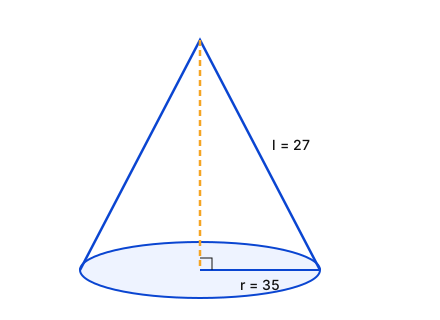
  1. Diameter 70 → r=35cm.
  2. πr2=227×35×35=3850cm2.
  3. TSA=2970+3850=6820cm2.
  4. (Slant height l=2970110=27cm is not even needed.)

Trick: TSA = CSA + base area; only the base πr2 has to be found.

Answer: (A) 6820

अवधारणा: CSA=πrl, TSA=CSA+πr2।

  1. व्यास 70 → r=35cm।
  2. πr2=227×35×35=3850cm2।
  3. TSA=2970+3850=6820cm2।
  4. (तिर्यक ऊँचाई l=27cm की आवश्यकता ही नहीं।)

ट्रिक: TSA = CSA + आधार क्षेत्रफल; केवल πr2 निकालना है।

उत्तर: (A) 6820

RRB NTPC Graduate CBT 1MathematicsMensuration – coneRRB NTPC Graduate CBT 1 2024 · 21 Jun Shift 1 →
Q852.
A and B complete a work in 20 days. If A alone can do it in 45 days, then B alone can do one-third of the same work in ______________ days.
A और B मिलकर एक कार्य 20 दिनों में पूरा करते हैं। यदि A अकेला इसे 45 दिनों में कर सकता है, तो B अकेला उसी कार्य का एक-तिहाई भाग ______________ दिनों में कर सकता है।
  1. A36
  2. B12
  3. C24
  4. D48
Show answer

Concept: Take total work = LCM of the days and find each person's units per day.

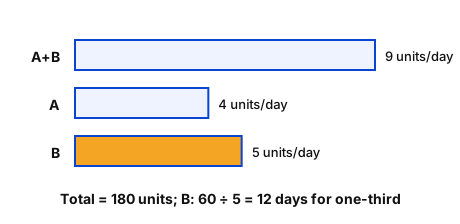
  1. Total work =LCM(20,45)=180 units
  2. A + B =18020=9 units/day; A =18045=4 units/day
  3. B =9−4=5 units/day
  4. One-third work =60 units → 605=12 days

Trick: B alone takes 20×4545−20=36 days; one-third of it =12 days.

Answer: (B) 12 days

अवधारणा: कुल कार्य = दिनों का LCM मानकर प्रतिदिन की इकाइयाँ निकालें।

  1. कुल कार्य =LCM(20,45)=180 इकाई
  2. A + B =18020=9 इकाई/दिन; A =18045=4 इकाई/दिन
  3. B =9−4=5 इकाई/दिन
  4. एक-तिहाई कार्य =60 इकाई → 605=12 दिन

ट्रिक: B अकेले 20×4545−20=36 दिन; उसका एक-तिहाई =12 दिन।

उत्तर: (B) 12 दिन

RRB NTPC Graduate CBT 1MathematicsTime and WorkRRB NTPC Graduate CBT 1 2024 · 21 Jun Shift 1 →
Q853.
At what rate (in percentage) per annum will ₹1,300 give ₹650 as simple interest in 10 years?
किस वार्षिक दर (प्रतिशत में) पर ₹1,300, 10 वर्षों में ₹650 साधारण ब्याज देगा?
  1. A8%
  2. B4%
  3. C7%
  4. D5%
Show answer

Concept: SI=P×R×T100

  1. 650=1300×R×10100=130R
  2. R=650130=5%

Trick: Interest is half the principal in 10 years → 50%10=5% per year.

Answer: (D) 5%

अवधारणा: साधारण ब्याज=P×R×T100

  1. 650=1300×R×10100=130R
  2. R=650130=5%

ट्रिक: 10 वर्ष में ब्याज मूलधन का आधा → 50%10=5% प्रति वर्ष।

उत्तर: (D) 5%

RRB NTPC Graduate CBT 1MathematicsSimple InterestRRB NTPC Graduate CBT 1 2024 · 21 Jun Shift 1 →
Q854.
What is the median of the following data?
75, 69, 45, 17, 22, 57, 79, 28, 18, 91, 32
निम्नलिखित आँकड़ों की माध्यिका (median) क्या है?
75, 69, 45, 17, 22, 57, 79, 28, 18, 91, 32
  1. A46
  2. B45.5
  3. C44.5
  4. D45
Show answer

Concept: For n (odd) observations in ascending order, median =(n+12)th value.

  1. Ascending: 17,18,22,28,32,45,57,69,75,79,91
  2. n=11 → 11+12=6th value
  3. 6th value =45

Trick: Always sort first – the middle of the unsorted list (57) is a trap.

Answer: (D) 45

अवधारणा: विषम n प्रेक्षणों को आरोही क्रम में रखने पर माध्यिका =(n+12) वाँ मान।

  1. आरोही क्रम: 17,18,22,28,32,45,57,69,75,79,91
  2. n=11 → 11+12=6 वाँ मान
  3. छठा मान =45

ट्रिक: पहले क्रम में लगाएँ – बिना क्रम के बीच का मान (57) जाल है।

उत्तर: (D) 45

RRB NTPC Graduate CBT 1MathematicsStatistics – MedianRRB NTPC Graduate CBT 1 2024 · 21 Jun Shift 1 →
Q855.
A sells a printer to B at a loss of 60% and B sells the printer to C at a profit of 25%. If C purchased the printer for ₹89,569 then what was the cost (in ₹) of the printer for A?
A एक प्रिंटर को 60% की हानि पर B को बेचता है और B उस प्रिंटर को 25% के लाभ पर C को बेचता है। यदि C ने प्रिंटर ₹89,569 में खरीदा, तो A के लिए प्रिंटर का क्रय मूल्य (₹ में) क्या था?
  1. A1,79,141
  2. B1,79,140
  3. C1,79,138
  4. D1,79,134
Show answer

Concept: Successive sales multiply: C's price = A's cost ×(1−0.60)×(1+0.25).

  1. C's price =x×0.4×1.25=0.5x
  2. 0.5x=89569
  3. x=179138

Trick: −60% then +25%: 25×54=12 – A's cost is double C's price.

Answer: (C) ₹1,79,138

अवधारणा: क्रमिक बिक्री में गुणक गुणा होते हैं: C का मूल्य = A का क्रय मूल्य ×(1−0.60)×(1+0.25)।

  1. C का मूल्य =x×0.4×1.25=0.5x
  2. 0.5x=89569
  3. x=179138

ट्रिक: −60% फिर +25%: 25×54=12 – A का मूल्य, C के मूल्य का दोगुना।

उत्तर: (C) ₹1,79,138

RRB NTPC Graduate CBT 1MathematicsProfit and Loss – SuccessiveRRB NTPC Graduate CBT 1 2024 · 21 Jun Shift 1 →
Q856.
If a + b = 41, and a − b = 38, find the value of (a + b)2.
यदि a + b = 41 और a − b = 38 है, तो (a + b)2 का मान ज्ञात कीजिए।
  1. A1763
  2. B1733
  3. C1759
  4. D1681
Show answer

Concept: (a+b)2 needs only the value of a+b.

  1. a+b=41
  2. (a+b)2=412=1681

Trick: Extra data (a−b=38) is a distractor; 412=1600+80+1=1681.

Answer: (D) 1681

अवधारणा: (a+b)2 के लिए केवल a+b का मान चाहिए।

  1. a+b=41
  2. (a+b)2=412=1681

ट्रिक: अतिरिक्त जानकारी (a−b=38) भ्रम के लिए है; 412=1600+80+1=1681।

उत्तर: (D) 1681

RRB NTPC Graduate CBT 1MathematicsAlgebraRRB NTPC Graduate CBT 1 2024 · 21 Jun Shift 1 →
Q857.
Two quadratic equations, x2 - 5x + 6 = 0 and 2x2 - kx + 6 = 0, have one common root. What is the possible value of k?
दो द्विघात समीकरणों, x2 - 5x + 6 = 0 और 2x2 - kx + 6 = 0 का एक मूल उभयनिष्ठ है। k का संभावित मान क्या है?
  1. A5
  2. B11
  3. C7
  4. D9
Show answer

Concept: A common root of both equations must satisfy the second equation.

  1. x2−5x+6=0⇒(x−2)(x−3)=0, roots 2,3
  2. If x=2: 8−2k+6=0⇒k=7
  3. If x=3: 18−3k+6=0⇒k=8 (not an option)
  4. So k=7

Trick: Factorise the easy equation first, then substitute its roots.

Answer: (C) 7

अवधारणा: दोनों समीकरणों का उभयनिष्ठ मूल दूसरे समीकरण को भी संतुष्ट करेगा।

  1. x2−5x+6=0⇒(x−2)(x−3)=0, मूल 2,3
  2. x=2: 8−2k+6=0⇒k=7
  3. x=3: 18−3k+6=0⇒k=8 (विकल्प में नहीं)
  4. अतः k=7

ट्रिक: पहले आसान समीकरण का गुणनखंड करें, फिर मूल रखें।

उत्तर: (C) 7

RRB NTPC Graduate CBT 1MathematicsQuadratic Equations – Common RootRRB NTPC Graduate CBT 1 2024 · 21 Jun Shift 1 →
Q858.
Evaluate: 86 × 104
मान ज्ञात कीजिए: 86 × 104
  1. A8944
  2. B9044
  3. C8954
  4. D8934
Show answer

Concept: Use (a−b)(a+b)=a2−b2 with numbers around 95.

  1. 86×104=(95−9)(95+9)
  2. =952−92=9025−81=8944

Trick: Or 86×104=8600+344=8944; last digit 6×4=24 → ends in 4.

Answer: (A) 8944

अवधारणा: (a−b)(a+b)=a2−b2 का प्रयोग, 95 के आसपास।

  1. 86×104=(95−9)(95+9)
  2. =952−92=9025−81=8944

ट्रिक: या 86×104=8600+344=8944; इकाई अंक 6×4=24 → 4।

उत्तर: (A) 8944

RRB NTPC Graduate CBT 1MathematicsSimplificationRRB NTPC Graduate CBT 1 2024 · 21 Jun Shift 1 →
Q859.
In covering a distance of 162 km, Abhay takes 6 hours more than Sameer. If Abhay doubles his speed, then he would take 3 hours less than Sameer. Abhay's initial speed is:
162 km की दूरी तय करने में, अभय, समीर से 6 घंटे अधिक लेता है। यदि अभय अपनी चाल दोगुनी कर दे, तो वह समीर से 3 घंटे कम लेगा। अभय की प्रारंभिक चाल है:
  1. A8 km/hr
  2. B4 km/hr
  3. C18 km/hr
  4. D9 km/hr
Show answer

Concept: Write the two time conditions and add them to eliminate Sameer's time.

  1. Let Abhay's speed =a, Sameer's =s. 162a−162s=6
  2. Doubled speed: 162s−1622a=3
  3. Adding: 162a−81a=9⇒81a=9
  4. a=9km/h (Sameer: 12 h; Abhay: 18 h ✓)

Trick: Option check: a=9 → 18 h; doubled → 9 h; Sameer 18−6=12 h and 12−9=3 ✓.

Answer: (D) 9km/h

अवधारणा: दोनों समय-शर्तें लिखकर जोड़ें, समीर का समय हट जाएगा।

  1. अभय की चाल =a, समीर की =s। 162a−162s=6
  2. दोगुनी चाल: 162s−1622a=3
  3. जोड़ने पर: 162a−81a=9⇒81a=9
  4. a=9km/h (समीर: 12 घंटे; अभय: 18 घंटे ✓)

ट्रिक: विकल्प जाँच: a=9 → 18 घंटे; दोगुनी चाल → 9 घंटे; समीर 18−6=12 घंटे, 12−9=3 ✓।

उत्तर: (D) 9km/h

RRB NTPC Graduate CBT 1MathematicsTime and DistanceRRB NTPC Graduate CBT 1 2024 · 21 Jun Shift 1 →
Q860.
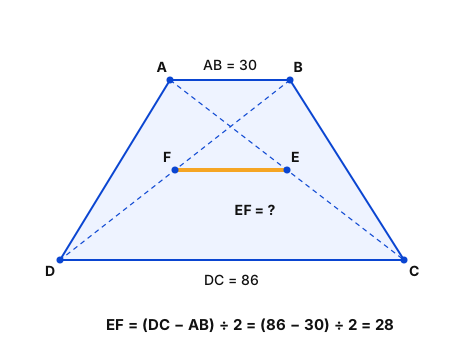
ABCD is a quadrilateral in which AB ∥ DC, and E and F are the mid points of the diagonals AC and BD, respectively. If AB = 30 cm, BC = 20 cm, DC = 86 cm and AD = 84 cm, then what is the length (in cm) of EF?
ABCD एक चतुर्भुज है जिसमें AB ∥ DC है, और E और F क्रमशः विकर्णों AC और BD के मध्य बिंदु हैं। यदि AB = 30 cm, BC = 20 cm, DC = 86 cm और AD = 84 cm है, तो EF की लंबाई (cm में) कितनी है?
  1. A28
  2. B31
  3. C23
  4. D24
Show answer

Concept: In a trapezium, the segment joining the midpoints of the diagonals is parallel to the bases and equals half their difference.

  1. AB∥DC, AB=30, DC=86
  2. EF=DC−AB2=86−302
  3. EF=28cm (BC and AD are not needed)

Trick: Midpoints of sides → half the sum; midpoints of diagonals → half the difference.

Answer: (A) 28

अवधारणा: समलंब में विकर्णों के मध्य-बिंदुओं को मिलाने वाली रेखा समांतर भुजाओं के समांतर होती है और उनके अंतर की आधी होती है।

  1. AB∥DC, AB=30, DC=86
  2. EF=DC−AB2=86−302
  3. EF=28cm (BC और AD की ज़रूरत नहीं)

ट्रिक: भुजाओं के मध्य-बिंदु → योग का आधा; विकर्णों के मध्य-बिंदु → अंतर का आधा।

उत्तर: (A) 28

RRB NTPC Graduate CBT 1MathematicsGeometry – TrapeziumRRB NTPC Graduate CBT 1 2024 · 21 Jun Shift 1 →