Question bank

Q&A: practice questions with answers

Search questions on any topic. Filter by exam category, exam, subject and topic, try the question, then open the answer and explanation.

Courses – airGurukul

2,400 questions found.

Q81.
This question is based on the five, three-digit numbers given below.
(Left) 917 946 857 971 587 (Right)
(Example: 697 – First digit = 6, second digit = 9 and third digit = 7)
NOTE: All operations to be done from left to right.
What will be the resultant if the second digit of the highest number is added to the third digit of the lowest number?
यह प्रश्न नीचे दी गई पाँच, तीन-अंकीय संख्याओं पर आधारित है।
(बाएँ) 917 946 857 971 587 (दाएँ)
(उदाहरण: 697 – पहला अंक = 6, दूसरा अंक = 9 और तीसरा अंक = 7)
नोट: सभी संक्रियाएँ बाएँ से दाएँ की ओर की जानी हैं।
यदि सबसे बड़ी संख्या के दूसरे अंक को सबसे छोटी संख्या के तीसरे अंक में जोड़ा जाए, तो परिणाम क्या होगा?
  1. A14
  2. B18
  3. C19
  4. D17
Show answer

Concept: Identify the required numbers, then pick the asked digits.

  1. Numbers: 917, 946, 857, 971, 587. Highest = 971, lowest = 587.
  2. Second digit of 971 = 7; third digit of 587 = 7.
  3. 7+7=14.

Trick: Compare hundreds digits first (9,9,8,9,5) to spot highest/lowest quickly.

Answer: (A) 14

अवधारणा: पहले अभीष्ट संख्याएँ पहचानें, फिर पूछे गए अंक चुनें।

  1. संख्याएँ: 917, 946, 857, 971, 587। सबसे बड़ी = 971, सबसे छोटी = 587।
  2. 971 का दूसरा अंक = 7; 587 का तीसरा अंक = 7।
  3. 7+7=14।

ट्रिक: पहले सैकड़े का अंक (9,9,8,9,5) देखकर बड़ी/छोटी संख्या तुरंत पहचानें।

उत्तर: (A) 14
RRB NTPC Graduate CBT 1General Intelligence and ReasoningNumber ArrangementRRB NTPC Graduate CBT 1 2025 · 27 Mar Shift 3 →
Q82.
Based on the alphabetical order, three of the following four are alike in a certain way and thus form a group. Which is the one that does not belong to that group?
(Note: The odd one out is not based on the number of consonants/vowels or their position in the letter cluster)
वर्णमाला क्रम के आधार पर, निम्नलिखित चार में से तीन किसी निश्चित प्रकार से एक समान हैं और इस प्रकार एक समूह बनाते हैं। वह कौन-सा है जो उस समूह से संबंधित नहीं है?
(नोट: असंगत विकल्प व्यंजनों/स्वरों की संख्या या अक्षर-समूह में उनकी स्थिति पर आधारित नहीं है)
  1. AFHJ
  2. BHJL
  3. CBDF
  4. DTVY
Show answer

Concept: Check the gap between consecutive letters inside each cluster.

  1. FHJ: +2,+2; HJL: +2,+2; BDF: +2,+2.
  2. TVY: T+2=V, V+3=Y → breaks the pattern.

Trick: Alternate letters (skip one) – T, V, X would fit; Y does not.

Answer: (D) TVY

अवधारणा: हर समूह के क्रमागत अक्षरों का अंतर देखें।

  1. FHJ: +2,+2; HJL: +2,+2; BDF: +2,+2।
  2. TVY: T+2=V, V+3=Y → पैटर्न टूटता है।

ट्रिक: एक अक्षर छोड़कर – T, V, X होना चाहिए था; Y नहीं।

उत्तर: (D) TVY

RRB NTPC Graduate CBT 1General Intelligence and ReasoningLetter Cluster ClassificationRRB NTPC Graduate CBT 1 2025 · 27 Mar Shift 3 →
Q83.
Read the given statements and conclusions carefully. Assuming that the information given in the statements is true, even if it appears to be at variance with commonly known facts, decide which of the given conclusions logically follow(s) from the statements.
Statements:
All cars are planes. Some planes are trains. Some trains are ships.
Conclusions:
(I) Some cars are trains.
(II) Some planes are ships.
दिए गए कथनों और निष्कर्षों को ध्यानपूर्वक पढ़िए। यह मानते हुए कि कथनों में दी गई जानकारी सत्य है, भले ही वह सामान्यतः ज्ञात तथ्यों से भिन्न प्रतीत होती हो, निर्णय लीजिए कि दिए गए निष्कर्षों में से कौन-सा/से निष्कर्ष कथनों का तार्किक रूप से अनुसरण करता/करते है/हैं।
कथन:
सभी कारें विमान हैं। कुछ विमान रेलगाड़ियाँ हैं। कुछ रेलगाड़ियाँ जहाज़ हैं।
निष्कर्ष:
(I) कुछ कारें रेलगाड़ियाँ हैं।
(II) कुछ विमान जहाज़ हैं।
  1. AOnly conclusion (I) followsकेवल निष्कर्ष (I) अनुसरण करता है
  2. BBoth conclusions (I) and (II) followनिष्कर्ष (I) और (II) दोनों अनुसरण करते हैं
  3. CNeither conclusion (I) nor (II) followsन तो निष्कर्ष (I) और न ही (II) अनुसरण करता है
  4. DOnly conclusion (II) followsकेवल निष्कर्ष (II) अनुसरण करता है
Show answer

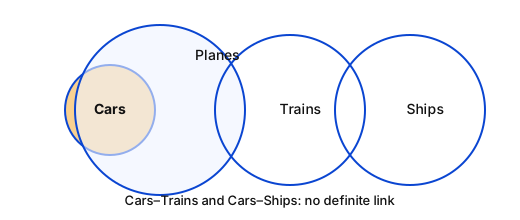
Concept: A conclusion is valid only if it holds in every possible Venn diagram.

  1. All cars ⊂ planes, but only some planes are trains – cars may be entirely outside trains → (I) not definite.
  2. Planes and ships are connected only through "some trains" – no definite overlap → (II) not definite.

Trick: "Some A are B, some B are C" never yields a definite conclusion about A and C.

Answer: (C) Neither conclusion (I) nor (II) follows

अवधारणा: निष्कर्ष तभी मान्य है जब वह हर संभव वेन आरेख में सत्य हो।

  1. सभी cars ⊂ planes, पर केवल कुछ planes trains हैं – cars पूरी तरह trains से बाहर हो सकती हैं → (I) निश्चित नहीं।
  2. planes और ships केवल "कुछ trains" से जुड़े हैं – कोई निश्चित उभयनिष्ठ भाग नहीं → (II) निश्चित नहीं।

ट्रिक: "कुछ A, B हैं; कुछ B, C हैं" से A और C के बारे में कभी निश्चित निष्कर्ष नहीं निकलता।

उत्तर: (C) Neither conclusion (I) nor (II) follows

RRB NTPC Graduate CBT 1General Intelligence and ReasoningSyllogismRRB NTPC Graduate CBT 1 2025 · 27 Mar Shift 3 →
Q84.
In the following triads, each group of letters is related to the subsequent one following a certain logic. Select from the given options, the one which follows the same logic. HUGE - UEGH - EGUH
LIST - ITSL - TSIL
निम्नलिखित त्रिकों में, अक्षरों का प्रत्येक समूह एक निश्चित तर्क के अनुसार अपने बाद वाले समूह से संबंधित है। दिए गए विकल्पों में से वह चुनिए जो समान तर्क का अनुसरण करता है। HUGE - UEGH - EGUH
LIST - ITSL - TSIL
  1. AEAST - AEST - TASE
  2. BHEAR - ERAH - RAEH
  3. CVIBE - IVBE - EIBV
  4. DBANK - BNAK - KNAB
Show answer

Concept: Track positions (1 2 3 4) of the letters through each step.

  1. HUGE → UEGH: positions 2, 4, 3, 1. LIST → ITSL: 2, 4, 3, 1 ✓.
  2. UEGH → EGUH: positions 2, 3, 1, 4. ITSL → TSIL: 2, 3, 1, 4 ✓.
  3. HEAR → (2,4,3,1) E R A H → (2,3,1,4) R A E H ✓ option B.

Trick: Write the position codes 2431 then 2314 and apply to each option.

Answer: (B) HEAR - ERAH - RAEH

अवधारणा: हर चरण में अक्षरों की स्थिति (1 2 3 4) ट्रैक करें।

  1. HUGE → UEGH: स्थिति 2, 4, 3, 1। LIST → ITSL: 2, 4, 3, 1 ✓।
  2. UEGH → EGUH: स्थिति 2, 3, 1, 4। ITSL → TSIL: 2, 3, 1, 4 ✓।
  3. HEAR → (2,4,3,1) E R A H → (2,3,1,4) R A E H ✓ विकल्प B।

ट्रिक: स्थिति कोड 2431 फिर 2314 लिखें और हर विकल्प पर लागू करें।

उत्तर: (B) HEAR - ERAH - RAEH

RRB NTPC Graduate CBT 1General Intelligence and ReasoningLetter RearrangementRRB NTPC Graduate CBT 1 2025 · 27 Mar Shift 3 →
Q85.
What should come in place of ‘?’ in the given series?
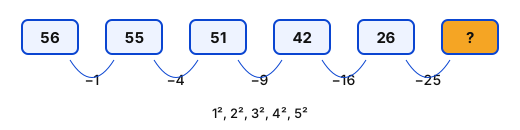
56 55 51 42 26 ?
दी गई शृंखला में ‘?’ के स्थान पर क्या आना चाहिए?
56 55 51 42 26 ?
  1. A2
  2. B3
  3. C1
  4. D4
Show answer

Concept: Look at the differences between consecutive terms.

  1. 56−55=1, 55−51=4, 51−42=9, 42−26=16 → differences are 12,22,32,42.
  2. Next difference =52=25 → 26−25=1.

Trick: Differences 1, 4, 9, 16 are perfect squares – next is 25.

Answer: (C) 1

अवधारणा: क्रमागत पदों के अंतर देखें।

  1. 56−55=1, 55−51=4, 51−42=9, 42−26=16 → अंतर 12,22,32,42।
  2. अगला अंतर =52=25 → 26−25=1।

ट्रिक: अंतर 1, 4, 9, 16 पूर्ण वर्ग हैं – अगला 25।

उत्तर: (C) 1

RRB NTPC Graduate CBT 1General Intelligence and ReasoningNumber SeriesRRB NTPC Graduate CBT 1 2025 · 27 Mar Shift 3 →
Q86.
Each of the digits in the number 386152479 is arranged in ascending order from left to right. The position of how many digits will remain unchanged as compared to that in the original number?
संख्या 386152479 के प्रत्येक अंक को बाएँ से दाएँ आरोही क्रम में व्यवस्थित किया जाता है। मूल संख्या की तुलना में कितने अंकों की स्थिति अपरिवर्तित रहेगी?
  1. ANoneकोई नहीं
  2. BThreeतीन
  3. COneएक
  4. DTwoदो
Show answer

Concept: Write the original and the sorted number one below the other and compare position by position.

  1. Original: 3 8 6 1 5 2 4 7 9; Ascending: 1 2 3 4 5 6 7 8 9.
  2. Match at position 5 (5 = 5) and position 9 (9 = 9) only.
  3. So two digits keep their place.

Trick: In a 1–9 arrangement, digit d stays only if it was already at the dth place.

Answer: (D) Two

अवधारणा: मूल और क्रमबद्ध संख्या को एक के नीचे एक लिखकर स्थान-दर-स्थान तुलना करें।

  1. मूल: 3 8 6 1 5 2 4 7 9; आरोही: 1 2 3 4 5 6 7 8 9।
  2. केवल स्थान 5 (5 = 5) और स्थान 9 (9 = 9) पर मेल।
  3. अतः दो अंक अपनी जगह पर रहते हैं।

ट्रिक: 1–9 की व्यवस्था में अंक d तभी स्थिर रहता है जब वह पहले से dवें स्थान पर हो।

उत्तर: (D) Two

RRB NTPC Graduate CBT 1General Intelligence and ReasoningDigit ArrangementRRB NTPC Graduate CBT 1 2025 · 27 Mar Shift 3 →
Q87.
In a certain code language, ‘MATE’ is coded as ‘9827’ and ‘TIME’ is coded as ‘9218’. What is the code for ‘I’ in the given code language?
एक निश्चित कूट भाषा में, ‘MATE’ को ‘9827’ के रूप में कूटबद्ध किया जाता है और ‘TIME’ को ‘9218’ के रूप में कूटबद्ध किया जाता है। दी गई कूट भाषा में ‘I’ का कूट क्या है?
  1. A9
  2. B8
  3. C2
  4. D1
Show answer

Concept: Compare the two words – common letters get common digits; the leftover letter gets the leftover digit.

  1. MATE → 9827, TIME → 9218.
  2. Common letters M, T, E ↔ common digits 9, 2, 8.
  3. Leftover: A → 7 (from MATE) and I → 1 (from TIME).

Trick: You never need the full mapping – only match the odd-one-out letter with the odd-one-out digit.

Answer: (D) 1

अवधारणा: दोनों शब्दों की तुलना करें – समान अक्षरों को समान अंक मिलते हैं; बचा अक्षर = बचा अंक।

  1. MATE → 9827, TIME → 9218।
  2. समान अक्षर M, T, E ↔ समान अंक 9, 2, 8।
  3. बचे हुए: A → 7 (MATE से) और I → 1 (TIME से)।

ट्रिक: पूरी मैपिंग की ज़रूरत नहीं – बस अलग बचे अक्षर को अलग बचे अंक से मिलाएँ।

उत्तर: (D) 1

RRB NTPC Graduate CBT 1General Intelligence and ReasoningCoding–DecodingRRB NTPC Graduate CBT 1 2025 · 27 Mar Shift 3 →
Q88.
What should come in place of the question mark (?) in the given series?
89 87 84 79 72 ?
दी गई शृंखला में प्रश्नवाचक चिह्न (?) के स्थान पर क्या आना चाहिए?
89 87 84 79 72 ?
  1. A61
  2. B59
  3. C62
  4. D63
Show answer

Concept: Find the differences between consecutive terms and look for a known pattern.

  1. 89→87→84→79→72: differences 2,3,5,7.
  2. These are consecutive prime numbers; next prime =11.
  3. 72−11=61.

Trick: Differences 2,3,5,7,11,13… (primes) is a favourite RRB pattern – check it whenever gaps grow irregularly.

Answer: (A) 61

अवधारणा: लगातार पदों का अंतर निकालें और परिचित पैटर्न खोजें।

  1. 89→87→84→79→72: अंतर 2,3,5,7।
  2. ये क्रमागत अभाज्य (prime) संख्याएँ हैं; अगली अभाज्य =11।
  3. 72−11=61।

ट्रिक: अंतर 2,3,5,7,11,13… (अभाज्य) RRB का पसंदीदा पैटर्न है – जब अंतर अनियमित बढ़ें तो इसे ज़रूर जाँचें।

उत्तर: (A) 61

RRB NTPC Graduate CBT 1General Intelligence and ReasoningNumber SeriesRRB NTPC Graduate CBT 1 2025 · 27 Mar Shift 3 →
Q89.
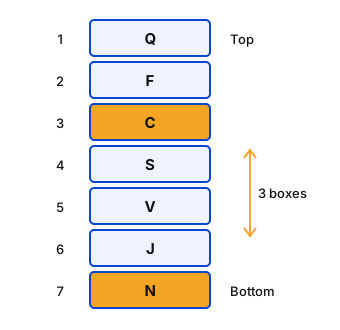
Seven boxes, C, F, J, N, Q, S and V are kept one over the other but not necessarily in the same order. Only Q is kept above F. Only V is kept between J and S. Only N is kept below J. How many boxes are kept between C and N?
सात बक्से C, F, J, N, Q, S और V एक के ऊपर एक रखे गए हैं, लेकिन आवश्यक नहीं कि इसी क्रम में हों। केवल Q को F के ऊपर रखा गया है। J और S के बीच केवल V रखा गया है। केवल N को J के नीचे रखा गया है। C और N के बीच कितने बक्से रखे गए हैं?
  1. ATwoदो
  2. BThreeतीन
  3. COneएक
  4. DFourचार
Show answer

Concept: Fix the certain positions first ("only X above/below Y"), then fill the rest.

  1. Only Q above F ⇒ Q = 1st (top), F = 2nd.
  2. Only N below J ⇒ J = 6th, N = 7th (bottom).
  3. Only V between J and S ⇒ S = 4th, V = 5th; the remaining C = 3rd.
  4. Between C (3rd) and N (7th): S, V, J = three boxes.

Trick: "Only one box above X" pins X at position 2 instantly – start with such clues.

Answer: (B) Three

अवधारणा: पहले निश्चित स्थान तय करें ("केवल X, Y के ऊपर/नीचे"), फिर बाकी भरें।

  1. केवल Q, F के ऊपर ⇒ Q = पहला (सबसे ऊपर), F = दूसरा।
  2. केवल N, J के नीचे ⇒ J = छठा, N = सातवाँ (सबसे नीचे)।
  3. J और S के बीच केवल V ⇒ S = चौथा, V = पाँचवाँ; बचा C = तीसरा।
  4. C (तीसरा) और N (सातवाँ) के बीच: S, V, J = तीन बॉक्स।

ट्रिक: "X के ऊपर केवल एक बॉक्स" X को तुरंत स्थान 2 पर जमा देता है – ऐसे सूत्रों से शुरुआत करें।

उत्तर: (B) Three

RRB NTPC Graduate CBT 1General Intelligence and ReasoningBox ArrangementRRB NTPC Graduate CBT 1 2025 · 27 Mar Shift 3 →
Q90.
Which of the following letter-number clusters will replace the question mark (?) in the given series to make it logically complete?
NON 40 LML 30 JKJ 20 HIH 10 ?
निम्नलिखित में से कौन-सा अक्षर-संख्या समूह दी गई शृंखला में प्रश्नवाचक चिह्न (?) के स्थान पर आकर उसे तार्किक रूप से पूर्ण करेगा?
NON 40 LML 30 JKJ 20 HIH 10 ?
  1. AFNW 7
  2. BFHE 0
  3. CFFE 5
  4. DFGF 0
Show answer

Concept: Treat each letter position and the number as separate series.

  1. 1st/3rd letters: N, L, J, H – each −2 ⇒ next F.
  2. Middle letter: O, M, K, I – each −2 ⇒ next G.
  3. Numbers: 40,30,20,10 – each −10 ⇒ 0.
  4. Cluster = FGF 0.

Trick: The middle letter is always one ahead of the outer letters (N–O, L–M, …) so F pairs with G.

Answer: (D) FGF 0

अवधारणा: हर अक्षर-स्थान और संख्या को अलग-अलग श्रृंखला मानें।

  1. पहला/तीसरा अक्षर: N, L, J, H – हर बार −2 ⇒ अगला F।
  2. बीच का अक्षर: O, M, K, I – हर बार −2 ⇒ अगला G।
  3. संख्याएँ: 40,30,20,10 – हर बार −10 ⇒ 0।
  4. समूह = FGF 0।

ट्रिक: बीच का अक्षर हमेशा बाहरी अक्षरों से एक आगे है (N–O, L–M, …), इसलिए F के साथ G आएगा।

उत्तर: (D) FGF 0

RRB NTPC Graduate CBT 1General Intelligence and ReasoningLetter–Number SeriesRRB NTPC Graduate CBT 1 2025 · 27 Mar Shift 3 →
Q91.
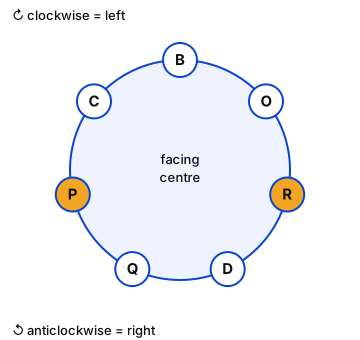
Seven people B, C, D, O, P, Q and R are sitting around a circular table facing the center of the table. C sits to the immediate right of B. Q sits to the immediate left of D. O sits second to the right of D. R sits third to the left of C. Who sits third to the right of P?
सात व्यक्ति B, C, D, O, P, Q और R एक वृत्ताकार मेज के चारों ओर मेज के केंद्र की ओर मुख करके बैठे हैं। C, B के ठीक दाएँ बैठा है। Q, D के ठीक बाएँ बैठा है। O, D के दाएँ दूसरे स्थान पर बैठा है। R, C के बाएँ तीसरे स्थान पर बैठा है। P के दाएँ तीसरे स्थान पर कौन बैठा है?
  1. AB
  2. BR
  3. CO
  4. DD
Show answer

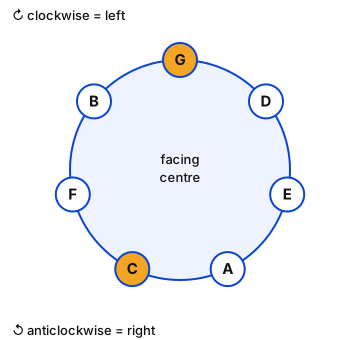
Concept: Facing the centre, left = clockwise and right = anticlockwise. Fix one person and build.

  1. Place B; C is immediately right (anticlockwise) of B. R is third to the left (clockwise) of C.
  2. Q is immediately left of D and O is second to the right of D – the only fit in the remaining seats is D, Q and O as shown, leaving P in the last seat.
  3. Order clockwise: B, O, R, D, Q, P, C.
  4. Third to the right (anticlockwise) of P: Q, D, R ⇒ R.

Trick: Draw 7 dots, mark the first person at the top and write L↻ / R↺ beside the circle so you never flip directions.

Answer: (B) R

अवधारणा: केंद्र की ओर मुख होने पर बायाँ = दक्षिणावर्त (clockwise) और दायाँ = वामावर्त। एक व्यक्ति को स्थिर करके बनाएँ।

  1. B रखें; C, B के तुरंत दाएँ (वामावर्त)। R, C के बाएँ तीसरा (दक्षिणावर्त)।
  2. Q, D के तुरंत बाएँ और O, D के दाएँ दूसरा – बची सीटों में D, Q, O केवल चित्र के अनुसार फिट होते हैं; अंतिम सीट P की।
  3. दक्षिणावर्त क्रम: B, O, R, D, Q, P, C।
  4. P के दाएँ तीसरा (वामावर्त): Q, D, R ⇒ R।

ट्रिक: 7 बिंदु बनाएँ, पहले व्यक्ति को ऊपर रखें और वृत्त के पास L↻ / R↺ लिख लें ताकि दिशा कभी न उलटे।

उत्तर: (B) R

RRB NTPC Graduate CBT 1General Intelligence and ReasoningCircular SeatingRRB NTPC Graduate CBT 1 2025 · 27 Mar Shift 3 →
Q92.
Which of the following letter-clusters should replace # and % so that the pattern and relationship followed between the letter-cluster pair on the left side of :: is the same as that on the right side of :: ?
# : ONQ :: LKN : %
निम्नलिखित में से कौन-से अक्षर-समूह # और % के स्थान पर आने चाहिए ताकि :: के बाईं ओर के अक्षर-समूह युग्म के बीच अनुसरण किया गया पैटर्न और संबंध, :: के दाईं ओर के युग्म के समान हो?
# : ONQ :: LKN : %
  1. A# = QUV , % = JLP
  2. B# = QPS , % = JIL
  3. C# = RQU , % = KPM
  4. D# = RUS , % = KON
Show answer

Concept: Find a rule that turns the first cluster into the second, and apply the same rule on both sides of ::.

  1. Test option B: QPS → ONQ: Q−2=O, P−2=N, S−2=Q ✓.
  2. LKN → JIL: L−2=J, K−2=I, N−2=L ✓ – same rule, each letter −2.
  3. Other options do not give a uniform shift on both pairs.

Trick: When both # and % are unknown, start from the known pair LKN and check which % is a constant shift – only JIL (−2) works, then confirm #.

Answer: (B) # = QPS , % = JIL

अवधारणा: ऐसा नियम खोजें जो पहले समूह को दूसरे में बदले, और :: के दोनों ओर वही नियम लगाएँ।

  1. विकल्प B जाँचें: QPS → ONQ: Q−2=O, P−2=N, S−2=Q ✓।
  2. LKN → JIL: L−2=J, K−2=I, N−2=L ✓ – वही नियम, हर अक्षर −2।
  3. बाकी विकल्पों में दोनों जोड़ों पर एक-समान शिफ्ट नहीं मिलती।

ट्रिक: जब # और % दोनों अज्ञात हों, ज्ञात समूह LKN से शुरू करें और देखें कौन-सा % एकसमान शिफ्ट देता है – केवल JIL (−2) चलता है, फिर # पुष्टि करें।

उत्तर: (B) # = QPS , % = JIL

RRB NTPC Graduate CBT 1General Intelligence and ReasoningLetter AnalogyRRB NTPC Graduate CBT 1 2025 · 27 Mar Shift 3 →
Q93.
Select the set in which the numbers are related in the same way as are the numbers of the following sets.
(NOTE: Operations should be performed on the whole numbers, without breaking down the numbers into its constituent digits. For example, 13 – Operations on 13 such as adding/deleting/multiplying etc. to 13 can be performed. Breaking down 13 into 1 and 3 and then performing mathematical operations on 1 and 3 is not allowed.)
(11, 20, 215)
(10, 15, 145)
उस समुच्चय का चयन कीजिए जिसमें संख्याएँ उसी प्रकार संबंधित हैं जिस प्रकार निम्नलिखित समुच्चयों की संख्याएँ संबंधित हैं।
(नोट: संक्रियाएँ संख्याओं को उनके घटक अंकों में विभाजित किए बिना, पूर्ण संख्याओं पर की जानी चाहिए। उदाहरण के लिए, 13 – 13 पर संक्रियाएँ जैसे 13 में जोड़ना/घटाना/गुणा करना आदि की जा सकती हैं। 13 को 1 और 3 में विभाजित करके फिर 1 और 3 पर गणितीय संक्रियाएँ करने की अनुमति नहीं है।)
(11, 20, 215)
(10, 15, 145)
  1. A(11, 9, 94)
  2. B(13, 16, 208)
  3. C(11, 15, 125)
  4. D(7, 17, 88)
Show answer

Concept: Find one operation on the first two numbers that produces the third in both given sets.

  1. (11,20,215): 11×20−5=215. (10,15,145): 10×15−5=145.
  2. Rule: third = first × second −5.
  3. Option A: 11×9−5=99−5=94 ✓. (B: 208−5=203≠208; C: 165−5=160; D: 119−5=114.)

Trick: When the third number is slightly less than the product, test "product − constant" first.

Answer: (A) (11, 9, 94)

अवधारणा: पहली दो संख्याओं पर ऐसी एक संक्रिया खोजें जो दोनों दिए गए समुच्चयों में तीसरी संख्या दे।

  1. (11,20,215): 11×20−5=215। (10,15,145): 10×15−5=145।
  2. नियम: तीसरी = पहली × दूसरी −5।
  3. विकल्प A: 11×9−5=99−5=94 ✓। (B: 208−5=203≠208; C: 165−5=160; D: 119−5=114।)

ट्रिक: जब तीसरी संख्या गुणनफल से थोड़ी कम हो, पहले "गुणनफल − स्थिरांक" जाँचें।

उत्तर: (A) (11, 9, 94)

RRB NTPC Graduate CBT 1General Intelligence and ReasoningNumber Analogy – TripletsRRB NTPC Graduate CBT 1 2025 · 27 Mar Shift 3 →
Q94.
In a certain code language,
A + B means ‘A is the mother of B’
A - B means ‘A is the son of B’
A × B means ‘A is the brother of B’
A ÷ B means ‘A is the daughter of B’
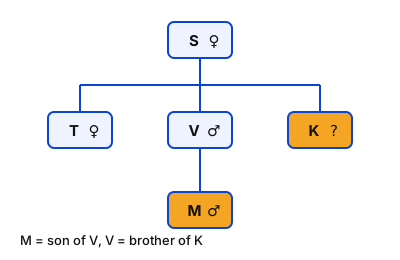
Based on the above, how is M related to K if ‘M - V × T ÷ S + K’?
एक निश्चित कूट भाषा में,
A + B का अर्थ है ‘A, B की माता है’
A - B का अर्थ है ‘A, B का पुत्र है’
A × B का अर्थ है ‘A, B का भाई है’
A ÷ B का अर्थ है ‘A, B की पुत्री है’
उपर्युक्त के आधार पर, यदि ‘M - V × T ÷ S + K’ है, तो M, K से किस प्रकार संबंधित है?
  1. ASister’s sonबहन का पुत्र
  2. BBrotherभाई
  3. CBrother’s sonभाई का पुत्र
  4. DDaughter’s sonपुत्री का पुत्र
Show answer

Concept: Decode from left to right and build the family tree.

  1. M − V: M is the son of V. V × T: V is the brother of T.
  2. T ÷ S: T is the daughter of S. S + K: S is the mother of K.
  3. So T, V and K are all children of S; V (male) is K's brother.
  4. M, the son of V, is K's brother's son.

Trick: Option A (sister's son) is wrong because V is explicitly a brother; K's own gender is unknown, so "nephew" is described as "brother's son".

Answer: (C) Brother's son

अवधारणा: बाएँ से दाएँ डिकोड करें और वंश-वृक्ष बनाएँ।

  1. M − V: M, V का पुत्र। V × T: V, T का भाई।
  2. T ÷ S: T, S की पुत्री। S + K: S, K की माता।
  3. अतः T, V और K सभी S की संतान हैं; V (पुरुष) K का भाई है।
  4. M, V का पुत्र, K के भाई का पुत्र है।

ट्रिक: विकल्प A (बहन का पुत्र) गलत है क्योंकि V स्पष्ट रूप से भाई है; K का लिंग अज्ञात है, इसलिए "भतीजा" को "भाई का पुत्र" कहा गया।

उत्तर: (C) Brother's son

RRB NTPC Graduate CBT 1General Intelligence and ReasoningBlood Relations – CodedRRB NTPC Graduate CBT 1 2025 · 27 Mar Shift 3 →
Q95.
A, B, C, D, E, F and G sit around a circular table, facing the centre.
D sits to the immediate left of G. F sits to the immediate left of C. C sits second to the left of E. A sits third to the left of G.
Who sits third to the right of G?
A, B, C, D, E, F और G एक वृत्ताकार मेज के चारों ओर केंद्र की ओर मुख करके बैठे हैं।
D, G के ठीक बाएँ बैठा है। F, C के ठीक बाएँ बैठा है। C, E के बाएँ दूसरे स्थान पर बैठा है। A, G के बाएँ तीसरे स्थान पर बैठा है।
G के दाएँ तीसरे स्थान पर कौन बैठा है?
  1. AF
  2. BE
  3. CA
  4. DC
Show answer

Concept: Facing the centre: left = clockwise, right = anticlockwise.

  1. Place G; D is immediately left (clockwise) of G; A is third to the left of G.
  2. C is second to the left of E and F is immediately left of C – with the seats left, E, C, F fall in a row between D and A, and B takes the last seat.
  3. Clockwise order: G, D, E, A, C, F, B.
  4. Third to the right (anticlockwise) of G: B, F, C ⇒ C.

Trick: Note that "third to the right of G" is the same as "fourth to the left of G" in a 7-seat circle – A is third left, so the next clockwise seat, C, is the answer.

Answer: (D) C

अवधारणा: केंद्र की ओर मुख: बायाँ = दक्षिणावर्त, दायाँ = वामावर्त।

  1. G रखें; D, G के तुरंत बाएँ (दक्षिणावर्त); A, G के बाएँ तीसरा।
  2. C, E के बाएँ दूसरा और F, C के तुरंत बाएँ – बची सीटों में E, C, F क्रम से D और A के बीच आते हैं, अंतिम सीट B की।
  3. दक्षिणावर्त क्रम: G, D, E, A, C, F, B।
  4. G के दाएँ तीसरा (वामावर्त): B, F, C ⇒ C।

ट्रिक: 7 सीटों के वृत्त में "G के दाएँ तीसरा" = "G के बाएँ चौथा" – A बाएँ तीसरा है, इसलिए अगली दक्षिणावर्त सीट C उत्तर है।

उत्तर: (D) C

RRB NTPC Graduate CBT 1General Intelligence and ReasoningCircular SeatingRRB NTPC Graduate CBT 1 2025 · 27 Mar Shift 3 →
Q96.
This question is based on the five, three-digit numbers given below.
(Left) 746 154 798 123 145 (Right)
(Example: 697 – First digit = 6, second digit = 9 and third digit = 7)
NOTE: All operations to be done from left to right.
What will be the resultant if the third digit of the highest number is added to the second digit of the lowest number?
यह प्रश्न नीचे दी गई पाँच, तीन-अंकीय संख्याओं पर आधारित है।
(बाएँ) 746 154 798 123 145 (दाएँ)
(उदाहरण: 697 – पहला अंक = 6, दूसरा अंक = 9 और तीसरा अंक = 7)
नोट: सभी संक्रियाएँ बाएँ से दाएँ की ओर की जानी हैं।
यदि सबसे बड़ी संख्या के तीसरे अंक को सबसे छोटी संख्या के दूसरे अंक में जोड़ा जाए, तो परिणाम क्या होगा?
  1. A11
  2. B10
  3. C13
  4. D16
Show answer

Concept: Identify the required numbers, then pick the asked digits.

  1. Numbers: 746, 154, 798, 123, 145. Highest =798, lowest =123.
  2. Third digit of 798 =8; second digit of 123 =2.
  3. 8+2=10.

Trick: Compare hundreds digits first (7,1,7,1,1): highest among 746 or 798 and lowest among 154, 123 or 145 – a 5-second scan.

Answer: (B) 10

अवधारणा: आवश्यक संख्याएँ पहचानें, फिर पूछे गए अंक चुनें।

  1. संख्याएँ: 746, 154, 798, 123, 145। सबसे बड़ी =798, सबसे छोटी =123।
  2. 798 का तीसरा अंक =8; 123 का दूसरा अंक =2।
  3. 8+2=10।

ट्रिक: पहले सैकड़े का अंक देखें (7,1,7,1,1): सबसे बड़ी 746 or 798 में से और सबसे छोटी 154, 123 or 145 में से – 5 सेकंड की जाँच।

उत्तर: (B) 10

RRB NTPC Graduate CBT 1General Intelligence and ReasoningNumber OperationsRRB NTPC Graduate CBT 1 2025 · 27 Mar Shift 3 →
Q97.
If ‘A’ stands for ‘÷’, ‘B’ stands for ‘×’, ‘C’ stands for ‘+’ and ‘D’ stands for ‘−’, then what will come in place of the question mark (?) in the following equation?
22 A 11 C 3 B 7 D 6 = ?
यदि ‘A’ का अर्थ ‘÷’, ‘B’ का अर्थ ‘×’, ‘C’ का अर्थ ‘+’ और ‘D’ का अर्थ ‘−’ है, तो निम्नलिखित समीकरण में प्रश्नवाचक चिह्न (?) के स्थान पर क्या आएगा?
22 A 11 C 3 B 7 D 6 = ?
  1. A15
  2. B17
  3. C14
  4. D13
Show answer

Concept: Replace the letters by the given signs, then apply BODMAS.

  1. 22A11C3B7D6⇒22÷11+3×7−6.
  2. Division and multiplication first: 2+21−6.
  3. 2+21−6=17.

Trick: Write the decoded expression fully before calculating – most errors come from doing it in the head.

Answer: (B) 17

अवधारणा: अक्षरों की जगह दिए गए चिह्न रखें, फिर BODMAS लगाएँ।

  1. 22A11C3B7D6⇒22÷11+3×7−6।
  2. पहले भाग और गुणा: 2+21−6।
  3. 2+21−6=17।

ट्रिक: गणना से पहले डिकोड किया हुआ व्यंजक पूरा लिखें – ज़्यादातर गलतियाँ मन में करने से होती हैं।

उत्तर: (B) 17

RRB NTPC Graduate CBT 1General Intelligence and ReasoningMathematical OperationsRRB NTPC Graduate CBT 1 2025 · 27 Mar Shift 3 →
Q98.
In this question, a question is followed by two statements numbered (I) and (II). You have to decide whether the data provided in the statements are sufficient to answer the question. Read both the statements and decide the appropriate answer.
Q. Rahul, Aman, Karan, Nikhil, and Varun each have different height. Who is the second tallest?
(I) Karan is taller than Rahul and Aman but shorter than Nikhil.
(II) Varun is taller than Karan but shorter than Nikhil
इस प्रश्न में, एक प्रश्न के बाद दो कथन (I) और (II) दिए गए हैं। आपको यह निर्णय लेना है कि कथनों में दिए गए आँकड़े प्रश्न का उत्तर देने के लिए पर्याप्त हैं या नहीं। दोनों कथनों को पढ़िए और उपयुक्त उत्तर का निर्णय लीजिए।
प्रश्न: राहुल, अमन, करण, निखिल और वरुण में से प्रत्येक की लंबाई अलग-अलग है। दूसरा सबसे लंबा कौन है?
(I) करण, राहुल और अमन से लंबा है लेकिन निखिल से छोटा है।
(II) वरुण, करण से लंबा है लेकिन निखिल से छोटा है
  1. AData in Statement II alone is sufficient to answer the question while data in Statement I is notप्रश्न का उत्तर देने के लिए केवल कथन II के आँकड़े पर्याप्त हैं, जबकि कथन I के आँकड़े पर्याप्त नहीं हैं
  2. BData in Statement I alone is sufficient to answer the question while data in Statement II is notप्रश्न का उत्तर देने के लिए केवल कथन I के आँकड़े पर्याप्त हैं, जबकि कथन II के आँकड़े पर्याप्त नहीं हैं
  3. CBoth statements I and II together (and not statement I alone or statement II alone) are sufficient to answer the questionप्रश्न का उत्तर देने के लिए कथन I और II दोनों एक साथ (न कि केवल कथन I या केवल कथन II) पर्याप्त हैं
  4. DBoth statements I and II together are NOT sufficient to answer the questionप्रश्न का उत्तर देने के लिए कथन I और II दोनों एक साथ भी पर्याप्त नहीं हैं
Show answer

Concept: Check each statement alone, then together.

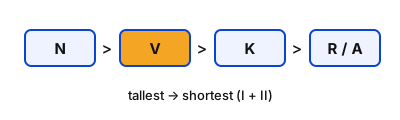
  1. (I) alone: Nikhil > Karan > Rahul, Aman – Varun's place is unknown, so the second tallest could be Varun or Karan. Not sufficient.
  2. (II) alone: Nikhil > Varun > Karan – nothing about Rahul and Aman, who could be above Varun. Not sufficient.
  3. Together: Nikhil > Varun > Karan > Rahul, Aman ⇒ second tallest is Varun.

Trick: In "who is second" questions a statement is sufficient only if it fixes everyone who could possibly be above the second position.

Answer: (C) Both statements I and II together (and not statement I alone or statement II alone) are sufficient to answer the question

अवधारणा: हर कथन को अकेले जाँचें, फिर दोनों साथ।

  1. (I) अकेले: निखिल > करण > राहुल, अमन – वरुण का स्थान अज्ञात, दूसरा सबसे लंबा वरुण या करण हो सकता है। अपर्याप्त।
  2. (II) अकेले: निखिल > वरुण > करण – राहुल और अमन के बारे में कुछ नहीं, वे वरुण से ऊपर हो सकते हैं। अपर्याप्त।
  3. दोनों साथ: निखिल > वरुण > करण > राहुल, अमन ⇒ दूसरा सबसे लंबा वरुण।

ट्रिक: "दूसरा कौन" वाले प्रश्नों में कथन तभी पर्याप्त है जब वह हर उस व्यक्ति को तय कर दे जो दूसरे स्थान से ऊपर हो सकता है।

उत्तर: (C) Both statements I and II together (and not statement I alone or statement II alone) are sufficient to answer the question

RRB NTPC Graduate CBT 1General Intelligence and ReasoningData Sufficiency – OrderingRRB NTPC Graduate CBT 1 2025 · 27 Mar Shift 3 →
Q99.
Which of the following letter-number clusters will replace the question mark “?” in the given series to make it logically complete?
JFX 15, OKC 21, TPH 27, YUM 33, ?
निम्नलिखित में से कौन-सा अक्षर-संख्या समूह दी गई शृंखला में प्रश्नवाचक चिह्न “?” के स्थान पर आकर उसे तार्किक रूप से पूर्ण करेगा?
JFX 15, OKC 21, TPH 27, YUM 33, ?
  1. ABYR 39
  2. BDYP 39
  3. CDZR 39
  4. DEAS 38
Show answer

Concept: Check each letter position and the number separately.

  1. 1st letters J, O, T, Y → +5 each ⇒ Y+5=D.
  2. 2nd letters F, K, P, U → +5 ⇒ U+5=Z; 3rd letters X, C, H, M → +5 ⇒ M+5=R.
  3. Numbers 15,21,27,33 → +6 ⇒ 39. Cluster = DZR 39.

Trick: Wrap-around: Y(25)+5=30→30−26=4=D; U(21)+5=26=Z.

Answer: (C) DZR 39

अवधारणा: हर अक्षर-स्थान और संख्या को अलग-अलग जाँचें।

  1. पहले अक्षर J, O, T, Y → हर बार +5 ⇒ Y+5=D।
  2. दूसरे अक्षर F, K, P, U → +5 ⇒ U+5=Z; तीसरे अक्षर X, C, H, M → +5 ⇒ M+5=R।
  3. संख्याएँ 15,21,27,33 → +6 ⇒ 39। समूह = DZR 39।

ट्रिक: चक्र पूरा होने पर: Y(25)+5=30→30−26=4=D; U(21)+5=26=Z।

उत्तर: (C) DZR 39

RRB NTPC Graduate CBT 1General Intelligence and ReasoningLetter–Number SeriesRRB NTPC Graduate CBT 1 2025 · 27 Mar Shift 3 →
Q100.
Vansh starts from Point A and drives 26 km towards West. He then takes a left turn, drives 15 km, turns left and drives 35 km. He then takes a left turn and drives 21 km. He takes a final left turn, drives 9 km and stops at Point P. How far (shortest distance) and towards which direction should he drive in order to reach Point A again? (All turns are 90 degrees turns only unless specified)
वंश बिंदु A से चलना शुरू करता है और पश्चिम की ओर 26 km गाड़ी चलाता है। फिर वह बाएँ मुड़ता है, 15 km गाड़ी चलाता है, बाएँ मुड़ता है और 35 km गाड़ी चलाता है। फिर वह बाएँ मुड़ता है और 21 km गाड़ी चलाता है। वह अंतिम बार बाएँ मुड़ता है, 9 km गाड़ी चलाता है और बिंदु P पर रुक जाता है। पुनः बिंदु A तक पहुँचने के लिए उसे कितनी दूर (न्यूनतम दूरी) और किस दिशा में गाड़ी चलानी चाहिए? (जब तक अन्यथा निर्दिष्ट न हो, सभी मोड़ केवल 90 डिग्री के मोड़ हैं)
  1. A6 km to the North6 km उत्तर की ओर
  2. B5 km to the North5 km उत्तर की ओर
  3. C5 km to the South5 km दक्षिण की ओर
  4. D6 km to the South6 km दक्षिण की ओर
Show answer

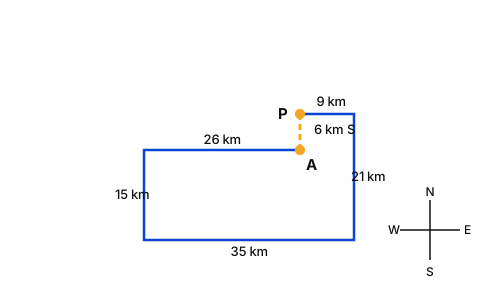
Concept: Take A as origin; West =−x, North =+y. Every left turn rotates the heading anticlockwise: W → S → E → N → W.

  1. West 26: (−26,0); left (South) 15: (−26,−15); left (East) 35: (9,−15).
  2. Left (North) 21: (9,6); left (West) 9: P =(0,6).
  3. P is 6 km due North of A, so he must drive 6 km to the South.

Trick: Net East–West: −26+35−9=0 (same vertical line as A); net North–South: −15+21=+6 (north). So return = 6 km South.

Answer: (D) 6 km to the South

अवधारणा: A को मूल बिंदु लें; पश्चिम =−x, उत्तर =+y। हर बायाँ मोड़ दिशा को वामावर्त घुमाता है: W → S → E → N → W।

  1. पश्चिम 26: (−26,0); बाएँ (दक्षिण) 15: (−26,−15); बाएँ (पूर्व) 35: (9,−15)।
  2. बाएँ (उत्तर) 21: (9,6); बाएँ (पश्चिम) 9: P =(0,6)।
  3. P, A से ठीक 6 km उत्तर में है, अतः उसे 6 km दक्षिण की ओर चलना होगा।

ट्रिक: नेट पूर्व–पश्चिम: −26+35−9=0 (A की ही ऊर्ध्व रेखा); नेट उत्तर–दक्षिण: −15+21=+6 (उत्तर)। अतः वापसी = 6 km दक्षिण।

उत्तर: (D) 6 km to the South

RRB NTPC Graduate CBT 1General Intelligence and ReasoningDirection and DistanceRRB NTPC Graduate CBT 1 2025 · 27 Mar Shift 3 →