Question bank

Q&A: practice questions with answers

Search questions on any topic. Filter by exam category, exam, subject and topic, try the question, then open the answer and explanation.

Courses – airGurukul

7,077 questions found.

Q1181.
What should come in place of the question mark (?) in the given series?
912 910 920 918 928 ? 936
दी गई श्रृंखला में प्रश्नवाचक चिह्न (?) के स्थान पर क्या आना चाहिए?
912 910 920 918 928 ? 936
  1. A924
  2. B930
  3. C926
  4. D928
Show answer

Concept: Look at the differences between consecutive terms.

  1. 912−2=910, 910+10=920, 920−2=918, 918+10=928.
  2. Next: 928−2=926.
  3. Check: 926+10=936 ✓.

Trick: Alternating pattern −2, +10.

Answer: (C) 926

अवधारणा: क्रमागत पदों का अंतर देखें।

  1. 912−2=910, 910+10=920, 920−2=918, 918+10=928।
  2. अगला: 928−2=926।
  3. जाँच: 926+10=936 ✓।

ट्रिक: वैकल्पिक पैटर्न −2, +10।

उत्तर: (C) 926
RRB NTPC Graduate CBT 1General Intelligence and ReasoningNumber seriesRRB NTPC Graduate CBT 1 2024 · 20 Jun Shift 1 →
Q1182.
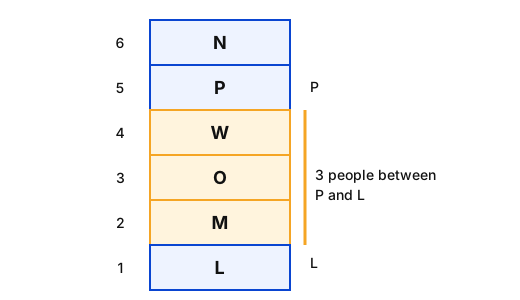
L, M, N, O, P and W live on six different floors of the same building. The lowermost floor in the building is numbered 1, the floor above it, number 2 and so on, till the topmost floor is numbered 6. Only three people live between M and N, where M lives below N. O lives on an odd-numbered floor and immediately above M. W lives on one of the floors below P and on one of the floors above L. How many people live between P and L?
L, M, N, O, P और W एक ही इमारत की छह अलग-अलग मंज़िलों पर रहते हैं। इमारत की सबसे निचली मंज़िल की संख्या 1 है, उसके ऊपर वाली मंज़िल की संख्या 2 है और इसी प्रकार आगे, सबसे ऊपरी मंज़िल की संख्या 6 है। M और N के बीच केवल तीन व्यक्ति रहते हैं, जहाँ M, N से नीचे रहता है। O एक विषम संख्या वाली मंज़िल पर और M के ठीक ऊपर रहता है। W, P से नीचे की किसी एक मंज़िल पर और L से ऊपर की किसी एक मंज़िल पर रहता है। P और L के बीच कितने व्यक्ति रहते हैं?
  1. ATwoदो
  2. BOneएक
  3. CThreeतीन
  4. DFourचार
Show answer

Concept: Use the "three between" clue to fix M and N, then the rest.

  1. Three between M and N, M below ⇒ (M1, N5) or (M2, N6).
  2. O immediately above M on an odd floor ⇒ M = 2, O = 3 (M1 would give O = 2, even). So N = 6.
  3. Remaining floors 1, 4, 5 with L below W below P ⇒ L = 1, W = 4, P = 5.
  4. Between P (5) and L (1): M, O, W ⇒ three.

Trick: Odd/even clues usually eliminate one case quickly.

Answer: (C) Three

अवधारणा: "तीन के बीच" संकेत से M और N तय करें, फिर बाकी।

  1. M और N के बीच तीन, M नीचे ⇒ (M1, N5) या (M2, N6)।
  2. O, M के ठीक ऊपर विषम मंज़िल पर ⇒ M = 2, O = 3 (M1 से O = 2 सम होता)। अतः N = 6।
  3. बची मंज़िलें 1, 4, 5; L, W से नीचे और W, P से नीचे ⇒ L = 1, W = 4, P = 5।
  4. P (5) और L (1) के बीच: M, O, W ⇒ तीन।

ट्रिक: विषम/सम संकेत अक्सर एक स्थिति जल्दी हटा देते हैं।

उत्तर: (C) Three

RRB NTPC Graduate CBT 1General Intelligence and ReasoningFloor puzzleRRB NTPC Graduate CBT 1 2024 · 20 Jun Shift 1 →
Q1183.
SUZD is related to ACHL in a certain way based on the English alphabetical order. In the same way, YAFJ is related to GINR. To which of the following options is WYDH related, following the same logic?
अंग्रेज़ी वर्णमाला क्रम के आधार पर SUZD एक निश्चित प्रकार से ACHL से संबंधित है। उसी प्रकार, YAFJ, GINR से संबंधित है। समान तर्क का अनुसरण करते हुए, WYDH निम्नलिखित में से किस विकल्प से संबंधित है?
  1. AEGPL
  2. BGPEL
  3. CEGLP
  4. DGPLE
Show answer

Concept: Find the shift between each letter pair (cyclic alphabet).

  1. S → A, U → C, Z → H, D → L: each letter +8
  2. Check: Y → G, A → I, F → N, J → R (+8) ✓
  3. WYDH: W → E, Y → G, D → L, H → P

Trick: +8 is the same as −18; Z(26)+8 wraps to H(8).

Answer: (C) EGLP

अवधारणा: हर अक्षर-युग्म का खिसकाव (चक्रीय वर्णमाला) देखें।

  1. S → A, U → C, Z → H, D → L: हर अक्षर +8
  2. जाँच: Y → G, A → I, F → N, J → R (+8) ✓
  3. WYDH: W → E, Y → G, D → L, H → P

ट्रिक: Z(26)+8 घूमकर H(8) बनता है।

उत्तर: (C) EGLP

RRB NTPC Graduate CBT 1General Intelligence and ReasoningLetter AnalogyRRB NTPC Graduate CBT 1 2024 · 20 Jun Shift 1 →
Q1184.
What should come in place of the question mark (?) in the given series?
536, 513, 480, ?, 384, 321
दी गई श्रृंखला में प्रश्नवाचक चिह्न (?) के स्थान पर क्या आना चाहिए?
536, 513, 480, ?, 384, 321
  1. A447
  2. B437
  3. C427
  4. D457
Show answer

Concept: Check the differences between consecutive terms.

  1. 536−513=23, 513−480=33
  2. Differences increase by 10: 23, 33, 43, 53, 63
  3. 480−43=437; check 437−53=384, 384−63=321 ✓

Trick: Second difference constant (10) → arithmetic pattern of differences.

Answer: (B) 437

अवधारणा: क्रमागत पदों का अंतर देखें।

  1. 536−513=23, 513−480=33
  2. अंतर 10-10 बढ़ते हैं: 23, 33, 43, 53, 63
  3. 480−43=437; जाँच 437−53=384, 384−63=321 ✓

ट्रिक: दूसरा अंतर स्थिर (10) है।

उत्तर: (B) 437

RRB NTPC Graduate CBT 1General Intelligence and ReasoningNumber SeriesRRB NTPC Graduate CBT 1 2024 · 20 Jun Shift 1 →
Q1185.
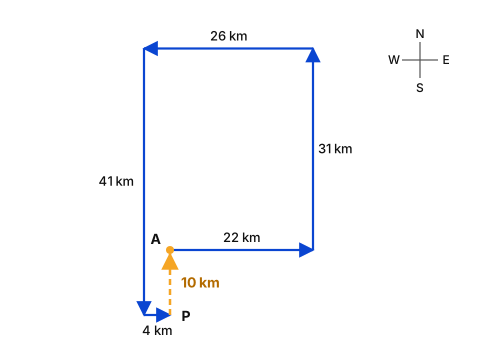
Mr. Plex starts from Point A and drives 22 km towards the East. He then takes a left turn, drives 31 km, turns left and drives 26 km. He then takes a left turn and drives 41 km. He takes a final left turn, drives 4 km and stops at Point P. How far (shortest distance) and towards which direction should he drive in order to reach Point A again? (All turns are 90 degrees turns only unless specified.)
मिस्टर प्लेक्स बिंदु A से चलना शुरू करते हैं और पूर्व की ओर 22 km ड्राइव करते हैं। फिर वे बाएँ मुड़ते हैं, 31 km ड्राइव करते हैं, बाएँ मुड़ते हैं और 26 km ड्राइव करते हैं। फिर वे बाएँ मुड़ते हैं और 41 km ड्राइव करते हैं। वे अंतिम बार बाएँ मुड़ते हैं, 4 km ड्राइव करते हैं और बिंदु P पर रुक जाते हैं। फिर से बिंदु A तक पहुँचने के लिए उन्हें कितनी दूर (न्यूनतम दूरी) और किस दिशा में ड्राइव करना चाहिए? (जब तक निर्दिष्ट न हो, सभी मोड़ केवल 90 डिग्री के मोड़ हैं।)
  1. A18 km to the Westपश्चिम की ओर 18 km
  2. B21 km to the Westपश्चिम की ओर 21 km
  3. C13 km to the Southदक्षिण की ओर 13 km
  4. D10 km to the Northउत्तर की ओर 10 km
Show answer

Concept: Trace each leg on axes (East = +x, North = +y); left turns go anticlockwise.

  1. A(0, 0) → East 22 → (22, 0) → North 31 → (22, 31)
  2. West 26 → (−4, 31) → South 41 → (−4, −10)
  3. East 4 → P(0, −10)
  4. P is 10 km due South of A, so he must drive 10 km North.

Trick: Net x: 22−26+4=0; net y: 31−41=−10.

Answer: (D) 10 km to the North

अवधारणा: हर चरण को अक्षों पर लिखें (पूर्व = +x, उत्तर = +y); बाएँ मुड़ना = वामावर्त।

  1. A(0, 0) → पूर्व 22 → (22, 0) → उत्तर 31 → (22, 31)
  2. पश्चिम 26 → (−4, 31) → दक्षिण 41 → (−4, −10)
  3. पूर्व 4 → P(0, −10)
  4. P, A से 10 km दक्षिण में है, इसलिए 10 km उत्तर जाना होगा।

ट्रिक: शुद्ध x: 22−26+4=0; शुद्ध y: 31−41=−10।

उत्तर: (D) 10 km उत्तर की ओर

RRB NTPC Graduate CBT 1General Intelligence and ReasoningDirection and DistanceRRB NTPC Graduate CBT 1 2024 · 20 Jun Shift 1 →
Q1186.
If 1 is added to each odd digit and 2 is subtracted from each even digit in the number 7532168, what will be the difference of the digits which are third from the left and second from the right in the new number thus formed?
यदि संख्या 7532168 में प्रत्येक विषम अंक में 1 जोड़ा जाए और प्रत्येक सम अंक में से 2 घटाया जाए, तो इस प्रकार बनी नई संख्या में बाएँ से तीसरे और दाएँ से दूसरे अंकों का अंतर क्या होगा?
  1. A1
  2. B4
  3. C3
  4. D0
Show answer

Concept: Change each digit by the rule, then pick positions.

  1. 7 5 3 2 1 6 8 → odd +1, even −2
  2. New number: 8 6 4 0 2 4 6
  3. 3rd from left =4; 2nd from right =4
  4. Difference =4−4=0

Trick: Write the new digits under the old ones to avoid slips.

Answer: (D) 0

अवधारणा: हर अंक को नियम से बदलें, फिर स्थान चुनें।

  1. 7 5 3 2 1 6 8 → विषम +1, सम −2
  2. नई संख्या: 8 6 4 0 2 4 6
  3. बाएँ से तीसरा =4; दाएँ से दूसरा =4
  4. अंतर =4−4=0

ट्रिक: नए अंक पुराने अंकों के नीचे लिखें।

उत्तर: (D) 0

RRB NTPC Graduate CBT 1General Intelligence and ReasoningNumber OperationsRRB NTPC Graduate CBT 1 2024 · 20 Jun Shift 1 →
Q1187.
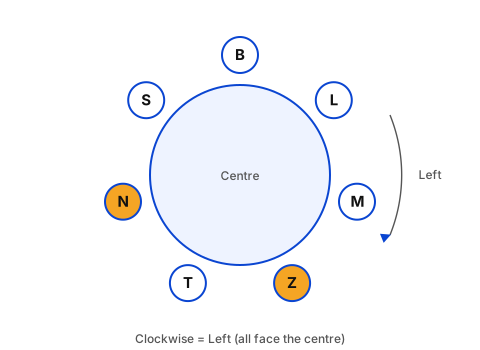
A, B, L, M, S, T and Z are sitting around a circular table facing the centre. Z sits fourth to the right of B. Only two people sit between L and T when counted from the left of L. M sits third to the left of S. N is an immediate neighbour of S and T. How many people are there between Z and N when counted from the left of N?
A, B, L, M, S, T और Z एक वृत्ताकार मेज़ के चारों ओर केंद्र की ओर मुख करके बैठे हैं। Z, B के दाएँ से चौथे स्थान पर बैठा है। L के बाएँ से गिनने पर L और T के बीच केवल दो व्यक्ति बैठे हैं। M, S के बाएँ से तीसरे स्थान पर बैठा है। N, S और T का निकटतम पड़ोसी है। N के बाएँ से गिनने पर Z और N के बीच कितने व्यक्ति हैं?
  1. A4
  2. B2
  3. C3
  4. D1
Show answer

Concept: Facing the centre: left = clockwise, right = anticlockwise. The seven people are B, L, M, N, S, T, Z (N is the one mentioned in the clues).

  1. Z is 4th to the right of B; N sits between S and T.
  2. L and T have two people between them (from L’s left); M is 3rd to the left of S.
  3. Only arrangement (clockwise): B, L, M, Z, T, N, S.
  4. From N going left: S, B, L, M, then Z → 4 people between.

Trick: Place B first, then fix Z; the S–N–T block decides the rest.

Answer: (A) 4

अवधारणा: केंद्र की ओर मुख: बायाँ = दक्षिणावर्त, दायाँ = वामावर्त। सात व्यक्ति B, L, M, N, S, T, Z हैं।

  1. Z, B के दाएँ चौथा है; N, S और T के बीच है।
  2. L और T के बीच दो व्यक्ति (L के बाएँ से); M, S के बाएँ तीसरा है।
  3. एकमात्र व्यवस्था (दक्षिणावर्त): B, L, M, Z, T, N, S।
  4. N के बाएँ से: S, B, L, M, फिर Z → बीच में 4 व्यक्ति।

ट्रिक: पहले B रखें, फिर Z; S–N–T खंड बाकी तय करता है।

उत्तर: (A) 4

RRB NTPC Graduate CBT 1General Intelligence and ReasoningCircular SeatingRRB NTPC Graduate CBT 1 2024 · 20 Jun Shift 1 →
Q1188.
Read the given statements and conclusions carefully. Assuming that the information given in the statements is true, even if it appears to be at variance with commonly known facts, decide which of the given conclusion(s) logically follow(s) from the statements.
Statements:
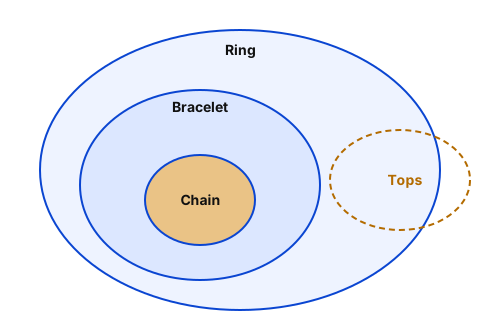
All chain are bracelet.
All bracelet are ring.
Some ring are tops.
Conclusions:
(I) All chain are ring.
(II) Some tops are chain.
दिए गए कथनों और निष्कर्षों को ध्यानपूर्वक पढ़िए। यह मानते हुए कि कथनों में दी गई जानकारी सत्य है, भले ही वह सामान्य रूप से ज्ञात तथ्यों से भिन्न प्रतीत होती हो, निर्णय कीजिए कि दिए गए निष्कर्षों में से कौन-सा/से निष्कर्ष कथनों का तार्किक रूप से अनुसरण करता है/करते हैं।
कथन:
सभी चेन, ब्रेसलेट हैं।
सभी ब्रेसलेट, अंगूठी हैं।
कुछ अंगूठी, टॉप्स हैं।
निष्कर्ष:
(I) सभी चेन, अंगूठी हैं।
(II) कुछ टॉप्स, चेन हैं।
  1. AOnly conclusion (I) followsकेवल निष्कर्ष (I) अनुसरण करता है
  2. BNeither conclusion (I) nor (II) followsन तो निष्कर्ष (I) और न ही (II) अनुसरण करता है
  3. CBoth conclusions (I) and (II) followदोनों निष्कर्ष (I) और (II) अनुसरण करते हैं
  4. DOnly conclusion (II) followsकेवल निष्कर्ष (II) अनुसरण करता है
Show answer

Concept: Draw the minimum-overlap Venn diagram.

  1. Chain ⊂ Bracelet ⊂ Ring → all chain are ring: I follows.
  2. Tops only touch some part of Ring; they need not touch Chain → II does not follow.

Trick: "All–All" chain gives a definite "All"; a "Some" on the outer set says nothing about the inner set.

Answer: (A) Only conclusion (I) follows

अवधारणा: न्यूनतम ओवरलैप वाला वेन आरेख बनाएँ।

  1. Chain ⊂ Bracelet ⊂ Ring → सभी chain, ring हैं: I अनुसरण करता है।
  2. Tops केवल Ring के किसी भाग से जुड़ते हैं; Chain से नहीं जुड़ना ज़रूरी नहीं → II नहीं।

ट्रिक: "सभी–सभी" से निश्चित "सभी"; बाहरी समुच्चय पर "कुछ" भीतरी के बारे में कुछ नहीं बताता।

उत्तर: (A) केवल निष्कर्ष (I) अनुसरण करता है

RRB NTPC Graduate CBT 1General Intelligence and ReasoningSyllogismRRB NTPC Graduate CBT 1 2024 · 20 Jun Shift 1 →
Q1189.
If 1 is added to each odd digit and 2 is subtracted from each even digit in the number 6185742, then what will the sum of the highest and lowest digits in the new number thus formed be?
यदि संख्या 6185742 में प्रत्येक विषम अंक में 1 जोड़ा जाए और प्रत्येक सम अंक में से 2 घटाया जाए, तो इस प्रकार बनी नई संख्या में सबसे बड़े और सबसे छोटे अंकों का योग क्या होगा?
  1. A9
  2. B8
  3. C7
  4. D6
Show answer

Concept: Apply the rule digit by digit.

  1. 6 1 8 5 7 4 2 → odd +1, even −2
  2. New number: 4 2 6 6 8 2 0
  3. Highest =8, lowest =0
  4. Sum =8+0=8

Trick: Watch the 2 → 0 change; it makes the lowest digit 0.

Answer: (B) 8

अवधारणा: नियम हर अंक पर लगाएँ।

  1. 6 1 8 5 7 4 2 → विषम +1, सम −2
  2. नई संख्या: 4 2 6 6 8 2 0
  3. सबसे बड़ा =8, सबसे छोटा =0
  4. योग =8+0=8

ट्रिक: 2 → 0 बनता है, यही सबसे छोटा अंक है।

उत्तर: (B) 8

RRB NTPC Graduate CBT 1General Intelligence and ReasoningNumber OperationsRRB NTPC Graduate CBT 1 2024 · 20 Jun Shift 1 →
Q1190.
In a certain code language, ‘MAZE’ is coded as ‘3647’ and ‘ZIPS’ is coded as ‘1275’. What is the code for ‘Z’ in the given code language?
एक निश्चित कूट भाषा में, ‘MAZE’ को ‘3647’ के रूप में कूटबद्ध किया जाता है और ‘ZIPS’ को ‘1275’ के रूप में कूटबद्ध किया जाता है। दी गई कूट भाषा में ‘Z’ के लिए कूट क्या है?
  1. A2
  2. B7
  3. C1
  4. D4
Show answer

Concept: A letter common to both words has the code (digit) common to both codes.

  1. MAZE and ZIPS: common letter = Z
  2. 3647 and 1275: common digit = 7
  3. So Z = 7

Trick: Common letter ↔ common digit.

Answer: (B) 7

अवधारणा: दोनों शब्दों में उभयनिष्ठ अक्षर का कोड दोनों कोड में उभयनिष्ठ अंक होता है।

  1. MAZE और ZIPS: उभयनिष्ठ अक्षर = Z
  2. 3647 और 1275: उभयनिष्ठ अंक = 7
  3. अतः Z = 7

ट्रिक: उभयनिष्ठ अक्षर ↔ उभयनिष्ठ अंक।

उत्तर: (B) 7

RRB NTPC Graduate CBT 1General Intelligence and ReasoningCoding-DecodingRRB NTPC Graduate CBT 1 2024 · 20 Jun Shift 1 →
Q1191.
In a certain code language, ‘VEST’ is coded as ‘3649’ and ‘SOAP’ is coded as ‘1295’. What is the code for ‘S’ in the given code language?
एक निश्चित कूट भाषा में, ‘VEST’ को ‘3649’ के रूप में कूटबद्ध किया जाता है और ‘SOAP’ को ‘1295’ के रूप में कूटबद्ध किया जाता है। दी गई कूट भाषा में ‘S’ के लिए कूट क्या है?
  1. A4
  2. B2
  3. C9
  4. D1
Show answer

Concept: Match the common letter with the common digit.

  1. VEST and SOAP: common letter = S
  2. 3649 and 1295: common digit = 9
  3. So S = 9

Trick: Common letter ↔ common digit.

Answer: (C) 9

अवधारणा: उभयनिष्ठ अक्षर को उभयनिष्ठ अंक से मिलाएँ।

  1. VEST और SOAP: उभयनिष्ठ अक्षर = S
  2. 3649 और 1295: उभयनिष्ठ अंक = 9
  3. अतः S = 9

ट्रिक: उभयनिष्ठ अक्षर ↔ उभयनिष्ठ अंक।

उत्तर: (C) 9

RRB NTPC Graduate CBT 1General Intelligence and ReasoningCoding-DecodingRRB NTPC Graduate CBT 1 2024 · 20 Jun Shift 1 →
Q1192.
In a certain code language,
A + B means ‘A is the son of B’,
A – B means ‘A is the sister of B’,
A x B means ‘A is the wife of B’ and
A ÷ B means ‘A is the father of B’.
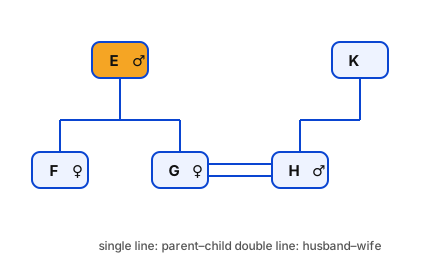
Based on the above, how is E related to K if ‘E ÷ F − G x H + K’?
एक निश्चित कूट भाषा में,
A + B का अर्थ है ‘A, B का पुत्र है’,
A – B का अर्थ है ‘A, B की बहन है’,
A x B का अर्थ है ‘A, B की पत्नी है’ और
A ÷ B का अर्थ है ‘A, B का पिता है’।
उपर्युक्त के आधार पर, यदि ‘E ÷ F − G x H + K’ है, तो E, K से किस प्रकार संबंधित है?
  1. AWife's brotherपत्नी का भाई
  2. BWife's fatherपत्नी का पिता
  3. CSon's wife's fatherपुत्र की पत्नी का पिता
  4. DSon's wife's brotherपुत्र की पत्नी का भाई
Show answer

Concept: Decode each symbol from left to right and draw the tree.

  1. E ÷ F: E is the father of F
  2. F − G: F is the sister of G → E is also father of G
  3. G × H: G is the wife of H
  4. H + K: H is the son of K → G is K’s son’s wife, and E is her father

Trick: Read the chain E → G → H → K.

Answer: (C) Son's wife's father

अवधारणा: हर चिह्न को बाएँ से दाएँ खोलें और वंश-वृक्ष बनाएँ।

  1. E ÷ F: E, F का पिता है
  2. F − G: F, G की बहन है → E, G का भी पिता है
  3. G × H: G, H की पत्नी है
  4. H + K: H, K का पुत्र है → G, K की पुत्रवधू है और E उसका पिता

ट्रिक: श्रृंखला पढ़ें: E → G → H → K।

उत्तर: (C) पुत्र की पत्नी का पिता

RRB NTPC Graduate CBT 1General Intelligence and ReasoningCoded Blood RelationRRB NTPC Graduate CBT 1 2024 · 20 Jun Shift 1 →
Q1193.
Which of the following letter-number clusters will replace the question mark (?) in the given series to make it logically complete?
LOH 1, JMG 4, HKF 9, FIE 16, ?
निम्नलिखित में से कौन-सा अक्षर-संख्या समूह दी गई श्रृंखला में प्रश्नवाचक चिह्न (?) के स्थान पर आकर उसे तार्किक रूप से पूर्ण करेगा?
LOH 1, JMG 4, HKF 9, FIE 16, ?
  1. AEFD 36
  2. BEFG 25
  3. CDGD 36
  4. DDGD 25
Show answer

Concept: Track each position separately.

  1. 1st letter: L, J, H, F, D (−2)
  2. 2nd letter: O, M, K, I, G (−2)
  3. 3rd letter: H, G, F, E, D (−1)
  4. Numbers: 12,22,32,42,52=25

Trick: Number part (25) already removes A and C; letters pick D.

Answer: (D) DGD 25

अवधारणा: हर स्थान को अलग से देखें।

  1. पहला अक्षर: L, J, H, F, D (−2)
  2. दूसरा अक्षर: O, M, K, I, G (−2)
  3. तीसरा अक्षर: H, G, F, E, D (−1)
  4. संख्याएँ: 12,22,32,42,52=25

ट्रिक: संख्या 25 से A और C हटते हैं; अक्षर D चुनते हैं।

उत्तर: (D) DGD 25

RRB NTPC Graduate CBT 1General Intelligence and ReasoningLetter-Number SeriesRRB NTPC Graduate CBT 1 2024 · 20 Jun Shift 1 →
Q1194.
Based on the English alphabetical order, three of the following four letter-clusters are alike in a certain way and thus form a group. Which letter-cluster DOES NOT belong to that group?
(Note: The odd one out is not based on the number of consonants/vowels or their position in the letter-cluster.)
अंग्रेज़ी वर्णमाला क्रम के आधार पर, निम्नलिखित चार अक्षर-समूहों में से तीन किसी निश्चित प्रकार से एकसमान हैं और इस प्रकार एक समूह बनाते हैं। कौन-सा अक्षर-समूह उस समूह से संबंधित नहीं है?
(नोट: असंगत अक्षर-समूह, उस अक्षर-समूह में व्यंजनों/स्वरों की संख्या या उनके स्थान पर आधारित नहीं है।)
  1. AFHC
  2. BLNJ
  3. CHJE
  4. DJLG
Show answer

Concept: Compare the position values of the letters.

  1. FHC: F(6) +2 → H(8), H −5 → C(3)
  2. HJE: 8 → 10 → 5 (+2, −5); JLG: 10 → 12 → 7 (+2, −5)
  3. LNJ: 12 → 14 → 10 (+2, −4) → odd

Trick: Check the 2nd gap only – the 1st gap (+2) is the same in all.

Answer: (B) LNJ

अवधारणा: अक्षरों के स्थानीय मान की तुलना करें।

  1. FHC: F(6) +2 → H(8), H −5 → C(3)
  2. HJE: 8 → 10 → 5 (+2, −5); JLG: 10 → 12 → 7 (+2, −5)
  3. LNJ: 12 → 14 → 10 (+2, −4) → विषम

ट्रिक: केवल दूसरा अंतर देखें – पहला (+2) सब में समान है।

उत्तर: (B) LNJ

RRB NTPC Graduate CBT 1General Intelligence and ReasoningOdd One Out – LettersRRB NTPC Graduate CBT 1 2024 · 20 Jun Shift 1 →
Q1195.
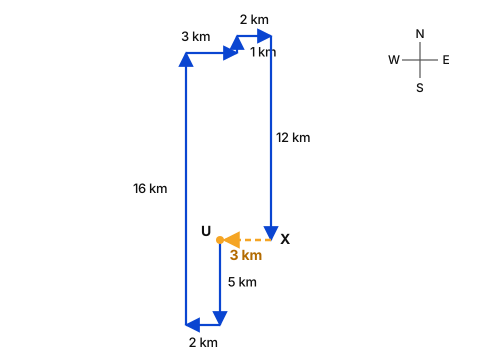
B starts from Point U and drives 5 km towards the South. He then takes a right turn, drives 2 km, turns right and drives 16 km. He then takes a right turn and drives 3 km, turns left and drives 1 km. He then takes a right turn, drives 2 km. He takes a final right turn, drives 12 km and stops at Point X. How far (shortest distance) and towards which direction should he drive in order to reach Point U again? (All turns are 90 degrees turns only unless specified).
B बिंदु U से चलना शुरू करता है और दक्षिण की ओर 5 km ड्राइव करता है। फिर वह दाएँ मुड़ता है, 2 km ड्राइव करता है, दाएँ मुड़ता है और 16 km ड्राइव करता है। फिर वह दाएँ मुड़ता है और 3 km ड्राइव करता है, बाएँ मुड़ता है और 1 km ड्राइव करता है। फिर वह दाएँ मुड़ता है, 2 km ड्राइव करता है। वह अंतिम बार दाएँ मुड़ता है, 12 km ड्राइव करता है और बिंदु X पर रुक जाता है। फिर से बिंदु U तक पहुँचने के लिए उसे कितनी दूर (न्यूनतम दूरी) और किस दिशा में ड्राइव करना चाहिए? (जब तक निर्दिष्ट न हो, सभी मोड़ केवल 90 डिग्री के मोड़ हैं।)
  1. A3 km towards the Eastपूर्व की ओर 3 km
  2. B3 km towards the Westपश्चिम की ओर 3 km
  3. C5 km towards the Southदक्षिण की ओर 5 km
  4. D7 km towards the Northउत्तर की ओर 7 km
Show answer

Concept: Take U as origin (East = +x, North = +y) and follow each turn.

  1. South 5 → (0, −5); right (West) 2 → (−2, −5); right (North) 16 → (−2, 11)
  2. Right (East) 3 → (1, 11); left (North) 1 → (1, 12); right (East) 2 → (3, 12)
  3. Right (South) 12 → X(3, 0)
  4. X is 3 km East of U → drive 3 km West.

Trick: Net x: −2+3+2=3; net y: −5+16+1−12=0.

Answer: (B) 3 km towards the West

अवधारणा: U को मूल बिंदु मानें (पूर्व = +x, उत्तर = +y) और हर मोड़ लिखें।

  1. दक्षिण 5 → (0, −5); दाएँ (पश्चिम) 2 → (−2, −5); दाएँ (उत्तर) 16 → (−2, 11)
  2. दाएँ (पूर्व) 3 → (1, 11); बाएँ (उत्तर) 1 → (1, 12); दाएँ (पूर्व) 2 → (3, 12)
  3. दाएँ (दक्षिण) 12 → X(3, 0)
  4. X, U से 3 km पूर्व में है → 3 km पश्चिम जाना होगा।

ट्रिक: शुद्ध x: −2+3+2=3; शुद्ध y: −5+16+1−12=0।

उत्तर: (B) 3 km पश्चिम की ओर

RRB NTPC Graduate CBT 1General Intelligence and ReasoningDirection and DistanceRRB NTPC Graduate CBT 1 2024 · 20 Jun Shift 1 →
Q1196.
Which of the following is a unit of the dimension 'length'?
निम्नलिखित में से कौन-सी 'लंबाई' विमा (dimension) की इकाई है?
  1. AJouleजूल
  2. BMetreमीटर
  3. CAmpereएम्पियर
  4. DKilogramकिलोग्राम
Show answer

Concept: Every physical quantity has an SI unit; length is a base quantity whose SI unit is the metre (m).

  1. Joule is the unit of energy/work.
  2. Ampere is the unit of electric current; kilogram is the unit of mass.
  3. Only the metre measures length (distance).

Yaad rakhein: Seven SI base units: m, kg, s, A, K, mol, cd — length ↔ metre.

Answer: (B) Metre

अवधारणा: प्रत्येक भौतिक राशि का एक SI मात्रक होता है; लंबाई (length) मूल राशि है जिसका SI मात्रक मीटर (m) है।

  1. जूल ऊर्जा/कार्य का मात्रक है।
  2. एम्पियर विद्युत धारा का तथा किलोग्राम द्रव्यमान का मात्रक है।
  3. केवल मीटर ही लंबाई (दूरी) मापता है।

याद रखें: सात SI मूल मात्रक: m, kg, s, A, K, mol, cd — लंबाई ↔ मीटर।

उत्तर: (B) मीटर

RRB NTPC Graduate CBT 1General AwarenessUnits and MeasurementRRB NTPC Graduate CBT 1 2024 · 19 Jun Shift 3 →
Q1197.
Which of the following features is NOT typical of the Thar Desert?
निम्नलिखित में से कौन-सी विशेषता थार मरुस्थल की विशिष्ट विशेषता नहीं है?
  1. AShifting dunesगतिशील टीले (shifting dunes)
  2. BInland drainageअंतर्देशीय अपवाह (inland drainage)
  3. COasesमरूद्यान (oases)
  4. DDense evergreen forestsघने सदाबहार वन
Show answer

Concept: The Thar (Great Indian Desert) in Rajasthan is an arid region with very low rainfall (mostly under 25 cm).

  1. Shifting sand dunes (barchans), inland drainage (rivers like Luni end in the desert/salt lakes) and oases are typical.
  2. Dense evergreen forests need heavy rainfall (over 200 cm) — found in the Western Ghats and North-East, not in Thar.
  3. Thar vegetation is thorny scrub (xerophytes) such as khejri and babul.

Yaad rakhein: Desert = dunes + salt lakes + oases + thorny scrub; evergreen = heavy rain.

Answer: (D) Dense evergreen forests

अवधारणा: राजस्थान का थार (महान भारतीय मरुस्थल) बहुत कम वर्षा (अधिकतर 25 cm से कम) वाला शुष्क क्षेत्र है।

  1. खिसकते बालू के टीले (बरखान), आंतरिक अपवाह (लूनी जैसी नदियाँ मरुस्थल/खारी झीलों में समाप्त) तथा मरूद्यान (oasis) यहाँ सामान्य हैं।
  2. सघन सदाबहार वन भारी वर्षा (200 cm से अधिक) में होते हैं — पश्चिमी घाट व उत्तर-पूर्व में, थार में नहीं।
  3. थार में कँटीली झाड़ियाँ (मरुद्भिद) जैसे खेजड़ी, बबूल मिलती हैं।

याद रखें: मरुस्थल = टीले + खारी झीलें + मरूद्यान + कँटीली झाड़ियाँ; सदाबहार = भारी वर्षा।

उत्तर: (D) सघन सदाबहार वन

RRB NTPC Graduate CBT 1General AwarenessThar DesertRRB NTPC Graduate CBT 1 2024 · 19 Jun Shift 3 →
Q1198.
The Red Shirt Movement, also known as Khudai Khidmatgar, was led by which Indian freedom fighter in the North-West Frontier Province?
लाल कुर्ती आंदोलन (Red Shirt Movement), जिसे खुदाई खिदमतगार के नाम से भी जाना जाता है, का नेतृत्व उत्तर-पश्चिम सीमांत प्रांत में किस भारतीय स्वतंत्रता सेनानी ने किया था?
  1. ASubhas Chandra Boseसुभाष चंद्र बोस
  2. BKhan Abdul Ghaffar Khanखान अब्दुल गफ्फार खान
  3. CMaulana Abul Kalam Azadमौलाना अबुल कलाम आज़ाद
  4. DMadan Mohan Malviyaमदन मोहन मालवीय
Show answer

Concept: Khudai Khidmatgar ("Servants of God"), popularly called the Red Shirts, was a non-violent movement among the Pathans of the North-West Frontier Province.

  1. It was founded in 1929 by Khan Abdul Ghaffar Khan.
  2. He was known as "Frontier Gandhi" or "Badshah Khan" and was close to Gandhiji.
  3. He received the Bharat Ratna in 1987.

Yaad rakhein: Red Shirts → Frontier Gandhi → Khan Abdul Ghaffar Khan.

Answer: (B) Khan Abdul Ghaffar Khan

अवधारणा: खुदाई खिदमतगार ("ईश्वर के सेवक"), जिसे लाल कुर्ती आंदोलन (Red Shirts) कहा गया, उत्तर-पश्चिम सीमा प्रांत के पठानों का अहिंसक आंदोलन था।

  1. इसकी स्थापना 1929 में खान अब्दुल गफ्फार खान ने की।
  2. उन्हें "सीमांत गांधी" या "बादशाह खान" कहा जाता था।
  3. उन्हें 1987 में भारत रत्न मिला।

याद रखें: लाल कुर्ती → सीमांत गांधी → खान अब्दुल गफ्फार खान।

उत्तर: (B) खान अब्दुल गफ्फार खान

RRB NTPC Graduate CBT 1General AwarenessIndian National MovementRRB NTPC Graduate CBT 1 2024 · 19 Jun Shift 3 →
Q1199.
How does the writ jurisdiction of the High Courts differ from that of the Supreme Court?
उच्च न्यायालयों का रिट क्षेत्राधिकार सर्वोच्च न्यायालय के रिट क्षेत्राधिकार से किस प्रकार भिन्न है?
  1. AHigh Courts can issue writs only against state governments, not the Centre.उच्च न्यायालय केवल राज्य सरकारों के विरुद्ध रिट जारी कर सकते हैं, केंद्र के विरुद्ध नहीं।
  2. BHigh Courts can issue writs for purposes beyond Fundamental Rights, unlike the Supreme Court.सर्वोच्च न्यायालय के विपरीत, उच्च न्यायालय मौलिक अधिकारों से परे अन्य प्रयोजनों के लिए भी रिट जारी कर सकते हैं।
  3. CHigh Courts can issue writs only in appellate cases, not in original jurisdiction.उच्च न्यायालय केवल अपीलीय मामलों में रिट जारी कर सकते हैं, मूल क्षेत्राधिकार में नहीं।
  4. DHigh Courts require prior approval from the Supreme Court before issuing writs.उच्च न्यायालयों को रिट जारी करने से पहले सर्वोच्च न्यायालय से पूर्व अनुमोदन लेना आवश्यक है।
Show answer

Concept: The Supreme Court issues writs under Article 32; High Courts issue writs under Article 226.

  1. Article 32: the Supreme Court can issue writs only for enforcement of Fundamental Rights.
  2. Article 226: a High Court can issue writs for Fundamental Rights and also "for any other purpose" (ordinary legal rights).
  3. So the writ jurisdiction of High Courts is wider than that of the Supreme Court.

Yaad rakhein: 32 = only FRs (narrow); 226 = FRs + any other purpose (wider).

Answer: (B) High Courts can issue writs for purposes beyond Fundamental Rights, unlike the Supreme Court.

अवधारणा: सर्वोच्च न्यायालय अनुच्छेद 32 के तहत तथा उच्च न्यायालय अनुच्छेद 226 के तहत रिट जारी करते हैं।

  1. अनुच्छेद 32: सर्वोच्च न्यायालय केवल मौलिक अधिकारों के प्रवर्तन हेतु रिट जारी कर सकता है।
  2. अनुच्छेद 226: उच्च न्यायालय मौलिक अधिकारों के साथ "किसी अन्य प्रयोजन" (सामान्य कानूनी अधिकार) के लिए भी रिट जारी कर सकता है।
  3. अतः उच्च न्यायालयों का रिट क्षेत्राधिकार अधिक व्यापक है।

याद रखें: 32 = केवल मौलिक अधिकार; 226 = मौलिक अधिकार + अन्य प्रयोजन (व्यापक)।

उत्तर: (B) उच्च न्यायालय, सर्वोच्च न्यायालय के विपरीत, मौलिक अधिकारों से आगे के प्रयोजनों हेतु भी रिट जारी कर सकते हैं।

RRB NTPC Graduate CBT 1General AwarenessWrit JurisdictionRRB NTPC Graduate CBT 1 2024 · 19 Jun Shift 3 →
Q1200.
Which keyboard shortcut is used to copy selected text in MS Word 365?
MS Word 365 में चयनित टेक्स्ट को कॉपी करने के लिए किस कीबोर्ड शॉर्टकट का उपयोग किया जाता है?
  1. ACtrl + V
  2. BCtrl + C
  3. CCtrl + X
  4. DCtrl + Z
Show answer

Concept: Clipboard shortcuts in MS Word (and most Windows programs) work on selected text.

  1. Ctrl + C copies the selection (original stays).
  2. Ctrl + X cuts, Ctrl + V pastes, Ctrl + Z undoes the last action.

Yaad rakhein: C = Copy, X = cut (scissors shape), V = paste (insert mark), Z = undo.

Answer: (B) Ctrl + C

अवधारणा: MS Word (तथा अधिकतर Windows प्रोग्राम) में क्लिपबोर्ड शॉर्टकट चयनित टेक्स्ट पर काम करते हैं।

  1. Ctrl + C चयनित टेक्स्ट को कॉपी करता है (मूल टेक्स्ट बना रहता है)।
  2. Ctrl + X कट, Ctrl + V पेस्ट तथा Ctrl + Z पिछली क्रिया को undo करता है।

याद रखें: C = Copy, X = Cut (कैंची जैसा), V = Paste, Z = Undo।

उत्तर: (B) Ctrl + C

RRB NTPC Graduate CBT 1General AwarenessMS Word ShortcutsRRB NTPC Graduate CBT 1 2024 · 19 Jun Shift 3 →