Question bank

Q&A: practice questions with answers

Search questions on any topic. Filter by exam category, exam, subject and topic, try the question, then open the answer and explanation.

Courses – airGurukul

7,077 questions found.

Q1261.
A man receives ₹7,915 per month as salary. He saves 20% of his salary every month. His expenditure per month is:
एक व्यक्ति को वेतन के रूप में प्रति माह ₹7,915 प्राप्त होते हैं। वह प्रत्येक माह अपने वेतन का 20% बचाता है। उसका प्रति माह व्यय है:
  1. A₹6,420
  2. B₹6,332
  3. C₹6,270
  4. D₹6,346
Show answer

Concept: Expenditure =(100−saving%) of income.

  1. Expenditure =80% of 7915.
  2. =45×7915=4×1583=6332.

Trick: 80%=45: divide by 5, multiply by 4.

Answer: (B) ₹6,332

अवधारणा: व्यय =(100−बचत%) आय का।

  1. व्यय =7915 का 80%।
  2. =45×7915=6332।

ट्रिक: 80%=45: 5 से भाग, 4 से गुणा।

उत्तर: (B) ₹6,332
RRB NTPC Graduate CBT 1MathematicsPercentage – savingsRRB NTPC Graduate CBT 1 2024 · 19 Jun Shift 3 →
Q1262.
A man takes 13 hours to swim 91 km downstream. He swims 39 km upstream in the same time. What is the speed (in km/hr) of the boat in still water?
एक व्यक्ति को धारा की दिशा में 91 km तैरने में 13 घंटे लगते हैं। वह उतने ही समय में धारा की विपरीत दिशा में 39 km तैरता है। शांत जल में नाव की चाल (km/hr में) क्या है?
  1. A5
  2. B8
  3. C1
  4. D9
Show answer

Concept: Speed in still water =downstream+upstream2.

  1. Downstream speed =9113=7km/h.
  2. Upstream speed =3913=3km/h.
  3. Still-water speed =7+32=5km/h.

Trick: Stream speed =7−32=2 – useful if asked next.

Answer: (A) 5

अवधारणा: शांत जल में चाल =अनुप्रवाह+ऊर्ध्वप्रवाह2।

  1. अनुप्रवाह =9113=7km/h।
  2. ऊर्ध्वप्रवाह =3913=3km/h।
  3. शांत जल चाल =7+32=5km/h।

ट्रिक: धारा की चाल =7−32=2।

उत्तर: (A) 5

RRB NTPC Graduate CBT 1MathematicsBoats and streamsRRB NTPC Graduate CBT 1 2024 · 19 Jun Shift 3 →
Q1263.
Let a be an odd positive integer. If the roots of a quadratic equation x2 − (a − 1)x + 4a + 7 = 0 are integers, then the least value of a is:
मान लीजिए a एक विषम धनात्मक पूर्णांक है। यदि द्विघात समीकरण x2 − (a − 1)x + 4a + 7 = 0 के मूल पूर्णांक हैं, तो a का न्यूनतम मान है:
  1. A25
  2. B19
  3. C21
  4. D23
Show answer

Concept: Integer roots need the discriminant D=b2−4ac to be a perfect square.

  1. D=(a−1)2−4(4a+7)=a2−18a−27=(a−9)2−108.
  2. Let D=k2: (a−9−k)(a−9+k)=108; both factors even → (2,54) or (6,18).
  3. (6,18): a−9=12⇒a=21; (2,54): a=37. Least odd positive a=21.
  4. Check: x2−20x+91=(x−7)(x−13) ✔.

Trick: Option test: put each option in (a−9)2−108; only a=21 gives 144−108=36, a perfect square.

Answer: (C) 21

अवधारणा: पूर्णांक मूलों के लिए विविक्तकर D=b2−4ac पूर्ण वर्ग होना चाहिए।

  1. D=(a−1)2−4(4a+7)=(a−9)2−108।
  2. D=k2: (a−9−k)(a−9+k)=108; दोनों गुणनखंड सम → (2,54) या (6,18)।
  3. (6,18) से a=21; (2,54) से a=37। न्यूनतम a=21।
  4. जाँच: x2−20x+91=(x−7)(x−13) ✔।

ट्रिक: विकल्प जाँच: a=21 पर (a−9)2−108=36 — पूर्ण वर्ग।

उत्तर: (C) 21

RRB NTPC Graduate CBT 1MathematicsQuadratic equationsRRB NTPC Graduate CBT 1 2024 · 19 Jun Shift 3 →
Q1264.
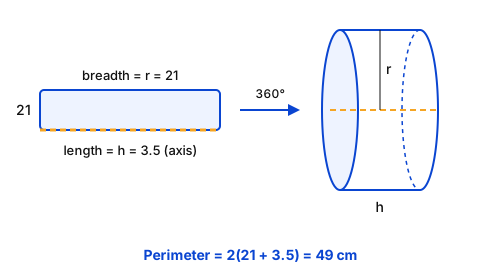
The volume of a right circular cylinder is 4851 cm3 and its curved surface area is 462 cm2. If this cylinder is generated by rotating a rectangle about its length by 360°, what will be the perimeter (in cm) of this rectangle?
Use π=227
एक लंब वृत्तीय बेलन का आयतन 4851 cm3 है और इसका वक्र पृष्ठीय क्षेत्रफल 462 cm2 है। यदि यह बेलन एक आयत को उसकी लंबाई के परितः 360° घुमाकर बनाया गया है, तो इस आयत का परिमाप (cm में) क्या होगा?
π=227 का प्रयोग कीजिए
  1. A53
  2. B49
  3. C43
  4. D47
Show answer

Concept: Rotating a rectangle about its length makes length =h and breadth =r; VCSA=πr2h2πrh=r2.

  1. r2=4851462=10.5⇒r=21cm.
  2. 2×227×21×h=462⇒132h=462⇒h=3.5cm.
  3. Perimeter =2(21+3.5)=49cm.

Trick: Divide volume by CSA to get r2 at once.

Answer: (B) 49

अवधारणा: आयत को लंबाई के परितः घुमाने पर लंबाई =h, चौड़ाई =r; VCSA=r2।

  1. r2=4851462=10.5⇒r=21cm।
  2. 132h=462⇒h=3.5cm।
  3. परिमाप =2(21+3.5)=49cm।

ट्रिक: आयतन ÷ वक्र पृष्ठ =r2।

उत्तर: (B) 49

RRB NTPC Graduate CBT 1MathematicsMensuration – cylinderRRB NTPC Graduate CBT 1 2024 · 19 Jun Shift 3 →
Q1265.
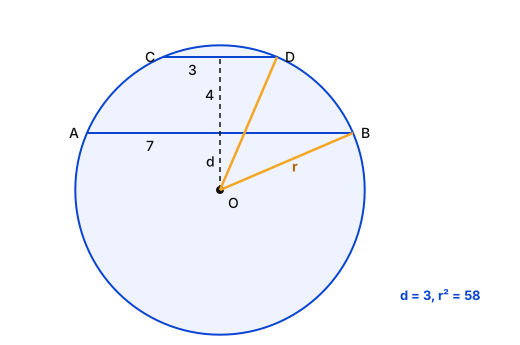
In a circle, two chords, AB and CD, measuring 14 cm and 6 cm, respectively, are parallel to each other on the same side of the centre. If the distance between them is 4 cm, find the length (in cm) of the diameter of the circle.
एक वृत्त में, दो जीवाएँ AB और CD, जिनकी माप क्रमशः 14 cm और 6 cm है, केंद्र के एक ही ओर एक-दूसरे के समांतर हैं। यदि उनके बीच की दूरी 4 cm है, तो वृत्त के व्यास की लंबाई (cm में) ज्ञात कीजिए।
  1. A229
  2. B258
  3. C58
  4. D29
Show answer

Concept: The perpendicular from the centre bisects a chord: r2=(half chord)2+(distance)2.

  1. Let AB be at distance d from O; CD (same side) is at d+4.
  2. r2=72+d2=32+(d+4)2⇒49=25+8d⇒d=3.
  3. r2=49+9=58⇒r=58; diameter =258.

Trick: Longer chord is nearer the centre, so on the same side the shorter chord is at d+4.

Answer: (B) 258

अवधारणा: केंद्र से लंब जीवा को समद्विभाजित करता है: r2=(आधी जीवा)2+(दूरी)2।

  1. AB की दूरी d; CD (उसी ओर) की दूरी d+4।
  2. 49+d2=9+(d+4)2⇒8d=24⇒d=3।
  3. r2=58⇒ व्यास =258।

ट्रिक: बड़ी जीवा केंद्र के अधिक पास होती है।

उत्तर: (B) 258

RRB NTPC Graduate CBT 1MathematicsCircle – chordsRRB NTPC Graduate CBT 1 2024 · 19 Jun Shift 3 →
Q1266.
KX 3 is related to OV -9 in a certain way. In the same way, IR 11 is related to MP -1. To which of the given options is JG -2 related, following the same logic?
KX 3 एक निश्चित प्रकार से OV -9 से संबंधित है। उसी प्रकार, IR 11, MP -1 से संबंधित है। समान तर्क का अनुसरण करते हुए, JG -2 दिए गए विकल्पों में से किससे संबंधित है?
  1. ANE -14
  2. BOE -14
  3. COF -13
  4. DNF -15
Show answer

Concept: Use alphabet positions (A = 1 … Z = 26) and find the change in each letter and in the number.

  1. KX 3 → OV −9: K(11)+4=O(15), X(24)−2=V(22), 3−12=−9.
  2. Check IR 11 → MP −1: I+4=M, R−2=P, 11−12=−1 ✓.
  3. JG −2: J(10)+4=N(14), G(7)−2=E(5), −2−12=−14 → NE −14.

Trick: Pattern = (+4, −2, −12). Test it on the second pair before applying.

Answer: (A) NE −14

अवधारणा: अक्षरों के स्थानीय मान (A = 1 … Z = 26) लेकर प्रत्येक अक्षर व संख्या में बदलाव ज्ञात करें।

  1. KX 3 → OV −9: K(11)+4=O(15), X(24)−2=V(22), 3−12=−9।
  2. जाँच IR 11 → MP −1: I+4=M, R−2=P, 11−12=−1 ✓।
  3. JG −2: J(10)+4=N(14), G(7)−2=E(5), −2−12=−14 → NE −14।

ट्रिक: नियम = (+4, −2, −12)। लागू करने से पहले दूसरे युग्म पर जाँचें।

उत्तर: (A) NE −14

RRB NTPC Graduate CBT 1General Intelligence and ReasoningLetter-Number AnalogyRRB NTPC Graduate CBT 1 2024 · 19 Jun Shift 3 →
Q1267.
Select the set in which the numbers are related in the same way as are the numbers of the following sets.
(NOTE: Operations should be performed on the whole numbers, without breaking down the numbers into their constituent digits. E.g. 13 – Operations on 13 such as adding to/subtracting from/multiplying with 13 can be performed. Breaking down 13 into 1 and 3 and then performing mathematical operations on 1 and 3 is not allowed.)
(36, 27, 41)
(45, 36, 50)
उस समुच्चय का चयन कीजिए जिसमें संख्याएँ उसी प्रकार संबंधित हैं जिस प्रकार निम्नलिखित समुच्चयों की संख्याएँ संबंधित हैं।
(ध्यान दें: संख्याओं को उनके घटक अंकों में विभाजित किए बिना, पूर्ण संख्याओं पर संक्रियाएँ की जानी चाहिए। उदाहरण 13 – 13 पर संक्रियाएँ जैसे 13 में जोड़ना/घटाना/गुणा करना आदि किया जा सकता है। 13 को 1 और 3 में विभाजित करना और फिर 1 और 3 पर गणितीय संक्रियाएँ करने की अनुमति नहीं है।)
(36, 27, 41)
(45, 36, 50)
  1. A(74, 65, 89)
  2. B(61, 52, 56)
  3. C(28, 19, 43)
  4. D(53, 44, 58)
Show answer

Concept: Find how the 2nd and 3rd numbers are made from the 1st number.

  1. (36, 27, 41): 36−9=27 and 36+5=41.
  2. (45, 36, 50): 45−9=36 and 45+5=50 ✓.
  3. Check (53, 44, 58): 53−9=44, 53+5=58 ✓. Others fail, e.g. 74+5=79≠89.

Trick: Rule: (x, x − 9, x + 5). Equivalently 3rd − 2nd = 14 in every set.

Answer: (D) (53, 44, 58)

अवधारणा: देखें कि दूसरी व तीसरी संख्या पहली संख्या से कैसे बनती है।

  1. (36, 27, 41): 36−9=27 तथा 36+5=41।
  2. (45, 36, 50): 45−9=36 तथा 45+5=50 ✓।
  3. (53, 44, 58): 53−9=44, 53+5=58 ✓। बाकी विकल्प गलत, जैसे 74+5=79≠89।

ट्रिक: नियम: (x, x − 9, x + 5); यानी हर समूह में तीसरी − दूसरी = 14।

उत्तर: (D) (53, 44, 58)

RRB NTPC Graduate CBT 1General Intelligence and ReasoningNumber Set AnalogyRRB NTPC Graduate CBT 1 2024 · 19 Jun Shift 3 →
Q1268.
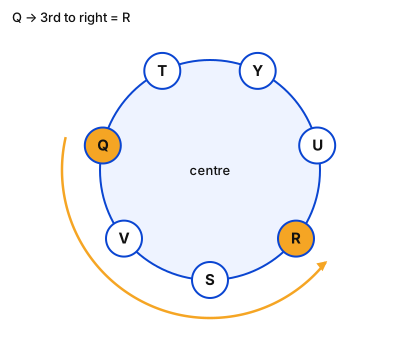
Q, R, S, T, U, V and Y are sitting around a circular table facing the centre of the table. Y sits fourth to the left of S. R sits fourth to the right of T. Only two people sit between S and T when counted from the left of S. V is not an immediate neighbour of R or T. U is not an immediate neighbour of V. Who sits third to the right of Q?
Q, R, S, T, U, V और Y एक वृत्ताकार मेज़ के चारों ओर केंद्र की ओर मुख करके बैठे हैं। Y, S के बाएँ से चौथे स्थान पर बैठा है। R, T के दाएँ से चौथे स्थान पर बैठा है। S के बाएँ से गिनने पर S और T के बीच केवल दो व्यक्ति बैठे हैं। V, R या T का निकटतम पड़ोसी नहीं है। U, V का निकटतम पड़ोसी नहीं है। Q के दाएँ से तीसरे स्थान पर कौन बैठा है?
  1. AY
  2. BT
  3. CU
  4. DR
Show answer

Concept: Facing the centre: left = clockwise, right = anticlockwise. 7 seats in all.

  1. Fix S. Two people between S and T from the left of S → T is 3rd to the left of S; Y is 4th to the left of S.
  2. R is 4th to the right of T → R is the immediate right of S.
  3. The empty seats are on the left of S (1st, 2nd) and right of Y. V cannot sit next to R or T → V is 1st left of S; U cannot be next to V → U is between Y and R; Q is between V and T.
  4. From Q, count three to the right: V, S, R.

Trick: In a 7-seat circle, "4th to the right" = "3rd to the left" — use whichever is shorter.

Answer: (D) R

अवधारणा: केंद्र की ओर मुख: बायाँ = दक्षिणावर्त (clockwise), दायाँ = वामावर्त। कुल 7 स्थान।

  1. S को स्थिर करें। S के बाएँ से गिनने पर S और T के बीच दो व्यक्ति → T, S के बाएँ तीसरा; Y, S के बाएँ चौथा।
  2. R, T के दाएँ चौथा → R, S के ठीक दाएँ।
  3. खाली स्थान: S के बाएँ पहला, दूसरा तथा Y के दाएँ। V, R या T का पड़ोसी नहीं → V, S के बाएँ पहला; U, V का पड़ोसी नहीं → U, Y और R के बीच; Q, V और T के बीच।
  4. Q से दाएँ तीन गिनें: V, S, R।

ट्रिक: 7 सीटों वाले वृत्त में "दाएँ चौथा" = "बाएँ तीसरा" — जो छोटा हो वही गिनें।

उत्तर: (D) R

RRB NTPC Graduate CBT 1General Intelligence and ReasoningCircular Seating ArrangementRRB NTPC Graduate CBT 1 2024 · 19 Jun Shift 3 →
Q1269.
In a certain code language, ‘LOST’ is coded as ‘6832’ and ‘SALT’ is coded as ‘2136’. What is the code for ‘A’ in the given code language?
एक निश्चित कूट भाषा में, 'LOST' को '6832' के रूप में और 'SALT' को '2136' के रूप में कूटबद्ध किया जाता है। दी गई कूट भाषा में 'A' के लिए कूट क्या है?
  1. A3
  2. B6
  3. C1
  4. D2
Show answer

Concept: When codes are jumbled, match common letters with common digits.

  1. LOST → 6832 and SALT → 2136.
  2. Common letters: L, S, T; common digits: 6, 3, 2.
  3. The only letter left in SALT is A, and the only digit left in 2136 is 1 → A = 1.

Trick: Remove common letters and common digits — the leftovers match each other.

Answer: (C) 1

अवधारणा: जब कोड क्रम में न हों, तो उभयनिष्ठ अक्षरों को उभयनिष्ठ अंकों से मिलाएँ।

  1. LOST → 6832 तथा SALT → 2136।
  2. उभयनिष्ठ अक्षर: L, S, T; उभयनिष्ठ अंक: 6, 3, 2।
  3. SALT में बचा अक्षर A तथा 2136 में बचा अंक 1 → A = 1।

ट्रिक: उभयनिष्ठ अक्षर व अंक हटाएँ — बचे हुए आपस में मेल खाते हैं।

उत्तर: (C) 1

RRB NTPC Graduate CBT 1General Intelligence and ReasoningCoding-DecodingRRB NTPC Graduate CBT 1 2024 · 19 Jun Shift 3 →
Q1270.
What should come in place of the question mark (?) in the given series?
1514 1513 1517 1508 1524 ?
दी गई श्रृंखला में प्रश्न चिह्न (?) के स्थान पर क्या आना चाहिए?
1514 1513 1517 1508 1524 ?
  1. A1478
  2. B1499
  3. C1476
  4. D1474
Show answer

Concept: Look at the differences between consecutive terms.

  1. Differences: −1,+4,−9,+16,+25? → they are squares with alternating signs: −12,+22,−32,+42.
  2. Next difference =−52=−25.
  3. 1524−25=1499.

Trick: Alternating up–down series → check ±n2 differences.

Answer: (B) 1499

अवधारणा: क्रमागत पदों का अंतर देखें।

  1. अंतर: −1,+4,−9,+16 → एकांतर चिह्नों वाले वर्ग: −12,+22,−32,+42।
  2. अगला अंतर =−52=−25।
  3. 1524−25=1499।

ट्रिक: ऊपर–नीचे होती श्रृंखला → ±n2 अंतर जाँचें।

उत्तर: (B) 1499

RRB NTPC Graduate CBT 1General Intelligence and ReasoningNumber SeriesRRB NTPC Graduate CBT 1 2024 · 19 Jun Shift 3 →
Q1271.
Read the given statements and conclusions carefully. Assuming that the information given in the statements is true, even if it appears to be at variance with commonly known facts, decide which of the given conclusion(s) logically follow(s) from the statements.
Statements:
All pulse are rice.
All rice are wheat.
All wheat are corn.
Conclusions:
(I) All pulse are corn.
(II) Some corn are rice.
दिए गए कथनों और निष्कर्षों को ध्यानपूर्वक पढ़िए। यह मानते हुए कि कथनों में दी गई जानकारी सत्य है, भले ही वह सामान्यतः ज्ञात तथ्यों से भिन्न प्रतीत होती हो, निर्णय लीजिए कि दिए गए निष्कर्षों में से कौन-सा/से निष्कर्ष कथनों का तार्किक रूप से अनुसरण करता है/करते हैं।
कथन:
सभी दालें, चावल हैं।
सभी चावल, गेहूँ हैं।
सभी गेहूँ, मक्का हैं।
निष्कर्ष:
(I) सभी दालें, मक्का हैं।
(II) कुछ मक्का, चावल हैं।
  1. ANeither conclusion (I) nor (II) followsन तो निष्कर्ष (I) और न ही (II) अनुसरण करता है
  2. BBoth conclusions (I) and (II) followदोनों निष्कर्ष (I) और (II) अनुसरण करते हैं
  3. COnly conclusion (II) followsकेवल निष्कर्ष (II) अनुसरण करता है
  4. DOnly conclusion (I) followsकेवल निष्कर्ष (I) अनुसरण करता है
Show answer

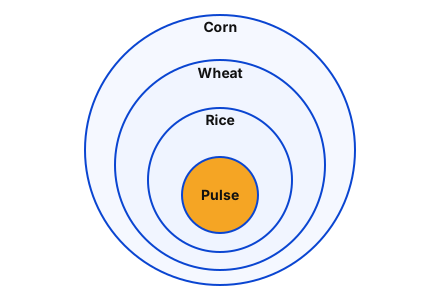
Concept: Draw the minimum possible Venn diagram: "All A are B" puts circle A fully inside circle B.

  1. Pulse ⊂ Rice ⊂ Wheat ⊂ Corn (nested circles).
  2. (I) Pulse lies inside Corn → "All pulse are corn" follows.
  3. (II) Rice lies inside Corn → some corn are surely rice → follows.

Trick: Chain of "All" statements: All first are last; and "Some last are any middle" is always true.

Answer: (B) Both conclusions (I) and (II) follow

अवधारणा: न्यूनतम संभव वेन आरेख बनाएँ: "सभी A, B हैं" में A का वृत्त पूरी तरह B के अंदर होता है।

  1. Pulse ⊂ Rice ⊂ Wheat ⊂ Corn (एक के अंदर एक वृत्त)।
  2. (I) Pulse पूरी तरह Corn के अंदर → "सभी pulse, corn हैं" अनुसरण करता है।
  3. (II) Rice, Corn के अंदर → कुछ corn अवश्य rice हैं → अनुसरण करता है।

ट्रिक: "सभी" की श्रृंखला में: पहला पूरा अंतिम में; और "कुछ अंतिम, बीच वाले हैं" हमेशा सत्य।

उत्तर: (B) निष्कर्ष (I) और (II) दोनों अनुसरण करते हैं

RRB NTPC Graduate CBT 1General Intelligence and ReasoningSyllogismRRB NTPC Graduate CBT 1 2024 · 19 Jun Shift 3 →
Q1272.
If 3 is added to each even digit and 2 is added to each odd digit in the number 413257, what will be the sum of the first and last digits in the new number thus formed?
यदि संख्या 413257 में प्रत्येक सम अंक में 3 जोड़ा जाए और प्रत्येक विषम अंक में 2 जोड़ा जाए, तो इस प्रकार बनी नई संख्या के पहले और अंतिम अंकों का योग क्या होगा?
  1. A14
  2. B12
  3. C10
  4. D16
Show answer

Concept: Change each digit according to whether it is even or odd, then read the new number.

  1. 413257: 4 (even) → 4+3=7; 1 → 3; 3 → 5; 2 → 5; 5 → 7; 7 (odd) → 7+2=9.
  2. New number: 735579.
  3. First + last =7+9=16.

Trick: Only first and last digits matter: 4+3=7 and 7+2=9 — skip the middle.

Answer: (D) 16

अवधारणा: हर अंक सम है या विषम, उसके अनुसार बदलें, फिर नई संख्या पढ़ें।

  1. 413257: 4 (सम) → 4+3=7; 1 → 3; 3 → 5; 2 → 5; 5 → 7; 7 (विषम) → 7+2=9।
  2. नई संख्या: 735579।
  3. पहला + अंतिम =7+9=16।

ट्रिक: केवल पहला और अंतिम अंक चाहिए: 4+3=7 तथा 7+2=9 — बीच वाले छोड़ें।

उत्तर: (D) 16

RRB NTPC Graduate CBT 1General Intelligence and ReasoningNumber OperationsRRB NTPC Graduate CBT 1 2024 · 19 Jun Shift 3 →
Q1273.
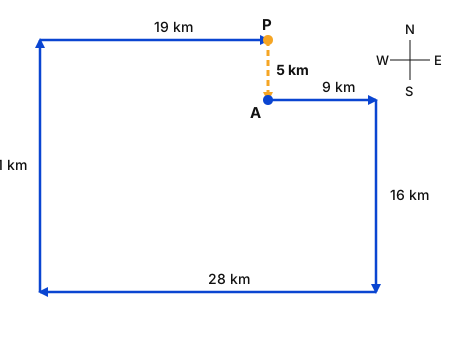
Mr. Becks starts from Point A and drives 9 km towards the East. He then takes a right turn, drives 16 km, turns right and drives 28 km. He then takes a right turn and drives 21 km. He takes a final right turn, drives 19 km and stops at Point P. How far (shortest distance) and towards which direction should he drive in order to reach Point A again? (All turns are 90 degrees turns only unless specified.)
श्री बेक्स बिंदु A से चलना शुरू करते हैं और पूर्व की ओर 9 km गाड़ी चलाते हैं। फिर वे दाएँ मुड़ते हैं, 16 km गाड़ी चलाते हैं, दाएँ मुड़ते हैं और 28 km गाड़ी चलाते हैं। फिर वे दाएँ मुड़ते हैं और 21 km गाड़ी चलाते हैं। वे अंतिम बार दाएँ मुड़ते हैं, 19 km गाड़ी चलाते हैं और बिंदु P पर रुक जाते हैं। पुनः बिंदु A तक पहुँचने के लिए उन्हें कितनी दूरी (न्यूनतम दूरी) और किस दिशा में गाड़ी चलानी चाहिए? (जब तक निर्दिष्ट न हो, सभी मोड़ केवल 90 डिग्री के हैं।)
  1. A5 km to the Southदक्षिण की ओर 5 km
  2. B3 km to the Northउत्तर की ओर 3 km
  3. C7 km to the Southदक्षिण की ओर 7 km
  4. D1 km to the Northउत्तर की ओर 1 km
Show answer

Concept: Track the position on a coordinate grid (East = +x, North = +y); a right turn from East faces South.

  1. A = (0, 0). 9 km East → (9, 0).
  2. Right → South 16 km → (9, −16). Right → West 28 km → (−19, −16).
  3. Right → North 21 km → (−19, 5). Right → East 19 km → P = (0, 5).
  4. P is 5 km directly North of A → he must drive 5 km South.

Trick: Net E–W: 9−28+19=0; net N–S: −16+21=+5 (North) → go back 5 km South.

Answer: (A) 5 km to the South

अवधारणा: निर्देशांक ग्रिड पर स्थिति देखें (पूर्व = +x, उत्तर = +y); पूर्व की ओर से दाएँ मुड़ने पर दक्षिण।

  1. A = (0, 0)। 9 km पूर्व → (9, 0)।
  2. दाएँ → दक्षिण 16 km → (9, −16)। दाएँ → पश्चिम 28 km → (−19, −16)।
  3. दाएँ → उत्तर 21 km → (−19, 5)। दाएँ → पूर्व 19 km → P = (0, 5)।
  4. P, A से ठीक 5 km उत्तर में है → उसे 5 km दक्षिण जाना होगा।

ट्रिक: शुद्ध पूर्व–पश्चिम: 9−28+19=0; उत्तर–दक्षिण: −16+21=+5 (उत्तर) → 5 km दक्षिण लौटें।

उत्तर: (A) 5 km दक्षिण की ओर

RRB NTPC Graduate CBT 1General Intelligence and ReasoningDirection and DistanceRRB NTPC Graduate CBT 1 2024 · 19 Jun Shift 3 →
Q1274.
Which of the following letter-number clusters will replace the question mark (?) in the given series to make it logically complete?
HKP22 ILQ31 JMR40 KNS49 ?
दी गई श्रृंखला को तार्किक रूप से पूर्ण करने के लिए निम्नलिखित में से कौन-सा अक्षर-संख्या समूह प्रश्न चिह्न (?) का स्थान लेगा?
HKP22 ILQ31 JMR40 KNS49 ?
  1. ALOT59
  2. BLOT58
  3. CLOS59
  4. DLOS58
Show answer

Concept: Check each letter position and the number separately.

  1. 1st letters: H, I, J, K → L (+1).
  2. 2nd letters: K, L, M, N → O; 3rd letters: P, Q, R, S → T.
  3. Numbers: 22, 31, 40, 49 (+9) → 58.

Trick: All three letters move +1, number moves +9 → LOT58.

Answer: (B) LOT58

अवधारणा: प्रत्येक अक्षर स्थान और संख्या को अलग-अलग देखें।

  1. पहले अक्षर: H, I, J, K → L (+1)।
  2. दूसरे अक्षर: K, L, M, N → O; तीसरे अक्षर: P, Q, R, S → T।
  3. संख्याएँ: 22, 31, 40, 49 (+9) → 58।

ट्रिक: तीनों अक्षर +1, संख्या +9 → LOT58।

उत्तर: (B) LOT58

RRB NTPC Graduate CBT 1General Intelligence and ReasoningLetter-Number SeriesRRB NTPC Graduate CBT 1 2024 · 19 Jun Shift 3 →
Q1275.
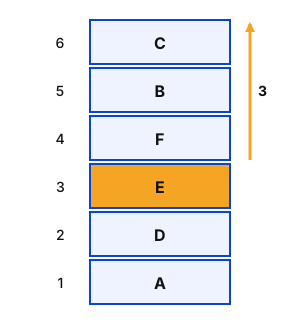
A, B, C, D, E and F live on six different floors of the same building. The lowermost floor in the building is numbered 1, the floor above it, number 2 and so on, till the topmost floor is numbered 6. B lives on an odd numbered floor but not 3. The sum of floors on which B and D live is 7. E lives immediately below F. C lives on the top floor. How many people live above E?
A, B, C, D, E और F एक ही इमारत की छह अलग-अलग मंज़िलों पर रहते हैं। इमारत की सबसे निचली मंज़िल की संख्या 1 है, उसके ऊपर की मंज़िल की संख्या 2 है और इसी प्रकार सबसे ऊपरी मंज़िल की संख्या 6 है। B एक विषम संख्या वाली मंज़िल पर रहता है, परंतु 3 पर नहीं। B और D जिन मंज़िलों पर रहते हैं, उनका योग 7 है। E, F के ठीक नीचे रहता है। C सबसे ऊपरी मंज़िल पर रहता है। E के ऊपर कितने लोग रहते हैं?
  1. A2
  2. B4
  3. C3
  4. D1
Show answer

Concept: Place the fixed person first, then use the sum and "immediately below" conditions.

  1. C is on floor 6.
  2. B is on an odd floor except 3 → 1 or 5. If B = 1, D = 6 (taken by C) ✗. So B = 5, D = 2.
  3. Free floors: 1, 3, 4. E immediately below F → E = 3, F = 4; A = 1.
  4. Above E (floor 3): F, B, C = 3 people.

Trick: Use "sum = 7" pairs (1+6, 2+5, 3+4) to fix positions quickly.

Answer: (C) 3

अवधारणा: पहले निश्चित व्यक्ति रखें, फिर योग और "ठीक नीचे" वाली शर्तें लगाएँ।

  1. C मंजिल 6 पर।
  2. B विषम मंजिल पर पर 3 नहीं → 1 या 5। B = 1 हो तो D = 6 (C वहाँ) ✗। अतः B = 5, D = 2।
  3. बची मंजिलें: 1, 3, 4। E, F के ठीक नीचे → E = 3, F = 4; A = 1।
  4. E (मंजिल 3) के ऊपर: F, B, C = 3 व्यक्ति।

ट्रिक: योग = 7 वाले जोड़े (1+6, 2+5, 3+4) से स्थान जल्दी तय करें।

उत्तर: (C) 3

RRB NTPC Graduate CBT 1General Intelligence and ReasoningFloor PuzzleRRB NTPC Graduate CBT 1 2024 · 19 Jun Shift 3 →
Q1276.
Which of the following letter-number clusters will replace the question mark (?) in the given series to make it logically complete?
SPM 8, TQN 14, URO 20, VSP 26, ?
दी गई श्रृंखला को तार्किक रूप से पूर्ण करने के लिए निम्नलिखित में से कौन-सा अक्षर-संख्या समूह प्रश्न चिह्न (?) का स्थान लेगा?
SPM 8, TQN 14, URO 20, VSP 26, ?
  1. AWQM 30
  2. BXPM 30
  3. CWTQ 32
  4. DXRN 32
Show answer

Concept: Each letter position and the number follow their own step.

  1. 1st letters: S, T, U, V → W (+1).
  2. 2nd: P, Q, R, S → T; 3rd: M, N, O, P → Q.
  3. Numbers: 8, 14, 20, 26 (+6) → 32.

Trick: Every letter +1, number +6 → WTQ 32.

Answer: (C) WTQ 32

अवधारणा: हर अक्षर स्थान और संख्या का अपना नियम है।

  1. पहले अक्षर: S, T, U, V → W (+1)।
  2. दूसरे: P, Q, R, S → T; तीसरे: M, N, O, P → Q।
  3. संख्याएँ: 8, 14, 20, 26 (+6) → 32।

ट्रिक: हर अक्षर +1, संख्या +6 → WTQ 32।

उत्तर: (C) WTQ 32

RRB NTPC Graduate CBT 1General Intelligence and ReasoningLetter-Number SeriesRRB NTPC Graduate CBT 1 2024 · 19 Jun Shift 3 →
Q1277.
Which two numbers should be interchanged to make the following equation correct? (Note: The entire number should be interchanged and not individual digits of a given number.)
24 × 3 + (32 ÷ 4) − 10 × 8 + 26 = 196
निम्नलिखित समीकरण को सही बनाने के लिए किन दो संख्याओं को आपस में बदला जाना चाहिए? (नोट: पूरी संख्या को बदला जाना चाहिए, न कि दी गई संख्या के अलग-अलग अंकों को।)
24 × 3 + (32 ÷ 4) − 10 × 8 + 26 = 196
  1. A4 and 84 और 8
  2. B26 and 2426 और 24
  3. C3 and 83 और 8
  4. D24 and 3224 और 32
Show answer

Concept: Try each option by swapping the two numbers and applying BODMAS.

  1. Swap 3 and 8: 24×8+(32÷4)−10×3+26.
  2. =192+8−30+26
  3. =196 ✓ (LHS = RHS).

Trick: RHS 196 is large → the big product 24×8=192 is a good first guess.

Answer: (C) 3 and 8

अवधारणा: हर विकल्प में दोनों संख्याएँ बदलकर BODMAS लगाएँ।

  1. 3 और 8 बदलें: 24×8+(32÷4)−10×3+26।
  2. =192+8−30+26
  3. =196 ✓ (बायाँ पक्ष = दायाँ पक्ष)।

ट्रिक: दायाँ पक्ष 196 बड़ा है → 24×8=192 वाला गुणनफल पहला अनुमान।

उत्तर: (C) 3 और 8

RRB NTPC Graduate CBT 1General Intelligence and ReasoningMathematical Operations – InterchangeRRB NTPC Graduate CBT 1 2024 · 19 Jun Shift 3 →
Q1278.
Refer to the following number and symbol series and answer the question that follows. Counting to be done from left to right only.
(NOTE: All numbers are single digit numbers only.)
(Left) 4 $ 4 2 2 7 4 1 8 € 6 9 3 £ 3 £ 9 @ % 9 # £ (Right)
How many such numbers are there each of which is immediately preceded by a number and also immediately followed by a symbol?
निम्नलिखित संख्या और प्रतीक श्रृंखला को देखिए और आगे दिए गए प्रश्न का उत्तर दीजिए। गिनती केवल बाएँ से दाएँ की जानी है।
(नोट: सभी संख्याएँ केवल एक अंक वाली संख्याएँ हैं।)
(बाएँ) 4 $ 4 2 2 7 4 1 8 € 6 9 3 £ 3 £ 9 @ % 9 # £ (दाएँ)
ऐसी कितनी संख्याएँ हैं जिनमें से प्रत्येक के ठीक पहले एक संख्या है और ठीक बाद एक प्रतीक भी है?
  1. A3
  2. B1
  3. C2
  4. D4
Show answer

Concept: Look for the pattern number–NUMBER–symbol and count the middle numbers.

  1. "1 8 €": 8 is preceded by 1 and followed by € ✓.
  2. "9 3 £": 3 is preceded by 9 and followed by £ ✓.
  3. Other numbers before a symbol (3 £, 9 @, 9 #) are preceded by symbols ✗. Count = 2.

Trick: Scan only numbers that stand just before a symbol, then check their left neighbour.

Answer: (C) 2

अवधारणा: संख्या–संख्या–प्रतीक का क्रम खोजें और बीच वाली संख्याएँ गिनें।

  1. "1 8 €": 8 से पहले 1 और बाद में € ✓।
  2. "9 3 £": 3 से पहले 9 और बाद में £ ✓।
  3. प्रतीक से पहले वाली अन्य संख्याएँ (3 £, 9 @, 9 #) प्रतीक के बाद आती हैं ✗। कुल = 2।

ट्रिक: केवल प्रतीक के ठीक पहले वाली संख्याएँ देखें, फिर उनका बायाँ पड़ोसी जाँचें।

उत्तर: (C) 2

RRB NTPC Graduate CBT 1General Intelligence and ReasoningNumber-Symbol SeriesRRB NTPC Graduate CBT 1 2024 · 19 Jun Shift 3 →
Q1279.
Which of the following letter-clusters should replace # and % so that the pattern and relationship followed between the letter-cluster pair on the left side of :: is the same as that on the right side of ::?
# : OSR :: JNM : %
निम्नलिखित में से कौन-से अक्षर-समूह # और % को प्रतिस्थापित करेंगे ताकि :: के बाईं ओर के अक्षर-समूह युग्म के बीच अनुसरित पैटर्न और संबंध वही हो जो :: के दाईं ओर है?
# : OSR :: JNM : %
  1. A# = ROU, % = GKQ
  2. B# = IUU, % = GBQ
  3. C# = UQU, % = GOZ
  4. D# = RVU, % = GKJ
Show answer

Concept: Find the shift from the given pair and check it on each option.

  1. Option D: # = RVU → OSR: R−3=O, V−3=S, U−3=R.
  2. Same rule: JNM → J−3=G, N−3=K, M−3=J → GKJ ✓.
  3. Other options do not give one consistent shift on both sides.

Trick: Here each letter moves back 3 — test options rather than guessing # first.

Answer: (D) # = RVU, % = GKJ

अवधारणा: दिए युग्म से बदलाव निकालें और हर विकल्प पर जाँचें।

  1. विकल्प D: # = RVU → OSR: R−3=O, V−3=S, U−3=R।
  2. वही नियम: JNM → J−3=G, N−3=K, M−3=J → GKJ ✓।
  3. अन्य विकल्पों में दोनों ओर एक जैसा बदलाव नहीं बनता।

ट्रिक: यहाँ हर अक्षर 3 पीछे जाता है — विकल्पों से जाँचना तेज़ है।

उत्तर: (D) # = RVU, % = GKJ

RRB NTPC Graduate CBT 1General Intelligence and ReasoningLetter Cluster AnalogyRRB NTPC Graduate CBT 1 2024 · 19 Jun Shift 3 →
Q1280.
This question is based on the five, three-digit numbers given below.
(Left) 514 414 422 875 167 (Right)
(Example- 697 – First digit = 6, second digit = 9 and third digit = 7)
(NOTE: All operations to be done from left to right.)
What will be the resultant if the second digit of the highest number is subtracted from the second digit of the lowest number?
यह प्रश्न नीचे दी गई तीन अंकों वाली पाँच संख्याओं पर आधारित है।
(बाएँ) 514 414 422 875 167 (दाएँ)
(उदाहरण- 697 – पहला अंक = 6, दूसरा अंक = 9 और तीसरा अंक = 7)
(नोट: सभी संक्रियाएँ बाएँ से दाएँ की जानी हैं।)
यदि सबसे बड़ी संख्या के दूसरे अंक को सबसे छोटी संख्या के दूसरे अंक में से घटाया जाए, तो परिणाम क्या होगा?
  1. A−2
  2. B2
  3. C−1
  4. D0
Show answer

Concept: Identify the highest and lowest numbers, then their second digits.

  1. Highest = 875 → second digit 7.
  2. Lowest = 167 → second digit 6.
  3. Second digit of lowest − second digit of highest =6−7=−1.

Trick: "A subtracted from B" means B − A — read the order carefully.

Answer: (C) −1

अवधारणा: सबसे बड़ी और सबसे छोटी संख्या पहचानें, फिर उनके दूसरे अंक।

  1. सबसे बड़ी = 875 → दूसरा अंक 7।
  2. सबसे छोटी = 167 → दूसरा अंक 6।
  3. सबसे छोटी का दूसरा अंक − सबसे बड़ी का दूसरा अंक =6−7=−1।

ट्रिक: "A को B में से घटाना" = B − A — क्रम ध्यान से पढ़ें।

उत्तर: (C) −1

RRB NTPC Graduate CBT 1General Intelligence and ReasoningNumber AnalysisRRB NTPC Graduate CBT 1 2024 · 19 Jun Shift 3 →