Question bank

Q&A: practice questions with answers

Search questions on any topic. Filter by exam category, exam, subject and topic, try the question, then open the answer and explanation.

Courses – airGurukul

7,077 questions found.

Q1461.
The least number which, when diminished by 8, is divisible by 15, 12, 18 and 29 is:
वह छोटी-से-छोटी संख्या, जिसमें से 8 घटाने पर वह 15, 12, 18 और 29 से विभाज्य हो, कौन-सी है?
  1. A5263
  2. B5275
  3. C5228
  4. D5187
Show answer

Concept: Required number = LCM of the divisors + the amount diminished.

  1. 15=3×5, 12=22×3, 18=2×32, 29 prime.
  2. LCM =22×32×5×29=180×29=5220.
  3. Number =5220+8=5228.

Trick: Check options: 5228−8=5220 is divisible by 29 and 180 – only C works.

Answer: (C) 5228

अवधारणा: अभीष्ट संख्या = भाजकों का LCM + घटाई गई राशि।

  1. 15=3×5, 12=22×3, 18=2×32, 29 अभाज्य।
  2. LCM =22×32×5×29=180×29=5220।
  3. संख्या =5220+8=5228।

ट्रिक: विकल्प जाँचें: 5228−8=5220, 29 और 180 दोनों से विभाज्य – केवल C।

उत्तर: (C) 5228
RRB NTPC Graduate CBT 1MathematicsLCMRRB NTPC Graduate CBT 1 2024 · 19 Jun Shift 1 →
Q1462.
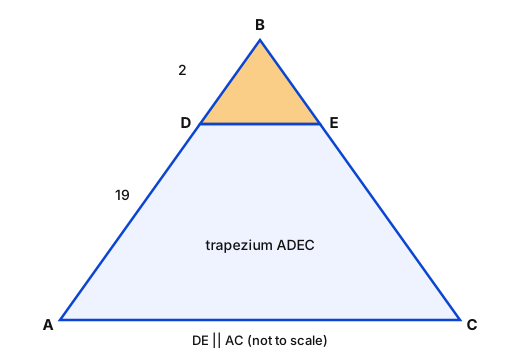
In △ABC, DE∥AC, where D and E are the points on sides AB and BC, respectively. If BD = 2 cm and AD = 19 cm, then what is the ratio of the area of △BDE to the trapezium ADEC?
△ABC में, DE∥AC है, जहाँ D और E क्रमशः भुजाओं AB और BC पर स्थित बिंदु हैं। यदि BD = 2 cm और AD = 19 cm है, तो △BDE के क्षेत्रफल का समलंब ADEC के क्षेत्रफल से अनुपात क्या है?
  1. A12 : 435
  2. B10 : 11
  3. C4 : 437
  4. D13 : 8
Show answer

Concept: If DE∥AC, then △BDE~△BAC and the area ratio is the square of the side ratio.

  1. AB=BD+AD=2+19=21 cm.
  2. ar(△BDE)ar(△BAC)=(BDBA)2=4441.
  3. Trapezium ADEC =441−4=437 parts.
  4. Required ratio =4:437.

Trick: Small triangle : trapezium =a2:(b2−a2) with a=2, b=21.

Answer: (C) 4:437

अवधारणा: यदि DE∥AC तो △BDE~△BAC, और क्षेत्रफल अनुपात भुजाओं के अनुपात का वर्ग होता है।

  1. AB=BD+AD=2+19=21 cm।
  2. ar(△BDE)ar(△BAC)=(BDBA)2=4441।
  3. समलंब ADEC =441−4=437 भाग।
  4. अभीष्ट अनुपात =4:437।

ट्रिक: छोटा त्रिभुज : समलंब =a2:(b2−a2), जहाँ a=2, b=21।

उत्तर: (C) 4:437

RRB NTPC Graduate CBT 1MathematicsBasic proportionality – area ratioRRB NTPC Graduate CBT 1 2024 · 19 Jun Shift 1 →
Q1463.
A boat takes 90 minutes to go 49.2 km upstream. The ratio of the speed of the boat in still water to that of the stream is 3 : 2. How much total time (in hours) will the boat take to go 44.8 km upstream and 71.2 km downstream?
एक नाव को धारा के प्रतिकूल 49.2 km जाने में 90 मिनट लगते हैं। स्थिर जल में नाव की चाल और धारा की चाल का अनुपात 3 : 2 है। नाव को धारा के प्रतिकूल 44.8 km और धारा के अनुकूल 71.2 km जाने में कुल कितना समय (घंटों में) लगेगा?
  1. A5.4
  2. B0.1
  3. C1.8
  4. D3.8
Show answer

Concept: Upstream speed =b−s, downstream speed =b+s.

  1. Upstream speed =49.21.5=32.8km/h.
  2. b:s=3:2 ⇒ upstream =3−2=1 part =32.8; downstream =3+2=5 parts =164km/h.
  3. Time =44.832.8+71.2164=5641+89205=280+89205.
  4. =369205=1.8 hours.

Trick: Downstream speed is 5 × upstream, so 71.2 km down = 14.24 km up; total 44.8+14.2432.8=1.8.

Answer: (C) 1.8

अवधारणा: धारा के विरुद्ध चाल =b−s, धारा के अनुकूल चाल =b+s।

  1. धारा के विरुद्ध चाल =49.21.5=32.8km/h।
  2. b:s=3:2 ⇒ विरुद्ध =3−2=1 भाग =32.8; अनुकूल =3+2=5 भाग =164km/h।
  3. समय =44.832.8+71.2164=5641+89205=280+89205।
  4. =369205=1.8 घंटे।

ट्रिक: अनुकूल चाल = 5 × विरुद्ध चाल, अतः 71.2 km अनुकूल = 14.24 km विरुद्ध; कुल 44.8+14.2432.8=1.8।

उत्तर: (C) 1.8

RRB NTPC Graduate CBT 1MathematicsBoats and streamsRRB NTPC Graduate CBT 1 2024 · 19 Jun Shift 1 →
Q1464.
Yashika buys 6 apples and 6 mangoes for ₹216. When the cost of an apple is decreased by 30% and that of a mango remains the same, then the cost of 5 apples and 8 mangoes is ₹162. What is the original cost of 7 apples and 2 mangoes?
यशिका ₹216 में 6 सेब और 6 आम खरीदती है। जब एक सेब का मूल्य 30% कम हो जाता है और आम का मूल्य समान रहता है, तो 5 सेब और 8 आमों का मूल्य ₹162 होता है। 7 सेब और 2 आमों का मूल मूल्य क्या है?
  1. A₹211
  2. B₹217
  3. C₹212
  4. D₹214
Show answer

Concept: Form two equations in the prices a (apple) and m (mango) and solve.

  1. 6a+6m=216⇒a+m=36.
  2. New apple price =0.7a: 5(0.7a)+8m=162⇒3.5a+8m=162.
  3. Put m=36−a: 3.5a+288−8a=162⇒4.5a=126⇒a=28, m=8.
  4. 7a+2m=196+16= ₹212.

Trick: Check a=28, m=8: 5×19.6+64=98+64=162 ✔.

Answer: (C) ₹212

अवधारणा: सेब का मूल्य a और आम का m मानकर दो समीकरण बनाकर हल करें।

  1. 6a+6m=216⇒a+m=36।
  2. सेब का नया मूल्य =0.7a: 5(0.7a)+8m=162⇒3.5a+8m=162।
  3. m=36−a रखें: 3.5a+288−8a=162⇒4.5a=126⇒a=28, m=8।
  4. 7a+2m=196+16= ₹212।

ट्रिक: जाँच a=28, m=8: 5×19.6+64=98+64=162 ✔।

उत्तर: (C) ₹212

RRB NTPC Graduate CBT 1MathematicsLinear equations – costRRB NTPC Graduate CBT 1 2024 · 19 Jun Shift 1 →
Q1465.
KARJ is related to NDUM in a certain way based on the English alphabetical order. In the same way, PLBF is related to SOEI. To which of the following is SCHQ related, following the same logic?
अंग्रेज़ी वर्णमाला क्रम के आधार पर KARJ एक निश्चित प्रकार से NDUM से संबंधित है। उसी प्रकार, PLBF, SOEI से संबंधित है। समान तर्क का अनुसरण करते हुए, SCHQ निम्नलिखित में से किससे संबंधित है?
  1. AUFNR
  2. BVELT
  3. CVFKT
  4. DUEMR
Show answer

Concept: Find the position shift between corresponding letters.

  1. K→N, A→D, R→U, J→M: each letter moves +3.
  2. Check: P→S, L→O, B→E, F→I — also +3.
  3. Apply to SCHQ: S→V, C→F, H→K, Q→T.

Trick: Same shift for all four letters → just add the shift once to each letter.

Answer: (C) VFKT

अवधारणा: संगत अक्षरों के बीच स्थान का अंतर ज्ञात करें।

  1. K→N, A→D, R→U, J→M: हर अक्षर +3 आगे।
  2. जाँच: P→S, L→O, B→E, F→I — यहाँ भी +3।
  3. SCHQ पर लागू करें: S→V, C→F, H→K, Q→T।

ट्रिक: चारों अक्षरों में एक-सा अंतर हो तो हर अक्षर में वही अंतर जोड़ दें।

उत्तर: (C) VFKT

RRB NTPC Graduate CBT 1General Intelligence and ReasoningLetter AnalogyRRB NTPC Graduate CBT 1 2024 · 19 Jun Shift 1 →
Q1466.
What should come in place of the question mark (?) in the given series?
327, 304, 271, ?, 175, 112
दी गई श्रृंखला में प्रश्न चिह्न (?) के स्थान पर क्या आना चाहिए?
327, 304, 271, ?, 175, 112
  1. A248
  2. B218
  3. C228
  4. D238
Show answer

Concept: Check differences between consecutive terms.

  1. 327−304=23, 304−271=33 — differences increase by 10.
  2. Next difference 43: 271−43=228.
  3. Check: 228−53=175, 175−63=112 ✓

Trick: Differences 23, 33, 43, 53, 63 — an arithmetic pattern of differences.

Answer: (C) 228

अवधारणा: क्रमागत पदों का अंतर देखें।

  1. 327−304=23, 304−271=33 — अंतर 10-10 बढ़ रहा है।
  2. अगला अंतर 43: 271−43=228।
  3. जाँच: 228−53=175, 175−63=112 ✓

ट्रिक: अंतर 23, 33, 43, 53, 63 — अंतरों में समान वृद्धि।

उत्तर: (C) 228

RRB NTPC Graduate CBT 1General Intelligence and ReasoningNumber SeriesRRB NTPC Graduate CBT 1 2024 · 19 Jun Shift 1 →
Q1467.
If 1 is added to each odd digit and 2 is subtracted from each even digit in the number 7643185, what will be difference between the highest and lowest digits in the number thus formed?
यदि संख्या 7643185 में प्रत्येक विषम अंक में 1 जोड़ा जाए और प्रत्येक सम अंक में से 2 घटाया जाए, तो इस प्रकार बनी संख्या के सबसे बड़े और सबसे छोटे अंकों के बीच का अंतर क्या होगा?
  1. A4
  2. B7
  3. C5
  4. D6
Show answer

Concept: Apply the rule digit by digit.

  1. 7643185: odd digits 7, 3, 1, 5 → 8, 4, 2, 6; even digits 6, 4, 8 → 4, 2, 6.
  2. New number: 8 4 2 4 2 6 6.
  3. Highest =8, lowest =2; difference =8−2=6.

Trick: Write the new digits directly under the old ones to avoid mistakes.

Answer: (D) 6

अवधारणा: नियम को हर अंक पर अलग-अलग लगाएँ।

  1. 7643185: विषम अंक 7, 3, 1, 5 → 8, 4, 2, 6; सम अंक 6, 4, 8 → 4, 2, 6।
  2. नई संख्या: 8 4 2 4 2 6 6।
  3. सबसे बड़ा =8, सबसे छोटा =2; अंतर =8−2=6।

ट्रिक: पुराने अंकों के ठीक नीचे नए अंक लिखें — गलती नहीं होगी।

उत्तर: (D) 6

RRB NTPC Graduate CBT 1General Intelligence and ReasoningDigit OperationsRRB NTPC Graduate CBT 1 2024 · 19 Jun Shift 1 →
Q1468.
Based on the English alphabetical order, three of the following four letter-cluster pairs are alike in a certain way and thus form a group. Which is the letter-cluster pair that DOES NOT belong to that group?
(Note: The odd one out is not based on the number of consonants/vowels or their position in the letter-cluster.)
अंग्रेज़ी वर्णमाला क्रम के आधार पर, निम्नलिखित चार अक्षर-समूह युग्मों में से तीन किसी निश्चित प्रकार से एकसमान हैं और इस प्रकार एक समूह बनाते हैं। वह कौन-सा अक्षर-समूह युग्म है जो उस समूह से संबंधित नहीं है?
(नोट: असंगत अक्षर-समूह, उस अक्षर-समूह में व्यंजनों/स्वरों की संख्या या उनके स्थान पर आधारित नहीं है।)
  1. AIJ - DE
  2. BGH - BC
  3. CLM - GH
  4. DMN - PD
Show answer

Concept: Compare the shift from the first cluster to the second.

  1. IJ→DE: each letter −5; GH→BC: −5; LM→GH: −5.
  2. MN→PD: M→P is +3, N→D is −10 — no common rule.

Trick: Check only the first letters: I→D, G→B, L→G all −5; M→P breaks it.

Answer: (D) MN - PD

अवधारणा: पहले समूह से दूसरे समूह तक अक्षरों का खिसकाव देखें।

  1. IJ→DE: हर अक्षर −5; GH→BC: −5; LM→GH: −5।
  2. MN→PD: M→P +3, N→D −10 — कोई समान नियम नहीं।

ट्रिक: केवल पहले अक्षर देखें: I→D, G→B, L→G सभी −5; M→P अलग।

उत्तर: (D) MN - PD

RRB NTPC Graduate CBT 1General Intelligence and ReasoningOdd One Out – LettersRRB NTPC Graduate CBT 1 2024 · 19 Jun Shift 1 →
Q1469.
Two sets of numbers are given below. In each set of numbers, certain mathematical operation(s) on the first number results in the second number. Similarly, certain mathematical operation(s) on the second number results in the third number and so on. Which of the given options follows the same set of operations as in the given sets? (NOTE: Operations should be performed on the whole numbers, without breaking down the numbers into their constituent digits. E.g. 13 – Operations on 13 such as adding / subtracting / multiplying to 13 can be performed. Breaking down 13 into 1 and 3 and then performing mathematical operations on 1 and 3 is not allowed.)
11 - 22 - 44 - 45; 3 - 6 - 12 - 13
नीचे संख्याओं के दो समुच्चय दिए गए हैं। संख्याओं के प्रत्येक समुच्चय में, पहली संख्या पर कुछ निश्चित गणितीय संक्रिया/संक्रियाएँ करने पर दूसरी संख्या प्राप्त होती है। इसी प्रकार, दूसरी संख्या पर कुछ निश्चित गणितीय संक्रिया/संक्रियाएँ करने पर तीसरी संख्या प्राप्त होती है, और इसी तरह आगे भी। दिए गए विकल्पों में से कौन-सा विकल्प दिए गए समुच्चयों की तरह संक्रियाओं के समान समुच्चय का अनुसरण करता है? (नोट: संख्याओं को उनके घटक अंकों में तोड़े बिना, संक्रियाएँ पूर्ण संख्याओं पर की जानी चाहिए। उदाहरण 13 – 13 पर संक्रियाएँ जैसे 13 में जोड़ना/घटाना/गुणा करना आदि किया जा सकता है। 13 को 1 और 3 में तोड़कर फिर 1 और 3 पर गणितीय संक्रियाएँ करने की अनुमति नहीं है।)
11 - 22 - 44 - 45; 3 - 6 - 12 - 13
  1. A1 - 2 - 3 - 6
  2. B19 - 20 - 22 - 44
  3. C4 - 8 - 16 - 17
  4. D13 - 14 - 15 - 20
Show answer

Concept: Find the operation chain from the given sets.

  1. 11×2=22, 22×2=44, 44+1=45; 3×2=6, 6×2=12, 12+1=13.
  2. Rule: ×2, ×2, +1.
  3. 4×2=8, 8×2=16, 16+1=17 ✓ — others fail at the first step.

Trick: Test only the first step (×2): 1→2 ✓ but 2→3 ✗; 4→8 works throughout.

Answer: (C) 4 - 8 - 16 - 17

अवधारणा: दिए गए समूहों से संक्रिया-क्रम ज्ञात करें।

  1. 11×2=22, 22×2=44, 44+1=45; 3×2=6, 6×2=12, 12+1=13।
  2. नियम: ×2, ×2, +1।
  3. 4×2=8, 8×2=16, 16+1=17 ✓ — बाकी विकल्प पहले/दूसरे चरण में ही गलत।

ट्रिक: पहले दो चरण (×2) जाँचें — 4-8-16 ही चलता है।

उत्तर: (C) 4 - 8 - 16 - 17

RRB NTPC Graduate CBT 1General Intelligence and ReasoningNumber Set OperationsRRB NTPC Graduate CBT 1 2024 · 19 Jun Shift 1 →
Q1470.
In a certain code language, ‘PEAR’ is coded as ‘7481’ and ‘DEAR’ is coded as ‘7154’. What is the code for ‘D’ in the given code language?
एक निश्चित कूट भाषा में, ‘PEAR’ को ‘7481’ के रूप में कूटबद्ध किया जाता है और ‘DEAR’ को ‘7154’ के रूप में कूटबद्ध किया जाता है। उस कूट भाषा में ‘D’ का कूट क्या है?
  1. A7
  2. B4
  3. C1
  4. D5
Show answer

Concept: Common letters share common digits.

  1. PEAR = {7, 4, 8, 1}; DEAR = {7, 1, 5, 4}.
  2. Common letters E, A, R ↔ common digits 7, 4, 1.
  3. Left over: P = 8 and D = 5.

Trick: Cancel the common part; the leftover letter takes the leftover digit.

Answer: (D) 5

अवधारणा: समान अक्षरों के समान अंक होते हैं।

  1. PEAR = {7, 4, 8, 1}; DEAR = {7, 1, 5, 4}।
  2. समान अक्षर E, A, R ↔ समान अंक 7, 4, 1।
  3. बचे हुए: P = 8 और D = 5।

ट्रिक: साझा भाग हटाएँ; बचा अक्षर = बचा अंक।

उत्तर: (D) 5

RRB NTPC Graduate CBT 1General Intelligence and ReasoningCoding–DecodingRRB NTPC Graduate CBT 1 2024 · 19 Jun Shift 1 →
Q1471.
A group of numbers and symbols is coded using letter codes as per the codes given below and the conditions that follow. Study the given codes and conditions and answer the question that follows.
Note: If none of the conditions apply, then codes for the respective number/symbol to be followed directly as given in the table.
Number/Symbol3#8$7&6*4^2
CodeBSDFGHJKLPR
Conditions:
i) If the first element is a symbol and the last a number, the codes for these two (the first and the last elements) are to be interchanged.
ii) If the first element is an odd number and the last an even number, the first and last elements are to be coded as ©.
iii) If both the second and third elements are perfect squares, then the code of the second element will be the code for the third element.
What will be the code for the following group?
849@
संख्याओं और प्रतीकों के एक समूह को नीचे दिए गए कूटों और उसके बाद दी गई शर्तों के अनुसार अक्षर कूटों का उपयोग करके कूटबद्ध किया गया है। दिए गए कूटों और शर्तों का अध्ययन कीजिए और उसके बाद दिए गए प्रश्न का उत्तर दीजिए।
नोट: यदि कोई भी शर्त लागू नहीं होती है, तो संबंधित संख्या/प्रतीक के लिए तालिका में दिए गए कूटों का सीधे अनुसरण किया जाना है।
संख्या/प्रतीक3#8$7&6*4^2
कूटBSDFGHJKLPR
शर्तें:
i) यदि पहला अवयव एक प्रतीक है और अंतिम अवयव एक संख्या है, तो इन दोनों (पहले और अंतिम अवयवों) के कूट आपस में बदल दिए जाएँगे।
ii) यदि पहला अवयव एक विषम संख्या है और अंतिम अवयव एक सम संख्या है, तो पहले और अंतिम दोनों अवयवों को © के रूप में कूटबद्ध किया जाएगा।
iii) यदि दूसरा और तीसरा दोनों अवयव पूर्ण वर्ग हैं, तो दूसरे अवयव का कूट ही तीसरे अवयव का कूट होगा।
निम्नलिखित समूह का कूट क्या होगा?
849@
  1. ADLUC
  2. BCLUD
  3. CDULC
  4. DDLLC
Show answer

Concept: Check each condition on the group 849@, then code.

  1. Codes: 8 = D, 4 = L, 9 = U, @ = C → plain code DLUC.
  2. (i) First element 8 is a number, not a symbol ✗. (ii) First element 8 is even ✗.
  3. (iii) Second (4 =22) and third (9 =32) are both perfect squares ✓ → code of 9 becomes code of 4, i.e. L.
  4. Final code: D L L C.

Trick: Check conditions in order; only (iii) applies here.

Answer: (D) DLLC

अवधारणा: समूह 849@ पर हर शर्त जाँचें, फिर कोड लिखें।

  1. कोड: 8 = D, 4 = L, 9 = U, @ = C → सामान्य कोड DLUC।
  2. (i) पहला तत्व 8 संख्या है, प्रतीक नहीं ✗। (ii) पहला तत्व 8 सम है ✗।
  3. (iii) दूसरा (4 =22) और तीसरा (9 =32) दोनों पूर्ण वर्ग ✓ → 9 का कोड = 4 का कोड, यानी L।
  4. अंतिम कोड: D L L C।

ट्रिक: शर्तें क्रम से जाँचें; यहाँ केवल (iii) लागू है।

उत्तर: (D) DLLC

RRB NTPC Graduate CBT 1General Intelligence and ReasoningCoding with ConditionsRRB NTPC Graduate CBT 1 2024 · 19 Jun Shift 1 →
Q1472.
A group of numbers and symbols is coded using letter codes as per the codes given below and the conditions that follow. Study the given codes and conditions and answer the question that follows.
Note: If none of the conditions apply, then codes for the respective number/symbol are to be followed directly as given in the table.
Number/Symbol3#4$7&6*8^2
CodeHAJBKCLDMEN
Conditions:
i) If the first element is a symbol and the last a number, the codes for these two (the first and the last elements) are to be interchanged.
ii) If the first element is an odd number and the last an even number, the first and last elements are to be coded as ©.
iii) If both the second and third elements are perfect cubes, the code of the second element will be the code of third element.
What will be the code for the following group?
3$72
संख्याओं और प्रतीकों के एक समूह को नीचे दिए गए कूटों और उसके बाद दी गई शर्तों के अनुसार अक्षर कूटों का उपयोग करके कूटबद्ध किया गया है। दिए गए कूटों और शर्तों का अध्ययन कीजिए और उसके बाद दिए गए प्रश्न का उत्तर दीजिए।
नोट: यदि कोई भी शर्त लागू नहीं होती है, तो संबंधित संख्या/प्रतीक के लिए तालिका में दिए गए कूटों का सीधे अनुसरण किया जाना है।
संख्या/प्रतीक3#4$7&6*8^2
कूटHAJBKCLDMEN
शर्तें:
i) यदि पहला अवयव एक प्रतीक है और अंतिम अवयव एक संख्या है, तो इन दोनों (पहले और अंतिम अवयवों) के कूट आपस में बदल दिए जाएँगे।
ii) यदि पहला अवयव एक विषम संख्या है और अंतिम अवयव एक सम संख्या है, तो पहले और अंतिम दोनों अवयवों को © के रूप में कूटबद्ध किया जाएगा।
iii) यदि दूसरा और तीसरा दोनों अवयव पूर्ण घन हैं, तो दूसरे अवयव का कूट ही तीसरे अवयव का कूट होगा।
निम्नलिखित समूह का कूट क्या होगा?
3$72
  1. ANBKH
  2. B©BK©
  3. CHBKN
  4. DHKB©
Show answer

Concept: Check each condition on the group 3$72, then code.

  1. Plain codes: 3 = H, $ = B, 7 = K, 2 = N → HBKN.
  2. (i) First element 3 is a number, not a symbol ✗.
  3. (ii) First element 3 is odd and last element 2 is even ✓ → both coded as ©.
  4. (iii) $ and 7 are not perfect cubes ✗. Final code: © B K ©.

Trick: Odd-first + even-last → both ends become ©.

Answer: (B) ©BK©

अवधारणा: समूह 3$72 पर हर शर्त जाँचें, फिर कोड लिखें।

  1. सामान्य कोड: 3 = H, $ = B, 7 = K, 2 = N → HBKN।
  2. (i) पहला तत्व 3 संख्या है, प्रतीक नहीं ✗।
  3. (ii) पहला तत्व 3 विषम और अंतिम 2 सम ✓ → दोनों का कोड ©।
  4. (iii) $ और 7 पूर्ण घन नहीं ✗। अंतिम कोड: © B K ©।

ट्रिक: पहला विषम + अंतिम सम → दोनों सिरे ©।

उत्तर: (B) ©BK©

RRB NTPC Graduate CBT 1General Intelligence and ReasoningCoding with ConditionsRRB NTPC Graduate CBT 1 2024 · 19 Jun Shift 1 →
Q1473.
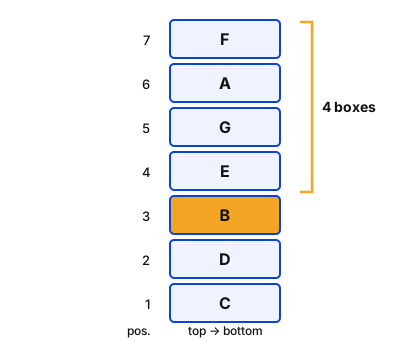
Seven boxes, A, B, C, D, E, F and G, are kept one over the other, but not necessarily in the same order. No box is kept above F. Only three boxes are kept between F and B. Only one box is kept between A and E. E is kept immediately above B. Only four boxes are kept between A and C. G is kept at some place above D. How many boxes are kept above B?
सात बक्से, A, B, C, D, E, F और G, एक के ऊपर एक रखे गए हैं, लेकिन ज़रूरी नहीं कि इसी क्रम में हों। F के ऊपर कोई बक्सा नहीं रखा है। F और B के बीच केवल तीन बक्से रखे हैं। A और E के बीच केवल एक बक्सा रखा है। E को B के ठीक ऊपर रखा गया है। A और C के बीच केवल चार बक्से रखे हैं। G को D के ऊपर किसी स्थान पर रखा गया है। B के ऊपर कितने बक्से रखे हैं?
  1. A2
  2. B4
  3. C3
  4. D1
Show answer

Concept: Number positions 1 (bottom) to 7 (top) and place fixed boxes first.

  1. No box above F → F = 7. Three between F and B → B = 3; E just above B → E = 4.
  2. One between A and E → A = 2 or 6; four between A and C → A = 6, C = 1.
  3. G above D in remaining 5 and 2 → G = 5, D = 2.
  4. Above B: F, A, G, E = 4 boxes.

Trick: Fix the top/bottom box first; 'n between' means positions differ by n+1.

Answer: (B) 4

अवधारणा: स्थान 1 (नीचे) से 7 (ऊपर) मानें, पहले निश्चित बॉक्स रखें।

  1. F के ऊपर कोई नहीं → F = 7। F और B के बीच तीन → B = 3; E ठीक B के ऊपर → E = 4।
  2. A और E के बीच एक → A = 2 या 6; A और C के बीच चार → A = 6, C = 1।
  3. शेष 5 और 2 में G, D के ऊपर → G = 5, D = 2।
  4. B के ऊपर: F, A, G, E = 4 बॉक्स।

ट्रिक: पहले सबसे ऊपर/नीचे वाला बॉक्स तय करें; 'n बीच में' = स्थानों का अंतर n+1।

उत्तर: (B) 4

RRB NTPC Graduate CBT 1General Intelligence and ReasoningBox ArrangementRRB NTPC Graduate CBT 1 2024 · 19 Jun Shift 1 →
Q1474.
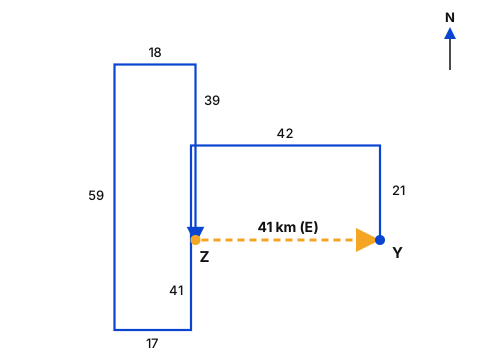
Ishan starts from Point Y and drives 21 km towards the north. He then takes a left turn, drives 42 km, turns left and drives 41 km. He then takes a right turn and drives 17 km. He takes a right turn, drives 59 km. He then turns right, drives 18 km, turns right and drives 39 km to stop at Point Z. How far (shortest distance) and towards which direction should he drive in order to reach Point Y again? (All turns are 90-degree turns only unless specified.)
ईशान बिंदु Y से चलना शुरू करता है और उत्तर की ओर 21 km ड्राइव करता है। फिर वह बाएँ मुड़ता है, 42 km ड्राइव करता है, बाएँ मुड़ता है और 41 km ड्राइव करता है। फिर वह दाएँ मुड़ता है और 17 km ड्राइव करता है। वह दाएँ मुड़ता है, 59 km ड्राइव करता है। फिर वह दाएँ मुड़ता है, 18 km ड्राइव करता है, दाएँ मुड़ता है और 39 km ड्राइव करके बिंदु Z पर रुक जाता है। बिंदु Y पर फिर से पहुँचने के लिए उसे कितनी दूरी (न्यूनतम दूरी) तक और किस दिशा में ड्राइव करना चाहिए? (जब तक निर्दिष्ट न किया जाए, सभी मोड़ केवल 90 डिग्री के मोड़ हैं।)
  1. A39 km towards the eastपूर्व की ओर 39 km
  2. B43 km towards the westपश्चिम की ओर 43 km
  3. C45 km towards the southदक्षिण की ओर 45 km
  4. D41 km towards the eastपूर्व की ओर 41 km
Show answer

Concept: Track net east–west and north–south movement.

  1. North–south: +21−41+59−39=0 → Z is on the same line as Y.
  2. East–west: west 42+17=59, east 18 → net 41 km west.
  3. So Z is 41 km west of Y; to return he drives 41 km east.

Trick: Add all N/S and all E/W legs separately; turns don't matter after that.

Answer: (D) 41 km towards the east

अवधारणा: कुल पूर्व–पश्चिम और उत्तर–दक्षिण गति निकालें।

  1. उत्तर–दक्षिण: +21−41+59−39=0 → Z, Y की ही रेखा पर है।
  2. पूर्व–पश्चिम: पश्चिम 42+17=59, पूर्व 18 → शुद्ध 41 km पश्चिम।
  3. अतः Z, Y से 41 km पश्चिम है; लौटने के लिए 41 km पूर्व जाना होगा।

ट्रिक: सभी उत्तर/दक्षिण और पूर्व/पश्चिम दूरियाँ अलग-अलग जोड़ें।

उत्तर: (D) 41 km पूर्व की ओर

RRB NTPC Graduate CBT 1General Intelligence and ReasoningDirection and DistanceRRB NTPC Graduate CBT 1 2024 · 19 Jun Shift 1 →
Q1475.
What should come in place of the question mark (?) in the given series?
713 715 720 722 727 729 ?
दी गई श्रृंखला में प्रश्न चिह्न (?) के स्थान पर क्या आना चाहिए?
713 715 720 722 727 729 ?
  1. A739
  2. B734
  3. C731
  4. D736
Show answer

Concept: Look at alternating differences.

  1. Differences: +2,+5,+2,+5,+2.
  2. Next is +5: 729+5=734.

Trick: Two alternating steps → continue the cycle.

Answer: (B) 734

अवधारणा: बारी-बारी से आने वाले अंतर देखें।

  1. अंतर: +2,+5,+2,+5,+2।
  2. अगला +5: 729+5=734।

ट्रिक: दो बदलते चरण → चक्र जारी रखें।

उत्तर: (B) 734

RRB NTPC Graduate CBT 1General Intelligence and ReasoningNumber SeriesRRB NTPC Graduate CBT 1 2024 · 19 Jun Shift 1 →
Q1476.
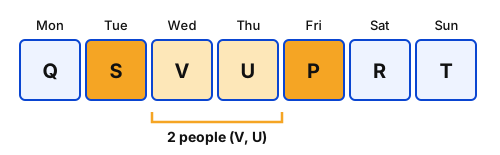
Each of P, Q, R, S, T, U and V has an exam on a different day of a week starting from Monday and ending on Sunday of the same week. Q has the exam on Monday. P has the exam before R. Only two people have exams between U and Q. V has the exam immediately before U but after S. R has the exam before T.
How many people have exams between P and S?
P, Q, R, S, T, U और V में से प्रत्येक की परीक्षा एक ही सप्ताह के सोमवार से शुरू होकर रविवार को समाप्त होने वाले सप्ताह के अलग-अलग दिन है। Q की परीक्षा सोमवार को है। P की परीक्षा R से पहले है। U और Q के बीच केवल दो व्यक्तियों की परीक्षा है। V की परीक्षा U से ठीक पहले लेकिन S के बाद है। R की परीक्षा T से पहले है।
P और S के बीच कितने व्यक्तियों की परीक्षा है?
  1. ATwoदो
  2. BThreeतीन
  3. CFiveपाँच
  4. DFourचार
Show answer

Concept: Place the fixed day first, then chain the clues.

  1. Q = Mon; two between U and Q → U = Thu.
  2. V immediately before U → V = Wed; S before V → S = Tue.
  3. P, R, T in Fri, Sat, Sun with P before R before T → P = Fri, R = Sat, T = Sun.
  4. Between S (Tue) and P (Fri): V, U = two.

Trick: Chain clues (S → V → U) fill most slots at once.

Answer: (A) Two

अवधारणा: पहले निश्चित दिन रखें, फिर संकेतों को जोड़ें।

  1. Q = सोमवार; U और Q के बीच दो → U = गुरुवार।
  2. V ठीक U से पहले → V = बुधवार; S, V से पहले → S = मंगलवार।
  3. P, R, T शुक्र, शनि, रवि में; P < R < T → P = शुक्र, R = शनि, T = रवि।
  4. S (मंगल) और P (शुक्र) के बीच: V, U = दो।

ट्रिक: शृंखला वाले संकेत (S → V → U) एक साथ कई स्थान भर देते हैं।

उत्तर: (A) दो

RRB NTPC Graduate CBT 1General Intelligence and ReasoningScheduling PuzzleRRB NTPC Graduate CBT 1 2024 · 19 Jun Shift 1 →
Q1477.
Select the letter-cluster from among the given options that can replace the question mark (?) in the following series.
ETQ IQO MNM QKK ?
दिए गए विकल्पों में से उस अक्षर-समूह का चयन कीजिए जो निम्नलिखित श्रृंखला में प्रश्न चिह्न (?) का स्थान ले सकता है।
ETQ IQO MNM QKK ?
  1. AUHI
  2. BUHJ
  3. CUII
  4. DUJJ
Show answer

Concept: Track each letter position separately.

  1. 1st letters: E, I, M, Q → +4 → U.
  2. 2nd letters: T, Q, N, K → −3 → H.
  3. 3rd letters: Q, O, M, K → −2 → I.

Trick: Split the clusters into three columns and find each column's step.

Answer: (A) UHI

अवधारणा: हर स्थान के अक्षर अलग-अलग देखें।

  1. पहले अक्षर: E, I, M, Q → +4 → U।
  2. दूसरे अक्षर: T, Q, N, K → −3 → H।
  3. तीसरे अक्षर: Q, O, M, K → −2 → I।

ट्रिक: समूहों को तीन स्तंभों में बाँटें, हर स्तंभ का चरण निकालें।

उत्तर: (A) UHI

RRB NTPC Graduate CBT 1General Intelligence and ReasoningLetter SeriesRRB NTPC Graduate CBT 1 2024 · 19 Jun Shift 1 →
Q1478.
Which of the following letter-number clusters will replace the question mark (?) in the given series to make it logically complete?
FKN17 GLO28 HMP39 INQ50 ?
निम्नलिखित में से कौन-सा अक्षर-संख्या समूह दी गई श्रृंखला को तार्किक रूप से पूर्ण करने के लिए प्रश्न चिह्न (?) का स्थान लेगा?
FKN17 GLO28 HMP39 INQ50 ?
  1. AJOR61
  2. BJOS61
  3. CJOR60
  4. DJOS60
Show answer

Concept: Each part follows its own step.

  1. Letters: F→G→H→I→J, K→L→M→N→O, N→O→P→Q→R (each +1).
  2. Numbers: 17, 28, 39, 50 → +11 → 61.
  3. Next term: JOR61.

Trick: Third letter after Q is R (not S) — options test exactly this.

Answer: (A) JOR61

अवधारणा: हर भाग का अपना चरण है।

  1. अक्षर: F→G→H→I→J, K→L→M→N→O, N→O→P→Q→R (हर बार +1)।
  2. संख्याएँ: 17, 28, 39, 50 → +11 → 61।
  3. अगला पद: JOR61।

ट्रिक: Q के बाद R आता है (S नहीं) — विकल्प इसी को परखते हैं।

उत्तर: (A) JOR61

RRB NTPC Graduate CBT 1General Intelligence and ReasoningLetter-Number SeriesRRB NTPC Graduate CBT 1 2024 · 19 Jun Shift 1 →
Q1479.
Refer to the following number and symbol series and answer the question that follows. Counting to be done from left to right only.
(NOTE: All numbers are single digit numbers only.)
(Left) 1 $ @ % 1 4 3 * # 6 3 4 £ % 2 @ 6 % 8 % 9 $ (Right)
How many such numbers are there each of which is immediately preceded by a symbol and also immediately followed by a symbol?
निम्नलिखित संख्या और प्रतीक श्रृंखला को देखिए और उसके बाद दिए गए प्रश्न का उत्तर दीजिए। गिनती केवल बाएँ से दाएँ की जानी है।
(नोट: सभी संख्याएँ केवल एक अंक वाली संख्याएँ हैं।)
(बाएँ) 1 $ @ % 1 4 3 * # 6 3 4 £ % 2 @ 6 % 8 % 9 $ (दाएँ)
ऐसी कितनी संख्याएँ हैं, जिनमें से प्रत्येक के ठीक पहले एक प्रतीक है और ठीक बाद भी एक प्रतीक है?
  1. A3
  2. B5
  3. C6
  4. D4
Show answer

Concept: Check every number: symbol on both sides?

  1. Pattern symbol–number–symbol occurs at: % 2 @, @ 6 %, % 8 %, % 9 $.
  2. Others fail, e.g. # 6 3 and % 1 4 (a number on one side).
  3. Count =4.

Trick: Scan only the stretch where numbers are isolated (here the end of the series).

Answer: (D) 4

अवधारणा: हर संख्या जाँचें: दोनों ओर प्रतीक है या नहीं?

  1. प्रतीक–संख्या–प्रतीक का क्रम: % 2 @, @ 6 %, % 8 %, % 9 $।
  2. बाकी जैसे # 6 3 और % 1 4 में एक ओर संख्या है।
  3. कुल =4।

ट्रिक: केवल वहाँ देखें जहाँ संख्याएँ अकेली हैं (यहाँ श्रृंखला का अंत)।

उत्तर: (D) 4

RRB NTPC Graduate CBT 1General Intelligence and ReasoningSymbol–Number SeriesRRB NTPC Graduate CBT 1 2024 · 19 Jun Shift 1 →
Q1480.
Select the pair that follows the same pattern as that followed by the two pairs given below. Both pairs follow the same pattern.
TJR : PKT
DHQ : ZIS
उस युग्म का चयन कीजिए जो उसी पैटर्न का अनुसरण करता है, जिसका अनुसरण नीचे दिए गए दोनों युग्म करते हैं। दोनों युग्म एक ही पैटर्न का अनुसरण करते हैं।
TJR : PKT
DHQ : ZIS
  1. AXBG : TCI
  2. BEMT : CQX
  3. CKOS : IQV
  4. DCRJ : BTN
Show answer

Concept: Find the shift for each letter position.

  1. TJR→PKT: T−4=P, J+1=K, R+2=T. DHQ→ZIS: D−4=Z, H+1=I, Q+2=S.
  2. Rule: −4,+1,+2.
  3. XBG→TCI: X−4=T, B+1=C, G+2=I ✓

Trick: Check the first letter's −4 to eliminate options fast (EMT→C is −2, KOS→I is −2, CRJ→B is −1).

Answer: (A) XBG : TCI

अवधारणा: हर स्थान के अक्षर का खिसकाव निकालें।

  1. TJR→PKT: T−4=P, J+1=K, R+2=T। DHQ→ZIS: D−4=Z, H+1=I, Q+2=S।
  2. नियम: −4,+1,+2।
  3. XBG→TCI: X−4=T, B+1=C, G+2=I ✓

ट्रिक: पहले अक्षर का −4 जाँचकर तेजी से विकल्प हटाएँ (E→C −2, K→I −2, C→B −1)।

उत्तर: (A) XBG : TCI

RRB NTPC Graduate CBT 1General Intelligence and ReasoningLetter AnalogyRRB NTPC Graduate CBT 1 2024 · 19 Jun Shift 1 →