Question bank

Q&A: practice questions with answers

Search questions on any topic. Filter by exam category, exam, subject and topic, try the question, then open the answer and explanation.

Courses – airGurukul

7,077 questions found.

Q1621.
What is Lord Thomas Babington Macaulay best known for in the context of British India?
ब्रिटिश भारत के संदर्भ में लॉर्ड थॉमस बैबिंगटन मैकाले मुख्य रूप से किसके लिए जाने जाते हैं?
  1. AIntroducing the Vernacular Press Actवर्नाक्यूलर प्रेस एक्ट लागू करने के लिए
  2. BFraming the Government of India Act, 1858भारत सरकार अधिनियम, 1858 तैयार करने के लिए
  3. CDrafting the Indian Penal Code and promoting English educationभारतीय दंड संहिता का प्रारूप तैयार करने और अंग्रेज़ी शिक्षा को बढ़ावा देने के लिए
  4. DLeading the revolt of 18571857 के विद्रोह का नेतृत्व करने के लिए
Show answer

Concept: T. B. Macaulay was Law Member of the Governor-General's Council (1834–38).

  1. His Minute on Education (1835) led to English Education Act 1835 under Bentinck – English as medium of higher education.
  2. As head of the First Law Commission he drafted the Indian Penal Code (enacted 1860).
  3. Vernacular Press Act was Lytton's (1878); GoI Act 1858 came after the 1857 revolt.

Yaad rakhein: Macaulay = "Minute 1835 + IPC".

Answer: (C) Drafting the Indian Penal Code and promoting English education

अवधारणा: टी. बी. मैकाले गवर्नर-जनरल परिषद के विधि सदस्य (1834–38) थे।

  1. उनके शिक्षा कार्यवृत्त (Minute, 1835) से बेंटिंक के समय अंग्रेज़ी उच्च शिक्षा का माध्यम बनी।
  2. प्रथम विधि आयोग के प्रमुख के रूप में उन्होंने भारतीय दंड संहिता (IPC, लागू 1860) का प्रारूप बनाया।
  3. वर्नाक्युलर प्रेस एक्ट लिटन का (1878) था।

याद रखें: मैकाले = "मिनट 1835 + IPC"।

उत्तर: (C) भारतीय दंड संहिता का प्रारूप और अंग्रेज़ी शिक्षा का प्रचार
RRB NTPC Graduate CBT 1General AwarenessModern India – MacaulayRRB NTPC Graduate CBT 1 2024 · 18 Jun Shift 2 →
Q1622.
Which of the following options is INCORRECT regarding the factors that inflamed the feelings of the Sepoys and led to the Revolt of 1857?
सिपाहियों की भावनाओं को भड़काने वाले और 1857 के विद्रोह का कारण बनने वाले कारकों के संबंध में निम्नलिखित में से कौन-सा विकल्प गलत है?
  1. ACompulsion on sepoys to wear their caste marks and follow their own casteसिपाहियों पर अपने जातिगत चिह्न लगाने और अपनी जाति का पालन करने की बाध्यता
  2. BForceful conversions to Christianityबलपूर्वक ईसाई धर्म में धर्मांतरण
  3. CAct that required every new recruit to give an undertaking to serve overseasवह अधिनियम जिसके अनुसार प्रत्येक नए भर्ती को विदेश में सेवा करने का वचन देना होता था
  4. DArmy maintaining chaplains at state cost and promotion of Christian propaganda among the sepoysसेना द्वारा राज्य के खर्च पर पादरियों को रखना और सिपाहियों के बीच ईसाई प्रचार को बढ़ावा देना
Show answer

Concept: Sepoys felt their religion and caste were under threat.

  1. Army rules actually forbade sepoys from wearing caste/sectarian marks, beards and turbans – so "compulsion to wear caste marks" is incorrect.
  2. General Service Enlistment Act 1856 (Canning) made new recruits undertake to serve overseas – crossing the sea meant loss of caste.
  3. Fear of conversion and chaplains/missionary propaganda paid by the state were real grievances.

Yaad rakhein: Grievance = ban on caste marks, not compulsion to wear them.

Answer: (A) Compulsion on sepoys to wear their caste marks and follow their own caste

अवधारणा: सिपाहियों को लगा कि उनका धर्म और जाति खतरे में है।

  1. सेना के नियमों ने जाति/सम्प्रदाय के चिह्न, दाढ़ी व पगड़ी पहनने पर रोक लगाई थी – अतः "चिह्न पहनने की बाध्यता" गलत है।
  2. सामान्य सेवा भर्ती अधिनियम 1856 (कैनिंग) से नए रंगरूटों को समुद्र पार सेवा का वचन देना पड़ता था – जाति-भ्रष्ट होने का भय।
  3. धर्मांतरण का भय और राज्य खर्च पर पादरियों का प्रचार वास्तविक शिकायतें थीं।

याद रखें: शिकायत = जाति-चिह्नों पर रोक, न कि उन्हें पहनने की बाध्यता।

उत्तर: (A) सिपाहियों को जाति-चिह्न पहनने व अपनी जाति मानने की बाध्यता

RRB NTPC Graduate CBT 1General AwarenessRevolt of 1857 – causesRRB NTPC Graduate CBT 1 2024 · 18 Jun Shift 2 →
Q1623.
Which of the following is a tributary of the Yamuna river?
निम्नलिखित में से कौन-सी यमुना नदी की सहायक नदी है?
  1. ASonसोन
  2. BTonsटोंस
  3. CGomtiगोमती
  4. DTeestaतीस्ता
Show answer

Concept: The Tons is the largest tributary of the Yamuna, joining it near Kalsi (Dehradun) in its upper course.

  1. Other Yamuna tributaries: Chambal, Sind, Betwa, Ken, Hindon, Giri.
  2. Son and Gomti join the Ganga directly; Teesta is a tributary of the Brahmaputra.

Yaad rakhein: Yamuna's right bank: Chambal, Sind, Betwa, Ken; left: Tons, Hindon, Giri, Rishiganga.

Answer: (B) Tons

अवधारणा: टोंस यमुना की सबसे बड़ी सहायक नदी है, जो ऊपरी भाग में कालसी (देहरादून) के पास मिलती है।

  1. यमुना की अन्य सहायक: चंबल, सिंध, बेतवा, केन, हिंडन, गिरि।
  2. सोन और गोमती सीधे गंगा में मिलती हैं; तीस्ता ब्रह्मपुत्र की सहायक है।

याद रखें: यमुना की सहायक: टोंस, गिरि, हिंडन, चंबल, सिंध, बेतवा, केन।

उत्तर: (B) टोंस

RRB NTPC Graduate CBT 1General AwarenessIndian rivers – Yamuna systemRRB NTPC Graduate CBT 1 2024 · 18 Jun Shift 2 →
Q1624.
Which metal was extensively used for coinage in the Mauryan Empire?
मौर्य साम्राज्य में सिक्कों के निर्माण के लिए किस धातु का व्यापक रूप से उपयोग किया जाता था?
  1. AGoldसोना
  2. BIronलोहा
  3. CSilverचाँदी
  4. DCopperताँबा
Show answer

Concept: Mauryan currency mainly consisted of silver punch-marked coins.

  1. The silver pana/karshapana is mentioned in Kautilya's Arthashastra as the standard coin; copper coins (mashaka) were for small change.
  2. Gold coins became common much later under the Kushanas and Guptas.

Yaad rakhein: Mauryas – silver punch-marked; Kushanas – gold; Guptas – gold dinars.

Answer: (C) Silver

अवधारणा: मौर्य मुद्रा मुख्यतः चाँदी के आहत (punch-marked) सिक्के थे।

  1. अर्थशास्त्र में चाँदी का पण/कार्षापण मानक सिक्का बताया गया है; ताँबे के माषक छोटे लेन-देन हेतु।
  2. सोने के सिक्के बाद में कुषाणों व गुप्तों के समय प्रचलित हुए।

याद रखें: मौर्य – चाँदी; कुषाण – सोना; गुप्त – स्वर्ण दीनार।

उत्तर: (C) चाँदी

RRB NTPC Graduate CBT 1General AwarenessMauryan economy – coinageRRB NTPC Graduate CBT 1 2024 · 18 Jun Shift 2 →
Q1625.
What is the primary purpose of the 'Formula Bar' in MS Excel?
MS Excel में 'Formula Bar' का प्राथमिक उद्देश्य क्या है?
  1. ATo insert charts and imagesचार्ट और चित्र सम्मिलित करना
  2. BTo change the background color of cellsसेलों का पृष्ठभूमि रंग बदलना
  3. CTo display and edit the contents of a cellकिसी सेल की सामग्री को प्रदर्शित और संपादित करना
  4. DTo navigate between worksheetsवर्कशीटों के बीच नेविगेट करना
Show answer

Concept: The Formula Bar sits above the worksheet grid, next to the Name Box.

  1. It shows the actual content of the active cell – a value, text or the formula behind a result – and lets you edit it.
  2. Charts/images are inserted from the Insert tab; fill colour is on the Home tab; sheet tabs are used to move between worksheets.

Yaad rakhein: Cell shows the result; Formula Bar shows the formula.

Answer: (C) To display and edit the contents of a cell

अवधारणा: फ़ॉर्मूला बार वर्कशीट ग्रिड के ऊपर, नेम बॉक्स के बगल में होता है।

  1. यह सक्रिय सेल की वास्तविक सामग्री – मान, टेक्स्ट या परिणाम के पीछे का फ़ॉर्मूला – दिखाता है और संपादित करने देता है।
  2. चार्ट/चित्र Insert टैब से, रंग Home टैब से, और शीट बदलना शीट टैब से होता है।

याद रखें: सेल में परिणाम, फ़ॉर्मूला बार में फ़ॉर्मूला।

उत्तर: (C) सेल की सामग्री दिखाना और संपादित करना

RRB NTPC Graduate CBT 1General AwarenessComputer – MS ExcelRRB NTPC Graduate CBT 1 2024 · 18 Jun Shift 2 →
Q1626.
The enactment of the first Cooperative Credit Societies Act in 1904 was influenced by which of the following?
1904 में प्रथम सहकारी ऋण समिति अधिनियम का अधिनियमन निम्नलिखित में से किससे प्रभावित था?
  1. ASimon Commissionसाइमन कमीशन
  2. BIndian Famine Commissionभारतीय अकाल आयोग
  3. CRoyal Commission on Agricultureकृषि पर शाही आयोग
  4. DHunter Commissionहंटर आयोग
Show answer

Concept: The Indian Famine Commission of 1901 (MacDonnell) recommended rural cooperative credit societies to free farmers from moneylenders.

  1. Following it (and the Edward Law committee), the Cooperative Credit Societies Act 1904 was passed under Lord Curzon.
  2. Royal Commission on Agriculture came in 1926–28; Hunter Commission (1882) was on education; Simon Commission (1927) on constitutional reform.

Yaad rakhein: Famine Commission 1901 → Cooperative Act 1904 (Curzon).

Answer: (B) Indian Famine Commission

अवधारणा: 1901 के भारतीय अकाल आयोग (मैकडोनेल) ने किसानों को साहूकारों से बचाने हेतु ग्रामीण सहकारी ऋण समितियों की सिफारिश की।

  1. इसके बाद लॉर्ड कर्ज़न के समय सहकारी ऋण समिति अधिनियम 1904 पारित हुआ।
  2. कृषि पर रॉयल कमीशन 1926–28; हंटर आयोग (1882) शिक्षा पर; साइमन कमीशन (1927) संवैधानिक सुधार पर।

याद रखें: अकाल आयोग 1901 → सहकारी अधिनियम 1904 (कर्ज़न)।

उत्तर: (B) भारतीय अकाल आयोग

RRB NTPC Graduate CBT 1General AwarenessModern India – cooperative movementRRB NTPC Graduate CBT 1 2024 · 18 Jun Shift 2 →
Q1627.
The Shillong Plateau is divided into several parts. Which of the following is not a part of it?
शिलांग पठार कई भागों में विभाजित है। निम्नलिखित में से कौन-सा इसका भाग नहीं है?
  1. AMikir Hillsमिकिर पहाड़ियाँ
  2. BGaro Hillsगारो पहाड़ियाँ
  3. CMaikala Rangeमैकाल पर्वत श्रेणी
  4. DKhasi Hillsखासी पहाड़ियाँ
Show answer

Concept: The Meghalaya (Shillong) Plateau is an extension of the Peninsular plateau, cut off by the Garo–Rajmahal gap.

  1. From west to east it has the Garo, Khasi and Jaintia Hills; the Mikir (Karbi Anglong) Hills of Assam are its eastward extension.
  2. The Maikala Range lies in central India (Chhattisgarh–MP), source region of the Narmada and Son – not part of it.

Yaad rakhein: Shillong Plateau: "G-K-J + Mikir"; Maikala = Amarkantak.

Answer: (C) Maikala Range

अवधारणा: मेघालय (शिलांग) पठार प्रायद्वीपीय पठार का विस्तार है, जो गारो–राजमहल गैप से अलग हुआ।

  1. पश्चिम से पूर्व: गारो, खासी, जयंतिया पहाड़ियाँ; असम की मिकिर (कार्बी आंगलोंग) पहाड़ियाँ इसका पूर्वी विस्तार हैं।
  2. मैकाल श्रेणी मध्य भारत (छत्तीसगढ़–MP) में है, नर्मदा व सोन का उद्गम क्षेत्र – इसका भाग नहीं।

याद रखें: शिलांग पठार: "गारो-खासी-जयंतिया + मिकिर"; मैकाल = अमरकंटक।

उत्तर: (C) मैकाल श्रेणी

RRB NTPC Graduate CBT 1General AwarenessIndian physiography – Shillong PlateauRRB NTPC Graduate CBT 1 2024 · 18 Jun Shift 2 →
Q1628.
What was the poverty headcount ratio in urban areas in 2019-21, as per the National Multidimensional Poverty Index 2023?
राष्ट्रीय बहुआयामी गरीबी सूचकांक 2023 के अनुसार, 2019-21 में शहरी क्षेत्रों में गरीबी हेडकाउंट अनुपात क्या था?
  1. A19.28%
  2. B5.27%
  3. C32.59%
  4. D8.65%
Show answer

Concept: NITI Aayog's National MPI 2023 (Progress Review) compares NFHS-4 (2015-16) with NFHS-5 (2019-21).

  1. Urban poverty headcount fell from 8.65% (2015-16) to 5.27% (2019-21).
  2. Rural fell from 32.59% to 19.28%; overall from 24.85% to 14.96%.

Yaad rakhein: Options 8.65% and 32.59% are the 2015-16 figures; 19.28% is rural 2019-21.

Answer: (B) 5.27%

अवधारणा: नीति आयोग का राष्ट्रीय MPI 2023 NFHS-4 (2015-16) और NFHS-5 (2019-21) की तुलना करता है।

  1. शहरी गरीबी अनुपात 8.65% (2015-16) से घटकर 5.27% (2019-21) हुआ।
  2. ग्रामीण 32.59% से 19.28%; कुल 24.85% से 14.96%।

याद रखें: 8.65% व 32.59% = 2015-16 के आँकड़े; 19.28% = ग्रामीण 2019-21।

उत्तर: (B) 5.27%

RRB NTPC Graduate CBT 1General AwarenessEconomy – Multidimensional Poverty IndexRRB NTPC Graduate CBT 1 2024 · 18 Jun Shift 2 →
Q1629.
What percentage of the urban population in India lives in slum conditions as per the Census 2011?
जनगणना 2011 के अनुसार, भारत की शहरी जनसंख्या का कितना प्रतिशत मलिन बस्ती (slum) की परिस्थितियों में रहता है?
  1. A14.7%
  2. B18.2%
  3. C12.8%
  4. D17.4%
Show answer

Concept: Census 2011 counted about 6.5 crore people living in slums.

  1. This is 17.4% of India's urban population (about 1.37 crore slum households).
  2. Maharashtra had the largest slum population; Andhra Pradesh had the most towns reporting slums.

Yaad rakhein: Slums 2011: "65 million, 17.4% of urban India".

Answer: (D) 17.4%

अवधारणा: जनगणना 2011 में लगभग 6.5 करोड़ लोग मलिन बस्तियों (slums) में पाए गए।

  1. यह भारत की शहरी जनसंख्या का 17.4% है।
  2. सबसे अधिक स्लम जनसंख्या महाराष्ट्र में थी।

याद रखें: स्लम 2011: "6.5 करोड़, शहरी भारत का 17.4%"।

उत्तर: (D) 17.4%

RRB NTPC Graduate CBT 1General AwarenessCensus 2011 – slumsRRB NTPC Graduate CBT 1 2024 · 18 Jun Shift 2 →
Q1630.
The doctrine of judicial review originated in which country?
न्यायिक पुनरावलोकन (judicial review) का सिद्धांत किस देश में उत्पन्न हुआ?
  1. AUnited States of Americaसंयुक्त राज्य अमेरिका
  2. BIndiaभारत
  3. CUnited Kingdomयूनाइटेड किंगडम
  4. DFranceफ्रांस
Show answer

Concept: Judicial review is the power of courts to strike down laws and executive acts that violate the Constitution.

  1. It originated in the USA with Marbury v. Madison (1803), decided by Chief Justice John Marshall.
  2. India adopted it (Articles 13, 32, 226); the UK follows parliamentary sovereignty, so courts there cannot strike down Acts of Parliament.

Yaad rakhein: Judicial review → USA → Marbury v. Madison, 1803.

Answer: (A) United States of America

अवधारणा: न्यायिक पुनरावलोकन (judicial review) = संविधान के विरुद्ध कानूनों व कार्यपालिका कार्यों को अमान्य करने की न्यायालय की शक्ति।

  1. इसकी शुरुआत USA में मार्बरी बनाम मैडिसन (1803) से हुई, मुख्य न्यायाधीश जॉन मार्शल।
  2. भारत ने इसे अपनाया (अनु. 13, 32, 226); ब्रिटेन में संसदीय सर्वोच्चता है।

याद रखें: न्यायिक पुनरावलोकन → USA → मार्बरी बनाम मैडिसन, 1803।

उत्तर: (A) संयुक्त राज्य अमेरिका

RRB NTPC Graduate CBT 1General AwarenessPolity – judicial reviewRRB NTPC Graduate CBT 1 2024 · 18 Jun Shift 2 →
Q1631.
Which power suffered a decisive defeat in the Malabar region during the Battle of Colachel in 1741?
1741 में कोलाचेल के युद्ध में मालाबार क्षेत्र में किस शक्ति को निर्णायक पराजय का सामना करना पड़ा?
  1. AEnglish East India Companyअंग्रेज़ ईस्ट इंडिया कंपनी
  2. BSpanish East India Companyस्पेनिश ईस्ट इंडिया कंपनी
  3. CAustrian East India Companyऑस्ट्रियाई ईस्ट इंडिया कंपनी
  4. DDutch East India Companyडच ईस्ट इंडिया कंपनी
Show answer

Concept: At Colachel (1741), Marthanda Varma of Travancore defeated the Dutch East India Company.

  1. Dutch commander Eustachius De Lannoy was captured and later served Travancore, modernising its army.
  2. It is often cited as the first defeat of a European naval power by an Indian kingdom, ending Dutch ambitions in Malabar.

Yaad rakhein: Colachel 1741 = Travancore beats Dutch.

Answer: (D) Dutch East India Company

अवधारणा: कोलाचेल (1741) में त्रावणकोर के मार्तंड वर्मा ने डच ईस्ट इंडिया कंपनी को हराया।

  1. डच सेनापति यूस्टेकियस डी लैनॉय पकड़ा गया और बाद में त्रावणकोर की सेना का आधुनिकीकरण किया।
  2. इससे मालाबार में डच महत्वाकांक्षाएँ समाप्त हुईं।

याद रखें: कोलाचेल 1741 = त्रावणकोर ने डचों को हराया।

उत्तर: (D) डच ईस्ट इंडिया कंपनी

RRB NTPC Graduate CBT 1General AwarenessModern India – Battle of ColachelRRB NTPC Graduate CBT 1 2024 · 18 Jun Shift 2 →
Q1632.
Who among the following has won the Sahitya Akademi Award 2024 in Dogri for his book 'Ik Hor Ashwthama'?
निम्नलिखित में से किसने अपनी पुस्तक 'इक होर अश्वत्थामा' के लिए डोगरी भाषा में साहित्य अकादमी पुरस्कार 2024 जीता है?
  1. AVelu Aasaanवेलु आसान
  2. BChaman Aroraचमन अरोड़ा
  3. CMadhav Kaushikमाधव कौशिक
  4. DVilas Dangreविलास डांगरे
Show answer

Concept: Sahitya Akademi Awards 2024 were announced in December 2024 for 21 languages.

  1. Chaman Arora won in Dogri for his collection of essays/stories Ik Hor Ashwthama.
  2. Other options are writers in different languages (e.g. Madhav Kaushik is a Hindi poet and Sahitya Akademi President).

Yaad rakhein: Dogri 2024 – Chaman Arora – "Ik Hor Ashwthama".

Answer: (B) Chaman Arora

अवधारणा: साहित्य अकादमी पुरस्कार 2024 की घोषणा दिसंबर 2024 में 21 भाषाओं के लिए हुई।

  1. डोगरी में चमन अरोड़ा को उनकी पुस्तक इक होर अश्वत्थामा के लिए पुरस्कार मिला।
  2. माधव कौशिक हिंदी कवि व अकादमी अध्यक्ष हैं।

याद रखें: डोगरी 2024 – चमन अरोड़ा – "इक होर अश्वत्थामा"।

उत्तर: (B) चमन अरोड़ा

RRB NTPC Graduate CBT 1General AwarenessAwards – Sahitya Akademi 2024RRB NTPC Graduate CBT 1 2024 · 18 Jun Shift 2 →
Q1633.
Which Indian state hosted the Khelo India Youth Games in 2025?
2025 में खेलो इंडिया यूथ गेम्स की मेज़बानी किस भारतीय राज्य ने की?
  1. ABiharबिहार
  2. BUttar Pradeshउत्तर प्रदेश
  3. CWest Bengalपश्चिम बंगाल
  4. DMadhya Pradeshमध्य प्रदेश
Show answer

Concept: The 7th Khelo India Youth Games were held in Bihar in May 2025.

  1. Patna, Rajgir, Gaya, Bhagalpur and Begusarai hosted events (some in Delhi).
  2. Maharashtra topped the medal table; the 2023-24 edition was in Tamil Nadu.

Yaad rakhein: KIYG 2025 = Bihar (first time).

Answer: (A) Bihar

अवधारणा: 7वें खेलो इंडिया यूथ गेम्स मई 2025 में बिहार में हुए।

  1. पटना, राजगीर, गया, भागलपुर, बेगूसराय में आयोजन हुए।
  2. पदक तालिका में महाराष्ट्र शीर्ष पर रहा; पिछला संस्करण तमिलनाडु में था।

याद रखें: KIYG 2025 = बिहार (पहली बार)।

उत्तर: (A) बिहार

RRB NTPC Graduate CBT 1General AwarenessSports – Khelo India Youth GamesRRB NTPC Graduate CBT 1 2024 · 18 Jun Shift 2 →
Q1634.
What has been the trend in the unemployment rate for individuals aged 15 years and above from 2017-18 to 2023-24?
2017-18 से 2023-24 तक 15 वर्ष और उससे अधिक आयु के व्यक्तियों की बेरोज़गारी दर की प्रवृत्ति क्या रही है?
  1. AFluctuated between 5% and 6%5% और 6% के बीच उतार-चढ़ाव रहा
  2. BRemained constant at 6%6% पर स्थिर रही
  3. CIncreased from 6% to 7%6% से बढ़कर 7% हो गई
  4. DDecreased from 6% to 3.2%6% से घटकर 3.2% हो गई
Show answer

Concept: Periodic Labour Force Survey (PLFS) gives the unemployment rate (usual status) for persons aged 15+.

  1. It was 6.0% in 2017-18 and fell steadily to 3.2% in 2023-24.
  2. Over the same period the labour force participation rate rose sharply, especially for women.

Yaad rakhein: PLFS UR: 6.0% (2017-18) → 3.2% (2022-23 and 2023-24).

Answer: (D) Decreased from 6% to 3.2%

अवधारणा: आवधिक श्रमबल सर्वेक्षण (PLFS) 15+ आयु के लिए बेरोज़गारी दर बताता है।

  1. यह 2017-18 में 6.0% थी और 2023-24 में घटकर 3.2% हो गई।
  2. इसी अवधि में श्रमबल भागीदारी दर, विशेषकर महिलाओं की, तेज़ी से बढ़ी।

याद रखें: PLFS बेरोज़गारी: 6.0% → 3.2%।

उत्तर: (D) 6% से घटकर 3.2%

RRB NTPC Graduate CBT 1General AwarenessEconomy – PLFS unemploymentRRB NTPC Graduate CBT 1 2024 · 18 Jun Shift 2 →
Q1635.
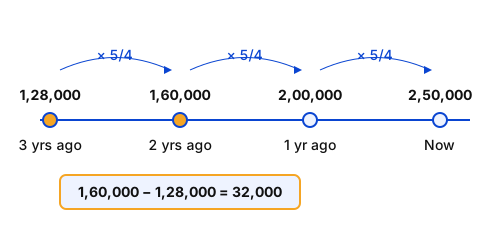
What will be the difference in population 3 years ago and 2 years ago of a town whose current population of 2,50,000 is increasing at a rate of 25% every year?
एक कस्बे की वर्तमान जनसंख्या 2,50,000 है, जो प्रति वर्ष 25% की दर से बढ़ रही है। 3 वर्ष पहले और 2 वर्ष पहले की जनसंख्या में अंतर कितना होगा?
  1. A31,450
  2. B31,250
  3. C32,350
  4. D32,000
Show answer

Concept: Going back one year at 25% growth means dividing by 54 (i.e. multiplying by 45).

  1. 1 year ago: 250000×45=200000
  2. 2 years ago: 200000×45=160000
  3. 3 years ago: 160000×45=128000
  4. Difference =160000−128000=32000

Trick: Difference between consecutive years =14 of the earlier year: 1280004=32000.

Answer: (D) 32,000

अवधारणा: 25% वृद्धि पर एक वर्ष पीछे जाने के लिए 45 से गुणा करते हैं।

  1. 1 वर्ष पहले: 250000×45=200000
  2. 2 वर्ष पहले: 200000×45=160000
  3. 3 वर्ष पहले: 160000×45=128000
  4. अंतर =160000−128000=32000

ट्रिक: लगातार दो वर्षों का अंतर = पहले वर्ष का 14: 1280004=32000।

उत्तर: (D) 32,000

RRB NTPC Graduate CBT 1MathematicsPopulation growthRRB NTPC Graduate CBT 1 2024 · 18 Jun Shift 2 →
Q1636.
Find the smallest number by which 6627 must be multiplied to make it a perfect square.
वह सबसे छोटी संख्या ज्ञात कीजिए जिससे 6627 को गुणा करने पर वह एक पूर्ण वर्ग बन जाए।
  1. A4
  2. B11
  3. C7
  4. D3
Show answer

Concept: A number is a perfect square when every prime factor appears an even number of times.

  1. 6627=3×2209
  2. 2209=472, so 6627=3×472
  3. Only 3 has an odd power, so multiply by 3: 6627×3=19881=1412

Trick: Digit sum of 6627 is 21 → divisible by 3; check the quotient 2209 for a square (472=2209).

Answer: (D) 3

अवधारणा: किसी संख्या के सभी अभाज्य गुणनखंडों की घात सम होने पर वह पूर्ण वर्ग होती है।

  1. 6627=3×2209
  2. 2209=472, अतः 6627=3×472
  3. केवल 3 की घात विषम है, इसलिए 3 से गुणा: 6627×3=19881=1412

ट्रिक: 6627 के अंकों का योग 21 → 3 से विभाज्य; भागफल 2209 वर्ग है (472)।

उत्तर: (D) 3

RRB NTPC Graduate CBT 1MathematicsPerfect squareRRB NTPC Graduate CBT 1 2024 · 18 Jun Shift 2 →
Q1637.
Two banks, A and B, offered loans at 3.5% and 6% per annum, respectively. Atul borrowed an amount of ₹5,00,000 from each bank. Find the positive difference between the amounts of simple interest paid to the two banks by Atul after 4 years.
दो बैंक, A और B, क्रमशः 3.5% और 6% वार्षिक दर पर ऋण देते हैं। अतुल ने प्रत्येक बैंक से ₹5,00,000 की राशि उधार ली। 4 वर्ष बाद अतुल द्वारा दोनों बैंकों को चुकाए गए साधारण ब्याज की राशियों के बीच धनात्मक अंतर ज्ञात कीजिए।
  1. A50,000
  2. B51,000
  3. C51,500
  4. D49,500
Show answer

Concept: SI=P×R×T100; for the same P and T, difference in SI depends only on the difference in rates.

  1. Rate difference =6%−3.5%=2.5%
  2. Difference =500000×2.5×4100
  3. =50000

Trick: 2.5%×4=10% of 5 lakh = ₹50,000.

Answer: (A) ₹50,000

अवधारणा: SI=P×R×T100; समान मूलधन व समय पर ब्याज का अंतर केवल दरों के अंतर पर निर्भर है।

  1. दरों का अंतर =6%−3.5%=2.5%
  2. अंतर =500000×2.5×4100
  3. =50000

ट्रिक: 2.5%×4=10%; 5 लाख का 10% = ₹50,000।

उत्तर: (A) ₹50,000

RRB NTPC Graduate CBT 1MathematicsSimple interestRRB NTPC Graduate CBT 1 2024 · 18 Jun Shift 2 →
Q1638.
Which of the following numbers is divisible by 64?
निम्नलिखित में से कौन-सी संख्या 64 से विभाज्य है?
  1. A5129
  2. B4797
  3. C5760
  4. D5327
Show answer

Concept: 64=26, so the number must be even and divisible by 64 exactly.

  1. 5129, 4797 and 5327 are odd → not divisible by 64.
  2. 5760÷64=90 exactly (64×90=5760).

Trick: Odd numbers can never be divisible by any power of 2 – eliminate them first.

Answer: (C) 5760

अवधारणा: 64=26, अतः संख्या सम और 64 से पूर्ण विभाज्य होनी चाहिए।

  1. 5129, 4797 और 5327 विषम हैं → 64 से विभाज्य नहीं।
  2. 5760÷64=90 (64×90=5760)।

ट्रिक: विषम संख्या 2 की किसी भी घात से विभाज्य नहीं होती – पहले उन्हें हटा दें।

उत्तर: (C) 5760

RRB NTPC Graduate CBT 1MathematicsDivisibilityRRB NTPC Graduate CBT 1 2024 · 18 Jun Shift 2 →
Q1639.
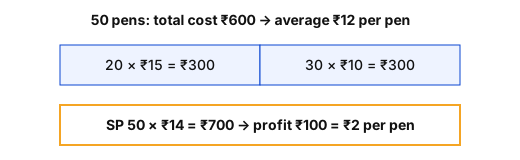
A shopkeeper buys 20 pens at ₹15 each and another 30 pens at ₹10 each. He mixes all the pens and sells them at ₹14 each. What is the profit or loss per pen he makes on an average?
एक दुकानदार ₹15 प्रति पेन की दर से 20 पेन और ₹10 प्रति पेन की दर से अन्य 30 पेन खरीदता है। वह सभी पेनों को मिलाकर ₹14 प्रति पेन की दर से बेचता है। उसे औसतन प्रति पेन कितना लाभ या हानि होती है?
  1. A₹0.50 loss₹0.50 हानि
  2. B₹1 profit₹1 लाभ
  3. C₹0.20 loss₹0.20 हानि
  4. D₹2 profit₹2 लाभ
Show answer

Concept: Average cost per pen =total costtotal pens; compare with the selling price.

  1. Total cost =20×15+30×10=300+300=600
  2. Average CP =60050=12
  3. Profit per pen =14−12=2

Trick: Equal money (₹300) spent on each lot → average CP = harmonic-type 60050; SP above CP → profit.

Answer: (D) ₹2 profit

अवधारणा: प्रति पेन औसत लागत =कुल लागतकुल पेन; इसकी तुलना विक्रय मूल्य से करें।

  1. कुल लागत =20×15+30×10=600
  2. औसत क्रय मूल्य =60050=12
  3. प्रति पेन लाभ =14−12=2

ट्रिक: दोनों लॉट पर बराबर ₹300 खर्च → औसत 60050; SP > CP → लाभ।

उत्तर: (D) ₹2 लाभ

RRB NTPC Graduate CBT 1MathematicsProfit and loss (mixture)RRB NTPC Graduate CBT 1 2024 · 18 Jun Shift 2 →
Q1640.
Which of the following is the greatest number that divides 104 and 133 and leaves 8 and 5 as respective remainders?
निम्नलिखित में से वह सबसे बड़ी संख्या कौन-सी है जिससे 104 और 133 को विभाजित करने पर क्रमशः 8 और 5 शेषफल प्राप्त होते हैं?
  1. A42
  2. B32
  3. C41
  4. D40
Show answer

Concept: Greatest number leaving remainders r1,r2 = HCF of (a−r1) and (b−r2).

  1. 104−8=96, 133−5=128
  2. 96=25×3, 128=27
  3. HCF =25=32 (greater than both remainders ✓)

Trick: Check options: 104÷32 leaves 8, 133÷32 leaves 5.

Answer: (B) 32

अवधारणा: शेषफल r1,r2 छोड़ने वाली सबसे बड़ी संख्या = (a−r1) और (b−r2) का HCF।

  1. 104−8=96, 133−5=128
  2. 96=25×3, 128=27
  3. HCF =25=32 (दोनों शेषफलों से बड़ा ✓)

ट्रिक: विकल्प जाँचें: 104÷32 शेष 8, 133÷32 शेष 5।

उत्तर: (B) 32

RRB NTPC Graduate CBT 1MathematicsHCF with remaindersRRB NTPC Graduate CBT 1 2024 · 18 Jun Shift 2 →