Question bank

Q&A: practice questions with answers

Search questions on any topic. Filter by exam category, exam, subject and topic, try the question, then open the answer and explanation.

Courses – airGurukul

7,077 questions found.

Q1661.
If the mode of the following data is 125, then what is the value of x?
Class110-115115-120120-125125-130130-135
Frequency133139x15
यदि निम्नलिखित आँकड़ों का बहुलक 125 है, तो x का मान क्या है?
वर्ग110-115115-120120-125125-130130-135
बारंबारता133139x15
  1. A48
  2. B40
  3. C31
  4. D39
Show answer

Concept: Mode=l+f1−f02f1−f0−f2×h.

  1. Mode 125 lies at the boundary; take modal class 120-125: l=120, f1=39, f0=31, f2=x, h=5.
  2. 125=120+39−3178−31−x×5⇒847−x×5=5.
  3. 47−x=8⇒x=39.

Trick: Mode = upper limit l+h needs f1−f0=2f1−f0−f2, i.e. f2=f1, so x=39.

Answer: (D) 39

अवधारणा: बहुलक=l+f1−f02f1−f0−f2×h।

  1. बहुलक 125 वर्ग सीमा पर है; बहुलक वर्ग 120-125: l=120, f1=39, f0=31, f2=x, h=5।
  2. 125=120+847−x×5।
  3. 47−x=8⇒x=39।

ट्रिक: बहुलक वर्ग की ऊपरी सीमा पर हो तो f1=f2, अतः x=39।

उत्तर: (D) 39

RRB NTPC Graduate CBT 1MathematicsStatistics – mode of grouped dataRRB NTPC Graduate CBT 1 2024 · 18 Jun Shift 2 →
Q1662.
Find the simplified value of [(17×3)×{7÷7×(18−142)}].
[(17×3)×{7÷7×(18−142)}] का सरलीकृत मान ज्ञात कीजिए।
  1. A102
  2. B441
  3. C561
  4. D321
Show answer

Concept: Solve innermost brackets first; ÷ and × are done left to right.

  1. 18−142=18−7=11.
  2. 7÷7×11=1×11=11.
  3. (17×3)×11=51×11=561.

Trick: 51×11: write 5, (5+1), 1 → 561.

Answer: (C) 561

अवधारणा: सबसे भीतरी कोष्ठक पहले; ÷ और × बाएँ से दाएँ।

  1. 18−142=11।
  2. 7÷7×11=11।
  3. (17×3)×11=51×11=561।

ट्रिक: 51×11: 5, (5+1), 1 → 561।

उत्तर: (C) 561

RRB NTPC Graduate CBT 1MathematicsSimplification – BODMASRRB NTPC Graduate CBT 1 2024 · 18 Jun Shift 2 →
Q1663.
The sum of the ages of Ramesh and Mahesh is (2x2−3x2y+y2+3xy2) years. Age of Ramesh is (x2+3x2y+y2+3xy2) years. Find the age of Mahesh.
रमेश और महेश की आयु का योग (2x2−3x2y+y2+3xy2) वर्ष है। रमेश की आयु (x2+3x2y+y2+3xy2) वर्ष है। महेश की आयु ज्ञात कीजिए।
  1. A(x2−6x2y) years(x2−6x2y) वर्ष
  2. B(x2−6xy) years(x2−6xy) वर्ष
  3. C(x2+6xy) years(x2+6xy) वर्ष
  4. D(x2+6x2y) years(x2+6x2y) वर्ष
Show answer

Concept: Mahesh's age = (sum of ages) − (Ramesh's age); subtract like terms.

  1. (2x2−3x2y+y2+3xy2)−(x2+3x2y+y2+3xy2).
  2. x2 terms: 2x2−x2=x2; x2y terms: −3x2y−3x2y=−6x2y.
  3. y2 and 3xy2 cancel. Result: (x2−6x2y) years.

Trick: Only the unlike-sign terms survive – look for x2y, which rules out options with xy.

Answer: (A) (x2−6x2y) years

अवधारणा: महेश की आयु = (आयु का योग) − (रमेश की आयु); समान पद घटाएँ।

  1. (2x2−3x2y+y2+3xy2)−(x2+3x2y+y2+3xy2)।
  2. x2 पद: x2; x2y पद: −3x2y−3x2y=−6x2y।
  3. y2 और 3xy2 कट जाते हैं। परिणाम: (x2−6x2y) वर्ष।

ट्रिक: उत्तर में x2y पद होगा, अतः xy वाले विकल्प हट जाते हैं।

उत्तर: (A) (x2−6x2y) वर्ष

RRB NTPC Graduate CBT 1MathematicsAlgebra – subtraction of expressionsRRB NTPC Graduate CBT 1 2024 · 18 Jun Shift 2 →
Q1664.
A person who spends 55% of his monthly income is able to save ₹6,408 per month. His monthly expenses (in ₹) are:
एक व्यक्ति जो अपनी मासिक आय का 55% खर्च करता है, प्रति माह ₹6,408 बचा पाता है। उसका मासिक व्यय (₹ में) है:
  1. A7,832
  2. B7,834
  3. C7,873
  4. D7,843
Show answer

Concept: Savings % =100%−Expenditure%.

  1. Savings =100%−55%=45% of income = ₹6,408.
  2. Income =64080.45= ₹14,240.
  3. Expenses =0.55×14240= ₹7,832.

Trick: Expenses =6408×5545=6408×119=712×11= ₹7,832.

Answer: (A) 7,832

अवधारणा: बचत%=100%−व्यय%।

  1. बचत =45% आय = ₹6,408।
  2. आय =64080.45= ₹14,240।
  3. व्यय =0.55×14240= ₹7,832।

ट्रिक: व्यय =6408×119=712×11= ₹7,832।

उत्तर: (A) 7,832

RRB NTPC Graduate CBT 1MathematicsPercentage – income and savingsRRB NTPC Graduate CBT 1 2024 · 18 Jun Shift 2 →
Q1665.
If 1 is added to each odd digit and 2 is subtracted from each even digit in the number 7125843, then what will the sum of the highest and lowest digits in the new number thus formed be?
यदि संख्या 7125843 में प्रत्येक विषम अंक में 1 जोड़ा जाए और प्रत्येक सम अंक में से 2 घटाया जाए, तो इस प्रकार बनी नई संख्या में सबसे बड़े और सबसे छोटे अंकों का योग क्या होगा?
  1. A6
  2. B7
  3. C9
  4. D8
Show answer

Concept: Apply the rule digit by digit: odd digit +1, even digit −2.

  1. 7125843 → 7→8, 1→2, 2→0, 5→6, 8→6, 4→2, 3→4
  2. New number: 8206624
  3. Highest digit 8, lowest digit 0; sum =8+0=8

Trick: Only the extreme digits matter – check which digit can become the largest (7 or 8 → 8) and the smallest (2 → 0).

Answer: (D) 8

अवधारणा: प्रत्येक अंक पर नियम लगाएँ: विषम अंक +1, सम अंक −2।

  1. 7125843 → 7→8, 1→2, 2→0, 5→6, 8→6, 4→2, 3→4
  2. नई संख्या: 8206624
  3. सबसे बड़ा अंक 8, सबसे छोटा 0; योग =8+0=8

ट्रिक: केवल सबसे बड़ा और सबसे छोटा अंक देखें – 7 या 8 → 8 तथा 2 → 0।

उत्तर: (D) 8

RRB NTPC Graduate CBT 1General Intelligence and ReasoningNumber operationsRRB NTPC Graduate CBT 1 2024 · 18 Jun Shift 2 →
Q1666.
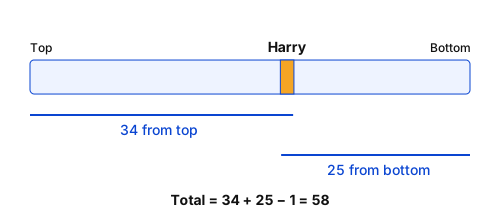
Harry ranked 34th from the top and 25th from the bottom in his class. How many students are there in his class?
हैरी अपनी कक्षा में ऊपर से 34वें और नीचे से 25वें स्थान पर है। उसकी कक्षा में कितने विद्यार्थी हैं?
  1. A56
  2. B59
  3. C58
  4. D57
Show answer

Concept: Total =rank from top+rank from bottom−1 (the person is counted twice).

  1. Total =34+25−1
  2. =58

Trick: Add both ranks and subtract 1.

Answer: (C) 58

अवधारणा: कुल =ऊपर से रैंक+नीचे से रैंक−1 (व्यक्ति दो बार गिना जाता है)।

  1. कुल =34+25−1
  2. =58

ट्रिक: दोनों रैंक जोड़कर 1 घटाएँ।

उत्तर: (C) 58

RRB NTPC Graduate CBT 1General Intelligence and ReasoningRankingRRB NTPC Graduate CBT 1 2024 · 18 Jun Shift 2 →
Q1667.
Refer to the following number and symbol series and answer the question that follows. Counting to be done from left to right only.
(NOTE: All numbers are single digit numbers only.)
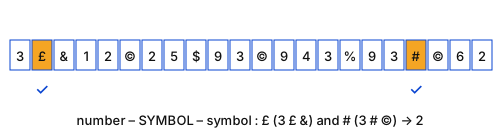
(Left) 3 £ & 1 2 © 2 5 $ 9 3 © 9 4 3 % 9 3 # © 6 2 (Right)
How many such symbols are there each of which is immediately preceded by a number and also immediately followed by a symbol?
निम्नलिखित संख्या और प्रतीक श्रृंखला का संदर्भ लीजिए और उसके बाद दिए गए प्रश्न का उत्तर दीजिए। गिनती केवल बाएँ से दाएँ की जानी है।
(नोट: सभी संख्याएँ केवल एक अंक वाली संख्याएँ हैं।)
(बाएँ) 3 £ & 1 2 © 2 5 $ 9 3 © 9 4 3 % 9 3 # © 6 2 (दाएँ)
ऐसे कितने प्रतीक हैं जिनमें से प्रत्येक के ठीक पहले एक संख्या है और ठीक बाद भी एक प्रतीक है?
  1. A2
  2. B4
  3. C3
  4. D1
Show answer

Concept: Look for the pattern: number – symbol – symbol.

  1. Symbols in the series: £, &, ©, $, ©, %, #, ©.
  2. £: preceded by 3, followed by & ✓
  3. #: preceded by 3, followed by © ✓
  4. Others are followed by a number (© 2, $ 9, © 9, % 9) or preceded by a symbol (&, last ©).

Trick: Scan only the symbols that are directly after a number, then check the next item.

Answer: (A) 2

अवधारणा: पैटर्न खोजें: संख्या – प्रतीक – प्रतीक।

  1. श्रृंखला के प्रतीक: £, &, ©, $, ©, %, #, ©।
  2. £: पहले 3, बाद में & ✓
  3. #: पहले 3, बाद में © ✓
  4. बाकी के बाद संख्या है (© 2, $ 9, © 9, % 9) या पहले प्रतीक है (&, अंतिम ©)।

ट्रिक: केवल संख्या के ठीक बाद वाले प्रतीक देखें, फिर उनका अगला पद जाँचें।

उत्तर: (A) 2

RRB NTPC Graduate CBT 1General Intelligence and ReasoningNumber-symbol seriesRRB NTPC Graduate CBT 1 2024 · 18 Jun Shift 2 →
Q1668.
What should come in place of the question mark (?) in the given series?
5 8 17 44 125 ?
दी गई श्रृंखला में प्रश्न चिह्न (?) के स्थान पर क्या आना चाहिए?
5 8 17 44 125 ?
  1. A370
  2. B360
  3. C358
  4. D368
Show answer

Concept: Check the differences between consecutive terms.

  1. Differences: 3,9,27,81 – powers of 3.
  2. Next difference =243
  3. 125+243=368

Trick: Also: each term =previous×3−7: 125×3−7=368.

Answer: (D) 368

अवधारणा: क्रमागत पदों का अंतर जाँचें।

  1. अंतर: 3,9,27,81 – 3 की घातें।
  2. अगला अंतर =243
  3. 125+243=368

ट्रिक: या: प्रत्येक पद =पिछला×3−7: 125×3−7=368।

उत्तर: (D) 368

RRB NTPC Graduate CBT 1General Intelligence and ReasoningNumber seriesRRB NTPC Graduate CBT 1 2024 · 18 Jun Shift 2 →
Q1669.
In a certain code language, ‘DISH’ is coded as ‘4268’ and ‘HUNT’ is coded as ‘3527’. What is the code for ‘H’ in the given code language?
एक निश्चित कूट भाषा में, ‘DISH’ को ‘4268’ के रूप में कूटबद्ध किया जाता है और ‘HUNT’ को ‘3527’ के रूप में कूटबद्ध किया जाता है। दी गई कूट भाषा में ‘H’ के लिए कूट क्या है?
  1. A2
  2. B7
  3. C6
  4. D3
Show answer

Concept: A letter common to two words takes the digit common to their two codes.

  1. DISH → 4268, HUNT → 3527
  2. Common letter: H; common digit: 2
  3. So H = 2

Trick: Match the common letter with the common number – no order needed.

Answer: (A) 2

अवधारणा: दो शब्दों में उभयनिष्ठ अक्षर को उनके कोड का उभयनिष्ठ अंक मिलता है।

  1. DISH → 4268, HUNT → 3527
  2. उभयनिष्ठ अक्षर: H; उभयनिष्ठ अंक: 2
  3. अतः H = 2

ट्रिक: उभयनिष्ठ अक्षर को उभयनिष्ठ अंक से मिलाएँ।

उत्तर: (A) 2

RRB NTPC Graduate CBT 1General Intelligence and ReasoningCoding-decodingRRB NTPC Graduate CBT 1 2024 · 18 Jun Shift 2 →
Q1670.
Which of the following letter-clusters should replace # and % so that the pattern and relationship followed between the letter-cluster pair on the left side of :: is the same as that on the right side of :: ?
# : WQM :: TNJ : %
निम्नलिखित में से कौन-से अक्षर-समूह # और % को प्रतिस्थापित करने चाहिए ताकि :: के बाईं ओर के अक्षर-समूह युग्म के बीच अनुसरित पैटर्न और संबंध, :: के दाईं ओर के अक्षर-समूह युग्म के समान हो?
# : WQM :: TNJ : %
  1. A# = ZTP, % = QKG
  2. B# = KUY, % = QKJ
  3. C# = MKP, % = QPI
  4. D# = JTP, % = MWR
Show answer

Concept: Find the rule from the right pair's pattern and test it on the left pair.

  1. Option A: ZTP → WQM: Z−3=W, T−3=Q, P−3=M
  2. Same rule: TNJ → T−3=Q, N−3=K, J−3=G → QKG
  3. Both # = ZTP and % = QKG fit.

Trick: Each letter moves back 3 places in both pairs.

Answer: (A) # = ZTP, % = QKG

अवधारणा: एक जोड़ी से नियम निकालें और दूसरी पर लागू करें।

  1. विकल्प A: ZTP → WQM: Z−3=W, T−3=Q, P−3=M
  2. वही नियम: TNJ → Q, K, G → QKG
  3. # = ZTP और % = QKG दोनों सही बैठते हैं।

ट्रिक: दोनों जोड़ियों में हर अक्षर 3 स्थान पीछे जाता है।

उत्तर: (A) # = ZTP, % = QKG

RRB NTPC Graduate CBT 1General Intelligence and ReasoningLetter analogyRRB NTPC Graduate CBT 1 2024 · 18 Jun Shift 2 →
Q1671.
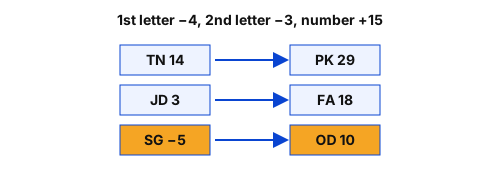
TN 14 is related to PK 29 in a certain way. In the same way, JD 3 is related to FA 18. To which of the given options is SG -5 related, following the same logic?
TN 14 एक निश्चित प्रकार से PK 29 से संबंधित है। उसी प्रकार, JD 3, FA 18 से संबंधित है। समान तर्क का अनुसरण करते हुए, SG -5 दिए गए विकल्पों में से किससे संबंधित है?
  1. AOC 8
  2. BOC 10
  3. COD 10
  4. DOD 8
Show answer

Concept: Use alphabet positions (A = 1 … Z = 26) and find the change for each part.

  1. TN 14 → PK 29: T(20)−4 = P(16), N(14)−3 = K(11), 14+15=29
  2. JD 3 → FA 18: J−4 = F, D−3 = A, 3+15=18 ✓
  3. SG −5: S(19)−4 = O, G(7)−3 = D, −5+15=10 → OD 10

Trick: Fix the rule from two pairs; option D (OD 8) is a trap for −5 handled wrongly.

Answer: (C) OD 10

अवधारणा: अक्षरों की स्थिति (A = 1 … Z = 26) लें और हर भाग का बदलाव देखें।

  1. TN 14 → PK 29: T(20)−4 = P(16), N(14)−3 = K(11), 14+15=29
  2. JD 3 → FA 18: J−4 = F, D−3 = A, 3+15=18 ✓
  3. SG −5: S(19)−4 = O, G(7)−3 = D, −5+15=10 → OD 10

ट्रिक: दो जोड़ियों से नियम पक्का करें; ऋणात्मक संख्या में +15 ध्यान से जोड़ें।

उत्तर: (C) OD 10

RRB NTPC Graduate CBT 1General Intelligence and ReasoningLetter-number analogyRRB NTPC Graduate CBT 1 2024 · 18 Jun Shift 2 →
Q1672.
In a certain code language,
'A + B' means ‘A is the mother of B’
'A – B' means ‘A is the brother of B’
'A x B' means ‘A is the wife of B’
'A ÷ B' means ‘A is the father of B’
Based on the above, how is Q related to T if ‘P x Q – R + S ÷ T’?
एक निश्चित कूट भाषा में,
'A + B' का अर्थ है ‘A, B की माता है’
'A – B' का अर्थ है ‘A, B का भाई है’
'A x B' का अर्थ है ‘A, B की पत्नी है’
'A ÷ B' का अर्थ है ‘A, B का पिता है’
उपर्युक्त के आधार पर, यदि ‘P x Q – R + S ÷ T’ है, तो Q, T से किस प्रकार संबंधित है?
  1. AFather's brother's sonपिता के भाई का पुत्र
  2. BMother's mother's brotherमाता की माता का भाई
  3. CFather's mother's brotherपिता की माता का भाई
  4. DSister's husband's fatherबहन के पति का पिता
Show answer

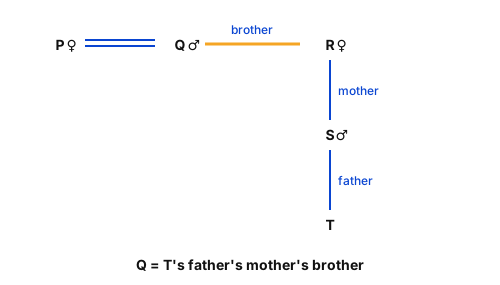
Concept: Decode each symbol and build the family tree.

  1. P × Q: P is the wife of Q.
  2. Q – R: Q is the brother of R.
  3. R + S: R is the mother of S; S ÷ T: S is the father of T.
  4. R is T's father's mother, and Q is R's brother.

Trick: Read the chain backwards from T: father → mother → brother.

Answer: (C) Father's mother's brother

अवधारणा: हर प्रतीक का अर्थ निकालें और वंश-वृक्ष बनाएँ।

  1. P × Q: P, Q की पत्नी है।
  2. Q – R: Q, R का भाई है।
  3. R + S: R, S की माँ है; S ÷ T: S, T का पिता है।
  4. R, T के पिता की माँ है और Q, R का भाई है।

ट्रिक: T से पीछे की ओर पढ़ें: पिता → माँ → भाई।

उत्तर: (C) पिता की माँ का भाई

RRB NTPC Graduate CBT 1General Intelligence and ReasoningBlood relations (coded)RRB NTPC Graduate CBT 1 2024 · 18 Jun Shift 2 →
Q1673.
Which of the following letter-number clusters will replace the question mark (?) in the given series to make it logically complete?
EJM 13, FKN 15, GLO 17, HMP 19, ?
दी गई श्रृंखला को तार्किक रूप से पूर्ण करने के लिए निम्नलिखित में से कौन-सा अक्षर-संख्या समूह प्रश्न चिह्न (?) को प्रतिस्थापित करेगा?
EJM 13, FKN 15, GLO 17, HMP 19, ?
  1. AJNP 22
  2. BINQ 21
  3. CJRN 22
  4. DIOP 21
Show answer

Concept: Each letter position and the number follow their own steady pattern.

  1. 1st letters: E, F, G, H → I (+1)
  2. 2nd letters: J, K, L, M → N; 3rd: M, N, O, P → Q
  3. Numbers: 13, 15, 17, 19 → 21 (+2)

Trick: All three letters move +1; number moves +2 → INQ 21.

Answer: (B) INQ 21

अवधारणा: हर अक्षर-स्थान और संख्या का अपना स्थिर पैटर्न है।

  1. पहले अक्षर: E, F, G, H → I (+1)
  2. दूसरे: J, K, L, M → N; तीसरे: M, N, O, P → Q
  3. संख्याएँ: 13, 15, 17, 19 → 21 (+2)

ट्रिक: तीनों अक्षर +1, संख्या +2 → INQ 21।

उत्तर: (B) INQ 21

RRB NTPC Graduate CBT 1General Intelligence and ReasoningAlphanumeric seriesRRB NTPC Graduate CBT 1 2024 · 18 Jun Shift 2 →
Q1674.
Based on the English alphabetical order, three of the following four letter-cluster pairs are alike in a certain way and thus form a group. Which letter-cluster pair DOES NOT belong to that group?
(Note: The odd one out is not based on the number of consonants/vowels or their position in the letter-cluster.)
अंग्रेज़ी वर्णमाला क्रम के आधार पर, निम्नलिखित चार अक्षर-समूह युग्मों में से तीन किसी निश्चित प्रकार से एकसमान हैं और इस प्रकार एक समूह बनाते हैं। कौन-सा अक्षर-समूह युग्म उस समूह से संबंधित नहीं है?
(नोट: असंगत अक्षर-समूह, उस अक्षर-समूह में व्यंजनों/स्वरों की संख्या या उनके स्थान पर आधारित नहीं है।)
  1. ATL – BV
  2. BPH – XR
  3. CGY – OJ
  4. DZR – HB
Show answer

Concept: Compare each letter of the first cluster with the matching letter of the second (positions, cyclic after Z).

  1. TL – BV: T+8 = B, L+10 = V
  2. PH – XR: P+8 = X, H+10 = R
  3. ZR – HB: Z+8 = H, R+10 = B
  4. GY – OJ: G+8 = O, but Y+10 = I, not J ✗

Trick: Rule +8, +10 fails only in GY – OJ.

Answer: (C) GY – OJ

अवधारणा: पहले समूह के प्रत्येक अक्षर की तुलना दूसरे समूह के संगत अक्षर से करें (Z के बाद फिर A)।

  1. TL – BV: T+8 = B, L+10 = V
  2. PH – XR: P+8 = X, H+10 = R
  3. ZR – HB: Z+8 = H, R+10 = B
  4. GY – OJ: G+8 = O, पर Y+10 = I, J नहीं ✗

ट्रिक: नियम +8, +10 केवल GY – OJ में टूटता है।

उत्तर: (C) GY – OJ

RRB NTPC Graduate CBT 1General Intelligence and ReasoningOdd one out – lettersRRB NTPC Graduate CBT 1 2024 · 18 Jun Shift 2 →
Q1675.
What will come in the place of the question mark (?) in the following equation, if ‘+’ and ‘−’ are interchanged and ‘×’ and ‘÷’ are interchanged?
122 ÷ 4 + 65 × 5 − 41 = ?
यदि ‘+’ और ‘−’ को आपस में बदल दिया जाए तथा ‘×’ और ‘÷’ को आपस में बदल दिया जाए, तो निम्नलिखित समीकरण में प्रश्न चिह्न (?) के स्थान पर क्या आएगा?
122 ÷ 4 + 65 × 5 − 41 = ?
  1. A516
  2. B518
  3. C512
  4. D522
Show answer

Concept: Interchange the signs first, then apply BODMAS.

  1. After swapping: 122×4−65÷5+41
  2. =488−13+41
  3. =516

Trick: Rewrite the whole expression with new signs before calculating.

Answer: (A) 516

अवधारणा: पहले चिह्न बदलें, फिर BODMAS लगाएँ।

  1. बदलने के बाद: 122×4−65÷5+41
  2. =488−13+41
  3. =516

ट्रिक: गणना से पहले पूरा व्यंजक नए चिह्नों के साथ लिख लें।

उत्तर: (A) 516

RRB NTPC Graduate CBT 1General Intelligence and ReasoningMathematical operationsRRB NTPC Graduate CBT 1 2024 · 18 Jun Shift 2 →
Q1676.
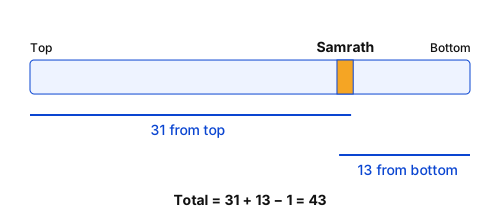
Samrath ranked 31st from the top and 13th from the bottom in his class. How many students are there in his class?
समरथ अपनी कक्षा में ऊपर से 31वें और नीचे से 13वें स्थान पर है। उसकी कक्षा में कितने विद्यार्थी हैं?
  1. A44
  2. B42
  3. C41
  4. D43
Show answer

Concept: Total =rank from top+rank from bottom−1.

  1. Total =31+13−1
  2. =43

Trick: Samrath is counted in both ranks, so subtract 1 once.

Answer: (D) 43

अवधारणा: कुल =ऊपर से रैंक+नीचे से रैंक−1।

  1. कुल =31+13−1
  2. =43

ट्रिक: समर्थ दोनों रैंक में गिना गया है, इसलिए 1 घटाएँ।

उत्तर: (D) 43

RRB NTPC Graduate CBT 1General Intelligence and ReasoningRankingRRB NTPC Graduate CBT 1 2024 · 18 Jun Shift 2 →
Q1677.
This question is based on the five, three-digit numbers given below.
(Left) 107 788 634 346 488 (Right)
(Example- 697 – First digit = 6, second digit = 9 and third digit = 7)
(NOTE: All operations to be done from left to right.)
What will be the resultant if the first digit of the highest number is added to the third digit of the lowest number?
यह प्रश्न नीचे दी गई पाँच, तीन-अंकीय संख्याओं पर आधारित है।
(बाएँ) 107 788 634 346 488 (दाएँ)
(उदाहरण- 697 – पहला अंक = 6, दूसरा अंक = 9 और तीसरा अंक = 7)
(नोट: सभी संक्रियाएँ बाएँ से दाएँ की जानी हैं।)
यदि सबसे बड़ी संख्या के पहले अंक को सबसे छोटी संख्या के तीसरे अंक में जोड़ा जाए, तो परिणाम क्या होगा?
  1. A13
  2. B14
  3. C17
  4. D15
Show answer

Concept: Pick the required numbers first, then read the asked digits.

  1. Numbers: 107, 788, 634, 346, 488.
  2. Highest = 788 → first digit = 7.
  3. Lowest = 107 → third digit = 7.
  4. Sum =7+7=14.

Trick: Compare hundreds digits first: 7 is the largest (788), 1 is the smallest (107).

Answer: (B) 14

अवधारणा: पहले आवश्यक संख्याएँ चुनें, फिर पूछे गए अंक पढ़ें।

  1. संख्याएँ: 107, 788, 634, 346, 488।
  2. सबसे बड़ी = 788 → पहला अंक = 7।
  3. सबसे छोटी = 107 → तीसरा अंक = 7।
  4. योग =7+7=14।

ट्रिक: सैकड़े के अंक से तुलना करें: 7 सबसे बड़ा (788), 1 सबसे छोटा (107)।

उत्तर: (B) 14

RRB NTPC Graduate CBT 1General Intelligence and ReasoningNumber analysis – digitsRRB NTPC Graduate CBT 1 2024 · 18 Jun Shift 2 →
Q1678.
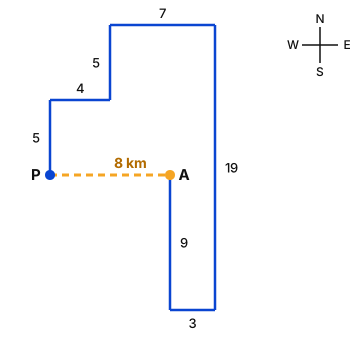
Mr. Alex starts from Point A and drives 9 km towards the South. He then takes a left turn, drives 3 km, turns left and drives 19 km. He then takes a left turn and drives 7 km, turns left drives 5 km. He then takes a right turn and drives 4 km. He takes a final left turn, drives 5 km and stops at Point P. How far (shortest distance) and towards which direction should he drive in order to reach Point A again? (All turns are 90 degrees turns only unless specified)
श्री एलेक्स बिंदु A से चलना शुरू करते हैं और दक्षिण की ओर 9 km गाड़ी चलाते हैं। फिर वह बाएँ मुड़ते हैं, 3 km गाड़ी चलाते हैं, बाएँ मुड़ते हैं और 19 km गाड़ी चलाते हैं। फिर वह बाएँ मुड़ते हैं और 7 km गाड़ी चलाते हैं, बाएँ मुड़कर 5 km गाड़ी चलाते हैं। फिर वह दाएँ मुड़ते हैं और 4 km गाड़ी चलाते हैं। वह अंतिम बार बाएँ मुड़ते हैं, 5 km गाड़ी चलाते हैं और बिंदु P पर रुक जाते हैं। फिर से बिंदु A पर पहुँचने के लिए उन्हें कितनी दूरी (न्यूनतम दूरी) और किस दिशा में गाड़ी चलानी चाहिए? (जब तक निर्दिष्ट न हो, सभी मोड़ केवल 90 डिग्री के हैं)
  1. A8 km to the Eastपूर्व की ओर 8 km
  2. B6 km to the Westपश्चिम की ओर 6 km
  3. C10 km to the Eastपूर्व की ओर 10 km
  4. D4 km to the Westपश्चिम की ओर 4 km
Show answer

Concept: Track the position with coordinates (East +x, North +y), starting at A(0, 0).

  1. 9 km South → (0, −9); left (East) 3 → (3, −9); left (North) 19 → (3, 10).
  2. Left (West) 7 → (−4, 10); left (South) 5 → (−4, 5).
  3. Right (West) 4 → (−8, 5); left (South) 5 → P(−8, 0).
  4. P is on the same line as A, 8 km to its West, so he must drive 8 km East.

Trick: Net N–S: −9+19−5−5=0; net E–W: 3−7−4=−8 → 8 km West of A.

Answer: (A) 8 km to the East

अवधारणा: A(0, 0) से निर्देशांक (पूर्व +x, उत्तर +y) लेकर स्थिति ट्रैक करें।

  1. दक्षिण 9 km → (0, −9); बाएँ (पूर्व) 3 → (3, −9); बाएँ (उत्तर) 19 → (3, 10)।
  2. बाएँ (पश्चिम) 7 → (−4, 10); बाएँ (दक्षिण) 5 → (−4, 5)।
  3. दाएँ (पश्चिम) 4 → (−8, 5); बाएँ (दक्षिण) 5 → P(−8, 0)।
  4. P, A से 8 km पश्चिम में उसी रेखा पर है, अतः 8 km पूर्व जाना होगा।

ट्रिक: उत्तर–दक्षिण कुल: −9+19−5−5=0; पूर्व–पश्चिम: 3−7−4=−8।

उत्तर: (A) 8 km पूर्व की ओर

RRB NTPC Graduate CBT 1General Intelligence and ReasoningDirection and distanceRRB NTPC Graduate CBT 1 2024 · 18 Jun Shift 2 →
Q1679.
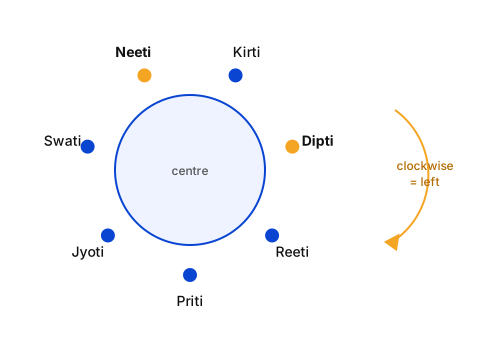
Dipti, Priti, Neeti, Reeti, Swati, Kirti and Jyoti are sitting around a circular table, facing the centre. Dipti sits second to the right of Priti. Jyoti sits to the immediate left of Priti. Swati is an immediate neighbour of both Jyoti and Neeti. Reeti is an immediate neighbour of Priti. Who sits second to the left of Neeti?
दीप्ति, प्रीति, नीति, रीति, स्वाति, कीर्ति और ज्योति एक वृत्ताकार मेज़ के चारों ओर केंद्र की ओर मुख करके बैठी हैं। दीप्ति, प्रीति के दाईं ओर दूसरे स्थान पर बैठी है। ज्योति, प्रीति के ठीक बाईं ओर बैठी है। स्वाति, ज्योति और नीति दोनों की निकटतम पड़ोसी है। रीति, प्रीति की निकटतम पड़ोसी है। नीति के बाईं ओर दूसरे स्थान पर कौन बैठी है?
  1. AReetiरीति
  2. BJyotiज्योति
  3. CPritiप्रीति
  4. DDiptiदीप्ति
Show answer

Concept: Facing the centre, a person's left is the clockwise direction and right is anticlockwise.

  1. Fix Priti. Jyoti is immediate left of Priti; Reeti is the other neighbour (immediate right).
  2. Dipti is second to the right of Priti → next to Reeti.
  3. Swati neighbours Jyoti and Neeti → order to the left of Priti: Jyoti, Swati, Neeti; Kirti fills the last seat (between Neeti and Dipti).
  4. Going left from Neeti: Kirti, then Dipti → Dipti is second to the left of Neeti.

Trick: In a 7-seat circle, "second to the left of Neeti" = "fifth to the right of Neeti" – check either way.

Answer: (D) Dipti

अवधारणा: केंद्र की ओर मुख होने पर व्यक्ति का बायाँ = दक्षिणावर्त (clockwise) और दायाँ = वामावर्त।

  1. प्रीति को स्थिर करें। ज्योति प्रीति के ठीक बाएँ; रीति दूसरी पड़ोसी (ठीक दाएँ)।
  2. दीप्ति प्रीति के दाएँ दूसरे स्थान पर → रीति के बगल में।
  3. स्वाति, ज्योति और नीति दोनों की पड़ोसी → प्रीति के बाएँ क्रम: ज्योति, स्वाति, नीति; बची सीट पर कीर्ति (नीति व दीप्ति के बीच)।
  4. नीति से बाएँ: कीर्ति, फिर दीप्ति → दीप्ति नीति के बाएँ दूसरे स्थान पर।

ट्रिक: 7 सीटों में "बाएँ दूसरा" = "दाएँ पाँचवाँ" – दोनों तरह जाँचें।

उत्तर: (D) दीप्ति

RRB NTPC Graduate CBT 1General Intelligence and ReasoningCircular seating arrangementRRB NTPC Graduate CBT 1 2024 · 18 Jun Shift 2 →
Q1680.
In a certain code language, ‘DEAF’ is coded as ‘6458’ and ‘FLIP’ is coded as ‘4723’. What is the code for ‘F’ in the given code language?
एक निश्चित कूट भाषा में, ‘DEAF’ को ‘6458’ के रूप में कूटबद्ध किया जाता है और ‘FLIP’ को ‘4723’ के रूप में कूटबद्ध किया जाता है। दी गई कूट भाषा में ‘F’ के लिए कूट क्या है?
  1. A2
  2. B7
  3. C8
  4. D4
Show answer

Concept: A letter common to two words takes the digit common to both codes.

  1. DEAF → {6, 4, 5, 8}; FLIP → {4, 7, 2, 3}.
  2. Only common letter: F. Only common digit: 4.
  3. So F = 4.

Trick: Intersect letter sets and digit sets – one common each means they match directly.

Answer: (D) 4

अवधारणा: दो शब्दों में उभयनिष्ठ अक्षर का कोड दोनों कोडों में उभयनिष्ठ अंक होता है।

  1. DEAF → {6, 4, 5, 8}; FLIP → {4, 7, 2, 3}।
  2. उभयनिष्ठ अक्षर केवल F, उभयनिष्ठ अंक केवल 4।
  3. अतः F = 4।

ट्रिक: अक्षरों और अंकों के समुच्चयों का प्रतिच्छेद लें – एक-एक उभयनिष्ठ हो तो वही जोड़ी।

उत्तर: (D) 4

RRB NTPC Graduate CBT 1General Intelligence and ReasoningCoding–decoding (common letters)RRB NTPC Graduate CBT 1 2024 · 18 Jun Shift 2 →