Question bank

Q&A: practice questions with answers

Search questions on any topic. Filter by exam category, exam, subject and topic, try the question, then open the answer and explanation.

Courses – airGurukul

7,077 questions found.

Q1721.
The President's power to seek the Supreme Court's opinion on questions of law comes under ___________.
विधि के प्रश्नों पर सर्वोच्च न्यायालय की राय लेने की राष्ट्रपति की शक्ति ___________ के अंतर्गत आती है।
  1. AArticle 226अनुच्छेद 226
  2. BArticle 143अनुच्छेद 143
  3. CArticle 131अनुच्छेद 131
  4. DArticle 136अनुच्छेद 136
Show answer

Concept: Article 143 gives the Supreme Court advisory jurisdiction.

  1. Under Article 143 the President may refer any question of law or fact of public importance to the Supreme Court for its opinion.
  2. The opinion is not binding on the President.
  3. Art. 131 = original jurisdiction; Art. 136 = special leave petition; Art. 226 = High Court writs.

Yaad rakhein: 143 = advice (Advisory); 131 = Centre–State disputes; 136 = SLP.

Answer: (B) Article 143

अवधारणा: अनुच्छेद 143 सर्वोच्च न्यायालय को सलाहकारी (advisory) क्षेत्राधिकार देता है।

  1. अनुच्छेद 143 के तहत राष्ट्रपति सार्वजनिक महत्व के किसी विधि या तथ्य प्रश्न पर सर्वोच्च न्यायालय की राय माँग सकते हैं।
  2. यह राय राष्ट्रपति पर बाध्यकारी नहीं है।
  3. अनु. 131 = मूल क्षेत्राधिकार; अनु. 136 = विशेष अनुमति याचिका; अनु. 226 = उच्च न्यायालय की रिट।

याद रखें: 143 = सलाह; 131 = केंद्र–राज्य विवाद; 136 = SLP।

उत्तर: (B) अनुच्छेद 143
RRB NTPC Graduate CBT 1General AwarenessPolity – Supreme Court jurisdictionRRB NTPC Graduate CBT 1 2024 · 18 Jun Shift 1 →
Q1722.
After the revolt of which year did the British implement measures that reduced the proportion of Indian soldiers in the army and increased the number of European soldiers?
किस वर्ष के विद्रोह के बाद अंग्रेज़ों ने ऐसे उपाय लागू किए जिनसे सेना में भारतीय सैनिकों का अनुपात कम हुआ और यूरोपीय सैनिकों की संख्या बढ़ी?
  1. A1857
  2. B1806
  3. C1874
  4. D1841
Show answer

Concept: After the Revolt of 1857 the British reorganised the army (Peel Commission, 1858–59).

  1. The proportion of European soldiers was increased and Indian soldiers reduced (roughly 1 European : 2 Indians in Bengal army).
  2. Key posts like artillery were kept with Europeans; recruitment shifted to "martial races".

Yaad rakhein: 1857 → Peel Commission → more Europeans, fewer Indians, "divide and rule" in the army.

Answer: (A) 1857

अवधारणा: 1857 के विद्रोह के बाद अंग्रेज़ों ने सेना का पुनर्गठन किया (पील आयोग, 1858–59)।

  1. यूरोपीय सैनिकों का अनुपात बढ़ाया गया और भारतीय सैनिक कम किए गए (बंगाल सेना में लगभग 1 यूरोपीय : 2 भारतीय)।
  2. तोपखाना जैसे प्रमुख पद यूरोपीयों के पास रखे गए; भर्ती "मार्शल रेस" से होने लगी।

याद रखें: 1857 → पील आयोग → अधिक यूरोपीय, कम भारतीय सैनिक।

उत्तर: (A) 1857

RRB NTPC Graduate CBT 1General AwarenessModern India – Revolt of 1857RRB NTPC Graduate CBT 1 2024 · 18 Jun Shift 1 →
Q1723.
Which Fundamental Right was subjected to additional restrictions by the First Amendment Act of 1951?
1951 के प्रथम संशोधन अधिनियम द्वारा किस मौलिक अधिकार पर अतिरिक्त प्रतिबंध लगाए गए थे?
  1. ARight to Freedom of Speech and Expressionवाक् एवं अभिव्यक्ति की स्वतंत्रता का अधिकार
  2. BRight to Constitutional Remediesसंवैधानिक उपचारों का अधिकार
  3. CRight to Equalityसमानता का अधिकार
  4. DRight to Freedom of Religionधर्म की स्वतंत्रता का अधिकार
Show answer

Concept: The First Constitutional Amendment Act, 1951 widened the grounds of reasonable restrictions on free speech.

  1. It added "public order", "friendly relations with foreign States" and "incitement to an offence" to Article 19(2).
  2. It also added Article 31A, 31B and the Ninth Schedule (land reforms).

Yaad rakhein: 1st Amendment → Art. 19(2) restrictions + Ninth Schedule.

Answer: (A) Right to Freedom of Speech and Expression

अवधारणा: प्रथम संविधान संशोधन अधिनियम, 1951 ने वाक्-स्वतंत्रता पर युक्तियुक्त प्रतिबंधों के आधार बढ़ाए।

  1. अनुच्छेद 19(2) में "लोक व्यवस्था", "विदेशी राज्यों से मैत्रीपूर्ण संबंध" और "अपराध के लिए उकसाना" जोड़े गए।
  2. अनुच्छेद 31A, 31B और नौवीं अनुसूची (भूमि सुधार) भी जोड़ी गईं।

याद रखें: पहला संशोधन → अनु. 19(2) प्रतिबंध + नौवीं अनुसूची।

उत्तर: (A) वाक् एवं अभिव्यक्ति की स्वतंत्रता का अधिकार

RRB NTPC Graduate CBT 1General AwarenessPolity – First Amendment 1951RRB NTPC Graduate CBT 1 2024 · 18 Jun Shift 1 →
Q1724.
Overall, the Panchayati Raj system in India is designed to promote:
कुल मिलाकर, भारत में पंचायती राज व्यवस्था को निम्नलिखित को बढ़ावा देने के लिए बनाया गया है:
  1. Aeconomic austerity across the country for people's bettermentलोगों की बेहतरी के लिए पूरे देश में आर्थिक मितव्ययिता
  2. Bdemocratic governance and empowerment at the grassroots levelज़मीनी स्तर पर लोकतांत्रिक शासन और सशक्तीकरण
  3. Cinternational funding for local projects, ensuring adequate developmentपर्याप्त विकास सुनिश्चित करते हुए स्थानीय परियोजनाओं के लिए अंतर्राष्ट्रीय वित्तपोषण
  4. Dcentral control over local areas across the countryपूरे देश में स्थानीय क्षेत्रों पर केंद्रीय नियंत्रण
Show answer

Concept: Panchayati Raj (73rd Amendment, 1992) is a system of rural local self-government.

  1. It decentralises power to village, block and district levels.
  2. It lets local people plan and decide for themselves – democratic decentralisation at the grassroots.
  3. It reduces, not increases, central control.

Yaad rakhein: Panchayati Raj = "democracy at the grassroots" (Balwant Rai Mehta committee, 1957).

Answer: (B) democratic governance and empowerment at the grassroots level

अवधारणा: पंचायती राज (73वाँ संशोधन, 1992) ग्रामीण स्थानीय स्वशासन की व्यवस्था है।

  1. यह शक्ति को ग्राम, ब्लॉक और ज़िला स्तर तक विकेंद्रित करता है।
  2. स्थानीय लोग स्वयं योजना बनाकर निर्णय लेते हैं – ज़मीनी स्तर पर लोकतांत्रिक विकेंद्रीकरण।
  3. यह केंद्रीय नियंत्रण घटाता है, बढ़ाता नहीं।

याद रखें: पंचायती राज = "ज़मीनी लोकतंत्र" (बलवंत राय मेहता समिति, 1957)।

उत्तर: (B) ज़मीनी स्तर पर लोकतांत्रिक शासन और सशक्तिकरण

RRB NTPC Graduate CBT 1General AwarenessPolity – Panchayati RajRRB NTPC Graduate CBT 1 2024 · 18 Jun Shift 1 →
Q1725.
In January 2025, which woman cricketer received the Polly Umrigar Award from the BCCI?
जनवरी 2025 में, किस महिला क्रिकेटर को BCCI से पॉली उमरीगर पुरस्कार प्राप्त हुआ?
  1. AJemimah Rodriguesजेमिमा रोड्रिग्स
  2. BDeepti Sharmaदीप्ति शर्मा
  3. CSmriti Mandhanaस्मृति मंधाना
  4. DShefali Vermaशेफाली वर्मा
Show answer

Concept: The BCCI's Polly Umrigar Award goes to the best international cricketer of the season.

  1. At the BCCI Naman Awards announced in early 2025 (for 2023-24), Smriti Mandhana won the Polly Umrigar Award for Best International Cricketer (Women).
  2. Jasprit Bumrah won the men's award; Sachin Tendulkar received the C.K. Nayudu Lifetime Achievement Award.

Yaad rakhein: Mandhana – best women's international cricketer (Polly Umrigar), Bumrah – men's.

Answer: (C) Smriti Mandhana

अवधारणा: BCCI का पॉली उमरीगर पुरस्कार सत्र के सर्वश्रेष्ठ अंतरराष्ट्रीय क्रिकेटर को दिया जाता है।

  1. 2025 की शुरुआत में घोषित BCCI नमन पुरस्कारों (2023-24) में स्मृति मंधाना को सर्वश्रेष्ठ अंतरराष्ट्रीय क्रिकेटर (महिला) का पॉली उमरीगर पुरस्कार मिला।
  2. पुरुष वर्ग में जसप्रीत बुमराह; सचिन तेंदुलकर को सी.के. नायडू लाइफटाइम अचीवमेंट पुरस्कार मिला।

याद रखें: मंधाना – महिला (पॉली उमरीगर), बुमराह – पुरुष।

उत्तर: (C) स्मृति मंधाना

RRB NTPC Graduate CBT 1General AwarenessSports – BCCI AwardsRRB NTPC Graduate CBT 1 2024 · 18 Jun Shift 1 →
Q1726.
By the 1970s, Public Sector Units (PSUs) had become dominant in the Indian industry. What criticism did they frequently face?
1970 के दशक तक, सार्वजनिक क्षेत्र के उपक्रम (PSUs) भारतीय उद्योग में प्रभावी हो गए थे। उन्हें प्रायः किस आलोचना का सामना करना पड़ता था?
  1. AOver-reliance on export markets for revenueराजस्व के लिए निर्यात बाज़ारों पर अत्यधिक निर्भरता
  2. BExcessive foreign ownership and capital outflowअत्यधिक विदेशी स्वामित्व और पूँजी का बहिर्वाह
  3. CHigh competition from private multinational corporationsनिजी बहुराष्ट्रीय निगमों से उच्च प्रतिस्पर्धा
  4. DOperational inefficiencies, low productivity, and financial lossesपरिचालन अक्षमताएँ, निम्न उत्पादकता और वित्तीय घाटा
Show answer

Concept: Under the Nehru–Mahalanobis model, PSUs got the "commanding heights" of the economy, with protection from competition.

  1. By the 1970s many PSUs were criticised for inefficiency, over-staffing, low productivity and continuing losses.
  2. Being protected and state-owned, they did not face strong MNC competition or rely on exports – so A, B, C are wrong.
  3. This criticism led to the 1991 reforms (disinvestment).

Yaad rakhein: Protection + no competition → inefficiency and losses → 1991 LPG reforms.

Answer: (D) Operational inefficiencies, low productivity, and financial losses

अवधारणा: नेहरू–महालनोबिस मॉडल में सार्वजनिक उपक्रमों (PSUs) को अर्थव्यवस्था की "प्रमुख ऊँचाइयाँ" और प्रतिस्पर्धा से सुरक्षा मिली।

  1. 1970 के दशक तक अनेक PSUs की अक्षमता, अधिक कर्मचारी, कम उत्पादकता और लगातार घाटे के लिए आलोचना होने लगी।
  2. संरक्षित होने के कारण उन्हें MNC प्रतिस्पर्धा या निर्यात-निर्भरता की समस्या नहीं थी – A, B, C गलत।
  3. इसी आलोचना से 1991 के सुधार (विनिवेश) आए।

याद रखें: संरक्षण + प्रतिस्पर्धा नहीं → अक्षमता और घाटा → 1991 LPG सुधार।

उत्तर: (D) परिचालन अक्षमता, कम उत्पादकता और वित्तीय घाटा

RRB NTPC Graduate CBT 1General AwarenessEconomy – Public Sector UnitsRRB NTPC Graduate CBT 1 2024 · 18 Jun Shift 1 →
Q1727.
How many poems are included in Behramji Merwanji Malabari’s 'The Indian Muse in English Garb'?
बहरामजी मेरवानजी मालाबारी की 'The Indian Muse in English Garb' में कितनी कविताएँ शामिल हैं?
  1. A25
  2. B40
  3. C32
  4. D20
Show answer

Concept: Behramji Malabari (1853–1912) was a Parsi poet, journalist and social reformer.

  1. His collection "The Indian Muse in English Garb" (1877) contains 32 poems in English.
  2. He is better known for campaigning for the Age of Consent Act, 1891 and against child marriage.

Yaad rakhein: Malabari – "Indian Muse in English Garb" (1877, 32 poems) + Age of Consent Act 1891.

Answer: (C) 32

अवधारणा: बेहरामजी मालाबारी (1853–1912) पारसी कवि, पत्रकार और समाज सुधारक थे।

  1. उनके संग्रह "The Indian Muse in English Garb" (1877) में 32 अंग्रेज़ी कविताएँ हैं।
  2. वे बाल विवाह के विरोध और सहमति आयु अधिनियम (Age of Consent Act), 1891 के अभियान के लिए अधिक प्रसिद्ध हैं।

याद रखें: मालाबारी – "Indian Muse in English Garb" (1877, 32 कविताएँ) + सहमति आयु अधिनियम 1891।

उत्तर: (C) 32

RRB NTPC Graduate CBT 1General AwarenessLiterature – Indian writers in EnglishRRB NTPC Graduate CBT 1 2024 · 18 Jun Shift 1 →
Q1728.
Which uprising in Uttar Pradesh, led by Mufti Muhammad Aiwaz, was among the most significant revolts against British rule in India prior to the First War of Independence in 1857?
मुफ़्ती मुहम्मद ऐवाज़ के नेतृत्व में उत्तर प्रदेश का कौन-सा विद्रोह 1857 के प्रथम स्वतंत्रता संग्राम से पहले भारत में ब्रिटिश शासन के विरुद्ध सबसे महत्वपूर्ण विद्रोहों में से एक था?
  1. ABareilly Uprisingsबरेली विद्रोह
  2. BSanthal Rebellionसंथाल विद्रोह
  3. CChuar Rebellionचुआर विद्रोह
  4. DKol Uprisingsकोल विद्रोह
Show answer

Concept: The Bareilly uprising of 1816 in Rohilkhand (U.P.) was led by Mufti Muhammad Aiwaz.

  1. It began against a new police (chaukidari) tax imposed by the British and became an armed revolt.
  2. Santhal (1855–56) and Kol (1831–32) revolts were tribal revolts in Jharkhand region; Chuar revolt was in Bengal (Jungle Mahal).

Yaad rakhein: Bareilly 1816 – Mufti Muhammad Aiwaz – police tax.

Answer: (A) Bareilly Uprisings

अवधारणा: 1816 का बरेली विद्रोह रोहिलखंड (उ.प्र.) में मुफ्ती मुहम्मद ऐवाज़ के नेतृत्व में हुआ।

  1. यह अंग्रेज़ों के नए पुलिस (चौकीदारी) कर के विरोध से शुरू होकर सशस्त्र विद्रोह बना।
  2. संथाल (1855–56) और कोल (1831–32) विद्रोह झारखंड क्षेत्र के जनजातीय विद्रोह थे; चुआर विद्रोह बंगाल (जंगल महल) में हुआ।

याद रखें: बरेली 1816 – मुफ्ती मुहम्मद ऐवाज़ – पुलिस कर।

उत्तर: (A) बरेली विद्रोह

RRB NTPC Graduate CBT 1General AwarenessModern India – Early revoltsRRB NTPC Graduate CBT 1 2024 · 18 Jun Shift 1 →
Q1729.
Which shortcut key is used to create a new blank presentation quickly in MS
PowerPoint 365?
MS
PowerPoint 365 में शीघ्रता से एक नई रिक्त प्रस्तुति बनाने के लिए किस शॉर्टकट कुंजी का उपयोग किया जाता है?
  1. ACtrl + O
  2. BCtrl + P
  3. CShift + N
  4. DCtrl + N
Show answer

Concept: Ctrl + N creates a New blank file in MS Office applications.

  1. In PowerPoint 365, Ctrl + N opens a new blank presentation instantly.
  2. Ctrl + O = Open, Ctrl + P = Print; Shift + N is not a standard shortcut.

Trick: N = New, O = Open, P = Print, S = Save.

Answer: (D) Ctrl + N

अवधारणा: MS Office ऐप्स में Ctrl + N नई (New) खाली फ़ाइल बनाता है।

  1. PowerPoint 365 में Ctrl + N से तुरंत नई खाली प्रेजेंटेशन खुलती है।
  2. Ctrl + O = खोलना, Ctrl + P = प्रिंट; Shift + N मानक शॉर्टकट नहीं है।

ट्रिक: N = New, O = Open, P = Print, S = Save।

उत्तर: (D) Ctrl + N

RRB NTPC Graduate CBT 1General AwarenessComputer – MS PowerPoint shortcutsRRB NTPC Graduate CBT 1 2024 · 18 Jun Shift 1 →
Q1730.
Which of the following is the function of Ctrl + Shift + V in certain applications like Google Docs or web browsers?
Google Docs या वेब ब्राउज़र जैसे कुछ अनुप्रयोगों में Ctrl + Shift + V का कार्य निम्नलिखित में से कौन-सा है?
  1. AOpens the Find and Replace dialog boxFind and Replace डायलॉग बॉक्स खोलता है
  2. BReverts to the previous page in the browserब्राउज़र में पिछले पृष्ठ पर लौटता है
  3. CSaves the document as a new fileदस्तावेज़ को एक नई फ़ाइल के रूप में सेव करता है
  4. DPastes content without any formattingसामग्री को बिना किसी फ़ॉर्मेटिंग के पेस्ट करता है
Show answer

Concept: Ctrl + Shift + V is "Paste as plain text" (paste without formatting) in Google Docs, Chrome and many other apps.

  1. Ctrl + V pastes with the original fonts, colours and links; adding Shift removes all that formatting.
  2. Find and Replace is Ctrl + H; going back in a browser is Alt + Left arrow.

Trick: Shift added to paste = "strip the style" → plain text.

Answer: (D) Pastes content without any formatting

अवधारणा: Google Docs, Chrome आदि में Ctrl + Shift + V "Paste as plain text" है, यानी बिना फ़ॉर्मैटिंग के पेस्ट।

  1. Ctrl + V मूल फ़ॉन्ट, रंग और लिंक सहित पेस्ट करता है; Shift जोड़ने से सारी फ़ॉर्मैटिंग हट जाती है।
  2. Find and Replace = Ctrl + H; ब्राउज़र में पीछे जाना = Alt + Left arrow।

ट्रिक: पेस्ट में Shift जोड़ा = "स्टाइल हटाओ" → सादा टेक्स्ट।

उत्तर: (D) बिना किसी फ़ॉर्मैटिंग के सामग्री पेस्ट करता है

RRB NTPC Graduate CBT 1General AwarenessComputer – Keyboard shortcutsRRB NTPC Graduate CBT 1 2024 · 18 Jun Shift 1 →
Q1731.
Which of the following accurately describes the Indian President's role in foreign affairs?
निम्नलिखित में से कौन-सा कथन विदेशी मामलों में भारतीय राष्ट्रपति की भूमिका का सटीक वर्णन करता है?
  1. AThe President appoints ambassadors and conducts diplomatic work in his/her name.राष्ट्रपति राजदूतों की नियुक्ति करते हैं और राजनयिक कार्य उनके नाम से संचालित होते हैं।
  2. BThe President delegates all foreign affairs responsibilities to the Prime Minister.राष्ट्रपति विदेशी मामलों के सभी उत्तरदायित्व प्रधानमंत्री को सौंप देते हैं।
  3. CThe President is solely responsible for negotiating international treaties without any advisory input.राष्ट्रपति बिना किसी सलाह के अंतर्राष्ट्रीय संधियों पर वार्ता करने के लिए पूर्ण रूप से उत्तरदायी हैं।
  4. DThe President only receives foreign ambassadors but does not appoint them.राष्ट्रपति केवल विदेशी राजदूतों को स्वीकार करते हैं, परंतु उनकी नियुक्ति नहीं करते।
Show answer

Concept: The President is the formal head of the State, and India's foreign relations are conducted in his/her name.

  1. The President appoints ambassadors and High Commissioners and receives foreign diplomats.
  2. International treaties are negotiated and concluded in the President's name, but on the advice of the Council of Ministers (Art. 74) – so C is wrong.
  3. The President does not "delegate all" powers to the PM, so B is wrong.

Yaad rakhein: Diplomatic powers = President in name, Council of Ministers in fact.

Answer: (A) The President appoints ambassadors and conducts diplomatic work in his/her name.

अवधारणा: राष्ट्रपति राज्य के औपचारिक प्रमुख हैं, और भारत के विदेशी संबंध उनके नाम से संचालित होते हैं।

  1. राष्ट्रपति राजदूतों और उच्चायुक्तों की नियुक्ति करते हैं तथा विदेशी राजनयिकों को स्वीकार करते हैं।
  2. अंतरराष्ट्रीय संधियाँ राष्ट्रपति के नाम से होती हैं, पर मंत्रिपरिषद की सलाह पर (अनु. 74) – अतः C गलत।
  3. राष्ट्रपति सारी शक्तियाँ PM को "सौंपते" नहीं – अतः B गलत।

याद रखें: राजनयिक शक्तियाँ = नाम से राष्ट्रपति, वास्तव में मंत्रिपरिषद।

उत्तर: (A) राष्ट्रपति राजदूतों की नियुक्ति करते हैं और राजनयिक कार्य उनके नाम से होता है।

RRB NTPC Graduate CBT 1General AwarenessPolity – President's powersRRB NTPC Graduate CBT 1 2024 · 18 Jun Shift 1 →
Q1732.
In renal physiology, which segment of the nephron is most critical for generating the osmotic gradient that concentrates urine?
वृक्क शरीरक्रिया विज्ञान (renal physiology) में, मूत्र को सांद्रित करने वाली परासरणी प्रवणता (osmotic gradient) उत्पन्न करने के लिए नेफ्रॉन का कौन-सा भाग सबसे महत्वपूर्ण है?
  1. ACollecting ductसंग्रह नलिका (Collecting duct)
  2. BLoop of Henleहेनले का लूप (Loop of Henle)
  3. CDistal convoluted tubuleदूरस्थ कुंडलित नलिका (Distal convoluted tubule)
  4. DProximal convoluted tubuleनिकटस्थ कुंडलित नलिका (Proximal convoluted tubule)
Show answer

Concept: The Loop of Henle works as a counter-current multiplier.

  1. Its descending limb is permeable to water; the thick ascending limb pumps out NaCl but is impermeable to water.
  2. This builds a high osmotic gradient in the medulla (about 300 to 1200 mOsm/L).
  3. The collecting duct only uses this gradient (with ADH) to concentrate urine – it does not create it.

Yaad rakhein: Loop of Henle creates the gradient; collecting duct uses it.

Answer: (B) Loop of Henle

अवधारणा: हेनले का लूप (Loop of Henle) प्रति-धारा गुणक (counter-current multiplier) की तरह कार्य करता है।

  1. इसकी अवरोही भुजा जल के लिए पारगम्य है; मोटी आरोही भुजा NaCl बाहर निकालती है पर जल के लिए अपारगम्य है।
  2. इससे मेड्यूला में उच्च परासरणी प्रवणता (लगभग 300 से 1200 mOsm/L) बनती है।
  3. संग्राहक नलिका (collecting duct) ADH के साथ इस प्रवणता का उपयोग करती है, इसे बनाती नहीं।

याद रखें: हेनले लूप प्रवणता बनाता है; संग्राहक नलिका उसका उपयोग करती है।

उत्तर: (B) हेनले का लूप

RRB NTPC Graduate CBT 1General AwarenessBiology – Excretory systemRRB NTPC Graduate CBT 1 2024 · 18 Jun Shift 1 →
Q1733.
Which category of musical instruments was related to objects of utility in daily life?
वाद्ययंत्रों की कौन-सी श्रेणी दैनिक जीवन की उपयोगी वस्तुओं से संबंधित थी?
  1. ATata Vadyaतत वाद्य
  2. BAvanaddh Vadyaअवनद्ध वाद्य
  3. CGhana Vadyaघन वाद्य
  4. DSushira Vadyaसुषिर वाद्य
Show answer

Concept: Natya Shastra classifies instruments into Tata (string), Sushira (wind), Avanaddha (membrane/drum) and Ghana (solid) vadya.

  1. Ghana vadya are solid idiophones struck to make sound – bells, cymbals (manjira), ghatam (clay pot), jaltarang (bowls).
  2. They are the oldest group and developed from objects of daily utility like pots, vessels and metal plates.

Yaad rakhein: Ghana = solid, "ghar ka saaman" (pots, bowls, bells).

Answer: (C) Ghana Vadya

अवधारणा: नाट्यशास्त्र में वाद्यों को तत (तार), सुषिर (वायु), अवनद्ध (चमड़ा मढ़े) और घन (ठोस) वाद्य में बाँटा गया है।

  1. घन वाद्य ठोस वाद्य हैं जिन्हें बजाकर ध्वनि उत्पन्न होती है – घंटी, मंजीरा, घटम (मिट्टी का घड़ा), जलतरंग (कटोरे)।
  2. ये सबसे प्राचीन वाद्य हैं और दैनिक उपयोग की वस्तुओं जैसे बर्तन, घड़े और धातु की थालियों से विकसित हुए।

याद रखें: घन = ठोस, घर के बर्तन (घड़ा, कटोरा, घंटी)।

उत्तर: (C) घन वाद्य

RRB NTPC Graduate CBT 1General AwarenessArt & Culture – Musical instrumentsRRB NTPC Graduate CBT 1 2024 · 18 Jun Shift 1 →
Q1734.
Which of the following correctly characterises the regulatory and structural aspects of the NPS Vatsalya scheme, as launched in 2024?
The scheme is administered by the Pension Fund Regulatory and Development Authority (PFRDA).
Contributions under NPS Vatsalya are pooled into a government-managed consolidated fund without individual accounts.
The scheme allows a smooth shift to a regular NPS account when the subscriber turns 18 years of age.
Upon attaining adulthood, subscribers must compulsorily exit NPS Vatsalya and opt for the Atal Pension Yojana.
2024 में शुरू की गई NPS वात्सल्य योजना के नियामक और संरचनात्मक पहलुओं का सही वर्णन निम्नलिखित में से कौन-सा करता है?
यह योजना पेंशन निधि विनियामक और विकास प्राधिकरण (PFRDA) द्वारा प्रशासित है।
NPS वात्सल्य के अंतर्गत अंशदान को व्यक्तिगत खातों के बिना सरकार द्वारा प्रबंधित समेकित निधि में एकत्रित किया जाता है।
यह योजना अभिदाता के 18 वर्ष की आयु पूरी करने पर नियमित NPS खाते में सुगम परिवर्तन की अनुमति देती है।
वयस्क होने पर, अभिदाताओं को अनिवार्य रूप से NPS वात्सल्य से बाहर निकलकर अटल पेंशन योजना का विकल्प चुनना होगा।
  1. AOnly 2केवल 2
  2. B2, 3 and 42, 3 और 4
  3. C1 and 31 और 3
  4. D1 and 41 और 4
Show answer

Concept: NPS Vatsalya, launched on 18 September 2024, lets parents open an NPS account for their minor children.

  1. Statement 1 is true: it is regulated and administered by PFRDA.
  2. Statement 2 is false: each child has an individual PRAN account, not a pooled fund.
  3. Statement 3 is true: at 18 the account shifts smoothly to a regular NPS (Tier-I) account.
  4. Statement 4 is false: there is no compulsory shift to Atal Pension Yojana.

Yaad rakhein: Vatsalya = child's own NPS account → becomes normal NPS at 18.

Answer: (C) 1 and 3

अवधारणा: NPS वात्सल्य (18 सितंबर 2024) में माता-पिता अपने नाबालिग बच्चों के लिए NPS खाता खोल सकते हैं।

  1. कथन 1 सही: इसका नियमन और प्रशासन PFRDA करता है।
  2. कथन 2 गलत: हर बच्चे का अलग PRAN खाता होता है, कोई साझा कोष नहीं।
  3. कथन 3 सही: 18 वर्ष पर खाता सहज रूप से सामान्य NPS (Tier-I) में बदल जाता है।
  4. कथन 4 गलत: अटल पेंशन योजना में अनिवार्य रूप से जाने का नियम नहीं है।

याद रखें: वात्सल्य = बच्चे का अपना NPS खाता → 18 पर सामान्य NPS।

उत्तर: (C) 1 और 3

RRB NTPC Graduate CBT 1General AwarenessEconomy – Pension schemes (NPS Vatsalya)RRB NTPC Graduate CBT 1 2024 · 18 Jun Shift 1 →
Q1735.
Amit had invested same amount of sums at simple as well as compound interest, compounded annually. The time period of both the sums was 2 years and rate of interest too was the same, 4% per annum. At the end, he found a difference of ₹45 in both the interests received. What were the sums (in ₹) invested?
अमित ने साधारण ब्याज तथा वार्षिक रूप से संयोजित चक्रवृद्धि ब्याज पर समान राशि निवेश की। दोनों राशियों की समयावधि 2 वर्ष थी और ब्याज दर भी समान, 4% वार्षिक थी। अंत में, उसने प्राप्त दोनों ब्याजों में ₹45 का अंतर पाया। निवेश की गई राशियाँ (₹ में) कितनी थीं?
  1. A27,375
  2. B28,125
  3. C27,225
  4. D28,475
Show answer

Concept: For 2 years: CI−SI=P(R100)2.

  1. 45=P×(4100)2=P×1610000
  2. P=45×1000016=28125

Trick: For 2 years, difference = PR210000; with R=4, P=diff×625 = 45×625=28125.

Answer: (B) ₹28,125

अवधारणा: 2 वर्ष के लिए: CI−SI=P(R100)2।

  1. 45=P×(4100)2=P×1610000
  2. P=45×1000016=28125

ट्रिक: 2 वर्ष में अंतर = PR210000; R=4 पर P=अंतर×625 = 45×625=28125।

उत्तर: (B) ₹28,125

RRB NTPC Graduate CBT 1MathematicsCI and SI DifferenceRRB NTPC Graduate CBT 1 2024 · 18 Jun Shift 1 →
Q1736.
Three numbers are in the ratio 1 : 3 : 5, and their LCM is 285. Their HCF is ____.
तीन संख्याएँ 1 : 3 : 5 के अनुपात में हैं और उनका LCM 285 है। उनका HCF ____ है।
  1. A19
  2. B15
  3. C17
  4. D24
Show answer

Concept: If numbers are x,3x,5x (ratio terms co-prime), HCF =x and LCM =x×1×3×5.

  1. LCM=15x=285
  2. x=28515=19
  3. HCF =x=19

Trick: HCF = LCM ÷ (LCM of ratio terms) = 285÷15=19.

Answer: (A) 19

अवधारणा: यदि संख्याएँ x,3x,5x हों (अनुपात के पद सह-अभाज्य), तो HCF =x और LCM =x×1×3×5।

  1. LCM=15x=285
  2. x=28515=19
  3. HCF =x=19

ट्रिक: HCF = LCM ÷ (अनुपात पदों का LCM) = 285÷15=19।

उत्तर: (A) 19

RRB NTPC Graduate CBT 1MathematicsHCF and LCMRRB NTPC Graduate CBT 1 2024 · 18 Jun Shift 1 →
Q1737.
The fourth proportion to 9, 3 and 27 is the same as the third proportion to A and 24. What is the value of A?
9, 3 और 27 का चतुर्थानुपाती, A और 24 के तृतीयानुपाती के समान है। A का मान क्या है?
  1. A61
  2. B63
  3. C62
  4. D64
Show answer

Concept: Fourth proportional to a,b,c is bca; third proportional to a,b is b2a.

  1. Fourth proportional to 9, 3, 27 =3×279=9
  2. Third proportional to A, 24 =242A=576A
  3. 576A=9⇒A=64

Trick: A×9=242, so A=5769=64.

Answer: (D) 64

अवधारणा: a,b,c का चतुर्थानुपाती =bca; a,b का तृतीयानुपाती =b2a।

  1. 9, 3, 27 का चतुर्थानुपाती =3×279=9
  2. A, 24 का तृतीयानुपाती =242A=576A
  3. 576A=9⇒A=64

ट्रिक: A×9=242, अतः A=5769=64।

उत्तर: (D) 64

RRB NTPC Graduate CBT 1MathematicsProportionRRB NTPC Graduate CBT 1 2024 · 18 Jun Shift 1 →
Q1738.
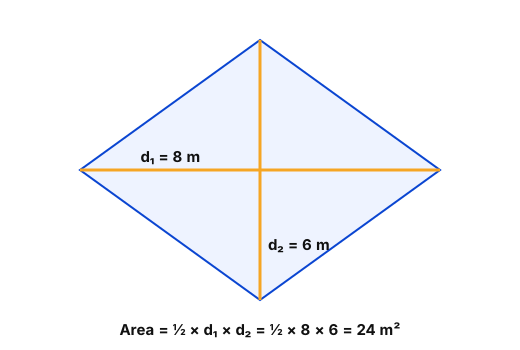
The length of the diagonals of a rhombus are (y+xy+5) m and (y−xy+7) m, respectively. Find the area of the rhombus, if x=2 and y=1.
एक समचतुर्भुज के विकर्णों की लंबाई क्रमशः (y+xy+5) m और (y−xy+7) m है। यदि x=2 और y=1 है, तो समचतुर्भुज का क्षेत्रफल ज्ञात कीजिए।
  1. A27 m2
  2. B18 m2
  3. C21 m2
  4. D24 m2
Show answer

Concept: Area of a rhombus =12×d1×d2.

  1. d1=y+xy+5=1+2+5=8m
  2. d2=y−xy+7=1−2+7=6m
  3. Area =12×8×6=24m2

Trick: Substitute first, then use half the product of diagonals.

Answer: (D) 24m2

अवधारणा: समचतुर्भुज का क्षेत्रफल =12×d1×d2।

  1. d1=y+xy+5=1+2+5=8m
  2. d2=y−xy+7=1−2+7=6m
  3. क्षेत्रफल =12×8×6=24m2

ट्रिक: पहले मान रखें, फिर विकर्णों के गुणनफल का आधा।

उत्तर: (D) 24m2

RRB NTPC Graduate CBT 1MathematicsMensuration – RhombusRRB NTPC Graduate CBT 1 2024 · 18 Jun Shift 1 →
Q1739.
A salesman marks his good 20% above the cost price and gives a discount of 25% on them. Find the percentage of this gain or loss.
एक विक्रेता अपनी वस्तुओं पर क्रय मूल्य से 20% अधिक मूल्य अंकित करता है और उन पर 25% की छूट देता है। लाभ या हानि का प्रतिशत ज्ञात कीजिए।
  1. A9% gain9% लाभ
  2. B10% loss10% हानि
  3. C11% loss11% हानि
  4. D12% loss12% हानि
Show answer

Concept: Successive change: SP=CP×(1+markup)×(1−discount).

  1. Let CP =100; MP =120.
  2. SP =120×75100=90
  3. Loss =100−90=10, i.e. 10% loss.

Trick: Net effect =20−25−20×25100=−10% → 10% loss.

Answer: (B) 10% loss

अवधारणा: क्रमागत परिवर्तन: SP=CP×(1+markup)×(1−discount)।

  1. माना CP =100; MP =120।
  2. SP =120×75100=90
  3. हानि =100−90=10, अर्थात 10% हानि।

ट्रिक: शुद्ध प्रभाव =20−25−20×25100=−10% → 10% हानि।

उत्तर: (B) 10% हानि

RRB NTPC Graduate CBT 1MathematicsProfit and Loss – Marked PriceRRB NTPC Graduate CBT 1 2024 · 18 Jun Shift 1 →
Q1740.
A shopkeeper fixes the marked price of an item 50% above its cost price. What percentage of discount on the marked price should be allowed to gain 14%?
एक दुकानदार किसी वस्तु का अंकित मूल्य उसके क्रय मूल्य से 50% अधिक निर्धारित करता है। 14% लाभ प्राप्त करने के लिए अंकित मूल्य पर कितने प्रतिशत की छूट दी जानी चाहिए?
  1. A21%
  2. B27%
  3. C26%
  4. D24%
Show answer

Concept: Discount%=MP−SPMP×100.

  1. Let CP =100; MP =150.
  2. For 14% gain, SP =114.
  3. Discount =150−114=36; 36150×100=24%

Trick: Discount % =M−P100+M×100=50−14150×100=24%.

Answer: (D) 24%

अवधारणा: छूट%=MP−SPMP×100।

  1. माना CP =100; MP =150।
  2. 14% लाभ के लिए SP =114।
  3. छूट =150−114=36; 36150×100=24%

ट्रिक: छूट % =M−P100+M×100=50−14150×100=24%।

उत्तर: (D) 24%

RRB NTPC Graduate CBT 1MathematicsDiscountRRB NTPC Graduate CBT 1 2024 · 18 Jun Shift 1 →