Question bank

Q&A: practice questions with answers

Search questions on any topic. Filter by exam category, exam, subject and topic, try the question, then open the answer and explanation.

Courses – airGurukul

7,077 questions found.

Q1761.
5 times the present age of Sujatha is 5 years more than 2 times the present age of Vanita. After 4 years, 3 times the age of Vanita will be 8 years less than 5 times the age of Sujatha. The age of Vanita is k years more than that of Sujatha. What is the value of k?
सुजाता की वर्तमान आयु का 5 गुना, वनिता की वर्तमान आयु के 2 गुने से 5 वर्ष अधिक है। 4 वर्ष बाद, वनिता की आयु का 3 गुना, सुजाता की आयु के 5 गुने से 8 वर्ष कम होगा। वनिता की आयु सुजाता की आयु से k वर्ष अधिक है। k का मान क्या है?
  1. A2
  2. B3
  3. C4
  4. D5
Show answer

Concept: Write present ages as variables and form two equations.

  1. Let Sujatha =S, Vanita =V. Then 5S=2V+5.
  2. After 4 years: 3(V+4)=5(S+4)−8⇒3V=5S.
  3. So 3V=2V+5⇒V=5, and 5S=15⇒S=3.
  4. k=V−S=5−3=2.

Trick: Substitute 5S from the first equation into the second – one step.

Answer: (A) 2

अवधारणा: वर्तमान आयु को चर मानकर दो समीकरण बनाएँ।

  1. सुजाता =S, वनिता =V। तब 5S=2V+5।
  2. 4 वर्ष बाद: 3(V+4)=5(S+4)−8⇒3V=5S।
  3. अतः 3V=2V+5⇒V=5, और 5S=15⇒S=3।
  4. k=V−S=5−3=2।

ट्रिक: पहले समीकरण से 5S सीधे दूसरे में रखें।

उत्तर: (A) 2

RRB NTPC Graduate CBT 1MathematicsProblems on agesRRB NTPC Graduate CBT 1 2024 · 18 Jun Shift 1 →
Q1762.
A student scores 80 marks in a subject with a weightage of 3 and 90 marks in another subject with a weightage of 2. What is the weighted average score of the student?
एक छात्र 3 भारांक (weightage) वाले एक विषय में 80 अंक और 2 भारांक वाले दूसरे विषय में 90 अंक प्राप्त करता है। छात्र का भारित औसत अंक क्या है?
  1. A84
  2. B88
  3. C86
  4. D82
Show answer

Concept: Weighted average=∑(marks×weight)∑weights.

  1. 80×3+90×2=240+180=420.
  2. Total weight =3+2=5.
  3. Weighted average =4205=84.

Trick: Answer lies nearer 80 (bigger weight): 80+25×10=84.

Answer: (A) 84

अवधारणा: भारित औसत=∑(अंक×भार)∑भार।

  1. 80×3+90×2=240+180=420।
  2. कुल भार =3+2=5।
  3. भारित औसत =4205=84।

ट्रिक: उत्तर 80 के निकट (अधिक भार): 80+25×10=84।

उत्तर: (A) 84

RRB NTPC Graduate CBT 1MathematicsAverage – Weighted averageRRB NTPC Graduate CBT 1 2024 · 18 Jun Shift 1 →
Q1763.
Two banks, A and B, offered loans at 3.5% and 6.5% per annum, respectively. Keshav borrowed an amount of ₹2,00,000 from each bank. Find the positive difference between the amounts of simple interest paid to the two banks by Keshav after 2 years.
दो बैंक, A और B, क्रमशः 3.5% और 6.5% वार्षिक दर पर ऋण प्रदान करते हैं। केशव ने प्रत्येक बैंक से ₹2,00,000 की राशि उधार ली। 2 वर्ष बाद केशव द्वारा दोनों बैंकों को चुकाए गए साधारण ब्याज की राशियों के बीच धनात्मक अंतर ज्ञात कीजिए।
  1. A13,500
  2. B13,000
  3. C11,500
  4. D12,000
Show answer

Concept: SI=P×R×T100; with equal P and T, difference depends only on the rate difference.

  1. Rate difference =6.5%−3.5%=3%.
  2. Difference =200000×3×2100.
  3. =12000.

Trick: Use the rate gap directly instead of finding both interests.

Answer: (D) ₹12,000

अवधारणा: SI=P×R×T100; P और T समान होने पर अंतर केवल दरों के अंतर पर निर्भर है।

  1. दरों का अंतर =6.5%−3.5%=3%।
  2. अंतर =200000×3×2100।
  3. =12000।

ट्रिक: दोनों ब्याज अलग निकालने के बजाय सीधे दर-अंतर लें।

उत्तर: (D) ₹12,000

RRB NTPC Graduate CBT 1MathematicsSimple interestRRB NTPC Graduate CBT 1 2024 · 18 Jun Shift 1 →
Q1764.
The average marks of 30 students in a mathematics test were found to be 55. However, it was later discovered that a mark of 72 was mistakenly recorded as 27, and another mark of 64 was mistakenly recorded as 46. What is the actual average score?
गणित की एक परीक्षा में 30 छात्रों के औसत अंक 55 पाए गए। हालाँकि, बाद में पता चला कि 72 अंक को गलती से 27 और एक अन्य 64 अंक को गलती से 46 दर्ज कर दिया गया था। वास्तविक औसत अंक क्या है?
  1. A60.2
  2. B55.5
  3. C63.4
  4. D57.1
Show answer

Concept: Correct total = wrong total + (correct values − wrong values).

  1. Wrong total =30×55=1650.
  2. Correction =(72−27)+(64−46)=45+18=63.
  3. Correct total =1713; average =171330=57.1.

Trick: Change in average =6330=2.1 → 55+2.1=57.1.

Answer: (D) 57.1

अवधारणा: सही योग = गलत योग + (सही मान − गलत मान)।

  1. गलत योग =30×55=1650।
  2. सुधार =(72−27)+(64−46)=45+18=63।
  3. सही योग =1713; औसत =171330=57.1।

ट्रिक: औसत में परिवर्तन =6330=2.1 → 55+2.1=57.1।

उत्तर: (D) 57.1

RRB NTPC Graduate CBT 1MathematicsAverage – Correction of errorsRRB NTPC Graduate CBT 1 2024 · 18 Jun Shift 1 →
Q1765.
In a certain code language,
'A + B' means ‘A is the mother of B’
'A – B' means ‘A is the brother of B’
'A x B' means ‘A is the wife of B’
'A ÷ B' means ‘A is the father of B’
Based on the above, how is P related to T if ‘P ÷ Q + R – S x T’?
एक निश्चित कूट भाषा में,
'A + B' का अर्थ है ‘A, B की माता है’
'A – B' का अर्थ है ‘A, B का भाई है’
'A x B' का अर्थ है ‘A, B की पत्नी है’
'A ÷ B' का अर्थ है ‘A, B का पिता है’
उपर्युक्त के आधार पर, यदि ‘P ÷ Q + R – S x T’ है, तो P का T से क्या संबंध है?
  1. AWIfe's mother's fatherपत्नी की माता का पिता
  2. BWife's sister's husbandपत्नी की बहन का पति
  3. CSon's daughter's husbandपुत्र की पुत्री का पति
  4. DWife's father's motherपत्नी के पिता की माता
Show answer

Concept: Decode each symbol and build the family tree from P to T.

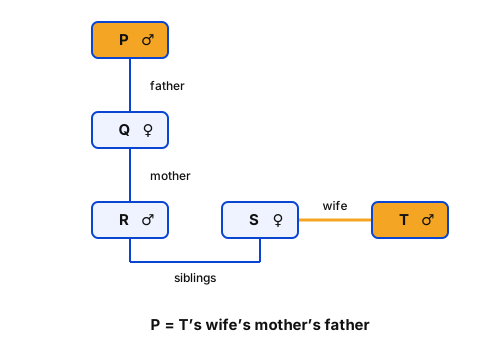
  1. P ÷ Q: P is the father of Q.
  2. Q + R: Q is the mother of R.
  3. R – S: R is the brother of S, so S is Q’s daughter.
  4. S × T: S is the wife of T.
  5. So, T’s wife (S) → her mother (Q) → her father (P).

Trick: Read the chain backwards from T: wife → mother → father.

Answer: (A) Wife’s mother’s father

अवधारणा: हर चिह्न का अर्थ लिखकर P से T तक वंश-वृक्ष बनाइए।

  1. P ÷ Q: P, Q का पिता है।
  2. Q + R: Q, R की माँ है।
  3. R – S: R, S का भाई है, अतः S भी Q की बेटी है।
  4. S × T: S, T की पत्नी है।
  5. अतः T की पत्नी (S) → उसकी माँ (Q) → उसके पिता (P)।

ट्रिक: T से उल्टा पढ़ें: पत्नी → माँ → पिता।

उत्तर: (A) Wife’s mother’s father (पत्नी की माँ के पिता)

RRB NTPC Graduate CBT 1General Intelligence and ReasoningCoded Blood RelationsRRB NTPC Graduate CBT 1 2024 · 18 Jun Shift 1 →
Q1766.
A, B, C, D, E, F, and G are sitting around a circular table facing the centre.
Only C sits between A and E. E sits third to the left of D. B sits to the immediate left of D. G is not an immediate neighbour of E.
How many people sit between C and G when counted from the right of C?
A, B, C, D, E, F और G एक वृत्ताकार मेज़ के चारों ओर केंद्र की ओर मुख करके बैठे हैं।
केवल C, A और E के बीच बैठा है। E, D के बाएँ से तीसरे स्थान पर बैठा है। B, D के ठीक बाएँ बैठा है। G, E का निकटतम पड़ोसी नहीं है।
C के दाएँ से गिनने पर C और G के बीच कितने व्यक्ति बैठे हैं?
  1. AFourचार
  2. BTwoदो
  3. CThreeतीन
  4. DOneएक
Show answer

Concept: When people face the centre, "left" is clockwise and "right" is anticlockwise.

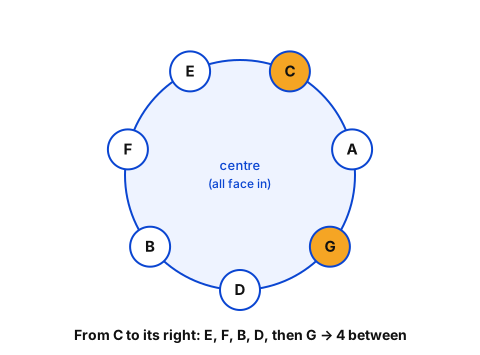
  1. Fix D. B is immediately to the left of D; E is third to the left of D (D → B → _ → E).
  2. Only C sits between A and E; the seat next to E on B’s side is not free for A, so C is the next seat after E and A after C.
  3. The two remaining seats go to F and G; G is not a neighbour of E, so F sits between B and E and G sits between A and D.
  4. From C moving to the right: E, F, B, D, then G → 4 people in between.

Trick: Place the most fixed person (D) first, then fill seats using “third to the left / immediate left” clues.

Answer: (A) Four

अवधारणा: केंद्र की ओर मुख होने पर "बाएँ" = घड़ी की दिशा (clockwise) और "दाएँ" = वामावर्त (anticlockwise)।

  1. D को स्थिर करें। B, D के ठीक बाएँ; E, D के बाएँ तीसरे स्थान पर (D → B → _ → E)।
  2. A और E के बीच केवल C है; अतः E के बाद C और फिर A बैठेगा।
  3. बचे दो स्थान F और G के; G, E का पड़ोसी नहीं, अतः F, B और E के बीच तथा G, A और D के बीच।
  4. C के दाएँ गिनने पर: E, F, B, D, फिर G → बीच में 4 व्यक्ति।

ट्रिक: सबसे निश्चित व्यक्ति (D) को पहले रखें, फिर "बाएँ तीसरा / ठीक बाएँ" संकेतों से भरें।

उत्तर: (A) चार

RRB NTPC Graduate CBT 1General Intelligence and ReasoningCircular Seating ArrangementRRB NTPC Graduate CBT 1 2024 · 18 Jun Shift 1 →
Q1767.
Select the pair that follows the same pattern as that followed by the two pairs given below. Both pairs follow the same pattern.
KNR : HKS
TGK : QDL
उस युग्म का चयन कीजिए जो उसी पैटर्न का अनुसरण करता है जिसका अनुसरण नीचे दिए गए दो युग्म करते हैं। दोनों युग्म एक ही पैटर्न का अनुसरण करते हैं।
KNR : HKS
TGK : QDL
  1. ALOQ : FJU
  2. BFXL : CUM
  3. CHMI : DKL
  4. DGCP : EHR
Show answer

Concept: Compare positions of corresponding letters: here the pattern is −3,−3,+1.

  1. KNR → HKS: K−3=H,N−3=K,R+1=S.
  2. TGK → QDL: T−3=Q,G−3=D,K+1=L.
  3. FXL → CUM: F−3=C,X−3=U,L+1=M ✓.
  4. LOQ → FJU fails at once (L−6=F).

Trick: Check only the first letter (−3) to cut options quickly: only F → C works.

Answer: (B) FXL : CUM

अवधारणा: संगत अक्षरों की स्थिति की तुलना करें: पैटर्न −3,−3,+1 है।

  1. KNR → HKS: K−3=H,N−3=K,R+1=S।
  2. TGK → QDL: T−3=Q,G−3=D,K+1=L।
  3. FXL → CUM: F−3=C,X−3=U,L+1=M ✓।
  4. LOQ → FJU पहले अक्षर पर ही गलत (L−6=F)।

ट्रिक: केवल पहला अक्षर (−3) जाँचें – सिर्फ F → C सही बैठता है।

उत्तर: (B) FXL : CUM

RRB NTPC Graduate CBT 1General Intelligence and ReasoningLetter AnalogyRRB NTPC Graduate CBT 1 2024 · 18 Jun Shift 1 →
Q1768.
What should come in place of the question mark (?) in the given series?
282, 259, 226, ?, 130, 67
दी गई शृंखला में प्रश्न चिह्न (?) के स्थान पर क्या आना चाहिए?
282, 259, 226, ?, 130, 67
  1. A173
  2. B183
  3. C193
  4. D186
Show answer

Concept: Look at the differences between consecutive terms.

  1. 282−259=23,259−226=33 → differences grow by 10.
  2. Next difference 43: 226−43=183
  3. Check: 183−53=130,130−63=67 ✓

Trick: Differences 23, 33, 43, 53, 63 – constant jump of 10.

Answer: (B) 183

अवधारणा: क्रमागत पदों का अंतर देखें।

  1. 282−259=23,259−226=33 → अंतर 10-10 बढ़ रहा है।
  2. अगला अंतर 43: 226−43=183
  3. जाँच: 183−53=130,130−63=67 ✓

ट्रिक: अंतर 23, 33, 43, 53, 63 – हर बार 10 की वृद्धि।

उत्तर: (B) 183

RRB NTPC Graduate CBT 1General Intelligence and ReasoningNumber SeriesRRB NTPC Graduate CBT 1 2024 · 18 Jun Shift 1 →
Q1769.
Gyanesh starts from Point Y and drives 11 km towards the south. He then takes a left turn, drives 45 km, turns right and drives 29 km. He then takes a right turn and drives 18 km. He takes a right turn, drives 13 km. He then turns right, drives 29 km, turns left and drives 27 km to stop at Point Z. How far (shortest distance) and towards which direction should he drive in order to reach Point Y again? (All turns are 90-degree turns only unless specified.)
ज्ञानेश बिंदु Y से चलना शुरू करता है और दक्षिण की ओर 11 km ड्राइव करता है। फिर वह बाएँ मुड़ता है, 45 km ड्राइव करता है, दाएँ मुड़ता है और 29 km ड्राइव करता है। फिर वह दाएँ मुड़ता है और 18 km ड्राइव करता है। वह दाएँ मुड़ता है, 13 km ड्राइव करता है। फिर वह दाएँ मुड़ता है, 29 km ड्राइव करता है, बाएँ मुड़ता है और 27 km ड्राइव करके बिंदु Z पर रुकता है। बिंदु Y पर पुनः पहुँचने के लिए उसे कितनी दूरी (न्यूनतम दूरी) और किस दिशा में ड्राइव करना चाहिए? (जब तक निर्दिष्ट न हो, सभी मोड़ केवल 90 डिग्री के हैं।)
  1. A53 km towards the northउत्तर की ओर 53 km
  2. B61 km towards the westपश्चिम की ओर 61 km
  3. C56 km towards the westपश्चिम की ओर 56 km
  4. D51 km towards the eastपूर्व की ओर 51 km
Show answer

Concept: Track the position with coordinates (East +x, North +y), turning left/right relative to the current direction.

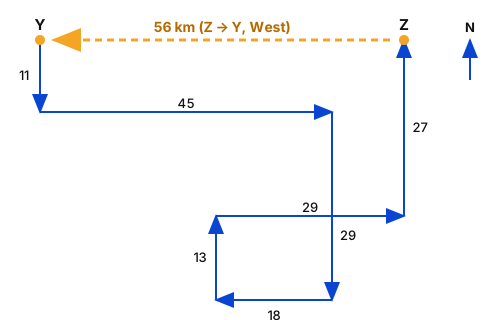
  1. Y(0, 0) → South 11 → (0, −11); left = East 45 → (45, −11).
  2. Right = South 29 → (45, −40); right = West 18 → (27, −40).
  3. Right = North 13 → (27, −27); right = East 29 → (56, −27).
  4. Left = North 27 → Z(56, 0). Y is 56 km due West of Z.

Trick: Net N–S: −11−29+13+27=0, so the answer is purely East–West: 45−18+29=56 km.

Answer: (C) 56 km towards the west

अवधारणा: निर्देशांक लें (पूर्व +x, उत्तर +y) और हर मोड़ को वर्तमान दिशा के सापेक्ष लें।

  1. Y(0, 0) → दक्षिण 11 → (0, −11); बाएँ = पूर्व 45 → (45, −11)।
  2. दाएँ = दक्षिण 29 → (45, −40); दाएँ = पश्चिम 18 → (27, −40)।
  3. दाएँ = उत्तर 13 → (27, −27); दाएँ = पूर्व 29 → (56, −27)।
  4. बाएँ = उत्तर 27 → Z(56, 0)। Y, Z से 56 km पश्चिम में है।

ट्रिक: शुद्ध उत्तर–दक्षिण: −11−29+13+27=0, अतः केवल पूर्व–पश्चिम: 45−18+29=56 km।

उत्तर: (C) 56 km पश्चिम की ओर

RRB NTPC Graduate CBT 1General Intelligence and ReasoningDirection and DistanceRRB NTPC Graduate CBT 1 2024 · 18 Jun Shift 1 →
Q1770.
Based on the English alphabetical order, three of the following four letter-cluster pairs are alike in a certain way and thus form a group. Which is the letter-cluster pair that DOES NOT belong to that group?
(Note: The odd one out is not based on the number of consonants/vowels or their position in the letter-cluster.)
अंग्रेज़ी वर्णमाला क्रम के आधार पर, निम्नलिखित चार अक्षर-समूह युग्मों में से तीन किसी निश्चित प्रकार से एकसमान हैं और इस प्रकार एक समूह बनाते हैं। कौन-सा अक्षर-समूह युग्म उस समूह से संबंधित नहीं है?
(ध्यान दें: असंगत अक्षर-समूह, उस अक्षर-समूह में व्यंजनों/स्वरों की संख्या या उनके स्थान पर आधारित नहीं है।)
  1. AOJ - NL
  2. BIK - PR
  3. CHJ - OQ
  4. DGI - NP
Show answer

Concept: Write alphabet positions and check the gap within each cluster and between the clusters.

  1. IK - PR: 9,11|16,18 → +2 inside, +7 between.
  2. HJ - OQ: 8,10|15,17 and GI - NP: 7,9|14,16 → same pattern.
  3. OJ - NL: 15,10|14,12 → pattern broken.

Trick: Check the first letters of the two clusters: +7 (I→P, H→O, G→N) but O→N is −1.

Answer: (A) OJ - NL

अवधारणा: अक्षरों की स्थिति लिखें और क्लस्टर के अंदर तथा दोनों क्लस्टरों के बीच अंतर देखें।

  1. IK - PR: 9,11|16,18 → अंदर +2, बीच +7।
  2. HJ - OQ: 8,10|15,17 और GI - NP: 7,9|14,16 → वही पैटर्न।
  3. OJ - NL: 15,10|14,12 → पैटर्न टूटा।

ट्रिक: दोनों क्लस्टरों के पहले अक्षर देखें: +7 (I→P, H→O, G→N) पर O→N = −1।

उत्तर: (A) OJ - NL

RRB NTPC Graduate CBT 1General Intelligence and ReasoningOdd One Out – Letter PairsRRB NTPC Graduate CBT 1 2024 · 18 Jun Shift 1 →
Q1771.
Which of the following letter-clusters should replace # and % so that the pattern and relationship followed between the letter-cluster pair on the left side of :: is the same as that on the right side of :: ?
# : VXB :: GIM : %
निम्नलिखित में से कौन-से अक्षर-समूह # और % को प्रतिस्थापित करें ताकि :: के बाईं ओर के अक्षर-समूह युग्म के बीच का पैटर्न और संबंध, :: के दाईं ओर के अक्षर-समूह युग्म के समान हो?
# : VXB :: GIM : %
  1. A# = SUY , % = LLP
  2. B# = SUY , % = JLP
  3. C# = SEY , % = JLP
  4. D# = SUY , % = JLL
Show answer

Concept: Each cluster follows +2,+4 inside; the pair relation is the same shift applied to every letter.

  1. GIM: 7,9,13 → +2,+4; VXB: 22,24,2 (i.e. 28) → +2,+4.
  2. # = SUY (19,21,25) and SUY → VXB is +3 on each letter.
  3. So GIM +3 → J, L, P: % = JLP.

Trick: Find # first from the internal +2,+4 pattern, then apply the same shift (+3) to GIM.

Answer: (B) # = SUY , % = JLP

अवधारणा: हर समूह के अंदर +2,+4 है; युग्म का संबंध हर अक्षर पर समान खिसकाव है।

  1. GIM: 7,9,13 → +2,+4; VXB: 22,24,2 (अर्थात 28) → +2,+4।
  2. # = SUY (19,21,25) और SUY → VXB हर अक्षर पर +3।
  3. अतः GIM +3 → J, L, P: % = JLP।

ट्रिक: पहले +2,+4 से # निकालें, फिर वही खिसकाव (+3) GIM पर लगाएँ।

उत्तर: (B) # = SUY , % = JLP

RRB NTPC Graduate CBT 1General Intelligence and ReasoningLetter Cluster AnalogyRRB NTPC Graduate CBT 1 2024 · 18 Jun Shift 1 →
Q1772.
Two sets of numbers are given below. In each set of numbers, certain mathematical operation(s) on the first number results in the second number. Similarly, certain mathematical operation(s) on the second number results in the third number and so on. Which of the given options follows the same set of operations as in the given sets? (NOTE: Operations should be performed on the whole numbers, without breaking down the numbers into their constituent digits. E.g. 13 – Operations on 13 such as adding / subtracting / multiplying to 13 can be performed. Breaking down 13 into 1 and 3 and then performing mathematical operations on 1 and 3 is not allowed.)
12 - 14 - 16 - 20; 14 - 16 - 18 - 22
नीचे संख्याओं के दो समुच्चय दिए गए हैं। संख्याओं के प्रत्येक समुच्चय में, पहली संख्या पर कुछ गणितीय संक्रिया(एँ) करने पर दूसरी संख्या प्राप्त होती है। इसी प्रकार, दूसरी संख्या पर कुछ गणितीय संक्रिया(एँ) करने पर तीसरी संख्या प्राप्त होती है, और इसी तरह आगे भी। दिए गए विकल्पों में से कौन-सा विकल्प दिए गए समुच्चयों के समान संक्रियाओं के समुच्चय का अनुसरण करता है? (ध्यान दें: संख्याओं को उनके घटक अंकों में विभाजित किए बिना, पूर्ण संख्याओं पर संक्रियाएँ की जानी चाहिए। उदाहरण के लिए 13 – 13 पर संक्रियाएँ जैसे 13 में जोड़ना/घटाना/गुणा करना आदि की जा सकती हैं। 13 को 1 और 3 में विभाजित करना और फिर 1 और 3 पर गणितीय संक्रियाएँ करना वर्जित है।)
12 - 14 - 16 - 20; 14 - 16 - 18 - 22
  1. A3 - 5 - 7 - 11
  2. B13 - 15 - 17 - 32
  3. C4 - 8 - 16 - 32
  4. D19 - 20 - 22 - 44
Show answer

Concept: Find the operations between successive numbers in the given sets.

  1. 12 - 14 - 16 - 20: +2,+2,+4; 14 - 16 - 18 - 22: +2,+2,+4.
  2. 3 - 5 - 7 - 11: +2,+2,+4 ✓
  3. 4 - 8 - 16 - 32 is ×2; 13 - 15 - 17 - 32 ends +15; 19 - 20 - 22 - 44 is +1,+2,×2.

Trick: Only check the last step (+4) – it eliminates three options at once.

Answer: (A) 3 - 5 - 7 - 11

अवधारणा: दिए गए समूहों में क्रमागत संख्याओं के बीच संक्रियाएँ खोजें।

  1. 12 - 14 - 16 - 20: +2,+2,+4; 14 - 16 - 18 - 22: +2,+2,+4।
  2. 3 - 5 - 7 - 11: +2,+2,+4 ✓
  3. 4 - 8 - 16 - 32 में ×2; 13 - 15 - 17 - 32 में अंत +15; 19 - 20 - 22 - 44 में +1,+2,×2।

ट्रिक: केवल अंतिम चरण (+4) जाँचें – तीन विकल्प तुरंत हट जाते हैं।

उत्तर: (A) 3 - 5 - 7 - 11

RRB NTPC Graduate CBT 1General Intelligence and ReasoningNumber Set PatternRRB NTPC Graduate CBT 1 2024 · 18 Jun Shift 1 →
Q1773.
Based on the English alphabetical order, three of the following four letter-clusters are alike in a certain way and thus form a group. Which letter-cluster DOES NOT belong to that group?
(Note: The odd one out is not based on the number of consonants/vowels or their position in the letter-cluster.)
अंग्रेज़ी वर्णमाला क्रम के आधार पर, निम्नलिखित चार अक्षर-समूहों में से तीन किसी निश्चित प्रकार से एकसमान हैं और इस प्रकार एक समूह बनाते हैं। कौन-सा अक्षर-समूह उस समूह से संबंधित नहीं है?
(ध्यान दें: असंगत अक्षर-समूह, उस अक्षर-समूह में व्यंजनों/स्वरों की संख्या या उनके स्थान पर आधारित नहीं है।)
  1. AMOJ
  2. BGID
  3. CKMG
  4. DIKF
Show answer

Concept: Write positions and check the steps from 1st → 2nd → 3rd letter.

  1. MOJ: 13,15,10 → +2,−5
  2. GID: 7,9,4 → +2,−5; IKF: 9,11,6 → +2,−5
  3. KMG: 11,13,7 → +2,−6 ✗

Trick: Third letter is 3 places before the first in the group (M→J, G→D, I→F), but K→G is 4.

Answer: (C) KMG

अवधारणा: स्थितियाँ लिखें और पहले → दूसरे → तीसरे अक्षर का अंतर देखें।

  1. MOJ: 13,15,10 → +2,−5
  2. GID: 7,9,4 → +2,−5; IKF: 9,11,6 → +2,−5
  3. KMG: 11,13,7 → +2,−6 ✗

ट्रिक: समूह में तीसरा अक्षर पहले से 3 पीछे (M→J, G→D, I→F), पर K→G 4 पीछे।

उत्तर: (C) KMG

RRB NTPC Graduate CBT 1General Intelligence and ReasoningOdd One Out – Letter ClustersRRB NTPC Graduate CBT 1 2024 · 18 Jun Shift 1 →
Q1774.
Seven boxes, A, B, C, D, E, F and G, are kept one over the other, but not necessarily in the same order. Only three boxes are kept above G. Only one box is kept between A and G. Only three boxes are kept between A and F. F is kept at some place above G. B is kept immediately below F. D is kept at one of the places above E. C is not kept immediately above or below A. How many boxes are kept above D?
सात बक्से, A, B, C, D, E, F और G, एक के ऊपर एक रखे गए हैं, लेकिन आवश्यक नहीं कि इसी क्रम में हों। G के ऊपर केवल तीन बक्से रखे हैं। A और G के बीच केवल एक बक्सा रखा है। A और F के बीच केवल तीन बक्से रखे हैं। F, G के ऊपर किसी स्थान पर रखा है। B, F के ठीक नीचे रखा है। D, E के ऊपर के स्थानों में से किसी एक पर रखा है। C, A के ठीक ऊपर या ठीक नीचे नहीं रखा है। D के ऊपर कितने बक्से रखे हैं?
  1. A2
  2. B3
  3. C1
  4. D4
Show answer

Concept: Number positions 1 (top) to 7 (bottom) and place the fixed boxes first.

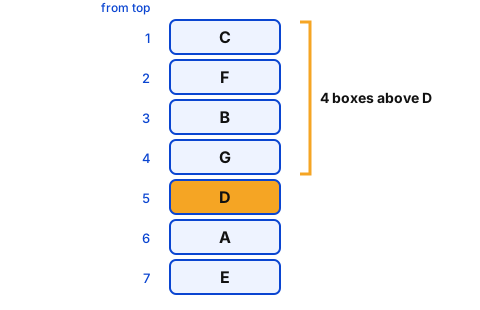
  1. Three boxes above G → G at 4. One box between A and G → A at 2 or 6.
  2. Three boxes between A and F with F above G → A = 6, F = 2; B just below F → B = 3.
  3. Left: 1, 5, 7. C not next to A (6) → C = 1; D above E → D = 5, E = 7.
  4. Boxes above D: C, F, B, G = 4.

Trick: Use the clue "F above G" to choose between the two cases for A instantly.

Answer: (D) 4

अवधारणा: स्थान 1 (ऊपर) से 7 (नीचे) तक क्रमांकित करें और निश्चित डिब्बे पहले रखें।

  1. G के ऊपर तीन डिब्बे → G = 4। A और G के बीच एक → A = 2 या 6।
  2. A और F के बीच तीन, तथा F, G के ऊपर → A = 6, F = 2; B, F के ठीक नीचे → B = 3।
  3. शेष: 1, 5, 7। C, A (6) के पास नहीं → C = 1; D, E के ऊपर → D = 5, E = 7।
  4. D के ऊपर: C, F, B, G = 4।

ट्रिक: "F, G के ऊपर" संकेत से A के दो मामलों में तुरंत चयन करें।

उत्तर: (D) 4

RRB NTPC Graduate CBT 1General Intelligence and ReasoningFloor/Box ArrangementRRB NTPC Graduate CBT 1 2024 · 18 Jun Shift 1 →
Q1775.
If 1 is added to each odd digit and 2 is subtracted from each even digit in the number 1385762, then what will the sum of the digits that are second from the left and third from the right in the new number thus formed be?
यदि संख्या 1385762 के प्रत्येक विषम अंक में 1 जोड़ा जाए और प्रत्येक सम अंक में से 2 घटाया जाए, तो इस प्रकार बनी नई संख्या में बाएँ से दूसरे और दाएँ से तीसरे अंकों का योग क्या होगा?
  1. A13
  2. B11
  3. C10
  4. D12
Show answer

Concept: Change each digit by the rule (odd +1, even −2) and keep positions.

  1. 1385762 → 1→2, 3→4, 8→6, 5→6, 7→8, 6→4, 2→0
  2. New number: 2466840
  3. 2nd from left = 4; 3rd from right = 8
  4. Sum =4+8=12

Trick: Only transform the two digits needed: 2nd from left (3→4) and 3rd from right (7→8).

Answer: (D) 12

अवधारणा: नियम से हर अंक बदलें (विषम +1, सम −2) और स्थान वही रखें।

  1. 1385762 → 1→2, 3→4, 8→6, 5→6, 7→8, 6→4, 2→0
  2. नई संख्या: 2466840
  3. बाएँ से दूसरा = 4; दाएँ से तीसरा = 8
  4. योग =4+8=12

ट्रिक: केवल ज़रूरी दो अंक बदलें: बाएँ से दूसरा (3→4) और दाएँ से तीसरा (7→8)।

उत्तर: (D) 12

RRB NTPC Graduate CBT 1General Intelligence and ReasoningNumber OperationsRRB NTPC Graduate CBT 1 2024 · 18 Jun Shift 1 →
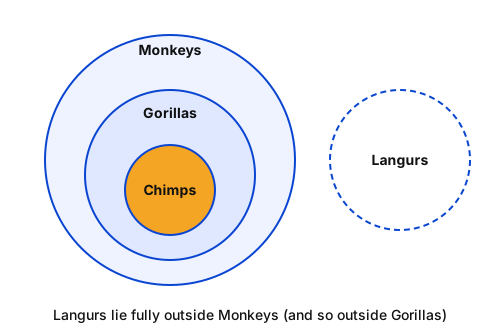
Q1776.
Read the given statements and conclusions carefully. Assuming that the information given in the statements is true, even if it appears to be at variance with commonly known facts, decide which of the given conclusion(s) logically follow(s) from the statements.
Statements:
All chimpanzees are gorilla.
All gorillas are monkeys.
No monkey is a langur.
Conclusion:
(I) Some langurs are gorillas.
(II) Some monkeys are chimpanzees.
दिए गए कथनों और निष्कर्षों को ध्यानपूर्वक पढ़िए। यह मानते हुए कि कथनों में दी गई जानकारी सत्य है, भले ही वह सामान्य रूप से ज्ञात तथ्यों से भिन्न प्रतीत होती हो, निर्णय कीजिए कि दिए गए निष्कर्षों में से कौन-सा/से निष्कर्ष तार्किक रूप से कथनों का अनुसरण करता है/करते हैं।
कथन:
सभी चिंपैंज़ी, गोरिल्ला हैं।
सभी गोरिल्ला, बंदर हैं।
कोई बंदर, लंगूर नहीं है।
निष्कर्ष:
(I) कुछ लंगूर, गोरिल्ला हैं।
(II) कुछ बंदर, चिंपैंज़ी हैं।
  1. ANeither Conclusion (I) nor (II) followsन तो निष्कर्ष (I) और न ही (II) अनुसरण करता है
  2. BBoth Conclusions (I) and (II) followनिष्कर्ष (I) और (II) दोनों अनुसरण करते हैं
  3. COnly Conclusion (I) followsकेवल निष्कर्ष (I) अनुसरण करता है
  4. DOnly Conclusion (II) followsकेवल निष्कर्ष (II) अनुसरण करता है
Show answer

Concept: Draw the minimal Venn diagram: Chimpanzees ⊂ Gorillas ⊂ Monkeys, and Langurs completely outside Monkeys.

  1. Since no monkey is a langur and all gorillas are monkeys, no gorilla is a langur → (I) "Some langurs are gorillas" is false.
  2. All chimpanzees are monkeys, so some monkeys are certainly chimpanzees → (II) follows.

Trick: All A are B ⇒ Some B are A always follows (conversion).

Answer: (D) Only Conclusion (II) follows

अवधारणा: न्यूनतम वेन आरेख: चिंपैंज़ी ⊂ गोरिल्ला ⊂ बंदर, और लंगूर पूरी तरह बंदर के बाहर।

  1. कोई बंदर लंगूर नहीं और सभी गोरिल्ला बंदर हैं, अतः कोई गोरिल्ला लंगूर नहीं → (I) "कुछ लंगूर गोरिल्ला हैं" गलत।
  2. सभी चिंपैंज़ी बंदर हैं, अतः कुछ बंदर अवश्य चिंपैंज़ी हैं → (II) अनुसरण करता है।

ट्रिक: सभी A, B हैं ⇒ कुछ B, A हैं – हमेशा सत्य (परिवर्तन)।

उत्तर: (D) केवल निष्कर्ष (II) अनुसरण करता है

RRB NTPC Graduate CBT 1General Intelligence and ReasoningSyllogismRRB NTPC Graduate CBT 1 2024 · 18 Jun Shift 1 →
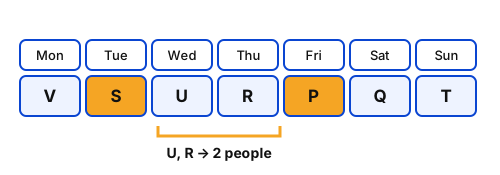
Q1777.
Each of P, Q, R, S, T, U and V has an exam on a different day of a week starting from Monday and ending on Sunday of the same week.
Only three people have exams after R. P has the exam immediately after R, but before Q. S has the exam before U but after V. T has the exam on Sunday.
How many people have exams between P and S?
P, Q, R, S, T, U और V में से प्रत्येक की परीक्षा एक ही सप्ताह के सोमवार से शुरू होकर रविवार को समाप्त होने वाले सप्ताह के अलग-अलग दिन है।
R के बाद केवल तीन व्यक्तियों की परीक्षा है। P की परीक्षा R के ठीक बाद, लेकिन Q से पहले है। S की परीक्षा U से पहले लेकिन V के बाद है। T की परीक्षा रविवार को है।
P और S के बीच कितने व्यक्तियों की परीक्षा है?
  1. ATwoदो
  2. BOneएक
  3. CFourचार
  4. DThreeतीन
Show answer

Concept: Fix the days Monday (1) to Sunday (7) and place the definite clues first.

  1. T = Sunday. Only three after R → R = Thursday.
  2. P immediately after R → P = Friday; Q after P → Q = Saturday.
  3. V < S < U in Mon–Wed → V = Monday, S = Tuesday, U = Wednesday.
  4. Between S (Tue) and P (Fri): U, R → 2 people.

Trick: "Only three after" fixes the position immediately: 7−3=4th day.

Answer: (A) Two

अवधारणा: सोमवार (1) से रविवार (7) तक दिन तय करें और निश्चित संकेत पहले रखें।

  1. T = रविवार। R के बाद केवल तीन → R = गुरुवार।
  2. P, R के ठीक बाद → P = शुक्रवार; Q, P के बाद → Q = शनिवार।
  3. V < S < U, सोम–बुध में → V = सोमवार, S = मंगलवार, U = बुधवार।
  4. S (मंगल) और P (शुक्र) के बीच: U, R → 2 व्यक्ति।

ट्रिक: "बाद में केवल तीन" से स्थान तुरंत: 7−3=4था दिन।

उत्तर: (A) दो

RRB NTPC Graduate CBT 1General Intelligence and ReasoningScheduling PuzzleRRB NTPC Graduate CBT 1 2024 · 18 Jun Shift 1 →
Q1778.
In a certain code language, ‘RACE’ is coded as ‘6259’ and ‘ANTS’ is coded as ‘7941’. What is the code for ‘A’ in the given code language?
एक निश्चित कूट भाषा में, ‘RACE’ को ‘6259’ के रूप में कूटबद्ध किया जाता है और ‘ANTS’ को ‘7941’ के रूप में कूटबद्ध किया जाता है। उसी कूट भाषा में ‘A’ के लिए कूट क्या है?
  1. A7
  2. B9
  3. C1
  4. D2
Show answer

Concept: When two words share a letter, the code digit common to both codes belongs to that letter (codes may be in jumbled order).

  1. RACE → 6259 and ANTS → 7941.
  2. The only letter common to both words is A.
  3. The only digit common to both codes is 9.
  4. Hence A = 9.

Trick: Common letter ↔ common digit – no need to decode the full word.

Answer: (B) 9

अवधारणा: जब दो शब्दों में एक अक्षर उभयनिष्ठ हो, तो दोनों कोड में उभयनिष्ठ अंक उसी अक्षर का कोड होता है (क्रम बदला हो सकता है)।

  1. RACE → 6259 और ANTS → 7941।
  2. दोनों शब्दों में उभयनिष्ठ अक्षर केवल A है।
  3. दोनों कोड में उभयनिष्ठ अंक केवल 9 है।
  4. अतः A = 9।

ट्रिक: उभयनिष्ठ अक्षर ↔ उभयनिष्ठ अंक – पूरा शब्द डिकोड करने की ज़रूरत नहीं।

उत्तर: (B) 9

RRB NTPC Graduate CBT 1General Intelligence and ReasoningCoding-decoding (common letters)RRB NTPC Graduate CBT 1 2024 · 18 Jun Shift 1 →
Q1779.
What should come in place of the question mark (?) in the given series?
7 9 13 21 37 ?
दी गई शृंखला में प्रश्न चिह्न (?) के स्थान पर क्या आना चाहिए?
7 9 13 21 37 ?
  1. A71
  2. B66
  3. C69
  4. D65
Show answer

Concept: Check the differences between consecutive terms.

  1. Differences: 9−7=2, 13−9=4, 21−13=8, 37−21=16.
  2. Differences double each time: 2,4,8,16, next 32.
  3. Next term =37+32=69.

Trick: Differences in powers of 2 → keep doubling the gap.

Answer: (C) 69

अवधारणा: क्रमागत पदों का अंतर देखें।

  1. अंतर: 9−7=2, 13−9=4, 21−13=8, 37−21=16।
  2. अंतर हर बार दोगुना: 2,4,8,16, अगला 32।
  3. अगला पद =37+32=69।

ट्रिक: अंतर 2 की घातों में → अंतर दोगुना करते जाएँ।

उत्तर: (C) 69

RRB NTPC Graduate CBT 1General Intelligence and ReasoningNumber seriesRRB NTPC Graduate CBT 1 2024 · 18 Jun Shift 1 →
Q1780.
Select the letter-cluster from among the given options that can replace the question mark (?) in the following series.
TPY URS VTM WVG ?
दिए गए विकल्पों में से उस अक्षर-समूह का चयन कीजिए जो निम्नलिखित शृंखला में प्रश्न चिह्न (?) को प्रतिस्थापित कर सकता है।
TPY URS VTM WVG ?
  1. AXXB
  2. BXXA
  3. CXWA
  4. DXWZ
Show answer

Concept: Track each letter position of the clusters separately.

  1. 1st letters: T, U, V, W → +1 → X.
  2. 2nd letters: P, R, T, V → +2 → X.
  3. 3rd letters: Y, S, M, G → −6 each → G − 6 = A (wrapping: G=7, 7 − 6 = 1 = A).
  4. Answer cluster: XXA.

Trick: Write positions: Y25, S19, M13, G7 → step −6 → 1 = A.

Answer: (B) XXA

अवधारणा: हर समूह के प्रत्येक अक्षर-स्थान को अलग-अलग देखें।

  1. पहले अक्षर: T, U, V, W → +1 → X।
  2. दूसरे अक्षर: P, R, T, V → +2 → X।
  3. तीसरे अक्षर: Y, S, M, G → हर बार −6 → G(7) − 6 = 1 = A।
  4. उत्तर समूह: XXA।

ट्रिक: स्थान लिखें: Y25, S19, M13, G7 → −6 → 1 = A।

उत्तर: (B) XXA

RRB NTPC Graduate CBT 1General Intelligence and ReasoningLetter seriesRRB NTPC Graduate CBT 1 2024 · 18 Jun Shift 1 →