Question bank

Q&A: practice questions with answers

Search questions on any topic. Filter by exam category, exam, subject and topic, try the question, then open the answer and explanation.

Courses – airGurukul

8,495 questions found.

Q1981.
This question is based on the five, three-digit numbers given below.
(Left) 218 168 879 953 622 (Right)
(Example: 697 – First digit = 6, second digit = 9 and third digit = 7)
(NOTE: All operations to be done from left to right.)
If all the numbers are arranged in descending order, which of the following will be the second digit of the fourth number from the left after the arrangement?
यह प्रश्न नीचे दी गई तीन अंकों वाली पाँच संख्याओं पर आधारित है।
(बाएँ) 218 168 879 953 622 (दाएँ)
(उदाहरण: 697 – पहला अंक = 6, दूसरा अंक = 9 और तीसरा अंक = 7)
(नोट: सभी संक्रियाएँ बाएँ से दाएँ की जानी हैं।)
यदि सभी संख्याओं को अवरोही क्रम में व्यवस्थित किया जाए, तो व्यवस्थित करने के बाद बाएँ से चौथी संख्या का दूसरा अंक निम्नलिखित में से कौन-सा होगा?
  1. A1
  2. B8
  3. C9
  4. D2
Show answer

Concept: Arrange in descending order and pick the position.

  1. Descending: 953, 879, 622, 218, 168
  2. 4th from left =218; second digit =1

Trick: Only the rank matters — sort once and read.

Answer: (A) 1

अवधारणा: अवरोही क्रम में लगाकर स्थान देखें।

  1. अवरोही: 953, 879, 622, 218, 168
  2. बाएँ से चौथी =218; दूसरा अंक =1

ट्रिक: एक बार क्रम लगाएँ और पढ़ें।

उत्तर: (A) 1
RRB NTPC Undergraduate CBT 1General Intelligence and ReasoningNumber arrangementRRB NTPC Undergraduate CBT 1 2024 · 18 Aug Shift 1 →
Q1982.
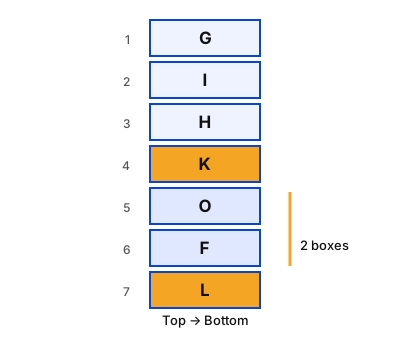
Seven boxes F, G, H, I, K, L and O are kept one over the other but not necessarily in the same order.
Only G is kept above I. Only two boxes are kept between I and O. Only L is kept below F. H is not kept immediately above O.
How many boxes are kept between K and L?
सात डिब्बे F, G, H, I, K, L और O एक के ऊपर एक रखे गए हैं, परंतु आवश्यक नहीं कि इसी क्रम में हों।
I के ऊपर केवल G रखा है। I और O के बीच केवल दो डिब्बे रखे हैं। F के नीचे केवल L रखा है। H, O के ठीक ऊपर नहीं रखा है।
K और L के बीच कितने डिब्बे रखे हैं?
  1. AOneएक
  2. BTwoदो
  3. CFourचार
  4. DThreeतीन
Show answer

Concept: 'Only X above Y' means Y is 2nd from top.

  1. Only G above I → G 1st, I 2nd (from top)
  2. Only L below F → L 7th, F 6th
  3. Two between I and O → O 5th
  4. H not immediately above O → H 3rd, K 4th
  5. Between K (4) and L (7): O, F → two

Trick: Read 'only' clues first — they fix exact positions.

Answer: (B) Two

अवधारणा: 'केवल X, Y के ऊपर' → Y ऊपर से दूसरा।

  1. G 1, I 2; L 7, F 6
  2. I और O के बीच दो → O 5
  3. H, O के ठीक ऊपर नहीं → H 3, K 4
  4. K (4) और L (7) के बीच: O, F → दो

ट्रिक: 'केवल' वाले संकेत पहले पढ़ें।

उत्तर: (B) दो

RRB NTPC Undergraduate CBT 1General Intelligence and ReasoningBox arrangementRRB NTPC Undergraduate CBT 1 2024 · 18 Aug Shift 1 →
Q1983.
What will come in place of the question mark (?) in the following equation, if ‘+’ and ‘−’ are interchanged and ‘×’ and ‘÷’ are interchanged?
4 ÷ 13 + 96 × 8 − 14 = ?
यदि '+' और '−' को आपस में बदल दिया जाए तथा '×' और '÷' को आपस में बदल दिया जाए, तो निम्नलिखित समीकरण में प्रश्न चिह्न (?) के स्थान पर क्या आएगा?
4 ÷ 13 + 96 × 8 − 14 = ?
  1. A56
  2. B50
  3. C52
  4. D54
Show answer

Concept: Interchange signs, then BODMAS.

  1. 4÷13+96×8−14→4×13−96÷8+14
  2. =52−12+14=54

Trick: Division first: 96÷8=12.

Answer: (D) 54

अवधारणा: चिह्न बदलकर BODMAS लगाएँ।

  1. 4×13−96÷8+14
  2. =52−12+14=54

ट्रिक: पहले भाग: 96÷8=12।

उत्तर: (D) 54

RRB NTPC Undergraduate CBT 1General Intelligence and ReasoningMathematical operationsRRB NTPC Undergraduate CBT 1 2024 · 18 Aug Shift 1 →
Q1984.
Read the given statements and conclusions carefully. Assuming that the information given in the statements is true, even if it appears to be at variance with commonly known facts, decide which of the given conclusion(s) logically follow(s) from the statements.
Statements:
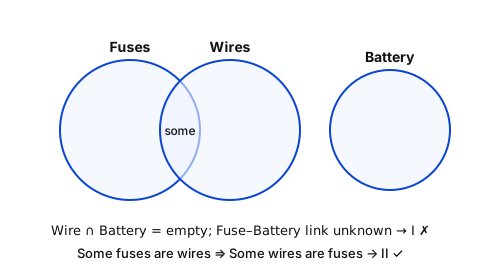
Some fuses are wires.
No wire is a battery.
Conclusions:
(I) Some fuses are batteries.
(II) Some wires are fuses.
दिए गए कथनों और निष्कर्षों को ध्यानपूर्वक पढ़िए। यह मानते हुए कि कथनों में दी गई जानकारी सत्य है, भले ही वह सामान्यतः ज्ञात तथ्यों से भिन्न प्रतीत होती हो, निर्णय कीजिए कि दिए गए निष्कर्षों में से कौन-सा/से निष्कर्ष तार्किक रूप से कथनों का अनुसरण करता है/करते हैं।
कथन:
कुछ फ़्यूज़, तार हैं।
कोई तार, बैटरी नहीं है।
निष्कर्ष:
(I) कुछ फ़्यूज़, बैटरियाँ हैं।
(II) कुछ तार, फ़्यूज़ हैं।
  1. AOnly conclusion (II) follows.केवल निष्कर्ष (II) अनुसरण करता है।
  2. BNeither conclusion (I) nor (II) follows.न तो निष्कर्ष (I) और न ही (II) अनुसरण करता है।
  3. COnly conclusion (I) follows.केवल निष्कर्ष (I) अनुसरण करता है।
  4. DBoth conclusions (I) and (II) follow.निष्कर्ष (I) और (II) दोनों अनुसरण करते हैं।
Show answer

Concept: 'Some A are B' converts to 'Some B are A'.

  1. Fuses and batteries have no definite link → I does not follow
  2. Some fuses are wires ⇒ some wires are fuses → II follows

Trick: Some + No gives 'Some A are not C', never 'Some A are C'.

Answer: (A) Only conclusion (II) follows.

अवधारणा: 'कुछ A, B हैं' का रूपांतरण 'कुछ B, A हैं' होता है।

  1. Fuses और batteries में निश्चित संबंध नहीं → I नहीं
  2. कुछ fuses wires हैं ⇒ कुछ wires fuses हैं → II अनुसरण करता है

ट्रिक: कुछ + कोई नहीं = 'कुछ A, C नहीं हैं' — कभी 'कुछ A, C हैं' नहीं।

उत्तर: (A) केवल निष्कर्ष (II) अनुसरण करता है।

RRB NTPC Undergraduate CBT 1General Intelligence and ReasoningSyllogismRRB NTPC Undergraduate CBT 1 2024 · 18 Aug Shift 1 →
Q1985.
Each of the digits in the number 8453126 is arranged in ascending order from left to right. The position(s) of how many digits will remain unchanged as compared to that in the original number?
संख्या 8453126 के प्रत्येक अंक को बाएँ से दाएँ आरोही क्रम में व्यवस्थित किया जाता है। मूल संख्या की तुलना में कितने अंकों का/के स्थान अपरिवर्तित रहेगा/रहेंगे?
  1. AThreeतीन
  2. BNoneएक भी नहीं
  3. COneएक
  4. DTwoदो
Show answer

Concept: Compare digit by digit with the sorted number.

  1. Original: 8 4 5 3 1 2 6
  2. Ascending: 1 2 3 4 5 6 8
  3. No position has the same digit

Trick: Write both numbers one under the other and match column-wise.

Answer: (B) None

अवधारणा: व्यवस्थित संख्या से अंक-दर-अंक तुलना करें।

  1. मूल: 8 4 5 3 1 2 6
  2. आरोही: 1 2 3 4 5 6 8
  3. किसी स्थान पर अंक समान नहीं

ट्रिक: दोनों संख्याएँ एक के नीचे एक लिखकर मिलाएँ।

उत्तर: (B) None (कोई नहीं)

RRB NTPC Undergraduate CBT 1General Intelligence and ReasoningDigit arrangementRRB NTPC Undergraduate CBT 1 2024 · 18 Aug Shift 1 →
Q1986.
If ‘A’ stands for ‘÷’, ‘B’ stands for ‘×’, ‘C’ stands for ‘+’ and ‘D’ stands for ‘−’, then what will come in place of the question mark (?) in the following equation?
56 D 23 C 69 B 2 D 79 C 36 B 9 A 3 = ?
यदि 'A' का अर्थ '÷', 'B' का अर्थ '×', 'C' का अर्थ '+' और 'D' का अर्थ '−' है, तो निम्नलिखित समीकरण में प्रश्न चिह्न (?) के स्थान पर क्या आएगा?
56 D 23 C 69 B 2 D 79 C 36 B 9 A 3 = ?
  1. A200
  2. B314
  3. C223
  4. D150
Show answer

Concept: Decode letters, then BODMAS.

  1. 56−23+69×2−79+36×9÷3
  2. 69×2=138; 36×9÷3=108
  3. 56−23+138−79+108=200

Trick: Group positives (56+138+108=302) and negatives (23+79=102).

Answer: (A) 200

अवधारणा: अक्षरों को चिह्न में बदलकर BODMAS लगाएँ।

  1. 56−23+69×2−79+36×9÷3
  2. 138 और 108
  3. 302−102=200

ट्रिक: धनात्मक व ऋणात्मक अलग जोड़ें।

उत्तर: (A) 200

RRB NTPC Undergraduate CBT 1General Intelligence and ReasoningMathematical operationsRRB NTPC Undergraduate CBT 1 2024 · 18 Aug Shift 1 →
Q1987.
What should come in place of the question mark (?) in the given series?
28 29 31 35 43 ?
दी गई श्रृंखला में प्रश्न चिह्न (?) के स्थान पर क्या आना चाहिए?
28 29 31 35 43 ?
  1. A58
  2. B59
  3. C56
  4. D57
Show answer

Concept: Differences double.

  1. Differences: +1,+2,+4,+8
  2. Next: +16 → 43+16=59

Trick: Powers of 2: 20,21,22,23,24.

Answer: (B) 59

अवधारणा: अंतर दोगुने होते हैं।

  1. अंतर: +1,+2,+4,+8
  2. अगला +16 → 59

ट्रिक: 2 की घातें: 20 से 24।

उत्तर: (B) 59

RRB NTPC Undergraduate CBT 1General Intelligence and ReasoningNumber seriesRRB NTPC Undergraduate CBT 1 2024 · 18 Aug Shift 1 →
Q1988.
In the following number-pairs, the second number is obtained by applying certain mathematical operations to the first number. Select the pair in which the numbers are related in the same way as are the numbers of the following pairs.
(Note: Operations should be performed on the whole numbers, without breaking down the numbers into its constituent digits. E.g., 13 – Operations on 13 such as
adding/subtracting/multiplying etc. to 13 can be performed. Breaking down 13 into 1 and 3 and then performing mathematical operations on 1 and 3 is not allowed.) 541, 448
362, 269
निम्नलिखित संख्या-युग्मों में, पहली संख्या पर कुछ गणितीय संक्रियाएँ करके दूसरी संख्या प्राप्त की जाती है। उस युग्म का चयन कीजिए जिसमें संख्याएँ उसी प्रकार संबंधित हैं जिस प्रकार निम्नलिखित युग्मों की संख्याएँ संबंधित हैं।
(नोट: संख्याओं को उनके घटक अंकों में विभाजित किए बिना, संक्रियाएँ पूर्ण संख्याओं पर की जानी चाहिए। उदाहरण: 13 – 13 पर संक्रियाएँ, जैसे
13 में जोड़ना/घटाना/गुणा करना आदि किया जा सकता है। 13 को 1 और 3 में विभाजित करना और फिर 1 और 3 पर गणितीय संक्रियाएँ करना वर्जित है।) 541, 448
362, 269
  1. A642, 546
  2. B564, 469
  3. C470, 374
  4. D459, 366
Show answer

Concept: Find the operation linking each pair.

  1. 541−93=448; 362−93=269
  2. Check: 459−93=366 ✓
  3. Others: 642−546=96, 564−469=95, 470−374=96

Trick: Just subtract each option's pair and look for 93.

Answer: (D) 459, 366

अवधारणा: हर युग्म को जोड़ने वाली संक्रिया खोजें।

  1. 541−93=448; 362−93=269
  2. 459−93=366 ✓
  3. अन्य अंतर: 96, 95, 96

ट्रिक: हर विकल्प का अंतर निकालें, 93 खोजें।

उत्तर: (D) 459, 366

RRB NTPC Undergraduate CBT 1General Intelligence and ReasoningNumber pair analogyRRB NTPC Undergraduate CBT 1 2024 · 18 Aug Shift 1 →
Q1989.
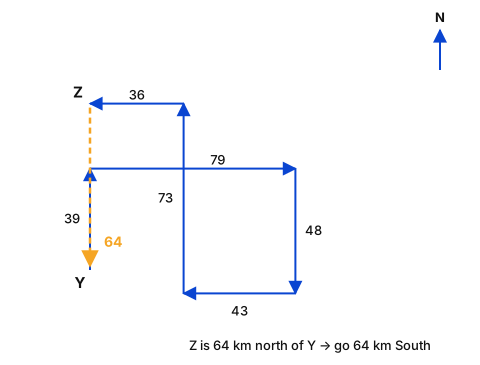
Pavan starts from Point Y and drives 39 km towards the north. He then takes a right turn and drives 79 km, then turns right and drives 48 km. He then takes a right turn and drives 43 km. He takes a right turn and drives 73 km. He then turns left, drives 36 km and stops at Point Z. How far (shortest distance) and in which direction should he drive in order to reach Point Y again? (All turns are 90-degree turns only unless specified.)
पवन बिंदु Y से चलना शुरू करता है और उत्तर की ओर 39 km गाड़ी चलाता है। फिर वह दाएँ मुड़ता है और 79 km गाड़ी चलाता है, फिर दाएँ मुड़ता है और 48 km गाड़ी चलाता है। फिर वह दाएँ मुड़ता है और 43 km गाड़ी चलाता है। वह दाएँ मुड़ता है और 73 km गाड़ी चलाता है। फिर वह बाएँ मुड़ता है, 36 km गाड़ी चलाता है और बिंदु Z पर रुक जाता है। बिंदु Y पर पुनः पहुँचने के लिए उसे कितनी दूर (न्यूनतम दूरी) और किस दिशा में गाड़ी चलानी चाहिए? (जब तक निर्दिष्ट न किया जाए, सभी मोड़ केवल 90 डिग्री के हैं।)
  1. A64 km towards the southदक्षिण की ओर 64 km
  2. B57 km towards the westपश्चिम की ओर 57 km
  3. C72 km towards the northउत्तर की ओर 72 km
  4. D74 km towards the eastपूर्व की ओर 74 km
Show answer

Concept: Track net East–West and North–South displacement.

  1. N 39, E 79, S 48, W 43, N 73, W 36
  2. East–West: 79−43−36=0
  3. North–South: 39−48+73=64 north
  4. Z is 64 km north of Y → drive 64 km south

Trick: Net E–W is zero, so Z lies straight above Y.

Answer: (A) 64 km towards the south

अवधारणा: पूर्व–पश्चिम और उत्तर–दक्षिण का शुद्ध विस्थापन निकालें।

  1. उ 39, पू 79, द 48, प 43, उ 73, प 36
  2. पूर्व–पश्चिम: 79−43−36=0
  3. उत्तर–दक्षिण: 39−48+73=64 उत्तर
  4. Z, Y से 64 km उत्तर → 64 km दक्षिण जाएँ

ट्रिक: पूर्व–पश्चिम शून्य, इसलिए Z ठीक Y के ऊपर है।

उत्तर: (A) 64 km towards the south (दक्षिण)

RRB NTPC Undergraduate CBT 1General Intelligence and ReasoningDirection & distanceRRB NTPC Undergraduate CBT 1 2024 · 18 Aug Shift 1 →
Q1990.
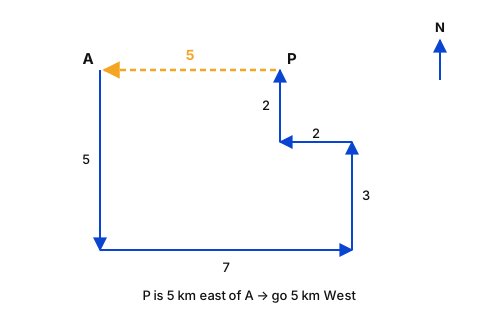
Jack starts from Point A and drives 5 km towards South. He then takes a left turn, drives 7 km, turns left and drives 3 km. He then takes a left turn and drives 2 km. He takes a final right turn, drives 2 km and stops at Point P. How far (shortest distance) and towards which direction should he drive in order to reach Point A again? (All turns are 90° turns only unless specified.)
जैक बिंदु A से चलना शुरू करता है और दक्षिण की ओर 5 km गाड़ी चलाता है। फिर वह बाएँ मुड़ता है, 7 km गाड़ी चलाता है, बाएँ मुड़ता है और 3 km गाड़ी चलाता है। फिर वह बाएँ मुड़ता है और 2 km गाड़ी चलाता है। वह अंतिम बार दाएँ मुड़ता है, 2 km गाड़ी चलाता है और बिंदु P पर रुक जाता है। बिंदु A पर पुनः पहुँचने के लिए उसे कितनी दूर (न्यूनतम दूरी) और किस दिशा में गाड़ी चलानी चाहिए? (जब तक निर्दिष्ट न किया जाए, सभी मोड़ केवल 90° के हैं।)
  1. A7 km towards Southदक्षिण की ओर 7 km
  2. B7 km towards Westपश्चिम की ओर 7 km
  3. C5 km towards Eastपूर्व की ओर 5 km
  4. D5 km towards Westपश्चिम की ओर 5 km
Show answer

Concept: Track turns; left from South is East.

  1. S 5, E 7, N 3, W 2, N 2
  2. North–South: −5+3+2=0
  3. East–West: 7−2=5 east
  4. P is 5 km east of A → drive 5 km west

Trick: If net N–S is zero, the answer is purely E or W.

Answer: (D) 5 km towards West

अवधारणा: मोड़ ध्यान से; दक्षिण की ओर जाते हुए बाएँ = पूर्व।

  1. द 5, पू 7, उ 3, प 2, उ 2
  2. उत्तर–दक्षिण: −5+3+2=0
  3. पूर्व–पश्चिम: 7−2=5 पूर्व
  4. P, A से 5 km पूर्व → 5 km पश्चिम जाएँ

ट्रिक: उत्तर–दक्षिण शून्य हो तो उत्तर केवल पूर्व/पश्चिम।

उत्तर: (D) 5 km towards West (पश्चिम)

RRB NTPC Undergraduate CBT 1General Intelligence and ReasoningDirection & distanceRRB NTPC Undergraduate CBT 1 2024 · 18 Aug Shift 1 →
Q1991.
In a certain code language, ‘CAKE’ is coded as ‘7209’ and ‘ACHE’ is coded as ‘0295’. What is the code for ‘H’ in the given code language ?
एक निश्चित कूट भाषा में, 'CAKE' को '7209' के रूप में कूटबद्ध किया जाता है और 'ACHE' को '0295' के रूप में कूटबद्ध किया जाता है। दी गई कूट भाषा में 'H' के लिए कूट क्या है?
  1. A0
  2. B9
  3. C2
  4. D5
Show answer

Concept: Common letters share common digits.

  1. CAKE = {7,2,0,9}; ACHE = {0,2,9,5}
  2. C, A, E common ↔ 0, 2, 9 common
  3. K = 7, so H = 5

Trick: Remove common letters and digits; the leftovers match.

Answer: (D) 5

अवधारणा: समान अक्षरों के कोड समान अंक।

  1. CAKE = {7,2,0,9}; ACHE = {0,2,9,5}
  2. C, A, E ↔ 0, 2, 9
  3. K = 7, अतः H = 5

ट्रिक: समान अक्षर-अंक हटाएँ; बचे हुए आपस में मेल खाते हैं।

उत्तर: (D) 5

RRB NTPC Undergraduate CBT 1General Intelligence and ReasoningCoding-decodingRRB NTPC Undergraduate CBT 1 2024 · 18 Aug Shift 1 →
Q1992.
What should come in place of the question mark (?) in the given series based on the English alphabetical order?
ATE VOZ QJU LEP ?
अंग्रेज़ी वर्णमाला क्रम के आधार पर दी गई श्रृंखला में प्रश्न चिह्न (?) के स्थान पर क्या आना चाहिए?
ATE VOZ QJU LEP ?
  1. AGZK
  2. BGZL
  3. CHZK
  4. DGYK
Show answer

Concept: Each position moves −5 (cyclic).

  1. 1st: A→V→Q→L→G
  2. 2nd: T→O→J→E→Z
  3. 3rd: E→Z→U→P→K
  4. Next: GZK

Trick: A(1)−5=−4+26=22 (V): wrap around.

Answer: (A) GZK

अवधारणा: हर स्थान −5 (चक्रीय)।

  1. पहला: A→V→Q→L→G
  2. दूसरा: T→O→J→E→Z
  3. तीसरा: E→Z→U→P→K
  4. अगला: GZK

ट्रिक: A(1)−5+26=22 (V)।

उत्तर: (A) GZK

RRB NTPC Undergraduate CBT 1General Intelligence and ReasoningAlphabet seriesRRB NTPC Undergraduate CBT 1 2024 · 18 Aug Shift 1 →
Q1993.
Refer to the following number and symbol series and answer the question that follows. Counting to be done from left to right only.
(Left) 6 & % 4 @ 8 9 $ 5 & 1 Ω 3 # 2 * £ 7 (Right)
If all the symbols are dropped from the series, which of the following will be seventh from the right?
निम्नलिखित संख्या और प्रतीक श्रृंखला को देखिए और उसके बाद दिए गए प्रश्न का उत्तर दीजिए। गिनती केवल बाएँ से दाएँ की जानी है।
(बाएँ) 6 & % 4 @ 8 9 $ 5 & 1 Ω 3 # 2 * £ 7 (दाएँ)
यदि श्रृंखला से सभी प्रतीकों को हटा दिया जाए, तो निम्नलिखित में से कौन-सा दाएँ से सातवाँ होगा?
  1. A4
  2. B8
  3. C9
  4. D5
Show answer

Concept: Remove symbols and count.

  1. Numbers only: 6 4 8 9 5 1 3 2 7 (9 numbers)
  2. 7th from right = (9−7+1)=3rd from left =8

Trick: Position from left = total − position from right +1.

Answer: (B) 8

अवधारणा: प्रतीक हटाकर गिनें।

  1. केवल संख्याएँ: 6 4 8 9 5 1 3 2 7 (9)
  2. दाएँ से 7वाँ = बाएँ से (9−7+1)=3रा =8

ट्रिक: बाएँ से स्थान = कुल − दाएँ से स्थान +1।

उत्तर: (B) 8

RRB NTPC Undergraduate CBT 1General Intelligence and ReasoningNumber-symbol seriesRRB NTPC Undergraduate CBT 1 2024 · 18 Aug Shift 1 →
Q1994.
In a certain code language, ‘WINE’ is coded as ‘4512’ and ‘NETI’ is coded as ‘5624’. What is the code for ‘T’ in the given code language?
एक निश्चित कूट भाषा में, 'WINE' को '4512' के रूप में कूटबद्ध किया जाता है और 'NETI' को '5624' के रूप में कूटबद्ध किया जाता है। दी गई कूट भाषा में 'T' के लिए कूट क्या है?
  1. A6
  2. B4
  3. C5
  4. D2
Show answer

Concept: Common letters share common digits.

  1. WINE = {4,5,1,2}; NETI = {5,6,2,4}
  2. I, N, E common ↔ 4, 5, 2 common
  3. W = 1, so T = 6

Trick: Left-over letter ↔ left-over digit.

Answer: (A) 6

अवधारणा: समान अक्षरों के कोड समान अंक।

  1. WINE = {4,5,1,2}; NETI = {5,6,2,4}
  2. I, N, E ↔ 4, 5, 2
  3. W = 1, अतः T = 6

ट्रिक: बचा अक्षर ↔ बचा अंक।

उत्तर: (A) 6

RRB NTPC Undergraduate CBT 1General Intelligence and ReasoningCoding-decodingRRB NTPC Undergraduate CBT 1 2024 · 18 Aug Shift 1 →
Q1995.
EJRX is related to HLUZ in a certain way based on the English alphabetical order. In the same way, QRDF is related to TTGH. To which of the following options is ZXML related, following the same logic?
अंग्रेज़ी वर्णमाला क्रम के आधार पर EJRX एक निश्चित प्रकार से HLUZ से संबंधित है। उसी प्रकार, QRDF, TTGH से संबंधित है। समान तर्क का अनुसरण करते हुए, ZXML निम्नलिखित में से किस विकल्प से संबंधित है?
  1. ACPNG
  2. BCZNP
  3. CCZPN
  4. DCGNH
Show answer

Concept: Find the shift for each letter.

  1. EJRX → HLUZ: +3,+2,+3,+2
  2. QRDF → TTGH: +3,+2,+3,+2 ✓
  3. ZXML: Z+3=C, X+2=Z, M+3=P, L+2=N → CZPN

Trick: Z+3 wraps to C.

Answer: (C) CZPN

अवधारणा: हर अक्षर का खिसकाव देखें।

  1. EJRX → HLUZ: +3,+2,+3,+2
  2. QRDF → TTGH ✓
  3. ZXML → C Z P N

ट्रिक: Z+3 घूमकर C बनता है।

उत्तर: (C) CZPN

RRB NTPC Undergraduate CBT 1General Intelligence and ReasoningLetter analogyRRB NTPC Undergraduate CBT 1 2024 · 18 Aug Shift 1 →
Q1996.
Based on the English alphabetical order, three of the following four letter cluster pairs are alike in a certain way and thus form a group. Which pair DOES NOT belong to that group? (NOTE: The odd one out is not based on the number of consonants/vowels or their position in the letter cluster.)
अंग्रेज़ी वर्णमाला क्रम के आधार पर, निम्नलिखित चार अक्षर-समूह युग्मों में से तीन किसी निश्चित प्रकार से एकसमान हैं और इस प्रकार एक समूह बनाते हैं। कौन-सा युग्म उस समूह से संबंधित नहीं है? (नोट: असंगत युग्म, व्यंजनों/स्वरों की संख्या या अक्षर-समूह में उनके स्थान पर आधारित नहीं है।)
  1. AMI-PL
  2. BRN-UQ
  3. CFB-ID
  4. DIE-LH
Show answer

Concept: Compare letters within and across each pair.

  1. MI-PL: M+3=P, I+3=L
  2. RN-UQ: +3,+3; IE-LH: +3,+3
  3. FB-ID: F+3=I, but B+2=D ✗

Trick: All others shift both letters by +3.

Answer: (C) FB-ID

अवधारणा: हर युग्म के अक्षरों का खिसकाव देखें।

  1. MI-PL: +3,+3
  2. RN-UQ, IE-LH: +3,+3
  3. FB-ID: +3, पर B+2=D ✗

ट्रिक: बाकी सब में दोनों अक्षर +3।

उत्तर: (C) FB-ID

RRB NTPC Undergraduate CBT 1General Intelligence and ReasoningOdd one out – letter pairsRRB NTPC Undergraduate CBT 1 2024 · 18 Aug Shift 1 →
Q1997.
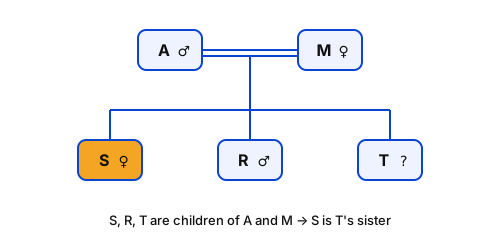
S is the daughter of M. M is the wife of A. A is the father of R. R is the brother of T. How is S related to T?
S, M की पुत्री है। M, A की पत्नी है। A, R का पिता है। R, T का भाई है। S का T से क्या संबंध है?
  1. ADaughterपुत्री
  2. BSonपुत्र
  3. CSisterबहन
  4. DMotherमाता
Show answer

Concept: Draw the family tree.

  1. M is A's wife; S is M's daughter → S is child of A and M
  2. R (son of A) is T's brother → T is also child of A and M
  3. S is a female sibling of T → sister

Trick: Daughter of one's parents = sister.

Answer: (C) Sister

अवधारणा: परिवार वृक्ष बनाएँ।

  1. M, A की पत्नी; S, M की बेटी → S, A-M की संतान
  2. R (A का बेटा) T का भाई → T भी A-M की संतान
  3. S, T की बहन है

ट्रिक: माता-पिता की बेटी = बहन।

उत्तर: (C) Sister (बहन)

RRB NTPC Undergraduate CBT 1General Intelligence and ReasoningBlood relationsRRB NTPC Undergraduate CBT 1 2024 · 18 Aug Shift 1 →
Q1998.
What should come in place of the question mark (?) in the given series?
3 5 9 23 39 ?
दी गई श्रृंखला में प्रश्न चिह्न (?) के स्थान पर क्या आना चाहिए?
3 5 9 23 39 ?
  1. A65
  2. B64
  3. C66
  4. D68
Show answer

Concept: Look at the differences.

  1. Differences: 2,4,14,16
  2. They go +2,+10,+2,+10 → next difference 16+10=26
  3. 39+26=65

Trick: When differences jump unevenly, check alternating steps.

Answer: (A) 65

अवधारणा: अंतर देखें।

  1. अंतर: 2,4,14,16
  2. पैटर्न +2,+10,+2,+10 → अगला अंतर 26
  3. 39+26=65

ट्रिक: अंतर असमान बढ़ें तो बारी-बारी (alternate) पैटर्न देखें।

उत्तर: (A) 65

RRB NTPC Undergraduate CBT 1General Intelligence and ReasoningNumber seriesRRB NTPC Undergraduate CBT 1 2024 · 18 Aug Shift 1 →
Q1999.
The Make in India initiative aims to boost domestic manufacturing. In which year was the 'Make in India' campaign launched?
मेक इन इंडिया (Make in India) पहल का उद्देश्य घरेलू विनिर्माण को बढ़ावा देना है। 'मेक इन इंडिया' अभियान किस वर्ष शुरू किया गया था?
  1. A2012
  2. B2016
  3. C2018
  4. D2014
Show answer

Concept: 'Make in India' is the flagship scheme to make India a global manufacturing hub.

  1. It was launched by PM Narendra Modi on 25 September 2014.
  2. Its logo is a lion made of gears; it covers 25 sectors (later expanded).
  3. 2012, 2016 and 2018 are not linked with its launch.

Yaad rakhein: Make in India – 25 Sept 2014 (lion logo).

Answer: (D) 2014

अवधारणा: 'मेक इन इंडिया' भारत को वैश्विक विनिर्माण (manufacturing) केंद्र बनाने की प्रमुख योजना है।

  1. इसे प्रधानमंत्री नरेंद्र मोदी ने 25 सितंबर 2014 को शुरू किया।
  2. इसका लोगो गियर से बना शेर है; इसमें 25 क्षेत्र शामिल थे।
  3. 2012, 2016, 2018 इसके शुभारंभ वर्ष नहीं हैं।

याद रखें: मेक इन इंडिया – 25 सितंबर 2014 (शेर लोगो)।

उत्तर: (D) 2014

RRB NTPC Undergraduate CBT 1General AwarenessGovernment SchemesRRB NTPC Undergraduate CBT 1 2024 · 14 Aug Shift 3 →
Q2000.
Which type of ROM can be programmed only once after manufacturing?
किस प्रकार की ROM को विनिर्माण के बाद केवल एक बार ही प्रोग्राम किया जा सकता है?
  1. AEEPROM
  2. BPROM
  3. CMask ROMमास्क ROM (Mask ROM)
  4. DEPROM
Show answer

Concept: ROM types differ in how (and how many times) they can be written.

  1. PROM (Programmable ROM) is blank when made; the user burns data into it only once (fuses are blown).
  2. EPROM is erased by UV light and EEPROM electrically – both are reprogrammable.
  3. Mask ROM is programmed by the manufacturer during fabrication itself, not after it.

Yaad rakhein: P-ROM = one-time 'Program'; E = Erasable (UV), EE = Electrically Erasable.

Answer: (B) PROM

अवधारणा: ROM के प्रकार इस बात पर अलग हैं कि उन्हें कैसे और कितनी बार लिखा जा सकता है।

  1. PROM (Programmable ROM) खाली बनती है; उपयोगकर्ता इसमें डेटा केवल एक बार लिख सकता है।
  2. EPROM को UV प्रकाश से और EEPROM को विद्युत से मिटाकर दोबारा लिखा जा सकता है।
  3. Mask ROM निर्माण के समय ही निर्माता द्वारा प्रोग्राम होती है, बाद में नहीं।

याद रखें: PROM = एक बार प्रोग्राम; EPROM = UV से मिटाओ; EEPROM = बिजली से मिटाओ।

उत्तर: (B) PROM

RRB NTPC Undergraduate CBT 1General AwarenessComputer Memory (ROM)RRB NTPC Undergraduate CBT 1 2024 · 14 Aug Shift 3 →