Question bank

Q&A: practice questions with answers

Search questions on any topic. Filter by exam category, exam, subject and topic, try the question, then open the answer and explanation.

Courses – airGurukul

8,495 questions found.

Q2261.
A man walks to a viewpoint and returns to the starting point by his car maintaining a constant speed and thus, takes a total time of 4 hours 45 minutes. He would have gained 2 hours by driving both ways. How long would it have taken for him to walk both ways with the same walking speed?
एक व्यक्ति पैदल चलकर एक दर्शनीय स्थल (viewpoint) तक जाता है और एक स्थिर चाल बनाए रखते हुए अपनी कार से प्रारंभिक बिंदु पर लौटता है, और इस प्रकार कुल 4 घंटे 45 मिनट का समय लेता है। यदि वह दोनों ओर कार से जाता, तो उसके 2 घंटे बच जाते। यदि वह उसी पैदल चाल से दोनों ओर पैदल चलता, तो उसे कितना समय लगता?
  1. A6 hours 30 minutes6 घंटे 30 मिनट
  2. B7 hours 15 minutes7 घंटे 15 मिनट
  3. C5 hours 45 minutes5 घंटे 45 मिनट
  4. D6 hours 45 minutes6 घंटे 45 मिनट
Show answer

Concept: Walk one way + drive one way = 4 h 45 min; drive both ways is 2 h less.

  1. Drive both ways =4.75−2=2.75 h → drive one way =1.375 h.
  2. Walk one way =4.75−1.375=3.375 h.
  3. Walk both ways =2×3.375=6.75 h =6 h 45 min.

Trick: Walk both =2×(mixed)−drive both=9.5−2.75=6.75 h.

Answer: (D) 6 hours 45 minutes

अवधारणा: एक ओर पैदल + एक ओर कार = 4 घंटे 45 मिनट; दोनों ओर कार से 2 घंटे कम।

  1. दोनों ओर कार =4.75−2=2.75 घंटे → एक ओर कार =1.375 घंटे।
  2. एक ओर पैदल =4.75−1.375=3.375 घंटे।
  3. दोनों ओर पैदल =2×3.375=6.75 घंटे =6 घंटे 45 मिनट।

ट्रिक: दोनों ओर पैदल =2×(मिश्रित)−दोनों ओर कार=9.5−2.75=6.75 घंटे।

उत्तर: (D) 6 घंटे 45 मिनट

RRB NTPC Undergraduate CBT 1MathematicsTime and DistanceRRB NTPC Undergraduate CBT 1 2024 · 14 Aug Shift 1 →
Q2262.
The average runs scored by a batsman in 23 matches is 43. In the next 10 matches, the batsman scored an average of 14 runs. Find his average runs scored (rounded off to two decimal places) in all the 33 matches.
एक बल्लेबाज़ द्वारा 23 मैचों में बनाए गए रनों का औसत 43 है। अगले 10 मैचों में, बल्लेबाज़ ने औसतन 14 रन बनाए। सभी 33 मैचों में उसके द्वारा बनाए गए रनों का औसत (दो दशमलव स्थानों तक पूर्णांकित) ज्ञात कीजिए।
  1. A35.21
  2. B34.21
  3. C33.21
  4. D36.21
Show answer

Concept: Overall average = total runs ÷ total matches.

  1. Runs in 23 matches =23×43=989; next 10 matches =10×14=140.
  2. Total =1129 runs in 33 matches.
  3. Average =112933≈34.21.

Trick: 43−10×(43−14)33=43−29033=43−8.79=34.21.

Answer: (B) 34.21

अवधारणा: कुल औसत = कुल रन ÷ कुल मैच।

  1. 23 मैचों के रन =23×43=989; अगले 10 मैच =10×14=140।
  2. कुल =1129 रन, 33 मैचों में।
  3. औसत =112933≈34.21।

ट्रिक: 43−10×(43−14)33=43−29033=43−8.79=34.21।

उत्तर: (B) 34.21

RRB NTPC Undergraduate CBT 1MathematicsAverageRRB NTPC Undergraduate CBT 1 2024 · 14 Aug Shift 1 →
Q2263.
Find the value of [135 ÷ {25 + 5 × (7 − 3)}].
[135 ÷ {25 + 5 × (7 − 3)}] का मान ज्ञात कीजिए।
  1. A3
  2. B5
  3. C2
  4. D4
Show answer

Concept: Solve innermost bracket first, then multiplication, addition and division (BODMAS).

  1. (7−3)=4.
  2. {25+5×4}=25+20=45.
  3. 135÷45=3.

Trick: Brackets order: ( ) → { } → [ ].

Answer: (A) 3

अवधारणा: पहले सबसे भीतरी कोष्ठक, फिर गुणा, जोड़ और भाग (BODMAS)।

  1. (7−3)=4।
  2. {25+5×4}=25+20=45।
  3. 135÷45=3।

ट्रिक: कोष्ठक क्रम: ( ) → { } → [ ]।

उत्तर: (A) 3

RRB NTPC Undergraduate CBT 1MathematicsSimplification (BODMAS)RRB NTPC Undergraduate CBT 1 2024 · 14 Aug Shift 1 →
Q2264.
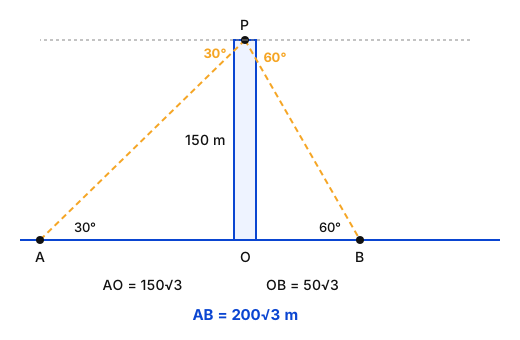
Aditya is standing on a light house of 150 m height and watching two boats on either side with angles of depression of 30∘ and 60∘, respectively. Find the distance between the two boats.
आदित्य 150 m ऊँचे एक प्रकाश स्तंभ (light house) पर खड़ा है और दोनों ओर स्थित दो नावों को क्रमशः 30∘ और 60∘ के अवनमन कोण (angles of depression) पर देख रहा है। दोनों नावों के बीच की दूरी ज्ञात कीजिए।
  1. A300m
  2. B1503m
  3. C250m
  4. D2003m
Show answer

Concept: Angle of depression from the top = angle of elevation at the boat; tanθ=heightdistance. Boats are on opposite sides, so add the distances.

  1. AO=150tan30∘=1503 m.
  2. OB=150tan60∘=1503=503 m.
  3. AB=1503+503=2003 m.

Trick: For 30° and 60° on opposite sides: distance =h(3+13)=4h3.

Answer: (D) 2003m

अवधारणा: शीर्ष से अवनमन कोण = नाव पर उन्नयन कोण; tanθ=ऊँचाईदूरी। नावें विपरीत ओर हैं, अतः दूरियाँ जोड़ें।

  1. AO=150tan30∘=1503 m।
  2. OB=150tan60∘=1503=503 m।
  3. AB=1503+503=2003 m।

ट्रिक: विपरीत ओर 30° और 60°: दूरी =h(3+13)=4h3।

उत्तर: (D) 2003m

RRB NTPC Undergraduate CBT 1MathematicsHeights and DistancesRRB NTPC Undergraduate CBT 1 2024 · 14 Aug Shift 1 →
Q2265.
Salil’s salary was first reduced by 25% and subsequently raised by 12%. What percentage was his final salary lower than his initial salary?
सलिल के वेतन में पहले 25% की कमी की गई और बाद में 12% की वृद्धि की गई। उसका अंतिम वेतन उसके प्रारंभिक वेतन से कितने प्रतिशत कम था?
  1. A3%
  2. B16%
  3. C12%
  4. D25%
Show answer

Concept: Successive changes multiply: net factor =(1−0.25)(1+0.12).

  1. 0.75×1.12=0.84.
  2. Final salary is 84% of initial → lower by 16%.

Trick: Net % =a+b+ab100=−25+12−300100=−16%.

Answer: (B) 16%

अवधारणा: क्रमिक परिवर्तन गुणा होते हैं: शुद्ध गुणक =(1−0.25)(1+0.12)।

  1. 0.75×1.12=0.84।
  2. अंतिम वेतन प्रारंभिक का 84% → 16% कम।

ट्रिक: शुद्ध % =a+b+ab100=−25+12−300100=−16%।

उत्तर: (B) 16%

RRB NTPC Undergraduate CBT 1MathematicsSuccessive Percentage ChangeRRB NTPC Undergraduate CBT 1 2024 · 14 Aug Shift 1 →
Q2266.
The LCM of the numbers 4.7 and 0.04 is:
संख्याओं 4.7 और 0.04 का LCM (लघुत्तम समापवर्त्य) है:
  1. A94
  2. B0.94
  3. C9.4
  4. D0.094
Show answer

Concept: Make equal decimal places, find LCM of the whole numbers, then put back the decimal places.

  1. 4.70 and 0.04 → 470 and 4 (two decimal places).
  2. LCM(470,4)=940.
  3. Put back 2 decimal places → 9.40=9.4.

Trick: LCM of decimals = LCM of numerators ÷ common power of 10.

Answer: (C) 9.4

अवधारणा: दशमलव स्थान बराबर करें, पूर्ण संख्याओं का LCM निकालें, फिर दशमलव वापस लगाएँ।

  1. 4.70 और 0.04 → 470 और 4 (दो दशमलव स्थान)।
  2. LCM(470,4)=940।
  3. 2 दशमलव स्थान वापस → 9.40=9.4।

ट्रिक: दशमलव का LCM = अंशों का LCM ÷ 10 की समान घात।

उत्तर: (C) 9.4

RRB NTPC Undergraduate CBT 1MathematicsLCM of DecimalsRRB NTPC Undergraduate CBT 1 2024 · 14 Aug Shift 1 →
Q2267.
If the third proportional of 16 and 40 be x, then what is the value of x?
यदि 16 और 40 का तृतीयानुपाती x है, तो x का मान कितना है?
  1. A102
  2. B99
  3. C101
  4. D100
Show answer

Concept: Third proportional of a and b: a:b=b:x → x=b2a.

  1. x=40216=160016.
  2. x=100.

Yaad rakhein: Third proportional =(second)2first.

Answer: (D) 100

अवधारणा: a और b का तृतीयानुपाती: a:b=b:x → x=b2a।

  1. x=40216=160016।
  2. x=100।

याद रखें: तृतीयानुपाती =(दूसरा)2पहला।

उत्तर: (D) 100

RRB NTPC Undergraduate CBT 1MathematicsProportionRRB NTPC Undergraduate CBT 1 2024 · 14 Aug Shift 1 →
Q2268.
The value of √(1.0201) is _______.
√(1.0201) का मान _______ है।
  1. A1.02
  2. B10.1
  3. C101
  4. D1.01
Show answer

Concept: A decimal with 4 decimal places has a square root with 2 decimal places.

  1. 1.0201=1020110000.
  2. 10201=101 since 1012=10201.
  3. 1.0201=101100=1.01.

Trick: (1.01)2=1.0201 — check the option by squaring.

Answer: (D) 1.01

अवधारणा: 4 दशमलव स्थान वाली संख्या के वर्गमूल में 2 दशमलव स्थान होते हैं।

  1. 1.0201=1020110000।
  2. 10201=101 क्योंकि 1012=10201।
  3. 1.0201=101100=1.01।

ट्रिक: (1.01)2=1.0201 — विकल्प का वर्ग करके जाँचें।

उत्तर: (D) 1.01

RRB NTPC Undergraduate CBT 1MathematicsSquare RootRRB NTPC Undergraduate CBT 1 2024 · 14 Aug Shift 1 →
Q2269.
Refer to the following number and symbol series and answer the question that follows. Counting to be done from left to right only.
(Left) @ + 1 < 9 6 9 2 % \ $ \ + 2 & $ 3 2 ^ 9 9 (Right)
How many such numbers are there that are immediately preceded by a symbol and immediately followed by another number?
निम्नलिखित संख्या और प्रतीक श्रृंखला को देखिए और उसके बाद दिए गए प्रश्न का उत्तर दीजिए। गणना केवल बाएँ से दाएँ की जानी है।
(बाएँ) @ + 1 < 9 6 9 2 % \ $ \ + 2 & $ 3 2 ^ 9 9 (दाएँ)
ऐसी कितनी संख्याएँ हैं जिनके ठीक पहले एक प्रतीक है और ठीक बाद एक अन्य संख्या है?
  1. AThreeतीन
  2. BOneएक
  3. CTwoदो
  4. DFourचार
Show answer

Concept: Check each number: the element just before must be a symbol and the element just after must be a number.

  1. Series: @ + 1 < 9 6 9 2 % \ $ \ + 2 & $ 3 2 ^ 9 9.
  2. 1: before “+”, after “<” (symbol) ✗. 9 (after “<”): followed by 6 ✓.
  3. 2 (after “+”): followed by “&” ✗. 3 (after “$”): followed by 2 ✓.
  4. 9 (after “^”): followed by 9 ✓. Total = 3.

Trick: Scan only numbers that come right after a symbol, then look one step right.

Answer: (A) Three

अवधारणा: हर संख्या जाँचें: ठीक पहले प्रतीक हो और ठीक बाद संख्या हो।

  1. श्रृंखला: @ + 1 < 9 6 9 2 % \ $ \ + 2 & $ 3 2 ^ 9 9।
  2. 1: पहले “+”, बाद में “<” (प्रतीक) ✗। 9 (“<” के बाद): बाद में 6 ✓।
  3. 2 (“+” के बाद): बाद में “&” ✗। 3 (“$” के बाद): बाद में 2 ✓।
  4. 9 (“^” के बाद): बाद में 9 ✓। कुल = 3।

ट्रिक: केवल प्रतीक के ठीक बाद आने वाली संख्याएँ देखें, फिर उनके दाएँ एक कदम देखें।

उत्तर: (A) तीन

RRB NTPC Undergraduate CBT 1General Intelligence and ReasoningNumber-Symbol SeriesRRB NTPC Undergraduate CBT 1 2024 · 14 Aug Shift 1 →
Q2270.
If + means −, − means ×, × means ÷ and ÷ means +, then what will come in place of the question mark (?) in the following equation?
75 × 5 + 11 − 2 ÷ 18 = ?
यदि + का अर्थ −, − का अर्थ ×, × का अर्थ ÷ और ÷ का अर्थ + है, तो निम्नलिखित समीकरण में प्रश्न चिह्न (?) के स्थान पर क्या आएगा?
75 × 5 + 11 − 2 ÷ 18 = ?
  1. A21
  2. B17
  3. C26
  4. D11
Show answer

Concept: Replace the signs as given, then apply BODMAS.

  1. 75×5+11−2÷18 becomes 75÷5−11×2+18.
  2. =15−22+18.
  3. =11.

Trick: Write the converted expression fully before calculating — most errors come from mixing old and new signs.

Answer: (D) 11

अवधारणा: दिए अनुसार चिह्न बदलें, फिर BODMAS लगाएँ।

  1. 75×5+11−2÷18 बनता है 75÷5−11×2+18।
  2. =15−22+18।
  3. =11।

ट्रिक: गणना से पहले बदला हुआ व्यंजक पूरा लिख लें — अधिकतर गलतियाँ पुराने-नए चिह्न मिलाने से होती हैं।

उत्तर: (D) 11

RRB NTPC Undergraduate CBT 1General Intelligence and ReasoningMathematical OperationsRRB NTPC Undergraduate CBT 1 2024 · 14 Aug Shift 1 →
Q2271.
Based on the English alphabetical order, three of the following four letter-cluster pairs are alike in a certain way and thus form a group. Which is the letter-cluster pair that DOES NOT belong to that group?
(Note: The odd one out is not based on the number of consonants/vowels or their position in the letter-cluster.)
अंग्रेज़ी वर्णमाला क्रम के आधार पर, निम्नलिखित चार अक्षर-समूह युग्मों में से तीन किसी निश्चित प्रकार से एकसमान हैं और इस प्रकार एक समूह बनाते हैं। वह अक्षर-समूह युग्म कौन-सा है जो उस समूह से संबंधित नहीं है?
(ध्यान दें: असंगत का चयन व्यंजनों/स्वरों की संख्या या अक्षर-समूह में उनकी स्थिति पर आधारित नहीं है।)
  1. AKE-MF
  2. BEY-GZ
  3. CYS-AT
  4. DPJ-RI
Show answer

Concept: Compare the first letters and the second letters of the two clusters separately (positions: A = 1 … Z = 26).

  1. KE-MF: K→M (+2), E→F (+1). EY-GZ: E→G (+2), Y→Z (+1).
  2. YS-AT: Y→A (+2, wrapping), S→T (+1).
  3. PJ-RI: P→R (+2) but J→I (−1) → odd.

Trick: Pattern “+2, +1” — the pair breaking it in any one letter is the odd one.

Answer: (D) PJ-RI

अवधारणा: दोनों समूहों के पहले अक्षरों और दूसरे अक्षरों की अलग-अलग तुलना करें (A = 1 … Z = 26)।

  1. KE-MF: K→M (+2), E→F (+1)। EY-GZ: E→G (+2), Y→Z (+1)।
  2. YS-AT: Y→A (+2, चक्रीय), S→T (+1)।
  3. PJ-RI: P→R (+2) पर J→I (−1) → विषम।

ट्रिक: पैटर्न “+2, +1” — जो जोड़ा किसी एक अक्षर में इसे तोड़े, वही विषम।

उत्तर: (D) PJ-RI

RRB NTPC Undergraduate CBT 1General Intelligence and ReasoningLetter-Cluster Odd One OutRRB NTPC Undergraduate CBT 1 2024 · 14 Aug Shift 1 →
Q2272.
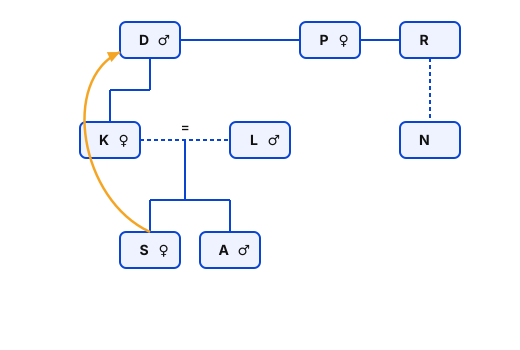
A is the brother of S. S is the daughter of L. L is married to K. K is the daughter of D. D is the father of P. P is the sister of R. R is married to N. How is D related to S?
A, S का भाई है। S, L की पुत्री है। L का विवाह K से हुआ है। K, D की पुत्री है। D, P का पिता है। P, R की बहन है। R का विवाह N से हुआ है। D का S से क्या संबंध है?
  1. AFather's brotherपिता का भाई
  2. BFatherपिता
  3. CMother's fatherमाता का पिता
  4. DFather's fatherपिता का पिता
Show answer

Concept: Fix genders first: a “daughter” is female; the spouse of a female is male.

  1. S is the daughter of L; L is married to K, and K is a daughter (female) → K is S’s mother, L is S’s father.
  2. K is the daughter of D, and D is a father (male).
  3. So D is the father of S’s mother.

Trick: Draw generations in rows: D → K → S; going up through the mother gives “mother’s father”.

Answer: (C) Mother’s father

अवधारणा: पहले लिंग तय करें: “बेटी” स्त्री है; स्त्री का जीवनसाथी पुरुष है।

  1. S, L की बेटी है; L का विवाह K से, और K बेटी (स्त्री) है → K, S की माँ और L, S के पिता।
  2. K, D की बेटी है, और D पिता (पुरुष) है।
  3. अतः D, S की माँ के पिता (नाना) हैं।

ट्रिक: पीढ़ियाँ पंक्तियों में बनाएँ: D → K → S; माँ के रास्ते ऊपर जाने पर “माँ के पिता”।

उत्तर: (C) माँ के पिता (Mother’s father)

RRB NTPC Undergraduate CBT 1General Intelligence and ReasoningBlood RelationRRB NTPC Undergraduate CBT 1 2024 · 14 Aug Shift 1 →
Q2273.
Each of the digits in the number 5341289 is arranged in ascending order from left to right. The position(s) of how many digits will remain unchanged as compared to that in the original number?
संख्या 5341289 के प्रत्येक अंक को बाएँ से दाएँ आरोही क्रम में व्यवस्थित किया जाता है। मूल संख्या की तुलना में कितने अंकों का स्थान अपरिवर्तित रहेगा?
  1. ATwoदो
  2. BOneएक
  3. CNoneकोई नहीं
  4. DThreeतीन
Show answer

Concept: Sort the digits and compare position by position.

  1. Original: 5 3 4 1 2 8 9.
  2. Ascending: 1 2 3 4 5 8 9.
  3. Same place: 8 (6th) and 9 (7th) → two digits.

Trick: Write both numbers one under the other and tick the matching columns.

Answer: (A) Two

अवधारणा: अंकों को क्रम में लगाकर हर स्थान की तुलना करें।

  1. मूल: 5 3 4 1 2 8 9।
  2. आरोही: 1 2 3 4 5 8 9।
  3. समान स्थान: 8 (6वाँ) और 9 (7वाँ) → दो अंक।

ट्रिक: दोनों संख्याएँ एक के नीचे एक लिखें और मिलते स्तंभों पर निशान लगाएँ।

उत्तर: (A) दो

RRB NTPC Undergraduate CBT 1General Intelligence and ReasoningDigit ArrangementRRB NTPC Undergraduate CBT 1 2024 · 14 Aug Shift 1 →
Q2274.
What should come in place of the question mark (?) in the given series?
108 122 139 159 182 208 ?
दी गई श्रृंखला में प्रश्न चिह्न (?) के स्थान पर क्या आना चाहिए?
108 122 139 159 182 208 ?
  1. A222
  2. B237
  3. C229
  4. D248
Show answer

Concept: Look at the differences between consecutive terms.

  1. Differences: 14,17,20,23,26 — increasing by 3.
  2. Next difference =29.
  3. 208+29=237.

Trick: When first differences grow steadily, add the next difference.

Answer: (B) 237

अवधारणा: क्रमागत पदों का अंतर देखें।

  1. अंतर: 14,17,20,23,26 — हर बार 3 अधिक।
  2. अगला अंतर =29।
  3. 208+29=237।

ट्रिक: जब पहला अंतर समान रूप से बढ़े, तो अगला अंतर जोड़ें।

उत्तर: (B) 237

RRB NTPC Undergraduate CBT 1General Intelligence and ReasoningNumber SeriesRRB NTPC Undergraduate CBT 1 2024 · 14 Aug Shift 1 →
Q2275.
Select the set in which the numbers are related in the same way as are the numbers of the following sets.
(Note: Operations should be performed on the whole numbers, without breaking down the numbers into their constituent digits. E.g., 13 – Operations on 13 such as
adding/subtracting/multiplying to 13 can be performed. Breaking down 13 into 1 and 3 and then performing mathematical operations on 1 and 3 is not allowed.)
(19, 31, 55)
(14, 26, 50)
उस समुच्चय का चयन कीजिए जिसमें संख्याएँ उसी प्रकार संबंधित हैं जिस प्रकार निम्नलिखित समुच्चयों की संख्याएँ संबंधित हैं।
(ध्यान दें: संक्रियाएँ पूर्ण संख्याओं पर की जानी चाहिए, संख्याओं को उनके घटक अंकों में विभाजित किए बिना। उदाहरण के लिए, 13 – 13 पर संक्रियाएँ जैसे
13 में जोड़ना/घटाना/गुणा करना किया जा सकता है। 13 को 1 और 3 में विभाजित करना और फिर 1 और 3 पर गणितीय संक्रियाएँ करना वर्जित है।)
(19, 31, 55)
(14, 26, 50)
  1. A(48, 60, 84)
  2. B(18, 32, 54)
  3. C(15, 30, 45)
  4. D(13, 26, 43)
Show answer

Concept: Find how the 2nd and 3rd numbers come from the 1st.

  1. (19,31,55): 19+12=31, 31+24=55. (14,26,50): 14+12=26, 26+24=50.
  2. (48,60,84): 48+12=60, 60+24=84 ✓.
  3. (18,32,54): +14 ✗; (15,30,45): +15 ✗; (13,26,43): +13 ✗.

Trick: Rule: second = first + 12, third = second + 24.

Answer: (A) (48,60,84)

अवधारणा: देखें दूसरी और तीसरी संख्या पहली से कैसे बनती है।

  1. (19,31,55): 19+12=31, 31+24=55। (14,26,50): 14+12=26, 26+24=50।
  2. (48,60,84): 48+12=60, 60+24=84 ✓।
  3. (18,32,54): +14 ✗; (15,30,45): +15 ✗; (13,26,43): +13 ✗।

ट्रिक: नियम: दूसरी = पहली + 12, तीसरी = दूसरी + 24।

उत्तर: (A) (48,60,84)

RRB NTPC Undergraduate CBT 1General Intelligence and ReasoningNumber TriadsRRB NTPC Undergraduate CBT 1 2024 · 14 Aug Shift 1 →
Q2276.
If ‘+’ means ‘subtraction’, ‘−’ means ‘multiplication’, ‘×’ means ‘division’ and ‘÷’ means ‘addition’, then what will come in place of the question mark (?) in the following equation?
64 × 8 + 6 − 6 ÷ 33 = ?
यदि '+' का अर्थ 'घटाना', '−' का अर्थ 'गुणा करना', '×' का अर्थ 'भाग देना' और '÷' का अर्थ 'जोड़ना' है, तो निम्नलिखित समीकरण में प्रश्न चिह्न (?) के स्थान पर क्या आएगा?
64 × 8 + 6 − 6 ÷ 33 = ?
  1. A20
  2. B5
  3. C10
  4. D15
Show answer

Concept: Replace the signs as given, then apply BODMAS.

  1. 64×8+6−6÷33 becomes 64÷8−6×6+33.
  2. =8−36+33.
  3. =5.

Trick: Do ÷ and × first, then + and − from left to right.

Answer: (B) 5

अवधारणा: दिए अनुसार चिह्न बदलें, फिर BODMAS लगाएँ।

  1. 64×8+6−6÷33 बनता है 64÷8−6×6+33।
  2. =8−36+33।
  3. =5।

ट्रिक: पहले ÷ और ×, फिर बाएँ से दाएँ + और −।

उत्तर: (B) 5

RRB NTPC Undergraduate CBT 1General Intelligence and ReasoningMathematical OperationsRRB NTPC Undergraduate CBT 1 2024 · 14 Aug Shift 1 →
Q2277.
What should come in place of the question mark (?) in the following series?
2 6 12 20 ?
निम्नलिखित श्रृंखला में प्रश्न चिह्न (?) के स्थान पर क्या आना चाहिए?
2 6 12 20 ?
  1. A40
  2. B35
  3. C30
  4. D25
Show answer

Concept: Terms are of the form n(n+1).

  1. 2=1×2, 6=2×3, 12=3×4, 20=4×5.
  2. Next =5×6=30.

Trick: Differences 4, 6, 8 → next 10: 20+10=30.

Answer: (C) 30

अवधारणा: पद n(n+1) के रूप में हैं।

  1. 2=1×2, 6=2×3, 12=3×4, 20=4×5।
  2. अगला =5×6=30।

ट्रिक: अंतर 4, 6, 8 → अगला 10: 20+10=30।

उत्तर: (C) 30

RRB NTPC Undergraduate CBT 1General Intelligence and ReasoningNumber SeriesRRB NTPC Undergraduate CBT 1 2024 · 14 Aug Shift 1 →
Q2278.
What should come in place of the question mark (?) in the given series based on the English alphabetical order?
WRM RMH MHC HCX ?
अंग्रेज़ी वर्णमाला क्रम के आधार पर दी गई श्रृंखला में प्रश्न चिह्न (?) के स्थान पर क्या आना चाहिए?
WRM RMH MHC HCX ?
  1. ACXD
  2. BCDX
  3. CCXS
  4. DCSX
Show answer

Concept: Each cluster moves 5 letters back (W = 23, R = 18, M = 13 …).

  1. WRM: W → R → M (each −5). Next cluster starts with the 2nd letter of the previous one.
  2. RMH, MHC, HCX (C − 5 = X, wrapping).
  3. Next: C, X, X − 5 = S → CXS.

Trick: Each term = previous term shifted one place left + a new letter 5 steps back.

Answer: (C) CXS

अवधारणा: हर समूह में अक्षर 5 पीछे जाते हैं (W = 23, R = 18, M = 13 …)।

  1. WRM: W → R → M (हर बार −5)। अगला समूह पिछले के दूसरे अक्षर से शुरू होता है।
  2. RMH, MHC, HCX (C − 5 = X, चक्रीय)।
  3. अगला: C, X, X − 5 = S → CXS।

ट्रिक: हर पद = पिछला पद एक स्थान बाएँ खिसका + 5 पीछे का नया अक्षर।

उत्तर: (C) CXS

RRB NTPC Undergraduate CBT 1General Intelligence and ReasoningAlphabet SeriesRRB NTPC Undergraduate CBT 1 2024 · 14 Aug Shift 1 →
Q2279.
In the following triads, each group of letters is related to the subsequent one following a certain logic. Select from the given options, the one which follows the same logic. LIVE – ELVI – LEIV
HANG – GHNA – HGAN
निम्नलिखित त्रिकों में, अक्षरों का प्रत्येक समूह एक निश्चित तर्क का अनुसरण करते हुए अपने बाद वाले समूह से संबंधित है। दिए गए विकल्पों में से उस विकल्प का चयन कीजिए जो उसी तर्क का अनुसरण करता है। LIVE – ELVI – LEIV
HANG – GHNA – HGAN
  1. APORT – TPOR – ORTP
  2. BREDS – ERDS – SEDR
  3. CDUSK – KDSU – DKUS
  4. DPAIN – NPIA – PANI
Show answer

Concept: Track positions: LIVE = 1 2 3 4.

  1. LIVE → ELVI = positions 4 1 3 2. ELVI → LEIV = swap 1st–2nd and 3rd–4th.
  2. Check HANG → GHNA (4 1 3 2) → HGAN (swap pairs) ✓.
  3. DUSK → KDSU (4 1 3 2) → DKUS (swap pairs) ✓. Others fail, e.g. PORT → TPOR is not 4 1 3 2 (should be TPRO).

Trick: Write the position code “4132” then “swap pairs” and test each option.

Answer: (C) DUSK – KDSU – DKUS

अवधारणा: स्थान ट्रैक करें: LIVE = 1 2 3 4।

  1. LIVE → ELVI = स्थान 4 1 3 2। ELVI → LEIV = 1–2 और 3–4 की अदला-बदली।
  2. जाँच HANG → GHNA (4 1 3 2) → HGAN (जोड़ों की अदला-बदली) ✓।
  3. DUSK → KDSU (4 1 3 2) → DKUS (जोड़ों की अदला-बदली) ✓। अन्य असफल, जैसे PORT → TPOR, 4 1 3 2 नहीं (TPRO होना चाहिए)।

ट्रिक: स्थान कोड “4132” फिर “जोड़ों की अदला-बदली” लिखें और हर विकल्प जाँचें।

उत्तर: (C) DUSK – KDSU – DKUS

RRB NTPC Undergraduate CBT 1General Intelligence and ReasoningLetter RearrangementRRB NTPC Undergraduate CBT 1 2024 · 14 Aug Shift 1 →
Q2280.
Select the pair that follows the same pattern as that followed by the two pairs given below. Both pairs follow the same pattern.
ERT : FSV
RDX : SEZ
उस युग्म का चयन कीजिए जो उसी पैटर्न का अनुसरण करता है जिसका अनुसरण नीचे दिए गए दो युग्म करते हैं। दोनों युग्म एक ही पैटर्न का अनुसरण करते हैं।
ERT : FSV
RDX : SEZ
  1. ADUC : EVD
  2. BUHS : VIU
  3. CEOC : FPF
  4. DIOP : JPS
Show answer

Concept: Find the shift of each letter: ERT → FSV.

  1. E→F (+1), R→S (+1), T→V (+2). RDX → SEZ follows +1, +1, +2.
  2. UHS → VIU: +1, +1, +2 ✓.
  3. DUC → EVD ends +1 ✗; EOC → FPF ends +3 ✗; IOP → JPS ends +3 ✗.

Trick: First two letters match in all options; just check the third letter for +2.

Answer: (B) UHS : VIU

अवधारणा: हर अक्षर का खिसकाव देखें: ERT → FSV।

  1. E→F (+1), R→S (+1), T→V (+2)। RDX → SEZ भी +1, +1, +2।
  2. UHS → VIU: +1, +1, +2 ✓।
  3. DUC → EVD अंत +1 ✗; EOC → FPF अंत +3 ✗; IOP → JPS अंत +3 ✗।

ट्रिक: सभी विकल्पों में पहले दो अक्षर मिलते हैं; केवल तीसरे अक्षर में +2 देखें।

उत्तर: (B) UHS : VIU

RRB NTPC Undergraduate CBT 1General Intelligence and ReasoningLetter AnalogyRRB NTPC Undergraduate CBT 1 2024 · 14 Aug Shift 1 →