Question bank

Q&A: practice questions with answers

Search questions on any topic. Filter by exam category, exam, subject and topic, try the question, then open the answer and explanation.

Courses – airGurukul

8,495 questions found.

Q2561.
Sapna invested ₹21,300 on simple interest, partly at 14% per annum and partly at 11% per annum. If she earns equal interests from the two investments after 3 years, then find the sum invested at 14% per annum (in ₹).
सपना ने ₹21,300 का साधारण ब्याज पर निवेश किया, जिसका कुछ भाग 14% वार्षिक दर पर और कुछ भाग 11% वार्षिक दर पर था। यदि 3 वर्ष बाद उसे दोनों निवेशों से समान ब्याज प्राप्त होता है, तो 14% वार्षिक दर पर निवेश की गई राशि (₹ में) ज्ञात कीजिए।
  1. A9,372
  2. B9,373
  3. C9,369
  4. D9,374
Show answer

Concept: Equal SI for equal time means principal × rate is the same for both parts.

  1. Let the sum at 14% be x: x×14=(21300−x)×11
  2. 25x=234300⇒x=9372

Trick: Principals are in inverse ratio of rates, 11:14: 1125×21300=9372.

Answer: (A) ₹9,372

अवधारणा: समान समय में समान ब्याज हो तो मूलधन × दर दोनों भागों के लिए समान होगा।

  1. 14% पर राशि x: x×14=(21300−x)×11
  2. 25x=234300⇒x=9372

ट्रिक: मूलधन दरों के व्युत्क्रम अनुपात 11:14 में: 1125×21300=9372।

उत्तर: (A) ₹9,372

RRB NTPC Undergraduate CBT 1MathematicsSimple interestRRB NTPC Undergraduate CBT 1 2024 · 13 Aug Shift 1 →
Q2562.
The average of first 161 even numbers is
प्रथम 161 सम संख्याओं का औसत है
  1. A163
  2. B162.5
  3. C161.5
  4. D162
Show answer

Concept: Average of the first n even numbers =n+1.

  1. Sum of first n even numbers =n(n+1)
  2. Average =n(n+1)n=n+1=161+1=162

Yaad rakhein: First n even numbers: average n+1; first n odd numbers: average n.

Answer: (D) 162

अवधारणा: पहली n सम संख्याओं का औसत =n+1।

  1. पहली n सम संख्याओं का योग =n(n+1)
  2. औसत =n(n+1)n=n+1=162

याद रखें: पहली n सम संख्याएँ: औसत n+1; पहली n विषम संख्याएँ: औसत n।

उत्तर: (D) 162

RRB NTPC Undergraduate CBT 1MathematicsAverage of even numbersRRB NTPC Undergraduate CBT 1 2024 · 13 Aug Shift 1 →
Q2563.
M and N start a business. M invests ₹38,000 more than N invests for 2 months and N for 3 months. M's share is ₹461 more than that of N, out of a total profit of ₹6,915. Find the capital contributed by M.
M और N एक व्यवसाय शुरू करते हैं। M, N से ₹38,000 अधिक निवेश करता है; M 2 महीने के लिए और N 3 महीने के लिए निवेश करता है। ₹6,915 के कुल लाभ में से M का हिस्सा N के हिस्से से ₹461 अधिक है। M द्वारा लगाई गई पूँजी ज्ञात कीजिए।
  1. A₹91,400
  2. B₹91,800
  3. C₹91,200
  4. D₹91,000
Show answer

Concept: Profit share is proportional to capital × time.

  1. M + N =6915, M − N =461⇒ M =3688, N =3227; ratio =8:7
  2. Let N's capital =x, M's =x+38000: 2(x+38000)3x=87
  3. 14x+532000=24x⇒x=53200
  4. M's capital =53200+38000=91200

Trick: 3688=8×461 and 3227=7×461 – spotting the common factor gives 8:7 instantly.

Answer: (C) ₹91,200

अवधारणा: लाभ का हिस्सा पूँजी × समय के अनुपात में होता है।

  1. M + N =6915, M − N =461⇒ M =3688, N =3227; अनुपात =8:7
  2. N की पूँजी =x, M की =x+38000: 2(x+38000)3x=87
  3. 14x+532000=24x⇒x=53200
  4. M की पूँजी =53200+38000=91200

ट्रिक: 3688=8×461, 3227=7×461 – सामान्य गुणनखंड से अनुपात 8:7 तुरंत।

उत्तर: (C) ₹91,200

RRB NTPC Undergraduate CBT 1MathematicsPartnershipRRB NTPC Undergraduate CBT 1 2024 · 13 Aug Shift 1 →
Q2564.
Simplify: x(2x - 8) + 5(x2 -3) + 12
सरल कीजिए: x(2x - 8) + 5(x2 -3) + 12
  1. A7x2 - 8x + 3
  2. B-7x2 -8x -3
  3. C7x2 - 8x - 3
  4. D-7x2 -8x + 3
Show answer

Concept: Expand the brackets and combine like terms.

  1. x(2x−8)=2x2−8x
  2. 5(x2−3)=5x2−15
  3. Total: 2x2−8x+5x2−15+12=7x2−8x−3

Trick: Constant term check: −15+12=−3 removes options (A) and (D); x2 coefficient +7 removes (B).

Answer: (C) 7x2−8x−3

अवधारणा: कोष्ठक खोलें और समान पदों को जोड़ें।

  1. x(2x−8)=2x2−8x
  2. 5(x2−3)=5x2−15
  3. कुल: 2x2−8x+5x2−15+12=7x2−8x−3

ट्रिक: अचर पद: −15+12=−3 से (A), (D) हटें; x2 का गुणांक +7 से (B) हटे।

उत्तर: (C) 7x2−8x−3

RRB NTPC Undergraduate CBT 1MathematicsAlgebraic simplificationRRB NTPC Undergraduate CBT 1 2024 · 13 Aug Shift 1 →
Q2565.
Find the simple interest (in ₹) on ₹4,000 at 6.75% per annum rate of interest deposited on 26 February 2024 and withdrawn on 27 April 2024.
26 फ़रवरी 2024 को 6.75% वार्षिक ब्याज दर पर जमा किए गए और 27 अप्रैल 2024 को निकाले गए ₹4,000 पर साधारण ब्याज (₹ में) ज्ञात कीजिए।
  1. A₹46
  2. B₹44
  3. C₹43
  4. D₹45
Show answer

Concept: SI=P×R×T100, with T in years =days366 in a leap year (count the day of deposit out, day of withdrawal in).

  1. 2024 is a leap year: Feb has 29 days. Days: Feb 3 (27, 28, 29) + Mar 31 + Apr 27 =61
  2. SI=4000×6.75×61100×366
  3. =270×61366=16470366=45

Trick: 366=6×61, so 61366=16 year: SI=2706=45.

Answer: (D) ₹45

अवधारणा: SI=P×R×T100, लीप वर्ष में T=दिन366 वर्ष (जमा का दिन नहीं, निकासी का दिन गिनें)।

  1. 2024 लीप वर्ष है: फरवरी 29 दिन। दिन: फरवरी 3 (27, 28, 29) + मार्च 31 + अप्रैल 27 =61
  2. SI=4000×6.75×61100×366
  3. =16470366=45

ट्रिक: 366=6×61, अतः 61366=16 वर्ष: SI=2706=45।

उत्तर: (D) ₹45

RRB NTPC Undergraduate CBT 1MathematicsSimple interest (days)RRB NTPC Undergraduate CBT 1 2024 · 13 Aug Shift 1 →
Q2566.
The HCF and the LCM of two numbers are 83 and 498, respectively. If one of the numbers is 166, find the other one.
दो संख्याओं का HCF और LCM क्रमशः 83 और 498 हैं। यदि उनमें से एक संख्या 166 है, तो दूसरी संख्या ज्ञात कीजिए।
  1. A166
  2. B230
  3. C332
  4. D249
Show answer

Concept: Product of two numbers =HCF×LCM.

  1. Other number =83×498166
  2. =4982=249

Trick: Both numbers must be multiples of the HCF 83: 249=3×83 ✔, while 230 is not.

Answer: (D) 249

अवधारणा: दो संख्याओं का गुणनफल =HCF×LCM।

  1. दूसरी संख्या =83×498166
  2. =4982=249

ट्रिक: दोनों संख्याएँ HCF 83 की गुणज होंगी: 249=3×83 ✔, 230 नहीं।

उत्तर: (D) 249

RRB NTPC Undergraduate CBT 1MathematicsHCF and LCMRRB NTPC Undergraduate CBT 1 2024 · 13 Aug Shift 1 →
Q2567.
Yash travels 200 km at 25 km/hr, the next 210 km at 21 km/hr and the next 204 km at 51 km/hr. What is his average speed (in km/hr) for the whole journey? (Round off your answer to two decimal places)
यश 200 km की दूरी 25 km/hr की चाल से, अगली 210 km की दूरी 21 km/hr की चाल से और अगली 204 km की दूरी 51 km/hr की चाल से तय करता है। पूरी यात्रा के लिए उसकी औसत चाल (km/hr में) क्या है? (अपने उत्तर को दशमलव के दो स्थानों तक पूर्णांकित कीजिए)
  1. A30.01
  2. B27.22
  3. C27.91
  4. D18.68
Show answer

Concept: Average speed=total distancetotal time.

  1. Times: 20025=8 h, 21021=10 h, 20451=4 h; total 22 h
  2. Distance =200+210+204=614km
  3. Average speed =61422≈27.91km/h

Trick: Never average the three speeds directly – that gives 32.33, which is wrong.

Answer: (C) 27.91

अवधारणा: औसत चाल=कुल दूरीकुल समय।

  1. समय: 20025=8 घंटे, 21021=10 घंटे, 20451=4 घंटे; कुल 22 घंटे
  2. दूरी =614km
  3. औसत चाल =61422≈27.91km/h

ट्रिक: तीनों चालों का सीधा औसत (32.33) गलत है।

उत्तर: (C) 27.91

RRB NTPC Undergraduate CBT 1MathematicsAverage speedRRB NTPC Undergraduate CBT 1 2024 · 13 Aug Shift 1 →
Q2568.
The number of prime numbers lying between 468 and 476, both included, is:
468 और 476 (दोनों सहित) के बीच स्थित अभाज्य संख्याओं की संख्या है:
  1. A0
  2. B1
  3. C5
  4. D2
Show answer

Concept: Test divisibility of odd numbers by primes up to 476≈21.8.

  1. Even numbers 468, 470, 472, 474, 476 are not prime; 475 ends in 5
  2. 469=7×67, 471=3×157, 473=11×43
  3. No prime lies in this range.

Trick: Check 3 (digit sum), 7 and 11 first – they catch most composite numbers.

Answer: (A) 0

अवधारणा: विषम संख्याओं को 476≈21.8 तक की अभाज्य संख्याओं से जाँचें।

  1. सम संख्याएँ 468, 470, 472, 474, 476 अभाज्य नहीं; 475 के अंत में 5
  2. 469=7×67, 471=3×157, 473=11×43
  3. इस परिसर में कोई अभाज्य संख्या नहीं।

ट्रिक: पहले 3 (अंकों का योग), 7 और 11 से जाँचें।

उत्तर: (A) 0

RRB NTPC Undergraduate CBT 1MathematicsPrime numbersRRB NTPC Undergraduate CBT 1 2024 · 13 Aug Shift 1 →
Q2569.
If ‘A’ stands for ‘÷’, ‘B’ stands for ‘×’, ‘C’ stands for ‘+’ and ‘D’ stands for ‘−’, then what will be come in place of the question mark (?) in the following equation?
18 A 3 D 8 B 2 C 12 = ?
यदि ‘A’ का अर्थ ‘÷’, ‘B’ का अर्थ ‘×’, ‘C’ का अर्थ ‘+’ और ‘D’ का अर्थ ‘−’ है, तो निम्नलिखित समीकरण में प्रश्न चिह्न (?) के स्थान पर क्या आएगा?
18 A 3 D 8 B 2 C 12 = ?
  1. A12
  2. B7
  3. C2
  4. D10
Show answer

Concept: Replace letters with signs, then apply BODMAS.

  1. 18÷3−8×2+12
  2. =6−16+12
  3. =2

Trick: Do ÷ and × first (6 and 16), then + and − left to right.

Answer: (C) 2

अवधारणा: अक्षरों को चिह्नों से बदलें, फिर BODMAS लगाएँ।

  1. 18÷3−8×2+12
  2. =6−16+12
  3. =2

ट्रिक: पहले ÷ और × (6 और 16), फिर + और −।

उत्तर: (C) 2

RRB NTPC Undergraduate CBT 1General Intelligence and ReasoningMathematical operationsRRB NTPC Undergraduate CBT 1 2024 · 13 Aug Shift 1 →
Q2570.
In a certain code language,
'A = B' means ‘A is the mother of B’,
'A $ B' means ‘A is the brother of B’,
'A @ B' means ‘A is the wife of B’ and
'A * B' means ‘A is the father of B’.
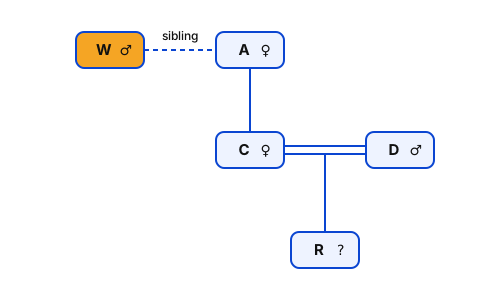
How is W related to R if W $ A = C @ D * R?
एक निश्चित कूट भाषा में,
'A = B' का अर्थ है ‘A, B की माता है’,
'A $ B' का अर्थ है ‘A, B का भाई है’,
'A @ B' का अर्थ है ‘A, B की पत्नी है’ और
'A * B' का अर्थ है ‘A, B का पिता है’।
यदि W $ A = C @ D * R है, तो W का R से क्या संबंध है?
  1. ABrotherभाई
  2. BMother's fatherमाता के पिता
  3. CMother's mother's brotherमाता की माता के भाई
  4. DFatherपिता
Show answer

Concept: Decode each symbol from left to right and build a family tree.

  1. W $ A: W is the brother of A
  2. A = C: A is the mother of C
  3. C @ D: C is the wife of D; D * R: D is the father of R, so C is R's mother
  4. A is R's mother's mother; W (A's brother) is R's mother's mother's brother

Trick: Climb the chain from R upward: mother (C) → her mother (A) → her brother (W).

Answer: (C) Mother's mother's brother

अवधारणा: हर चिह्न को बाएँ से दाएँ डिकोड कर वंश-वृक्ष बनाएँ।

  1. W $ A: W, A का भाई है
  2. A = C: A, C की माँ है
  3. C @ D: C, D की पत्नी है; D * R: D, R का पिता है, अतः C, R की माँ
  4. A, R की नानी है; W (A का भाई) R की माँ की माँ का भाई है

ट्रिक: R से ऊपर चढ़ें: माँ (C) → उसकी माँ (A) → उसका भाई (W)।

उत्तर: (C) Mother's mother's brother (माँ की माँ का भाई)

RRB NTPC Undergraduate CBT 1General Intelligence and ReasoningCoded blood relationsRRB NTPC Undergraduate CBT 1 2024 · 13 Aug Shift 1 →
Q2571.
In a certain code language, ‘DELT’ is coded as ‘1473’ and ‘BLED’ is coded as ‘7234’. What is the code for ‘B’ in the given code language?
एक निश्चित कूट भाषा में, ‘DELT’ को ‘1473’ के रूप में और ‘BLED’ को ‘7234’ के रूप में कूटबद्ध किया जाता है। दी गई कूट भाषा में ‘B’ के लिए कूट क्या है?
  1. A3
  2. B7
  3. C4
  4. D2
Show answer

Concept: Letters common to both words share the common digits; the leftover letter gets the leftover digit.

  1. DELT → {1, 4, 7, 3}; BLED → {7, 2, 3, 4}
  2. Common letters D, E, L ↔ common digits 3, 4, 7
  3. DELT has extra T ↔ extra 1; BLED has extra B ↔ extra 2

Trick: Cancel the common part; what remains in BLED's code (2) is B.

Answer: (D) 2

अवधारणा: दोनों शब्दों में सामान्य अक्षरों के कोड सामान्य अंक होंगे; बचा अक्षर बचे अंक से।

  1. DELT → {1, 4, 7, 3}; BLED → {7, 2, 3, 4}
  2. सामान्य अक्षर D, E, L ↔ सामान्य अंक 3, 4, 7
  3. DELT में T ↔ 1; BLED में B ↔ 2

ट्रिक: सामान्य भाग हटाएँ; BLED के कोड में बचा 2 ही B है।

उत्तर: (D) 2

RRB NTPC Undergraduate CBT 1General Intelligence and ReasoningCoding-decodingRRB NTPC Undergraduate CBT 1 2024 · 13 Aug Shift 1 →
Q2572.
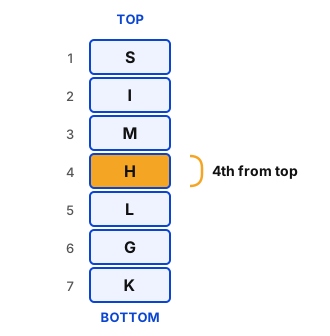
Seven boxes G, H, I, K, L, M and S are kept one over the other but not necessarily in the same order. Only four boxes are kept between I and K. Only S is kept above I. Only two boxes are kept between M and G. H is kept immediately above L. G is not kept immediately above H. Which box is kept fourth from the top?
सात बॉक्स G, H, I, K, L, M और S एक के ऊपर एक रखे गए हैं, लेकिन ज़रूरी नहीं कि इसी क्रम में हों। I और K के बीच केवल चार बॉक्स रखे गए हैं। I के ऊपर केवल S रखा गया है। M और G के बीच केवल दो बॉक्स रखे गए हैं। H को L के ठीक ऊपर रखा गया है। G को H के ठीक ऊपर नहीं रखा गया है। ऊपर से चौथे स्थान पर कौन-सा बॉक्स रखा गया है?
  1. AL
  2. BH
  3. CG
  4. DM
Show answer

Concept: Fix the definite positions first, then place the pairs.

  1. Only S above I ⇒ S = 1st, I = 2nd from top
  2. Four boxes between I and K ⇒ K = 7th
  3. M and G (two between) must take 3rd and 6th; H, L (H just above L) take 4th, 5th
  4. G not immediately above H ⇒ G = 6th, M = 3rd. Order: S, I, M, H, L, G, K

Trick: Only the pair 3–6 has exactly two gaps among the free slots 3, 4, 5, 6.

Answer: (B) H

अवधारणा: पहले निश्चित स्थान तय करें, फिर जोड़ियाँ रखें।

  1. केवल S, I के ऊपर ⇒ S = 1, I = 2 (ऊपर से)
  2. I और K के बीच चार बॉक्स ⇒ K = 7
  3. M और G (बीच में दो) = 3 और 6; H, L (H ठीक L के ऊपर) = 4, 5
  4. G, H के ठीक ऊपर नहीं ⇒ G = 6, M = 3। क्रम: S, I, M, H, L, G, K

ट्रिक: खाली स्थान 3, 4, 5, 6 में केवल 3–6 के बीच ठीक दो स्थान हैं।

उत्तर: (B) H

RRB NTPC Undergraduate CBT 1General Intelligence and ReasoningBox arrangementRRB NTPC Undergraduate CBT 1 2024 · 13 Aug Shift 1 →
Q2573.
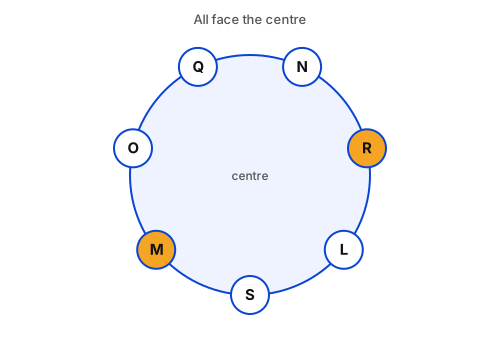
L, M, N, O, Q, R, and S are sitting around a circular table facing the centre of the table. R sits third to the left of O. Only one person sits between O and S when counted from the left of S. Only two people sit between Q and L when counted from the right of L. N is an immediate neighbour of Q.
Who sits third to the right of M?
L, M, N, O, Q, R और S एक वृत्ताकार मेज़ के चारों ओर मेज़ के केंद्र की ओर मुख करके बैठे हैं। R, O के बाएँ से तीसरे स्थान पर बैठा है। S के बाएँ से गिनने पर O और S के बीच केवल एक व्यक्ति बैठा है। L के दाएँ से गिनने पर Q और L के बीच केवल दो व्यक्ति बैठे हैं। N, Q का निकटतम पड़ोसी है।
M के दाएँ से तीसरे स्थान पर कौन बैठा है?
  1. AN
  2. BL
  3. CR
  4. DQ
Show answer

Concept: Facing the centre: left = clockwise, right = anticlockwise.

  1. Fix S; O is second to the left of S; R is third to the left of O
  2. Q is third to the right of L. L must sit immediately to the right of S, which puts Q immediately to the left of O
  3. N is a neighbour of Q, M takes the last seat: clockwise S, M, O, Q, N, R, L
  4. Third to the right of M (anticlockwise): S, L, R

Trick: The other placement of L–Q leaves no free seat beside Q for N, so it is rejected.

Answer: (C) R

अवधारणा: केंद्र की ओर मुख: बायाँ = दक्षिणावर्त (clockwise), दायाँ = वामावर्त।

  1. S तय करें; O, S के बाएँ दूसरा; R, O के बाएँ तीसरा
  2. Q, L के दाएँ तीसरा; L, S के ठीक दाएँ बैठेगा, तब Q, O के ठीक बाएँ आता है
  3. N, Q का पड़ोसी, M बची सीट पर: दक्षिणावर्त S, M, O, Q, N, R, L
  4. M के दाएँ तीसरा (वामावर्त): S, L, R

ट्रिक: L–Q की दूसरी स्थिति में Q के पास N के लिए सीट नहीं बचती, इसलिए वह अस्वीकार।

उत्तर: (C) R

RRB NTPC Undergraduate CBT 1General Intelligence and ReasoningCircular seating arrangementRRB NTPC Undergraduate CBT 1 2024 · 13 Aug Shift 1 →
Q2574.
What should come in place of the question mark (?) in the given series based on the English alphabetical order?
FIL ADG VYB QTW ?
अंग्रेज़ी वर्णमाला क्रम के आधार पर दी गई श्रृंखला में प्रश्न चिह्न (?) के स्थान पर क्या आना चाहिए?
FIL ADG VYB QTW ?
  1. ALRO
  2. BLOR
  3. CRLO
  4. DROL
Show answer

Concept: Track each letter position of the clusters separately.

  1. 1st letters: F → A → V → Q, each −5 (A −5 wraps to V); next Q −5 = L
  2. 2nd letters: I → D → Y → T, each −5; next O
  3. 3rd letters: L → G → B → W, each −5; next R

Trick: Each cluster is the previous one shifted back by 5 letters: QTW → LOR.

Answer: (B) LOR

अवधारणा: हर स्थान के अक्षरों को अलग-अलग देखें।

  1. पहले अक्षर: F → A → V → Q, हर बार −5; अगला L
  2. दूसरे अक्षर: I → D → Y → T, हर बार −5; अगला O
  3. तीसरे अक्षर: L → G → B → W, हर बार −5; अगला R

ट्रिक: हर समूह पिछले समूह से 5 अक्षर पीछे: QTW → LOR।

उत्तर: (B) LOR

RRB NTPC Undergraduate CBT 1General Intelligence and ReasoningLetter seriesRRB NTPC Undergraduate CBT 1 2024 · 13 Aug Shift 1 →
Q2575.
Select the pair which follows the same pattern as that followed by the two pairs given below. Both pairs follow the same pattern.
MUV : QPZ
UKD : YFH
उस युग्म का चयन कीजिए जो उसी पैटर्न का अनुसरण करता है जिसका अनुसरण नीचे दिए गए दो युग्म करते हैं। दोनों युग्म एक ही पैटर्न का अनुसरण करते हैं।
MUV : QPZ
UKD : YFH
  1. ATLW : XQA
  2. BFCV : KZQ
  3. CCAL : GVP
  4. DSLU : VGX
Show answer

Concept: Find the letter-wise shifts in the given pairs.

  1. MUV → QPZ: M +4 = Q, U −5 = P, V +4 = Z
  2. UKD → YFH: U +4 = Y, K −5 = F, D +4 = H
  3. CAL: C +4 = G, A −5 = V (wrap), L +4 = P → GVP ✔

Trick: Check the middle letter (−5) first – it rejects TLW (L → Q) and SLU at once.

Answer: (C) CAL : GVP

अवधारणा: दिए गए युग्मों में अक्षरों का खिसकाव ज्ञात करें।

  1. MUV → QPZ: M +4 = Q, U −5 = P, V +4 = Z
  2. UKD → YFH: U +4 = Y, K −5 = F, D +4 = H
  3. CAL: C +4 = G, A −5 = V, L +4 = P → GVP ✔

ट्रिक: पहले बीच वाला अक्षर (−5) जाँचें – TLW और SLU तुरंत हट जाते हैं।

उत्तर: (C) CAL : GVP

RRB NTPC Undergraduate CBT 1General Intelligence and ReasoningLetter analogyRRB NTPC Undergraduate CBT 1 2024 · 13 Aug Shift 1 →
Q2576.
In a certain code language, ‘LOAN’ is coded as ‘4257’ and ‘NIKE’ is coded as ‘1346’. What is the code for ‘N’ in the given code language?
एक निश्चित कूट भाषा में, ‘LOAN’ को ‘4257’ के रूप में और ‘NIKE’ को ‘1346’ के रूप में कूटबद्ध किया जाता है। दी गई कूट भाषा में ‘N’ के लिए कूट क्या है?
  1. A1
  2. B6
  3. C7
  4. D4
Show answer

Concept: A letter common to both words is coded by the digit common to both codes.

  1. LOAN → {4, 2, 5, 7}; NIKE → {1, 3, 4, 6}
  2. Only common letter: N; only common digit: 4
  3. So N = 4

Trick: One common letter ↔ one common digit.

Answer: (D) 4

अवधारणा: दोनों शब्दों का सामान्य अक्षर, दोनों कोडों के सामान्य अंक से कोडित होगा।

  1. LOAN → {4, 2, 5, 7}; NIKE → {1, 3, 4, 6}
  2. एकमात्र सामान्य अक्षर N; एकमात्र सामान्य अंक 4
  3. अतः N = 4

ट्रिक: एक सामान्य अक्षर ↔ एक सामान्य अंक।

उत्तर: (D) 4

RRB NTPC Undergraduate CBT 1General Intelligence and ReasoningCoding-decodingRRB NTPC Undergraduate CBT 1 2024 · 13 Aug Shift 1 →
Q2577.
Each of the digits in the number 95423671 is arranged in ascending order from left to right. What will be the sum of the digits that are third from the left and fourth from the right in the new number thus formed?
संख्या 95423671 के प्रत्येक अंक को बाएँ से दाएँ आरोही क्रम में व्यवस्थित किया जाता है। इस प्रकार बनी नई संख्या में बाएँ से तीसरे और दाएँ से चौथे अंकों का योग क्या होगा?
  1. A10
  2. B11
  3. C8
  4. D9
Show answer

Concept: Rearrange the digits and read positions carefully from each end.

  1. Ascending order: 1 2 3 4 5 6 7 9
  2. Third from left = 3
  3. Fourth from right (8 digits) = 5th from left = 5
  4. Sum =3+5=8

Trick: kth from right =(n−k+1)th from left; here 8−4+1=5.

Answer: (C) 8

अवधारणा: अंकों को व्यवस्थित कर दोनों सिरों से स्थान ध्यान से पढ़ें।

  1. आरोही क्रम: 1 2 3 4 5 6 7 9
  2. बाएँ से तीसरा = 3
  3. दाएँ से चौथा = बाएँ से 5वाँ = 5
  4. योग =3+5=8

ट्रिक: दाएँ से kवाँ =(n−k+1)वाँ बाएँ से; यहाँ 8−4+1=5।

उत्तर: (C) 8

RRB NTPC Undergraduate CBT 1General Intelligence and ReasoningDigit arrangementRRB NTPC Undergraduate CBT 1 2024 · 13 Aug Shift 1 →
Q2578.
Based on the English alphabetical order, three of the following four letter-cluster pairs are alike in a certain way and thus form a group. Which letter-cluster pair DOES NOT belong to that group?
(Note: The odd one out is not based on the number of consonants/vowels or their position in the letter-cluster.)
अंग्रेज़ी वर्णमाला क्रम के आधार पर, निम्नलिखित चार अक्षर-समूह युग्मों में से तीन किसी निश्चित प्रकार से एकसमान हैं और इस प्रकार एक समूह बनाते हैं। कौन-सा अक्षर-समूह युग्म उस समूह से संबंधित नहीं है?
(ध्यान दें: असंगत का निर्धारण व्यंजनों/स्वरों की संख्या या अक्षर-समूह में उनके स्थान के आधार पर नहीं किया गया है।)
  1. ANQ-SL
  2. BJM-OH
  3. CCF-HB
  4. DFI-KD
Show answer

Concept: Use positions: in each pair XY-ZW, compare Y, Z, W with X.

  1. NQ-SL: N14 → Q17 (+3), S19 (+5 from N), L12 (−7 from S)
  2. JM-OH: J10 → M13 (+3), O15 (+5), H8 (−7)
  3. FI-KD: F6 → I9, K11, D4 – same pattern
  4. CF-HB: C3 → F6, H8, but B2 is H −6 – odd

Trick: Only the last letter breaks the pattern, so compare 4th letter with 3rd first.

Answer: (C) CF-HB

अवधारणा: अक्षर स्थान लें: हर युग्म XY-ZW में Y, Z, W की X से तुलना करें।

  1. NQ-SL: N14 → Q17 (+3), S19 (+5), L12 (S से −7)
  2. JM-OH: J10 → M13 (+3), O15 (+5), H8 (−7)
  3. FI-KD: F6 → I9, K11, D4 – वही पैटर्न
  4. CF-HB: C3 → F6, H8, पर B2 = H −6 – विषम

ट्रिक: केवल अंतिम अक्षर पैटर्न तोड़ता है, इसलिए चौथे अक्षर की तीसरे से तुलना पहले करें।

उत्तर: (C) CF-HB

RRB NTPC Undergraduate CBT 1General Intelligence and ReasoningOdd one out (letter pairs)RRB NTPC Undergraduate CBT 1 2024 · 13 Aug Shift 1 →
Q2579.
What should come in place of the question mark (?) in the given series?
561 562 564 ? 571 576
दी गई श्रृंखला में प्रश्न चिह्न (?) के स्थान पर क्या आना चाहिए?
561 562 564 ? 571 576
  1. A569
  2. B566
  3. C567
  4. D568
Show answer

Concept: Look at the differences between consecutive terms.

  1. 561→+1562→+2564→+3?
  2. 564+3=567; check 567+4=571, 571+5=576 ✔

Trick: Differences 1, 2, 3, 4, 5 – a simple increasing pattern.

Answer: (C) 567

अवधारणा: क्रमागत पदों के अंतर देखें।

  1. 561→+1562→+2564→+3?
  2. 564+3=567; जाँच 567+4=571, 571+5=576 ✔

ट्रिक: अंतर 1, 2, 3, 4, 5 – सरल बढ़ता पैटर्न।

उत्तर: (C) 567

RRB NTPC Undergraduate CBT 1General Intelligence and ReasoningNumber seriesRRB NTPC Undergraduate CBT 1 2024 · 13 Aug Shift 1 →
Q2580.
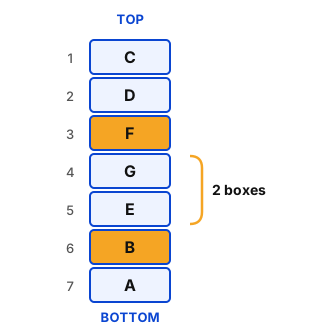
Seven boxes A, B, C, D, E, F and G are kept one over the other but not necessarily in the same order. Only C is kept above D. Only two boxes are kept between D and E. Only A is kept below B. F is not kept immediately above E. How many boxes are kept between B and F?
सात बॉक्स A, B, C, D, E, F और G एक के ऊपर एक रखे गए हैं, लेकिन ज़रूरी नहीं कि इसी क्रम में हों। D के ऊपर केवल C रखा गया है। D और E के बीच केवल दो बॉक्स रखे गए हैं। B के नीचे केवल A रखा गया है। F को E के ठीक ऊपर नहीं रखा गया है। B और F के बीच कितने बॉक्स रखे गए हैं?
  1. AOneएक
  2. BTwoदो
  3. CThreeतीन
  4. DFourचार
Show answer

Concept: Use 'only X above / below' clues to fix the ends first.

  1. Only C above D ⇒ C = 1st, D = 2nd (from top)
  2. Two boxes between D and E ⇒ E = 5th
  3. Only A below B ⇒ A = 7th, B = 6th
  4. F not immediately above E ⇒ F = 3rd, G = 4th. Between B and F: G, E

Trick: Two 'only' clues fix four boxes at once – start there.

Answer: (B) Two

अवधारणा: 'केवल X ऊपर/नीचे' वाले संकेतों से पहले सिरे तय करें।

  1. केवल C, D के ऊपर ⇒ C = 1, D = 2 (ऊपर से)
  2. D और E के बीच दो ⇒ E = 5
  3. केवल A, B के नीचे ⇒ A = 7, B = 6
  4. F, E के ठीक ऊपर नहीं ⇒ F = 3, G = 4। B और F के बीच: G, E

ट्रिक: दो 'केवल' संकेत चार बॉक्स तुरंत तय कर देते हैं।

उत्तर: (B) दो (Two)

RRB NTPC Undergraduate CBT 1General Intelligence and ReasoningBox arrangementRRB NTPC Undergraduate CBT 1 2024 · 13 Aug Shift 1 →