Question bank

Q&A: practice questions with answers

Search questions on any topic. Filter by exam category, exam, subject and topic, try the question, then open the answer and explanation.

Courses – airGurukul

8,495 questions found.

Q281.
Based on the English alphabetical order, three of the following four letter-clusters are alike in a certain way and thus form a group. Which letter-cluster DOES NOT belong to that group?
(Note: The odd one out is not based on the number of consonants/vowels or their position in the letter-cluster.)
अंग्रेज़ी वर्णमाला क्रम के आधार पर, निम्नलिखित चार अक्षर-समूहों में से तीन किसी निश्चित प्रकार से एक समान हैं और इस प्रकार एक समूह बनाते हैं। कौन-सा अक्षर-समूह उस समूह से संबंधित नहीं है?
(नोट: असंगत अक्षर-समूह, उस अक्षर-समूह में व्यंजनों/स्वरों की संख्या या उनके स्थान पर आधारित नहीं है।)
  1. AMOK
  2. BOQM
  3. COSP
  4. DDFB
Show answer

Concept: Compare the gaps between consecutive letters.

  1. MOK: +2, −4. OQM: +2, −4. DFB: +2, −4.
  2. OSP: +4, −3 — different.

Trick: Check the first gap; three show +2.

Answer: (C) OSP

अवधारणा: क्रमागत अक्षरों के अंतर की तुलना करें।

  1. MOK: +2, −4; OQM: +2, −4; DFB: +2, −4।
  2. OSP: +4, −3 — अलग।

ट्रिक: पहला अंतर देखें; तीन में +2 है।

उत्तर: (C) OSP
RRB NTPC Undergraduate CBT 1General Intelligence and ReasoningOdd One Out (Letters)RRB NTPC Undergraduate CBT 1 2024 · 29 Aug Shift 1 →
Q282.
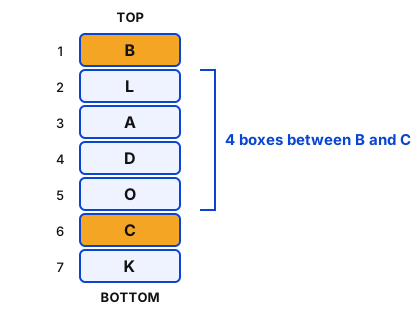
Seven boxes, A, B, C, D, K, L and O, are kept one over the other, but not necessarily in the same order. Only two boxes are kept below O. Only one box is kept above L. Only one box is kept between L and D. C is kept immediately above K. A is kept at some place below B. How many boxes are kept between B and C?
सात बक्से A, B, C, D, K, L और O एक के ऊपर एक रखे गए हैं, लेकिन आवश्यक नहीं कि इसी क्रम में हों। O के नीचे केवल दो बक्से रखे गए हैं। L के ऊपर केवल एक बक्सा रखा गया है। L और D के बीच केवल एक बक्सा रखा गया है। C को K के ठीक ऊपर रखा गया है। A को B के नीचे किसी स्थान पर रखा गया है। B और C के बीच कितने बक्से रखे गए हैं?
  1. AFourचार
  2. BTwoदो
  3. CThreeतीन
  4. DOneएक
Show answer

Concept: Number positions 1 (top) to 7 (bottom).

  1. Two below O ⇒ O = 5. One above L ⇒ L = 2. One between L and D ⇒ D = 4.
  2. C just above K: free consecutive slots only 6, 7 ⇒ C = 6, K = 7.
  3. A below B in slots 1, 3 ⇒ B = 1, A = 3.
  4. Between B (1) and C (6): L, A, D, O = four.

Trick: Fix count-based clues ('only two below') first.

Answer: (A) Four

अवधारणा: ऊपर से 1 से नीचे 7 तक स्थान लें।

  1. O के नीचे दो ⇒ O = 5; L के ऊपर एक ⇒ L = 2; L–D के बीच एक ⇒ D = 4।
  2. C ठीक K के ऊपर: खाली लगातार स्थान केवल 6, 7 ⇒ C = 6, K = 7।
  3. A, B के नीचे ⇒ B = 1, A = 3।
  4. B (1) और C (6) के बीच L, A, D, O = चार।

ट्रिक: 'केवल दो नीचे' जैसी गिनती वाली सूचना पहले लगाएँ।

उत्तर: (A) चार

RRB NTPC Undergraduate CBT 1General Intelligence and ReasoningBox ArrangementRRB NTPC Undergraduate CBT 1 2024 · 29 Aug Shift 1 →
Q283.
What will come in the place of the question mark (?) in the following equation, if ‘+’ and ‘−’ are interchanged and ‘×’ and ‘÷’ are interchanged?
25 − 9 × 3 + 4 ÷ 2 = ?
यदि ‘+’ और ‘−’ को आपस में बदल दिया जाए तथा ‘×’ और ‘÷’ को आपस में बदल दिया जाए, तो निम्नलिखित समीकरण में प्रश्न चिह्न (?) के स्थान पर क्या आएगा?
25 − 9 × 3 + 4 ÷ 2 = ?
  1. A20
  2. B17
  3. C19
  4. D18
Show answer

Concept: Interchange the signs, then apply BODMAS.

  1. 25−9×3+4÷2→25+9÷3−4×2.
  2. =25+3−8=20.

Trick: Swap signs carefully first, then divide/multiply before add/subtract.

Answer: (A) 20

अवधारणा: चिह्न बदलें, फिर BODMAS लगाएँ।

  1. 25−9×3+4÷2→25+9÷3−4×2
  2. =25+3−8=20

ट्रिक: पहले चिह्न बदलें, फिर भाग/गुणा पहले।

उत्तर: (A) 20

RRB NTPC Undergraduate CBT 1General Intelligence and ReasoningMathematical OperationsRRB NTPC Undergraduate CBT 1 2024 · 29 Aug Shift 1 →
Q284.
What should come in place of the question mark (?) in the given series?
991 990 992 991 993 992 994 ?
दी गई श्रृंखला में प्रश्न चिह्न (?) के स्थान पर क्या आना चाहिए?
991 990 992 991 993 992 994 ?
  1. A993
  2. B996
  3. C995
  4. D992
Show answer

Concept: Alternate differences.

  1. 991→990(−1)→992(+2)→991(−1)→993(+2)→992(−1)→994(+2).
  2. Next: 994−1=993.

Trick: Pattern −1,+2 repeats.

Answer: (A) 993

अवधारणा: एकांतर अंतर।

  1. 991→990(−1)→992(+2)→991(−1)→993(+2)→992(−1)→994(+2)
  2. अगला: 994−1=993

ट्रिक: −1,+2 दोहराता है।

उत्तर: (A) 993

RRB NTPC Undergraduate CBT 1General Intelligence and ReasoningNumber SeriesRRB NTPC Undergraduate CBT 1 2024 · 29 Aug Shift 1 →
Q285.
Read the given statements and conclusions carefully. Assuming that the information given in the statements is true, even if it appears to be at variance with commonly known facts, decide which of the given conclusions logically follow(s) from the statements.
Statements:
All doors are carpets.
No carpet is a mat.
Conclusions:
(I) No door is a mat.
(II) No mat is a carpet.
दिए गए कथनों और निष्कर्षों को ध्यानपूर्वक पढ़िए। यह मानते हुए कि कथनों में दी गई जानकारी सत्य है, भले ही वह सामान्यतः ज्ञात तथ्यों से भिन्न प्रतीत होती हो, निर्णय कीजिए कि दिए गए निष्कर्षों में से कौन-सा/कौन-से निष्कर्ष तार्किक रूप से कथनों का अनुसरण करता है/करते हैं।
कथन:
सभी दरवाज़े, कालीन हैं।
कोई कालीन, चटाई नहीं है।
निष्कर्ष:
(I) कोई दरवाज़ा, चटाई नहीं है।
(II) कोई चटाई, कालीन नहीं है।
  1. AOnly conclusion (II) follows.केवल निष्कर्ष (II) अनुसरण करता है।
  2. BOnly conclusion (I) follows.केवल निष्कर्ष (I) अनुसरण करता है।
  3. CNeither conclusion (I) nor (II) follows.न तो निष्कर्ष (I) और न ही (II) अनुसरण करता है।
  4. DBoth conclusions (I) and (II) follow.निष्कर्ष (I) और (II) दोनों अनुसरण करते हैं।
Show answer

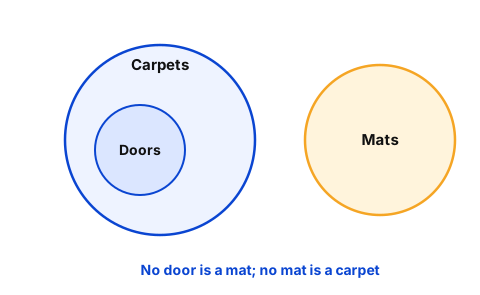
Concept: Draw the Venn diagram: Doors inside Carpets; Carpets separate from Mats.

  1. All doors are carpets and no carpet is a mat ⇒ no door is a mat: I follows.
  2. 'No carpet is a mat' converts to 'No mat is a carpet': II follows.

Yaad rakhein: An 'E' (No) statement can always be reversed.

Answer: (D) Both conclusions (I) and (II) follow.

अवधारणा: वेन आरेख: Doors, Carpets के अंदर; Carpets, Mats से अलग।

  1. सभी doors, carpets हैं और कोई carpet, mat नहीं ⇒ कोई door, mat नहीं: I सही।
  2. 'कोई carpet, mat नहीं' उलटकर 'कोई mat, carpet नहीं': II सही।

याद रखें: 'कोई नहीं' वाला कथन हमेशा उलटा जा सकता है।

उत्तर: (D) दोनों निष्कर्ष (I) और (II) अनुसरण करते हैं।

RRB NTPC Undergraduate CBT 1General Intelligence and ReasoningSyllogismRRB NTPC Undergraduate CBT 1 2024 · 29 Aug Shift 1 →
Q286.
B is the brother of A. A is the wife of C. C is the father of K. K is the mother of S. How is B related to S?
B, A का भाई है। A, C की पत्नी है। C, K का पिता है। K, S की माँ है। B का S से क्या संबंध है?
  1. AMother's mother's sisterमाँ की माँ की बहन
  2. BMother's sister's daughterमाँ की बहन की बेटी
  3. CMother's mother's brotherमाँ की माँ का भाई
  4. DMother's sister's sonमाँ की बहन का बेटा
Show answer

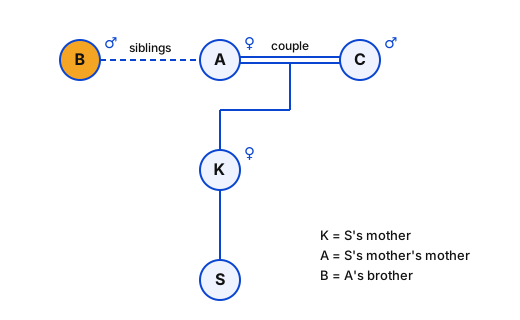
Concept: Build the family tree step by step.

  1. A is the wife of C and C is K's father ⇒ A is K's mother.
  2. K is S's mother ⇒ A is S's mother's mother.
  3. B is A's brother (male) ⇒ B is S's mother's mother's brother.

Trick: Trace from S upward: S → mother K → her mother A → A's brother B.

Answer: (C) Mother's mother's brother

अवधारणा: क्रम से परिवार वृक्ष बनाएँ।

  1. A, C की पत्नी है और C, K का पिता ⇒ A, K की माँ।
  2. K, S की माँ ⇒ A, S की माँ की माँ (नानी)।
  3. B, A का भाई ⇒ B, S की माँ की माँ का भाई।

ट्रिक: S से ऊपर चलें: S → माँ K → उसकी माँ A → A का भाई B।

उत्तर: (C) Mother's mother's brother (माँ की माँ का भाई)

RRB NTPC Undergraduate CBT 1General Intelligence and ReasoningBlood RelationsRRB NTPC Undergraduate CBT 1 2024 · 29 Aug Shift 1 →
Q287.
Vignesh starts from Point Y and drives 17 km towards south. He then takes a left turn, drives 25 km. He then turns right and drives 9 km. He takes a final right turn, drives 25 km and stops at Point Z. How far (shortest distance) and towards which direction should he drive in order to reach Point Y again? (All turns are 90° turns only unless specified.)
विग्नेश बिंदु Y से चलना शुरू करता है और दक्षिण की ओर 17 km गाड़ी चलाता है। फिर वह बाएँ मुड़ता है और 25 km गाड़ी चलाता है। फिर वह दाएँ मुड़ता है और 9 km गाड़ी चलाता है। वह अंतिम बार दाएँ मुड़ता है, 25 km गाड़ी चलाता है और बिंदु Z पर रुक जाता है। बिंदु Y पर फिर से पहुँचने के लिए उसे कितनी दूरी (न्यूनतम दूरी) तक और किस दिशा में गाड़ी चलानी चाहिए? (जब तक निर्दिष्ट न किया जाए, सभी मोड़ केवल 90° के मोड़ हैं।)
  1. A26 km towards eastपूर्व की ओर 26 km
  2. B26 km towards northउत्तर की ओर 26 km
  3. C19 km towards southदक्षिण की ओर 19 km
  4. D13 km towards westपश्चिम की ओर 13 km
Show answer

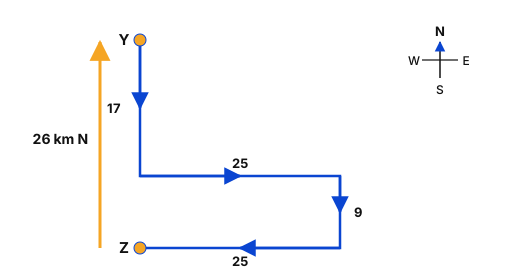
Concept: Plot the path on N–S and E–W axes; east and west moves cancel here.

  1. Y → 17 km south; left (east) 25 km; right (south) 9 km; right (west) 25 km → Z.
  2. East 25 and west 25 cancel ⇒ Z is 17+9=26 km south of Y.
  3. To return: 26 km towards north.

Trick: Net displacement: add N–S parts and E–W parts separately.

Answer: (B) 26 km towards north

अवधारणा: N–S और E–W अक्ष पर पथ बनाएँ; पूर्व-पश्चिम गति यहाँ रद्द हो जाती है।

  1. Y → 17 km दक्षिण; बाएँ (पूर्व) 25 km; दाएँ (दक्षिण) 9 km; दाएँ (पश्चिम) 25 km → Z।
  2. पूर्व 25 और पश्चिम 25 रद्द ⇒ Z, Y से 26 km दक्षिण।
  3. वापस: 26 km उत्तर की ओर।

ट्रिक: N–S और E–W भाग अलग-अलग जोड़ें।

उत्तर: (B) 26 km उत्तर की ओर

RRB NTPC Undergraduate CBT 1General Intelligence and ReasoningDirection and DistanceRRB NTPC Undergraduate CBT 1 2024 · 29 Aug Shift 1 →
Q288.
What will come in place of the question mark (?) in the following equation, if ‘+’ and ‘−’ are interchanged and ‘×’ and ‘÷’ are interchanged?
12 ÷ 6 + 28 × 4 − 11 = ?
यदि ‘+’ और ‘−’ को आपस में बदल दिया जाए तथा ‘×’ और ‘÷’ को आपस में बदल दिया जाए, तो निम्नलिखित समीकरण में प्रश्न चिह्न (?) के स्थान पर क्या आएगा?
12 ÷ 6 + 28 × 4 − 11 = ?
  1. A72
  2. B76
  3. C74
  4. D78
Show answer

Concept: Interchange the signs, then apply BODMAS.

  1. 12÷6+28×4−11→12×6−28÷4+11.
  2. =72−7+11=76.

Trick: Do the swap on paper before calculating.

Answer: (B) 76

अवधारणा: चिह्न बदलें, फिर BODMAS लगाएँ।

  1. 12÷6+28×4−11→12×6−28÷4+11
  2. =72−7+11=76

ट्रिक: गणना से पहले चिह्न बदलकर लिखें।

उत्तर: (B) 76

RRB NTPC Undergraduate CBT 1General Intelligence and ReasoningMathematical OperationsRRB NTPC Undergraduate CBT 1 2024 · 29 Aug Shift 1 →
Q289.
L, M, N, O, Q, R and S are sitting around a circular table, facing the centre of the table. Only two people sit between O and R when counted from the right of O. Only two people sit between R and M. Only three people sit between O and N. L sits to the immediate left of Q. Who sits third to the left of S?
L, M, N, O, Q, R और S एक वृत्ताकार मेज़ के चारों ओर मेज़ के केंद्र की ओर मुख करके बैठे हैं। O के दाएँ से गिनने पर O और R के बीच केवल दो व्यक्ति बैठे हैं। R और M के बीच केवल दो व्यक्ति बैठे हैं। O और N के बीच केवल तीन व्यक्ति बैठे हैं। L, Q के ठीक बाएँ बैठा है। S के बाएँ से तीसरे स्थान पर कौन बैठा है?
  1. AQ
  2. BR
  3. CL
  4. DN
Show answer

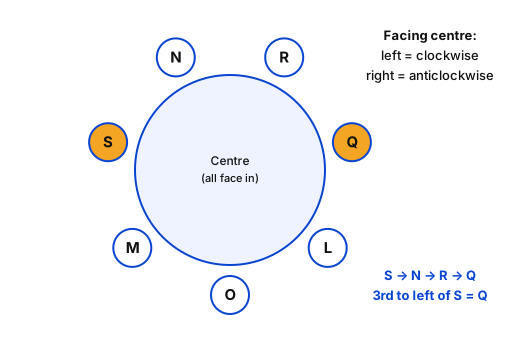
Concept: Facing the centre: right = anticlockwise, left = clockwise.

  1. Place O; going right from O: _, _, R (two between).
  2. Three between O and N ⇒ N is next to R on the far side; two between R and M ⇒ M is next to O on its left.
  3. Remaining three seats: L immediately left of Q ⇒ order to O's right: L, Q, then R; S sits between N and M.
  4. From S going left: N, R, Q ⇒ third to the left of S is Q.

Trick: Draw the circle first; always mark right/left direction for 'facing centre'.

Answer: (A) Q

अवधारणा: केंद्र की ओर मुख: दायाँ = वामावर्त (anticlockwise), बायाँ = दक्षिणावर्त (clockwise)।

  1. O रखें; O के दाएँ: _, _, R (दो बीच में)।
  2. O–N के बीच तीन ⇒ N, R के बगल में; R–M के बीच दो ⇒ M, O के बाएँ बगल में।
  3. L ठीक Q के बाएँ ⇒ O के दाएँ क्रम L, Q, R; S, N और M के बीच।
  4. S से बाएँ: N, R, Q ⇒ S के बाएँ तीसरा Q।

ट्रिक: पहले वृत्त बनाएँ और दिशा चिह्नित करें।

उत्तर: (A) Q

RRB NTPC Undergraduate CBT 1General Intelligence and ReasoningCircular SeatingRRB NTPC Undergraduate CBT 1 2024 · 29 Aug Shift 1 →
Q290.
Each of the digits in the number 5936814 is arranged in ascending order from left to right. What will be the sum of the digits which are second from the left and fourth from the right in the new number thus formed?
संख्या 5936814 के प्रत्येक अंक को बाएँ से दाएँ आरोही क्रम में व्यवस्थित किया जाता है। इस प्रकार बनी नई संख्या में बाएँ से दूसरे और दाएँ से चौथे अंकों का योग क्या होगा?
  1. A13
  2. B9
  3. C11
  4. D8
Show answer

Concept: Rearrange the digits, then locate positions.

  1. 5936814 in ascending order: 1345689.
  2. Second from left = 3; fourth from right (7 digits) = 4th from left = 5.
  3. Sum =3+5=8.

Trick: In n digits, kth from right =(n−k+1)th from left.

Answer: (D) 8

अवधारणा: अंकों को क्रम में लगाकर स्थान ज्ञात करें।

  1. 5936814 आरोही क्रम में: 1345689।
  2. बाएँ से दूसरा = 3; दाएँ से चौथा = बाएँ से चौथा = 5।
  3. योग =3+5=8

ट्रिक: n अंकों में दाएँ से kवाँ = बाएँ से (n−k+1)वाँ।

उत्तर: (D) 8

RRB NTPC Undergraduate CBT 1General Intelligence and ReasoningDigit ArrangementRRB NTPC Undergraduate CBT 1 2024 · 29 Aug Shift 1 →
Q291.
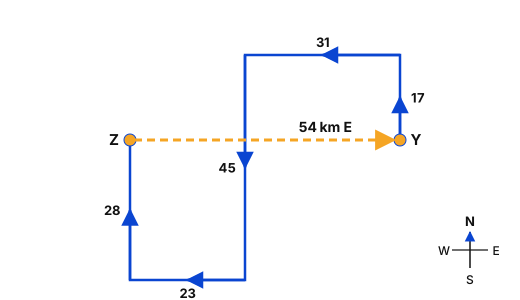
Nilesh starts from Point Y and drives 17 km towards the north. He then takes a left turn and drives 31 km, then turns left and drives 45 km. He then takes a right turn and drives 23 km. He takes a right turn, drives 28 km and stops at Point Z. How far (shortest distance) and in which direction should he drive in order to reach Point Y again? (All turns are 90-degree turns only unless specified.)
निलेश बिंदु Y से चलना शुरू करता है और उत्तर की ओर 17 km गाड़ी चलाता है। फिर वह बाएँ मुड़ता है और 31 km गाड़ी चलाता है, फिर बाएँ मुड़ता है और 45 km गाड़ी चलाता है। फिर वह दाएँ मुड़ता है और 23 km गाड़ी चलाता है। वह दाएँ मुड़ता है, 28 km गाड़ी चलाता है और बिंदु Z पर रुक जाता है। बिंदु Y पर फिर से पहुँचने के लिए उसे कितनी दूरी (न्यूनतम दूरी) तक और किस दिशा में गाड़ी चलानी चाहिए? (जब तक निर्दिष्ट न किया जाए, सभी मोड़ केवल 90 डिग्री के मोड़ हैं।)
  1. A61 km towards the westपश्चिम की ओर 61 km
  2. B58 km towards the westपश्चिम की ओर 58 km
  3. C54 km towards the eastपूर्व की ओर 54 km
  4. D49 km towards the eastपूर्व की ओर 49 km
Show answer

Concept: Track north–south and east–west parts separately.

  1. N 17; left → W 31; left → S 45; right → W 23; right → N 28 → Z.
  2. N–S: 17−45+28=0 ⇒ Z is level with Y.
  3. E–W: 31+23=54 km west ⇒ drive 54 km east to reach Y.

Trick: Net N–S zero ⇒ answer is just the total westward distance.

Answer: (C) 54 km towards the east

अवधारणा: उत्तर–दक्षिण और पूर्व–पश्चिम भाग अलग-अलग देखें।

  1. उत्तर 17; बाएँ → पश्चिम 31; बाएँ → दक्षिण 45; दाएँ → पश्चिम 23; दाएँ → उत्तर 28 → Z।
  2. N–S: 17−45+28=0 ⇒ Z, Y की सीध में।
  3. पश्चिम: 31+23=54 km ⇒ वापस 54 km पूर्व।

ट्रिक: N–S शून्य ⇒ उत्तर केवल कुल पश्चिम दूरी।

उत्तर: (C) 54 km पूर्व की ओर

RRB NTPC Undergraduate CBT 1General Intelligence and ReasoningDirection and DistanceRRB NTPC Undergraduate CBT 1 2024 · 29 Aug Shift 1 →
Q292.
What should come in place of the question mark (?) in the given series based on the English alphabetical order?
DKC ZGY ? RYQ NUM
अंग्रेज़ी वर्णमाला क्रम के आधार पर दी गई श्रृंखला में प्रश्न चिह्न (?) के स्थान पर क्या आना चाहिए?
DKC ZGY ? RYQ NUM
  1. AUDU
  2. BVCV
  3. CVCU
  4. DVDU
Show answer

Concept: Each letter position moves back by 4 across the terms.

  1. 1st: D, Z, V, R, N (−4). 2nd: K, G, C, Y, U (−4). 3rd: C, Y, U, Q, M (−4).
  2. Missing term: V C U.

Trick: One rule (−4) for all three columns.

Answer: (C) VCU

अवधारणा: हर स्थान का अक्षर 4 पीछे जाता है।

  1. पहला: D, Z, V, R, N (−4); दूसरा: K, G, C, Y, U (−4); तीसरा: C, Y, U, Q, M (−4)।
  2. लुप्त पद: VCU।

ट्रिक: तीनों स्तंभों में एक नियम (−4)।

उत्तर: (C) VCU

RRB NTPC Undergraduate CBT 1General Intelligence and ReasoningLetter SeriesRRB NTPC Undergraduate CBT 1 2024 · 29 Aug Shift 1 →
Q293.
What should come in place of the question mark (?) in the given series?
112 101 90 79 68 ?
दी गई श्रृंखला में प्रश्न चिह्न (?) के स्थान पर क्या आना चाहिए?
112 101 90 79 68 ?
  1. A56
  2. B54
  3. C55
  4. D57
Show answer

Concept: Constant difference.

  1. 112−101=11, 101−90=11, …
  2. Next =68−11=57.

Trick: Arithmetic series with difference −11.

Answer: (D) 57

अवधारणा: समान अंतर।

  1. 112−101=11, 101−90=11, …
  2. अगला =68−11=57

ट्रिक: अंतर −11 वाली समांतर श्रेणी।

उत्तर: (D) 57

RRB NTPC Undergraduate CBT 1General Intelligence and ReasoningNumber SeriesRRB NTPC Undergraduate CBT 1 2024 · 29 Aug Shift 1 →
Q294.
Based on the English alphabetical order, three of the following four letter-cluster pairs are alike in a certain way and thus form a group. Which letter-cluster pair DOES NOT belong to that group?
(Note: The odd one out is not based on the number of consonants/vowels or their position in the letter-cluster.)
अंग्रेज़ी वर्णमाला क्रम के आधार पर, निम्नलिखित चार अक्षर-समूह युग्मों में से तीन किसी निश्चित प्रकार से एक समान हैं और इस प्रकार एक समूह बनाते हैं। कौन-सा अक्षर-समूह युग्म उस समूह से संबंधित नहीं है?
(नोट: असंगत अक्षर-समूह, उस अक्षर-समूह में व्यंजनों/स्वरों की संख्या या उनके स्थान पर आधारित नहीं है।)
  1. AMC - PY
  2. BYV - CR
  3. CPF - SB
  4. DJB - MX
Show answer

Concept: Compare each letter of the first cluster with the matching letter of the second.

  1. MC − PY: M+3=P, C−4=Y. PF − SB: +3, −4. JB − MX: +3, −4.
  2. YV − CR: Y+4=C, V−4=R — different.

Trick: Rule: first letter +3, second letter −4.

Answer: (B) YV - CR

अवधारणा: पहले समूह के प्रत्येक अक्षर की तुलना दूसरे के संगत अक्षर से करें।

  1. MC − PY: +3, −4; PF − SB: +3, −4; JB − MX: +3, −4।
  2. YV − CR: +4, −4 — अलग।

ट्रिक: नियम: पहला अक्षर +3, दूसरा −4।

उत्तर: (B) YV - CR

RRB NTPC Undergraduate CBT 1General Intelligence and ReasoningOdd Pair (Letters)RRB NTPC Undergraduate CBT 1 2024 · 29 Aug Shift 1 →
Q295.
If 2 is added to each even digit and 1 is subtracted from each odd digit in the number 9524367, then how many digits will appear more than once in the new number thus formed?
यदि संख्या 9524367 के प्रत्येक सम अंक में 2 जोड़ा जाए और प्रत्येक विषम अंक में से 1 घटाया जाए, तो इस प्रकार बनी नई संख्या में कितने अंक एक से अधिक बार आएँगे?
  1. ATwoदो
  2. BNoneकोई नहीं
  3. CThreeतीन
  4. DOneएक
Show answer

Concept: Apply the rule to every digit, then count repeats.

  1. 9→8, 5→4, 2→4, 4→6, 3→2, 6→8, 7→6 ⇒ 8446286.
  2. 8 twice, 4 twice, 6 twice ⇒ three digits repeat.

Trick: Write the new number fully before counting.

Answer: (C) Three

अवधारणा: हर अंक पर नियम लगाएँ, फिर दोहराव गिनें।

  1. 9→8, 5→4, 2→4, 4→6, 3→2, 6→8, 7→6 ⇒ 8446286।
  2. 8, 4, 6 — प्रत्येक दो बार ⇒ तीन अंक।

ट्रिक: गिनने से पहले नई संख्या पूरी लिखें।

उत्तर: (C) तीन

RRB NTPC Undergraduate CBT 1General Intelligence and ReasoningDigit OperationsRRB NTPC Undergraduate CBT 1 2024 · 29 Aug Shift 1 →
Q296.
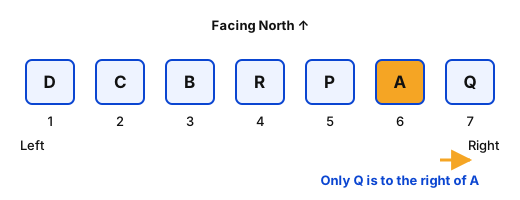
Seven people, A, B, C, D, P, Q and R, are sitting in a row, facing north.
Only two people sit to the left of B. Only three people sit between B and Q. Only one person sits between Q and P. D sits to the immediate left of C. R is not an immediate neighbour of Q.
How many people sit to the right of A?
सात व्यक्ति A, B, C, D, P, Q और R उत्तर की ओर मुख करके एक पंक्ति में बैठे हैं।
B के बाईं ओर केवल दो व्यक्ति बैठे हैं। B और Q के बीच केवल तीन व्यक्ति बैठे हैं। Q और P के बीच केवल एक व्यक्ति बैठा है। D, C के ठीक बाएँ बैठा है। R, Q का निकटतम पड़ोसी नहीं है।
A के दाईं ओर कितने व्यक्ति बैठे हैं?
  1. AThreeतीन
  2. BOneएक
  3. CTwoदो
  4. DFourचार
Show answer

Concept: Number seats 1 to 7 from the left (all face north).

  1. Two to the left of B ⇒ B = 3. Three between B and Q ⇒ Q = 7. One between Q and P ⇒ P = 5.
  2. D just left of C: only free pair 1, 2 ⇒ D = 1, C = 2.
  3. Seats 4, 6 left for A, R; R not next to Q ⇒ R = 4, A = 6.
  4. Right of A: only Q ⇒ one.

Trick: Fix B first — it anchors all distances.

Answer: (B) One

अवधारणा: बाएँ से 1 से 7 तक स्थान लें (सभी उत्तर की ओर)।

  1. B के बाएँ दो ⇒ B = 3; B–Q के बीच तीन ⇒ Q = 7; Q–P के बीच एक ⇒ P = 5।
  2. D ठीक C के बाएँ: केवल 1, 2 ⇒ D = 1, C = 2।
  3. 4, 6 पर A, R; R, Q का पड़ोसी नहीं ⇒ R = 4, A = 6।
  4. A के दाएँ केवल Q ⇒ एक।

ट्रिक: पहले B तय करें।

उत्तर: (B) एक

RRB NTPC Undergraduate CBT 1General Intelligence and ReasoningLinear SeatingRRB NTPC Undergraduate CBT 1 2024 · 29 Aug Shift 1 →
Q297.
In the following triads, each group of letters is related to the subsequent one following a certain logic. Select from the given options, the one which follows the same logic. RUST - URST - RSTU
KITE - IKTE - KTEI
निम्नलिखित त्रिकों में, अक्षरों का प्रत्येक समूह एक निश्चित तर्क का अनुसरण करते हुए अपने बाद वाले समूह से संबंधित है। दिए गए विकल्पों में से उस विकल्प का चयन कीजिए जो समान तर्क का अनुसरण करता है। RUST - URST - RSTU
KITE - IKTE - KTEI
  1. AMINK - IMNK - KINM
  2. BMANY - AMNY - MNYA
  3. CSPOT - PSOT - POTS
  4. DVEIN - VIEN - NIEV
Show answer

Concept: Find how each word changes into the next.

  1. RUST → URST: swap first two letters. URST → RSTU: move the first letter to the end.
  2. KITE → IKTE → KTEI follows the same.
  3. MANY → AMNY (swap) → MNYA (first letter to end) ✓.

Trick: Two moves: swap 1–2, then rotate left.

Answer: (B) MANY - AMNY - MNYA

अवधारणा: हर शब्द अगले में कैसे बदलता है, देखें।

  1. RUST → URST: पहले दो अक्षर अदला-बदली; URST → RSTU: पहला अक्षर अंत में।
  2. KITE → IKTE → KTEI भी यही।
  3. MANY → AMNY → MNYA ✓

ट्रिक: दो चरण: 1–2 अदला-बदली, फिर पहला अक्षर अंत में।

उत्तर: (B) MANY - AMNY - MNYA

RRB NTPC Undergraduate CBT 1General Intelligence and ReasoningLetter TriadsRRB NTPC Undergraduate CBT 1 2024 · 29 Aug Shift 1 →
Q298.
Select the pair that follows the same pattern as that followed by the two pairs given below. Both pairs follow the same pattern.
SDF : RCE
MVZ : LUY
उस युग्म का चयन कीजिए जो उसी पैटर्न का अनुसरण करता है जिसका अनुसरण नीचे दिए गए दो युग्म करते हैं। दोनों युग्म समान पैटर्न का अनुसरण करते हैं।
SDF : RCE
MVZ : LUY
  1. ABGJ : AFI
  2. BRTY : SZU
  3. CADH : BFJ
  4. DCNR : DOS
Show answer

Concept: Find the shift from the first cluster to the second.

  1. SDF : RCE — each letter −1. MVZ : LUY — each −1.
  2. BGJ : AFI — each −1 ✓.

Trick: Each letter steps back one place.

Answer: (A) BGJ : AFI

अवधारणा: पहले समूह से दूसरे का खिसकाव देखें।

  1. SDF : RCE — हर अक्षर −1; MVZ : LUY — हर −1।
  2. BGJ : AFI — हर −1 ✓

ट्रिक: हर अक्षर एक स्थान पीछे।

उत्तर: (A) BGJ : AFI

RRB NTPC Undergraduate CBT 1General Intelligence and ReasoningLetter AnalogyRRB NTPC Undergraduate CBT 1 2024 · 29 Aug Shift 1 →
Q299.
This question is based on the five, three-digit numbers given below.
(Left) 538 745 317 853 276 (Right)
(Example- 697 – First digit = 6, second digit = 9 and third digit = 7)
(NOTE: All operations to be done from left to right.)
What will be the resultant if the third digit of the highest number is added to the second digit of the lowest number?
यह प्रश्न नीचे दी गई तीन अंकों वाली पाँच संख्याओं पर आधारित है।
(बाएँ) 538 745 317 853 276 (दाएँ)
(उदाहरण- 697 – पहला अंक = 6, दूसरा अंक = 9 और तीसरा अंक = 7)
(नोट: सभी संक्रियाएँ बाएँ से दाएँ की जानी हैं।)
यदि सबसे बड़ी संख्या के तीसरे अंक को सबसे छोटी संख्या के दूसरे अंक में जोड़ा जाए, तो परिणाम क्या होगा?
  1. A9
  2. B8
  3. C11
  4. D10
Show answer

Concept: Identify highest and lowest numbers, then pick the asked digits.

  1. Highest = 853, third digit = 3.
  2. Lowest = 276, second digit = 7.
  3. Sum =3+7=10.

Trick: Compare first digits to spot highest/lowest quickly.

Answer: (D) 10

अवधारणा: सबसे बड़ी और सबसे छोटी संख्या पहचानें, फिर अंक चुनें।

  1. सबसे बड़ी = 853, तीसरा अंक = 3।
  2. सबसे छोटी = 276, दूसरा अंक = 7।
  3. योग =3+7=10

ट्रिक: पहला अंक देखकर बड़ी/छोटी संख्या पहचानें।

उत्तर: (D) 10

RRB NTPC Undergraduate CBT 1General Intelligence and ReasoningNumber OperationsRRB NTPC Undergraduate CBT 1 2024 · 29 Aug Shift 1 →
Q300.
What should come in place of the question mark (?) in the given series?
4 8 24 96 ? 2880
दी गई श्रृंखला में प्रश्न चिह्न (?) के स्थान पर क्या आना चाहिए?
4 8 24 96 ? 2880
  1. A240
  2. B410
  3. C480
  4. D320
Show answer

Concept: Multipliers increase by 1.

  1. 4×2=8, 8×3=24, 24×4=96.
  2. 96×5=480, and 480×6=2880 ✓.

Trick: Pattern ×2,×3,×4,…

Answer: (C) 480

अवधारणा: गुणक 1-1 बढ़ता है।

  1. 4×2=8, 8×3=24, 24×4=96
  2. 96×5=480, 480×6=2880 ✓

ट्रिक: पैटर्न ×2,×3,×4,…

उत्तर: (C) 480

RRB NTPC Undergraduate CBT 1General Intelligence and ReasoningNumber SeriesRRB NTPC Undergraduate CBT 1 2024 · 29 Aug Shift 1 →