Question bank

Q&A: practice questions with answers

Search questions on any topic. Filter by exam category, exam, subject and topic, try the question, then open the answer and explanation.

Courses – airGurukul

8,500 questions found.

Q3281.
If ‘A’ stands for ‘÷’, ‘B’ stands for ‘×’, ‘C’ stands for ‘+’ and ‘D’ stands for ‘−’, what will come in place of the question mark (?) in the following equation?
23 D 16 A 4 C 6 B 2 = ?
यदि 'A' का अर्थ '÷', 'B' का अर्थ '×', 'C' का अर्थ '+' और 'D' का अर्थ '−' है, तो निम्नलिखित समीकरण में प्रश्न चिह्न (?) के स्थान पर क्या आएगा?
23 D 16 A 4 C 6 B 2 = ?
  1. A14
  2. B37
  3. C31
  4. D26
Show answer

Concept: Replace the letters by signs and apply BODMAS.

  1. 23 D 16 A 4 C 6 B 2 → 23−16÷4+6×2.
  2. =23−4+12.
  3. =31.

Trick: Do ÷ and × first, then + and −.

Answer: (C) 31

अवधारणा: अक्षरों के स्थान पर चिह्न रखें और BODMAS लगाएँ।

  1. 23 D 16 A 4 C 6 B 2 → 23−16÷4+6×2।
  2. =23−4+12।
  3. =31।

ट्रिक: पहले ÷ और ×, फिर + और −।

उत्तर: (C) 31
RRB NTPC Undergraduate CBT 1General Intelligence and ReasoningMathematical OperationsRRB NTPC Undergraduate CBT 1 2024 · 9 Sep Shift 3 →
Q3282.
Each of the digits in the number 7452318 is arranged in ascending order from left to right. What will be the sum of the digits which are second from the left and second from the right in the new number thus formed?
संख्या 7452318 के प्रत्येक अंक को बाएँ से दाएँ आरोही क्रम में व्यवस्थित किया जाता है। इस प्रकार बनी नई संख्या में बाएँ से दूसरे और दाएँ से दूसरे अंकों का योग क्या होगा?
  1. A9
  2. B8
  3. C10
  4. D11
Show answer

Concept: Arrange digits in ascending order and pick positions.

  1. 7452318 → 1234578.
  2. Second from left = 2; second from right = 7.
  3. Sum =2+7=9.

Trick: Note 6 is missing, so don't assume position = digit on the right side.

Answer: (A) 9

अवधारणा: अंकों को आरोही क्रम में लगाएँ और स्थान चुनें।

  1. 7452318 → 1234578।
  2. बाएँ से दूसरा = 2; दाएँ से दूसरा = 7।
  3. योग =2+7=9।

ट्रिक: 6 नहीं है, इसलिए दाएँ ओर स्थान = अंक मत मानें।

उत्तर: (A) 9

RRB NTPC Undergraduate CBT 1General Intelligence and ReasoningDigit ArrangementRRB NTPC Undergraduate CBT 1 2024 · 9 Sep Shift 3 →
Q3283.
Which of the following letter-number clusters will replace the question mark (?) in the given series to make it logically complete?
EXN 12, IBR 23, MFV 34, QJZ 45, ?
दी गई श्रृंखला को तार्किक रूप से पूर्ण बनाने के लिए निम्नलिखित में से कौन-सा अक्षर-संख्या समूह प्रश्न चिह्न (?) का स्थान लेगा?
EXN 12, IBR 23, MFV 34, QJZ 45, ?
  1. AUND 56
  2. BSNB 57
  3. CTMC 54
  4. DUMB 56
Show answer

Concept: Check each letter position and the number separately.

  1. 1st letters: E, I, M, Q, U (+4).
  2. 2nd letters: X, B, F, J, N (+4); 3rd letters: N, R, V, Z, D (+4).
  3. Numbers: 12, 23, 34, 45, 56 (+11). → UND 56.

Trick: Every letter moves +4; wrap Z+4 = D.

Answer: (A) UND 56

अवधारणा: हर अक्षर स्थान और संख्या को अलग-अलग देखें।

  1. पहले अक्षर: E, I, M, Q, U (+4)।
  2. दूसरे अक्षर: X, B, F, J, N (+4); तीसरे: N, R, V, Z, D (+4)।
  3. संख्याएँ: 12, 23, 34, 45, 56 (+11)। → UND 56।

ट्रिक: हर अक्षर +4; Z+4 = D (फिर से A से गिनें)।

उत्तर: (A) UND 56

RRB NTPC Undergraduate CBT 1General Intelligence and ReasoningAlphanumeric SeriesRRB NTPC Undergraduate CBT 1 2024 · 9 Sep Shift 3 →
Q3284.
In a certain code language, ‘DIRT’ is coded as ‘5274’ and ‘TIDY’ is coded as ‘4352’. What is the code for ‘Y’ in the given code language?
एक निश्चित कूट भाषा में, 'DIRT' को '5274' के रूप में कूटबद्ध किया जाता है और 'TIDY' को '4352' के रूप में कूटबद्ध किया जाता है। दी गई कूट भाषा में 'Y' के लिए कूट क्या है?
  1. A2
  2. B5
  3. C4
  4. D3
Show answer

Concept: Letters common to both words share the common digits; the extra letter gets the extra digit.

  1. DIRT → {5, 2, 7, 4}; TIDY → {4, 3, 5, 2}.
  2. Common letters D, I, T ↔ common digits 2, 4, 5.
  3. DIRT's extra R = 7; TIDY's extra Y = 3.

Trick: Cancel common letters and digits – what remains pairs up.

Answer: (D) 3

अवधारणा: दोनों शब्दों के समान अक्षरों के कोड भी समान अंक होंगे; बचा अक्षर = बचा अंक।

  1. DIRT → {5, 2, 7, 4}; TIDY → {4, 3, 5, 2}।
  2. समान अक्षर D, I, T ↔ समान अंक 2, 4, 5।
  3. DIRT का अतिरिक्त R = 7; TIDY का अतिरिक्त Y = 3।

ट्रिक: समान अक्षर व अंक काट दें – जो बचे वे आपस में जोड़ी बनाते हैं।

उत्तर: (D) 3

RRB NTPC Undergraduate CBT 1General Intelligence and ReasoningCoding-DecodingRRB NTPC Undergraduate CBT 1 2024 · 9 Sep Shift 3 →
Q3285.
What should come in place of the question mark (?) in the given series based on the English alphabetical order?
LRY, SQA, ZPC, ?, NNG
अंग्रेज़ी वर्णमाला क्रम के आधार पर दी गई श्रृंखला में प्रश्न चिह्न (?) के स्थान पर क्या आना चाहिए?
LRY, SQA, ZPC, ?, NNG
  1. AJOF
  2. BGOE
  3. CGOF
  4. DJOE
Show answer

Concept: Treat each letter position as its own series.

  1. 1st: L, S, Z, G, N (+7, wrapping Z+7 = G).
  2. 2nd: R, Q, P, O, N (−1).
  3. 3rd: Y, A, C, E, G (+2). → G O E.

Trick: Use the given last term NNG to confirm each position's step.

Answer: (B) GOE

अवधारणा: हर अक्षर स्थान को अलग श्रृंखला मानें।

  1. पहला: L, S, Z, G, N (+7, Z+7 = G)।
  2. दूसरा: R, Q, P, O, N (−1)।
  3. तीसरा: Y, A, C, E, G (+2)। → G O E।

ट्रिक: दिए गए अंतिम पद NNG से हर स्थान का अंतर जाँच लें।

उत्तर: (B) GOE

RRB NTPC Undergraduate CBT 1General Intelligence and ReasoningLetter SeriesRRB NTPC Undergraduate CBT 1 2024 · 9 Sep Shift 3 →
Q3286.
Based on the English alphabetical order, three of the following four letter-cluster pairs are alike in a certain way and thus form a group. Which letter-cluster pair DOES NOT belong to that group?
(Note: The odd one out is not based on the number of consonants/vowels or their position in the letter-cluster pair.)
अंग्रेज़ी वर्णमाला क्रम के आधार पर, निम्नलिखित चार अक्षर-समूह युग्मों में से तीन किसी निश्चित प्रकार से एकसमान हैं और इस प्रकार एक समूह बनाते हैं। कौन-सा अक्षर-समूह युग्म उस समूह से संबंधित नहीं है?
(ध्यान दें: असंगत युग्म, व्यंजनों/स्वरों की संख्या या अक्षर-समूह युग्म में उनके स्थान पर आधारित नहीं है।)
  1. ANR-IA
  2. BCG-XP
  3. CWA-RI
  4. DHL-CU
Show answer

Concept: Compare letter 1 with letter 3 and letter 2 with letter 4 in each pair.

  1. NR-IA: N−5 = I, R+9 = A.
  2. CG-XP: C−5 = X, G+9 = P; HL-CU: H−5 = C, L+9 = U.
  3. WA-RI: W−5 = R, but A+8 = I (not +9) → odd.

Trick: Also first pair has gap +4 in all (NR, CG, WA, HL) – so check the second cluster.

Answer: (C) WA-RI

अवधारणा: हर युग्म में अक्षर 1 की अक्षर 3 से और अक्षर 2 की अक्षर 4 से तुलना करें।

  1. NR-IA: N−5 = I, R+9 = A।
  2. CG-XP: C−5 = X, G+9 = P; HL-CU: H−5 = C, L+9 = U।
  3. WA-RI: W−5 = R, पर A+8 = I (+9 नहीं) → विषम।

ट्रिक: पहले समूह में सबका अंतर +4 है (NR, CG, WA, HL) – इसलिए दूसरा समूह जाँचें।

उत्तर: (C) WA-RI

RRB NTPC Undergraduate CBT 1General Intelligence and ReasoningOdd One Out (Letter Pairs)RRB NTPC Undergraduate CBT 1 2024 · 9 Sep Shift 3 →
Q3287.
What should come in place of the question mark (?) in the given series?
5 7 11 17 25 ?
दी गई श्रृंखला में प्रश्न चिह्न (?) के स्थान पर क्या आना चाहिए?
5 7 11 17 25 ?
  1. A30
  2. B40
  3. C25
  4. D35
Show answer

Concept: Differences increase by 2.

  1. Differences: 2, 4, 6, 8.
  2. Next difference = 10.
  3. 25+10=35.

Trick: Terms =n2−n+5: 62−6+5=35.

Answer: (D) 35

अवधारणा: अंतर 2-2 बढ़ते हैं।

  1. अंतर: 2, 4, 6, 8।
  2. अगला अंतर = 10।
  3. 25+10=35।

ट्रिक: पद =n2−n+5: 62−6+5=35।

उत्तर: (D) 35

RRB NTPC Undergraduate CBT 1General Intelligence and ReasoningNumber SeriesRRB NTPC Undergraduate CBT 1 2024 · 9 Sep Shift 3 →
Q3288.
Read the given statements and conclusions carefully. Assuming that the information given in the statements is true, even if it appears to be at variance with commonly known facts, decide which of the given conclusion(s) logically follow(s) from the statements.
Statements:
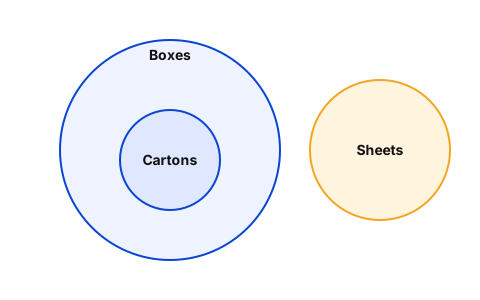
All cartons are boxes.
No box is a sheet.
Conclusions:
(I) No carton is a sheet.
(II) Some sheets are boxes.
दिए गए कथनों और निष्कर्षों को ध्यानपूर्वक पढ़िए। यह मानते हुए कि कथनों में दी गई जानकारी सत्य है, भले ही वह सामान्य रूप से ज्ञात तथ्यों से भिन्न प्रतीत होती हो, निर्णय कीजिए कि दिए गए निष्कर्षों में से कौन-सा/कौन-से निष्कर्ष कथनों का तार्किक रूप से अनुसरण करता है/करते हैं।
कथन:
सभी कार्टन, बक्से हैं।
कोई भी बक्सा, शीट नहीं है।
निष्कर्ष:
(I) कोई भी कार्टन, शीट नहीं है।
(II) कुछ शीट, बक्से हैं।
  1. AOnly conclusion (I) follows.केवल निष्कर्ष (I) अनुसरण करता है।
  2. BOnly conclusion (II) follows.केवल निष्कर्ष (II) अनुसरण करता है।
  3. CBoth conclusions (I) and (II) follow.निष्कर्ष (I) और (II) दोनों अनुसरण करते हैं।
  4. DNeither conclusion (I) nor (II) follows.न तो निष्कर्ष (I) और न ही (II) अनुसरण करता है।
Show answer

Concept: Draw the least-overlap Venn diagram consistent with the statements.

  1. Cartons lie fully inside Boxes; Boxes and Sheets are separate.
  2. So no carton can be a sheet → I follows.
  3. No box is a sheet, so 'Some sheets are boxes' is false → II does not follow.

Yaad rakhein: All A are B + No B is C ⇒ No A is C (always).

Answer: (A) Only conclusion (I) follows.

अवधारणा: कथनों के अनुसार न्यूनतम ओवरलैप वाला वेन आरेख बनाएँ।

  1. Cartons पूरी तरह Boxes के अंदर; Boxes और Sheets अलग।
  2. अतः कोई carton, sheet नहीं → I अनुसरण करता है।
  3. कोई box, sheet नहीं, अतः 'कुछ sheets, boxes हैं' गलत → II अनुसरण नहीं करता।

याद रखें: सभी A, B हैं + कोई B, C नहीं ⇒ कोई A, C नहीं (हमेशा)।

उत्तर: (A) केवल निष्कर्ष (I) अनुसरण करता है।

RRB NTPC Undergraduate CBT 1General Intelligence and ReasoningSyllogismRRB NTPC Undergraduate CBT 1 2024 · 9 Sep Shift 3 →
Q3289.
Wasim ranked 24th from the top and 29th from the bottom in his class. How many students are there in his class?
वसीम अपनी कक्षा में ऊपर से 24वें और नीचे से 29वें स्थान पर है। उसकी कक्षा में कितने विद्यार्थी हैं?
  1. A53
  2. B50
  3. C51
  4. D52
Show answer

Concept: Total = rank from top + rank from bottom − 1.

  1. Total =24+29−1.
  2. =52.

Trick: Subtract 1 because Wasim is counted in both ranks.

Answer: (D) 52

अवधारणा: कुल = ऊपर से रैंक + नीचे से रैंक − 1।

  1. कुल =24+29−1।
  2. =52।

ट्रिक: 1 घटाते हैं क्योंकि वसीम दोनों रैंकों में गिना गया है।

उत्तर: (D) 52

RRB NTPC Undergraduate CBT 1General Intelligence and ReasoningRankingRRB NTPC Undergraduate CBT 1 2024 · 9 Sep Shift 3 →
Q3290.
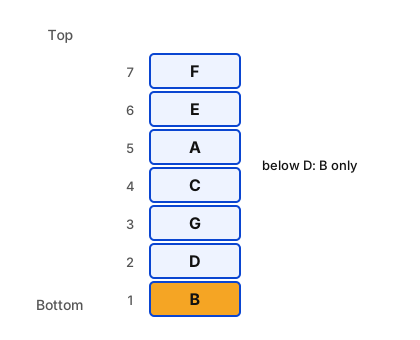
Seven boxes A, B, C, D, E, F and G are kept one over the other but not necessarily in the same order. D is kept second from the bottom. Only three boxes are kept between D and E. B is kept at one of the positions below D. Only A is kept between E and C. F is kept at one of the positions above E. How many boxes are kept below D?
सात बक्से A, B, C, D, E, F और G एक के ऊपर एक रखे गए हैं, लेकिन आवश्यक नहीं कि इसी क्रम में हों। D को नीचे से दूसरे स्थान पर रखा गया है। D और E के बीच केवल तीन बक्से रखे गए हैं। B को D के नीचे के किसी एक स्थान पर रखा गया है। E और C के बीच केवल A रखा गया है। F को E के ऊपर के किसी एक स्थान पर रखा गया है। D के नीचे कितने बक्से रखे गए हैं?
  1. A2
  2. B4
  3. C3
  4. D1
Show answer

Concept: Number positions 1 (bottom) to 7 (top).

  1. D = 2; three between D and E → E = 6.
  2. B below D → B = 1. Only A between E and C → A = 5, C = 4.
  3. F above E → F = 7; G = 3.
  4. Below D: only B → 1 box.

Trick: D is second from bottom, so exactly 1 box is below it – no further work needed.

Answer: (D) 1

अवधारणा: स्थान 1 (नीचे) से 7 (ऊपर)।

  1. D = 2; D और E के बीच तीन → E = 6।
  2. B, D से नीचे → B = 1। E और C के बीच केवल A → A = 5, C = 4।
  3. F, E से ऊपर → F = 7; G = 3।
  4. D से नीचे: केवल B → 1 बॉक्स।

ट्रिक: D नीचे से दूसरा है, तो उसके नीचे ठीक 1 बॉक्स – आगे हल करने की ज़रूरत नहीं।

उत्तर: (D) 1

RRB NTPC Undergraduate CBT 1General Intelligence and ReasoningBox ArrangementRRB NTPC Undergraduate CBT 1 2024 · 9 Sep Shift 3 →
Q3291.
In a certain code language,
'A % B' means ‘A is the daughter of B’,
'A = B' means ‘A is the wife of B’,
'A ¥ B' means ‘A is the father of B’ and
'A # B' means ‘A is the brother of B’.
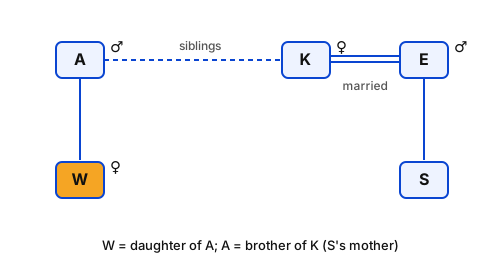
How is W related to S if 'W % A # K = E ¥ S'?
एक निश्चित कूट भाषा में,
'A % B' का अर्थ है 'A, B की पुत्री है',
'A = B' का अर्थ है 'A, B की पत्नी है',
'A ¥ B' का अर्थ है 'A, B का पिता है' और
'A # B' का अर्थ है 'A, B का भाई है'।
यदि 'W % A # K = E ¥ S' है, तो W का S से क्या संबंध है?
  1. AMother's brother's daughterमाँ के भाई की पुत्री
  2. BMother's brother's sonमाँ के भाई का पुत्र
  3. CMother's brother's wifeमाँ के भाई की पत्नी
  4. DMother's brother's sisterमाँ के भाई की बहन
Show answer

Concept: Decode each symbol and build the family tree.

  1. W % A: W is the daughter of A. A # K: A is the brother of K.
  2. K = E: K is the wife of E. E ¥ S: E is the father of S → K is S's mother.
  3. A is S's mother's brother; W is his daughter.

Trick: Read the chain from S's side: mother (K) → her brother (A) → his daughter (W).

Answer: (A) Mother's brother's daughter

अवधारणा: हर चिह्न का अर्थ लगाकर वंश-वृक्ष बनाएँ।

  1. W % A: W, A की बेटी है। A # K: A, K का भाई है।
  2. K = E: K, E की पत्नी है। E ¥ S: E, S का पिता → K, S की माँ।
  3. A = S की माँ का भाई (मामा); W उसकी बेटी।

ट्रिक: S की ओर से पढ़ें: माँ (K) → उसका भाई (A) → उसकी बेटी (W)।

उत्तर: (A) माँ के भाई की बेटी (Mother's brother's daughter)

RRB NTPC Undergraduate CBT 1General Intelligence and ReasoningBlood Relation (Coded)RRB NTPC Undergraduate CBT 1 2024 · 9 Sep Shift 3 →
Q3292.
What should come in place of the question mark (?) in the given series?
26 38 46 58 66 78 ?
दी गई श्रृंखला में प्रश्न चिह्न (?) के स्थान पर क्या आना चाहिए?
26 38 46 58 66 78 ?
  1. A88
  2. B86
  3. C84
  4. D82
Show answer

Concept: Alternate differences.

  1. Differences: +12, +8, +12, +8, +12.
  2. Next difference = +8.
  3. 78+8=86.

Trick: Two alternating steps: +12, +8.

Answer: (B) 86

अवधारणा: एकांतर अंतर।

  1. अंतर: +12, +8, +12, +8, +12।
  2. अगला अंतर = +8।
  3. 78+8=86।

ट्रिक: दो बारी-बारी चरण: +12, +8।

उत्तर: (B) 86

RRB NTPC Undergraduate CBT 1General Intelligence and ReasoningNumber SeriesRRB NTPC Undergraduate CBT 1 2024 · 9 Sep Shift 3 →
Q3293.
Based on the English alphabetical order, three of the following four letter-cluster pairs are alike in a certain way and thus form a group. Which letter-cluster pair DOES NOT belong to that group?
(Note: The odd one out is not based on the number of consonants/vowels or their position in the letter-cluster.)
अंग्रेज़ी वर्णमाला क्रम के आधार पर, निम्नलिखित चार अक्षर-समूह युग्मों में से तीन किसी निश्चित प्रकार से एकसमान हैं और इस प्रकार एक समूह बनाते हैं। कौन-सा अक्षर-समूह युग्म उस समूह से संबंधित नहीं है?
(ध्यान दें: असंगत युग्म, व्यंजनों/स्वरों की संख्या या अक्षर-समूह में उनके स्थान पर आधारित नहीं है।)
  1. AZC-EH
  2. BFI-KM
  3. CTW-YB
  4. DJM-OR
Show answer

Concept: Check the gap within each cluster and between the clusters.

  1. ZC-EH: Z+3 = C, Z+5 = E, C+5 = H.
  2. TW-YB: +3, +5, +5; JM-OR: +3, +5, +5.
  3. FI-KM: F+3 = I, F+5 = K, but I+4 = M → odd.

Trick: Look at the last letter: H, B, R follow +5 but M breaks it.

Answer: (B) FI-KM

अवधारणा: हर समूह के भीतर और समूहों के बीच का अंतर देखें।

  1. ZC-EH: Z+3 = C, Z+5 = E, C+5 = H।
  2. TW-YB: +3, +5, +5; JM-OR: +3, +5, +5।
  3. FI-KM: F+3 = I, F+5 = K, पर I+4 = M → विषम।

ट्रिक: अंतिम अक्षर देखें: H, B, R में +5, पर M में नहीं।

उत्तर: (B) FI-KM

RRB NTPC Undergraduate CBT 1General Intelligence and ReasoningOdd One Out (Letter Pairs)RRB NTPC Undergraduate CBT 1 2024 · 9 Sep Shift 3 →
Q3294.
Read the given statement(s) and conclusions carefully. Assuming that the information given in the statements is true, even if it appears to be at variance with commonly known facts, decide which of the given conclusion(s) logically follow(s) from the statement(s).
Statements:
No Buffaloes are Cats.
Some Cats are Turkeys.
Conclusions:
I. No Buffaloes are Turkeys.
II. Some Buffaloes are Turkeys.
दिए गए कथन/कथनों और निष्कर्षों को ध्यानपूर्वक पढ़िए। यह मानते हुए कि कथनों में दी गई जानकारी सत्य है, भले ही वह सामान्य रूप से ज्ञात तथ्यों से भिन्न प्रतीत होती हो, निर्णय कीजिए कि दिए गए निष्कर्षों में से कौन-सा/कौन-से निष्कर्ष कथन/कथनों का तार्किक रूप से अनुसरण करता है/करते हैं।
कथन:
कोई भी भैंस, बिल्ली नहीं है।
कुछ बिल्लियाँ, टर्की हैं।
निष्कर्ष:
I. कोई भी भैंस, टर्की नहीं है।
II. कुछ भैंसें, टर्की हैं।
  1. ABoth conclusions (I) and (II) follow.निष्कर्ष (I) और (II) दोनों अनुसरण करते हैं।
  2. BOnly conclusion (II) follows.केवल निष्कर्ष (II) अनुसरण करता है।
  3. CNeither conclusion (I) nor (II) follows.न तो निष्कर्ष (I) और न ही (II) अनुसरण करता है।
  4. DOnly conclusion (I) follows.केवल निष्कर्ष (I) अनुसरण करता है।
Show answer

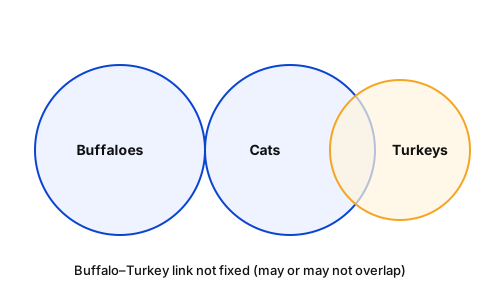
Concept: A conclusion follows only if it is true in every possible Venn diagram.

  1. Buffaloes and Cats are separate; Cats and Turkeys overlap partly.
  2. Buffaloes and Turkeys have no direct link – they may or may not overlap.
  3. So neither 'No B is T' nor 'Some B are T' is certain.

Yaad rakhein: 'No B is C' + 'Some C are T' gives no definite B–T relation; each conclusion alone is uncertain.

Answer: (C) Neither conclusion (I) nor (II) follows.

अवधारणा: निष्कर्ष तभी अनुसरण करता है जब वह हर संभव वेन आरेख में सत्य हो।

  1. Buffaloes और Cats अलग; Cats और Turkeys आंशिक रूप से जुड़े।
  2. Buffaloes और Turkeys का कोई सीधा संबंध नहीं – जुड़ सकते हैं, नहीं भी।
  3. अतः न 'कोई B, T नहीं' निश्चित है, न 'कुछ B, T हैं'।

याद रखें: मध्य पद से अंतिम पदों का संबंध तय नहीं होता; अलग-अलग दोनों निष्कर्ष विफल।

उत्तर: (C) न तो निष्कर्ष (I) और न ही (II) अनुसरण करता है।

RRB NTPC Undergraduate CBT 1General Intelligence and ReasoningSyllogismRRB NTPC Undergraduate CBT 1 2024 · 9 Sep Shift 3 →
Q3295.
If + means −, − means ×, × means ÷ and ÷ means +, then what will come in place of the question mark (?) in the following equation?
9 − 4 + 24 ÷ 21 × 3 = ?
यदि + का अर्थ −, − का अर्थ ×, × का अर्थ ÷ और ÷ का अर्थ + है, तो निम्नलिखित समीकरण में प्रश्न चिह्न (?) के स्थान पर क्या आएगा?
9 − 4 + 24 ÷ 21 × 3 = ?
  1. A19
  2. B12
  3. C26
  4. D4
Show answer

Concept: Interchange the signs as given, then use BODMAS.

  1. 9 − 4 + 24 ÷ 21 × 3 → 9×4−24+21÷3.
  2. =36−24+7.
  3. =19.

Trick: Write the converted expression fully before calculating.

Answer: (A) 19

अवधारणा: दिए अनुसार चिह्न बदलें, फिर BODMAS लगाएँ।

  1. 9 − 4 + 24 ÷ 21 × 3 → 9×4−24+21÷3।
  2. =36−24+7।
  3. =19।

ट्रिक: गणना से पहले बदला हुआ व्यंजक पूरा लिख लें।

उत्तर: (A) 19

RRB NTPC Undergraduate CBT 1General Intelligence and ReasoningMathematical OperationsRRB NTPC Undergraduate CBT 1 2024 · 9 Sep Shift 3 →
Q3296.
This question is based on the five, three-digit numbers given below.
(Left) 268 667 457 856 426 (Right)
(Example: 697 – First digit = 6, second digit = 9 and third digit = 7)
(NOTE: All operations to be done from left to right.)
If 1 is subtracted from the first digit of every number, in how many numbers will the third digit be exactly divisible by the first digit?
यह प्रश्न नीचे दी गई तीन अंकों वाली पाँच संख्याओं पर आधारित है।
(बाएँ) 268 667 457 856 426 (दाएँ)
(उदाहरण: 697 – पहला अंक = 6, दूसरा अंक = 9 और तीसरा अंक = 7)
(ध्यान दें: सभी संक्रियाएँ बाएँ से दाएँ की जानी हैं।)
यदि प्रत्येक संख्या के पहले अंक में से 1 घटा दिया जाए, तो कितनी संख्याओं में तीसरा अंक, पहले अंक से पूर्णतः विभाज्य होगा?
  1. ATwoदो
  2. BNoneकोई नहीं
  3. CThreeतीन
  4. DOneएक
Show answer

Concept: Change the first digit, then test the third digit for divisibility.

  1. New numbers: 168, 567, 357, 756, 326.
  2. Third ÷ first: 8÷1 ✓, 7÷5 ✗, 7÷3 ✗, 6÷7 ✗, 6÷3 ✓.
  3. Two numbers.

Trick: Any number is divisible by 1 – 168 is an instant yes.

Answer: (A) Two

अवधारणा: पहला अंक बदलें, फिर तीसरे अंक की विभाज्यता जाँचें।

  1. नई संख्याएँ: 168, 567, 357, 756, 326।
  2. तीसरा ÷ पहला: 8÷1 ✓, 7÷5 ✗, 7÷3 ✗, 6÷7 ✗, 6÷3 ✓।
  3. दो संख्याएँ।

ट्रिक: हर संख्या 1 से विभाज्य है – 168 तुरंत हाँ।

उत्तर: (A) दो

RRB NTPC Undergraduate CBT 1General Intelligence and ReasoningNumber OperationsRRB NTPC Undergraduate CBT 1 2024 · 9 Sep Shift 3 →
Q3297.
Based on the English alphabetical order, three of the following four letter-cluster pairs are alike in a certain way and thus form a group. Which letter-cluster pair DOES NOT belong to that group?
(Note: The odd one out is not based on the number of consonants/vowels or their position in the letter-cluster.)
अंग्रेज़ी वर्णमाला क्रम के आधार पर, निम्नलिखित चार अक्षर-समूह युग्मों में से तीन किसी निश्चित प्रकार से एकसमान हैं और इस प्रकार एक समूह बनाते हैं। कौन-सा अक्षर-समूह युग्म उस समूह से संबंधित नहीं है?
(ध्यान दें: असंगत युग्म, व्यंजनों/स्वरों की संख्या या अक्षर-समूह में उनके स्थान पर आधारित नहीं है।)
  1. AOR-VM
  2. BQT-XP
  3. CMP-TK
  4. DKN-RI
Show answer

Concept: Compare within and across the clusters.

  1. OR-VM: O+3 = R, O+7 = V, R−5 = M.
  2. MP-TK and KN-RI: +3, +7, −5 ✓.
  3. QT-XP: Q+3 = T, Q+7 = X, but T−4 = P → odd.

Trick: All first gaps (+3) and cross gaps (+7) match; only the last letter differs.

Answer: (B) QT-XP

अवधारणा: समूहों के भीतर और आपस में तुलना करें।

  1. OR-VM: O+3 = R, O+7 = V, R−5 = M।
  2. MP-TK और KN-RI: +3, +7, −5 ✓।
  3. QT-XP: Q+3 = T, Q+7 = X, पर T−4 = P → विषम।

ट्रिक: पहले अंतर (+3) और (+7) सब में समान; केवल अंतिम अक्षर अलग।

उत्तर: (B) QT-XP

RRB NTPC Undergraduate CBT 1General Intelligence and ReasoningOdd One Out (Letter Pairs)RRB NTPC Undergraduate CBT 1 2024 · 9 Sep Shift 3 →
Q3298.
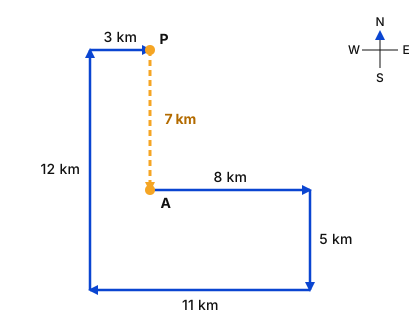
Luv starts from Point A and drives 8 km towards the east. He then takes a right turn and drives 5 km, then turns right and drives 11 km. He then takes a right turn and drives 12 km. He takes a final right turn, drives 3 km and stops at Point P. How far (shortest distance) and in which direction should he drive in order to reach Point A again? (All turns are 90-degree turns only unless specified.)
लव बिंदु A से चलना शुरू करता है और पूर्व की ओर 8 km गाड़ी चलाता है। फिर वह दाएँ मुड़ता है और 5 km गाड़ी चलाता है, फिर दाएँ मुड़ता है और 11 km गाड़ी चलाता है। फिर वह दाएँ मुड़ता है और 12 km गाड़ी चलाता है। वह अंतिम बार दाएँ मुड़ता है, 3 km गाड़ी चलाता है और बिंदु P पर रुक जाता है। बिंदु A पर फिर से पहुँचने के लिए उसे कितनी दूर (न्यूनतम दूरी) और किस दिशा में गाड़ी चलानी चाहिए? (जब तक निर्दिष्ट न किया जाए, सभी मोड़ केवल 90 डिग्री के हैं।)
  1. A6 km to the northउत्तर की ओर 6 km
  2. B7 km to the northउत्तर की ओर 7 km
  3. C7 km to the southदक्षिण की ओर 7 km
  4. D6 km to the southदक्षिण की ओर 6 km
Show answer

Concept: Trace the path with coordinates (east = +x, north = +y).

  1. A(0, 0) → east 8 → (8, 0); right = south 5 → (8, −5).
  2. Right = west 11 → (−3, −5); right = north 12 → (−3, 7).
  3. Right = east 3 → P(0, 7).
  4. P is 7 km north of A → drive 7 km to the south.

Trick: Net east–west =8−11+3=0; net north =12−5=7.

Answer: (C) 7 km to the south

अवधारणा: निर्देशांकों से मार्ग बनाएँ (पूर्व = +x, उत्तर = +y)।

  1. A(0, 0) → पूर्व 8 → (8, 0); दाएँ = दक्षिण 5 → (8, −5)।
  2. दाएँ = पश्चिम 11 → (−3, −5); दाएँ = उत्तर 12 → (−3, 7)।
  3. दाएँ = पूर्व 3 → P(0, 7)।
  4. P, A से 7 km उत्तर में → 7 km दक्षिण की ओर जाना होगा।

ट्रिक: शुद्ध पूर्व-पश्चिम =8−11+3=0; शुद्ध उत्तर =12−5=7।

उत्तर: (C) 7 km दक्षिण की ओर

RRB NTPC Undergraduate CBT 1General Intelligence and ReasoningDirection and DistanceRRB NTPC Undergraduate CBT 1 2024 · 9 Sep Shift 3 →
Q3299.
This question is based on the five, three-digit numbers given below.
(Left) 893 620 514 487 928 (Right)
(Example: 697 – First digit = 6, second digit = 9 and third digit = 7)
(NOTE: All operations to be done from left to right.)
What will be the LCM of the 2nd digits of all the numbers?
यह प्रश्न नीचे दी गई तीन अंकों वाली पाँच संख्याओं पर आधारित है।
(बाएँ) 893 620 514 487 928 (दाएँ)
(उदाहरण: 697 – पहला अंक = 6, दूसरा अंक = 9 और तीसरा अंक = 7)
(ध्यान दें: सभी संक्रियाएँ बाएँ से दाएँ की जानी हैं।)
सभी संख्याओं के दूसरे अंकों का LCM क्या होगा?
  1. A36
  2. B72
  3. C9
  4. D48
Show answer

Concept: Pick the second digit of each number and take their LCM.

  1. Second digits: 9, 2, 1, 8, 2.
  2. LCM(9,2,1,8)=LCM(9,8)=72.

Trick: 9 and 8 are co-prime and cover 2 and 1, so LCM =9×8.

Answer: (B) 72

अवधारणा: हर संख्या का दूसरा अंक लेकर LCM निकालें।

  1. दूसरे अंक: 9, 2, 1, 8, 2।
  2. LCM(9,2,1,8)=LCM(9,8)=72।

ट्रिक: 9 और 8 सह-अभाज्य हैं और 2, 1 को समाहित करते हैं, अतः LCM =9×8।

उत्तर: (B) 72

RRB NTPC Undergraduate CBT 1General Intelligence and ReasoningNumber OperationsRRB NTPC Undergraduate CBT 1 2024 · 9 Sep Shift 3 →
Q3300.
In a certain code language, ‘BODY’ is coded as ‘2469’ and ‘DICE’ is coded as ‘1593’. What is the code for ‘D’ in that language?
एक निश्चित कूट भाषा में, 'BODY' को '2469' के रूप में कूटबद्ध किया जाता है और 'DICE' को '1593' के रूप में कूटबद्ध किया जाता है। उस भाषा में 'D' के लिए कूट क्या है?
  1. A6
  2. B9
  3. C3
  4. D1
Show answer

Concept: The only letter common to both words takes the only digit common to both codes.

  1. BODY → {2, 4, 6, 9}; DICE → {1, 5, 9, 3}.
  2. Common letter: D. Common digit: 9.
  3. So D = 9.

Trick: One common letter ↔ one common digit.

Answer: (B) 9

अवधारणा: दोनों शब्दों का एकमात्र समान अक्षर = दोनों कोडों का एकमात्र समान अंक।

  1. BODY → {2, 4, 6, 9}; DICE → {1, 5, 9, 3}।
  2. समान अक्षर: D। समान अंक: 9।
  3. अतः D = 9।

ट्रिक: एक समान अक्षर ↔ एक समान अंक।

उत्तर: (B) 9

RRB NTPC Undergraduate CBT 1General Intelligence and ReasoningCoding-DecodingRRB NTPC Undergraduate CBT 1 2024 · 9 Sep Shift 3 →