Question bank

Q&A: practice questions with answers

Search questions on any topic. Filter by exam category, exam, subject and topic, try the question, then open the answer and explanation.

Courses – airGurukul

8,500 questions found.

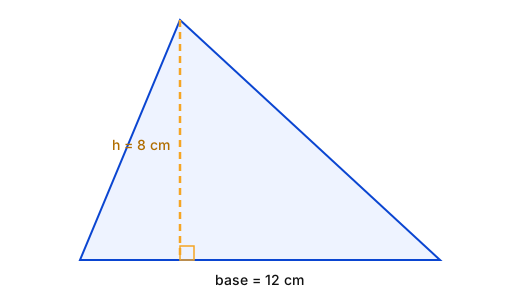
Q3861.
Find the area of a triangle with base 12 cm and height 8 cm.
आधार 12 cm और ऊँचाई 8 cm वाले त्रिभुज का क्षेत्रफल ज्ञात कीजिए।
  1. A72 cm2
  2. B60 cm2
  3. C48 cm2
  4. D96 cm2
Show answer

Concept: Area=12×base×height.

  1. Area =12×12×8
  2. =6×8=48cm2

Yaad rakhein: Height is the perpendicular from the opposite vertex to the base.

Answer: (C) 48cm2

अवधारणा: क्षेत्रफल=12×आधार×ऊँचाई।

  1. क्षेत्रफल =12×12×8
  2. =6×8=48cm2

याद रखें: ऊँचाई = सामने के शीर्ष से आधार पर लंब।

उत्तर: (C) 48cm2
RRB NTPC Undergraduate CBT 1MathematicsArea of triangleRRB NTPC Undergraduate CBT 1 2024 · 8 Aug Shift 3 →
Q3862.
3 years ago, the age of a father was 24 years more than twice the age of his son. After how many years from now will his age be twice the age of his son?
3 वर्ष पहले, एक पिता की आयु उसके पुत्र की आयु के दोगुने से 24 वर्ष अधिक थी। अब से कितने वर्ष बाद उसकी आयु उसके पुत्र की आयु की दोगुनी होगी?
  1. A19
  2. B23
  3. C25
  4. D21
Show answer

Concept: Form equations from the age conditions; the age gap never changes.

  1. Let present ages be father F, son S. Three years ago: F−3=2(S−3)+24 → F=2S+21.
  2. After x years: F+x=2(S+x).
  3. 2S+21+x=2S+2x → x=21.

Trick: If F=2S+k now, father becomes twice the son after exactly k years.

Answer: (D) 21

अवधारणा: आयु की शर्तों से समीकरण बनाएँ।

  1. वर्तमान आयु: पिता F, पुत्र S। 3 वर्ष पहले: F−3=2(S−3)+24 → F=2S+21।
  2. x वर्ष बाद: F+x=2(S+x)।
  3. 2S+21+x=2S+2x → x=21।

ट्रिक: यदि अभी F=2S+k, तो ठीक k वर्ष बाद पिता की आयु पुत्र की दोगुनी होगी।

उत्तर: (D) 21

RRB NTPC Undergraduate CBT 1MathematicsProblems on agesRRB NTPC Undergraduate CBT 1 2024 · 8 Aug Shift 3 →
Q3863.
The cost of 12 pens and 7 pencils is ₹285. If the cost of a pen decreases by ₹6 and the cost of a pencil increases by ₹5, then the cost of 11 pens and 3 pencils is ₹118. What is the original cost of 2 pens and 2 pencils?
12 पेन और 7 पेंसिलों का मूल्य ₹285 है। यदि एक पेन का मूल्य ₹6 कम हो जाए और एक पेंसिल का मूल्य ₹5 बढ़ जाए, तो 11 पेन और 3 पेंसिलों का मूल्य ₹118 हो जाता है। 2 पेन और 2 पेंसिलों का मूल मूल्य क्या है?
  1. A₹68
  2. B₹66
  3. C₹73
  4. D₹70
Show answer

Concept: Form two linear equations and solve by elimination.

  1. Let pen =p, pencil =q: 12p+7q=285.
  2. 11(p−6)+3(q+5)=118 → 11p+3q=169.
  3. 3×(i) −7×(ii): 36p−77p=855−1183 → p=8; then q=285−967=27.
  4. 2p+2q=2(8+27)=70.

Trick: Verify: 12×8+7×27=96+189=285.

Answer: (D) ₹70

अवधारणा: दो रैखिक समीकरण बनाकर विलोपन (elimination) से हल करें।

  1. पेन =p, पेंसिल =q: 12p+7q=285।
  2. 11(p−6)+3(q+5)=118 → 11p+3q=169।
  3. 3×(i) −7×(ii): −41p=−328 → p=8; q=285−967=27।
  4. 2p+2q=2(8+27)=70।

ट्रिक: जाँच: 12×8+7×27=285।

उत्तर: (D) ₹70

RRB NTPC Undergraduate CBT 1MathematicsLinear equationsRRB NTPC Undergraduate CBT 1 2024 · 8 Aug Shift 3 →
Q3864.
Find the simple interest (in ₹) on ₹1,200 at an interest rate of 4% per month for 9 months.
₹1,200 पर 4% प्रति माह की ब्याज दर से 9 महीने का साधारण ब्याज (₹ में) ज्ञात कीजिए।
  1. A₹56
  2. B₹432
  3. C₹36
  4. D₹72
Show answer

Concept: SI=P×R×T100, with R and T in the same time unit.

  1. Rate is 4% per month and time is 9 months.
  2. SI=1200×4×9100=432.
  3. (If the rate were 4% per annum, SI would be 1200×4×9100×12=36.)

Yaad rakhein: Always match the unit of rate and time before using the formula.

Answer: (B) ₹432

अवधारणा: SI=P×R×T100, जहाँ R और T एक ही समय-इकाई में हों।

  1. दर 4% प्रति माह, समय 9 माह।
  2. SI=1200×4×9100=432।
  3. (यदि दर 4% वार्षिक होती, तो SI =1200×4×9100×12=36।)

याद रखें: सूत्र लगाने से पहले दर और समय की इकाई मिलाएँ।

उत्तर: (B) ₹432

RRB NTPC Undergraduate CBT 1MathematicsSimple interestRRB NTPC Undergraduate CBT 1 2024 · 8 Aug Shift 3 →
Q3865.
Nitin bought some pencils at the rate of ₹180 a dozen. He sold them for ₹17 each. His profit percentage is ______%. (Round off to two decimal places.)
नितिन ने ₹180 प्रति दर्जन की दर से कुछ पेंसिलें खरीदीं। उसने उन्हें ₹17 प्रति पेंसिल की दर से बेच दिया। उसका लाभ प्रतिशत ______% है। (दशमलव के दो स्थानों तक पूर्णांकित कीजिए।)
  1. A11.33
  2. B17.33
  3. C15.33
  4. D13.33
Show answer

Concept: Profit%=SP−CPCP×100.

  1. CP of 1 pencil =18012=15.
  2. SP =17 → profit =2.
  3. Profit%=215×100=13.33%

Yaad rakhein: 115=6.67%, so 215=13.33%.

Answer: (D) 13.33

अवधारणा: लाभ%=SP−CPCP×100।

  1. 1 पेंसिल का CP =18012=15।
  2. SP =17 → लाभ =2।
  3. लाभ%=215×100=13.33%

याद रखें: 115=6.67%, अतः 215=13.33%।

उत्तर: (D) 13.33

RRB NTPC Undergraduate CBT 1MathematicsProfit percentageRRB NTPC Undergraduate CBT 1 2024 · 8 Aug Shift 3 →
Q3866.
The sum of five numbers is 655. The average of the first two numbers is 80 and the third number is 109. Find the average of the remaining two numbers.
पाँच संख्याओं का योग 655 है। पहली दो संख्याओं का औसत 80 है और तीसरी संख्या 109 है। शेष दो संख्याओं का औसत ज्ञात कीजिए।
  1. A190
  2. B194
  3. C193
  4. D189
Show answer

Concept: Sum = average × count.

  1. Sum of first two =2×80=160; third =109.
  2. Sum of last two =655−160−109=386.
  3. Average =3862=193.

Yaad rakhein: Convert every average to a total first.

Answer: (C) 193

अवधारणा: योग = औसत × संख्या।

  1. पहली दो संख्याओं का योग =2×80=160; तीसरी =109।
  2. शेष दो का योग =655−160−109=386।
  3. औसत =3862=193।

याद रखें: हर औसत को पहले योग में बदलें।

उत्तर: (C) 193

RRB NTPC Undergraduate CBT 1MathematicsAverageRRB NTPC Undergraduate CBT 1 2024 · 8 Aug Shift 3 →
Q3867.
An amount of ₹658 is divided among three persons in the ratio of 18 : 12 : 2. The difference between the largest and the smallest shares (in ₹) in the distribution is:
₹658 की एक राशि तीन व्यक्तियों में 18 : 12 : 2 के अनुपात में विभाजित की जाती है। इस वितरण में सबसे बड़े और सबसे छोटे हिस्से के बीच का अंतर (₹ में) कितना है?
  1. A329
  2. B426
  3. C261
  4. D242
Show answer

Concept: Each share = total × (its part ÷ sum of parts).

  1. Sum of parts =18+12+2=32; 1 part =65832.
  2. Difference (largest − smallest) =18−2=16 parts.
  3. 16×65832=6582=329.

Trick: 16 parts is exactly half of 32 → half of ₹658.

Answer: (A) 329

अवधारणा: हिस्सा = कुल × (भाग ÷ भागों का योग)।

  1. भागों का योग =18+12+2=32; 1 भाग =65832।
  2. सबसे बड़ा − सबसे छोटा =18−2=16 भाग।
  3. 16×65832=6582=329।

ट्रिक: 16 भाग, 32 का आधा है → ₹658 का आधा।

उत्तर: (A) 329

RRB NTPC Undergraduate CBT 1MathematicsRatio and proportionRRB NTPC Undergraduate CBT 1 2024 · 8 Aug Shift 3 →
Q3868.
The number 444348269 is divisible by which of the following?
संख्या 444348269 निम्नलिखित में से किससे विभाज्य है?
  1. A10
  2. B19
  3. C12
  4. D9
Show answer

Concept: Rule out options by quick tests, then verify the remaining one by division.

  1. Last digit 9 → not divisible by 10; odd → not by 12.
  2. Digit sum =4+4+4+3+4+8+2+6+9=44 → not divisible by 9.
  3. Check 19: 444348269÷19=23386751 exactly.

Trick: Elimination: three options fail simple rules, so 19 must be the answer.

Answer: (B) 19

अवधारणा: आसान नियमों से विकल्प हटाएँ, बचे विकल्प को भाग देकर जाँचें।

  1. अंतिम अंक 9 → 10 से नहीं; विषम → 12 से नहीं।
  2. अंकों का योग =44 → 9 से नहीं।
  3. 19 से जाँच: 444348269÷19=23386751 (पूरा विभाजित)।

ट्रिक: तीन विकल्प सरल नियमों से कट जाते हैं, अतः उत्तर 19।

उत्तर: (B) 19

RRB NTPC Undergraduate CBT 1MathematicsDivisibilityRRB NTPC Undergraduate CBT 1 2024 · 8 Aug Shift 3 →
Q3869.
The current population of a town is 14,680. It increases by 25% and 70% in two successive years but decreases by 20% in the third year. What is the population of the town at the end of the third year?
एक नगर की वर्तमान जनसंख्या 14,680 है। यह लगातार दो वर्षों में 25% और 70% बढ़ती है, लेकिन तीसरे वर्ष में 20% घट जाती है। तीसरे वर्ष के अंत में नगर की जनसंख्या कितनी है?
  1. A24,956
  2. B24,960
  3. C24,953
  4. D24,958
Show answer

Concept: Successive changes multiply: P×(1+r1100)(1+r2100)(1−r3100).

  1. 14680×1.25×1.70×0.80
  2. 1.25×0.80=1, so it is 14680×1.7.
  3. =24956.

Trick: +25% and −20% cancel each other (54×45=1).

Answer: (A) 24,956

अवधारणा: क्रमिक परिवर्तन गुणा होते हैं: P×(1+r1100)(1+r2100)(1−r3100)।

  1. 14680×1.25×1.70×0.80
  2. 1.25×0.80=1, अतः 14680×1.7।
  3. =24956।

ट्रिक: +25% और −20% आपस में कट जाते हैं (54×45=1)।

उत्तर: (A) 24,956

RRB NTPC Undergraduate CBT 1MathematicsSuccessive percentage changeRRB NTPC Undergraduate CBT 1 2024 · 8 Aug Shift 3 →
Q3870.
The average runs scored by a batsman in 23 matches is 42. In the next 10 matches, the batsman scored an average of 15 runs. Find his average runs scored (rounded off to two decimal places) in all the 33 matches.
एक बल्लेबाज़ द्वारा 23 मैचों में बनाए गए रनों का औसत 42 है। अगले 10 मैचों में, बल्लेबाज़ ने 15 रन का औसत बनाया। सभी 33 मैचों में उसके द्वारा बनाए गए रनों का औसत (दशमलव के दो स्थानों तक पूर्णांकित) ज्ञात कीजिए।
  1. A32.82
  2. B34.82
  3. C33.82
  4. D35.82
Show answer

Concept: Combined average = total runs ÷ total matches.

  1. Runs in 23 matches =23×42=966.
  2. Runs in 10 matches =10×15=150.
  3. Average =966+15033=111633=33.82.

Yaad rakhein: Never average the two averages directly when counts differ.

Answer: (C) 33.82

अवधारणा: संयुक्त औसत = कुल रन ÷ कुल मैच।

  1. 23 मैचों के रन =23×42=966।
  2. 10 मैचों के रन =10×15=150।
  3. औसत =966+15033=111633=33.82।

याद रखें: संख्या अलग हो तो दोनों औसतों का सीधा औसत न लें।

उत्तर: (C) 33.82

RRB NTPC Undergraduate CBT 1MathematicsAverageRRB NTPC Undergraduate CBT 1 2024 · 8 Aug Shift 3 →
Q3871.
Each of the digits in the number 71642938 is arranged in ascending order from left to right. The position of how many digits will remain unchanged as compared to that in the original number?
संख्या 71642938 के प्रत्येक अंक को बाएँ से दाएँ आरोही क्रम में व्यवस्थित किया जाता है। मूल संख्या की तुलना में कितने अंकों का स्थान अपरिवर्तित रहेगा?
  1. ANoneकोई नहीं
  2. BTwoदो
  3. COneएक
  4. DThreeतीन
Show answer

Concept: Rearrange the digits and compare position by position.

  1. Original: 7 1 6 4 2 9 3 8
  2. Ascending: 1 2 3 4 6 7 8 9
  3. Only the 4th position (digit 4) is the same.

Trick: Write both rows one under the other and tick matches.

Answer: (C) One

अवधारणा: अंकों को क्रम में लगाकर स्थान-दर-स्थान तुलना करें।

  1. मूल: 7 1 6 4 2 9 3 8
  2. आरोही: 1 2 3 4 6 7 8 9
  3. केवल चौथा स्थान (अंक 4) समान है।

ट्रिक: दोनों पंक्तियाँ एक के नीचे एक लिखें और मिलान देखें।

उत्तर: (C) एक

RRB NTPC Undergraduate CBT 1General Intelligence and ReasoningDigit arrangementRRB NTPC Undergraduate CBT 1 2024 · 8 Aug Shift 3 →
Q3872.
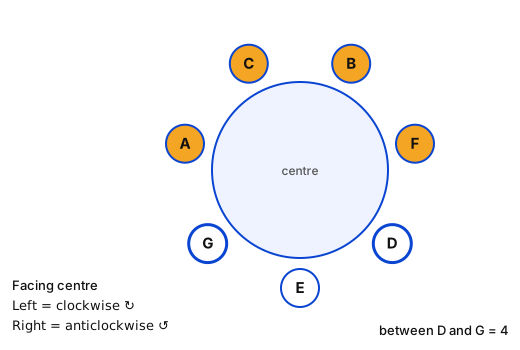
A, B, C, D, E, F and G are sitting around a circular table facing the centre. B sits third to the right of E. F sits to the immediate left of B. C is the immediate neighbour of A and B. G is not the immediate neighbour of F. How many people sit between D and G when counted from the left of G?
A, B, C, D, E, F और G एक वृत्ताकार मेज़ के चारों ओर केंद्र की ओर मुख करके बैठे हैं। B, E के दाएँ से तीसरे स्थान पर बैठा है। F, B के ठीक बाएँ बैठा है। C, A और B दोनों का निकटतम पड़ोसी है। G, F का निकटतम पड़ोसी नहीं है। G के बाएँ से गिनने पर D और G के बीच कितने व्यक्ति बैठे हैं?
  1. AFourचार
  2. BTwoदो
  3. CFiveपाँच
  4. DThreeतीन
Show answer

Concept: Facing the centre, right = anticlockwise and left = clockwise.

  1. Fix E; B is 3rd to the right of E; F is immediate left of B.
  2. C sits next to B (other side from F) and A next to C.
  3. Two seats remain beside E; G cannot be next to F, so D is between E and F and G is between A and E.
  4. Going left from G: A, C, B, F, then D → 4 people between.

Trick: Place the most fixed clue (B from E) first.

Answer: (A) Four

अवधारणा: केंद्र की ओर मुख हो तो दायाँ = वामावर्त (anticlockwise), बायाँ = दक्षिणावर्त (clockwise)।

  1. E को रखें; B, E के दाएँ तीसरे स्थान पर; F, B के ठीक बाएँ।
  2. C, B के दूसरी ओर और A, C के पास।
  3. E के दोनों ओर दो स्थान बचे; G, F के पास नहीं, अतः D, E और F के बीच तथा G, A और E के बीच।
  4. G के बाएँ से गिनें: A, C, B, F, फिर D → बीच में 4 लोग।

ट्रिक: सबसे पक्की शर्त (E से B) पहले लगाएँ।

उत्तर: (A) चार

RRB NTPC Undergraduate CBT 1General Intelligence and ReasoningCircular seating arrangementRRB NTPC Undergraduate CBT 1 2024 · 8 Aug Shift 3 →
Q3873.
What will come in place of the question mark (?) in the following equation, if ‘+’ and ‘×’ are interchanged and ‘−’ and ‘÷’ are interchanged?
38 ÷ 7 + 5 × 20 − 4 = ?
यदि ‘+’ और ‘×’ को आपस में बदल दिया जाए तथा ‘−’ और ‘÷’ को आपस में बदल दिया जाए, तो निम्नलिखित समीकरण में प्रश्न चिह्न (?) के स्थान पर क्या आएगा?
38 ÷ 7 + 5 × 20 − 4 = ?
  1. A22
  2. B27
  3. C8
  4. D15
Show answer

Concept: Swap the signs as told, then apply BODMAS.

  1. Swap + ↔ × and − ↔ ÷: 38−7×5+20÷4.
  2. =38−35+5
  3. =8

Trick: Rewrite the whole expression first, then calculate.

Answer: (C) 8

अवधारणा: बताए अनुसार चिह्न बदलें, फिर BODMAS लगाएँ।

  1. + ↔ × और − ↔ ÷: 38−7×5+20÷4।
  2. =38−35+5
  3. =8

ट्रिक: पहले पूरा व्यंजक दोबारा लिखें, फिर हल करें।

उत्तर: (C) 8

RRB NTPC Undergraduate CBT 1General Intelligence and ReasoningMathematical operationsRRB NTPC Undergraduate CBT 1 2024 · 8 Aug Shift 3 →
Q3874.
In a certain code language,
A + B means ‘A is the daughter of B’,
A – B means ‘A is the wife of B’,
A x B means ‘A is the father of B’ and
A ÷ B means ‘A is the brother of B’.
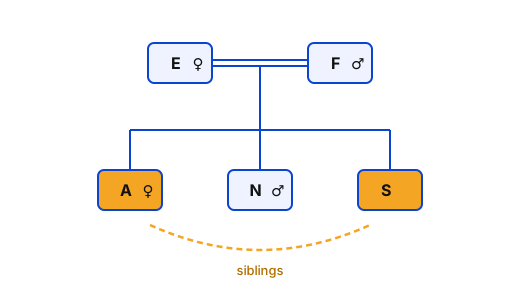
How is A related to S if ‘A + E – F x N ÷ S’?
एक निश्चित कूट भाषा में,
A + B का अर्थ है ‘A, B की पुत्री है’,
A – B का अर्थ है ‘A, B की पत्नी है’,
A x B का अर्थ है ‘A, B का पिता है’ और
A ÷ B का अर्थ है ‘A, B का भाई है’।
यदि ‘A + E – F x N ÷ S’ है, तो A का S से क्या संबंध है?
  1. AFather's sisterपिता की बहन
  2. BMother's motherमाता की माता
  3. CFather's motherपिता की माता
  4. DSisterबहन
Show answer

Concept: Decode each symbol and build a family tree.

  1. A + E: A is the daughter of E. E − F: E is the wife of F.
  2. F × N: F is the father of N. N ÷ S: N is the brother of S.
  3. A, N and S are all children of E and F; A is female → A is the sister of S.

Trick: Mark gender as soon as a relation reveals it (daughter → female).

Answer: (D) Sister

अवधारणा: हर चिह्न का अर्थ लगाकर वंश-वृक्ष बनाएँ।

  1. A + E: A, E की बेटी। E − F: E, F की पत्नी।
  2. F × N: F, N का पिता। N ÷ S: N, S का भाई।
  3. A, N, S तीनों E और F की संतान; A स्त्री है → A, S की बहन।

ट्रिक: संबंध से लिंग पता चलते ही लिख लें (बेटी → स्त्री)।

उत्तर: (D) बहन

RRB NTPC Undergraduate CBT 1General Intelligence and ReasoningCoded blood relationsRRB NTPC Undergraduate CBT 1 2024 · 8 Aug Shift 3 →
Q3875.
If 2 is added to each even digit and 2 is added to each odd digit in the number 7145362, what will be the sum of the last two and first two digits in the new number thus formed?
यदि संख्या 7145362 में प्रत्येक सम अंक में 2 जोड़ा जाए और प्रत्येक विषम अंक में 2 जोड़ा जाए, तो इस प्रकार बनी नई संख्या के अंतिम दो और पहले दो अंकों का योग क्या होगा?
  1. A25
  2. B24
  3. C26
  4. D27
Show answer

Concept: Here 2 is added to every digit (even and odd).

  1. 7145362 → 9 3 6 7 5 8 4.
  2. First two: 9+3=12; last two: 8+4=12.
  3. Sum =12+12=24.

Trick: Only the four end digits matter: (7+1)+(6+2)+4×2=24.

Answer: (B) 24

अवधारणा: यहाँ हर अंक (सम और विषम) में 2 जोड़ना है।

  1. 7145362 → 9 3 6 7 5 8 4।
  2. पहले दो: 9+3=12; अंतिम दो: 8+4=12।
  3. योग =12+12=24।

ट्रिक: केवल किनारे के चार अंक: (7+1)+(6+2)+4×2=24।

उत्तर: (B) 24

RRB NTPC Undergraduate CBT 1General Intelligence and ReasoningNumber operationsRRB NTPC Undergraduate CBT 1 2024 · 8 Aug Shift 3 →
Q3876.
Read the given statements and conclusions carefully. Assuming that the information given in the statements is true, even if it appears to be at variance with commonly known facts, decide which of the given conclusion(s) logically follow(s) from the statements.
Statements:
All physicists are chemists.
No chemists are biologists.
Conclusions:
I. No biologists are physicists.
II. Some biologists are physicists.
दिए गए कथनों और निष्कर्षों को ध्यानपूर्वक पढ़िए। कथनों में दी गई जानकारी को सत्य मानते हुए, भले ही वह सामान्यतः ज्ञात तथ्यों से भिन्न प्रतीत होती हो, निर्णय कीजिए कि दिए गए निष्कर्षों में से कौन-सा/कौन-से निष्कर्ष कथनों का तार्किक रूप से अनुसरण करता है/करते हैं।
कथन:
सभी भौतिक विज्ञानी, रसायनज्ञ हैं।
कोई भी रसायनज्ञ, जीवविज्ञानी नहीं है।
निष्कर्ष:
I. कोई भी जीवविज्ञानी, भौतिक विज्ञानी नहीं है।
II. कुछ जीवविज्ञानी, भौतिक विज्ञानी हैं।
  1. AOnly conclusion (II) follows.केवल निष्कर्ष (II) अनुसरण करता है।
  2. BNeither conclusion (I) nor (II) follows.न तो निष्कर्ष (I) और न ही (II) अनुसरण करता है।
  3. COnly conclusion (I) follows.केवल निष्कर्ष (I) अनुसरण करता है।
  4. DBoth conclusions (I) and (II) follow.दोनों निष्कर्ष (I) और (II) अनुसरण करते हैं।
Show answer

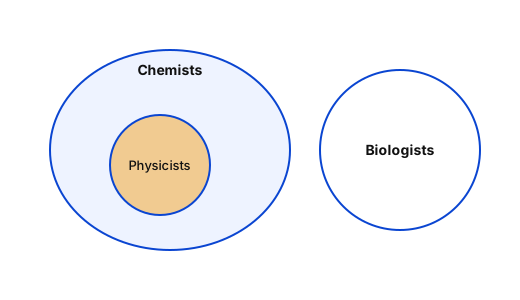
Concept: Draw the least-overlap Venn diagram.

  1. All physicists lie inside chemists.
  2. Chemists and biologists do not touch, so physicists cannot touch biologists.
  3. I: No biologist is a physicist – true. II: Some biologists are physicists – false.

Yaad rakhein: All A are B + No B is C → No A is C (and No C is A).

Answer: (C) Only conclusion (I) follows.

अवधारणा: न्यूनतम ओवरलैप वाला वेन आरेख बनाएँ।

  1. सभी physicists, chemists के अंदर हैं।
  2. Chemists और biologists अलग हैं, अतः physicists भी biologists से अलग।
  3. I: कोई biologist, physicist नहीं – सत्य। II: कुछ biologists, physicists हैं – असत्य।

याद रखें: सभी A, B हैं + कोई B, C नहीं → कोई A, C नहीं।

उत्तर: (C) केवल निष्कर्ष (I) अनुसरण करता है।

RRB NTPC Undergraduate CBT 1General Intelligence and ReasoningSyllogismRRB NTPC Undergraduate CBT 1 2024 · 8 Aug Shift 3 →
Q3877.
If ‘+’ and ‘÷’ are interchanged and ‘−’ and ‘×’ are interchanged, what will come in place of the question mark (?) in the following equation?
21 ÷ 57 − 3 × 8 + 4 = ?
यदि ‘+’ और ‘÷’ को आपस में बदल दिया जाए तथा ‘−’ और ‘×’ को आपस में बदल दिया जाए, तो निम्नलिखित समीकरण में प्रश्न चिह्न (?) के स्थान पर क्या आएगा?
21 ÷ 57 − 3 × 8 + 4 = ?
  1. A56
  2. B23
  3. C45
  4. D34
Show answer

Concept: Swap the signs as told (+↔÷, −↔×), then simplify using BODMAS (÷ and × before + and −).

  1. The equation printed in the paper is 21÷57−3×8+4=?.
  2. After interchanging: 21+57×3−8÷4.
  3. =21+171−2.
  4. =190.
  5. The value 190 is not among the options (56, 23, 45, 34), so no option is correct.

Note: Always apply the interchange first, then BODMAS. In the exam, every candidate gets full marks (bonus) for such a question.

Answer: Bonus – no option is correct as printed; full marks to all.

अवधारणा: बताए अनुसार चिह्न बदलें (+↔÷, −↔×), फिर BODMAS (पहले ÷ और ×, फिर + और −) से हल करें।

  1. प्रश्नपत्र में छपा समीकरण 21÷57−3×8+4=? है।
  2. चिह्न बदलने पर: 21+57×3−8÷4।
  3. =21+171−2।
  4. =190।
  5. मान 190 विकल्पों (56, 23, 45, 34) में नहीं है, अतः कोई विकल्प सही नहीं।

नोट: पहले चिह्न बदलें, फिर BODMAS लगाएँ। परीक्षा में ऐसे प्रश्न पर सभी अभ्यर्थियों को पूरे अंक (बोनस) दिए जाते हैं।

उत्तर: बोनस – छपे प्रश्न के अनुसार कोई विकल्प सही नहीं; सभी को पूरे अंक।

RRB NTPC Undergraduate CBT 1General Intelligence and ReasoningMathematical OperationsRRB NTPC Undergraduate CBT 1 2024 · 8 Aug Shift 3 →
Q3878.
In a certain code language, ‘MADE’ is coded as ‘4172’ and ‘HAME’ is coded as ‘2475’. What is the code for ‘H’ in the given code language?
एक निश्चित कूट भाषा में, ‘MADE’ को ‘4172’ के रूप में कूटबद्ध किया जाता है और ‘HAME’ को ‘2475’ के रूप में कूटबद्ध किया जाता है। उसी कूट भाषा में ‘H’ के लिए कूट क्या है?
  1. A7
  2. B4
  3. C5
  4. D2
Show answer

Concept: Common letters in two words share the common codes.

  1. MADE → {4,1,7,2}; HAME → {2,4,7,5}.
  2. Common letters M, A, E ↔ common codes 4, 7, 2.
  3. Left over in HAME: H ↔ 5 (and D ↔ 1 in MADE).

Trick: Unique letter ↔ unique code.

Answer: (C) 5

अवधारणा: दो शब्दों के उभयनिष्ठ अक्षरों के कोड भी उभयनिष्ठ होते हैं।

  1. MADE → {4,1,7,2}; HAME → {2,4,7,5}।
  2. उभयनिष्ठ अक्षर M, A, E ↔ उभयनिष्ठ कोड 4, 7, 2।
  3. HAME में बचा H ↔ 5 (MADE में D ↔ 1)।

ट्रिक: अकेला अक्षर ↔ अकेला कोड।

उत्तर: (C) 5

RRB NTPC Undergraduate CBT 1General Intelligence and ReasoningCoding-decodingRRB NTPC Undergraduate CBT 1 2024 · 8 Aug Shift 3 →
Q3879.
What should come in place of the question mark (?) in the given series?
27 35 51 75 107 ?
दी गई श्रृंखला में प्रश्न चिह्न (?) के स्थान पर क्या आना चाहिए?
27 35 51 75 107 ?
  1. A125
  2. B147
  3. C148
  4. D174
Show answer

Concept: Look at the differences.

  1. Differences: 8,16,24,32 – multiples of 8.
  2. Next difference =40.
  3. 107+40=147.

Trick: Difference series 8n.

Answer: (B) 147

अवधारणा: अंतर देखें।

  1. अंतर: 8,16,24,32 – 8 के गुणज।
  2. अगला अंतर =40।
  3. 107+40=147।

ट्रिक: अंतर श्रृंखला 8n।

उत्तर: (B) 147

RRB NTPC Undergraduate CBT 1General Intelligence and ReasoningNumber seriesRRB NTPC Undergraduate CBT 1 2024 · 8 Aug Shift 3 →
Q3880.
In a certain code language, ‘ALPS’ is coded as ‘3257’ and ‘PUNE’ is coded as ‘1346’. What is the code for ‘P’ in the given code language?
एक निश्चित कूट भाषा में, ‘ALPS’ को ‘3257’ के रूप में कूटबद्ध किया जाता है और ‘PUNE’ को ‘1346’ के रूप में कूटबद्ध किया जाता है। उसी कूट भाषा में ‘P’ के लिए कूट क्या है?
  1. A1
  2. B5
  3. C7
  4. D3
Show answer

Concept: The letter common to both words gets the code common to both.

  1. ALPS → {3,2,5,7}; PUNE → {1,3,4,6}.
  2. Only common letter: P. Only common digit: 3.
  3. So P = 3.

Trick: One common letter ↔ one common digit.

Answer: (D) 3

अवधारणा: दोनों शब्दों में उभयनिष्ठ अक्षर का कोड भी उभयनिष्ठ।

  1. ALPS → {3,2,5,7}; PUNE → {1,3,4,6}।
  2. उभयनिष्ठ अक्षर केवल P; उभयनिष्ठ अंक केवल 3।
  3. अतः P = 3।

ट्रिक: एक उभयनिष्ठ अक्षर ↔ एक उभयनिष्ठ अंक।

उत्तर: (D) 3

RRB NTPC Undergraduate CBT 1General Intelligence and ReasoningCoding-decodingRRB NTPC Undergraduate CBT 1 2024 · 8 Aug Shift 3 →