Question bank

Q&A: practice questions with answers

Search questions on any topic. Filter by exam category, exam, subject and topic, try the question, then open the answer and explanation.

Courses – airGurukul

8,495 questions found.

Q381.
Based on the English alphabetical order, three of the following four letter-clusters are alike in a certain way and thus form a group. Which letter-cluster DOES NOT belong to that group? (Note: The odd one out is not based on the number of consonants/vowels or their position in the letter-cluster.)
अंग्रेज़ी वर्णमाला क्रम के आधार पर, निम्नलिखित चार अक्षर-समूहों में से तीन किसी निश्चित प्रकार से एक समान हैं और इस प्रकार एक समूह बनाते हैं। कौन-सा अक्षर-समूह उस समूह से संबंधित नहीं है? (ध्यान दें: असंगत अक्षर-समूह, उस अक्षर-समूह में व्यंजनों/स्वरों की संख्या या उनके स्थान पर आधारित नहीं है।)
  1. ACELS
  2. BJMSZ
  3. CNQWD
  4. DSVBI
Show answer

Concept: Find the gaps between consecutive letters (positions A=1 … Z=26, wrapping after Z).

  1. JMSZ: +3, +6, +7.
  2. NQWD: +3, +6, +7 (W→D wraps).
  3. SVBI: +3, +6, +7.
  4. CELS: +2, +7, +7 ⇒ odd.

Trick: Only the first gap already differs (+2 vs +3) – checking one gap is enough.

Answer: (A) CELS

अवधारणा: क्रमागत अक्षरों के बीच अंतर देखें (Z के बाद A)।

  1. JMSZ: +3, +6, +7।
  2. NQWD: +3, +6, +7।
  3. SVBI: +3, +6, +7।
  4. CELS: +2, +7, +7 ⇒ विषम।

ट्रिक: पहला अंतर ही अलग है (+2 बनाम +3)।

उत्तर: (A) CELS
RRB NTPC Undergraduate CBT 1General Intelligence and ReasoningOdd one out – letter clustersRRB NTPC Undergraduate CBT 1 2024 · 28 Aug Shift 3 →
Q382.
Each of the digits in the number 817594326 is arranged in ascending order from left to right. Which of the following digits will be fourth from the left?
संख्या 817594326 के प्रत्येक अंक को बाएँ से दाएँ आरोही क्रम में व्यवस्थित किया जाता है। निम्नलिखित में से कौन-सा अंक बाएँ से चौथे स्थान पर होगा?
  1. A5
  2. B6
  3. C4
  4. D3
Show answer

Concept: Arrange all digits in ascending order.

  1. Digits: 8, 1, 7, 5, 9, 4, 3, 2, 6.
  2. Ascending: 1 2 3 4 5 6 7 8 9.
  3. Fourth from left =4.

Trick: All digits 1–9 appear once, so the nth from left is simply n.

Answer: (C) 4

अवधारणा: सभी अंकों को आरोही क्रम में लगाएँ।

  1. अंक: 8, 1, 7, 5, 9, 4, 3, 2, 6।
  2. आरोही: 1 2 3 4 5 6 7 8 9।
  3. बाएँ से चौथा =4।

ट्रिक: 1–9 सभी अंक एक-एक बार हैं, अतः बाएँ से nवाँ अंक n ही है।

उत्तर: (C) 4

RRB NTPC Undergraduate CBT 1General Intelligence and ReasoningDigit arrangementRRB NTPC Undergraduate CBT 1 2024 · 28 Aug Shift 3 →
Q383.
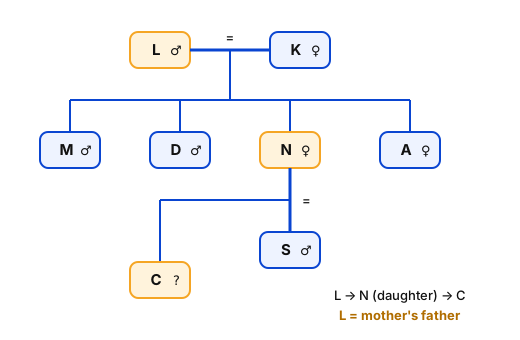
M is the son of L. L is the father of D. D is the brother of N. N is the sister of A. A is the daughter of K. K is the mother of Q. N is married to S. S is the father of C. How is L related to C?
M, L का पुत्र है। L, D का पिता है। D, N का भाई है। N, A की बहन है। A, K की पुत्री है। K, Q की माता है। N का विवाह S से हुआ है। S, C का पिता है। L का C से क्या संबंध है?
  1. AFather's fatherपिता के पिता
  2. BMother's fatherमाता के पिता
  3. CFather's brotherपिता के भाई
  4. DMother's brotherमाता के भाई
Show answer

Concept: Build the family tree step by step.

  1. L (male) and K (female) are parents of M, D, N, A.
  2. N is a sister ⇒ female; N is married to S.
  3. S is the father of C ⇒ N is C's mother.
  4. L is N's father ⇒ L is C's mother's father.

Trick: Trace the path L → N → C: father of mother.

Answer: (B) Mother's father

अवधारणा: चरणबद्ध परिवार वृक्ष बनाएँ।

  1. L (पुरुष) और K (महिला) M, D, N, A के माता-पिता हैं।
  2. N बहन है ⇒ महिला; N का विवाह S से।
  3. S, C का पिता ⇒ N, C की माँ।
  4. L, N का पिता ⇒ L, C का नाना (माँ का पिता)।

ट्रिक: पथ L → N → C: माँ के पिता।

उत्तर: (B) Mother's father

RRB NTPC Undergraduate CBT 1General Intelligence and ReasoningBlood relationsRRB NTPC Undergraduate CBT 1 2024 · 28 Aug Shift 3 →
Q384.
In a certain code language, ‘TAME’ is coded as ‘4257’ and ‘MIND’ is coded as ‘1365’. What is the code for ‘M’ in the given code language?
एक निश्चित कूट भाषा में, ‘TAME’ को ‘4257’ के रूप में कूटबद्ध किया जाता है और ‘MIND’ को ‘1365’ के रूप में कूटबद्ध किया जाता है। दी गई कूट भाषा में ‘M’ के लिए कूट क्या है?
  1. A6
  2. B7
  3. C5
  4. D1
Show answer

Concept: The only letter common to both words gets the only digit common to both codes.

  1. TAME = 4257, MIND = 1365.
  2. Common letter: M; common digit: 5.
  3. So M = 5.

Trick: One common letter ↔ one common digit.

Answer: (C) 5

अवधारणा: दोनों शब्दों में उभयनिष्ठ अक्षर का कोड दोनों कोडों का उभयनिष्ठ अंक होता है।

  1. TAME = 4257, MIND = 1365।
  2. उभयनिष्ठ अक्षर: M; उभयनिष्ठ अंक: 5।
  3. अतः M = 5।

ट्रिक: एक उभयनिष्ठ अक्षर ↔ एक उभयनिष्ठ अंक।

उत्तर: (C) 5

RRB NTPC Undergraduate CBT 1General Intelligence and ReasoningCoding-decoding – common lettersRRB NTPC Undergraduate CBT 1 2024 · 28 Aug Shift 3 →
Q385.
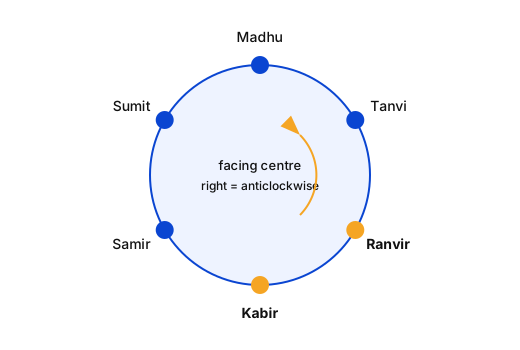
Kabir, Sumit, Ranvir, Madhu, Samir and Tanvi are sitting around a circle, facing the centre. Ranvir sits second to the right of Samir. Samir sits second to the right of Madhu. Sumit sits to the immediate left of Samir. Kabir sits second to the left of Tanvi. Who sits to the immediate right of Kabir?
कबीर, सुमित, रणवीर, मधु, समीर और तन्वी एक वृत्त के चारों ओर केंद्र की ओर मुख करके बैठे हैं। रणवीर, समीर के दाईं ओर दूसरे स्थान पर बैठा है। समीर, मधु के दाईं ओर दूसरे स्थान पर बैठा है। सुमित, समीर के ठीक बाईं ओर बैठा है। कबीर, तन्वी के बाईं ओर दूसरे स्थान पर बैठा है। कबीर के ठीक दाईं ओर कौन बैठा है?
  1. ATanviतन्वी
  2. BRanvirरणवीर
  3. CSamirसमीर
  4. DSumitसुमित
Show answer

Concept: Facing the centre, 'right' is anticlockwise and 'left' is clockwise.

  1. Fix Madhu; Samir is 2nd to her right, Ranvir 2nd to Samir's right.
  2. Sumit sits immediately left of Samir.
  3. Remaining two seats: Kabir 2nd to the left of Tanvi works only with Kabir opposite Madhu.
  4. Immediate right of Kabir = Ranvir.

Trick: 6 people: 'second to the left/right' twice from one person covers alternate seats – fix those first.

Answer: (B) Ranvir

अवधारणा: केंद्र की ओर मुख होने पर 'दाएँ' = वामावर्त (anticlockwise), 'बाएँ' = दक्षिणावर्त।

  1. Madhu को स्थिर करें; Samir उसके दाएँ दूसरे, Ranvir, Samir के दाएँ दूसरे।
  2. Sumit, Samir के ठीक बाएँ।
  3. शेष दो स्थान: Kabir, Tanvi के बाएँ दूसरा – केवल तभी संभव जब Kabir, Madhu के सामने हो।
  4. Kabir के ठीक दाएँ = Ranvir।

ट्रिक: पहले 'दूसरा दाएँ' वाली शर्तें लगाएँ – वे एकांतर स्थान भर देती हैं।

उत्तर: (B) Ranvir

RRB NTPC Undergraduate CBT 1General Intelligence and ReasoningCircular seating arrangementRRB NTPC Undergraduate CBT 1 2024 · 28 Aug Shift 3 →
Q386.
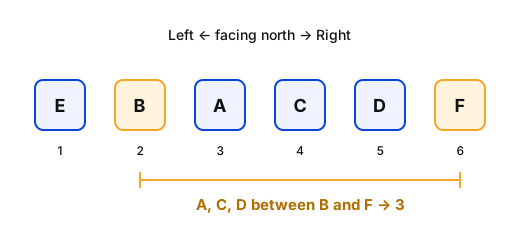
Six people, A, B, C, D, E and F are sitting in a row, facing north. Only two people sit to the right of C. A sits second to the left of D. B sits to the immediate right of E. F sits on the extreme right end of the line. How many people sit between B and F?
छह व्यक्ति A, B, C, D, E और F एक पंक्ति में उत्तर की ओर मुख करके बैठे हैं। C के दाईं ओर केवल दो व्यक्ति बैठे हैं। A, D के बाईं ओर दूसरे स्थान पर बैठा है। B, E के ठीक दाईं ओर बैठा है। F पंक्ति के अंतिम दाएँ छोर पर बैठा है। B और F के बीच कितने व्यक्ति बैठे हैं?
  1. AOneएक
  2. BTwoदो
  3. CFourचार
  4. DThreeतीन
Show answer

Concept: Number seats 1–6 from left (facing north, right = higher number).

  1. F at 6; only two to the right of C ⇒ C at 4.
  2. A is 2nd to the left of D: (1,3) leaves 2 and 5 non-adjacent for E-B, so A = 3, D = 5.
  3. E, B take 1 and 2 with B right of E: E = 1, B = 2.
  4. Between B(2) and F(6): A, C, D ⇒ three.

Trick: Fill fixed seats (F, C) first, then test the A–D pair.

Answer: (D) Three

अवधारणा: बाएँ से 1–6 स्थान लें (उत्तरमुख, दायाँ = बड़ी संख्या)।

  1. F स्थान 6 पर; C के दाएँ केवल दो ⇒ C स्थान 4।
  2. A, D के बाएँ दूसरा: (1,3) लेने पर E-B के लिए 2 और 5 बचते हैं जो साथ नहीं, अतः A = 3, D = 5।
  3. E = 1, B = 2।
  4. B(2) और F(6) के बीच: A, C, D ⇒ तीन।

ट्रिक: पहले निश्चित स्थान (F, C) भरें, फिर A–D युग्म जाँचें।

उत्तर: (D) Three

RRB NTPC Undergraduate CBT 1General Intelligence and ReasoningLinear seating arrangementRRB NTPC Undergraduate CBT 1 2024 · 28 Aug Shift 3 →
Q387.
Read the given statement(s) and conclusions carefully. Assuming that the information given in the statements is true, even if it appears to be at variance with commonly known facts, decide which of the given conclusions logically follow(s) from the statement(s).
Statements:
Some Magpies are Swans.
No Swans are Seagulls.
Conclusions:
I: Some Magpies are Seagulls.
II: No Seagulls are Magpies.
दिए गए कथन/कथनों और निष्कर्षों को ध्यानपूर्वक पढ़िए। कथनों में दी गई जानकारी को सत्य मानते हुए, भले ही वह सामान्यतः ज्ञात तथ्यों से भिन्न प्रतीत होती हो, निर्णय लीजिए कि दिए गए निष्कर्षों में से कौन-सा/से निष्कर्ष तार्किक रूप से कथन/कथनों का अनुसरण करता है/करते हैं।
कथन:
कुछ मैगपाई, हंस हैं।
कोई भी हंस, सीगल नहीं है।
निष्कर्ष:
I: कुछ मैगपाई, सीगल हैं।
II: कोई भी सीगल, मैगपाई नहीं है।
  1. ANeither conclusion (I) nor (II) follows.न तो निष्कर्ष (I) और न ही (II) अनुसरण करता है।
  2. BOnly conclusion (II) follows.केवल निष्कर्ष (II) अनुसरण करता है।
  3. CBoth conclusions (I) and (II) follow.निष्कर्ष (I) और (II) दोनों अनुसरण करते हैं।
  4. DOnly conclusion (I) follows.केवल निष्कर्ष (I) अनुसरण करता है।
Show answer

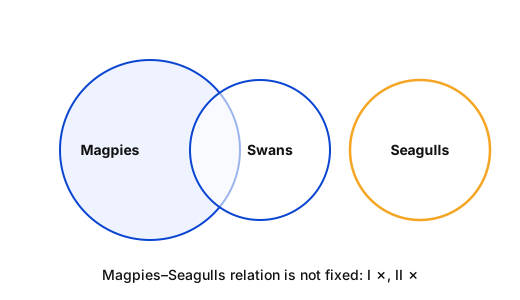
Concept: Draw the minimum Venn diagram; Magpies and Seagulls are linked only through Swans.

  1. Swans and Seagulls are disjoint; Magpies overlap Swans.
  2. Magpies may or may not touch Seagulls ⇒ neither 'Some Magpies are Seagulls' nor 'No Seagulls are Magpies' is certain.

Yaad rakhein: I and II form a complementary pair (either I or II is true), but since an 'either-or' option is not given, choose 'neither'.

Answer: (A) Neither conclusion (I) nor (II) follows.

अवधारणा: न्यूनतम वेन आरेख बनाएँ; Magpies और Seagulls का संबंध केवल Swans से होकर है।

  1. Swans और Seagulls अलग हैं; Magpies, Swans से जुड़े हैं।
  2. Magpies, Seagulls को छू भी सकते हैं, नहीं भी ⇒ दोनों में से कोई निश्चित नहीं।

याद रखें: I और II पूरक युग्म हैं ('या तो I या II'), पर यह विकल्प नहीं है, अतः 'कोई नहीं'।

उत्तर: (A) Neither conclusion (I) nor (II) follows.

RRB NTPC Undergraduate CBT 1General Intelligence and ReasoningSyllogismRRB NTPC Undergraduate CBT 1 2024 · 28 Aug Shift 3 →
Q388.
QERG is related to WJVJ in a certain way based on the English alphabetical order. In the same way, OYHS is related to UDLV. To which of the given options is GNTB related, following the same logic?
अंग्रेज़ी वर्णमाला क्रम के आधार पर QERG एक निश्चित प्रकार से WJVJ से संबंधित है। उसी प्रकार, OYHS, UDLV से संबंधित है। समान तर्क का अनुसरण करते हुए, GNTB दिए गए विकल्पों में से किससे संबंधित है?
  1. AMSXE
  2. BMSEX
  3. CMSWE
  4. DMXEW
Show answer

Concept: Find the shift for each letter position.

  1. QERG → WJVJ: +6, +5, +4, +3.
  2. OYHS → UDLV: +6, +5, +4, +3 ✓.
  3. GNTB: G+6=M, N+5=S, T+4=X, B+3=E ⇒ MSXE.

Trick: Decreasing shifts +6, +5, +4, +3 – check the last letter first: B+3=E rules out (B) and (D).

Answer: (A) MSXE

अवधारणा: हर स्थान के अक्षर का खिसकाव ज्ञात करें।

  1. QERG → WJVJ: +6, +5, +4, +3।
  2. OYHS → UDLV: +6, +5, +4, +3 ✓।
  3. GNTB: M, S, X, E ⇒ MSXE।

ट्रिक: अंतिम अक्षर B+3=E से (B) और (D) तुरंत हटते हैं।

उत्तर: (A) MSXE

RRB NTPC Undergraduate CBT 1General Intelligence and ReasoningLetter analogyRRB NTPC Undergraduate CBT 1 2024 · 28 Aug Shift 3 →
Q389.
What should come in place of the question mark (?) in the given series?
82 , 83 , 85 , 89 , 97 , ?
दी गई श्रृंखला में प्रश्न चिह्न (?) के स्थान पर क्या आना चाहिए?
82 , 83 , 85 , 89 , 97 , ?
  1. A112
  2. B113
  3. C121
  4. D131
Show answer

Concept: Look at the differences between consecutive terms.

  1. Differences: 1, 2, 4, 8 (doubling).
  2. Next difference =16.
  3. 97+16=113.

Trick: Differences as powers of 2: 20,21,22,23,24.

Answer: (B) 113

अवधारणा: क्रमागत पदों के अंतर देखें।

  1. अंतर: 1, 2, 4, 8 (दोगुना)।
  2. अगला अंतर =16।
  3. 97+16=113।

ट्रिक: अंतर 2 की घातें: 20,21,22,23,24।

उत्तर: (B) 113

RRB NTPC Undergraduate CBT 1General Intelligence and ReasoningNumber seriesRRB NTPC Undergraduate CBT 1 2024 · 28 Aug Shift 3 →
Q390.
Each of the digits in the number 9254631 is arranged in ascending order from left to right. The position(s) of how many digits will remain unchanged as compared to that in the original number?
संख्या 9254631 के प्रत्येक अंक को बाएँ से दाएँ आरोही क्रम में व्यवस्थित किया जाता है। मूल संख्या की तुलना में कितने अंकों का/के स्थान अपरिवर्तित रहेगा/रहेंगे?
  1. AThreeतीन
  2. BTwoदो
  3. CNoneएक भी नहीं
  4. DOneएक
Show answer

Concept: Compare the original and ascending numbers position by position.

  1. Original: 9 2 5 4 6 3 1.
  2. Ascending: 1 2 3 4 5 6 9.
  3. Same: 2nd (2) and 4th (4) ⇒ two.

Trick: Write the two numbers one under the other – matching columns are easy to spot.

Answer: (B) Two

अवधारणा: मूल और आरोही संख्या की स्थान-दर-स्थान तुलना करें।

  1. मूल: 9 2 5 4 6 3 1।
  2. आरोही: 1 2 3 4 5 6 9।
  3. समान: दूसरा (2) और चौथा (4) ⇒ दो।

ट्रिक: दोनों संख्याएँ एक के नीचे एक लिखें।

उत्तर: (B) Two

RRB NTPC Undergraduate CBT 1General Intelligence and ReasoningDigit arrangementRRB NTPC Undergraduate CBT 1 2024 · 28 Aug Shift 3 →
Q391.
Kiya ranked 7th from the bottom and 15th from the top in her class. How many students are there in her class?
किया अपनी कक्षा में नीचे से 7वें और ऊपर से 15वें स्थान पर है। उसकी कक्षा में कितने विद्यार्थी हैं?
  1. A22
  2. B21
  3. C20
  4. D19
Show answer

Concept: Total = rank from top + rank from bottom −1.

  1. Total =15+7−1=21.

Trick: Subtract 1 because Kiya is counted twice.

Answer: (B) 21

अवधारणा: कुल = ऊपर से स्थान + नीचे से स्थान − 1।

  1. कुल =15+7−1=21।

ट्रिक: Kiya दो बार गिनी गई है, अतः 1 घटाएँ।

उत्तर: (B) 21

RRB NTPC Undergraduate CBT 1General Intelligence and ReasoningRankingRRB NTPC Undergraduate CBT 1 2024 · 28 Aug Shift 3 →
Q392.
Based on the English alphabetical order, three of the following four letter-cluster pairs are alike in a certain way and thus form a group. Which letter-cluster pair DOES NOT belong to that group?
(Note: The odd one out is not based on the number of consonants/vowels or their position in the letter-cluster.)
अंग्रेज़ी वर्णमाला क्रम के आधार पर, निम्नलिखित चार अक्षर-समूह युग्मों में से तीन किसी निश्चित प्रकार से एक समान हैं और इस प्रकार एक समूह बनाते हैं। कौन-सा अक्षर-समूह युग्म उस समूह से संबंधित नहीं है?
(ध्यान दें: असंगत अक्षर-समूह, उस अक्षर-समूह में व्यंजनों/स्वरों की संख्या या उनके स्थान पर आधारित नहीं है।)
  1. ALP-GI
  2. BNR-IL
  3. CQU-LO
  4. DJN-EH
Show answer

Concept: Compare each letter of the first cluster with the corresponding letter of the second.

  1. NR-IL: N−5=I, R−6=L.
  2. QU-LO: Q−5=L, U−6=O.
  3. JN-EH: J−5=E, N−6=H.
  4. LP-GI: L−5=G but P−7=I ⇒ odd.

Trick: In the group, both clusters have letters 4 apart (NR) and 3 apart (IL); LP-GI has G–I only 2 apart.

Answer: (A) LP-GI

अवधारणा: पहले समूह के प्रत्येक अक्षर की तुलना दूसरे के संगत अक्षर से करें।

  1. NR-IL: N−5=I, R−6=L।
  2. QU-LO: −5, −6।
  3. JN-EH: −5, −6।
  4. LP-GI: L−5=G पर P−7=I ⇒ विषम।

ट्रिक: समूह में दूसरे भाग के अक्षरों में 3 का अंतर (IL, LO, EH); GI में केवल 2।

उत्तर: (A) LP-GI

RRB NTPC Undergraduate CBT 1General Intelligence and ReasoningOdd one out – letter pairsRRB NTPC Undergraduate CBT 1 2024 · 28 Aug Shift 3 →
Q393.
What should come in place of the question mark (?) in the given series?
425 300 236 209 201 ?
दी गई श्रृंखला में प्रश्न चिह्न (?) के स्थान पर क्या आना चाहिए?
425 300 236 209 201 ?
  1. A200
  2. B182
  3. C172
  4. D152
Show answer

Concept: Differences between terms are perfect cubes.

  1. 425−300=125=53, 300−236=64=43.
  2. 236−209=27=33, 209−201=8=23.
  3. Next: 201−13=200.

Trick: Decreasing differences ending near 1 – check cubes 53,43,33…

Answer: (A) 200

अवधारणा: पदों के अंतर पूर्ण घन हैं।

  1. 425−300=53, 300−236=43।
  2. 236−209=33, 209−201=23।
  3. अगला: 201−13=200।

ट्रिक: घटते अंतर – घन 53,43,33… जाँचें।

उत्तर: (A) 200

RRB NTPC Undergraduate CBT 1General Intelligence and ReasoningNumber series – cubesRRB NTPC Undergraduate CBT 1 2024 · 28 Aug Shift 3 →
Q394.
If + means −, − means ×, × means ÷ and ÷ means +, then what will come in place of the question mark (?) in the following equation?
8 − 3 + 63 × 3 ÷ 14 = ?
यदि + का अर्थ −, − का अर्थ ×, × का अर्थ ÷ और ÷ का अर्थ + है, तो निम्नलिखित समीकरण में प्रश्न चिह्न (?) के स्थान पर क्या आएगा?
8 − 3 + 63 × 3 ÷ 14 = ?
  1. A24
  2. B17
  3. C12
  4. D30
Show answer

Concept: Replace the symbols, then apply BODMAS.

  1. 8−3+63×3÷14 becomes 8×3−63÷3+14.
  2. =24−21+14.
  3. =17.

Trick: Do division and multiplication first, then addition/subtraction from left.

Answer: (B) 17

अवधारणा: चिह्न बदलें, फिर BODMAS लगाएँ।

  1. 8−3+63×3÷14 बनता है 8×3−63÷3+14।
  2. =24−21+14।
  3. =17।

ट्रिक: पहले भाग व गुणा, फिर जोड़-घटाव।

उत्तर: (B) 17

RRB NTPC Undergraduate CBT 1General Intelligence and ReasoningMathematical operations – symbol substitutionRRB NTPC Undergraduate CBT 1 2024 · 28 Aug Shift 3 →
Q395.
Refer to the following number and symbol series and answer the question that follows. Counting to be done from left to right only.
(Left) 8 € 1 @ % 5 5 3 % © 2 € £ 7 1 # 8 % 8 7 2 @ (Right)
How many such numbers are there, each of which is immediately preceded by a number and also immediately followed by a number?
निम्नलिखित संख्या और प्रतीक श्रृंखला को देखिए और उसके बाद पूछे गए प्रश्न का उत्तर दीजिए। गिनती केवल बाएँ से दाएँ की जानी है।
(बाएँ) 8 € 1 @ % 5 5 3 % © 2 € £ 7 1 # 8 % 8 7 2 @ (दाएँ)
ऐसी कितनी संख्याएँ हैं, जिनमें से प्रत्येक के ठीक पहले एक संख्या है और ठीक बाद भी एक संख्या है?
  1. A4
  2. B2
  3. C3
  4. D1
Show answer

Concept: Look for three consecutive numbers – the middle one qualifies.

  1. Runs of numbers: '5 5 3' and '8 7 2' (also '7 1' and '8' alone – too short).
  2. Middle of '5 5 3' → 5; middle of '8 7 2' → 7.
  3. Count =2.

Trick: Only a run of at least 3 numbers can give an answer – scan for such runs.

Answer: (B) 2

अवधारणा: तीन लगातार संख्याएँ खोजें – बीच वाली संख्या मान्य है।

  1. संख्याओं के समूह: '5 5 3' और '8 7 2' ('7 1' छोटा है)।
  2. '5 5 3' में बीच का 5; '8 7 2' में 7।
  3. गिनती =2।

ट्रिक: कम से कम 3 लगातार संख्याओं वाले समूह ही काम के हैं।

उत्तर: (B) 2

RRB NTPC Undergraduate CBT 1General Intelligence and ReasoningNumber-symbol seriesRRB NTPC Undergraduate CBT 1 2024 · 28 Aug Shift 3 →
Q396.
What should come in place of the question mark (?) in the given series?
312 320 329 ? 350 362
दी गई श्रृंखला में प्रश्न चिह्न (?) के स्थान पर क्या आना चाहिए?
312 320 329 ? 350 362
  1. A336
  2. B339
  3. C337
  4. D341
Show answer

Concept: Differences increase by 1.

  1. 320−312=8, 329−320=9.
  2. Next differences 10 and 11: 329+10=339, 339+11=350 ✓.
  3. Then 350+12=362 ✓.

Trick: Always verify the missing term with the term after it.

Answer: (B) 339

अवधारणा: अंतर 1-1 बढ़ते हैं।

  1. 320−312=8, 329−320=9।
  2. अगले अंतर 10 और 11: 329+10=339, 339+11=350 ✓।
  3. फिर 350+12=362 ✓।

ट्रिक: लुप्त पद को अगले पद से अवश्य जाँचें।

उत्तर: (B) 339

RRB NTPC Undergraduate CBT 1General Intelligence and ReasoningNumber seriesRRB NTPC Undergraduate CBT 1 2024 · 28 Aug Shift 3 →
Q397.
Seven boxes, A, B, C, D, M, N and O, are kept one over the other but not necessarily in the same order.
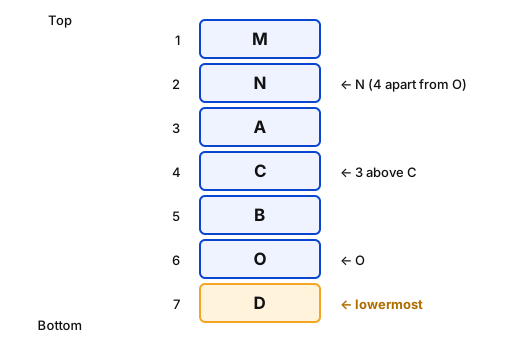
Only three boxes are kept above C. Only one box is kept between O and C. Only three boxes are kept between O and N. N is kept at some place above C. A is kept immediately below N. B is kept at one of the places above D. M is not kept immediately above or below O.
Which box is kept at the lowermost position?
सात बॉक्स A, B, C, D, M, N और O एक के ऊपर एक रखे गए हैं, लेकिन ज़रूरी नहीं कि इसी क्रम में हों।
C के ऊपर केवल तीन बॉक्स रखे गए हैं। O और C के बीच केवल एक बॉक्स रखा गया है। O और N के बीच केवल तीन बॉक्स रखे गए हैं। N, C के ऊपर किसी स्थान पर रखा गया है। A, N के ठीक नीचे रखा गया है। B, D के ऊपर के स्थानों में से किसी एक पर रखा गया है। M, O के ठीक ऊपर या ठीक नीचे नहीं रखा गया है।
सबसे नीचे के स्थान पर कौन-सा बॉक्स रखा गया है?
  1. AM
  2. BD
  3. CO
  4. DA
Show answer

Concept: Number positions 1 (top) to 7 (bottom) and place fixed boxes first.

  1. Three boxes above C ⇒ C at 4. One box between O and C ⇒ O at 2 or 6.
  2. N above C and three boxes between O and N ⇒ O = 6, N = 2; A just below N ⇒ A = 3.
  3. Left: 1, 5, 7. M not adjacent to O(6) ⇒ M = 1. B above D ⇒ B = 5, D = 7.

Trick: When N must be above C, test O = 2 first: N would be at 6 (below C) – rejected at once.

Answer: (B) D

अवधारणा: ऊपर से 1 से 7 स्थान लें और पहले निश्चित बॉक्स रखें।

  1. C के ऊपर तीन ⇒ C = 4। O और C के बीच एक ⇒ O = 2 या 6।
  2. N, C के ऊपर और O-N के बीच तीन ⇒ O = 6, N = 2; A ठीक N के नीचे ⇒ A = 3।
  3. बचे 1, 5, 7। M, O(6) के पास नहीं ⇒ M = 1। B, D के ऊपर ⇒ B = 5, D = 7।

ट्रिक: O = 2 लेने पर N = 6 (C के नीचे) आता है – तुरंत अस्वीकार।

उत्तर: (B) D

RRB NTPC Undergraduate CBT 1General Intelligence and ReasoningBox arrangementRRB NTPC Undergraduate CBT 1 2024 · 28 Aug Shift 3 →
Q398.
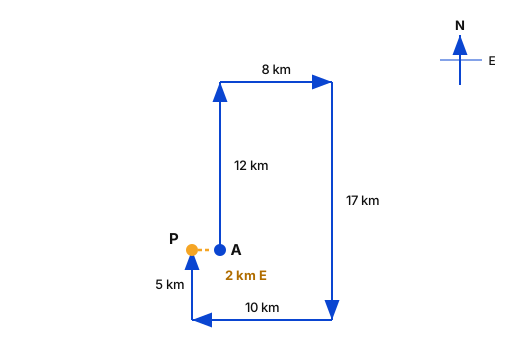
Hanish starts from Point A and drives 12 km towards the north. He then takes a right turn, drives 8 km, turns right and drives 17 km. He then takes a right turn and drives 10 km. He takes a final right turn, drives 5 km and stops at Point P. How far (shortest distance) and in which direction should he drive in order to reach Point A again? (All turns are 90-degree turns only unless specified.)
हनीश बिंदु A से चलना शुरू करता है और उत्तर की ओर 12 km गाड़ी चलाता है। फिर वह दाएँ मुड़ता है, 8 km गाड़ी चलाता है, दाएँ मुड़ता है और 17 km गाड़ी चलाता है। फिर वह दाएँ मुड़ता है और 10 km गाड़ी चलाता है। वह अंतिम बार दाएँ मुड़ता है, 5 km गाड़ी चलाता है और बिंदु P पर रुक जाता है। बिंदु A पर फिर से पहुँचने के लिए उसे कितनी दूर (न्यूनतम दूरी) और किस दिशा में गाड़ी चलानी चाहिए? (जब तक निर्दिष्ट न हो, सभी मोड़ केवल 90 डिग्री के हैं।)
  1. A2 km to the eastपूर्व की ओर 2 km
  2. B3 km to the westपश्चिम की ओर 3 km
  3. C3 km to the eastपूर्व की ओर 3 km
  4. D2 km to the westपश्चिम की ओर 2 km
Show answer

Concept: Track net east–west and north–south displacement.

  1. N 12, E 8, S 17, W 10, N 5.
  2. North–south: 12−17+5=0.
  3. East–west: 8−10=−2 ⇒ P is 2 km west of A.
  4. To return: 2 km east.

Trick: Four right turns bring you back to the original heading – only net values matter.

Answer: (A) 2 km to the east

अवधारणा: कुल पूर्व–पश्चिम और उत्तर–दक्षिण विस्थापन निकालें।

  1. उत्तर 12, पूर्व 8, दक्षिण 17, पश्चिम 10, उत्तर 5।
  2. उत्तर–दक्षिण: 12−17+5=0।
  3. पूर्व–पश्चिम: 8−10=−2 ⇒ P, A से 2 km पश्चिम।
  4. वापस जाने के लिए: 2 km पूर्व।

ट्रिक: केवल कुल (net) विस्थापन मायने रखता है।

उत्तर: (A) 2 km to the east

RRB NTPC Undergraduate CBT 1General Intelligence and ReasoningDirection and distanceRRB NTPC Undergraduate CBT 1 2024 · 28 Aug Shift 3 →
Q399.
URKE is related to QOGB in a certain way based on the English alphabetical order. In the same way, EFUS is related to ACQP. To which of the given options is SWIJ related, following the same logic?
अंग्रेज़ी वर्णमाला क्रम के आधार पर URKE एक निश्चित प्रकार से QOGB से संबंधित है। उसी प्रकार, EFUS, ACQP से संबंधित है। समान तर्क का अनुसरण करते हुए, SWIJ दिए गए विकल्पों में से किससे संबंधित है?
  1. AOTEG
  2. BOTYU
  3. COGET
  4. DOETY
Show answer

Concept: Find the shift for each letter position.

  1. URKE → QOGB: −4, −3, −4, −3.
  2. EFUS → ACQP: −4, −3, −4, −3 ✓.
  3. SWIJ: S−4=O, W−3=T, I−4=E, J−3=G ⇒ OTEG.

Trick: Alternate shifts −4, −3: the third letter I−4=E already narrows to (A).

Answer: (A) OTEG

अवधारणा: हर स्थान के अक्षर का खिसकाव ज्ञात करें।

  1. URKE → QOGB: −4, −3, −4, −3।
  2. EFUS → ACQP: −4, −3, −4, −3 ✓।
  3. SWIJ: O, T, E, G ⇒ OTEG।

ट्रिक: तीसरा अक्षर I−4=E से ही (A) निश्चित।

उत्तर: (A) OTEG

RRB NTPC Undergraduate CBT 1General Intelligence and ReasoningLetter analogyRRB NTPC Undergraduate CBT 1 2024 · 28 Aug Shift 3 →
Q400.
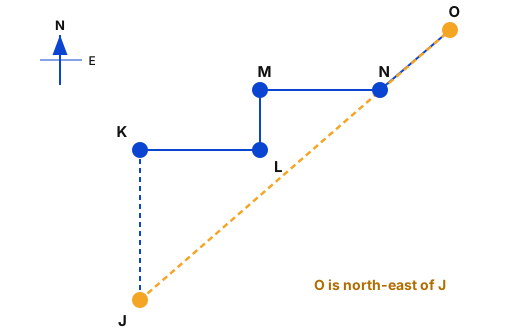
Town J is to the south of Town K. Town L is to the east of Town K. Town M is to the north of Town L. Town N is to the east of Town M. Town O is to the northeast of Town N. What is the position of Town O with respect to Town J?
शहर J, शहर K के दक्षिण में है। शहर L, शहर K के पूर्व में है। शहर M, शहर L के उत्तर में है। शहर N, शहर M के पूर्व में है। शहर O, शहर N के उत्तर-पूर्व में है। शहर J के सापेक्ष शहर O की स्थिति क्या है?
  1. ANortheastउत्तर-पूर्व
  2. BSouthwestदक्षिण-पश्चिम
  3. CSouthदक्षिण
  4. DSoutheastदक्षिण-पूर्व
Show answer

Concept: Place K at the origin and plot each town.

  1. J is south of K; L is east of K; M north of L; N east of M; O north-east of N.
  2. O is to the east of J (L, M, N, O all lie east of K's line) and to the north of J (J is south of K, O is north of K's level).
  3. East + North ⇒ north-east.

Trick: Compare only two things: is the town east/west of J, and north/south of J?

Answer: (A) Northeast

अवधारणा: K को मूल बिंदु मानकर हर नगर अंकित करें।

  1. J, K के दक्षिण; L, K के पूर्व; M, L के उत्तर; N, M के पूर्व; O, N के उत्तर-पूर्व।
  2. O, J के पूर्व में भी है और उत्तर में भी (J, K के दक्षिण है, O, K के स्तर से ऊपर)।
  3. पूर्व + उत्तर ⇒ उत्तर-पूर्व।

ट्रिक: केवल दो बातें देखें: J से पूर्व/पश्चिम और उत्तर/दक्षिण।

उत्तर: (A) Northeast

RRB NTPC Undergraduate CBT 1General Intelligence and ReasoningDirection senseRRB NTPC Undergraduate CBT 1 2024 · 28 Aug Shift 3 →