Question bank

Q&A: practice questions with answers

Search questions on any topic. Filter by exam category, exam, subject and topic, try the question, then open the answer and explanation.

Courses – airGurukul

8,495 questions found.

Q4881.
What should come in place of ? in the given series based on the English alphabetical order?
​CMT ENU GOV IPW ?
अंग्रेज़ी वर्णमाला क्रम के आधार पर दी गई श्रृंखला में ? के स्थान पर क्या आना चाहिए?
CMT ENU GOV IPW ?
  1. AIPW
  2. BJQX
  3. CKQX
  4. DJPW
Show answer

Concept: Track each letter position separately.

  1. 1st: C, E, G, I → K (+2).
  2. 2nd: M, N, O, P → Q (+1); 3rd: T, U, V, W → X (+1).
  3. Next = KQX.

Trick: Only option with first letter K is KQX.

Answer: (C) KQX

अवधारणा: हर स्थान का अक्षर अलग देखें।

  1. पहला: C, E, G, I → K (+2)।
  2. दूसरा: M…P → Q; तीसरा: T…W → X।
  3. अगला = KQX।

ट्रिक: K से शुरू होने वाला एकमात्र विकल्प KQX।

उत्तर: (C) KQX
RRB NTPC Undergraduate CBT 1General Intelligence and ReasoningLetter SeriesRRB NTPC Undergraduate CBT 1 2024 · 3 Sep Shift 2 →
Q4882.
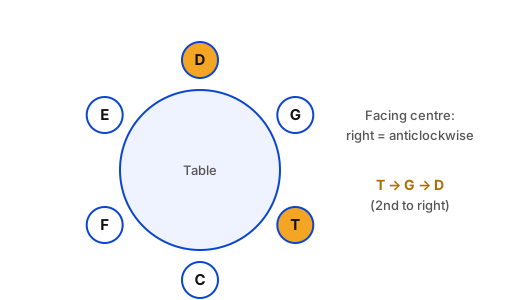
Six people, C, D, E, F, G and T, are sitting around a circular table, facing the centre. Only two people sit between C and D when counted from the right of C. Only one person sits between E and G. G sits to the immediate left of D. T is not an immediate neighbour of E. Who sits second to the right of T?
छह व्यक्ति C, D, E, F, G और T एक वृत्ताकार मेज़ के चारों ओर केंद्र की ओर मुख करके बैठे हैं। C के दाईं ओर से गिनने पर C और D के बीच केवल दो व्यक्ति बैठे हैं। E और G के बीच केवल एक व्यक्ति बैठा है। G, D के ठीक बाईं ओर बैठा है। T, E का निकटतम पड़ोसी नहीं है। T के दाईं ओर दूसरे स्थान पर कौन बैठा है?
  1. AC
  2. BE
  3. CF
  4. DD
Show answer

Concept: Facing the centre: right = anticlockwise, left = clockwise.

  1. Two between C and D → D is opposite C.
  2. G immediately left of D; one between E and G → E on the other side of D.
  3. F and T take the remaining seats; T not next to E → T sits between G and C, F between C and E.
  4. Second to the right of T: T → G → D.

Trick: In a 6-seat circle "two between" means directly opposite.

Answer: (D) D

अवधारणा: केंद्र की ओर मुख: दायाँ = वामावर्त, बायाँ = दक्षिणावर्त।

  1. C और D के बीच दो → D, C के ठीक सामने।
  2. G, D के तुरंत बाएँ; E और G के बीच एक → E, D की दूसरी ओर।
  3. T, E का पड़ोसी नहीं → T, G और C के बीच; F, C और E के बीच।
  4. T के दाएँ दूसरा: T → G → D।

ट्रिक: 6 सीटों के वृत्त में "बीच में दो" = ठीक सामने।

उत्तर: (D) D

RRB NTPC Undergraduate CBT 1General Intelligence and ReasoningCircular Seating ArrangementRRB NTPC Undergraduate CBT 1 2024 · 3 Sep Shift 2 →
Q4883.
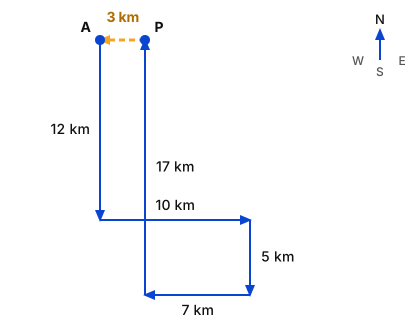
Pari starts from Point A and drives 12 km towards south. She then takes a left turn, drives 10 km, turns right and drives 5 km. She then takes a right turn and drives 7 km. She takes a final right turn, drives 17 km and stops at Point P. How far (shortest distance) and towards which direction should she drive in order to reach Point A again? (All turns are 90° turns only unless specified.)
परी बिंदु A से चलना शुरू करती है और दक्षिण की ओर 12 km गाड़ी चलाती है। फिर वह बाएँ मुड़ती है, 10 km गाड़ी चलाती है, दाएँ मुड़ती है और 5 km गाड़ी चलाती है। फिर वह दाएँ मुड़ती है और 7 km गाड़ी चलाती है। वह अंतिम बार दाएँ मुड़ती है, 17 km गाड़ी चलाती है और बिंदु P पर रुक जाती है। बिंदु A पर फिर से पहुँचने के लिए उसे कितनी दूरी (न्यूनतम दूरी) तक और किस दिशा में गाड़ी चलानी चाहिए? (जब तक निर्दिष्ट न किया गया हो, सभी मोड़ केवल 90° के मोड़ हैं।)
  1. A20 km towards northउत्तर की ओर 20 km
  2. B3 km towards westपश्चिम की ओर 3 km
  3. C17 km towards eastपूर्व की ओर 17 km
  4. D20 km towards westपश्चिम की ओर 20 km
Show answer

Concept: Track coordinates with A at origin (east +x, north +y).

  1. S 12 → (0,−12); left (east) 10 → (10,−12).
  2. Right (south) 5 → (10,−17); right (west) 7 → (3,−17).
  3. Right (north) 17 → P (3,0): P is 3 km east of A, so drive 3 km west.

Trick: Net E–W: 10−7=3 east; net N–S: −12−5+17=0.

Answer: (B) 3 km towards west

अवधारणा: A को मूल बिंदु मानें (पूर्व +x, उत्तर +y)।

  1. दक्षिण 12 → (0,−12); बाएँ (पूर्व) 10 → (10,−12)।
  2. दाएँ (दक्षिण) 5 → (10,−17); दाएँ (पश्चिम) 7 → (3,−17)।
  3. दाएँ (उत्तर) 17 → P (3,0); A तक 3 km पश्चिम।

ट्रिक: शुद्ध: पूर्व 10−7=3, उत्तर–दक्षिण 0।

उत्तर: (B) 3 km पश्चिम की ओर

RRB NTPC Undergraduate CBT 1General Intelligence and ReasoningDirection and DistanceRRB NTPC Undergraduate CBT 1 2024 · 3 Sep Shift 2 →
Q4884.
Seven boxes, A, B, C, D, M, N and O, are kept one over the other but not necessarily in the same order.
Only four boxes are kept between A and D. Only C is kept above A. Only two boxes are kept between O and N. B is kept immediately above M. N is not kept immediately above B.
Which box is kept fourth from the top?
सात बक्से A, B, C, D, M, N और O एक के ऊपर एक रखे गए हैं, लेकिन यह आवश्यक नहीं है कि वे इसी क्रम में हों।
A और D के बीच केवल चार बक्से रखे गए हैं। A के ऊपर केवल C रखा गया है। O और N के बीच केवल दो बक्से रखे गए हैं। B, M के ठीक ऊपर रखा गया है। N, B के ठीक ऊपर नहीं रखा गया है।
ऊपर से चौथे स्थान पर कौन-सा बक्सा रखा गया है?
  1. AM
  2. BO
  3. CA
  4. DB
Show answer

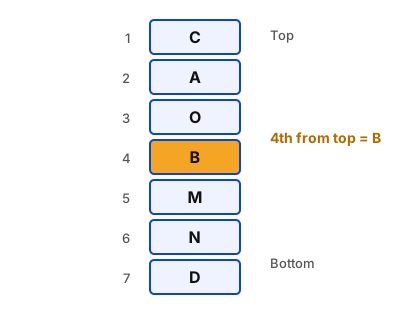
Concept: Number positions 1 (top) to 7 (bottom) and place definite boxes first.

  1. Only C above A → C 1, A 2. Four between A and D → D 7.
  2. O and N with two between must take 3 and 6; B–M (B just above M) take 4–5.
  3. N not just above B → N 6, O 3. Order: C, A, O, B, M, N, D.

Trick: Fourth from top in 7 boxes is the middle box.

Answer: (D) B

अवधारणा: स्थान 1 (ऊपर) से 7 (नीचे) तक लें; पहले निश्चित बॉक्स रखें।

  1. केवल C, A के ऊपर → C 1, A 2। A और D के बीच चार → D 7।
  2. O–N (बीच में दो) → 3 और 6; B–M → 4–5।
  3. N, B के ठीक ऊपर नहीं → N 6, O 3। क्रम: C, A, O, B, M, N, D।

ट्रिक: 7 बॉक्स में ऊपर से चौथा = बीच वाला।

उत्तर: (D) B

RRB NTPC Undergraduate CBT 1General Intelligence and ReasoningBox Arrangement (Stacking)RRB NTPC Undergraduate CBT 1 2024 · 3 Sep Shift 2 →
Q4885.
Select the pair which follows the same pattern as that followed by the two set of pairs given below. Both pairs follow the same pattern.
FVB : ETE
RUC : QSF
उस युग्म का चयन कीजिए जो उसी पैटर्न का अनुसरण करता है जिसका अनुसरण नीचे दिए गए दो युग्मों द्वारा किया गया है। दोनों युग्म एक ही पैटर्न का अनुसरण करते हैं।
FVB : ETE
RUC : QSF
  1. ANSP : OQR
  2. BMJJ : LHM
  3. COPQ : PNT
  4. DJLH : KJJ
Show answer

Concept: Find the change in each letter position.

  1. FVB → ETE: −1, −2, +3.
  2. RUC → QSF: −1, −2, +3.
  3. MJJ → LHM: M→L −1, J→H −2, J→M +3 ✔.

Trick: Check the first-letter rule (−1) to eliminate options quickly: NSP→O, OPQ→P, JLH→K fail.

Answer: (B) MJJ : LHM

अवधारणा: प्रत्येक अक्षर का स्थान-परिवर्तन देखें।

  1. FVB → ETE: −1, −2, +3।
  2. RUC → QSF: −1, −2, +3।
  3. MJJ → LHM: −1, −2, +3 ✔।

ट्रिक: पहले अक्षर का नियम (−1) जाँचें – बाकी विकल्प तुरंत हटते हैं।

उत्तर: (B) MJJ : LHM

RRB NTPC Undergraduate CBT 1General Intelligence and ReasoningLetter AnalogyRRB NTPC Undergraduate CBT 1 2024 · 3 Sep Shift 2 →
Q4886.
What should come in place of the question mark (?) in the given series?
89 94 102 113 127 ?
दी गई श्रृंखला में प्रश्न चिह्न (?) के स्थान पर क्या आना चाहिए?
89 94 102 113 127 ?
  1. A146
  2. B145
  3. C143
  4. D144
Show answer

Concept: Look at differences between terms.

  1. Differences: 5, 8, 11, 14 → increase by 3.
  2. Next difference = 17.
  3. 127+17=144.

Trick: Second difference constant (= 3).

Answer: (D) 144

अवधारणा: पदों के अंतर देखें।

  1. अंतर: 5, 8, 11, 14 → हर बार +3।
  2. अगला अंतर 17।
  3. 127+17=144।

ट्रिक: द्वितीय अंतर स्थिर (= 3)।

उत्तर: (D) 144

RRB NTPC Undergraduate CBT 1General Intelligence and ReasoningNumber SeriesRRB NTPC Undergraduate CBT 1 2024 · 3 Sep Shift 2 →
Q4887.
Refer to the following number, symbol series and answer the question that follow. Counting to be done from left to right only.
(Left) 1 \ 1 \ @ ^ & % > * 9 & + 2 9 4 + 1 ^ 7 7 (Right)
How many such symbols are there each of which is immediately preceded by another symbol and also immediately followed by a number?
निम्नलिखित संख्या, प्रतीक श्रृंखला को देखिए और उसके बाद आने वाले प्रश्न का उत्तर दीजिए। गिनती केवल बाएँ से दाएँ की जानी है।
(बाएँ) 1 \ 1 \ @ ^ & % > * 9 & + 2 9 4 + 1 ^ 7 7 (दाएँ)
ऐसे कितने प्रतीक हैं जिनमें से प्रत्येक के ठीक पहले एक अन्य प्रतीक है और ठीक बाद एक संख्या भी है?
  1. ATwoदो
  2. BFourचार
  3. COneएक
  4. DThreeतीन
Show answer

Concept: Scan for the pattern: symbol – symbol – number.

  1. > * 9 ✔ (* preceded by >, followed by 9).
  2. & + 2 ✔ (+ preceded by &, followed by 2).
  3. Other symbols fail (e.g. "4 + 1", "1 ^ 7" are preceded by numbers). Total = 2.

Trick: First find symbols followed by a number, then check what precedes them.

Answer: (A) Two

अवधारणा: पैटर्न खोजें: प्रतीक – प्रतीक – संख्या।

  1. > * 9 ✔।
  2. & + 2 ✔।
  3. अन्य ("4 + 1", "1 ^ 7") में पहले संख्या है। कुल = 2।

ट्रिक: पहले वे प्रतीक खोजें जिनके बाद संख्या है, फिर उनसे पहले देखें।

उत्तर: (A) दो

RRB NTPC Undergraduate CBT 1General Intelligence and ReasoningSymbol-Number SeriesRRB NTPC Undergraduate CBT 1 2024 · 3 Sep Shift 2 →
Q4888.
What should come in place of the question mark (?) in the given series?
19 32 47 64 83 ?
दी गई श्रृंखला में प्रश्न चिह्न (?) के स्थान पर क्या आना चाहिए?
19 32 47 64 83 ?
  1. A92
  2. B98
  3. C112
  4. D104
Show answer

Concept: Look at differences between terms.

  1. Differences: 13, 15, 17, 19 → increase by 2.
  2. Next difference = 21.
  3. 83+21=104.

Trick: Differences are consecutive odd numbers – just add the next odd number, 21.

Answer: (D) 104

अवधारणा: पदों के अंतर देखें।

  1. अंतर: 13, 15, 17, 19 → +2।
  2. अगला अंतर 21।
  3. 83+21=104।

ट्रिक: अंतर विषम संख्याएँ हैं – अगला विषम 21 जोड़ें।

उत्तर: (D) 104

RRB NTPC Undergraduate CBT 1General Intelligence and ReasoningNumber SeriesRRB NTPC Undergraduate CBT 1 2024 · 3 Sep Shift 2 →
Q4889.
In the following number-pairs, the second number is obtained by applying certain mathematical operation(s) to the first number. Select the number-pair in which the numbers are related in the same way as are the numbers of the following pairs. (NOTE: Operations should be performed on the whole numbers, without breaking down the numbers into their constituent digits. E.g. 13 – Operations on 13 such as adding to/subtracting from/multiplying with 13 can be performed. Breaking down 13 into 1 and 3 and then performing mathematical operations on 1 and 3 is not allowed.)
72, 145
83, 167
निम्नलिखित संख्या-युग्मों में, पहली संख्या पर कुछ गणितीय संक्रिया/संक्रियाएँ करके दूसरी संख्या प्राप्त की जाती है। उस संख्या-युग्म का चयन कीजिए जिसमें संख्याएँ उसी प्रकार संबंधित हैं जिस प्रकार निम्नलिखित युग्मों की संख्याएँ संबंधित हैं। (ध्यान दें: संख्याओं को उनके घटक अंकों में विभाजित किए बिना, पूर्ण संख्याओं पर संक्रियाएँ की जानी चाहिए। उदाहरण के लिए 13 – 13 पर संक्रियाएँ जैसे 13 में जोड़ना/घटाना/गुणा करना आदि किया जा सकता है। 13 को 1 और 3 में विभाजित करना और फिर 1 और 3 पर गणितीय संक्रियाएँ करना वर्जित है।)
72, 145
83, 167
  1. A46, 93
  2. B22, 48
  3. C35, 73
  4. D54, 125
Show answer

Concept: Find one rule fitting both pairs.

  1. 72×2+1=145; 83×2+1=167.
  2. Rule: second =2×first+1.
  3. 46×2+1=93 ✔ (others: 45, 71, 109 ≠ given).

Trick: Second number ≈ double the first → test 2x±k.

Answer: (A) 46, 93

अवधारणा: दोनों युग्मों पर लागू एक नियम खोजें।

  1. 72×2+1=145; 83×2+1=167।
  2. नियम: दूसरी =2×पहली+1।
  3. 46×2+1=93 ✔।

ट्रिक: दूसरी संख्या लगभग दोगुनी → 2x±k जाँचें।

उत्तर: (A) 46, 93

RRB NTPC Undergraduate CBT 1General Intelligence and ReasoningNumber Pair AnalogyRRB NTPC Undergraduate CBT 1 2024 · 3 Sep Shift 2 →
Q4890.
Read the given statements and conclusions carefully. Assuming that the information given in the statements is true, even if it appears to be at variance with commonly known facts, decide which of the given conclusion(s) logically follow(s) from the statements.
Statements:
Some watches are clocks.
All clocks are pendulums.
Conclusions:
(I) Some watches are pendulums.
(II) All pendulum are clocks.
दिए गए कथनों और निष्कर्षों को ध्यानपूर्वक पढ़िए। यह मानते हुए कि कथनों में दी गई जानकारी सत्य है, भले ही वह सामान्य रूप से ज्ञात तथ्यों से भिन्न प्रतीत होती हो, निर्णय लीजिए कि दिए गए निष्कर्षों में से कौन-सा/से निष्कर्ष तार्किक रूप से कथनों का अनुसरण करता है/करते हैं।
कथन:
कुछ घड़ियाँ (watches), दीवार घड़ियाँ (clocks) हैं।
सभी दीवार घड़ियाँ, पेंडुलम हैं।
निष्कर्ष:
(I) कुछ घड़ियाँ, पेंडुलम हैं।
(II) सभी पेंडुलम, दीवार घड़ियाँ हैं।
  1. ANeither conclusion (I) nor (II) follows.न तो निष्कर्ष (I) और न ही (II) अनुसरण करता है।
  2. BOnly conclusion (II) follows.केवल निष्कर्ष (II) अनुसरण करता है।
  3. COnly conclusion (I) follows.केवल निष्कर्ष (I) अनुसरण करता है।
  4. DBoth conclusions (I) and (II) follow.निष्कर्ष (I) और (II) दोनों अनुसरण करते हैं।
Show answer

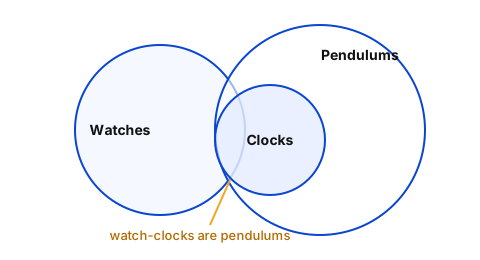
Concept: Draw the Venn diagram.

  1. Some watches are clocks and every clock is inside Pendulums.
  2. So those watch-clocks are pendulums → (I) follows.
  3. Pendulums may contain things that are not clocks → (II) does not follow.

Yaad rakhein: Some A are B + All B are C ⇒ Some A are C. "All B are C" never gives "All C are B".

Answer: (C) Only conclusion (I) follows.

अवधारणा: वेन आरेख बनाएँ।

  1. कुछ watches, clocks हैं और सभी clocks, pendulums के अंदर।
  2. अतः वे watch-clocks pendulums हैं → (I) सही।
  3. Pendulums में clocks के अलावा भी हो सकते हैं → (II) गलत।

याद रखें: कुछ A, B + सभी B, C ⇒ कुछ A, C। "सभी B, C" से "सभी C, B" नहीं निकलता।

उत्तर: (C) केवल निष्कर्ष (I) अनुसरण करता है।

RRB NTPC Undergraduate CBT 1General Intelligence and ReasoningSyllogismRRB NTPC Undergraduate CBT 1 2024 · 3 Sep Shift 2 →
Q4891.
If 1 is added to each odd digit and 2 is subtracted from each even digit in the number 5187463, which of the following digits will be second from the left in the new number thus formed?
यदि संख्या 5187463 में प्रत्येक विषम अंक में 1 जोड़ा जाए और प्रत्येक सम अंक में से 2 घटाया जाए, तो इस प्रकार बनी नई संख्या में बाएँ से दूसरा अंक निम्नलिखित में से कौन-सा होगा?
  1. A2
  2. B5
  3. C6
  4. D8
Show answer

Concept: Apply the rule digit by digit.

  1. 5187463: 5→6, 1→2, 8→6, 7→8, 4→2, 6→4, 3→4.
  2. New number = 6268244.
  3. Second from left = 2.

Trick: Only the second digit (1, odd → 2) is needed.

Answer: (A) 2

अवधारणा: हर अंक पर नियम लगाएँ।

  1. 5187463: 5→6, 1→2, 8→6, 7→8, 4→2, 6→4, 3→4।
  2. नई संख्या = 6268244।
  3. बाएँ से दूसरा = 2।

ट्रिक: केवल दूसरा अंक (1, विषम → 2) देखना पर्याप्त है।

उत्तर: (A) 2

RRB NTPC Undergraduate CBT 1General Intelligence and ReasoningDigit OperationsRRB NTPC Undergraduate CBT 1 2024 · 3 Sep Shift 2 →
Q4892.
Refer to the following number and symbol series and answer the question that follows. All numbers are single-digit numbers.Counting to be done from left to right only. (Left) @ 8 $ & + 7 1 * 6 % Ω £ 2 4 5 9 # 3 (Right)
How many such numbers are there each of which is immediately preceded by a symbol and also immediately followed by another symbol?
निम्नलिखित संख्या और प्रतीक श्रृंखला को देखिए और उसके बाद आने वाले प्रश्न का उत्तर दीजिए। सभी संख्याएँ एक-अंकीय संख्याएँ हैं। गिनती केवल बाएँ से दाएँ की जानी है। (बाएँ) @ 8 $ & + 7 1 * 6 % Ω £ 2 4 5 9 # 3 (दाएँ)
ऐसी कितनी संख्याएँ हैं जिनमें से प्रत्येक के ठीक पहले एक प्रतीक है और ठीक बाद एक अन्य प्रतीक भी है?
  1. A2
  2. B3
  3. C4
  4. D1
Show answer

Concept: Look for the pattern: symbol – number – symbol.

  1. @ 8 $ ✔.
  2. * 6 % ✔.
  3. 7, 1, 2, 4, 5, 9, 3 fail (a number is beside them or 3 is at the end). Total = 2.

Trick: Numbers standing alone between two symbols are the answers.

Answer: (A) 2

अवधारणा: पैटर्न खोजें: प्रतीक – संख्या – प्रतीक।

  1. @ 8 $ ✔।
  2. * 6 % ✔।
  3. बाकी संख्याओं के पास कोई संख्या है या 3 अंत में है। कुल = 2।

ट्रिक: दो प्रतीकों के बीच अकेली संख्या ही गिनें।

उत्तर: (A) 2

RRB NTPC Undergraduate CBT 1General Intelligence and ReasoningSymbol-Number SeriesRRB NTPC Undergraduate CBT 1 2024 · 3 Sep Shift 2 →
Q4893.
Seven boxes F, G, H, I, K, L, and O are kept one over the other but not necessarily in the same order. No box is kept above G. Only three boxes are kept between G and F. Only one box is kept between I and L. L is kept immediately above F. Only four boxes are kept between I and K. H is kept at some place above O.
Which box is kept second below H?
सात बक्से F, G, H, I, K, L और O एक के ऊपर एक रखे गए हैं, लेकिन यह आवश्यक नहीं है कि वे इसी क्रम में हों। G के ऊपर कोई बक्सा नहीं रखा गया है। G और F के बीच केवल तीन बक्से रखे गए हैं। I और L के बीच केवल एक बक्सा रखा गया है। L, F के ठीक ऊपर रखा गया है। I और K के बीच केवल चार बक्से रखे गए हैं। H, O के ऊपर किसी स्थान पर रखा गया है।
H के नीचे दूसरे स्थान पर कौन-सा बक्सा रखा गया है?
  1. AK
  2. BO
  3. CI
  4. DF
Show answer

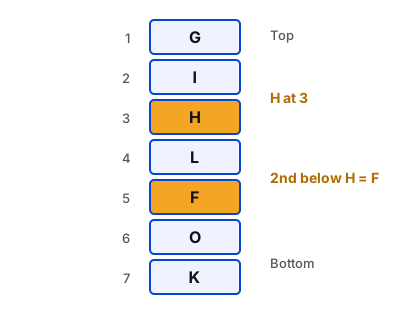
Concept: Positions 1 (top) to 7 (bottom); place fixed boxes first.

  1. G at 1; three between G and F → F 5; L just above F → L 4.
  2. One between I and L → I 2 or 6; four between I and K → I 2, K 7.
  3. H, O take 3 and 6 with H above → H 3, O 6. Second below H = position 5 = F.

Trick: I = 6 would need K at 1, which is G – reject quickly.

Answer: (D) F

अवधारणा: स्थान 1 (ऊपर) से 7 (नीचे); पहले निश्चित बॉक्स रखें।

  1. G 1; G और F के बीच तीन → F 5; L, F के ठीक ऊपर → L 4।
  2. I और L के बीच एक → I 2 या 6; I और K के बीच चार → I 2, K 7।
  3. H 3, O 6। H से दूसरा नीचे = स्थान 5 = F।

ट्रिक: I = 6 हो तो K = 1 चाहिए, जो G का है – तुरंत हटाएँ।

उत्तर: (D) F

RRB NTPC Undergraduate CBT 1General Intelligence and ReasoningBox Arrangement (Stacking)RRB NTPC Undergraduate CBT 1 2024 · 3 Sep Shift 2 →
Q4894.
Select the pair which follows the same pattern as that followed by the two pairs given below. Both pairs follow the same pattern.
LCP : PZV
TWB : XTH
उस युग्म का चयन कीजिए जो उसी पैटर्न का अनुसरण करता है जिसका अनुसरण नीचे दिए गए दो युग्मों द्वारा किया गया है। दोनों युग्म एक ही पैटर्न का अनुसरण करते हैं।
LCP : PZV
TWB : XTH
  1. ABQN : FNT
  2. BHWK : LBO
  3. CHTO : LQS
  4. DUKD : YFH
Show answer

Concept: Find the change in each letter position.

  1. LCP → PZV: +4, −3, +6.
  2. TWB → XTH: +4, −3, +6.
  3. BQN → FNT: B→F +4, Q→N −3, N→T +6 ✔.

Trick: The last letter (+6) quickly removes HWK→O (+4) and UKD→H (+4).

Answer: (A) BQN : FNT

अवधारणा: प्रत्येक अक्षर का स्थान-परिवर्तन देखें।

  1. LCP → PZV: +4, −3, +6।
  2. TWB → XTH: +4, −3, +6।
  3. BQN → FNT: +4, −3, +6 ✔।

ट्रिक: अंतिम अक्षर (+6) से बाकी विकल्प जल्दी हटते हैं।

उत्तर: (A) BQN : FNT

RRB NTPC Undergraduate CBT 1General Intelligence and ReasoningLetter AnalogyRRB NTPC Undergraduate CBT 1 2024 · 3 Sep Shift 2 →
Q4895.
If 3 is added to each odd digit and 1 is subtracted from each even digit in the number 6243514, what will be the sum of the digits which are second from the left and second from the
right?
यदि संख्या 6243514 में प्रत्येक विषम अंक में 3 जोड़ा जाए और प्रत्येक सम अंक में से 1 घटाया जाए, तो बाएँ से दूसरे और दाएँ से
दूसरे अंकों का योग क्या होगा?
  1. A7
  2. B8
  3. C5
  4. D6
Show answer

Concept: Apply the rule digit by digit.

  1. 6243514: 6→5, 2→1, 4→3, 3→6, 5→8, 1→4, 4→3.
  2. New number = 5136843.
  3. Second from left = 1, second from right = 4; sum =5.

Trick: Only change the two needed digits: 2→1 and 1→4.

Answer: (C) 5

अवधारणा: हर अंक पर नियम लगाएँ।

  1. 6243514: 6→5, 2→1, 4→3, 3→6, 5→8, 1→4, 4→3।
  2. नई संख्या = 5136843।
  3. बाएँ से दूसरा 1, दाएँ से दूसरा 4; योग =5।

ट्रिक: केवल ज़रूरी दो अंक बदलें: 2→1 और 1→4।

उत्तर: (C) 5

RRB NTPC Undergraduate CBT 1General Intelligence and ReasoningDigit OperationsRRB NTPC Undergraduate CBT 1 2024 · 3 Sep Shift 2 →
Q4896.
Which reaction occurs when an alkoxide ion attacks a primary alkyl halide via SN2 mechanism?
कौन-सी अभिक्रिया तब होती है जब एक ऐल्कॉक्साइड आयन (alkoxide ion) SN2 क्रियाविधि द्वारा किसी प्राथमिक ऐल्किल हैलाइड (primary alkyl halide) पर आक्रमण करता है?
  1. AArndt-Eistert synthesisआर्न्ट-आइस्टर्ट संश्लेषण (Arndt-Eistert synthesis)
  2. BFriedlaender synthesisफ्रीडलैंडर संश्लेषण (Friedlaender synthesis)
  3. CWilliamson synthesisविलियमसन संश्लेषण (Williamson synthesis)
  4. DCoumarin synthesisकूमैरिन संश्लेषण (Coumarin synthesis)
Show answer

Concept: Williamson ether synthesis makes ethers: an alkoxide ion (RO−) attacks an alkyl halide by an SN2 reaction.

  1. R–O−Na++R'–X→R–O–R'+NaX.
  2. Primary alkyl halides work best; tertiary halides undergo elimination instead.
  3. Arndt–Eistert lengthens a carboxylic acid chain; Friedländer gives quinolines – not ether formation.

Yaad rakhein: Alkoxide + alkyl halide = ether = Williamson.

Answer: (C) Williamson synthesis

अवधारणा: विलियमसन ईथर संश्लेषण में ऐल्कॉक्साइड आयन (RO−) ऐल्किल हैलाइड पर SN2 अभिक्रिया द्वारा आक्रमण कर ईथर बनाता है।

  1. R–O−Na++R'–X→R–O–R'+NaX.
  2. प्राथमिक (primary) ऐल्किल हैलाइड सबसे उपयुक्त; तृतीयक में विलोपन (elimination) होता है।
  3. Arndt–Eistert अम्ल की श्रृंखला बढ़ाता है; Friedländer से क्विनोलीन बनता है।

याद रखें: ऐल्कॉक्साइड + ऐल्किल हैलाइड = ईथर = विलियमसन।

उत्तर: (C) Williamson synthesis (विलियमसन संश्लेषण)

RRB NTPC Undergraduate CBT 1General AwarenessOrganic Chemistry – Named ReactionsRRB NTPC Undergraduate CBT 1 2024 · 3 Sep Shift 1 →
Q4897.
Jharkhand has announced its first tiger safari in the Barwadih Western Forest Range; it is a part of which tiger reserve?
झारखंड ने बरवाडीह पश्चिमी वन क्षेत्र (Barwadih Western Forest Range) में अपनी पहली टाइगर सफारी की घोषणा की है; यह किस बाघ अभयारण्य (टाइगर रिज़र्व) का हिस्सा है?
  1. ABandipur Tiger Reserveबांदीपुर टाइगर रिज़र्व
  2. BSanjay Gandhi Tiger Reserveसंजय गांधी टाइगर रिज़र्व
  3. CPalamau Tiger Reserveपलामू टाइगर रिज़र्व
  4. DPench Tiger Reserveपेंच टाइगर रिज़र्व
Show answer

Concept: Jharkhand's only tiger reserve is Palamau Tiger Reserve (Latehar district), one of the first nine reserves under Project Tiger (1973).

  1. The Barwadih Western Forest Range lies within Palamau Tiger Reserve, where the state's first tiger safari is planned.
  2. Bandipur is in Karnataka, Sanjay Gandhi (Sanjay–Dubri) in Madhya Pradesh, Pench in MP/Maharashtra.

Yaad rakhein: Jharkhand → Betla National Park → Palamau Tiger Reserve.

Answer: (C) Palamau Tiger Reserve

अवधारणा: झारखंड का एकमात्र बाघ अभयारण्य पलामू टाइगर रिज़र्व (लातेहार) है, जो 1973 में प्रोजेक्ट टाइगर के पहले नौ रिज़र्वों में था।

  1. बरवाडीह पश्चिमी वन क्षेत्र पलामू टाइगर रिज़र्व का भाग है, जहाँ राज्य की पहली टाइगर सफारी प्रस्तावित है।
  2. बांदीपुर कर्नाटक में, संजय गांधी (संजय–दुबरी) मध्य प्रदेश में, पेंच MP/महाराष्ट्र में है।

याद रखें: झारखंड → बेतला नेशनल पार्क → पलामू टाइगर रिज़र्व।

उत्तर: (C) Palamau Tiger Reserve (पलामू टाइगर रिज़र्व)

RRB NTPC Undergraduate CBT 1General AwarenessTiger ReservesRRB NTPC Undergraduate CBT 1 2024 · 3 Sep Shift 1 →
Q4898.
Hills of Kaimur, the easternmost part of the Vindhya Range, which begins near Jabalpur districts of Madhya Pradesh, ends near which district of Bihar?
विंध्य पर्वतमाला का सबसे पूर्वी भाग, कैमूर की पहाड़ियाँ, जो मध्य प्रदेश के जबलपुर जिलों के पास से शुरू होती हैं, बिहार के किस जिले के पास समाप्त होती हैं?
  1. APatnaपटना
  2. BNawadaनवादा
  3. CRohtasरोहतास
  4. DMungerमुंगेर
Show answer

Concept: The Kaimur Hills form the eastern part of the Vindhyan system, running from near Jabalpur (MP) eastward into Bihar.

  1. In Bihar the range ends in the Rohtas–Kaimur area near Sasaram, where the Rohtasgarh fort stands on the Kaimur plateau.
  2. Patna, Nawada and Munger lie in the Ganga plains or the Chotanagpur fringe, not on the Kaimur range.

Yaad rakhein: Kaimur hills → Rohtas plateau (Rohtasgarh fort).

Answer: (C) Rohtas

अवधारणा: कैमूर पहाड़ियाँ विंध्य श्रेणी का पूर्वी भाग हैं, जो जबलपुर (MP) के पास से पूर्व की ओर बिहार तक जाती हैं।

  1. बिहार में यह श्रेणी सासाराम के पास रोहतास–कैमूर क्षेत्र में समाप्त होती है; रोहतासगढ़ किला कैमूर पठार पर है।
  2. पटना, नवादा, मुंगेर गंगा मैदान या छोटानागपुर किनारे पर हैं।

याद रखें: कैमूर पहाड़ी → रोहतास पठार (रोहतासगढ़ किला)।

उत्तर: (C) Rohtas (रोहतास)

RRB NTPC Undergraduate CBT 1General AwarenessIndian Physiography – Vindhya RangeRRB NTPC Undergraduate CBT 1 2024 · 3 Sep Shift 1 →
Q4899.
Which of the following is true about the original jurisdiction of the Supreme Court of India?
भारत के सर्वोच्च न्यायालय के मूल क्षेत्राधिकार (original jurisdiction) के बारे में निम्नलिखित में से कौन-सा कथन सत्य है?
  1. AIt reviews the decisions of tribunalsयह न्यायाधिकरणों (tribunals) के निर्णयों की समीक्षा करता है
  2. BIt grants pardons to criminalsयह अपराधियों को क्षमादान देता है
  3. CIt settles disputes between the Union and statesयह संघ और राज्यों के बीच विवादों का निपटारा करता है
  4. DIt deals with criminal appeals onlyयह केवल आपराधिक अपीलों की सुनवाई करता है
Show answer

Concept: Original jurisdiction (Article 131) means the Supreme Court hears a case first-hand, not on appeal.

  1. It covers disputes between the Centre and one or more states, or between states.
  2. Appeals and tribunal reviews are appellate jurisdiction; pardons are given by the President/Governor (Articles 72 and 161), not by the Court.

Yaad rakhein: Art. 131 = federal disputes = original jurisdiction.

Answer: (C) It settles disputes between the Union and states

अवधारणा: मूल क्षेत्राधिकार (अनुच्छेद 131) का अर्थ है कि मामला सीधे सर्वोच्च न्यायालय में शुरू होता है, अपील के रूप में नहीं।

  1. इसमें केंद्र और राज्यों के बीच या राज्यों के आपसी विवाद आते हैं।
  2. अपील अपीलीय क्षेत्राधिकार है; क्षमादान राष्ट्रपति/राज्यपाल देते हैं (अनुच्छेद 72 और 161)।

याद रखें: अनु. 131 = संघीय विवाद = मूल क्षेत्राधिकार।

उत्तर: (C) It settles disputes between the Union and states

RRB NTPC Undergraduate CBT 1General AwarenessSupreme Court – JurisdictionRRB NTPC Undergraduate CBT 1 2024 · 3 Sep Shift 1 →
Q4900.
What is the disintegration of rocks into smaller fragments without any change in their chemical composition called?
चट्टानों के रासायनिक संघटन में बिना किसी परिवर्तन के उनके छोटे-छोटे टुकड़ों में विघटन को क्या कहा जाता है?
  1. AExfoliationअपपत्रण (Exfoliation)
  2. BBlock disintegrationखंड विघटन (Block disintegration)
  3. CMechanical weatheringयांत्रिक अपक्षय (Mechanical weathering)
  4. DFrost Actionतुषार क्रिया (Frost Action)
Show answer

Concept: Weathering is the breaking down of rocks in place. Mechanical (physical) weathering breaks rocks into smaller pieces without changing their chemical composition.

  1. Chemical weathering changes minerals (oxidation, carbonation, solution).
  2. Exfoliation, block disintegration and frost action are only particular types of mechanical weathering; the general term asked is mechanical weathering.

Yaad rakhein: Physical = size changes, chemistry same; Chemical = composition changes.

Answer: (C) Mechanical weathering

अवधारणा: अपक्षय में चट्टानें अपने स्थान पर टूटती हैं। यांत्रिक (भौतिक) अपक्षय में चट्टान छोटे टुकड़ों में टूटती है, पर रासायनिक संरचना नहीं बदलती।

  1. रासायनिक अपक्षय में खनिज बदलते हैं (ऑक्सीकरण, कार्बोनेशन)।
  2. अपशल्कन (exfoliation), खंड विघटन और तुषार क्रिया यांत्रिक अपक्षय के ही प्रकार हैं; सामान्य नाम यांत्रिक अपक्षय है।

याद रखें: भौतिक = केवल आकार बदले; रासायनिक = संरचना बदले।

उत्तर: (C) Mechanical weathering (यांत्रिक अपक्षय)

RRB NTPC Undergraduate CBT 1General AwarenessWeatheringRRB NTPC Undergraduate CBT 1 2024 · 3 Sep Shift 1 →