Question bank

Q&A: practice questions with answers

Search questions on any topic. Filter by exam category, exam, subject and topic, try the question, then open the answer and explanation.

Courses – airGurukul

8,495 questions found.

Q481.
Refer to the following number and symbol series and answer the question that follows. Counting to be done from left to right only.
(Left) 8 & % 1 @ 2 3 $ 9 & 6 Ω 4 # 5 * £ 7 (Right)
If all the symbols are dropped from the series, which of the following will be fourth from the right?
निम्नलिखित संख्या और प्रतीक शृंखला को देखिए और उसके बाद पूछे गए प्रश्न का उत्तर दीजिए। गिनती केवल बाएँ से दाएँ की जानी है।
(बाएँ) 8 & % 1 @ 2 3 $ 9 & 6 Ω 4 # 5 * £ 7 (दाएँ)
यदि शृंखला से सभी प्रतीकों को हटा दिया जाए, तो निम्नलिखित में से कौन-सा दाएँ से चौथे स्थान पर होगा?
  1. A4
  2. B2
  3. C6
  4. D9
Show answer

Concept: Remove all symbols, then count from the right.

  1. Digits left: 8 1 2 3 9 6 4 5 7
  2. From right: 7 (1st), 5 (2nd), 4 (3rd), 6 (4th)

Trick: Write the digits from the right end only up to the required count – saves time.

Answer: (C) 6

अवधारणा: सभी चिह्न हटाकर दाएँ से गिनें।

  1. बचे अंक: 8 1 2 3 9 6 4 5 7
  2. दाएँ से: 7 (1st), 5 (2nd), 4 (3rd), 6 (4th)

ट्रिक: केवल दाएँ छोर से आवश्यक संख्या तक अंक लिखें – समय बचता है।

उत्तर: (C) 6
RRB NTPC Undergraduate CBT 1General Intelligence and ReasoningAlphanumeric SeriesRRB NTPC Undergraduate CBT 1 2024 · 28 Aug Shift 2 →
Q482.
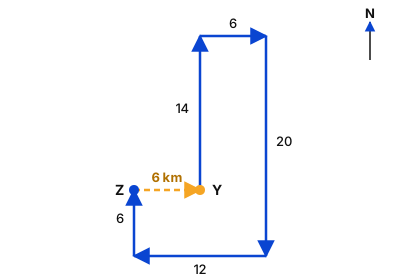
Rahul starts from Point Y and drives 14 km towards the north. He then takes a right turn, drives 6 km, then he turns right and drives 20 km. He then takes a right turn and drives 12 km. He takes a final right turn, drives 6 km and stops at Point Z. How far (shortest distance) and towards which direction should he drive in order to reach Point Y again? (All turns are 90-degree turns only unless specified.)
राहुल बिंदु Y से चलना शुरू करता है और उत्तर की ओर 14 km गाड़ी चलाता है। फिर वह दाएँ मुड़ता है, 6 km गाड़ी चलाता है, फिर दाएँ मुड़ता है और 20 km गाड़ी चलाता है। फिर वह दाएँ मुड़ता है और 12 km गाड़ी चलाता है। वह अंतिम बार दाएँ मुड़ता है, 6 km गाड़ी चलाता है और बिंदु Z पर रुक जाता है। बिंदु Y पर फिर से पहुँचने के लिए उसे कितनी दूरी (न्यूनतम दूरी) तक और किस दिशा में गाड़ी चलानी चाहिए? (जब तक निर्दिष्ट न हो, सभी मोड़ केवल 90 डिग्री के मोड़ हैं।)
  1. A4 km towards the eastपूर्व की ओर 4 km
  2. B6 km towards the northउत्तर की ओर 6 km
  3. C6 km towards the eastपूर्व की ओर 6 km
  4. D4 km towards the northउत्तर की ओर 4 km
Show answer

Concept: Track coordinates with Y at (0, 0); east and north are positive.

  1. North 14 → (0, 14); right (east) 6 → (6, 14)
  2. Right (south) 20 → (6, −6); right (west) 12 → (−6, −6)
  3. Right (north) 6 → Z = (−6, 0)
  4. Z is 6 km west of Y → drive 6 km east

Trick: Net E–W: 6−12=−6; net N–S: 14−20+6=0.

Answer: (C) 6 km towards the east

अवधारणा: Y को (0, 0) लेकर निर्देशांक चलाएँ; पूर्व और उत्तर धनात्मक।

  1. उत्तर 14 → (0, 14); दाएँ (पूर्व) 6 → (6, 14)
  2. दाएँ (दक्षिण) 20 → (6, −6); दाएँ (पश्चिम) 12 → (−6, −6)
  3. दाएँ (उत्तर) 6 → Z = (−6, 0)
  4. Z, Y से 6 km पश्चिम → 6 km पूर्व जाना होगा

ट्रिक: शुद्ध पूर्व–पश्चिम: 6−12=−6; उत्तर–दक्षिण: 14−20+6=0।

उत्तर: (C) 6 km towards the east

RRB NTPC Undergraduate CBT 1General Intelligence and ReasoningDirection and DistanceRRB NTPC Undergraduate CBT 1 2024 · 28 Aug Shift 2 →
Q483.
RUWU is related to YBDB in a certain way based on the English alphabetical order. In the same way, JMOM is related to QTVT. To which of the given options is TWYW related, following the same logic?
अंग्रेज़ी वर्णमाला क्रम के आधार पर RUWU एक निश्चित प्रकार से YBDB से संबंधित है। उसी प्रकार, JMOM, QTVT से संबंधित है। समान तर्क का अनुसरण करते हुए, TWYW दिए गए विकल्पों में से किससे संबंधित है?
  1. AADED
  2. BACED
  3. CADFD
  4. DAEEL
Show answer

Concept: Each letter moves forward by the same number.

  1. RUWU→YBDB: R+7=Y, U+7=B, W+7=D
  2. JMOM→QTVT: +7 each ✔
  3. TWYW: T+7=A, W+7=D, Y+7=F, W+7=D → ADFD

Trick: The 2nd and 4th letters must be equal – only ADFD and ADED keep that; Y+7 = F decides.

Answer: (C) ADFD

अवधारणा: हर अक्षर समान संख्या आगे बढ़ता है।

  1. RUWU→YBDB: R+7=Y, U+7=B, W+7=D
  2. JMOM→QTVT: हर अक्षर +7 ✔
  3. TWYW: T+7=A, W+7=D, Y+7=F, W+7=D → ADFD

ट्रिक: दूसरा और चौथा अक्षर समान रहना चाहिए – ADFD और ADED में से Y+7 = F निर्णय करता है।

उत्तर: (C) ADFD

RRB NTPC Undergraduate CBT 1General Intelligence and ReasoningLetter AnalogyRRB NTPC Undergraduate CBT 1 2024 · 28 Aug Shift 2 →
Q484.
In a certain code language, ‘reading is important’ is written as ‘pb mk lo’ and ‘is it raining’ is coded as ‘jo mt pb’. How is ‘is’ coded in the given language?
एक निश्चित कूट भाषा में, ‘reading is important’ को ‘pb mk lo’ लिखा जाता है और ‘is it raining’ को ‘jo mt pb’ के रूप में कूटबद्ध किया जाता है। दी गई भाषा में ‘is’ को किस प्रकार कूटबद्ध किया जाता है?
  1. Alo
  2. Bmk
  3. Cjo
  4. Dpb
Show answer

Concept: A word common to two sentences takes the code common to both.

  1. 'is' appears in both sentences.
  2. Common code in 'pb mk lo' and 'jo mt pb' is 'pb'.

Yaad rakhein: Common word ↔ common code.

Answer: (D) pb

अवधारणा: दो वाक्यों में समान शब्द का कोड दोनों कोडों में समान होगा।

  1. 'is' दोनों वाक्यों में है।
  2. 'pb mk lo' और 'jo mt pb' में समान कोड 'pb' है।

याद रखें: समान शब्द ↔ समान कोड।

उत्तर: (D) pb

RRB NTPC Undergraduate CBT 1General Intelligence and ReasoningCoding-DecodingRRB NTPC Undergraduate CBT 1 2024 · 28 Aug Shift 2 →
Q485.
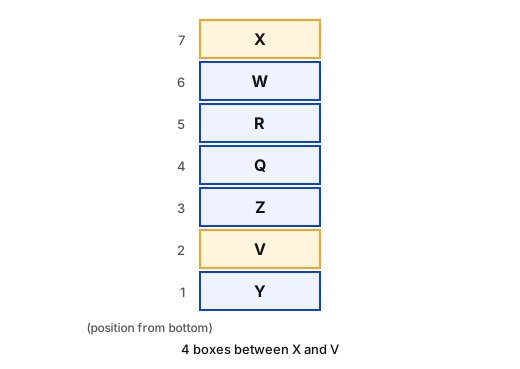
Seven boxes V, W, X, Y, Z, Q and R are kept one over the other but not necessarily in the same order. Only two boxes are kept below Z. Only one box is kept above W. Only one box is kept between W and Q.V is kept immediately above Y. R is kept at some place below X. How many boxes are kept between X and V?
सात बक्से V, W, X, Y, Z, Q और R एक के ऊपर एक रखे गए हैं, लेकिन आवश्यक नहीं कि इसी क्रम में हों। Z के नीचे केवल दो बक्से रखे गए हैं। W के ऊपर केवल एक बक्सा रखा गया है। W और Q के बीच केवल एक बक्सा रखा गया है। V को Y के ठीक ऊपर रखा गया है। R को X के नीचे किसी स्थान पर रखा गया है। X और V के बीच कितने बक्से रखे गए हैं?
  1. AThreeतीन
  2. BFourचार
  3. CTwoदो
  4. DOneएक
Show answer

Concept: Number positions 1 (bottom) to 7 (top) and place definite boxes first.

  1. Two below Z → Z at 3; one above W → W at 6
  2. One box between W and Q → Q at 4
  3. V just above Y: only free pair is 1–2 → Y 1, V 2
  4. R below X: R 5, X 7 → between X and V: W, R, Q, Z

Trick: Boxes between positions 7 and 2 =7−2−1=4.

Answer: (B) Four

अवधारणा: स्थान 1 (नीचे) से 7 (ऊपर) तक लें; पहले निश्चित बॉक्स रखें।

  1. Z के नीचे दो → Z 3 पर; W के ऊपर एक → W 6 पर
  2. W और Q के बीच एक → Q 4 पर
  3. V ठीक Y के ऊपर: खाली जोड़ी केवल 1–2 → Y 1, V 2
  4. R, X के नीचे: R 5, X 7 → X और V के बीच: W, R, Q, Z

ट्रिक: स्थान 7 और 2 के बीच बॉक्स =7−2−1=4।

उत्तर: (B) Four

RRB NTPC Undergraduate CBT 1General Intelligence and ReasoningBox ArrangementRRB NTPC Undergraduate CBT 1 2024 · 28 Aug Shift 2 →
Q486.
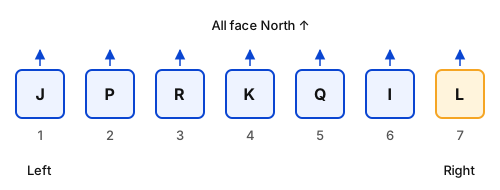
Seven people, I, J, K, L, P, Q and R are sitting in a row, facing north. Only J sits to the left of P. Only four people sit between J and I. Only K sits between R and Q. R is not an immediate neighbour of I. Who sits at the extreme right end of the line?
सात व्यक्ति I, J, K, L, P, Q और R एक पंक्ति में उत्तर की ओर मुख करके बैठे हैं। केवल J, P के बाईं ओर बैठा है। J और I के बीच केवल चार व्यक्ति बैठे हैं। R और Q के बीच केवल K बैठा है। R, I का निकटतम पड़ोसी नहीं है। पंक्ति के अंतिम दाएँ छोर पर कौन बैठा है?
  1. AR
  2. BL
  3. CK
  4. DI
Show answer

Concept: Facing north; fix the extreme positions first.

  1. Only J left of P → J 1, P 2
  2. Four between J and I → I 6
  3. R-K-Q block in 3–5; R not next to I → R 3, K 4, Q 5
  4. L is left for seat 7 – extreme right

Trick: Same structure as the M-K-N question: the leftover person goes to the open end.

Answer: (B) L

अवधारणा: उत्तर की ओर मुख; पहले छोर के स्थान तय करें।

  1. केवल J, P के बाएँ → J 1, P 2
  2. J और I के बीच चार → I 6
  3. R-K-Q 3–5 में; R, I का पड़ोसी नहीं → R 3, K 4, Q 5
  4. L बचा → स्थान 7, सबसे दाएँ

ट्रिक: बचा हुआ व्यक्ति खुले छोर पर जाता है।

उत्तर: (B) L

RRB NTPC Undergraduate CBT 1General Intelligence and ReasoningSeating Arrangement – LinearRRB NTPC Undergraduate CBT 1 2024 · 28 Aug Shift 2 →
Q487.
Which of the following letter-number clusters will replace the question mark (?) in the given series to make it logically complete?
JMR11 KNS20 LOT29 MPU38 ?
निम्नलिखित में से कौन-सा अक्षर-संख्या समूह दी गई शृंखला में प्रश्न चिह्न (?) का स्थान लेकर उसे तार्किक रूप से पूर्ण करेगा?
JMR11 KNS20 LOT29 MPU38 ?
  1. ANQU42
  2. BNQV47
  3. CNQU46
  4. DNQV56
Show answer

Concept: Track each letter position and the number separately.

  1. 1st letters J, K, L, M → N; 2nd M, N, O, P → Q; 3rd R, S, T, U → V
  2. Numbers 11, 20, 29, 38 (+9) → 47
  3. Answer: NQV47

Trick: All letters move +1, the number moves +9.

Answer: (B) NQV47

अवधारणा: प्रत्येक अक्षर स्थान और संख्या को अलग-अलग देखें।

  1. पहला अक्षर J, K, L, M → N; दूसरा M, N, O, P → Q; तीसरा R, S, T, U → V
  2. संख्याएँ 11, 20, 29, 38 (+9) → 47
  3. उत्तर: NQV47

ट्रिक: सभी अक्षर +1, संख्या +9।

उत्तर: (B) NQV47

RRB NTPC Undergraduate CBT 1General Intelligence and ReasoningAlphanumeric SeriesRRB NTPC Undergraduate CBT 1 2024 · 28 Aug Shift 2 →
Q488.
If 1 is added to each odd digit and 2 is subtracted from each even digit in the number 7453186, how many digits will appear more than once in the new number thus formed?
यदि संख्या 7453186 में प्रत्येक विषम अंक में 1 जोड़ दिया जाए और प्रत्येक सम अंक में से 2 घटा दिया जाए, तो इस प्रकार बनी नई संख्या में कितने अंक एक से अधिक बार आएँगे?
  1. ATwoदो
  2. BThreeतीन
  3. CNoneकोई नहीं
  4. DOneएक
Show answer

Concept: Odd digit +1, even digit −2; then count repeated digits.

  1. 7453186 → 7→8, 4→2, 5→6, 3→4, 1→2, 8→6, 6→4
  2. New number: 8264264
  3. 2, 6 and 4 each appear twice → three digits

Trick: Count digits that repeat, not how many times they repeat.

Answer: (B) Three

अवधारणा: विषम अंक +1, सम अंक −2; फिर दोहराए गए अंक गिनें।

  1. 7453186 → 7→8, 4→2, 5→6, 3→4, 1→2, 8→6, 6→4
  2. नई संख्या: 8264264
  3. 2, 6 और 4 प्रत्येक दो बार → तीन अंक

ट्रिक: दोहराने वाले अंकों की संख्या गिनें, दोहराव की बार नहीं।

उत्तर: (B) Three

RRB NTPC Undergraduate CBT 1General Intelligence and ReasoningNumber OperationsRRB NTPC Undergraduate CBT 1 2024 · 28 Aug Shift 2 →
Q489.
What will come in the place of the question mark (?) in the following equation, if ‘+’ and ‘−’ are interchanged and ‘×’ and ‘÷’ are interchanged?
57 × 3 − 11 ÷ 7 + 42 = ?
यदि ‘+’ और ‘−’ को आपस में बदल दिया जाए तथा ‘×’ और ‘÷’ को आपस में बदल दिया जाए, तो निम्नलिखित समीकरण में प्रश्न चिह्न (?) के स्थान पर क्या आएगा?
57 × 3 − 11 ÷ 7 + 42 = ?
  1. A54
  2. B50
  3. C52
  4. D56
Show answer

Concept: Interchange the signs first, then apply BODMAS.

  1. 57÷3+11×7−42
  2. =19+77−42
  3. =54

Trick: Rewrite the whole expression with new signs before solving – avoids sign slips.

Answer: (A) 54

अवधारणा: पहले चिह्न बदलें, फिर BODMAS लगाएँ।

  1. 57÷3+11×7−42
  2. =19+77−42
  3. =54

ट्रिक: हल करने से पहले पूरा व्यंजक नए चिह्नों के साथ लिखें।

उत्तर: (A) 54

RRB NTPC Undergraduate CBT 1General Intelligence and ReasoningMathematical OperationsRRB NTPC Undergraduate CBT 1 2024 · 28 Aug Shift 2 →
Q490.
In a certain code language, ‘BLUE’ is coded as ‘7524’ and ‘UNIT’ is coded as ‘1356’. What is the code for ‘U’ in the given code language?
एक निश्चित कूट भाषा में, ‘BLUE’ को ‘7524’ के रूप में कूटबद्ध किया जाता है और ‘UNIT’ को ‘1356’ के रूप में कूटबद्ध किया जाता है। दी गई कूट भाषा में ‘U’ का कूट क्या है?
  1. A1
  2. B2
  3. C5
  4. D6
Show answer

Concept: Letters are coded by digits in jumbled order; a common letter takes the common digit.

  1. Common letter in BLUE and UNIT: U
  2. Common digit in 7524 and 1356: 5
  3. So U = 5

Yaad rakhein: Common letter ↔ common digit.

Answer: (C) 5

अवधारणा: अक्षरों के कोड अंक बिखरे क्रम में हैं; समान अक्षर का कोड समान अंक।

  1. BLUE और UNIT में समान अक्षर: U
  2. 7524 और 1356 में समान अंक: 5
  3. अतः U = 5

याद रखें: समान अक्षर ↔ समान अंक।

उत्तर: (C) 5

RRB NTPC Undergraduate CBT 1General Intelligence and ReasoningCoding-DecodingRRB NTPC Undergraduate CBT 1 2024 · 28 Aug Shift 2 →
Q491.
Refer to the following number and symbol series and answer the question that follows. Counting to be done from left to right only.
(Left) 3 4 7 # # # 5 * £ 8 2 £ & € 2 $ £ @ 3 # 7 & (Right)
How many such symbols are there each of which is immediately preceded by a number and also immediately followed by a symbol?
निम्नलिखित संख्या और प्रतीक शृंखला को देखिए और उसके बाद पूछे गए प्रश्न का उत्तर दीजिए। गिनती केवल बाएँ से दाएँ की जानी है।
(बाएँ) 3 4 7 # # # 5 * £ 8 2 £ & € 2 $ £ @ 3 # 7 & (दाएँ)
ऐसे कितने प्रतीक हैं जिनमें से प्रत्येक के ठीक पहले एक संख्या है और ठीक बाद भी एक प्रतीक है?
  1. A6
  2. B5
  3. C3
  4. D4
Show answer

Concept: Look for the pattern number – symbol – symbol.

  1. 7 # #
  2. 5 * £
  3. 2 £ &
  4. 2 $ £
  5. (3 # 7 fails: followed by a number; 7 & is at the end)

Trick: Scan only the symbols that come right after a number.

Answer: (D) 4

अवधारणा: पैटर्न संख्या – चिह्न – चिह्न खोजें।

  1. 7 # #
  2. 5 * £
  3. 2 £ &
  4. 2 $ £
  5. (3 # 7 नहीं: बाद में संख्या; 7 & अंत में है)

ट्रिक: केवल वे चिह्न देखें जो किसी संख्या के ठीक बाद आते हैं।

उत्तर: (D) 4

RRB NTPC Undergraduate CBT 1General Intelligence and ReasoningAlphanumeric SeriesRRB NTPC Undergraduate CBT 1 2024 · 28 Aug Shift 2 →
Q492.
If 2 is added to each even digit and 1 is subtracted from each odd digit in the number 91526374, what will be the sum of second digit from left and third digit from right in the new number thus formed?
यदि संख्या 91526374 में प्रत्येक सम अंक में 2 जोड़ दिया जाए और प्रत्येक विषम अंक में से 1 घटा दिया जाए, तो इस प्रकार बनी नई संख्या में बाएँ से दूसरे अंक और दाएँ से तीसरे अंक का योग क्या होगा?
  1. A10
  2. B14
  3. C6
  4. D2
Show answer

Concept: Even digit +2, odd digit −1, then pick the asked positions.

  1. 91526374 → 8 0 4 4 8 2 6 6
  2. Second from left = 0
  3. Third from right = 2
  4. Sum =0+2=2

Trick: Only transform the digits at the positions you need: 2nd from left (1 → 0) and 3rd from right (3 → 2).

Answer: (D) 2

अवधारणा: सम अंक +2, विषम अंक −1, फिर पूछे गए स्थान चुनें।

  1. 91526374 → 8 0 4 4 8 2 6 6
  2. बाएँ से दूसरा = 0
  3. दाएँ से तीसरा = 2
  4. योग =0+2=2

ट्रिक: केवल ज़रूरी स्थानों के अंक बदलें: बाएँ से दूसरा (1 → 0), दाएँ से तीसरा (3 → 2)।

उत्तर: (D) 2

RRB NTPC Undergraduate CBT 1General Intelligence and ReasoningNumber OperationsRRB NTPC Undergraduate CBT 1 2024 · 28 Aug Shift 2 →
Q493.
In the following triads, each group of letters is related to the subsequent one following a certain logic. Select from the given options, the one which follows the same logic. TOWN - NWTO - TWON
CLAW - WACL - CALW
निम्नलिखित त्रिकों में, अक्षरों का प्रत्येक समूह एक निश्चित तर्क का अनुसरण करते हुए अगले समूह से संबंधित है। दिए गए विकल्पों में से उस विकल्प का चयन कीजिए जो समान तर्क का अनुसरण करता है। TOWN - NWTO - TWON
CLAW - WACL - CALW
  1. APICK - KCPI - PCIK
  2. BROSE - RSOE - ESOR
  3. CFUME - UMFE - UMEF
  4. DHALF - FLHA - ALHF
Show answer

Concept: Number the letters of the first word 1-2-3-4 and find the order in the next two.

  1. TOWN (1234) → NWTO = 4-3-1-2 → TWON = 1-3-2-4
  2. CLAW → WACL (4312), CALW (1324) ✔
  3. PICK → KCPI (4312), PCIK (1324) ✔

Trick: Second word follows order 4-3-1-2; third word = first word with its middle two letters swapped.

Answer: (A) PICK - KCPI - PCIK

अवधारणा: पहले शब्द के अक्षरों को 1-2-3-4 क्रमांक दें और अगले दो शब्दों का क्रम देखें।

  1. TOWN (1234) → NWTO = 4-3-1-2 → TWON = 1-3-2-4
  2. CLAW → WACL (4312), CALW (1324) ✔
  3. PICK → KCPI (4312), PCIK (1324) ✔

ट्रिक: दूसरा शब्द 4-3-1-2; तीसरा = पहले शब्द के बीच के दो अक्षर आपस में बदलें।

उत्तर: (A) PICK - KCPI - PCIK

RRB NTPC Undergraduate CBT 1General Intelligence and ReasoningLetter RearrangementRRB NTPC Undergraduate CBT 1 2024 · 28 Aug Shift 2 →
Q494.
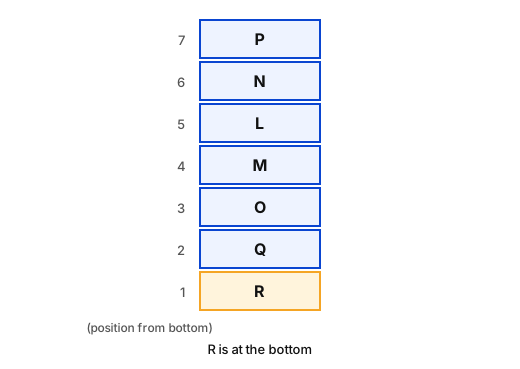
Seven boxes L, M, N, O, P, Q and R are kept one over the other but not necessarily in the same order. M is kept fourth from the bottom. O is placed immediately below M. Q is placed immediately above R. P is the topmost box. M is placed immediately below L. Which box is placed at the bottom?
सात बक्से L, M, N, O, P, Q और R एक के ऊपर एक रखे गए हैं, लेकिन आवश्यक नहीं कि इसी क्रम में हों। M को नीचे से चौथे स्थान पर रखा गया है। O को M के ठीक नीचे रखा गया है। Q को R के ठीक ऊपर रखा गया है। P सबसे ऊपर वाला बक्सा है। M को L के ठीक नीचे रखा गया है। सबसे नीचे कौन-सा बक्सा रखा गया है?
  1. AO
  2. BR
  3. CL
  4. DQ
Show answer

Concept: Number positions 1 (bottom) to 7 (top).

  1. M at 4; O just below → 3; L just above M → 5; P at 7
  2. Free: 1, 2, 6. Q just above R → R 1, Q 2
  3. N goes to 6; bottom box is R

Trick: Adjacent pairs (Q over R) can only go where two consecutive slots are free.

Answer: (B) R

अवधारणा: स्थान 1 (नीचे) से 7 (ऊपर) तक लें।

  1. M 4 पर; O ठीक नीचे → 3; L ठीक ऊपर → 5; P 7 पर
  2. खाली: 1, 2, 6। Q ठीक R के ऊपर → R 1, Q 2
  3. N 6 पर; सबसे नीचे R

ट्रिक: सटे जोड़े (Q, R के ऊपर) वहीं जाएँगे जहाँ दो लगातार स्थान खाली हों।

उत्तर: (B) R

RRB NTPC Undergraduate CBT 1General Intelligence and ReasoningBox ArrangementRRB NTPC Undergraduate CBT 1 2024 · 28 Aug Shift 2 →
Q495.
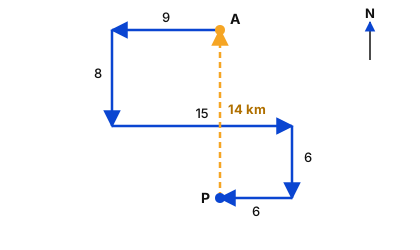
Rishabh starts from Point A and drives 9 km towards west. He then takes a left turn, drives 8 km, turns left and drives 15 km. He then takes a right turn and drives 6 km. He takes a final right turn, drives 6 km and stops at Point P. How far (shortest distance) and towards which direction should he drive in order to reach Point A again? (All turns are 90° turns only unless specified.)
ऋषभ बिंदु A से चलना शुरू करता है और पश्चिम की ओर 9 km गाड़ी चलाता है। फिर वह बाएँ मुड़ता है, 8 km गाड़ी चलाता है, बाएँ मुड़ता है और 15 km गाड़ी चलाता है। फिर वह दाएँ मुड़ता है और 6 km गाड़ी चलाता है। वह अंतिम बार दाएँ मुड़ता है, 6 km गाड़ी चलाता है और बिंदु P पर रुक जाता है। बिंदु A पर फिर से पहुँचने के लिए उसे कितनी दूरी (न्यूनतम दूरी) तक और किस दिशा में गाड़ी चलानी चाहिए? (जब तक निर्दिष्ट न हो, सभी मोड़ केवल 90° के मोड़ हैं।)
  1. A16 km towards eastपूर्व की ओर 16 km
  2. B14 km towards northउत्तर की ओर 14 km
  3. C16 km towards westपश्चिम की ओर 16 km
  4. D14 km towards southदक्षिण की ओर 14 km
Show answer

Concept: Track coordinates with A at (0, 0).

  1. West 9 → (−9, 0); left (south) 8 → (−9, −8)
  2. Left (east) 15 → (6, −8); right (south) 6 → (6, −14)
  3. Right (west) 6 → P = (0, −14)
  4. P is 14 km south of A → drive 14 km north

Trick: Net E–W: −9+15−6=0; net N–S: −8−6=−14.

Answer: (B) 14 km towards north

अवधारणा: A को (0, 0) लेकर निर्देशांक चलाएँ।

  1. पश्चिम 9 → (−9, 0); बाएँ (दक्षिण) 8 → (−9, −8)
  2. बाएँ (पूर्व) 15 → (6, −8); दाएँ (दक्षिण) 6 → (6, −14)
  3. दाएँ (पश्चिम) 6 → P = (0, −14)
  4. P, A से 14 km दक्षिण → 14 km उत्तर जाना होगा

ट्रिक: शुद्ध पूर्व–पश्चिम: −9+15−6=0; उत्तर–दक्षिण: −8−6=−14।

उत्तर: (B) 14 km towards north

RRB NTPC Undergraduate CBT 1General Intelligence and ReasoningDirection and DistanceRRB NTPC Undergraduate CBT 1 2024 · 28 Aug Shift 2 →
Q496.
What should come in place of the question mark (?) in the given series?
85 86 88 92 100 ?
दी गई शृंखला में प्रश्न चिह्न (?) के स्थान पर क्या आना चाहिए?
85 86 88 92 100 ?
  1. A118
  2. B117
  3. C116
  4. D115
Show answer

Concept: Differences double each time.

  1. Differences: 1, 2, 4, 8
  2. Next difference: 16
  3. 100+16=116

Trick: Gaps 1, 2, 4, 8 are powers of 2.

Answer: (C) 116

अवधारणा: अंतर हर बार दोगुना होता है।

  1. अंतर: 1, 2, 4, 8
  2. अगला अंतर: 16
  3. 100+16=116

ट्रिक: अंतर 1, 2, 4, 8 – 2 की घातें।

उत्तर: (C) 116

RRB NTPC Undergraduate CBT 1General Intelligence and ReasoningNumber SeriesRRB NTPC Undergraduate CBT 1 2024 · 28 Aug Shift 2 →
Q497.
Mr. Into ranked 49th from the bottom and 56th from the top in his class. How many students are there in his class?
मिस्टर इंटो (Mr. Into) की अपनी कक्षा में नीचे से 49वीं और ऊपर से 56वीं रैंक है। उसकी कक्षा में कितने विद्यार्थी हैं?
  1. A105
  2. B103
  3. C104
  4. D107
Show answer

Concept: Total =rank from top+rank from bottom−1.

  1. 56+49−1=104

Yaad rakhein: Subtract 1 because the person is counted in both ranks.

Answer: (C) 104

अवधारणा: कुल =ऊपर से रैंक+नीचे से रैंक−1।

  1. 56+49−1=104

याद रखें: 1 घटाएँ क्योंकि व्यक्ति दोनों रैंक में गिना गया है।

उत्तर: (C) 104

RRB NTPC Undergraduate CBT 1General Intelligence and ReasoningRankingRRB NTPC Undergraduate CBT 1 2024 · 28 Aug Shift 2 →
Q498.
Based on the English alphabetical order, three of the following four letter cluster pairs are alike in a certain way and thus form a group. Which is the one that DOES NOT belong to that group? (NOTE:The odd one out is not based on the number of
consonants/vowels or their position in the letter cluster.)
अंग्रेज़ी वर्णमाला क्रम के आधार पर, निम्नलिखित चार अक्षर-समूह युग्मों में से तीन किसी निश्चित प्रकार से एक समान हैं और इस प्रकार एक समूह बनाते हैं। कौन-सा युग्म उस समूह से संबंधित नहीं है? (ध्यान दें: असंगत युग्म, उस अक्षर-समूह में
व्यंजनों/स्वरों की संख्या या उनके स्थान पर आधारित नहीं है।)
  1. ATM-WR
  2. BOH-RN
  3. CNG-QL
  4. DJC-MH
Show answer

Concept: Compare 1st with 1st and 2nd with 2nd letter of each pair.

  1. TM-WR: T+3=W, M+5=R
  2. NG-QL: +3, +5; JC-MH: +3, +5
  3. OH-RN: O+3=R but H+6=N ✘

Trick: Write positions (H8 → N14) to catch the +6.

Answer: (B) OH-RN

अवधारणा: हर जोड़ी में पहले की पहले से, दूसरे की दूसरे से तुलना करें।

  1. TM-WR: T+3=W, M+5=R
  2. NG-QL: +3, +5; JC-MH: +3, +5
  3. OH-RN: O+3=R पर H+6=N ✘

ट्रिक: अक्षरों की स्थिति लिखें (H8 → N14) – +6 पकड़ में आएगा।

उत्तर: (B) OH-RN

RRB NTPC Undergraduate CBT 1General Intelligence and ReasoningLetter Analogy – Odd One OutRRB NTPC Undergraduate CBT 1 2024 · 28 Aug Shift 2 →
Q499.
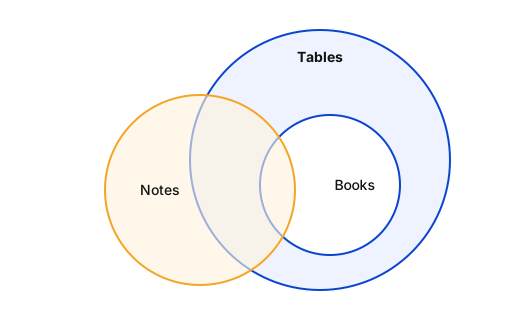
Read the given statements and conclusions carefully. Assuming that the information given in the statements is true, even if it appears to be at variance with commonly known facts, decide which of the given conclusions logically follow(s) from the statements.
Statements: Some notes are books. All books are tables.
Conclusion (I): Some notes are tables.
Conclusions (II): All tables are books.
दिए गए कथनों और निष्कर्षों को ध्यानपूर्वक पढ़िए। कथनों में दी गई जानकारी को सत्य मानते हुए, भले ही वह सामान्यतः ज्ञात तथ्यों से भिन्न प्रतीत होती हो, निर्णय कीजिए कि दिए गए निष्कर्षों में से कौन-सा/कौन-से निष्कर्ष तार्किक रूप से कथनों का अनुसरण करता है/करते हैं।
कथन: कुछ नोट, किताबें हैं। सभी किताबें, मेज़ें हैं।
निष्कर्ष (I): कुछ नोट, मेज़ें हैं।
निष्कर्ष (II): सभी मेज़ें, किताबें हैं।
  1. ANeither conclusion (I) nor (II) follows.न तो निष्कर्ष (I) और न ही (II) अनुसरण करता है।
  2. BOnly conclusion (II) follows.केवल निष्कर्ष (II) अनुसरण करता है।
  3. CBoth conclusions (I) and (II) follow.निष्कर्ष (I) और (II) दोनों अनुसरण करते हैं।
  4. DOnly conclusion (I) follows.केवल निष्कर्ष (I) अनुसरण करता है।
Show answer

Concept: Some A are B + All B are C ⇒ Some A are C.

  1. Notes that are books lie inside tables → some notes are tables: (I) follows.
  2. Tables may contain things other than books → (II) does not follow.

Yaad rakhein: 'All B are C' never reverses to 'All C are B'.

Answer: (D) Only conclusion (I) follows.

अवधारणा: कुछ A, B हैं + सभी B, C हैं ⇒ कुछ A, C हैं।

  1. जो notes, books हैं वे tables के अंदर हैं → कुछ notes, tables हैं: (I) अनुसरण करता है।
  2. Tables में books के अलावा भी चीज़ें हो सकती हैं → (II) अनुसरण नहीं करता।

याद रखें: 'सभी B, C हैं' उलटकर 'सभी C, B हैं' नहीं बनता।

उत्तर: (D) Only conclusion (I) follows.

RRB NTPC Undergraduate CBT 1General Intelligence and ReasoningSyllogismRRB NTPC Undergraduate CBT 1 2024 · 28 Aug Shift 2 →
Q500.
What should come in place of the question mark (?) in the given series?
3 12 30 57 93 ?
दी गई शृंखला में प्रश्न चिह्न (?) के स्थान पर क्या आना चाहिए?
3 12 30 57 93 ?
  1. A130
  2. B138
  3. C135
  4. D140
Show answer

Concept: Differences are multiples of 9.

  1. Differences: 9, 18, 27, 36
  2. Next difference: 45
  3. 93+45=138

Trick: Gaps 9×1,9×2,9×3,… → next 9×5.

Answer: (B) 138

अवधारणा: अंतर 9 के गुणज हैं।

  1. अंतर: 9, 18, 27, 36
  2. अगला अंतर: 45
  3. 93+45=138

ट्रिक: अंतर 9×1,9×2,9×3,… → अगला 9×5।

उत्तर: (B) 138

RRB NTPC Undergraduate CBT 1General Intelligence and ReasoningNumber SeriesRRB NTPC Undergraduate CBT 1 2024 · 28 Aug Shift 2 →