Question bank

Q&A: practice questions with answers

Search questions on any topic. Filter by exam category, exam, subject and topic, try the question, then open the answer and explanation.

Courses – airGurukul

8,495 questions found.

Q5041.
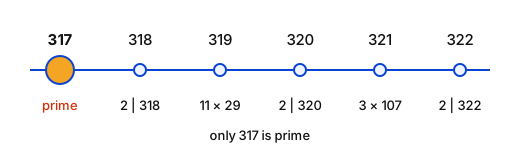
The number of prime numbers lying between 317 and 322, both included, is:
317 और 322 के बीच स्थित अभाज्य संख्याओं की संख्या (दोनों को सम्मिलित करते हुए) है:
  1. A4
  2. B3
  3. C2
  4. D1
Show answer

Concept: A number is prime if no prime up to its square root divides it; here 322<18, so test 2, 3, 5, 7, 11, 13, 17.

  1. Even numbers 318, 320, 322 are not prime; 319=11×29; 321=3×10⁷.
  2. 317 is not divisible by 2, 3, 5, 7, 11, 13 or 17 ⇒ prime.
  3. So only one prime (317) lies in the range.

Trick: Quick tests: digit sum for 3 (3+2+1=6), alternate-sum for 11 (3−1+9=11).

Answer: (D) 1

अवधारणा: कोई संख्या अभाज्य है यदि उसके वर्गमूल तक की कोई अभाज्य संख्या उसे न बाँटे; यहाँ 322<18, अतः 2, 3, 5, 7, 11, 13, 17 से जाँचें।

  1. सम संख्याएँ 318, 320, 322 अभाज्य नहीं; 319=11×29; 321=3×10⁷।
  2. 317 किसी भी 2, 3, 5, 7, 11, 13, 17 से विभाज्य नहीं ⇒ अभाज्य।
  3. अतः सीमा में केवल एक अभाज्य संख्या (317) है।

ट्रिक: त्वरित जाँच: 3 के लिए अंकों का योग (3+2+1=6), 11 के लिए एकांतर योग (3−1+9=11)।

उत्तर: (D) 1
RRB NTPC Undergraduate CBT 1MathematicsNumber System – Prime NumbersRRB NTPC Undergraduate CBT 1 2024 · 2 Sep Shift 3 →
Q5042.
Ashok bought some pencils at the rate of ₹180 a dozen. He sold them for ₹16 each. His profit percentage is ______%.
अशोक ने ₹180 प्रति दर्जन की दर से कुछ पेंसिलें खरीदीं। उसने उन्हें ₹16 प्रति पेंसिल की दर से बेच दिया। उसका लाभ प्रतिशत ______% है।
  1. A6.67
  2. B10.67
  3. C8.67
  4. D4.67
Show answer

Concept: Bring CP and SP to the same unit (per pencil), then use Profit%=ProfitCP×100.

  1. CP of 1 pencil =18012=₹15; SP =₹16
  2. Profit =₹1
  3. Profit% =115×100=6.67%

Trick: 115=623% – remember the fraction table.

Answer: (A) 6.67

अवधारणा: CP और SP को एक ही इकाई (प्रति पेंसिल) में लाएँ, फिर लाभ%=लाभक्रय मूल्य×100।

  1. 1 पेंसिल का CP =18012=₹15; SP =₹16
  2. लाभ =₹1
  3. लाभ% =115×100=6.67%

ट्रिक: 115=623% – भिन्न तालिका याद रखें।

उत्तर: (A) 6.67

RRB NTPC Undergraduate CBT 1MathematicsProfit and LossRRB NTPC Undergraduate CBT 1 2024 · 2 Sep Shift 3 →
Q5043.
Simplify the following.
1×(5×(32))÷17+44−78
निम्नलिखित को सरल कीजिए।
1×(5×(32))÷17+44−78
  1. A−53317
  2. B−53417
  3. C−53517
  4. D−53817
Show answer

Concept: Follow BODMAS: brackets/powers first, then division and multiplication, then addition and subtraction.

  1. 32=9, 5×9=45, 1×45=45
  2. 45÷17=4517
  3. 4517+44−78=4517−34=45−57817=−53317

Trick: All options are over 17: numerator =45−34×17=45−578=−533.

Answer: (A) −53317

अवधारणा: BODMAS का पालन करें: पहले कोष्ठक/घात, फिर भाग व गुणा, फिर जोड़ व घटाव।

  1. 32=9, 5×9=45, 1×45=45
  2. 45÷17=4517
  3. 4517+44−78=4517−34=45−57817=−53317

ट्रिक: सभी विकल्पों का हर 17 है: अंश =45−34×17=45−578=−533।

उत्तर: (A) −53317

RRB NTPC Undergraduate CBT 1MathematicsSimplification – BODMASRRB NTPC Undergraduate CBT 1 2024 · 2 Sep Shift 3 →
Q5044.
A shopkeeper marks a mobile phone for ₹15,000 but allows a discount of 10%. What amount does the customer actually pay?
एक दुकानदार एक मोबाइल फ़ोन पर ₹15,000 मूल्य अंकित करता है, लेकिन 10% की छूट देता है। ग्राहक वास्तव में कितनी राशि का भुगतान करता है?
  1. A₹13,800
  2. B₹13,500
  3. C₹14,000
  4. D₹14,500
Show answer

Concept: Selling price after discount =Marked Price×100−d100.

  1. Discount =10% of ₹15,000 =₹1,500
  2. Amount paid =15000−1500=₹13,500

Trick: 10% off ⇒ pay 90%: 15000×0.9=13500.

Answer: (B) ₹13,500

अवधारणा: छूट के बाद विक्रय मूल्य =अंकित मूल्य×100−d100।

  1. छूट = ₹15,000 का 10%=₹1,500
  2. देय राशि =15000−1500=₹13,500

ट्रिक: 10% छूट ⇒ 90% देना: 15000×0.9=13500।

उत्तर: (B) ₹13,500

RRB NTPC Undergraduate CBT 1MathematicsDiscountRRB NTPC Undergraduate CBT 1 2024 · 2 Sep Shift 3 →
Q5045.
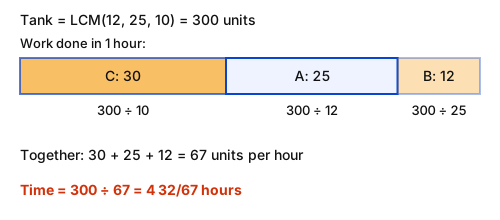
Pipe A can fill a tank in 12 hours, pipe B can fill the same tank in 25 hours and pipe C can fill the same tank in 10 hours. The time taken by them to fill the same tank if they operate together is::
पाइप A किसी टंकी को 12 घंटे में भर सकता है, पाइप B उसी टंकी को 25 घंटे में भर सकता है और पाइप C उसी टंकी को 10 घंटे में भर सकता है। यदि तीनों एक साथ खोले जाएँ, तो उसी टंकी को भरने में उनके द्वारा लिया गया समय है::
  1. A93267 hours93267 घंटे
  2. B123267 hours123267 घंटे
  3. C43267 hours43267 घंटे
  4. D133267 hours133267 घंटे
Show answer

Concept: Take tank capacity = LCM of the times; each pipe's efficiency = capacity ÷ its time.

  1. LCM of 12, 25, 10 =300 units.
  2. A =30012=25, B =30025=12, C =30010=30 units per hour; together =67
  3. Time =30067=43267 hours

Trick: All options end in 3267 – just find the whole part: 300÷67≈4.5 ⇒ 4.

Answer: (C) 43267 hours

अवधारणा: टंकी की क्षमता = समयों का LCM मानें; हर पाइप की दक्षता = क्षमता ÷ उसका समय।

  1. 12, 25, 10 का LCM =300 इकाई।
  2. A =30012=25, B =30025=12, C =30010=30 इकाई प्रति घंटा; कुल =67
  3. समय =30067=43267 घंटे

ट्रिक: सभी विकल्पों में 3267 है – बस पूर्णांक भाग देखें: 300÷67≈4.5 ⇒ 4।

उत्तर: (C) 43267 घंटे

RRB NTPC Undergraduate CBT 1MathematicsPipes and CisternsRRB NTPC Undergraduate CBT 1 2024 · 2 Sep Shift 3 →
Q5046.
Find the value of x satisfying: 4(4x2 − 5) − 4(4x2 + 6x − 4) = 15
x का वह मान ज्ञात कीजिए जो निम्नलिखित को संतुष्ट करता है: 4(4x2 − 5) − 4(4x2 + 6x − 4) = 15
  1. A−1124
  2. B−1724
  3. C−1924
  4. D−2324
Show answer

Concept: Expand the brackets; the x2 terms cancel and a linear equation remains.

  1. 4(4x2−5)=16x2−20 and 4(4x2+6x−4)=16x2+24x−16
  2. Subtract: 16x2−20−16x2−24x+16=−24x−4
  3. −24x−4=15⇒−24x=19⇒x=−1924

Trick: Check: −24×(−1924)−4=19−4=15 ✓

Answer: (C) −1924

अवधारणा: कोष्ठक खोलें; x2 वाले पद कट जाते हैं और रैखिक समीकरण बचता है।

  1. 4(4x2−5)=16x2−20 तथा 4(4x2+6x−4)=16x2+24x−16
  2. घटाने पर: 16x2−20−16x2−24x+16=−24x−4
  3. −24x−4=15⇒−24x=19⇒x=−1924

ट्रिक: जाँच: −24×(−1924)−4=19−4=15 ✓

उत्तर: (C) −1924

RRB NTPC Undergraduate CBT 1MathematicsLinear equationsRRB NTPC Undergraduate CBT 1 2024 · 2 Sep Shift 3 →
Q5047.
A man goes to Indore from Bhopal at a speed of 20 km/hr and returns to Bhopal at speed of 30 km/hr, through the same route. What is his average speed (in km/hr) of the entire journey?
एक व्यक्ति 20 km/hr की चाल से भोपाल से इंदौर जाता है और उसी मार्ग से 30 km/hr की चाल से भोपाल लौटता है। पूरी यात्रा में उसकी औसत चाल (km/hr में) क्या है?
  1. A24
  2. B29
  3. C20
  4. D28
Show answer

Concept: For equal distances at speeds a and b, average speed =2aba+b (harmonic mean), not a+b2.

  1. a=20, b=30
  2. Average speed =2×20×3020+30=120050=24km/h

Trick: Average speed for a round trip is always a little less than the simple average (25).

Answer: (A) 24

अवधारणा: समान दूरी को a और b चाल से तय करने पर औसत चाल =2aba+b होती है, न कि a+b2।

  1. a=20, b=30
  2. औसत चाल =2×20×3020+30=120050=24km/h

ट्रिक: आने-जाने की औसत चाल हमेशा साधारण औसत (25) से थोड़ी कम होती है।

उत्तर: (A) 24

RRB NTPC Undergraduate CBT 1MathematicsAverage speedRRB NTPC Undergraduate CBT 1 2024 · 2 Sep Shift 3 →
Q5048.
A sum of money triples itself at a certain rate of compound interest in 15 years. In how many years will it amount to 81 times of itself?
कोई धनराशि चक्रवृद्धि ब्याज की एक निश्चित दर पर 15 वर्षों में स्वयं की तीन गुनी हो जाती है। कितने वर्षों में यह स्वयं की 81 गुनी हो जाएगी?
  1. A61 years61 वर्ष
  2. B60 years60 वर्ष
  3. C56 years56 वर्ष
  4. D51 years51 वर्ष
Show answer

Concept: Under compound interest, if a sum becomes k times in T years, it becomes kn times in nT years.

  1. 3× in 15 years
  2. 81=34, so time =4×15=60 years

Trick: CI multiples go by powers: 3→9→27→81 at 15,30,45,60 years.

Answer: (B) 60 years

अवधारणा: चक्रवृद्धि ब्याज में यदि राशि T वर्ष में k गुना हो, तो nT वर्ष में kn गुना होती है।

  1. 15 वर्ष में 3 गुना
  2. 81=34, अतः समय =4×15=60 वर्ष

ट्रिक: CI में गुणज घातों में बढ़ते हैं: 3→9→27→81 क्रमशः 15,30,45,60 वर्ष में।

उत्तर: (B) 60 वर्ष

RRB NTPC Undergraduate CBT 1MathematicsCompound interest – multiplesRRB NTPC Undergraduate CBT 1 2024 · 2 Sep Shift 3 →
Q5049.
Evaluate: 16 + 12 ÷ 6 − 2 × 3
मान ज्ञात कीजिए: 16 + 12 ÷ 6 − 2 × 3
  1. A12
  2. B14
  3. C15
  4. D11
Show answer

Concept: Order: Division and Multiplication first (left to right), then Addition and Subtraction.

  1. 12÷6=2, 2×3=6
  2. 16+2−6=12

Trick: Never add 16+12 first – ÷ and × always come before + and −.

Answer: (A) 12

अवधारणा: क्रम: पहले भाग और गुणा (बाएँ से दाएँ), फिर जोड़ और घटाव।

  1. 12÷6=2, 2×3=6
  2. 16+2−6=12

ट्रिक: पहले 16+12 न जोड़ें – ÷ व × हमेशा + व − से पहले।

उत्तर: (A) 12

RRB NTPC Undergraduate CBT 1MathematicsBODMASRRB NTPC Undergraduate CBT 1 2024 · 2 Sep Shift 3 →
Q5050.
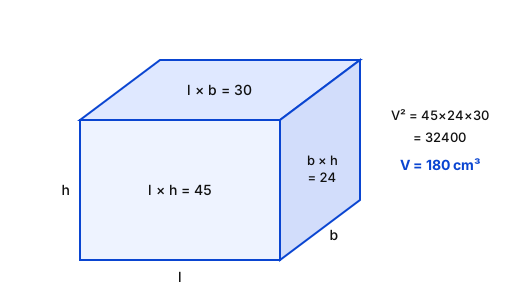
The area of one side of a rectangular box is 45 cm2, and the area of another adjacent side is 24 cm2. If the area of the top surface (third side) is 30 cm², find the volume of the box.
एक आयताकार बॉक्स की एक भुजा (फलक) का क्षेत्रफल 45 cm2 है, और दूसरी आसन्न भुजा का क्षेत्रफल 24 cm2 है। यदि ऊपरी सतह (तीसरी भुजा) का क्षेत्रफल 30 cm² है, तो बॉक्स का आयतन ज्ञात कीजिए।
  1. A540 cm3
  2. B270 cm3
  3. C60 cm3
  4. D180 cm3
Show answer

Concept: If the three adjacent face areas of a cuboid are lh, bh, lb, then V=(lh)(bh)(lb)=lbh.

  1. Product of areas =45×24×30=32400
  2. (lbh)2=32400⇒V=32400=180cm3
  3. (e.g. l=7.5, b=4, h=6 fits: 7.5×6=45, 4×6=24, 7.5×4=30)

Trick: Volume =product of three face areas.

Answer: (D) 180cm3

अवधारणा: घनाभ के तीन आसन्न फलकों के क्षेत्रफल lh, bh, lb हों तो V=(lh)(bh)(lb)=lbh।

  1. क्षेत्रफलों का गुणनफल =45×24×30=32400
  2. (lbh)2=32400⇒V=32400=180cm3
  3. (जैसे l=7.5, b=4, h=6: 7.5×6=45, 4×6=24, 7.5×4=30)

ट्रिक: आयतन =तीनों फलकों के क्षेत्रफल का गुणनफल।

उत्तर: (D) 180cm3

RRB NTPC Undergraduate CBT 1MathematicsCuboid volume from face areasRRB NTPC Undergraduate CBT 1 2024 · 2 Sep Shift 3 →
Q5051.
A person makes a monthly payment equal to 20% of his monthly salary to repay a loan. He spends 25% of the remaining salary and saves ₹780. Find his monthly salary (in ₹).
एक व्यक्ति ऋण चुकाने के लिए अपने मासिक वेतन के 20% के बराबर मासिक भुगतान करता है। वह शेष वेतन का 25% खर्च करता है और ₹780 बचाता है। उसका मासिक वेतन (₹ में) ज्ञात कीजिए।
  1. A1,388
  2. B1,300
  3. C1,383
  4. D1,366
Show answer

Concept: Successive percentages of a salary are applied on the remaining amount, so multiply the fractions left.

  1. Let salary =S. After loan payment (20%), left =0.8S
  2. He spends 25% of this, so savings =0.75×0.8S=0.6S
  3. 0.6S=780⇒S=7800.6=1300

Trick: Savings fraction =45×34=35; 780÷3×5=1300.

Answer: (B) ₹1300

अवधारणा: वेतन पर क्रमिक प्रतिशत शेष राशि पर लगते हैं, इसलिए बचे भागों को गुणा करें।

  1. माना वेतन =S। ऋण भुगतान (20%) के बाद शेष =0.8S
  2. इसका 25% खर्च, अतः बचत =0.75×0.8S=0.6S
  3. 0.6S=780⇒S=7800.6=1300

ट्रिक: बचत भाग =45×34=35; 780÷3×5=1300।

उत्तर: (B) ₹1300

RRB NTPC Undergraduate CBT 1MathematicsPercentage – income and savingsRRB NTPC Undergraduate CBT 1 2024 · 2 Sep Shift 3 →
Q5052.
In covering a distance of 198 km, Amit takes 4 hours more than Vinay. If Amit doubles his speed, then he would take 5 hours less than Vinay. Amit's speed is:
198 km की दूरी तय करने में अमित, विनय से 4 घंटे अधिक लेता है। यदि अमित अपनी चाल दोगुनी कर दे, तो वह विनय से 5 घंटे कम समय लेगा। अमित की चाल है:
  1. A20 km/hr
  2. B10 km/hr
  3. C11 km/hr
  4. D12 km/hr
Show answer

Concept: Time =DistanceSpeed. Doubling the speed halves the time.

  1. Let Amit’s time =tA=198a, Vinay’s time =tV. Then tA=tV+4
  2. With double speed Amit takes tA2=tV−5
  3. Subtract: tA−tA2=9⇒tA=18 h
  4. a=19818=11km/h

Trick: Check: Vinay =14 h; Amit doubled =9 h =14−5 ✓

Answer: (C) 11km/h

अवधारणा: समय =दूरीचाल। चाल दोगुनी करने पर समय आधा हो जाता है।

  1. माना अमित का समय tA=198a, विनय का tV। तब tA=tV+4
  2. दोगुनी चाल से अमित का समय tA2=tV−5
  3. घटाने पर: tA−tA2=9⇒tA=18 घंटे
  4. a=19818=11km/h

ट्रिक: जाँच: विनय =14 घंटे; अमित (दोगुनी चाल) =9 घंटे =14−5 ✓

उत्तर: (C) 11km/h

RRB NTPC Undergraduate CBT 1MathematicsTime and distanceRRB NTPC Undergraduate CBT 1 2024 · 2 Sep Shift 3 →
Q5053.
The marked price of an article is ₹2,500. A shopkeeper gives three successive discounts of 25%, 20% and K%, and sells the article at ₹1,380. Find the value of K.
एक वस्तु का अंकित मूल्य ₹2,500 है। एक दुकानदार 25%, 20% और K% की तीन क्रमिक छूटें देता है, और वस्तु को ₹1,380 में बेचता है। K का मान ज्ञात कीजिए।
  1. A7
  2. B7.6
  3. C6.5
  4. D8
Show answer

Concept: Successive discounts multiply: SP=MP×(1−d1)(1−d2)(1−d3).

  1. After 25%: 2500×0.75=1875
  2. After 20%: 1875×0.8=1500
  3. 1500×(1−K100)=1380⇒1−K100=0.92⇒K=8

Trick: Last step: discount =1500−1380=120, and 1201500×100=8%.

Answer: (D) 8

अवधारणा: क्रमिक छूट गुणा होती हैं: विक्रय मूल्य=अंकित मूल्य×(1−d1)(1−d2)(1−d3)।

  1. 25% के बाद: 2500×0.75=1875
  2. 20% के बाद: 1875×0.8=1500
  3. 1500×(1−K100)=1380⇒K=8

ट्रिक: अंतिम चरण: छूट =1500−1380=120, और 1201500×100=8%।

उत्तर: (D) 8

RRB NTPC Undergraduate CBT 1MathematicsSuccessive discountsRRB NTPC Undergraduate CBT 1 2024 · 2 Sep Shift 3 →
Q5054.
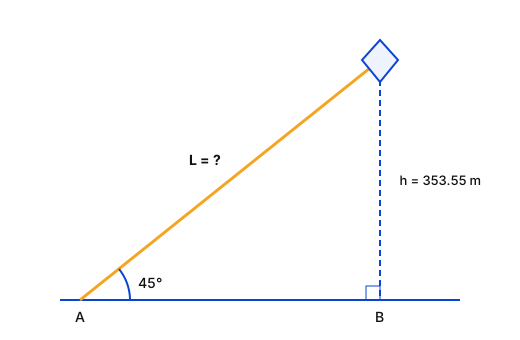
A kite is flying at the height of 353.55 m above the ground. It is attached to a string inclined at an angle of 45° to the horizontal. What is the approximate length of the string?
एक पतंग जमीन से 353.55 m की ऊँचाई पर उड़ रही है। वह एक डोरी से बँधी है जो क्षैतिज से 45° के कोण पर झुकी हुई है। डोरी की लगभग लंबाई कितनी है?
  1. A300 m
  2. B250 m
  3. C500 m
  4. D375 m
Show answer

Concept: The string is the hypotenuse: sinθ=heightstring.

  1. sin45∘=353.55L
  2. L=353.55×2=353.55×1.4142≈500m

Trick: 353.55=5002 – at 45∘, hypotenuse =side×2.

Answer: (C) 500m

अवधारणा: डोरी कर्ण है: sinθ=ऊँचाईडोरी।

  1. sin45∘=353.55L
  2. L=353.55×2=353.55×1.4142≈500m

ट्रिक: 353.55=5002 – 45∘ पर कर्ण =भुजा×2।

उत्तर: (C) 500m

RRB NTPC Undergraduate CBT 1MathematicsHeights and distancesRRB NTPC Undergraduate CBT 1 2024 · 2 Sep Shift 3 →
Q5055.
What is the median of the following data?
49, 96, 59, 54, 97, 30, 44, 46, 36, 55, 23
निम्नलिखित आँकड़ों की माध्यिका क्या है?
49, 96, 59, 54, 97, 30, 44, 46, 36, 55, 23
  1. A49
  2. B49.5
  3. C50
  4. D48.5
Show answer

Concept: Arrange the data in order; for odd n the median is the (n+12)th value.

  1. Ascending: 23,30,36,44,46,49,54,55,59,96,97
  2. n=11, median =6th value =49

Trick: Median ignores extreme values like 96,97 – only the middle position matters.

Answer: (A) 49

अवधारणा: आँकड़ों को क्रम में लगाएँ; विषम n पर माध्यिका (n+12)वाँ मान होती है।

  1. आरोही क्रम: 23,30,36,44,46,49,54,55,59,96,97
  2. n=11, माध्यिका =6वाँ मान =49

ट्रिक: माध्यिका पर 96,97 जैसे चरम मानों का असर नहीं – केवल बीच का स्थान देखें।

उत्तर: (A) 49

RRB NTPC Undergraduate CBT 1MathematicsMedianRRB NTPC Undergraduate CBT 1 2024 · 2 Sep Shift 3 →
Q5056.
Pipe P can fill 29 part of a tank in 28 hours, and pipe Q can fill 27 part of the same tank in 12 hours. Both P and Q were kept open for 6 hours, then both were closed. Pipe R alone was then opened and it emptied the water in the tank in 8 hours. Pipes P, Q and R together can fill the empty tank in:
पाइप P किसी टंकी का 29 भाग 28 घंटे में भर सकता है, और पाइप Q उसी टंकी का 27 भाग 12 घंटे में भर सकता है। P और Q दोनों को 6 घंटे तक खुला रखा गया, फिर दोनों को बंद कर दिया गया। इसके बाद केवल पाइप R को खोला गया और उसने टंकी का पानी 8 घंटे में खाली कर दिया। पाइप P, Q और R एक साथ खाली टंकी को कितने समय में भर सकते हैं?
  1. A117 hours117 घंटे
  2. B137 hours137 घंटे
  3. C126 hours126 घंटे
  4. D145 hours145 घंटे
Show answer

Concept: Find each pipe’s full-tank time; filling rates add, emptying rate subtracts.

  1. P fills 29 in 28 h ⇒ full in 28×92=126 h; Q: 12×72=42 h
  2. In 6 h: 6(1126+142)=6×4126=421 filled
  3. R empties 421 in 8 h ⇒ full tank in 8×214=42 h
  4. Together: 1126+142−142=1126 ⇒ 126 h

Trick: R empties exactly as fast as Q fills (42 h each), so they cancel and only P works.

Answer: (C) 126 hours

अवधारणा: हर पाइप का पूरा भरने का समय निकालें; भरने की दरें जुड़ती हैं, खाली करने की दर घटती है।

  1. P, 29 भाग 28 घंटे में ⇒ पूरा 28×92=126 घंटे; Q: 12×72=42 घंटे
  2. 6 घंटे में: 6(1126+142)=421 भरा
  3. R, 421 को 8 घंटे में खाली करता है ⇒ पूरा 8×214=42 घंटे
  4. तीनों साथ: 1126+142−142=1126 ⇒ 126 घंटे

ट्रिक: R उतनी ही तेज़ी से खाली करता है जितनी तेज़ी से Q भरता है (42 घंटे), इसलिए केवल P का काम बचता है।

उत्तर: (C) 126 घंटे

RRB NTPC Undergraduate CBT 1MathematicsPipes and cisternsRRB NTPC Undergraduate CBT 1 2024 · 2 Sep Shift 3 →
Q5057.
The ratio of an interior angle to its corresponding exterior angle in a regular polygon is 3 : 2. Determine the number of sides of the polygon.
एक सम बहुभुज में एक अंतः कोण और उसके संगत बाह्य कोण का अनुपात 3 : 2 है। बहुभुज की भुजाओं की संख्या ज्ञात कीजिए।
  1. A8
  2. B7
  3. C5
  4. D6
Show answer

Concept: Interior + exterior =180∘, and exterior angle of a regular n-gon =360∘n.

  1. Exterior =25×180∘=72∘
  2. n=360∘72∘=5

Trick: Interior : exterior =3:2 ⇒ n=2(3+2)2=5 (formula: n=2(a+b)b).

Answer: (C) 5

अवधारणा: आंतरिक + बाह्य कोण =180∘, और सम n-भुज का बाह्य कोण =360∘n।

  1. बाह्य कोण =25×180∘=72∘
  2. n=360∘72∘=5

ट्रिक: आंतरिक : बाह्य =a:b हो तो n=2(a+b)b=2×52=5।

उत्तर: (C) 5

RRB NTPC Undergraduate CBT 1MathematicsPolygons – anglesRRB NTPC Undergraduate CBT 1 2024 · 2 Sep Shift 3 →
Q5058.
The HCF and the LCM of two numbers are 29 and 174, respectively. If one of the numbers is 58, find the other one.
दो संख्याओं का HCF और LCM क्रमशः 29 और 174 है। यदि उनमें से एक संख्या 58 है, तो दूसरी संख्या ज्ञात कीजिए।
  1. A116
  2. B174
  3. C145
  4. D87
Show answer

Concept: For two numbers: HCF×LCM=product of the numbers.

  1. Other number =29×17458
  2. =504658=87

Trick: Check: 58=29×2, 87=29×3 ⇒ HCF 29, LCM 29×6=174 ✓

Answer: (D) 87

अवधारणा: दो संख्याओं के लिए: HCF×LCM=संख्याओं का गुणनफल।

  1. दूसरी संख्या =29×17458
  2. =504658=87

ट्रिक: जाँच: 58=29×2, 87=29×3 ⇒ HCF 29, LCM 174 ✓

उत्तर: (D) 87

RRB NTPC Undergraduate CBT 1MathematicsHCF and LCMRRB NTPC Undergraduate CBT 1 2024 · 2 Sep Shift 3 →
Q5059.
₹32,100 were divided among A, B and C, such that 2 times of A = 7 times of B = 4 times of C. Find the share of A.
₹32,100 को A, B और C में इस प्रकार बाँटा गया कि A का 2 गुना = B का 7 गुना = C का 4 गुना। A का हिस्सा ज्ञात कीजिए।
  1. A₹17,976
  2. B₹17,815
  3. C₹18,091
  4. D₹17,847
Show answer

Concept: If 2A=7B=4C, then A:B:C=12:17:14.

  1. Multiply by LCM 28: A:B:C=14:4:7, total 25 parts
  2. 1 part =3210025=1284
  3. A=14×1284=17976

Trick: Ratio is the reciprocal of the multipliers: 12,17,14.

Answer: (A) ₹17976

अवधारणा: यदि 2A=7B=4C, तो A:B:C=12:17:14।

  1. LCM 28 से गुणा: A:B:C=14:4:7, कुल 25 भाग
  2. 1 भाग =3210025=1284
  3. A=14×1284=17976

ट्रिक: अनुपात गुणकों का व्युत्क्रम होता है: 12,17,14।

उत्तर: (A) ₹17976

RRB NTPC Undergraduate CBT 1MathematicsRatio – division of moneyRRB NTPC Undergraduate CBT 1 2024 · 2 Sep Shift 3 →
Q5060.
The average of first 151 odd natural numbers, is:
प्रथम 151 विषम प्राकृत संख्याओं का औसत है:
  1. A151
  2. B151.5
  3. C152
  4. D150.5
Show answer

Concept: Sum of first n odd natural numbers =n2, so their average =n.

  1. Sum =1512
  2. Average =1512151=151

Yaad rakhein: Average of first n odd numbers =n; of first n even numbers =n+1.

Answer: (A) 151

अवधारणा: प्रथम n विषम प्राकृत संख्याओं का योग =n2, अतः औसत =n।

  1. योग =1512
  2. औसत =1512151=151

याद रखें: प्रथम n विषम संख्याओं का औसत =n; प्रथम n सम संख्याओं का औसत =n+1।

उत्तर: (A) 151

RRB NTPC Undergraduate CBT 1MathematicsAverage of odd numbersRRB NTPC Undergraduate CBT 1 2024 · 2 Sep Shift 3 →