Question bank

Q&A: practice questions with answers

Search questions on any topic. Filter by exam category, exam, subject and topic, try the question, then open the answer and explanation.

Courses – airGurukul

8,495 questions found.

Q5381.
L, M, N, O, Q, R, and S are sitting around a circular table facing the centre of the table. S sits fourth to the left of O. R sits fourth to the right of M. Only two people sit between O and M when counted from the left of O. L is not an immediate neighbour of R or O. N is not an immediate neighbour of L.
Who sits third to the right of Q?
L, M, N, O, Q, R और S एक वृत्ताकार मेज़ के चारों ओर केंद्र की ओर मुख करके बैठे हैं। S, O के बाएँ से चौथे स्थान पर बैठा है। R, M के दाएँ से चौथे स्थान पर बैठा है। O के बाएँ से गिनने पर O और M के बीच केवल दो व्यक्ति बैठे हैं। L, R या O का निकटतम पड़ोसी नहीं है। N, L का निकटतम पड़ोसी नहीं है।
Q के दाएँ से तीसरे स्थान पर कौन बैठा है?
  1. AO
  2. BS
  3. CN
  4. DL
Show answer

Concept: Facing the centre, "left" = clockwise and "right" = anticlockwise (seen from above).
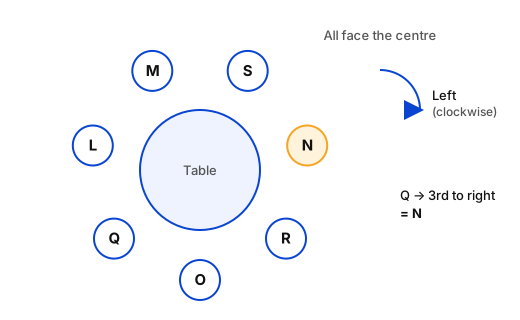
  1. Fix O. S is 4th to the left of O; M is 3rd to the left of O (two people between, counted from O's left).
  2. R is 4th to the right of M ⇒ R is O's immediate right.
  3. Left empty: Q, L, N. L not next to R or O ⇒ L sits between Q-seat and M; N not next to L ⇒ N between S and R; Q next to O.
  4. Clockwise from O: O, Q, L, M, S, N, R. Third to the right of Q: Q → O → R → N.

Trick: Draw the circle and mark one direction arrow for "left" before placing anyone.

Answer: (C) N

अवधारणा: केंद्र की ओर मुख होने पर (ऊपर से देखने पर) "बाएँ" = दक्षिणावर्त (clockwise), "दाएँ" = वामावर्त।

  1. O को स्थिर करें। S, O के बाएँ चौथा; M, O के बाएँ तीसरा (बीच में दो)।
  2. R, M के दाएँ चौथा ⇒ R, O के ठीक दाएँ।
  3. बचे Q, L, N. L, R या O का पड़ोसी नहीं ⇒ L, M के पास; N, L का पड़ोसी नहीं ⇒ N, S और R के बीच; Q, O के पास।
  4. O से दक्षिणावर्त: O, Q, L, M, S, N, R. Q के दाएँ तीसरा: Q → O → R → N.

ट्रिक: व्यक्ति बैठाने से पहले वृत्त बनाकर "बाएँ" की दिशा का तीर लगा लें।

उत्तर: (C) N
RRB NTPC Undergraduate CBT 1General Intelligence and ReasoningCircular Seating ArrangementRRB NTPC Undergraduate CBT 1 2024 · 1 Sep Shift 3 →
Q5382.
In the following triads, each group of letters is related to the subsequent one following a certain logic. Select from the given options, the one which follows the same logic. HAIR - AHIR - RIAH
MEAN - EMAN - NAEM
निम्नलिखित त्रिकों में, अक्षरों का प्रत्येक समूह एक निश्चित तर्क का अनुसरण करते हुए अगले समूह से संबंधित है। दिए गए विकल्पों में से उस विकल्प का चयन कीजिए, जो समान तर्क का अनुसरण करता है। HAIR - AHIR - RIAH
MEAN - EMAN - NAEM
  1. AWANT - AWNT - TANW
  2. BLOCK - OLCK - OCKL
  3. CBOND - BNOD - DNOB
  4. DDUST - UDST - TSUD
Show answer

Concept: Find how the 2nd and 3rd groups are formed from the 1st.

  1. HAIR → AHIR: first two letters swapped. HAIR → RIAH: whole word reversed.
  2. MEAN → EMAN (swap) → NAEM (reverse) ✓.
  3. DUST → UDST (swap) → TSUD (reverse) ✓. WANT reversed is TNAW, not TANW; LOCK reversed is KCOL.

Trick: Test the "reverse" part first — it eliminates options fastest.

Answer: (D) DUST - UDST - TSUD

अवधारणा: देखें कि दूसरा और तीसरा समूह पहले से कैसे बनते हैं।

  1. HAIR → AHIR: पहले दो अक्षर अदला-बदली। HAIR → RIAH: पूरा शब्द उल्टा।
  2. MEAN → EMAN (अदला-बदली) → NAEM (उल्टा) ✓.
  3. DUST → UDST → TSUD ✓. WANT उल्टा TNAW है, TANW नहीं; LOCK उल्टा KCOL है।

ट्रिक: पहले "उल्टा" वाला नियम जाँचें — विकल्प सबसे जल्दी कटते हैं।

उत्तर: (D) DUST - UDST - TSUD

RRB NTPC Undergraduate CBT 1General Intelligence and ReasoningLetter Triads – AnalogyRRB NTPC Undergraduate CBT 1 2024 · 1 Sep Shift 3 →
Q5383.
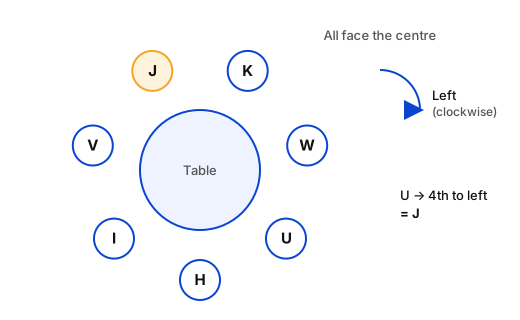
H, I, J, K, U, V and W are sitting around a circular table facing the centre of the table. Only I sits between V and H. H sits third to the left of K. W sits to the immediate left of K. J is not an immediate neighbour of H.
Who sits fourth to the left of U?
H, I, J, K, U, V और W एक वृत्ताकार मेज़ के चारों ओर केंद्र की ओर मुख करके बैठे हैं। V और H के बीच केवल I बैठा है। H, K के बाएँ से तीसरे स्थान पर बैठा है। W, K के ठीक बाएँ बैठा है। J, H का निकटतम पड़ोसी नहीं है।
U के बाएँ से चौथे स्थान पर कौन बैठा है?
  1. AH
  2. BJ
  3. CW
  4. DV
Show answer

Concept: Facing the centre, "left" = clockwise and "right" = anticlockwise (seen from above).

  1. Fix H. H is 3rd to the left of K ⇒ K is 3rd to the right of H; W is immediately left of K.
  2. Only I between V and H: I next to H, V next to I — the W side is full, so I, V go on the other side.
  3. J not next to H ⇒ J sits between V and K; U takes the seat next to H. Clockwise: H, I, V, J, K, W, U.
  4. Fourth to the left of U: H, I, V, J ⇒ J.

Trick: Place the chain W–K first; it shows which side has room for V–I.

Answer: (B) J

अवधारणा: केंद्र की ओर मुख होने पर "बाएँ" = दक्षिणावर्त, "दाएँ" = वामावर्त (ऊपर से देखने पर)।

  1. H स्थिर करें। H, K के बाएँ तीसरा ⇒ K, H के दाएँ तीसरा; W, K के ठीक बाएँ।
  2. V और H के बीच केवल I: W वाली तरफ़ जगह भरी है, इसलिए I, V दूसरी तरफ़।
  3. J, H का पड़ोसी नहीं ⇒ J, V और K के बीच; U, H के पास। दक्षिणावर्त: H, I, V, J, K, W, U.
  4. U के बाएँ चौथा: H, I, V, J ⇒ J.

ट्रिक: पहले W–K की जोड़ी रखें; इससे पता चलता है V–I कहाँ आएँगे।

उत्तर: (B) J

RRB NTPC Undergraduate CBT 1General Intelligence and ReasoningCircular Seating ArrangementRRB NTPC Undergraduate CBT 1 2024 · 1 Sep Shift 3 →
Q5384.
In a certain code language,
A $ B means ‘A is the mother of B’,
A + B means ‘A is the brother of B’,
A @ B means ‘A is the wife of B’,
and A ÷ B means ‘A is the father of B’.
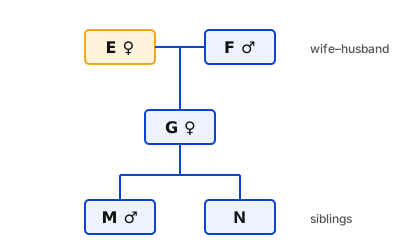
How is E related to N if ‘E @ F ÷ G $ M + N’?
एक निश्चित कूट भाषा में,
A $ B का अर्थ है 'A, B की माता है',
A + B का अर्थ है 'A, B का भाई है',
A @ B का अर्थ है 'A, B की पत्नी है',
और A ÷ B का अर्थ है 'A, B का पिता है'।
यदि 'E @ F ÷ G $ M + N' है, तो E, N से किस प्रकार संबंधित है?
  1. AMother's motherमाता की माता
  2. BMother's sisterमाता की बहन
  3. CMother's fatherमाता के पिता
  4. DMother's brotherमाता का भाई
Show answer

Concept: Decode each symbol from left to right and draw the family tree.

  1. E @ F: E is wife of F. F ÷ G: F is father of G.
  2. G $ M: G is mother of M. M + N: M is brother of N ⇒ G is mother of N too.
  3. E is mother of G, and G is mother of N ⇒ E is N's mother's mother.

Trick: Gender clue: "$" (mother) tells G is female — so the link through G is "mother's".

Answer: (A) Mother's mother

अवधारणा: हर चिह्न को बाएँ से दाएँ खोलें और परिवार-वृक्ष बनाएँ।

  1. E @ F: E, F की पत्नी। F ÷ G: F, G का पिता।
  2. G $ M: G, M की माँ। M + N: M, N का भाई ⇒ G, N की भी माँ।
  3. E, G की माँ और G, N की माँ ⇒ E, N की माँ की माँ (नानी)।

ट्रिक: लिंग संकेत: "$" (माँ) से G स्त्री है — इसलिए संबंध "माँ की" ओर से है।

उत्तर: (A) Mother's mother (नानी)

RRB NTPC Undergraduate CBT 1General Intelligence and ReasoningCoded Blood RelationsRRB NTPC Undergraduate CBT 1 2024 · 1 Sep Shift 3 →
Q5385.
What will come in the place of the question mark (?) in the following equation, if ‘+’ and ‘−’ are interchanged and ‘×’ and ‘÷’ are interchanged?
56 × 8 − 13 ÷ 3 + 11 = ?
यदि '+' और '−' को आपस में बदल दिया जाए तथा '×' और '÷' को आपस में बदल दिया जाए, तो निम्नलिखित समीकरण में प्रश्न चिह्न (?) के स्थान पर क्या आएगा?
56 × 8 − 13 ÷ 3 + 11 = ?
  1. A33
  2. B34
  3. C32
  4. D35
Show answer

Concept: Interchange the signs first, then apply BODMAS.

  1. 56×8−13÷3+11 becomes 56÷8+13×3−11.
  2. 56÷8=7; 13×3=39.
  3. 7+39−11=35.

Trick: Do ÷ and × before + and − after swapping.

Answer: (D) 35

अवधारणा: पहले चिह्न बदलें, फिर BODMAS लगाएँ।

  1. 56×8−13÷3+11 बन जाता है 56÷8+13×3−11.
  2. 56÷8=7; 13×3=39.
  3. 7+39−11=35.

ट्रिक: चिह्न बदलने के बाद ÷ और × पहले, फिर + और −।

उत्तर: (D) 35

RRB NTPC Undergraduate CBT 1General Intelligence and ReasoningMathematical OperationsRRB NTPC Undergraduate CBT 1 2024 · 1 Sep Shift 3 →
Q5386.
Which of the given numbers will replace the question mark (?) in the following series to make it logically complete?
235 246 268 301 345 ?
दी गई संख्याओं में से कौन-सी संख्या निम्नलिखित श्रृंखला में प्रश्न चिह्न (?) को प्रतिस्थापित करके उसे तार्किक रूप से पूर्ण करेगी?
235 246 268 301 345 ?
  1. A401
  2. B400
  3. C410
  4. D445
Show answer

Concept: Look at the differences between consecutive terms.

  1. Differences: 11, 22, 33, 44 (multiples of 11).
  2. Next difference =55 ⇒ 345+55=400.

Trick: Differences 11×1,11×2,11×3,…

Answer: (B) 400

अवधारणा: क्रमागत पदों के अंतर देखें।

  1. अंतर: 11, 22, 33, 44 (11 के गुणज)।
  2. अगला अंतर =55 ⇒ 345+55=400.

ट्रिक: अंतर 11×1,11×2,11×3,…

उत्तर: (B) 400

RRB NTPC Undergraduate CBT 1General Intelligence and ReasoningNumber SeriesRRB NTPC Undergraduate CBT 1 2024 · 1 Sep Shift 3 →
Q5387.
Raj ranked 44th from the top and 15th from the bottom in his class. How many students are there in his class?
राज की अपनी कक्षा में ऊपर से 44वीं और नीचे से 15वीं रैंक थी। उसकी कक्षा में कितने विद्यार्थी हैं?
  1. A57
  2. B59
  3. C56
  4. D58
Show answer

Concept: Total = rank from top + rank from bottom −1.

  1. Total =44+15−1=58.

Yaad rakhein: Raj is counted in both ranks, so subtract 1.

Answer: (D) 58

अवधारणा: कुल = ऊपर से रैंक + नीचे से रैंक −1.

  1. कुल =44+15−1=58.

याद रखें: राज दोनों रैंकों में गिना गया है, इसलिए 1 घटाएँ।

उत्तर: (D) 58

RRB NTPC Undergraduate CBT 1General Intelligence and ReasoningRankingRRB NTPC Undergraduate CBT 1 2024 · 1 Sep Shift 3 →
Q5388.
Read the given statement(s) and conclusions carefully. Assuming that the information given in the statements is true, even if it appears to be at variance with commonly known facts, decide which of the given conclusion(s) logically follow(s) from the statement(s).
Statements:
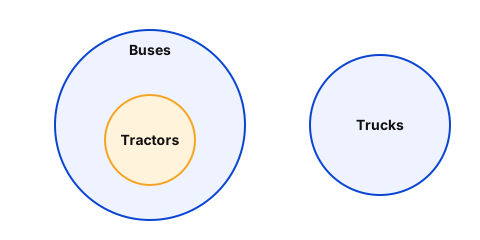
All Tractors are Buses.
No Buses are Trucks.
Conclusions:
I. No Trucks are Tractors.
II. Some Trucks are Tractors.
दिए गए कथन/कथनों और निष्कर्षों को ध्यानपूर्वक पढ़िए। यह मानते हुए कि कथनों में दी गई जानकारी सत्य है, भले ही वह सामान्य रूप से ज्ञात तथ्यों से भिन्न प्रतीत होती हो, निर्णय कीजिए कि दिए गए निष्कर्षों में से कौन-सा/से निष्कर्ष कथन/कथनों का तार्किक रूप से अनुसरण करता है/करते हैं।
कथन:
सभी ट्रैक्टर, बसें हैं।
कोई बस, ट्रक नहीं है।
निष्कर्ष:
I. कोई ट्रक, ट्रैक्टर नहीं है।
II. कुछ ट्रक, ट्रैक्टर हैं।
  1. AOnly conclusion (I) follows.केवल निष्कर्ष (I) अनुसरण करता है।
  2. BBoth conclusions (I) and (II) follow.निष्कर्ष (I) और (II) दोनों अनुसरण करते हैं।
  3. COnly conclusion (II) follows.केवल निष्कर्ष (II) अनुसरण करता है।
  4. DNeither conclusion (I) nor (II) follows.न तो निष्कर्ष (I) और न ही (II) अनुसरण करता है।
Show answer

Concept: All A are B + No B are C ⇒ No A are C (and No C are A).

  1. Tractors lie fully inside Buses; Buses and Trucks do not meet.
  2. So no Truck can be a Tractor ⇒ I follows.
  3. II contradicts I ⇒ II does not follow.

Yaad rakhein: All + No ⇒ No.

Answer: (A) Only conclusion (I) follows.

अवधारणा: सभी A, B हैं + कोई B, C नहीं ⇒ कोई A, C नहीं (और कोई C, A नहीं)।

  1. ट्रैक्टर पूरी तरह बसों के अंदर; बसें और ट्रक कहीं नहीं मिलते।
  2. अतः कोई ट्रक ट्रैक्टर नहीं ⇒ I अनुसरण करता है।
  3. II, I के विपरीत है ⇒ II अनुसरण नहीं करता।

याद रखें: सभी + कोई नहीं ⇒ कोई नहीं।

उत्तर: (A) केवल निष्कर्ष (I) अनुसरण करता है।

RRB NTPC Undergraduate CBT 1General Intelligence and ReasoningSyllogismRRB NTPC Undergraduate CBT 1 2024 · 1 Sep Shift 3 →
Q5389.
What should come in place of the question mark (?) in the given series?
1 2 4 8 10 20 22 ?
दी गई श्रृंखला में प्रश्न चिह्न (?) के स्थान पर क्या आना चाहिए?
1 2 4 8 10 20 22 ?
  1. A44
  2. B42
  3. C26
  4. D24
Show answer

Concept: Two operations alternate: ×2 then +2.

  1. 1×2=2, 2+2=4, 4×2=8, 8+2=10, 10×2=20, 20+2=22.
  2. Next: 22×2=44.

Trick: Alternating patterns: check odd and even steps separately.

Answer: (A) 44

अवधारणा: दो संक्रियाएँ बारी-बारी: ×2 फिर +2.

  1. 1×2=2, 2+2=4, 4×2=8, 8+2=10, 10×2=20, 20+2=22.
  2. अगला: 22×2=44.

ट्रिक: बारी-बारी वाले पैटर्न में विषम और सम चरण अलग-अलग जाँचें।

उत्तर: (A) 44

RRB NTPC Undergraduate CBT 1General Intelligence and ReasoningNumber SeriesRRB NTPC Undergraduate CBT 1 2024 · 1 Sep Shift 3 →
Q5390.
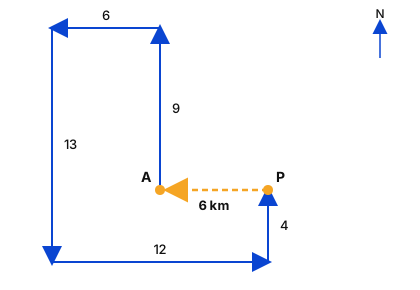
Shreyas starts from Point A and drives 9 km towards the north. He then takes a left turn and drives 6 km, then turns left and drives 13 km. He then takes a left turn and drives 12 km. He takes a final left turn, drives 4 km and stops at Point P. How far (shortest distance) and in which direction should he drive in order to reach Point A again? (All turns are 90-degree turns only unless specified.)
श्रेयस बिंदु A से चलना शुरू करता है और उत्तर की ओर 9 km गाड़ी चलाता है। फिर वह बाएँ मुड़ता है और 6 km गाड़ी चलाता है, फिर बाएँ मुड़ता है और 13 km गाड़ी चलाता है। फिर वह बाएँ मुड़ता है और 12 km गाड़ी चलाता है। वह अंतिम बार बाएँ मुड़ता है, 4 km गाड़ी चलाता है और बिंदु P पर रुक जाता है। बिंदु A पर पुनः पहुँचने के लिए उसे कितनी दूरी (न्यूनतम दूरी) तक और किस दिशा में गाड़ी चलानी चाहिए? (जब तक निर्दिष्ट न हो, सभी मोड़ केवल 90 डिग्री के मोड़ हैं।)
  1. A6 km to the westपश्चिम की ओर 6 km
  2. B5 km to the eastपूर्व की ओर 5 km
  3. C5 km to the westपश्चिम की ओर 5 km
  4. D6 km to the eastपूर्व की ओर 6 km
Show answer

Concept: Track each move on axes, taking A as origin (East +x, North +y).

  1. North 9 → (0, 9); left (west) 6 → (−6, 9).
  2. Left (south) 13 → (−6, −4); left (east) 12 → (6, −4).
  3. Left (north) 4 → P (6, 0).
  4. A (0, 0) is 6 km to the west of P.

Trick: Net E–W: −6+12=6 east; net N–S: 9−13+4=0. So go back 6 km west.

Answer: (A) 6 km to the west

अवधारणा: A को मूल बिंदु मानकर हर चाल लिखें (पूर्व +x, उत्तर +y)।

  1. उत्तर 9 → (0, 9); बाएँ (पश्चिम) 6 → (−6, 9).
  2. बाएँ (दक्षिण) 13 → (−6, −4); बाएँ (पूर्व) 12 → (6, −4).
  3. बाएँ (उत्तर) 4 → P (6, 0).
  4. A (0, 0), P से 6 km पश्चिम में है।

ट्रिक: कुल पूर्व–पश्चिम: −6+12=6 पूर्व; उत्तर–दक्षिण: 9−13+4=0. अतः 6 km पश्चिम लौटें।

उत्तर: (A) 6 km पश्चिम की ओर

RRB NTPC Undergraduate CBT 1General Intelligence and ReasoningDirection and DistanceRRB NTPC Undergraduate CBT 1 2024 · 1 Sep Shift 3 →
Q5391.
NWLF is related to RZHC in a certain way based on the English alphabetical order. In the same way, VCDZ is related to ZFZW. To which of the following is DIVT related, following the same logic?
अंग्रेज़ी वर्णमाला क्रम के आधार पर NWLF एक निश्चित प्रकार से RZHC से संबंधित है। उसी प्रकार VCDZ, ZFZW से संबंधित है। समान तर्क का अनुसरण करते हुए, DIVT निम्नलिखित में से किससे संबंधित है?
  1. AHMSP
  2. BGKSP
  3. CIMRP
  4. DHLRQ
Show answer

Concept: Find the shift for each letter position.

  1. NWLF → RZHC: N+4=R, W+3=Z, L−4=H, F−3=C.
  2. Check VCDZ → ZFZW: +4, +3, −4, −3 ✓.
  3. DIVT: D+4=H, I+3=L, V−4=R, T−3=Q ⇒ HLRQ.

Trick: Pattern +4,+3,−4,−3 — note the wrap D−4 = Z in the check pair.

Answer: (D) HLRQ

अवधारणा: हर अक्षर स्थान का खिसकाव (shift) निकालें।

  1. NWLF → RZHC: N+4=R, W+3=Z, L−4=H, F−3=C.
  2. जाँच VCDZ → ZFZW: +4, +3, −4, −3 ✓.
  3. DIVT: D+4=H, I+3=L, V−4=R, T−3=Q ⇒ HLRQ.

ट्रिक: पैटर्न +4,+3,−4,−3 — जाँच वाली जोड़ी में D−4 = Z (चक्र में घूमकर)।

उत्तर: (D) HLRQ

RRB NTPC Undergraduate CBT 1General Intelligence and ReasoningLetter AnalogyRRB NTPC Undergraduate CBT 1 2024 · 1 Sep Shift 3 →
Q5392.
If + means −, − means ×, × means ÷ and ÷ means +, then what will come in place of the question mark (?) in the following equation?
7 − 4 + 15 ÷ 52 × 13 = ?
यदि + का अर्थ −, − का अर्थ ×, × का अर्थ ÷ और ÷ का अर्थ + है, तो निम्नलिखित समीकरण में प्रश्न चिह्न (?) के स्थान पर क्या आएगा?
7 − 4 + 15 ÷ 52 × 13 = ?
  1. A12
  2. B23
  3. C28
  4. D17
Show answer

Concept: Replace each sign as given, then apply BODMAS.

  1. 7−4+15÷52×13 becomes 7×4−15+52÷13.
  2. 28−15+4.
  3. =17.

Trick: Make a small table (+→−, −→×, ×→÷, ÷→+) before rewriting.

Answer: (D) 17

अवधारणा: दिए अनुसार चिह्न बदलें, फिर BODMAS लगाएँ।

  1. 7−4+15÷52×13 बन जाता है 7×4−15+52÷13.
  2. 28−15+4.
  3. =17.

ट्रिक: दोबारा लिखने से पहले छोटी तालिका (+→−, −→×, ×→÷, ÷→+) बना लें।

उत्तर: (D) 17

RRB NTPC Undergraduate CBT 1General Intelligence and ReasoningMathematical OperationsRRB NTPC Undergraduate CBT 1 2024 · 1 Sep Shift 3 →
Q5393.
In the following number-pairs, the second number is obtained by applying certain mathematical operation(s) to the first number. Select the number-pair in which the numbers are related in the same way as are the numbers of the following pairs. (NOTE: Operations should be performed on the whole numbers, without breaking down the numbers into their constituent digits. E.g. 13 – Operations on 13 such as adding to/subtracting from/multiplying with 13 can be performed. Breaking down 13 into 1 and 3 and then performing mathematical operations on 1 and 3 is not allowed.)
61, 127
52, 109
निम्नलिखित संख्या-युग्मों में, पहली संख्या पर कुछ निश्चित गणितीय संक्रिया/संक्रियाएँ करके दूसरी संख्या प्राप्त की जाती है। उस संख्या-युग्म का चयन कीजिए, जिसमें संख्याएँ उसी प्रकार संबंधित हैं, जिस प्रकार निम्नलिखित युग्मों की संख्याएँ संबंधित हैं। (नोट: संख्याओं को उनके घटक अंकों में विभाजित किए बिना, पूर्ण संख्याओं पर संक्रियाएँ की जानी चाहिए। उदाहरण 13 – 13 पर संक्रियाएँ जैसे 13 में जोड़ना/घटाना/गुणा करना आदि की जा सकती हैं। 13 को 1 और 3 में विभाजित करना और फिर 1 और 3 पर गणितीय संक्रियाएँ करने की अनुमति नहीं है।)
61, 127
52, 109
  1. A47, 325
  2. B83, 171
  3. C93, 196
  4. D63, 112
Show answer

Concept: Find one rule that fits both given pairs.

  1. 61×2+5=127; 52×2+5=109 ⇒ rule: 2n+5.
  2. 83×2+5=171 ✓.
  3. Others: 47→99, 93→191, 63→131 ✗.

Trick: Second number ≈ double the first — check the small extra (+5).

Answer: (B) 83, 171

अवधारणा: दोनों दिए युग्मों पर लागू एक नियम खोजें।

  1. 61×2+5=127; 52×2+5=109 ⇒ नियम: 2n+5.
  2. 83×2+5=171 ✓.
  3. अन्य: 47→99, 93→191, 63→131 ✗.

ट्रिक: दूसरी संख्या लगभग पहली की दोगुनी — छोटा अतिरिक्त (+5) जाँचें।

उत्तर: (B) 83, 171

RRB NTPC Undergraduate CBT 1General Intelligence and ReasoningNumber Pair AnalogyRRB NTPC Undergraduate CBT 1 2024 · 1 Sep Shift 3 →
Q5394.
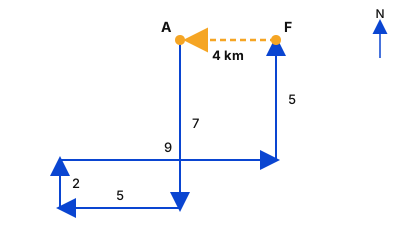
Anil starts from Point A and drives 7 km towards the south. He then takes a right turn, drives 5 km, turns right and drives 2 km. He then takes a right turn and drives 9 km. He takes a final left turn, drives 5 km and stops at Point F. How far (shortest distance) and in which direction should he drive in order to reach Point A again? (All turns are 90- degree turns only unless specified.)
अनिल बिंदु A से चलना शुरू करता है और दक्षिण की ओर 7 km गाड़ी चलाता है। फिर वह दाएँ मुड़ता है, 5 km गाड़ी चलाता है, दाएँ मुड़ता है और 2 km गाड़ी चलाता है। फिर वह दाएँ मुड़ता है और 9 km गाड़ी चलाता है। वह अंतिम बार बाएँ मुड़ता है, 5 km गाड़ी चलाता है और बिंदु F पर रुक जाता है। बिंदु A पर पुनः पहुँचने के लिए उसे कितनी दूरी (न्यूनतम दूरी) तक और किस दिशा में गाड़ी चलानी चाहिए? (जब तक निर्दिष्ट न हो, सभी मोड़ केवल 90 डिग्री के मोड़ हैं।)
  1. A4 km towards the westपश्चिम की ओर 4 km
  2. B3 km towards the eastपूर्व की ओर 3 km
  3. C3 km towards the westपश्चिम की ओर 3 km
  4. D4 km towards the eastपूर्व की ओर 4 km
Show answer

Concept: Track each move on axes, taking A as origin (East +x, North +y).

  1. South 7 → (0, −7); right (west) 5 → (−5, −7).
  2. Right (north) 2 → (−5, −5); right (east) 9 → (4, −5).
  3. Left (north) 5 → F (4, 0).
  4. A (0, 0) is 4 km to the west of F.

Trick: Net E–W: −5+9=4 east; net N–S: −7+2+5=0. So return 4 km west.

Answer: (A) 4 km towards the west

अवधारणा: A को मूल बिंदु मानकर हर चाल लिखें (पूर्व +x, उत्तर +y)।

  1. दक्षिण 7 → (0, −7); दाएँ (पश्चिम) 5 → (−5, −7).
  2. दाएँ (उत्तर) 2 → (−5, −5); दाएँ (पूर्व) 9 → (4, −5).
  3. बाएँ (उत्तर) 5 → F (4, 0).
  4. A (0, 0), F से 4 km पश्चिम में है।

ट्रिक: कुल पूर्व–पश्चिम: −5+9=4 पूर्व; उत्तर–दक्षिण: −7+2+5=0. अतः 4 km पश्चिम लौटें।

उत्तर: (A) 4 km पश्चिम की ओर

RRB NTPC Undergraduate CBT 1General Intelligence and ReasoningDirection and DistanceRRB NTPC Undergraduate CBT 1 2024 · 1 Sep Shift 3 →
Q5395.
GWSK is related to CTOH in a certain way based on the English alphabetical order. In the same way, YQKE is related to UNGB. To which of the given options is QKCY related, following the same logic?
अंग्रेज़ी वर्णमाला क्रम के आधार पर GWSK एक निश्चित प्रकार से CTOH से संबंधित है। उसी प्रकार YQKE, UNGB से संबंधित है। समान तर्क का अनुसरण करते हुए, QKCY दिए गए विकल्पों में से किससे संबंधित है?
  1. ALGYW
  2. BOHZV
  3. CNGXU
  4. DMHYV
Show answer

Concept: Find the shift for each letter position.

  1. GWSK → CTOH: G−4=C, W−3=T, S−4=O, K−3=H.
  2. Check YQKE → UNGB: −4, −3, −4, −3 ✓.
  3. QKCY: Q−4=M, K−3=H, C−4=Y, Y−3=V ⇒ MHYV.

Trick: Pattern −4,−3,−4,−3; C−4 wraps around to Y.

Answer: (D) MHYV

अवधारणा: हर अक्षर स्थान का खिसकाव निकालें।

  1. GWSK → CTOH: G−4=C, W−3=T, S−4=O, K−3=H.
  2. जाँच YQKE → UNGB: −4, −3, −4, −3 ✓.
  3. QKCY: Q−4=M, K−3=H, C−4=Y, Y−3=V ⇒ MHYV.

ट्रिक: पैटर्न −4,−3,−4,−3; C−4 घूमकर Y बनता है।

उत्तर: (D) MHYV

RRB NTPC Undergraduate CBT 1General Intelligence and ReasoningLetter AnalogyRRB NTPC Undergraduate CBT 1 2024 · 1 Sep Shift 3 →
Q5396.
In which year was the Second Pay Commission appointed in India?
भारत में द्वितीय वेतन आयोग की नियुक्ति किस वर्ष की गई थी?
  1. A1957
  2. B1965
  3. C1962
  4. D1950
Show answer

Concept: Central Pay Commissions are set up by the Government of India to revise salaries of central employees.

  1. 1st Pay Commission: 1946 (Srinivasa Varadachariar).
  2. 2nd Pay Commission: appointed in August 1957 under Justice Jagannath Das; report in 1959.
  3. 3rd: 1970, 4th: 1983 — so 1965 and 1962 are wrong.

Yaad rakhein: Pay Commissions roughly every 10–13 years: 1946, 1957, 1970, 1983, 1994, 2006, 2014.

Answer: (A) 1957

अवधारणा: केंद्रीय वेतन आयोग केंद्र सरकार के कर्मचारियों के वेतन संशोधन हेतु बनाए जाते हैं।

  1. पहला वेतन आयोग: 1946 (श्रीनिवास वरदाचारियर)।
  2. दूसरा वेतन आयोग: अगस्त 1957 में न्यायमूर्ति जगन्नाथ दास की अध्यक्षता में; रिपोर्ट 1959 में।
  3. तीसरा: 1970, चौथा: 1983 — अतः 1965 व 1962 गलत।

याद रखें: क्रम: 1946, 1957, 1970, 1983, 1994, 2006, 2014।

उत्तर: (A) 1957

RRB NTPC Undergraduate CBT 1General AwarenessPay CommissionsRRB NTPC Undergraduate CBT 1 2024 · 1 Sep Shift 2 →
Q5397.
Climatic maps are primarily based on data related to:
जलवायु मानचित्र मुख्य रूप से निम्नलिखित से संबंधित आँकड़ों पर आधारित होते हैं:
  1. Atemperature and rainfallतापमान और वर्षा
  2. Bpopulation growthजनसंख्या वृद्धि
  3. Csoil moisture content onlyकेवल मृदा नमी की मात्रा
  4. Dindustrial zonesऔद्योगिक क्षेत्र
Show answer

Concept: Climatic maps are thematic maps that show the long-term climate of a region.

  1. Climate = average weather over about 30 years, mainly temperature and rainfall (precipitation).
  2. These maps show isotherms (equal temperature) and isohyets (equal rainfall).
  3. Population, soil or industry are shown on other thematic maps.

Yaad rakhein: Isotherm = temperature, Isohyet = rainfall — both on climatic maps.

Answer: (A) temperature and rainfall

अवधारणा: जलवायु मानचित्र किसी क्षेत्र की दीर्घकालिक जलवायु दर्शाने वाले विषयगत (thematic) मानचित्र हैं।

  1. जलवायु = लगभग 30 वर्षों का औसत मौसम, मुख्यतः तापमान और वर्षा।
  2. इनमें समताप रेखाएँ (isotherms) और समवर्षा रेखाएँ (isohyets) दिखाई जाती हैं।
  3. जनसंख्या, मृदा या उद्योग अन्य विषयगत मानचित्रों पर दिखाए जाते हैं।

याद रखें: Isotherm = तापमान, Isohyet = वर्षा — दोनों जलवायु मानचित्र पर।

उत्तर: (A) तापमान और वर्षा

RRB NTPC Undergraduate CBT 1General AwarenessMaps – Climatic mapsRRB NTPC Undergraduate CBT 1 2024 · 1 Sep Shift 2 →
Q5398.
Which country retained the top spot for the second consecutive year in the Henley Passport Index released in January 2025?
जनवरी 2025 में जारी हेनले पासपोर्ट सूचकांक (Henley Passport Index) में किस देश ने लगातार दूसरे वर्ष शीर्ष स्थान बरकरार रखा?
  1. ASingaporeसिंगापुर
  2. BJapanजापान
  3. CGermanyजर्मनी
  4. DSouth Koreaदक्षिण कोरिया
Show answer

Concept: The Henley Passport Index ranks passports by the number of destinations reachable visa-free.

  1. In the January 2025 edition, Singapore ranked 1st alone, with visa-free access to 195 destinations.
  2. Japan was 2nd; South Korea, Germany and others shared lower ranks.
  3. India was ranked 85th.

Yaad rakhein: Henley 2025 topper = Singapore (S for Supreme passport).

Answer: (A) Singapore

अवधारणा: हेनली पासपोर्ट इंडेक्स बिना वीज़ा पहुँचे जा सकने वाले देशों की संख्या के आधार पर पासपोर्ट की रैंकिंग करता है।

  1. जनवरी 2025 संस्करण में सिंगापुर अकेले पहले स्थान पर रहा (195 गंतव्य वीज़ा-मुक्त)।
  2. जापान दूसरे स्थान पर रहा; दक्षिण कोरिया, जर्मनी आदि उसके बाद।
  3. भारत 85वें स्थान पर रहा।

याद रखें: हेनली 2025 टॉपर = सिंगापुर।

उत्तर: (A) सिंगापुर

RRB NTPC Undergraduate CBT 1General AwarenessCurrent Affairs – IndicesRRB NTPC Undergraduate CBT 1 2024 · 1 Sep Shift 2 →
Q5399.
On which river is the Bhakra Nangal Dam constructed?
भाखड़ा नांगल बाँध किस नदी पर बनाया गया है?
  1. ARaviरावी
  2. BYamunaयमुना
  3. CSatlujसतलुज
  4. DGangaगंगा
Show answer

Concept: Bhakra Nangal is one of India's largest multipurpose river valley projects.

  1. Bhakra Dam is on the Satluj river at Bilaspur (Himachal Pradesh); Nangal Dam lies downstream in Punjab.
  2. Its reservoir is Gobind Sagar Lake.
  3. Ravi has Ranjit Sagar (Thein) Dam; Yamuna and Ganga do not host Bhakra.

Yaad rakhein: Bhakra – Satluj – Gobind Sagar: all three go together.

Answer: (C) Satluj

अवधारणा: भाखड़ा नांगल भारत की सबसे बड़ी बहुउद्देशीय नदी घाटी परियोजनाओं में से एक है।

  1. भाखड़ा बाँध सतलुज नदी पर बिलासपुर (हिमाचल प्रदेश) में है; नांगल बाँध नीचे पंजाब में।
  2. इसका जलाशय गोबिंद सागर झील है।
  3. रावी पर रंजीत सागर (थीन) बाँध है।

याद रखें: भाखड़ा – सतलुज – गोबिंद सागर: तीनों साथ याद रखें।

उत्तर: (C) सतलुज

RRB NTPC Undergraduate CBT 1General AwarenessDams and RiversRRB NTPC Undergraduate CBT 1 2024 · 1 Sep Shift 2 →
Q5400.
Gandhiji gave a call for a satyagraha against the Rowlatt Act in which of the following years?
गांधीजी ने निम्नलिखित में से किस वर्ष रॉलेट एक्ट के विरुद्ध सत्याग्रह का आह्वान किया था?
  1. A1919
  2. B1922
  3. C1930
  4. D1915
Show answer

Concept: The Rowlatt Act allowed detention without trial; Gandhiji called it the 'Black Act'.

  1. The Act was passed in March 1919.
  2. Gandhiji launched the Rowlatt Satyagraha with a nationwide hartal on 6 April 1919 — his first all-India movement.
  3. The Jallianwala Bagh massacre (13 April 1919) followed. 1922 = Chauri Chaura, 1930 = Dandi March.

Yaad rakhein: 1919 = Rowlatt + Jallianwala; 1920 = Non-Cooperation; 1930 = Salt Satyagraha.

Answer: (A) 1919

अवधारणा: रॉलेट एक्ट बिना मुकदमे के हिरासत की अनुमति देता था; गांधीजी ने इसे 'काला कानून' कहा।

  1. यह कानून मार्च 1919 में पारित हुआ।
  2. गांधीजी ने 6 अप्रैल 1919 को देशव्यापी हड़ताल के साथ रॉलेट सत्याग्रह शुरू किया — उनका पहला अखिल भारतीय आंदोलन।
  3. इसके बाद जलियाँवाला बाग हत्याकांड (13 अप्रैल 1919) हुआ। 1922 = चौरी चौरा, 1930 = दांडी मार्च।

याद रखें: 1919 = रॉलेट + जलियाँवाला; 1920 = असहयोग; 1930 = नमक सत्याग्रह।

उत्तर: (A) 1919

RRB NTPC Undergraduate CBT 1General AwarenessModern History – Gandhian movementsRRB NTPC Undergraduate CBT 1 2024 · 1 Sep Shift 2 →