Question bank

Q&A: practice questions with answers

Search questions on any topic. Filter by exam category, exam, subject and topic, try the question, then open the answer and explanation.

Courses – airGurukul

8,495 questions found.

Q5481.
Farooq ranked 28th from the top and 35th from the bottom in his class. How many students are there in his class?
फ़ारूक़ अपनी कक्षा में ऊपर से 28वें और नीचे से 35वें स्थान पर है। उसकी कक्षा में कितने विद्यार्थी हैं?
  1. A62
  2. B60
  3. C63
  4. D61
Show answer

Concept: Total = rank from top + rank from bottom − 1.

  1. 28+35−1=62.

Trick: Subtract 1 because the person is counted twice.

Answer: (A) 62

अवधारणा: कुल = ऊपर से स्थान + नीचे से स्थान − 1.

  1. 28+35−1=62.

ट्रिक: व्यक्ति दो बार गिना गया, इसलिए 1 घटाएँ।

उत्तर: (A) 62
RRB NTPC Undergraduate CBT 1General Intelligence and ReasoningRankingRRB NTPC Undergraduate CBT 1 2024 · 1 Sep Shift 2 →
Q5482.
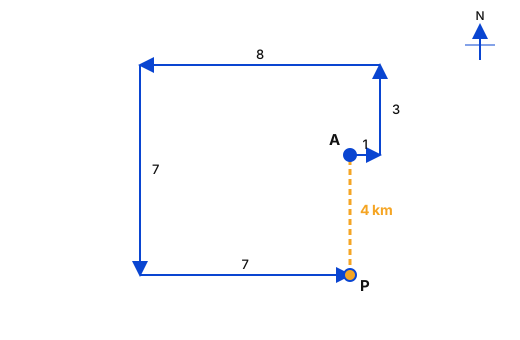
Qadir starts from Point A and drives 1 km towards East. He then takes a left turn, drives 3 km, turns left and drives 8 km. He then takes a left turn and drives 7 km. He takes a final left turn, drives 7 km and stops at Point P. How far (shortest distance) and towards which direction should he drive in order to reach Point A again? (All turns are 90° turns only unless specified.)
क़ादिर बिंदु A से शुरू करता है और पूर्व की ओर 1 km ड्राइव करता है। फिर वह बाएँ मुड़ता है, 3 km ड्राइव करता है, बाएँ मुड़ता है और 8 km ड्राइव करता है। फिर वह बाएँ मुड़ता है और 7 km ड्राइव करता है। वह अंतिम बार बाएँ मुड़ता है, 7 km ड्राइव करता है और बिंदु P पर रुक जाता है। पुनः बिंदु A पर पहुँचने के लिए उसे कितनी दूरी (न्यूनतम दूरी) तक और किस दिशा में ड्राइव करना चाहिए? (जब तक निर्दिष्ट न हो, सभी मोड़ केवल 90° के मोड़ हैं।)
  1. A5 km to the Northउत्तर की ओर 5 km
  2. B4 km to the Northउत्तर की ओर 4 km
  3. C7 km to the Westपश्चिम की ओर 7 km
  4. D6 km to the Westपश्चिम की ओर 6 km
Show answer

Concept: Plot the moves on axes (East +x, North +y).

  1. A(0, 0) → East 1 → (1, 0) → left = North 3 → (1, 3).
  2. Left = West 8 → (−7, 3) → left = South 7 → (−7, −4).
  3. Left = East 7 → P(0, −4).
  4. P is 4 km south of A → drive 4 km to the North.

Trick: Net E–W: 1−8+7=0; net N–S: 3−7=−4.

Answer: (B) 4 km to the North

अवधारणा: चालों को अक्षों पर लिखें (पूर्व +x, उत्तर +y)।

  1. A(0, 0) → पूर्व 1 → (1, 0) → बाएँ = उत्तर 3 → (1, 3).
  2. बाएँ = पश्चिम 8 → (−7, 3) → बाएँ = दक्षिण 7 → (−7, −4).
  3. बाएँ = पूर्व 7 → P(0, −4).
  4. P, A से 4 km दक्षिण → 4 km उत्तर जाना होगा।

ट्रिक: पूर्व-पश्चिम: 1−8+7=0; उत्तर-दक्षिण: 3−7=−4.

उत्तर: (B) 4 km उत्तर की ओर

RRB NTPC Undergraduate CBT 1General Intelligence and ReasoningDirection and DistanceRRB NTPC Undergraduate CBT 1 2024 · 1 Sep Shift 2 →
Q5483.
If 1 is subtracted from each odd digit of the number 95423671, then what will be the sum of the digits that are repeated more than once in the new number formed?
यदि संख्या 95423671 के प्रत्येक विषम अंक में से 1 घटाया जाए, तो इस प्रकार बनी नई संख्या में एक से अधिक बार आने वाले अंकों का योग क्या होगा?
  1. A10
  2. B8
  3. C6
  4. D12
Show answer

Concept: Change only the odd digits, then find digits that occur more than once.

  1. 95423671 → odd digits 9, 5, 3, 7, 1 become 8, 4, 2, 6, 0.
  2. New number: 84422660.
  3. Repeated digits: 4, 2, 6 → sum =4+2+6=12.

Trick: Each odd digit becomes the even digit just below it — pairs form with the existing evens.

Answer: (D) 12

अवधारणा: केवल विषम अंक बदलें, फिर एक से अधिक बार आने वाले अंक खोजें।

  1. विषम अंक 9, 5, 3, 7, 1 → 8, 4, 2, 6, 0.
  2. नई संख्या: 84422660.
  3. दोहराए अंक: 4, 2, 6 → योग 12.

ट्रिक: हर विषम अंक अपने से ठीक छोटे सम अंक में बदलता है।

उत्तर: (D) 12

RRB NTPC Undergraduate CBT 1General Intelligence and ReasoningNumber OperationsRRB NTPC Undergraduate CBT 1 2024 · 1 Sep Shift 2 →
Q5484.
Which of the following letter-number clusters will replace the question mark (?) in the given series to make it logically complete?
LXU -2 OTT 4 RPS -8 ? XHQ -32
निम्नलिखित में से कौन-सा अक्षर-संख्या समूह दी गई श्रृंखला में प्रश्न चिह्न (?) के स्थान पर आकर उसे तार्किक रूप से पूर्ण करेगा?
LXU -2 OTT 4 RPS -8 ? XHQ -32
  1. AFHT 15
  2. BVXL 19
  3. CULR 16
  4. DPHR 13
Show answer

Concept: Track each letter position and the number separately.

  1. 1st letters: L, O, R, U, X (+3).
  2. 2nd letters: X, T, P, L, H (−4); 3rd letters: U, T, S, R, Q (−1).
  3. Numbers: −2, 4, −8, 16, −32 (×(−2)).
  4. Missing term: ULR 16.

Trick: The number alone decides: after −8 comes 16, and only ULR 16 carries 16.

Answer: (C) ULR 16

अवधारणा: हर अक्षर की स्थिति और संख्या अलग-अलग देखें।

  1. पहले अक्षर: L, O, R, U, X (+3).
  2. दूसरे: X, T, P, L, H (−4); तीसरे: U, T, S, R, Q (−1).
  3. संख्याएँ: −2, 4, −8, 16, −32 (×(−2)).
  4. लुप्त पद: ULR 16.

ट्रिक: संख्या 16 ही बनती है — ULR 16.

उत्तर: (C) ULR 16

RRB NTPC Undergraduate CBT 1General Intelligence and ReasoningLetter–Number SeriesRRB NTPC Undergraduate CBT 1 2024 · 1 Sep Shift 2 →
Q5485.
What should come in place of the question mark (?) in the given series?
1 2 4 7 11 ?
दी गई श्रृंखला में प्रश्न चिह्न (?) के स्थान पर क्या आना चाहिए?
1 2 4 7 11 ?
  1. A15
  2. B17
  3. C18
  4. D16
Show answer

Concept: Check differences between consecutive terms.

  1. Differences: +1, +2, +3, +4.
  2. Next difference +5 → 11+5=16.

Trick: Increasing natural-number differences.

Answer: (D) 16

अवधारणा: क्रमागत पदों का अंतर देखें।

  1. अंतर: +1, +2, +3, +4.
  2. अगला +5 → 16.

ट्रिक: अंतर क्रमशः 1, 2, 3, 4, 5.

उत्तर: (D) 16

RRB NTPC Undergraduate CBT 1General Intelligence and ReasoningNumber SeriesRRB NTPC Undergraduate CBT 1 2024 · 1 Sep Shift 2 →
Q5486.
Each of the digits in the number 3875269 is arranged in the ascending order from left to right. The position(s) of how many digits will remain unchanged as compared to that in the original number?
संख्या 3875269 के प्रत्येक अंक को बाएँ से दाएँ आरोही क्रम में व्यवस्थित किया जाता है। मूल संख्या की तुलना में कितने अंकों का/के स्थान अपरिवर्तित रहेगा/रहेंगे?
  1. AThreeतीन
  2. BNoneएक भी नहीं
  3. CTwoदो
  4. DOneएक
Show answer

Concept: Write both numbers one below the other and compare position by position.

  1. Original: 3 8 7 5 2 6 9.
  2. Ascending: 2 3 5 6 7 8 9.
  3. Only the 7th digit (9) is the same → one digit.

Trick: The largest digit already at the right end stays put.

Answer: (D) One

अवधारणा: दोनों संख्याएँ एक के नीचे एक लिखकर स्थानवार मिलाएँ।

  1. मूल: 3 8 7 5 2 6 9.
  2. आरोही: 2 3 5 6 7 8 9.
  3. केवल 7वाँ अंक (9) समान → एक।

ट्रिक: सबसे बड़ा अंक पहले से अंत में है, वही नहीं हिलता।

उत्तर: (D) One (एक)

RRB NTPC Undergraduate CBT 1General Intelligence and ReasoningDigit ArrangementRRB NTPC Undergraduate CBT 1 2024 · 1 Sep Shift 2 →
Q5487.
Based on the English alphabetical order, three of the following four letter-clusters are alike in a certain way and thus form a group. Which letter-cluster DOES NOT belong to that group?
(Note: The odd one out is not based on the number of consonants/vowels or their position in the letter-cluster.)
अंग्रेज़ी वर्णमाला क्रम के आधार पर, निम्नलिखित चार अक्षर-समूहों में से तीन किसी निश्चित प्रकार से एकसमान हैं और इस प्रकार एक समूह बनाते हैं। कौन-सा अक्षर-समूह उस समूह से संबंधित नहीं है?
(ध्यान दें: असंगत अक्षर-समूह, उस अक्षर-समूह में व्यंजनों/स्वरों की संख्या या उनके स्थान पर आधारित नहीं है।)
  1. AIEA
  2. BXTQ
  3. CRNK
  4. DFBY
Show answer

Concept: Find gaps between letter positions (wrap Z → A where needed).

  1. XTQ: 24, 20, 17 → −4, −3; RNK: 18, 14, 11 → −4, −3.
  2. FBY: F → B (−4), B → Y (−3, wrapping back) ✓.
  3. IEA: 9, 5, 1 → −4, −4 → odd one.

Trick: Remember the circular alphabet: 3 steps back from B is Y.

Answer: (A) IEA

अवधारणा: अक्षर-स्थितियों का अंतर देखें (ज़रूरत हो तो Z → A घुमाव)।

  1. XTQ और RNK: −4, −3.
  2. FBY: F → B (−4), B → Y (−3, चक्रीय) ✓.
  3. IEA: −4, −4 → भिन्न।

ट्रिक: वर्णमाला चक्रीय है: B से 3 पीछे Y.

उत्तर: (A) IEA

RRB NTPC Undergraduate CBT 1General Intelligence and ReasoningOdd One Out – Letter ClustersRRB NTPC Undergraduate CBT 1 2024 · 1 Sep Shift 2 →
Q5488.
What should come in place of the question mark (?) in the given series based on the English alphabetical order?
QVO SRN ? WJL YFK
अंग्रेज़ी वर्णमाला क्रम के आधार पर दी गई श्रृंखला में प्रश्न चिह्न (?) के स्थान पर क्या आना चाहिए?
QVO SRN ? WJL YFK
  1. ANHG
  2. BVML
  3. CMKL
  4. DUNM
Show answer

Concept: Track each letter of the clusters separately.

  1. 1st letters: Q, S, ?, W, Y (+2) → U.
  2. 2nd letters: V, R, ?, J, F (−4) → N.
  3. 3rd letters: O, N, ?, L, K (−1) → M.

Trick: One column is enough: first letter must be U → only UNM.

Answer: (D) UNM

अवधारणा: हर स्थान के अक्षर अलग-अलग देखें।

  1. पहले अक्षर: Q, S, ?, W, Y (+2) → U.
  2. दूसरे: V, R, ?, J, F (−4) → N.
  3. तीसरे: O, N, ?, L, K (−1) → M.

ट्रिक: पहला अक्षर U होना चाहिए — केवल UNM.

उत्तर: (D) UNM

RRB NTPC Undergraduate CBT 1General Intelligence and ReasoningLetter SeriesRRB NTPC Undergraduate CBT 1 2024 · 1 Sep Shift 2 →
Q5489.
This question is based on the five, three-digit numbers given below.
(Left) 284 517 639 741 425 (Right)
(Example- 697 – First digit = 6, second digit = 9 and third digit = 7)
(NOTE: All operations to be done from left to right.)
If all the numbers are arranged in descending order, the position(s) of how many numbers will remain unchanged as compared to that in the original number?
यह प्रश्न नीचे दी गई तीन अंकों वाली पाँच संख्याओं पर आधारित है।
(बाएँ) 284 517 639 741 425 (दाएँ)
(उदाहरण- 697 – पहला अंक = 6, दूसरा अंक = 9 और तीसरा अंक = 7)
(ध्यान दें: सभी संक्रियाएँ बाएँ से दाएँ की जानी हैं।)
यदि सभी संख्याओं को अवरोही क्रम में व्यवस्थित किया जाए, तो मूल क्रम की तुलना में कितनी संख्याओं का/के स्थान अपरिवर्तित रहेगा/रहेंगे?
  1. ANoneएक भी नहीं
  2. BTwoदो
  3. CFourचार
  4. DThreeतीन
Show answer

Concept: Arrange in descending order and compare positions.

  1. Original: 284, 517, 639, 741, 425.
  2. Descending: 741, 639, 517, 425, 284.
  3. No number stays in its place → none.

Trick: Check the middle one first: 639 moves to 2nd place, so even the middle changes.

Answer: (A) None

अवधारणा: अवरोही क्रम में लगाकर स्थान मिलाएँ।

  1. मूल: 284, 517, 639, 741, 425.
  2. अवरोही: 741, 639, 517, 425, 284.
  3. कोई भी संख्या अपने स्थान पर नहीं → कोई नहीं।

ट्रिक: बीच वाली 639 भी दूसरे स्थान पर चली गई।

उत्तर: (A) None (कोई नहीं)

RRB NTPC Undergraduate CBT 1General Intelligence and ReasoningNumber ArrangementRRB NTPC Undergraduate CBT 1 2024 · 1 Sep Shift 2 →
Q5490.
In the following triads, each group of letters is related to the subsequent one following a certain logic. Select from the given options, the one which follows the same logic. LOCK – OLCK – LCKO
ACNE – CANE – ANEC
निम्नलिखित त्रिकों में, अक्षरों का प्रत्येक समूह एक निश्चित तर्क का अनुसरण करते हुए अगले समूह से संबंधित है। दिए गए विकल्पों में से उस विकल्प का चयन कीजिए जो समान तर्क का अनुसरण करता है। LOCK – OLCK – LCKO
ACNE – CANE – ANEC
  1. AFROG – RFOG – ROGF
  2. BOILS – IOLS – SILO
  3. CHUNT – HNUT – TNUH
  4. DBEAM – EBAM – BAME
Show answer

Concept: Find the two steps from the example and apply them to each option.

  1. Step 1: swap the first two letters (LOCK → OLCK, ACNE → CANE).
  2. Step 2: move the first letter to the end (OLCK → LCKO, CANE → ANEC).
  3. BEAM → EBAM → BAME ✓.

Trick: Step 2 result always ends with the original 2nd letter.

Answer: (D) BEAM – EBAM – BAME

अवधारणा: उदाहरण से दोनों चरण पहचानें और विकल्पों पर लगाएँ।

  1. चरण 1: पहले दो अक्षर अदल-बदल (LOCK → OLCK)।
  2. चरण 2: पहला अक्षर अंत में (OLCK → LCKO)।
  3. BEAM → EBAM → BAME ✓.

ट्रिक: तीसरा शब्द हमेशा मूल शब्द के दूसरे अक्षर पर खत्म होता है।

उत्तर: (D) BEAM – EBAM – BAME

RRB NTPC Undergraduate CBT 1General Intelligence and ReasoningLetter Rearrangement TriadsRRB NTPC Undergraduate CBT 1 2024 · 1 Sep Shift 2 →
Q5491.
What should come in place of the question mark (?) in the given series?
57, 63, 71, 81, 93, ?
दी गई श्रृंखला में प्रश्न चिह्न (?) के स्थान पर क्या आना चाहिए?
57, 63, 71, 81, 93, ?
  1. A170
  2. B105
  3. C154
  4. D107
Show answer

Concept: Differences increase by 2.

  1. Differences: 6, 8, 10, 12.
  2. Next difference 14 → 93+14=107.

Trick: Even-number differences.

Answer: (D) 107

अवधारणा: अंतर 2-2 से बढ़ते हैं।

  1. अंतर: 6, 8, 10, 12.
  2. अगला 14 → 107.

ट्रिक: अंतर क्रमागत सम संख्याएँ।

उत्तर: (D) 107

RRB NTPC Undergraduate CBT 1General Intelligence and ReasoningNumber SeriesRRB NTPC Undergraduate CBT 1 2024 · 1 Sep Shift 2 →
Q5492.
In the following number-pairs, the second number is obtained by applying certain mathematical operation(s) to the first number. Select the number-pair in which the numbers are related in the same way as are the numbers of the following pairs. (NOTE: Operations should be performed on the whole numbers, without breaking down the numbers into their constituent digits. E.g. 13 – Operations on 13 such as adding to/subtracting from/multiplying with 13 can be performed. Breaking down 13 into 1 and 3 and then performing mathematical operations on 1 and 3 is not allowed.)
17, 153
31, 279
निम्नलिखित संख्या-युग्मों में, दूसरी संख्या पहली संख्या पर कुछ निश्चित गणितीय संक्रिया/संक्रियाएँ करके प्राप्त की जाती है। उस संख्या-युग्म का चयन कीजिए जिसमें संख्याएँ उसी प्रकार संबंधित हैं जिस प्रकार निम्नलिखित युग्मों की संख्याएँ संबंधित हैं। (ध्यान दें: संक्रियाएँ संख्याओं को उनके घटक अंकों में विभाजित किए बिना, पूर्ण संख्याओं पर की जानी चाहिए। उदाहरण के लिए 13 – 13 पर की जाने वाली संक्रियाएँ, जैसे 13 में जोड़ना/13 में से घटाना/13 से गुणा करना आदि की जा सकती हैं। 13 को 1 और 3 में विभाजित करना और फिर 1 और 3 पर गणितीय संक्रियाएँ करना वर्जित है।)
17, 153
31, 279
  1. A43, 387
  2. B35, 326
  3. C22, 216
  4. D14, 122
Show answer

Concept: Find one operation that works for both pairs.

  1. 17×9=153; 31×9=279.
  2. 43×9=387 ✓; 35×9=315, 22×9=198, 14×9=126 ✗.

Trick: Second number's digit sum is a multiple of 9: 3+8+7 = 18.

Answer: (A) 43, 387

अवधारणा: ऐसी एक संक्रिया खोजें जो दोनों युग्मों पर लागू हो।

  1. 17×9=153; 31×9=279.
  2. 43×9=387 ✓; अन्य मेल नहीं खाते।

ट्रिक: दूसरी संख्या का अंकयोग 9 का गुणज होगा।

उत्तर: (A) 43, 387

RRB NTPC Undergraduate CBT 1General Intelligence and ReasoningNumber Pair AnalogyRRB NTPC Undergraduate CBT 1 2024 · 1 Sep Shift 2 →
Q5493.
What should come in place of the question mark (?) in the given series?
12 21 38 79 160 ?
दी गई श्रृंखला में प्रश्न चिह्न (?) के स्थान पर क्या आना चाहिए?
12 21 38 79 160 ?
  1. A291
  2. B279
  3. C297
  4. D219
Show answer

Concept: When first differences are irregular, check the differences of differences.

  1. First differences: 9, 17, 41, 81.
  2. Second differences: 8, 24, 40 (+16 each) → next 56.
  3. Next first difference =81+56=137; term =160+137=297.

Trick: Second differences in AP (+16) → keep adding.

Answer: (C) 297

अवधारणा: पहले अंतर अनियमित हों तो अंतरों का अंतर देखें।

  1. पहले अंतर: 9, 17, 41, 81.
  2. द्वितीय अंतर: 8, 24, 40 (+16) → अगला 56.
  3. अगला अंतर =137; पद =160+137=297.

ट्रिक: द्वितीय अंतर समांतर श्रेढ़ी (+16) में हैं।

उत्तर: (C) 297

RRB NTPC Undergraduate CBT 1General Intelligence and ReasoningNumber Series (Second Differences)RRB NTPC Undergraduate CBT 1 2024 · 1 Sep Shift 2 →
Q5494.
Based on the English alphabetical order, three of the following four letter-cluster pairs are alike in a certain way and thus form a group. Which letter-cluster pair DOES NOT belong to that group?
(Note: The odd one out is not based on the number of consonants/vowels or their position in the letter-cluster.)
अंग्रेज़ी वर्णमाला क्रम के आधार पर, निम्नलिखित चार अक्षर-समूह युग्मों में से तीन किसी निश्चित प्रकार से एकसमान हैं और इस प्रकार एक समूह बनाते हैं। कौन-सा अक्षर-समूह युग्म उस समूह से संबंधित नहीं है?
(ध्यान दें: असंगत अक्षर-समूह, उस अक्षर-समूह में व्यंजनों/स्वरों की संख्या या उनके स्थान पर आधारित नहीं है।)
  1. ALG-JN
  2. BJE-HL
  3. COJ-MQ
  4. DGB-EJ
Show answer

Concept: In pair 'PQ-RS', check P → Q, P → R and R → S.

  1. LG-JN: L −5 = G, L −2 = J, J +4 = N.
  2. JE-HL and OJ-MQ: −5, −2, +4 ✓.
  3. GB-EJ: G −5 = B, G −2 = E, but E +5 = J (not +4) → odd.

Trick: The last step (+4) breaks only in GB-EJ.

Answer: (D) GB-EJ

अवधारणा: युग्म 'PQ-RS' में P → Q, P → R और R → S देखें।

  1. LG-JN: −5, −2, +4.
  2. JE-HL और OJ-MQ भी −5, −2, +4 ✓.
  3. GB-EJ: E से J = +5 → भिन्न।

ट्रिक: अंतिम चरण (+4) केवल GB-EJ में टूटता है।

उत्तर: (D) GB-EJ

RRB NTPC Undergraduate CBT 1General Intelligence and ReasoningOdd One Out – Letter PairsRRB NTPC Undergraduate CBT 1 2024 · 1 Sep Shift 2 →
Q5495.
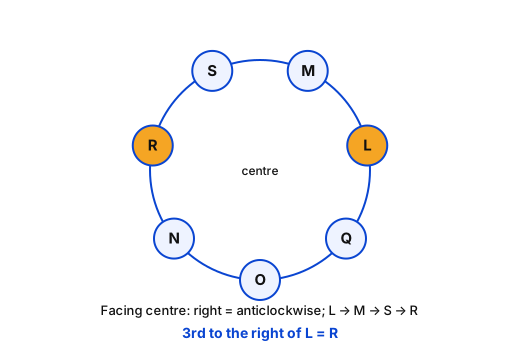
L, M, N, O, Q, R and S are sitting around a circular table, facing the centre of the table. M sits fourth to the left of O. N is an immediate neighbour of O and R. S sits to the immediate left of R. Q is not an immediate neighbour of M. Who sits third to the right of L?
L, M, N, O, Q, R और S एक वृत्ताकार मेज़ के चारों ओर मेज़ के केंद्र की ओर मुख करके बैठे हैं। M, O के बाईं ओर चौथे स्थान पर बैठा है। N, O और R दोनों का निकटतम पड़ोसी है। S, R के ठीक बाईं ओर बैठा है। Q, M का निकटतम पड़ोसी नहीं है। L के दाईं ओर तीसरे स्थान पर कौन बैठा है?
  1. AS
  2. BR
  3. CO
  4. DM
Show answer

Concept: Facing the centre, a person's right is anticlockwise and left is clockwise.

  1. Fix O; M is 4th to the left of O.
  2. N is next to both O and R: N on O's right fails (S would clash with N), so N is on O's left, R next, and S to R's immediate left.
  3. Remaining two seats go to L and Q; Q not next to M → L sits next to M.
  4. From L, going right: M, S, R → third to the right of L is R.

Trick: In a 7-seat circle, 4th to the left = 3rd to the right.

Answer: (B) R

अवधारणा: केंद्र की ओर मुख हो तो दायाँ = वामावर्त, बायाँ = दक्षिणावर्त।

  1. O को स्थिर करें; M, O के बाएँ चौथे।
  2. N, O और R दोनों का पड़ोसी: N को O के बाएँ रखें, फिर R, और R के ठीक बाएँ S.
  3. बची दो सीटें L और Q; Q, M का पड़ोसी नहीं → L, M के पास।
  4. L से दाएँ: M, S, R → L के दाएँ तीसरा R.

ट्रिक: 7 सीटों में बाएँ चौथा = दाएँ तीसरा।

उत्तर: (B) R

RRB NTPC Undergraduate CBT 1General Intelligence and ReasoningCircular Seating ArrangementRRB NTPC Undergraduate CBT 1 2024 · 1 Sep Shift 2 →
Q5496.
After his election as the first American pope, what papal name did Cardinal Robert Prevost choose?
प्रथम अमेरिकी पोप के रूप में चुने जाने के बाद कार्डिनल रॉबर्ट प्रीवोस्ट (Robert Prevost) ने कौन-सा पोप नाम चुना?
  1. APope Leo XIVपोप लियो XIV
  2. BPope John XXIVपोप जॉन XXIV
  3. CPope Benedict XVIIपोप बेनेडिक्ट XVII
  4. DPope Francis IIपोप फ्रांसिस II
Show answer

Concept: On 8 May 2025 Cardinal Robert Francis Prevost of the USA was elected Pope, the first American pope.

  1. He chose the papal name Leo XIV.
  2. He succeeded Pope Francis, who died in April 2025.
  3. 'Francis II', 'John XXIV' and 'Benedict XVII' are not real papal names of any pope.

Yaad rakhein: Prevost → Leo XIV (the first pope from the USA).

Answer: (A) Pope Leo XIV

अवधारणा: 8 मई 2025 को अमेरिका के कार्डिनल रॉबर्ट फ्रांसिस प्रीवोस्ट पोप चुने गए – पहले अमेरिकी पोप।

  1. उन्होंने पोप नाम लियो XIV (Leo XIV) चुना।
  2. वे पोप फ्रांसिस के उत्तराधिकारी हैं, जिनका अप्रैल 2025 में निधन हुआ।
  3. 'Francis II', 'John XXIV', 'Benedict XVII' किसी पोप के नाम नहीं हैं।

याद रखें: प्रीवोस्ट → लियो XIV (USA से पहले पोप)।

उत्तर: (A) Pope Leo XIV

RRB NTPC Undergraduate CBT 1General AwarenessCurrent Affairs – WorldRRB NTPC Undergraduate CBT 1 2024 · 1 Sep Shift 1 →
Q5497.
Which of the following is the correct terminology for the gap between two neurons where they communicate?
दो न्यूरॉनों के बीच का वह अंतराल, जहाँ वे परस्पर संचार करते हैं, उसके लिए निम्नलिखित में से कौन-सी शब्दावली सही है?
  1. ANode gapनोड अंतराल (Node gap)
  2. BSynaptic cleftसिनैप्टिक दरार (Synaptic cleft)
  3. CDendritic cleftडेंड्राइटिक दरार (Dendritic cleft)
  4. DAxonal gapएक्सॉनल अंतराल (Axonal gap)
Show answer

Concept: Two neurons do not touch; the junction between them is called a synapse.

  1. The axon terminal of one neuron and the dendrite of the next are separated by a tiny gap – the synaptic cleft.
  2. The impulse crosses this gap chemically through neurotransmitters (e.g., acetylcholine).
  3. 'Node gap', 'dendritic cleft', 'axonal gap' are not standard terms (nodes of Ranvier are gaps in the myelin sheath, not between neurons).

Yaad rakhein: Synapse = junction; synaptic cleft = the gap in that junction.

Answer: (B) Synaptic cleft

अवधारणा: दो न्यूरॉन आपस में जुड़ते नहीं; उनके मिलन स्थल को सिनैप्स (synapse) कहते हैं।

  1. एक न्यूरॉन के axon terminal और अगले के dendrite के बीच का सूक्ष्म अंतर सिनैप्टिक क्लेफ्ट (synaptic cleft) है।
  2. आवेग इस अंतर को neurotransmitter (जैसे acetylcholine) द्वारा रासायनिक रूप से पार करता है।
  3. अन्य विकल्प मानक शब्द नहीं हैं (Ranvier node माइलिन आवरण का अंतर है)।

याद रखें: Synapse = जंक्शन; synaptic cleft = उस जंक्शन का खाली स्थान।

उत्तर: (B) Synaptic cleft

RRB NTPC Undergraduate CBT 1General AwarenessBiology – Nervous SystemRRB NTPC Undergraduate CBT 1 2024 · 1 Sep Shift 1 →
Q5498.
Which farming type involves small landholdings, simple tools, and production mainly consumed by farmers and their families in India?
भारत में किस प्रकार की खेती में छोटी जोतें, साधारण औज़ार और ऐसा उत्पादन शामिल होता है जिसका उपभोग मुख्यतः किसान और उनके परिवार करते हैं?
  1. APlantation farmingरोपण कृषि (Plantation farming)
  2. BCommercial farmingवाणिज्यिक कृषि
  3. CCommercial grain farmingवाणिज्यिक अनाज कृषि
  4. DSubsistence farmingनिर्वाह कृषि (Subsistence farming)
Show answer

Concept: Subsistence farming is done to meet the needs of the farmer's own family.

  1. Features: small landholdings, primitive tools, family labour, low output.
  2. Most of the produce is consumed by the farmer's family, little is sold.
  3. Plantation and commercial farming are done on large scale for sale in the market.

Trick: Subsistence = survival – the family eats what it grows.

Answer: (D) Subsistence farming

अवधारणा: निर्वाह कृषि (subsistence farming) किसान के अपने परिवार की ज़रूरतें पूरी करने के लिए की जाती है।

  1. विशेषताएँ: छोटी जोत, साधारण औज़ार, पारिवारिक श्रम, कम उत्पादन।
  2. अधिकांश उपज किसान का परिवार ही खा लेता है, बिक्री बहुत कम।
  3. बागान (plantation) व वाणिज्यिक कृषि बाज़ार में बेचने हेतु बड़े पैमाने पर होती है।

ट्रिक: Subsistence = गुज़ारा – जो उगाओ वही खाओ।

उत्तर: (D) Subsistence farming

RRB NTPC Undergraduate CBT 1General AwarenessGeography – AgricultureRRB NTPC Undergraduate CBT 1 2024 · 1 Sep Shift 1 →
Q5499.
Which type of natural vegetation in India is known for forests with hardwood trees such as sal, teak, and bamboo?
भारत में किस प्रकार की प्राकृतिक वनस्पति साल, सागौन और बाँस जैसे कठोर लकड़ी वाले वृक्षों के वनों के लिए जानी जाती है?
  1. ATropical deciduous forestsउष्णकटिबंधीय पर्णपाती वन
  2. BThorn forestsकँटीले वन
  3. CTropical evergreen forestsउष्णकटिबंधीय सदाबहार वन
  4. DMontane forestsपर्वतीय वन
Show answer

Concept: Tropical deciduous (monsoon) forests are the most widespread forests of India, found where rainfall is 70–200 cm.

  1. Trees shed leaves for 6–8 weeks in the dry summer.
  2. Typical hardwood trees: teak, sal, shisham, sandalwood, along with bamboo.
  3. Evergreen forests have ebony, mahogany, rosewood; thorn forests have acacia, babool, cactus.

Yaad rakhein: Teak + Sal + Bamboo = monsoon (tropical deciduous) forest.

Answer: (A) Tropical deciduous forests

अवधारणा: उष्णकटिबंधीय पर्णपाती (मानसूनी) वन भारत के सबसे विस्तृत वन हैं, 70–200 cm वर्षा वाले क्षेत्रों में।

  1. शुष्क गर्मी में पेड़ 6–8 सप्ताह के लिए पत्तियाँ गिराते हैं।
  2. मुख्य कठोर लकड़ी के पेड़: सागौन (teak), साल, शीशम, चंदन तथा बाँस।
  3. सदाबहार वनों में आबनूस, महोगनी; कंटीले वनों में बबूल, कैक्टस।

याद रखें: सागौन + साल + बाँस = मानसूनी (पर्णपाती) वन।

उत्तर: (A) Tropical deciduous forests

RRB NTPC Undergraduate CBT 1General AwarenessGeography – Natural VegetationRRB NTPC Undergraduate CBT 1 2024 · 1 Sep Shift 1 →
Q5500.
Which memory is non-volatile, meaning it retains data even after the computer is turned off?
कौन-सी मेमोरी अवाष्पशील (non-volatile) होती है, अर्थात् कंप्यूटर बंद होने के बाद भी डेटा को बनाए रखती है?
  1. AVirtual Memoryवर्चुअल मेमोरी
  2. BCache Memoryकैश मेमोरी
  3. CROM
  4. DRAM
Show answer

Concept: Non-volatile memory keeps its contents even without power.

  1. ROM (Read Only Memory) stores firmware such as BIOS permanently – it is non-volatile.
  2. RAM and cache are volatile: data is lost when the power is switched off.
  3. Virtual memory is only a part of the hard disk used as an extension of RAM, not a separate memory chip.

Trick: ROM = Remains On Memory (after power off); RAM = Removed At power off.

Answer: (C) ROM

अवधारणा: Non-volatile मेमोरी बिजली बंद होने पर भी डेटा सुरक्षित रखती है।

  1. ROM (Read Only Memory) BIOS जैसे firmware को स्थायी रूप से रखती है – यह non-volatile है।
  2. RAM और cache volatile हैं – बिजली जाते ही डेटा मिट जाता है।
  3. Virtual memory हार्ड डिस्क का हिस्सा है जो RAM के विस्तार की तरह काम करता है।

ट्रिक: ROM = बिजली बंद, फिर भी डेटा कायम; RAM = बिजली बंद, डेटा ग़ायब।

उत्तर: (C) ROM

RRB NTPC Undergraduate CBT 1General AwarenessComputer – MemoryRRB NTPC Undergraduate CBT 1 2024 · 1 Sep Shift 1 →