Question bank

Q&A: practice questions with answers

Search questions on any topic. Filter by exam category, exam, subject and topic, try the question, then open the answer and explanation.

Courses – airGurukul

8,495 questions found.

Q5561.
5 years ago, the age of a father was 11 years more than twice his son's age. After how many years, from now, will he be twice his son's age?
5 वर्ष पहले, एक पिता की आयु उसके पुत्र की आयु के दोगुने से 11 वर्ष अधिक थी। अब से कितने वर्ष बाद उसकी आयु उसके पुत्र की आयु की दोगुनी होगी?
  1. A10
  2. B4
  3. C5
  4. D6
Show answer

Concept: Let present ages be father F, son S.

  1. F−5=2(S−5)+11⇒F=2S+6
  2. After x years: F+x=2(S+x)
  3. 2S+6+x=2S+2x⇒x=6

Trick: Father is always '2S + 6'; the extra 6 is exactly the years needed to make it double.

Answer: (D) 6

अवधारणा: माना वर्तमान आयु पिता F, पुत्र S।

  1. F−5=2(S−5)+11⇒F=2S+6
  2. x वर्ष बाद: F+x=2(S+x)
  3. 2S+6+x=2S+2x⇒x=6

ट्रिक: पिता की आयु 2S+6 है; यही अतिरिक्त 6 वर्ष दोगुना होने के लिए चाहिए।

उत्तर: (D) 6
RRB NTPC Undergraduate CBT 1MathematicsProblems on AgesRRB NTPC Undergraduate CBT 1 2024 · 1 Sep Shift 1 →
Q5562.
Find the simple interest (in ₹) on ₹1,200 at an interest rate of 4% per month for 4 months.
₹1,200 पर 4% प्रति माह की ब्याज दर से 4 महीनों का साधारण ब्याज (₹ में) ज्ञात कीजिए।
  1. A₹16
  2. B₹32
  3. C₹36
  4. D₹192
Show answer

Concept: SI=P×R×T100 with R and T in the same unit (here months).

  1. P=1200,R=4% per month, T=4 months
  2. SI=1200×4×4100=192

Trick: Rate is per month, so do not convert months into years.

Answer: (D) ₹192

अवधारणा: SI=P×R×T100, जहाँ R और T एक ही इकाई में (यहाँ माह)।

  1. P=1200,R=4% प्रति माह, T=4 माह
  2. SI=1200×4×4100=192

ट्रिक: दर प्रति माह है, इसलिए माह को वर्ष में न बदलें।

उत्तर: (D) ₹192

RRB NTPC Undergraduate CBT 1MathematicsSimple InterestRRB NTPC Undergraduate CBT 1 2024 · 1 Sep Shift 1 →
Q5563.
The product of two consecutive natural numbers is 600. The greater of the two numbers is:
दो क्रमागत प्राकृत संख्याओं का गुणनफल 600 है। दोनों संख्याओं में से बड़ी संख्या है:
  1. A31
  2. B25
  3. C40
  4. D16
Show answer

Concept: Product of consecutive numbers n(n+1) is just above n2.

  1. 600≈24.5
  2. Try 24×25=600 ✓
  3. Greater number =25

Trick: Take the square root and check the two integers around it.

Answer: (B) 25

अवधारणा: क्रमागत संख्याओं का गुणनफल n(n+1), n2 से थोड़ा अधिक होता है।

  1. 600≈24.5
  2. 24×25=600 ✓
  3. बड़ी संख्या =25

ट्रिक: वर्गमूल लेकर उसके आस-पास के दो पूर्णांक जाँचें।

उत्तर: (B) 25

RRB NTPC Undergraduate CBT 1MathematicsNumber SystemRRB NTPC Undergraduate CBT 1 2024 · 1 Sep Shift 1 →
Q5564.
A man riding on a bicycle at a speed of 24 km/hr crosses a bridge in 3.1 minutes. Find the length of the bridge.
24 km/hr की चाल से साइकिल चला रहा एक व्यक्ति एक पुल को 3.1 मिनट में पार करता है। पुल की लंबाई ज्ञात कीजिए।
  1. A0.34 km
  2. B1.24 km
  3. C0.62 km
  4. D1.64 km
Show answer

Concept: Distance = speed × time; the bicycle's length is negligible, so distance = bridge length.

  1. 3.1min=3.160h
  2. Length =24×3.160=0.4×3.1=1.24km

Trick: 24km/h=0.4km per minute — multiply by minutes.

Answer: (B) 1.24km

अवधारणा: दूरी = चाल × समय; साइकिल की लंबाई नगण्य है, अतः दूरी = पुल की लंबाई।

  1. 3.1min=3.160h
  2. लंबाई =24×3.160=0.4×3.1=1.24km

ट्रिक: 24km/h=0.4km प्रति मिनट — मिनटों से गुणा करें।

उत्तर: (B) 1.24km

RRB NTPC Undergraduate CBT 1MathematicsSpeed and DistanceRRB NTPC Undergraduate CBT 1 2024 · 1 Sep Shift 1 →
Q5565.
Pipe A can fill a tank in 20 hours, pipe B can fill the same tank in 25 hours and pipe C can fill the same tank in 10 hours. The time taken by them to fill the same tank if they operate together is::
पाइप A एक टंकी को 20 घंटे में भर सकता है, पाइप B उसी टंकी को 25 घंटे में भर सकता है और पाइप C उसी टंकी को 10 घंटे में भर सकता है। यदि वे एक साथ कार्य करें, तो उसी टंकी को भरने में उनके द्वारा लिया गया समय है::
  1. A2519 hours2519 घंटे
  2. B5519 hours5519 घंटे
  3. C11519 hours11519 घंटे
  4. D3519 hours3519 घंटे
Show answer

Concept: Rates add when pipes work together.

  1. 120+125+110=5+4+10100=19100
  2. Time =10019=5519 hours

Trick: Capacity =100 units (LCM); rates 5+4+10=19 units/h ⇒ 10019 h.

Answer: (B) 5519 hours

अवधारणा: साथ में काम करने पर दरें जुड़ती हैं।

  1. 120+125+110=5+4+10100=19100
  2. समय =10019=5519 घंटे

ट्रिक: क्षमता =100 इकाई (LCM); दरें 5+4+10=19 इकाई/घंटा ⇒ 10019 घंटे।

उत्तर: (B) 5519 घंटे

RRB NTPC Undergraduate CBT 1MathematicsPipes and CisternRRB NTPC Undergraduate CBT 1 2024 · 1 Sep Shift 1 →
Q5566.
What will come in the place of the question mark (?) in the following equation, if ‘+’ and ‘−’ are interchanged and ‘×’ and ‘÷’ are interchanged?
72 × 3 − 8 ÷ 5 + 31 = ?
यदि ‘+’ और ‘−’ को आपस में बदल दिया जाए तथा ‘×’ और ‘÷’ को आपस में बदल दिया जाए, तो निम्नलिखित समीकरण में प्रश्न चिह्न (?) के स्थान पर क्या आएगा?
72 × 3 − 8 ÷ 5 + 31 = ?
  1. A33
  2. B35
  3. C37
  4. D31
Show answer

Concept: Swap the signs as told, then apply BODMAS.

  1. After interchange: 72÷3+8×5−31
  2. =24+40−31
  3. =33

Trick: Rewrite the whole expression first, then calculate — avoids sign mix-ups.

Answer: (A) 33

अवधारणा: निर्देशानुसार चिह्न बदलें, फिर BODMAS लगाएँ।

  1. बदलने के बाद: 72÷3+8×5−31
  2. =24+40−31
  3. =33

ट्रिक: पहले पूरा व्यंजक दोबारा लिखें, फिर गणना करें।

उत्तर: (A) 33

RRB NTPC Undergraduate CBT 1General Intelligence and ReasoningMathematical OperationsRRB NTPC Undergraduate CBT 1 2024 · 1 Sep Shift 1 →
Q5567.
Based on the English alphabetical order, three of the following four letter-clusters are alike in a certain way and thus form a group. Which letter-cluster DOES NOT belong to that group?
(Note: The odd one out is not based on the number of consonants/vowels or their position in the letter-cluster.)
अंग्रेज़ी वर्णमाला क्रम के आधार पर, निम्नलिखित चार अक्षर-समूहों में से तीन किसी निश्चित प्रकार से एकसमान हैं और इस प्रकार एक समूह बनाते हैं। कौन-सा अक्षर-समूह उस समूह से संबंधित नहीं है?
(नोट: असंगत अक्षर-समूह, उस अक्षर-समूह में व्यंजनों/स्वरों की संख्या या उनके स्थान पर आधारित नहीं है।)
  1. AICWS
  2. BDXRN
  3. CKFYU
  4. DNHBX
Show answer

Concept: Check gaps between consecutive letters (with wrap-around).

  1. ICWS: I −6 C −6 W −4 S
  2. DXRN: D −6 X −6 R −4 N
  3. NHBX: N −6 H −6 B −4 X
  4. KFYU: K −5 F −7 Y −4 U ✗

Trick: With wrap-around, C − 6 = W (3 − 6 + 26 = 23).

Answer: (C) KFYU

अवधारणा: क्रमागत अक्षरों के बीच अंतर देखें (Z के बाद A से फिर गिनें)।

  1. ICWS: I −6 C −6 W −4 S
  2. DXRN: D −6 X −6 R −4 N
  3. NHBX: N −6 H −6 B −4 X
  4. KFYU: K −5 F −7 Y −4 U ✗

ट्रिक: चक्रीय गिनती: C − 6 = W (3 − 6 + 26 = 23)।

उत्तर: (C) KFYU

RRB NTPC Undergraduate CBT 1General Intelligence and ReasoningOdd One Out – LettersRRB NTPC Undergraduate CBT 1 2024 · 1 Sep Shift 1 →
Q5568.
If 1 is added to each odd digit and 2 is subtracted from each even digit in the number 8147563, what will be the sum of the digits that are second from the left and second from the right?
यदि संख्या 8147563 में प्रत्येक विषम अंक में 1 जोड़ा जाए और प्रत्येक सम अंक में से 2 घटाया जाए, तो बाएँ से दूसरे और दाएँ से दूसरे अंकों का योग क्या होगा?
  1. A14
  2. B4
  3. C10
  4. D6
Show answer

Concept: Odd digit +1, even digit −2.

  1. 8147563 → 8→6, 1→2, 4→2, 7→8, 5→6, 6→4, 3→4
  2. New number: 6228644
  3. 2nd from left =2, 2nd from right =4; sum =6

Trick: Only the needed positions matter: change just the 2nd (1→2) and 6th (6→4) digits.

Answer: (D) 6

अवधारणा: विषम अंक +1, सम अंक −2।

  1. 8147563 → 8→6, 1→2, 4→2, 7→8, 5→6, 6→4, 3→4
  2. नई संख्या: 6228644
  3. बाएँ से दूसरा =2, दाएँ से दूसरा =4; योग =6

ट्रिक: केवल ज़रूरी स्थान बदलें: दूसरा (1→2) और छठा (6→4)।

उत्तर: (D) 6

RRB NTPC Undergraduate CBT 1General Intelligence and ReasoningDigit OperationsRRB NTPC Undergraduate CBT 1 2024 · 1 Sep Shift 1 →
Q5569.
MJRN is related to KHPL in a certain way based on the English alphabetical order. In the same way, PMUQ is related to NKSO. To which of the given options is SPXT related, following the same logic?
अंग्रेज़ी वर्णमाला क्रम के आधार पर MJRN एक निश्चित प्रकार से KHPL से संबंधित है। उसी प्रकार PMUQ, NKSO से संबंधित है। समान तर्क का अनुसरण करते हुए SPXT दिए गए विकल्पों में से किससे संबंधित है?
  1. ANQRV
  2. BQNRV
  3. CNQVR
  4. DQNVR
Show answer

Concept: Find the shift applied to each letter.

  1. MJRN → KHPL: each letter −2
  2. PMUQ → NKSO: each letter −2
  3. SPXT → S−2=Q, P−2=N, X−2=V, T−2=R → QNVR

Trick: Uniform −2 shift: S − 2 = Q and P − 2 = N leave only QNRV/QNVR; X − 2 = V decides.

Answer: (D) QNVR

अवधारणा: प्रत्येक अक्षर में कितना खिसकाव है, ज्ञात करें।

  1. MJRN → KHPL: हर अक्षर −2
  2. PMUQ → NKSO: हर अक्षर −2
  3. SPXT → Q, N, V, R → QNVR

ट्रिक: सभी अक्षर −2: पहले अक्षर से ही विकल्प छाँटें।

उत्तर: (D) QNVR

RRB NTPC Undergraduate CBT 1General Intelligence and ReasoningLetter AnalogyRRB NTPC Undergraduate CBT 1 2024 · 1 Sep Shift 1 →
Q5570.
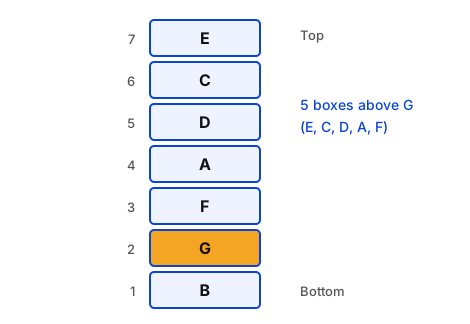
Seven boxes A, B, C, D, E, F and G are kept one over the other but not necessarily in the same order. D is kept immediately above A. G is kept immediately above B. Only E is kept above C. Only two boxes are kept above D. G is not kept at the third position from the bottom. How many boxes are kept above G?
सात बक्से A, B, C, D, E, F और G एक के ऊपर एक रखे गए हैं, लेकिन ज़रूरी नहीं कि इसी क्रम में हों। D को A के ठीक ऊपर रखा गया है। G को B के ठीक ऊपर रखा गया है। C के ऊपर केवल E रखा गया है। D के ऊपर केवल दो बक्से रखे गए हैं। G को नीचे से तीसरे स्थान पर नहीं रखा गया है। G के ऊपर कितने बक्से रखे गए हैं?
  1. A3
  2. B5
  3. C4
  4. D2
Show answer

Concept: Fix definite positions first (positions counted from the top).

  1. Only E above C ⇒ E = 1st, C = 2nd from top
  2. Only two above D ⇒ D = 3rd, A (just below D) = 4th
  3. G–B pair fits in 5–6 or 6–7; G not 3rd from bottom (5th from top) ⇒ G = 6th, B = 7th, F = 5th
  4. Boxes above G = 5

Trick: 'Only X above Y' instantly fixes both X and Y at the top.

Answer: (B) 5

अवधारणा: निश्चित स्थान पहले तय करें (ऊपर से गिनती)।

  1. केवल E, C के ऊपर ⇒ E = 1, C = 2
  2. D के ऊपर केवल दो ⇒ D = 3, A = 4
  3. G–B जोड़ी 5–6 या 6–7; G नीचे से तीसरा (ऊपर से 5वाँ) नहीं ⇒ G = 6, B = 7, F = 5
  4. G के ऊपर 5 बॉक्स

ट्रिक: 'केवल X, Y के ऊपर' से दोनों का स्थान तुरंत तय होता है।

उत्तर: (B) 5

RRB NTPC Undergraduate CBT 1General Intelligence and ReasoningBox ArrangementRRB NTPC Undergraduate CBT 1 2024 · 1 Sep Shift 1 →
Q5571.
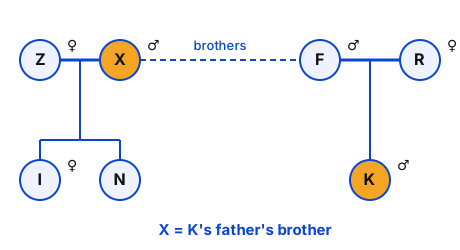
I is the daughter of X. K is the son of R. X is married to Z. Z is the mother of N. F is married to R. F is the brother of X. How is X related to K?
I, X की पुत्री है। K, R का पुत्र है। X का विवाह Z से हुआ है। Z, N की माता है। F का विवाह R से हुआ है। F, X का भाई है। X, K से किस प्रकार संबंधित है?
  1. AFather's fatherपिता के पिता
  2. BMother's brotherमाता का भाई
  3. CFather's brotherपिता का भाई
  4. DFatherपिता
Show answer

Concept: Build the family tree and fix genders.

  1. Z is mother of N and wife of X ⇒ X is male.
  2. F (brother of X) is married to R; K is R's son ⇒ F is K's father.
  3. X is the brother of K's father.

Trick: Spouse statements decide gender: wife = mother ⇒ husband is male.

Answer: (C) Father's brother

अवधारणा: परिवार वृक्ष बनाएँ और लिंग तय करें।

  1. Z, N की माँ और X की पत्नी ⇒ X पुरुष।
  2. F (X का भाई) का विवाह R से; K, R का पुत्र ⇒ F, K का पिता।
  3. X, K के पिता का भाई (चाचा) है।

ट्रिक: पति-पत्नी कथन से लिंग तय होता है: पत्नी माँ है ⇒ पति पुरुष।

उत्तर: (C) पिता का भाई (Father's brother)

RRB NTPC Undergraduate CBT 1General Intelligence and ReasoningBlood RelationRRB NTPC Undergraduate CBT 1 2024 · 1 Sep Shift 1 →
Q5572.
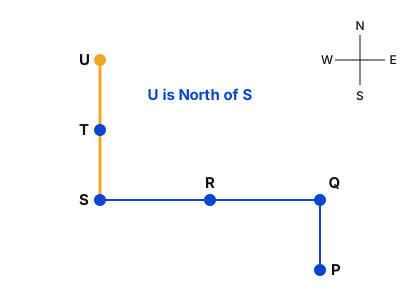
Town P is to the south of Town Q. Town R is to the west of Town Q. Town S is to the west of Town R. Town T is to the north of Town S and also to the south of Town U. What is the position of Town U with respect to Town S?
शहर P, शहर Q के दक्षिण में है। शहर R, शहर Q के पश्चिम में है। शहर S, शहर R के पश्चिम में है। शहर T, शहर S के उत्तर में है और शहर U के दक्षिण में भी है। शहर S के सापेक्ष शहर U की स्थिति क्या है?
  1. AWestपश्चिम
  2. BEastपूर्व
  3. CSouthदक्षिण
  4. DNorthउत्तर
Show answer

Concept: Place towns step by step on a compass grid.

  1. R is west of Q; S is west of R.
  2. T is north of S, and U is north of T.
  3. So U lies directly north of S.

Trick: Only the S–T–U chain is needed; P, Q, R are distractors.

Answer: (D) North

अवधारणा: कस्बों को क्रम से दिशा-ग्रिड पर रखें।

  1. R, Q के पश्चिम में; S, R के पश्चिम में।
  2. T, S के उत्तर में और U, T के उत्तर में।
  3. अतः U, S के ठीक उत्तर में है।

ट्रिक: केवल S–T–U श्रृंखला चाहिए; P, Q, R भ्रम पैदा करते हैं।

उत्तर: (D) उत्तर (North)

RRB NTPC Undergraduate CBT 1General Intelligence and ReasoningDirection SenseRRB NTPC Undergraduate CBT 1 2024 · 1 Sep Shift 1 →
Q5573.
Based on the English alphabetical order, three of the following four letter-cluster pairs are alike in a certain way and thus form a group. Which letter-cluster pair DOES NOT belong to that group?
(Note: The odd one out is not based on the number of consonants/vowels or their position in the letter-cluster.)
अंग्रेज़ी वर्णमाला क्रम के आधार पर, निम्नलिखित चार अक्षर-समूह युग्मों में से तीन किसी निश्चित प्रकार से एकसमान हैं और इस प्रकार एक समूह बनाते हैं। कौन-सा अक्षर-समूह युग्म उस समूह से संबंधित नहीं है?
(नोट: असंगत अक्षर-समूह, उस अक्षर-समूह में व्यंजनों/स्वरों की संख्या या उनके स्थान पर आधारित नहीं है।)
  1. APS−RU
  2. BYB−ZF
  3. CEH−GJ
  4. DIL−KN
Show answer

Concept: Check: 1st→2nd letter, 1st→3rd letter, 3rd→4th letter.

  1. PS−RU: P+3=S, P+2=R, R+3=U
  2. EH−GJ: +3, +2, +3; IL−KN: +3, +2, +3
  3. YB−ZF: Y+3=B, Y+1=Z, Z+6=F ✗

Trick: In the pattern the second cluster is the first shifted by +2 letters each.

Answer: (B) YB−ZF

अवधारणा: जाँचें: पहला→दूसरा अक्षर, पहला→तीसरा, तीसरा→चौथा।

  1. PS−RU: P+3=S, P+2=R, R+3=U
  2. EH−GJ: +3, +2, +3; IL−KN: +3, +2, +3
  3. YB−ZF: Y+3=B, Y+1=Z, Z+6=F ✗

ट्रिक: पैटर्न में दूसरा समूह पहले समूह के हर अक्षर को +2 करके बनता है।

उत्तर: (B) YB−ZF

RRB NTPC Undergraduate CBT 1General Intelligence and ReasoningOdd Pair – LettersRRB NTPC Undergraduate CBT 1 2024 · 1 Sep Shift 1 →
Q5574.
In the following number-pairs, the second number is obtained by applying certain mathematical operations to the first number. Select the set in which the numbers are related in the same way as are the numbers of the following sets.
(NOTE: Operations should be performed on the whole numbers, without breaking down the numbers into their constituent digits. E.g. 13 – Operations on 13 such as
adding/subtracting/multiplying to 13 can be performed. Breaking down 13 into 1 and 3 and then performing mathematical operations on 1 and 3 is not allowed.)
300, 194
315, 209
निम्नलिखित संख्या-युग्मों में, पहली संख्या पर कुछ गणितीय संक्रियाएँ करके दूसरी संख्या प्राप्त की जाती है। उस समुच्चय का चयन कीजिए जिसमें संख्याएँ उसी प्रकार संबंधित हैं जिस प्रकार निम्नलिखित समुच्चयों की संख्याएँ संबंधित हैं।
(नोट: संख्याओं को उनके घटक अंकों में विभाजित किए बिना, पूर्ण संख्याओं पर संक्रियाएँ की जानी चाहिए। उदाहरण: 13 – 13 पर की जाने वाली संक्रियाएँ, जैसे
13 में जोड़ना/घटाना/गुणा करना आदि की जा सकती हैं। 13 को 1 और 3 में विभाजित करके फिर 1 और 3 पर गणितीय संक्रियाएँ करने की अनुमति नहीं है।)
300, 194
315, 209
  1. A272, 166
  2. B255, 159
  3. C288, 180
  4. D240, 124
Show answer

Concept: Find the operation linking each pair.

  1. 300−106=194, 315−106=209
  2. Check: 272−106=166 ✓
  3. Others: 255−159=96, 288−180=108, 240−124=116

Trick: Constant difference pairs: just subtract each option pair.

Answer: (A) 272, 166

अवधारणा: प्रत्येक युग्म को जोड़ने वाली संक्रिया ज्ञात करें।

  1. 300−106=194, 315−106=209
  2. जाँच: 272−106=166 ✓
  3. अन्य: 255−159=96, 288−180=108, 240−124=116

ट्रिक: अंतर स्थिर है: हर विकल्प में घटाकर देखें।

उत्तर: (A) 272, 166

RRB NTPC Undergraduate CBT 1General Intelligence and ReasoningNumber Pair AnalogyRRB NTPC Undergraduate CBT 1 2024 · 1 Sep Shift 1 →
Q5575.
In a certain code language, ‘LOAN’ is coded as ‘4257’ and ‘NIKE’ is coded as ‘1346’. What is the code for ‘N’ in the given code language?
एक निश्चित कूट भाषा में, ‘LOAN’ को ‘4257’ लिखा जाता है और ‘NIKE’ को ‘1346’ लिखा जाता है। दी गई कूट भाषा में ‘N’ के लिए कूट क्या है?
  1. A1
  2. B6
  3. C7
  4. D4
Show answer

Concept: A letter common to two words gets the digit common to both codes.

  1. LOAN → 4257, NIKE → 1346
  2. Common letter: N
  3. Common digit: 4 ⇒ N = 4

Trick: Common letter ↔ common digit (order of digits doesn't matter).

Answer: (D) 4

अवधारणा: दो शब्दों में उभयनिष्ठ अक्षर का कोड, दोनों कोड का उभयनिष्ठ अंक होता है।

  1. LOAN → 4257, NIKE → 1346
  2. उभयनिष्ठ अक्षर: N
  3. उभयनिष्ठ अंक: 4 ⇒ N = 4

ट्रिक: उभयनिष्ठ अक्षर ↔ उभयनिष्ठ अंक।

उत्तर: (D) 4

RRB NTPC Undergraduate CBT 1General Intelligence and ReasoningCoding–DecodingRRB NTPC Undergraduate CBT 1 2024 · 1 Sep Shift 1 →
Q5576.
This question is based on the five, three-digit numbers given below.
(Left) 512 648 729 378 462 (Right)
(Example- 697 – First digit = 6, second digit = 9 and third digit = 7)
(NOTE: All operations to be done from left to right.)
What will be the resultant if the first digit of the lowest number is added to the third digit of the highest number?
यह प्रश्न नीचे दी गई पाँच, तीन-अंकीय संख्याओं पर आधारित है।
(बाएँ) 512 648 729 378 462 (दाएँ)
(उदाहरण- 697 – पहला अंक = 6, दूसरा अंक = 9 और तीसरा अंक = 7)
(नोट: सभी संक्रियाएँ बाएँ से दाएँ की जानी हैं।)
यदि सबसे छोटी संख्या के पहले अंक को सबसे बड़ी संख्या के तीसरे अंक में जोड़ा जाए, तो परिणाम क्या होगा?
  1. A12
  2. B10
  3. C13
  4. D11
Show answer

Concept: Identify lowest and highest numbers first.

  1. Lowest = 378 → first digit 3
  2. Highest = 729 → third digit 9
  3. 3+9=12

Trick: Compare hundreds digits first: 3 is lowest, 7 is highest.

Answer: (A) 12

अवधारणा: पहले सबसे छोटी और सबसे बड़ी संख्या पहचानें।

  1. सबसे छोटी = 378 → पहला अंक 3
  2. सबसे बड़ी = 729 → तीसरा अंक 9
  3. 3+9=12

ट्रिक: सैकड़े के अंक से तुलना करें: 3 सबसे छोटा, 7 सबसे बड़ा।

उत्तर: (A) 12

RRB NTPC Undergraduate CBT 1General Intelligence and ReasoningNumber AnalysisRRB NTPC Undergraduate CBT 1 2024 · 1 Sep Shift 1 →
Q5577.
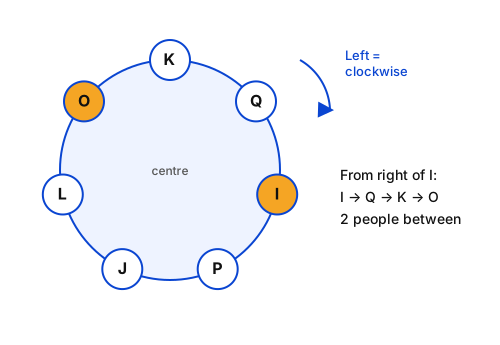
I, J, K, L, O, P and Q are sitting around a circular table, facing the centre of the table. P sits third to the left of K. O sits second to the left of J. Only K sits between Q and O. L is not an immediate neighbour of P.
How many people sit between I and O when counted from the right of I?
I, J, K, L, O, P और Q एक वृत्ताकार मेज़ के चारों ओर मेज़ के केंद्र की ओर मुख करके बैठे हैं। P, K के बाएँ से तीसरे स्थान पर बैठा है। O, J के बाएँ से दूसरे स्थान पर बैठा है। Q और O के बीच केवल K बैठा है। L, P का निकटतम पड़ोसी नहीं है।
I के दाएँ से गिनने पर I और O के बीच कितने व्यक्ति बैठे हैं?
  1. AOneएक
  2. BFourचार
  3. CThreeतीन
  4. DTwoदो
Show answer

Concept: Facing the centre: left = clockwise, right = anticlockwise.

  1. Fix K; P is 3rd to the left of K.
  2. Q and O are K's two neighbours; O is 2nd left of J ⇒ O on K's right, Q on K's left, J next to P.
  3. Remaining seats: L not next to P ⇒ L sits between J and O; I sits between Q and P.
  4. From I going right: Q, K, then O ⇒ 2 people between.

Trick: Place the person with most clues (K) first, then use the 'only between' clue.

Answer: (D) Two

अवधारणा: केंद्र की ओर मुख: बाएँ = दक्षिणावर्त, दाएँ = वामावर्त।

  1. K को रखें; P, K के बाएँ तीसरे स्थान पर।
  2. Q और O, K के दोनों पड़ोसी; O, J के बाएँ दूसरे ⇒ O, K के दाएँ, Q बाएँ, J, P के बगल में।
  3. L, P का पड़ोसी नहीं ⇒ L, J और O के बीच; I, Q और P के बीच।
  4. I से दाईं ओर: Q, K, फिर O ⇒ 2 व्यक्ति।

ट्रिक: सबसे अधिक सूचना वाले व्यक्ति (K) को पहले रखें।

उत्तर: (D) दो

RRB NTPC Undergraduate CBT 1General Intelligence and ReasoningCircular SeatingRRB NTPC Undergraduate CBT 1 2024 · 1 Sep Shift 1 →
Q5578.
What should come in place of the question mark (?) in the given series?
890 891 893 896 900 ?
दी गई श्रृंखला में प्रश्न चिह्न (?) के स्थान पर क्या आना चाहिए?
890 891 893 896 900 ?
  1. A903
  2. B906
  3. C905
  4. D904
Show answer

Concept: Look at successive differences.

  1. Differences: +1, +2, +3, +4
  2. Next: +5
  3. 900+5=905

Trick: Increasing natural-number differences are the most common pattern.

Answer: (C) 905

अवधारणा: क्रमागत अंतर देखें।

  1. अंतर: +1, +2, +3, +4
  2. अगला: +5
  3. 900+5=905

ट्रिक: बढ़ते प्राकृत संख्या अंतर सबसे आम पैटर्न है।

उत्तर: (C) 905

RRB NTPC Undergraduate CBT 1General Intelligence and ReasoningNumber SeriesRRB NTPC Undergraduate CBT 1 2024 · 1 Sep Shift 1 →
Q5579.
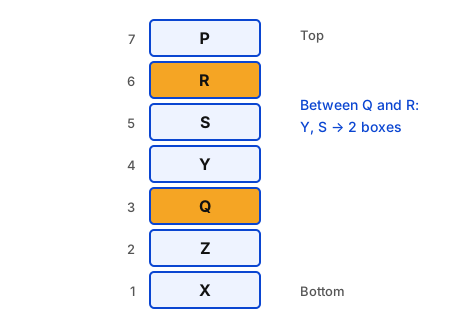
Seven boxes P, Q, R, S, X, Y and Z are kept one over the other, but not necessarily in the same order. Z is kept second from the bottom. Only three boxes are kept between Z and R. X is kept at one of the positions below Z. Only S is kept between R and Y. P is kept at one of the positions above R. How many boxes are kept between Q and R?
सात बक्से P, Q, R, S, X, Y और Z एक के ऊपर एक रखे गए हैं, लेकिन ज़रूरी नहीं कि इसी क्रम में हों। Z को नीचे से दूसरे स्थान पर रखा गया है। Z और R के बीच केवल तीन बक्से रखे गए हैं। X को Z के नीचे के किसी एक स्थान पर रखा गया है। R और Y के बीच केवल S रखा गया है। P को R के ऊपर के किसी एक स्थान पर रखा गया है। Q और R के बीच कितने बक्से रखे गए हैं?
  1. AOneएक
  2. BFourचार
  3. CTwoदो
  4. DThreeतीन
Show answer

Concept: Number positions from the bottom (1) to the top (7).

  1. Z = 2; three boxes between Z and R ⇒ R = 6.
  2. X below Z ⇒ X = 1. P above R ⇒ P = 7.
  3. Only S between R and Y ⇒ S = 5, Y = 4 (S cannot be 7 as P is there). Q = 3.
  4. Between Q (3) and R (6): Y, S ⇒ 2 boxes.

Trick: Use 'X below Z' with Z = 2 to lock X at the bottom immediately.

Answer: (C) Two

अवधारणा: स्थान नीचे (1) से ऊपर (7) गिनें।

  1. Z = 2; Z और R के बीच तीन ⇒ R = 6।
  2. X, Z के नीचे ⇒ X = 1। P, R के ऊपर ⇒ P = 7।
  3. R और Y के बीच केवल S ⇒ S = 5, Y = 4। Q = 3।
  4. Q (3) और R (6) के बीच: Y, S ⇒ 2 बॉक्स।

ट्रिक: Z = 2 होने पर 'X, Z के नीचे' से X = 1 तुरंत तय।

उत्तर: (C) दो

RRB NTPC Undergraduate CBT 1General Intelligence and ReasoningBox ArrangementRRB NTPC Undergraduate CBT 1 2024 · 1 Sep Shift 1 →
Q5580.
What should come in place of the question mark (?) in the given series?
56 58 63 73 90 ?
दी गई श्रृंखला में प्रश्न चिह्न (?) के स्थान पर क्या आना चाहिए?
56 58 63 73 90 ?
  1. A115
  2. B112
  3. C114
  4. D116
Show answer

Concept: Differences follow n2+1.

  1. Differences: 2, 5, 10, 17 =12+1,22+1,32+1,42+1
  2. Next difference =52+1=26
  3. 90+26=116

Trick: Differences 2, 5, 10, 17 themselves differ by 3, 5, 7 → next 9.

Answer: (D) 116

अवधारणा: अंतर n2+1 के रूप में हैं।

  1. अंतर: 2, 5, 10, 17 =12+1,22+1,32+1,42+1
  2. अगला अंतर =52+1=26
  3. 90+26=116

ट्रिक: अंतरों का अंतर 3, 5, 7 → अगला 9।

उत्तर: (D) 116

RRB NTPC Undergraduate CBT 1General Intelligence and ReasoningNumber SeriesRRB NTPC Undergraduate CBT 1 2024 · 1 Sep Shift 1 →