Question bank

Q&A: practice questions with answers

Search questions on any topic. Filter by exam category, exam, subject and topic, try the question, then open the answer and explanation.

Courses – airGurukul

8,495 questions found.

Q5861.
Find the greatest number that will divide 186, 321 and 402 so as to leave the same remainder in each case.
वह सबसे बड़ी संख्या ज्ञात कीजिए जिससे 186, 321 और 402 को विभाजित करने पर प्रत्येक स्थिति में समान शेषफल प्राप्त हो।
  1. A23
  2. B19
  3. C13
  4. D27
Show answer

Concept: Greatest number leaving the same remainder = HCF of the differences of the numbers.

  1. 321−186=135, 402−321=81, 402−186=216
  2. 135=27×5, 81=27×3, 216=27×8
  3. HCF =27

Trick: Same remainder → take differences, then HCF.

Answer: (D) 27

अवधारणा: समान शेषफल छोड़ने वाली सबसे बड़ी संख्या = संख्याओं के अंतरों का HCF।

  1. 321−186=135, 402−321=81, 402−186=216
  2. 135=27×5, 81=27×3, 216=27×8
  3. HCF =27

ट्रिक: समान शेषफल → अंतर लें, फिर HCF।

उत्तर: (D) 27
RRB NTPC Undergraduate CBT 1MathematicsHCF – Same RemainderRRB NTPC Undergraduate CBT 1 2025 · 20 Jun Shift 1 →
Q5862.
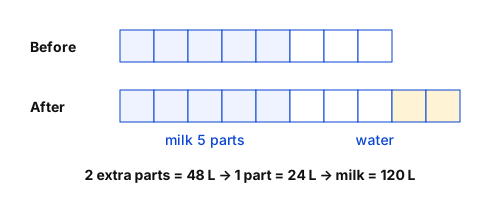
A mixture contains milk and water in the ratio 5:3. If 48 liters of water is added, the ratio becomes 5:5. Find the initial quantity of milk.
एक मिश्रण में दूध और पानी का अनुपात 5:3 है। यदि इसमें 48 लीटर पानी मिलाया जाए, तो अनुपात 5:5 हो जाता है। दूध की प्रारंभिक मात्रा ज्ञात कीजिए।
  1. A125 liters125 लीटर
  2. B120 liters120 लीटर
  3. C110 liters110 लीटर
  4. D115 liters115 लीटर
Show answer

Concept: Milk does not change; only water increases.

  1. Milk =5x, water =3x.
  2. 5x3x+48=55 ⇒ 3x+48=5x ⇒ x=24
  3. Milk =5×24=120 L

Trick: Water parts go from 3 to 5: 2 parts = 48 L.

Answer: (B) 120 liters

अवधारणा: दूध नहीं बदलता; केवल पानी बढ़ता है।

  1. दूध =5x, पानी =3x।
  2. 5x3x+48=55 ⇒ 3x+48=5x ⇒ x=24
  3. दूध =5×24=120 लीटर

ट्रिक: पानी के भाग 3 से 5: 2 भाग = 48 लीटर।

उत्तर: (B) 120 लीटर

RRB NTPC Undergraduate CBT 1MathematicsMixture and RatioRRB NTPC Undergraduate CBT 1 2025 · 20 Jun Shift 1 →
Q5863.
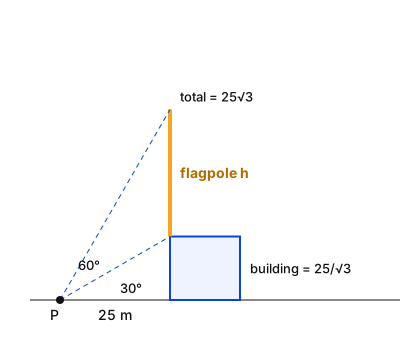
A flagpole stands on top of a building. From a point 25 metres away from the base of the building, the angle of elevation to the top of the flagpole is 60°, and to the top of the building is 30°. What is the height of the flagpole? (Round your answer off to the nearest metre, and use √3=1.7)
एक इमारत के शीर्ष पर एक ध्वज-स्तंभ खड़ा है। इमारत के आधार से 25 मीटर दूर स्थित एक बिंदु से ध्वज-स्तंभ के शीर्ष का उन्नयन कोण 60° है, और इमारत के शीर्ष का उन्नयन कोण 30° है। ध्वज-स्तंभ की ऊँचाई कितनी है? (अपने उत्तर को निकटतम मीटर तक पूर्णांकित कीजिए, और √3=1.7 का उपयोग कीजिए)
  1. A30 m
  2. B35 m
  3. C29 m
  4. D31 m
Show answer

Concept: tanθ=heightbase with base =25 m for both angles.

  1. Building: 25tan30∘=253
  2. Building + pole: 25tan60∘=253
  3. Pole =253−253=503≈28.9≈29 m

Trick: For angles 30∘ and 60∘ from the same point, pole =2× building.

Answer: (C) 29 m

अवधारणा: tanθ=ऊँचाईआधार, दोनों कोणों के लिए आधार =25 m।

  1. भवन: 25tan30∘=253
  2. भवन + ध्वज-स्तंभ: 25tan60∘=253
  3. ध्वज-स्तंभ =253−253=503≈28.9≈29 m

ट्रिक: एक ही बिंदु से 30∘ और 60∘ हों तो स्तंभ =2× भवन।

उत्तर: (C) 29 m

RRB NTPC Undergraduate CBT 1MathematicsHeights and DistancesRRB NTPC Undergraduate CBT 1 2025 · 20 Jun Shift 1 →
Q5864.
Simplify: 196−81+(16)2
सरल कीजिए: 196−81+(16)2
  1. A21
  2. B5
  3. C7
  4. D14
Show answer

Concept: (a)2=a; evaluate each root first.

  1. 196=14, 81=9
  2. (16)2=16
  3. 14−9+16=21

Trick: Squaring a square root just gives back the number.

Answer: (A) 21

अवधारणा: (a)2=a; पहले हर वर्गमूल निकालें।

  1. 196=14, 81=9
  2. (16)2=16
  3. 14−9+16=21

ट्रिक: वर्गमूल का वर्ग वही संख्या देता है।

उत्तर: (A) 21

RRB NTPC Undergraduate CBT 1MathematicsSimplification – Square RootsRRB NTPC Undergraduate CBT 1 2025 · 20 Jun Shift 1 →
Q5865.
If the ratio of two numbers is 6 : 4, and their HCF is 49, then their LCM is:
यदि दो संख्याओं का अनुपात 6 : 4 है, और उनका HCF 49 है, तो उनका LCM है:
  1. A294
  2. B298
  3. C287
  4. D295
Show answer

Concept: Write the ratio in lowest terms: numbers =HCF× co-prime ratio terms.

  1. 6:4=3:2
  2. Numbers =3×49=147 and 2×49=98
  3. LCM =49×3×2=294

Trick: LCM =HCF× product of co-prime ratio terms.

Answer: (A) 294

अवधारणा: अनुपात को न्यूनतम रूप में लिखें: संख्याएँ =HCF× सह-अभाज्य अनुपात पद।

  1. 6:4=3:2
  2. संख्याएँ =3×49=147 और 2×49=98
  3. LCM =49×3×2=294

ट्रिक: LCM =HCF× सह-अभाज्य पदों का गुणनफल।

उत्तर: (A) 294

RRB NTPC Undergraduate CBT 1MathematicsHCF and LCMRRB NTPC Undergraduate CBT 1 2025 · 20 Jun Shift 1 →
Q5866.
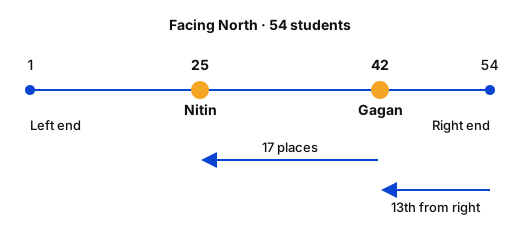
In a row of 54 students facing the north, Gagan is 13th from the right end. If Nitin is 17th to the left of Gagan, what is Nitin's position from the left end of the row?
उत्तर की ओर मुख करके खड़े 54 छात्रों की एक पंक्ति में, गगन दाएँ छोर से 13वें स्थान पर है। यदि नितिन, गगन के बाईं ओर 17वें स्थान पर है, तो पंक्ति के बाएँ छोर से नितिन का स्थान क्या है?
  1. A23rd23वाँ
  2. B30th30वाँ
  3. C27th27वाँ
  4. D25th25वाँ
Show answer

Concept: Position from left = Total − position from right +1.

  1. Gagan from left =54−13+1=42nd.
  2. Nitin is 17 places to the left of Gagan: 42−17=25.

Trick: Left + Right = Total +1.

Answer: (D) 25th

अवधारणा: बाएँ से स्थान = कुल − दाएँ से स्थान +1।

  1. गगन बाएँ से =54−13+1=42वाँ।
  2. नितिन, गगन से 17 स्थान बाएँ है: 42−17=25।

ट्रिक: बाएँ + दाएँ = कुल +1।

उत्तर: (D) 25वाँ

RRB NTPC Undergraduate CBT 1General Intelligence and ReasoningRanking & positionRRB NTPC Undergraduate CBT 1 2025 · 20 Jun Shift 1 →
Q5867.
Read the given statement(s) and conclusions carefully. Assuming that the information given in the statements is true, even if it appears to be at variance with commonly known facts, decide which of the given conclusions logically follow(s) from the statement(s).
Statements:
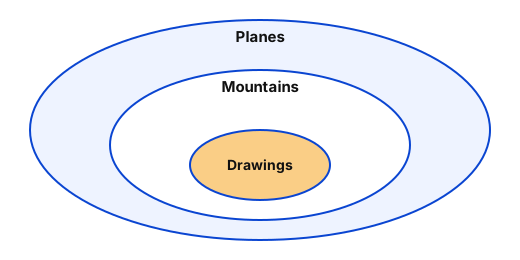
All drawings are mountains.
All mountains are planes.
Conclusions:
(I) Some planes are mountains.
(II) All drawings are planes.
दिए गए कथन(नों) और निष्कर्षों को ध्यानपूर्वक पढ़िए। यह मानते हुए कि कथनों में दी गई जानकारी सत्य है, भले ही वह सामान्यतः ज्ञात तथ्यों से भिन्न प्रतीत होती हो, निर्णय कीजिए कि दिए गए निष्कर्षों में से कौन-सा/से निष्कर्ष तार्किक रूप से कथन(नों) का अनुसरण करता है/करते हैं।
कथन:
सभी चित्र पर्वत हैं।
सभी पर्वत समतल हैं।
निष्कर्ष:
(I) कुछ समतल पर्वत हैं।
(II) सभी चित्र समतल हैं।
  1. AOnly conclusion (II) followsकेवल निष्कर्ष (II) अनुसरण करता है
  2. BNeither conclusion (I) nor (II) followsन तो निष्कर्ष (I) और न ही (II) अनुसरण करता है
  3. CBoth conclusions (I) and (II) followनिष्कर्ष (I) और (II) दोनों अनुसरण करते हैं
  4. DOnly conclusion (I) followsकेवल निष्कर्ष (I) अनुसरण करता है
Show answer

Concept: Draw the Venn diagram: Drawings inside Mountains, Mountains inside Planes.

  1. (I) Every mountain is a plane, so some planes are certainly mountains → follows.
  2. (II) Drawings lie inside Mountains which lie inside Planes → all drawings are planes → follows.

Trick: All A are B + All B are C ⇒ All A are C; and 'All B are C' always gives 'Some C are B'.

Answer: (C) Both conclusions (I) and (II) follow

अवधारणा: वेन आरेख बनाएँ: Drawings, Mountains के अंदर; Mountains, Planes के अंदर।

  1. (I) हर mountain एक plane है, इसलिए कुछ planes निश्चित रूप से mountains हैं → अनुसरण करता है।
  2. (II) Drawings, Mountains में और Mountains, Planes में → सभी drawings, planes हैं → अनुसरण करता है।

ट्रिक: सभी A, B + सभी B, C ⇒ सभी A, C; और 'सभी B, C' से हमेशा 'कुछ C, B' मिलता है।

उत्तर: (C) दोनों निष्कर्ष (I) और (II) अनुसरण करते हैं

RRB NTPC Undergraduate CBT 1General Intelligence and ReasoningSyllogismRRB NTPC Undergraduate CBT 1 2025 · 20 Jun Shift 1 →
Q5868.
Seven boxes, I, J, K, L, Q, R and S, are kept one over the other, but not necessarily in the same order.
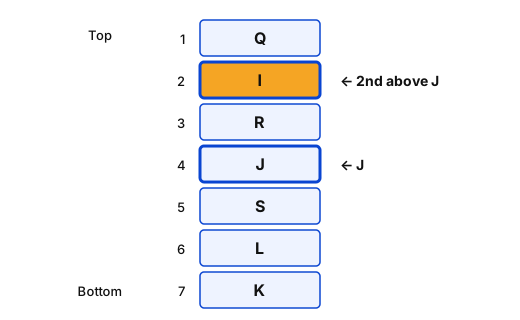
Only Q is kept above I. Only two boxes are kept between I and S. R is kept immediately below I. Only K is kept below L.
Which box is kept second above J?
सात बक्से, I, J, K, L, Q, R और S, एक के ऊपर एक रखे गए हैं, परंतु जरूरी नहीं कि इसी क्रम में हों।
केवल Q, I के ऊपर रखा गया है। I और S के बीच केवल दो बक्से रखे गए हैं। R, I के ठीक नीचे रखा गया है। केवल K, L के नीचे रखा गया है।
J के ऊपर दूसरे स्थान पर कौन-सा बक्सा रखा गया है?
  1. AI
  2. BQ
  3. CR
  4. DS
Show answer

Concept: Fix the boxes from top (1) to bottom (7) using the definite clues first.

  1. Only Q above I → Q = 1, I = 2. R immediately below I → R = 3.
  2. Two boxes between I and S → S = 5. Only K below L → K = 7, L = 6.
  3. Remaining J = 4. Second above J (4) is position 2 = I.

Trick: 'Only X above Y' means Y is 2nd from top – start with such fixed clues.

Answer: (A) I

अवधारणा: सुनिश्चित संकेतों से ऊपर (1) से नीचे (7) तक बॉक्स तय करें।

  1. केवल Q, I के ऊपर → Q = 1, I = 2। R, I के ठीक नीचे → R = 3।
  2. I और S के बीच दो बॉक्स → S = 5। केवल K, L के नीचे → K = 7, L = 6।
  3. बचा J = 4। J (4) से दूसरा ऊपर स्थान 2 = I।

ट्रिक: 'केवल X, Y के ऊपर' का अर्थ Y ऊपर से दूसरा – ऐसे निश्चित संकेत पहले लगाएँ।

उत्तर: (A) I

RRB NTPC Undergraduate CBT 1General Intelligence and ReasoningVertical box arrangementRRB NTPC Undergraduate CBT 1 2025 · 20 Jun Shift 1 →
Q5869.
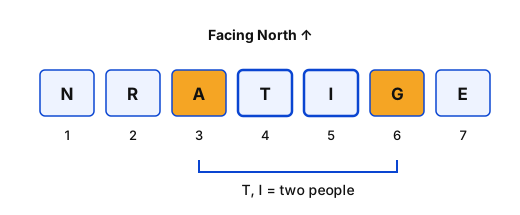
Seven people, T, E, A, R, I, N and G, are sitting in a row, facing north. Only three people sit between N and I. T sits to the immediate left of I. No one sits to the right of E. Only two people sit between E and T. A sits to the immediate right of R. How many people sit between G and A?
सात व्यक्ति, T, E, A, R, I, N और G, उत्तर की ओर मुख करके एक पंक्ति में बैठे हैं। N और I के बीच केवल तीन व्यक्ति बैठे हैं। T, I के ठीक बाएँ बैठा है। E के दाईं ओर कोई नहीं बैठा है। E और T के बीच केवल दो व्यक्ति बैठे हैं। A, R के ठीक दाएँ बैठा है। G और A के बीच कितने व्यक्ति बैठे हैं?
  1. ATwoदो
  2. BFourचार
  3. COneएक
  4. DThreeतीन
Show answer

Concept: Facing north, number seats 1 (left) to 7 (right).

  1. No one to the right of E → E = 7. Two between E and T → T = 4; T immediately left of I → I = 5.
  2. Three between N and I → N = 1.
  3. A immediately right of R in seats 2, 3, 6 → R = 2, A = 3; G = 6.
  4. Between G (6) and A (3): T and I → two people.

Trick: Seats between positions a and b =|a−b|−1=6−3−1=2.

Answer: (A) Two

अवधारणा: उत्तर की ओर मुख – स्थान 1 (बाएँ) से 7 (दाएँ) तक क्रमांकित करें।

  1. E के दाएँ कोई नहीं → E = 7। E और T के बीच दो → T = 4; T, I के ठीक बाएँ → I = 5।
  2. N और I के बीच तीन → N = 1।
  3. A, R के ठीक दाएँ, बचे स्थान 2, 3, 6 → R = 2, A = 3; G = 6।
  4. G (6) और A (3) के बीच: T और I → दो व्यक्ति।

ट्रिक: स्थान a और b के बीच व्यक्ति =|a−b|−1=6−3−1=2।

उत्तर: (A) दो

RRB NTPC Undergraduate CBT 1General Intelligence and ReasoningLinear seating arrangementRRB NTPC Undergraduate CBT 1 2025 · 20 Jun Shift 1 →
Q5870.
What should come in place of ‘?’ in the given series?
152 140 134 122 116 104 ?
दी गई श्रृंखला में ‘?’ के स्थान पर क्या आना चाहिए?
152 140 134 122 116 104 ?
  1. A98
  2. B101
  3. C100
  4. D95
Show answer

Concept: Look at the differences between consecutive terms.

  1. 152−12=140,140−6=134,134−12=122,122−6=116,116−12=104
  2. The pattern alternates −12,−6, so next =104−6=98.

Trick: Alternating differences → the next step repeats the pair.

Answer: (A) 98

अवधारणा: क्रमागत पदों का अंतर देखें।

  1. 152−12=140,140−6=134,134−12=122,122−6=116,116−12=104
  2. क्रम −12,−6 बारी-बारी से है, अतः अगला =104−6=98।

ट्रिक: बारी-बारी अंतर → अगला कदम जोड़ी दोहराता है।

उत्तर: (A) 98

RRB NTPC Undergraduate CBT 1General Intelligence and ReasoningNumber seriesRRB NTPC Undergraduate CBT 1 2025 · 20 Jun Shift 1 →
Q5871.
If + means -, - means ×, × means ÷, and ÷ means +, then what will come in place of the question mark (?) in the following equation?
62 - 9 ÷ 94 + 480 × 15 = ?
यदि + का अर्थ -, - का अर्थ ×, × का अर्थ ÷ और ÷ का अर्थ + है, तो निम्नलिखित समीकरण में प्रश्नचिह्न (?) के स्थान पर क्या आएगा?
62 - 9 ÷ 94 + 480 × 15 = ?
  1. A620
  2. B629
  3. C611
  4. D606
Show answer

Concept: Replace the symbols (+ → −, − → ×, × → ÷, ÷ → +) and then apply BODMAS.

  1. 62−9÷94+480×15⇒62×9+94−480÷15
  2. =558+94−32=620

Trick: Rewrite the whole expression first, then solve ÷, × before +, −.

Answer: (A) 620

अवधारणा: चिह्न बदलें (+ → −, − → ×, × → ÷, ÷ → +), फिर BODMAS लगाएँ।

  1. 62−9÷94+480×15⇒62×9+94−480÷15
  2. =558+94−32=620

ट्रिक: पहले पूरा व्यंजक बदलकर लिखें, फिर ÷, × को +, − से पहले हल करें।

उत्तर: (A) 620

RRB NTPC Undergraduate CBT 1General Intelligence and ReasoningMathematical operationsRRB NTPC Undergraduate CBT 1 2025 · 20 Jun Shift 1 →
Q5872.
Refer to the following letter series and answer the question. (Counting to be done from left to right only.)
(Left) R U U K G S R E W Y P U K Q S T E Q Q U S V (Right)
How many such consonants are there, each of which is immediately preceded by a vowel and also immediately followed by a vowel?
निम्नलिखित अक्षर श्रृंखला को देखिए और प्रश्न का उत्तर दीजिए। (गिनती केवल बाएँ से दाएँ की जानी है।)
(बाएँ) R U U K G S R E W Y P U K Q S T E Q Q U S V (दाएँ)
ऐसे कितने व्यंजन हैं, जिनमें से प्रत्येक के ठीक पहले एक स्वर है और ठीक बाद भी एक स्वर है?
  1. A1
  2. B2
  3. C0
  4. D3
Show answer

Concept: We need the pattern Vowel–Consonant–Vowel. Vowels here: U, U, E, U, E, U.

  1. Check the letter right after each vowel: U U K G, E W Y, U K Q, E Q Q, U S V.
  2. In every case the consonant after a vowel is followed by another consonant, so no consonant sits between two vowels.

Trick: Scan only around the vowels – fewer letters to check.

Answer: (C) 0

अवधारणा: हमें स्वर–व्यंजन–स्वर का क्रम चाहिए। यहाँ स्वर: U, U, E, U, E, U।

  1. हर स्वर के बाद का अक्षर देखें: U U K G, E W Y, U K Q, E Q Q, U S V।
  2. हर बार स्वर के बाद आने वाले व्यंजन के बाद फिर व्यंजन है, अतः कोई व्यंजन दो स्वरों के बीच नहीं।

ट्रिक: केवल स्वरों के आस-पास देखें – कम अक्षर जाँचने पड़ते हैं।

उत्तर: (C) 0

RRB NTPC Undergraduate CBT 1General Intelligence and ReasoningLetter series – positionsRRB NTPC Undergraduate CBT 1 2025 · 20 Jun Shift 1 →
Q5873.
If ‘A’ stands for ‘÷’, ‘B’ stands for ‘×’, ‘C’ stands for ‘+’ and ‘D’ stands for ‘−’, then what will come in place of the question mark (?) in the following equation?
41 D 44 C 9 A 21 B 7 = ?
यदि ‘A’ का अर्थ ‘÷’, ‘B’ का अर्थ ‘×’, ‘C’ का अर्थ ‘+’ और ‘D’ का अर्थ ‘−’ है, तो निम्नलिखित समीकरण में प्रश्नचिह्न (?) के स्थान पर क्या आएगा?
41 D 44 C 9 A 21 B 7 = ?
  1. A1
  2. B2
  3. C3
  4. D0
Show answer

Concept: Replace A → ÷, B → ×, C → +, D → − and apply BODMAS.

  1. 41−44+9÷21×7
  2. 9÷21×7=921×7=3
  3. 41−44+3=0

Trick: Divide and multiply left to right: 9×721=3.

Answer: (D) 0

अवधारणा: A → ÷, B → ×, C → +, D → − रखें और BODMAS लगाएँ।

  1. 41−44+9÷21×7
  2. 9÷21×7=921×7=3
  3. 41−44+3=0

ट्रिक: भाग और गुणा बाएँ से दाएँ: 9×721=3।

उत्तर: (D) 0

RRB NTPC Undergraduate CBT 1General Intelligence and ReasoningMathematical operationsRRB NTPC Undergraduate CBT 1 2025 · 20 Jun Shift 1 →
Q5874.
Select the set in which the numbers are related in the same way as are the numbers of the following sets.
(NOTE: Operations should be performed on the whole numbers, without breaking down the numbers into their constituent digits. E.g. 13 – Operations on 13 such as
adding/subtracting/multiplying etc. to 13 can be performed. Breaking down 13 into 1 and 3 and then performing mathematical operations on 1 and 3 is not allowed.) (158, 141, 177)
(164, 147, 183)
उस समुच्चय का चयन कीजिए जिसमें संख्याएँ उसी प्रकार संबंधित हैं जिस प्रकार निम्नलिखित समुच्चयों की संख्याएँ संबंधित हैं।
(ध्यान दें: संक्रियाएँ संख्याओं को उनके घटक अंकों में विभक्त किए बिना, पूर्ण संख्याओं पर की जानी चाहिए। उदाहरण के लिए, 13 – 13 पर संक्रियाएँ जैसे
13 में जोड़ना/घटाना/गुणा करना आदि किया जा सकता है। 13 को 1 और 3 में विभक्त करना और फिर 1 और 3 पर गणितीय संक्रियाएँ करना अनुमत नहीं है।) (158, 141, 177)
(164, 147, 183)
  1. A(146, 129, 163)
  2. B(122, 105, 139)
  3. C(119, 102, 138)
  4. D(131, 114, 151)
Show answer

Concept: Relate the 2nd and 3rd numbers to the 1st.

  1. 158−17=141,158+19=177; 164−17=147,164+19=183.
  2. Check (C): 119−17=102,119+19=138 ✓.
  3. (A) 146+19=165≠163; (B) 122+19=141≠139; (D) 131+19=150≠151.

Trick: Test the easier rule (−17) first, then confirm with +19.

Answer: (C) (119, 102, 138)

अवधारणा: दूसरी और तीसरी संख्या को पहली संख्या से जोड़ें।

  1. 158−17=141,158+19=177; 164−17=147,164+19=183।
  2. (C) जाँचें: 119−17=102,119+19=138 ✓।
  3. (A) 146+19=165≠163; (B) 122+19=141≠139; (D) 131+19=150≠151।

ट्रिक: पहले आसान नियम (−17) जाँचें, फिर +19 से पुष्टि करें।

उत्तर: (C) (119, 102, 138)

RRB NTPC Undergraduate CBT 1General Intelligence and ReasoningNumber analogy (sets)RRB NTPC Undergraduate CBT 1 2025 · 20 Jun Shift 1 →
Q5875.
What should come in place of the question mark (?) in the given series based on the English alphabetical order?
GTXI BXUK WBRM RFOO ?
अंग्रेज़ी वर्णमाला क्रम के आधार पर दी गई श्रृंखला में प्रश्नचिह्न (?) के स्थान पर क्या आना चाहिए?
GTXI BXUK WBRM RFOO ?
  1. AMKLR
  2. BNKKQ
  3. CNJKR
  4. DMJLQ
Show answer

Concept: Track each letter position separately (A = 1 … Z = 26).

  1. 1st letter: G → B → W → R → M (each −5).
  2. 2nd letter: T → X → B → F → J (each +4).
  3. 3rd letter: X → U → R → O → L (each −3).
  4. 4th letter: I → K → M → O → Q (each +2).

Trick: Wrap around: 2−5=−3→26−3=23= W.

Answer: (D) MJLQ

अवधारणा: हर स्थान का अक्षर अलग से देखें (A = 1 … Z = 26)।

  1. पहला अक्षर: G → B → W → R → M (हर बार −5)।
  2. दूसरा: T → X → B → F → J (हर बार +4)।
  3. तीसरा: X → U → R → O → L (हर बार −3)।
  4. चौथा: I → K → M → O → Q (हर बार +2)।

ट्रिक: चक्र में घुमाएँ: 2−5=−3→26−3=23= W।

उत्तर: (D) MJLQ

RRB NTPC Undergraduate CBT 1General Intelligence and ReasoningAlphabet seriesRRB NTPC Undergraduate CBT 1 2025 · 20 Jun Shift 1 →
Q5876.
In a certain code language, ‘COLD’ is coded as ‘4928’ and ‘CLOG’ is coded as ‘7428’. What is the code for ‘D’ in the given code language?
एक निश्चित कूट भाषा में, ‘COLD’ को ‘4928’ लिखा जाता है और ‘CLOG’ को ‘7428’ लिखा जाता है। दी गई कूट भाषा में ‘D’ का कूट क्या है?
  1. A9
  2. B4
  3. C2
  4. D8
Show answer

Concept: Letters common to both words take the common digits; the leftover letter gets the leftover digit.

  1. COLD → 4928 and CLOG → 7428: common letters C, O, L ↔ common digits 4, 2, 8.
  2. Leftover: D in COLD ↔ 9 in 4928; G in CLOG ↔ 7.
  3. So D = 9.

Trick: Cancel common letters and digits – what remains is paired.

Answer: (A) 9

अवधारणा: दोनों शब्दों के समान अक्षरों को समान अंक मिलते हैं; बचा अक्षर बचे अंक से जुड़ता है।

  1. COLD → 4928 और CLOG → 7428: समान अक्षर C, O, L ↔ समान अंक 4, 2, 8।
  2. बचे: COLD का D ↔ 4928 का 9; CLOG का G ↔ 7।
  3. अतः D = 9।

ट्रिक: समान अक्षर व अंक काटें – जो बचे वही जोड़ी है।

उत्तर: (A) 9

RRB NTPC Undergraduate CBT 1General Intelligence and ReasoningCoding-decodingRRB NTPC Undergraduate CBT 1 2025 · 20 Jun Shift 1 →
Q5877.
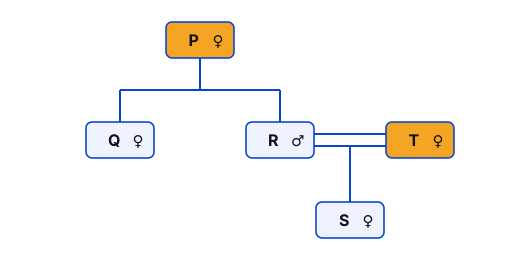
In a certain code language,
A + B means ‘A is the father of B’,
A - B means ‘A is the sister of B’,
A × B means ‘A is the daughter of B’, and
A ÷ B means ‘A is the mother of B’.
Based on the above, how is P related to T if ‘P ÷ Q - R + S × T’?
एक निश्चित कूट भाषा में,
A + B का अर्थ है ‘A, B का पिता है’,
A - B का अर्थ है ‘A, B की बहन है’,
A × B का अर्थ है ‘A, B की पुत्री है’, और
A ÷ B का अर्थ है ‘A, B की माता है’।
उपर्युक्त के आधार पर, यदि ‘P ÷ Q - R + S × T’ है, तो P का T से क्या संबंध है?
  1. ASister’s daughterबहन की पुत्री
  2. BDaughter’s daughterपुत्री की पुत्री
  3. CSon’s daughterपुत्र की पुत्री
  4. DHusband's motherपति की माता
Show answer

Concept: Decode each symbol and build the family tree.

  1. P ÷ Q: P is the mother of Q. Q − R: Q is the sister of R → P is also R's mother.
  2. R + S: R is the father of S. S × T: S is the daughter of T → T is S's mother, i.e. R's wife.
  3. P is the mother of R, the husband of T → P is T's husband's mother.

Trick: Mother of husband = mother-in-law; read the chain from T back to P.

Answer: (D) Husband's mother

अवधारणा: हर चिह्न का अर्थ लगाकर वंश-वृक्ष बनाएँ।

  1. P ÷ Q: P, Q की माँ है। Q − R: Q, R की बहन है → P, R की भी माँ है।
  2. R + S: R, S का पिता है। S × T: S, T की बेटी है → T, S की माँ यानी R की पत्नी है।
  3. P, T के पति R की माँ है → P, T के पति की माँ (सास) है।

ट्रिक: पति की माँ = सास; T से P तक संबंध पढ़ें।

उत्तर: (D) Husband's mother (पति की माँ)

RRB NTPC Undergraduate CBT 1General Intelligence and ReasoningBlood relations (coded)RRB NTPC Undergraduate CBT 1 2025 · 20 Jun Shift 1 →
Q5878.
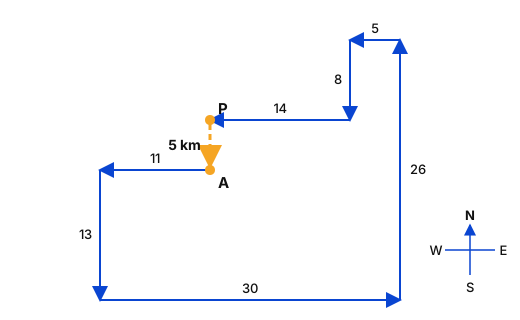
Mr. Yorly starts from Point A and drives 11 km towards West. He then takes a left turn, drives 13 km, turns left and drives 30 km. He then takes a left turn, drives 26 km, turns left and drives 5 km. He then takes a left turn and drives 8 km. He takes a final right turn, drives 14 km and stops at Point P. How far (shortest distance) and towards which direction should he drive in order to reach Point A again? (All turns are 90 degree turns only unless specified.)
श्री योर्ली बिंदु A से प्रारंभ करते हैं और पश्चिम की ओर 11 km गाड़ी चलाते हैं। फिर वे बाएँ मुड़ते हैं, 13 km गाड़ी चलाते हैं, बाएँ मुड़ते हैं और 30 km गाड़ी चलाते हैं। फिर वे बाएँ मुड़ते हैं, 26 km गाड़ी चलाते हैं, बाएँ मुड़ते हैं और 5 km गाड़ी चलाते हैं। फिर वे बाएँ मुड़ते हैं और 8 km गाड़ी चलाते हैं। अंत में वे दाएँ मुड़ते हैं, 14 km गाड़ी चलाते हैं और बिंदु P पर रुक जाते हैं। पुनः बिंदु A तक पहुँचने के लिए उन्हें कितनी दूरी (न्यूनतम दूरी) और किस दिशा में गाड़ी चलानी चाहिए? (जब तक निर्दिष्ट न हो, सभी मोड़ केवल 90 डिग्री के हैं।)
  1. A6 km to the Northउत्तर की ओर 6 km
  2. B3 km to the Eastपूर्व की ओर 3 km
  3. C2 km to the Eastपूर्व की ओर 2 km
  4. D5 km to the Southदक्षिण की ओर 5 km
Show answer

Concept: Plot each move on axes with A at (0, 0); East and North are positive.

  1. West 11 → (−11,0); left = South 13 → (−11,−13); left = East 30 → (19,−13).
  2. Left = North 26 → (19,13); left = West 5 → (14,13); left = South 8 → (14,5).
  3. Right = West 14 → P =(0,5).
  4. P is 5 km North of A, so he must drive 5 km to the South.

Trick: Net East–West: −11+30−5−14=0; net North–South: −13+26−8=5.

Answer: (D) 5 km to the South

अवधारणा: A को (0,0) मानकर हर कदम अक्ष पर लिखें; पूर्व और उत्तर धनात्मक।

  1. पश्चिम 11 → (−11,0); बाएँ = दक्षिण 13 → (−11,−13); बाएँ = पूर्व 30 → (19,−13)।
  2. बाएँ = उत्तर 26 → (19,13); बाएँ = पश्चिम 5 → (14,13); बाएँ = दक्षिण 8 → (14,5)।
  3. दाएँ = पश्चिम 14 → P =(0,5)।
  4. P, A से 5 km उत्तर में है, अतः उसे 5 km दक्षिण जाना होगा।

ट्रिक: शुद्ध पूर्व–पश्चिम: −11+30−5−14=0; शुद्ध उत्तर–दक्षिण: −13+26−8=5।

उत्तर: (D) 5 km दक्षिण की ओर

RRB NTPC Undergraduate CBT 1General Intelligence and ReasoningDirection & distanceRRB NTPC Undergraduate CBT 1 2025 · 20 Jun Shift 1 →
Q5879.
Each letter in the word HARMFUL is arranged in the English alphabetical order. How many letters are there in the English alphabetical order between the letter which is fourth from the left and the one which is second from the right in the new letter cluster thus formed?
शब्द HARMFUL के प्रत्येक अक्षर को अंग्रेज़ी वर्णमाला क्रम में व्यवस्थित किया जाता है। इस प्रकार बने नए अक्षर-समूह में बाएँ से चौथे अक्षर और दाएँ से दूसरे अक्षर के बीच अंग्रेज़ी वर्णमाला क्रम में कितने अक्षर हैं?
  1. A5
  2. B4
  3. C6
  4. D2
Show answer

Concept: Arrange the letters of HARMFUL alphabetically, then count letters between the two picked ones.

  1. Sorted: A F H L M R U.
  2. 4th from left = L (12); 2nd from right = R (18).
  3. Letters between L and R: M, N, O, P, Q → 18−12−1=5.

Trick: Letters between two letters = difference of positions −1.

Answer: (A) 5

अवधारणा: HARMFUL के अक्षरों को वर्णक्रम में लगाएँ, फिर चुने गए दो अक्षरों के बीच के अक्षर गिनें।

  1. क्रम: A F H L M R U।
  2. बाएँ से चौथा = L (12); दाएँ से दूसरा = R (18)।
  3. L और R के बीच: M, N, O, P, Q → 18−12−1=5।

ट्रिक: दो अक्षरों के बीच अक्षर = स्थान-अंतर −1।

उत्तर: (A) 5

RRB NTPC Undergraduate CBT 1General Intelligence and ReasoningLetter arrangementRRB NTPC Undergraduate CBT 1 2025 · 20 Jun Shift 1 →
Q5880.
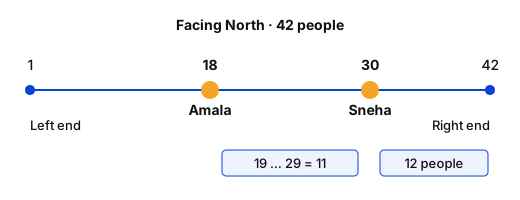
In a row of 42 people facing the north, Amala sits 18th from the left end. If only 12 people sit to the right of Sneha, then how many people sit between Amala and Sneha?
उत्तर की ओर मुख करके बैठे 42 व्यक्तियों की एक पंक्ति में, अमला बाएँ छोर से 18वें स्थान पर बैठी है। यदि स्नेहा के दाईं ओर केवल 12 व्यक्ति बैठे हैं, तो अमला और स्नेहा के बीच कितने व्यक्ति बैठे हैं?
  1. A9
  2. B11
  3. C10
  4. D12
Show answer

Concept: Convert both positions to 'from the left'.

  1. 12 people to the right of Sneha → she is 13th from the right → from left =42−13+1=30th.
  2. Amala is 18th from left. Between 18th and 30th: 30−18−1=11 people.

Trick: People between two ranks = difference −1.

Answer: (B) 11

अवधारणा: दोनों स्थितियों को 'बाएँ से' में बदलें।

  1. स्नेहा के दाएँ 12 लोग → वह दाएँ से 13वीं → बाएँ से =42−13+1=30वीं।
  2. अमला बाएँ से 18वीं। 18वें और 30वें के बीच: 30−18−1=11 लोग।

ट्रिक: दो स्थानों के बीच लोग = अंतर −1।

उत्तर: (B) 11

RRB NTPC Undergraduate CBT 1General Intelligence and ReasoningRanking & positionRRB NTPC Undergraduate CBT 1 2025 · 20 Jun Shift 1 →