Question bank

Q&A: practice questions with answers

Search questions on any topic. Filter by exam category, exam, subject and topic, try the question, then open the answer and explanation.

Courses – airGurukul

8,495 questions found.

Q5961.
A, B and C are partners in a business. A, who invested for 4 months, claims 18 of the total profit. B, who invested for 6 months, claims 18 of the total profit. C invested ₹1560 for 8 months. How much did A contribute?
A, B और C एक व्यवसाय में साझेदार हैं। A, जिसने 4 महीने के लिए निवेश किया, कुल लाभ के 18 का दावा करता है। B, जिसने 6 महीने के लिए निवेश किया, कुल लाभ के 18 का दावा करता है। C ने 8 महीने के लिए ₹1560 का निवेश किया। A ने कितना योगदान दिया?
  1. A₹690
  2. B₹794
  3. C₹810
  4. D₹720
Show answer

Concept: Profit share ∝ capital × time. Find C's share, then the total "capital-months", then A's capital.

  1. As printed, A and B each claim 18, so C gets 1−18−18=34. C's capital-months =1560×8=12480, so total =12480÷34=16640; A's capital =16640×184=₹520 – not among the options, so the printed fraction for B is a printing error.
  2. In the original exam version B claims 13: C gets 1−18−13=1324.
  3. Total capital-months =12480÷1324=23040.
  4. A's capital-months =18×23040=2880, so A's capital =2880÷4=₹720.

Trick: Share ÷ time gives capital: A =1/84 of the total capital-months.

Answer: (D) ₹720

अवधारणा: लाभ का हिस्सा ∝ पूँजी × समय। पहले C का हिस्सा, फिर कुल "पूँजी-माह", फिर A की पूँजी निकालें।

  1. छपे प्रश्न में A और B दोनों 18 लेते हैं, तो C को 34 मिलेगा। C के पूँजी-माह =1560×8=12480, कुल =16640; A की पूँजी =₹520 – यह किसी विकल्प में नहीं है, अतः B का छपा भिन्न मुद्रण-त्रुटि है।
  2. मूल परीक्षा में B का हिस्सा 13 है: C को 1−18−13=1324 मिलता है।
  3. कुल पूँजी-माह =12480÷1324=23040।
  4. A के पूँजी-माह =18×23040=2880, अतः A की पूँजी =2880÷4=₹720।

ट्रिक: हिस्सा ÷ समय = पूँजी का अनुपात।

उत्तर: (D) ₹720
RRB NTPC Undergraduate CBT 1MathematicsPartnershipRRB NTPC Undergraduate CBT 1 2025 · 19 Jun Shift 3 →
Q5962.
A car covers a distance of 360 km in 8 hours at a uniform speed. Find its speed in metres per second.
एक कार एकसमान चाल से 8 घंटे में 360 km की दूरी तय करती है। उसकी चाल मीटर प्रति सेकंड में ज्ञात कीजिए।
  1. A13 m/s
  2. B12 m/s
  3. C12.5 m/s
  4. D13.5 m/s
Show answer

Concept: Speed =distancetime; km/h to m/s multiply by 518.

  1. Speed =3608=45 km/h.
  2. 45×518=12.5 m/s.

Trick: 360000 m28800 s=12.5 directly.

Answer: (C) 12.5 m/s

अवधारणा: चाल =दूरीसमय; km/h को m/s में बदलने हेतु 518 से गुणा।

  1. चाल =3608=45 km/h।
  2. 45×518=12.5 m/s।

ट्रिक: सीधे 360000 m28800 s=12.5।

उत्तर: (C) 12.5 m/s

RRB NTPC Undergraduate CBT 1MathematicsSpeed ConversionRRB NTPC Undergraduate CBT 1 2025 · 19 Jun Shift 3 →
Q5963.
Simplify:
{(1333)÷(137)}÷(28×166+511)+73÷3720 of 203
सरल कीजिए:
{(1333)÷(137)}÷(28×166+511)+73÷3720 of 203
  1. A1944
  2. B1729
  3. C1742
  4. D1437
Show answer

Concept: Order: brackets, then 'of', then ÷/× left to right, then +.

  1. 1333÷137=733; 28×166+511=23+511=3733.
  2. First part =733÷3733=737.
  3. 'of': 3720×203=373; 73÷373=737.
  4. Total =737+737=1437.

Trick: 'of' is done before ÷ – that is what makes the second term 737.

Answer: (D) 1437

अवधारणा: क्रम: कोष्ठक, फिर 'का (of)', फिर बाएँ से दाएँ ÷/×, फिर +।

  1. 1333÷137=733; 28×166+511=23+511=3733।
  2. पहला भाग =733÷3733=737।
  3. 'of': 3720×203=373; 73÷373=737।
  4. कुल =737+737=1437।

ट्रिक: 'of' को ÷ से पहले हल करें – तभी दूसरा पद 737 बनता है।

उत्तर: (D) 1437

RRB NTPC Undergraduate CBT 1MathematicsSimplification – Fractions (BODMAS)RRB NTPC Undergraduate CBT 1 2025 · 19 Jun Shift 3 →
Q5964.
The sum of two positive numbers is 13 and their product is 30. The positive difference between them is ________.
दो धनात्मक संख्याओं का योग 13 है और उनका गुणनफल 30 है। उनके बीच का धनात्मक अंतर ________ है।
  1. A8
  2. B7
  3. C12
  4. D9
Show answer

Concept: (a−b)2=(a+b)2−4ab.

  1. (a−b)2=132−4×30=169−120=49.
  2. a−b=7 (numbers 10 and 3).

Trick: Two numbers with sum 13, product 30: 10 and 3 at sight.

Answer: (B) 7

अवधारणा: (a−b)2=(a+b)2−4ab।

  1. (a−b)2=132−4×30=169−120=49।
  2. a−b=7 (संख्याएँ 10 और 3)।

ट्रिक: योग 13, गुणनफल 30 → तुरंत 10 और 3।

उत्तर: (B) 7

RRB NTPC Undergraduate CBT 1MathematicsAlgebra – Sum and ProductRRB NTPC Undergraduate CBT 1 2025 · 19 Jun Shift 3 →
Q5965.
A trader offers 'buy two, get one free' on a certain type of trousers. The marked price of one trouser is ₹2,700. If the trader still earns a 20% profit after this offer, find the cost price of one trouser.
एक व्यापारी एक निश्चित प्रकार की पतलून पर 'दो खरीदें, एक मुफ़्त पाएँ' का प्रस्ताव देता है। एक पतलून का अंकित मूल्य ₹2,700 है। यदि इस प्रस्ताव के बाद भी व्यापारी 20% लाभ अर्जित करता है, तो एक पतलून का क्रय मूल्य ज्ञात कीजिए।
  1. A₹ 1,500
  2. B₹ 1,450
  3. C₹ 1,600
  4. D₹ 1,550
Show answer

Concept: 'Buy 2 get 1 free' – customer pays for 2 but takes 3.

  1. Money received for 3 trousers =2×2700=5400 → SP per trouser =1800.
  2. 20% profit: CP =18001.2=1500.

Trick: Effective discount =13: 2700×23÷65=1500.

Answer: (A) ₹1,500

अवधारणा: '2 खरीदें 1 मुफ़्त' – ग्राहक 2 का भुगतान कर 3 लेता है।

  1. 3 पतलून के लिए प्राप्त राशि =2×2700=5400 → प्रति पतलून SP =1800।
  2. 20% लाभ: CP =18001.2=1500।

ट्रिक: प्रभावी छूट =13: 2700×23÷65=1500।

उत्तर: (A) ₹1,500

RRB NTPC Undergraduate CBT 1MathematicsOffers and ProfitRRB NTPC Undergraduate CBT 1 2025 · 19 Jun Shift 3 →
Q5966.
Which letter-cluster will replace the question mark (?) in the following series based on the English alphabetical order?
HKS GMP FOM EQJ ?
अंग्रेज़ी वर्णमाला क्रम के आधार पर निम्नलिखित श्रृंखला में प्रश्न चिह्न (?) के स्थान पर कौन-सा अक्षर-समूह आएगा?
HKS GMP FOM EQJ ?
  1. AMTC
  2. BVTF
  3. CPVE
  4. DDSG
Show answer

Concept: Split each term into its 1st, 2nd and 3rd letters and find the step for each position.

  1. 1st letters: H, G, F, E → −1 each → D.
  2. 2nd letters: K, M, O, Q → +2 each → S.
  3. 3rd letters: S, P, M, J → −3 each → G.

Trick: Read column-wise – each position usually has its own constant jump.

Answer: (D) DSG

अवधारणा: प्रत्येक पद के पहले, दूसरे और तीसरे अक्षर को अलग कर हर स्थान का अंतर ज्ञात करें।

  1. पहले अक्षर: H, G, F, E → प्रत्येक −1 → D।
  2. दूसरे अक्षर: K, M, O, Q → प्रत्येक +2 → S।
  3. तीसरे अक्षर: S, P, M, J → प्रत्येक −3 → G।

ट्रिक: कॉलम-वार पढ़ें – प्रायः हर स्थान का अपना स्थिर अंतर होता है।

उत्तर: (D) DSG

RRB NTPC Undergraduate CBT 1General Intelligence and ReasoningAlphabet seriesRRB NTPC Undergraduate CBT 1 2025 · 19 Jun Shift 3 →
Q5967.
Based on the English alphabetical order, three of the following four letter-cluster pairs are alike in a certain way and thus form a group. Which is the one that does NOT belong to that group?
(Note: The odd one out is not based on the number of consonants/vowels or their position in the letter-cluster.)
अंग्रेज़ी वर्णमाला क्रम के आधार पर, निम्नलिखित चार अक्षर-समूह युग्मों में से तीन किसी निश्चित प्रकार से एकसमान हैं और इस प्रकार एक समूह बनाते हैं। वह कौन-सा युग्म है जो उस समूह से संबंधित नहीं है?
(नोट: असंगत अक्षर-समूह, उस अक्षर-समूह में व्यंजनों/स्वरों की संख्या या उनके स्थान पर आधारित नहीं है।)
  1. AIB-DG
  2. BKD-FI
  3. CNG-IL
  4. DPI-KM
Show answer

Concept: Use letter positions (A = 1 … Z = 26) and compare the first letter of each half and the second letter of each half.

  1. IB-DG: I(9)−5 = D(4); B(2)+5 = G(7).
  2. KD-FI: K(11)−5 = F; D(4)+5 = I ✓. NG-IL: N(14)−5 = I; G(7)+5 = L ✓.
  3. PI-KM: P(16)−5 = K ✓, but I(9)+5 = N(14), not M(13) ✗.

Trick: Check both rules in every option; the one that breaks either rule is the odd one.

Answer: (D) PI-KM

अवधारणा: अक्षरों की स्थिति (A = 1 … Z = 26) लें और दोनों भागों के पहले-पहले तथा दूसरे-दूसरे अक्षर की तुलना करें।

  1. IB-DG: I(9)−5 = D(4); B(2)+5 = G(7)।
  2. KD-FI: K(11)−5 = F; D(4)+5 = I ✓। NG-IL: N(14)−5 = I; G(7)+5 = L ✓।
  3. PI-KM: P(16)−5 = K ✓, पर I(9)+5 = N(14), M(13) नहीं ✗।

ट्रिक: हर विकल्प में दोनों नियम जाँचें; जो कोई भी नियम तोड़े वही विषम है।

उत्तर: (D) PI-KM

RRB NTPC Undergraduate CBT 1General Intelligence and ReasoningOdd one out – letter pairsRRB NTPC Undergraduate CBT 1 2025 · 19 Jun Shift 3 →
Q5968.
If 'A' stands for '÷', 'B' stands for '×', 'C' stands for '+' and 'D' stands for '−', what will come in place of the question mark (?) in the following equation?
10 B 3 D 45 A 9 C 2 = ? D 18
यदि 'A' का अर्थ '÷', 'B' का अर्थ '×', 'C' का अर्थ '+' और 'D' का अर्थ '−' है, तो निम्नलिखित समीकरण में प्रश्न चिह्न (?) के स्थान पर क्या आएगा?
10 B 3 D 45 A 9 C 2 = ? D 18
  1. A50
  2. B45
  3. C55
  4. D40
Show answer

Concept: Replace the letters by signs (A =÷, B =×, C =+, D =−) and apply BODMAS.

  1. LHS: 10×3−45÷9+2.
  2. =30−5+2=27.
  3. RHS: ?−18=27⇒?=45.

Trick: Do the division and multiplication first, then addition/subtraction from left to right.

Answer: (B) 45

अवधारणा: अक्षरों के स्थान पर चिह्न रखें (A =÷, B =×, C =+, D =−) और BODMAS लगाएँ।

  1. बायाँ पक्ष: 10×3−45÷9+2।
  2. =30−5+2=27।
  3. दायाँ पक्ष: ?−18=27⇒?=45।

ट्रिक: पहले भाग व गुणा, फिर बाएँ से दाएँ जोड़-घटाव।

उत्तर: (B) 45

RRB NTPC Undergraduate CBT 1General Intelligence and ReasoningMathematical operations – symbol substitutionRRB NTPC Undergraduate CBT 1 2025 · 19 Jun Shift 3 →
Q5969.
Which of the following letter-number clusters will replace the question mark (?) to complete the given series logically?
HDZM 42 BYFR 36 VTLW 30 PORB 24 ?
दी गई श्रृंखला को तार्किक रूप से पूर्ण करने के लिए निम्नलिखित में से कौन-सा अक्षर-संख्या समूह प्रश्न चिह्न (?) का स्थान लेगा?
HDZM 42 BYFR 36 VTLW 30 PORB 24 ?
  1. AJKYH 16
  2. BKKXG 16
  3. CKJYH 18
  4. DJJXG 18
Show answer

Concept: Treat each letter position and the number separately.

  1. 1st letters H, B, V, P: each −6 → J.
  2. 2nd letters D, Y, T, O: each −5 → J.
  3. 3rd letters Z, F, L, R: each +6 → X; 4th letters M, R, W, B: each +5 → G.
  4. Numbers 42, 36, 30, 24: each −6 → 18.

Trick: Use backward wrap: P−6 = J, Z+6 = F (after Z go to A).

Answer: (D) JJXG 18

अवधारणा: हर अक्षर-स्थान और संख्या को अलग-अलग देखें।

  1. पहले अक्षर H, B, V, P: प्रत्येक −6 → J।
  2. दूसरे अक्षर D, Y, T, O: प्रत्येक −5 → J।
  3. तीसरे अक्षर Z, F, L, R: प्रत्येक +6 → X; चौथे अक्षर M, R, W, B: प्रत्येक +5 → G।
  4. संख्याएँ 42, 36, 30, 24: प्रत्येक −6 → 18।

ट्रिक: चक्रीय क्रम याद रखें: Z के बाद A आता है (Z+6 = F)।

उत्तर: (D) JJXG 18

RRB NTPC Undergraduate CBT 1General Intelligence and ReasoningAlpha-numeric seriesRRB NTPC Undergraduate CBT 1 2025 · 19 Jun Shift 3 →
Q5970.
In a certain code language, 'PACK' is coded as '1376' and 'CAKE' is coded as '7615'. What is the code for 'E' in the given code language?
एक निश्चित कूट भाषा में, 'PACK' को '1376' और 'CAKE' को '7615' के रूप में कूटबद्ध किया जाता है। दी गई कूट भाषा में 'E' के लिए कूट क्या है?
  1. A7
  2. B6
  3. C1
  4. D5
Show answer

Concept: Letters common to two words share the common digits; the leftover letter takes the leftover digit.

  1. PACK → 1376 and CAKE → 7615.
  2. Common letters A, C, K ↔ common digits 1, 7, 6.
  3. Leftover: P → 3 and E → 5.

Trick: Match the 'extra' letter with the 'extra' digit – no need to decode A, C, K individually.

Answer: (D) 5

अवधारणा: दो शब्दों के उभयनिष्ठ अक्षरों को उभयनिष्ठ अंक मिलते हैं; बचे अक्षर को बचा अंक मिलता है।

  1. PACK → 1376 और CAKE → 7615।
  2. उभयनिष्ठ अक्षर A, C, K ↔ उभयनिष्ठ अंक 1, 7, 6।
  3. बचे हुए: P → 3 और E → 5।

ट्रिक: 'अतिरिक्त' अक्षर को 'अतिरिक्त' अंक से मिलाएँ – A, C, K अलग से निकालने की ज़रूरत नहीं।

उत्तर: (D) 5

RRB NTPC Undergraduate CBT 1General Intelligence and ReasoningCoding–decodingRRB NTPC Undergraduate CBT 1 2025 · 19 Jun Shift 3 →
Q5971.
What will come in place of the '?' in the following series?
184 164 146 130 116 104 ?
निम्नलिखित श्रृंखला में '?' के स्थान पर क्या आएगा?
184 164 146 130 116 104 ?
  1. A94
  2. B91
  3. C96
  4. D89
Show answer

Concept: Find the differences between consecutive terms.

  1. 184−164=20, 164−146=18, 146−130=16, 130−116=14, 116−104=12.
  2. Differences fall by 2, so next difference =10.
  3. 104−10=94.

Trick: Differences 20, 18, 16, 14, 12, 10 – an even-number countdown.

Answer: (A) 94

अवधारणा: क्रमागत पदों का अंतर निकालें।

  1. 184−164=20, 164−146=18, 146−130=16, 130−116=14, 116−104=12।
  2. अंतर 2-2 घट रहे हैं, अतः अगला अंतर =10।
  3. 104−10=94।

ट्रिक: अंतर 20, 18, 16, 14, 12, 10 – सम संख्याओं की उलटी गिनती।

उत्तर: (A) 94

RRB NTPC Undergraduate CBT 1General Intelligence and ReasoningNumber seriesRRB NTPC Undergraduate CBT 1 2025 · 19 Jun Shift 3 →
Q5972.
Read the given statements and conclusions carefully. Assuming that the information given in the statements is true, even if it appears to be at variance with commonly known facts, decide which of the given conclusion(s) logically follow(s) from the statements.
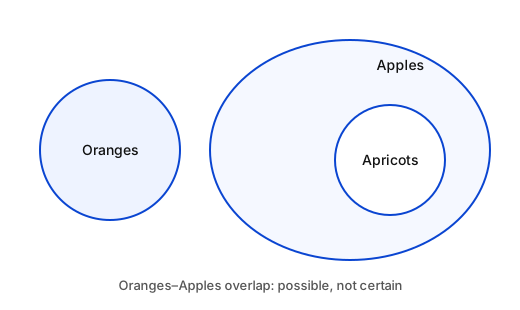
Statements: No orange is an apricot. All apricots are apples.
Conclusion I: No apple is an orange.
Conclusion II: Some oranges are apples.
दिए गए कथनों और निष्कर्षों को ध्यानपूर्वक पढ़िए। यह मानते हुए कि कथनों में दी गई जानकारी सत्य है, भले ही वह सामान्य रूप से ज्ञात तथ्यों से भिन्न प्रतीत होती हो, निर्णय कीजिए कि दिए गए निष्कर्षों में से कौन-सा/कौन-से निष्कर्ष कथनों का तार्किक रूप से अनुसरण करता है/करते हैं।
कथन: कोई संतरा, खुबानी नहीं है। सभी खुबानियाँ, सेब हैं।
निष्कर्ष I: कोई सेब, संतरा नहीं है।
निष्कर्ष II: कुछ संतरे, सेब हैं।
  1. ABoth conclusions (I) and (II) follow.दोनों निष्कर्ष (I) और (II) अनुसरण करते हैं।
  2. BNeither conclusion (I) nor (II) follows.न तो निष्कर्ष (I) और न ही (II) अनुसरण करता है।
  3. COnly conclusion (I) follows.केवल निष्कर्ष (I) अनुसरण करता है।
  4. DOnly conclusion (II) follows.केवल निष्कर्ष (II) अनुसरण करता है।
Show answer

Concept: Draw the least-overlap Venn diagram; a conclusion follows only if it is true in every possible diagram.

  1. All apricots are inside apples; no orange touches apricots.
  2. Oranges may or may not overlap the apple region outside apricots.
  3. So 'No apple is an orange' (I) and 'Some oranges are apples' (II) are both only possibilities – neither is certain.

Trick: 'No A is B' with 'All B are C' gives no definite relation between A and C.

Answer: (B) Neither conclusion (I) nor (II) follows

अवधारणा: न्यूनतम-अतिव्यापन वाला वेन आरेख बनाएँ; निष्कर्ष तभी अनुसरित है जब वह हर संभव आरेख में सत्य हो।

  1. सभी खुबानी (apricots) सेब के भीतर हैं; कोई संतरा खुबानी को नहीं छूता।
  2. संतरे, खुबानी के बाहर वाले सेब क्षेत्र से मिल भी सकते हैं और नहीं भी।
  3. अतः 'कोई सेब संतरा नहीं है' (I) और 'कुछ संतरे सेब हैं' (II) दोनों केवल संभावनाएँ हैं – कोई भी निश्चित नहीं।

ट्रिक: 'कोई A, B नहीं' और 'सभी B, C हैं' से A व C के बीच कोई निश्चित संबंध नहीं निकलता।

उत्तर: (B) न तो निष्कर्ष (I) और न ही (II) अनुसरण करता है

RRB NTPC Undergraduate CBT 1General Intelligence and ReasoningSyllogismRRB NTPC Undergraduate CBT 1 2025 · 19 Jun Shift 3 →
Q5973.
Read the given statements and conclusions carefully. Assuming that the information given in the statements is true, even if it appears to be at variance with commonly known facts, decide which of the given conclusion(s) logically follow(s) from the statements.
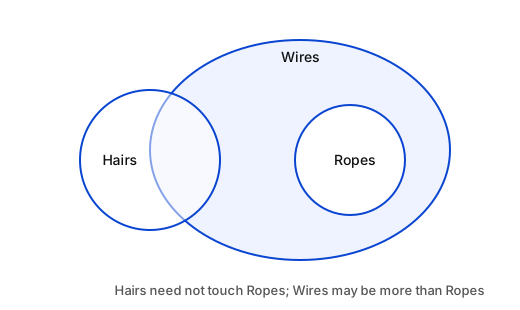
Statements: Some hairs are wires. All ropes are wires.
Conclusion (I): Some hairs are ropes.
Conclusion (II): All wires are ropes.
दिए गए कथनों और निष्कर्षों को ध्यानपूर्वक पढ़िए। यह मानते हुए कि कथनों में दी गई जानकारी सत्य है, भले ही वह सामान्य रूप से ज्ञात तथ्यों से भिन्न प्रतीत होती हो, निर्णय कीजिए कि दिए गए निष्कर्षों में से कौन-सा/कौन-से निष्कर्ष कथनों का तार्किक रूप से अनुसरण करता है/करते हैं।
कथन: कुछ बाल, तार हैं। सभी रस्सियाँ, तार हैं।
निष्कर्ष (I): कुछ बाल, रस्सियाँ हैं।
निष्कर्ष (II): सभी तार, रस्सियाँ हैं।
  1. ABoth conclusions (I) and (II) followदोनों निष्कर्ष (I) और (II) अनुसरण करते हैं
  2. BNeither conclusion (I) nor (II) followsन तो निष्कर्ष (I) और न ही (II) अनुसरण करता है
  3. COnly conclusion (I) followsकेवल निष्कर्ष (I) अनुसरण करता है
  4. DOnly conclusion (II) followsकेवल निष्कर्ष (II) अनुसरण करता है
Show answer

Concept: Draw a Venn diagram; accept a conclusion only if it holds in every possible case.

  1. Ropes lie inside Wires; Hairs overlap Wires.
  2. Hairs can overlap the part of Wires that has no Ropes, so 'Some hairs are ropes' (I) is not certain.
  3. 'All ropes are wires' cannot be reversed to 'All wires are ropes' (II) ✗.

Trick: 'All A are B' never gives 'All B are A'.

Answer: (B) Neither conclusion (I) nor (II) follows

अवधारणा: वेन आरेख बनाएँ; निष्कर्ष तभी मानें जब वह हर संभव स्थिति में सत्य हो।

  1. रस्सियाँ (Ropes) तारों (Wires) के भीतर हैं; बाल (Hairs) तारों से अतिव्यापित हैं।
  2. बाल तारों के उस भाग से मिल सकते हैं जहाँ रस्सियाँ नहीं हैं, अतः 'कुछ बाल रस्सियाँ हैं' (I) निश्चित नहीं।
  3. 'सभी रस्सियाँ तार हैं' को उलटकर 'सभी तार रस्सियाँ हैं' (II) नहीं कह सकते ✗।

ट्रिक: 'सभी A, B हैं' से कभी 'सभी B, A हैं' नहीं निकलता।

उत्तर: (B) न तो निष्कर्ष (I) और न ही (II) अनुसरण करता है

RRB NTPC Undergraduate CBT 1General Intelligence and ReasoningSyllogismRRB NTPC Undergraduate CBT 1 2025 · 19 Jun Shift 3 →
Q5974.
Based on the English alphabetical order, three of the following four letter-clusters are alike in a certain way and thus form a group. Which letter-cluster does NOT belong to that group?
(Note: The odd one out is not based on the number of consonants/vowels or their position in the letter-cluster.)
अंग्रेज़ी वर्णमाला क्रम के आधार पर, निम्नलिखित चार अक्षर-समूहों में से तीन किसी निश्चित प्रकार से एकसमान हैं और इस प्रकार एक समूह बनाते हैं। कौन-सा अक्षर-समूह उस समूह से संबंधित नहीं है?
(नोट: असंगत अक्षर-समूह, उस अक्षर-समूह में व्यंजनों/स्वरों की संख्या या उनके स्थान पर आधारित नहीं है।)
  1. AWOK
  2. BRLF
  3. CYSM
  4. DTNH
Show answer

Concept: Write the positions of the letters and find the gaps.

  1. RLF: R(18) → L(12) → F(6): −6,−6.
  2. YSM: 25 → 19 → 13: −6,−6. TNH: 20 → 14 → 8: −6,−6.
  3. WOK: 23 → 15 → 11: −8,−4 ✗.

Trick: Learn EJOTY (5, 10, 15, 20, 25) to get positions quickly.

Answer: (A) WOK

अवधारणा: अक्षरों की स्थिति लिखें और अंतर निकालें।

  1. RLF: R(18) → L(12) → F(6): −6,−6।
  2. YSM: 25 → 19 → 13: −6,−6। TNH: 20 → 14 → 8: −6,−6।
  3. WOK: 23 → 15 → 11: −8,−4 ✗।

ट्रिक: स्थान जल्दी निकालने के लिए EJOTY (5, 10, 15, 20, 25) याद रखें।

उत्तर: (A) WOK

RRB NTPC Undergraduate CBT 1General Intelligence and ReasoningOdd one out – letter clustersRRB NTPC Undergraduate CBT 1 2025 · 19 Jun Shift 3 →
Q5975.
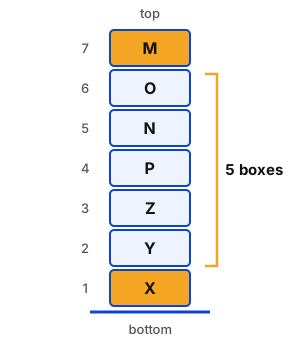
Seven boxes M, N, O, P, X, Y and Z are kept one over the other but not necessarily in the same order. Y is kept second from the bottom. Only three boxes are kept between Y and O. X is kept at one of the positions below Y. Only N is kept between O and P. M is kept at one of the positions above O.
How many boxes are kept between X and M?
सात डिब्बे M, N, O, P, X, Y और Z एक के ऊपर एक रखे गए हैं, परंतु आवश्यक नहीं कि इसी क्रम में हों। Y नीचे से दूसरे स्थान पर रखा गया है। Y और O के बीच केवल तीन डिब्बे रखे गए हैं। X, Y से नीचे के किसी एक स्थान पर रखा गया है। O और P के बीच केवल N रखा गया है। M, O से ऊपर के किसी एक स्थान पर रखा गया है।
X और M के बीच कितने डिब्बे रखे गए हैं?
  1. AOneएक
  2. BFiveपाँच
  3. CThreeतीन
  4. DFourचार
Show answer

Concept: Number the positions 1 (bottom) to 7 (top) and place the fixed boxes first.

  1. Y is 2nd from the bottom; three boxes between Y and O → O at 6.
  2. X is below Y → X at 1. M is above O → M at 7.
  3. Only N between O and P → N at 5, P at 4; Z takes 3.
  4. Between X (1) and M (7): Y, Z, P, N, O = 5 boxes.

Trick: Fill the definite positions first (Y, O), then the 'below/above' clues.

Answer: (B) Five

अवधारणा: स्थानों को 1 (नीचे) से 7 (ऊपर) तक क्रमांकित करें और पहले निश्चित बॉक्स रखें।

  1. Y नीचे से दूसरा; Y और O के बीच तीन बॉक्स → O स्थान 6 पर।
  2. X, Y के नीचे → X स्थान 1 पर। M, O के ऊपर → M स्थान 7 पर।
  3. O और P के बीच केवल N → N स्थान 5, P स्थान 4; Z स्थान 3।
  4. X (1) और M (7) के बीच: Y, Z, P, N, O = 5 बॉक्स।

ट्रिक: पहले निश्चित स्थान (Y, O) भरें, फिर 'नीचे/ऊपर' वाले संकेत।

उत्तर: (B) पाँच

RRB NTPC Undergraduate CBT 1General Intelligence and ReasoningBox stackingRRB NTPC Undergraduate CBT 1 2025 · 19 Jun Shift 3 →
Q5976.
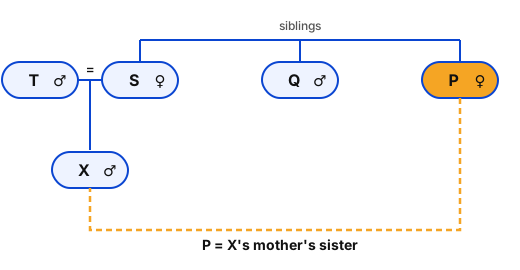
P is the sister of Q. Q is the brother of S. T is the father of X. X is the son of S. How is P related to X?
P, Q की बहन है। Q, S का भाई है। T, X का पिता है। X, S का पुत्र है। P का X से क्या संबंध है?
  1. AFather's motherपिता की माता
  2. BMotherमाता
  3. CSisterबहन
  4. DMother's sisterमाता की बहन
Show answer

Concept: Draw the family tree from the given links.

  1. P, Q and S are siblings (P is a sister, Q a brother).
  2. X is the son of S and T is X's father, so S is X's mother.
  3. P is the sister of X's mother → mother's sister (maternal aunt).

Trick: If the father is already named, the other parent (S) must be the mother.

Answer: (D) Mother's sister

अवधारणा: दिए गए संबंधों से वंश-वृक्ष बनाएँ।

  1. P, Q और S भाई-बहन हैं (P बहन, Q भाई)।
  2. X, S का पुत्र है और T, X का पिता है, अतः S, X की माता है।
  3. P, X की माता की बहन है → मौसी।

ट्रिक: पिता पहले से दिया हो तो दूसरा अभिभावक (S) माता ही होगी।

उत्तर: (D) माता की बहन

RRB NTPC Undergraduate CBT 1General Intelligence and ReasoningBlood relationsRRB NTPC Undergraduate CBT 1 2025 · 19 Jun Shift 3 →
Q5977.
Which letter-cluster will replace the question mark (?) in the following series based on the English alphabetical order?
BIRD FMVH JQZL NUDP ?
अंग्रेज़ी वर्णमाला क्रम के आधार पर निम्नलिखित श्रृंखला में प्रश्न चिह्न (?) के स्थान पर कौन-सा अक्षर-समूह आएगा?
BIRD FMVH JQZL NUDP ?
  1. ARYHT
  2. BRZHS
  3. CSYGT
  4. DSZGS
Show answer

Concept: Compare letters in the same position of successive terms.

  1. 1st: B, F, J, N → +4 → R. 2nd: I, M, Q, U → +4 → Y.
  2. 3rd: R, V, Z, D → +4 → H. 4th: D, H, L, P → +4 → T.
  3. Next term: RYHT.

Trick: Every letter of the cluster moves +4; after Z wrap round to A.

Answer: (A) RYHT

अवधारणा: क्रमागत पदों में समान स्थान के अक्षरों की तुलना करें।

  1. पहला: B, F, J, N → +4 → R। दूसरा: I, M, Q, U → +4 → Y।
  2. तीसरा: R, V, Z, D → +4 → H। चौथा: D, H, L, P → +4 → T।
  3. अगला पद: RYHT।

ट्रिक: समूह का हर अक्षर +4 चलता है; Z के बाद फिर A।

उत्तर: (A) RYHT

RRB NTPC Undergraduate CBT 1General Intelligence and ReasoningAlphabet seriesRRB NTPC Undergraduate CBT 1 2025 · 19 Jun Shift 3 →
Q5978.
Study the following letter series and answer the question.
(Left) Z K J H G F D S T U I A W Q P L M N B X (Right)
In the English alphabetical series, how many letters are there between the letter which is fifth from the right end and the letter which is fourth from the left end?
निम्नलिखित अक्षर श्रृंखला का अध्ययन कीजिए और प्रश्न का उत्तर दीजिए।
(बाएँ) Z K J H G F D S T U I A W Q P L M N B X (दाएँ)
अंग्रेज़ी वर्णमाला श्रृंखला में, दाएँ छोर से पाँचवें अक्षर और बाएँ छोर से चौथे अक्षर के बीच कितने अक्षर हैं?
  1. AThreeतीन
  2. BOneएक
  3. CTwoदो
  4. DMore than threeतीन से अधिक
Show answer

Concept: Pick the two letters from the given series, then count the letters between them in the English alphabet.

  1. The series has 20 letters; 5th from the right =20−5+1=16th from the left → L.
  2. 4th from the left → H.
  3. In the English alphabet, between H and L lie I, J, K → 3 letters.

Trick: Position from left = total − position from right +1.

Answer: (A) Three

अवधारणा: दी गई शृंखला से दोनों अक्षर चुनें, फिर अंग्रेज़ी वर्णमाला में उनके बीच के अक्षर गिनें।

  1. शृंखला में 20 अक्षर हैं; दाएँ से 5वाँ =20−5+1=16वाँ बाएँ से → L।
  2. बाएँ से 4था → H।
  3. अंग्रेज़ी वर्णमाला में H और L के बीच I, J, K → 3 अक्षर।

ट्रिक: बाएँ से स्थान = कुल − दाएँ से स्थान +1।

उत्तर: (A) तीन

RRB NTPC Undergraduate CBT 1General Intelligence and ReasoningLetter series – positionRRB NTPC Undergraduate CBT 1 2025 · 19 Jun Shift 3 →
Q5979.
Based on the alphabetical order, three of the following four are alike in a certain way and thus form a group. Which is the one that does NOT belong to that group?
(Note: The odd one out is not based on the number of consonants/vowels or their position in the letter-cluster.)
वर्णमाला क्रम के आधार पर, निम्नलिखित चार में से तीन किसी निश्चित प्रकार से एकसमान हैं और इस प्रकार एक समूह बनाते हैं। वह कौन-सा है जो उस समूह से संबंधित नहीं है?
(नोट: असंगत अक्षर-समूह, उस अक्षर-समूह में व्यंजनों/स्वरों की संख्या या उनके स्थान पर आधारित नहीं है।)
  1. ALOQ
  2. BKNQ
  3. CSVX
  4. DNQS
Show answer

Concept: Find the gaps between consecutive letters of each cluster.

  1. LOQ: L(12) → O(15) → Q(17): +3,+2.
  2. SVX: 19 → 22 → 24: +3,+2. NQS: 14 → 17 → 19: +3,+2.
  3. KNQ: 11 → 14 → 17: +3,+3 ✗.

Trick: Write the gap pattern under each option – the odd pattern stands out.

Answer: (B) KNQ

अवधारणा: प्रत्येक समूह के क्रमागत अक्षरों का अंतर निकालें।

  1. LOQ: L(12) → O(15) → Q(17): +3,+2।
  2. SVX: 19 → 22 → 24: +3,+2। NQS: 14 → 17 → 19: +3,+2।
  3. KNQ: 11 → 14 → 17: +3,+3 ✗।

ट्रिक: हर विकल्प के नीचे अंतर-पैटर्न लिखें – अलग पैटर्न तुरंत दिखेगा।

उत्तर: (B) KNQ

RRB NTPC Undergraduate CBT 1General Intelligence and ReasoningOdd one out – letter clustersRRB NTPC Undergraduate CBT 1 2025 · 19 Jun Shift 3 →
Q5980.
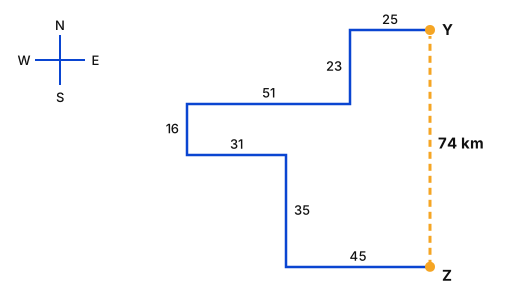
Palash starts from point Y and drives 25 km towards the west. He then takes a left turn and drives 23 km, turns right and drives 51 km. He then takes a left turn and drives 16 km. He takes another left turn and drives 31 km. He then turns right and drives 35 km, turns left, drives 45 km and stops at point Z. How far (shortest distance) and in which direction should he drive in order to reach point Y again? (All turns are 90° turns only unless specified.)
पलाश बिंदु Y से चलना शुरू करता है और पश्चिम की ओर 25 km गाड़ी चलाता है। फिर वह बाएँ मुड़ता है और 23 km गाड़ी चलाता है, दाएँ मुड़ता है और 51 km गाड़ी चलाता है। फिर वह बाएँ मुड़ता है और 16 km गाड़ी चलाता है। वह फिर से बाएँ मुड़ता है और 31 km गाड़ी चलाता है। फिर वह दाएँ मुड़ता है और 35 km गाड़ी चलाता है, बाएँ मुड़ता है, 45 km गाड़ी चलाता है और बिंदु Z पर रुक जाता है। पुनः बिंदु Y पर पहुँचने के लिए उसे कितनी दूरी (न्यूनतम दूरी) और किस दिशा में गाड़ी चलानी चाहिए? (जब तक निर्दिष्ट न किया जाए, सभी मोड़ केवल 90° के मोड़ हैं।)
  1. A77 km towards Northउत्तर की ओर 77 km
  2. B71 km towards Southदक्षिण की ओर 71 km
  3. C73 km towards Southदक्षिण की ओर 73 km
  4. D74 km towards Northउत्तर की ओर 74 km
Show answer

Concept: Track the direction after every turn and add up the east–west and north–south moves separately.

  1. West 25 → left = South 23 → right = West 51 → left = South 16.
  2. Left = East 31 → right = South 35 → left = East 45 → Z.
  3. East–west: −25−51+31+45=0.
  4. North–south: 23+16+35=74 km south of Y. So drive 74 km north.

Trick: When the horizontal moves cancel, the answer is just the vertical total.

Answer: (D) 74 km towards North

अवधारणा: हर मोड़ के बाद दिशा लिखें और पूर्व–पश्चिम तथा उत्तर–दक्षिण की दूरियाँ अलग-अलग जोड़ें।

  1. पश्चिम 25 → बाएँ = दक्षिण 23 → दाएँ = पश्चिम 51 → बाएँ = दक्षिण 16।
  2. बाएँ = पूर्व 31 → दाएँ = दक्षिण 35 → बाएँ = पूर्व 45 → Z।
  3. पूर्व–पश्चिम: −25−51+31+45=0।
  4. उत्तर–दक्षिण: 23+16+35=74 km, Y के दक्षिण में। अतः 74 km उत्तर की ओर जाना होगा।

ट्रिक: क्षैतिज दूरियाँ शून्य हों तो उत्तर केवल ऊर्ध्वाधर कुल है।

उत्तर: (D) 74 km उत्तर की ओर

RRB NTPC Undergraduate CBT 1General Intelligence and ReasoningDirection & distanceRRB NTPC Undergraduate CBT 1 2025 · 19 Jun Shift 3 →