Question bank

Q&A: practice questions with answers

Search questions on any topic. Filter by exam category, exam, subject and topic, try the question, then open the answer and explanation.

Courses – airGurukul

8,495 questions found.

Q6041.
Simplify {(2036)÷(205)}÷(511×2215+312)+55÷3321 of 215
सरल कीजिए: {(2036)÷(205)}÷(511×2215+312)+55÷3321 of 215
  1. A1124
  2. B1327
  3. C140
  4. D1033
Show answer

Concept: BODMAS: brackets first, then "of", then division/multiplication, then addition.

  1. 2036÷205=2036×520=536.
  2. 511×2215+312=23+14=1112; so 536÷1112=533.
  3. "of" first: 3321×215=335; then 55÷335=533.
  4. Total =533+533=1033.

Trick: "of" is solved before ÷ — the commonest trap in such questions.

Answer: (D) 1033

अवधारणा: BODMAS: पहले कोष्ठक, फिर "of" (का), फिर भाग/गुणा, फिर जोड़।

  1. 2036÷205=2036×520=536।
  2. 511×2215+312=23+14=1112; अतः 536÷1112=533।
  3. पहले "of": 3321×215=335; फिर 55÷335=533।
  4. कुल =533+533=1033।

ट्रिक: "of" को ÷ से पहले हल करें — यही सबसे आम गलती है।

उत्तर: (D) 1033
RRB NTPC Undergraduate CBT 1MathematicsSimplification (BODMAS)RRB NTPC Undergraduate CBT 1 2025 · 19 Jun Shift 2 →
Q6042.
An investor’s portfolio value decreases by 30% in the first quarter but then increases by 50% in the next quarter. What is the overall percentage change in the portfolio value?
एक निवेशक के पोर्टफोलियो का मूल्य पहली तिमाही में 30% घट जाता है, लेकिन अगली तिमाही में 50% बढ़ जाता है। पोर्टफोलियो के मूल्य में कुल प्रतिशत परिवर्तन कितना है?
  1. A20% increase20% वृद्धि
  2. B10% increase10% वृद्धि
  3. C15% decrease15% कमी
  4. D5% increase5% वृद्धि
Show answer

Concept: Net change for −a% then +b%: −a+b−ab100.

  1. −30+50−30×50100=20−15=5.
  2. Positive, so it is a 5% increase.
  3. Check: 100→70→105.

Trick: Multiply factors: 0.7×1.5=1.05⇒+5%.

Answer: (D) 5% increase

अवधारणा: −a% फिर +b% का शुद्ध परिवर्तन: −a+b−ab100।

  1. −30+50−30×50100=20−15=5।
  2. धनात्मक, अतः 5% वृद्धि।
  3. जाँच: 100→70→105।

ट्रिक: गुणक गुणा करें: 0.7×1.5=1.05⇒+5%।

उत्तर: (D) 5% वृद्धि

RRB NTPC Undergraduate CBT 1MathematicsSuccessive Percentage ChangeRRB NTPC Undergraduate CBT 1 2025 · 19 Jun Shift 2 →
Q6043.
A shirt costs ₹655. During a sale, its price is reduced by 20%. What is the new price (in ₹) of the shirt?
एक कमीज़ का मूल्य ₹655 है। सेल के दौरान इसके मूल्य में 20% की कमी की जाती है। कमीज़ का नया मूल्य (₹ में) क्या है?
  1. A525
  2. B527
  3. C526
  4. D524
Show answer

Concept: New price =Price×100−discount%100.

  1. 655×80100=655×0.8.
  2. =524.

Trick: 20% of 655 =131; 655−131=524.

Answer: (D) ₹524

अवधारणा: नया मूल्य =मूल्य×100−छूट%100।

  1. 655×80100=655×0.8।
  2. =524।

ट्रिक: 655 का 20%=131; 655−131=524।

उत्तर: (D) ₹524

RRB NTPC Undergraduate CBT 1MathematicsDiscountRRB NTPC Undergraduate CBT 1 2025 · 19 Jun Shift 2 →
Q6044.
A sum is invested at 8% per annum, compounded half‑yearly. If the amount after one year is ₹10,816, then what was the principal (in ₹)?
एक राशि 8% वार्षिक ब्याज दर पर, अर्धवार्षिक रूप से संयोजित चक्रवृद्धि ब्याज पर निवेश की जाती है। यदि एक वर्ष बाद मिश्रधन ₹10,816 है, तो मूलधन (₹ में) कितना था?
  1. A10,200
  2. B10,500
  3. C10,000
  4. D10,400
Show answer

Concept: Half-yearly: rate =82=4% per period, periods =2; A=P(1+r100)n.

  1. 10816=P(1.04)2=1.0816P.
  2. P=108161.0816=10000.

Trick: (1.04)2=1.0816 — the amount\'s digits "10816" give away P=10,000.

Answer: (C) ₹10,000

अवधारणा: अर्धवार्षिक: दर =82=4% प्रति अवधि, अवधियाँ =2; A=P(1+r100)n।

  1. 10816=P(1.04)2=1.0816P।
  2. P=108161.0816=10000।

ट्रिक: (1.04)2=1.0816 — राशि के अंक "10816" से ही P=10,000 दिख जाता है।

उत्तर: (C) ₹10,000

RRB NTPC Undergraduate CBT 1MathematicsCompound Interest (Half-yearly)RRB NTPC Undergraduate CBT 1 2025 · 19 Jun Shift 2 →
Q6045.
The sum of two positive numbers is 14 and their product is 45. The positive difference between them is:
दो धनात्मक संख्याओं का योग 14 है और उनका गुणनफल 45 है। उनके बीच का धनात्मक अंतर कितना है?
  1. A8
  2. B4
  3. C7
  4. D11
Show answer

Concept: (a−b)2=(a+b)2−4ab.

  1. (a−b)2=142−4×45=196−180=16.
  2. a−b=4 (numbers are 9 and 5).

Trick: Find two numbers with sum 14, product 45: 9 and 5, difference 4.

Answer: (B) 4

अवधारणा: (a−b)2=(a+b)2−4ab।

  1. (a−b)2=142−4×45=196−180=16।
  2. a−b=4 (संख्याएँ 9 और 5)।

ट्रिक: योग 14, गुणनफल 45 वाली संख्याएँ: 9 और 5, अंतर 4।

उत्तर: (B) 4

RRB NTPC Undergraduate CBT 1MathematicsAlgebraic IdentitiesRRB NTPC Undergraduate CBT 1 2025 · 19 Jun Shift 2 →
Q6046.
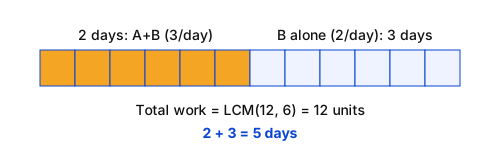
A and B can do a piece of work in 12 days and 6 days, respectively. Both work for 2 days and then A leaves. B completed the remaining work alone. The whole work was completed in ______________ days.
A और B किसी कार्य को क्रमशः 12 दिन और 6 दिन में कर सकते हैं। दोनों 2 दिन तक काम करते हैं और फिर A काम छोड़ देता है। B ने शेष कार्य अकेले पूरा किया। संपूर्ण कार्य ______________ दिनों में पूरा हुआ।
  1. A6
  2. B3
  3. C4
  4. D5
Show answer

Concept: Take total work = LCM of days; daily work = units per day.

  1. Work =LCM(12,6)=12 units; A = 1 unit/day, B = 2 units/day.
  2. Together for 2 days: 2×3=6 units.
  3. Remaining 6 units by B: 62=3 days.
  4. Total =2+3=5 days.

Trick: B alone takes 6 days; in 2 days A did 212=16 of work = 1 day of B, so B needs 6−1=5 days in all.

Answer: (D) 5

अवधारणा: कुल कार्य = दिनों का LCM; प्रतिदिन कार्य = इकाई प्रति दिन।

  1. कार्य =LCM(12,6)=12 इकाई; A = 1, B = 2 इकाई/दिन।
  2. 2 दिन साथ में: 2×3=6 इकाई।
  3. शेष 6 इकाई B द्वारा: 62=3 दिन।
  4. कुल =2+3=5 दिन।

ट्रिक: B अकेले 6 दिन; A ने 2 दिन में 212=16 कार्य किया = B का 1 दिन, अतः कुल 6−1=5 दिन।

उत्तर: (D) 5

RRB NTPC Undergraduate CBT 1MathematicsTime and WorkRRB NTPC Undergraduate CBT 1 2025 · 19 Jun Shift 2 →
Q6047.
The LCM of the numbers 15, 10 and 0.4 is:
संख्याओं 15, 10 और 0.4 का LCM (लघुत्तम समापवर्त्य) कितना है?
  1. A36
  2. B34
  3. C32
  4. D30
Show answer

Concept: LCM of fractions =LCM of numeratorsHCF of denominators.

  1. Write 15=151, 10=101, 0.4=25.
  2. LCM of numerators (15,10,2)=30; HCF of denominators (1,1,5)=1.
  3. LCM =301=30.

Trick: Check: 30÷0.4=75, 30÷15=2, 30÷10=3 — all whole numbers.

Answer: (D) 30

अवधारणा: भिन्नों का LCM =अंशों का LCMहरों का HCF।

  1. 15=151, 10=101, 0.4=25।
  2. अंशों (15,10,2) का LCM =30; हरों (1,1,5) का HCF =1।
  3. LCM =301=30।

ट्रिक: जाँच: 30÷0.4=75, 30÷15=2, 30÷10=3 — सभी पूर्ण संख्याएँ।

उत्तर: (D) 30

RRB NTPC Undergraduate CBT 1MathematicsLCM of DecimalsRRB NTPC Undergraduate CBT 1 2025 · 19 Jun Shift 2 →
Q6048.
Which of the following options is the nearest number to 95061 that is divisible by 9?
निम्नलिखित विकल्पों में से कौन-सी संख्या, 95061 की निकटतम ऐसी संख्या है जो 9 से विभाज्य है?
  1. A95058
  2. B95057
  3. C95060
  4. D95059
Show answer

Concept: A number is divisible by 9 if its digit sum is divisible by 9.

  1. Digit sum of 95061 =9+5+0+6+1=21; remainder on ÷9 is 3.
  2. Below: 95061−3=95058 (digit sum 27 ✔). Above: 95061+6=95067.
  3. 95058 is nearer (3 away) and is among the options.

Trick: Subtract the remainder of the digit sum: 21→ remainder 3, so 95061−3.

Answer: (A) 95058

अवधारणा: जिस संख्या के अंकों का योग 9 से विभाज्य हो, वह 9 से विभाज्य होती है।

  1. 95061 का अंक योग =9+5+0+6+1=21; ÷9 पर शेष 3।
  2. नीचे: 95061−3=95058 (अंक योग 27 ✔)। ऊपर: 95061+6=95067।
  3. 95058 निकटतम (3 दूर) है और विकल्पों में है।

ट्रिक: अंक योग का शेष घटाएँ: 21→ शेष 3, अतः 95061−3।

उत्तर: (A) 95058

RRB NTPC Undergraduate CBT 1MathematicsDivisibility by 9RRB NTPC Undergraduate CBT 1 2025 · 19 Jun Shift 2 →
Q6049.
The ages of father and son are in the ratio of 12:7. Four years from now, their ages will be in the ratio of 5:3. Find the sum of their present ages.
पिता और पुत्र की आयु का अनुपात 12:7 है। अब से चार वर्ष बाद, उनकी आयु का अनुपात 5:3 होगा। उनकी वर्तमान आयु का योग ज्ञात कीजिए।
  1. A128 years128 वर्ष
  2. B152 years152 वर्ष
  3. C119 years119 वर्ष
  4. D139 years139 वर्ष
Show answer

Concept: Take present ages as multiples of the ratio and use the future ratio.

  1. Father =12x, son =7x.
  2. 12x+47x+4=53⇒36x+12=35x+20⇒x=8.
  3. Sum =19x=19×8=152 years.

Trick: Sum must be a multiple of 12+7=19: only 152=19×8 fits.

Answer: (B) 152 years

अवधारणा: वर्तमान आयु को अनुपात के गुणज मानकर भविष्य का अनुपात लगाएँ।

  1. पिता =12x, पुत्र =7x।
  2. 12x+47x+4=53⇒36x+12=35x+20⇒x=8।
  3. योग =19x=19×8=152 वर्ष।

ट्रिक: योग 12+7=19 का गुणज होना चाहिए: केवल 152=19×8।

उत्तर: (B) 152 वर्ष

RRB NTPC Undergraduate CBT 1MathematicsProblems on AgesRRB NTPC Undergraduate CBT 1 2025 · 19 Jun Shift 2 →
Q6050.
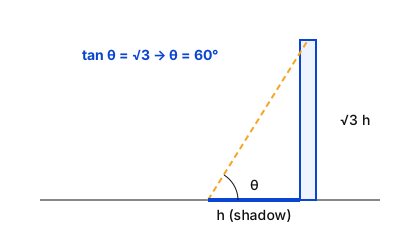
If the ratio of the height of a tower and the length of its shadow on the ground is √3 : 1, then the angle of elevation of the sun is:
यदि किसी मीनार की ऊँचाई और भूमि पर उसकी छाया की लंबाई का अनुपात √3 : 1 है, तो सूर्य का उन्नयन कोण कितना है?
  1. A65°
  2. B45°
  3. C60°
  4. D30°
Show answer

Concept: tanθ=heightshadow, where θ is the sun\'s angle of elevation.

  1. tanθ=31=3.
  2. tan60∘=3⇒θ=60∘.

Trick: Height > shadow means angle >45∘; 3:1 is the 60∘ pair.

Answer: (C) 60∘

अवधारणा: tanθ=ऊँचाईछाया, जहाँ θ सूर्य का उन्नयन कोण है।

  1. tanθ=31=3।
  2. tan60∘=3⇒θ=60∘।

ट्रिक: ऊँचाई > छाया हो तो कोण >45∘; 3:1 का अर्थ 60∘।

उत्तर: (C) 60∘

RRB NTPC Undergraduate CBT 1MathematicsHeights and DistancesRRB NTPC Undergraduate CBT 1 2025 · 19 Jun Shift 2 →
Q6051.
P sells an item to Q and earns 12% profit. Q sells it to R and earns a profit of ₹26. If the item was sold to R directly by P at the same price, the percentage of profit would have been 25%. The cost price of the item is ₹_____.
P एक वस्तु Q को बेचता है और 12% लाभ अर्जित करता है। Q उसे R को बेचता है और ₹26 का लाभ अर्जित करता है। यदि वस्तु को P द्वारा सीधे R को उसी मूल्य पर बेचा जाता, तो लाभ प्रतिशत 25% होता। वस्तु का क्रय मूल्य ₹_____ है।
  1. A180
  2. B220
  3. C250
  4. D200
Show answer

Concept: Q\'s selling price is the price R pays; compare it with the 25% profit price.

  1. Let CP =x. Q buys at 1.12x and sells to R at 1.12x+26.
  2. Direct sale at 25% profit: 1.25x.
  3. 1.25x=1.12x+26⇒0.13x=26⇒x=200.

Trick: 25%−12%=13% of CP equals ₹26, so CP =2613×100=200.

Answer: (D) 200

अवधारणा: Q का विक्रय मूल्य = R द्वारा दिया मूल्य; इसे 25% लाभ वाले मूल्य के बराबर रखें।

  1. क्रय मूल्य =x। Q ने 1.12x में खरीदा, R को 1.12x+26 में बेचा।
  2. सीधे 25% लाभ पर: 1.25x।
  3. 1.25x=1.12x+26⇒0.13x=26⇒x=200।

ट्रिक: 25%−12%=13% = ₹26, अतः क्रय मूल्य =2613×100=200।

उत्तर: (D) 200

RRB NTPC Undergraduate CBT 1MathematicsProfit and LossRRB NTPC Undergraduate CBT 1 2025 · 19 Jun Shift 2 →
Q6052.
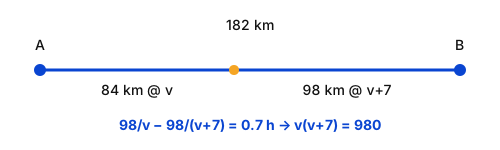
A cyclist travels from town A to town B, a distance of 182 km. For the first 84 km, he rides at a certain speed. For the remaining distance (98 km), he increases his speed by 7 km/h and therefore reaches 42 minutes earlier than the time he would have taken if he had travelled the entire distance at the original speed. Find the original speed.
एक साइकिल चालक नगर A से नगर B तक 182 km की दूरी तय करता है। पहले 84 km वह एक निश्चित चाल से चलता है। शेष दूरी (98 km) के लिए वह अपनी चाल 7 km/h बढ़ा देता है और इसलिए वह उस समय से 42 मिनट पहले पहुँच जाता है, जो संपूर्ण दूरी मूल चाल से तय करने पर लगता। मूल चाल ज्ञात कीजिए।
  1. A21 km/hr
  2. B28 km/hr
  3. C22.5 km/hr
  4. D24 km/hr
Show answer

Concept: Time saved occurs only on the 98 km part: 98v−98v+7=4260 h.

  1. 98·7v(v+7)=0.7.
  2. v(v+7)=6860.7=980.
  3. 28×35=980⇒v=28km/h.

Trick: Test options in v(v+7)=980: 28×35=980 ✔ directly.

Answer: (B) 28 km/hr

अवधारणा: समय की बचत केवल 98 km भाग पर: 98v−98v+7=4260 घंटा।

  1. 98·7v(v+7)=0.7।
  2. v(v+7)=6860.7=980।
  3. 28×35=980⇒v=28km/h।

ट्रिक: विकल्प v(v+7)=980 में रखें: 28×35=980 ✔

उत्तर: (B) 28 km/hr

RRB NTPC Undergraduate CBT 1MathematicsSpeed, Time and DistanceRRB NTPC Undergraduate CBT 1 2025 · 19 Jun Shift 2 →
Q6053.
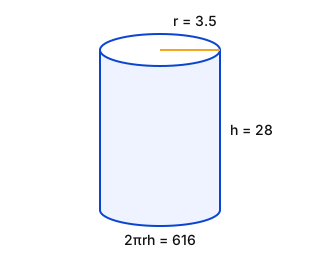
The radius of the base of a cylinder is 3.5 cm and its curved surface area is 616 cm². Find the volume of the cylinder.
(Take π=227)
एक बेलन के आधार की त्रिज्या 3.5 cm है और उसका वक्र पृष्ठीय क्षेत्रफल 616 cm² है। बेलन का आयतन ज्ञात कीजिए।
(Take π=227)
  1. A1370 cm³
  2. B1024 cm³
  3. C1424 cm³
  4. D1078 cm³
Show answer

Concept: CSA =2πrh, Volume =πr2h.

  1. 2×227×3.5×h=616⇒22h=616⇒h=28cm.
  2. V=227×3.5×3.5×28=38.5×28.
  3. V=1078cm3.

Trick: V=CSA×r2=616×3.52=1078.

Answer: (D) 1078 cm³

अवधारणा: वक्र पृष्ठीय क्षेत्रफल =2πrh, आयतन =πr2h।

  1. 2×227×3.5×h=616⇒22h=616⇒h=28cm।
  2. V=227×3.5×3.5×28=38.5×28।
  3. V=1078cm3।

ट्रिक: V=CSA×r2=616×3.52=1078।

उत्तर: (D) 1078 cm³

RRB NTPC Undergraduate CBT 1MathematicsCylinder – CSA and VolumeRRB NTPC Undergraduate CBT 1 2025 · 19 Jun Shift 2 →
Q6054.
What is the average of prime numbers lying between 5 and 30?
5 और 30 के बीच स्थित अभाज्य संख्याओं का औसत कितना है?
  1. A17
  2. B19
  3. C21
  4. D23
Show answer

Concept: Average =sumcount.

  1. Primes between 5 and 30: 7, 11, 13, 17, 19, 23, 29 (7 numbers).
  2. Sum =119.
  3. Average =1197=17.

Trick: "Between 5 and 30" excludes 5; including it would wrongly give 1248=15.5, not an option.

Answer: (A) 17

अवधारणा: औसत =योगसंख्या।

  1. 5 और 30 के बीच अभाज्य: 7, 11, 13, 17, 19, 23, 29 (7 संख्याएँ)।
  2. योग =119।
  3. औसत =1197=17।

ट्रिक: "5 और 30 के बीच" में 5 शामिल नहीं; 5 जोड़ने पर 1248=15.5 आएगा, जो विकल्प नहीं।

उत्तर: (A) 17

RRB NTPC Undergraduate CBT 1MathematicsAverage of PrimesRRB NTPC Undergraduate CBT 1 2025 · 19 Jun Shift 2 →
Q6055.
A fruit seller uses a faulty balance that reads 900 grams as 1 kg. He sells apples at ₹150 per kg (as per faulty balance). If his purchase price is ₹120 per kg (actual weight), what is his actual profit percentage?
एक फल विक्रेता एक दोषपूर्ण तराज़ू का उपयोग करता है जो 900 ग्राम को 1 kg दर्शाता है। वह सेब ₹150 प्रति kg (दोषपूर्ण तराज़ू के अनुसार) की दर से बेचता है। यदि उसका क्रय मूल्य ₹120 प्रति kg (वास्तविक भार) है, तो उसका वास्तविक लाभ प्रतिशत कितना है?
  1. A3889%
  2. B3849%
  3. C3789%
  4. D3749%
Show answer

Concept: Compare the actual cost of the goods given with the money received.

  1. For "1 kg" he gives 900 g and gets ₹150.
  2. Cost of 900 g =120×0.9=108.
  3. Profit %=150−108108×100=42108×100=3889%.

Trick: Combined: 150120×1000900=2518⇒718×100=3889%.

Answer: (A) 3889%

अवधारणा: दिए गए सामान की वास्तविक लागत की तुलना प्राप्त राशि से करें।

  1. "1 kg" के बदले 900 g देता है और ₹150 लेता है।
  2. 900 g की लागत =120×0.9=108।
  3. लाभ%=150−108108×100=42108×100=3889%।

ट्रिक: एक साथ: 150120×1000900=2518⇒718×100=3889%।

उत्तर: (A) 3889%

RRB NTPC Undergraduate CBT 1MathematicsFaulty BalanceRRB NTPC Undergraduate CBT 1 2025 · 19 Jun Shift 2 →
Q6056.
₹1,472 is divided among Rohit, Maya, and Vikas in such a way that if ₹25, ₹52, and ₹18 be deducted from their respective shares, they have money in the ratio 15:19:17. Find Vikas’s amount after deduction.
₹1,472 को रोहित, माया और विकास के बीच इस प्रकार बाँटा जाता है कि यदि उनके संबंधित हिस्सों में से क्रमशः ₹25, ₹52 और ₹18 घटा दिए जाएँ, तो उनके पास धनराशि का अनुपात 15:19:17 हो जाता है। कटौती के बाद विकास की राशि ज्ञात कीजिए।
  1. A₹359
  2. B₹509
  3. C₹559
  4. D₹459
Show answer

Concept: Remove the deductions first; the rest is split in the given ratio.

  1. Total deducted =25+52+18=95; remaining =1472−95=1377.
  2. 15k+19k+17k=51k=1377⇒k=27.
  3. Vikas after deduction =17×27=459.

Trick: Remaining amount must be divisible by 51: 1377÷51=27.

Answer: (D) ₹459

अवधारणा: पहले कटौतियाँ हटाएँ; शेष राशि दिए अनुपात में बँटती है।

  1. कुल कटौती =25+52+18=95; शेष =1472−95=1377।
  2. 15k+19k+17k=51k=1377⇒k=27।
  3. कटौती के बाद विकास =17×27=459।

ट्रिक: शेष राशि 51 से विभाज्य: 1377÷51=27।

उत्तर: (D) ₹459

RRB NTPC Undergraduate CBT 1MathematicsRatio and ProportionRRB NTPC Undergraduate CBT 1 2025 · 19 Jun Shift 2 →
Q6057.
The marked price of a cooker is the same at four shops I, II, III and IV. Shop I allows two successive discounts of 89% and 68%, shop II allows successive discounts of 50% and 51%, shop III allows successive discounts of 25% and 11% and shop IV allows successive discounts of 94%, 49%, and 21% on the marked price of the cooker. Which shop is selling the cooker at the lowest price?
चार दुकानों I, II, III और IV पर एक कुकर का अंकित मूल्य समान है। दुकान I कुकर के अंकित मूल्य पर 89% और 68% की दो क्रमिक छूट देती है, दुकान II 50% और 51% की क्रमिक छूट देती है, दुकान III 25% और 11% की क्रमिक छूट देती है और दुकान IV 94%, 49% और 21% की क्रमिक छूट देती है। कौन-सी दुकान कुकर को सबसे कम मूल्य पर बेच रही है?
  1. AI
  2. BIV
  3. CII
  4. DIII
Show answer

Concept: Selling price after successive discounts =MP×(1−d1)(1−d2)…

  1. I: 0.11×0.32=0.0352 of MP.
  2. II: 0.50×0.49=0.245; III: 0.75×0.89=0.6675.
  3. IV: 0.06×0.51×0.79≈0.0242 of MP — the smallest.

Trick: Compare the "remaining" fractions, not the discount totals; IV leaves only about 2.4% of MP.

Answer: (B) IV

अवधारणा: क्रमिक छूट के बाद मूल्य =MP×(1−d1)(1−d2)…

  1. I: 0.11×0.32=0.0352 MP।
  2. II: 0.50×0.49=0.245; III: 0.75×0.89=0.6675।
  3. IV: 0.06×0.51×0.79≈0.0242 MP — सबसे कम।

ट्रिक: छूट नहीं, बचा हुआ भाग तुलना करें; IV में केवल लगभग 2.4% MP बचता है।

उत्तर: (B) IV

RRB NTPC Undergraduate CBT 1MathematicsSuccessive DiscountsRRB NTPC Undergraduate CBT 1 2025 · 19 Jun Shift 2 →
Q6058.
If the cost of 6 chocolates, 12 chocolates, and x chocolates are in proportion such that x is the third proportional, how many chocolates correspond to x?
यदि 6 चॉकलेट, 12 चॉकलेट और x चॉकलेट का मूल्य इस प्रकार समानुपात में है कि x तृतीयानुपाती है, तो x कितनी चॉकलेट के संगत है?
  1. A24
  2. B32
  3. C28
  4. D26
Show answer

Concept: Third proportional of a and b: a:b=b:x⇒x=b2a.

  1. 6:12=12:x.
  2. x=1226=1446=24.

Trick: 6→12 doubles, so 12→24.

Answer: (A) 24

अवधारणा: a और b का तृतीयानुपाती: a:b=b:x⇒x=b2a।

  1. 6:12=12:x।
  2. x=1226=1446=24।

ट्रिक: 6→12 दोगुना, तो 12→24।

उत्तर: (A) 24

RRB NTPC Undergraduate CBT 1MathematicsThird ProportionalRRB NTPC Undergraduate CBT 1 2025 · 19 Jun Shift 2 →
Q6059.
Simplify: (32×9)3272×34
सरल कीजिए: (32×9)3272×34
  1. A13
  2. B3
  3. C9
  4. D19
Show answer

Concept: Write everything as powers of 3: (am)n=amn, am×an=am+n.

  1. Numerator: (32×32)3=(34)3=312.
  2. Denominator: 272×34=36×34=310.
  3. 312310=32=9.

Trick: Convert 9 and 27 to base 3 first — then just subtract exponents.

Answer: (C) 9

अवधारणा: सबको 3 की घात में लिखें: (am)n=amn, am×an=am+n।

  1. अंश: (32×32)3=(34)3=312।
  2. हर: 272×34=36×34=310।
  3. 312310=32=9।

ट्रिक: 9 और 27 को पहले आधार 3 में बदलें — फिर घातांक घटाएँ।

उत्तर: (C) 9

RRB NTPC Undergraduate CBT 1MathematicsLaws of ExponentsRRB NTPC Undergraduate CBT 1 2025 · 19 Jun Shift 2 →
Q6060.
The average of 8 numbers is 43. If each number is decreased by 7, what will the new average be?
8 संख्याओं का औसत 43 है। यदि प्रत्येक संख्या में 7 की कमी की जाए, तो नया औसत क्या होगा?
  1. A43
  2. B36
  3. C8
  4. D29
Show answer

Concept: If every number decreases by k, the average also decreases by k.

  1. New average =43−7=36.

Yaad rakhein: Adding/subtracting the same value to all shifts the average by that value; multiplying scales it.

Answer: (B) 36

अवधारणा: प्रत्येक संख्या k घटे तो औसत भी k घटता है।

  1. नया औसत =43−7=36।

याद रखें: सभी में समान मान जोड़ने/घटाने से औसत उतना ही बदलता है; गुणा करने पर उसी अनुपात में।

उत्तर: (B) 36

RRB NTPC Undergraduate CBT 1MathematicsAverageRRB NTPC Undergraduate CBT 1 2025 · 19 Jun Shift 2 →