Question bank

Q&A: practice questions with answers

Search questions on any topic. Filter by exam category, exam, subject and topic, try the question, then open the answer and explanation.

Courses – airGurukul

8,495 questions found.

Q6181.
In a certain code language, ‘depth salad road’ is coded as ' ok oh wc' and ‘salad shirt rat’ is coded as ‘ut cu oh’. How is ‘salad’ coded in the given language?
एक निश्चित कूट भाषा में, ‘depth salad road’ को ' ok oh wc' के रूप में और ‘salad shirt rat’ को ‘ut cu oh’ के रूप में कूटबद्ध किया जाता है। दी गई भाषा में ‘salad’ को किस प्रकार कूटबद्ध किया जाता है?
  1. Aok
  2. Boh
  3. Cwc
  4. Dut
Show answer

Concept: A word common to two sentences takes the code common to both.

  1. 'depth salad road' → ok, oh, wc.
  2. 'salad shirt rat' → ut, cu, oh.
  3. Common word = salad; common code = oh.

Trick: Common word ↔ common code.

Answer: (B) oh

अवधारणा: दो वाक्यों में समान शब्द का कोड भी दोनों में समान होता है।

  1. 'depth salad road' → ok, oh, wc।
  2. 'salad shirt rat' → ut, cu, oh।
  3. समान शब्द = salad; समान कोड = oh।

ट्रिक: समान शब्द ↔ समान कोड।

उत्तर: (B) oh
RRB NTPC Undergraduate CBT 1General Intelligence and ReasoningCoding-decoding – wordsRRB NTPC Undergraduate CBT 1 2025 · 19 Jun Shift 1 →
Q6182.
Based on the alphabetical order, three of the following four are alike in a certain way and thus form a group. Which is the one that does not belong to that group?
(Note: The odd man out is not based on the number of consonants/vowels or their position in the letter cluster.)
वर्णमाला क्रम के आधार पर, निम्नलिखित चार में से तीन किसी निश्चित प्रकार से एकसमान हैं और इस प्रकार एक समूह बनाते हैं। वह कौन-सा है जो उस समूह से संबंधित नहीं है?
(नोट: असंगत, अक्षर-समूह में व्यंजनों/स्वरों की संख्या या उनके स्थान पर आधारित नहीं है।)
  1. AFCZ
  2. BTQN
  3. CEBY
  4. DBZV
Show answer

Concept: Find gaps between consecutive letters (A=1 … Z=26, wrap around after Z).

  1. FCZ: F→−3C→−3Z; TQN: T→−3Q→−3N; EBY: E→−3B→−3Y.
  2. BZV: B→−2Z→−4V – different.

Trick: Three go −3,−3; BZV breaks it.

Answer: (D) BZV

अवधारणा: क्रमागत अक्षरों का अंतर देखें (A=1 … Z=26; Z के बाद चक्र)।

  1. FCZ: F→−3C→−3Z; TQN: T→−3Q→−3N; EBY: E→−3B→−3Y।
  2. BZV: B→−2Z→−4V – अलग।

ट्रिक: तीन में −3,−3; BZV अलग।

उत्तर: (D) BZV

RRB NTPC Undergraduate CBT 1General Intelligence and ReasoningOdd one out – lettersRRB NTPC Undergraduate CBT 1 2025 · 19 Jun Shift 1 →
Q6183.
Read the given statement(s) and conclusions carefully. Assuming that the information given in the statements is true, even if it appears to be at variance with commonly known facts, decide which of the given conclusions logically follow(s) from the statement(s).
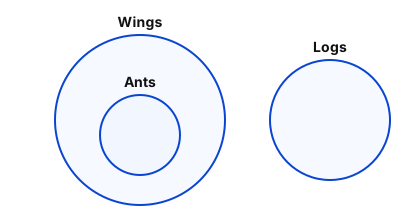
Statements: All ants are wings. No logs are wings.
Conclusion (I): No logs are ants.
Conclusion (II): Some wings are ants.
दिए गए कथन/कथनों और निष्कर्षों को ध्यानपूर्वक पढ़िए। यह मानते हुए कि कथनों में दी गई जानकारी सत्य है, भले ही वह सामान्यतः ज्ञात तथ्यों से भिन्न प्रतीत होती हो, निर्णय कीजिए कि दिए गए निष्कर्षों में से कौन-सा/कौन-से निष्कर्ष तार्किक रूप से कथन/कथनों का अनुसरण करता है/करते हैं।
कथन: सभी चींटियाँ, पंख हैं। कोई लट्ठा, पंख नहीं है।
निष्कर्ष (I): कोई लट्ठा, चींटी नहीं है।
निष्कर्ष (II): कुछ पंख, चींटियाँ हैं।
  1. ABoth conclusions (I) and (II) followनिष्कर्ष (I) और (II) दोनों अनुसरण करते हैं
  2. BOnly conclusion (I) followsकेवल निष्कर्ष (I) अनुसरण करता है
  3. COnly conclusion (II) followsकेवल निष्कर्ष (II) अनुसरण करता है
  4. DNeither conclusion (I) nor (II) followsन तो निष्कर्ष (I) और न ही (II) अनुसरण करता है
Show answer

Concept: Draw the Venn diagram: 'All A are B' puts A inside B; 'No C is B' keeps C outside B.

  1. Ants lie completely inside Wings.
  2. Logs lie completely outside Wings, so they cannot touch Ants ⇒ (I) No logs are ants – follows.
  3. Since all ants are wings (and ants exist), some wings are ants ⇒ (II) follows.

Trick: 'All A are B' ⇒ 'Some B are A' always.

Answer: (A) Both conclusions (I) and (II) follow

अवधारणा: Venn चित्र बनाएँ: 'सभी A, B हैं' में A, B के भीतर; 'कोई C, B नहीं' में C, B से बाहर।

  1. Ants पूरी तरह Wings के भीतर।
  2. Logs पूरी तरह Wings के बाहर, अतः Ants को छू नहीं सकते ⇒ (I) कोई log, ant नहीं – सही।
  3. सभी ants, wings हैं, अतः कुछ wings, ants हैं ⇒ (II) सही।

ट्रिक: 'सभी A, B हैं' ⇒ 'कुछ B, A हैं' – हमेशा।

उत्तर: (A) निष्कर्ष (I) और (II) दोनों अनुसरण करते हैं

RRB NTPC Undergraduate CBT 1General Intelligence and ReasoningSyllogismRRB NTPC Undergraduate CBT 1 2025 · 19 Jun Shift 1 →
Q6184.
In a certain code language,
A ÷ B means ‘A is the son of B’,
A # B means ‘A is the wife of B’,
A + B means ‘A is the brother of B’ and
A & B means ‘A is the father of B’.
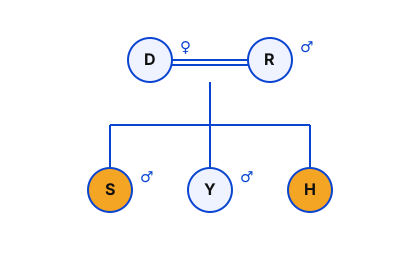
How is S related to H if ‘S ÷ D # R & Y + H’?
एक निश्चित कूट भाषा में,
A ÷ B का अर्थ है ‘A, B का पुत्र है’,
A # B का अर्थ है ‘A, B की पत्नी है’,
A + B का अर्थ है ‘A, B का भाई है’ और
A & B का अर्थ है ‘A, B का पिता है’।
यदि ‘S ÷ D # R & Y + H’ है, तो S का H से क्या संबंध है?
  1. AFatherपिता
  2. BSonपुत्र
  3. CHusbandपति
  4. DBrotherभाई
Show answer

Concept: Decode each symbol step by step and build a family tree.

  1. S ÷ D: S is the son of D.
  2. D # R: D is the wife of R ⇒ D and R are S's parents.
  3. R & Y: R is the father of Y; Y + H: Y is the brother of H ⇒ S, Y, H are children of R and D.
  4. S is male ⇒ S is the brother of H.

Trick: Two children of the same parents, one male ⇒ brother.

Answer: (D) Brother

अवधारणा: हर चिह्न का अर्थ क्रम से लगाकर परिवार वृक्ष बनाएँ।

  1. S ÷ D: S, D का पुत्र है।
  2. D # R: D, R की पत्नी है ⇒ D और R, S के माता-पिता।
  3. R & Y: R, Y का पिता; Y + H: Y, H का भाई ⇒ S, Y, H तीनों R-D की संतान।
  4. S पुरुष है ⇒ S, H का भाई है।

ट्रिक: एक ही माता-पिता की संतान, पुरुष ⇒ भाई।

उत्तर: (D) भाई

RRB NTPC Undergraduate CBT 1General Intelligence and ReasoningCoded blood relationRRB NTPC Undergraduate CBT 1 2025 · 19 Jun Shift 1 →
Q6185.
What will come in place of ‘?’ in the following equation, if ‘+’ and ‘-‘ are interchanged and ‘x’ and ‘÷’ are interchanged?
94 ÷ 5 + 262 - 24 x 6 = ?
यदि ‘+’ और ‘-‘ को आपस में बदल दिया जाए तथा ‘x’ और ‘÷’ को आपस में बदल दिया जाए, तो निम्नलिखित समीकरण में ‘?’ के स्थान पर क्या आएगा?
94 ÷ 5 + 262 - 24 x 6 = ?
  1. A212
  2. B209
  3. C210
  4. D211
Show answer

Concept: Swap the signs, then apply BODMAS.

  1. After swapping: 94×5−262+24÷6.
  2. 94×5=470, 24÷6=4.
  3. 470−262+4=212.

Trick: Do × and ÷ first, then + and − from left to right.

Answer: (A) 212

अवधारणा: चिह्न बदलें, फिर BODMAS लगाएँ।

  1. बदलने के बाद: 94×5−262+24÷6।
  2. 94×5=470, 24÷6=4।
  3. 470−262+4=212।

ट्रिक: पहले ×, ÷, फिर बाएँ से दाएँ +, −।

उत्तर: (A) 212

RRB NTPC Undergraduate CBT 1General Intelligence and ReasoningMathematical operations – interchangeRRB NTPC Undergraduate CBT 1 2025 · 19 Jun Shift 1 →
Q6186.
What should come in place of the ‘?’ in the given series?
15 22 40 67 105 152 ?
दी गई शृंखला में ‘?’ के स्थान पर क्या आना चाहिए?
15 22 40 67 105 152 ?
  1. A210
  2. B156
  3. C165
  4. D167
Show answer

Concept: Use first and second differences.

  1. First differences: 7,18,27,38,47.
  2. Second differences: 11,9,11,9 – alternating, so next is 11.
  3. Next difference =47+11=58 ⇒ 152+58=210.

Trick: When first differences look irregular, check the second differences.

Answer: (A) 210

अवधारणा: प्रथम और द्वितीय अंतर देखें।

  1. प्रथम अंतर: 7,18,27,38,47।
  2. द्वितीय अंतर: 11,9,11,9 – बारी-बारी, अतः अगला 11।
  3. अगला अंतर =47+11=58 ⇒ 152+58=210।

ट्रिक: प्रथम अंतर अनियमित लगे तो द्वितीय अंतर देखें।

उत्तर: (A) 210

RRB NTPC Undergraduate CBT 1General Intelligence and ReasoningNumber seriesRRB NTPC Undergraduate CBT 1 2025 · 19 Jun Shift 1 →
Q6187.
Select the set in which the numbers are related in the same way as are the numbers of the following sets.
(NOTE: Operations should be performed on the whole numbers, without breaking down the numbers into their constituent digits. E.g. 13 – Operations on 13 such as
adding/subtracting/multiplying etc. to 13 can be performed. Breaking down 13 into 1 and 3 and then performing mathematical operations on 1 and 3 is not allowed.) 18, 200
17, 189
उस समुच्चय का चयन कीजिए जिसमें संख्याएँ उसी प्रकार संबंधित हैं जिस प्रकार निम्नलिखित समुच्चयों की संख्याएँ संबंधित हैं।
(नोट: संख्याओं को उनके घटक अंकों में विभाजित किए बिना, पूर्ण संख्याओं पर संक्रियाएँ की जानी चाहिए। उदाहरण के लिए, 13 – 13 पर संक्रियाएँ जैसे
13 में जोड़ना/घटाना/गुणा करना आदि किया जा सकता है। 13 को 1 और 3 में विभाजित करना और फिर 1 और 3 पर गणितीय संक्रियाएँ करना वर्जित है।) 18, 200
17, 189
  1. A22, 246
  2. B19, 211
  3. C16, 176
  4. D24, 264
Show answer

Concept: Find one rule that turns the first number into the second.

  1. 18×11+2=200 ✓; 17×11+2=189 ✓.
  2. Check options: 19×11+2=211 ✓.
  3. 22×11+2=244≠246; 16×11+2=178≠176; 24×11+2=266≠264.

Trick: Second number ≈ 11× first – then fix the small remainder (+2).

Answer: (B) 19, 211

अवधारणा: पहली संख्या को दूसरी में बदलने वाला एक नियम खोजें।

  1. 18×11+2=200 ✓; 17×11+2=189 ✓।
  2. विकल्प जाँचें: 19×11+2=211 ✓।
  3. 22×11+2=244≠246; 16×11+2=178≠176; 24×11+2=266≠264।

ट्रिक: दूसरी संख्या ≈ पहली का 11 गुना – फिर छोटा शेष (+2) देखें।

उत्तर: (B) 19, 211

RRB NTPC Undergraduate CBT 1General Intelligence and ReasoningNumber relationshipRRB NTPC Undergraduate CBT 1 2025 · 19 Jun Shift 1 →
Q6188.
Refer to the following number series and answer the question that follows. Counting to be done from left to right only. (All numbers are single-digit numbers only.)
(Left) 6 4 2 9 3 2 6 8 4 2 8 8 1 6 7 6 5 8 7 5 4 3 4 (Right)
How many such odd digits are there, each of which immediately preceded by an even digit and also immediately followed by an odd digit?
निम्नलिखित संख्या शृंखला को देखिए और उसके बाद दिए गए प्रश्न का उत्तर दीजिए। गिनती केवल बाएँ से दाएँ की जानी है। (सभी संख्याएँ केवल एक-अंकीय संख्याएँ हैं।)
(बाएँ) 6 4 2 9 3 2 6 8 4 2 8 8 1 6 7 6 5 8 7 5 4 3 4 (दाएँ)
ऐसे कितने विषम अंक हैं, जिनमें से प्रत्येक के ठीक पहले एक सम अंक है और ठीक बाद एक विषम अंक है?
  1. ANoneकोई नहीं
  2. BTwoदो
  3. COneएक
  4. DThreeतीन
Show answer

Concept: Required pattern: Even – Odd – Odd.

  1. Check each odd digit: 2 9 3 ✓ (2 even, 3 odd).
  2. 8 7 5 ✓ (8 even, 5 odd).
  3. Others fail: 9 3 2 (prev odd), 8 1 6, 6 7 6, 6 5 8, 7 5 4, 4 3 4 (next even). Count =2.

Trick: Scan only for 'even, odd, odd' triplets.

Answer: (B) Two

अवधारणा: आवश्यक पैटर्न: सम – विषम – विषम।

  1. हर विषम अंक जाँचें: 2 9 3 ✓ (2 सम, 3 विषम)।
  2. 8 7 5 ✓ (8 सम, 5 विषम)।
  3. बाकी असफल: 9 3 2 (पहले विषम), 8 1 6, 6 7 6, 6 5 8, 7 5 4, 4 3 4 (बाद में सम)। कुल =2।

ट्रिक: केवल 'सम, विषम, विषम' त्रिक खोजें।

उत्तर: (B) दो

RRB NTPC Undergraduate CBT 1General Intelligence and ReasoningNumber series – countingRRB NTPC Undergraduate CBT 1 2025 · 19 Jun Shift 1 →
Q6189.
What should come in place of ? in the given series based on the English alphabetical order?
LMO STV ZAC GHJ ?
अंग्रेज़ी वर्णमाला क्रम के आधार पर दी गई शृंखला में ? के स्थान पर क्या आना चाहिए?
LMO STV ZAC GHJ ?
  1. ANNP
  2. BMPQ
  3. CNPP
  4. DNOQ
Show answer

Concept: Each group is formed with gaps +1,+2 and groups move +7.

  1. 1st letters: L, S, Z, G → +7 → N.
  2. Inside each group: LMO, STV, ZAC, GHJ → +1,+2.
  3. So N → O → Q ⇒ NOQ.

Trick: Find the new first letter, then apply the inner pattern.

Answer: (D) NOQ

अवधारणा: हर समूह के भीतर अंतर +1,+2 है और समूह +7 से आगे बढ़ते हैं।

  1. पहले अक्षर: L, S, Z, G → +7 → N।
  2. समूह के भीतर: LMO, STV, ZAC, GHJ → +1,+2।
  3. अतः N → O → Q ⇒ NOQ।

ट्रिक: नया पहला अक्षर निकालें, फिर भीतरी पैटर्न लगाएँ।

उत्तर: (D) NOQ

RRB NTPC Undergraduate CBT 1General Intelligence and ReasoningLetter seriesRRB NTPC Undergraduate CBT 1 2025 · 19 Jun Shift 1 →
Q6190.
Select the pair which follows the same pattern as that followed by the two pairs given below. Both pairs follow the same pattern.
DGD−ADA
ILI−FIF
उस युग्म का चयन कीजिए जो उसी पैटर्न का अनुसरण करता है जिसका अनुसरण नीचे दिए गए दो युग्म करते हैं। दोनों युग्म एक ही पैटर्न का अनुसरण करते हैं।
DGD−ADA
ILI−FIF
  1. AACY−WZW
  2. BADA−WAW
  3. CACY−XAX
  4. DADA−XAX
Show answer

Concept: Each letter of the first cluster moves −3 to form the second.

  1. DGD → ADA: D−3=A, G−3=D.
  2. ILI → FIF: I−3=F, L−3=I.
  3. ADA → A−3=X (wrap), D−3=A ⇒ XAX ✓. (ACY changes into a non-palindrome, and WAW uses −4.)

Trick: Before Z comes Y, X: so A−3=X.

Answer: (D) ADA−XAX

अवधारणा: पहले समूह का हर अक्षर −3 होकर दूसरा बनता है।

  1. DGD → ADA: D−3=A, G−3=D।
  2. ILI → FIF: I−3=F, L−3=I।
  3. ADA → A−3=X (चक्र), D−3=A ⇒ XAX ✓। (WAW में −4 है।)

ट्रिक: A से पीछे Z, Y, X: अतः A−3=X।

उत्तर: (D) ADA−XAX

RRB NTPC Undergraduate CBT 1General Intelligence and ReasoningLetter pairs – patternRRB NTPC Undergraduate CBT 1 2025 · 19 Jun Shift 1 →
Q6191.
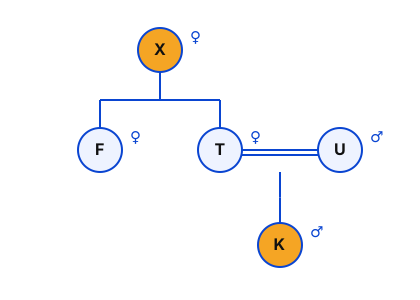
X is the mother of F. F is the sister of T. U is the father of K. K is the son of T. How is X related to K?
X, F की माता है। F, T की बहन है। U, K का पिता है। K, T का पुत्र है। X का K से क्या संबंध है?
  1. AMother's motherमाता की माता
  2. BMother's sisterमाता की बहन
  3. CSisterबहन
  4. DMotherमाता
Show answer

Concept: Draw the family tree from the statements.

  1. X is the mother of F, and F is the sister of T ⇒ X is also T's mother.
  2. U is the father of K and K is the son of T ⇒ T is K's mother (U's wife).
  3. So X is the mother of K's mother.

Trick: Parent of a parent = grandparent; here maternal grandmother.

Answer: (A) Mother's mother

अवधारणा: कथनों से परिवार वृक्ष बनाएँ।

  1. X, F की माता है और F, T की बहन ⇒ X, T की भी माता।
  2. U, K का पिता और K, T का पुत्र ⇒ T, K की माता (U की पत्नी)।
  3. अतः X, K की माता की माता (नानी) है।

ट्रिक: माता-पिता के माता-पिता = दादा-दादी/नाना-नानी; यहाँ नानी।

उत्तर: (A) माता की माता

RRB NTPC Undergraduate CBT 1General Intelligence and ReasoningBlood relationRRB NTPC Undergraduate CBT 1 2025 · 19 Jun Shift 1 →
Q6192.
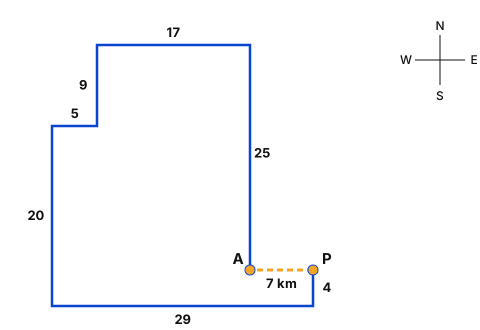
Mr. Vasu starts from Point A and drives 25 km towards the north. He then takes a left turn, drives 17 km, turns left and drives 9 km. He then takes a right turn, drives 5 km, turns left and drives 20 km. He then takes a left turn and drives 29 km. He takes a final left turn, drives 4 km and stops at Point P. How far (shortest distance) and towards which direction should he drive in order to reach Point A again? (All turns are 90-degree turns only unless specified.)
श्री वासु बिंदु A से चलना शुरू करते हैं और उत्तर की ओर 25 km गाड़ी चलाते हैं। फिर वे बाएँ मुड़ते हैं, 17 km गाड़ी चलाते हैं, बाएँ मुड़ते हैं और 9 km गाड़ी चलाते हैं। फिर वे दाएँ मुड़ते हैं, 5 km गाड़ी चलाते हैं, बाएँ मुड़ते हैं और 20 km गाड़ी चलाते हैं। फिर वे बाएँ मुड़ते हैं और 29 km गाड़ी चलाते हैं। वे अंतिम बार बाएँ मुड़ते हैं, 4 km गाड़ी चलाते हैं और बिंदु P पर रुक जाते हैं। पुनः बिंदु A पर पहुँचने के लिए उन्हें कितनी दूरी (न्यूनतम दूरी) तक और किस दिशा में गाड़ी चलानी चाहिए? (जब तक निर्दिष्ट न किया जाए, सभी मोड़ केवल 90 डिग्री के मोड़ हैं।)
  1. A8 km to the northउत्तर की ओर 8 km
  2. B9 km to the southदक्षिण की ओर 9 km
  3. C10 km to the eastपूर्व की ओर 10 km
  4. D7 km to the westपश्चिम की ओर 7 km
Show answer

Concept: Take A as origin; north = +y, east = +x, and track each turn.

  1. North 25 → (0,25); left = west 17 → (−17,25); left = south 9 → (−17,16).
  2. Right = west 5 → (−22,16); left = south 20 → (−22,−4).
  3. Left = east 29 → (7,−4); left = north 4 → P(7,0).
  4. P is 7 km east of A ⇒ he must drive 7 km west.

Trick: Net east–west: −17−5+29=7 (east); net north–south: 25−9−20+4=0.

Answer: (D) 7 km to the west

अवधारणा: A को मूल बिंदु लें; उत्तर =+y, पूर्व =+x, हर मोड़ पर दिशा बदलें।

  1. उत्तर 25 → (0,25); बाएँ = पश्चिम 17 → (−17,25); बाएँ = दक्षिण 9 → (−17,16)।
  2. दाएँ = पश्चिम 5 → (−22,16); बाएँ = दक्षिण 20 → (−22,−4)।
  3. बाएँ = पूर्व 29 → (7,−4); बाएँ = उत्तर 4 → P(7,0)।
  4. P, A से 7 km पूर्व में ⇒ उसे 7 km पश्चिम जाना होगा।

ट्रिक: शुद्ध पूर्व–पश्चिम: −17−5+29=7 (पूर्व); उत्तर–दक्षिण: 25−9−20+4=0।

उत्तर: (D) 7 km पश्चिम की ओर

RRB NTPC Undergraduate CBT 1General Intelligence and ReasoningDirection and distanceRRB NTPC Undergraduate CBT 1 2025 · 19 Jun Shift 1 →
Q6193.
If 2 is added to each odd digit and 1 is subtracted from each even digit in the number 163742, how many digits will appear more than once in the new number thus formed?
यदि संख्या 163742 में प्रत्येक विषम अंक में 2 जोड़ा जाए और प्रत्येक सम अंक में से 1 घटाया जाए, तो इस प्रकार बनी नई संख्या में कितने अंक एक से अधिक बार आएँगे?
  1. ANoneकोई नहीं
  2. BOneएक
  3. CTwoदो
  4. DThreeतीन
Show answer

Concept: Odd digit +2, even digit −1, then look for repeats.

  1. 1→3, 6→5, 3→5, 7→9, 4→3, 2→1.
  2. New number: 355931.
  3. 3 appears twice and 5 appears twice ⇒ 2 digits repeat.

Trick: Count distinct digits that repeat, not total repeats.

Answer: (C) Two

अवधारणा: विषम अंक +2, सम अंक −1, फिर दोहराव देखें।

  1. 1→3, 6→5, 3→5, 7→9, 4→3, 2→1।
  2. नई संख्या: 355931।
  3. 3 दो बार और 5 दो बार ⇒ 2 अंक दोहराए गए।

ट्रिक: दोहराए गए अलग-अलग अंक गिनें।

उत्तर: (C) दो

RRB NTPC Undergraduate CBT 1General Intelligence and ReasoningNumber operationsRRB NTPC Undergraduate CBT 1 2025 · 19 Jun Shift 1 →
Q6194.
What should come in place of ‘?’ in the given series?
111 114 120 129 ? 156
दी गई शृंखला में ‘?’ के स्थान पर क्या आना चाहिए?
111 114 120 129 ? 156
  1. A151
  2. B141
  3. C144
  4. D148
Show answer

Concept: The differences increase by 3 each time.

  1. Differences: 3,6,9,12,15.
  2. 129+12=141.
  3. Check: 141+15=156 ✓.

Trick: Differences are multiples of 3: 3×1,3×2,…

Answer: (B) 141

अवधारणा: अंतर हर बार 3 से बढ़ते हैं।

  1. अंतर: 3,6,9,12,15।
  2. 129+12=141।
  3. जाँच: 141+15=156 ✓।

ट्रिक: अंतर 3 के गुणज हैं: 3×1,3×2,…

उत्तर: (B) 141

RRB NTPC Undergraduate CBT 1General Intelligence and ReasoningNumber seriesRRB NTPC Undergraduate CBT 1 2025 · 19 Jun Shift 1 →
Q6195.
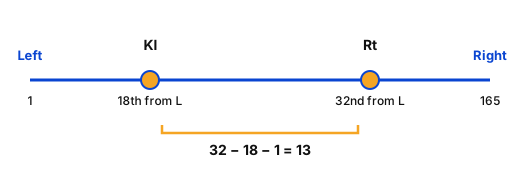
All 165 people are standing in a row facing north. Rt is 134th from the right end while Kl is 18th from the left end. How many people are there between Rt and Kl?
सभी 165 व्यक्ति एक पंक्ति में उत्तर की ओर मुख करके खड़े हैं। Rt दाएँ छोर से 134वें स्थान पर है जबकि Kl बाएँ छोर से 18वें स्थान पर है। Rt और Kl के बीच कितने व्यक्ति हैं?
  1. A12
  2. B13
  3. C14
  4. D16
Show answer

Concept: Position from left =Total−position from right+1.

  1. Rt from left =165−134+1=32.
  2. Kl is 18th from left.
  3. People between =32−18−1=13.

Trick: When L + R exceeds the total, convert both to the same end first.

Answer: (B) 13

अवधारणा: बाएँ से स्थान =कुल−दाएँ से स्थान+1।

  1. Rt बाएँ से =165−134+1=32वाँ।
  2. Kl बाएँ से 18वाँ।
  3. बीच में व्यक्ति =32−18−1=13।

ट्रिक: जब बायाँ + दायाँ, कुल से अधिक हो, तो दोनों को एक ही सिरे से बदलें।

उत्तर: (B) 13

RRB NTPC Undergraduate CBT 1General Intelligence and ReasoningRanking – rowRRB NTPC Undergraduate CBT 1 2025 · 19 Jun Shift 1 →
Q6196.
Which of the following is a large scale industry?
निम्नलिखित में से कौन-सा एक बड़े पैमाने का उद्योग है?
  1. ASteel plantsइस्पात संयंत्र
  2. BFood processingखाद्य प्रसंस्करण
  3. CPotteryमृद्भांड (कुम्हारी)
  4. DHandloomहथकरघा
Show answer

Concept: Industries are classified by capital invested, labour and output; large-scale industries need huge capital and heavy machinery.

  1. Steel plants (e.g. Bhilai, Bokaro, Jamshedpur) need very high investment, huge raw material and thousands of workers → large scale.
  2. Pottery and handloom are cottage/small-scale; food processing is largely small and medium scale.

Yaad rakhein: Iron & steel is called the ‘basic’ or ‘key’ industry — a classic large-scale industry.

Answer: (A) Steel plants

अवधारणा: उद्योगों का वर्गीकरण पूँजी, श्रम और उत्पादन के आधार पर होता है; बड़े पैमाने के उद्योगों में भारी पूँजी व मशीनें लगती हैं।

  1. इस्पात संयंत्र (भिलाई, बोकारो, जमशेदपुर) में बहुत अधिक निवेश, कच्चा माल और हज़ारों श्रमिक → बड़े पैमाने का उद्योग।
  2. मिट्टी के बर्तन और हथकरघा कुटीर/लघु उद्योग हैं; खाद्य प्रसंस्करण अधिकांशतः लघु-मध्यम स्तर का है।

याद रखें: लोहा-इस्पात को ‘आधारभूत’ (key) उद्योग कहा जाता है — बड़े पैमाने का उत्तम उदाहरण।

उत्तर: (A) इस्पात संयंत्र (Steel plants)

RRB NTPC Undergraduate CBT 1General AwarenessIndustriesRRB NTPC Undergraduate CBT 1 2025 · 18 Jun Shift 3 →
Q6197.
Which of the following temple complexes is known for its 24-metre-high vimana and stone image of Shiva?
निम्नलिखित में से कौन-सा मंदिर परिसर अपने 24 मीटर ऊँचे विमान और शिव की पाषाण प्रतिमा के लिए जाना जाता है?
  1. AAiravatesvara Templeऐरावतेश्वर मंदिर
  2. BKandariya Mahadeva Templeकंदरिया महादेव मंदिर
  3. CGangaikondacholisvaramगंगैकोंडचोलीश्वरम
  4. DMahabodhi Templeमहाबोधि मंदिर
Show answer

Concept: Great Living Chola Temples (UNESCO): Brihadeeswara (Thanjavur), Gangaikondacholisvaram and Airavatesvara (Darasuram).

  1. The Airavatesvara Temple at Darasuram was built by Rajaraja Chola II (12th century).
  2. It has a vimana about 24 m high and a stone image of Shiva; the Thanjavur and Gangaikondacholapuram vimanas are much taller.
  3. Kandariya Mahadeva is a Chandela temple at Khajuraho; Mahabodhi is a Buddhist temple at Bodh Gaya.

Yaad rakhein: Darasuram = Airavatesvara = Rajaraja II — smallest of the three Great Living Chola Temples.

Answer: (A) Airavatesvara Temple

अवधारणा: महान जीवंत चोल मंदिर (UNESCO): बृहदेश्वर (तंजावुर), गंगैकोंडचोलिस्वरम और ऐरावतेश्वर (दारासुरम)।

  1. दारासुरम का ऐरावतेश्वर मंदिर राजराज चोल द्वितीय (12वीं शताब्दी) ने बनवाया।
  2. इसका विमान लगभग 24 मीटर ऊँचा है और इसमें शिव की पाषाण प्रतिमा है; तंजावुर व गंगैकोंडचोलपुरम के विमान कहीं ऊँचे हैं।
  3. कंदरिया महादेव खजुराहो का चंदेल मंदिर है; महाबोधि बोधगया का बौद्ध मंदिर है।

याद रखें: दारासुरम = ऐरावतेश्वर = राजराज द्वितीय — तीनों चोल मंदिरों में सबसे छोटा।

उत्तर: (A) ऐरावतेश्वर मंदिर

RRB NTPC Undergraduate CBT 1General AwarenessChola TemplesRRB NTPC Undergraduate CBT 1 2025 · 18 Jun Shift 3 →
Q6198.
In 2025, which stratovolcano in New Zealand was granted individual legal status, becoming the third natural entity in the country to receive personhood?
2025 में, न्यूज़ीलैंड के किस स्ट्रैटोज्वालामुखी (stratovolcano) को व्यक्तिगत कानूनी दर्जा प्रदान किया गया, जिससे वह देश में व्यक्तित्व (personhood) प्राप्त करने वाली तीसरी प्राकृतिक इकाई बन गया?
  1. AMount Cookमाउंट कुक
  2. BMount Ruapehuमाउंट रुआपेहु
  3. CTaranaki Maungaतारानाकी मौंगा
  4. DMount Tongariroमाउंट टोंगारिरो
Show answer

Concept: New Zealand gives legal personhood to natural entities sacred to Māori iwi.

  1. In January 2025 New Zealand’s Parliament passed the Taranaki Maunga Collective Redress Bill, granting Mount Taranaki the rights of a legal person.
  2. It is the third such entity after Te Urewera (2014) and the Whanganui River (2017).

Yaad rakhein: Sequence: Te Urewera (forest) → Whanganui (river) → Taranaki (mountain).

Answer: (C) Taranaki Maunga

अवधारणा: न्यूज़ीलैंड माओरी समुदाय के लिए पवित्र प्राकृतिक स्थलों को विधिक व्यक्ति (legal person) का दर्जा देता है।

  1. जनवरी 2025 में न्यूज़ीलैंड संसद ने Taranaki Maunga Collective Redress Bill पारित कर माउंट तारानाकी को विधिक व्यक्ति के अधिकार दिए।
  2. यह Te Urewera (2014) और Whanganui नदी (2017) के बाद तीसरी ऐसी प्राकृतिक इकाई है।

याद रखें: क्रम: Te Urewera (वन) → Whanganui (नदी) → Taranaki (पर्वत)।

उत्तर: (C) तारानाकी मौंगा (Taranaki Maunga)

RRB NTPC Undergraduate CBT 1General AwarenessLegal Personhood of NatureRRB NTPC Undergraduate CBT 1 2025 · 18 Jun Shift 3 →
Q6199.
According to Census 2011, which Union Territory had the lowest literacy rate?
जनगणना 2011 के अनुसार, किस केंद्र शासित प्रदेश की साक्षरता दर सबसे कम थी?
  1. ADadra and Nagar Haveliदादरा और नगर हवेली
  2. BAndaman and Nicobar Islandsअंडमान और निकोबार द्वीपसमूह
  3. CLakshadweepलक्षद्वीप
  4. DChandigarhचंडीगढ़
Show answer

Concept: Census 2011 literacy rates of Union Territories.

  1. Dadra and Nagar Haveli had the lowest UT literacy rate, about 76.2%.
  2. Lakshadweep (about 91.8%) was the highest among UTs; Andaman & Nicobar (about 86.6%) and Chandigarh (about 86%) were also far above.

Yaad rakhein: UT literacy, Census 2011: highest Lakshadweep, lowest Dadra & Nagar Haveli. (States: Kerala highest, Bihar lowest.)

Answer: (A) Dadra and Nagar Haveli

अवधारणा: जनगणना 2011 में केंद्र शासित प्रदेशों की साक्षरता दर।

  1. दादरा और नगर हवेली की साक्षरता लगभग 76.2% — केंद्र शासित प्रदेशों में सबसे कम।
  2. लक्षद्वीप (लगभग 91.8%) सबसे अधिक; अंडमान-निकोबार (लगभग 86.6%) व चंडीगढ़ (लगभग 86%) भी कहीं ऊपर थे।

याद रखें: जनगणना 2011 (UT): सर्वाधिक लक्षद्वीप, न्यूनतम दादरा-नगर हवेली। (राज्य: केरल सर्वाधिक, बिहार न्यूनतम)

उत्तर: (A) दादरा और नगर हवेली

RRB NTPC Undergraduate CBT 1General AwarenessCensus 2011 – LiteracyRRB NTPC Undergraduate CBT 1 2025 · 18 Jun Shift 3 →
Q6200.
In which of the following years did the Tata Group take over state-owned Air India?
निम्नलिखित में से किस वर्ष में टाटा समूह ने सरकारी स्वामित्व वाली एयर इंडिया का अधिग्रहण किया?
  1. A2022
  2. B2013
  3. C2019
  4. D2016
Show answer

Concept: Strategic disinvestment of Air India.

  1. Tata Sons (through Talace Pvt Ltd) won the bid in October 2021 for about ₹18,000 crore.
  2. The handover of Air India to the Tata Group was completed on 27 January 2022.

Yaad rakhein: Air India began as Tata Airlines (1932, J.R.D. Tata), was nationalised in 1953 and returned to Tata in 2022.

Answer: (A) 2022

अवधारणा: एयर इंडिया का रणनीतिक विनिवेश।

  1. टाटा संस (Talace Pvt Ltd के माध्यम से) ने अक्टूबर 2021 में लगभग ₹18,000 करोड़ में बोली जीती।
  2. 27 जनवरी 2022 को एयर इंडिया का हस्तांतरण टाटा समूह को पूरा हुआ।

याद रखें: एयर इंडिया की शुरुआत टाटा एयरलाइंस (1932, जे.आर.डी. टाटा) के रूप में हुई, 1953 में राष्ट्रीयकरण, 2022 में फिर टाटा के पास।

उत्तर: (A) 2022

RRB NTPC Undergraduate CBT 1General AwarenessAir India DisinvestmentRRB NTPC Undergraduate CBT 1 2025 · 18 Jun Shift 3 →