Question bank

Q&A: practice questions with answers

Search questions on any topic. Filter by exam category, exam, subject and topic, try the question, then open the answer and explanation.

Courses – airGurukul

8,495 questions found.

Q6321.
Which of the following rivers is primarily responsible for the formation of badland topography in India?
निम्नलिखित में से कौन-सी नदी भारत में उत्खात भूमि (badland) स्थलाकृति के निर्माण के लिए मुख्य रूप से उत्तरदायी है?
  1. AGangaगंगा
  2. BYamunaयमुना
  3. CBrahmaputraब्रह्मपुत्र
  4. DChambalचंबल
Show answer

Concept: Badland topography is formed when running water cuts deep gullies and ravines into soft, loose soil.

  1. The Chambal river has carved extensive ravines (bihad) in Madhya Pradesh, Rajasthan and Uttar Pradesh.
  2. This gully erosion has turned large areas into badlands, famous as the Chambal ravines.
  3. Ganga, Yamuna and Brahmaputra are mainly known for alluvial plains and floodplains.

Yaad rakhein: Chambal = ravines = badlands (gully erosion).

Answer: (D) Chambal

अवधारणा: उत्खात भूमि (Badland) तब बनती है जब बहता जल नरम, ढीली मिट्टी में गहरी अवनालिकाएँ (gullies) और खड्ड काट देता है।

  1. चंबल नदी ने मध्य प्रदेश, राजस्थान और उत्तर प्रदेश में विशाल बीहड़ (ravines) बनाए हैं।
  2. इस अवनालिका अपरदन से बड़े क्षेत्र उत्खात भूमि बन गए हैं, जिन्हें चंबल के बीहड़ कहते हैं।
  3. गंगा, यमुना और ब्रह्मपुत्र मुख्यतः जलोढ़ मैदान और बाढ़ के मैदान के लिए जाने जाते हैं।

याद रखें: चंबल = बीहड़ = उत्खात भूमि (अवनालिका अपरदन)।

उत्तर: (D) चंबल
RRB NTPC Undergraduate CBT 1General AwarenessLandforms – BadlandsRRB NTPC Undergraduate CBT 1 2025 · 18 Jun Shift 2 →
Q6322.
Which Indian state has the Konkan Coast along its western shoreline?
किस भारतीय राज्य के पश्चिमी तट पर कोंकण तट स्थित है?
  1. AMaharashtraमहाराष्ट्र
  2. BOdishaओडिशा
  3. CKeralaकेरल
  4. DKarnatakaकर्नाटक
Show answer

Concept: India’s western coast is divided into Kachchh–Kathiawar (Gujarat), Konkan, Kanara (Karnataka) and Malabar (Kerala) coasts.

  1. The Konkan Coast stretches from Daman to Goa, i.e. mainly along Maharashtra (and Goa).
  2. Kerala has the Malabar Coast and Karnataka the Kanara (Canara) Coast.
  3. Odisha lies on the eastern coast (Utkal Coast).

Yaad rakhein: North to south on west coast: Gujarat – Konkan (Maharashtra–Goa) – Kanara (Karnataka) – Malabar (Kerala).

Answer: (A) Maharashtra

अवधारणा: भारत का पश्चिमी तट कच्छ–काठियावाड़ (गुजरात), कोंकण, कन्नड़/कनारा (कर्नाटक) और मालाबार (केरल) तटों में बँटा है।

  1. कोंकण तट दमन से गोवा तक फैला है, अर्थात मुख्यतः महाराष्ट्र (और गोवा) के साथ।
  2. केरल में मालाबार तट और कर्नाटक में कनारा तट है।
  3. ओडिशा पूर्वी तट (उत्कल तट) पर है।

याद रखें: पश्चिमी तट उत्तर से दक्षिण: गुजरात – कोंकण (महाराष्ट्र–गोवा) – कनारा (कर्नाटक) – मालाबार (केरल)।

उत्तर: (A) महाराष्ट्र

RRB NTPC Undergraduate CBT 1General AwarenessIndian CoastsRRB NTPC Undergraduate CBT 1 2025 · 18 Jun Shift 2 →
Q6323.
In India, the concept of judicial activism, as reflected through innovative interpretations of the Constitution and expansion of the scope of judicial review, was introduced during which of the following periods?
भारत में, संविधान की नवीन व्याख्याओं और न्यायिक समीक्षा के दायरे के विस्तार के माध्यम से परिलक्षित न्यायिक सक्रियता की अवधारणा निम्नलिखित में से किस अवधि के दौरान आरंभ हुई?
  1. AMid-1970s1970 के दशक के मध्य
  2. BMid-1980s1980 के दशक के मध्य
  3. CMid-1960s1960 के दशक के मध्य
  4. DMid-1990s1990 के दशक के मध्य
Show answer

Concept: Judicial activism means courts actively interpreting the Constitution to protect rights and widen judicial review.

  1. In India it took shape in the mid-1970s, after the Emergency (1975–77).
  2. Justices V.R. Krishna Iyer and P.N. Bhagwati laid its foundation, liberalising locus standi and later developing Public Interest Litigation (PIL).
  3. Cases like Maneka Gandhi (1978) expanded Article 21 in this phase.

Yaad rakhein: Judicial activism and PIL in India are linked with Justices V.R. Krishna Iyer and P.N. Bhagwati.

Answer: (A) Mid-1970s

अवधारणा: न्यायिक सक्रियता (Judicial activism) का अर्थ है न्यायालय द्वारा अधिकारों की रक्षा के लिए संविधान की सक्रिय व्याख्या और न्यायिक पुनरावलोकन का दायरा बढ़ाना।

  1. भारत में इसकी शुरुआत 1970 के दशक के मध्य, आपातकाल (1975–77) के बाद हुई।
  2. न्यायमूर्ति वी.आर. कृष्णा अय्यर और पी.एन. भगवती ने इसकी नींव रखी, locus standi को उदार बनाया और बाद में जनहित याचिका (PIL) विकसित की।
  3. इस दौर में मेनका गांधी (1978) जैसे मामलों ने अनुच्छेद 21 का विस्तार किया।

याद रखें: भारत में न्यायिक सक्रियता और PIL – न्यायमूर्ति वी.आर. कृष्णा अय्यर और पी.एन. भगवती।

उत्तर: (A) 1970 के दशक का मध्य (Mid-1970s)

RRB NTPC Undergraduate CBT 1General AwarenessJudiciary – Judicial ActivismRRB NTPC Undergraduate CBT 1 2025 · 18 Jun Shift 2 →
Q6324.
The Pallava temples at Mahabalipuram are made mainly from:
महाबलीपुरम के पल्लव मंदिर मुख्यतः किससे बने हैं?
  1. ALateriteलैटेराइट
  2. BSandstone aloneकेवल बलुआ पत्थर
  3. CMarbleसंगमरमर
  4. DGraniteग्रेनाइट
Show answer

Concept: Pallava rulers built the monuments of Mahabalipuram (Mamallapuram) in the 7th–8th centuries CE.

  1. The rathas, cave temples and the Shore Temple were cut or built from the local granite rock.
  2. The Pancha Rathas are monolithic – each carved out of a single granite boulder; the “Arjuna’s Penance” relief is also on a granite rock face.
  3. Sandstone and marble are typical of north Indian monuments.

Yaad rakhein: Mahabalipuram = UNESCO World Heritage Site (1984), built by Narasimhavarman I (Mamalla) and Rajasimha.

Answer: (D) Granite

अवधारणा: पल्लव शासकों ने 7वीं–8वीं शताब्दी ई. में महाबलीपुरम (मामल्लपुरम) के स्मारक बनवाए।

  1. रथ, गुफा मंदिर और तट मंदिर (Shore Temple) स्थानीय ग्रेनाइट चट्टान से काटे या बनाए गए हैं।
  2. पंच रथ एकाश्मक (monolithic) हैं – हर एक ग्रेनाइट की एक ही चट्टान से तराशा गया; “अर्जुन की तपस्या” भी ग्रेनाइट शिला पर है।
  3. बलुआ पत्थर और संगमरमर उत्तर भारतीय स्मारकों में अधिक मिलते हैं।

याद रखें: महाबलीपुरम = यूनेस्को विश्व धरोहर (1984), नरसिंहवर्मन I (मामल्ल) और राजसिंह द्वारा निर्मित।

उत्तर: (D) ग्रेनाइट

RRB NTPC Undergraduate CBT 1General AwarenessArt & Architecture – PallavasRRB NTPC Undergraduate CBT 1 2025 · 18 Jun Shift 2 →
Q6325.
Which of the following geographical factors most directly influences the location and growth of human settlements?
निम्नलिखित में से कौन-सा भौगोलिक कारक मानव बस्तियों की अवस्थिति और विकास को सबसे प्रत्यक्ष रूप से प्रभावित करता है?
  1. ADistance from the equatorभूमध्य रेखा से दूरी
  2. BColor of local soilस्थानीय मृदा का रंग
  3. CAvailability of fresh waterस्वच्छ जल की उपलब्धता
  4. DShape of nearby hillsनिकटवर्ती पहाड़ियों का आकार
Show answer

Concept: Settlements develop where basic needs – water, food, shelter and safety – are easily met.

  1. Fresh water is needed for drinking, farming and domestic use, so early settlements grew along rivers, lakes and springs.
  2. Indus, Nile and Mesopotamian civilizations all developed on river banks.
  3. Soil colour or hill shape have little direct effect; latitude influences climate only indirectly.

Yaad rakhein: Water point sites, river valleys and oases attract settlements first.

Answer: (C) Availability of fresh water

अवधारणा: बस्तियाँ वहाँ विकसित होती हैं जहाँ मूल आवश्यकताएँ – जल, भोजन, आश्रय और सुरक्षा – आसानी से मिलें।

  1. पीने, खेती और घरेलू उपयोग के लिए स्वच्छ जल ज़रूरी है, इसलिए प्रारंभिक बस्तियाँ नदियों, झीलों और झरनों के किनारे बसीं।
  2. सिंधु, नील और मेसोपोटामिया सभ्यताएँ नदी किनारे विकसित हुईं।
  3. मिट्टी का रंग या पहाड़ी का आकार सीधा प्रभाव नहीं डालते; भूमध्य रेखा से दूरी केवल जलवायु के माध्यम से अप्रत्यक्ष प्रभाव डालती है।

याद रखें: जल-स्रोत, नदी घाटियाँ और मरूद्यान बस्तियों को सबसे पहले आकर्षित करते हैं।

उत्तर: (C) स्वच्छ जल की उपलब्धता

RRB NTPC Undergraduate CBT 1General AwarenessHuman SettlementsRRB NTPC Undergraduate CBT 1 2025 · 18 Jun Shift 2 →
Q6326.
Which of the following is a non-point source of water pollution?
निम्नलिखित में से कौन-सा जल प्रदूषण का गैर-बिंदु स्रोत (non-point source) है?
  1. AIndustrial discharge pipeऔद्योगिक निस्सरण पाइप
  2. BUrban stormwater drainशहरी वर्षा जल नाला
  3. CSewage outletसीवेज निकास
  4. DAgricultural runoffकृषि अपवाह (runoff)
Show answer

Concept: Point sources discharge pollutants from a single identifiable spot; non-point sources come from a large, diffuse area.

  1. Industrial discharge pipe and sewage outlet are classic point sources – one fixed outlet.
  2. Agricultural runoff carries fertilisers and pesticides from vast fields with rain water – no single outlet, so it is non-point.
  3. A stormwater drain empties at a fixed outfall; agricultural runoff is the standard textbook example of non-point pollution.

Trick: Point = pipe; Non-point = runoff from land.

Answer: (D) Agricultural runoff

अवधारणा: बिंदु स्रोत (point source) एक पहचाने जा सकने वाले स्थान से प्रदूषक छोड़ते हैं; अबिंदु (non-point) स्रोत बड़े, फैले हुए क्षेत्र से आते हैं।

  1. उद्योग का डिस्चार्ज पाइप और सीवेज आउटलेट बिंदु स्रोत हैं – एक निश्चित निकास।
  2. कृषि अपवाह (agricultural runoff) बारिश के जल के साथ विशाल खेतों से उर्वरक व कीटनाशक बहा लाता है – कोई एक निकास नहीं, इसलिए यह अबिंदु स्रोत है।
  3. स्टॉर्मवॉटर नाला एक निश्चित निकास पर खाली होता है; कृषि अपवाह अबिंदु प्रदूषण का मानक पाठ्यपुस्तकीय उदाहरण है।

ट्रिक: बिंदु = पाइप; अबिंदु = ज़मीन से बहकर आने वाला जल।

उत्तर: (D) कृषि अपवाह (Agricultural runoff)

RRB NTPC Undergraduate CBT 1General AwarenessWater Pollution SourcesRRB NTPC Undergraduate CBT 1 2025 · 18 Jun Shift 2 →
Q6327.
Who led the Portuguese expedition that first landed in Calicut, India, in 1498?
1498 में भारत के कालीकट में पहली बार उतरने वाले पुर्तगाली अभियान का नेतृत्व किसने किया था?
  1. AVasco da Gamaवास्को डी गामा
  2. BPedro Álvares Cabralपेड्रो अल्वारेस कैब्राल
  3. CAlfonso de Albuquerqueअल्फांसो डी अल्बुकर्क
  4. DBartholomew Diazबार्थोलोम्यू डियाज़
Show answer

Concept: The sea route from Europe to India via the Cape of Good Hope was discovered by the Portuguese.

  1. Vasco da Gama landed at Kappad near Calicut on 20 May 1498 and was received by the Zamorin.
  2. Bartholomew Diaz reached the Cape of Good Hope in 1488 but did not reach India.
  3. Cabral came in 1500; Albuquerque captured Goa in 1510.

Yaad rakhein: Diaz 1488 (Cape) – Vasco da Gama 1498 (Calicut) – Cabral 1500 – Albuquerque 1510 (Goa).

Answer: (A) Vasco da Gama

अवधारणा: यूरोप से उत्तमाशा अंतरीप (Cape of Good Hope) होकर भारत तक का समुद्री मार्ग पुर्तगालियों ने खोजा।

  1. वास्को डी गामा 20 मई 1498 को कालीकट के पास कप्पाड़ पहुँचा, जहाँ ज़मोरिन ने उसका स्वागत किया।
  2. बार्थोलोम्यू डियाज़ 1488 में उत्तमाशा अंतरीप तक पहुँचा, भारत नहीं।
  3. कैब्राल 1500 में आया; अल्बुकर्क ने 1510 में गोवा जीता।

याद रखें: डियाज़ 1488 (अंतरीप) – वास्को डी गामा 1498 (कालीकट) – कैब्राल 1500 – अल्बुकर्क 1510 (गोवा)।

उत्तर: (A) वास्को डी गामा

RRB NTPC Undergraduate CBT 1General AwarenessModern History – Europeans in IndiaRRB NTPC Undergraduate CBT 1 2025 · 18 Jun Shift 2 →
Q6328.
Which Acts are being amended to allow private sector participation in India’s nuclear energy sector?
भारत के परमाणु ऊर्जा क्षेत्र में निजी क्षेत्र की भागीदारी की अनुमति देने के लिए किन अधिनियमों में संशोधन किया जा रहा है?
  1. AAtomic Energy Act, 1962 & CLND Act, 2010परमाणु ऊर्जा अधिनियम, 1962 और CLND अधिनियम, 2010
  2. BAtomic Energy Act, 1962 & Energy Conservation Act, 2001परमाणु ऊर्जा अधिनियम, 1962 और ऊर्जा संरक्षण अधिनियम, 2001
  3. CElectricity Act, 2003 & Atomic Energy Act, 1962विद्युत अधिनियम, 2003 और परमाणु ऊर्जा अधिनियम, 1962
  4. DElectricity Act, 2003 & CLND Act, 2010विद्युत अधिनियम, 2003 और CLND अधिनियम, 2010
Show answer

Concept: Private participation in nuclear power needs changes in the law that reserves nuclear activity for the government and in the nuclear liability law.

  1. The Union Budget 2025-26 announced amendments to the Atomic Energy Act, 1962 and the Civil Liability for Nuclear Damage (CLND) Act, 2010.
  2. It was part of the Nuclear Energy Mission, targeting 100 GW nuclear capacity by 2047 and promoting Small Modular Reactors.
  3. The Electricity Act and Energy Conservation Act do not govern nuclear plants.

Yaad rakhein: Nuclear reform = Atomic Energy Act 1962 (who can operate) + CLND Act 2010 (liability).

Answer: (A) Atomic Energy Act, 1962 & CLND Act, 2010

अवधारणा: परमाणु ऊर्जा में निजी भागीदारी के लिए उस कानून में बदलाव ज़रूरी है जो परमाणु गतिविधि को सरकार तक सीमित रखता है, और परमाणु दायित्व (liability) कानून में भी।

  1. केंद्रीय बजट 2025-26 में परमाणु ऊर्जा अधिनियम, 1962 और परमाणु क्षति के लिए नागरिक दायित्व (CLND) अधिनियम, 2010 में संशोधन की घोषणा की गई।
  2. यह परमाणु ऊर्जा मिशन का हिस्सा है, जिसका लक्ष्य 2047 तक 100 GW परमाणु क्षमता और स्मॉल मॉड्यूलर रिएक्टरों को बढ़ावा देना है।
  3. विद्युत अधिनियम और ऊर्जा संरक्षण अधिनियम परमाणु संयंत्रों को नियंत्रित नहीं करते।

याद रखें: परमाणु सुधार = परमाणु ऊर्जा अधिनियम 1962 (कौन संचालन करे) + CLND अधिनियम 2010 (दायित्व)।

उत्तर: (A) परमाणु ऊर्जा अधिनियम, 1962 और CLND अधिनियम, 2010

RRB NTPC Undergraduate CBT 1General AwarenessEconomy – Nuclear Energy ReformsRRB NTPC Undergraduate CBT 1 2025 · 18 Jun Shift 2 →
Q6329.
After defeating the Shakas and annexing their territories in western India, which Gupta ruler assumed the imperial title “Vikramaditya” to mark his supremacy?
शकों को पराजित कर पश्चिमी भारत में उनके क्षेत्रों का विलय करने के बाद, किस गुप्त शासक ने अपनी सर्वोच्चता दर्शाने के लिए “विक्रमादित्य” की शाही उपाधि धारण की?
  1. AKumaragupta Iकुमारगुप्त प्रथम
  2. BSkandaguptaस्कंदगुप्त
  3. CSamudraguptaसमुद्रगुप्त
  4. DChandragupta IIचंद्रगुप्त द्वितीय
Show answer

Concept: The Western Kshatrapas (Shakas) ruled Gujarat–Malwa until the Guptas conquered them.

  1. Chandragupta II defeated the Shaka ruler Rudrasimha III and annexed western India, gaining ports on the Arabian Sea.
  2. To mark this he took the title “Vikramaditya” and issued silver coins in the Shaka style.
  3. Samudragupta is called the “Napoleon of India”; Skandagupta repelled the Hunas.

Yaad rakhein: Chandragupta II = Vikramaditya = Shaka-ari; Fa-Hien visited in his reign.

Answer: (D) Chandragupta II

अवधारणा: पश्चिमी क्षत्रप (शक) गुजरात–मालवा पर तब तक शासन करते रहे जब तक गुप्तों ने उन्हें नहीं जीता।

  1. चंद्रगुप्त द्वितीय ने शक शासक रुद्रसिंह तृतीय को हराकर पश्चिमी भारत जीता और अरब सागर के बंदरगाह पाए।
  2. इस विजय पर उसने “विक्रमादित्य” की उपाधि ली और शक शैली के चाँदी के सिक्के चलाए।
  3. समुद्रगुप्त को “भारत का नेपोलियन” कहते हैं; स्कंदगुप्त ने हूणों को रोका।

याद रखें: चंद्रगुप्त II = विक्रमादित्य = शकारि; उसके शासन में फाह्यान आया।

उत्तर: (D) चंद्रगुप्त द्वितीय

RRB NTPC Undergraduate CBT 1General AwarenessAncient History – GuptasRRB NTPC Undergraduate CBT 1 2025 · 18 Jun Shift 2 →
Q6330.
The Committee on Government Assurances primarily deals with ______ .
सरकारी आश्वासनों संबंधी समिति मुख्य रूप से ______ से संबंधित है।
  1. APromises and undertakings made by Ministers in Parliamentसंसद में मंत्रियों द्वारा दिए गए वचनों और आश्वासनों
  2. BMonitoring of government expenditure in Parliamentसंसद में सरकारी व्यय की निगरानी
  3. CExamining Rules under Article 312अनुच्छेद 312 के अंतर्गत नियमों की जाँच
  4. DPolicy review of public enterprisesसार्वजनिक उद्यमों की नीतिगत समीक्षा
Show answer

Concept: The Committee on Government Assurances checks whether the government keeps its word given in Parliament.

  1. It scrutinises assurances, promises and undertakings given by Ministers on the floor of the House and reports how far they have been implemented.
  2. Lok Sabha’s committee has 15 members and Rajya Sabha’s has 10, nominated by the presiding officer.
  3. Government expenditure is examined by the Public Accounts and Estimates Committees; public enterprises by the Committee on Public Undertakings.

Yaad rakhein: Assurance = Minister’s promise in the House; a Minister cannot be its member.

Answer: (A) Promises and undertakings made by Ministers in Parliament

अवधारणा: सरकारी आश्वासन समिति (Committee on Government Assurances) देखती है कि सरकार संसद में दिए अपने वचन पूरे करती है या नहीं।

  1. यह मंत्रियों द्वारा सदन में दिए आश्वासनों, वादों और वचनबद्धताओं की जाँच करती है और बताती है कि वे कहाँ तक लागू हुए।
  2. लोकसभा की समिति में 15 और राज्यसभा की समिति में 10 सदस्य होते हैं, जिन्हें पीठासीन अधिकारी नामित करते हैं।
  3. सरकारी व्यय की जाँच लोक लेखा व प्राक्कलन समितियाँ करती हैं; सार्वजनिक उपक्रमों की जाँच सार्वजनिक उपक्रम समिति।

याद रखें: आश्वासन = सदन में मंत्री का वादा; कोई मंत्री इसका सदस्य नहीं हो सकता।

उत्तर: (A) मंत्रियों द्वारा संसद में दिए गए वादे और वचनबद्धताएँ

RRB NTPC Undergraduate CBT 1General AwarenessParliamentary CommitteesRRB NTPC Undergraduate CBT 1 2025 · 18 Jun Shift 2 →
Q6331.
World Toilet Day was observed on which date in 2025?
2025 में विश्व शौचालय दिवस किस तिथि को मनाया गया?
  1. A9 October9 अक्टूबर
  2. B19 October19 अक्टूबर
  3. C9 November9 नवंबर
  4. D19 November19 नवंबर
Show answer

Concept: World Toilet Day is a UN observance to raise awareness about the global sanitation crisis.

  1. It is observed every year on 19 November, so in 2025 it was on 19 November.
  2. The UN General Assembly made it an official UN day in 2013; it supports SDG 6 (clean water and sanitation for all).
  3. In India it links with the Swachh Bharat Mission.

Yaad rakhein: 19 November – World Toilet Day; 22 March – World Water Day.

Answer: (D) 19 November

अवधारणा: विश्व शौचालय दिवस (World Toilet Day) वैश्विक स्वच्छता संकट के प्रति जागरूकता के लिए संयुक्त राष्ट्र का दिवस है।

  1. यह हर वर्ष 19 नवंबर को मनाया जाता है, इसलिए 2025 में भी 19 नवंबर को था।
  2. संयुक्त राष्ट्र महासभा ने 2013 में इसे आधिकारिक UN दिवस बनाया; यह SDG 6 (सभी के लिए स्वच्छ जल व स्वच्छता) से जुड़ा है।
  3. भारत में यह स्वच्छ भारत मिशन से जुड़ता है।

याद रखें: 19 नवंबर – विश्व शौचालय दिवस; 22 मार्च – विश्व जल दिवस।

उत्तर: (D) 19 नवंबर

RRB NTPC Undergraduate CBT 1General AwarenessImportant DaysRRB NTPC Undergraduate CBT 1 2025 · 18 Jun Shift 2 →
Q6332.
Which Article of the Indian Constitution directs the State to protect and improve the environment?
भारतीय संविधान का कौन-सा अनुच्छेद राज्य को पर्यावरण के संरक्षण और सुधार का निर्देश देता है?
  1. AArticle 37Aअनुच्छेद 37A
  2. BArticle 43Aअनुच्छेद 43A
  3. CArticle 39Aअनुच्छेद 39A
  4. DArticle 48Aअनुच्छेद 48A
Show answer

Concept: Environment protection appears in the Constitution both as a Directive Principle and as a Fundamental Duty.

  1. Article 48A (DPSP): the State shall endeavour to protect and improve the environment and safeguard forests and wildlife.
  2. It was added by the 42nd Amendment, 1976, along with Article 51A(g) – the citizen’s duty to protect the environment.
  3. Art. 39A = equal justice and free legal aid; Art. 43A = workers’ participation in management; 37A does not exist.

Yaad rakhein: 42nd Amendment added 39A, 43A, 48A to DPSP.

Answer: (D) Article 48A

अवधारणा: पर्यावरण संरक्षण संविधान में नीति निदेशक तत्व और मौलिक कर्तव्य, दोनों रूपों में है।

  1. अनुच्छेद 48A (DPSP): राज्य पर्यावरण की रक्षा व सुधार तथा वनों और वन्यजीवों की रक्षा का प्रयास करेगा।
  2. इसे 42वें संशोधन, 1976 ने जोड़ा, साथ ही अनुच्छेद 51A(g) – नागरिक का पर्यावरण रक्षा का कर्तव्य।
  3. अनु. 39A = समान न्याय व निःशुल्क विधिक सहायता; अनु. 43A = प्रबंधन में कर्मकारों की भागीदारी; 37A अस्तित्व में नहीं।

याद रखें: 42वें संशोधन ने DPSP में 39A, 43A, 48A जोड़े।

उत्तर: (D) अनुच्छेद 48A

RRB NTPC Undergraduate CBT 1General AwarenessPolity – DPSPRRB NTPC Undergraduate CBT 1 2025 · 18 Jun Shift 2 →
Q6333.
Which of the following countries participated in the 3rd edition of the Joint Special Forces Exercise 'CYCLONE' at Mahajan Field Firing Ranges in Rajasthan from 10th to 23rd February 2025?
निम्नलिखित में से किन देशों ने 10th से 23rd फरवरी 2025 तक राजस्थान की महाजन फील्ड फायरिंग रेंज में संयुक्त विशेष बल अभ्यास 'CYCLONE' के 3rd संस्करण में भाग लिया?
  1. AIndia and Egyptभारत और मिस्र
  2. BIndia and Namibiaभारत और नामीबिया
  3. CIndia and Chinaभारत और चीन
  4. DIndia and Iranभारत और ईरान
Show answer

Concept: CYCLONE is the joint special forces exercise between India and Egypt.

  1. Its 3rd edition was held at the Mahajan Field Firing Ranges, Rajasthan, from 10 to 23 February 2025.
  2. The 1st edition was held in India (Jaisalmer, 2023) and the 2nd in Egypt (2024).
  3. It aims at interoperability in desert and semi-desert terrain and counter-terrorism operations.

Yaad rakhein: India–Egypt exercises: CYCLONE (Army special forces), Bright Star (multinational, hosted by Egypt).

Answer: (A) India and Egypt

अवधारणा: CYCLONE भारत और मिस्र (Egypt) के बीच संयुक्त विशेष बल अभ्यास है।

  1. इसका तीसरा संस्करण 10 से 23 फरवरी 2025 तक महाजन फील्ड फायरिंग रेंज, राजस्थान में हुआ।
  2. पहला संस्करण भारत (जैसलमेर, 2023) में और दूसरा मिस्र (2024) में हुआ।
  3. इसका उद्देश्य रेगिस्तानी व अर्ध-रेगिस्तानी क्षेत्र में तालमेल और आतंकवाद-रोधी अभियान है।

याद रखें: भारत–मिस्र अभ्यास: CYCLONE (सेना विशेष बल), Bright Star (बहुराष्ट्रीय, मिस्र में)।

उत्तर: (A) भारत और मिस्र

RRB NTPC Undergraduate CBT 1General AwarenessDefence ExercisesRRB NTPC Undergraduate CBT 1 2025 · 18 Jun Shift 2 →
Q6334.
When a program in Windows appears as “Not Responding” and the user ends it using Task Manager, which action is effectively being requested from the operating system?
जब Windows में कोई प्रोग्राम “Not Responding” के रूप में दिखाई देता है और उपयोगकर्ता Task Manager का उपयोग करके उसे बंद करता है, तो वस्तुतः ऑपरेटिंग सिस्टम से कौन-सी क्रिया करने का अनुरोध किया जा रहा है?
  1. AConvert the program into a serviceप्रोग्राम को एक सर्विस (service) में बदलना
  2. BChange the program’s file typeप्रोग्राम का फ़ाइल प्रकार बदलना
  3. CMove the program to another driveप्रोग्राम को किसी अन्य ड्राइव पर ले जाना
  4. DForce the process to terminate and release its resourcesप्रोसेस को बलपूर्वक समाप्त करना और उसके संसाधनों को मुक्त करना
Show answer

Concept: A running program is a process; the operating system manages its CPU time and memory.

  1. “Not Responding” means the process has stopped reacting to messages from the OS.
  2. Clicking “End task” in Task Manager asks the OS to forcibly terminate the process and free its memory, handles and other resources.
  3. It does not change the file type, move the program or convert it into a service.

Trick: Ctrl + Shift + Esc opens Task Manager directly; End task = kill process.

Answer: (D) Force the process to terminate and release its resources

अवधारणा: चल रहा प्रोग्राम एक प्रोसेस (process) है; ऑपरेटिंग सिस्टम उसका CPU समय और मेमोरी प्रबंधित करता है।

  1. “Not Responding” का अर्थ है प्रोसेस OS के संदेशों का उत्तर नहीं दे रहा।
  2. Task Manager में “End task” दबाने पर OS से प्रोसेस को ज़बरदस्ती बंद करने और उसकी मेमोरी, हैंडल आदि संसाधन मुक्त करने को कहा जाता है।
  3. इससे न फ़ाइल प्रकार बदलता है, न प्रोग्राम दूसरी ड्राइव पर जाता है, न सर्विस बनता है।

ट्रिक: Ctrl + Shift + Esc से Task Manager सीधे खुलता है; End task = प्रोसेस समाप्त।

उत्तर: (D) प्रोसेस को ज़बरदस्ती समाप्त कर उसके संसाधन मुक्त करना

RRB NTPC Undergraduate CBT 1General AwarenessOperating System – ProcessesRRB NTPC Undergraduate CBT 1 2025 · 18 Jun Shift 2 →
Q6335.
When moving down a group in the Modern Periodic Table, what happens to the number of valence electrons?
आधुनिक आवर्त सारणी में किसी समूह में नीचे जाने पर संयोजकता इलेक्ट्रॉनों (valence electrons) की संख्या में क्या परिवर्तन होता है?
  1. ARemains the sameसमान रहती है
  2. BIncreases by twoदो से बढ़ जाती है
  3. CDecreases by oneएक से घट जाती है
  4. DIncreases by oneएक से बढ़ जाती है
Show answer

Concept: Elements of the same group have the same outer (valence) electronic configuration.

  1. Down a group a new shell is added each period, but the number of electrons in the outermost shell stays the same.
  2. Example Group 1: Li (2,1), Na (2,8,1), K (2,8,8,1) – all have 1 valence electron.
  3. Across a period (left to right) valence electrons increase by one.

Yaad rakhein: Down a group: valence electrons same, shells and atomic size increase.

Answer: (A) Remains the same

अवधारणा: एक ही समूह के तत्वों का बाह्यतम (संयोजकता) इलेक्ट्रॉनिक विन्यास समान होता है।

  1. समूह में नीचे जाने पर हर आवर्त में एक नया कोश जुड़ता है, पर बाह्यतम कोश के इलेक्ट्रॉनों की संख्या वही रहती है।
  2. उदाहरण समूह 1: Li (2,1), Na (2,8,1), K (2,8,8,1) – सभी में 1 संयोजकता इलेक्ट्रॉन।
  3. आवर्त में बाएँ से दाएँ संयोजकता इलेक्ट्रॉन एक-एक बढ़ते हैं।

याद रखें: समूह में नीचे: संयोजकता इलेक्ट्रॉन समान, कोश और परमाणु आकार बढ़ते हैं।

उत्तर: (A) समान रहती है

RRB NTPC Undergraduate CBT 1General AwarenessPeriodic Table – TrendsRRB NTPC Undergraduate CBT 1 2025 · 18 Jun Shift 2 →
Q6336.
Simplify: (1621)(164)÷(45×1012+47)+48÷2614 of 148
सरल कीजिए: (1621)(164)÷(45×1012+47)+48÷2614 of 148
  1. A413
  2. B115
  3. C723
  4. D25
Show answer

Concept: Apply BODMAS: brackets first, then of, then ÷/× left to right, then +.

  1. 16/2116/4=1621×416=421
  2. Bracket: 45×1012+47=23+47=2621, so 421÷2621=213
  3. of first: 2614×148=268, so 48÷268=426=213
  4. Total =213+213=413

Trick: of is solved before ÷ — that is why the second part gives 213, not a big number.

Answer: (A) 413

अवधारणा: BODMAS लागू करें: पहले कोष्ठक, फिर of (का), फिर ÷/× बाएँ से दाएँ, फिर +।

  1. 16/2116/4=1621×416=421
  2. कोष्ठक: 45×1012+47=23+47=2621, अतः 421÷2621=213
  3. पहले of: 2614×148=268, अतः 48÷268=213
  4. कुल =213+213=413

ट्रिक: of को ÷ से पहले हल करें — इसी से दूसरा भाग 213 आता है।

उत्तर: (A) 413

RRB NTPC Undergraduate CBT 1MathematicsSimplification (BODMAS)RRB NTPC Undergraduate CBT 1 2025 · 18 Jun Shift 2 →
Q6337.
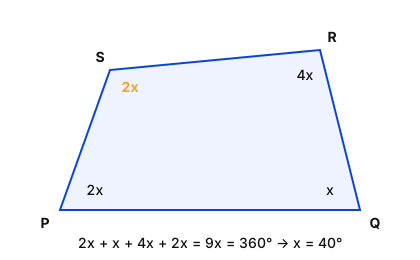
In quadrilateral PQRS, ∠P=2∠Q, ∠Q=∠R4, ∠R=2∠S. Find the value of ∠S.
चतुर्भुज PQRS में, ∠P=2∠Q, ∠Q=∠R4, ∠R=2∠S। ∠S का मान ज्ञात कीजिए।
  1. A60∘
  2. B85∘
  3. C80∘
  4. D45∘
Show answer

Concept: Sum of the interior angles of a quadrilateral =360∘. Express all angles in terms of ∠Q.

  1. Let ∠Q=x. Then ∠P=2x, ∠R=4x, ∠S=∠R2=2x
  2. 2x+x+4x+2x=9x=360∘⇒x=40∘
  3. ∠S=2x=80∘

Trick: Write every angle as a multiple of the smallest one; sum of multiples =9, so one part =360∘9=40∘.

Answer: (C) 80∘

अवधारणा: चतुर्भुज के अंतः कोणों का योग =360∘। सभी कोणों को ∠Q के रूप में लिखें।

  1. माना ∠Q=x, तो ∠P=2x, ∠R=4x, ∠S=∠R2=2x
  2. 2x+x+4x+2x=9x=360∘⇒x=40∘
  3. ∠S=2x=80∘

ट्रिक: सबसे छोटे कोण के गुणज लिखें; गुणजों का योग 9, एक भाग =360∘9=40∘।

उत्तर: (C) 80∘

RRB NTPC Undergraduate CBT 1MathematicsAngles of a quadrilateralRRB NTPC Undergraduate CBT 1 2025 · 18 Jun Shift 2 →
Q6338.
The value of (2+32)2−[4−(63)2]÷12 is
(2+32)2−[4−(63)2]÷12 का मान है
  1. A74
  2. B492
  3. C494
  4. D72
Show answer

Concept: BODMAS – brackets first, then division, then subtraction.

  1. (2+32)2=(72)2=494
  2. [4−(63)2]=4−22=0
  3. Division before subtraction: 0÷12=0
  4. 494−0=494

Trick: The ÷12 acts only on the square bracket next to it, and that bracket is 0 – so the answer is just the first term.

Answer: (C) 494

अवधारणा: BODMAS – पहले कोष्ठक, फिर भाग, फिर घटाव।

  1. (2+32)2=(72)2=494
  2. [4−(63)2]=4−22=0
  3. घटाव से पहले भाग: 0÷12=0
  4. 494−0=494

ट्रिक: ÷12 केवल उसके साथ वाले वर्ग कोष्ठक पर लगता है, और वह 0 है – इसलिए उत्तर पहला पद ही है।

उत्तर: (C) 494

RRB NTPC Undergraduate CBT 1MathematicsSimplification (BODMAS)RRB NTPC Undergraduate CBT 1 2025 · 18 Jun Shift 2 →
Q6339.
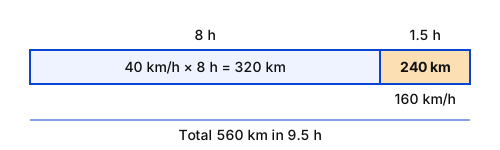
A car travels 560 km in 9.5 hours, partly at 40 km/h and partly at 160 km/h. Find the distance travelled at 160 km/h.
एक कार 9.5 घंटे में 560 km की दूरी तय करती है, कुछ दूरी 40 km/h की चाल से और कुछ दूरी 160 km/h की चाल से। 160 km/h की चाल से तय की गई दूरी ज्ञात कीजिए।
  1. A216 km
  2. B240 km
  3. C230 km
  4. D260 km
Show answer

Concept: Total distance and total time are fixed; let the time at 40km/h be t.

  1. 40t+160(9.5−t)=560
  2. 1520−120t=560⇒t=8h
  3. Time at 160km/h=1.5h, distance =160×1.5=240km

Trick: If all 9.5 h were at 40km/h: 380km. Extra 180km comes from the extra 120km/h → 180120=1.5h at the fast speed.

Answer: (B) 240km

अवधारणा: कुल दूरी और कुल समय ज्ञात हैं; 40km/h पर समय t मानें।

  1. 40t+160(9.5−t)=560
  2. 1520−120t=560⇒t=8h
  3. 160km/h पर समय =1.5h, दूरी =160×1.5=240km

ट्रिक: यदि पूरे 9.5 घंटे 40km/h पर: 380km। बची 180km अतिरिक्त 120km/h से → 180120=1.5h।

उत्तर: (B) 240km

RRB NTPC Undergraduate CBT 1MathematicsSpeed, distance and timeRRB NTPC Undergraduate CBT 1 2025 · 18 Jun Shift 2 →
Q6340.
Two banks, A and B, offered loans at 3.5% and 6.5% per annum, respectively. Ashish borrowed an amount of ₹3,40,000 from each bank. Find the positive difference between the amounts of simple interest (in ₹) paid to the two banks by Ashish after 2 years.
दो बैंक, A और B, क्रमशः 3.5% और 6.5% वार्षिक दर पर ऋण देते हैं। आशीष ने प्रत्येक बैंक से ₹3,40,000 की राशि उधार ली। 2 वर्ष बाद आशीष द्वारा दोनों बैंकों को भुगतान किए गए साधारण ब्याज की राशियों (₹ में) के बीच धनात्मक अंतर ज्ञात कीजिए।
  1. A21,900
  2. B19,900
  3. C20,400
  4. D21,400
Show answer

Concept: Same principal and time, so the SI difference depends only on the rate difference: SI=P×R×T100.

  1. Rate difference =6.5%−3.5%=3%
  2. Difference =340000×3×2100=20400

Trick: Never compute both interests separately — use the rate difference directly.

Answer: (C) ₹20,400

अवधारणा: मूलधन और समय समान हैं, अतः ब्याज का अंतर केवल दरों के अंतर पर निर्भर है: SI=P×R×T100।

  1. दरों का अंतर =6.5%−3.5%=3%
  2. अंतर =340000×3×2100=20400

ट्रिक: दोनों ब्याज अलग-अलग न निकालें — सीधे दरों का अंतर लें।

उत्तर: (C) ₹20,400

RRB NTPC Undergraduate CBT 1MathematicsSimple interestRRB NTPC Undergraduate CBT 1 2025 · 18 Jun Shift 2 →