Question bank

Q&A: practice questions with answers

Search questions on any topic. Filter by exam category, exam, subject and topic, try the question, then open the answer and explanation.

Courses – airGurukul

8,495 questions found.

Q6381.
In a certain code language, ‘JACK’ is coded as ‘9621’ and ‘CALK’ is coded as ‘6231’. What is the code for ‘L’ in the given code language?
एक निश्चित कूट भाषा में, ‘JACK’ को ‘9621’ और ‘CALK’ को ‘6231’ के रूप में कूटबद्ध किया जाता है। दी गई कूट भाषा में ‘L’ का कूट क्या है?
  1. A6
  2. B3
  3. C2
  4. D1
Show answer

Concept: Letters common to both words take the digits common to both codes.

  1. JACK = 9621, CALK = 6231.
  2. Common letters A, C, K ↔ common digits 6, 2, 1.
  3. Remaining: J ↔ 9 (in JACK) and L ↔ 3 (in CALK). So L = 3.

Trick: Eliminate common letters and common digits – the leftover pair is the answer.

Answer: (B) 3

अवधारणा: दोनों शब्दों के समान अक्षरों को दोनों कोड के समान अंक मिलते हैं।

  1. JACK = 9621, CALK = 6231।
  2. समान अक्षर A, C, K ↔ समान अंक 6, 2, 1।
  3. बचे: J ↔ 9 (JACK में) और L ↔ 3 (CALK में)। अतः L = 3।

ट्रिक: समान अक्षर और समान अंक हटा दें – बचा हुआ जोड़ा ही उत्तर है।

उत्तर: (B) 3
RRB NTPC Undergraduate CBT 1General Intelligence and ReasoningCoding–DecodingRRB NTPC Undergraduate CBT 1 2025 · 18 Jun Shift 2 →
Q6382.
Refer to the following series and answer the question. (Counting to be done from left to right only.) (All numbers are single-digit numbers only.)
(Left) 1 1 9 4 8 6 9 2 4 2 8 9 7 1 3 2 7 5 8 2 1 5 3 (Right)
How many such odd digits are there, each of which is immediately preceded by an odd digit and also immediately followed by an odd digit?
निम्नलिखित श्रृंखला को देखिए और प्रश्न का उत्तर दीजिए। (गणना केवल बाएँ से दाएँ की जानी है।) (सभी संख्याएँ केवल एक अंक वाली संख्याएँ हैं।)
(बाएँ) 1 1 9 4 8 6 9 2 4 2 8 9 7 1 3 2 7 5 8 2 1 5 3 (दाएँ)
ऐसे कितने विषम अंक हैं, जिनमें से प्रत्येक के ठीक पहले एक विषम अंक है और ठीक बाद भी एक विषम अंक है?
  1. ATwoदो
  2. BFourचार
  3. CThreeतीन
  4. DFiveपाँच
Show answer

Concept: Look for three consecutive odd digits; the middle one is counted.

  1. Scan the series for odd–odd–odd runs.
  2. Found: 1 1 9, 9 7 1, 7 1 3, 1 5 3.
  3. Total =4.

Trick: Mark every even digit as a barrier; only blocks of three or more odd digits give answers.

Answer: (B) Four

अवधारणा: लगातार तीन विषम अंक खोजें; बीच वाले को गिना जाता है।

  1. श्रेणी में विषम–विषम–विषम क्रम खोजें।
  2. मिले: 1 1 9, 9 7 1, 7 1 3, 1 5 3।
  3. कुल =4।

ट्रिक: हर सम अंक को दीवार मानें; केवल तीन या अधिक विषम अंकों के खंड से उत्तर मिलते हैं।

उत्तर: (B) चार

RRB NTPC Undergraduate CBT 1General Intelligence and ReasoningNumber Series CountingRRB NTPC Undergraduate CBT 1 2025 · 18 Jun Shift 2 →
Q6383.
What should come in place of ‘?’ in the given series?
280 225 175 130 90 55 ?
दी गई श्रृंखला में ‘?’ के स्थान पर क्या आना चाहिए?
280 225 175 130 90 55 ?
  1. A31
  2. B34
  3. C28
  4. D25
Show answer

Concept: Check the differences between consecutive terms.

  1. Differences: −55,−50,−45,−40,−35.
  2. Next difference =−30: 55−30=25.

Trick: Differences decrease by 5 each time.

Answer: (D) 25

अवधारणा: लगातार पदों के अंतर देखें।

  1. अंतर: −55,−50,−45,−40,−35।
  2. अगला अंतर =−30: 55−30=25।

ट्रिक: अंतर हर बार 5 कम होता है।

उत्तर: (D) 25

RRB NTPC Undergraduate CBT 1General Intelligence and ReasoningNumber SeriesRRB NTPC Undergraduate CBT 1 2025 · 18 Jun Shift 2 →
Q6384.
Read the given statements and conclusions carefully. Assuming that the information given in the statements is true, even if it appears to be at variance with commonly known facts, decide which of the given conclusions logically follow(s) from the statements.
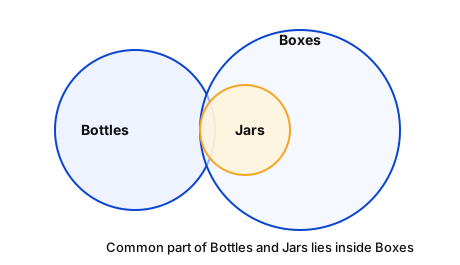
Statements: Some bottles are jars. All jars are boxes.
Conclusions
(I) Some boxes are bottles.
(II) All boxes are jars.
दिए गए कथनों और निष्कर्षों को ध्यानपूर्वक पढ़िए। यह मानते हुए कि कथनों में दी गई जानकारी सत्य है, भले ही वह सामान्यतः ज्ञात तथ्यों से भिन्न प्रतीत होती हो, निर्णय कीजिए कि दिए गए निष्कर्षों में से कौन-सा/से निष्कर्ष कथनों का तार्किक रूप से अनुसरण करता है/करते हैं।
कथन: कुछ बोतलें, जार हैं। सभी जार, बक्से हैं।
निष्कर्ष
(I) कुछ बक्से, बोतलें हैं।
(II) सभी बक्से, जार हैं।
  1. ABoth conclusions (I) and (II) followनिष्कर्ष (I) और (II) दोनों अनुसरण करते हैं
  2. BOnly conclusion (I) followsकेवल निष्कर्ष (I) अनुसरण करता है
  3. CNeither conclusion (I) nor (II) followsन तो निष्कर्ष (I) और न ही (II) अनुसरण करता है
  4. DOnly conclusion (II) followsकेवल निष्कर्ष (II) अनुसरण करता है
Show answer

Concept: Draw the least possible Venn diagram for the statements.

  1. All jars are boxes → Jars circle lies inside Boxes.
  2. Some bottles are jars → those bottles are also boxes, so “Some boxes are bottles” is definitely true – (I) follows.
  3. Boxes may contain things that are not jars, so “All boxes are jars” is not certain – (II) does not follow.

Trick: “All A are B” cannot be reversed to “All B are A”.

Answer: (B) Only conclusion (I) follows

अवधारणा: कथनों के लिए न्यूनतम संभव वेन आरेख बनाएँ।

  1. सभी जार डिब्बे हैं → जार का वृत्त डिब्बों के अंदर।
  2. कुछ बोतलें जार हैं → वे बोतलें डिब्बे भी हैं, इसलिए “कुछ डिब्बे बोतलें हैं” निश्चित सत्य – (I) अनुसरण करता है।
  3. डिब्बों में ऐसे भी हो सकते हैं जो जार नहीं, इसलिए “सभी डिब्बे जार हैं” निश्चित नहीं – (II) अनुसरण नहीं करता।

ट्रिक: “सभी A, B हैं” को उलटकर “सभी B, A हैं” नहीं कह सकते।

उत्तर: (B) केवल निष्कर्ष (I) अनुसरण करता है

RRB NTPC Undergraduate CBT 1General Intelligence and ReasoningSyllogismRRB NTPC Undergraduate CBT 1 2025 · 18 Jun Shift 2 →
Q6385.
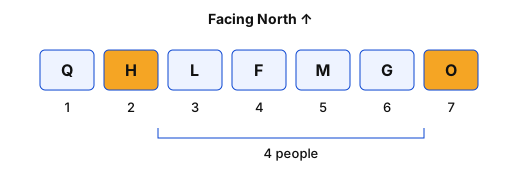
Seven people F, G, H, L, M, O and Q are sitting in a row facing north. Only Q sits to the left of H. Only four people sit between Q and G. Only F sits between L and M, and L is not an immediate neighbor of G. How many people sit between O and H?
सात व्यक्ति F, G, H, L, M, O और Q उत्तर की ओर मुख करके एक पंक्ति में बैठे हैं। H के बाईं ओर केवल Q बैठा है। Q और G के बीच केवल चार व्यक्ति बैठे हैं। L और M के बीच केवल F बैठा है, और L, G का निकटतम पड़ोसी नहीं है। O और H के बीच कितने व्यक्ति बैठे हैं?
  1. AThreeतीन
  2. BOneएक
  3. CFourचार
  4. DTwoदो
Show answer

Concept: Number seats 1 to 7 from left (all face north) and place definite clues first.

  1. Only Q to the left of H → Q = 1, H = 2.
  2. Four people between Q and G → G = 6.
  3. Only F between L and M needs three consecutive free seats → 3, 4, 5 with F = 4. L is not next to G (6) → L = 3, M = 5.
  4. O = 7. Between O (7) and H (2): seats 3–6 → 4 people.

Trick: “Only X to the left of Y” fixes both of them at seats 1 and 2.

Answer: (C) Four

अवधारणा: सीटों को बाएँ से 1 से 7 संख्या दें (सभी उत्तर की ओर) और पहले निश्चित संकेत लगाएँ।

  1. केवल Q, H के बाईं ओर → Q = 1, H = 2।
  2. Q और G के बीच चार लोग → G = 6।
  3. L और M के बीच केवल F के लिए तीन लगातार खाली सीटें चाहिए → 3, 4, 5 और F = 4। L, G (6) का पड़ोसी नहीं → L = 3, M = 5।
  4. O = 7। O (7) और H (2) के बीच: सीट 3–6 → 4 लोग।

ट्रिक: “केवल X, Y के बाईं ओर” से दोनों सीट 1 और 2 पर तय हो जाते हैं।

उत्तर: (C) चार

RRB NTPC Undergraduate CBT 1General Intelligence and ReasoningLinear Seating ArrangementRRB NTPC Undergraduate CBT 1 2025 · 18 Jun Shift 2 →
Q6386.
In the following number-pairs, the second number is obtained by applying certain mathematical operations to the first number. Select the set in which the numbers are related in the same way as are the numbers of the following sets.
(NOTE: Operations should be performed on the whole numbers, without breaking down the numbers into their constituent digits. E.g. 13 – Operations on 13 such as adding / subtracting /multiplying etc. to 13 can be performed. Breaking down 13 into 1 and 3 and then performing mathematical operations on 1 and 3 is not allowed.)
78 - 88
32 - 42
निम्नलिखित संख्या-युग्मों में, पहली संख्या पर कुछ गणितीय संक्रियाएँ करके दूसरी संख्या प्राप्त की जाती है। उस समुच्चय का चयन कीजिए जिसमें संख्याएँ उसी प्रकार संबंधित हैं, जिस प्रकार निम्नलिखित समुच्चयों की संख्याएँ संबंधित हैं।
(ध्यान दें: संक्रियाएँ संख्याओं को उनके घटक अंकों में विभाजित किए बिना, पूर्ण संख्याओं पर की जानी चाहिए। उदाहरण के लिए 13 – 13 पर संक्रियाएँ जैसे 13 में जोड़ना/घटाना/गुणा करना आदि किया जा सकता है। 13 को 1 और 3 में विभाजित करके फिर 1 और 3 पर गणितीय संक्रियाएँ करने की अनुमति नहीं है।)
78 - 88
32 - 42
  1. A110 - 120
  2. B45 - 56
  3. C98 - 88
  4. D90 - 110
Show answer

Concept: Find the single operation that turns the first number into the second.

  1. 78+10=88 and 32+10=42 → rule: add 10.
  2. (A) 110+10=120 ✓; (B) 45+11=56 ✗; (C) 98−10=88 ✗; (D) 90+20=110 ✗.

Trick: Check the difference (second − first) of each option: it must be exactly +10.

Answer: (A) 110 - 120

अवधारणा: वह एक संक्रिया खोजें जो पहली संख्या को दूसरी में बदलती है।

  1. 78+10=88 और 32+10=42 → नियम: 10 जोड़ें।
  2. (A) 110+10=120 ✓; (B) 45+11=56 ✗; (C) 98−10=88 ✗; (D) 90+20=110 ✗।

ट्रिक: हर विकल्प का अंतर (दूसरी − पहली) देखें: ठीक +10 होना चाहिए।

उत्तर: (A) 110 - 120

RRB NTPC Undergraduate CBT 1General Intelligence and ReasoningNumber Pair AnalogyRRB NTPC Undergraduate CBT 1 2025 · 18 Jun Shift 2 →
Q6387.
WTQT is related to VSPS in a certain way based on the English alphabetical order. In the same way, ZWTW is related to YVSV. To which of the following is OLIL related, following the same logic?
अंग्रेज़ी वर्णमाला क्रम के आधार पर WTQT एक निश्चित प्रकार से VSPS से संबंधित है। उसी प्रकार, ZWTW, YVSV से संबंधित है। उसी तर्क का अनुसरण करते हुए, OLIL निम्नलिखित में से किससे संबंधित है?
  1. ANJGK
  2. BNKHK
  3. CNLGO
  4. DNKGK
Show answer

Concept: Compare letters position by position.

  1. WTQT → VSPS: W→V, T→S, Q→P, T→S – each letter −1.
  2. ZWTW → YVSV: each −1 ✓.
  3. OLIL → N K H K → NKHK.

Trick: Same shift on every letter: just move each letter one step back.

Answer: (B) NKHK

अवधारणा: अक्षरों की स्थानवार तुलना करें।

  1. WTQT → VSPS: W→V, T→S, Q→P, T→S – हर अक्षर −1।
  2. ZWTW → YVSV: हर अक्षर −1 ✓।
  3. OLIL → N K H K → NKHK।

ट्रिक: हर अक्षर पर समान बदलाव: हर अक्षर को एक कदम पीछे करें।

उत्तर: (B) NKHK

RRB NTPC Undergraduate CBT 1General Intelligence and ReasoningLetter AnalogyRRB NTPC Undergraduate CBT 1 2025 · 18 Jun Shift 2 →
Q6388.
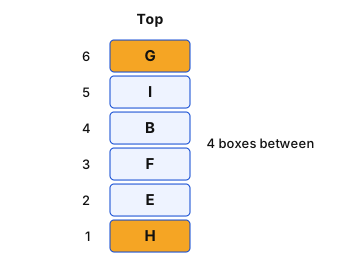
Six boxes E,F,G,H,I and B are kept one over the other but not necessarily in the same order. Only three boxes are kept above F. Only one box is kept between H and F. Only three boxes are kept between H and I. I is kept at some place above F. B is kept immediately below I. E is kept at one of the places below G. How many boxes are kept between G and H?
छह बक्से E, F, G, H, I और B एक के ऊपर एक रखे गए हैं, लेकिन आवश्यक नहीं कि इसी क्रम में हों। F के ऊपर केवल तीन बक्से रखे गए हैं। H और F के बीच केवल एक बक्सा रखा गया है। H और I के बीच केवल तीन बक्से रखे गए हैं। I, F के ऊपर किसी स्थान पर रखा गया है। B, I के ठीक नीचे रखा गया है। E, G के नीचे किसी एक स्थान पर रखा गया है। G और H के बीच कितने बक्से रखे गए हैं?
  1. AFourचार
  2. BTwoदो
  3. CThreeतीन
  4. DOneएक
Show answer

Concept: Number positions 1 (bottom) to 6 (top) and fix definite clues.

  1. Three boxes above F → F = 3.
  2. One box between H and F → H = 1 or 5. Three boxes between H and I: H = 1 gives I = 5; H = 5 gives I = 1, but I must be above F. So H = 1, I = 5.
  3. B immediately below I → B = 4. E below G among 2 and 6 → E = 2, G = 6.
  4. Between G (6) and H (1): I, B, F, E → 4 boxes.

Trick: Gap between positions p and q =|p−q|−1=6−1−1=4.

Answer: (A) Four

अवधारणा: स्थान 1 (नीचे) से 6 (ऊपर) संख्या दें और निश्चित संकेत लगाएँ।

  1. F के ऊपर तीन बॉक्स → F = 3।
  2. H और F के बीच एक बॉक्स → H = 1 या 5। H और I के बीच तीन बॉक्स: H = 1 से I = 5; H = 5 से I = 1, पर I को F के ऊपर होना है। अतः H = 1, I = 5।
  3. B, I के ठीक नीचे → B = 4। E, G के नीचे, स्थान 2 और 6 में → E = 2, G = 6।
  4. G (6) और H (1) के बीच: I, B, F, E → 4 बॉक्स।

ट्रिक: स्थान p और q के बीच =|p−q|−1=6−1−1=4।

उत्तर: (A) चार

RRB NTPC Undergraduate CBT 1General Intelligence and ReasoningBox ArrangementRRB NTPC Undergraduate CBT 1 2025 · 18 Jun Shift 2 →
Q6389.
If 1 is added to each odd digit and 1 is subtracted from each even digit in the number 7254136, how many digits will appear more than once in the new number thus formed?
यदि संख्या 7254136 में प्रत्येक विषम अंक में 1 जोड़ दिया जाए और प्रत्येक सम अंक में से 1 घटा दिया जाए, तो इस प्रकार बनी नई संख्या में कितने अंक एक से अधिक बार आएँगे?
  1. ANoneकोई नहीं
  2. BThreeतीन
  3. CTwoदो
  4. DOneएक
Show answer

Concept: Apply the rule to every digit: odd +1, even −1.

  1. 7254136: 7→8, 2→1, 5→6, 4→3, 1→2, 3→4, 6→5.
  2. New number: 8163245.
  3. Digits 8, 1, 6, 3, 2, 4, 5 are all different – no digit repeats.

Trick: Odd +1 and even −1 just swap pairs (1↔2, 3↔4, 5↔6, 7↔8), so distinct digits stay distinct.

Answer: (A) None

अवधारणा: हर अंक पर नियम लगाएँ: विषम +1, सम −1।

  1. 7254136: 7→8, 2→1, 5→6, 4→3, 1→2, 3→4, 6→5।
  2. नई संख्या: 8163245।
  3. अंक 8, 1, 6, 3, 2, 4, 5 सभी अलग हैं – कोई अंक दोहराया नहीं।

ट्रिक: विषम +1 और सम −1 जोड़ों की अदला-बदली है (1↔2, 3↔4, 5↔6, 7↔8), इसलिए अलग अंक अलग ही रहते हैं।

उत्तर: (A) कोई नहीं

RRB NTPC Undergraduate CBT 1General Intelligence and ReasoningDigit OperationsRRB NTPC Undergraduate CBT 1 2025 · 18 Jun Shift 2 →
Q6390.
In a certain code language, ‘GLOW’ is coded as ‘3187’ and ‘WOLF’ is coded as ‘1273’. What is the code for ‘G’ in the given code language?
एक निश्चित कूट भाषा में, ‘GLOW’ को ‘3187’ और ‘WOLF’ को ‘1273’ के रूप में कूटबद्ध किया जाता है। दी गई कूट भाषा में ‘G’ का कूट क्या है?
  1. A3
  2. B8
  3. C1
  4. D7
Show answer

Concept: Common letters of the two words share the common digits of the two codes.

  1. GLOW = 3187, WOLF = 1273.
  2. Common letters L, O, W ↔ common digits 1, 3, 7.
  3. Left over: G ↔ 8 (GLOW) and F ↔ 2 (WOLF). So G = 8.

Trick: Cancel the common part; the unique letter takes the unique digit.

Answer: (B) 8

अवधारणा: दोनों शब्दों के समान अक्षरों को दोनों कोड के समान अंक मिलते हैं।

  1. GLOW = 3187, WOLF = 1273।
  2. समान अक्षर L, O, W ↔ समान अंक 1, 3, 7।
  3. बचे: G ↔ 8 (GLOW) और F ↔ 2 (WOLF)। अतः G = 8।

ट्रिक: समान भाग काट दें; अनोखे अक्षर को अनोखा अंक मिलता है।

उत्तर: (B) 8

RRB NTPC Undergraduate CBT 1General Intelligence and ReasoningCoding–DecodingRRB NTPC Undergraduate CBT 1 2025 · 18 Jun Shift 2 →
Q6391.
LL 22 is related to JH 6 in a certain way. In the same way, CR 20 is related to AN 4. To which of the following is GN 14 related, following the same logic?
LL 22 एक निश्चित प्रकार से JH 6 से संबंधित है। उसी प्रकार, CR 20, AN 4 से संबंधित है। उसी तर्क का अनुसरण करते हुए, GN 14 निम्नलिखित में से किससे संबंधित है?
  1. AEI −2
  2. BFI −4
  3. CFJ −4
  4. DEJ −2
Show answer

Concept: Track the change in each letter and the number.

  1. LL 22 → JH 6: L(12)→J(10) −2, L(12)→H(8) −4, 22−16=6.
  2. CR 20 → AN 4: C→A −2, R(18)→N(14) −4, 20−16=4 ✓.
  3. GN 14: G(7)→E(5), N(14)→J(10), 14−16=−2 → EJ −2.

Trick: Rule “−2, −4, −16”; only EJ has J for N.

Answer: (D) EJ −2

अवधारणा: हर अक्षर और संख्या में बदलाव देखें।

  1. LL 22 → JH 6: L(12)→J(10) −2, L(12)→H(8) −4, 22−16=6।
  2. CR 20 → AN 4: C→A −2, R(18)→N(14) −4, 20−16=4 ✓।
  3. GN 14: G(7)→E(5), N(14)→J(10), 14−16=−2 → EJ −2।

ट्रिक: नियम “−2, −4, −16”; N के लिए J केवल EJ में है।

उत्तर: (D) EJ −2

RRB NTPC Undergraduate CBT 1General Intelligence and ReasoningAlphanumeric AnalogyRRB NTPC Undergraduate CBT 1 2025 · 18 Jun Shift 2 →
Q6392.
If 3 is added to each odd digit and 2 is subtracted from each even digit in the number 8254316, then what will be the sum of the first digit from the left and the second digit from the right in the new number thus formed?
यदि संख्या 8254316 में प्रत्येक विषम अंक में 3 जोड़ दिया जाए और प्रत्येक सम अंक में से 2 घटा दिया जाए, तो इस प्रकार बनी नई संख्या में बाएँ से पहले अंक और दाएँ से दूसरे अंक का योग क्या होगा?
  1. A6
  2. B10
  3. C4
  4. D0
Show answer

Concept: Apply the rule to each digit: odd +3, even −2.

  1. 8254316: 8→6, 2→0, 5→8, 4→2, 3→6, 1→4, 6→4.
  2. New number: 6082644.
  3. First from left =6; second from right =4. Sum =6+4=10.

Trick: Only the two required digits need converting: 8→6 and 1→4.

Answer: (B) 10

अवधारणा: हर अंक पर नियम लगाएँ: विषम +3, सम −2।

  1. 8254316: 8→6, 2→0, 5→8, 4→2, 3→6, 1→4, 6→4।
  2. नई संख्या: 6082644।
  3. बाएँ से पहला =6; दाएँ से दूसरा =4। योग =6+4=10।

ट्रिक: केवल ज़रूरी दो अंक बदलें: 8→6 और 1→4।

उत्तर: (B) 10

RRB NTPC Undergraduate CBT 1General Intelligence and ReasoningDigit OperationsRRB NTPC Undergraduate CBT 1 2025 · 18 Jun Shift 2 →
Q6393.
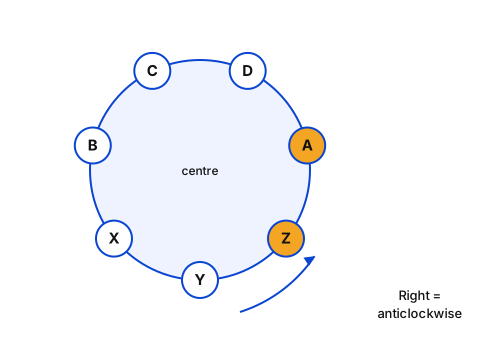
Seven people X, Y, Z, A, B, C and D are sitting around a circular table facing towards the centre of the table. D sits third to the right of Y. B is sitting immediately between X and C. Z sits second to the right of X. What is the position of A with respect to Z?
सात व्यक्ति X, Y, Z, A, B, C और D एक वृत्ताकार मेज़ के चारों ओर मेज़ के केंद्र की ओर मुख करके बैठे हैं। D, Y के दाईं ओर तीसरे स्थान पर बैठा है। B, X और C के ठीक बीच में बैठा है। Z, X के दाईं ओर दूसरे स्थान पर बैठा है। Z के सापेक्ष A का स्थान क्या है?
  1. AImmediate rightठीक दाईं ओर
  2. BSecond to the rightदाईं ओर दूसरा
  3. CImmediate leftठीक बाईं ओर
  4. DSecond to the leftबाईं ओर दूसरा
Show answer

Concept: When people face the centre, moving to their right means moving anticlockwise.

  1. Fix Y; D is third to the right of Y: Y, _, _, D going anticlockwise.
  2. Z is second to the right of X and B sits between X and C, so the order (anticlockwise) is C, B, X, _, Z.
  3. The only fit: X, Y, Z consecutive (Y is the gap), giving Y, Z, A, D, C, B, X anticlockwise.
  4. A is just after Z anticlockwise → A is to the immediate right of Z.

Trick: Facing centre: right = anticlockwise, left = clockwise.

Answer: (A) Immediate right

अवधारणा: जब सभी केंद्र की ओर मुख किए हों, तो उनके दाएँ जाना = वामावर्त (anticlockwise) चलना।

  1. Y को स्थिर करें; D, Y के तीसरे दाएँ: वामावर्त Y, _, _, D।
  2. Z, X के दूसरे दाएँ और B, X व C के बीच, अतः वामावर्त क्रम C, B, X, _, Z।
  3. एकमात्र व्यवस्था: X, Y, Z लगातार (बीच का स्थान Y), यानी वामावर्त Y, Z, A, D, C, B, X।
  4. वामावर्त Z के ठीक बाद A → A, Z के तुरंत दाएँ है।

ट्रिक: केंद्र की ओर मुख: दायाँ = वामावर्त, बायाँ = दक्षिणावर्त।

उत्तर: (A) तुरंत दाएँ

RRB NTPC Undergraduate CBT 1General Intelligence and ReasoningCircular Seating ArrangementRRB NTPC Undergraduate CBT 1 2025 · 18 Jun Shift 2 →
Q6394.
In a certain code language,
A : B means ‘A is the father of B’,
A @ B means ‘A is the mother of B’,
A ? B means ‘A is the wife of B’ and
A + B means ‘A is the daughter of B’.
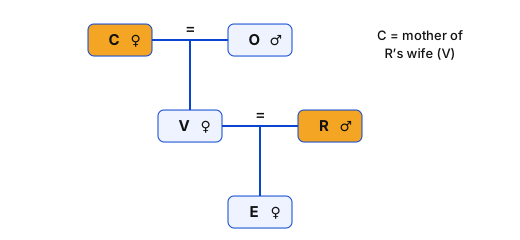
How is C related to R if ‘C ? O : V @ E + R’?
एक निश्चित कूट भाषा में,
A : B का अर्थ है ‘A, B का पिता है’,
A @ B का अर्थ है ‘A, B की माता है’,
A ? B का अर्थ है ‘A, B की पत्नी है’ और
A + B का अर्थ है ‘A, B की पुत्री है’।
यदि ‘C ? O : V @ E + R’ है, तो C का R से क्या संबंध है?
  1. AWife's motherपत्नी की माता
  2. BWife's fatherपत्नी का पिता
  3. CWife's brotherपत्नी का भाई
  4. DWife's sisterपत्नी की बहन
Show answer

Concept: Decode each symbol and build the family tree.

  1. C ? O: C is the wife of O. O : V: O is the father of V, so C is V’s mother.
  2. V @ E: V is the mother of E. E + R: E is the daughter of R, so R is E’s father, i.e. V’s husband.
  3. C is the mother of R’s wife (V) → C is R’s wife’s mother.

Trick: Two parents of the same child (V and R for E) are husband and wife.

Answer: (A) Wife's mother

अवधारणा: हर चिह्न को डिकोड करें और वंश-वृक्ष बनाएँ।

  1. C ? O: C, O की पत्नी है। O : V: O, V का पिता है, अतः C, V की माँ है।
  2. V @ E: V, E की माँ है। E + R: E, R की पुत्री है, अतः R, E का पिता यानी V का पति है।
  3. C, R की पत्नी (V) की माँ है → C, R की सास है।

ट्रिक: एक ही संतान के दो माता-पिता (E के V और R) पति-पत्नी होते हैं।

उत्तर: (A) पत्नी की माँ (सास)

RRB NTPC Undergraduate CBT 1General Intelligence and ReasoningCoded Blood RelationsRRB NTPC Undergraduate CBT 1 2025 · 18 Jun Shift 2 →
Q6395.
Read the given statement(s) and conclusions carefully. Assuming that the information given in the statements is true, even if it appears to be at variance with commonly known facts, decide which of the given conclusions logically follow(s) from the statement(s).
Statements:
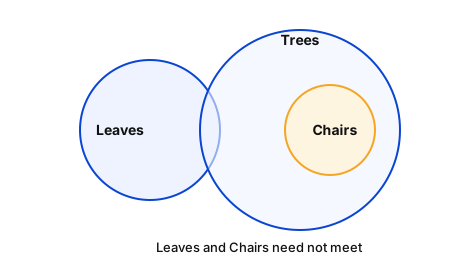
Some leaves are trees.
All chairs are trees.
Conclusions:
(I) Some leaves are chairs.
(II) All trees are chairs.
दिए गए कथन/कथनों और निष्कर्षों को ध्यानपूर्वक पढ़िए। यह मानते हुए कि कथनों में दी गई जानकारी सत्य है, भले ही वह सामान्यतः ज्ञात तथ्यों से भिन्न प्रतीत होती हो, निर्णय कीजिए कि दिए गए निष्कर्षों में से कौन-सा/से निष्कर्ष कथन/कथनों का तार्किक रूप से अनुसरण करता है/करते हैं।
कथन:
कुछ पत्तियाँ, पेड़ हैं।
सभी कुर्सियाँ, पेड़ हैं।
निष्कर्ष:
(I) कुछ पत्तियाँ, कुर्सियाँ हैं।
(II) सभी पेड़, कुर्सियाँ हैं।
  1. ANeither conclusion (I) nor (II) followsन तो निष्कर्ष (I) और न ही (II) अनुसरण करता है
  2. BOnly conclusion (II) followsकेवल निष्कर्ष (II) अनुसरण करता है
  3. CBoth conclusions (I) and (II) followनिष्कर्ष (I) और (II) दोनों अनुसरण करते हैं
  4. DOnly conclusion (I) followsकेवल निष्कर्ष (I) अनुसरण करता है
Show answer

Concept: Draw the minimum Venn diagram; a conclusion follows only if it is true in every possible case.

  1. All chairs are trees → Chairs inside Trees. Some leaves are trees → Leaves overlap Trees.
  2. The overlap of Leaves may lie outside Chairs, so “Some leaves are chairs” is not certain – (I) does not follow.
  3. Trees may include things that are not chairs, so “All trees are chairs” does not follow – (II) fails.

Trick: Two statements linked through the “all” circle’s outer set (Trees) give no definite link between Leaves and Chairs.

Answer: (A) Neither conclusion (I) nor (II) follows

अवधारणा: न्यूनतम वेन आरेख बनाएँ; निष्कर्ष तभी अनुसरण करता है जब वह हर संभव स्थिति में सत्य हो।

  1. सभी कुर्सियाँ पेड़ हैं → कुर्सी पेड़ के अंदर। कुछ पत्तियाँ पेड़ हैं → पत्ती, पेड़ से अतिव्यापी।
  2. पत्ती का अतिव्यापी भाग कुर्सी के बाहर हो सकता है, इसलिए “कुछ पत्तियाँ कुर्सियाँ हैं” निश्चित नहीं – (I) अनुसरण नहीं करता।
  3. पेड़ों में कुर्सियों के अलावा भी हो सकते हैं, इसलिए “सभी पेड़ कुर्सियाँ हैं” भी अनुसरण नहीं करता – (II) गलत।

ट्रिक: जब दोनों कथन केवल बड़े समूह (पेड़) से जुड़ें, तो पत्ती और कुर्सी के बीच कोई निश्चित संबंध नहीं बनता।

उत्तर: (A) न तो निष्कर्ष (I) और न ही (II) अनुसरण करता है

RRB NTPC Undergraduate CBT 1General Intelligence and ReasoningSyllogismRRB NTPC Undergraduate CBT 1 2025 · 18 Jun Shift 2 →
Q6396.
During group project file sharing in the CSE classroom, LAN connects which devices directly?
CSE कक्षा में समूह परियोजना की फ़ाइल साझा करते समय, LAN किन उपकरणों को सीधे जोड़ता है?
  1. AGlobal internet servers across continentsमहाद्वीपों में फैले वैश्विक इंटरनेट सर्वर
  2. BLocal computers within the same buildingएक ही भवन के भीतर स्थित स्थानीय कंप्यूटर
  3. CPrinters connected via Bluetooth pairingब्लूटूथ पेयरिंग द्वारा जुड़े प्रिंटर
  4. DSatellite phones for remote areas onlyकेवल दूरस्थ क्षेत्रों के लिए सैटेलाइट फ़ोन
Show answer

Concept: A LAN (Local Area Network) links devices within a small area such as a room, lab or building.

  1. Classroom file sharing uses computers on the same LAN
  2. Connecting servers across continents is a WAN (e.g., the Internet)
  3. Bluetooth pairing forms a PAN, not a LAN

Yaad rakhein: PAN < LAN (building) < MAN (city) < WAN (country/world).

Answer: (B) Local computers within the same building

अवधारणा: LAN (लोकल एरिया नेटवर्क) एक छोटे क्षेत्र — कमरा, लैब या भवन — के उपकरणों को जोड़ता है।

  1. कक्षा में फ़ाइल साझा करना एक ही LAN के कंप्यूटरों से होता है
  2. महाद्वीपों के सर्वर जोड़ना WAN (जैसे इंटरनेट) है
  3. Bluetooth जोड़ना PAN है, LAN नहीं

याद रखें: PAN < LAN (भवन) < MAN (शहर) < WAN (देश/विश्व)।

उत्तर: (B) एक ही भवन के स्थानीय कंप्यूटर

RRB NTPC Undergraduate CBT 1General AwarenessComputer networks (LAN)RRB NTPC Undergraduate CBT 1 2025 · 18 Jun Shift 1 →
Q6397.
Which of the following traditions are the two major streams of Indian classical music?
निम्नलिखित में से कौन-सी परंपराएँ भारतीय शास्त्रीय संगीत की दो प्रमुख धाराएँ हैं?
  1. ATribal Folk and Bhaktiजनजातीय लोक और भक्ति
  2. BCarnatic and Rajasthani Folkकर्नाटक और राजस्थानी लोक
  3. CHindustani and Western Classicalहिंदुस्तानी और पाश्चात्य शास्त्रीय
  4. DHindustani and Carnaticहिंदुस्तानी और कर्नाटक
Show answer

Concept: Indian classical music has two major streams: Hindustani (North India) and Carnatic (South India).

  1. Hindustani — gharana tradition, forms like Dhrupad, Khayal
  2. Carnatic — kriti-based, associated with Tyagaraja, Dikshitar, Syama Sastri
  3. Western Classical and folk forms are not streams of Indian classical music

Yaad rakhein: Carnatic trinity: Tyagaraja, Muthuswami Dikshitar, Syama Sastri.

Answer: (D) Hindustani and Carnatic

अवधारणा: भारतीय शास्त्रीय संगीत की दो प्रमुख धाराएँ हैं: हिंदुस्तानी (उत्तर भारत) और कर्नाटक (दक्षिण भारत)।

  1. हिंदुस्तानी — घराना परंपरा, ध्रुपद, ख़याल
  2. कर्नाटक — कृति आधारित; त्यागराज, दीक्षितर, श्यामा शास्त्री
  3. पाश्चात्य शास्त्रीय और लोक संगीत इसकी धाराएँ नहीं हैं

याद रखें: कर्नाटक त्रिमूर्ति: त्यागराज, मुत्तुस्वामी दीक्षितर, श्यामा शास्त्री।

उत्तर: (D) हिंदुस्तानी और कर्नाटक

RRB NTPC Undergraduate CBT 1General AwarenessIndian classical musicRRB NTPC Undergraduate CBT 1 2025 · 18 Jun Shift 1 →
Q6398.
Elections to Panchayats and Municipalities are managed by which body according to the Constitution?
संविधान के अनुसार पंचायतों और नगरपालिकाओं के चुनाव किस निकाय द्वारा संचालित किए जाते हैं?
  1. ALok Sabha Secretariatलोक सभा सचिवालय
  2. BDistrict Magistratesज़िला मजिस्ट्रेट
  3. CState Election Commissionsराज्य निर्वाचन आयोग
  4. DCentral Election Commissionकेंद्रीय निर्वाचन आयोग
Show answer

Concept: Elections to local bodies are conducted by the State Election Commission (SEC).

  1. Article 243K — SEC conducts Panchayat elections (73rd Amendment)
  2. Article 243ZA — SEC conducts Municipal elections (74th Amendment)
  3. The Election Commission of India handles Parliament, State Legislatures, President and Vice-President

Yaad rakhein: State Election Commissioner is appointed by the Governor.

Answer: (C) State Election Commissions

अवधारणा: स्थानीय निकायों के चुनाव राज्य निर्वाचन आयोग (State Election Commission) कराता है।

  1. अनुच्छेद 243K — पंचायत चुनाव (73वाँ संशोधन)
  2. अनुच्छेद 243ZA — नगरपालिका चुनाव (74वाँ संशोधन)
  3. भारत निर्वाचन आयोग संसद, विधानमंडल, राष्ट्रपति व उपराष्ट्रपति के चुनाव कराता है

याद रखें: राज्य निर्वाचन आयुक्त की नियुक्ति राज्यपाल करते हैं।

उत्तर: (C) राज्य निर्वाचन आयोग

RRB NTPC Undergraduate CBT 1General AwarenessLocal self-government electionsRRB NTPC Undergraduate CBT 1 2025 · 18 Jun Shift 1 →
Q6399.
The overall Labour Force Participation Rate (LFPR) for persons aged 15 years and above increased to what percentage in October 2025?
अक्टूबर 2025 में 15 वर्ष और उससे अधिक आयु के व्यक्तियों के लिए समग्र श्रम बल भागीदारी दर (LFPR) बढ़कर कितने प्रतिशत हो गई?
  1. A54.2%
  2. B55.0%
  3. C55.4%
  4. D56.1%
Show answer

Concept: The monthly Periodic Labour Force Survey (PLFS) bulletin of MoSPI reports LFPR for persons aged 15 years and above.

  1. As per the PLFS monthly bulletin for October 2025, overall LFPR (15+) rose to 55.4%
  2. LFPR = share of population that is working or seeking work

Yaad rakhein: PLFS is conducted by NSO under MoSPI; monthly bulletins began in 2025.

Answer: (C) 55.4%

अवधारणा: सांख्यिकी मंत्रालय (MoSPI) का मासिक आवधिक श्रम बल सर्वेक्षण (PLFS) बुलेटिन 15 वर्ष और उससे अधिक आयु के लोगों की LFPR बताता है।

  1. अक्टूबर 2025 के PLFS मासिक बुलेटिन के अनुसार कुल LFPR (15+) बढ़कर 55.4% हुई
  2. LFPR = जनसंख्या का वह हिस्सा जो काम कर रहा है या काम खोज रहा है

याद रखें: PLFS को MoSPI के अंतर्गत NSO कराता है; मासिक बुलेटिन 2025 से शुरू हुए।

उत्तर: (C) 55.4%

RRB NTPC Undergraduate CBT 1General AwarenessPLFS – Labour Force Participation RateRRB NTPC Undergraduate CBT 1 2025 · 18 Jun Shift 1 →
Q6400.
Which of the following shortcut keys opens File Explorer directly in MS Windows?
MS Windows में निम्नलिखित में से कौन-सी शॉर्टकट कुंजी File Explorer को सीधे खोलती है?
  1. ACtrl + E
  2. BShift + E
  3. CWindows logo key + EWindows लोगो कुंजी + E
  4. DAlt + E
Show answer

Concept: In MS Windows, Windows logo key + E opens File Explorer.

  1. Win + D shows the desktop; Win + L locks the PC
  2. Ctrl + E in many apps focuses the search/address bar or centre-aligns text (Word)

Yaad rakhein: E for Explorer — with the Windows key.

Answer: (C) Windows logo key + E

अवधारणा: MS Windows में Windows logo key + E दबाने से File Explorer खुलता है।

  1. Win + D से डेस्कटॉप; Win + L से PC लॉक
  2. Ctrl + E कई ऐप्स में सर्च बार या Word में टेक्स्ट को center करता है

याद रखें: E = Explorer — Windows key के साथ।

उत्तर: (C) Windows logo key + E

RRB NTPC Undergraduate CBT 1General AwarenessWindows shortcut keysRRB NTPC Undergraduate CBT 1 2025 · 18 Jun Shift 1 →