Question bank

Q&A: practice questions with answers

Search questions on any topic. Filter by exam category, exam, subject and topic, try the question, then open the answer and explanation.

Courses – airGurukul

8,495 questions found.

Q6481.
Refer to the following series and answer the question. (Counting to be done from left to right only.) (All numbers are single-digit numbers only.)
(Left) 5 4 3 1 6 8 8 1 5 7 7 7 4 1 6 2 7 9 1 3 9 7 7 3 9 2 6 (Right)
How many such odd numbers are there, each of which is immediately preceded by an odd number and also immediately followed by an even number?
निम्नलिखित श्रृंखला को देखिए और प्रश्न का उत्तर दीजिए। (गिनती केवल बाएँ से दाएँ की जानी है।) (सभी संख्याएँ केवल एक-अंकीय संख्याएँ हैं।)
(बाएँ) 5 4 3 1 6 8 8 1 5 7 7 7 4 1 6 2 7 9 1 3 9 7 7 3 9 2 6 (दाएँ)
ऐसी कितनी विषम संख्याएँ हैं, जिनमें से प्रत्येक के ठीक पहले एक विषम संख्या है और ठीक बाद एक सम संख्या भी है?
  1. A4
  2. B2
  3. C5
  4. D3
Show answer

Concept: Look for the pattern Odd – Odd – Even and count the middle odd numbers.

  1. … 3 1 6 … → ✓
  2. … 7 7 4 … (the third 7 of “7 7 7”) → ✓
  3. … 3 9 2 … near the end → ✓
  4. No other odd number has an odd number before and an even number after it → total 3.

Trick: First mark every even number; then check only the number just before it (must be odd) and the one before that (must be odd).

Answer: (D) 3

अवधारणा: पैटर्न विषम – विषम – सम खोजें और बीच वाली विषम संख्याएँ गिनें।

  1. … 3 1 6 … → ✓
  2. … 7 7 4 … (“7 7 7” का तीसरा 7) → ✓
  3. अंत के पास … 3 9 2 … → ✓
  4. किसी अन्य विषम संख्या के पहले विषम और बाद में सम नहीं है → कुल 3।

ट्रिक: पहले हर सम संख्या पर निशान लगाएँ; फिर उससे ठीक पहले की संख्या (विषम हो) और उससे पहले की (विषम हो) देखें।

उत्तर: (D) 3
RRB NTPC Undergraduate CBT 1General Intelligence and ReasoningNumber series – position basedRRB NTPC Undergraduate CBT 1 2025 · 18 Jun Shift 1 →
Q6482.
DIOR is related to AEJL in a certain way based on the English alphabetical order. In the same way, RSUT is related to OOPN. To which of the following options is IGFB related, following the same logic?
अंग्रेज़ी वर्णमाला क्रम के आधार पर DIOR एक निश्चित प्रकार से AEJL से संबंधित है। उसी प्रकार, RSUT, OOPN से संबंधित है। समान तर्क का अनुसरण करते हुए, IGFB निम्नलिखित में से किस विकल्प से संबंधित है?
  1. AFCAV
  2. BFCVA
  3. CFVCA
  4. DFAVC
Show answer

Concept: Find the shift applied to each letter position.

  1. DIOR → AEJL: D−3=A, I−4=E, O−5=J, R−6=L.
  2. RSUT → OOPN: R−3=O, S−4=O, U−5=P, T−6=N ✓.
  3. IGFB: I−3=F, G−4=C, F−5=A, B−6=V (B → A → Z → Y → X → W → V).

Trick: Shifts −3, −4, −5, −6 – an increasing backward step; wrap around after A.

Answer: (A) FCAV

अवधारणा: प्रत्येक अक्षर-स्थान पर लगा खिसकाव (shift) खोजें।

  1. DIOR → AEJL: D−3=A, I−4=E, O−5=J, R−6=L।
  2. RSUT → OOPN: R−3=O, S−4=O, U−5=P, T−6=N ✓।
  3. IGFB: I−3=F, G−4=C, F−5=A, B−6=V (B → A → Z → Y → X → W → V)।

ट्रिक: खिसकाव −3, −4, −5, −6 – पीछे की ओर बढ़ता क्रम; A के बाद Z से गिनें।

उत्तर: (A) FCAV

RRB NTPC Undergraduate CBT 1General Intelligence and ReasoningLetter analogyRRB NTPC Undergraduate CBT 1 2025 · 18 Jun Shift 1 →
Q6483.
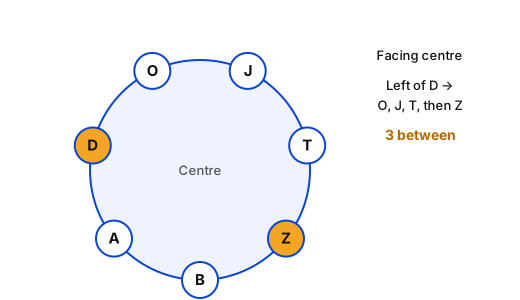
A, B, D, J, O, T and Z are sitting around a circular table facing the center. Only four people sit between B and D when counted from the right of B. O and T are immediate neighbors of J. Exactly four people sit between A and Z when counted from the left of A. Z is not an immediate neighbor of O or D. How many people sit between D and Z when counted from the left of D?
A, B, D, J, O, T और Z एक वृत्ताकार मेज़ के चारों ओर केंद्र की ओर मुख करके बैठे हैं। B के दाएँ से गिनने पर B और D के बीच केवल चार व्यक्ति बैठे हैं। O और T, J के निकटतम पड़ोसी हैं। A के बाएँ से गिनने पर A और Z के बीच ठीक चार व्यक्ति बैठे हैं। Z, O या D का निकटतम पड़ोसी नहीं है। D के बाएँ से गिनने पर D और Z के बीच कितने व्यक्ति बैठे हैं?
  1. AOneएक
  2. BThreeतीन
  3. CFourचार
  4. DTwoदो
Show answer

Concept: For people facing the centre, “left” is clockwise and “right” is anticlockwise. Seven seats → “four between” means the two are 2 seats apart the other way.

  1. Four between B and D from B’s right → D is 2nd to the left of B: B, _, D.
  2. Four between A and Z from A’s left → Z is 2nd to the right of A.
  3. O–J–T block fills three seats. If Z sits beside B and D, it violates the condition, so: B, A, D, O, J, T, Z (going left/clockwise), with Z next to T (not O).
  4. From D’s left: O, J, T, then Z → 3 people.

Trick: In a 7-seat circle, “4 between” one way = “1 between” the other way – draw the short side first.

Answer: (B) Three

अवधारणा: केंद्र की ओर मुख वालों के लिए “बायाँ” = दक्षिणावर्त और “दायाँ” = वामावर्त। 7 सीटों में “बीच में चार” का अर्थ है दूसरी ओर से 2 स्थान दूर।

  1. B के दाएँ से गिनने पर B और D के बीच चार → D, B के बाएँ दूसरे स्थान पर: B, _, D।
  2. A के बाएँ से गिनने पर A और Z के बीच चार → Z, A के दाएँ दूसरे स्थान पर।
  3. O–J–T का ब्लॉक तीन सीटें लेता है। Z को B व D के बीच रखने पर शर्त टूटती है, अतः (बाएँ/दक्षिणावर्त): B, A, D, O, J, T, Z; Z, T के पास है (O के नहीं)।
  4. D के बाएँ से: O, J, T, फिर Z → 3 व्यक्ति।

ट्रिक: 7 सीटों के वृत्त में एक ओर “4 बीच में” = दूसरी ओर “1 बीच में” – पहले छोटी तरफ़ बनाएँ।

उत्तर: (B) तीन

RRB NTPC Undergraduate CBT 1General Intelligence and ReasoningCircular seating arrangementRRB NTPC Undergraduate CBT 1 2025 · 18 Jun Shift 1 →
Q6484.
What should come in place of the question mark (?) in the given series based on the English alphabetical order?
LJL MKM NLN OMO ?
अंग्रेज़ी वर्णमाला क्रम के आधार पर दी गई श्रृंखला में प्रश्न चिह्न (?) के स्थान पर क्या आना चाहिए?
LJL MKM NLN OMO ?
  1. APQS
  2. BPOO
  3. CPNP
  4. DPMO
Show answer

Concept: Each term has the form X Y X where Y is two letters before X.

  1. First (and third) letters: L, M, N, O → P.
  2. Middle letters: J, K, L, M → N.
  3. Next term: P N P.

Trick: Terms are palindromes (first = last letter); among the options only PNP is of this form with N in the middle.

Answer: (C) PNP

अवधारणा: हर पद X Y X रूप का है, जहाँ Y, X से दो अक्षर पहले है।

  1. पहले (और तीसरे) अक्षर: L, M, N, O → P।
  2. बीच के अक्षर: J, K, L, M → N।
  3. अगला पद: P N P।

ट्रिक: हर पद में पहला = अंतिम अक्षर; बीच में N वाला केवल PNP है।

उत्तर: (C) PNP

RRB NTPC Undergraduate CBT 1General Intelligence and ReasoningLetter seriesRRB NTPC Undergraduate CBT 1 2025 · 18 Jun Shift 1 →
Q6485.
Read the given statement(s) and conclusions carefully. Assuming that the information given in the statements is true, even if it appears to be at variance with commonly known facts, decide which of the given conclusions logically follow(s) from the statement(s).
Statements: Some doors are petals. Some flowers are petals.
Conclusion (I): Some flowers are doors.
Conclusion (II): All petals are flowers.
दिए गए कथन/कथनों और निष्कर्षों को ध्यानपूर्वक पढ़िए। यह मानते हुए कि कथनों में दी गई जानकारी सत्य है, भले ही वह सामान्यतः ज्ञात तथ्यों से भिन्न प्रतीत होती हो, निर्णय कीजिए कि दिए गए निष्कर्षों में से कौन-सा/कौन-से निष्कर्ष तार्किक रूप से कथन/कथनों का अनुसरण करता है/करते हैं।
कथन: कुछ दरवाज़े, पंखुड़ियाँ हैं। कुछ फूल, पंखुड़ियाँ हैं।
निष्कर्ष (I): कुछ फूल, दरवाज़े हैं।
निष्कर्ष (II): सभी पंखुड़ियाँ, फूल हैं।
  1. AOnly conclusion (I) followsकेवल निष्कर्ष (I) अनुसरण करता है
  2. BBoth conclusions (I) and (II) followनिष्कर्ष (I) और (II) दोनों अनुसरण करते हैं
  3. CNeither conclusion (I) nor (II) followsन तो निष्कर्ष (I) और न ही (II) अनुसरण करता है
  4. DOnly conclusion (II) followsकेवल निष्कर्ष (II) अनुसरण करता है
Show answer

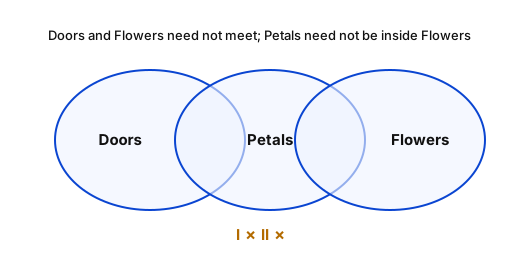
Concept: Two “Some” statements sharing only the middle term (Petals) give no definite link between Doors and Flowers.

  1. Draw Doors and Flowers each overlapping Petals but not each other – both statements still hold.
  2. In this drawing no flower is a door → Conclusion I need not be true.
  3. Some petals lie outside Flowers → “All petals are flowers” need not be true → II does not follow.

Trick: Some + Some → no conclusion between the end terms.

Answer: (C) Neither conclusion (I) nor (II) follows

अवधारणा: दोनों “कुछ” कथनों में केवल मध्य पद (Petals) साझा है, इसलिए Doors और Flowers में कोई निश्चित संबंध नहीं बनता।

  1. Doors और Flowers को Petals से अलग-अलग जोड़ें पर आपस में नहीं – दोनों कथन फिर भी सत्य।
  2. इस आरेख में कोई flower, door नहीं → निष्कर्ष I आवश्यक नहीं।
  3. कुछ petals, Flowers के बाहर हैं → “सभी petals flowers हैं” आवश्यक नहीं → II भी नहीं।

ट्रिक: कुछ + कुछ → अंतिम पदों में कोई निष्कर्ष नहीं।

उत्तर: (C) न तो निष्कर्ष (I) और न ही (II) अनुसरण करता है

RRB NTPC Undergraduate CBT 1General Intelligence and ReasoningSyllogismRRB NTPC Undergraduate CBT 1 2025 · 18 Jun Shift 1 →
Q6486.
In a certain code language,
A + B means ‘A is the sister of B’,
A – B means ‘A is the brother of B’,
A x B means ‘A is the father of B’ and
A ÷ B means ‘A is the mother of B’.
Based on the above, how is M related to R if ‘M x N ÷ O – P + Q – R’?
एक निश्चित कूट भाषा में,
A + B का अर्थ है ‘A, B की बहन है’,
A – B का अर्थ है ‘A, B का भाई है’,
A x B का अर्थ है ‘A, B का पिता है’ और
A ÷ B का अर्थ है ‘A, B की माता है’।
उपर्युक्त के आधार पर, यदि ‘M x N ÷ O – P + Q – R’ है, तो M, R से किस प्रकार संबंधित है?
  1. AFather's fatherपिता के पिता
  2. BBrotherभाई
  3. CFatherपिता
  4. DMother's fatherमाता के पिता
Show answer

Concept: Decode each symbol from left to right and build the family tree.

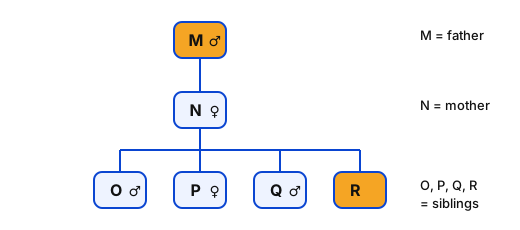
  1. M × N: M is the father of N. N ÷ O: N is the mother of O.
  2. O – P: O is the brother of P; P + Q: P is the sister of Q; Q – R: Q is the brother of R.
  3. So O, P, Q, R are siblings – R is a child of N.
  4. M is the father of R’s mother → R’s mother’s father.

Trick: Siblings share parents – once R joins the O-P-Q group, R’s mother is N.

Answer: (D) Mother's father

अवधारणा: बाएँ से दाएँ प्रत्येक चिह्न डिकोड करें और वंश-वृक्ष बनाएँ।

  1. M × N: M, N का पिता। N ÷ O: N, O की माता।
  2. O – P: O, P का भाई; P + Q: P, Q की बहन; Q – R: Q, R का भाई।
  3. अतः O, P, Q, R भाई-बहन हैं – R भी N की संतान।
  4. M, R की माता का पिता है → नाना।

ट्रिक: भाई-बहनों के माता-पिता समान – R के O-P-Q समूह में आते ही R की माता N।

उत्तर: (D) माता के पिता (नाना)

RRB NTPC Undergraduate CBT 1General Intelligence and ReasoningCoded blood relationsRRB NTPC Undergraduate CBT 1 2025 · 18 Jun Shift 1 →
Q6487.
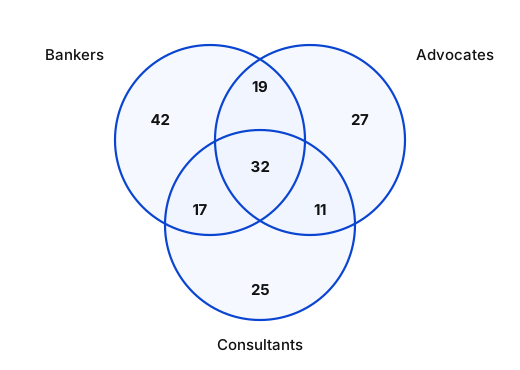
Study the given diagram carefully and answer the question. The numbers in different sections indicate the number of persons. (NOTE: You have to take the given data to be true even if it seems to be at variance from commonly known facts.)
How many such Consultants are there who are Bankers as well as Advocates?
दिए गए आरेख का ध्यानपूर्वक अध्ययन कीजिए और प्रश्न का उत्तर दीजिए। विभिन्न खंडों में दी गई संख्याएँ व्यक्तियों की संख्या दर्शाती हैं। (ध्यान दें: आपको दिए गए आँकड़ों को सत्य मानना है, भले ही वे सामान्यतः ज्ञात तथ्यों से भिन्न प्रतीत होते हों।)
ऐसे कितने सलाहकार (Consultants) हैं जो बैंकर (Bankers) होने के साथ-साथ अधिवक्ता (Advocates) भी हैं?
  1. A25
  2. B32
  3. C17
  4. D11
Show answer

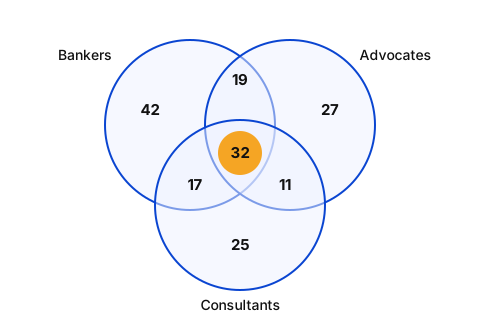
Concept: A person who is a Consultant, a Banker and an Advocate lies in the region common to all three circles.

  1. The central region (common to Bankers, Advocates and Consultants) shows 32.
  2. 17 = Bankers and Consultants only; 11 = Advocates and Consultants only; 19 = Bankers and Advocates only – none of these is in all three.

Trick: “X as well as Y and Z” = the central triple-overlap number.

Answer: (B) 32

अवधारणा: जो व्यक्ति Consultant, Banker और Advocate तीनों है, वह तीनों वृत्तों के उभयनिष्ठ भाग में होगा।

  1. केंद्रीय भाग (Bankers, Advocates, Consultants तीनों में उभयनिष्ठ) में 32 है।
  2. 17 = केवल Bankers व Consultants; 11 = केवल Advocates व Consultants; 19 = केवल Bankers व Advocates – ये तीनों में नहीं।

ट्रिक: “X भी और Y भी और Z भी” = बीच का (तीनों का उभयनिष्ठ) अंक।

उत्तर: (B) 32

RRB NTPC Undergraduate CBT 1General Intelligence and ReasoningVenn diagram – data readingRRB NTPC Undergraduate CBT 1 2025 · 18 Jun Shift 1 →
Q6488.
In a certain code language, ‘FISH’ is coded as ‘1963’ and ‘HITS’ is coded as ‘6983’. What is the code for ‘T’ in the given code language?
एक निश्चित कूट भाषा में, ‘FISH’ को ‘1963’ के रूप में कूटबद्ध किया जाता है और ‘HITS’ को ‘6983’ के रूप में कूटबद्ध किया जाता है। दी गई कूट भाषा में ‘T’ के लिए कूट क्या है?
  1. A8
  2. B9
  3. C6
  4. D3
Show answer

Concept: Letters common to both words take the digits common to both codes.

  1. FISH → 1 9 6 3; HITS → 6 9 8 3.
  2. Common letters H, I, S ↔ common digits 6, 9, 3.
  3. F appears only in FISH ↔ 1; T appears only in HITS ↔ 8.

Trick: Eliminate the common letters and digits; the leftover pair is the answer.

Answer: (A) 8

अवधारणा: दोनों शब्दों के उभयनिष्ठ अक्षर दोनों कोडों के उभयनिष्ठ अंकों से जुड़े होते हैं।

  1. FISH → 1 9 6 3; HITS → 6 9 8 3।
  2. उभयनिष्ठ अक्षर H, I, S ↔ उभयनिष्ठ अंक 6, 9, 3।
  3. F केवल FISH में ↔ 1; T केवल HITS में ↔ 8।

ट्रिक: उभयनिष्ठ अक्षर व अंक हटा दें; बचा जोड़ा ही उत्तर है।

उत्तर: (A) 8

RRB NTPC Undergraduate CBT 1General Intelligence and ReasoningCoding–decoding (letter-digit)RRB NTPC Undergraduate CBT 1 2025 · 18 Jun Shift 1 →
Q6489.
What should come in place of ‘?’ in the given series?
211, 219, 235, 259, 291, ?
दी गई श्रृंखला में ‘?’ के स्थान पर क्या आना चाहिए?
211, 219, 235, 259, 291, ?
  1. A341
  2. B331
  3. C321
  4. D330
Show answer

Concept: Look at the differences between consecutive terms.

  1. Differences: 8,16,24,32 (multiples of 8).
  2. Next difference =40.
  3. 291+40=331

Trick: Differences = table of 8.

Answer: (B) 331

अवधारणा: क्रमागत पदों का अंतर देखें।

  1. अंतर: 8,16,24,32 (8 के गुणज)।
  2. अगला अंतर =40।
  3. 291+40=331

ट्रिक: अंतर = 8 का पहाड़ा।

उत्तर: (B) 331

RRB NTPC Undergraduate CBT 1General Intelligence and ReasoningNumber seriesRRB NTPC Undergraduate CBT 1 2025 · 18 Jun Shift 1 →
Q6490.
Refer to the following letter series and answer the question. (Counting to be done from left to right only.)
(Left) I G I H C Y A O Z L K E P D J C O P T I R G (Right)
How many such consonants are there, each of which is immediately preceded by a consonant and also immediately followed by a vowel?
निम्नलिखित अक्षर श्रृंखला को देखिए और प्रश्न का उत्तर दीजिए। (गिनती केवल बाएँ से दाएँ की जानी है।)
(बाएँ) I G I H C Y A O Z L K E P D J C O P T I R G (दाएँ)
ऐसे कितने व्यंजन हैं, जिनमें से प्रत्येक के ठीक पहले एक व्यंजन है और ठीक बाद एक स्वर भी है?
  1. A3
  2. B5
  3. C4
  4. D6
Show answer

Concept: Look for Consonant – Consonant – Vowel (vowels: A, E, I, O, U; Y is a consonant).

  1. C Y A ✓
  2. L K E ✓
  3. J C O ✓
  4. P T I ✓ – total 4 (G in “I G I” fails as I before it is a vowel).

Trick: Start from each vowel and look at the two letters before it – both must be consonants.

Answer: (C) 4

अवधारणा: पैटर्न व्यंजन – व्यंजन – स्वर खोजें (स्वर: A, E, I, O, U; Y व्यंजन है)।

  1. C Y A ✓
  2. L K E ✓
  3. J C O ✓
  4. P T I ✓ – कुल 4 (“I G I” में G से पहले स्वर I है, अतः नहीं)।

ट्रिक: हर स्वर से शुरू कर उससे पहले के दो अक्षर देखें – दोनों व्यंजन होने चाहिए।

उत्तर: (C) 4

RRB NTPC Undergraduate CBT 1General Intelligence and ReasoningLetter series – position basedRRB NTPC Undergraduate CBT 1 2025 · 18 Jun Shift 1 →
Q6491.
If ‘A’ stands for ‘÷’ , ‘B’ stands for ‘x’, ‘C’ stands for ‘+’ and ‘D’ stands for ‘-‘ , what will come in place of the question mark ‘?’ in the following equation?
220 C 56 A 14 D 17 B 12 =?
यदि ‘A’ का अर्थ ‘÷’ , ‘B’ का अर्थ ‘x’, ‘C’ का अर्थ ‘+’ और ‘D’ का अर्थ ‘-‘ है, तो निम्नलिखित समीकरण में प्रश्न चिह्न ‘?’ के स्थान पर क्या आएगा?
220 C 56 A 14 D 17 B 12 =?
  1. A24
  2. B36
  3. C30
  4. D20
Show answer

Concept: Replace letters by operators, then apply BODMAS.

  1. 220+56÷14−17×12
  2. =220+4−204
  3. =20

Trick: Do ÷ and × first: 56÷14=4, 17×12=204.

Answer: (D) 20

अवधारणा: अक्षरों को चिह्नों से बदलें, फिर BODMAS लगाएँ।

  1. 220+56÷14−17×12
  2. =220+4−204
  3. =20

ट्रिक: पहले ÷ और ×: 56÷14=4, 17×12=204।

उत्तर: (D) 20

RRB NTPC Undergraduate CBT 1General Intelligence and ReasoningMathematical operations (symbol substitution)RRB NTPC Undergraduate CBT 1 2025 · 18 Jun Shift 1 →
Q6492.
Select the pair which follows the same pattern as that followed by the two sets of pairs given below. Both pairs follow the same pattern.
NPS : KMP
DOQ : ALN
उस युग्म का चयन कीजिए जो उसी पैटर्न का अनुसरण करता है जिसका अनुसरण नीचे दिए गए युग्मों के दो समुच्चय करते हैं। दोनों युग्म एक ही पैटर्न का अनुसरण करते हैं।
NPS : KMP
DOQ : ALN
  1. ASEL : OAI
  2. BEHL : CFI
  3. CHDP : EAM
  4. DDHG : BEC
Show answer

Concept: Compare each letter with its partner.

  1. NPS → KMP: each letter −3. DOQ → ALN: each letter −3.
  2. HDP → EAM: H−3=E, D−3=A, P−3=M ✓.
  3. SEL → OAI is −4; EHL → CFI is −2,−2,−3; DHG → BEC is −2,−3,−4.

Trick: Check the first letter of each option with −3: only H→E works.

Answer: (C) HDP : EAM

अवधारणा: प्रत्येक अक्षर की तुलना उसके जोड़ीदार से करें।

  1. NPS → KMP: हर अक्षर −3। DOQ → ALN: हर अक्षर −3।
  2. HDP → EAM: H−3=E, D−3=A, P−3=M ✓।
  3. SEL → OAI में −4; EHL → CFI में −2,−2,−3; DHG → BEC में −2,−3,−4।

ट्रिक: हर विकल्प के पहले अक्षर पर −3 जाँचें: केवल H→E सही बैठता है।

उत्तर: (C) HDP : EAM

RRB NTPC Undergraduate CBT 1General Intelligence and ReasoningLetter analogyRRB NTPC Undergraduate CBT 1 2025 · 18 Jun Shift 1 →
Q6493.
Refer to the given series and answer the question that follows. All numbers are single- digit numbers only.
(Left) 8 7 1 9 3 4 1 2 3 7 5 7 7 8 5 6 6 1 6 3 7 3 5 (Right)
How many such even digits are there, each of which is immediately preceded by an even digit and also immediately followed by an even digit?
दी गई श्रृंखला को देखिए और उसके बाद आने वाले प्रश्न का उत्तर दीजिए। सभी संख्याएँ केवल एक-अंकीय संख्याएँ हैं।
(बाएँ) 8 7 1 9 3 4 1 2 3 7 5 7 7 8 5 6 6 1 6 3 7 3 5 (दाएँ)
ऐसे कितने सम अंक हैं, जिनमें से प्रत्येक के ठीक पहले एक सम अंक है और ठीक बाद भी एक सम अंक है?
  1. AOneएक
  2. BNoneकोई नहीं
  3. CThreeतीन
  4. DTwoदो
Show answer

Concept: Look for Even – Even – Even.

  1. Even digits in the series: 8, 4, 2, 8, 6, 6, 6.
  2. Only 6 6 stand together: the first 6 is preceded by 5 (odd), the second is followed by 1 (odd).
  3. No even digit has even digits on both sides → none.

Trick: You need three even digits in a row – scan for that block first.

Answer: (B) None

अवधारणा: पैटर्न सम – सम – सम खोजें।

  1. श्रृंखला के सम अंक: 8, 4, 2, 8, 6, 6, 6।
  2. केवल 6 6 साथ हैं: पहले 6 से पहले 5 (विषम), दूसरे 6 के बाद 1 (विषम)।
  3. किसी सम अंक के दोनों ओर सम नहीं → कोई नहीं।

ट्रिक: लगातार तीन सम अंक चाहिए – पहले ऐसा खंड ढूँढें।

उत्तर: (B) कोई नहीं

RRB NTPC Undergraduate CBT 1General Intelligence and ReasoningNumber series – position basedRRB NTPC Undergraduate CBT 1 2025 · 18 Jun Shift 1 →
Q6494.
Based on the English alphabetical order, three of the following four letter-cluster pairs are alike in a certain way and thus form a group. Which is the one that does not belong to that group?
(Note: The odd man out is not based on the number of consonants/vowels or their position in the letter cluster.)
अंग्रेज़ी वर्णमाला क्रम के आधार पर, निम्नलिखित चार अक्षर-समूह युग्मों में से तीन किसी निश्चित प्रकार से एकसमान हैं और इस प्रकार एक समूह बनाते हैं। वह कौन-सा युग्म है जो उस समूह से संबंधित नहीं है?
(ध्यान दें: असंगत, अक्षर-समूह में व्यंजनों/स्वरों की संख्या या उनके स्थान पर आधारित नहीं है।)
  1. ANV – JR
  2. BGT – CP
  3. CHL – FD
  4. DQF – MB
Show answer

Concept: Compare the change from the first cluster to the second.

  1. NV → JR: −4,−4; GT → CP: −4,−4; QF → MB: −4,−4.
  2. HL → FD: H−2=F, L−8=D – different.

Trick: Check just the first letters: N→J, G→C, Q→M are all −4; H→F is −2.

Answer: (C) HL – FD

अवधारणा: पहले समूह से दूसरे समूह में बदलाव देखें।

  1. NV → JR: −4,−4; GT → CP: −4,−4; QF → MB: −4,−4।
  2. HL → FD: H−2=F, L−8=D – अलग।

ट्रिक: केवल पहले अक्षर जाँचें: N→J, G→C, Q→M सभी −4; H→F −2।

उत्तर: (C) HL – FD

RRB NTPC Undergraduate CBT 1General Intelligence and ReasoningOdd one out – letter pairsRRB NTPC Undergraduate CBT 1 2025 · 18 Jun Shift 1 →
Q6495.
In a certain code language,
A = B means ‘A is the son of B’,
A $ B means ‘A is the sister of B’,
A @ B means ‘A is the wife of B’ and
A * B means ‘A is the father of B’.
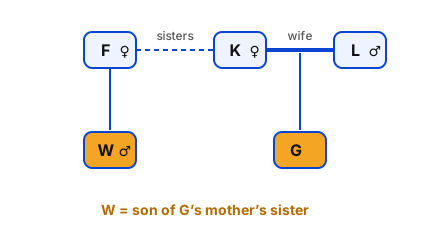
How is W related to G if ‘W = F $ K @ L * G’?
एक निश्चित कूट भाषा में,
A = B का अर्थ है ‘A, B का पुत्र है’,
A $ B का अर्थ है ‘A, B की बहन है’,
A @ B का अर्थ है ‘A, B की पत्नी है’ और
A * B का अर्थ है ‘A, B का पिता है’।
यदि ‘W = F $ K @ L * G’ है, तो W, G से किस प्रकार संबंधित है?
  1. AMother's brother's sonमाता के भाई का पुत्र
  2. BSister's sonबहन का पुत्र
  3. CMother's sister's sonमाता की बहन का पुत्र
  4. DFather's sister's sonपिता की बहन का पुत्र
Show answer

Concept: Decode W = F $ K @ L * G step by step (= son, $ sister, @ wife, * father).

  1. W = F: W is the son of F.
  2. F $ K: F is the sister of K. K @ L: K is the wife of L.
  3. L * G: L is the father of G, so K (L’s wife) is G’s mother.
  4. F is G’s mother’s sister, and W is her son → mother’s sister’s son.

Trick: Wife of the father = mother; the mother’s sister’s son is a maternal cousin (mausi’s son).

Answer: (C) Mother's sister's son

अवधारणा: W = F $ K @ L * G को क्रम से डिकोड करें (= पुत्र, $ बहन, @ पत्नी, * पिता)।

  1. W = F: W, F का पुत्र।
  2. F $ K: F, K की बहन। K @ L: K, L की पत्नी।
  3. L * G: L, G का पिता, अतः K (L की पत्नी) G की माता।
  4. F, G की मौसी है और W उसका पुत्र → माता की बहन का पुत्र (मौसेरा भाई)।

ट्रिक: पिता की पत्नी = माता; माता की बहन का पुत्र = मौसेरा भाई।

उत्तर: (C) माता की बहन का पुत्र

RRB NTPC Undergraduate CBT 1General Intelligence and ReasoningCoded blood relationsRRB NTPC Undergraduate CBT 1 2025 · 18 Jun Shift 1 →
Q6496.
When a stretched rubber band is released, its stored potential energy is converted into which form of energy?
जब किसी खिंचे हुए रबर बैंड को छोड़ा जाता है, तो उसमें संचित स्थितिज ऊर्जा किस प्रकार की ऊर्जा में परिवर्तित होती है?
  1. AHydraulic Energyजलीय ऊर्जा (Hydraulic Energy)
  2. BChemical Energyरासायनिक ऊर्जा
  3. CKinetic Energyगतिज ऊर्जा
  4. DGeothermal Energyभूतापीय ऊर्जा
Show answer

Concept: A stretched rubber band stores elastic potential energy.

  1. On release, the band snaps back and moves — energy of motion = kinetic energy.
  2. Chemical, hydraulic and geothermal energy are not involved here.

Yaad rakhein: Stretched spring/bow/rubber band: PE (stored) → KE (motion).

Answer: (C) Kinetic Energy

अवधारणा: खिंचे हुए रबर बैंड में प्रत्यास्थ स्थितिज ऊर्जा (elastic potential energy) संचित होती है।

  1. छोड़ने पर बैंड गति करता है — गति की ऊर्जा = गतिज ऊर्जा (kinetic energy)।
  2. रासायनिक, हाइड्रोलिक या भू-तापीय ऊर्जा यहाँ शामिल नहीं।

याद रखें: खिंची स्प्रिंग/धनुष/रबर बैंड: स्थितिज → गतिज ऊर्जा।

उत्तर: (C) गतिज ऊर्जा (Kinetic Energy)

RRB NTPC Undergraduate CBT 1General AwarenessPhysics – Energy ConversionRRB NTPC Undergraduate CBT 1 2025 · 17 Jun Shift 3 →
Q6497.
Who was the winner of the 2024 Ramon Magsaysay Award from Indonesia?
इंडोनेशिया से 2024 का रेमन मैग्सेसे पुरस्कार किसने जीता था?
  1. AFarwiza Farhan
  2. BDr. Nguyen Thi Ngoc Phuong
  3. CHayao Miyazaki
  4. DKarma Phuntsho
Show answer

Concept: The Ramon Magsaysay Award is often called “Asia’s Nobel Prize”.

  1. Farwiza Farhan, an Indonesian environmentalist, won in 2024 for protecting the Leuser forest ecosystem of Sumatra.
  2. Other 2024 winners: Hayao Miyazaki (Japan), Karma Phuntsho (Bhutan), Dr. Nguyen Thi Ngoc Phuong (Vietnam) — not Indonesian.

Yaad rakhein: Farwiza Farhan — Indonesia — forests (all three begin with F).

Answer: (A) Farwiza Farhan

अवधारणा: रेमन मैग्सेसे पुरस्कार को “एशिया का नोबेल पुरस्कार” कहा जाता है।

  1. इंडोनेशिया की पर्यावरणविद् फरविज़ा फरहान को 2024 में सुमात्रा के लूसर (Leuser) वन पारितंत्र की रक्षा के लिए पुरस्कार मिला।
  2. अन्य 2024 विजेता: हयाओ मियाज़ाकी (जापान), कर्मा फुंत्शो (भूटान), डॉ. न्गुयेन थी न्गोक फुओंग (वियतनाम)।

याद रखें: Farwiza Farhan — इंडोनेशिया — Forest।

उत्तर: (A) फरविज़ा फरहान

RRB NTPC Undergraduate CBT 1General AwarenessAwards – Ramon Magsaysay 2024RRB NTPC Undergraduate CBT 1 2025 · 17 Jun Shift 3 →
Q6498.
Which of the following pairs is formed inside limestone caves by deposition?
निम्नलिखित में से कौन-सा युग्म चूना पत्थर की गुफाओं के अंदर निक्षेपण द्वारा बनता है?
  1. ALevees and meandersतटबंध (levees) और विसर्प (meanders)
  2. BStalactites and stalagmitesस्टैलेक्टाइट और स्टैलेग्माइट
  3. CDrumlins and eskersड्रमलिन और एस्कर
  4. DCirques and hornsसर्क और हॉर्न
Show answer

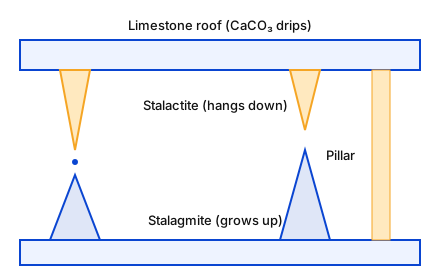
Concept: In limestone (karst) caves, water rich in calcium carbonate drips and deposits it.

  1. Deposits hanging from the roof = stalactites; those rising from the floor = stalagmites; when they join they form pillars.
  2. Levees/meanders are river features; drumlins/eskers and cirques/horns are glacial features.

Yaad rakhein: stalaCtite — from the Ceiling; stalaGmite — from the Ground.

Answer: (B) Stalactites and stalagmites

अवधारणा: चूना-पत्थर (कार्स्ट) गुफाओं में कैल्शियम कार्बोनेट युक्त जल टपककर निक्षेप बनाता है।

  1. छत से लटकने वाले = स्टैलेक्टाइट (आश्चुताश्म); फर्श से ऊपर उठने वाले = स्टैलेग्माइट (निलंबी); मिलने पर स्तंभ बनता है।
  2. तटबंध/विसर्प नदी के, ड्रमलिन/एस्कर तथा सर्क/हॉर्न हिमनद के स्थलरूप हैं।

याद रखें: stalaCtite — Ceiling (छत); stalaGmite — Ground (फर्श)।

उत्तर: (B) स्टैलेक्टाइट और स्टैलेग्माइट

RRB NTPC Undergraduate CBT 1General AwarenessGeography – Karst LandformsRRB NTPC Undergraduate CBT 1 2025 · 17 Jun Shift 3 →
Q6499.
Which national organisation jointly launched the “Earth Summit 2025-26” along with Internet and Mobile Association of India (IAMAI) to empower rural innovation?
ग्रामीण नवाचार को सशक्त बनाने के लिए किस राष्ट्रीय संगठन ने इंटरनेट एंड मोबाइल एसोसिएशन ऑफ इंडिया (IAMAI) के साथ मिलकर “अर्थ समिट 2025-26” (Earth Summit 2025-26) का शुभारंभ किया?
  1. AExport‑Import Bank of India (EXIM)भारतीय निर्यात-आयात बैंक (EXIM)
  2. BSmall Industries Development Bank of India (SIDBI)भारतीय लघु उद्योग विकास बैंक (SIDBI)
  3. CNational Rural Livelihood Mission (NRLM)राष्ट्रीय ग्रामीण आजीविका मिशन (NRLM)
  4. DNational Bank for Agriculture and Rural Development (NABARD)राष्ट्रीय कृषि और ग्रामीण विकास बैंक (NABARD)
Show answer

Concept: Earth Summit 2025-26 is an initiative to promote rural innovation and agri-fintech.

  1. It was launched jointly by NABARD (National Bank for Agriculture and Rural Development) and IAMAI.
  2. NABARD is India’s apex development bank for agriculture and rural areas, which fits the “rural innovation” theme.

Yaad rakhein: Rural + agriculture → NABARD; SIDBI is for MSMEs, EXIM for foreign trade.

Answer: (D) NABARD

अवधारणा: Earth Summit 2025-26 ग्रामीण नवाचार और कृषि-फिनटेक को बढ़ावा देने की पहल है।

  1. इसे NABARD (राष्ट्रीय कृषि और ग्रामीण विकास बैंक) और IAMAI ने संयुक्त रूप से शुरू किया।
  2. NABARD कृषि एवं ग्रामीण विकास के लिए शीर्ष विकास बैंक है।

याद रखें: ग्रामीण + कृषि → NABARD; SIDBI = MSME, EXIM = विदेश व्यापार।

उत्तर: (D) NABARD

RRB NTPC Undergraduate CBT 1General AwarenessCurrent Affairs – Rural InnovationRRB NTPC Undergraduate CBT 1 2025 · 17 Jun Shift 3 →
Q6500.
Which type of agriculture is commonly practised in the wheat-producing regions of the USA and Canada?
USA और कनाडा के गेहूँ उत्पादक क्षेत्रों में सामान्यतः किस प्रकार की कृषि की जाती है?
  1. AIntensive subsistence farmingगहन निर्वाह कृषि
  2. BShifting cultivationस्थानांतरित कृषि (झूम खेती)
  3. CPlantation agricultureरोपण कृषि
  4. DCommercial grain farmingवाणिज्यिक अनाज कृषि
Show answer

Concept: Commercial grain farming is grown on very large, highly mechanised farms for sale.

  1. The temperate grasslands (Prairies) of the USA and Canada grow wheat this way with low labour and high machinery.
  2. Intensive subsistence farming is typical of monsoon Asia; plantations grow tea, rubber etc.

Yaad rakhein: Prairies/Steppes/Pampas → commercial grain (wheat) farming.

Answer: (D) Commercial grain farming

अवधारणा: वाणिज्यिक अनाज कृषि बहुत बड़े, अत्यधिक मशीनीकृत खेतों पर बिक्री के लिए की जाती है।

  1. USA और कनाडा के प्रेयरी (शीतोष्ण घास के मैदान) में गेहूँ इसी प्रकार उगाया जाता है।
  2. गहन निर्वाह कृषि मानसूनी एशिया में; बागानी कृषि चाय, रबर आदि के लिए।

याद रखें: प्रेयरी/स्टेपी/पम्पास → वाणिज्यिक अनाज (गेहूँ) कृषि।

उत्तर: (D) वाणिज्यिक अनाज कृषि

RRB NTPC Undergraduate CBT 1General AwarenessGeography – Types of AgricultureRRB NTPC Undergraduate CBT 1 2025 · 17 Jun Shift 3 →