Question bank

Q&A: practice questions with answers

Search questions on any topic. Filter by exam category, exam, subject and topic, try the question, then open the answer and explanation.

Courses – airGurukul

8,495 questions found.

Q6521.
What is a key feature of globalisation?
वैश्वीकरण की एक प्रमुख विशेषता क्या है?
  1. APromotion of only domestic industries within national boundariesराष्ट्रीय सीमाओं के भीतर केवल घरेलू उद्योगों को बढ़ावा देना
  2. BSeparation of national economies from global economic systemsराष्ट्रीय अर्थव्यवस्थाओं को वैश्विक आर्थिक प्रणालियों से अलग करना
  3. CCreation of networks across economic, social, and geographic boundariesआर्थिक, सामाजिक और भौगोलिक सीमाओं के पार नेटवर्क का निर्माण
  4. DReduction of international trade and cross-border economic linkagesअंतर्राष्ट्रीय व्यापार और सीमा-पार आर्थिक संबंधों में कमी
Show answer

Concept: Globalisation is the process of integrating the world's economies and societies through flows of goods, services, capital, technology, people and ideas.

  1. It creates networks across economic, social and geographic boundaries – e.g., MNCs, global supply chains, the internet.
  2. Options A, B and D describe protectionism / isolation – the opposite of globalisation.

Yaad rakhein: Globalisation = connecting, not separating.

Answer: (C) Creation of networks across economic, social, and geographic boundaries

अवधारणा: वैश्वीकरण (Globalisation) वस्तुओं, सेवाओं, पूँजी, तकनीक, लोगों और विचारों के प्रवाह द्वारा विश्व की अर्थव्यवस्थाओं व समाजों को जोड़ने की प्रक्रिया है।

  1. यह आर्थिक, सामाजिक और भौगोलिक सीमाओं के पार नेटवर्क बनाता है – जैसे बहुराष्ट्रीय कंपनियाँ, वैश्विक सप्लाई चेन, इंटरनेट।
  2. विकल्प A, B, D संरक्षणवाद/अलगाव बताते हैं – वैश्वीकरण का उल्टा।

याद रखें: वैश्वीकरण = जोड़ना, अलग करना नहीं।

उत्तर: (C) Creation of networks across economic, social, and geographic boundaries
RRB NTPC Undergraduate CBT 1General AwarenessGlobalisationRRB NTPC Undergraduate CBT 1 2025 · 17 Jun Shift 3 →
Q6522.
The Twenty-Ninth Amendment Act of 1972 included which of the following in the Ninth Schedule?
1972 के उनतीसवें संशोधन अधिनियम द्वारा नौवीं अनुसूची में निम्नलिखित में से किसे शामिल किया गया?
  1. AReservation in promotionsपदोन्नति में आरक्षण
  2. BTwo Kerala Acts on land reformsभूमि सुधार से संबंधित केरल के दो अधिनियम
  3. CEnvironmental protection lawsपर्यावरण संरक्षण कानून
  4. DSpecial provisions for Mizoramमिज़ोरम के लिए विशेष प्रावधान
Show answer

Concept: The Ninth Schedule (added by the 1st Amendment, 1951) protects listed laws, mainly land-reform laws, from challenge in courts.

  1. The 29th Amendment Act, 1972 placed two Kerala Acts on land reforms (Kerala Land Reforms Amendment Acts of 1969 and 1971) in the Ninth Schedule.
  2. Reservation in promotion relates to the 77th Amendment (1995); special provisions for Mizoram came with the 53rd Amendment (1986).

Yaad rakhein: 29th → Kerala land reforms → Ninth Schedule.

Answer: (B) Two Kerala Acts on land reforms

अवधारणा: नौवीं अनुसूची (पहला संशोधन, 1951) सूचीबद्ध कानूनों – मुख्यतः भूमि सुधार कानूनों – को न्यायालय में चुनौती से बचाती है।

  1. 29वाँ संशोधन अधिनियम, 1972 ने केरल के भूमि सुधार से जुड़े दो अधिनियम (1969 व 1971 के संशोधन अधिनियम) नौवीं अनुसूची में जोड़े।
  2. पदोन्नति में आरक्षण – 77वाँ संशोधन (1995); मिज़ोरम के विशेष प्रावधान – 53वाँ संशोधन (1986)।

याद रखें: 29वाँ → केरल भूमि सुधार → नौवीं अनुसूची।

उत्तर: (B) Two Kerala Acts on land reforms

RRB NTPC Undergraduate CBT 1General AwarenessConstitutional amendmentsRRB NTPC Undergraduate CBT 1 2025 · 17 Jun Shift 3 →
Q6523.
The term 'Kriti' in Carnatic music refers to:
कर्नाटक संगीत में ‘कृति’ शब्द से तात्पर्य है:
  1. Aa compositional lyric formएक रचनात्मक गीत रूप
  2. Ba melodic scale in musicसंगीत में एक मधुर स्वर-सप्तक (melodic scale)
  3. Ca type of musical ornamentationएक प्रकार का संगीत अलंकरण
  4. Da rhythmic patternएक लयबद्ध पैटर्न
Show answer

Concept: A Kriti is the most important compositional form of Carnatic music – a song with lyrics set to a raga and tala.

  1. A kriti usually has three parts: Pallavi, Anupallavi and Charanam.
  2. It was perfected by the Carnatic Trinity – Tyagaraja, Muthuswami Dikshitar and Shyama Shastri.
  3. A melodic scale is a raga, ornamentation is gamaka, and a rhythmic cycle is tala.

Yaad rakhein: Raga = scale, Tala = rhythm, Gamaka = ornament, Kriti = composition.

Answer: (A) a compositional lyric form

अवधारणा: कृति (Kriti) कर्नाटक संगीत का सबसे प्रमुख रचना-रूप है – राग और ताल में बँधा शब्दों वाला गीत।

  1. कृति के प्रायः तीन भाग होते हैं: पल्लवी, अनुपल्लवी और चरणम्।
  2. इसे कर्नाटक त्रिमूर्ति – त्यागराज, मुत्तुस्वामी दीक्षितर और श्यामा शास्त्री – ने निखारा।
  3. स्वर-सप्तक = राग, अलंकरण = गमक, लय-चक्र = ताल।

याद रखें: राग = स्केल, ताल = लय, गमक = अलंकरण, कृति = रचना।

उत्तर: (A) a compositional lyric form

RRB NTPC Undergraduate CBT 1General AwarenessIndian musicRRB NTPC Undergraduate CBT 1 2025 · 17 Jun Shift 3 →
Q6524.
At which place did Sher Shah first defeat Humayun in 1539?
1539 में शेरशाह ने हुमायूँ को पहली बार किस स्थान पर पराजित किया?
  1. AGwaliorग्वालियर
  2. BChausaचौसा
  3. CKannaujकन्नौज
  4. DPanipatपानीपत
Show answer

Concept: Sher Shah Suri defeated the Mughal emperor Humayun in two battles.

  1. Battle of Chausa (1539) on the Ganga near Buxar (Bihar) – first defeat of Humayun.
  2. Battle of Kannauj / Bilgram (1540) – final defeat; Humayun fled to Persia and Sher Shah founded the Sur empire.
  3. Panipat is linked to 1526, 1556 and 1761 battles – not Sher Shah.

Yaad rakhein: C before K: Chausa 1539 → Kannauj 1540.

Answer: (B) Chausa

अवधारणा: शेरशाह सूरी ने मुग़ल बादशाह हुमायूँ को दो युद्धों में हराया।

  1. चौसा का युद्ध (1539) – बक्सर (बिहार) के पास गंगा तट पर – हुमायूँ की पहली हार।
  2. कन्नौज/बिलग्राम का युद्ध (1540) – अंतिम हार; हुमायूँ फ़ारस भागा और सूर साम्राज्य स्थापित हुआ।
  3. पानीपत के युद्ध 1526, 1556, 1761 के हैं – शेरशाह से संबंधित नहीं।

याद रखें: पहले C फिर K: चौसा 1539 → कन्नौज 1540।

उत्तर: (B) Chausa

RRB NTPC Undergraduate CBT 1General AwarenessMedieval India – Sur dynastyRRB NTPC Undergraduate CBT 1 2025 · 17 Jun Shift 3 →
Q6525.
Rangabati is a famous folk dance from which of the following states of India?
रंगबती भारत के निम्नलिखित में से किस राज्य का प्रसिद्ध लोक नृत्य है?
  1. AUttar Pradeshउत्तर प्रदेश
  2. BWest Bengalपश्चिम बंगाल
  3. COdishaओडिशा
  4. DGujaratगुजरात
Show answer

Concept: Rangabati is a popular Sambalpuri folk song-and-dance of western Odisha.

  1. The song 'Rangabati' (1970s), sung by Jitendra Haripal, made the Sambalpuri dance famous across India.
  2. Other Odisha folk dances: Ghumura, Dalkhai, Chhau (Mayurbhanj), Gotipua.

Yaad rakhein: Sambalpuri → Rangabati, Dalkhai → Odisha.

Answer: (C) Odisha

अवधारणा: रंगबती (Rangabati) पश्चिमी ओडिशा का लोकप्रिय संबलपुरी लोकगीत व नृत्य है।

  1. 1970 के दशक में जितेंद्र हरिपाल द्वारा गाए गीत 'रंगबती' ने इस संबलपुरी नृत्य को पूरे देश में प्रसिद्ध किया।
  2. ओडिशा के अन्य लोकनृत्य: घुमुरा, दलखाई, छऊ (मयूरभंज), गोटिपुआ।

याद रखें: संबलपुरी → रंगबती, दलखाई → ओडिशा।

उत्तर: (C) Odisha

RRB NTPC Undergraduate CBT 1General AwarenessFolk dancesRRB NTPC Undergraduate CBT 1 2025 · 17 Jun Shift 3 →
Q6526.
Which one of the following combinations contributes to low population density?
निम्नलिखित में से कौन-सा संयोजन निम्न जनसंख्या घनत्व में योगदान देता है?
  1. ARiver valleys, floodplains, health clinicsनदी घाटियाँ, बाढ़ के मैदान, स्वास्थ्य क्लिनिक
  2. BHarsh climate, poor soil, few roadsकठोर जलवायु, अनुपजाऊ मृदा, कम सड़कें
  3. CMild winters, abundant water, schoolsहल्की सर्दियाँ, प्रचुर जल, विद्यालय
  4. DFlat terrain, fertile soil, urban jobsसमतल भूभाग, उपजाऊ मृदा, शहरी रोज़गार
Show answer

Concept: Population density depends on physical factors (relief, climate, soil, water) and socio-economic factors (roads, jobs, services).

  1. Harsh climate, poor soil and few roads all discourage settlement – e.g., deserts, polar and high mountain areas → low density.
  2. River valleys, fertile flat land, mild climate, water, schools and jobs attract people → high density (options A, C, D).

Yaad rakhein: Difficult nature + poor facilities = few people.

Answer: (B) Harsh climate, poor soil, few roads

अवधारणा: जनसंख्या घनत्व भौतिक कारकों (उच्चावच, जलवायु, मिट्टी, जल) और सामाजिक-आर्थिक कारकों (सड़कें, रोज़गार, सुविधाएँ) पर निर्भर करता है।

  1. कठोर जलवायु, अनुपजाऊ मिट्टी और कम सड़कें बसावट को रोकते हैं – जैसे मरुस्थल, ध्रुवीय व ऊँचे पर्वतीय क्षेत्र → कम घनत्व।
  2. नदी घाटियाँ, उपजाऊ समतल भूमि, सुहावनी जलवायु, जल, स्कूल व रोज़गार लोगों को आकर्षित करते हैं → अधिक घनत्व (A, C, D)।

याद रखें: कठिन प्रकृति + कम सुविधाएँ = कम लोग।

उत्तर: (B) Harsh climate, poor soil, few roads

RRB NTPC Undergraduate CBT 1General AwarenessPopulation densityRRB NTPC Undergraduate CBT 1 2025 · 17 Jun Shift 3 →
Q6527.
Which of the following tunnels has been inaugurated in January 2026 to improve year- round connectivity between Sonamarg and Srinagar?
सोनमर्ग और श्रीनगर के बीच वर्ष भर संपर्क सुधारने के लिए जनवरी 2026 में निम्नलिखित में से किस सुरंग का उद्घाटन किया गया है?
  1. AZ-Morh tunnelZ-मोड़ सुरंग
  2. BPir Panjal tunnelपीर पंजाल सुरंग
  3. CAtal tunnelअटल सुरंग
  4. DNehru tunnelनेहरू सुरंग
Show answer

Concept: The Z-Morh tunnel (Sonamarg tunnel) in Ganderbal district, J&K, gives all-weather access to Sonamarg on the Srinagar–Leh route.

  1. It is about 6.5 km long and was inaugurated by PM Narendra Modi in January (13 January 2025).
  2. It bypasses the avalanche-prone Z-shaped stretch of road – hence the name 'Z-Morh'.
  3. Atal tunnel – Rohtang (Himachal); Pir Panjal (Banihal) tunnel – Jammu–Baramulla rail line; Nehru (Jawahar) tunnel – Banihal pass.

Yaad rakhein: Z-shaped road → Z-Morh tunnel → Sonamarg.

Answer: (A) Z-Morh tunnel

अवधारणा: गांदरबल ज़िले (J&K) की Z-मोड़ सुरंग (सोनमर्ग सुरंग) श्रीनगर–लेह मार्ग पर सोनमर्ग तक हर मौसम में पहुँच देती है।

  1. लगभग 6.5 km लंबी इस सुरंग का उद्घाटन PM नरेंद्र मोदी ने जनवरी (13 जनवरी 2025) में किया।
  2. यह हिमस्खलन-प्रवण Z-आकार वाले सड़क हिस्से को बायपास करती है – इसलिए नाम 'Z-मोड़'।
  3. अटल सुरंग – रोहतांग (हिमाचल); पीर पंजाल सुरंग – रेल लाइन; नेहरू (जवाहर) सुरंग – बनिहाल दर्रा।

याद रखें: Z-आकार सड़क → Z-मोड़ सुरंग → सोनमर्ग।

उत्तर: (A) Z-Morh tunnel

RRB NTPC Undergraduate CBT 1General AwarenessInfrastructure – tunnelsRRB NTPC Undergraduate CBT 1 2025 · 17 Jun Shift 3 →
Q6528.
Which standard is commonly used for wired LANs?
वायर्ड LAN के लिए सामान्यतः किस मानक का उपयोग किया जाता है?
  1. AIEEE 802.16
  2. BIEEE 802.11
  3. CIEEE 802.3
  4. DIEEE 802.15
Show answer

Concept: IEEE 802 is the family of LAN/MAN standards; each sub-number is a different technology.

  1. IEEE 802.3 = Ethernet – the standard for wired LANs.
  2. 802.11 = Wi-Fi (wireless LAN); 802.15 = WPAN (Bluetooth, Zigbee); 802.16 = WiMAX (wireless MAN).

Yaad rakhein: 3 = cable (wired), 11 = Wi-Fi, 15 = Bluetooth, 16 = WiMAX.

Answer: (C) IEEE 802.3

अवधारणा: IEEE 802, LAN/MAN मानकों का समूह है; हर उप-संख्या अलग तकनीक दर्शाती है।

  1. IEEE 802.3 = Ethernet – वायर्ड LAN का मानक।
  2. 802.11 = Wi-Fi (वायरलेस LAN); 802.15 = WPAN (Bluetooth, Zigbee); 802.16 = WiMAX (वायरलेस MAN)।

याद रखें: 3 = केबल (वायर्ड), 11 = Wi-Fi, 15 = Bluetooth, 16 = WiMAX।

उत्तर: (C) IEEE 802.3

RRB NTPC Undergraduate CBT 1General AwarenessComputer networks – IEEE standardsRRB NTPC Undergraduate CBT 1 2025 · 17 Jun Shift 3 →
Q6529.
Which of the following explains that during a chemical reaction, the sum of masses of the reactants and products remains unchanged?
निम्नलिखित में से कौन-सा नियम यह बताता है कि किसी रासायनिक अभिक्रिया के दौरान अभिकारकों और उत्पादों के द्रव्यमानों का योग अपरिवर्तित रहता है?
  1. ALaw of Periodicityआवर्तता का नियम
  2. BLaw of Definite Proportionsनिश्चित अनुपात का नियम
  3. CLaw of Definite Compositionनिश्चित संघटन का नियम
  4. DLaw of Conservation of Massद्रव्यमान संरक्षण का नियम
Show answer

Concept: The Law of Conservation of Mass (Antoine Lavoisier, 1789): mass can neither be created nor destroyed in a chemical reaction.

  1. So total mass of reactants = total mass of products.
  2. Law of Definite Proportions (= Definite Composition, Proust) says a compound always has its elements in a fixed mass ratio – not about total mass.
  3. Law of Periodicity relates to the periodic table.

Yaad rakhein: Mass before = mass after → Conservation (Lavoisier).

Answer: (D) Law of Conservation of Mass

अवधारणा: द्रव्यमान संरक्षण का नियम (Law of Conservation of Mass – लेवोज़िए, 1789): रासायनिक अभिक्रिया में द्रव्यमान न बनता है, न नष्ट होता है।

  1. अतः अभिकारकों का कुल द्रव्यमान = उत्पादों का कुल द्रव्यमान।
  2. स्थिर अनुपात (निश्चित संघटन) का नियम (प्राउस्ट) बताता है कि यौगिक में तत्वों का द्रव्यमान अनुपात सदा स्थिर रहता है – कुल द्रव्यमान से संबंधित नहीं।
  3. आवर्तिता का नियम आवर्त सारणी से जुड़ा है।

याद रखें: पहले का द्रव्यमान = बाद का द्रव्यमान → संरक्षण (लेवोज़िए)।

उत्तर: (D) Law of Conservation of Mass

RRB NTPC Undergraduate CBT 1General AwarenessLaws of chemical combinationRRB NTPC Undergraduate CBT 1 2025 · 17 Jun Shift 3 →
Q6530.
The Chinese pilgrim Xuanzang (Hiuen Tsang) visited Kashmir during the reign of:
चीनी तीर्थयात्री ह्वेनसांग (Xuanzang) ने किसके शासनकाल में कश्मीर की यात्रा की थी?
  1. AYashodharmanयशोधर्मन
  2. BDurlabhavardhanaदुर्लभवर्धन
  3. CHarshavardhanaहर्षवर्धन
  4. DPulakeshin IIपुलकेशिन II
Show answer

Concept: Xuanzang travelled in India c. 630–645 CE; he spent about two years in Kashmir studying Buddhist texts.

  1. Kashmir was then ruled by Durlabhavardhana, founder of the Karkota dynasty.
  2. Harshavardhana ruled Kannauj/Thanesar and Pulakeshin II ruled the Chalukya Deccan – Xuanzang met them too, but not as rulers of Kashmir; Yashodharman (Malwa) was a century earlier.

Yaad rakhein: Kashmir + Xuanzang → Karkota founder Durlabhavardhana.

Answer: (B) Durlabhavardhana

अवधारणा: ह्वेनसांग (Xuanzang) लगभग 630–645 ई. में भारत आया; उसने लगभग दो वर्ष कश्मीर में बौद्ध ग्रंथों का अध्ययन किया।

  1. उस समय कश्मीर पर कार्कोट वंश के संस्थापक दुर्लभवर्धन का शासन था।
  2. हर्षवर्धन (कन्नौज/थानेसर) और पुलकेशिन II (चालुक्य, दक्कन) से भी वह मिला, पर वे कश्मीर के शासक नहीं थे; यशोधर्मन (मालवा) एक सदी पहले था।

याद रखें: कश्मीर + ह्वेनसांग → कार्कोट संस्थापक दुर्लभवर्धन।

उत्तर: (B) Durlabhavardhana

RRB NTPC Undergraduate CBT 1General AwarenessEarly medieval India – KashmirRRB NTPC Undergraduate CBT 1 2025 · 17 Jun Shift 3 →
Q6531.
Which strategy was used by the British to regain control after initial rebel victories across northern India in the Revolt of 1857?
1857 के विद्रोह में उत्तरी भारत में विद्रोहियों की प्रारंभिक विजयों के बाद पुनः नियंत्रण प्राप्त करने के लिए अंग्रेज़ों ने किस रणनीति का उपयोग किया?
  1. AWithdrawing British forces from major towns to avoid further confrontation.आगे टकराव से बचने के लिए प्रमुख नगरों से ब्रिटिश सेनाओं को वापस बुलाना।
  2. BAllowing the Mughal emperor to govern Delhi under strict British supervision.मुगल सम्राट को कड़े ब्रिटिश पर्यवेक्षण में दिल्ली पर शासन करने देना।
  3. CNegotiating a settlement that restored regional rulers to their former positions.ऐसा समझौता करना जिससे क्षेत्रीय शासकों को उनके पूर्व पदों पर बहाल किया जाए।
  4. DRecapturing key centres, enacting new laws, and offering rewards to loyal chiefs.प्रमुख केंद्रों पर पुनः कब्ज़ा करना, नए कानून बनाना और वफ़ादार सरदारों को पुरस्कार देना।
Show answer

Concept: After the early rebel successes of 1857, the British used force plus political measures to crush the revolt.

  1. They brought reinforcements from England and recaptured key centres – Delhi (September 1857), Lucknow (March 1858) etc.
  2. New laws were passed so that rebels could be tried and punished easily.
  3. Rewards and guarantees of land were offered to loyal landholders and chiefs to win them back.

Yaad rakhein: Recapture + laws + rewards = British strategy (NCERT).

Answer: (D) Recapturing key centres, enacting new laws, and offering rewards to loyal chiefs.

अवधारणा: 1857 में विद्रोहियों की शुरुआती सफलताओं के बाद अंग्रेज़ों ने बल प्रयोग और राजनीतिक उपायों से विद्रोह को कुचला।

  1. इंग्लैंड से अतिरिक्त सेना बुलाकर मुख्य केंद्र फिर से जीते – दिल्ली (सितंबर 1857), लखनऊ (मार्च 1858) आदि।
  2. विद्रोहियों पर आसानी से मुक़दमा चलाने और दंड देने के लिए नए कानून बनाए।
  3. वफ़ादार ज़मींदारों और मुखियाओं को पुरस्कार व भूमि अधिकार की गारंटी दी गई।

याद रखें: पुनः क़ब्ज़ा + कानून + पुरस्कार = अंग्रेज़ों की रणनीति (NCERT)।

उत्तर: (D) Recapturing key centres, enacting new laws, and offering rewards to loyal chiefs.

RRB NTPC Undergraduate CBT 1General AwarenessRevolt of 1857RRB NTPC Undergraduate CBT 1 2025 · 17 Jun Shift 3 →
Q6532.
Which Article authorises municipalities to perform Twelfth Schedule functions introduced through this Constitutional Amendment Act?
कौन-सा अनुच्छेद नगरपालिकाओं को इस संविधान संशोधन अधिनियम द्वारा जोड़ी गई बारहवीं अनुसूची के कार्य करने के लिए अधिकृत करता है?
  1. AArticle 243-ZCअनुच्छेद 243-ZC
  2. BArticle 243-Pअनुच्छेद 243-P
  3. CArticle 243-Wअनुच्छेद 243-W
  4. DArticle 243-Qअनुच्छेद 243-Q
Show answer

Concept: The 74th Constitutional Amendment Act, 1992 added Part IXA (Articles 243P–243ZG) and the Twelfth Schedule (18 functions) for municipalities.

  1. Article 243W – powers, authority and responsibilities of municipalities, including performance of functions listed in the Twelfth Schedule.
  2. 243P = definitions; 243Q = constitution of municipalities; 243ZC = Part not applicable to certain areas.

Yaad rakhein: Panchayat ↔ Article 243G (11th Schedule); Municipality ↔ Article 243W (12th Schedule).

Answer: (C) Article 243-W

अवधारणा: 74वें संविधान संशोधन अधिनियम, 1992 ने नगरपालिकाओं के लिए भाग IXA (अनुच्छेद 243P–243ZG) और 12वीं अनुसूची (18 विषय) जोड़ी।

  1. अनुच्छेद 243W – नगरपालिकाओं की शक्तियाँ, प्राधिकार और उत्तरदायित्व, जिसमें 12वीं अनुसूची के कार्य करना शामिल है।
  2. 243P = परिभाषाएँ; 243Q = नगरपालिकाओं का गठन; 243ZC = कुछ क्षेत्रों पर भाग लागू नहीं।

याद रखें: पंचायत ↔ अनुच्छेद 243G (11वीं अनुसूची); नगरपालिका ↔ अनुच्छेद 243W (12वीं अनुसूची)।

उत्तर: (C) Article 243-W

RRB NTPC Undergraduate CBT 1General AwarenessPolity – MunicipalitiesRRB NTPC Undergraduate CBT 1 2025 · 17 Jun Shift 3 →
Q6533.
During an experiment, iron nails are placed in copper sulphate solution, and a reddish- brown deposit forms on the nails. What does this observation demonstrate about the type of chemical reaction and the substances involved?
एक प्रयोग के दौरान, लोहे की कीलों को कॉपर सल्फेट विलयन में रखा जाता है, और कीलों पर लाल-भूरा निक्षेप बन जाता है। यह प्रेक्षण रासायनिक अभिक्रिया के प्रकार और उसमें सम्मिलित पदार्थों के बारे में क्या दर्शाता है?
  1. AA double displacement reaction forms iron sulphate and copper sulphateएक द्विविस्थापन अभिक्रिया आयरन सल्फेट और कॉपर सल्फेट बनाती है
  2. BA displacement reaction occurs, forming copper metal on the iron nailsएक विस्थापन अभिक्रिया होती है, जिससे लोहे की कीलों पर कॉपर धातु बनती है
  3. CA decomposition reaction occurs, breaking copper sulphate into SO2 and copperएक अपघटन अभिक्रिया होती है, जो कॉपर सल्फेट को SO2 और कॉपर में तोड़ देती है
  4. DA combination reaction occurs, creating iron sulphate crystalsएक संयोजन अभिक्रिया होती है, जिससे आयरन सल्फेट के क्रिस्टल बनते हैं
Show answer

Concept: A more reactive metal displaces a less reactive metal from its salt solution – a displacement reaction.

  1. Fe+CuSO4→FeSO4+Cu
  2. Iron is more reactive than copper, so it displaces copper; the reddish-brown deposit is copper metal on the nails.
  3. The blue solution slowly turns pale green (iron sulphate).

Trick: Blue → green solution + brown coating = Fe has pushed out Cu.

Answer: (B) A displacement reaction occurs, forming copper metal on the iron nails

अवधारणा: अधिक क्रियाशील धातु कम क्रियाशील धातु को उसके लवण विलयन से हटा देती है – इसे विस्थापन अभिक्रिया कहते हैं।

  1. Fe+CuSO4→FeSO4+Cu
  2. लोहा, ताँबे से अधिक क्रियाशील है, इसलिए वह ताँबे को विस्थापित करता है; कीलों पर लाल-भूरी परत ताँबा धातु की है।
  3. नीला विलयन धीरे-धीरे हल्का हरा (आयरन सल्फ़ेट) हो जाता है।

ट्रिक: नीला → हरा विलयन + भूरी परत = Fe ने Cu को हटाया।

उत्तर: (B) A displacement reaction occurs, forming copper metal on the iron nails

RRB NTPC Undergraduate CBT 1General AwarenessChemical reactions – displacementRRB NTPC Undergraduate CBT 1 2025 · 17 Jun Shift 3 →
Q6534.
Who received the Chief of Army Staff Commendation Card from General Upendra Dwivedi on October 7, 2025?
7 अक्टूबर 2025 को जनरल उपेंद्र द्विवेदी से थल सेनाध्यक्ष प्रशस्ति पत्र (Chief of Army Staff Commendation Card) किसने प्राप्त किया?
  1. AAmitabh Bachchanअमिताभ बच्चन
  2. BMohanlalमोहनलाल
  3. CHrithik Roshanऋतिक रोशन
  4. DAkshay Kumarअक्षय कुमार
Show answer

Concept: The Chief of Army Staff (COAS) Commendation Card is awarded for distinguished service/contribution to the Army.

  1. On 7 October 2025, Army Chief General Upendra Dwivedi presented the COAS Commendation Card to Malayalam superstar Mohanlal in New Delhi.
  2. Mohanlal is an honorary Lieutenant Colonel in the Territorial Army (since 2009) and had just received the Dadasaheb Phalke Award.

Yaad rakhein: Honorary Lt Col of Territorial Army → Mohanlal.

Answer: (B) Mohanlal

अवधारणा: सेना प्रमुख (COAS) प्रशस्ति पत्र (Commendation Card) सेना के लिए विशिष्ट सेवा/योगदान हेतु दिया जाता है।

  1. 7 अक्टूबर 2025 को सेना प्रमुख जनरल उपेंद्र द्विवेदी ने नई दिल्ली में मलयालम सुपरस्टार मोहनलाल को COAS Commendation Card प्रदान किया।
  2. मोहनलाल 2009 से प्रादेशिक सेना (Territorial Army) में मानद लेफ़्टिनेंट कर्नल हैं और हाल ही में उन्हें दादासाहेब फाल्के पुरस्कार मिला था।

याद रखें: प्रादेशिक सेना के मानद Lt Col → मोहनलाल।

उत्तर: (B) Mohanlal

RRB NTPC Undergraduate CBT 1General AwarenessCurrent affairs – honoursRRB NTPC Undergraduate CBT 1 2025 · 17 Jun Shift 3 →
Q6535.
Which of the following sectors includes activities like trade, transport, and
communication in India?
भारत में निम्नलिखित में से किस क्षेत्रक में व्यापार, परिवहन और संचार जैसी गतिविधियाँ शामिल हैं?
  1. ATertiaryतृतीयक
  2. BPrimaryप्राथमिक
  3. CSecondaryद्वितीयक
  4. DQuinaryपंचक (Quinary)
Show answer

Concept: Economic activities are grouped into primary, secondary and tertiary sectors.

  1. Tertiary (service) sector: trade, transport, communication, banking, storage – activities that support the other sectors.
  2. Primary = using natural resources (agriculture, mining); Secondary = manufacturing; Quinary = top-level decision making (not a standard Indian sector).

Yaad rakhein: Services (trade–transport–communication) = Tertiary.

Answer: (A) Tertiary

अवधारणा: आर्थिक गतिविधियों को प्राथमिक, द्वितीयक और तृतीयक क्षेत्रकों में बाँटा जाता है।

  1. तृतीयक (सेवा) क्षेत्रक: व्यापार, परिवहन, संचार, बैंकिंग, भंडारण – जो अन्य क्षेत्रकों को सहायता देते हैं।
  2. प्राथमिक = प्राकृतिक संसाधनों का उपयोग (कृषि, खनन); द्वितीयक = विनिर्माण; पंचम (Quinary) = उच्च-स्तरीय निर्णय (भारत का मानक क्षेत्रक नहीं)।

याद रखें: सेवाएँ (व्यापार–परिवहन–संचार) = तृतीयक।

उत्तर: (A) Tertiary

RRB NTPC Undergraduate CBT 1General AwarenessSectors of economyRRB NTPC Undergraduate CBT 1 2025 · 17 Jun Shift 3 →
Q6536.
An amount of ₹6,900 is obtained after 3 years at simple interest at the rate of 5% interest per annum. What is the principal invested?
साधारण ब्याज पर 5% वार्षिक ब्याज दर से 3 वर्ष बाद ₹6,900 की राशि प्राप्त होती है। निवेशित मूलधन कितना है?
  1. A₹5,600
  2. B₹6,000
  3. C₹5,800
  4. D₹6,400
Show answer

Concept: Amount A=P(1+RT100) under simple interest.

  1. Total SI for 3 years =3×5=15% of P.
  2. A=1.15P=6900
  3. P=69001.15=6000

Trick: Amount = 115 parts, principal = 100 parts: 6900115×100=6000.

Answer: (B) ₹6,000

अवधारणा: साधारण ब्याज में मिश्रधन A=P(1+RT100)।

  1. 3 वर्षों का कुल ब्याज =3×5=15% (मूलधन का)।
  2. A=1.15P=6900
  3. P=69001.15=6000

ट्रिक: मिश्रधन = 115 भाग, मूलधन = 100 भाग: 6900115×100=6000।

उत्तर: (B) ₹6,000

RRB NTPC Undergraduate CBT 1MathematicsSimple InterestRRB NTPC Undergraduate CBT 1 2025 · 17 Jun Shift 3 →
Q6537.
The present ages of two persons, X and Y, are in the ratio 4 : 5. Five years from now, the difference between X’s age and Y’s age will be 3 years. Find the sum of their present ages (in years).
दो व्यक्तियों X और Y की वर्तमान आयु का अनुपात 4 : 5 है। अब से पाँच वर्ष बाद, X की आयु और Y की आयु का अंतर 3 वर्ष होगा। उनकी वर्तमान आयु का योग (वर्षों में) ज्ञात कीजिए।
  1. A27
  2. B25
  3. C26
  4. D24
Show answer

Concept: The difference between two ages never changes with time.

  1. Let ages be 4k and 5k; difference =k.
  2. After 5 years difference is still k=3.
  3. Ages =12 and 15; sum =27.

Trick: Sum =(4+5)×difference=9×3=27.

Answer: (A) 27

अवधारणा: दो व्यक्तियों की आयु का अंतर समय के साथ नहीं बदलता।

  1. आयु 4k और 5k मानें; अंतर =k।
  2. 5 वर्ष बाद भी अंतर k=3।
  3. आयु =12 और 15; योग =27।

ट्रिक: योग =(4+5)×अंतर=9×3=27।

उत्तर: (A) 27

RRB NTPC Undergraduate CBT 1MathematicsAges and RatioRRB NTPC Undergraduate CBT 1 2025 · 17 Jun Shift 3 →
Q6538.
Article M is sold at a reduction of ₹3,000 from its original price, and Article N is sold at a reduction of ₹2,500 from its original price. If the original prices of both articles were ₹10,000, reduction in price of M is R1% and reduction in price of N is R2%, find the difference between R1 and R2.
वस्तु M को उसके मूल मूल्य से ₹3,000 की कमी पर बेचा जाता है, और वस्तु N को उसके मूल मूल्य से ₹2,500 की कमी पर बेचा जाता है। यदि दोनों वस्तुओं का मूल मूल्य ₹10,000 था, M के मूल्य में कमी R1% है और N के मूल्य में कमी R2% है, तो R1 और R2 का अंतर ज्ञात कीजिए।
  1. A10
  2. B5
  3. C15
  4. D20
Show answer

Concept: Reduction%=ReductionOriginal price×100

  1. R1=300010000×100=30%
  2. R2=250010000×100=25%
  3. R1−R2=5

Trick: Same base: difference of reductions =50010000×100=5.

Answer: (B) 5

अवधारणा: कमी%=कमीमूल मूल्य×100

  1. R1=300010000×100=30%
  2. R2=250010000×100=25%
  3. R1−R2=5

ट्रिक: आधार समान है: 3000−250010000×100=5।

उत्तर: (B) 5

RRB NTPC Undergraduate CBT 1MathematicsPercentageRRB NTPC Undergraduate CBT 1 2025 · 17 Jun Shift 3 →
Q6539.
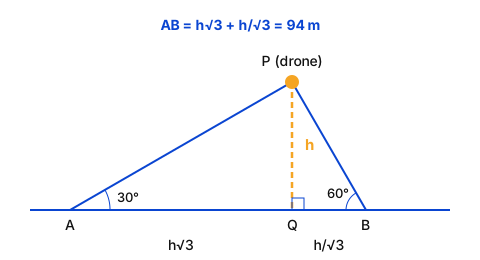
A delivery drone is hovering at a fixed point in the air. From two points on the ground in a straight line on opposite sides of the drone, the angles of elevation of the drone are 30° and 60°. If the horizontal distance between the two points is 94 m, find the vertical height at which the drone is hovering. (Take 3=1.73)
एक डिलीवरी ड्रोन हवा में एक निश्चित बिंदु पर मँडरा रहा है। ड्रोन के विपरीत ओर एक सीधी रेखा में स्थित भूमि पर दो बिंदुओं से ड्रोन के उन्नयन कोण 30° और 60° हैं। यदि दोनों बिंदुओं के बीच क्षैतिज दूरी 94 m है, तो वह ऊर्ध्वाधर ऊँचाई ज्ञात कीजिए जिस पर ड्रोन मँडरा रहा है। (3=1.73 लीजिए)
  1. A42.562 m
  2. B40.752 m
  3. C41.652 m
  4. D40.655 m
Show answer

Concept: Points on opposite sides: horizontal distances =hcot30∘ and hcot60∘ add up to the gap.

  1. AQ=h3, QB=h3
  2. h3+h3=4h3=94
  3. h=9434=23.5×1.73=40.655m

Trick: For angles 30∘ and 60∘ on opposite sides: h=34×gap.

Answer: (D) 40.655m

अवधारणा: विपरीत दिशाओं के बिंदु: क्षैतिज दूरियाँ hcot30∘ और hcot60∘ मिलकर कुल दूरी बनाती हैं।

  1. AQ=h3, QB=h3
  2. h3+h3=4h3=94
  3. h=9434=23.5×1.73=40.655m

ट्रिक: 30∘ और 60∘ विपरीत ओर हों तो h=34×दूरी।

उत्तर: (D) 40.655m

RRB NTPC Undergraduate CBT 1MathematicsHeights and DistancesRRB NTPC Undergraduate CBT 1 2025 · 17 Jun Shift 3 →
Q6540.
Find the third proportional to (a2−b2) and (a+b), given that a≠b.
(a2−b2) और (a+b) का तृतीयानुपाती ज्ञात कीजिए, दिया गया है कि a≠b।
  1. Aa+ba−b
  2. Ba−ba+b
  3. C(a+b)2a−b
  4. D(a−b)2a+b
Show answer

Concept: Third proportional to a and b is b2a.

  1. x=(a+b)2a2−b2
  2. a2−b2=(a+b)(a−b)
  3. x=(a+b)2(a+b)(a−b)=a+ba−b

Trick: Always factorise a2−b2 first and cancel.

Answer: (A) a+ba−b

अवधारणा: a और b का तृतीयानुपाती =b2a।

  1. x=(a+b)2a2−b2
  2. a2−b2=(a+b)(a−b)
  3. x=(a+b)2(a+b)(a−b)=a+ba−b

ट्रिक: पहले a2−b2 का गुणनखंड करके काटें।

उत्तर: (A) a+ba−b

RRB NTPC Undergraduate CBT 1MathematicsThird ProportionalRRB NTPC Undergraduate CBT 1 2025 · 17 Jun Shift 3 →