Question bank

Q&A: practice questions with answers

Search questions on any topic. Filter by exam category, exam, subject and topic, try the question, then open the answer and explanation.

Courses – airGurukul

8,495 questions found.

Q6581.
In the following triad, each group of letters is related to the subsequent one following a certain logic. Select, from the given options, the one which follows the same logic. MEGA - EAGM - AGEM
TONS - OSNT - SNOT
निम्नलिखित त्रय में, अक्षरों का प्रत्येक समूह एक निश्चित तर्क का अनुसरण करते हुए अगले समूह से संबंधित है। दिए गए विकल्पों में से उसका चयन कीजिए जो समान तर्क का अनुसरण करता है। MEGA - EAGM - AGEM
TONS - OSNT - SNOT
  1. AWEAR - WAER - RAEW
  2. BPOND - OPND - DONP
  3. CKITE - IETK - ETIK
  4. DLEGS - ELGS - SEGL
Show answer

Concept: Track the positions: word 1234 → 2nd word, then 2nd word → 3rd word.

  1. MEGA (1234) → EAGM = 2, 4, 3, 1; EAGM → AGEM = its letters 2, 3, 1, 4
  2. Check TONS → OSNT → SNOT ✓
  3. KITE → IETK (2, 4, 3, 1) → ETIK (2, 3, 1, 4) ✓

Trick: Write numbers 1–4 under the first word; test only one option fully.

Answer: (C) KITE - IETK - ETIK

अवधारणा: स्थान ट्रैक करें: शब्द 1234 → दूसरा शब्द, फिर दूसरा → तीसरा।

  1. MEGA (1234) → EAGM = 2, 4, 3, 1; EAGM → AGEM = उसके अक्षर 2, 3, 1, 4
  2. जाँच: TONS → OSNT → SNOT ✓
  3. KITE → IETK (2, 4, 3, 1) → ETIK (2, 3, 1, 4) ✓

ट्रिक: पहले शब्द के नीचे 1–4 लिखें; केवल एक विकल्प पूरा जाँचें।

उत्तर: (C) KITE - IETK - ETIK
RRB NTPC Undergraduate CBT 1General Intelligence and ReasoningLetter triadsRRB NTPC Undergraduate CBT 1 2025 · 17 Jun Shift 3 →
Q6582.
Seven boxes, M, N, O, P, Q, R and S, are kept one over the other, but not necessarily in the same order.
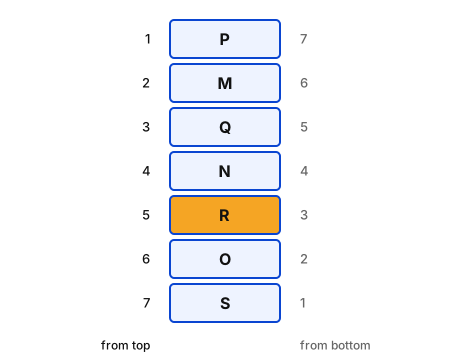
N is kept fourth from the top. Only two boxes are kept between N and S. Only P is kept above M. O is kept immediately above S. Q is kept on one of the positions after M but on one of the positions before N.
Which box is kept third from the bottom?
सात डिब्बे M, N, O, P, Q, R और S एक के ऊपर एक रखे गए हैं, लेकिन आवश्यक नहीं कि इसी क्रम में हों।
N को ऊपर से चौथे स्थान पर रखा गया है। N और S के बीच केवल दो डिब्बे रखे गए हैं। M के ऊपर केवल P रखा गया है। O को S के ठीक ऊपर रखा गया है। Q को M के बाद वाले किसी एक स्थान पर लेकिन N से पहले वाले किसी एक स्थान पर रखा गया है।
नीचे से तीसरे स्थान पर कौन-सा डिब्बा रखा गया है?
  1. AQ
  2. BR
  3. CO
  4. DS
Show answer

Concept: Number positions 1 (top) to 7 (bottom) and fix definite clues first.

  1. N = 4. Only P above M → P = 1, M = 2.
  2. Two boxes between N and S → S = 7 (1 is taken). O immediately above S → O = 6.
  3. Q between M and N → Q = 3; remaining R = 5.
  4. Third from bottom = position 5 = R.

Trick: nth from bottom =8−n from top for 7 boxes.

Answer: (B) R

अवधारणा: स्थान 1 (ऊपर) से 7 (नीचे) तक मानें और निश्चित सुराग पहले लगाएँ।

  1. N = 4। M के ऊपर केवल P → P = 1, M = 2।
  2. N और S के बीच दो बॉक्स → S = 7 (1 भरा है)। O, S के ठीक ऊपर → O = 6।
  3. Q, M और N के बीच → Q = 3; शेष R = 5।
  4. नीचे से तीसरा = स्थान 5 = R।

ट्रिक: 7 बॉक्स में नीचे से n-वाँ =8−n ऊपर से।

उत्तर: (B) R

RRB NTPC Undergraduate CBT 1General Intelligence and ReasoningBox arrangementRRB NTPC Undergraduate CBT 1 2025 · 17 Jun Shift 3 →
Q6583.
In a certain code language, ‘SAFE’ is coded as ‘3698’ and ‘FACE’ is coded as ‘5398’. What is the code for ‘S’ in the given code language?
एक निश्चित कूट भाषा में, ‘SAFE’ को ‘3698’ के रूप में और ‘FACE’ को ‘5398’ के रूप में कूटबद्ध किया जाता है। दी गई कूट भाषा में ‘S’ के लिए कूट क्या है?
  1. A3
  2. B9
  3. C8
  4. D6
Show answer

Concept: Letters common to both words share the common digits.

  1. SAFE = 3698, FACE = 5398
  2. Common letters A, F, E ↔ common digits 3, 9, 8
  3. Left over: S = 6, C = 5

Trick: Remove common letters and digits – what remains pairs up.

Answer: (D) 6

अवधारणा: दोनों शब्दों के समान अक्षरों के कोड भी समान अंक होंगे।

  1. SAFE = 3698, FACE = 5398
  2. समान अक्षर A, F, E ↔ समान अंक 3, 9, 8
  3. शेष: S = 6, C = 5

ट्रिक: समान अक्षर व अंक हटाएँ – जो बचे वही जोड़ी है।

उत्तर: (D) 6

RRB NTPC Undergraduate CBT 1General Intelligence and ReasoningCoding-decodingRRB NTPC Undergraduate CBT 1 2025 · 17 Jun Shift 3 →
Q6584.
Read the given statements and conclusions carefully. Assuming that the information given in the statements is true, even if it appears to be at variance with commonly known facts, decide which of the given conclusions logically follow(s) from the statements.
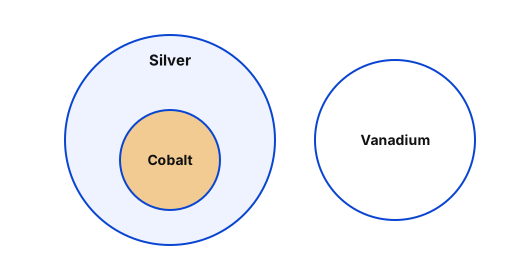
Statement: All Cobalt is Silver. No Silver is Vanadium.
Conclusion I: No Vanadium is Cobalt.
Conclusion II: Some Vanadium is Cobalt.
दिए गए कथनों और निष्कर्षों को ध्यानपूर्वक पढ़िए। यह मानते हुए कि कथनों में दी गई जानकारी सत्य है, भले ही वह सामान्यतः ज्ञात तथ्यों से भिन्न प्रतीत होती हो, निर्णय कीजिए कि दिए गए निष्कर्षों में से कौन-सा/कौन-से निष्कर्ष कथनों का तार्किक रूप से अनुसरण करता है/करते हैं।
कथन: सभी कोबाल्ट, सिल्वर हैं। कोई सिल्वर, वैनेडियम नहीं है।
निष्कर्ष I: कोई वैनेडियम, कोबाल्ट नहीं है।
निष्कर्ष II: कुछ वैनेडियम, कोबाल्ट हैं।
  1. ABoth conclusions (I) and (II) followनिष्कर्ष (I) और (II) दोनों अनुसरण करते हैं
  2. BOnly conclusion (I) followsकेवल निष्कर्ष (I) अनुसरण करता है
  3. CNeither conclusion (I) nor (II) followsन तो निष्कर्ष (I) और न ही (II) अनुसरण करता है
  4. DOnly conclusion (II) followsकेवल निष्कर्ष (II) अनुसरण करता है
Show answer

Concept: Draw the Venn diagram: Cobalt lies inside Silver; Silver and Vanadium do not touch.

  1. Since all Cobalt is inside Silver and Silver is completely away from Vanadium, Cobalt can never touch Vanadium.
  2. Conclusion I: No Vanadium is Cobalt → definitely true ✓
  3. Conclusion II: Some Vanadium is Cobalt → impossible ✗

Trick: All A are B + No B is C ⇒ No A is C (and No C is A).

Answer: (B) Only conclusion (I) follows

अवधारणा: वेन आरेख बनाएँ: Cobalt, Silver के अंदर; Silver और Vanadium अलग।

  1. सारा Cobalt, Silver में है और Silver, Vanadium से पूरी तरह अलग है – अतः Cobalt कभी Vanadium को नहीं छू सकता।
  2. निष्कर्ष I: कोई Vanadium, Cobalt नहीं → निश्चित सत्य ✓
  3. निष्कर्ष II: कुछ Vanadium, Cobalt हैं → असंभव ✗

ट्रिक: सभी A, B हैं + कोई B, C नहीं ⇒ कोई A, C नहीं (और कोई C, A नहीं)।

उत्तर: (B) Only conclusion (I) follows

RRB NTPC Undergraduate CBT 1General Intelligence and ReasoningSyllogismRRB NTPC Undergraduate CBT 1 2025 · 17 Jun Shift 3 →
Q6585.
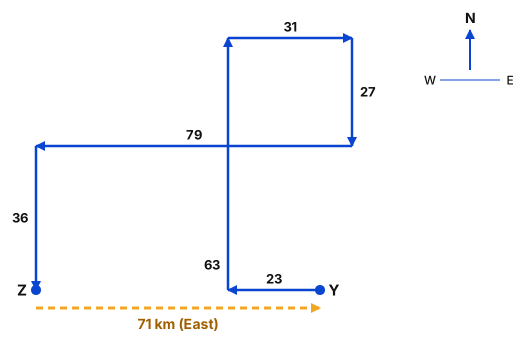
Tanmay starts from Point Y and drives 23 km towards West. He then takes a right turn, drives 63 km, turns right and drives 31 km. He then takes a right turn and drives 27 km. He takes a right turn, drives 79 km. He then turns left, drives 36 km to stop at Point Z. How far (shortest distance) and towards which direction should he drive in order to reach Point Y again? (All turns are 90° turns only unless specified.)
तन्मय बिंदु Y से चलना शुरू करता है और पश्चिम की ओर 23 km गाड़ी चलाता है। फिर वह दाएँ मुड़ता है, 63 km गाड़ी चलाता है, दाएँ मुड़ता है और 31 km गाड़ी चलाता है। फिर वह दाएँ मुड़ता है और 27 km गाड़ी चलाता है। वह दाएँ मुड़ता है, 79 km गाड़ी चलाता है। फिर वह बाएँ मुड़ता है, 36 km गाड़ी चलाकर बिंदु Z पर रुकता है। बिंदु Y पर फिर से पहुँचने के लिए उसे कितनी दूरी (न्यूनतम दूरी) और किस दिशा में गाड़ी चलानी चाहिए? (जब तक निर्दिष्ट न किया जाए, सभी मोड़ केवल 90° के मोड़ हैं।)
  1. A73 km towards westपश्चिम की ओर 73 km
  2. B75 km towards eastपूर्व की ओर 75 km
  3. C71 km towards westपश्चिम की ओर 71 km
  4. D71 km towards eastपूर्व की ओर 71 km
Show answer

Concept: Take Y as origin; East and North positive.

  1. West 23 → (−23,0); right (North) 63 → (−23,63); right (East) 31 → (8,63)
  2. Right (South) 27 → (8,36); right (West) 79 → (−71,36)
  3. Left (South) 36 → Z =(−71,0), on the same horizontal line as Y
  4. Y is 71km to the East of Z.

Trick: Net E–W: −23+31−79=−71; net N–S: 63−27−36=0.

Answer: (D) 71 km towards east

अवधारणा: Y को मूल बिंदु मानें; पूर्व और उत्तर धनात्मक।

  1. पश्चिम 23 → (−23,0); दाएँ (उत्तर) 63 → (−23,63); दाएँ (पूर्व) 31 → (8,63)
  2. दाएँ (दक्षिण) 27 → (8,36); दाएँ (पश्चिम) 79 → (−71,36)
  3. बाएँ (दक्षिण) 36 → Z =(−71,0), Y की ही क्षैतिज रेखा पर
  4. Y, Z से 71km पूर्व में है।

ट्रिक: कुल पूर्व–पश्चिम: −23+31−79=−71; उत्तर–दक्षिण: 63−27−36=0।

उत्तर: (D) 71 km towards east

RRB NTPC Undergraduate CBT 1General Intelligence and ReasoningDirection and distanceRRB NTPC Undergraduate CBT 1 2025 · 17 Jun Shift 3 →
Q6586.
Which of the following letter-number clusters will replace the question mark (?) in the given series to make it logically complete?
KE64, MC27, PZ8, ?
निम्नलिखित में से कौन-सा अक्षर-संख्या समूह दी गई श्रृंखला में प्रश्न चिह्न (?) को प्रतिस्थापित करके उसे तार्किक रूप से पूर्ण करेगा?
KE64, MC27, PZ8, ?
  1. ATW1
  2. BSV1
  3. CTV1
  4. DTV8
Show answer

Concept: Check each part separately.

  1. 1st letter: K → M → P → T (+2,+3,+4)
  2. 2nd letter: E → C → Z → V (−2,−3,−4)
  3. Numbers: 64=43,27=33,8=23 → next 13=1

Trick: The two letters move by the same steps in opposite directions.

Answer: (C) TV1

अवधारणा: हर भाग को अलग-अलग जाँचें।

  1. पहला अक्षर: K → M → P → T (+2,+3,+4)
  2. दूसरा अक्षर: E → C → Z → V (−2,−3,−4)
  3. संख्याएँ: 64=43,27=33,8=23 → अगला 13=1

ट्रिक: दोनों अक्षर समान कदमों से उल्टी दिशाओं में चलते हैं।

उत्तर: (C) TV1

RRB NTPC Undergraduate CBT 1General Intelligence and ReasoningLetter-number seriesRRB NTPC Undergraduate CBT 1 2025 · 17 Jun Shift 3 →
Q6587.
Select the set in which the numbers are related in the same way as are the numbers of the following sets.
(NOTE: Operations should be performed on the whole numbers, without breaking down the numbers into their constituent digits. E.g. 13 – Operations on 13 such as
adding/subtracting/multiplying etc. to 13 can be performed. Breaking down 13 into 1 and 3 and then performing mathematical operations on 1 and 3 is not allowed.) (53, 47, 35)
(117, 111, 99)
उस समुच्चय का चयन कीजिए जिसमें संख्याएँ उसी प्रकार संबंधित हैं जिस प्रकार निम्नलिखित समुच्चयों की संख्याएँ संबंधित हैं।
(ध्यान दें: संक्रियाएँ संख्याओं को उनके घटक अंकों में तोड़े बिना, पूर्ण संख्याओं पर की जानी चाहिए। उदाहरण के लिए, 13 – 13 पर संक्रियाएँ जैसे 13 में
जोड़ना/घटाना/गुणा करना आदि की जा सकती हैं। 13 को 1 और 3 में तोड़कर फिर 1 और 3 पर गणितीय संक्रियाएँ करने की अनुमति नहीं है।) (53, 47, 35)
(117, 111, 99)
  1. A(212, 206, 194)
  2. B(74, 68, 55)
  3. C(33, 27, 14)
  4. D(85, 76, 64)
Show answer

Concept: Find how the 2nd and 3rd numbers come from the 1st.

  1. (53,47,35): 53−6=47, 47−12=35
  2. (117,111,99): 117−6=111, 111−12=99 ✓
  3. (212,206,194): 212−6=206, 206−12=194 ✓

Trick: Rule: −6 then −12. Others fail: 68−13=55, 27−13=14, 85−9=76.

Answer: (A) (212,206,194)

अवधारणा: देखें कि दूसरी और तीसरी संख्या पहली से कैसे बनती है।

  1. (53,47,35): 53−6=47, 47−12=35
  2. (117,111,99): 117−6=111, 111−12=99 ✓
  3. (212,206,194): 212−6=206, 206−12=194 ✓

ट्रिक: नियम: −6 फिर −12। बाकी विफल: 68−13=55, 27−13=14, 85−9=76।

उत्तर: (A) (212,206,194)

RRB NTPC Undergraduate CBT 1General Intelligence and ReasoningNumber analogy – setsRRB NTPC Undergraduate CBT 1 2025 · 17 Jun Shift 3 →
Q6588.
Read the given statement(s) and conclusions carefully. Assuming that the information given in the statements is true, even if it appears to be at variance with commonly known facts, decide which of the given conclusions logically follow(s) from the statement(s).
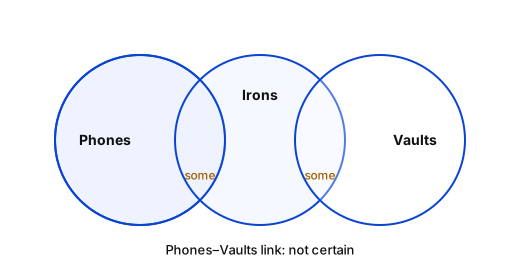
Statements: Some phones are irons. Some irons are vaults.
Conclusions (I) : No iron is a phone.
Conclusions (II) : Some phones are vaults.
दिए गए कथन/कथनों और निष्कर्षों को ध्यानपूर्वक पढ़िए। यह मानते हुए कि कथनों में दी गई जानकारी सत्य है, भले ही वह सामान्यतः ज्ञात तथ्यों से भिन्न प्रतीत होती हो, निर्णय कीजिए कि दिए गए निष्कर्षों में से कौन-सा/कौन-से निष्कर्ष कथन/कथनों का तार्किक रूप से अनुसरण करता है/करते हैं।
कथन: कुछ फ़ोन, इस्त्री हैं। कुछ इस्त्री, तिजोरी हैं।
निष्कर्ष (I) : कोई इस्त्री, फ़ोन नहीं है।
निष्कर्ष (II) : कुछ फ़ोन, तिजोरी हैं।
  1. ANeither conclusion (I) nor (II) followsन तो निष्कर्ष (I) और न ही (II) अनुसरण करता है
  2. BBoth conclusions (I) and (II) followनिष्कर्ष (I) और (II) दोनों अनुसरण करते हैं
  3. COnly conclusion (I) followsकेवल निष्कर्ष (I) अनुसरण करता है
  4. DOnly conclusion (II) followsकेवल निष्कर्ष (II) अनुसरण करता है
Show answer

Concept: Draw the minimum Venn diagram: Phones overlap Irons, Irons overlap Vaults.

  1. Conclusion I 'No iron is a phone' directly contradicts 'Some phones are irons' ✗
  2. Conclusion II: Phones and Vaults are linked only through Irons by two 'some' statements – no definite relation ✗
  3. So neither conclusion follows.

Trick: Some + Some = no conclusion.

Answer: (A) Neither conclusion (I) nor (II) follows

अवधारणा: न्यूनतम वेन आरेख बनाएँ: Phones–Irons में कुछ भाग साझा, Irons–Vaults में कुछ भाग साझा।

  1. निष्कर्ष I 'कोई iron, phone नहीं' सीधे 'कुछ phones, irons हैं' का खंडन करता है ✗
  2. निष्कर्ष II: Phones और Vaults केवल Irons के माध्यम से दो 'कुछ' कथनों से जुड़े हैं – निश्चित संबंध नहीं ✗
  3. अतः कोई निष्कर्ष नहीं निकलता।

ट्रिक: कुछ + कुछ = कोई निष्कर्ष नहीं।

उत्तर: (A) Neither conclusion (I) nor (II) follows

RRB NTPC Undergraduate CBT 1General Intelligence and ReasoningSyllogismRRB NTPC Undergraduate CBT 1 2025 · 17 Jun Shift 3 →
Q6589.
Seven boxes, G, H, I, J, K, L and M, are kept one over the other, but not necessarily in the same order.
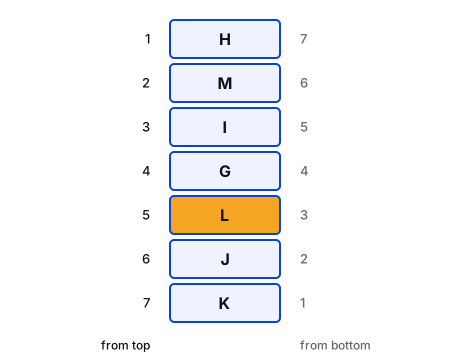
Only three boxes are kept between M and J. I is kept third from the top. Only M is kept between H and I. Only K is kept below J. G is kept at one of the positions below M but not immediately above J.
Which box is kept third from the bottom?
सात डिब्बे G, H, I, J, K, L और M एक के ऊपर एक रखे गए हैं, लेकिन आवश्यक नहीं कि इसी क्रम में हों।
M और J के बीच केवल तीन डिब्बे रखे गए हैं। I को ऊपर से तीसरे स्थान पर रखा गया है। H और I के बीच केवल M रखा गया है। J के नीचे केवल K रखा गया है। G को M के नीचे वाले किसी एक स्थान पर रखा गया है, लेकिन J के ठीक ऊपर नहीं।
नीचे से तीसरे स्थान पर कौन-सा डिब्बा रखा गया है?
  1. AH
  2. BK
  3. CG
  4. DL
Show answer

Concept: Number positions 1 (top) to 7 (bottom).

  1. I = 3. Only K below J → J = 6, K = 7.
  2. Only M between H and I → M = 2 or 4; three boxes between M and J (6) → M = 2, so H = 1.
  3. G below M but not immediately above J → G ≠ 5, so G = 4 and L = 5.
  4. Order: H, M, I, G, L, J, K → third from bottom = L.

Trick: 'Only K below J' fixes the bottom two at once.

Answer: (D) L

अवधारणा: स्थान 1 (ऊपर) से 7 (नीचे) तक मानें।

  1. I = 3। J के नीचे केवल K → J = 6, K = 7।
  2. H और I के बीच केवल M → M = 2 या 4; M और J (6) के बीच तीन बॉक्स → M = 2, अतः H = 1।
  3. G, M के नीचे पर J के ठीक ऊपर नहीं → G ≠ 5, अतः G = 4 और L = 5।
  4. क्रम: H, M, I, G, L, J, K → नीचे से तीसरा = L।

ट्रिक: 'J के नीचे केवल K' से नीचे के दो स्थान तुरंत तय।

उत्तर: (D) L

RRB NTPC Undergraduate CBT 1General Intelligence and ReasoningBox arrangementRRB NTPC Undergraduate CBT 1 2025 · 17 Jun Shift 3 →
Q6590.
Based on the alphabetical order, three of the following four are alike in a certain way and thus form a group. Which is the one that does not belong to that group?
(Note: The odd man out is not based on the number of consonants/vowels or their position in the letter cluster.)
वर्णमाला क्रम के आधार पर, निम्नलिखित चार में से तीन किसी निश्चित प्रकार से समान हैं और इस प्रकार एक समूह बनाते हैं। वह कौन-सा है जो उस समूह से संबंधित नहीं है?
(ध्यान दें: असंगत अक्षर-समूह, उस अक्षर-समूह में व्यंजनों/स्वरों की संख्या या उनके स्थान पर आधारित नहीं है।)
  1. AROS
  2. BXUY
  3. CNKO
  4. DLJM
Show answer

Concept: Write letter positions and check the gaps.

  1. ROS: 18,15,19 → −3,+4; XUY: 24,21,25 → −3,+4
  2. NKO: 14,11,15 → −3,+4
  3. LJM: 12,10,13 → −2,+3 ✗

Trick: Shortcut: in the group, 3rd letter = 1st letter +1 and 2nd = 1st −3.

Answer: (D) LJM

अवधारणा: अक्षरों के स्थानीय मान लिखकर अंतर जाँचें।

  1. ROS: 18,15,19 → −3,+4; XUY: 24,21,25 → −3,+4
  2. NKO: 14,11,15 → −3,+4
  3. LJM: 12,10,13 → −2,+3 ✗

ट्रिक: शॉर्टकट: समूह में तीसरा अक्षर = पहला +1 और दूसरा = पहला −3।

उत्तर: (D) LJM

RRB NTPC Undergraduate CBT 1General Intelligence and ReasoningOdd one out – lettersRRB NTPC Undergraduate CBT 1 2025 · 17 Jun Shift 3 →
Q6591.
SF 19 is related to VA 6 in a certain way. In the same way, GG 16 is related to JB 3. To which of the following is KL 2 related, following the same logic?
SF 19 एक निश्चित प्रकार से VA 6 से संबंधित है। उसी प्रकार, GG 16, JB 3 से संबंधित है। समान तर्क का अनुसरण करते हुए, KL 2 निम्नलिखित में से किससे संबंधित है?
  1. AJI −12
  2. BKL −10
  3. CNG −11
  4. DHY −9
Show answer

Concept: Find the rule for each part of the pair.

  1. SF 19 → VA 6: S+3=V, F−5=A, 19−13=6
  2. GG 16 → JB 3: G+3=J, G−5=B, 16−13=3 ✓
  3. KL 2: K+3=N, L−5=G, 2−13=−11 → NG −11

Trick: Letters: +3, −5; number: −13.

Answer: (C) NG −11

अवधारणा: जोड़े के हर भाग का नियम निकालें।

  1. SF 19 → VA 6: S+3=V, F−5=A, 19−13=6
  2. GG 16 → JB 3: G+3=J, G−5=B, 16−13=3 ✓
  3. KL 2: K+3=N, L−5=G, 2−13=−11 → NG −11

ट्रिक: अक्षर: +3, −5; संख्या: −13।

उत्तर: (C) NG −11

RRB NTPC Undergraduate CBT 1General Intelligence and ReasoningLetter-number analogyRRB NTPC Undergraduate CBT 1 2025 · 17 Jun Shift 3 →
Q6592.
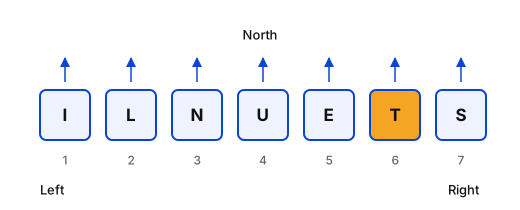
Seven people, U, T, E, N, S, I and L, are sitting in a row, facing the north.
Only two people sit to the left of N. Only three people sit between N and S. Only one person sits between S and E. I sits to the immediate left of L. U is not an immediate neighbor of S.
How many people sit to the right of T?
सात व्यक्ति U, T, E, N, S, I और L एक पंक्ति में उत्तर की ओर मुख करके बैठे हैं।
N के बाईं ओर केवल दो व्यक्ति बैठे हैं। N और S के बीच केवल तीन व्यक्ति बैठे हैं। S और E के बीच केवल एक व्यक्ति बैठा है। I, L के ठीक बाएँ बैठा है। U, S का निकटतम पड़ोसी नहीं है।
T के दाईं ओर कितने व्यक्ति बैठे हैं?
  1. AFourचार
  2. BThreeतीन
  3. COneएक
  4. DTwoदो
Show answer

Concept: Facing north: left end = position 1, right end = position 7.

  1. Two people left of N → N = 3. Three between N and S → S = 7.
  2. One between S and E → E = 5.
  3. I immediately left of L: only free adjacent pair is 1–2 → I = 1, L = 2.
  4. U not next to S → U = 4, T = 6. Row: I L N U E T S → only S is right of T.

Trick: Fix the person with an exact count first (N), then build outward.

Answer: (C) One

अवधारणा: उत्तर की ओर मुख: बायाँ सिरा = स्थान 1, दायाँ सिरा = स्थान 7।

  1. N के बाएँ दो लोग → N = 3। N और S के बीच तीन → S = 7।
  2. S और E के बीच एक → E = 5।
  3. I, L के ठीक बाएँ: खाली लगातार जोड़ी केवल 1–2 → I = 1, L = 2।
  4. U, S का पड़ोसी नहीं → U = 4, T = 6। पंक्ति: I L N U E T S → T के दाएँ केवल S।

ट्रिक: पहले उस व्यक्ति को रखें जिसकी स्थिति निश्चित है (N), फिर आगे बढ़ें।

उत्तर: (C) One

RRB NTPC Undergraduate CBT 1General Intelligence and ReasoningLinear arrangementRRB NTPC Undergraduate CBT 1 2025 · 17 Jun Shift 3 →
Q6593.
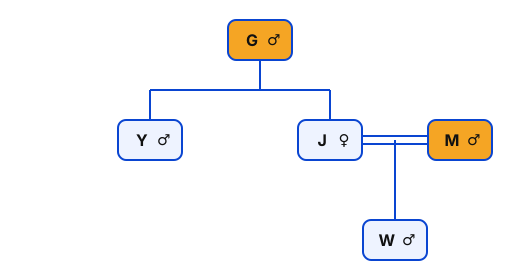
G is the father of Y. Y is the brother of J. M is the father of W. W is the son of J. How is M related to G?
G, Y का पिता है। Y, J का भाई है। M, W का पिता है। W, J का पुत्र है। M का G से क्या संबंध है?
  1. ADaughter's husbandपुत्री का पति
  2. BFatherपिता
  3. CBrotherभाई
  4. DDaughter's sonपुत्री का पुत्र
Show answer

Concept: Build the family tree step by step.

  1. G is the father of Y, and Y is the brother of J → J is also G's child.
  2. W is the son of J and M is the father of W → J is W's mother, so J is female and M is J's husband.
  3. J is G's daughter → M is G's daughter's husband (son-in-law).

Trick: Two people who are 'father' and 'parent' of the same child form a couple.

Answer: (A) Daughter's husband

अवधारणा: चरण-दर-चरण वंश-वृक्ष बनाएँ।

  1. G, Y का पिता है और Y, J का भाई है → J भी G की संतान है।
  2. W, J का पुत्र है और M, W का पिता है → J, W की माँ है (स्त्री) और M, J का पति है।
  3. J, G की पुत्री है → M, G की पुत्री का पति (दामाद) है।

ट्रिक: एक ही संतान के 'पिता' और 'माता-पिता' आपस में दंपति होते हैं।

उत्तर: (A) Daughter's husband

RRB NTPC Undergraduate CBT 1General Intelligence and ReasoningBlood relationsRRB NTPC Undergraduate CBT 1 2025 · 17 Jun Shift 3 →
Q6594.
Each letter in the word HARMFUL is arranged in the English alphabetical order. How many letters are there in the English alphabetical order between the letter which is second from the left and the one which is first from the right in the new letter cluster thus formed?
शब्द HARMFUL के प्रत्येक अक्षर को अंग्रेज़ी वर्णमाला क्रम में व्यवस्थित किया जाता है। इस प्रकार बने नए अक्षर-समूह में बाएँ से दूसरे अक्षर और दाएँ से पहले अक्षर के बीच अंग्रेज़ी वर्णमाला क्रम में कितने अक्षर हैं?
  1. A15
  2. B17
  3. C14
  4. D13
Show answer

Concept: Rearrange the letters alphabetically, then count letters between the chosen two.

  1. HARMFUL → A F H L M R U
  2. 2nd from left = F (6); 1st from right = U (21)
  3. Letters between =21−6−1=14

Trick: Letters between two letters = difference of positions −1.

Answer: (C) 14

अवधारणा: अक्षरों को वर्णमाला क्रम में लगाएँ, फिर दोनों के बीच के अक्षर गिनें।

  1. HARMFUL → A F H L M R U
  2. बाएँ से दूसरा = F (6); दाएँ से पहला = U (21)
  3. बीच के अक्षर =21−6−1=14

ट्रिक: दो अक्षरों के बीच अक्षर = स्थानों का अंतर −1।

उत्तर: (C) 14

RRB NTPC Undergraduate CBT 1General Intelligence and ReasoningAlphabet arrangementRRB NTPC Undergraduate CBT 1 2025 · 17 Jun Shift 3 →
Q6595.
In a certain code language,
A ? B means ‘A is the wife of B’,
A @ B means ‘A is the mother of B’,
A : B means ‘A is the father of B’ and
A + B means ‘A is the daughter of B’.
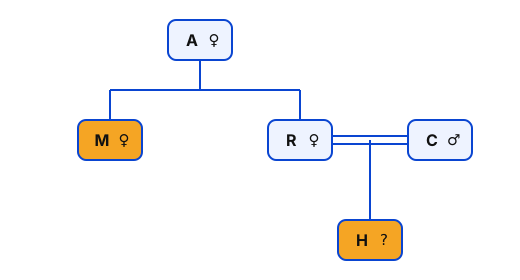
How is M related to H if ‘M + A @ R ? C : H’?
एक निश्चित कूट भाषा में,
A ? B का अर्थ है ‘A, B की पत्नी है’,
A @ B का अर्थ है ‘A, B की माँ है’,
A : B का अर्थ है ‘A, B का पिता है’ और
A + B का अर्थ है ‘A, B की पुत्री है’।
यदि ‘M + A @ R ? C : H’ है, तो M का H से क्या संबंध है?
  1. AMother's brotherमाँ का भाई
  2. BMother's fatherमाँ का पिता
  3. CMother's daughterमाँ की पुत्री
  4. DMother's sisterमाँ की बहन
Show answer

Concept: Decode one symbol at a time: M + A @ R ? C : H.

  1. M + A → M is the daughter of A; A @ R → A is the mother of R.
  2. R ? C → R is the wife of C; C : H → C is the father of H, so R is H's mother.
  3. M and R are both daughters of A → M is the sister of H's mother.

Trick: Read the chain left to right and keep genders: '+' and '?' make M and R female.

Answer: (D) Mother's sister

अवधारणा: एक-एक चिह्न डिकोड करें: M + A @ R ? C : H।

  1. M + A → M, A की पुत्री है; A @ R → A, R की माँ है।
  2. R ? C → R, C की पत्नी है; C : H → C, H का पिता है, अतः R, H की माँ है।
  3. M और R दोनों A की पुत्रियाँ हैं → M, H की माँ की बहन (मौसी) है।

ट्रिक: शृंखला बाएँ से दाएँ पढ़ें और लिंग ध्यान रखें: '+' व '?' से M और R स्त्री हैं।

उत्तर: (D) Mother's sister

RRB NTPC Undergraduate CBT 1General Intelligence and ReasoningCoded blood relationsRRB NTPC Undergraduate CBT 1 2025 · 17 Jun Shift 3 →
Q6596.
The Harappan Civilization flourished mainly during which of the following
archaeological eras?
हड़प्पा सभ्यता मुख्य रूप से निम्नलिखित में से किस
पुरातात्विक युग के दौरान विकसित हुई थी?
  1. ANeolithic Ageनवपाषाण युग
  2. BBronze Ageकांस्य युग
  3. CIron Ageलौह युग
  4. DChalcolithic Ageताम्रपाषाण युग
Show answer

Concept: The Harappan (Indus Valley) Civilization is India's first urban culture and belongs to the Bronze Age.

  1. Mature phase c. 2600–1900 BCE; tools and figures of copper and bronze (e.g. the Dancing Girl of Mohenjo-daro).
  2. Neolithic preceded it; the Iron Age in India came later with the Vedic/PGW phase.
  3. Chalcolithic cultures (copper-stone) were mostly rural and outside the mature urban Harappan phase.

Yaad rakhein: Harappa = Bronze Age urbanisation; Iron arrives only after c. 1000 BCE.

Answer: (B) Bronze Age

अवधारणा: हड़प्पा (सिंधु घाटी) सभ्यता भारत की प्रथम नगरीय संस्कृति है और कांस्य युग (Bronze Age) से संबंधित है।

  1. परिपक्व चरण लगभग 2600–1900 ई.पू.; तांबे और कांसे के औज़ार व मूर्तियाँ (जैसे मोहनजोदड़ो की नर्तकी)।
  2. नवपाषाण युग इससे पहले था; भारत में लौह युग बाद में (वैदिक/PGW काल) आया।
  3. ताम्रपाषाण (Chalcolithic) संस्कृतियाँ अधिकतर ग्रामीण थीं।

याद रखें: हड़प्पा = कांस्य युगीन नगरीकरण; लोहा लगभग 1000 ई.पू. के बाद।

उत्तर: (B) कांस्य युग (Bronze Age)

RRB NTPC Undergraduate CBT 1General AwarenessHarappan CivilizationRRB NTPC Undergraduate CBT 1 2025 · 17 Jun Shift 2 →
Q6597.
What new laser-based weapon system did DRDO successfully field-test in April 2025, which is now being transferred for private sector production?
DRDO ने अप्रैल 2025 में किस नई लेज़र-आधारित हथियार प्रणाली का सफलतापूर्वक क्षेत्र-परीक्षण किया, जिसे अब निजी क्षेत्र में उत्पादन के लिए हस्तांतरित किया जा रहा है?
  1. AInfrared Drone Interceptorइन्फ्रारेड ड्रोन इंटरसेप्टर
  2. B100 kW Surya Laser System100 kW सूर्य लेज़र प्रणाली
  3. C30 kW IDD&IS Mk-IIA
  4. D2 kW Portable Laser2 kW पोर्टेबल लेज़र
Show answer

Concept: In April 2025 DRDO field-tested the vehicle-mounted 30 kW laser-based Integrated Drone Detection & Interdiction System (IDD&IS) Mk-II(A).

  1. Trial held at the National Open Air Range, Kurnool (Andhra Pradesh); it shot down fixed-wing drones and swarm drones.
  2. Developed by CHESS, Hyderabad; DRDO announced technology transfer to Indian industry for production.
  3. 'Surya' is a separate, higher-power laser project, not the system tested.

Yaad rakhein: IDD&IS Mk-II(A) = 30 kW laser DEW, Kurnool, April 2025.

Answer: (C) 30 kW IDD&IS Mk-IIA

अवधारणा: अप्रैल 2025 में DRDO ने वाहन-आधारित 30 kW लेज़र प्रणाली IDD&IS Mk-II(A) (Integrated Drone Detection & Interdiction System) का फील्ड परीक्षण किया।

  1. परीक्षण नेशनल ओपन एयर रेंज, कुरनूल (आंध्र प्रदेश) में हुआ; इसने फिक्स्ड-विंग और स्वार्म ड्रोन मार गिराए।
  2. CHESS, हैदराबाद ने विकसित किया; उत्पादन हेतु उद्योग को तकनीक हस्तांतरण की घोषणा हुई।
  3. 'सूर्या' एक अलग, अधिक क्षमता वाली लेज़र परियोजना है।

याद रखें: IDD&IS Mk-II(A) = 30 kW लेज़र DEW, कुरनूल, अप्रैल 2025।

उत्तर: (C) 30 kW IDD&IS Mk-IIA

RRB NTPC Undergraduate CBT 1General AwarenessDefence Technology (DRDO)RRB NTPC Undergraduate CBT 1 2025 · 17 Jun Shift 2 →
Q6598.
Which provision of the Treaty of Allahabad most strengthened British political authority in eastern India?
इलाहाबाद की संधि के किस प्रावधान ने पूर्वी भारत में ब्रिटिश राजनीतिक सत्ता को सर्वाधिक सुदृढ़ किया?
  1. ARestoration of Bengal’s sovereign authority under the Mughal emperor.मुगल सम्राट के अधीन बंगाल के संप्रभु अधिकार की पुनर्स्थापना।
  2. BWithdrawal of the Company's revenue claims from all northern subas immediately.सभी उत्तरी सूबों से कंपनी के राजस्व दावों की तत्काल वापसी।
  3. CGranting of the Diwani rights of Bengal, Bihar, and Orissa to the Company.बंगाल, बिहार और उड़ीसा की दीवानी के अधिकार कंपनी को प्रदान करना।
  4. DPermanent transfer of Awadh territories under direct Company occupation.अवध के क्षेत्रों का कंपनी के प्रत्यक्ष कब्ज़े में स्थायी हस्तांतरण।
Show answer

Concept: The Treaty of Allahabad (1765) was signed by Robert Clive with Mughal emperor Shah Alam II after the Battle of Buxar.

  1. Shah Alam II granted the Company the Diwani (right to collect revenue) of Bengal, Bihar and Orissa.
  2. In return the Company paid the emperor ₹26 lakh a year; Awadh was returned to Shuja-ud-Daula (not occupied).
  3. Diwani gave the Company huge revenue and paved the way for the Dual Government in Bengal.

Yaad rakhein: 1765 Allahabad = Diwani of Bengal, Bihar, Orissa → Dual Government.

Answer: (C) Granting of the Diwani rights of Bengal, Bihar, and Orissa to the Company.

अवधारणा: इलाहाबाद की संधि (1765) बक्सर के युद्ध के बाद रॉबर्ट क्लाइव और मुगल बादशाह शाह आलम द्वितीय के बीच हुई।

  1. शाह आलम द्वितीय ने कंपनी को बंगाल, बिहार और उड़ीसा की दीवानी (राजस्व वसूली का अधिकार) दी।
  2. बदले में कंपनी ने बादशाह को ₹26 लाख वार्षिक दिए; अवध शुजाउद्दौला को लौटा दिया गया।
  3. दीवानी से कंपनी को भारी राजस्व मिला और बंगाल में द्वैध शासन शुरू हुआ।

याद रखें: 1765 इलाहाबाद = बंगाल, बिहार, उड़ीसा की दीवानी → द्वैध शासन।

उत्तर: (C) कंपनी को बंगाल, बिहार और उड़ीसा के दीवानी अधिकार देना।

RRB NTPC Undergraduate CBT 1General AwarenessTreaty of Allahabad (1765)RRB NTPC Undergraduate CBT 1 2025 · 17 Jun Shift 2 →
Q6599.
The Terai belt is best described as:
तराई क्षेत्र का सबसे उपयुक्त वर्णन है:
  1. AA dry zone made of calcareous depositsचूनेदार निक्षेपों से बना एक शुष्क क्षेत्र
  2. BA coastal plain formed by marine depositsसमुद्री निक्षेपों से बना एक तटीय मैदान
  3. CA marshy tract with a high water table and thick forestsऊँचे जल-स्तर और घने वनों वाला एक दलदली क्षेत्र
  4. DA high-altitude snow-covered plainएक अधिक ऊँचाई वाला हिमाच्छादित मैदान
Show answer

Concept: The Terai is the belt south of the Bhabar in the northern plains, where streams that went underground in the Bhabar re-emerge.

  1. Water re-emerging makes it a wet, swampy, marshy tract with a high water table.
  2. It supports thick forests and rich wildlife (e.g. Dudhwa, Jim Corbett regions).
  3. Bhabar (not Terai) is the porous, pebble-strewn dry belt at the foothills.

Yaad rakhein: Order from the hills: Bhabar (dry, pebbles) → Terai (marshy) → Bhangar/Khadar.

Answer: (C) A marshy tract with a high water table and thick forests

अवधारणा: तराई उत्तरी मैदान में भाबर के दक्षिण की पट्टी है, जहाँ भाबर में लुप्त हुई नदियाँ फिर सतह पर आ जाती हैं।

  1. पानी के पुनः निकलने से यह नम, दलदली (marshy) क्षेत्र बनता है, जहाँ भौम जलस्तर ऊँचा होता है।
  2. यहाँ घने वन और समृद्ध वन्यजीव पाए जाते हैं (जैसे दुधवा, जिम कॉर्बेट क्षेत्र)।
  3. भाबर (तराई नहीं) गिरिपद पर कंकड़-पत्थरों वाली शुष्क पट्टी है।

याद रखें: पहाड़ से क्रम: भाबर (शुष्क, कंकड़) → तराई (दलदली) → बांगर/खादर।

उत्तर: (C) ऊँचे जलस्तर और घने वनों वाला दलदली क्षेत्र

RRB NTPC Undergraduate CBT 1General AwarenessPhysiography – TeraiRRB NTPC Undergraduate CBT 1 2025 · 17 Jun Shift 2 →
Q6600.
Which Charter Act ended the East India Company’s monopoly over trade with India?
किस चार्टर अधिनियम ने भारत के साथ व्यापार पर ईस्ट इंडिया कंपनी के एकाधिकार को समाप्त किया?
  1. ACharter Act of 17931793 का चार्टर अधिनियम
  2. BCharter Act of 18131813 का चार्टर अधिनियम
  3. CCharter Act of 18331833 का चार्टर अधिनियम
  4. DCharter Act of 18531853 का चार्टर अधिनियम
Show answer

Concept: The Charter Act of 1813 ended the East India Company's trade monopoly with India.

  1. Monopoly retained only for trade in tea and with China.
  2. It also provided ₹1 lakh a year for education and allowed missionaries into India.
  3. The Charter Act of 1833 ended even the tea/China monopoly and made the Company purely administrative.

Yaad rakhein: 1813 → Indian trade monopoly ends; 1833 → all commercial activity ends.

Answer: (B) Charter Act of 1813

अवधारणा: 1813 के चार्टर अधिनियम ने भारत के साथ ईस्ट इंडिया कंपनी का व्यापारिक एकाधिकार समाप्त किया।

  1. केवल चाय और चीन के साथ व्यापार का एकाधिकार बना रहा।
  2. शिक्षा के लिए ₹1 लाख वार्षिक का प्रावधान और मिशनरियों को भारत आने की अनुमति दी।
  3. 1833 के अधिनियम ने चाय/चीन का एकाधिकार भी समाप्त कर कंपनी को केवल प्रशासनिक संस्था बना दिया।

याद रखें: 1813 → भारत से व्यापार एकाधिकार समाप्त; 1833 → सभी व्यापारिक गतिविधियाँ समाप्त।

उत्तर: (B) 1813 का चार्टर अधिनियम

RRB NTPC Undergraduate CBT 1General AwarenessCharter ActsRRB NTPC Undergraduate CBT 1 2025 · 17 Jun Shift 2 →