Question bank

Q&A: practice questions with answers

Search questions on any topic. Filter by exam category, exam, subject and topic, try the question, then open the answer and explanation.

Courses – airGurukul

8,495 questions found.

Q6681.
Select the triad which follows the same pattern as that followed by the two triads given below. Both triads follow the same pattern.
TO-UP-VY
QL-RM-SV
उस त्रिक का चयन कीजिए जो उसी पैटर्न का अनुसरण करता है जिसका अनुसरण नीचे दिए गए दो त्रिक करते हैं। दोनों त्रिक एक ही पैटर्न का अनुसरण करते हैं।
TO-UP-VY
QL-RM-SV
  1. ANI-OJ-PR
  2. BMI-OK-PR
  3. CMI-OJ-PR
  4. DNI-OJ-PS
Show answer

Concept: Find the change from one pair to the next for both letters.

  1. TO → UP: +1,+1; UP → VY: U→V=+1, P(16)→Y(25)=+9.
  2. QL → RM → SV: +1,+1 then +1,+9 ✓.
  3. NI → OJ (+1,+1) → PS: O→P=+1, J(10)→S(19)=+9 ✓.
  4. Option (C) MI-OJ starts with +2, so it fails.

Trick: Check the last letter jump of +9 — it decides the option quickly.

Answer: (D) NI-OJ-PS

अवधारणा: हर युग्म से अगले युग्म में दोनों अक्षरों का परिवर्तन देखें।

  1. TO → UP: +1,+1; UP → VY: U→V=+1, P(16)→Y(25)=+9।
  2. QL → RM → SV: +1,+1 फिर +1,+9 ✓।
  3. NI → OJ (+1,+1) → PS: O→P=+1, J(10)→S(19)=+9 ✓।
  4. विकल्प (C) MI-OJ में पहला परिवर्तन +2 है, अतः गलत।

ट्रिक: अंतिम अक्षर का +9 का उछाल देखकर विकल्प जल्दी चुनें।

उत्तर: (D) NI-OJ-PS
RRB NTPC Undergraduate CBT 1General Intelligence and ReasoningLetter TriadsRRB NTPC Undergraduate CBT 1 2025 · 17 Jun Shift 2 →
Q6682.
Read the given statement(s) and conclusions carefully. Assuming that the information given in the statements is true, even if it appears to be at variance with commonly known facts, decide which of the given conclusions logically follow(s) from the statement(s).
Statements:
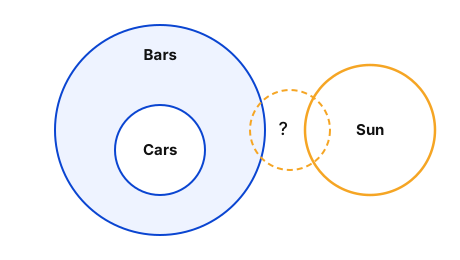
All cars are bars.
No car is a sun.
Conclusions:
(I) Some suns are bars.
(II) All bars are suns.
दिए गए कथन(नों) और निष्कर्षों को ध्यानपूर्वक पढ़िए। यह मानते हुए कि कथनों में दी गई जानकारी सत्य है, भले ही वह सामान्य रूप से ज्ञात तथ्यों से भिन्न प्रतीत होती हो, निर्णय कीजिए कि दिए गए निष्कर्षों में से कौन-सा/से निष्कर्ष कथन(नों) का तार्किक रूप से अनुसरण करता है/करते हैं।
कथन:
सभी कार, बार हैं।
कोई कार, सूर्य नहीं है।
निष्कर्ष:
(I) कुछ सूर्य, बार हैं।
(II) सभी बार, सूर्य हैं।
  1. ABoth conclusions (I) and (II) followनिष्कर्ष (I) और (II) दोनों अनुसरण करते हैं
  2. BNeither conclusion (I) nor (II) followsन तो निष्कर्ष (I) और न ही (II) अनुसरण करता है
  3. COnly conclusion (II) followsकेवल निष्कर्ष (II) अनुसरण करता है
  4. DOnly conclusion (I) followsकेवल निष्कर्ष (I) अनुसरण करता है
Show answer

Concept: Draw the least-overlap Venn diagram; a conclusion follows only if it is true in every possible diagram.

  1. All cars are bars → Cars circle inside Bars.
  2. No car is a sun → Sun is outside Cars, but it may or may not touch Bars.
  3. (I) Some suns are bars: only a possibility (dashed part) → does not follow.
  4. (II) All bars are suns: cars are bars but not suns, so this is definitely false → does not follow.

Trick: A “possibility” is never a definite conclusion.

Answer: (B) Neither conclusion (I) nor (II) follows

अवधारणा: न्यूनतम ओवरलैप वाला वेन आरेख बनाएँ; निष्कर्ष तभी सही है जब हर संभव आरेख में सत्य हो।

  1. सभी cars, bars हैं → Cars वृत्त Bars के अंदर।
  2. कोई car, sun नहीं → Sun, Cars के बाहर है, पर Bars को छू भी सकता है और नहीं भी।
  3. (I) कुछ suns, bars हैं: केवल संभावना (डैश वाला भाग) → अनुसरण नहीं करता।
  4. (II) सभी bars, suns हैं: cars, bars हैं पर suns नहीं, अतः यह निश्चित रूप से गलत → अनुसरण नहीं करता।

ट्रिक: “संभावना” कभी निश्चित निष्कर्ष नहीं होती।

उत्तर: (B) न तो निष्कर्ष (I) और न ही (II) अनुसरण करता है

RRB NTPC Undergraduate CBT 1General Intelligence and ReasoningSyllogismRRB NTPC Undergraduate CBT 1 2025 · 17 Jun Shift 2 →
Q6683.
Based on the English alphabetical order, three of the following four letter-cluster pairs are alike in a certain way and thus form a group. Which letter-cluster pair DOES NOT belong to that group?
(Note: The odd one out is not based on the number of consonants/vowels or their position in the letter-cluster.)
अंग्रेज़ी वर्णमाला क्रम के आधार पर, निम्नलिखित चार अक्षर-समूह युग्मों में से तीन किसी निश्चित प्रकार से एक समान हैं और इस प्रकार एक समूह बनाते हैं। कौन-सा अक्षर-समूह युग्म उस समूह से संबंधित नहीं है?
(नोट: असंगत युग्म, व्यंजनों/स्वरों की संख्या या अक्षर-समूह में उनके स्थान पर आधारित नहीं है।)
  1. AWB - PY
  2. BIN - BK
  3. CTY - MV
  4. DEJ - RG
Show answer

Concept: Count the gap between the two letters of each cluster (wrap Z → A if needed).

  1. IN − BK: I(9)→N(14)=+5; B(2)→K(11)=+9.
  2. TY − MV: T→Y=+5; M→V=+9.
  3. WB − PY: W(23)→B(2)=+5 (after Z); P(16)→Y(25)=+9.
  4. EJ − RG: E→J=+5 but R(18)→G(7) is not +9. So EJ − RG is odd.

Trick: Pattern “first cluster +5, second cluster +9”; also the first letters drop by 7 (W→P, I→B, T→M) but E→R does not.

Answer: (D) EJ - RG

अवधारणा: हर समूह के दोनों अक्षरों के बीच का अंतर गिनें (आवश्यक हो तो Z के बाद A)।

  1. IN − BK: I(9)→N(14)=+5; B(2)→K(11)=+9।
  2. TY − MV: T→Y=+5; M→V=+9।
  3. WB − PY: W(23)→B(2)=+5 (Z के बाद); P(16)→Y(25)=+9।
  4. EJ − RG: E→J=+5 पर R(18)→G(7) में +9 नहीं। अतः EJ − RG विषम है।

ट्रिक: नियम “पहला समूह +5, दूसरा +9”; पहले अक्षर भी 7 घटते हैं (W→P, I→B, T→M), पर E→R नहीं।

उत्तर: (D) EJ - RG

RRB NTPC Undergraduate CBT 1General Intelligence and ReasoningOdd One Out – Letter PairsRRB NTPC Undergraduate CBT 1 2025 · 17 Jun Shift 2 →
Q6684.
Each vowel in the word WRENCHINGLY is changed to the letter immediately following it in the English alphabetical order AND each consonant is changed to the second letter preceding it in the English alphabetical order. How many letters will appear exactly twice in the group of letters thus formed?
शब्द WRENCHINGLY में प्रत्येक स्वर को अंग्रेज़ी वर्णमाला क्रम में उसके ठीक बाद वाले अक्षर से बदल दिया जाता है और प्रत्येक व्यंजन को अंग्रेज़ी वर्णमाला क्रम में उससे दो स्थान पहले वाले अक्षर से बदल दिया जाता है। इस प्रकार बने अक्षर-समूह में कितने अक्षर ठीक दो बार आएँगे?
  1. ATwoदो
  2. BThreeतीन
  3. CFourचार
  4. DOneएक
Show answer

Concept: Vowels: +1; consonants: −2.

  1. WRENCHINGLY → W→U, R→P, E→F, N→L, C→A, H→F, I→J, N→L, G→E, L→J, Y→W.
  2. New group: U P F L A F J L E J W.
  3. F, L and J each appear exactly twice; others appear once.

Trick: Write the new letters in one line and tick repeats — avoid doing it mentally.

Answer: (B) Three

अवधारणा: स्वर: +1; व्यंजन: −2।

  1. WRENCHINGLY → W→U, R→P, E→F, N→L, C→A, H→F, I→J, N→L, G→E, L→J, Y→W।
  2. नया समूह: U P F L A F J L E J W।
  3. F, L और J प्रत्येक ठीक दो बार आते हैं; बाकी एक बार।

ट्रिक: नए अक्षर एक पंक्ति में लिखें और दोहराव पर निशान लगाएँ।

उत्तर: (B) तीन

RRB NTPC Undergraduate CBT 1General Intelligence and ReasoningLetter Coding – CountingRRB NTPC Undergraduate CBT 1 2025 · 17 Jun Shift 2 →
Q6685.
Select the option that represents the correct order of the given words as they would appear in an English dictionary.
1. Roast
2. Router
3. Road
4. Robust
5. Rope
उस विकल्प का चयन कीजिए जो दिए गए शब्दों के उस सही क्रम को दर्शाता है जिसमें वे अंग्रेज़ी शब्दकोश में आएँगे।
1. Roast
2. Router
3. Road
4. Robust
5. Rope
  1. A1, 4, 3, 2, 5
  2. B1, 4, 3, 5, 2
  3. C3, 1, 5, 4, 2
  4. D3, 1, 4, 5, 2
Show answer

Concept: All words start with “Ro”, so compare from the third letter.

  1. Third letters: Road, Roast, Robust, Rope, Router.
  2. Road vs Roast: fourth letter d before s → Road first.
  3. Order: Road, Roast, Robust, Rope, Router = 3, 1, 4, 5, 2.

Trick: When prefixes match, move one letter to the right and compare again.

Answer: (D) 3, 1, 4, 5, 2

अवधारणा: सभी शब्द “Ro” से शुरू होते हैं, अतः तीसरे अक्षर से तुलना करें।

  1. तीसरे अक्षर: Road, Roast, Robust, Rope, Router।
  2. Road और Roast: चौथा अक्षर d, s से पहले → Road पहले।
  3. क्रम: Road, Roast, Robust, Rope, Router = 3, 1, 4, 5, 2।

ट्रिक: जब शुरुआती अक्षर समान हों तो अगले अक्षर से तुलना करें।

उत्तर: (D) 3, 1, 4, 5, 2

RRB NTPC Undergraduate CBT 1General Intelligence and ReasoningDictionary OrderRRB NTPC Undergraduate CBT 1 2025 · 17 Jun Shift 2 →
Q6686.
Rakesh ranked 39th from the top and 46th from the bottom in his class. How many students are there in his class?
राकेश अपनी कक्षा में ऊपर से 39वें और नीचे से 46वें स्थान पर है। उसकी कक्षा में कितने छात्र हैं?
  1. A86
  2. B84
  3. C83
  4. D85
Show answer

Concept: Total=Rank from top+Rank from bottom−1.

  1. Rakesh is counted in both ranks, so subtract 1 once.
  2. Total=39+46−1=84.

Trick: Add both ranks and subtract 1.

Answer: (B) 84

अवधारणा: कुल=ऊपर से रैंक+नीचे से रैंक−1।

  1. राकेश दोनों रैंकों में गिना गया है, इसलिए एक बार 1 घटाएँ।
  2. कुल=39+46−1=84।

ट्रिक: दोनों रैंक जोड़ें और 1 घटाएँ।

उत्तर: (B) 84

RRB NTPC Undergraduate CBT 1General Intelligence and ReasoningRankingRRB NTPC Undergraduate CBT 1 2025 · 17 Jun Shift 2 →
Q6687.
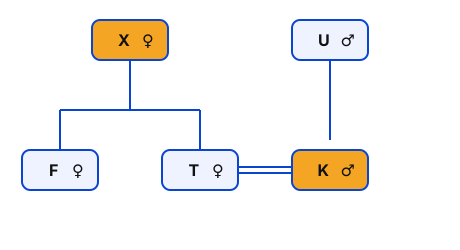
X is the mother of F. F is the sister of T. U is the father of K. K is the husband of T. How is K related to X?
X, F की माँ है। F, T की बहन है। U, K का पिता है। K, T का पति है। K का X से क्या संबंध है?
  1. AFatherपिता
  2. BDaughter's husbandपुत्री का पति
  3. CBrotherभाई
  4. DDaughter's sonपुत्री का पुत्र
Show answer

Concept: Draw the family tree with genders.

  1. X is the mother of F, and F is the sister of T → X is also the mother of T.
  2. K is the husband of T → T is female, a daughter of X.
  3. U is the father of K (only K’s side).
  4. So K is the husband of X’s daughter.

Trick: Husband of one’s daughter = son-in-law = daughter’s husband.

Answer: (B) Daughter's husband

अवधारणा: लिंग के साथ परिवार वृक्ष बनाएँ।

  1. X, F की माँ है और F, T की बहन है → X, T की भी माँ है।
  2. K, T का पति है → T महिला है, X की बेटी।
  3. U, K का पिता है (केवल K की ओर)।
  4. अतः K, X की बेटी का पति है।

ट्रिक: बेटी का पति = दामाद (son-in-law)।

उत्तर: (B) बेटी का पति (दामाद)

RRB NTPC Undergraduate CBT 1General Intelligence and ReasoningBlood RelationsRRB NTPC Undergraduate CBT 1 2025 · 17 Jun Shift 2 →
Q6688.
Each of the digits in the number 4738165 is arranged in ascending order from left to right. The position(s) of how many digits will remain unchanged as compared to that in the original number?
संख्या 4738165 के प्रत्येक अंक को बाएँ से दाएँ आरोही क्रम में व्यवस्थित किया जाता है। मूल संख्या की तुलना में कितने अंकों का/के स्थान अपरिवर्तित रहेगा/रहेंगे?
  1. ATwoदो
  2. BThreeतीन
  3. COneएक
  4. DNoneकोई नहीं
Show answer

Concept: Write the original number and the sorted number one under the other and compare place by place.

  1. Original: 4 7 3 8 1 6 5.
  2. Ascending: 1 3 4 5 6 7 8.
  3. Place by place: 4–1, 7–3, 3–4, 8–5, 1–6, 6–7, 5–8 — no digit matches.

Trick: Compare position by position, not digit by digit.

Answer: (D) None

अवधारणा: मूल संख्या और क्रमबद्ध संख्या को एक के नीचे एक लिखकर हर स्थान की तुलना करें।

  1. मूल: 4 7 3 8 1 6 5।
  2. आरोही क्रम: 1 3 4 5 6 7 8।
  3. स्थानवार: 4–1, 7–3, 3–4, 8–5, 1–6, 6–7, 5–8 — कोई अंक मेल नहीं खाता।

ट्रिक: अंक नहीं, स्थान के अनुसार तुलना करें।

उत्तर: (D) कोई नहीं

RRB NTPC Undergraduate CBT 1General Intelligence and ReasoningDigit ArrangementRRB NTPC Undergraduate CBT 1 2025 · 17 Jun Shift 2 →
Q6689.
In a certain code language, ‘zebra peak blue’ is coded as 'sr dt tx' and ‘bee zebra chest’ is coded as ‘dt bm qb’. How is ‘zebra’ coded in the given language?
एक निश्चित कूट भाषा में, ‘zebra peak blue’ को 'sr dt tx' के रूप में और ‘bee zebra chest’ को ‘dt bm qb’ के रूप में कूटबद्ध किया जाता है। उसी भाषा में ‘zebra’ को किस प्रकार कूटबद्ध किया जाता है?
  1. Asr
  2. Bbm
  3. Ctx
  4. Ddt
Show answer

Concept: A word common to two sentences gets the code common to both.

  1. “zebra peak blue” → sr dt tx.
  2. “bee zebra chest” → dt bm qb.
  3. Common word: zebra; common code: dt.

Trick: Common word ↔ common code.

Answer: (D) dt

अवधारणा: दो वाक्यों में समान शब्द का कोड दोनों कोडों में समान होता है।

  1. “zebra peak blue” → sr dt tx।
  2. “bee zebra chest” → dt bm qb।
  3. समान शब्द: zebra; समान कोड: dt।

ट्रिक: समान शब्द ↔ समान कोड।

उत्तर: (D) dt

RRB NTPC Undergraduate CBT 1General Intelligence and ReasoningCoding–Decoding (Words)RRB NTPC Undergraduate CBT 1 2025 · 17 Jun Shift 2 →
Q6690.
Based on the English alphabetical order, three of the following four letter-cluster pairs are alike in a certain way and thus form a group. Which is the one that does not belong to that group?
(Note: The odd man out is not based on the number of consonants/vowels or their position in the letter cluster.)
अंग्रेज़ी वर्णमाला क्रम के आधार पर, निम्नलिखित चार अक्षर-समूह युग्मों में से तीन किसी निश्चित प्रकार से एक समान हैं और इस प्रकार एक समूह बनाते हैं। वह कौन-सा युग्म है जो उस समूह से संबंधित नहीं है?
(नोट: असंगत युग्म, व्यंजनों/स्वरों की संख्या या अक्षर-समूह में उनके स्थान पर आधारित नहीं है।)
  1. AUC – QY
  2. BTR – PN
  3. CBP – XL
  4. DKF – GA
Show answer

Concept: Compare each letter of the first cluster with the corresponding letter of the second.

  1. UC – QY: U→Q=−4, C→Y=−4 (going back past A).
  2. TR – PN: −4,−4. BP – XL: B→X=−4, P→L=−4.
  3. KF – GA: K→G=−4 but F→A=−5. So KF – GA is odd.

Trick: All pairs shift both letters by −4; one breaks it.

Answer: (D) KF – GA

अवधारणा: पहले समूह के हर अक्षर की तुलना दूसरे समूह के संगत अक्षर से करें।

  1. UC – QY: U→Q=−4, C→Y=−4 (A के पीछे जाकर)।
  2. TR – PN: −4,−4। BP – XL: B→X=−4, P→L=−4।
  3. KF – GA: K→G=−4 पर F→A=−5। अतः KF – GA विषम है।

ट्रिक: सभी युग्मों में दोनों अक्षर −4 खिसकते हैं; एक नियम तोड़ता है।

उत्तर: (D) KF – GA

RRB NTPC Undergraduate CBT 1General Intelligence and ReasoningOdd One Out – Letter PairsRRB NTPC Undergraduate CBT 1 2025 · 17 Jun Shift 2 →
Q6691.
Read the given statement(s) and conclusions carefully. Assuming that the information given in the statements is true, even if it appears to be at variance with commonly known facts, decide which of the given conclusions logically follow(s) from the statement(s).
Statements:
All bats are chicks.
All bats are mats.
Conclusions:
(I) Some chicks are mats.
(II) All mats are bats.
दिए गए कथन(नों) और निष्कर्षों को ध्यानपूर्वक पढ़िए। यह मानते हुए कि कथनों में दी गई जानकारी सत्य है, भले ही वह सामान्य रूप से ज्ञात तथ्यों से भिन्न प्रतीत होती हो, निर्णय कीजिए कि दिए गए निष्कर्षों में से कौन-सा/से निष्कर्ष कथन(नों) का तार्किक रूप से अनुसरण करता है/करते हैं।
कथन:
सभी चमगादड़, चूज़े हैं।
सभी चमगादड़, चटाइयाँ हैं।
निष्कर्ष:
(I) कुछ चूज़े, चटाइयाँ हैं।
(II) सभी चटाइयाँ, चमगादड़ हैं।
  1. AOnly conclusion (II) followsकेवल निष्कर्ष (II) अनुसरण करता है
  2. BOnly conclusion (I) followsकेवल निष्कर्ष (I) अनुसरण करता है
  3. CNeither conclusion (I) nor (II) followsन तो निष्कर्ष (I) और न ही (II) अनुसरण करता है
  4. DBoth conclusions (I) and (II) followनिष्कर्ष (I) और (II) दोनों अनुसरण करते हैं
Show answer

Concept: Draw the Venn diagram; check each conclusion for definiteness.

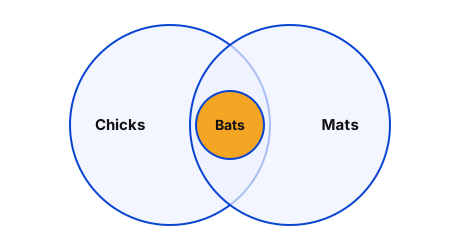
  1. All bats are chicks and all bats are mats → Bats lies in the common part of Chicks and Mats.
  2. So the bats region is both chicks and mats → “Some chicks are mats” is definitely true. (I) follows.
  3. Mats may contain things that are not bats → “All mats are bats” does not follow.

Trick: Two “All” statements with the same subject always give “Some” between the two predicates.

Answer: (B) Only conclusion (I) follows

अवधारणा: वेन आरेख बनाएँ और हर निष्कर्ष की निश्चितता जाँचें।

  1. सभी bats, chicks हैं और सभी bats, mats हैं → Bats, Chicks और Mats के उभयनिष्ठ भाग में है।
  2. अतः bats वाला भाग chicks भी है और mats भी → “कुछ chicks, mats हैं” निश्चित सत्य। (I) अनुसरण करता है।
  3. Mats में bats के अलावा भी कुछ हो सकता है → “सभी mats, bats हैं” अनुसरण नहीं करता।

ट्रिक: एक ही विषय वाले दो “सभी” कथन, दोनों विधेयों के बीच “कुछ” देते हैं।

उत्तर: (B) केवल निष्कर्ष (I) अनुसरण करता है

RRB NTPC Undergraduate CBT 1General Intelligence and ReasoningSyllogismRRB NTPC Undergraduate CBT 1 2025 · 17 Jun Shift 2 →
Q6692.
The position(s) of how many letters will remain unchanged if each of the letters in the word ORANGEY is arranged in the English alphabetical order?
यदि शब्द ORANGEY के प्रत्येक अक्षर को अंग्रेज़ी वर्णमाला क्रम में व्यवस्थित किया जाए, तो कितने अक्षरों का/के स्थान अपरिवर्तित रहेगा/रहेंगे?
  1. AFourचार
  2. BOneएक
  3. CTwoदो
  4. DThreeतीन
Show answer

Concept: Write the word and its alphabetical arrangement one under the other.

  1. ORANGEY: O R A N G E Y.
  2. Alphabetical: A E G N O R Y.
  3. Place by place: O/A, R/E, A/G, N/N, G/O, E/R, Y/Y → N and Y stay.

Trick: Y is the last letter of the word and also the alphabetically last — it never moves.

Answer: (C) Two

अवधारणा: शब्द और उसकी वर्णानुक्रम व्यवस्था एक के नीचे एक लिखें।

  1. ORANGEY: O R A N G E Y।
  2. वर्णानुक्रम: A E G N O R Y।
  3. स्थानवार: O/A, R/E, A/G, N/N, G/O, E/R, Y/Y → N और Y अपरिवर्तित।

ट्रिक: Y शब्द का अंतिम अक्षर है और वर्णानुक्रम में भी अंतिम — वह हिलता नहीं।

उत्तर: (C) दो

RRB NTPC Undergraduate CBT 1General Intelligence and ReasoningLetter ArrangementRRB NTPC Undergraduate CBT 1 2025 · 17 Jun Shift 2 →
Q6693.
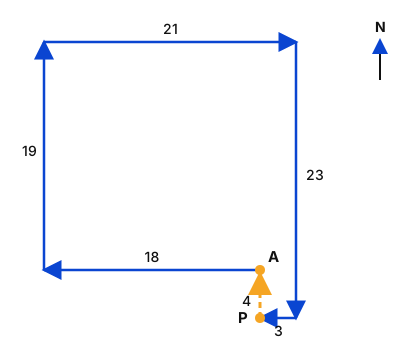
Yaman starts from Point A and drives 18 km towards the west. He then takes a right turn, drives 19 km, turns right and drives 21 km. He then takes a right turn and drives 23 km. He takes a final right turn, drives 3 km and stops at Point P. How far (shortest distance) and towards which direction should he drive in order to reach Point A again? (All turns are 90-degree turns only unless specified.)
यमन बिंदु A से चलना शुरू करता है और पश्चिम की ओर 18 km गाड़ी चलाता है। फिर वह दाएँ मुड़ता है, 19 km गाड़ी चलाता है, दाएँ मुड़ता है और 21 km गाड़ी चलाता है। फिर वह दाएँ मुड़ता है और 23 km गाड़ी चलाता है। वह अंतिम बार दाएँ मुड़ता है, 3 km गाड़ी चलाता है और बिंदु P पर रुक जाता है। बिंदु A पर पुनः पहुँचने के लिए उसे कितनी दूरी (न्यूनतम दूरी) और किस दिशा में गाड़ी चलानी चाहिए? (जब तक निर्दिष्ट न हो, सभी मोड़ केवल 90 डिग्री के हैं।)
  1. A3 km to the southदक्षिण की ओर 3 km
  2. B2 km to the southदक्षिण की ओर 2 km
  3. C4 km to the northउत्तर की ओर 4 km
  4. D5 km to the northउत्तर की ओर 5 km
Show answer

Concept: Take A as origin, east and north positive; a right turn changes W→N→E→S→W.

  1. 18 km west → (−18,0). Right (north) 19 km → (−18,19).
  2. Right (east) 21 km → (3,19). Right (south) 23 km → (3,−4).
  3. Right (west) 3 km → P =(0,−4).
  4. P is 4 km directly south of A, so he must drive 4 km north.

Trick: Net east–west =−18+21−3=0; net north–south =19−23=−4.

Answer: (C) 4 km to the north

अवधारणा: A को मूल बिंदु मानें, पूर्व और उत्तर धनात्मक; दाएँ मुड़ने पर पश्चिम→उत्तर→पूर्व→दक्षिण→पश्चिम।

  1. 18 km पश्चिम → (−18,0)। दाएँ (उत्तर) 19 km → (−18,19)।
  2. दाएँ (पूर्व) 21 km → (3,19)। दाएँ (दक्षिण) 23 km → (3,−4)।
  3. दाएँ (पश्चिम) 3 km → P =(0,−4)।
  4. P, A से ठीक 4 km दक्षिण में है, अतः उसे 4 km उत्तर जाना होगा।

ट्रिक: कुल पूर्व–पश्चिम =−18+21−3=0; कुल उत्तर–दक्षिण =19−23=−4।

उत्तर: (C) 4 km उत्तर की ओर

RRB NTPC Undergraduate CBT 1General Intelligence and ReasoningDirection and DistanceRRB NTPC Undergraduate CBT 1 2025 · 17 Jun Shift 2 →
Q6694.
If ‘D’ stands for ‘÷’, ‘B’ stands for ‘×’, ‘A’ stands for ‘+’ and ‘C’ stands for ‘−’, then what will come in place of the question mark (?) in the following equation?
16 C 92 D 4 A 12 B 7 C 15 = ?
यदि ‘D’ का अर्थ ‘÷’, ‘B’ का अर्थ ‘×’, ‘A’ का अर्थ ‘+’ और ‘C’ का अर्थ ‘−’ है, तो निम्नलिखित समीकरण में प्रश्न चिह्न (?) के स्थान पर क्या आएगा?
16 C 92 D 4 A 12 B 7 C 15 = ?
  1. A87
  2. B32
  3. C91
  4. D62
Show answer

Concept: Replace the letters by signs and solve using BODMAS.

  1. 16 C 92 D 4 A 12 B 7 C 15=16−92÷4+12×7−15.
  2. 92÷4=23, 12×7=84.
  3. 16−23+84−15=62.

Trick: Do ÷, × first, then add all positives (16+84=100) and subtract negatives (23+15=38): 100−38=62.

Answer: (D) 62

अवधारणा: अक्षरों के स्थान पर चिह्न रखें और BODMAS से हल करें।

  1. 16 C 92 D 4 A 12 B 7 C 15=16−92÷4+12×7−15।
  2. 92÷4=23, 12×7=84।
  3. 16−23+84−15=62।

ट्रिक: पहले ÷, ×; फिर धनात्मक जोड़ें (16+84=100) और ऋणात्मक घटाएँ (23+15=38): 100−38=62।

उत्तर: (D) 62

RRB NTPC Undergraduate CBT 1General Intelligence and ReasoningSymbol SubstitutionRRB NTPC Undergraduate CBT 1 2025 · 17 Jun Shift 2 →
Q6695.
What should come in place of '?' in the given series based on the English alphabetical order?
CBY WVS QPM KJG ?
अंग्रेज़ी वर्णमाला क्रम के आधार पर दी गई शृंखला में '?' के स्थान पर क्या आना चाहिए?
CBY WVS QPM KJG ?
  1. AEDA
  2. BGCA
  3. CHDP
  4. DFCB
Show answer

Concept: Compare each letter with the same position in the next cluster.

  1. CBY → WVS: C(3)→W(23)=−6 (backwards past A), B→V=−6, Y→S=−6.
  2. WVS → QPM → KJG: every letter −6.
  3. KJG −6: K(11)→E(5), J(10)→D(4), G(7)→A(1) → EDA.

Trick: Inside each cluster the pattern is −1,−3 (K→J→G, E→D→A).

Answer: (A) EDA

अवधारणा: हर अक्षर की तुलना अगले समूह के उसी स्थान वाले अक्षर से करें।

  1. CBY → WVS: C(3)→W(23)=−6 (A के पीछे जाकर), B→V=−6, Y→S=−6।
  2. WVS → QPM → KJG: हर अक्षर −6।
  3. KJG −6: K(11)→E(5), J(10)→D(4), G(7)→A(1) → EDA।

ट्रिक: हर समूह के अंदर क्रम −1,−3 है (K→J→G, E→D→A)।

उत्तर: (A) EDA

RRB NTPC Undergraduate CBT 1General Intelligence and ReasoningLetter SeriesRRB NTPC Undergraduate CBT 1 2025 · 17 Jun Shift 2 →
Q6696.
The Ikshvakus ruled Krishna-Godavari delta in Eastern Deccan after the decline of which dynasty?
दक्कन के पूर्वी भाग में कृष्णा-गोदावरी डेल्टा पर इक्ष्वाकुओं ने किस राजवंश के पतन के बाद शासन किया?
  1. AKadambas Dynastyकदंब राजवंश
  2. BMauryas Dynastyमौर्य राजवंश
  3. CGuptas Dynastyगुप्त राजवंश
  4. DSatavahanas Dynastyसातवाहन राजवंश
Show answer

Concept: After the Satavahanas declined (early 3rd century CE), the Andhra Ikshvakus took control of the Krishna–Godavari (Krishna–Guntur) region.

  1. The Satavahanas ruled the Deccan for about 450 years; their power ended in the 3rd century CE.
  2. The Ikshvakus, once their feudatories, ruled from Vijayapuri (Nagarjunakonda) and patronised Buddhism.
  3. Mauryas and Guptas never ruled this delta right before the Ikshvakus; Kadambas ruled in Karnataka (Banavasi).

Yaad rakhein: Satavahana → Ikshvaku (Nagarjunakonda) → Pallava/Vishnukundin in Andhra.

Answer: (D) Satavahanas Dynasty

अवधारणा: सातवाहनों के पतन (तीसरी सदी ई. के आरंभ) के बाद आंध्र इक्ष्वाकुओं ने कृष्णा–गोदावरी (कृष्णा–गुंटूर) क्षेत्र पर अधिकार किया।

  1. सातवाहनों ने लगभग 450 वर्ष दक्कन पर शासन किया; तीसरी सदी ई. में उनकी शक्ति समाप्त हुई।
  2. इक्ष्वाकु पहले उनके सामंत थे; राजधानी विजयपुरी (नागार्जुनकोंडा), बौद्ध धर्म के संरक्षक।
  3. कदंब कर्नाटक (बनवासी) में थे; मौर्य व गुप्त इस समय यहाँ नहीं थे।

याद रखें: सातवाहन → इक्ष्वाकु (नागार्जुनकोंडा) → आंध्र में पल्लव/विष्णुकुंडिन।

उत्तर: (D) सातवाहन वंश

RRB NTPC Undergraduate CBT 1General AwarenessAncient History – IkshvakusRRB NTPC Undergraduate CBT 1 2025 · 17 Jun Shift 1 →
Q6697.
Which of the following Articles of the Constitution of India states that, until Parliament by law otherwise provides, the quorum to constitute a meeting of either House of Parliament shall be one-tenth of the total number of members of the House?
भारत के संविधान के निम्नलिखित में से कौन-सा अनुच्छेद यह कहता है कि जब तक संसद विधि द्वारा अन्यथा उपबंध न करे, संसद के किसी भी सदन की बैठक गठित करने के लिए गणपूर्ति (कोरम) सदन के सदस्यों की कुल संख्या का दसवाँ भाग होगी?
  1. AArticle 100अनुच्छेद 100
  2. BArticle 96अनुच्छेद 96
  3. CArticle 99अनुच्छेद 99
  4. DArticle 102अनुच्छेद 102
Show answer

Concept: Article 100 deals with voting in the Houses, power to act despite vacancies, and quorum.

  1. Article 100(3): quorum is one-tenth of the total members of the House, until Parliament by law provides otherwise.
  2. Article 96 – Speaker not to preside while removal resolution is under consideration; Article 99 – oath by members; Article 102 – disqualifications.

Yaad rakhein: Quorum → Art. 100; Oath → Art. 99; Disqualification → Art. 102.

Answer: (A) Article 100

अवधारणा: अनुच्छेद 100 सदनों में मतदान, रिक्तियों के बावजूद कार्य करने की शक्ति और गणपूर्ति (Quorum) से संबंधित है।

  1. अनुच्छेद 100(3): गणपूर्ति सदन के कुल सदस्यों का दसवाँ भाग है, जब तक संसद विधि द्वारा अन्यथा न करे।
  2. अनुच्छेद 96 – पद से हटाने का प्रस्ताव विचाराधीन होने पर स्पीकर पीठासीन नहीं; अनुच्छेद 99 – शपथ; अनुच्छेद 102 – निरर्हता।

याद रखें: गणपूर्ति → अनु. 100; शपथ → अनु. 99; निरर्हता → अनु. 102.

उत्तर: (A) अनुच्छेद 100

RRB NTPC Undergraduate CBT 1General AwarenessIndian Polity – ParliamentRRB NTPC Undergraduate CBT 1 2025 · 17 Jun Shift 1 →
Q6698.
What is the term used for the first matra in Hindustani music’s tala system?
हिंदुस्तानी संगीत की ताल पद्धति में पहली मात्रा के लिए किस शब्द का प्रयोग किया जाता है?
  1. ALayaलय
  2. BKhaliखाली
  3. CSamसम
  4. DTaliताली
Show answer

Concept: In Hindustani tala, the first matra (beat) of the cycle is called Sam – the point of emphasis where the cycle begins and resolves.

  1. Tali = clapped (stressed) beats; Khali = empty/wave beat (shown by a wave of the hand).
  2. Laya = tempo of the music (vilambit, madhya, drut).

Yaad rakhein: Sam is marked with an 'X' in Bhatkhande notation; Khali with '0'.

Answer: (C) Sam

अवधारणा: हिंदुस्तानी ताल पद्धति में चक्र की पहली मात्रा को सम कहते हैं – जहाँ ताल-चक्र शुरू होता है और समाप्त होकर लौटता है।

  1. ताली = ताली देकर बताई जाने वाली मात्राएँ; खाली = हाथ हिलाकर बताई जाने वाली मात्रा।
  2. लय = संगीत की गति (विलंबित, मध्य, द्रुत)।

याद रखें: भातखंडे पद्धति में सम को 'X' और खाली को '0' से दिखाते हैं।

उत्तर: (C) सम

RRB NTPC Undergraduate CBT 1General AwarenessIndian Music – TalaRRB NTPC Undergraduate CBT 1 2025 · 17 Jun Shift 1 →
Q6699.
The component inside the CPU responsible for arithmetic operations and logical comparisons is the __________.
CPU के अंदर अंकगणितीय संक्रियाओं और तार्किक तुलनाओं के लिए उत्तरदायी घटक __________ है।
  1. ARandom Access Memoryरैंडम एक्सेस मेमोरी (Random Access Memory)
  2. BMotherboardमदरबोर्ड (Motherboard)
  3. CControl Unitनियंत्रण इकाई (Control Unit)
  4. DArithmetic Logic Unitअंकगणितीय तर्क इकाई (Arithmetic Logic Unit)
Show answer

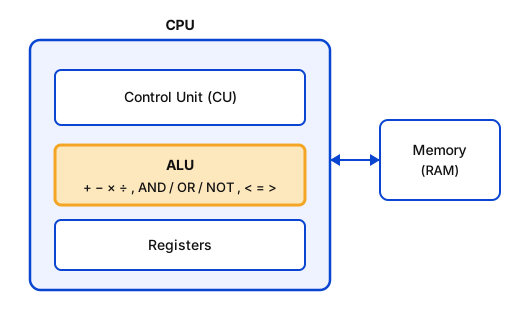
Concept: The CPU has three parts: Control Unit (CU), Arithmetic Logic Unit (ALU) and Registers.

  1. ALU performs arithmetic (+, −, ×, ÷) and logical comparisons (AND, OR, NOT, greater/equal/less).
  2. Control Unit only directs and coordinates operations – it does not calculate.
  3. RAM and motherboard are outside the CPU.

Yaad rakhein: ALU calculates, CU controls, registers store temporarily.

Answer: (D) Arithmetic Logic Unit

अवधारणा: CPU के तीन भाग हैं: नियंत्रण इकाई (Control Unit), अंकगणितीय तर्क इकाई (ALU) और रजिस्टर।

  1. ALU अंकगणितीय (+, −, ×, ÷) और तार्किक तुलना (AND, OR, NOT, बड़ा/बराबर/छोटा) करती है।
  2. Control Unit केवल निर्देश देती और समन्वय करती है – गणना नहीं करती।
  3. RAM और मदरबोर्ड CPU के बाहर हैं।

याद रखें: ALU गणना करती है, CU नियंत्रण करती है, रजिस्टर अस्थायी भंडारण करते हैं।

उत्तर: (D) अंकगणितीय तर्क इकाई (ALU)

RRB NTPC Undergraduate CBT 1General AwarenessComputer – CPU ComponentsRRB NTPC Undergraduate CBT 1 2025 · 17 Jun Shift 1 →
Q6700.
Two isotopes of an element have 17 protons with 18 neutrons and 20 neutrons, respectively. Which of the following is the correct representation of these isotopes?
किसी तत्व के दो समस्थानिकों (isotopes) में 17 प्रोटॉन हैं, और क्रमशः 18 न्यूट्रॉन तथा 20 न्यूट्रॉन हैं। निम्नलिखित में से कौन-सा इन समस्थानिकों का सही निरूपण है?
  1. A1817Cl and 2017Cl1817Cl और 2017Cl
  2. B1735Cl and 1737Cl1735Cl और 1737Cl
  3. C1835Cl and 2037Cl1835Cl और 2037Cl
  4. D1718Cl and 1720Cl1718Cl और 1720Cl
Show answer

Concept: Isotope notation: ZAX, where atomic number Z= protons and mass number A= protons + neutrons.

  1. Z=17 for both (chlorine).
  2. A=17+18=35 and A=17+20=37.
  3. So the isotopes are 1735Cl and 1737Cl.

Yaad rakhein: Isotopes: same Z (bottom), different A (top). Options with neutrons as Z are wrong.

Answer: (B) 1735Cl and 1737Cl

अवधारणा: समस्थानिक संकेतन: ZAX, जहाँ परमाणु क्रमांक Z= प्रोटॉन और द्रव्यमान संख्या A= प्रोटॉन + न्यूट्रॉन।

  1. दोनों के लिए Z=17 (क्लोरीन)।
  2. A=17+18=35 और A=17+20=37.
  3. अतः समस्थानिक 1735Cl और 1737Cl हैं।

याद रखें: समस्थानिक: Z (नीचे) समान, A (ऊपर) भिन्न।

उत्तर: (B) 1735Cl और 1737Cl

RRB NTPC Undergraduate CBT 1General AwarenessChemistry – IsotopesRRB NTPC Undergraduate CBT 1 2025 · 17 Jun Shift 1 →