Question bank

Q&A: practice questions with answers

Search questions on any topic. Filter by exam category, exam, subject and topic, try the question, then open the answer and explanation.

Courses – airGurukul

8,495 questions found.

Q661.
Arjun and Malaika have to travel from Delhi to Kanpur in their respective cars. Arjun is driving at 66 km/hr while Malaika is driving at 99 km/hr. Find the time taken by Malaika to reach Kanpur if Arjun takes 3 hours.
अर्जुन और मलाइका को अपनी-अपनी कारों से दिल्ली से कानपुर की यात्रा करनी है। अर्जुन 66 km/hr की चाल से गाड़ी चला रहा है जबकि मलाइका 99 km/hr की चाल से गाड़ी चला रही है। यदि अर्जुन को 3 घंटे लगते हैं, तो मलाइका द्वारा कानपुर पहुँचने में लिया गया समय ज्ञात कीजिए।
  1. A2 hours2 घंटे
  2. B4 hours4 घंटे
  3. C12 hours12 घंटे
  4. D11 hours11 घंटे
Show answer

Concept: Same distance → time is inversely proportional to speed.

  1. Distance =66×3=198km.
  2. Malaika's time =19899=2 hours.

Trick: Speed ratio 66:99=2:3 → time ratio 3:2; Arjun 3 h → Malaika 2 h.

Answer: (A) 2 hours

अवधारणा: दूरी समान हो तो समय, चाल के व्युत्क्रमानुपाती होता है।

  1. दूरी =66×3=198km।
  2. मलाइका का समय =19899=2 घंटे।

ट्रिक: चाल अनुपात 66:99=2:3 → समय अनुपात 3:2; अर्जुन 3 घंटे → मलाइका 2 घंटे।

उत्तर: (A) 2 घंटे

RRB NTPC Undergraduate CBT 1MathematicsSpeed and timeRRB NTPC Undergraduate CBT 1 2024 · 22 Aug Shift 3 →
Q662.
An electronics retailer offers two successive discounts of 7% and 10% on a TV priced at ₹48,000. What is the difference in the final price after applying two successive discounts compared to applying a flat discount of 17%?
एक इलेक्ट्रॉनिक्स खुदरा विक्रेता ₹48,000 मूल्य वाले एक TV पर 7% और 10% की दो क्रमागत छूट प्रदान करता है। दो क्रमागत छूट लागू करने के बाद के अंतिम मूल्य और 17% की एकमुश्त छूट लागू करने के बाद के अंतिम मूल्य में कितना अंतर है?
  1. A₹327
  2. B₹312
  3. C₹318
  4. D₹336
Show answer

Concept: Two successive discounts a%, b% give less than (a+b)%; the gap is ab100% of the price.

  1. Successive: 48000×0.93×0.90=40176.
  2. Flat 17%: 48000×0.83=39840.
  3. Difference =40176−39840=336.

Trick: Gap =7×10100=0.7% of 48000=336.

Answer: (D) ₹336

अवधारणा: दो क्रमागत छूट a%, b% कुल (a+b)% से कम होती हैं; अंतर मूल्य का ab100% होता है।

  1. क्रमागत: 48000×0.93×0.90=40176।
  2. एकमुश्त 17%: 48000×0.83=39840।
  3. अंतर =40176−39840=336।

ट्रिक: अंतर =7×10100=0.7%, 48000 का 0.7%=336।

उत्तर: (D) ₹336

RRB NTPC Undergraduate CBT 1MathematicsSuccessive vs flat discountRRB NTPC Undergraduate CBT 1 2024 · 22 Aug Shift 3 →
Q663.
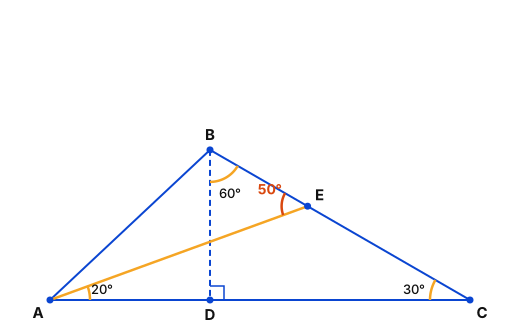
In △ABC, BD ⟂ AC at D and ∠DBC = 60°. E is a point on BC such that ∠CAE = 20°. What is the measure of ∠AEB?
△ABC में, BD ⟂ AC, बिंदु D पर है और ∠DBC = 60° है। E, BC पर एक ऐसा बिंदु है कि ∠CAE = 20° है। ∠AEB की माप क्या है?
  1. A58°
  2. B50°
  3. C46°
  4. D54°
Show answer

Concept: Angle sum of a triangle is 180∘; an exterior angle equals the sum of the two interior opposite angles.

  1. In right △BDC: ∠C=180∘−90∘−60∘=30∘.
  2. In △AEC, ∠AEB is the exterior angle at E.
  3. ∠AEB=∠EAC+∠ACE=20∘+30∘=50∘.

Trick: Perpendicular gives ∠C=90∘−60∘; then add 20∘.

Answer: (B) 50∘

अवधारणा: त्रिभुज के कोणों का योग 180∘; बहिष्कोण = दोनों अंतः सम्मुख कोणों का योग।

  1. समकोण △BDC में: ∠C=180∘−90∘−60∘=30∘।
  2. △AEC में ∠AEB, बिंदु E पर बहिष्कोण है।
  3. ∠AEB=∠EAC+∠ACE=20∘+30∘=50∘।

ट्रिक: लंब से ∠C=90∘−60∘; फिर 20∘ जोड़ दें।

उत्तर: (B) 50∘

RRB NTPC Undergraduate CBT 1MathematicsTriangle angles (exterior angle)RRB NTPC Undergraduate CBT 1 2024 · 22 Aug Shift 3 →
Q664.
What smallest number should be added to 71079 so that the sum is completely divisible by 23?
71079 में कौन-सी सबसे छोटी संख्या जोड़ी जानी चाहिए ताकि योगफल 23 से पूर्णतः विभाज्य हो?
  1. A15
  2. B13
  3. C9
  4. D14
Show answer

Concept: Number to add =divisor−remainder.

  1. 23×3090=71070, so 71079÷23 leaves remainder 9.
  2. Number to add =23−9=14.
  3. Check: 71079+14=71093=23×3091 ✓.

Trick: 71070 is a multiple of 23 (23×309×10); remainder is just 9.

Answer: (D) 14

अवधारणा: जोड़ी जाने वाली संख्या =भाजक−शेषफल।

  1. 23×3090=71070, अतः 71079÷23 का शेषफल 9।
  2. जोड़ें =23−9=14।
  3. जाँच: 71079+14=71093=23×3091 ✓।

ट्रिक: 71070, 23 का गुणज है (23×309×10); शेषफल सीधे 9।

उत्तर: (D) 14

RRB NTPC Undergraduate CBT 1MathematicsDivisibility (remainder)RRB NTPC Undergraduate CBT 1 2024 · 22 Aug Shift 3 →
Q665.
M and N start a business. M invests ₹24,000 more than N for 3 months and N invests for 4 months. M's share is ₹962 more than that of N, out of a total profit of ₹7,696. Find the capital contributed by M.
M और N एक व्यवसाय शुरू करते हैं। M, N से ₹24,000 अधिक राशि 3 महीने के लिए निवेश करता है और N, 4 महीने के लिए निवेश करता है। ₹7,696 के कुल लाभ में से M का हिस्सा N के हिस्से से ₹962 अधिक है। M द्वारा लगाई गई पूँजी ज्ञात कीजिए।
  1. A₹57,424
  2. B₹57,692
  3. C₹57,626
  4. D₹57,600
Show answer

Concept: Profit share ∝ capital × time.

  1. M+N=7696, M−N=962 → M's share =4329, N's share =3367.
  2. If N invests x: 3(x+24000)4x=43293367.
  3. 10101x+242424000=17316x → 7215x=242424000 → x=33600.
  4. M's capital =33600+24000=57600.

Trick: Check option (D): M =57600, N =33600 → 57600×3:33600×4=172800:134400=9:7; 7696×9−716=962 ✓.

Answer: (D) ₹57,600

अवधारणा: लाभ का हिस्सा ∝ पूँजी × समय।

  1. M+N=7696, M−N=962 → M का हिस्सा =4329, N का हिस्सा =3367।
  2. माना N की पूँजी x: 3(x+24000)4x=43293367।
  3. 10101x+242424000=17316x → 7215x=242424000 → x=33600।
  4. M की पूँजी =33600+24000=57600।

ट्रिक: विकल्प (D) जाँचें: M =57600, N =33600 → 57600×3:33600×4=9:7; 7696×216=962 ✓।

उत्तर: (D) ₹57,600

RRB NTPC Undergraduate CBT 1MathematicsPartnershipRRB NTPC Undergraduate CBT 1 2024 · 22 Aug Shift 3 →
Q666.
Pipe A can fill a tank in 19 hours, pipe B can fill the same tank in 21 hours and pipe C can fill the same tank in 8 hours. The time taken by them to fill the same tank if they operate together is::
पाइप A एक टंकी को 19 घंटे में भर सकता है, पाइप B उसी टंकी को 21 घंटे में भर सकता है और पाइप C उसी टंकी को 8 घंटे में भर सकता है। यदि वे एक साथ कार्य करें, तो उसी टंकी को भरने में उनके द्वारा लिया गया समय है:
  1. A4316719 hours4316719 घंटे
  2. B13316719 hours13316719 घंटे
  3. C10316719 hours10316719 घंटे
  4. D11316719 hours11316719 घंटे
Show answer

Concept: Working together, the hourly rates add: 1T=1a+1b+1c.

  1. 119+121+18=168+152+3993192=7193192 (LCM =3192).
  2. T=3192719 hours.
  3. 3192=4×719+316 → T=4316719 hours.

Trick: Together time is less than the fastest pipe alone (8 h) → only 4316719 is possible.

Answer: (A) 4316719 hours

अवधारणा: साथ में काम करने पर प्रति घंटे की दरें जुड़ती हैं: 1T=1a+1b+1c।

  1. 119+121+18=168+152+3993192=7193192 (LCM =3192)।
  2. T=3192719 घंटे।
  3. 3192=4×719+316 → T=4316719 घंटे।

ट्रिक: साथ का समय सबसे तेज़ पाइप (8 घंटे) से कम होगा → केवल 4316719 संभव।

उत्तर: (A) 4316719 घंटे

RRB NTPC Undergraduate CBT 1MathematicsPipes and cisternsRRB NTPC Undergraduate CBT 1 2024 · 22 Aug Shift 3 →
Q667.
Which of the following numbers divides 934725?
निम्नलिखित में से कौन-सी संख्या 934725 को विभाजित करती है?
  1. A6
  2. B2
  3. C10
  4. D3
Show answer

Concept: Divisible by 3 if the digit sum is divisible by 3; by 2, 6, 10 only if the number is even (10 needs last digit 0).

  1. Digit sum =9+3+4+7+2+5=30, divisible by 3 ✓.
  2. Last digit 5 is odd → not divisible by 2, 6 or 10.

Trick: An odd number can never be divisible by 2, 6 or 10 – eliminate them at sight.

Answer: (D) 3

अवधारणा: अंकों का योग 3 से विभाज्य हो तो संख्या 3 से विभाज्य; 2, 6, 10 के लिए संख्या सम होनी चाहिए (10 के लिए अंतिम अंक 0)।

  1. अंकों का योग =9+3+4+7+2+5=30, जो 3 से विभाज्य ✓।
  2. अंतिम अंक 5 विषम → 2, 6, 10 से विभाज्य नहीं।

ट्रिक: विषम संख्या कभी 2, 6 या 10 से विभाज्य नहीं – इन्हें तुरंत हटाएँ।

उत्तर: (D) 3

RRB NTPC Undergraduate CBT 1MathematicsDivisibility rulesRRB NTPC Undergraduate CBT 1 2024 · 22 Aug Shift 3 →
Q668.
A shopkeeper lists the price of a fan at 50% above its cost price and offers a 30% discount on its list price. If he earns a profit of ₹175, then what is the list price (in ₹) of the fan?
एक दुकानदार एक पंखे का सूची मूल्य उसके क्रय मूल्य से 50% अधिक अंकित करता है और सूची मूल्य पर 30% की छूट देता है। यदि वह ₹175 का लाभ अर्जित करता है, तो पंखे का सूची मूल्य (₹ में) क्या है?
  1. A5,040
  2. B5,250
  3. C5,021
  4. D5,088
Show answer

Concept: Take CP =100 and follow the markup and discount.

  1. List price =150; SP =150×0.7=105.
  2. Profit =105−100=5 units =175 → 1 unit =35.
  3. List price =150×35=5250.

Trick: Profit %=150×0.7−100=5%; list price is 30 times the profit: 175×30=5250.

Answer: (B) 5,250

अवधारणा: CP =100 मानकर अंकन और छूट लगाएँ।

  1. सूची मूल्य =150; SP =150×0.7=105।
  2. लाभ =105−100=5 इकाई =175 → 1 इकाई =35।
  3. सूची मूल्य =150×35=5250।

ट्रिक: लाभ 5%; सूची मूल्य लाभ का 30 गुना: 175×30=5250।

उत्तर: (B) 5,250

RRB NTPC Undergraduate CBT 1MathematicsMarked price and discountRRB NTPC Undergraduate CBT 1 2024 · 22 Aug Shift 3 →
Q669.
Find the mean proportional between 22 and 88.
22 और 88 का मध्यानुपाती ज्ञात कीजिए।
  1. A47
  2. B44
  3. C46
  4. D41
Show answer

Concept: Mean proportional of a and b =ab.

  1. 22×88=1936.
  2. =44 (since 88=4×22, 22×4×22=2×22).

Trick: If b=4a, mean proportional =2a.

Answer: (B) 44

अवधारणा: a और b का मध्यानुपाती =ab।

  1. 22×88=1936।
  2. =44 (क्योंकि 88=4×22, 22×4×22=2×22)।

ट्रिक: यदि b=4a, तो मध्यानुपाती =2a।

उत्तर: (B) 44

RRB NTPC Undergraduate CBT 1MathematicsMean proportionalRRB NTPC Undergraduate CBT 1 2024 · 22 Aug Shift 3 →
Q670.
The H.C.F. and the L.C.M. of two numbers are 11 and 495, respectively. If one of the numbers is 55, find the other one.
दो संख्याओं का म.स. (H.C.F.) और ल.स. (L.C.M.) क्रमशः 11 और 495 हैं। यदि उनमें से एक संख्या 55 है, तो दूसरी संख्या ज्ञात कीजिए।
  1. A99
  2. B172
  3. C21
  4. D181
Show answer

Concept: Product of two numbers =HCF×LCM.

  1. Other number =11×49555.
  2. =544555=99.

Trick: Other number must be a multiple of HCF 11 – only 99 qualifies among options.

Answer: (A) 99

अवधारणा: दो संख्याओं का गुणनफल =HCF×LCM।

  1. दूसरी संख्या =11×49555।
  2. =544555=99।

ट्रिक: दूसरी संख्या HCF 11 का गुणज होगी – विकल्पों में केवल 99।

उत्तर: (A) 99

RRB NTPC Undergraduate CBT 1MathematicsHCF and LCMRRB NTPC Undergraduate CBT 1 2024 · 22 Aug Shift 3 →
Q671.
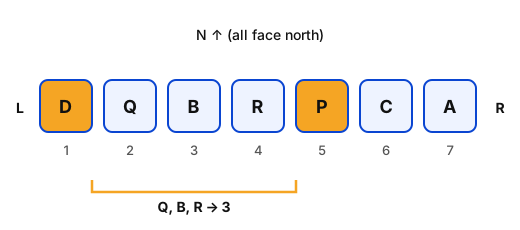
Seven people, A, B, C, D, P, Q and R, are sitting in a row, facing north.
Only three people sit to the left of R. Only A sits to the right of C. Only three people sit between C and Q. B sits at some place to the left of P but at some place to the right of D. How many people sit between D and P?
सात व्यक्ति, A, B, C, D, P, Q और R, उत्तर की ओर मुख करके एक पंक्ति में बैठे हैं।
R के बाईं ओर केवल तीन व्यक्ति बैठे हैं। C के दाईं ओर केवल A बैठा है। C और Q के बीच केवल तीन व्यक्ति बैठे हैं। B, P के बाईं ओर कहीं बैठा है, लेकिन D के दाईं ओर कहीं बैठा है। D और P के बीच कितने व्यक्ति बैठे हैं?
  1. AFourचार
  2. BTwoदो
  3. COneएक
  4. DThreeतीन
Show answer

Concept: Place the fixed clues first (positions 1–7 from the left, all facing north).

  1. Three people to the left of R → R at position 4.
  2. Only A to the right of C → C at 6, A at 7.
  3. Three people between C and Q → Q at 2.
  4. Left seats 1, 3, 5 with D … B … P → D 1, B 3, P 5. Between D and P: Q, B, R = 3.

Trick: Between positions 1 and 5 there are always 5−1−1=3 persons.

Answer: (D) Three

अवधारणा: पहले निश्चित सूचनाएँ लगाएँ (बाएँ से स्थान 1–7, सभी उत्तर की ओर मुख)।

  1. R के बाएँ तीन व्यक्ति → R स्थान 4 पर।
  2. C के दाएँ केवल A → C स्थान 6, A स्थान 7।
  3. C और Q के बीच तीन व्यक्ति → Q स्थान 2।
  4. बचे स्थान 1, 3, 5 में D … B … P → D 1, B 3, P 5। D और P के बीच: Q, B, R = 3।

ट्रिक: स्थान 1 और 5 के बीच हमेशा 5−1−1=3 व्यक्ति।

उत्तर: (D) तीन

RRB NTPC Undergraduate CBT 1General Intelligence and ReasoningLinear seating arrangementRRB NTPC Undergraduate CBT 1 2024 · 22 Aug Shift 3 →
Q672.
In a certain code language, ‘PICK’ is coded as ‘3517’ and ‘COST’ is coded as ‘2146’. What is the code for ‘C’ in the given code language?
एक निश्चित कूट भाषा में, ‘PICK’ को ‘3517’ और ‘COST’ को ‘2146’ के रूप में कूटबद्ध किया जाता है। दी गई कूट भाषा में ‘C’ के लिए कूट क्या है?
  1. A3
  2. B1
  3. C6
  4. D4
Show answer

Concept: A letter common to two words gets the digit common to both codes.

  1. PICK → 3517 and COST → 2146.
  2. Common letter: C. Common digit: 1.
  3. So C = 1.

Trick: Match common letters with common digits – no need to decode the rest.

Answer: (B) 1

अवधारणा: दो शब्दों में उभयनिष्ठ अक्षर का कोड, दोनों कोड में उभयनिष्ठ अंक होता है।

  1. PICK → 3517 और COST → 2146।
  2. उभयनिष्ठ अक्षर: C; उभयनिष्ठ अंक: 1।
  3. अतः C = 1।

ट्रिक: उभयनिष्ठ अक्षर ↔ उभयनिष्ठ अंक – बाकी डिकोड करने की ज़रूरत नहीं।

उत्तर: (B) 1

RRB NTPC Undergraduate CBT 1General Intelligence and ReasoningCoding-decoding (common letter)RRB NTPC Undergraduate CBT 1 2024 · 22 Aug Shift 3 →
Q673.
In a certain code language,
A # B means ‘A is the mother of B’,
A % B means ‘A is the brother of B’,
A - B means ‘A is the wife of B’ and
A @ B means ‘A is the father of B’.
How is C related to U if ‘C - O @ M # B % U’?
एक निश्चित कूट भाषा में,
A # B का अर्थ है ‘A, B की माँ है’,
A % B का अर्थ है ‘A, B का भाई है’,
A - B का अर्थ है ‘A, B की पत्नी है’ और
A @ B का अर्थ है ‘A, B का पिता है’।
यदि ‘C - O @ M # B % U’ है, तो C का U से क्या संबंध है?
  1. AMotherमाँ
  2. BMother's motherमाँ की माँ
  3. CMother's sisterमाँ की बहन
  4. DSisterबहन
Show answer

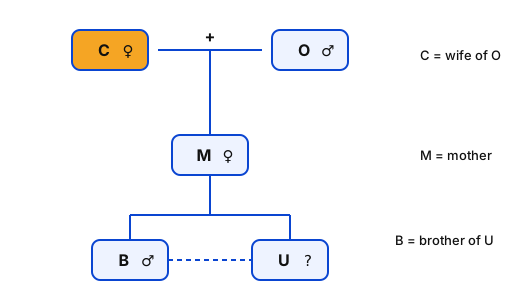
Concept: Decode each symbol from left to right and draw a family tree.

  1. C − O: C is the wife of O.
  2. O @ M: O is the father of M → C is the mother of M.
  3. M # B: M is the mother of B; B % U: B is the brother of U → M is U's mother.
  4. C is the mother of U's mother.

Trick: Wife of the father = mother; go one generation at a time.

Answer: (B) Mother's mother

अवधारणा: बाएँ से दाएँ हर चिह्न को डिकोड करें और वंश-वृक्ष बनाएँ।

  1. C − O: C, O की पत्नी है।
  2. O @ M: O, M का पिता → C, M की माँ।
  3. M # B: M, B की माँ; B % U: B, U का भाई → M, U की माँ।
  4. C, U की माँ की माँ (नानी) है।

ट्रिक: पिता की पत्नी = माँ; एक-एक पीढ़ी आगे बढ़ें।

उत्तर: (B) माँ की माँ (Mother's mother)

RRB NTPC Undergraduate CBT 1General Intelligence and ReasoningCoded blood relationRRB NTPC Undergraduate CBT 1 2024 · 22 Aug Shift 3 →
Q674.
What will come in the place of the question mark (?) in the following equation, if ‘+’ and ‘×’ are interchanged, and ‘−’ and ‘÷’ are interchanged?
2 + 8 ÷ 84 − 7 × 27 = ?
यदि ‘+’ और ‘×’ को आपस में बदल दिया जाए तथा ‘−’ और ‘÷’ को आपस में बदल दिया जाए, तो निम्नलिखित समीकरण में प्रश्न चिह्न (?) के स्थान पर क्या आएगा?
2 + 8 ÷ 84 − 7 × 27 = ?
  1. A15
  2. B31
  3. C26
  4. D21
Show answer

Concept: Swap the signs first, then apply BODMAS.

  1. After swapping: 2×8−84÷7+27.
  2. =16−12+27.
  3. =31.

Trick: Rewrite the whole expression with new signs before calculating.

Answer: (B) 31

अवधारणा: पहले चिह्न बदलें, फिर BODMAS लगाएँ।

  1. बदलने के बाद: 2×8−84÷7+27।
  2. =16−12+27।
  3. =31।

ट्रिक: गणना से पहले पूरा व्यंजक नए चिह्नों के साथ लिख लें।

उत्तर: (B) 31

RRB NTPC Undergraduate CBT 1General Intelligence and ReasoningMathematical operations (interchange)RRB NTPC Undergraduate CBT 1 2024 · 22 Aug Shift 3 →
Q675.
In a certain code language, ‘CURE’ is coded as ‘8426’ and ‘THOU’ is coded as ‘5183’. What is the code for ‘U’ in the given code language?
एक निश्चित कूट भाषा में, ‘CURE’ को ‘8426’ और ‘THOU’ को ‘5183’ के रूप में कूटबद्ध किया जाता है। दी गई कूट भाषा में ‘U’ के लिए कूट क्या है?
  1. A4
  2. B1
  3. C8
  4. D3
Show answer

Concept: A letter common to two words gets the digit common to both codes.

  1. CURE → 8426 and THOU → 5183.
  2. Common letter: U. Common digit: 8.
  3. So U = 8.

Trick: Common letter ↔ common digit.

Answer: (C) 8

अवधारणा: दो शब्दों में उभयनिष्ठ अक्षर का कोड, दोनों कोड में उभयनिष्ठ अंक होता है।

  1. CURE → 8426 और THOU → 5183।
  2. उभयनिष्ठ अक्षर: U; उभयनिष्ठ अंक: 8।
  3. अतः U = 8।

ट्रिक: उभयनिष्ठ अक्षर ↔ उभयनिष्ठ अंक।

उत्तर: (C) 8

RRB NTPC Undergraduate CBT 1General Intelligence and ReasoningCoding-decoding (common letter)RRB NTPC Undergraduate CBT 1 2024 · 22 Aug Shift 3 →
Q676.
In the following triads, each group of letters is related to the subsequent one following a certain logic. Select from the given options, the one which follows the same logic. LUNG - UNLG - GNUL
FERN - ERFN - NREF
निम्नलिखित त्रिकों में, अक्षरों का प्रत्येक समूह एक निश्चित तर्क का अनुसरण करते हुए अपने बाद वाले समूह से संबंधित है। दिए गए विकल्पों में से उस विकल्प का चयन कीजिए जो समान तर्क का अनुसरण करता है। LUNG - UNLG - GNUL
FERN - ERFN - NREF
  1. ACOIR - OICR - RIOC
  2. BSWAP - SAWP - PAWS
  3. CBAKE - AKBE - AKEB
  4. DCUTS - UCTS - SUTC
Show answer

Concept: Find the position rule: LUNG (1 2 3 4) → UNLG (2 3 1 4) → GNUL (reverse of LUNG).

  1. FERN → ERFN (2 3 1 4) and NREF (reverse) ✓.
  2. COIR → OICR (2 3 1 4) and RIOC (reverse of COIR) ✓.
  3. SWAP → SAWP fails (2nd group should be WASP); BAKE → AKBE ok but AKEB ≠ EKAB; CUTS → UCTS fails.

Trick: Check the easy part first: the third group must be the first group written backwards.

Answer: (A) COIR - OICR - RIOC

अवधारणा: स्थान नियम: LUNG (1 2 3 4) → UNLG (2 3 1 4) → GNUL (LUNG का उल्टा)।

  1. FERN → ERFN (2 3 1 4) और NREF (उल्टा) ✓।
  2. COIR → OICR (2 3 1 4) और RIOC (COIR का उल्टा) ✓।
  3. SWAP → SAWP गलत (WASP होना चाहिए); BAKE में AKEB ≠ EKAB; CUTS → UCTS गलत।

ट्रिक: पहले आसान जाँच: तीसरा समूह पहले समूह का उल्टा होना चाहिए।

उत्तर: (A) COIR - OICR - RIOC

RRB NTPC Undergraduate CBT 1General Intelligence and ReasoningLetter triadsRRB NTPC Undergraduate CBT 1 2024 · 22 Aug Shift 3 →
Q677.
Based on the English alphabetical order, three of the following four letter-clusters are alike in a certain way and thus form a group. Which letter-cluster DOES NOT belong to that group?
(Note: The odd one out is not based on the number of consonants/vowels or their position in the letter-cluster.)
अंग्रेज़ी वर्णमाला क्रम के आधार पर, निम्नलिखित चार अक्षर-समूहों में से तीन किसी निश्चित प्रकार से एक समान हैं और इस प्रकार एक समूह बनाते हैं। कौन-सा अक्षर-समूह उस समूह से संबंधित नहीं है?
(ध्यान दें: असंगत अक्षर-समूह, उस अक्षर-समूह में व्यंजनों/स्वरों की संख्या या उनके स्थान पर आधारित नहीं है।)
  1. AORK
  2. BRUO
  3. CILF
  4. DLOI
Show answer

Concept: Write letter positions and check the gaps.

  1. RUO: 18, 21, 15 → +3, −6.
  2. ILF: 9, 12, 6 → +3, −6; LOI: 12, 15, 9 → +3, −6.
  3. ORK: 15, 18, 11 → +3, −7 ✗.

Trick: First-to-third letter gap: R→O, I→F, L→I are all −3; O→K is −4.

Answer: (A) ORK

अवधारणा: अक्षरों के स्थान लिखें और अंतर देखें।

  1. RUO: 18, 21, 15 → +3, −6।
  2. ILF: 9, 12, 6 → +3, −6; LOI: 12, 15, 9 → +3, −6।
  3. ORK: 15, 18, 11 → +3, −7 ✗।

ट्रिक: पहले से तीसरे अक्षर का अंतर: R→O, I→F, L→I सभी −3; O→K −4।

उत्तर: (A) ORK

RRB NTPC Undergraduate CBT 1General Intelligence and ReasoningOdd one out (letter clusters)RRB NTPC Undergraduate CBT 1 2024 · 22 Aug Shift 3 →
Q678.
Read the given statements and conclusions carefully. Assuming that the information given in the statements is true, even if it appears to be at variance with commonly known facts, decide which of the given conclusions logically follow(s) from the statements.
Statements:
All laptops are computers.
Some laptops are desktops.
Conclusions:
(I): Some computers are desktops.
(II): Some desktops are laptops.
दिए गए कथनों और निष्कर्षों को ध्यानपूर्वक पढ़िए। यह मानते हुए कि कथनों में दी गई जानकारी सत्य है, भले ही वह सामान्यतः ज्ञात तथ्यों से भिन्न प्रतीत होती हो, निर्णय लीजिए कि दिए गए निष्कर्षों में से कौन-सा/से निष्कर्ष तार्किक रूप से कथनों का अनुसरण करता है/करते हैं।
कथन:
सभी लैपटॉप, कंप्यूटर हैं।
कुछ लैपटॉप, डेस्कटॉप हैं।
निष्कर्ष:
(I): कुछ कंप्यूटर, डेस्कटॉप हैं।
(II): कुछ डेस्कटॉप, लैपटॉप हैं।
  1. AOnly Conclusion I followsकेवल निष्कर्ष I अनुसरण करता है
  2. BOnly Conclusion II followsकेवल निष्कर्ष II अनुसरण करता है
  3. CBoth Conclusions I and II followनिष्कर्ष I और II दोनों अनुसरण करते हैं
  4. DNeither Conclusion I nor II followsन तो निष्कर्ष I और न ही II अनुसरण करता है
Show answer

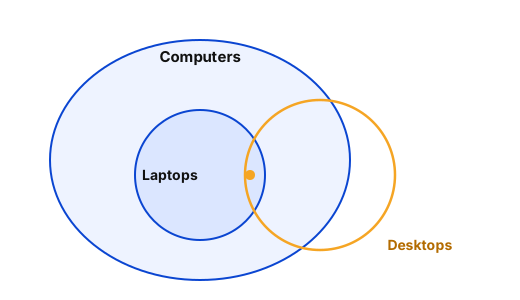
Concept: Draw the least-overlap Venn diagram and test each conclusion.

  1. Laptops lie inside Computers; some Laptops are Desktops.
  2. The Laptop–Desktop common part is also inside Computers → Some computers are desktops ✓ (I).
  3. 'Some laptops are desktops' converts to 'Some desktops are laptops' ✓ (II).

Yaad rakhein: 'Some A are B' always gives 'Some B are A'; All + Some (common middle) gives a definite 'Some'.

Answer: (C) Both Conclusions I and II follow

अवधारणा: न्यूनतम ओवरलैप वाला वेन आरेख बनाएँ और प्रत्येक निष्कर्ष जाँचें।

  1. Laptops पूरी तरह Computers के अंदर; कुछ Laptops, Desktops हैं।
  2. Laptop–Desktop का साझा भाग Computers के अंदर भी है → कुछ computers, desktops हैं ✓ (I)।
  3. 'कुछ laptops desktops हैं' का रूपांतरण 'कुछ desktops laptops हैं' ✓ (II)।

याद रखें: 'कुछ A, B हैं' से हमेशा 'कुछ B, A हैं' निकलता है।

उत्तर: (C) निष्कर्ष I और II दोनों अनुसरण करते हैं

RRB NTPC Undergraduate CBT 1General Intelligence and ReasoningSyllogismRRB NTPC Undergraduate CBT 1 2024 · 22 Aug Shift 3 →
Q679.
If + means −, − means ×, × means ÷ and ÷ means +, then what will come in place of the question mark (?) in the following equation?
36 + 48 × 4 ÷ 5 − 3 = ?
यदि + का अर्थ −, − का अर्थ ×, × का अर्थ ÷ और ÷ का अर्थ + है, तो निम्नलिखित समीकरण में प्रश्न चिह्न (?) के स्थान पर क्या आएगा?
36 + 48 × 4 ÷ 5 − 3 = ?
  1. A39
  2. B47
  3. C52
  4. D43
Show answer

Concept: Replace each sign with its meaning, then apply BODMAS.

  1. New expression: 36−48÷4+5×3.
  2. =36−12+15.
  3. =39.

Trick: Do ÷ and × first: 12 and 15; then 36−12+15.

Answer: (A) 39

अवधारणा: प्रत्येक चिह्न को उसके अर्थ से बदलें, फिर BODMAS लगाएँ।

  1. नया व्यंजक: 36−48÷4+5×3।
  2. =36−12+15।
  3. =39।

ट्रिक: पहले ÷ और ×: 12 और 15; फिर 36−12+15।

उत्तर: (A) 39

RRB NTPC Undergraduate CBT 1General Intelligence and ReasoningMathematical operations (substitution)RRB NTPC Undergraduate CBT 1 2024 · 22 Aug Shift 3 →
Q680.
What should come in place of the question mark (?) in the given series?
94 ? 118 142 174 214
दी गई शृंखला में प्रश्न चिह्न (?) के स्थान पर क्या आना चाहिए?
94 ? 118 142 174 214
  1. A102
  2. B106
  3. C112
  4. D108
Show answer

Concept: Check the differences of the known terms.

  1. 142−118=24, 174−142=32, 214−174=40 → differences rise by 8.
  2. So earlier differences are 8 and 16.
  3. 94+8=102; check 102+16=118 ✓.

Trick: Differences 8,16,24,32,40 are multiples of 8.

Answer: (A) 102

अवधारणा: ज्ञात पदों के अंतर देखें।

  1. 142−118=24, 174−142=32, 214−174=40 → अंतर 8 से बढ़ रहा है।
  2. पहले के अंतर 8 और 16।
  3. 94+8=102; जाँच 102+16=118 ✓।

ट्रिक: अंतर 8,16,24,32,40 — 8 के गुणज।

उत्तर: (A) 102

RRB NTPC Undergraduate CBT 1General Intelligence and ReasoningNumber series (differences)RRB NTPC Undergraduate CBT 1 2024 · 22 Aug Shift 3 →